


Bird song identifier
BetaSound ID is best with clear song from common birds, and finds distant calls, wind and a full dawn chorus harder. When it gets one wrong, tell us: every correction makes it better.
Got a photo? Use the bird identifier.
Garden birds by song
20 birds eachThe songs you’re most likely to hear from a garden or park, each with a recording to play, what to listen for and when it sings. Tap a name for the full guide.
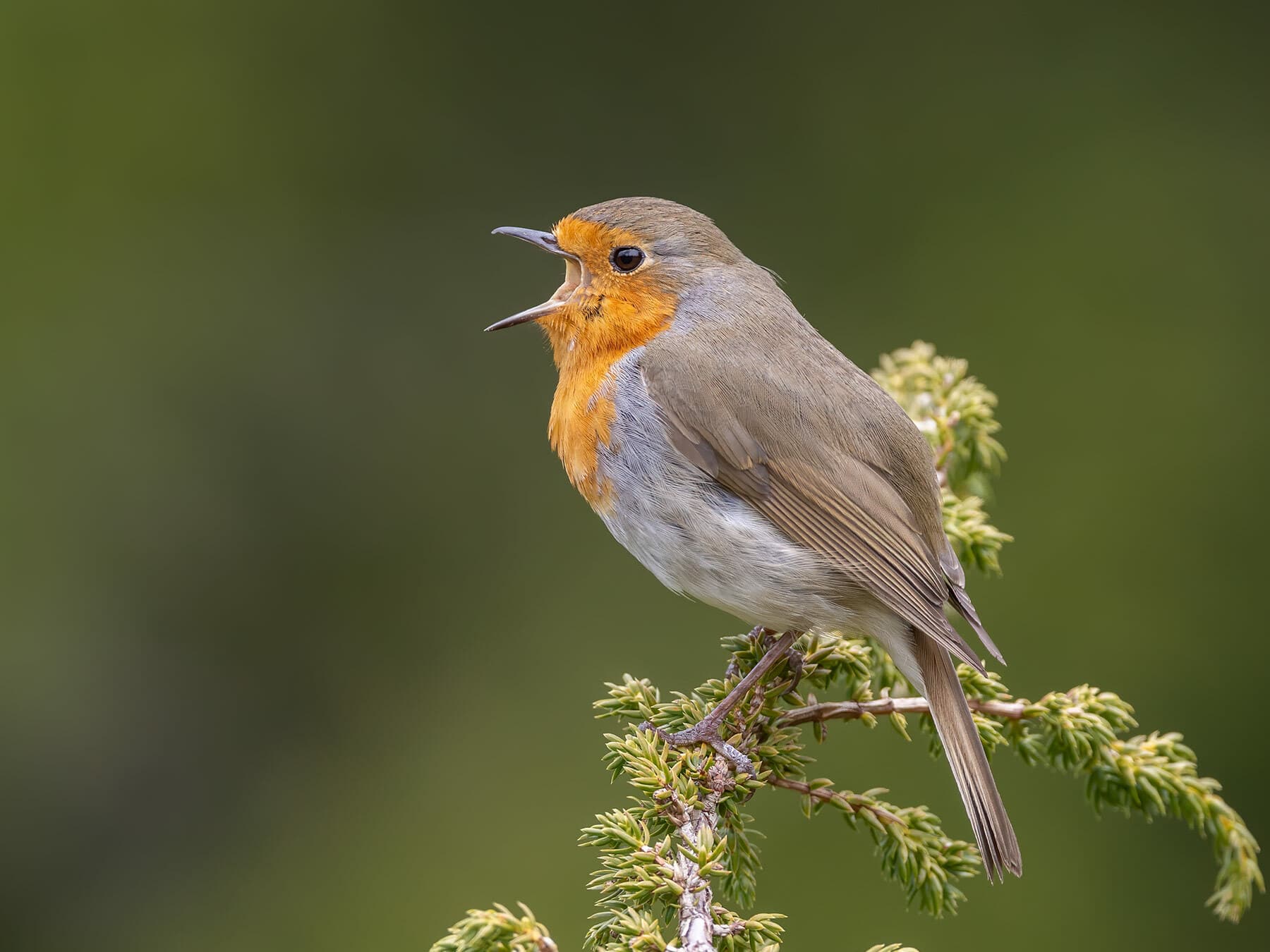
- Robin0:49
A thin, wistful warble, phrase after phrase with pauses between.
All year, autumn too, and under streetlights at night
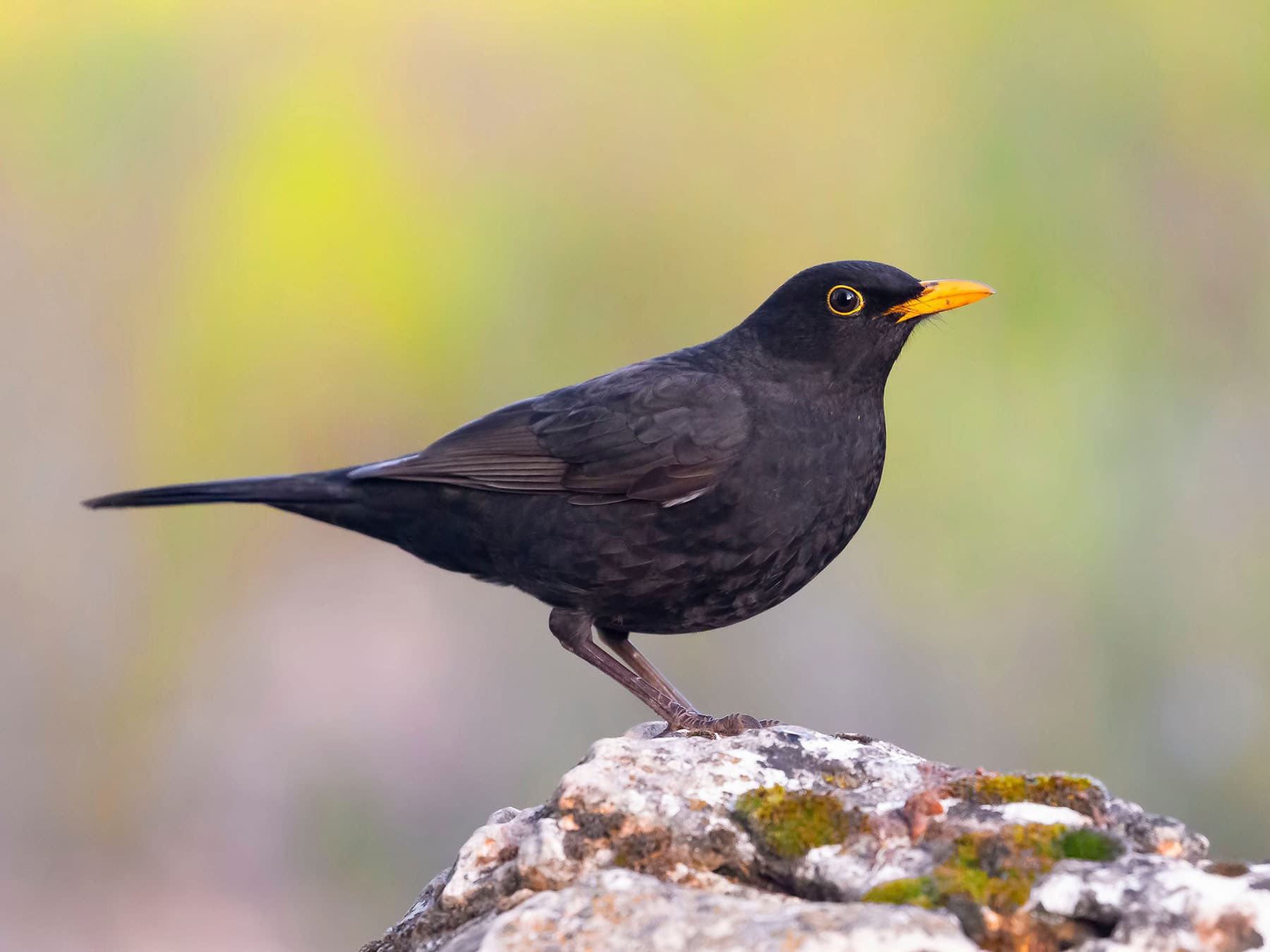
- Blackbird0:31
Slow, mellow, fluty phrases that tail away at the end.
February to July, best at dawn and dusk
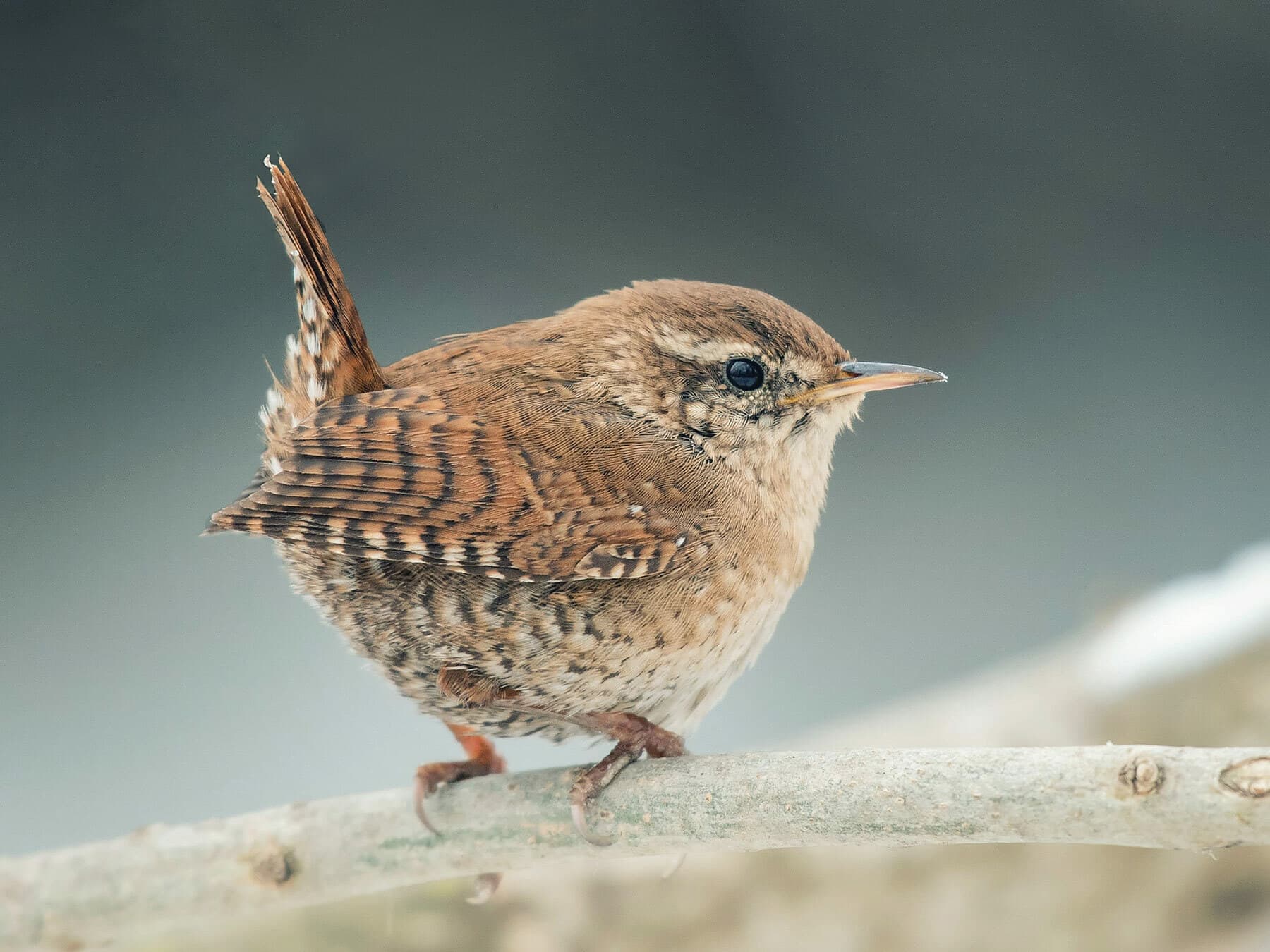
- Wren0:19
Very loud for its size: a fast run of notes with a rattling trill in the middle.
All year
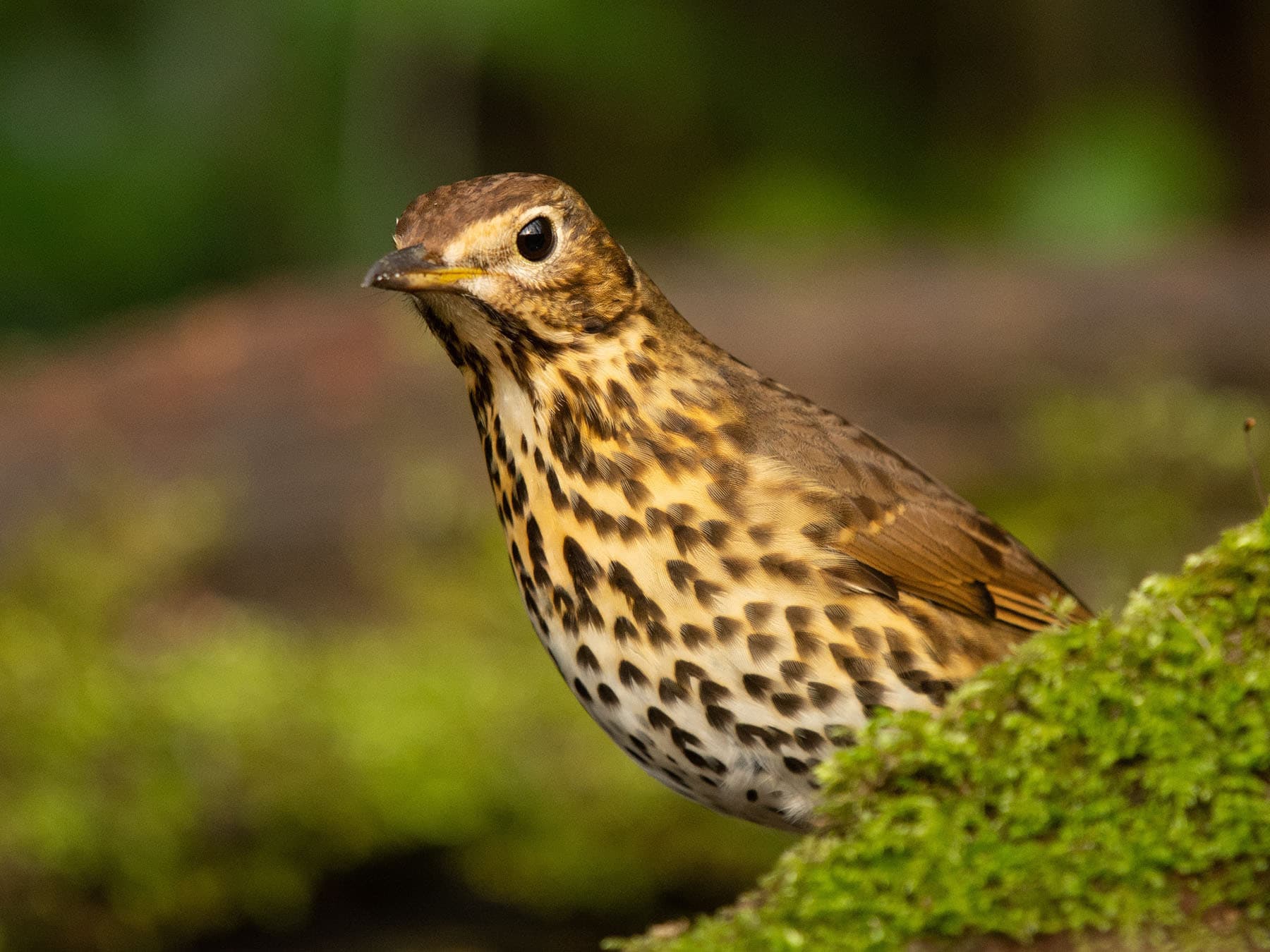
- Song Thrush0:39
Bold, clear phrases, each one repeated two to four times.
Midwinter to July
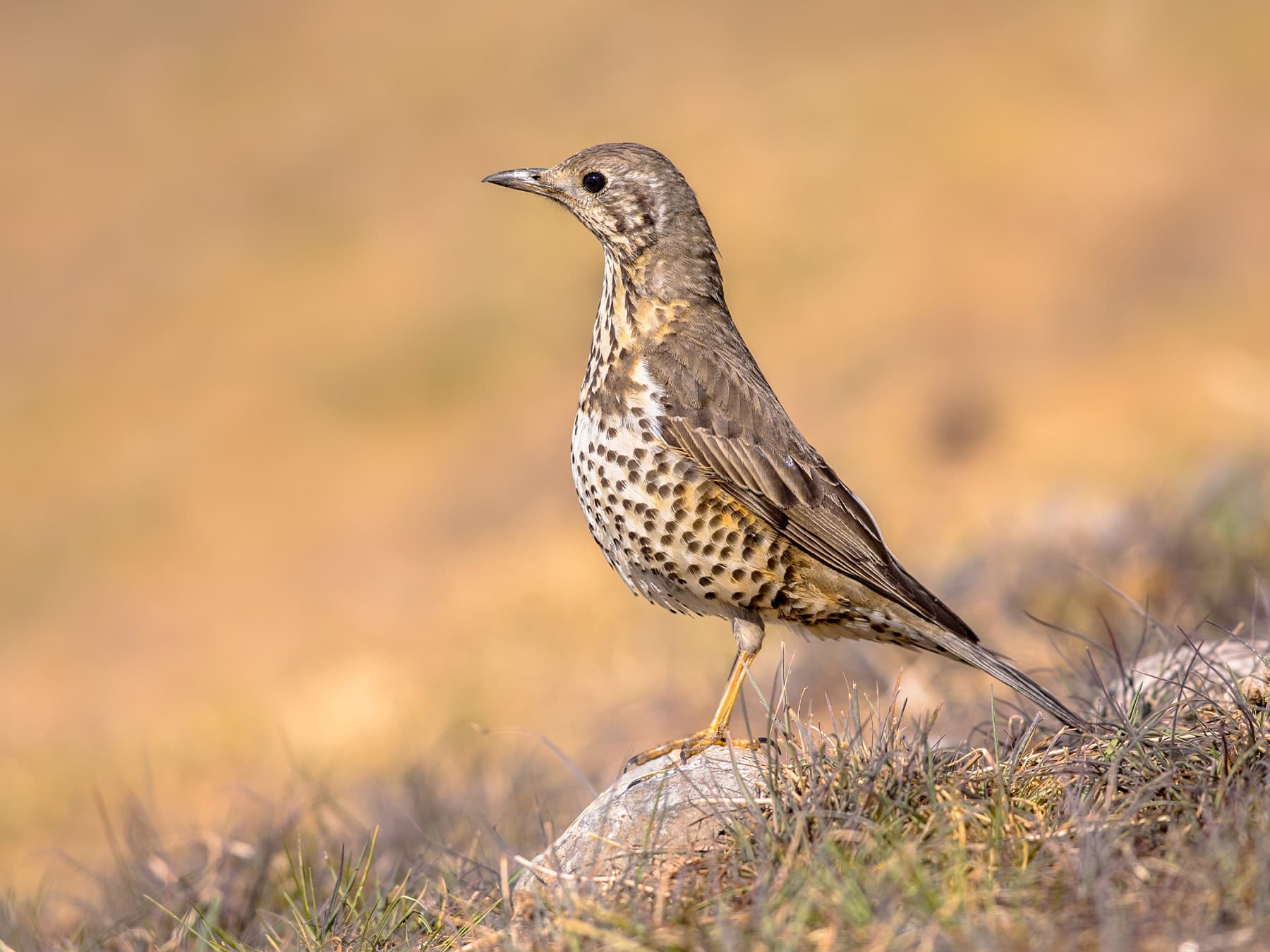
- Mistle Thrush0:19
Like a Blackbird, but shorter, wilder phrases, often from a treetop in wind and rain.
December to May
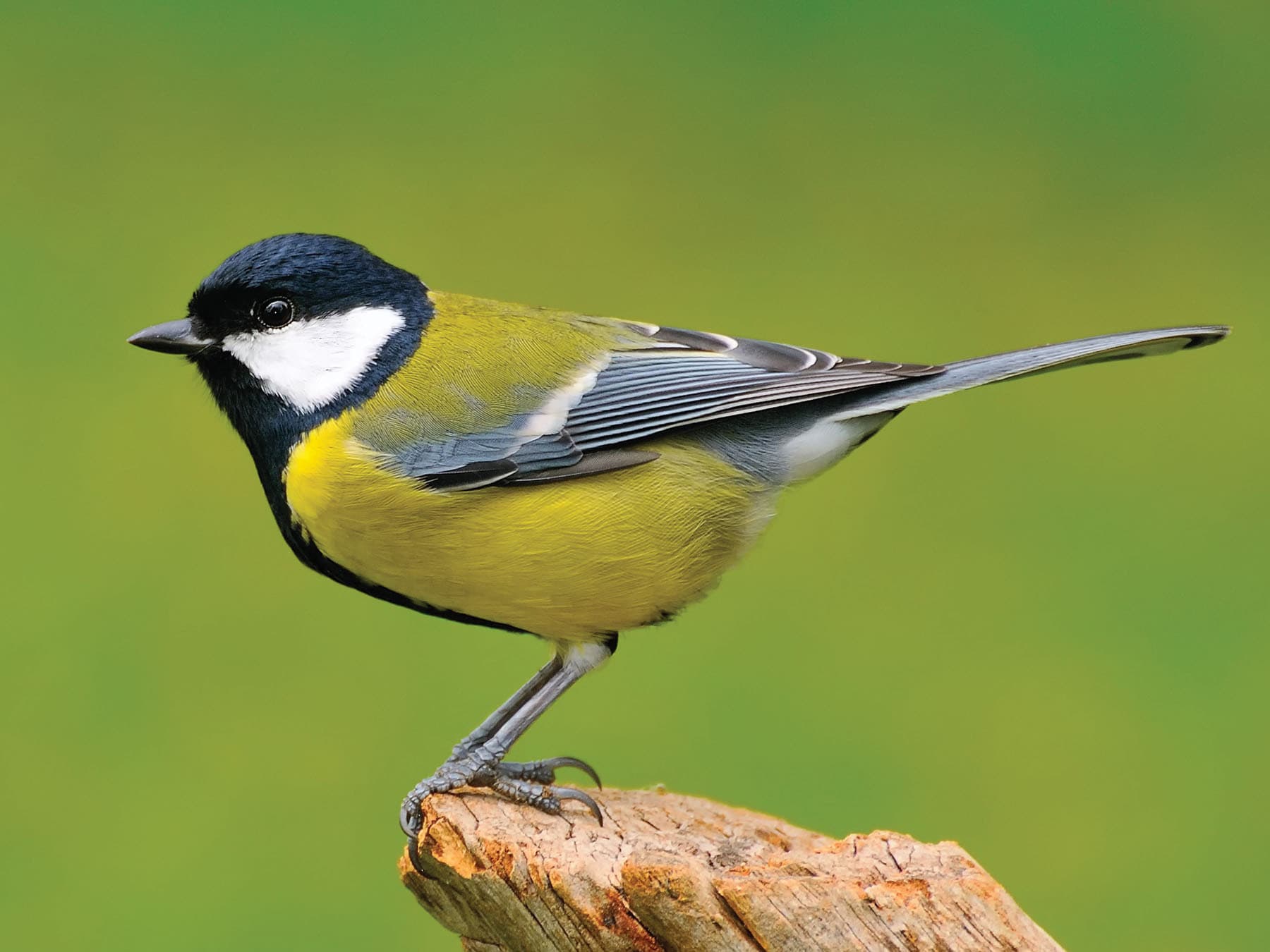
- Great Tit0:32
A ringing two-note “teacher, teacher”, and many other calls.
Late winter and spring
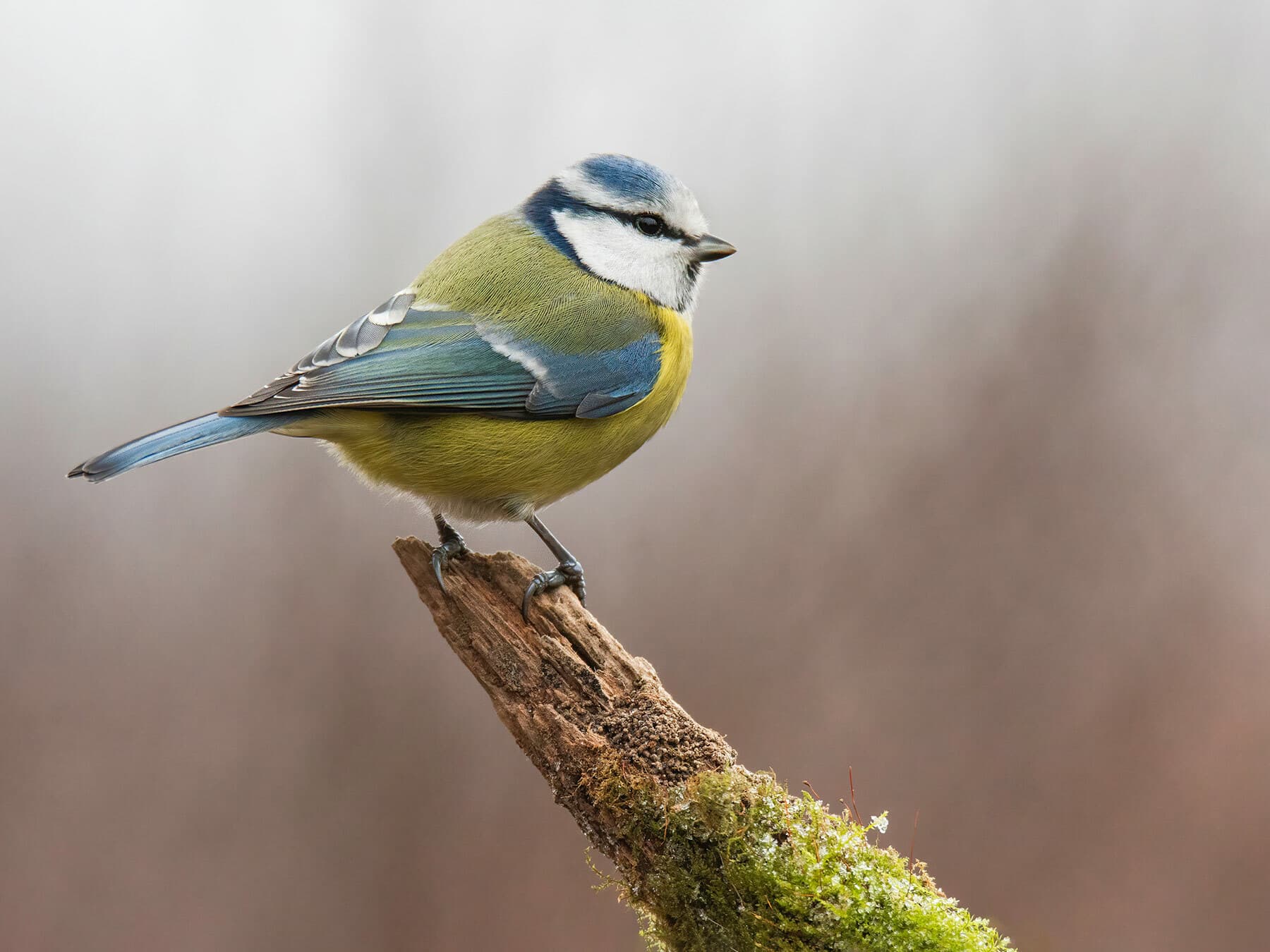
- Blue Tit0:53
Two or three high notes, then a trill: “tsee-tsee-chu-chu-chu”.
Late winter and spring
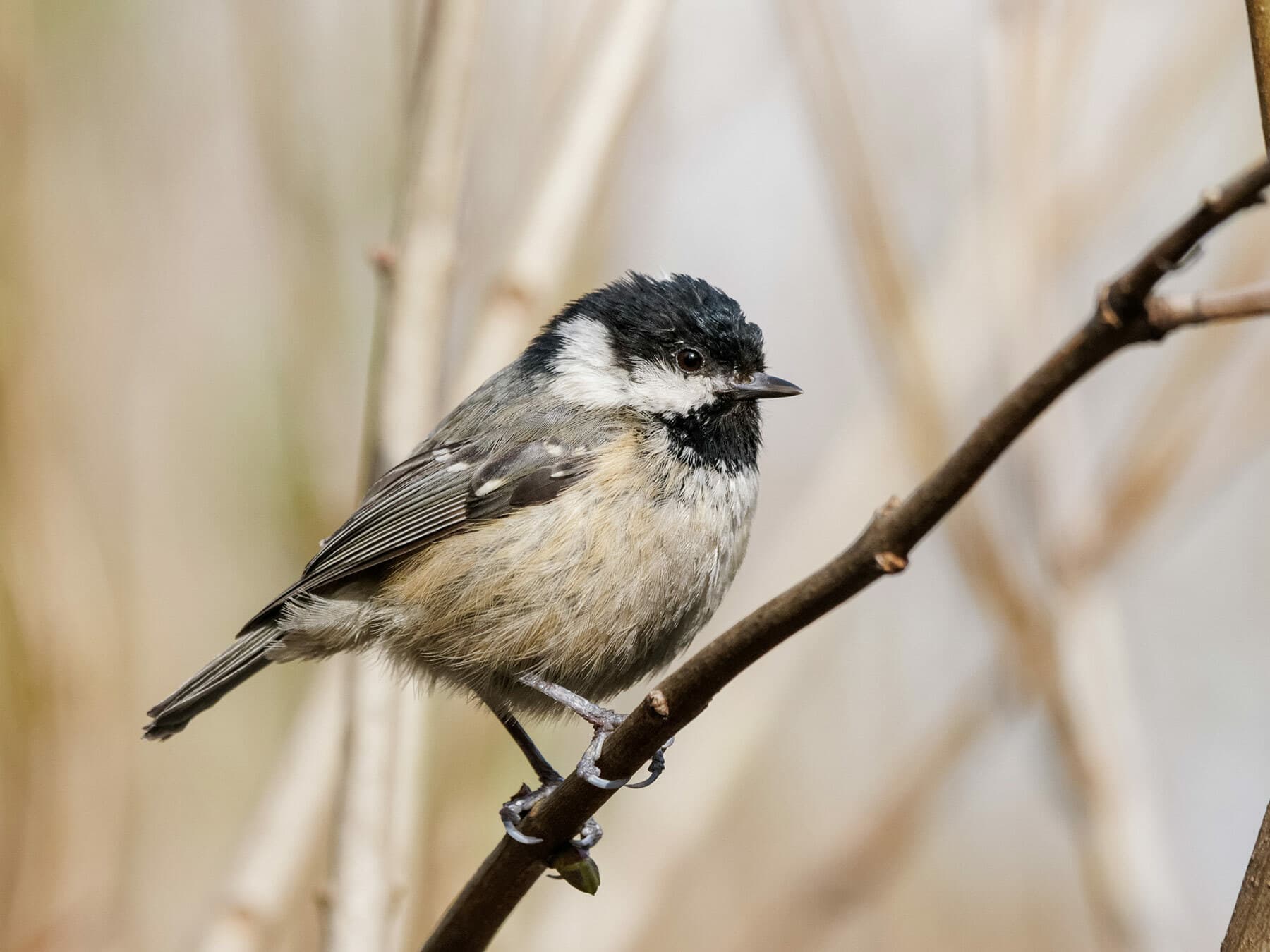
- Coal Tit0:11
Like a Great Tit, but higher and quicker: “teechu-teechu”.
Most of the year
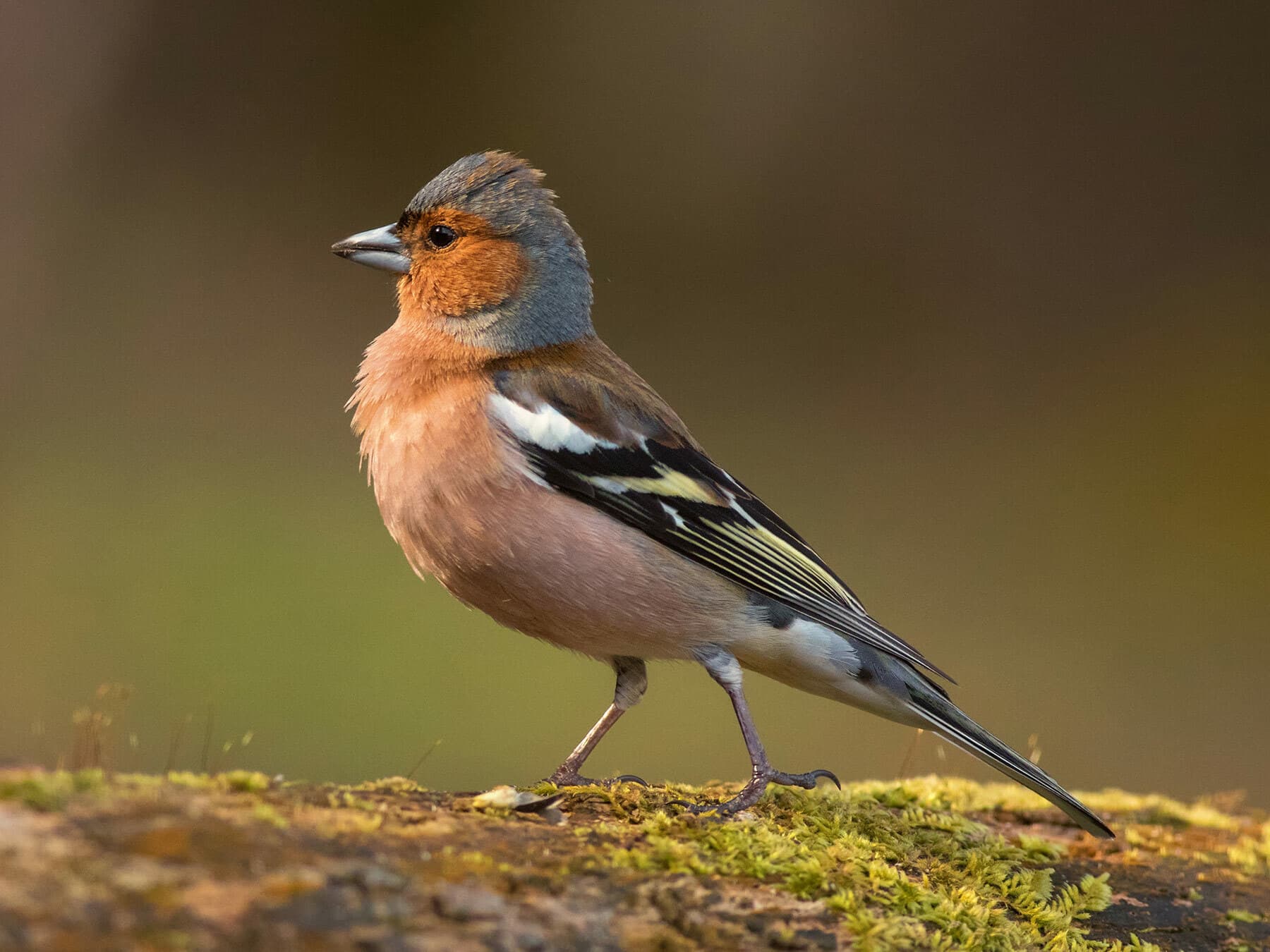
- Chaffinch0:11
A falling run of notes that speeds up and ends in a flourish.
February to July
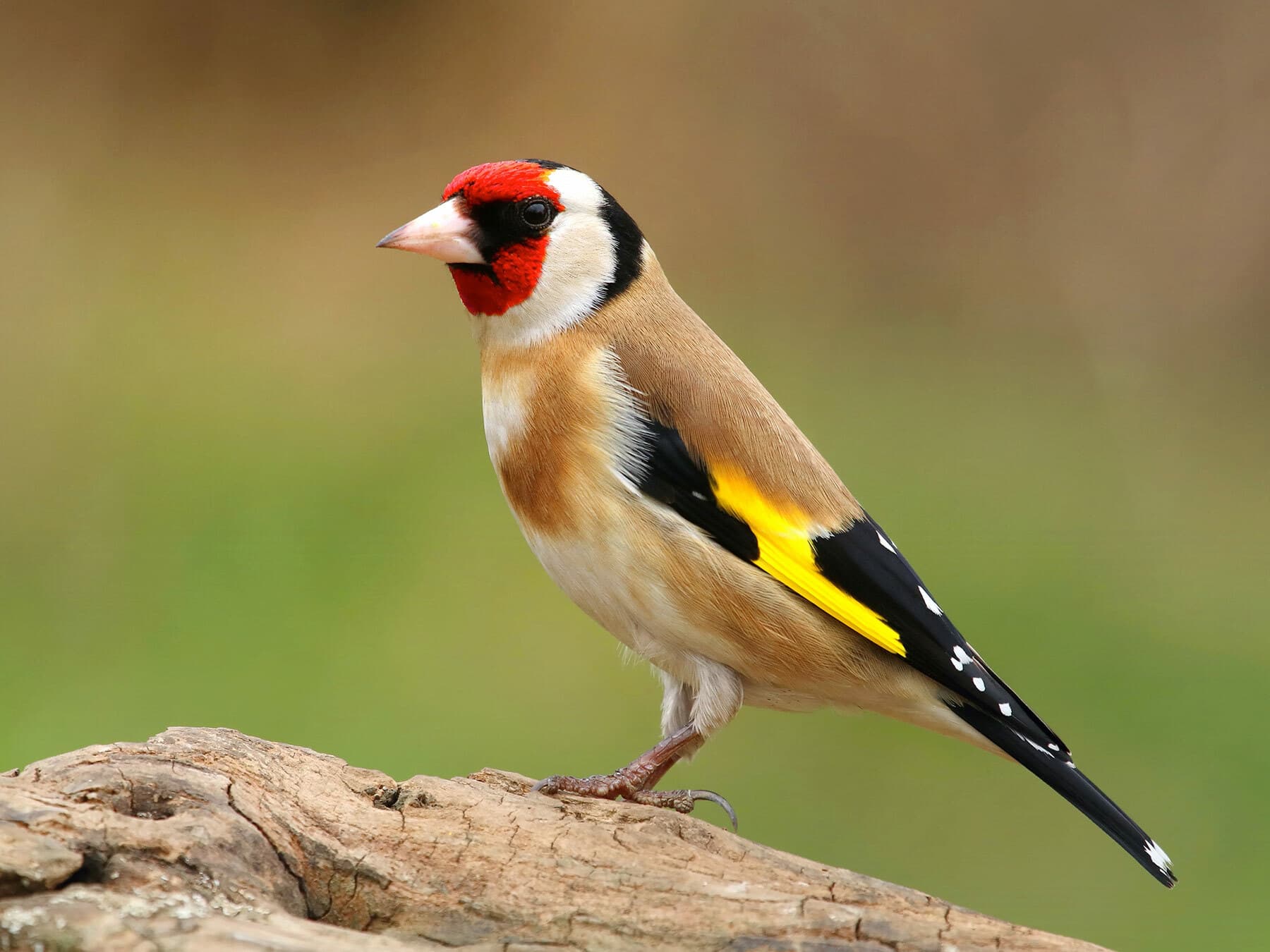
- Goldfinch0:34
Liquid, tinkling twitters, often from a group.
Much of the year
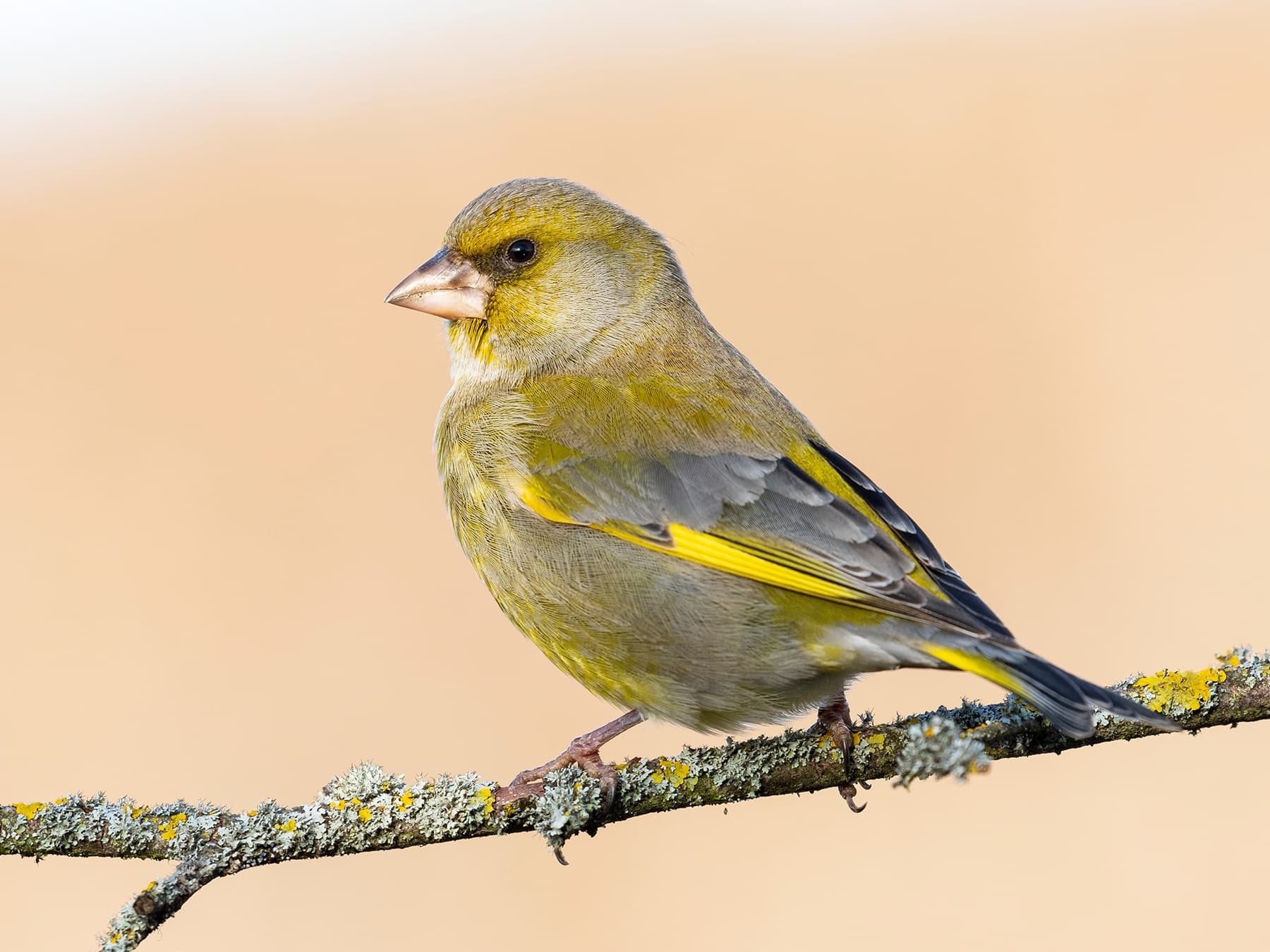
- Greenfinch1:33
Twitters and trills, with a long, wheezy “dzweee”.
Spring and summer
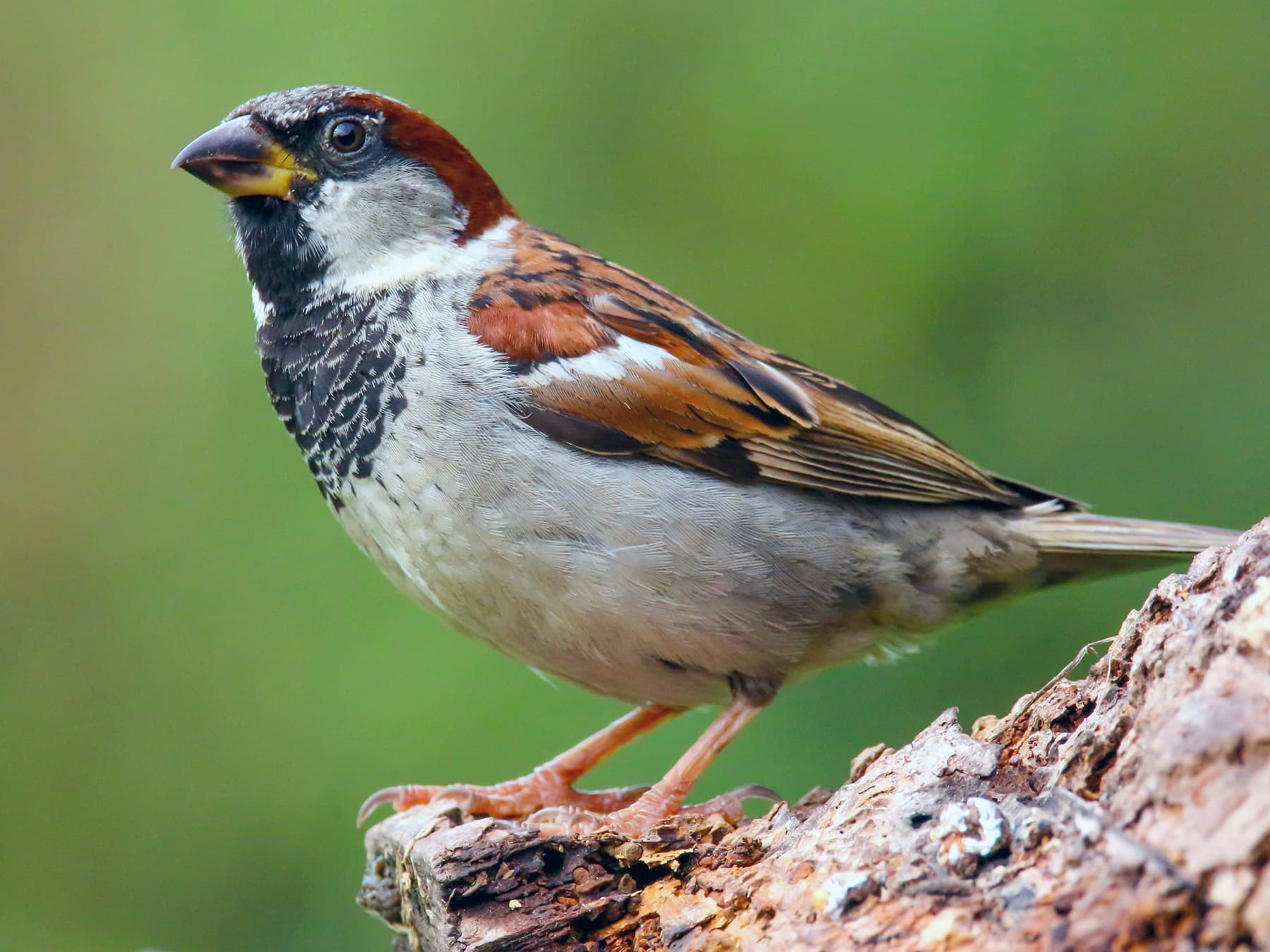
- House Sparrow0:41
Cheerful chirps, over and over, often from a busy group.
All year
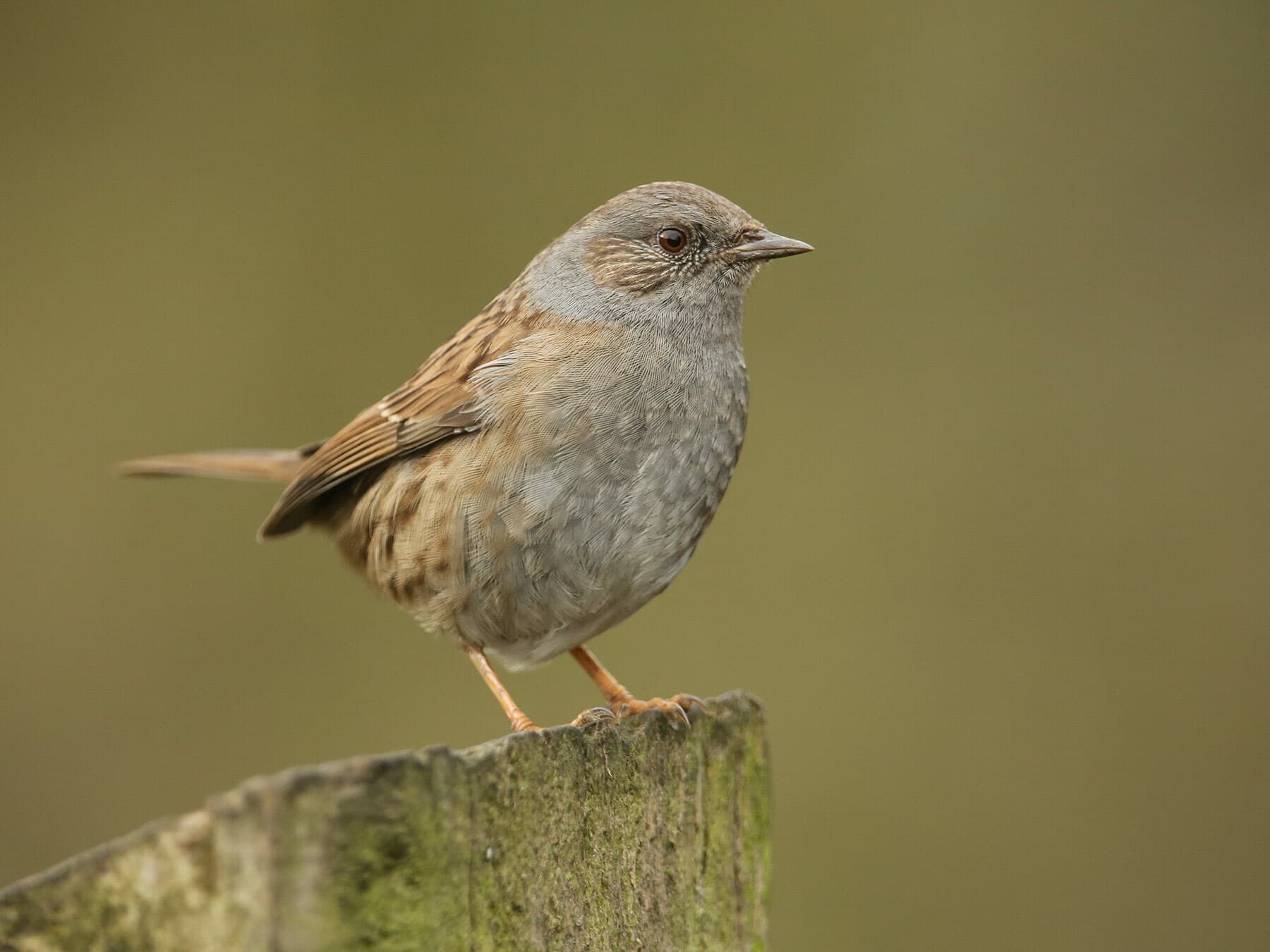
- Dunnock0:18
A hurried, thin, scratchy warble with no clear pattern.
Most of the year
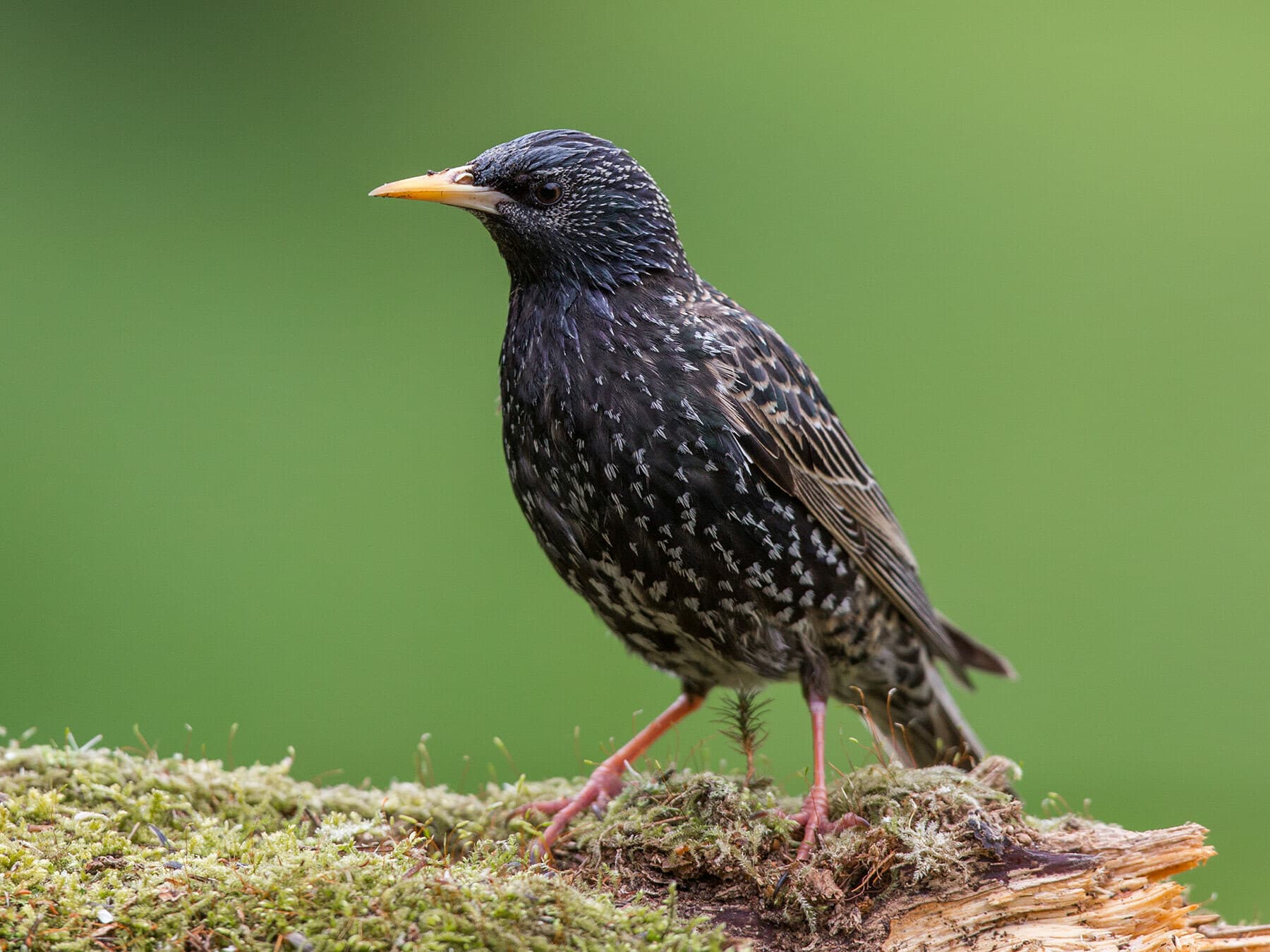
- Starling0:28
Clicks, whistles, wheezes and copies of other birds and sounds.
All year
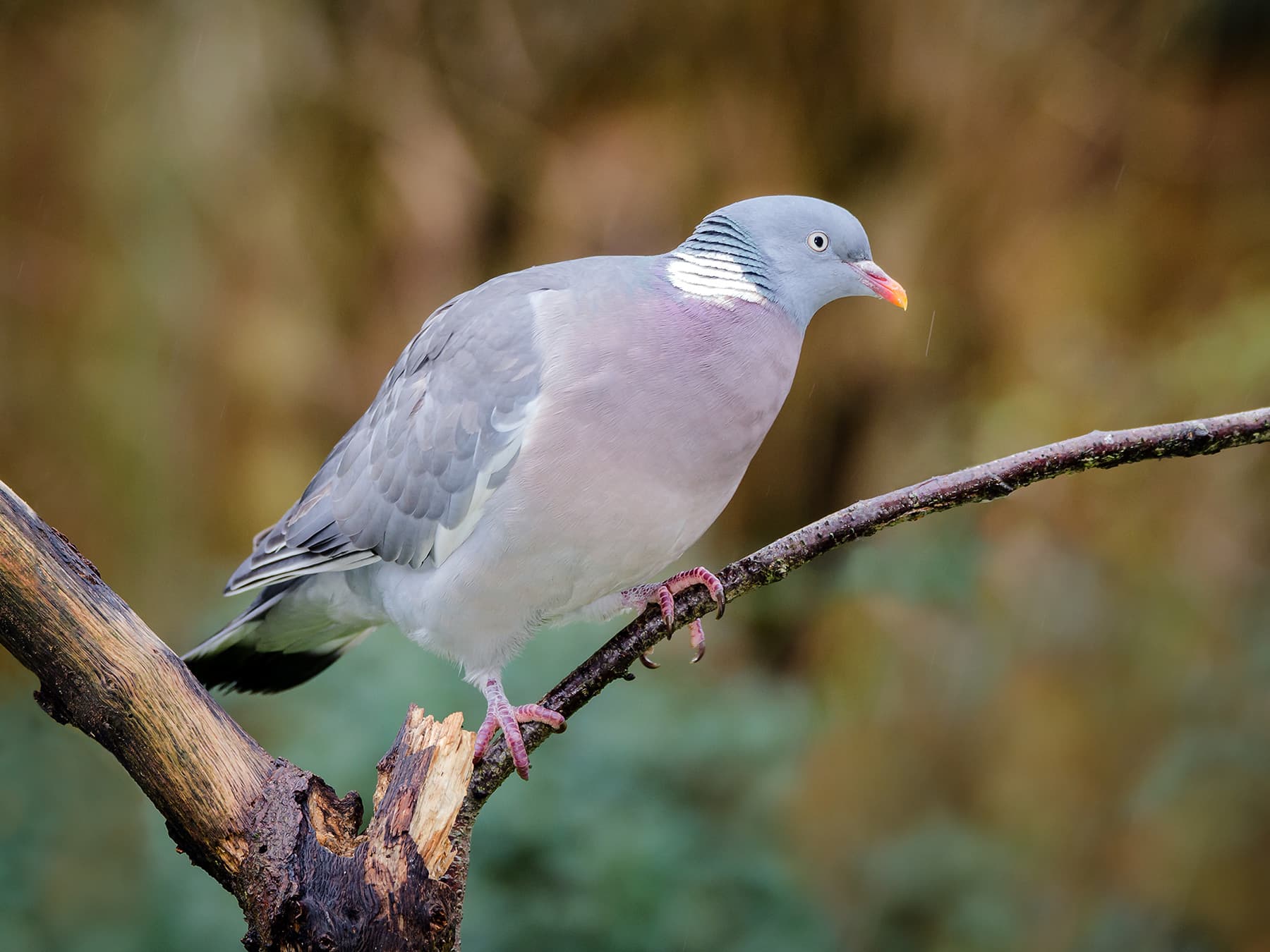
- Woodpigeon0:11
Five soft hoots, stressed on the second: “coo-COO-coo, coo-coo”.
Most of the year
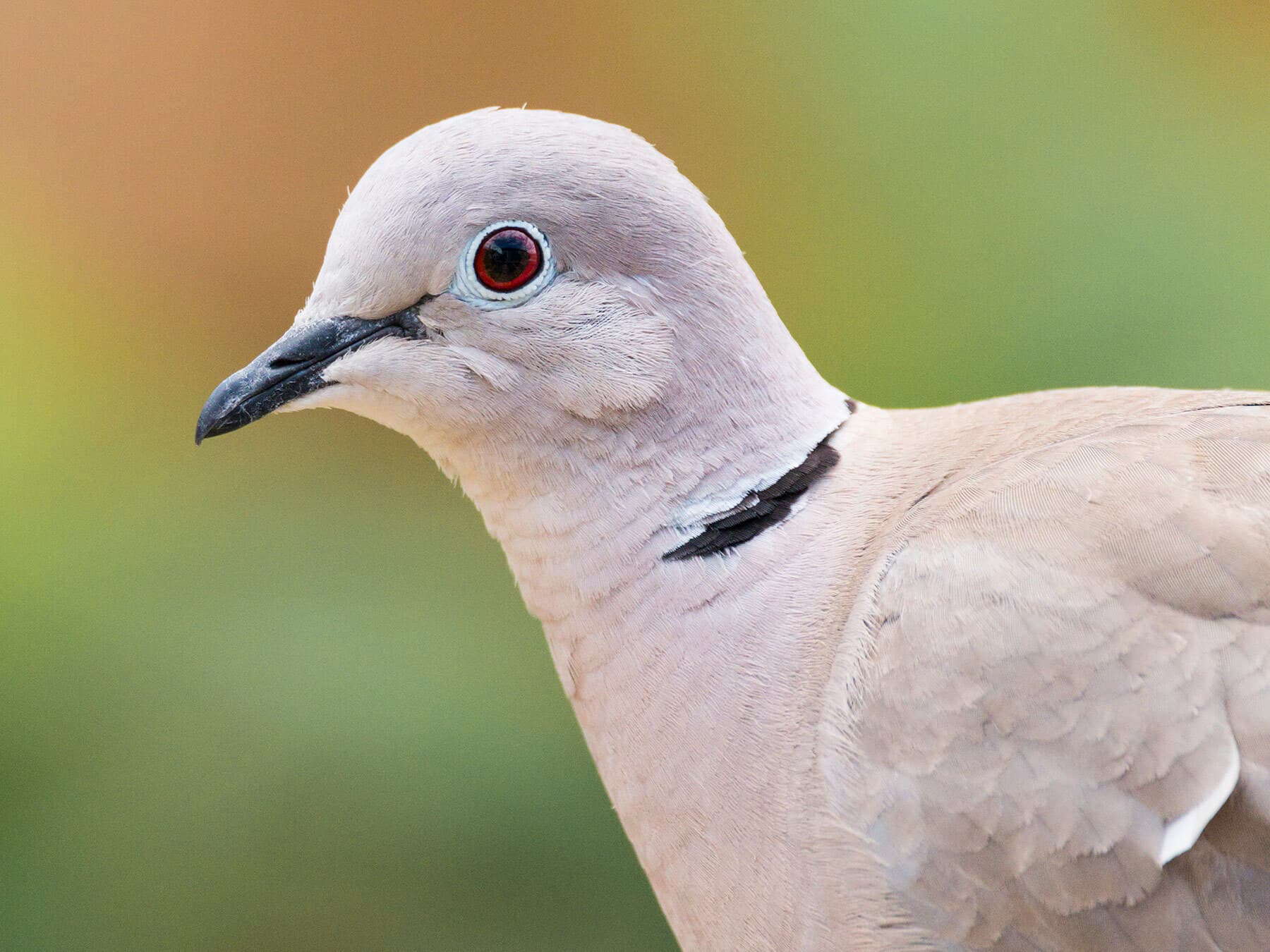
- Collared Dove0:14
Three notes, the middle one stressed: “coo-COO-cuk”.
All year
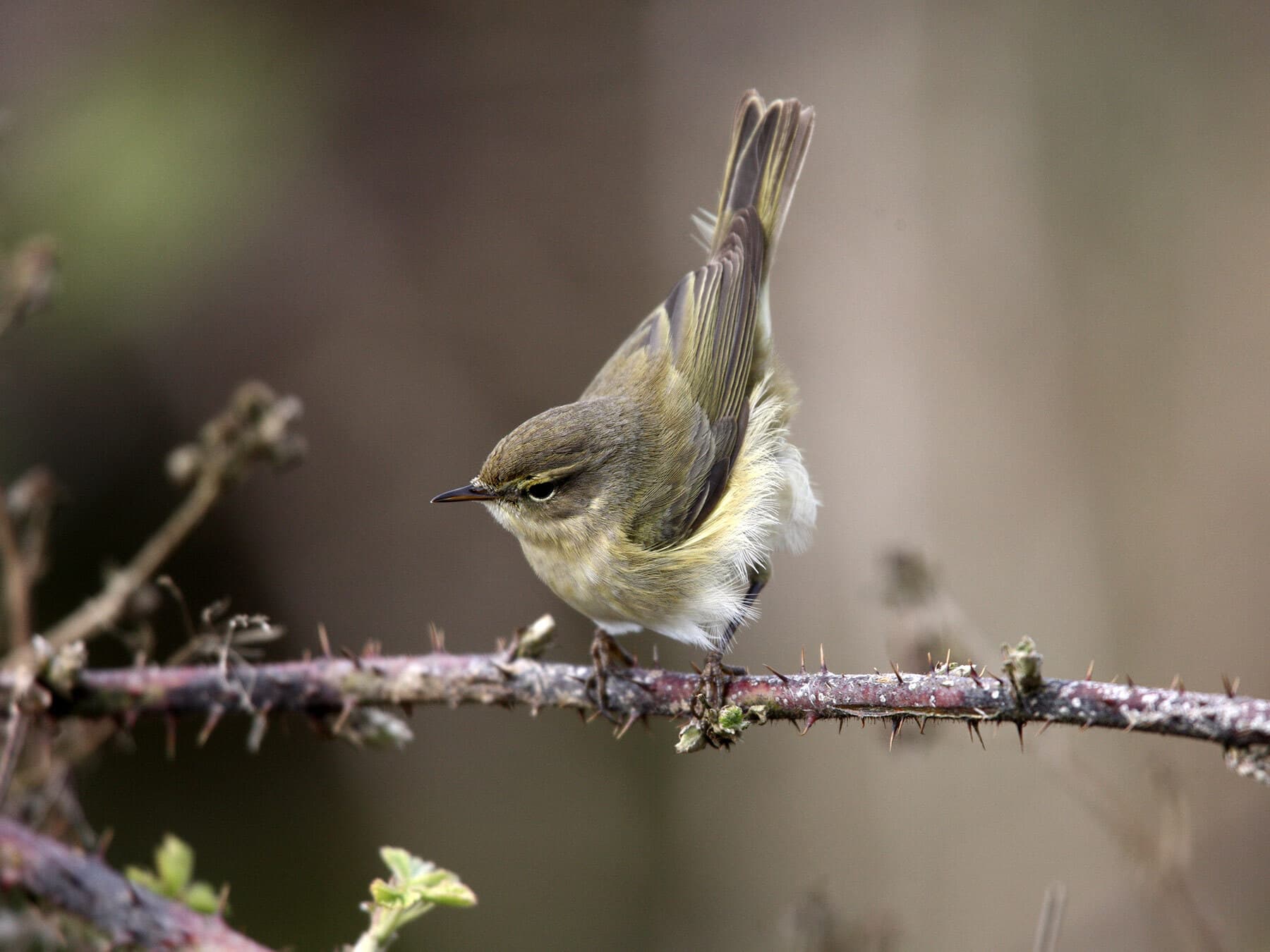
- Chiffchaff1:32
Says its name: “chiff-chaff-chiff-chaff”, on and on.
March to September
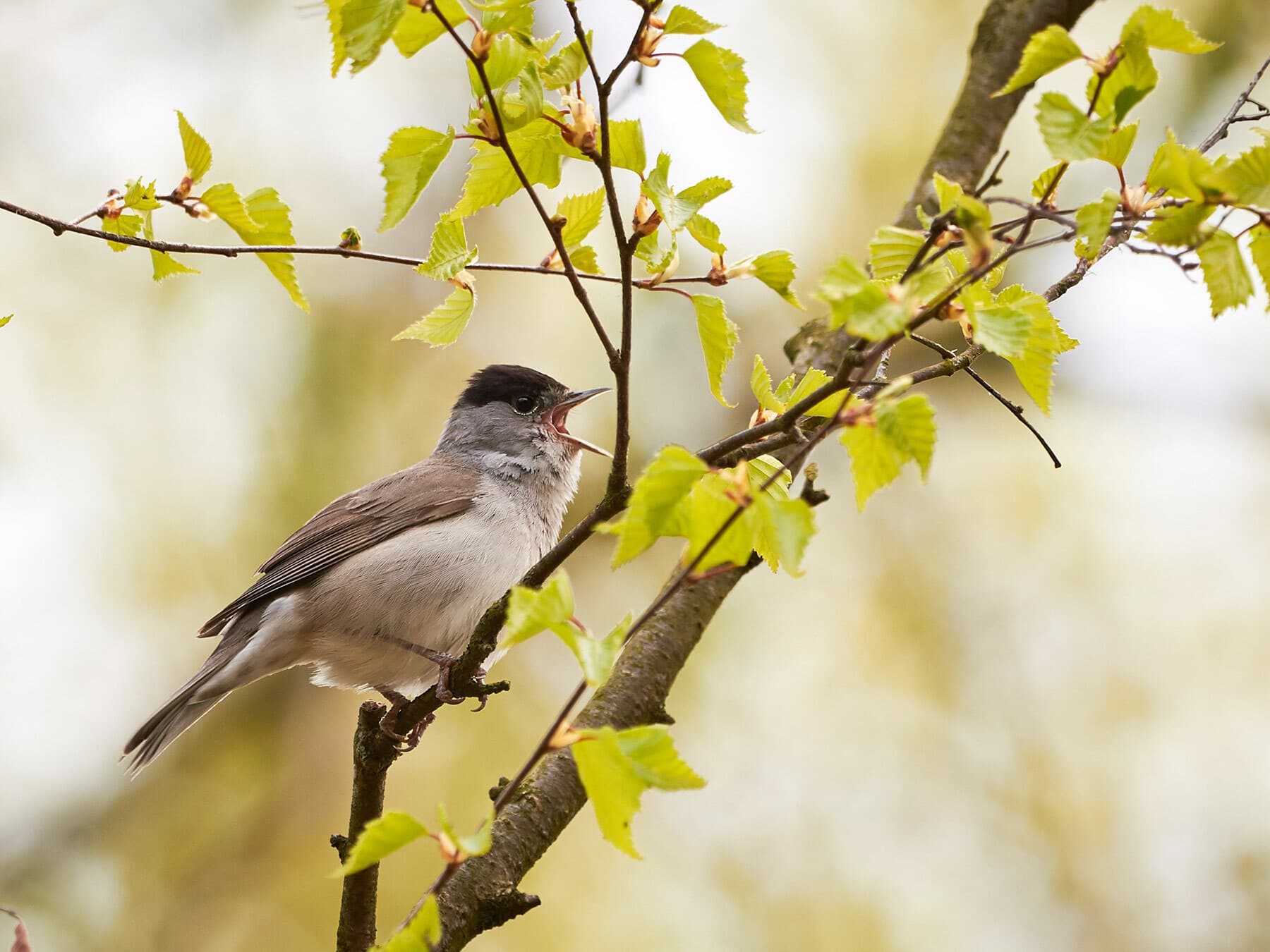
- Blackcap0:39
A rich, fast warble that gets louder towards the end.
April to July
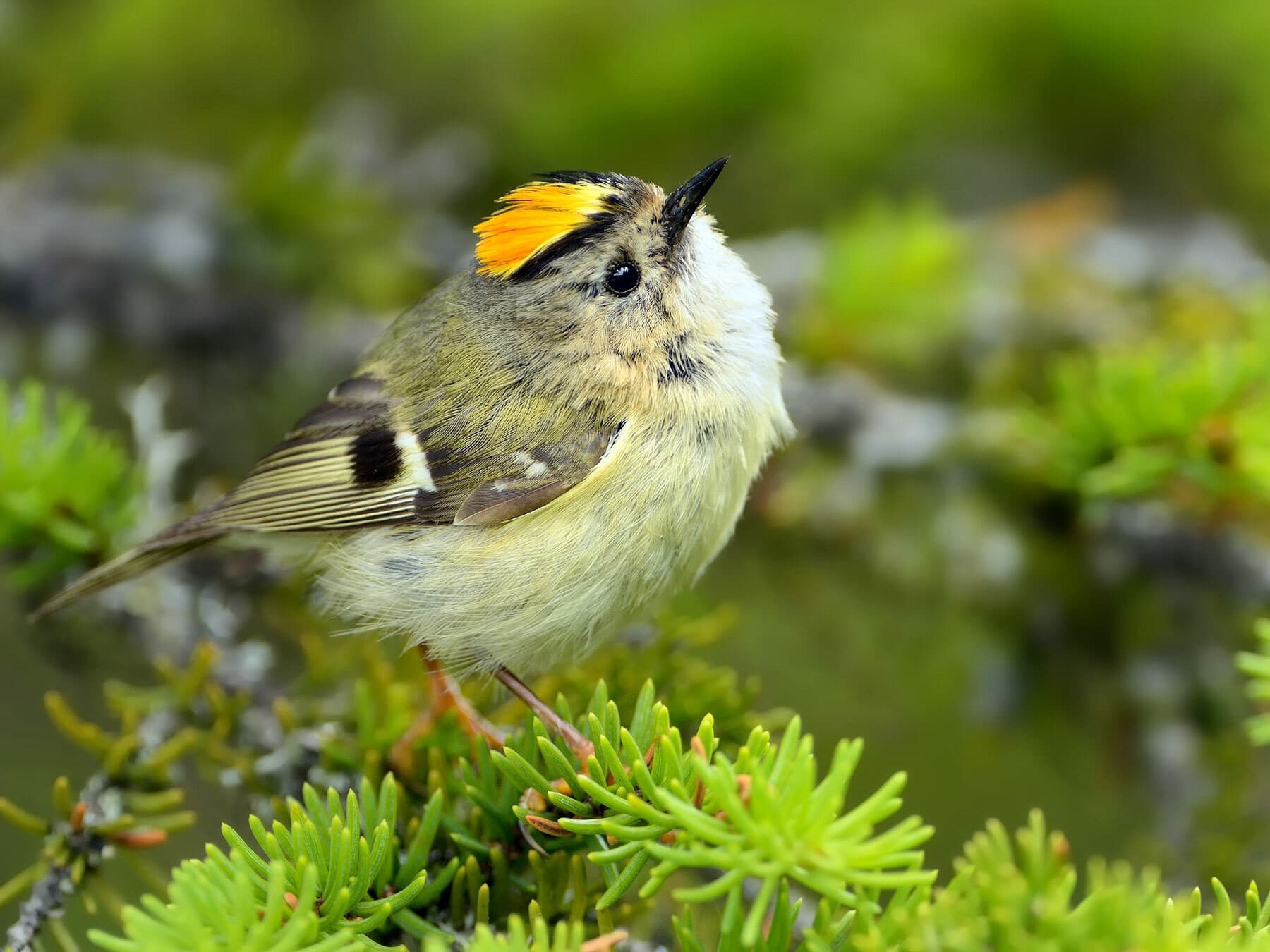
- Goldcrest0:38
Very high and thin, rising to a flourish. Some people can’t hear it at all.
Most of the year
Aubrey John Williams / The British Library Board · Wikimedia Commons · CC BY-SA 4.0
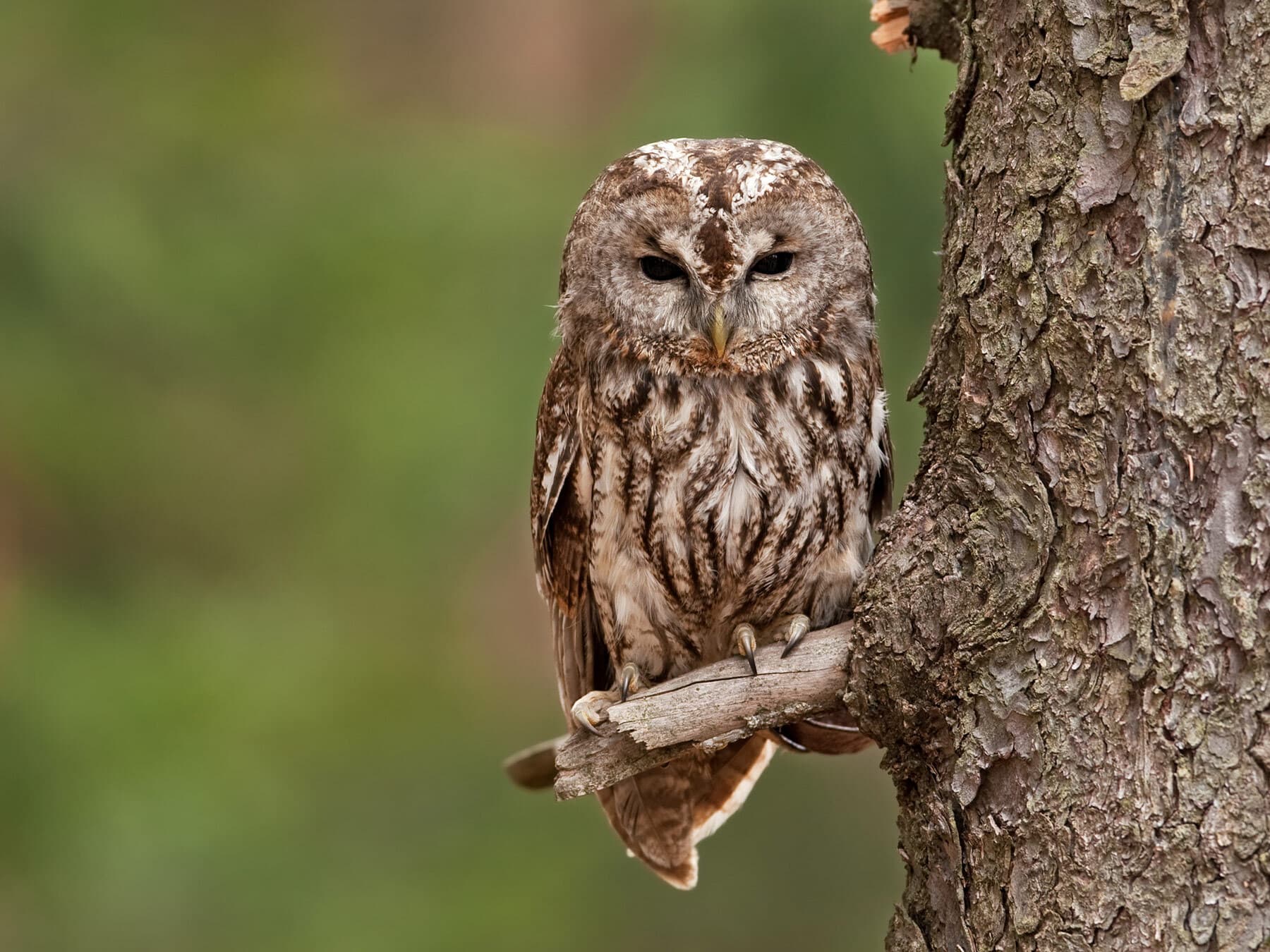
- Tawny Owl0:10
The female’s sharp “ke-wick” and the male’s long, wavering hoot.
Autumn and winter nights
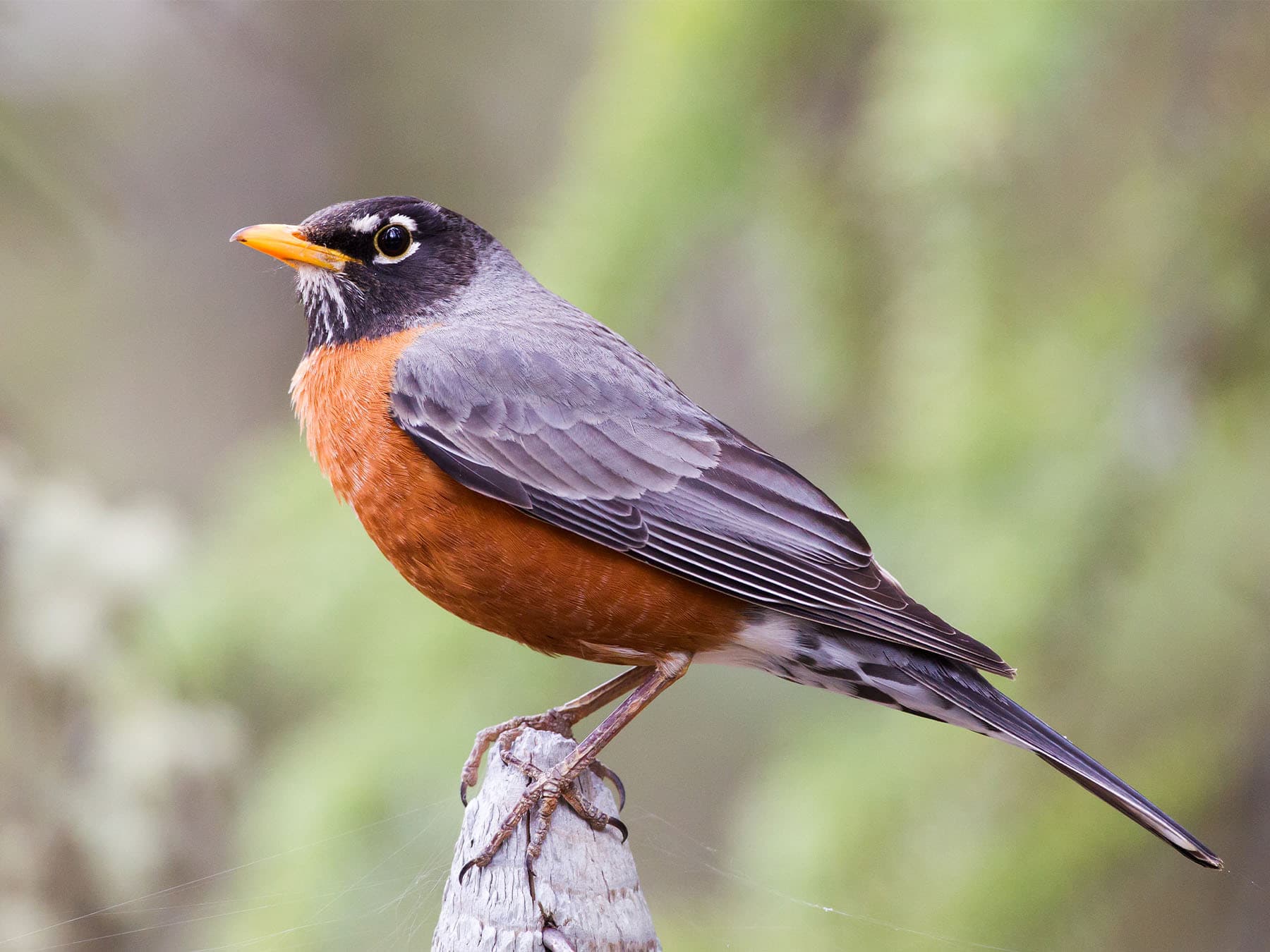
- American Robin0:43
Rich phrases that rise and fall: “cheerily, cheer-up, cheerio”.
Spring and summer, from before dawn
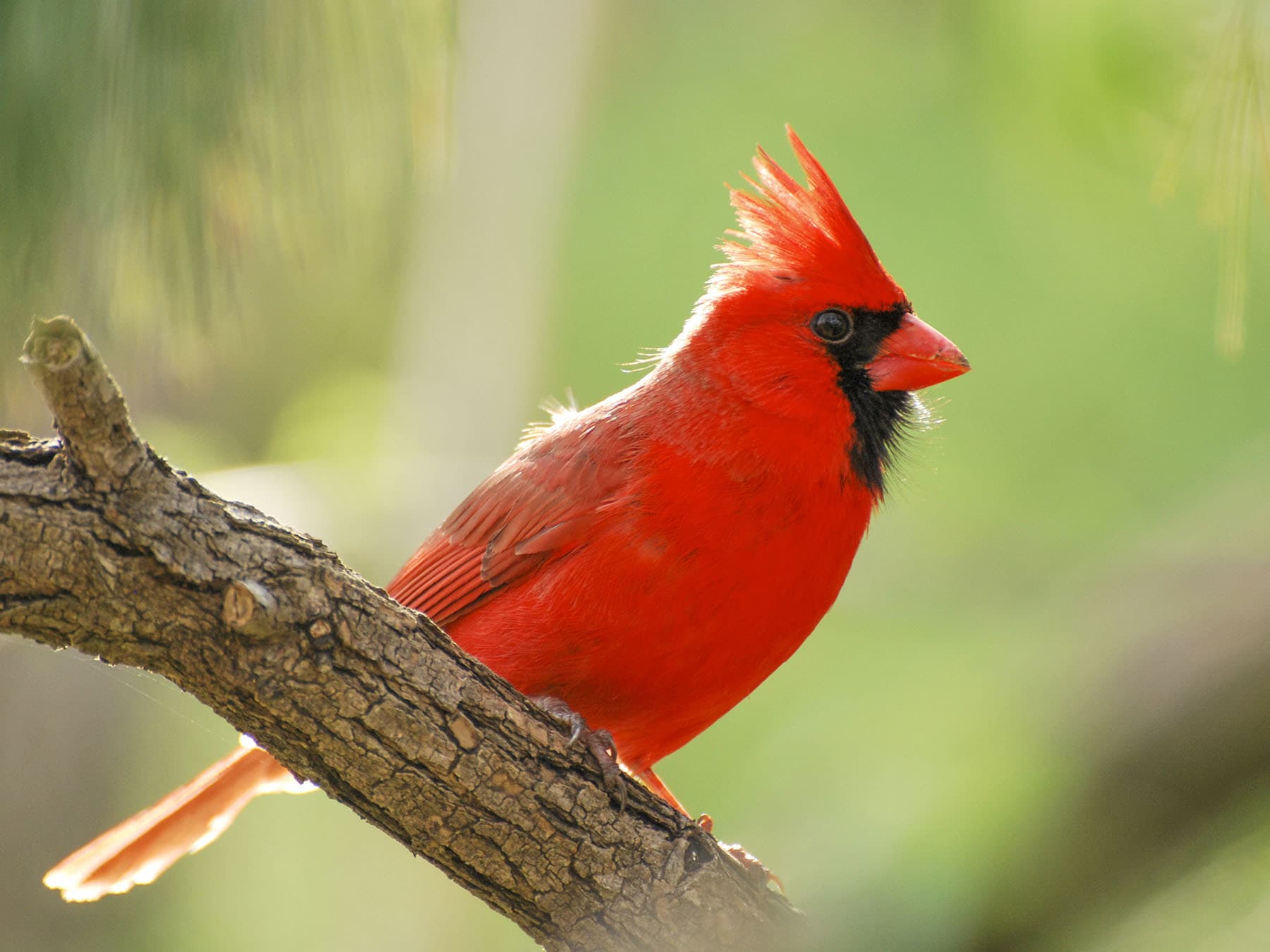
Loud, clear, slurred whistles: “cheer-cheer-cheer” or “birdie-birdie”.
Most of the year; females sing too
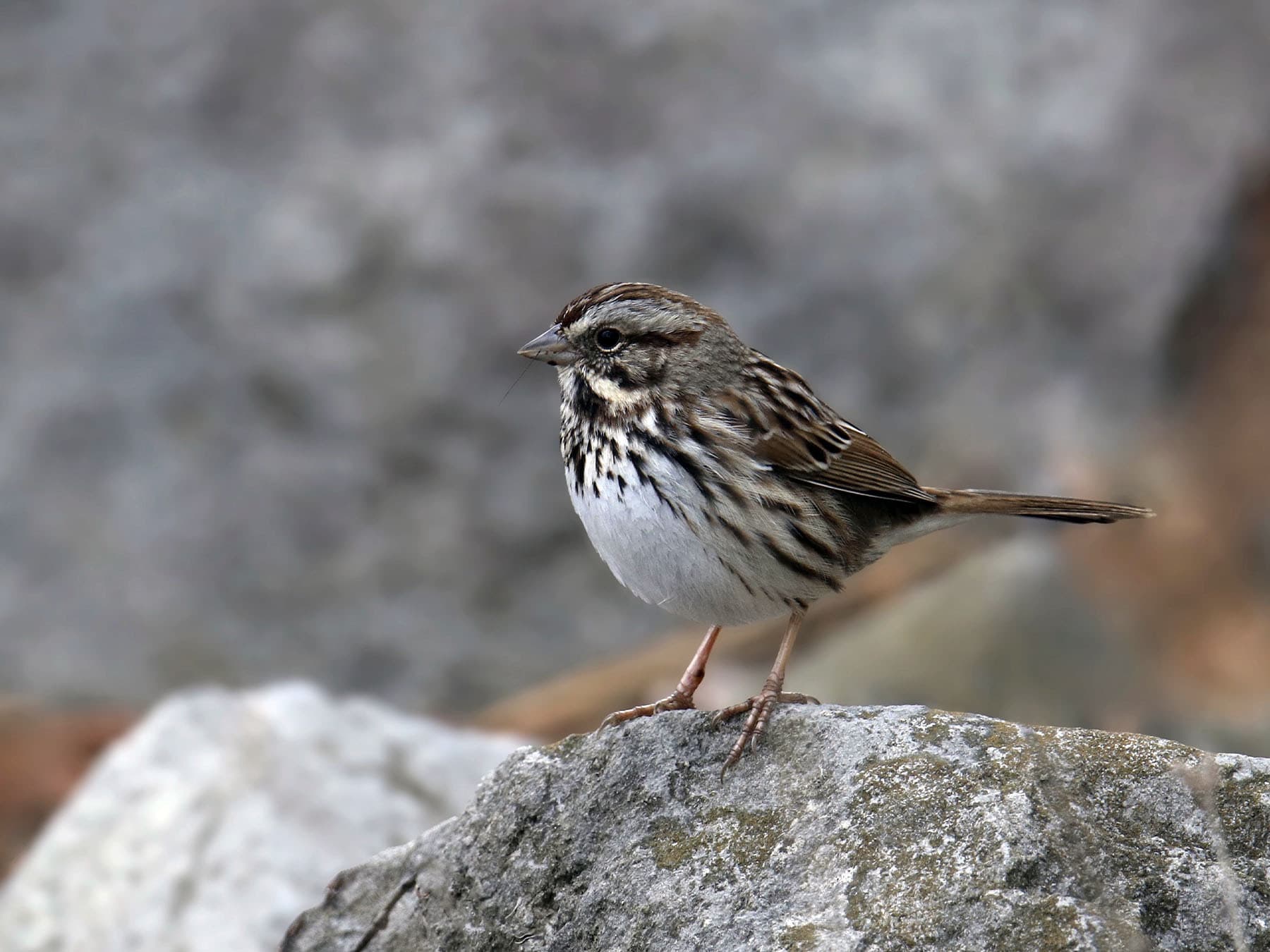
- Song Sparrow0:40
A few clear notes, then a buzz and a trill.
Spring and summer
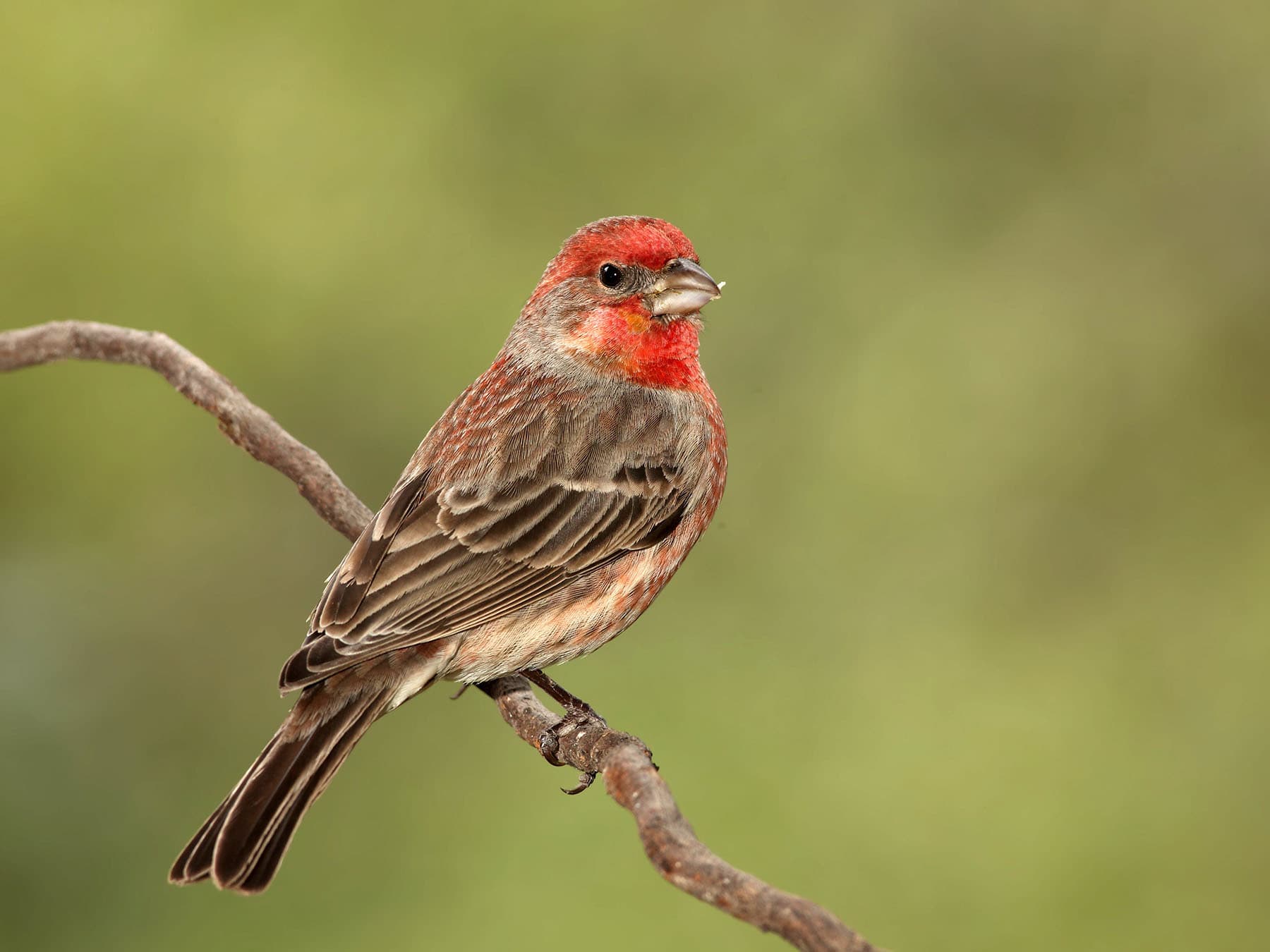
- House Finch0:58
A long, rambling warble that often ends on a buzzy “zeee”.
Much of the year
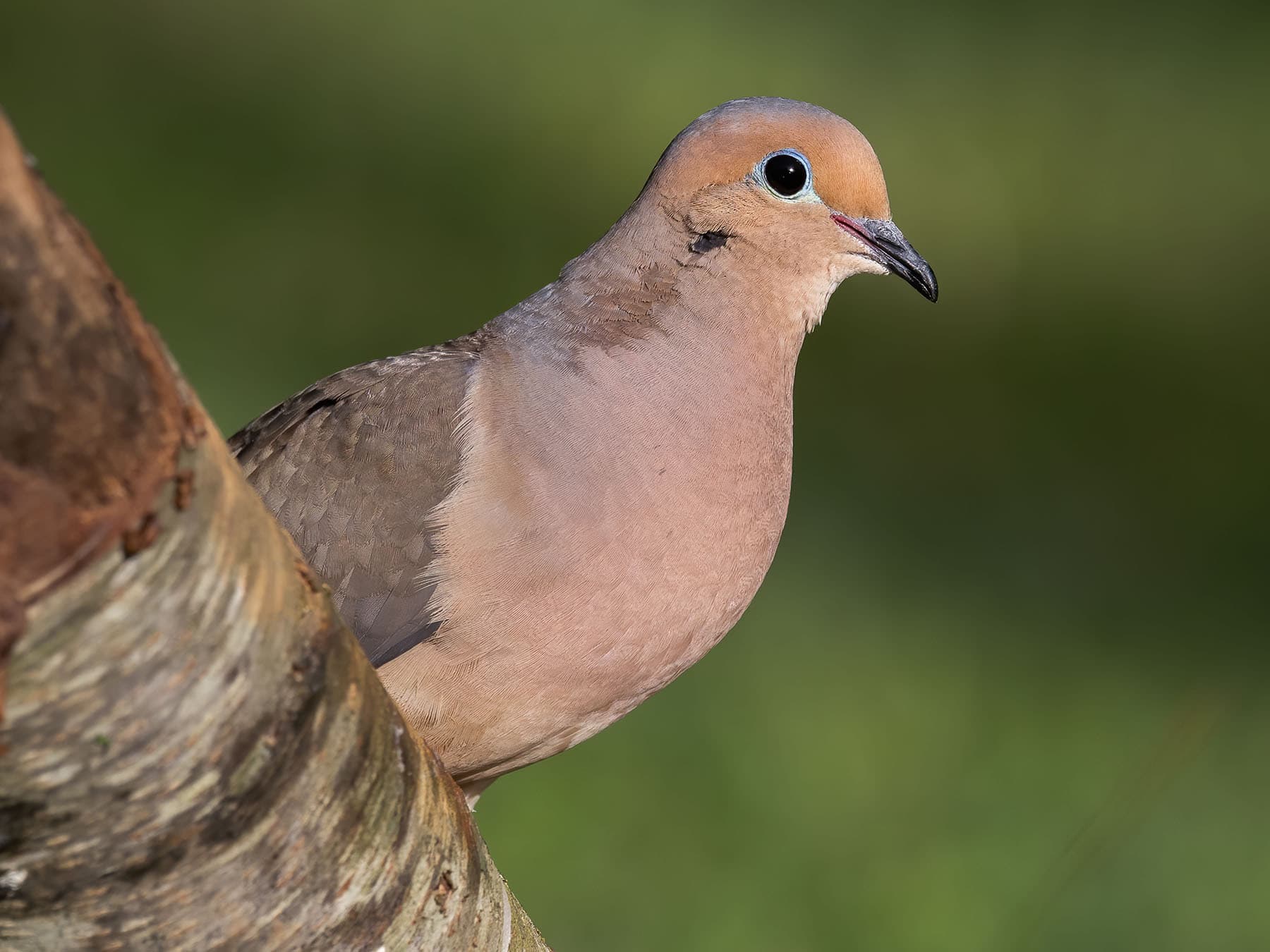
- Mourning Dove0:30
A slow, soft “coo-OO-oo, oo, oo” that people often take for an owl.
Spring and summer
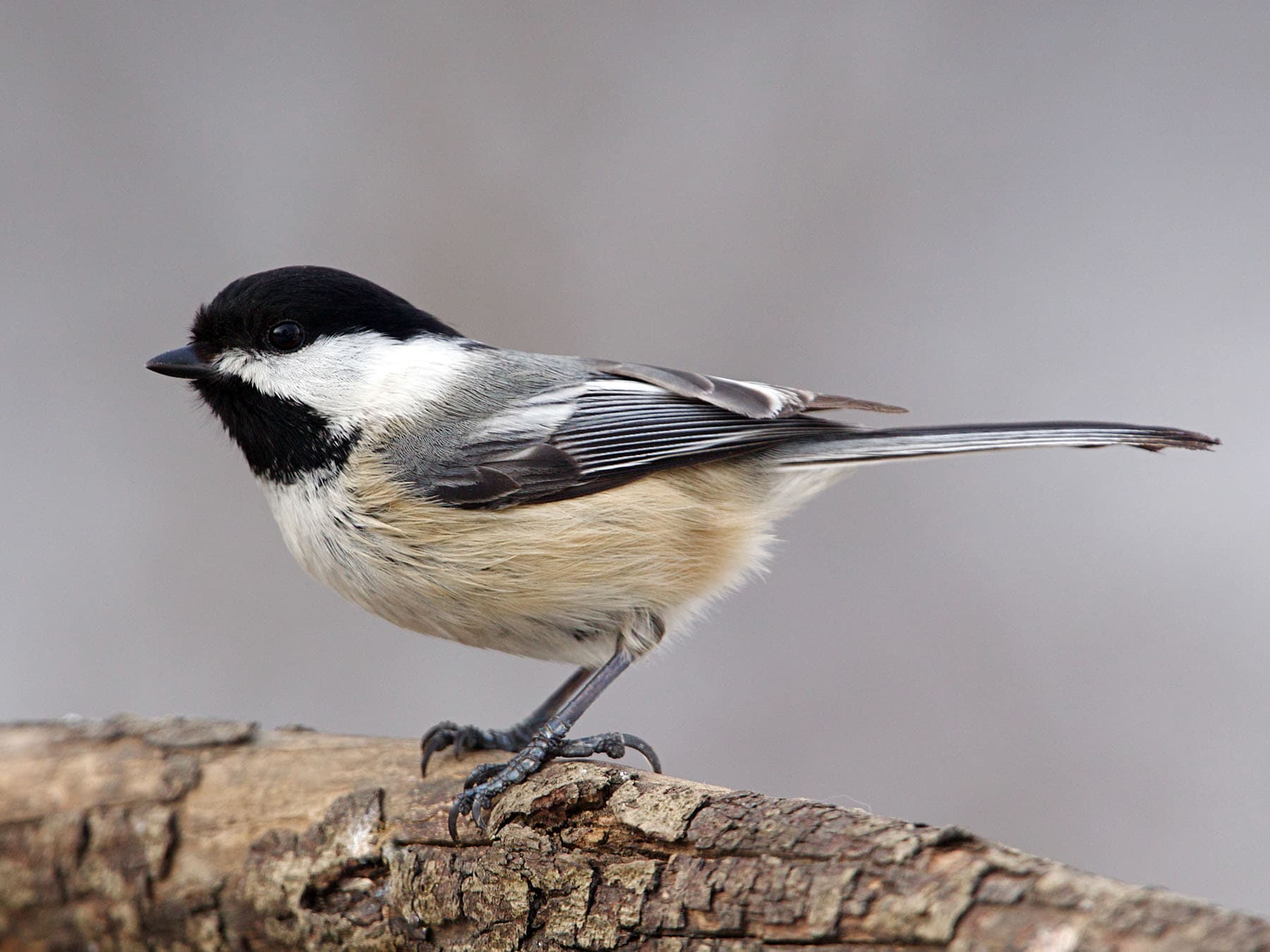
A clear, falling “fee-bee”, and the “chick-a-dee-dee-dee” call.
All year
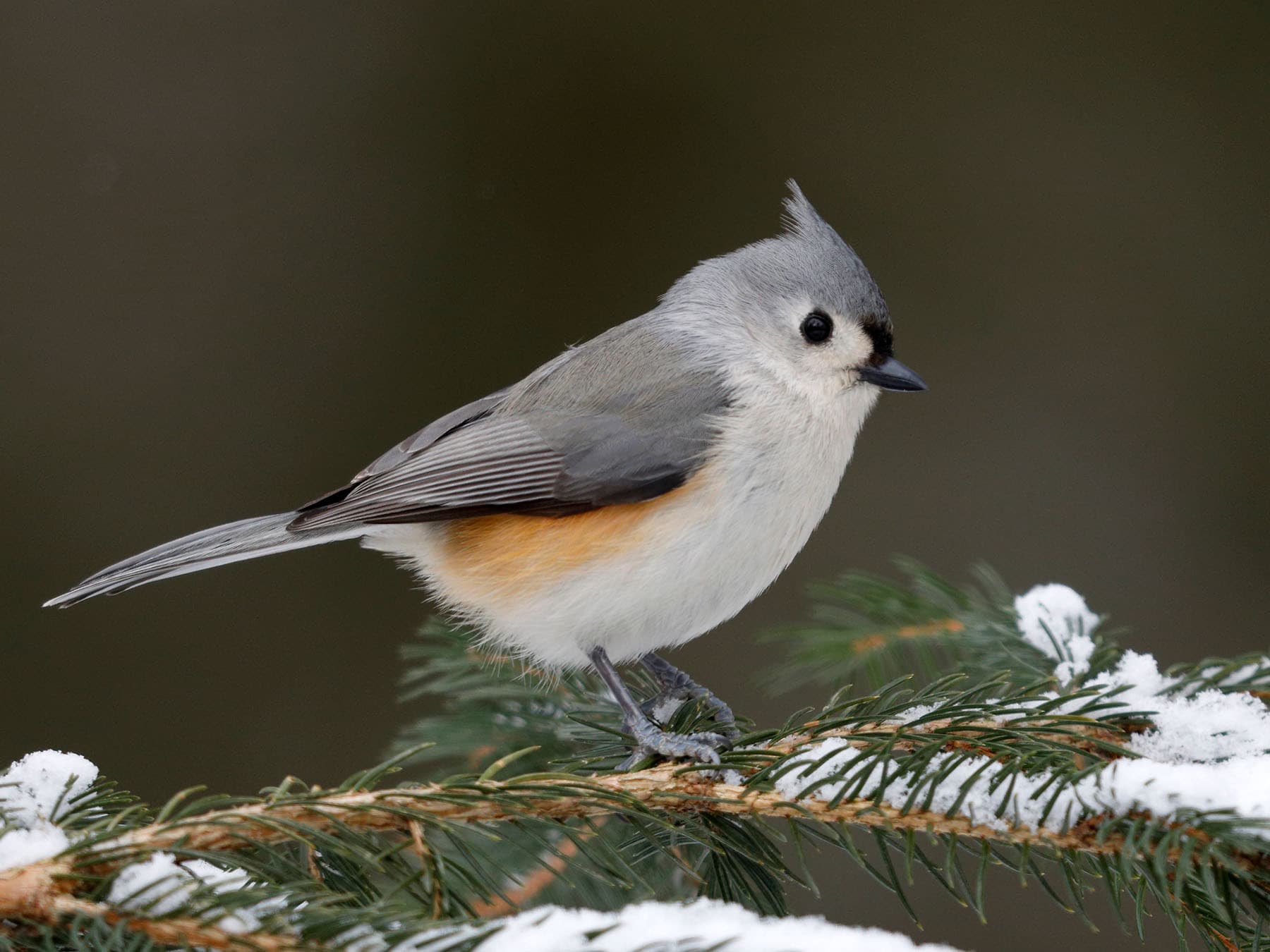
- Tufted Titmouse0:57
A clear, whistled “peter-peter-peter”.
All year
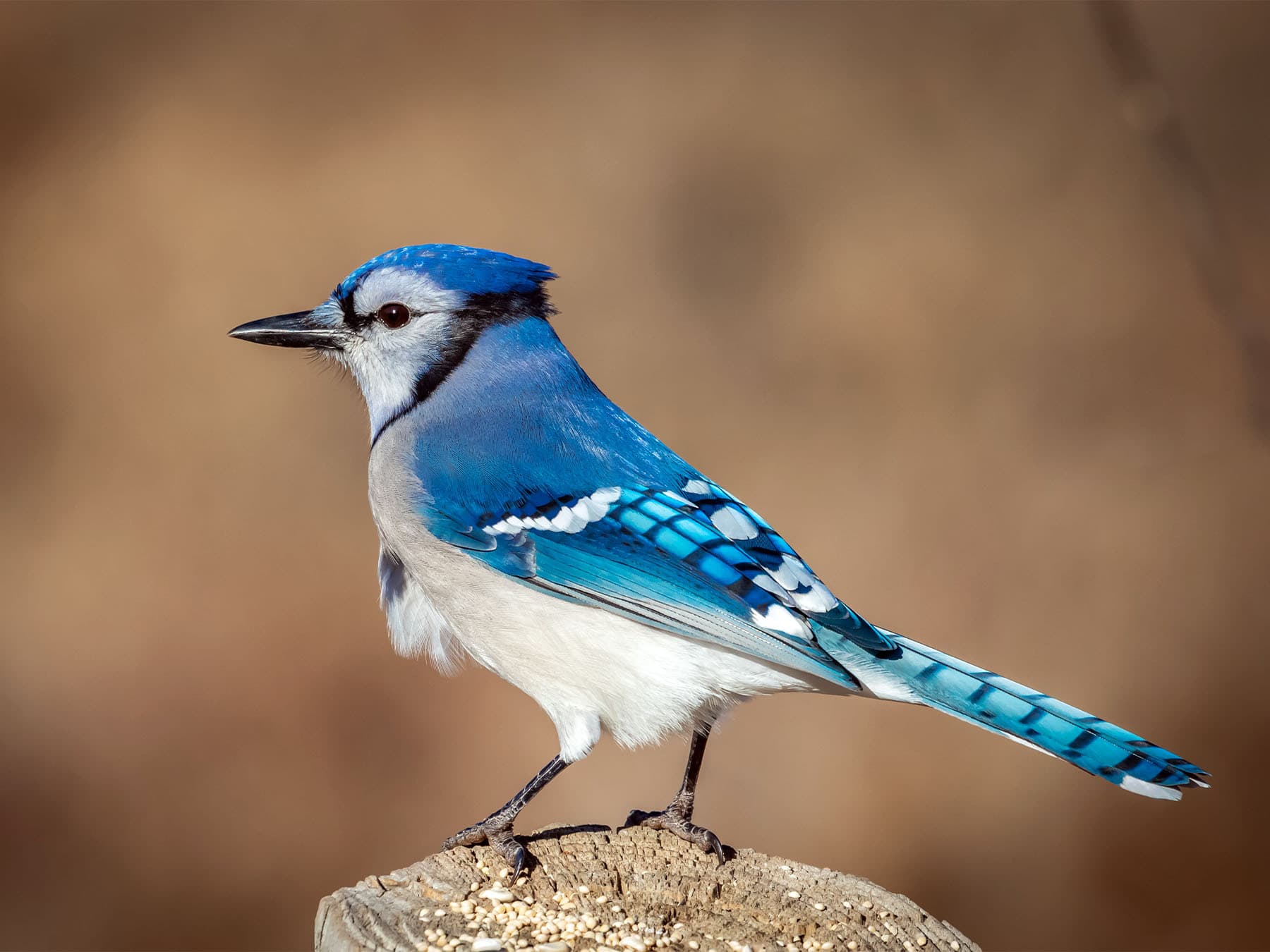
- Blue Jay0:41
A harsh “jay! jay!”, and a close copy of a Red-shouldered Hawk.
All year
Copies other birds, repeating each phrase about three times.
Spring and summer, often at night
- Dark-eyed Junco0:12
A musical trill, all on one pitch.
Spring; ticking calls in winter
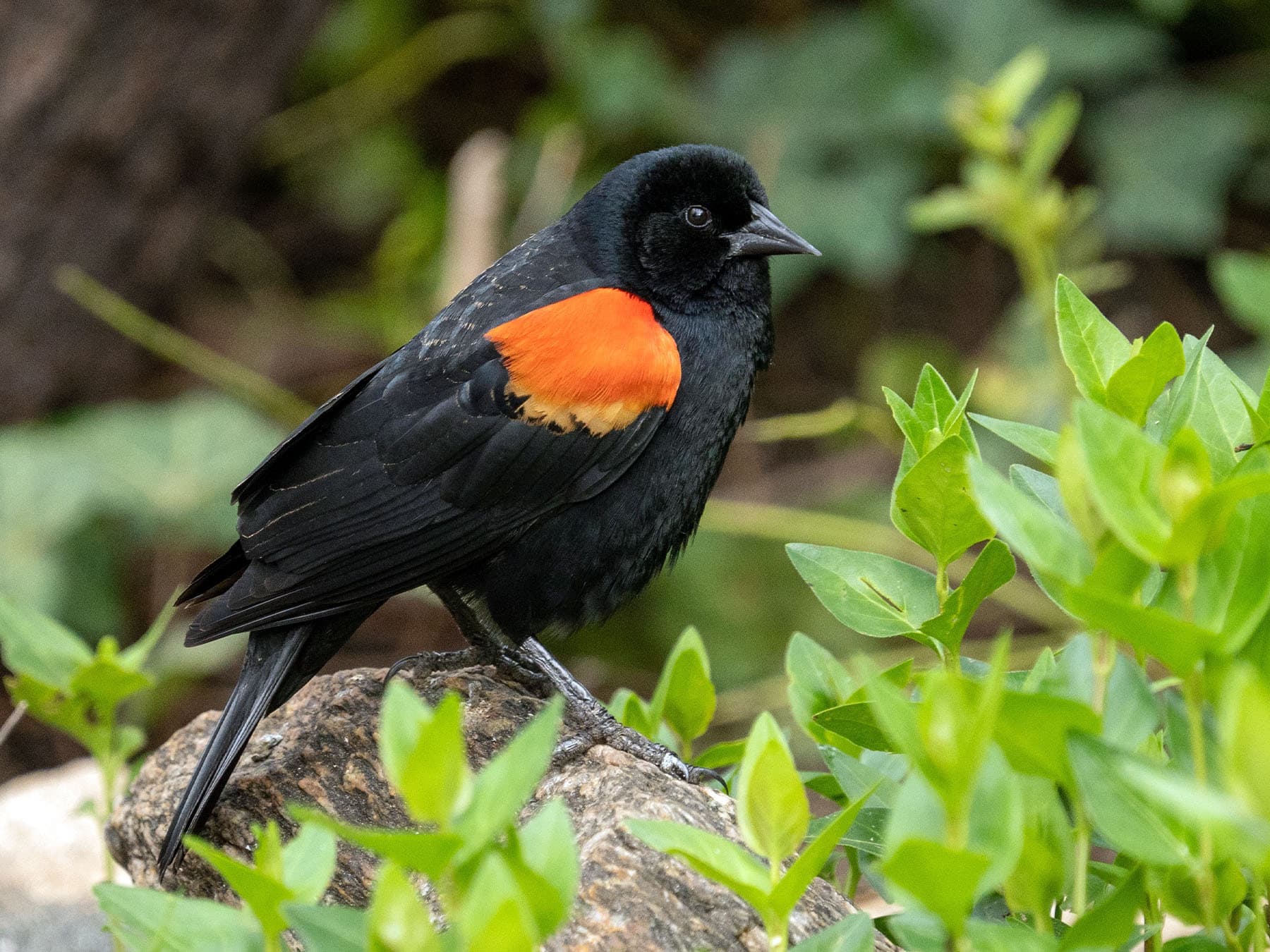
A gurgling “conk-la-ree!” from a reed, cattail or fence post.
Spring and summer
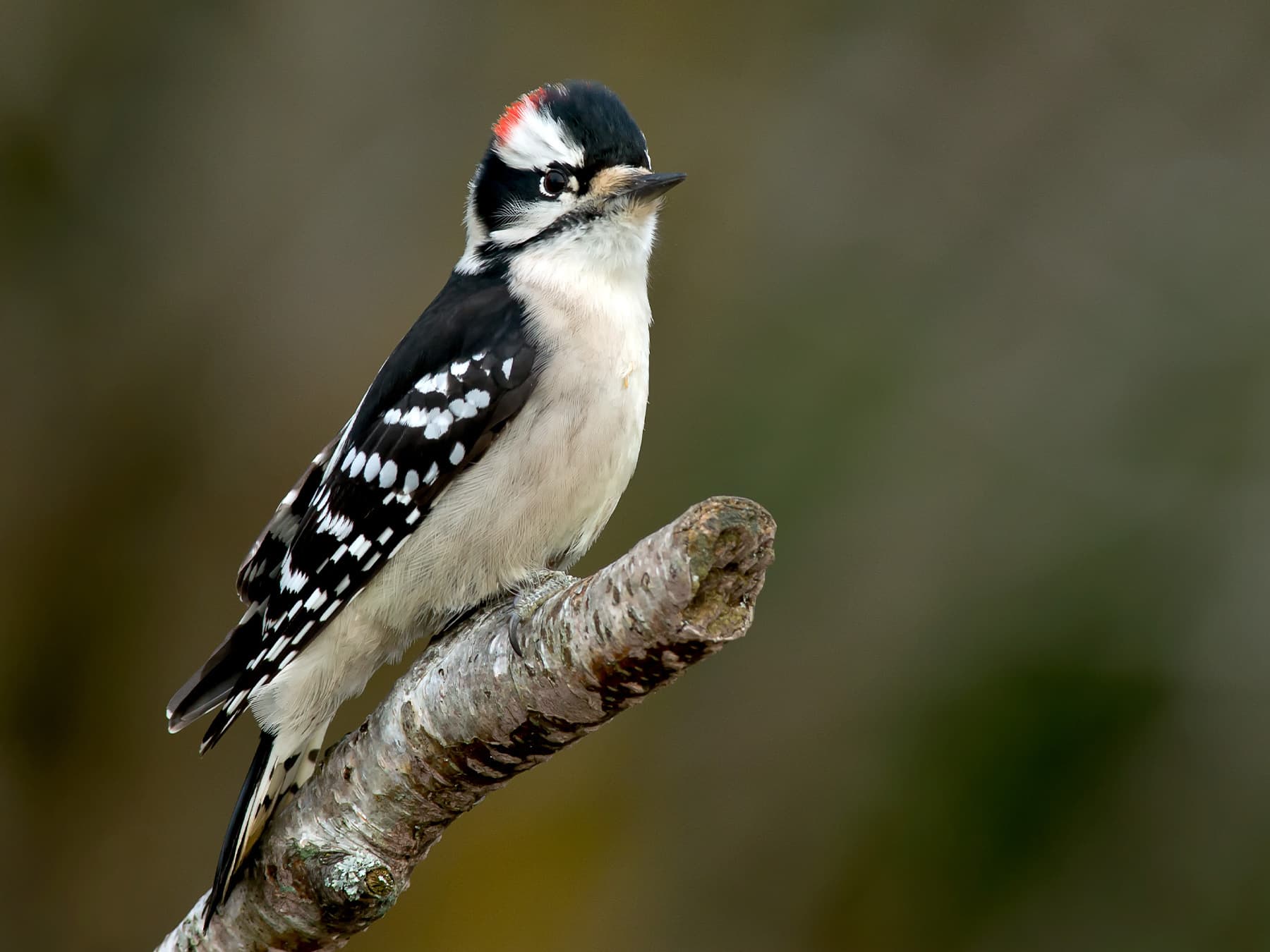
- Downy Woodpecker0:04
A sharp “pik”, a falling whinny and a fast drum on wood.
All year
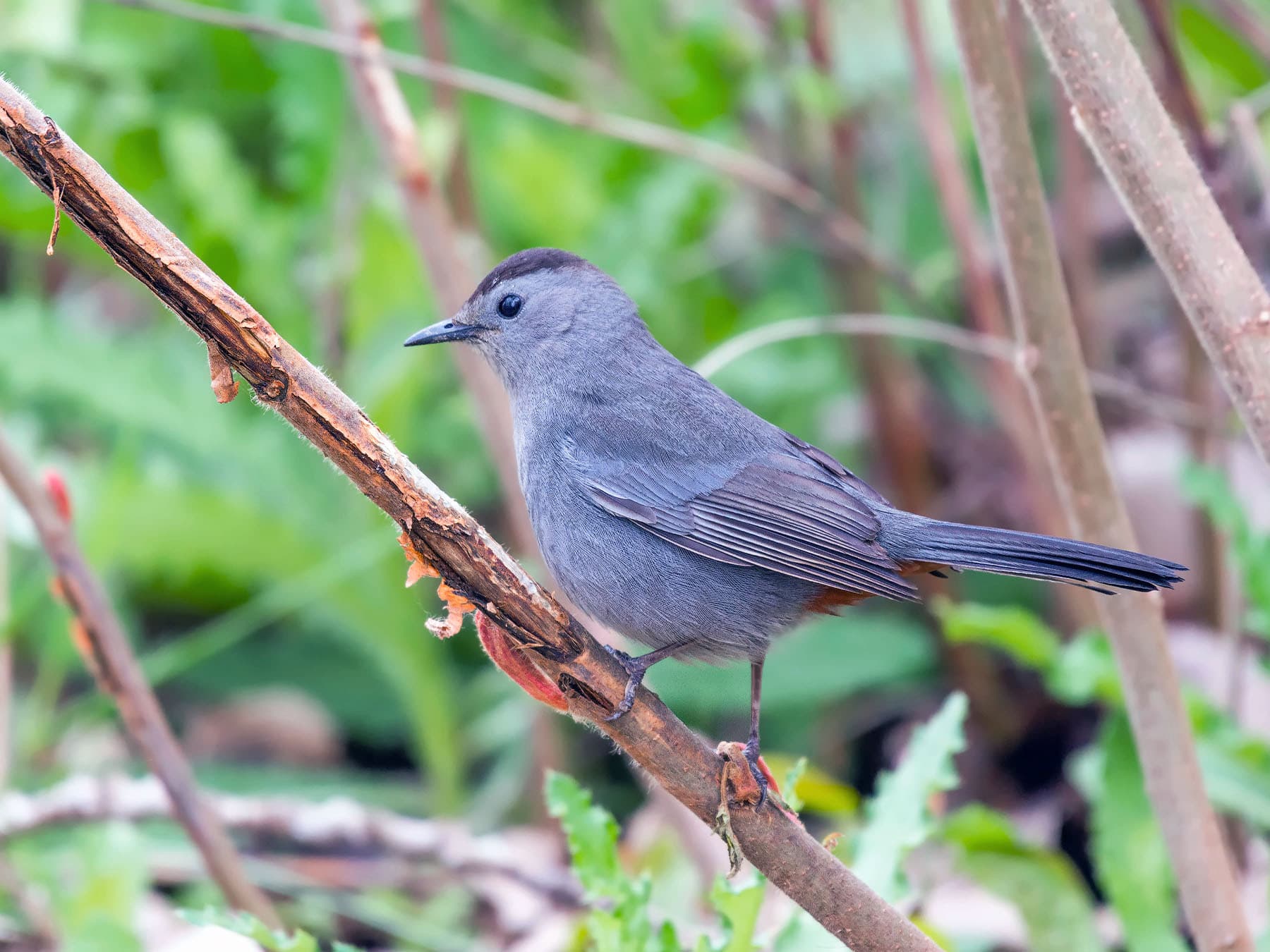
- Gray Catbird0:42
A long, scratchy medley with a cat-like “mew”.
Spring and summer
A nasal, repeated “wha-wha-wha”, and a nasal “yank” call.
All year
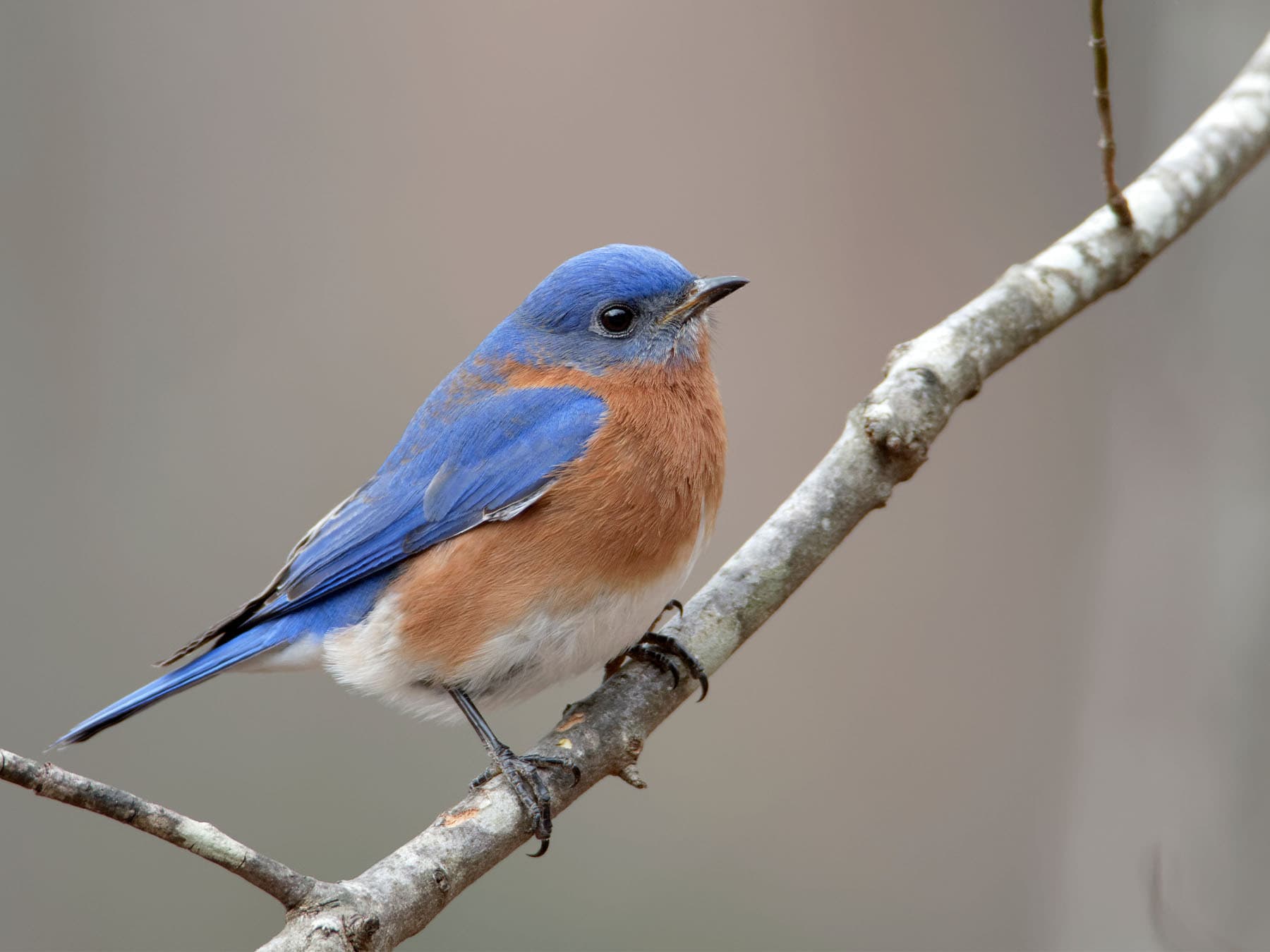
- Eastern Bluebird0:30
A soft, warbled “chur-lee, chur-lee”.
Spring and summer
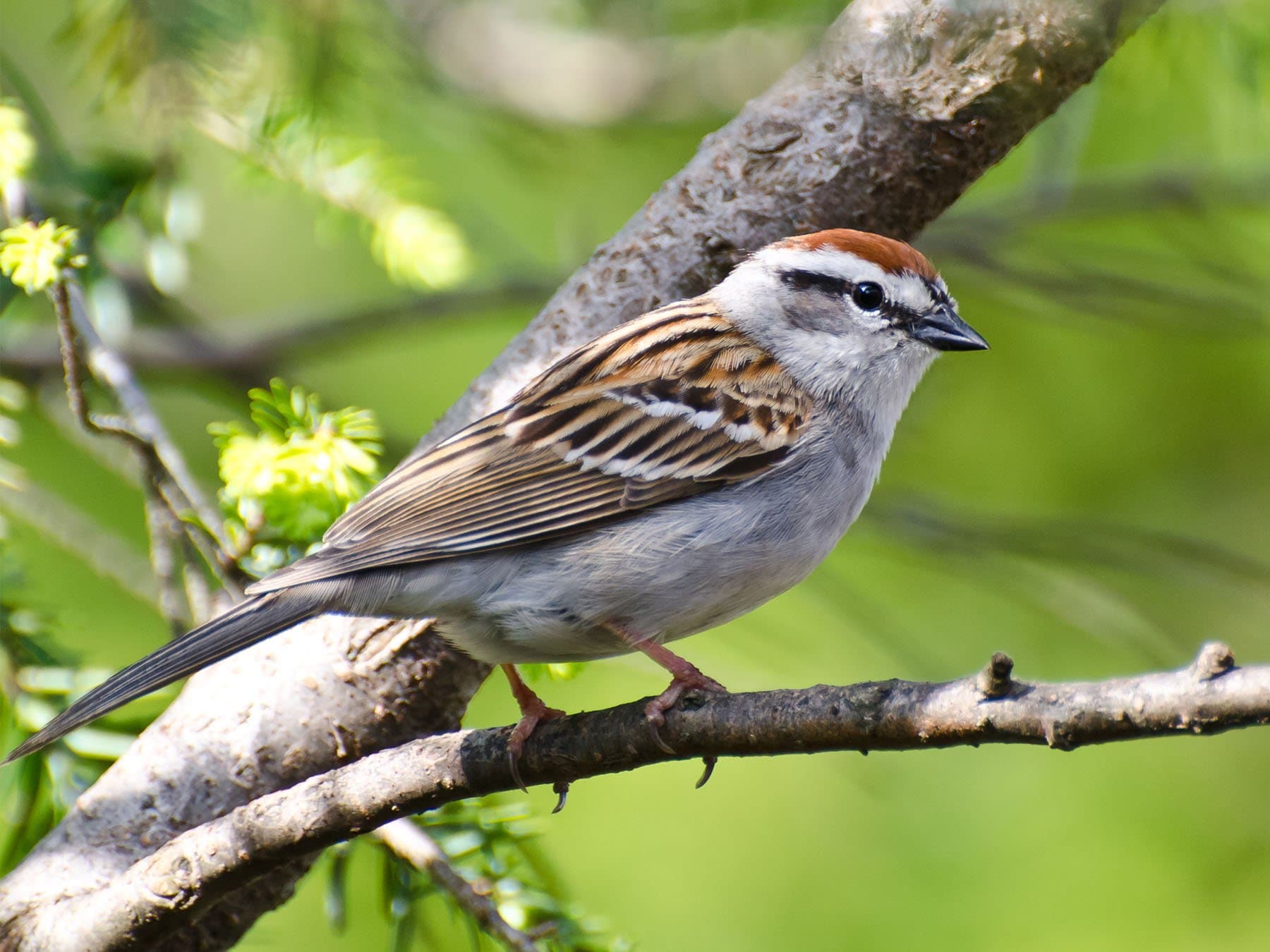
- Chipping Sparrow1:19
A fast, dry trill on one pitch, like a sewing machine.
Spring and summer
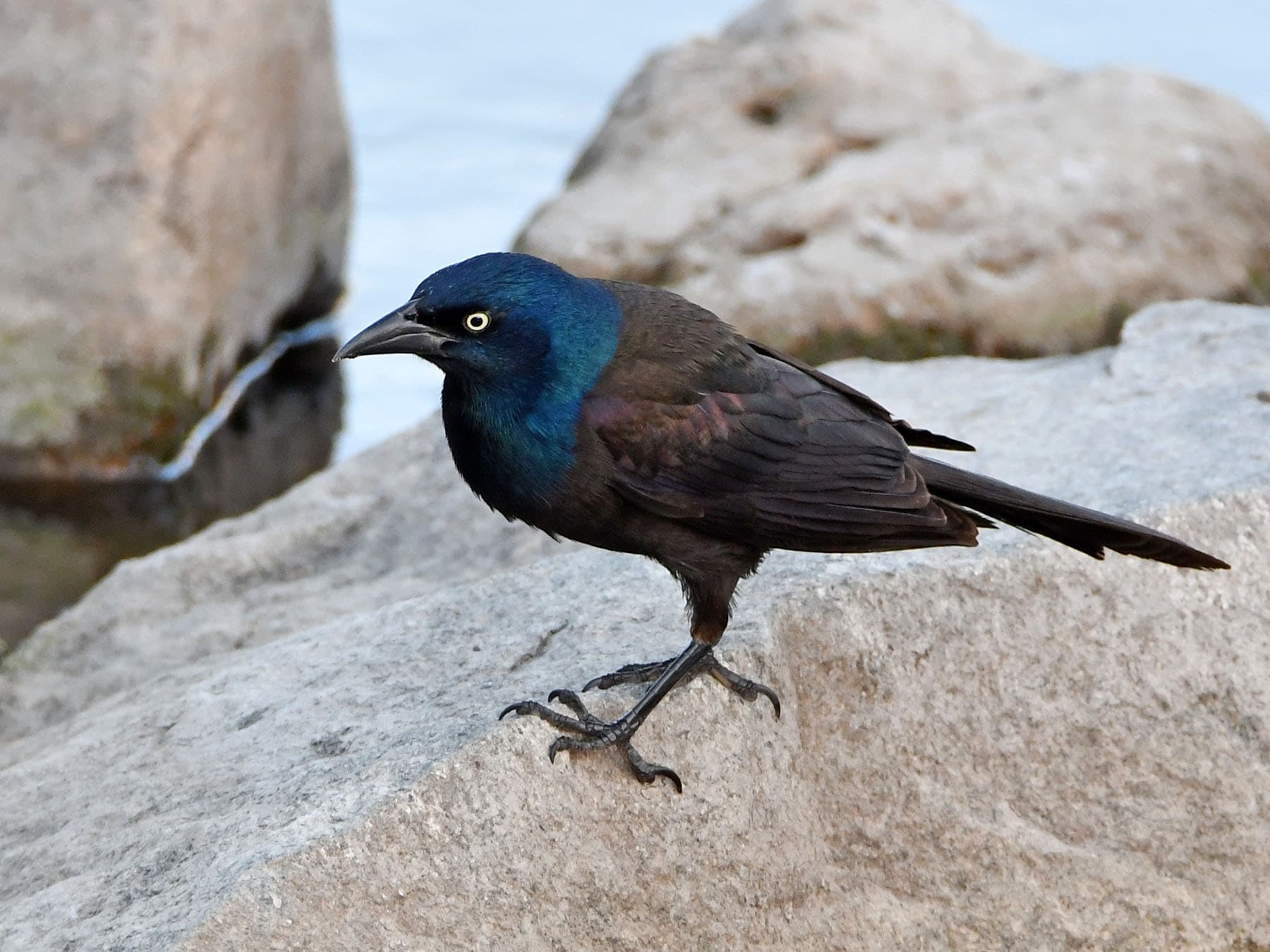
- Common Grackle1:00
A creaky, squeaky “readle-eak”, like a rusty gate.
Spring
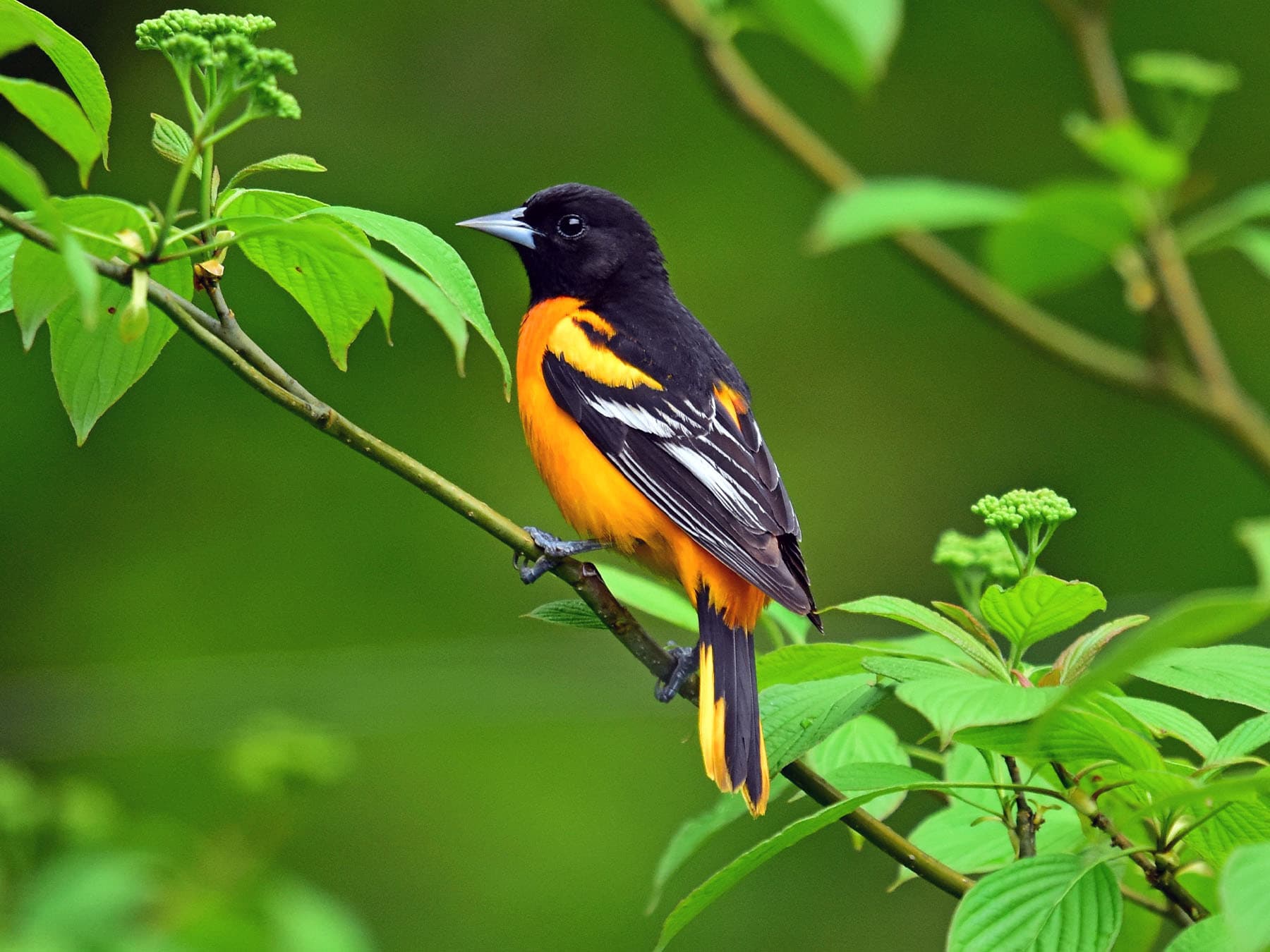
- Baltimore Oriole0:46
Rich, piping whistles in short phrases.
Late spring and summer
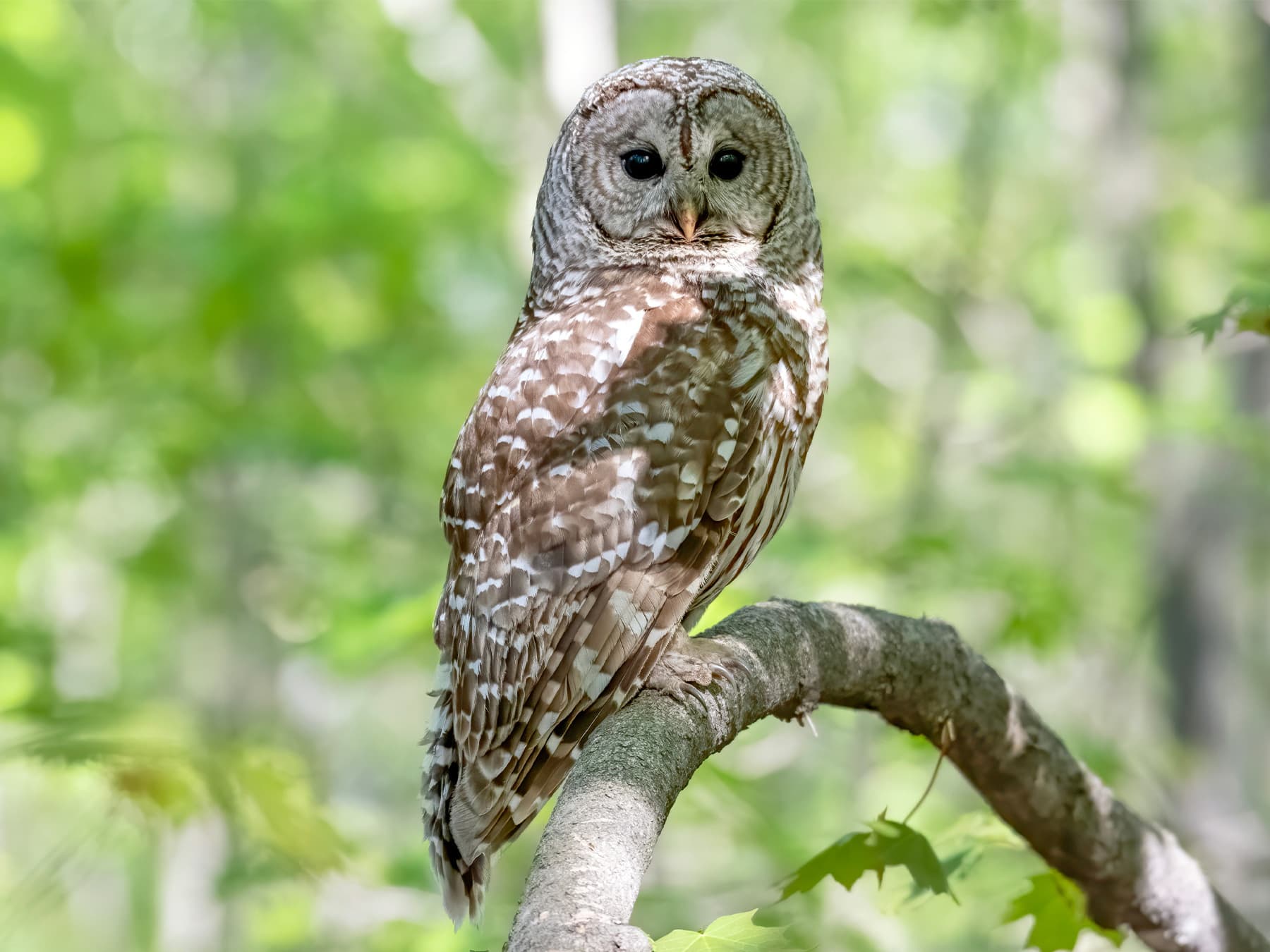
- Barred Owl1:12
“Who cooks for you, who cooks for you-all.”
Nights, all year
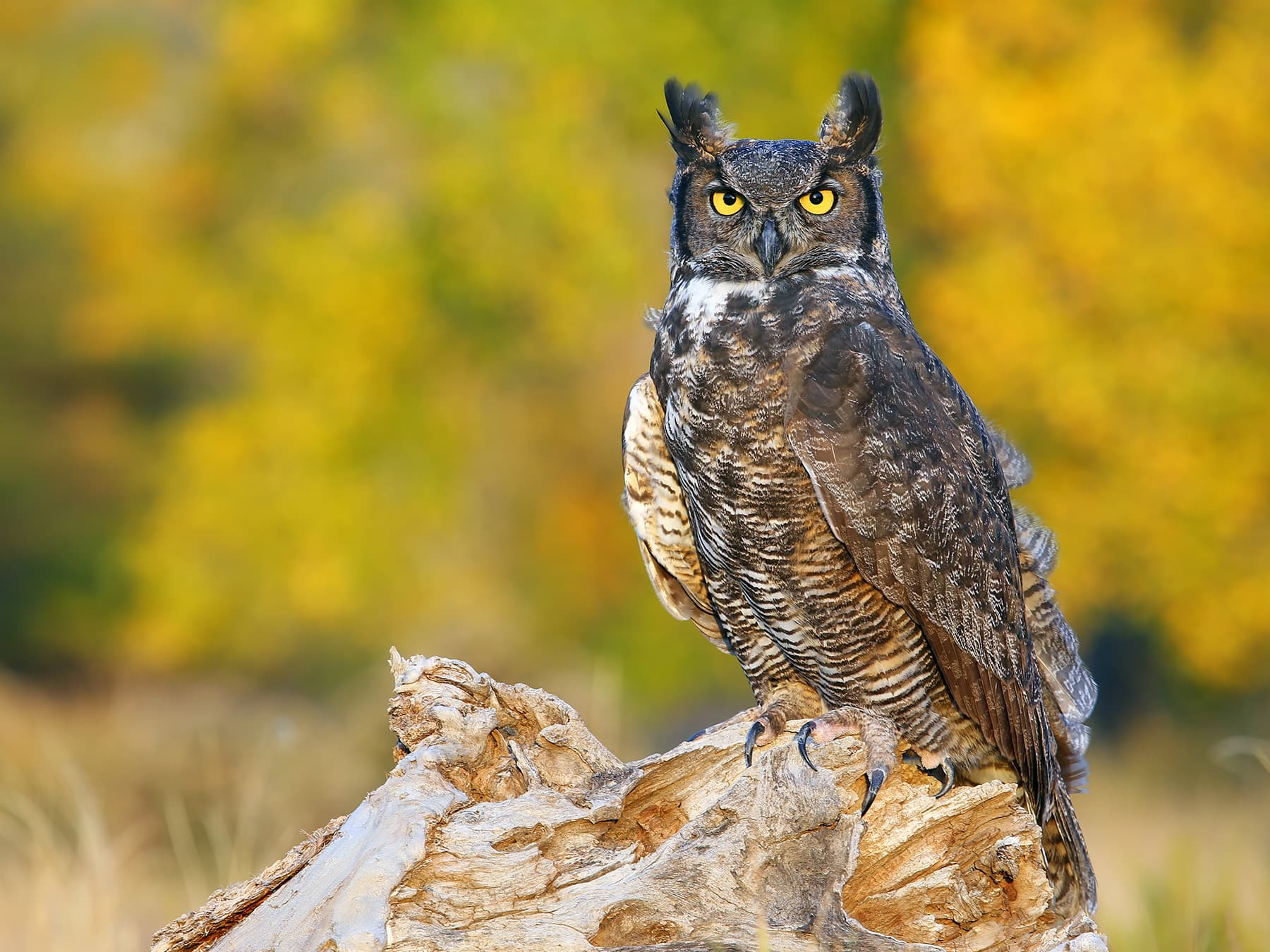
- Great Horned Owl0:54
Deep, soft hoots in a steady rhythm: “hoo, hoo-hoo, hoo, hoo”.
Winter nights

Sound-alikes
The pairs people mix up by ear. Play both, then listen for the one difference that settles it.
Chiffchaff or Willow Warbler?
Chiffchaff1:32Willow Warbler0:14Chiffchaff repeats two notes, “chiff-chaff”, over and over. Willow Warbler sings a soft, falling cascade that fades away. They look almost the same, so the song is the easy way to tell them apart.
Chiffchaff: Dan Stowell · xeno-canto XC132316 · CC BY-SA 3.0 · Willow Warbler: Anthony Wetherhill · xeno-canto XC468919 · CC BY-SA 4.0
Song Thrush or Mistle Thrush?
Song Thrush0:39Mistle Thrush0:19Song Thrush repeats each phrase two to four times. Mistle Thrush sings shorter, wilder phrases with no repeats, often in wind and rain.
The full comparisonSong Thrush: Susan Marley · iNaturalist · CC BY 4.0 · Mistle Thrush: Sonothèque ADVL · xeno-canto XC815475 · CC0 1.0
Great Tit or Coal Tit?
Both sing two-note phrases. Great Tit’s “teacher-teacher” is louder and slower; Coal Tit’s “teechu-teechu” is higher, thinner and quicker.
The full comparisonGreat Tit: Philippe_Grange · xeno-canto XC1095936 · CC0 1.0 · Coal Tit: Sean Frederick Tuck · iNaturalist · CC BY 4.0
Woodpigeon or Collared Dove?
Woodpigeon0:11Collared Dove0:14Woodpigeon coos five notes, “coo-COO-coo, coo-coo”. Collared Dove coos three, “coo-COO-cuk”, again and again.
Woodpigeon: Nigel Bentley · iNaturalist · CC BY 4.0 · Collared Dove: Mike Kerry · iNaturalist · CC BY 4.0
Black-capped Chickadee or Carolina Chickadee?
Black-capped whistles two notes, “fee-bee”. Carolina whistles four, “fee-bee, fee-bay”, and its “chick-a-dee” call is higher and faster. Where their ranges meet, some birds sing both.
The full comparisonBlack-capped Chickadee: Jonathon Jongsma · xeno-canto XC70185 · CC BY-SA 3.0 · Carolina Chickadee: William Sutton · iNaturalist · CC BY 4.0
American Robin or Rose-breasted Grosbeak?
Both sing rich phrases that rise and fall. The grosbeak sounds like a robin that has had singing lessons: sweeter, faster and with fewer pauses.
American Robin: Doug Hynes · xeno-canto XC570791 · CC BY-SA 4.0 · Rose-breasted Grosbeak: Jonathon Jongsma · xeno-canto XC133913 · CC BY-SA 3.0
Mourning Dove or Great Horned Owl?
Mourning Dove0:30Great Horned Owl0:54A Mourning Dove’s soft “coo-OO-oo, oo, oo” at dawn is often taken for an owl. A Great Horned Owl’s hoots are deeper, in a steady rhythm, and mostly at night.
Mourning Dove: Jonathon Jongsma · xeno-canto XC128006 · CC BY-SA 3.0 · Great Horned Owl: Doug Hynes · xeno-canto XC935595 · CC BY-SA 4.0
House Finch or Purple Finch?
House Finch0:58Purple Finch0:26House Finch sings a long, rambling warble that often ends in a buzzy “zeee”. Purple Finch sings a rich, fast warble with no buzzy ending.
The full comparisonHouse Finch: Jonathon Jongsma · xeno-canto XC99546 · CC BY-SA 3.0 · Purple Finch: Doug Hynes · xeno-canto XC935606 · CC BY-SA 4.0
What’s singing now
OctoberQuiet, but not silent. Robins sing all autumn, the females too, and Wrens sing in any month. At dusk, listen for Tawny Owls: a sharp “ke-wick” answered by a long hoot.
Mostly calls now, not songs. White-throated Sparrows arrive and sometimes whistle their “Old Sam Peabody”. Barred Owls call “who cooks for you” on autumn nights.
Singing at night?
In Britain, the bird singing in the dark is usually a Robin, especially near streetlights, where it can sing all night. Tawny Owls call from autumn to late winter: the sharp “ke-wick” is the female, the long hoot is the male. A rich, loud song from dense scrub on a May night in southern England may be a Nightingale.
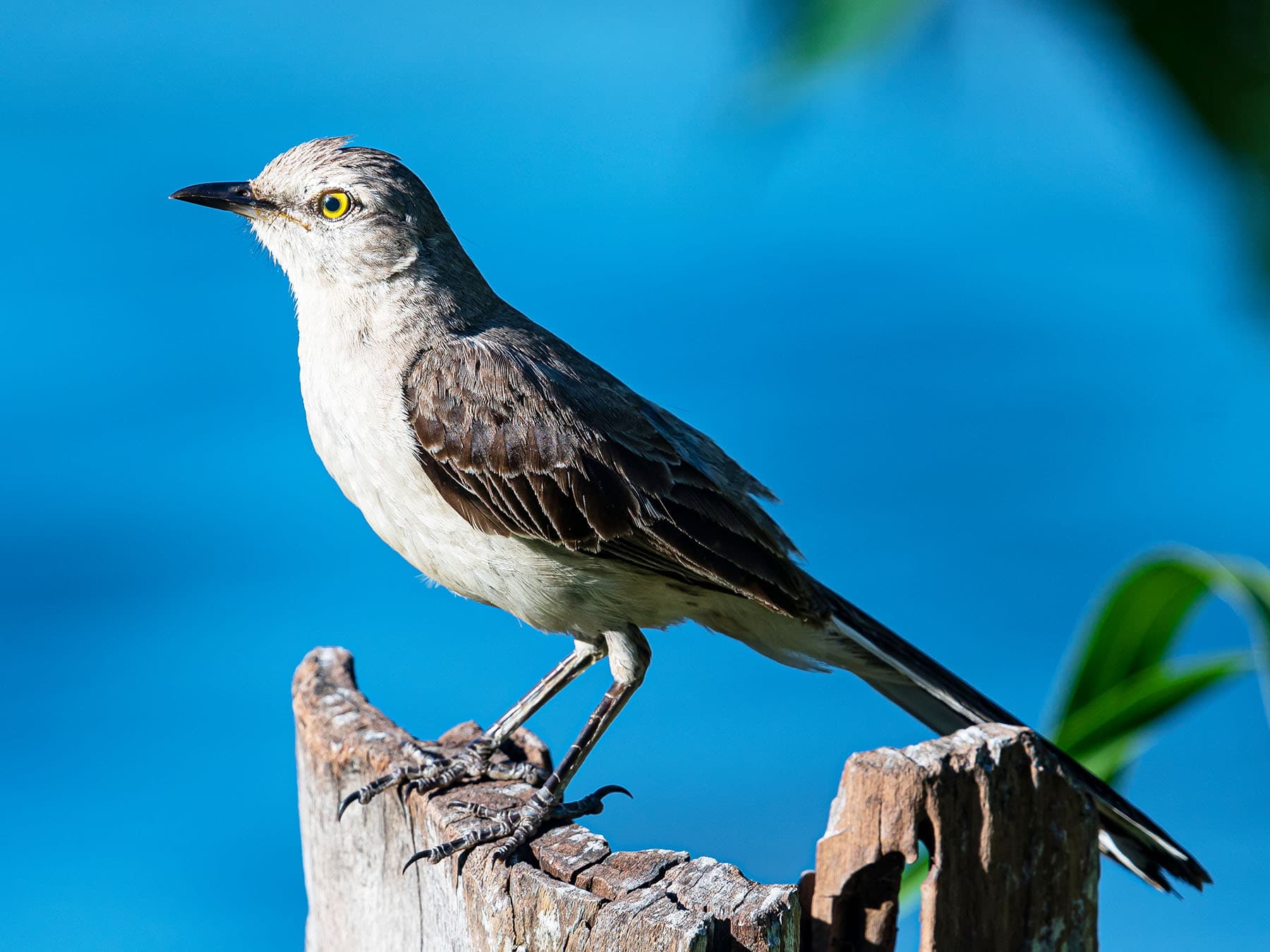
In North America, a Northern Mockingbird singing all night in spring is the usual culprit. Barred Owls call “who cooks for you” and Great Horned Owls give deep, soft hoots, mostly in winter.
What birds sing at night has the full list.
Song or call?
A song is long and patterned, sung mostly by males in spring to hold a territory and attract a mate. A call is short, used all year by both sexes: to keep in touch, to beg for food or to warn of danger.
Most birds have one song and several calls. If you hear a single “tick”, “tsip” or “chack” repeated, it’s a call, and the identifier knows those too. Robins are the exception that proves the rule in Britain: both males and females sing, all through the winter.
Record a clip that works
- Record ten to twenty seconds of the bird singing.
- Point your phone or laptop towards the bird.
- Stay quiet; close a window rather than talk over it.
- Wind is the enemy: stand in shelter if you can.
- A video clip works too. We take the sound from it.
How the sound identifier works
It listens in short pieces, a few seconds at a time, and picks out each bird it hears. It’s built on Perch, an open bird-sound model from Google DeepMind trained on recordings of birds from around the world.
Every bird it hears is checked against the birds recorded in your country at this time of year, so a British garden never returns an American bird. Each one comes with how clearly we heard it (clearly heard, heard or possibly heard) and its song from our field guide, so you can check it by ear.
It’s in beta. It does best with clear song from common birds, and finds distant calls, wind and a full dawn chorus harder. When it’s wrong, telling us helps us make it better.
Listen in the garden
The Birdfact app listens as birds sing and names each one as it’s heard, then keeps them in your garden list.
- Live Listen: every bird appears as it sings
- Photo identification too, with the look-alike side by side
- See the bird life-size, in 3D
- Who’s likely in your garden this week
Questions
8Can you Shazam birds?
Yes. Let the bird song identifier listen, or upload a recording, and it names the birds it hears, with each bird’s song to compare. It’s in beta, and does best with clear song from common birds.
Is there a free bird song identifier?
Yes. Your first identification needs no account. A free account gives you three photo or sound identifications a month. Birdfact Unlimited has no monthly limit.
Can Google identify a bird by its sound?
Google’s song search is designed for music. A bird sound identifier like this one is built from bird recordings, and checks each answer against the birds found where you are at that time of year.
Why didn’t it hear anything?
Usually the bird was too far away, or wind, traffic or talking drowned it out. Get a little closer, keep quiet, and record ten to twenty seconds of the bird singing. Early morning, when birds sing most, gives the best results.
Does it work at night?
Yes. It knows owls, Robins singing under streetlights and the other birds that sing in the dark. See what birds sing at night for the likely singers.
Can I identify a bird from a video?
Yes. Upload the video and we take the sound from it. A clip of ten to twenty seconds with the bird singing works best.
Is my recording kept?
Listening live is never stored: the sound is used to find the birds, then discarded, and we keep only the list of birds heard. A recording you upload on the website is kept with your result so you can play it back, and deleted straight away if no bird is heard. The privacy policy has the detail.
Does it work outside Britain and North America?
Yes. It knows the songs of birds around the world, and each answer is checked against the birds recorded in your country at that time of year.
Recordings from xeno-canto and Wikimedia Commons, each credited with its recordist and licence. Our sources
Species occurrence data: eBird Observation Dataset (Cornell Lab of Ornithology), via GBIF.org, CC BY 4.0, doi:10.15468/aomfnb; aggregated and filtered by Birdfact. Download: doi:10.15468/dl.3ggph5