


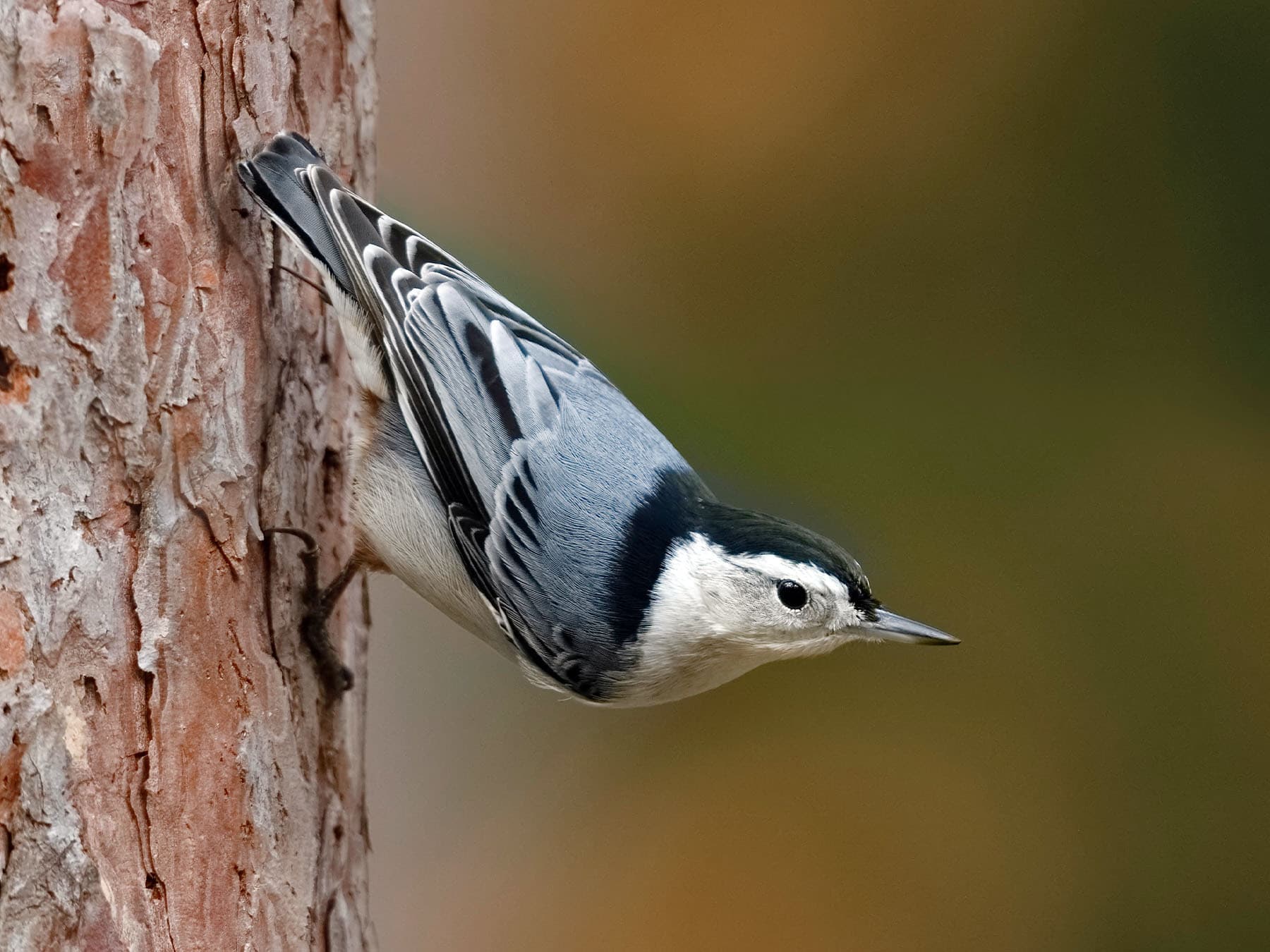
White-breasted Nuthatch
White-breasted Wood-nuthatch · Sitta carolinensis
By the Birdfact teamChecked by Nathan Cope
On this page11 sections
How to recognise it
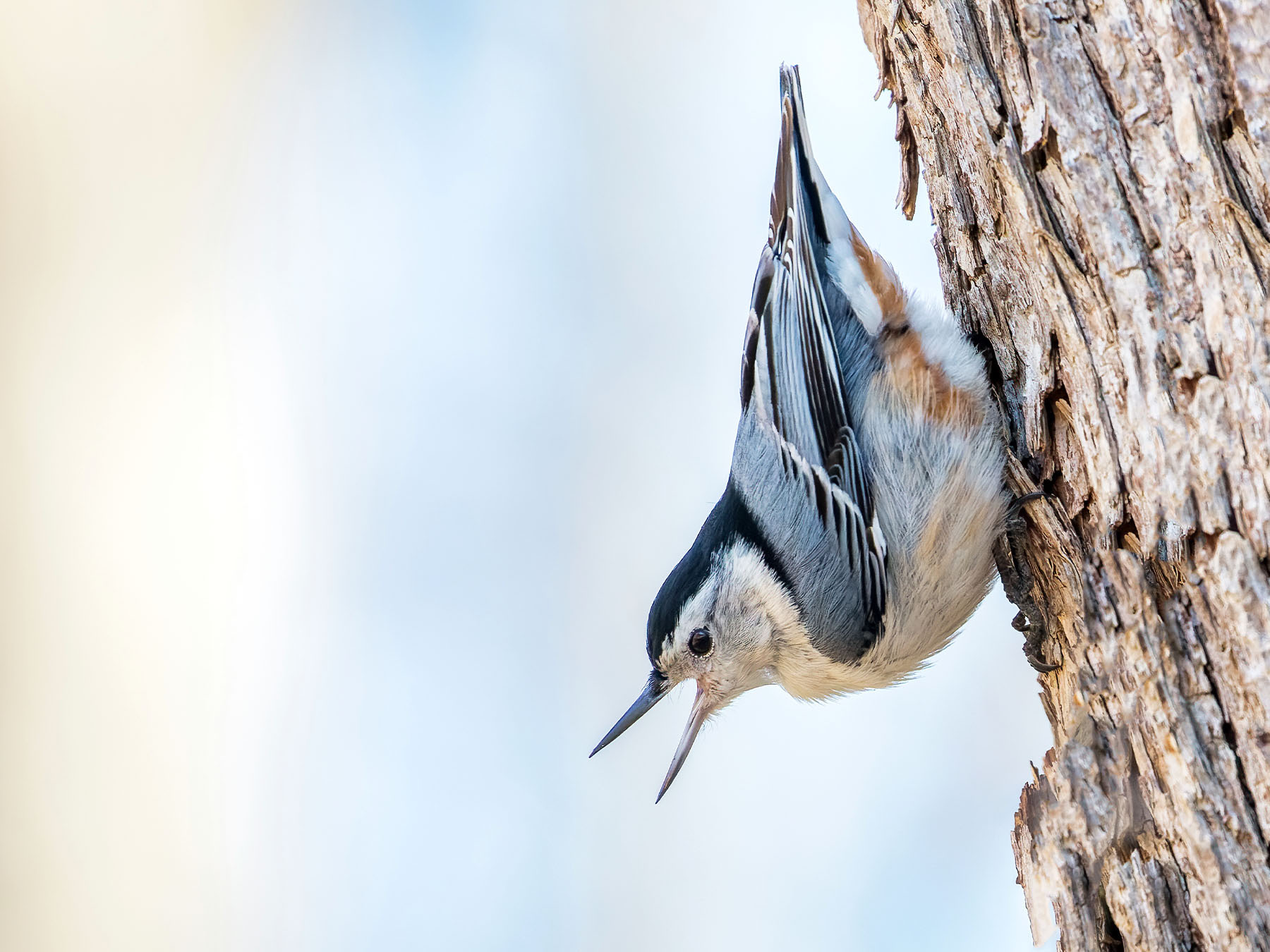
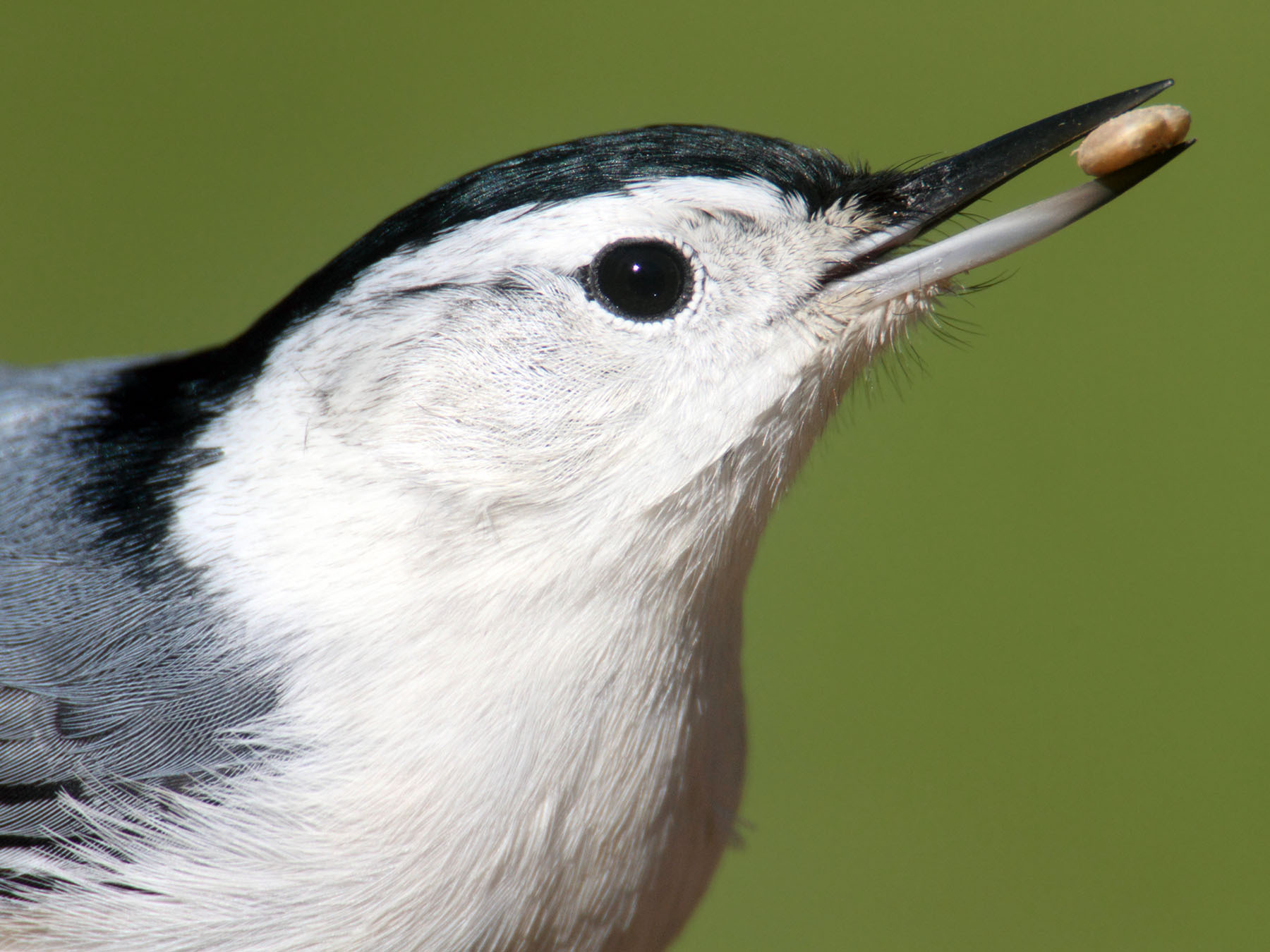
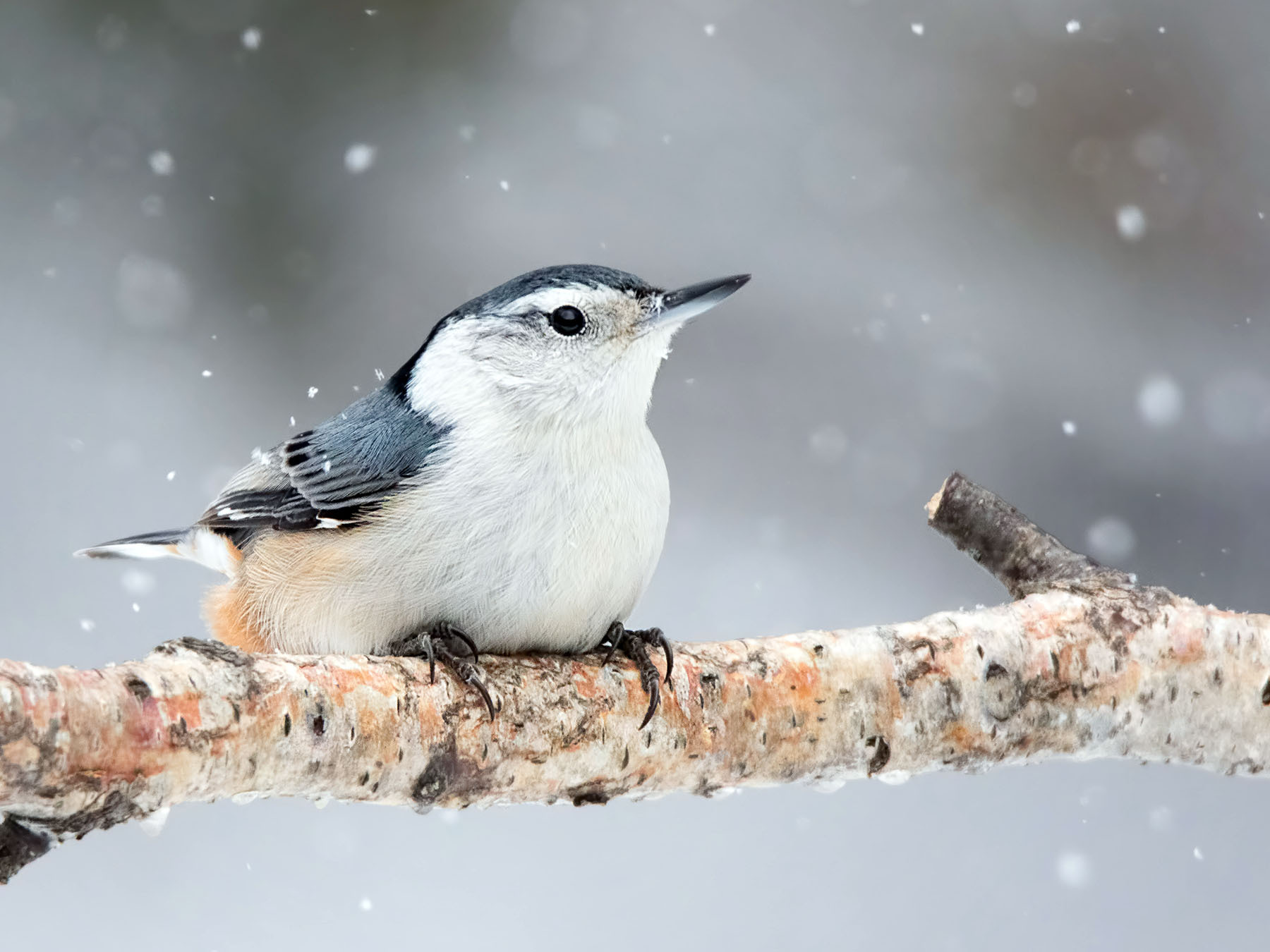
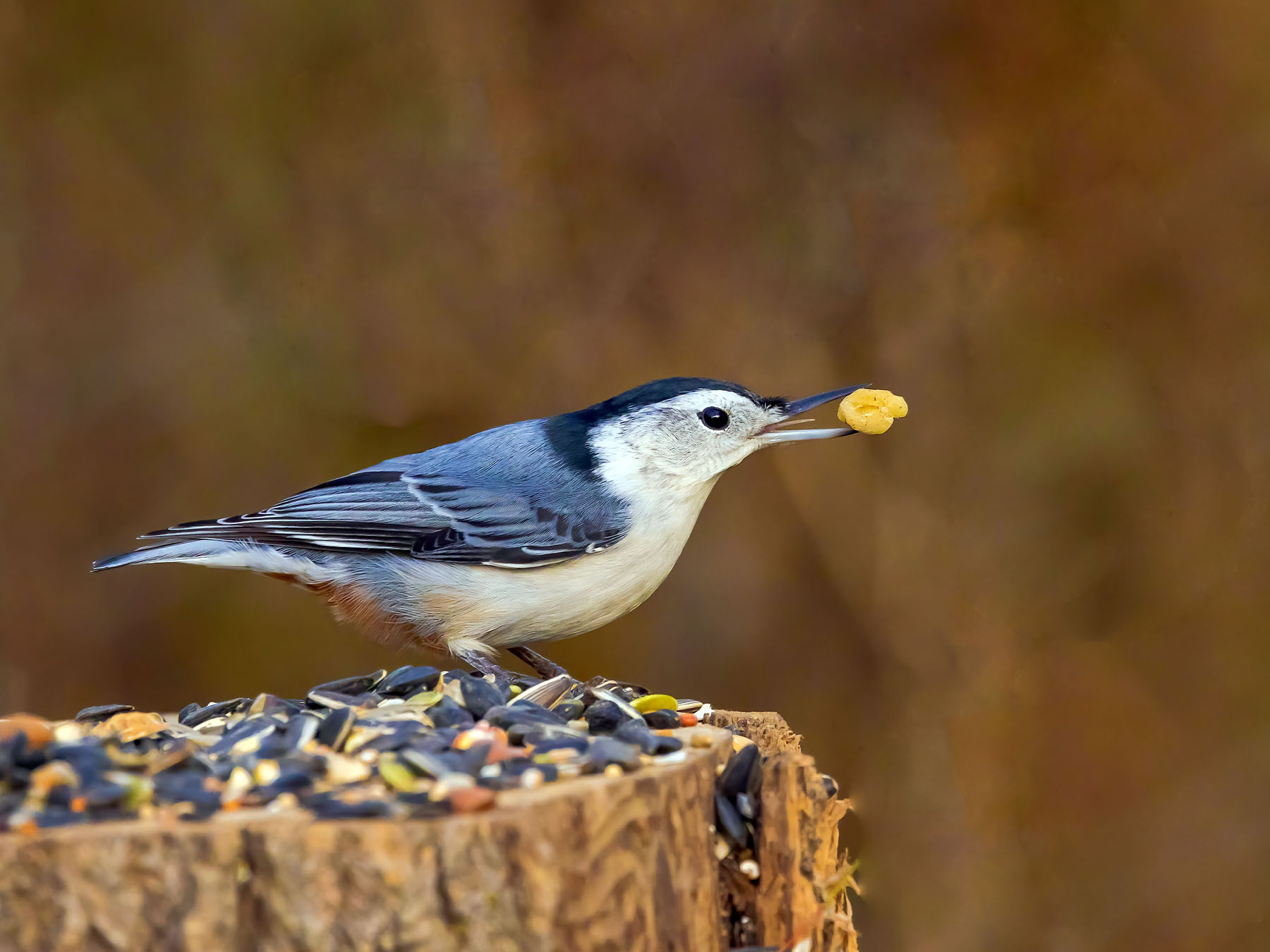
The White-breasted Nuthatch is a compact bird with a large head, short tail, and distinctively large, slightly upturned bill. Its upperparts are blue-gray, contrasting with a white face and underparts.
Males have a black cap and nape, while females typically show a darker gray cap (though some southeastern females can appear nearly black). The sides and undertail show rusty coloring.
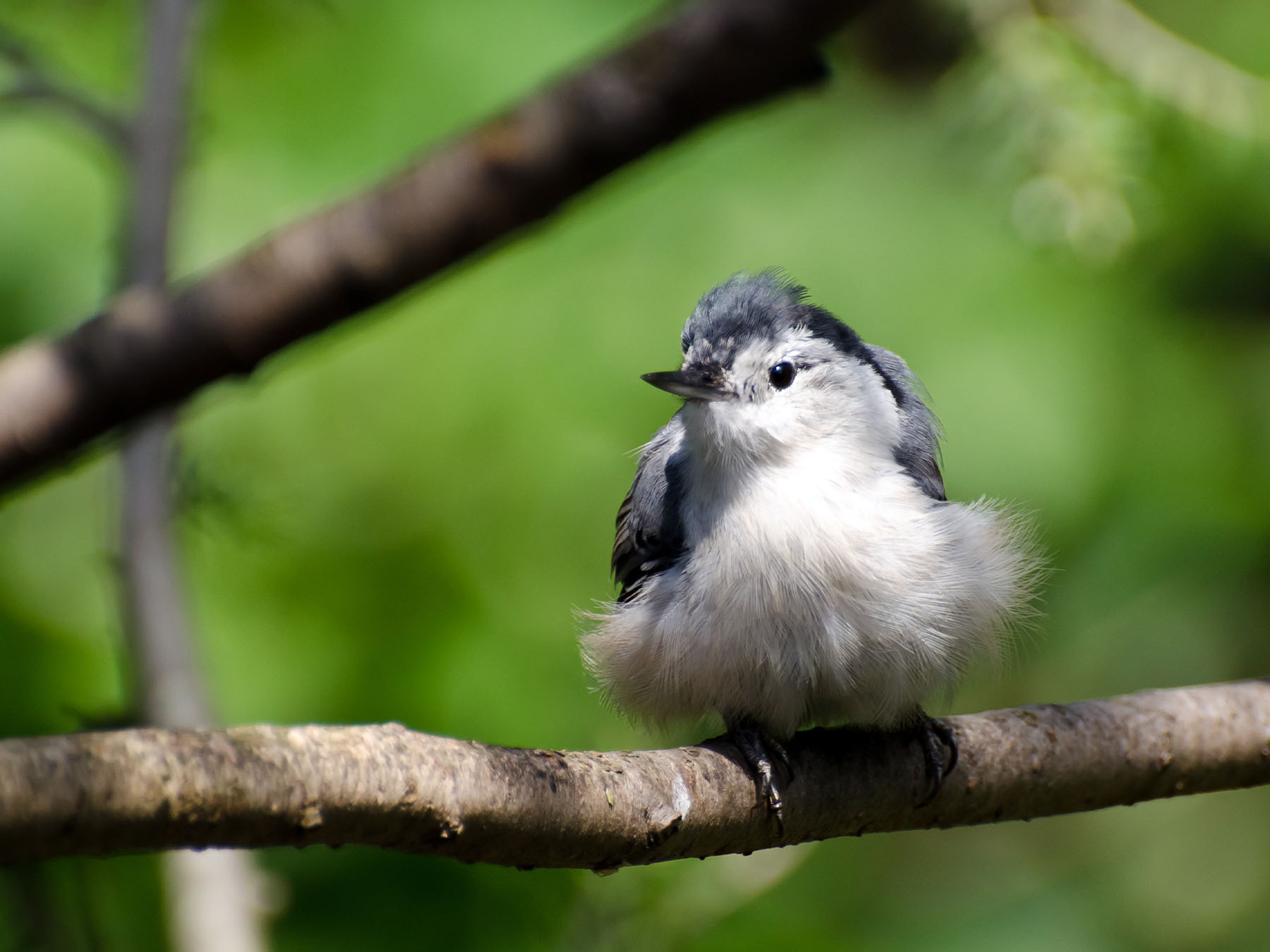
Juveniles resemble adults but show paler coloring and less defined markings.
Its size
Adults- Length
- 13–14 cm
- Wingspan
- 20–27 cm
- Weight
- 18–30 g
Its song and calls
The White-breasted Nuthatch's most common call is a nasal 'yank-yank' or 'ank-ank', often repeated in series.
During the breeding season, males produce a rapid, whistled 'whi-whi-whi' song. They also use softer, conversational notes like 'hit' or 'tut' when foraging or interacting with mates.
- Song0:00 / 1:16
Recorded in Minnesota, United States · February 2013
- Call0:00 / 0:43
Recorded in Minnesota, United States · February 2013
When and where to see it
OctoberIn season
Most recorded in October
- 1. Vermont3.4%
- 2. Manitoba3.3%
- 3. Wisconsin3.1%
- 4. New Hampshire3.0%
- 5. Minnesota3.0%
Each dot is a county, state or province: the bigger and darker, the larger the bird’s share of that place’s bird records that month. Grey dots: no regular records. The ringed point is the centre of the bird’s records this month; the arrow shows how it moved since last month, and the dashed loop its path through the year. “Arrivals” colours places where it becomes regular this month (orange) or is in its last regular month (grey). GBIF eBird Observation Dataset, 2019–2024. Map data: Natural Earth, US Census Bureau; place centres © OpenStreetMap contributors.
In your area
See when the White-breasted Nuthatch is recorded in your county, state or province.
How often the White-breasted Nuthatch turns up in the United States and Canada through the year, from birdwatchers' records.
United States
Resident · all year · most records in December
Canada
Winter visitor · all year · most records in February
Show as a table
| Month | United States | Canada |
|---|---|---|
| January | 1.4% (regular) | 2.6% (regular) |
| February | 1.5% (regular) | 2.7% (regular) |
| March | 1.2% (regular) | 1.8% (regular) |
| April | 1.0% (regular) | 1.1% (regular) |
| May | 0.89% (regular) | 0.66% (regular) |
| June | 0.89% (regular) | 0.45% (regular) |
| July | 1.1% (regular) | 0.71% (regular) |
| August | 1.3% (regular) | 0.93% (regular) |
| September | 1.5% (regular) | 1.1% (regular) |
| October | 1.4% (regular) | 1.5% (regular) |
| November | 1.5% (regular) | 2.1% (regular) |
| December | 1.5% (regular) | 2.5% (regular) |
Worldwide: recorded regularly in 3 countries
Countries where it was recorded in at least 3 of the 6 years 2019–2024. Linked countries have their own bird list.
North America (3)
Data: EOD – eBird Observation Dataset (Cornell Lab of Ornithology), accessed via GBIF.org, CC BY 4.0. Records from 2019–2024, aggregated and filtered by Birdfact. How these lists are made
Tips for seeing it
- Look for them on large deciduous trees in woodlands or parks
- Listen for their distinctive 'yank-yank' call
- Observe their characteristic headfirst descent on tree trunks
- Set up suet or sunflower seed feeders to attract them in winter
What it eats
White-breasted Nuthatches primarily feed on insects, spiders, and other arthropods found in tree bark. They supplement their diet with seeds and nuts, especially in winter.
These birds often wedge large seeds into bark crevices and hammer them open with their strong bills.
Nesting and breeding
White-breasted Nuthatches form monogamous pairs and begin breeding in late winter or early spring. Males court females by bowing, spreading their tails, and offering food.
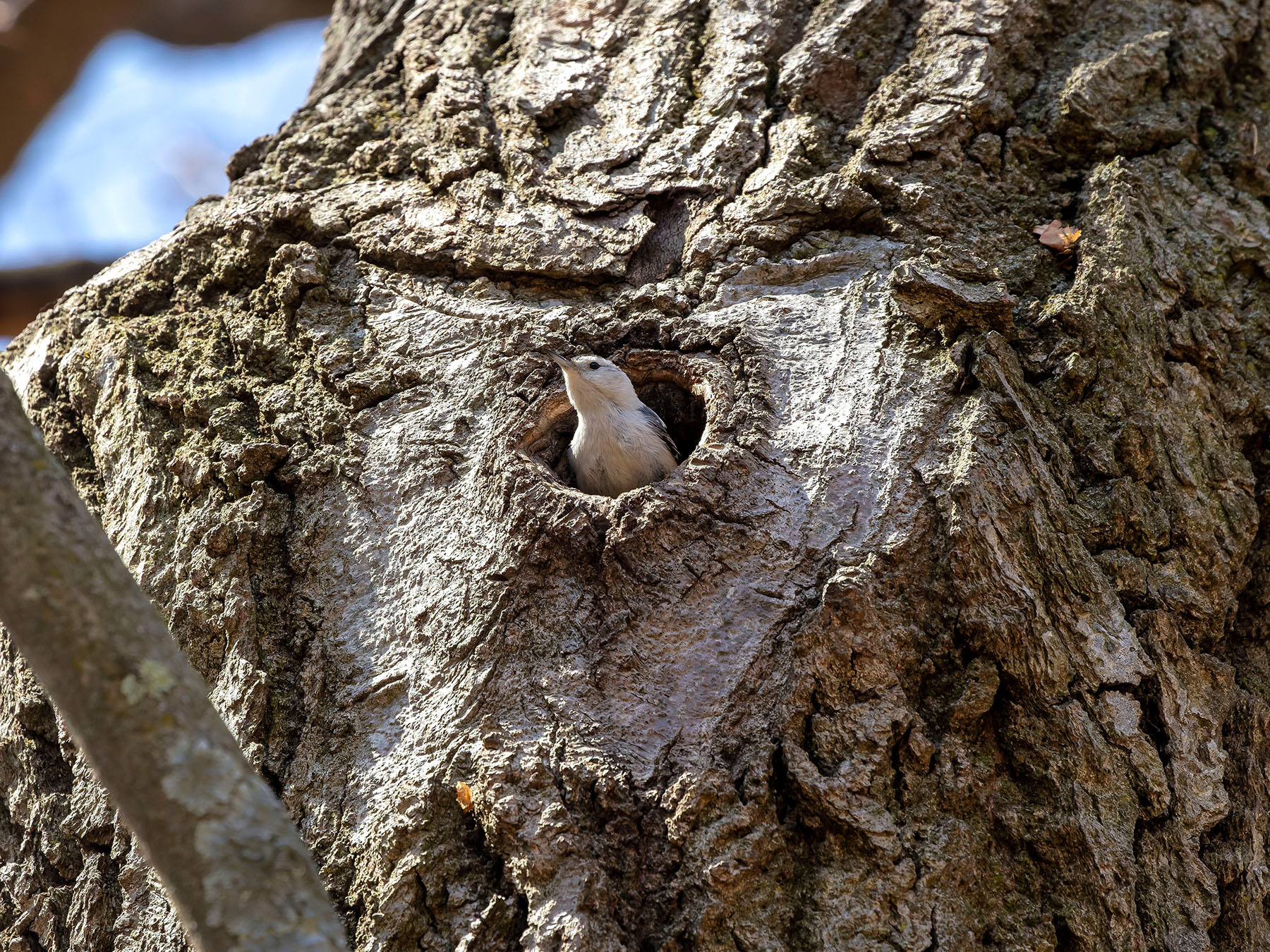
Nests are typically built in natural tree cavities or old woodpecker holes lined with fur, bark strips, and grass. Females lay 5-9 white eggs with reddish-brown speckles.
Incubation lasts about 12 days, primarily done by the female. Both parents feed the nestlings, which fledge after 18-26 days. Families often stay together for several weeks after fledging.
Behaviour
White-breasted Nuthatches are known for their ability to move headfirst down tree trunks, a unique behavior among North American birds. They are often seen spiraling around tree trunks and branches, probing bark crevices for insects.
These birds are typically solitary or found in pairs, and they may join mixed-species flocks in winter.
Conservation
While the White-breasted Nuthatch is currently listed as Least Concern, it faces threats from habitat loss due to deforestation and urban development.
Conservation efforts focus on preserving mature deciduous forests and promoting the retention of dead trees for nesting sites.
More photos
8 photos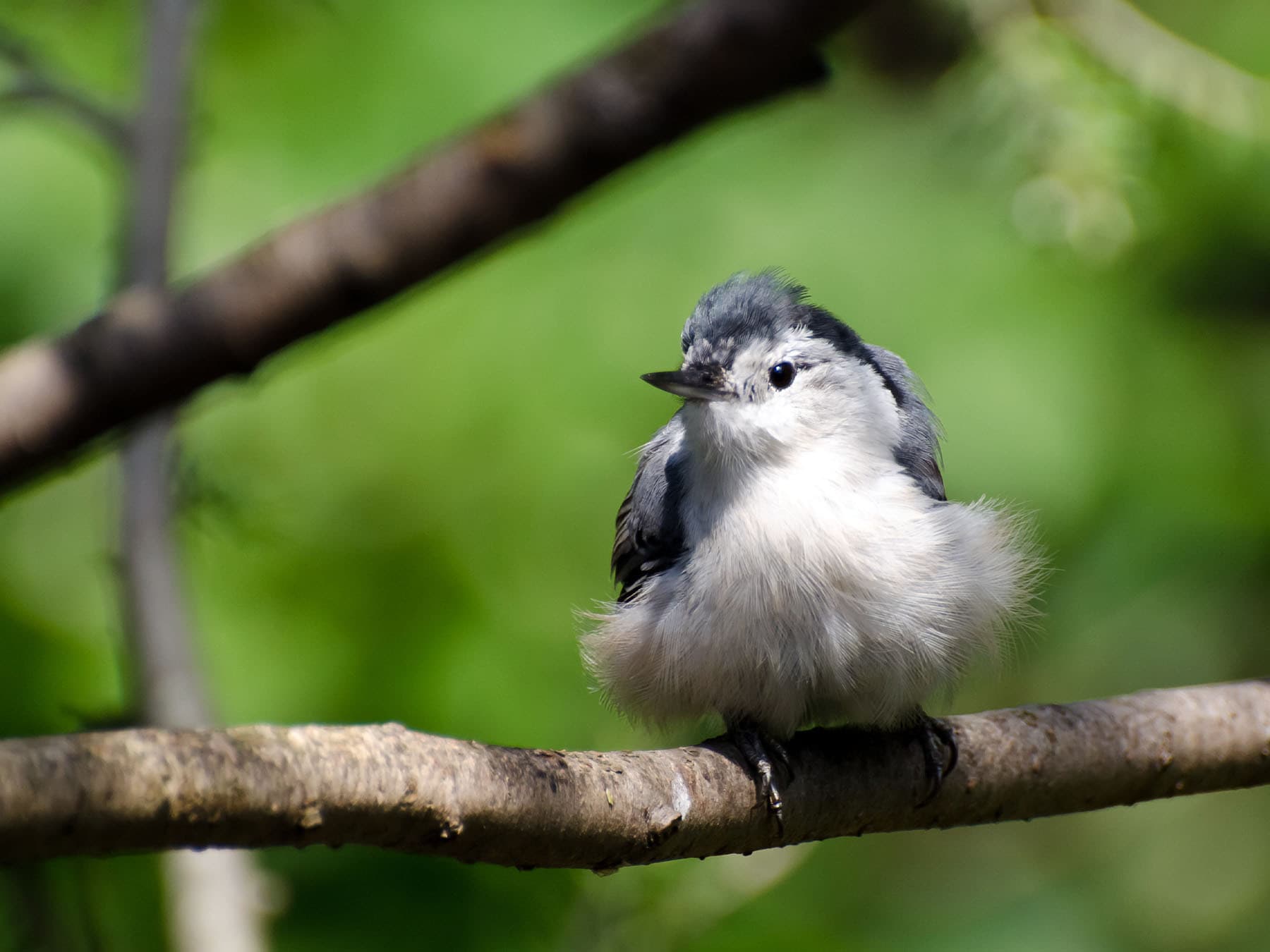 Juvenile White-breasted Nuthatch
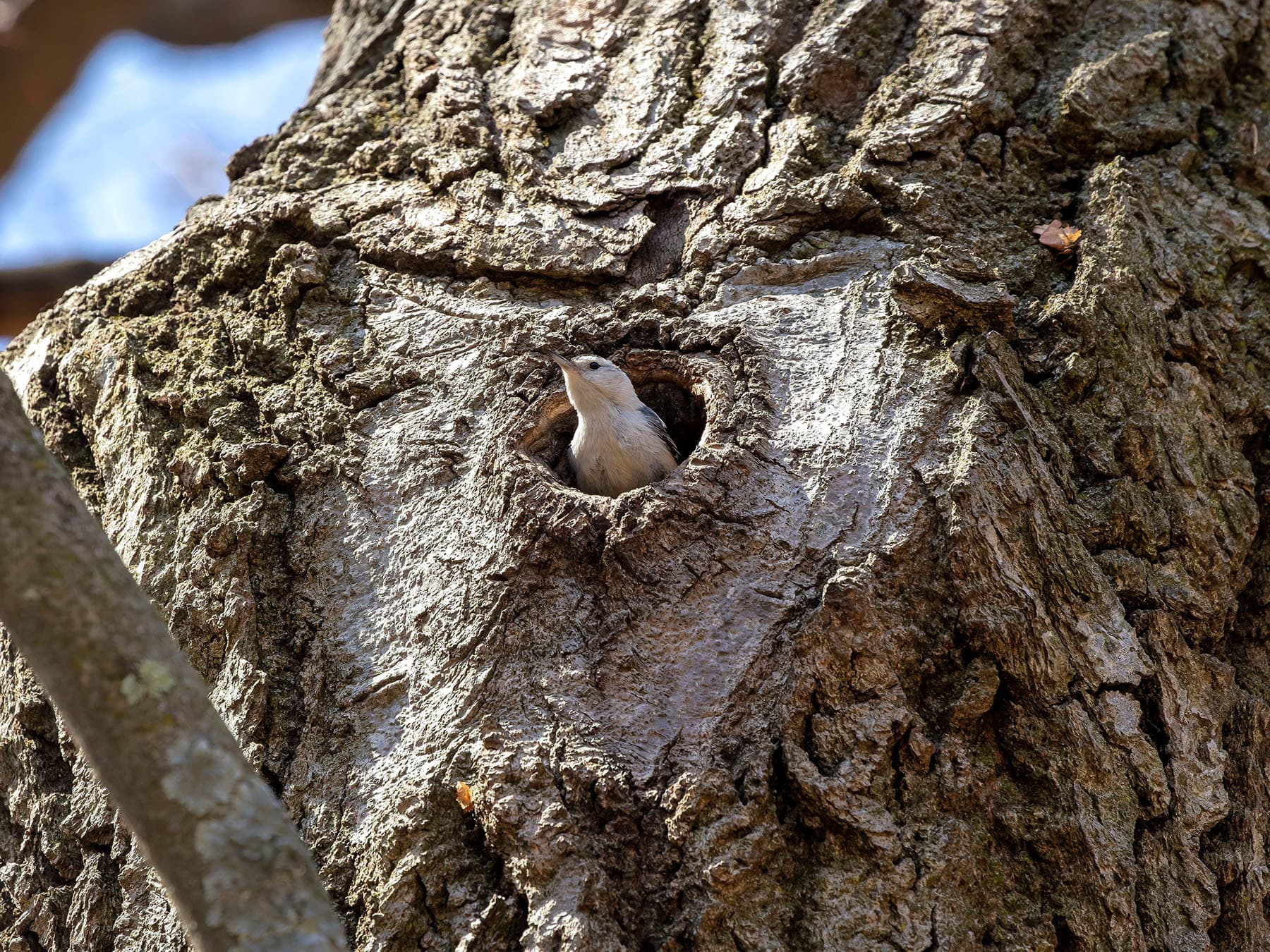 White-breasted Nuthatch looking out from its nest hole
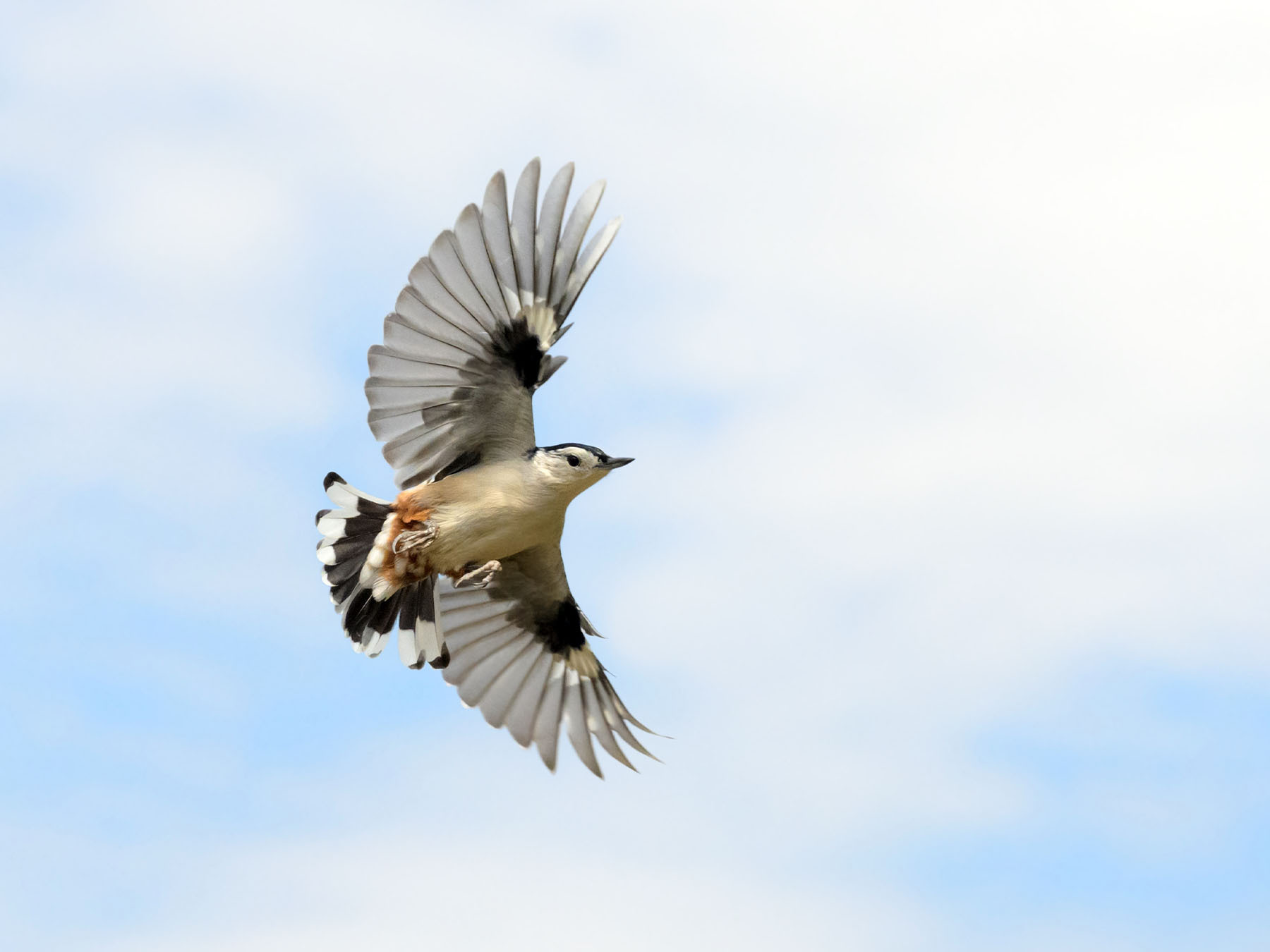
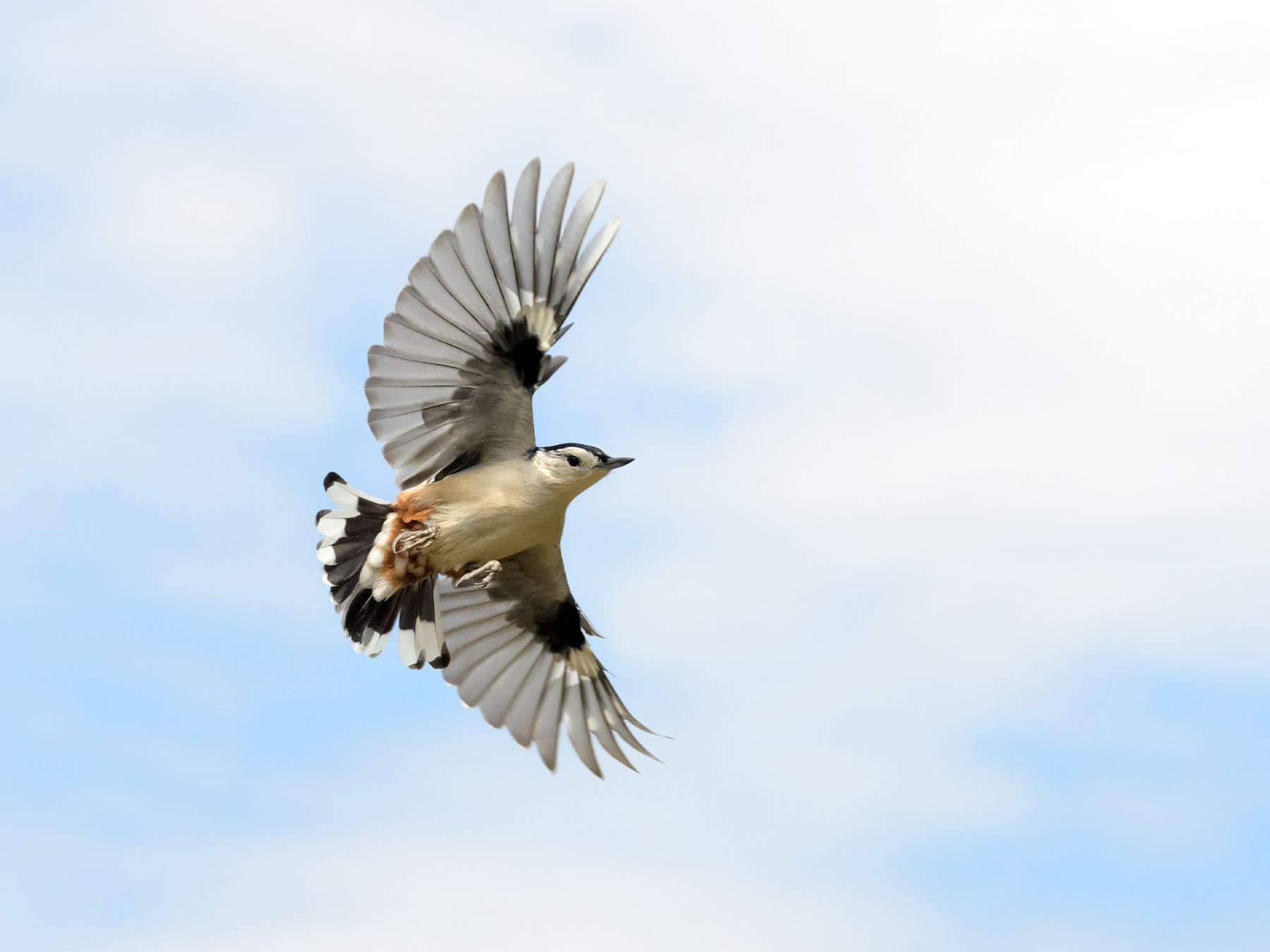 White-breasted Nuthatch in-flight
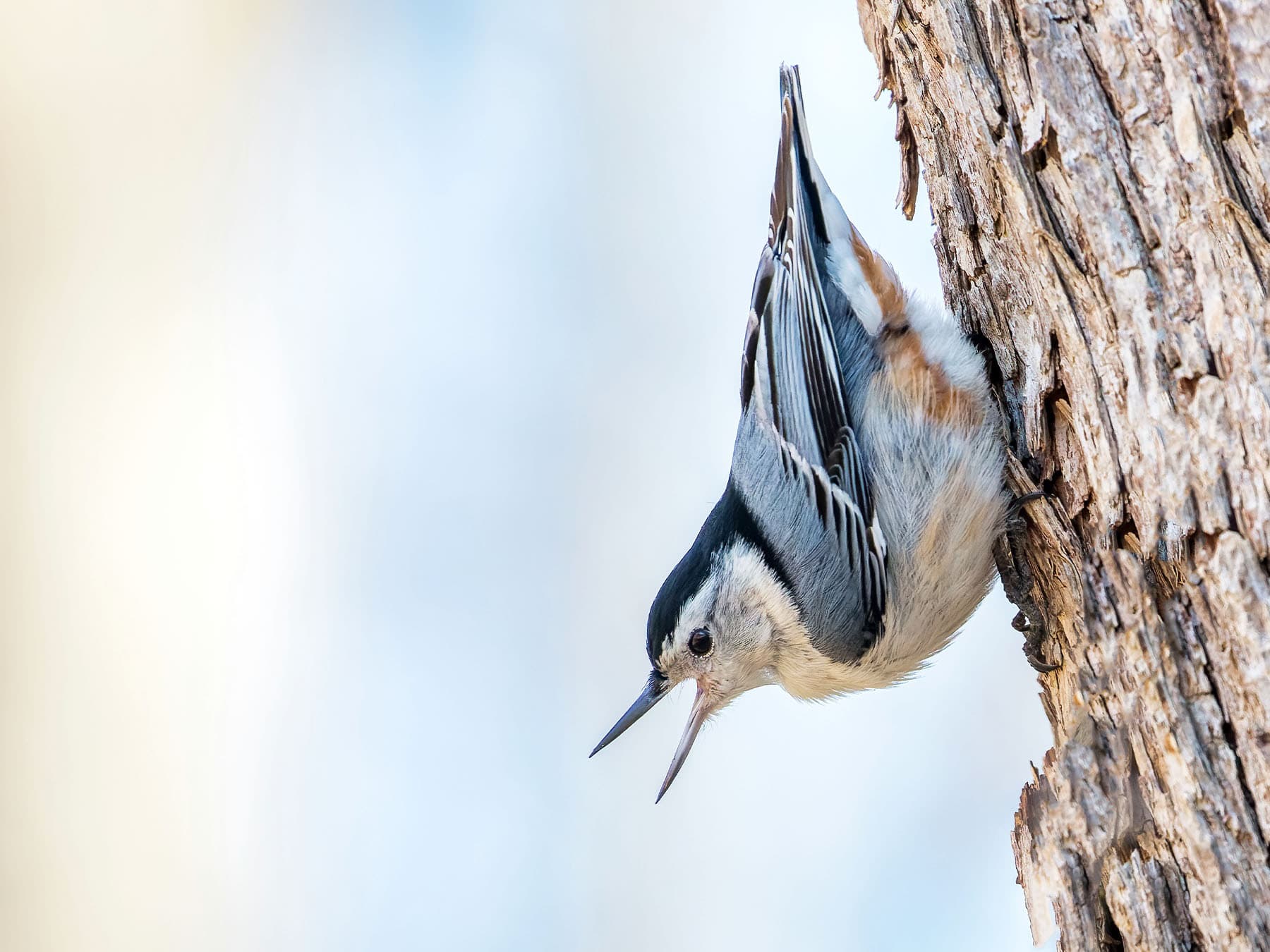 White-breasted Nuthatch on the side of a tree trunk calling
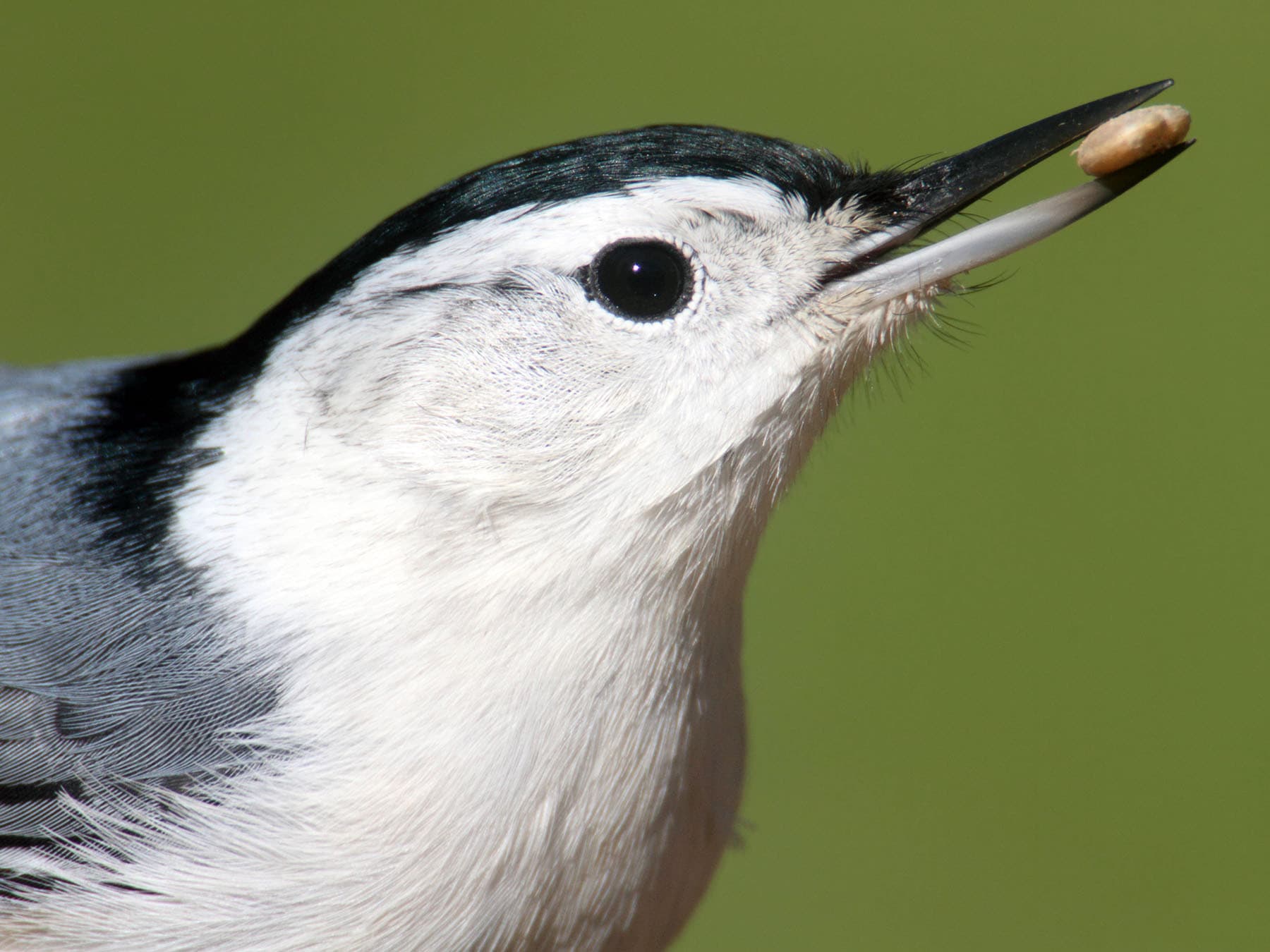 Portrait of a White-breasted Nuthatch
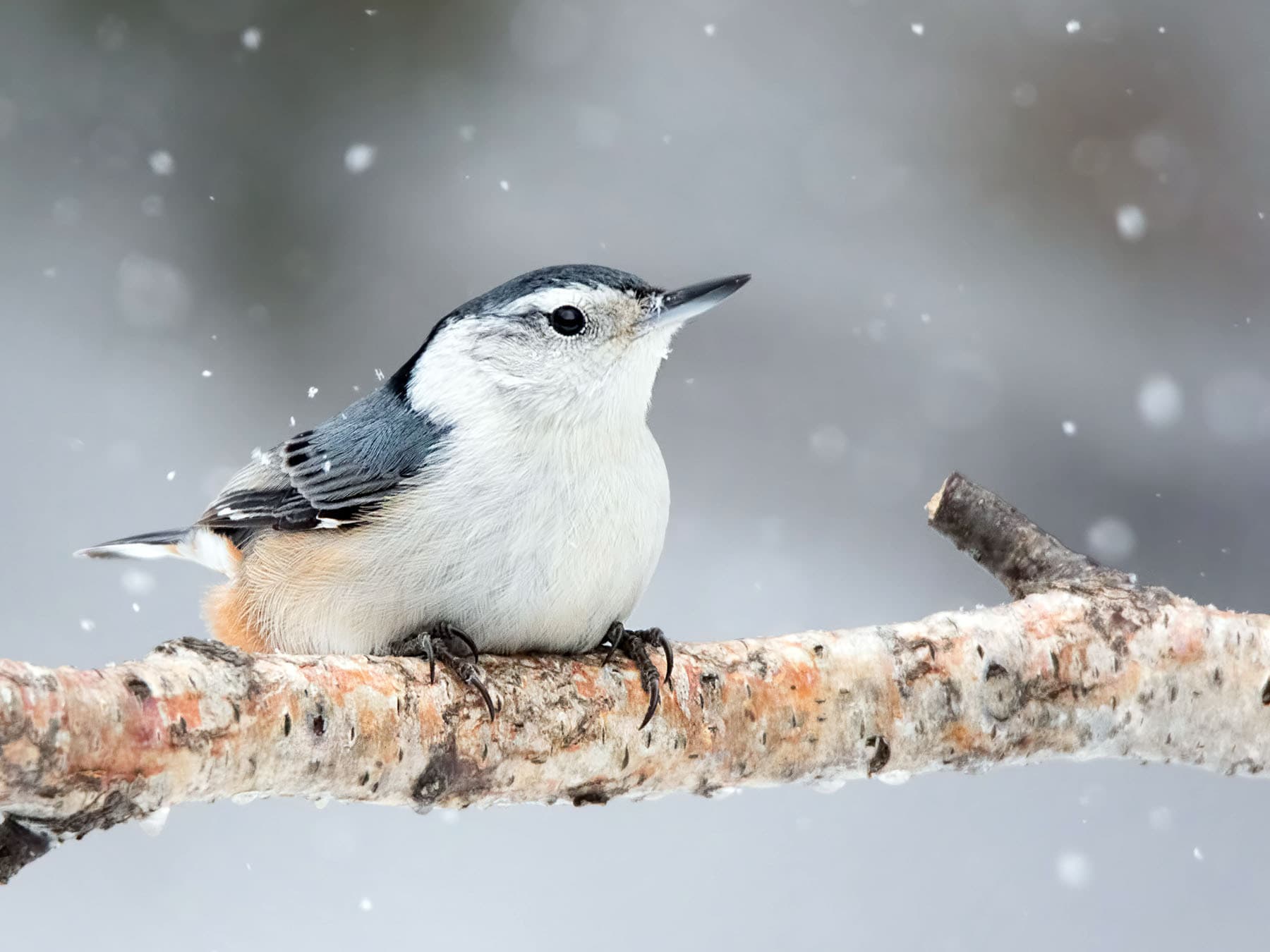 White-breasted Nuthatch perched on a branch during the winter
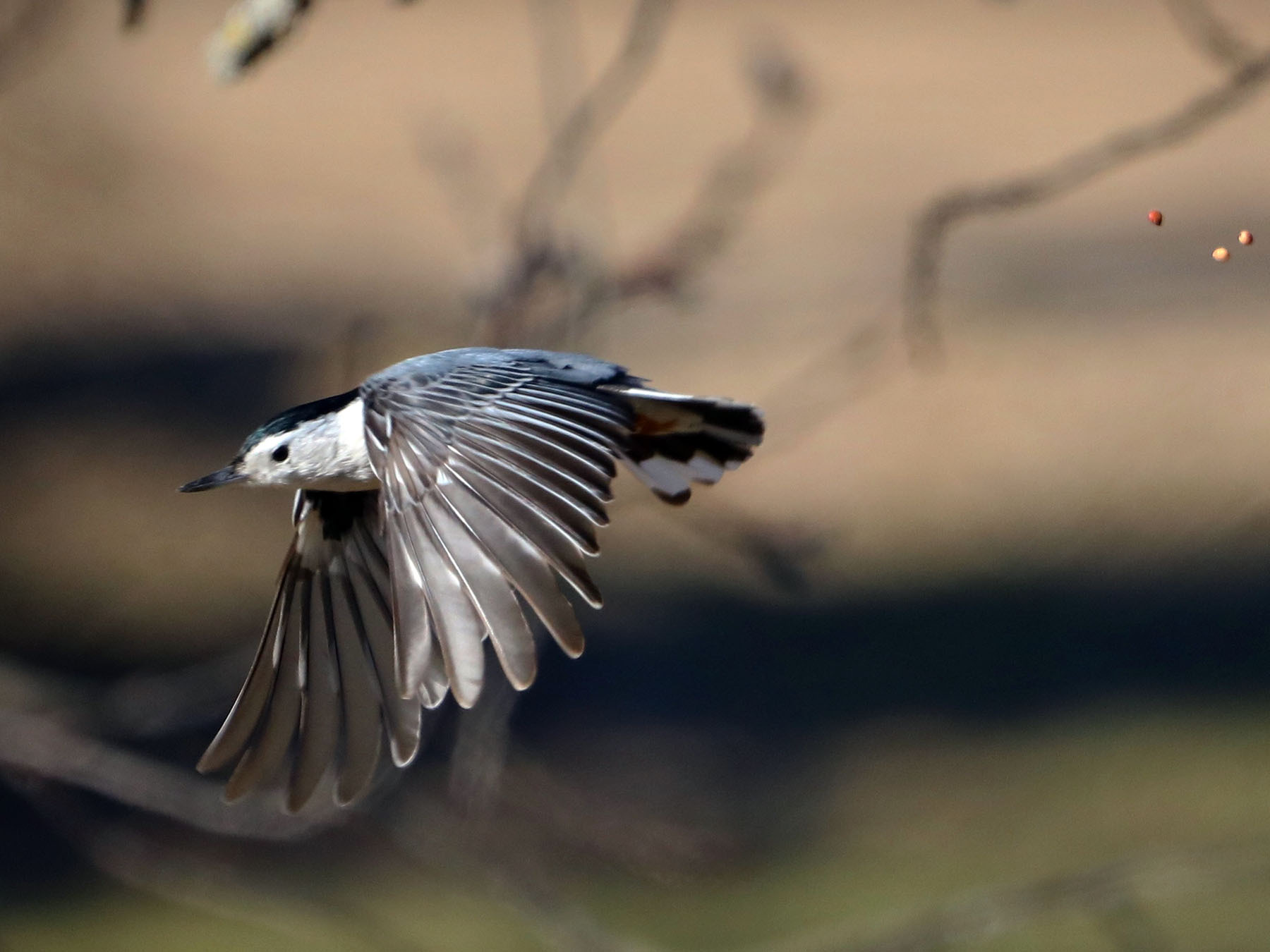
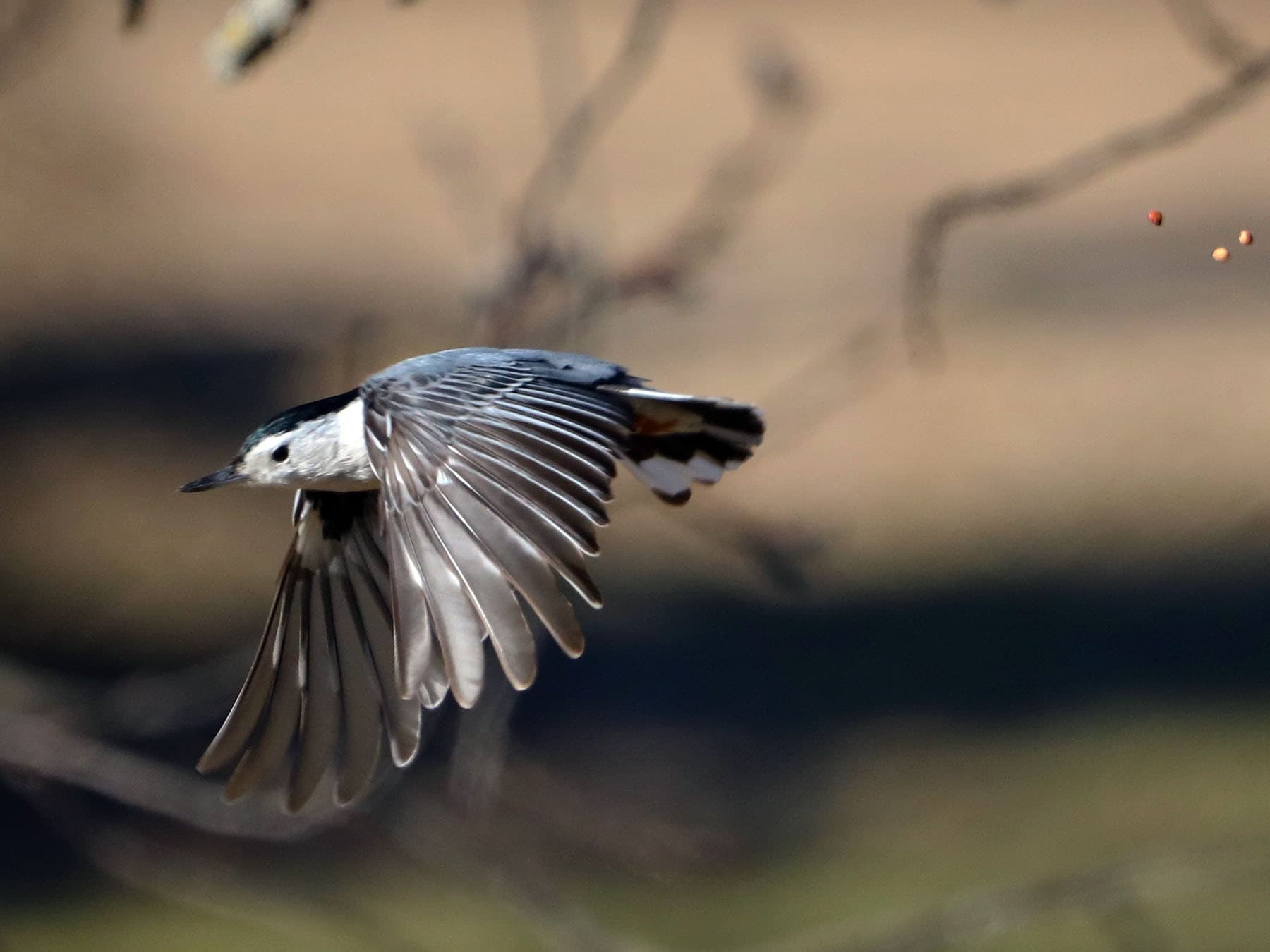 White-breasted Nuthatch in-flight
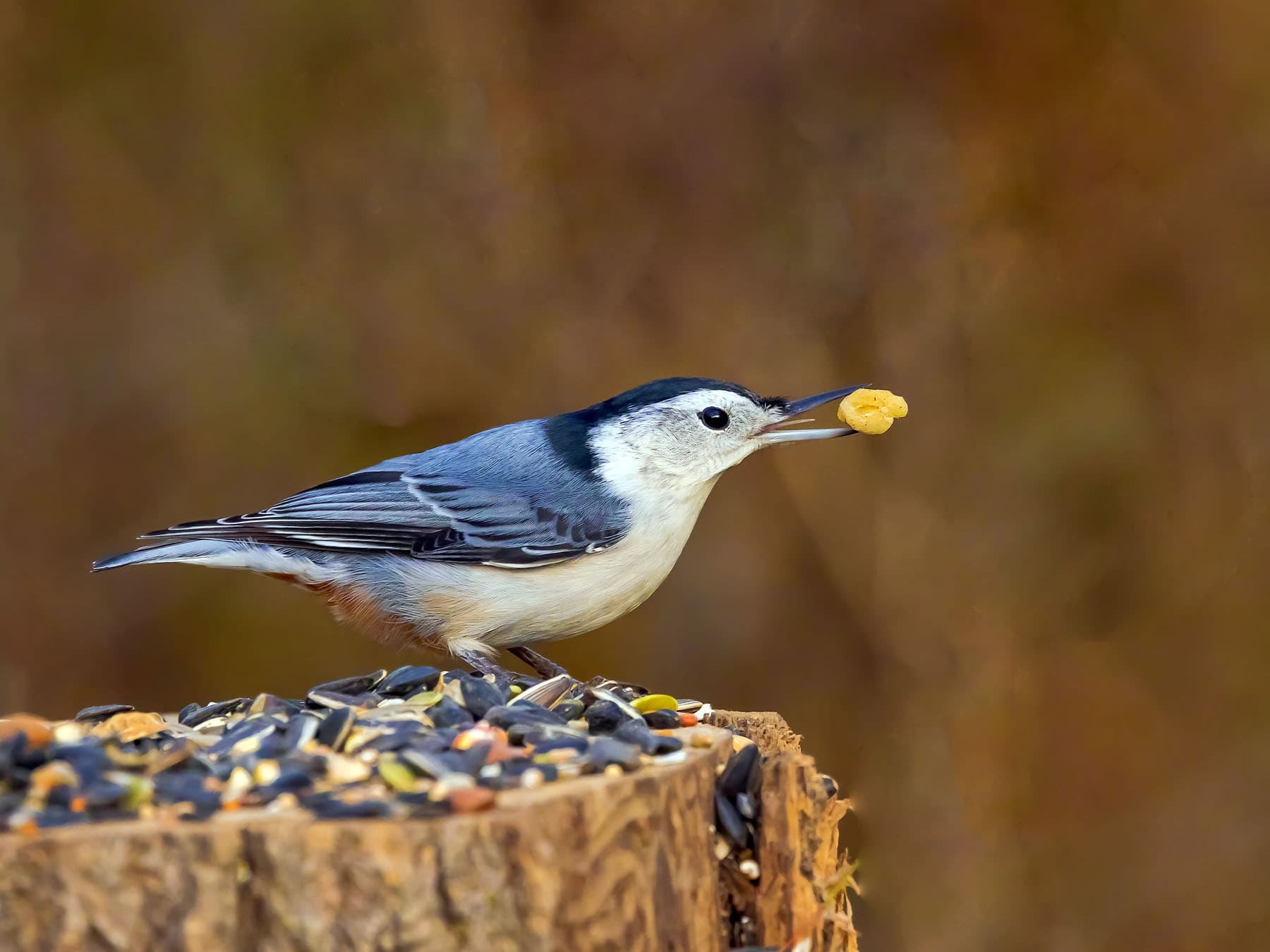 White-breasted Nuthatch feeding on a nut
Quick facts
- Length
- 13–14 cm
- Wingspan
- 20–27 cm
- Weight
- 18–30 g
- Lifespan
- 2 years · oldest recorded 9.8 years
- Family
- Nuthatches
- Migration
- Resident
- Global status (IUCN)
- Least Concern
- World population
- 10,000,000 mature individuals
- Population trend
- Increasing
- Also called
- White-breasted Wood-nuthatch
- Scientific name
- Sitta carolinensis
Sources
4- 1BirdLife International. 2016. Sitta carolinensis. The IUCN Red List of Threatened Species 2016: e.T22711202A94283783. Source (opens in a new tab)
- 2Data from Breeding Bird Survey and/or Christmas Bird Count: Butcher and Niven (2007)
- 3Partners in Flight (2022) Source (opens in a new tab)
- 4Klimkiewicz et al. Longevity records of North American birds: Remizidae through Parulinae. J Field Ornithol, 54:287-294 (1983)

Checked by
Nathan Cope, founder and editor
Nathan founded Birdfact and leads its writers and contributors in the UK, the US and Canada. He has watched and studied birds for more than ten years, and checks every article and species guide before it’s published.