


Eastern Bluebird
Bluebird · Sialia sialis
By the Birdfact teamChecked by Nathan Cope
On this page13 sections
How to recognise it
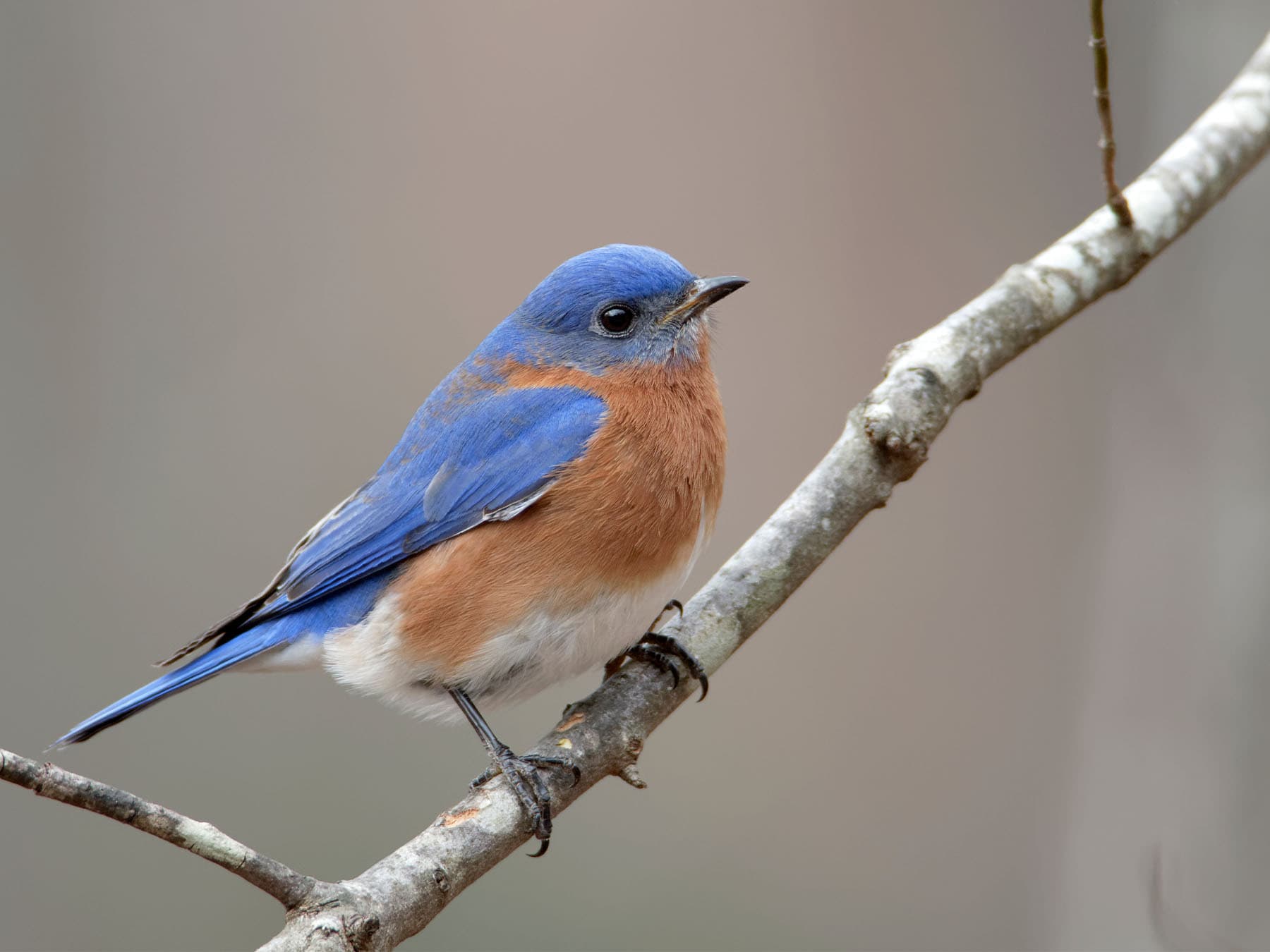
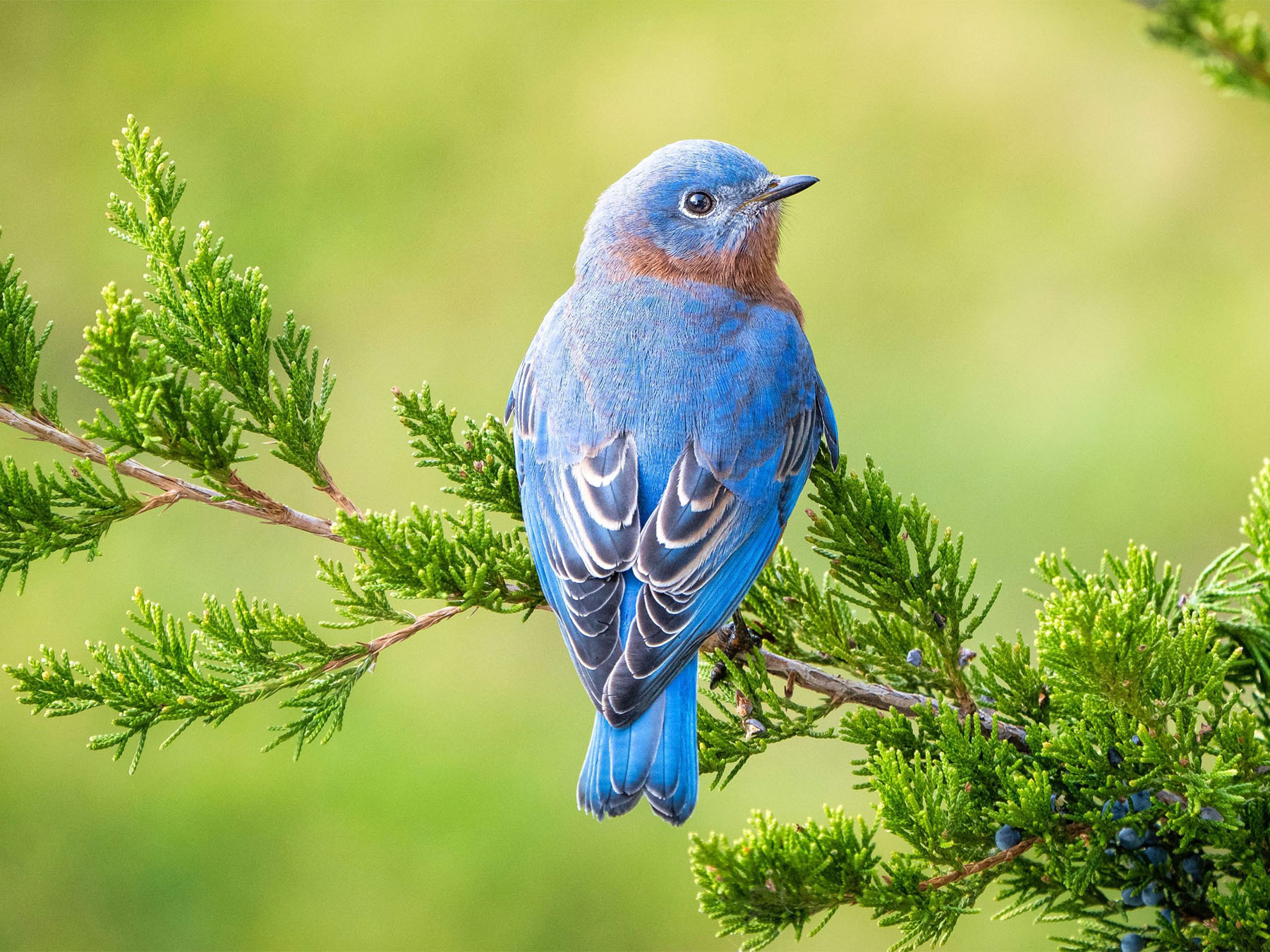
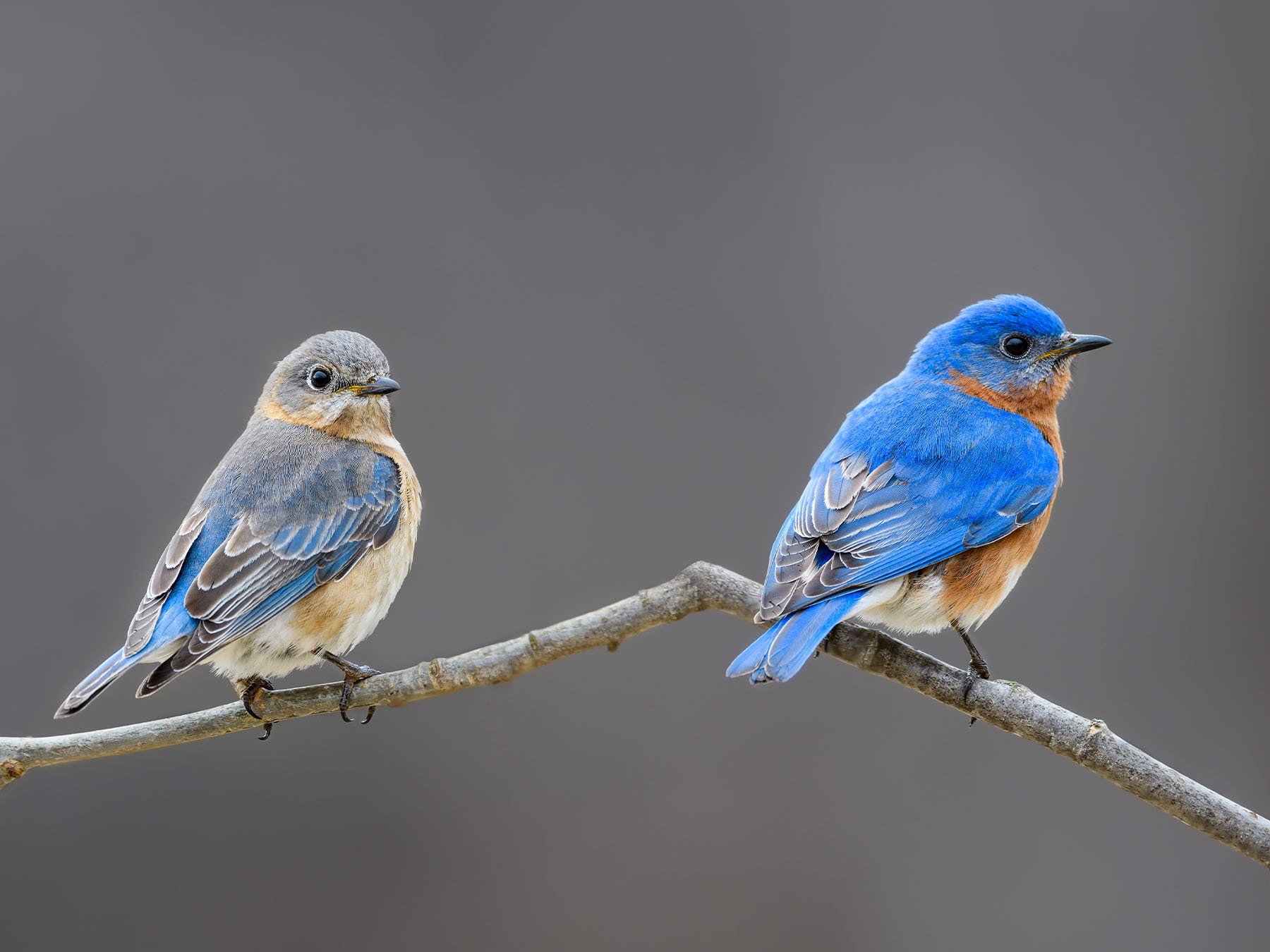
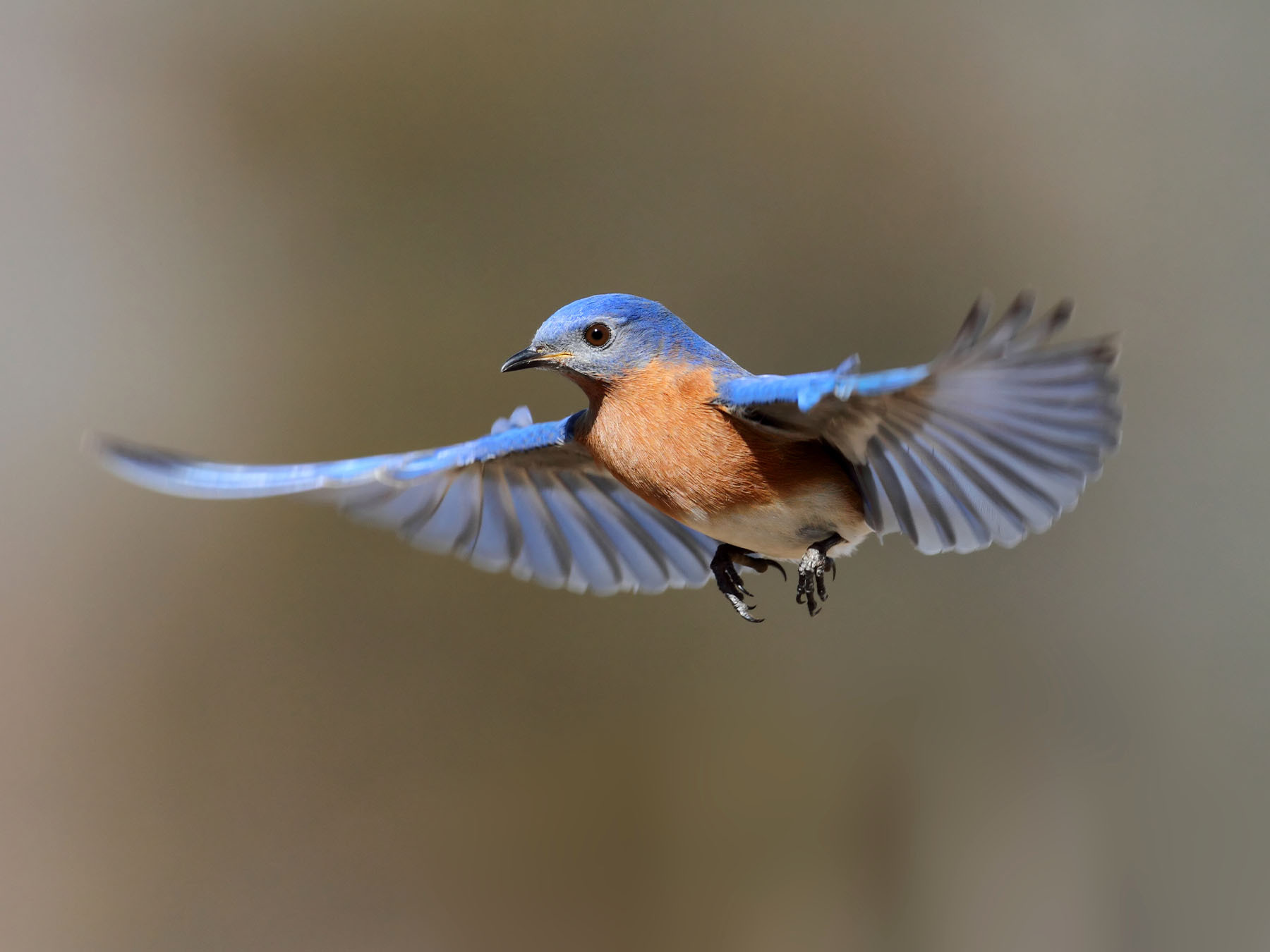
The Eastern Bluebird is a small thrush with a round head and short, straight bill. Males display vibrant blue upperparts, rusty red throat, breasts, and white belly. The wings and tail are blue with black edges.
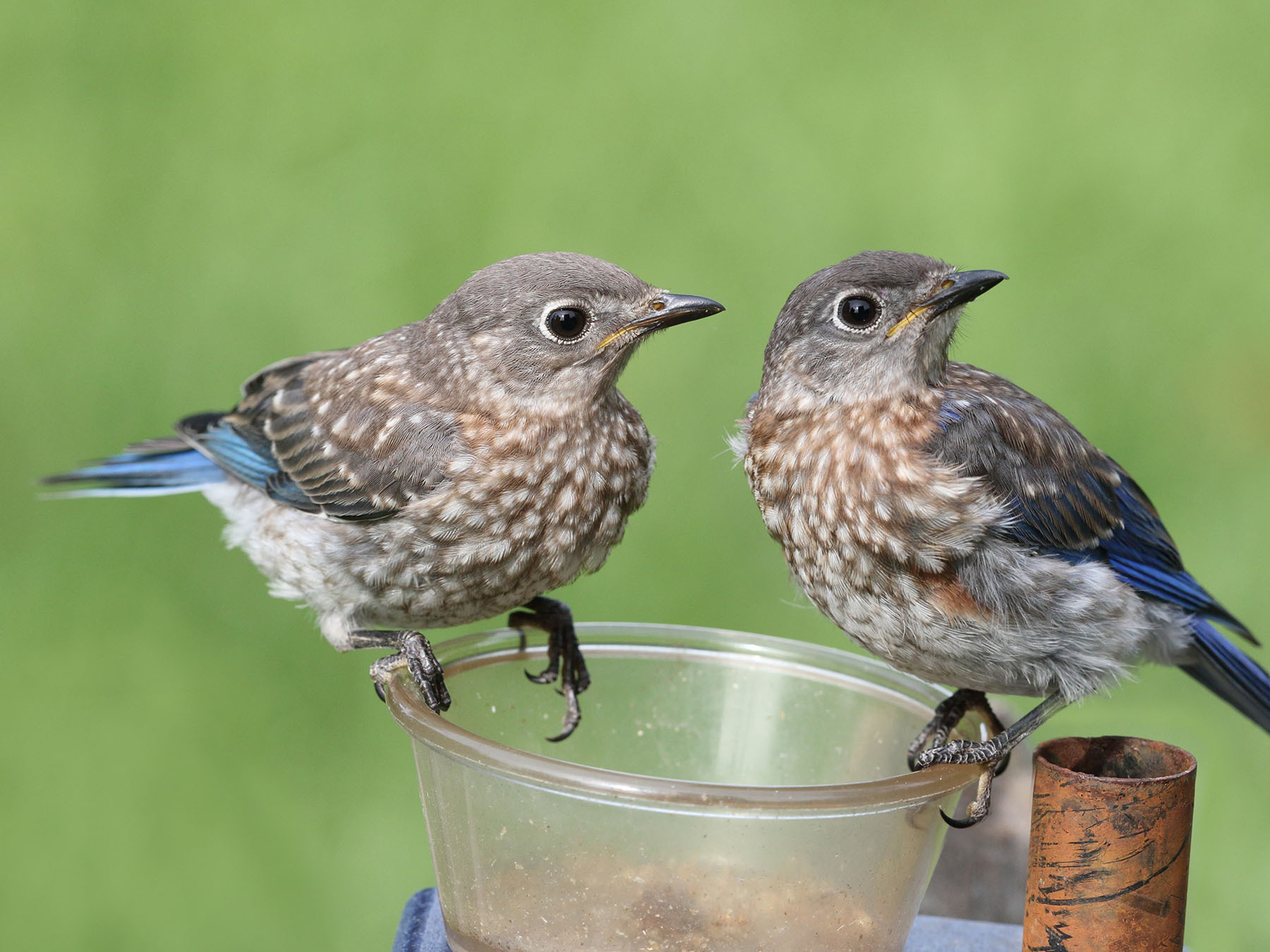
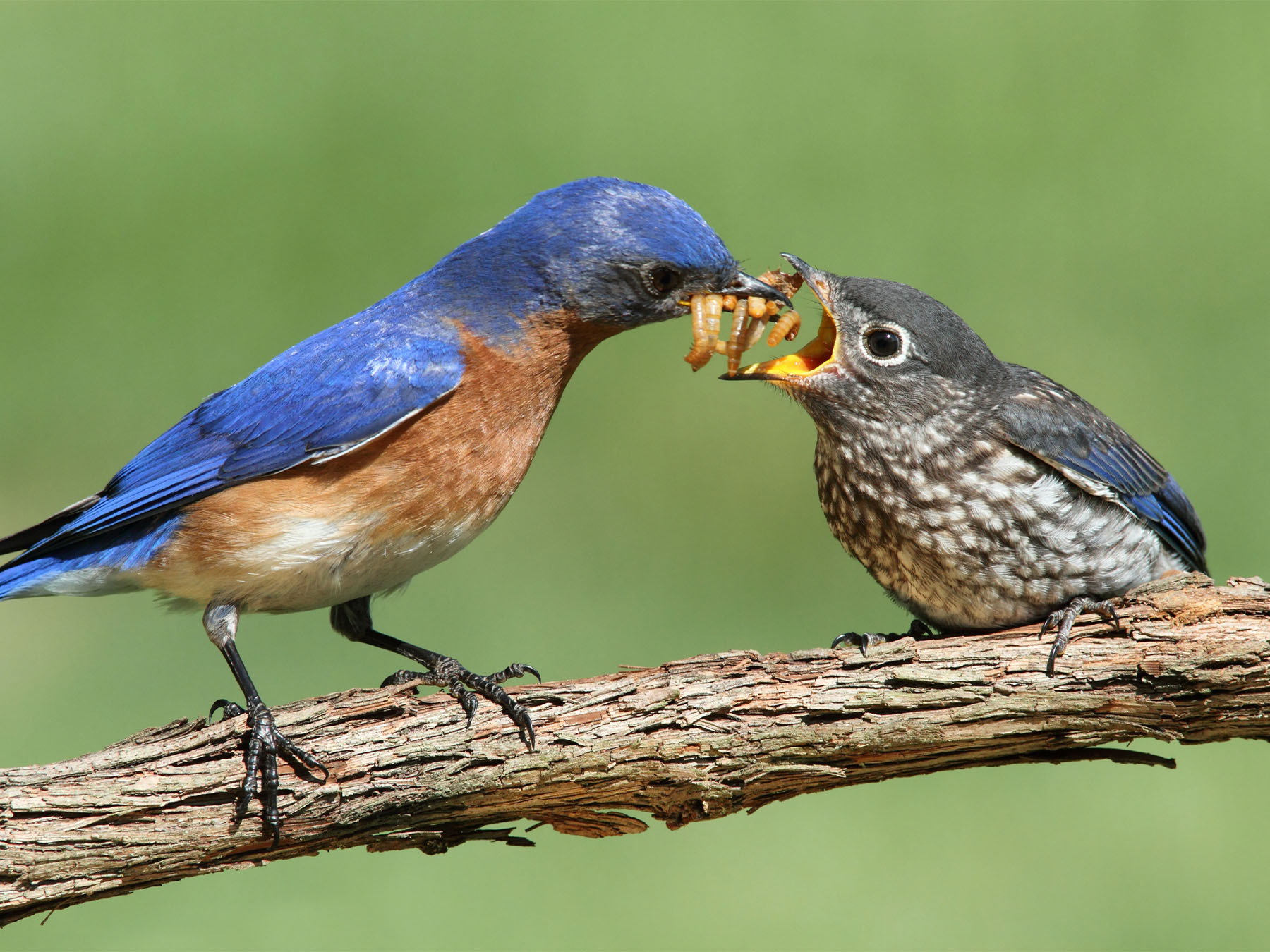
Females have duller blue wings and tails, with greyish heads and backs and paler orange-brown breasts. Juveniles show a speckled breast and blue-tinged wings and tail.
Its size
Adults- Length
- 16–21 cm
- Wingspan
- 25–32 cm
- Weight
- 27–34 g
Its song and calls
The Eastern Bluebird's song is a series of soft, warbling phrases, often described as 'chur-lee, chur-lee'. When threatened, their call is a soft, low-pitched 'tu-a-wee' or a sharp, chattering alarm call. In flight, they make a distinctive 'pew' sound.
- Song and calls0:00 / 0:30
Recorded in Minnesota, United States · May 2014
When and where to see it
OctoberHere all year
Most recorded in October
- 1. Tennessee2.4%
- 2. North Carolina2.3%
- 3. Virginia2.2%
- 4. Georgia2.1%
- 5. Alabama2.0%
Each dot is a county, state or province: the bigger and darker, the larger the bird’s share of that place’s bird records that month. Grey dots: no regular records. The ringed point is the centre of the bird’s records this month; the arrow shows how it moved since last month, and the dashed loop its path through the year. “Arrivals” colours places where it becomes regular this month (orange) or is in its last regular month (grey). GBIF eBird Observation Dataset, 2019–2024. Map data: Natural Earth, US Census Bureau; place centres © OpenStreetMap contributors.
In your area
See when the Eastern Bluebird is recorded in your county, state or province.
How often the Eastern Bluebird turns up in the United States and Canada through the year, from birdwatchers' records.
United States
Resident · all year · most records in February
Canada
Resident · all year · most records in June
Show as a table
| Month | United States | Canada |
|---|---|---|
| January | 0.79% (regular) | 0.073% (regular) |
| February | 0.98% (regular) | 0.080% (regular) |
| March | 0.94% (regular) | 0.12% (regular) |
| April | 0.78% (regular) | 0.14% (regular) |
| May | 0.66% (regular) | 0.14% (regular) |
| June | 0.73% (regular) | 0.18% (regular) |
| July | 0.72% (regular) | 0.17% (regular) |
| August | 0.61% (regular) | 0.092% (regular) |
| September | 0.63% (regular) | 0.076% (regular) |
| October | 0.87% (regular) | 0.17% (regular) |
| November | 0.87% (regular) | 0.11% (regular) |
| December | 0.85% (regular) | 0.080% (regular) |
Worldwide: recorded regularly in 8 countries
Countries where it was recorded in at least 3 of the 6 years 2019–2024. Linked countries have their own bird list.
Data: EOD – eBird Observation Dataset (Cornell Lab of Ornithology), accessed via GBIF.org, CC BY 4.0. Records from 2019–2024, aggregated and filtered by Birdfact. How these lists are made
Tips for seeing it
- Look for bluebirds perched on fences or wires in open country
- Listen for their soft, warbling song in early spring
- Check nest boxes in parks and gardens during breeding season
- Observe their hovering behavior when hunting insects
What it eats
Eastern Bluebirds primarily feed on insects, including beetles, caterpillars, and grasshoppers. They supplement their diet with small fruits, especially in winter. Bluebirds often hover briefly before dropping to the ground to catch prey.
Nesting and breeding
Eastern Bluebirds form monogamous pairs during the breeding season, typically from March to August. Males attract females by carrying nesting material to potential nest sites and performing wing-waving displays.
Nests are built in natural cavities, old woodpecker holes, or nest boxes. The female constructs a cup-shaped nest using grasses and pine needles. She lays 3-7 pale blue eggs, occasionally white.
Incubation lasts about 13-16 days, performed solely by the female. Both parents feed the nestlings, which fledge after 15-20 days. Pairs often produce two to three broods per season.
Behaviour
Eastern Bluebirds often perch on wires, posts, or low branches, scanning the ground for insects. When pursuing prey, they exhibit a distinctive 'dropping' flight. During courtship, males perform wing-waving displays and offer food to females.
Conservation
While currently listed as Least Concern, Eastern Bluebirds faced declines in the early 20th century due to habitat loss and competition from introduced species.
Conservation efforts, including widespread nest box programs, have helped populations recover and stabilize.
Similar birds
Often mistaken for
More photos
6 photos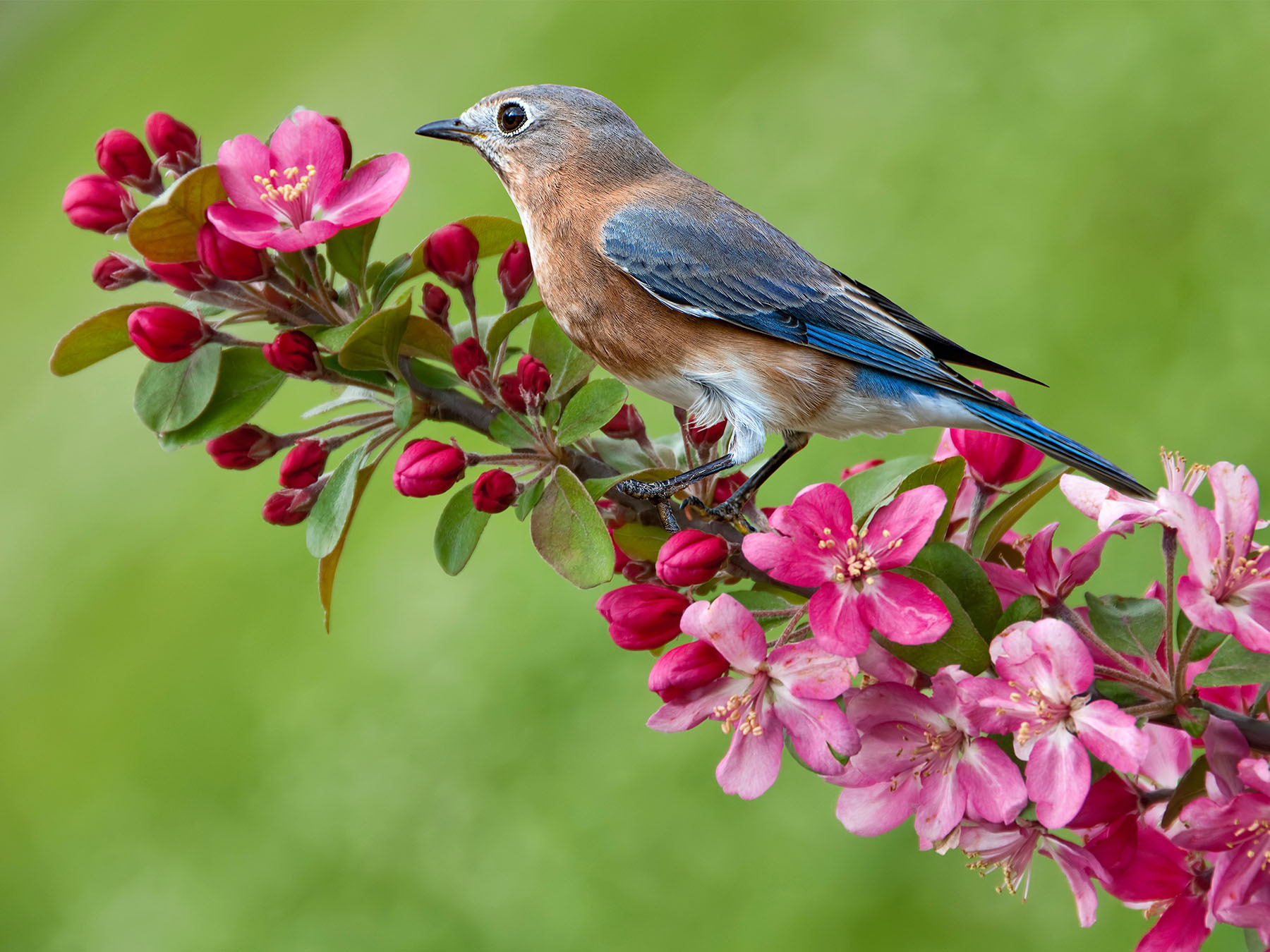
Eastern Bluebird guides
2 guidesQuick facts
- Length
- 16–21 cm
- Wingspan
- 25–32 cm
- Weight
- 27–34 g
- Lifespan
- 6–10 years
- Family
- Thrushes
- Migration
- Partial migrant
- Global status (IUCN)
- Least Concern
- World population
- 23,000,000 mature individuals
- Population trend
- Population has been increasing for the past 40 years
- Also called
- Bluebird
- Scientific name
- Sialia sialis
Sources
3- 1BirdLife International. 2021. Sialia sialis. The IUCN Red List of Threatened Species 2021: e.T22708550A139388955. Source (opens in a new tab)
- 2Partners in Flight (2019)
- 3Partners in Flight (2019)

Checked by
Nathan Cope, founder and editor
Nathan founded Birdfact and leads its writers and contributors in the UK, the US and Canada. He has watched and studied birds for more than ten years, and checks every article and species guide before it’s published.