


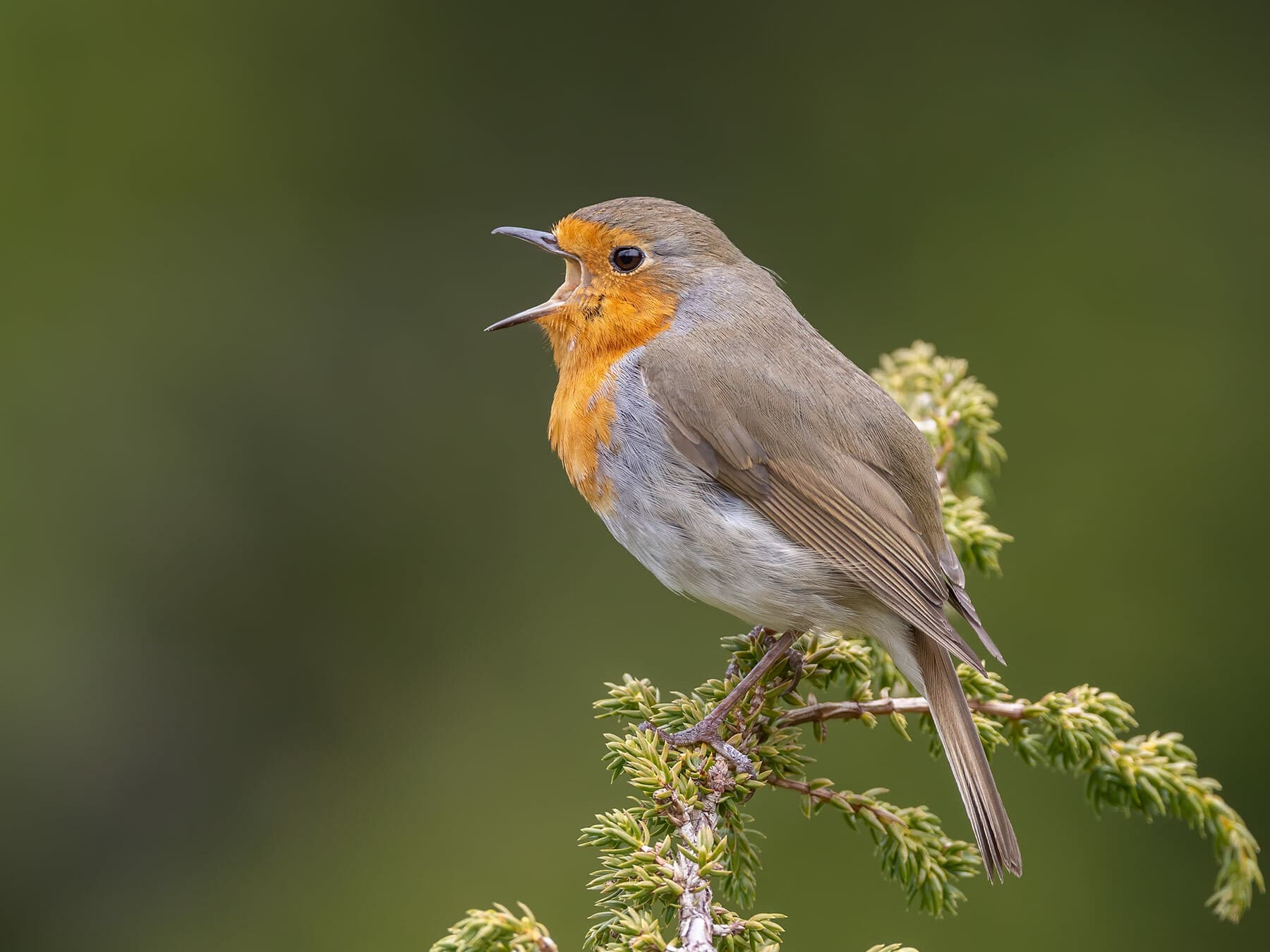
European Robin
Robin, Robin Redbreast · Erithacus rubecula
By the Birdfact teamChecked by Nathan Cope
See it in 3D
2 plumages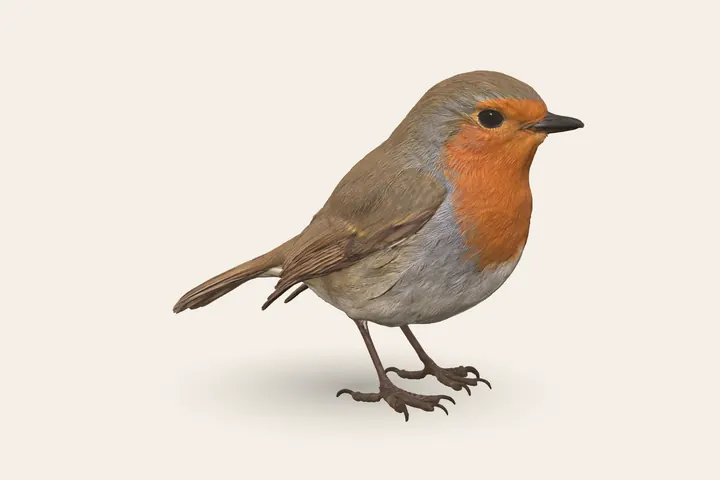 3D model
A European Robin is 12.5–14 cm (5–5.5 in) long, bill to tail.
3D model · Adult · Length 12.5–14 cm (5–5.5 in) · How we make our birds · Report a problem
© 2026 NC Digital Limited (Birdfact). All rights reserved. This 3D model may be viewed on this page and shared by link only. Downloading, extracting, copying or reusing it, or using it to train machine-learning models, is not permitted without our written permission. Using our models
On this page16 sections
How to recognise it
This is the European Robin of Britain, Ireland and Europe. In North America, "robin" means the American Robin, a much larger thrush: see American Robin vs European Robin.
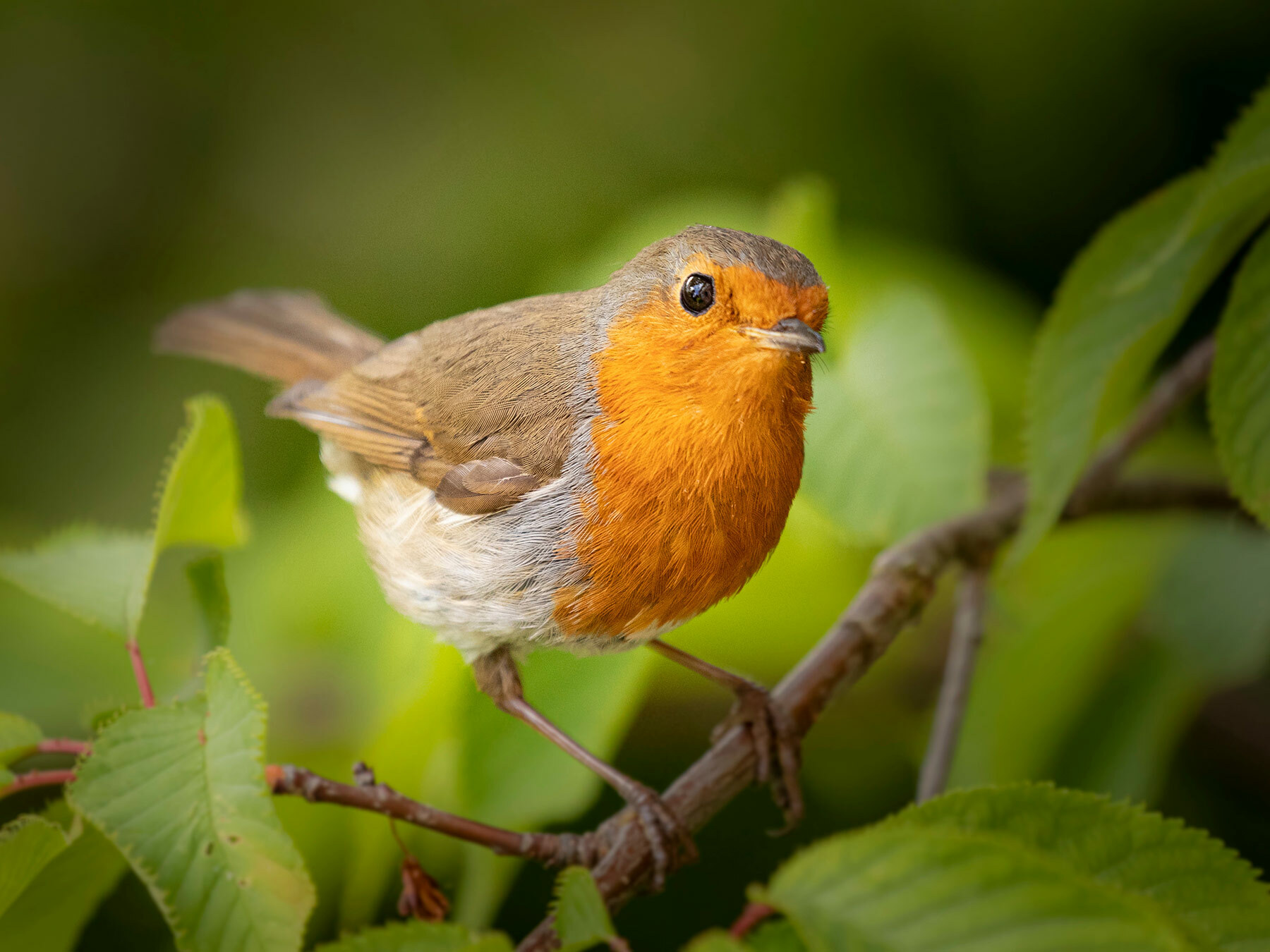
An adult Robin is one of the easiest birds to name: an orange-red face and breast, edged with blue-grey, a plain brown back and a whitish belly, with a thin dark bill and pinkish-brown legs. It is small and plump, about 19 g on average.
Males and females look alike, so you cannot tell them apart by their feathers.
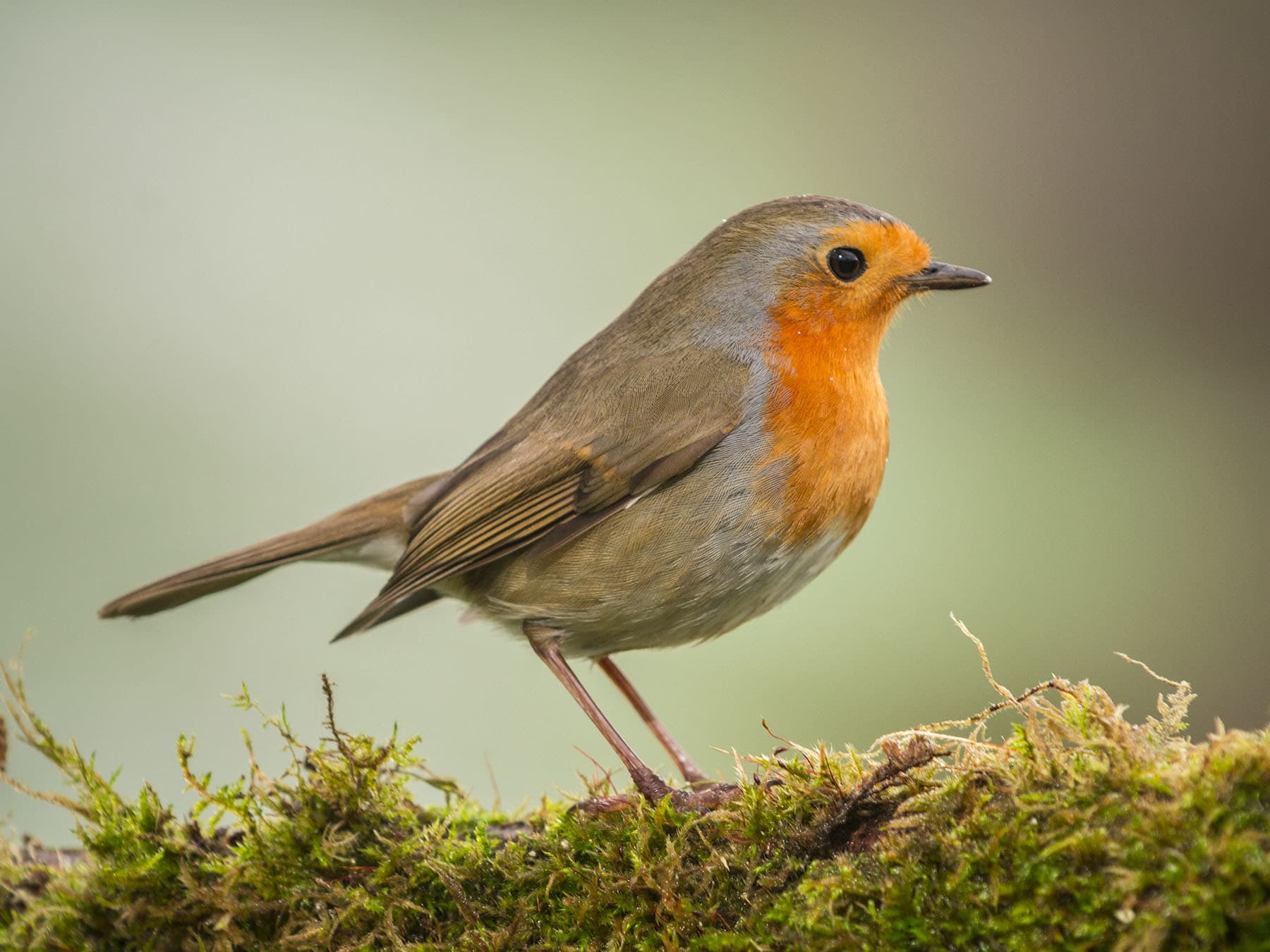
Male, female and young
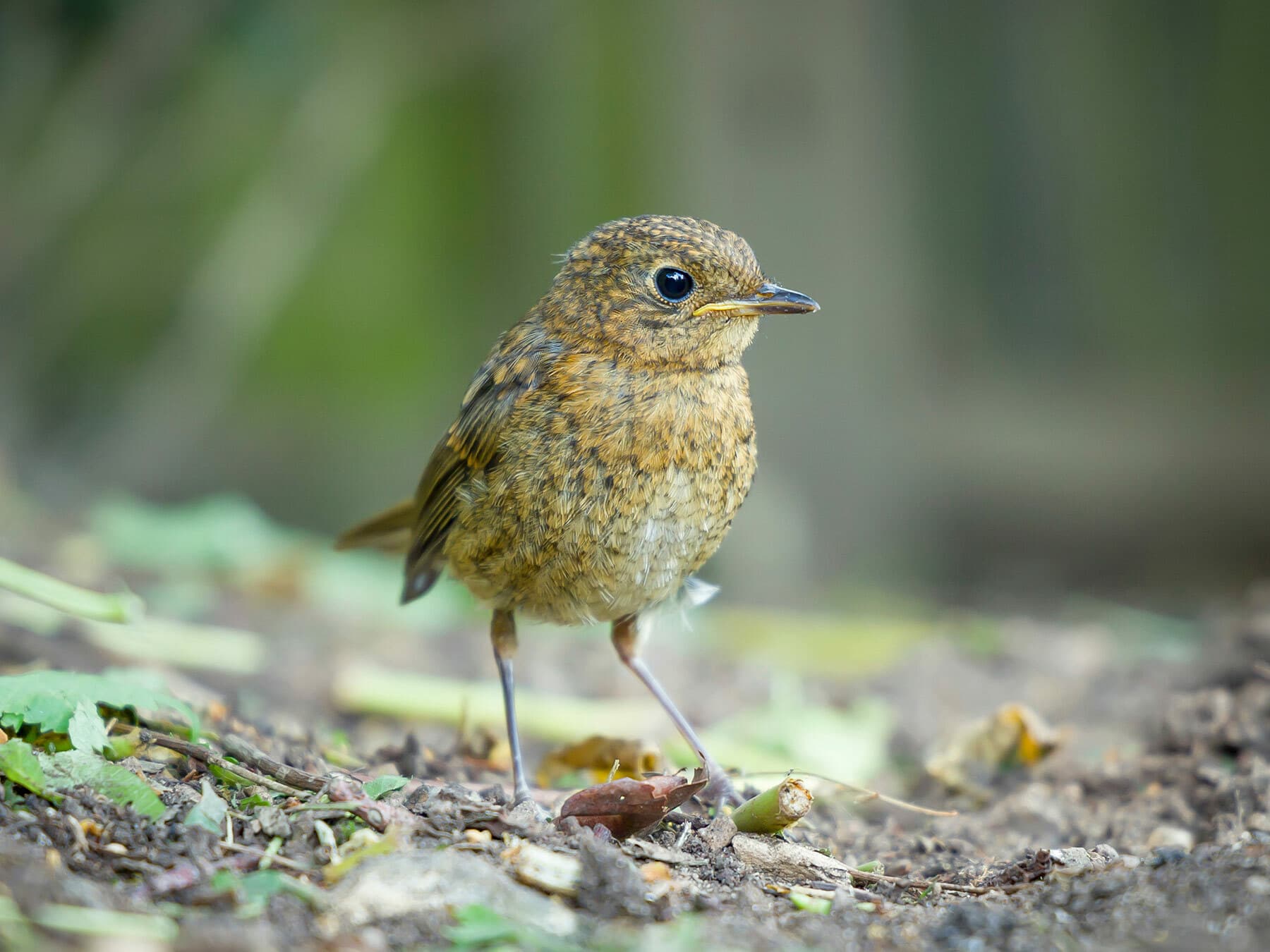
Young Robins leave the nest with no red breast at all. They are brown and speckled all over with golden brown. As their first moult goes on through the summer, the orange-red breast and pale belly grow in. Even before then, the round body, long legs and tilted head give a young Robin away.
For every stage from egg to juvenile, with photos, see baby Robins.
For ringers and keen birders: males average slightly longer wings than females, 75.0 mm against 72.7 mm in birds caught for ringing, but the ranges overlap too much to sex a bird in the field.1
Its size
Adults- Length
- 12.5–14 cm
- Wingspan
- 20–22 cm
- Weight
- 15.5–22.8 g
Its song and calls
Robins sing in almost every month. The song is a run of sweet, high, whistled phrases, each two to four seconds long, with abrupt pauses between them, and each verse a little different. The only quiet spell is July and August, while adults moult.
Autumn and winter song surprises many people because it is not only the males singing. Female Robins hold their own winter territories and sing to defend them; in a field experiment, both sexes sang with more vigour when an intruder was simulated.2 Their autumn song is quieter and more wistful than the spring song, which comes almost entirely from males.
The call you will hear most is a hard "tic", repeated when a Robin is excited or facing a rival, and speeding up into a ticking rattle when it is really worked up. A very thin, high "tseee" is its alarm.
Night song
Robins are often the bird singing after dark in towns, usually near street lights. A study of urban Robins found that night singing was linked far more strongly to daytime noise than to light: birds in noisy places appear to sing when it is quieter.3
- Song0:00 / 0:49
Recorded in Hauts-de-France, France · May 2025
- Call0:00 / 0:37
Recorded in Cambridgeshire, England · December 2012
When and where to see it
OctoberHere all year
Most recorded in October
- 1. Dundee7.8%
- 2. South Ayrshire7.4%
- 3. Meath7.3%
- 4. Rhondda, Cynon, Taff6.9%
- 5. Blaenau Gwent6.1%
Each dot is a county, state or province: the bigger and darker, the larger the bird’s share of that place’s bird records that month. Grey dots: no regular records. The ringed point is the centre of the bird’s records this month; the arrow shows how it moved since last month, and the dashed loop its path through the year. “Arrivals” colours places where it becomes regular this month (orange) or is in its last regular month (grey). GBIF eBird Observation Dataset, 2019–2024. Map data: Natural Earth, US Census Bureau; place centres © OpenStreetMap contributors.
In your area
See when the European Robin is recorded in your county, state or province.
How often the European Robin turns up in the UK and Ireland through the year, from birdwatchers' records.
United Kingdom
Resident · all year · most records in December
Ireland
Resident · all year · most records in March
Show as a table
| Month | United Kingdom | Ireland |
|---|---|---|
| January | 3.2% (regular) | 3.0% (regular) |
| February | 3.3% (regular) | 2.9% (regular) |
| March | 3.1% (regular) | 3.2% (regular) |
| April | 2.7% (regular) | 3.1% (regular) |
| May | 2.6% (regular) | 3.1% (regular) |
| June | 2.3% (regular) | 2.4% (regular) |
| July | 1.9% (regular) | 2.1% (regular) |
| August | 2.3% (regular) | 2.2% (regular) |
| September | 3.0% (regular) | 3.1% (regular) |
| October | 3.1% (regular) | 3.1% (regular) |
| November | 3.1% (regular) | 3.0% (regular) |
| December | 3.3% (regular) | 3.1% (regular) |
Recorded regularly in
Worldwide: recorded regularly in 75 countries
Countries where it was recorded in at least 3 of the 6 years 2019–2024. Linked countries have their own bird list.
Europe (51)
- Åland Islands
- Albania
- Andorra
- Austria
- Belarus
- Belgium
- Bosnia & Herzegovina
- Bulgaria
- Croatia
- Czechia
- Denmark
- Estonia
- Faroe Islands
- Finland
- France
- Germany
- Gibraltar
- Greece
- Guernsey
- Hungary
- Iceland
- Ireland
- Isle of Man
- Italy
- Jersey
- Kosovo
- Latvia
- Liechtenstein
- Lithuania
- Luxembourg
- Malta
- Moldova
- Monaco
- Montenegro
- Netherlands
- North Macedonia
- Norway
- Poland
- Portugal
- Romania
- Russia
- San Marino
- Serbia
- Slovakia
- Slovenia
- Spain
- Sweden
- Switzerland
- Ukraine
- United Kingdom
- Vatican City
Asia (20)
- Armenia
- Azerbaijan
- China
- Cyprus
- Georgia
- Iran
- Iraq
- Israel
- Jordan
- Kazakhstan
- Kuwait
- Kyrgyzstan
- Lebanon
- Mongolia
- Palestinian Territories
- Qatar
- Tajikistan
- Turkey
- United Arab Emirates
- Uzbekistan
Data: EOD – eBird Observation Dataset (Cornell Lab of Ornithology), accessed via GBIF.org, CC BY 4.0. Records from 2019–2024, aggregated and filtered by Birdfact. How these lists are made
Robins live right across Britain and Ireland, from Shetland to the Channel Islands; only the highest mountain tops lack them. Look in gardens, parks, towns and the countryside, in any month. In the BTO's Gardenwatch survey, Robins fed or sheltered in about 70% of gardens.4
Do Robins migrate?
Most British and Irish Robins stay put all year. Ringing, going back to David Lack's studies in the 1940s, shows that a small share leave in autumn, mostly females, some reaching France.5 Meanwhile Robins from northern and eastern Europe arrive to spend the winter here, so the Robin on your fence in January may not be the one that nested in your hedge.
Spotting tips
Turn over a patch of soil and wait: Robins follow gardeners for the worms and grubs a spade turns up. In winter, listen for the song first, then look low, on a fence post or a branch at the edge of cover, where a Robin sits and watches the ground for food.4
What it eats
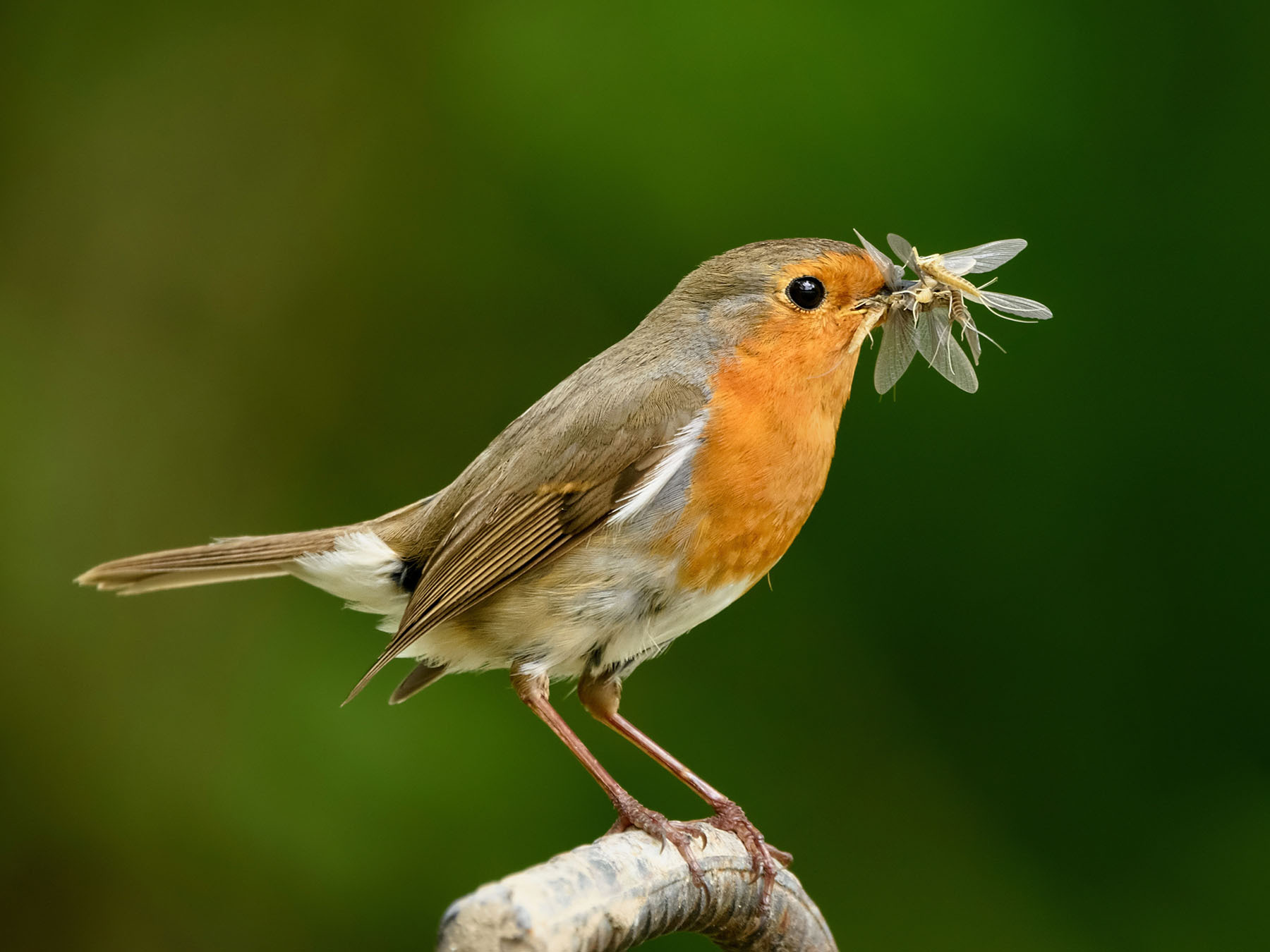
Mostly small beetles and other insects, plus worms and other small animals from the soil. Robins hunt by eye and would rather find their own food than use a feeder.4 They also eat fruit, seeds and nuts.
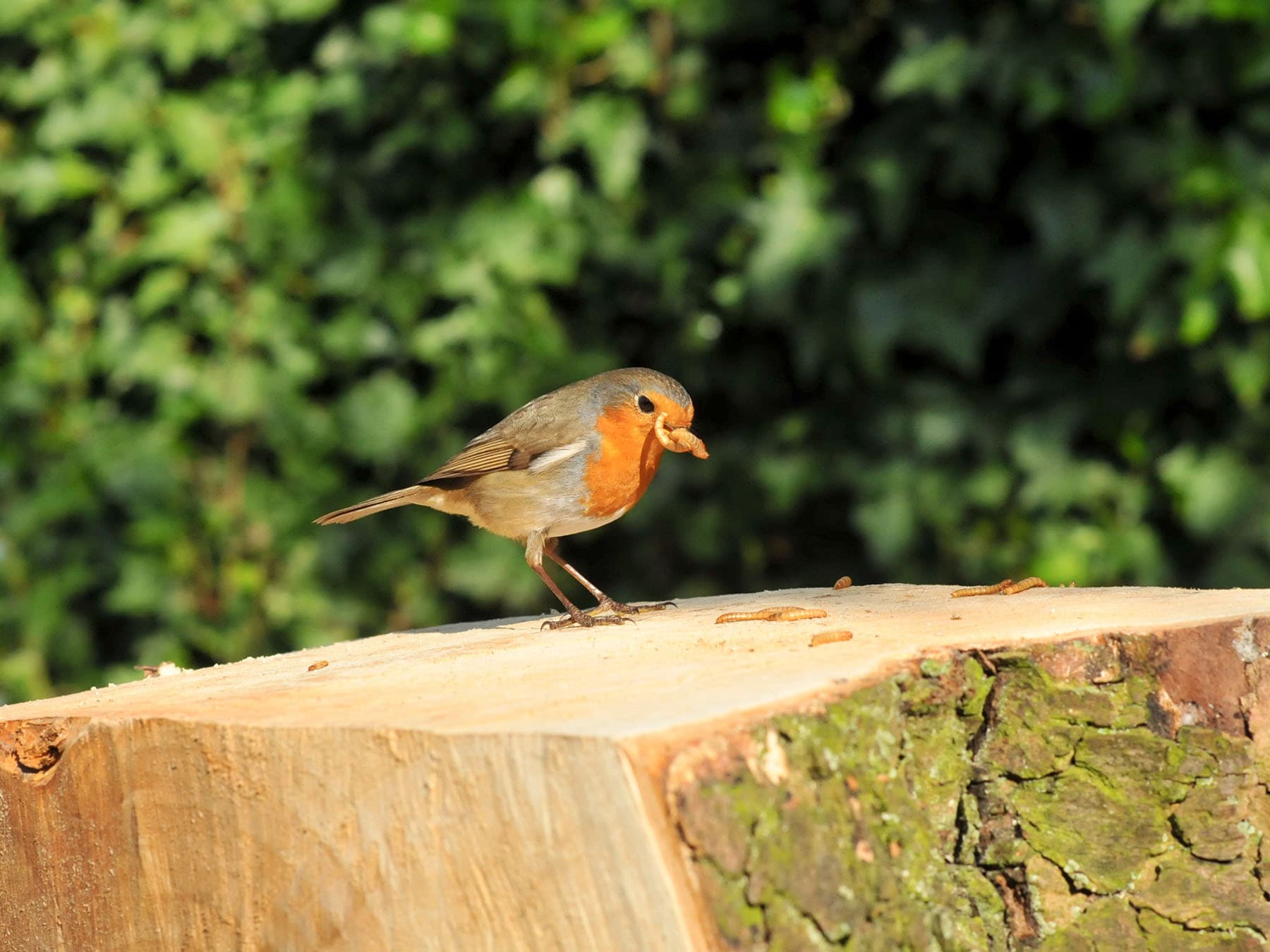
Feeding them in your garden
Mealworms are the favourite, live or dried and soaked. Robins also take suet, sunflower hearts and crushed peanuts. Robins feed mostly on the ground and rarely use a hanging feeder, but the RSPB now advises against bird tables and trays, where disease spreads most: offer a few mealworms at a time and clear away what is left. Do not give bread or milk.
The RSPB now advises pausing seed and peanuts from 1 May to 31 October, because trichomonosis spreads at feeders in summer and autumn, while small amounts of mealworms, fat balls or suet are fine.6 For Robins that means mealworms and suet all year, and sunflower hearts or crushed peanuts from November to April.
Nesting and breeding
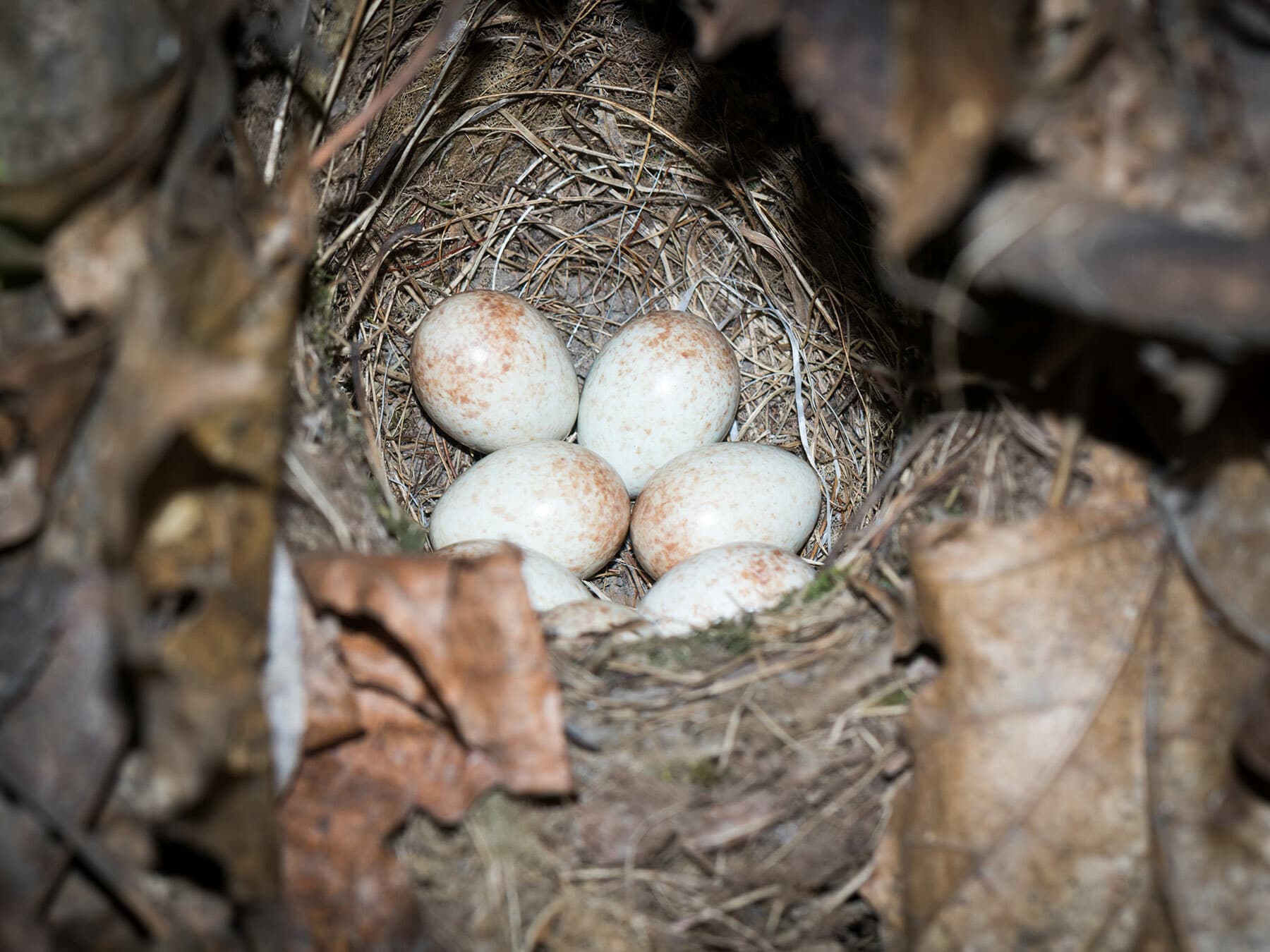
Robins nest low, in a hollow or a tangle: among tree roots, under a log or in thick plants. In gardens they are famous for odd sites, from flower pots in sheds to post boxes and old boots.4
The first eggs are laid in mid-April on average, and as early as mid-March. A clutch is usually four or five whitish eggs with fine reddish speckles. The female incubates them for 14 to 16 days, and the chicks leave the nest about two weeks after hatching (12.5 to 16 days). Most pairs raise two broods a year, some three.1
More detail: Robin nesting: when, where and how to help.
Nest boxes
A box with a small round hole will not suit a Robin. Use an open-fronted box with a front panel about 100 mm high, fixed below about 2 m (6 to 7 ft) inside a climber or other cover, facing north-east, out of the prevailing wind and rain.7
Behaviour
Robins are territorial all year, chase off intruders and will sometimes fight to the death. In The Life of the Robin, first published in 1943, David Lack described his study of ringed Robins, which showed that song is how they claim and hold their ground; he reported that territory holders attacked a stuffed Robin, and even a bundle of red breast feathers, placed in their patch.8
The same boldness makes them easy to watch. In hard weather several Robins may crowd onto one bird table, each trying to defend the food.
Navigation behaviour
Robins have helped explain how birds find their way. Experiments with Robins showed that birds can orient with a magnetic compass,9 and in 2021 laboratory tests found that cryptochrome 4, a light-sensitive protein from the Robin, responds to magnetic fields more strongly than the same protein from chickens and pigeons.10
Lifespan and predators
Short lives are normal for Robins. The BTO gives a typical lifespan of two years, with breeding usually starting at one year old. Only about four in ten adults survive from one year to the next, and about the same share of young birds survive their first year.1
Cold winters hit them hard: UK numbers were set back by a run of cold winters before rising from the mid-1980s. Lack's study found that most Robins die in any given year.8
Conservation
Similar birds
Often mistaken for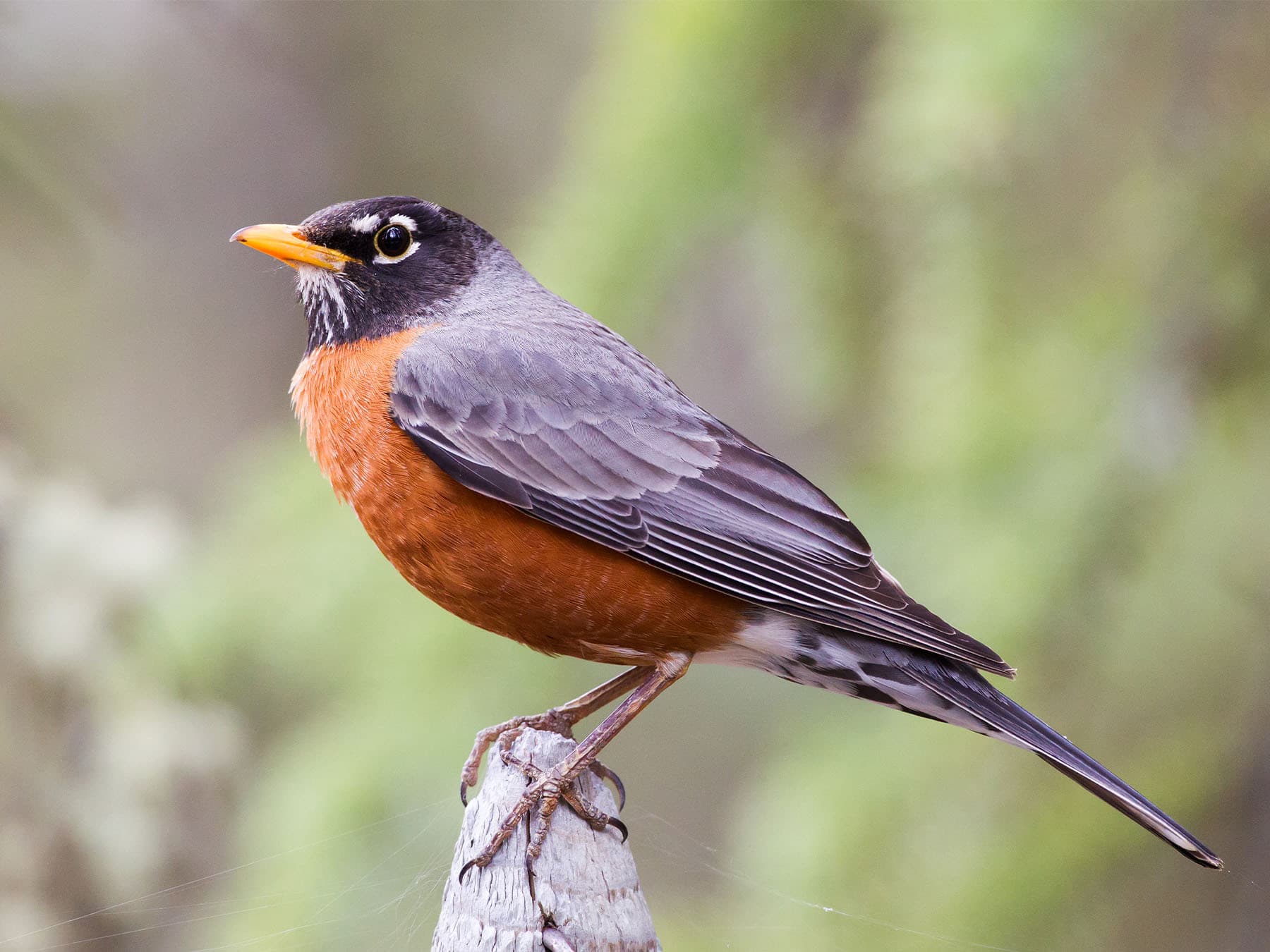
More photos
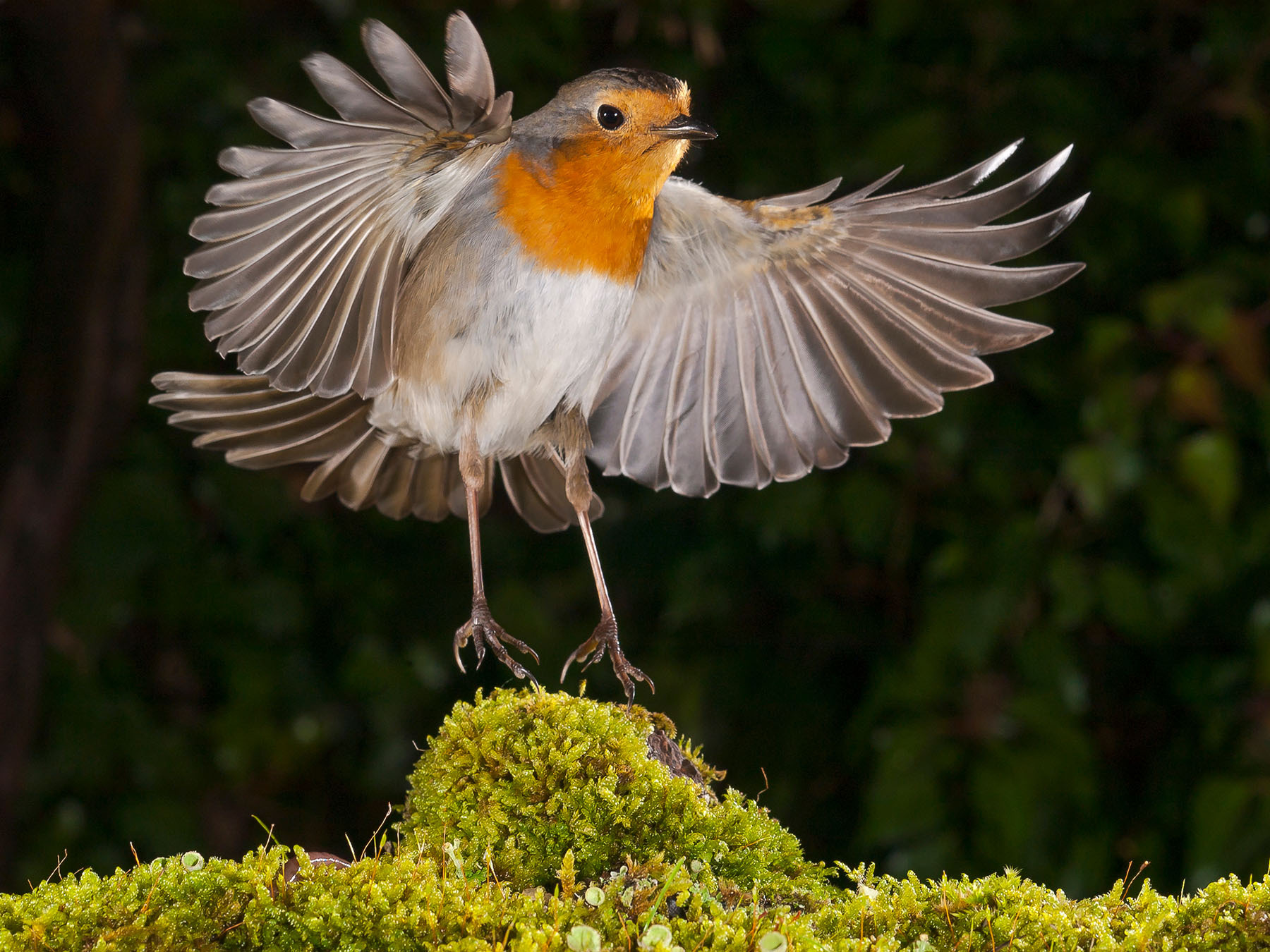
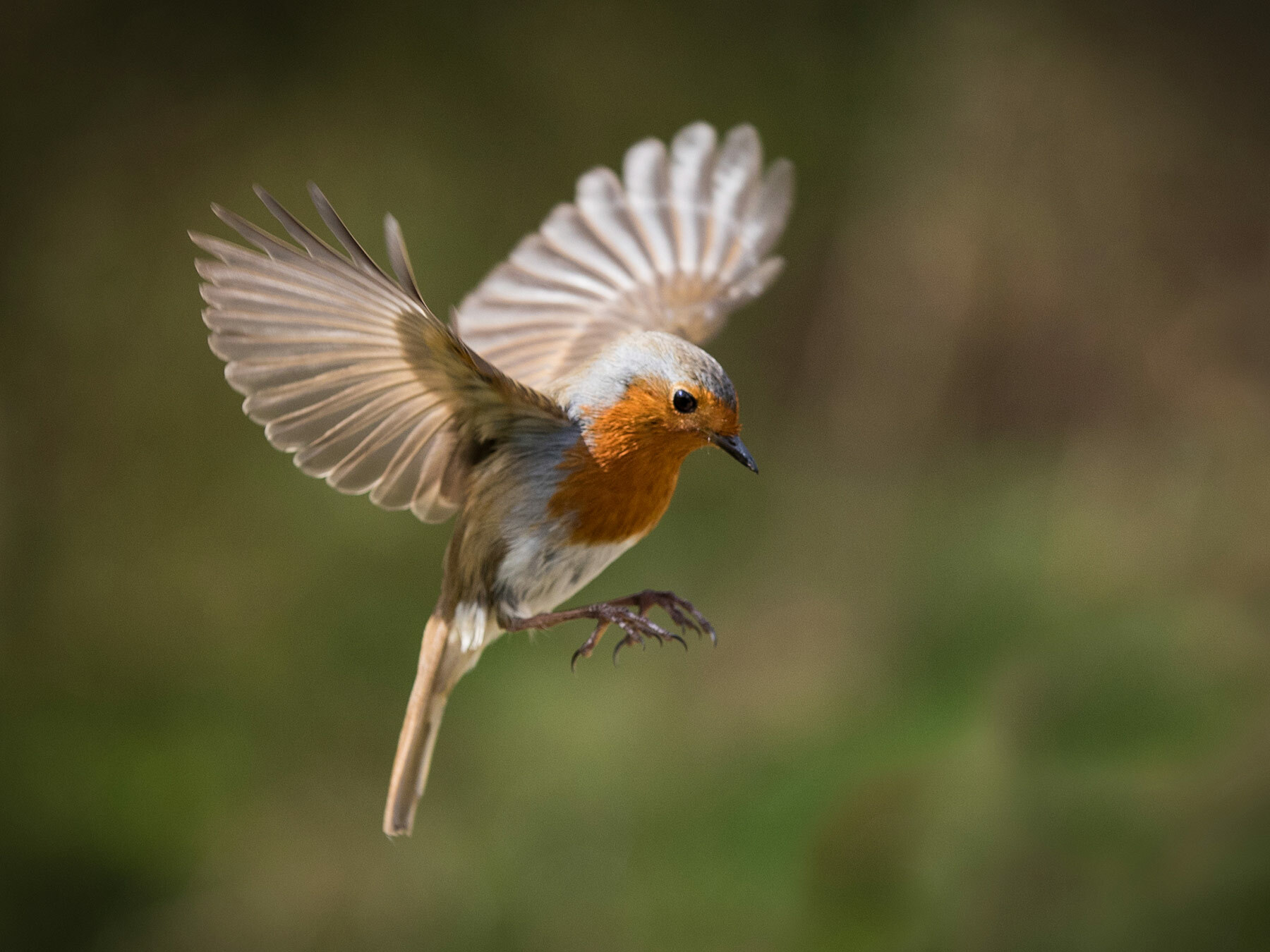
10 photos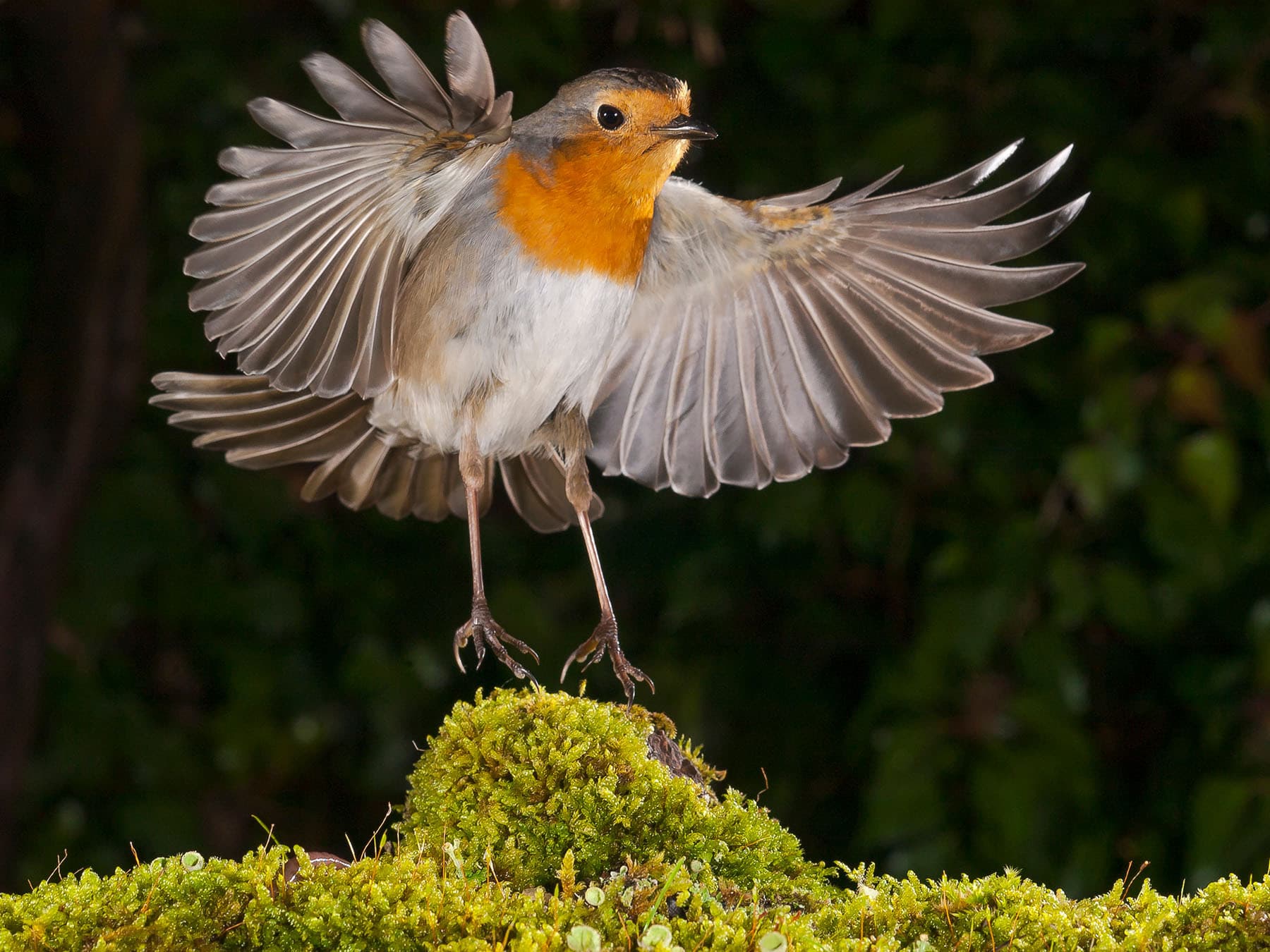 Robin in flight, coming in to land
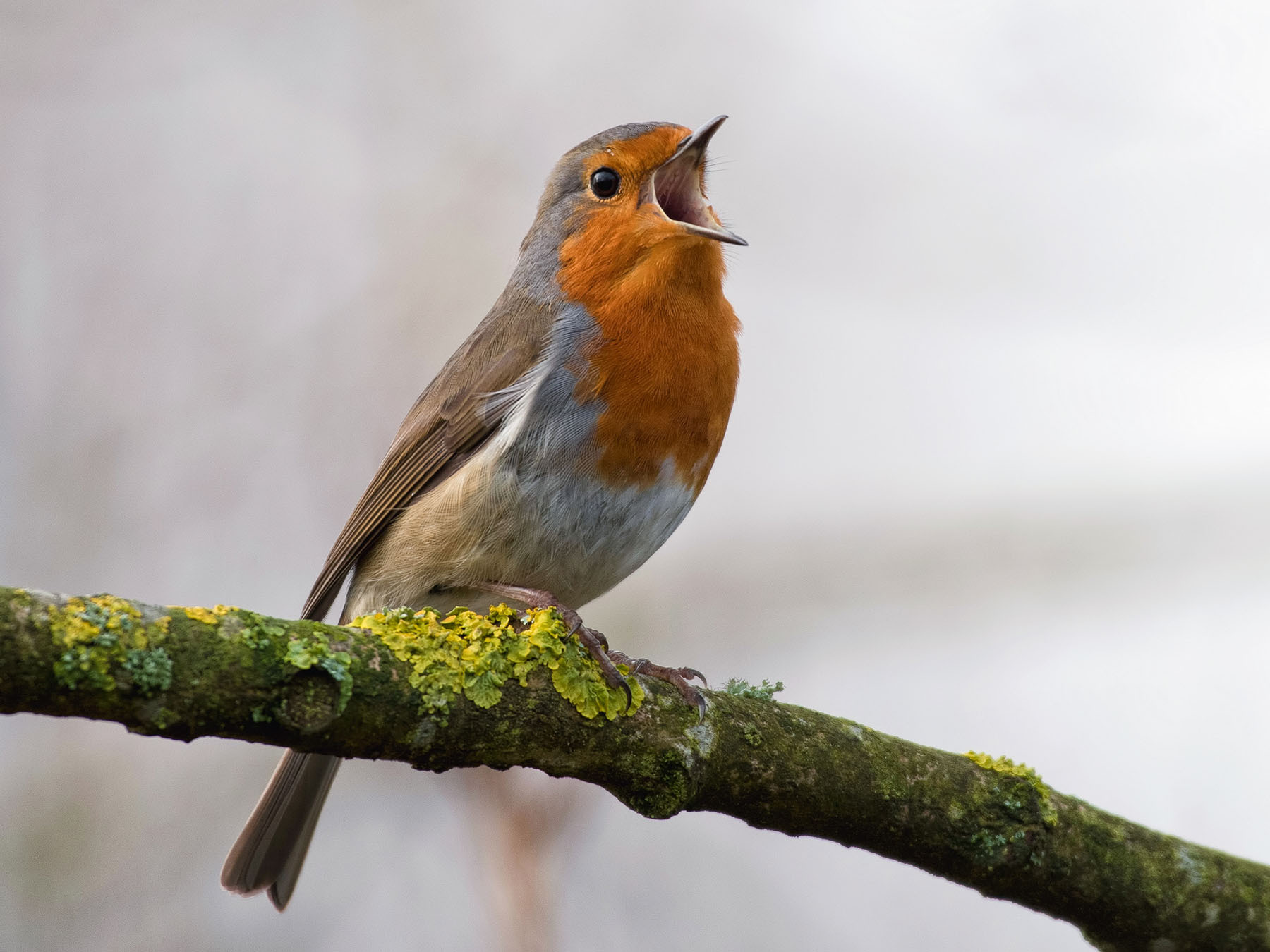
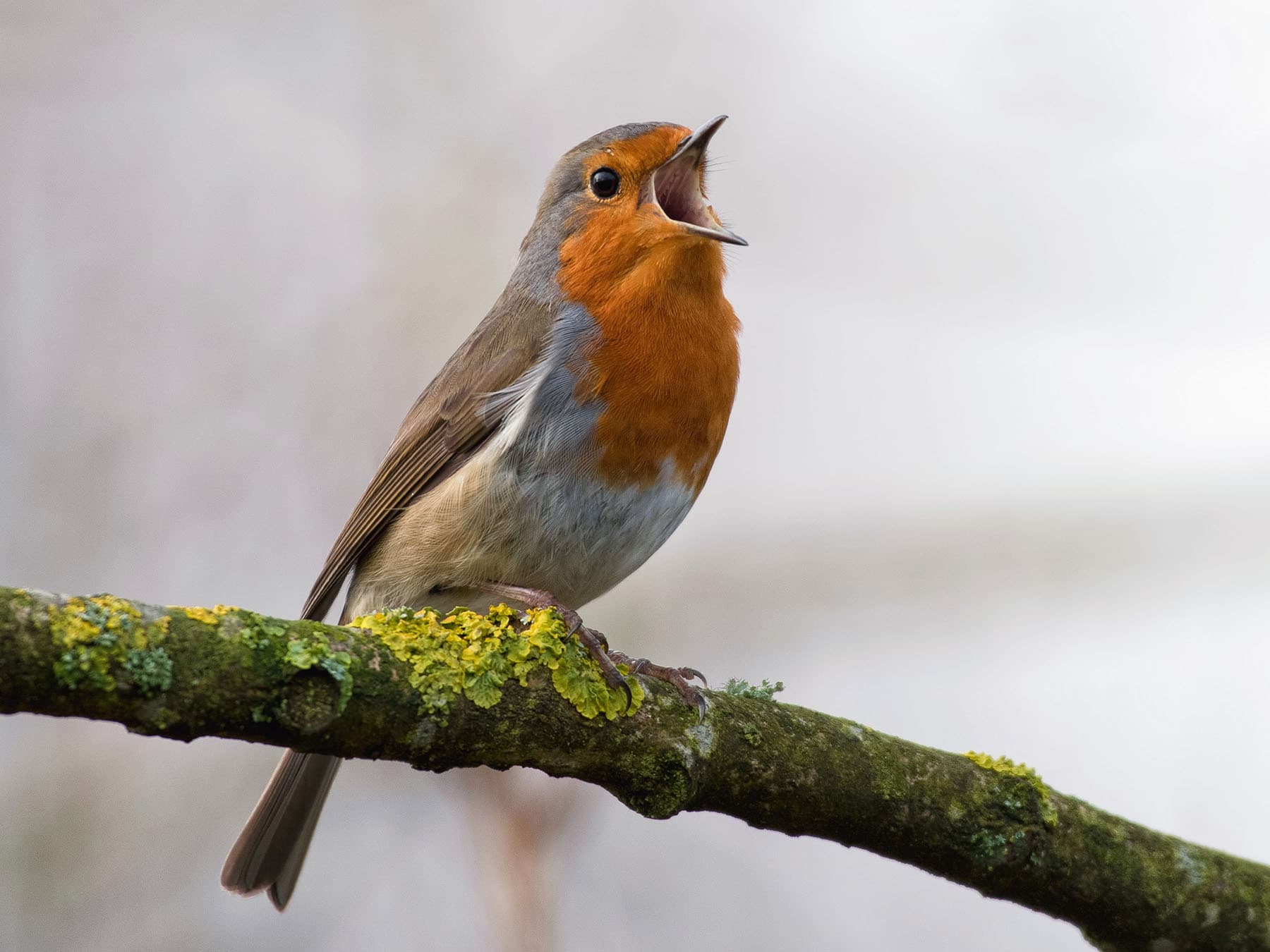 Robin perched on a branch, singing
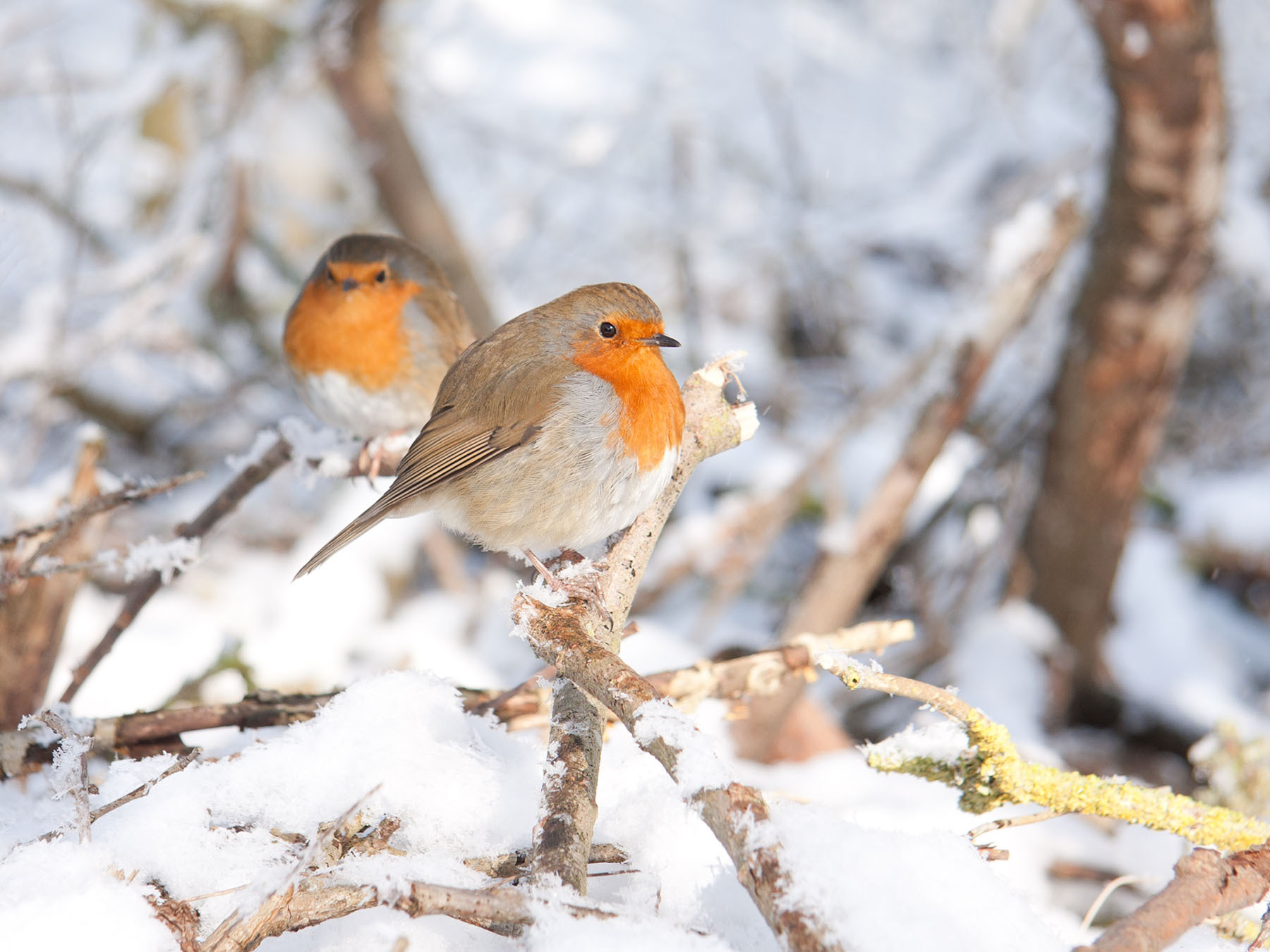
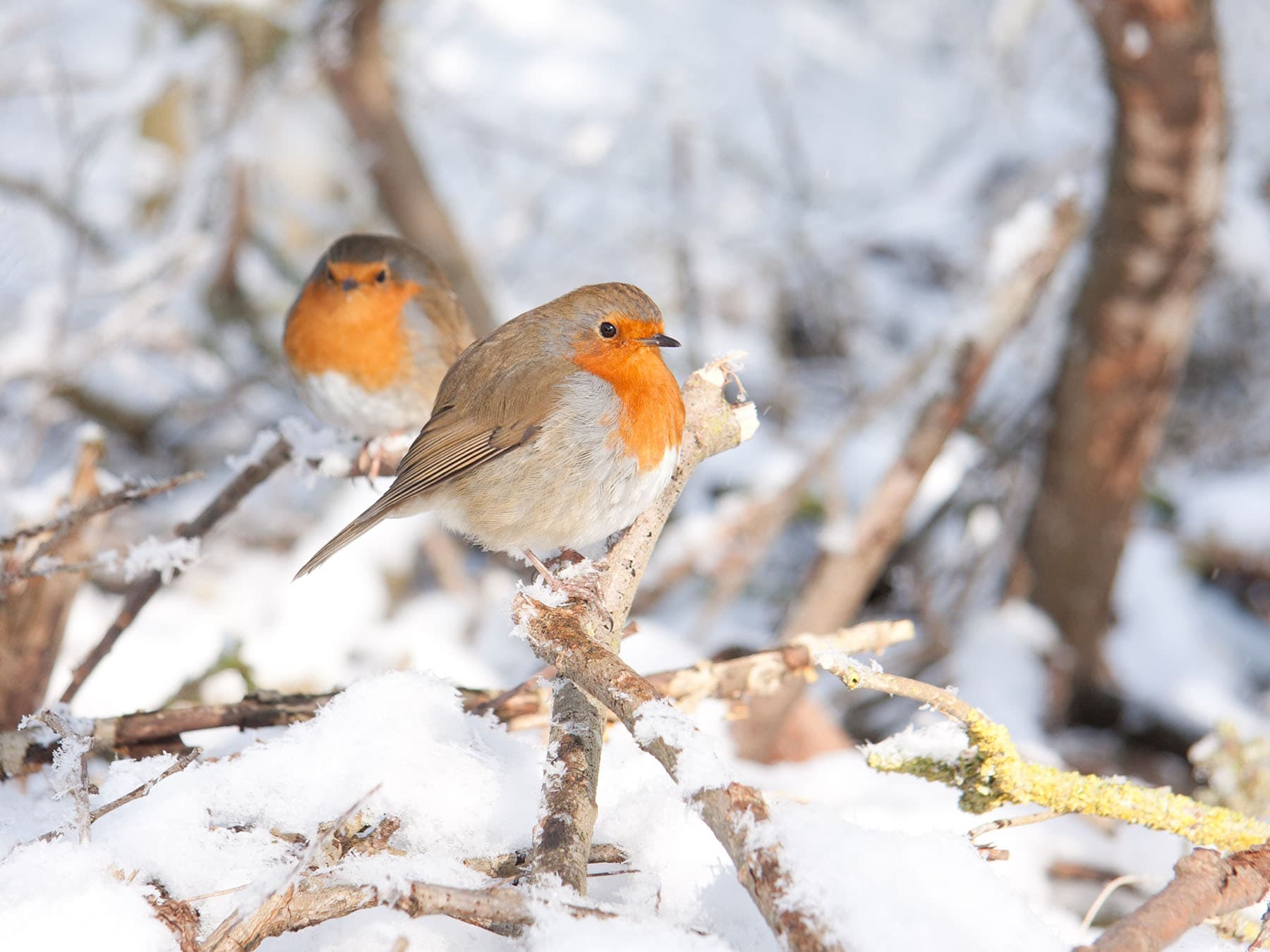 A pair of Robins in the winter snow
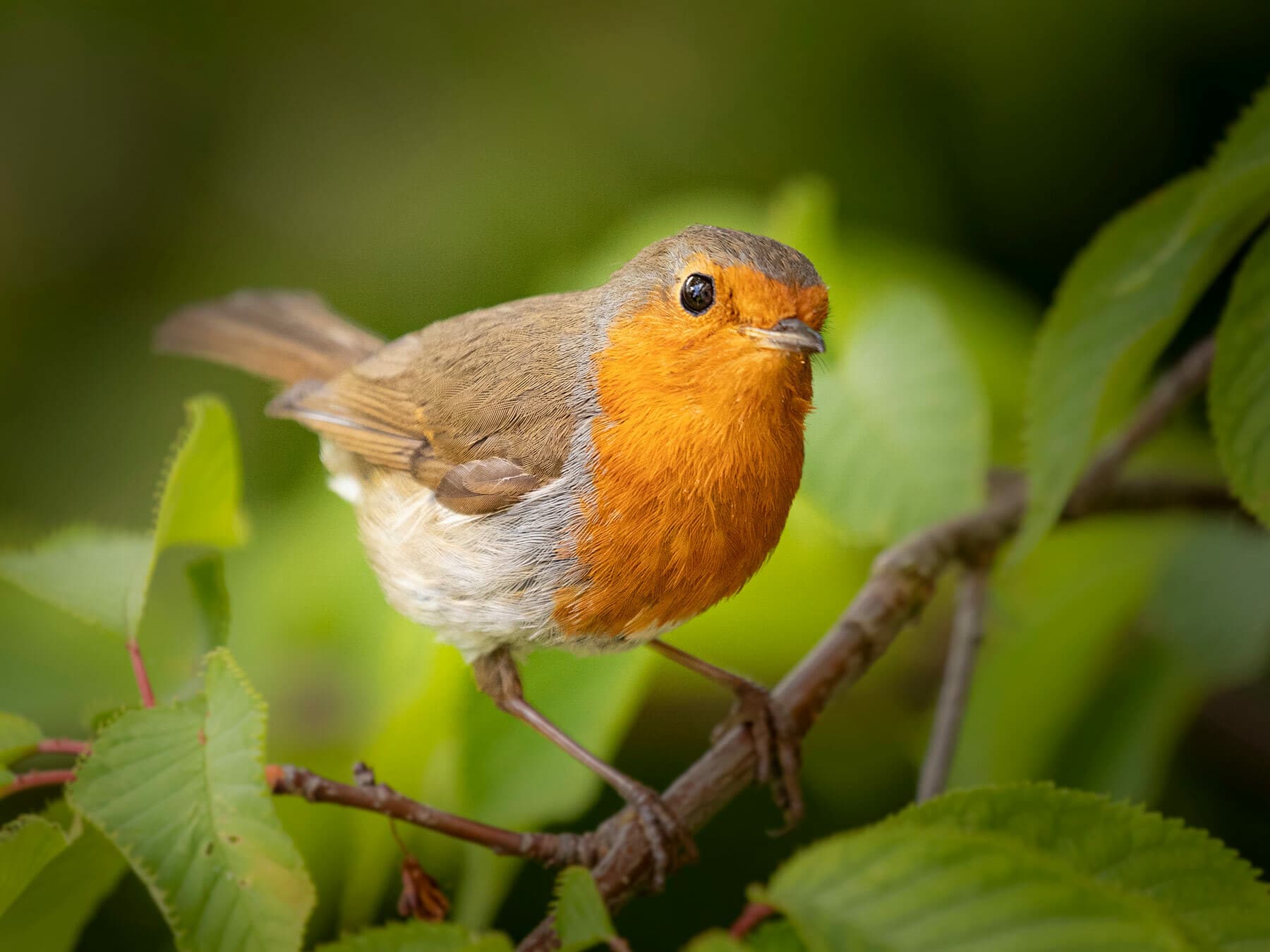 Close up of a perched Robin
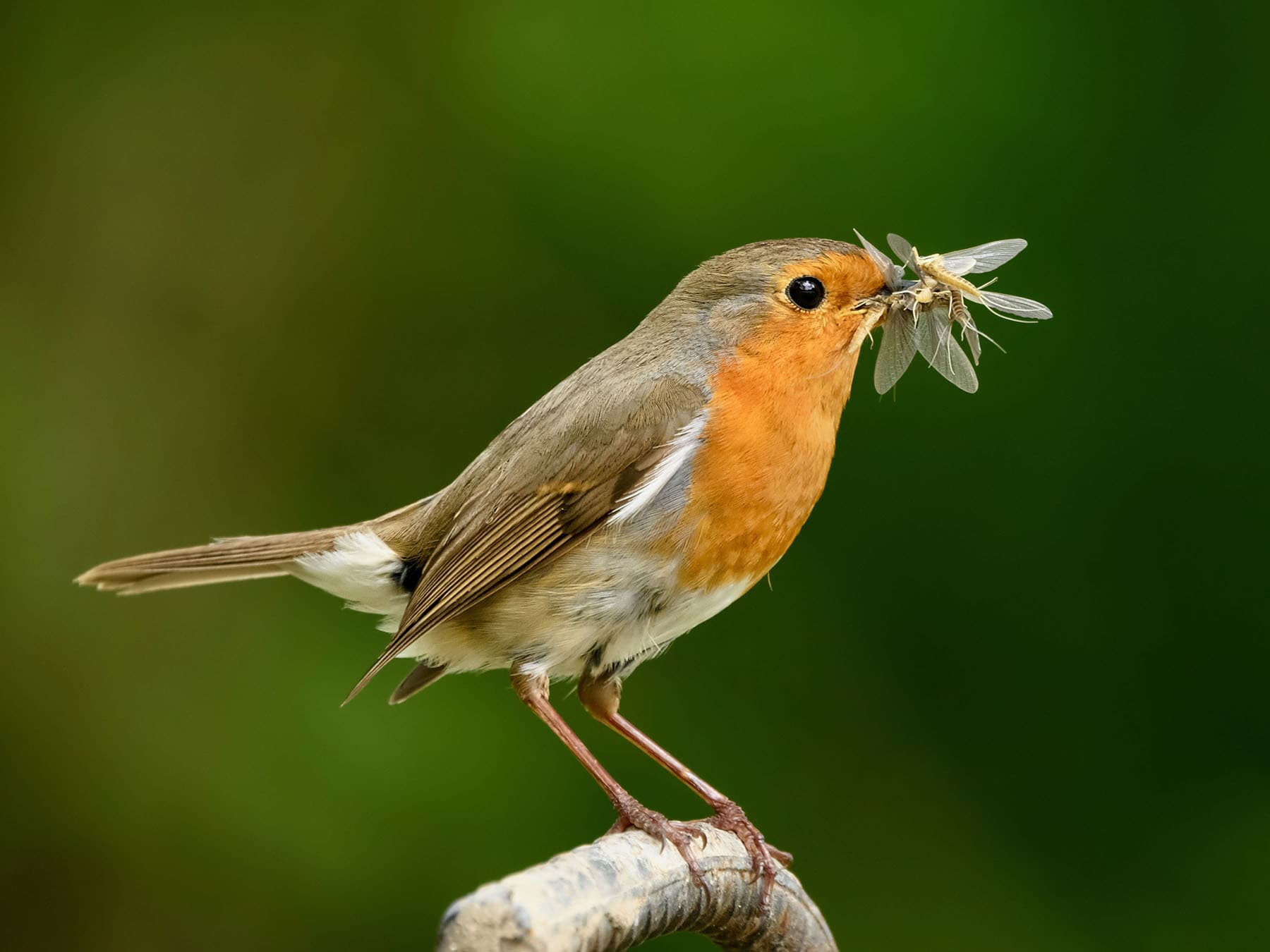 Robin with a beak full of Mayflies, ready to feed the hungry chicks in the nest
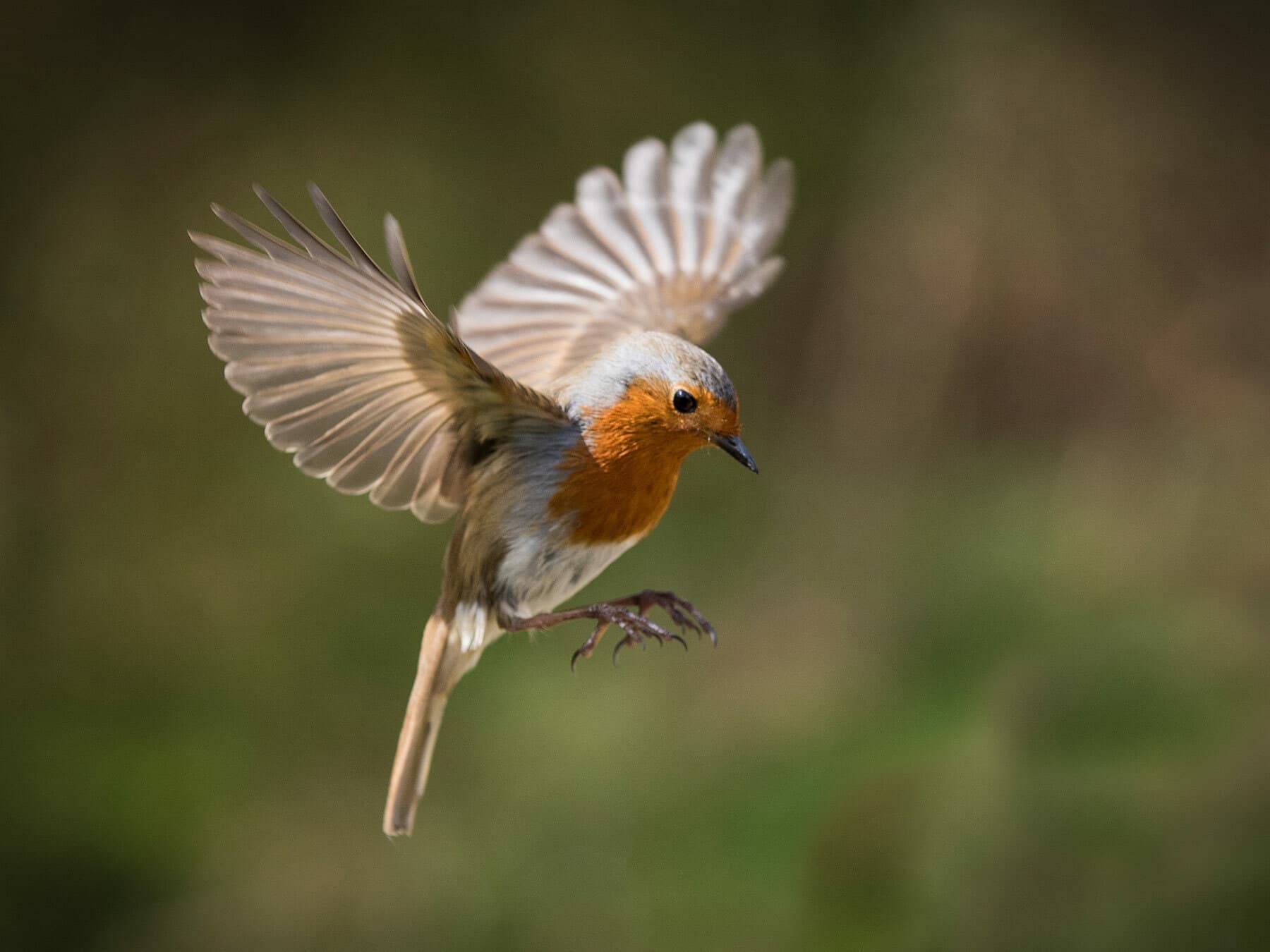 Close up of a Robin in flight
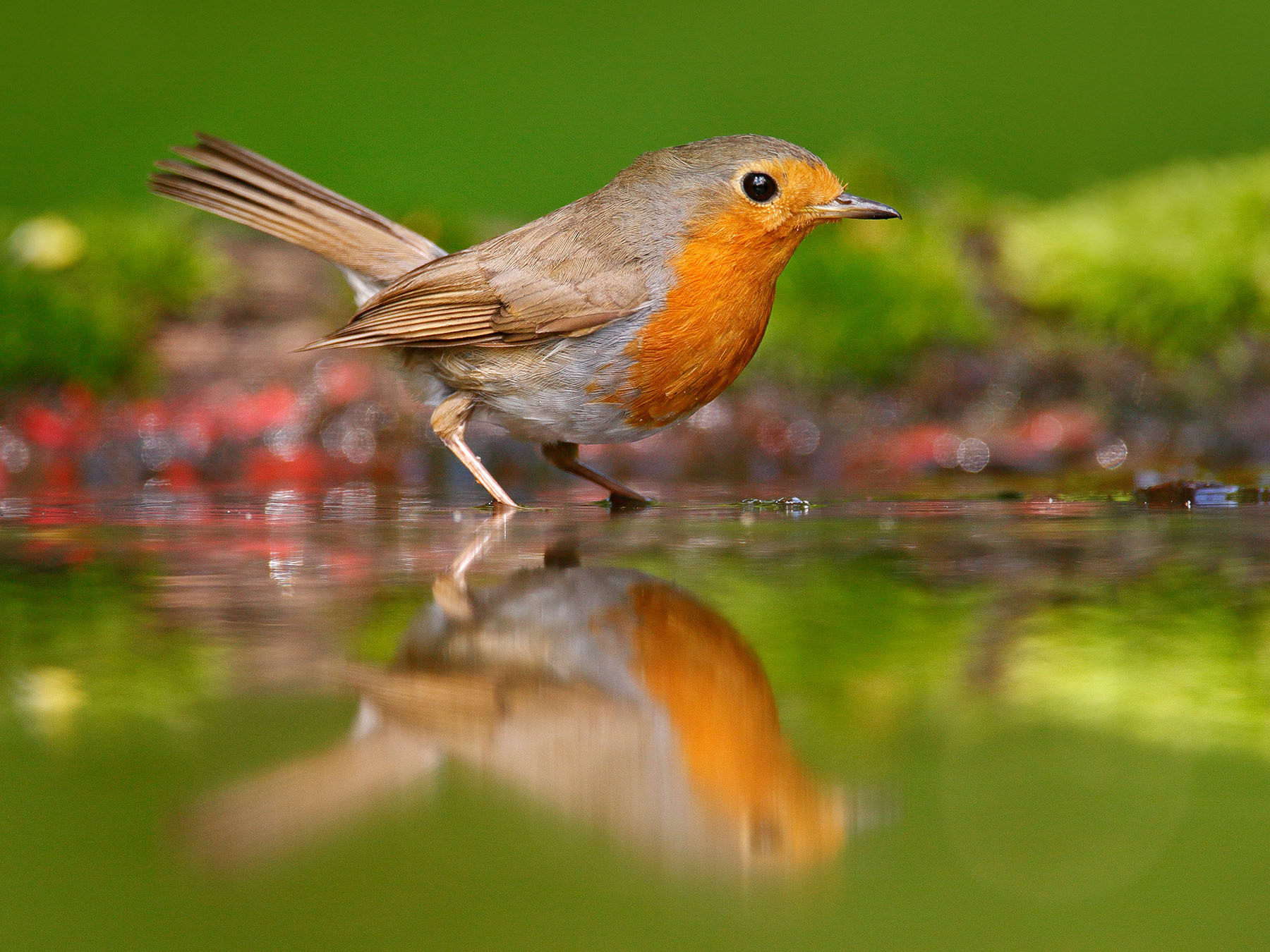
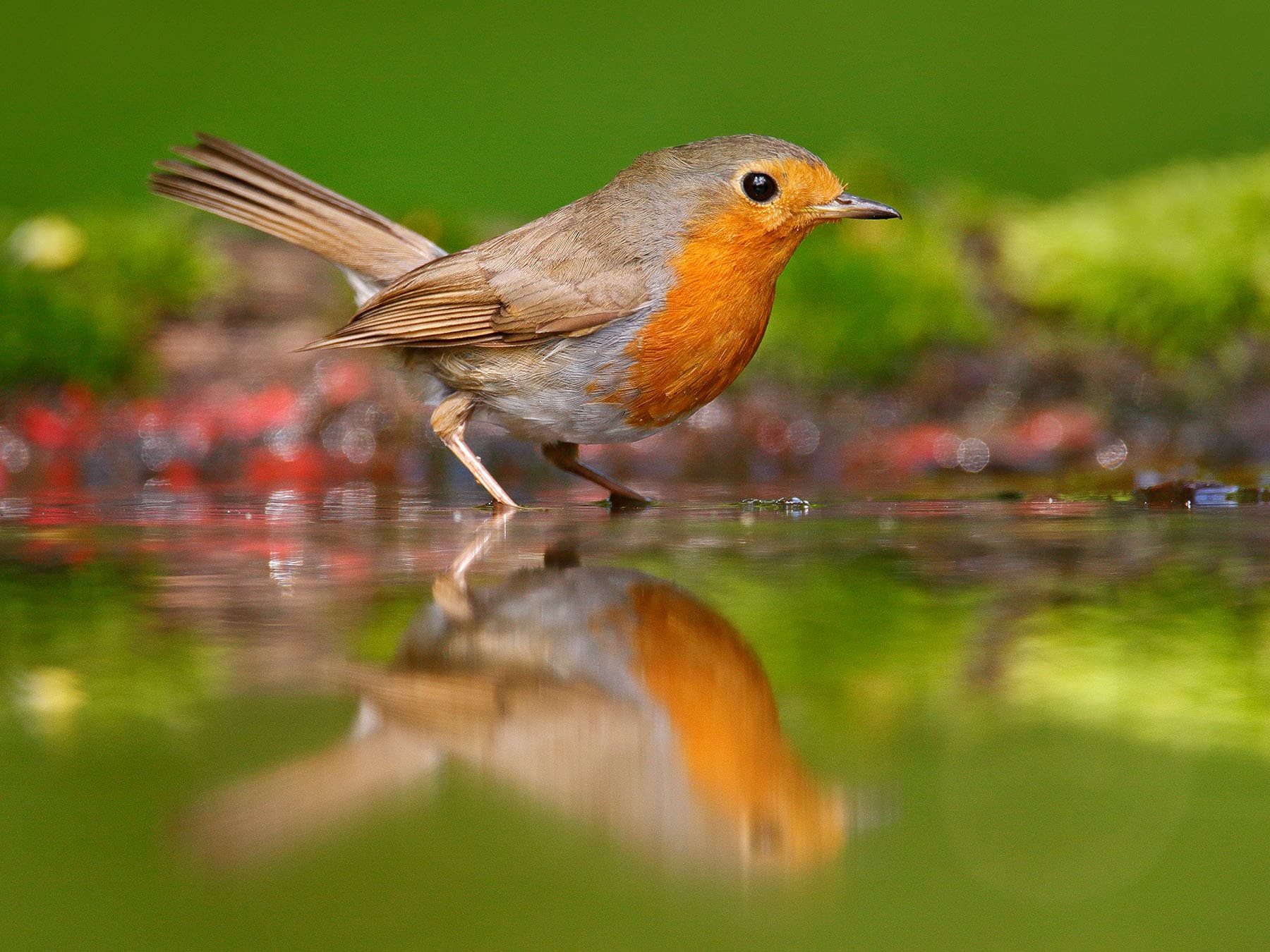 Robin taking a drink of water
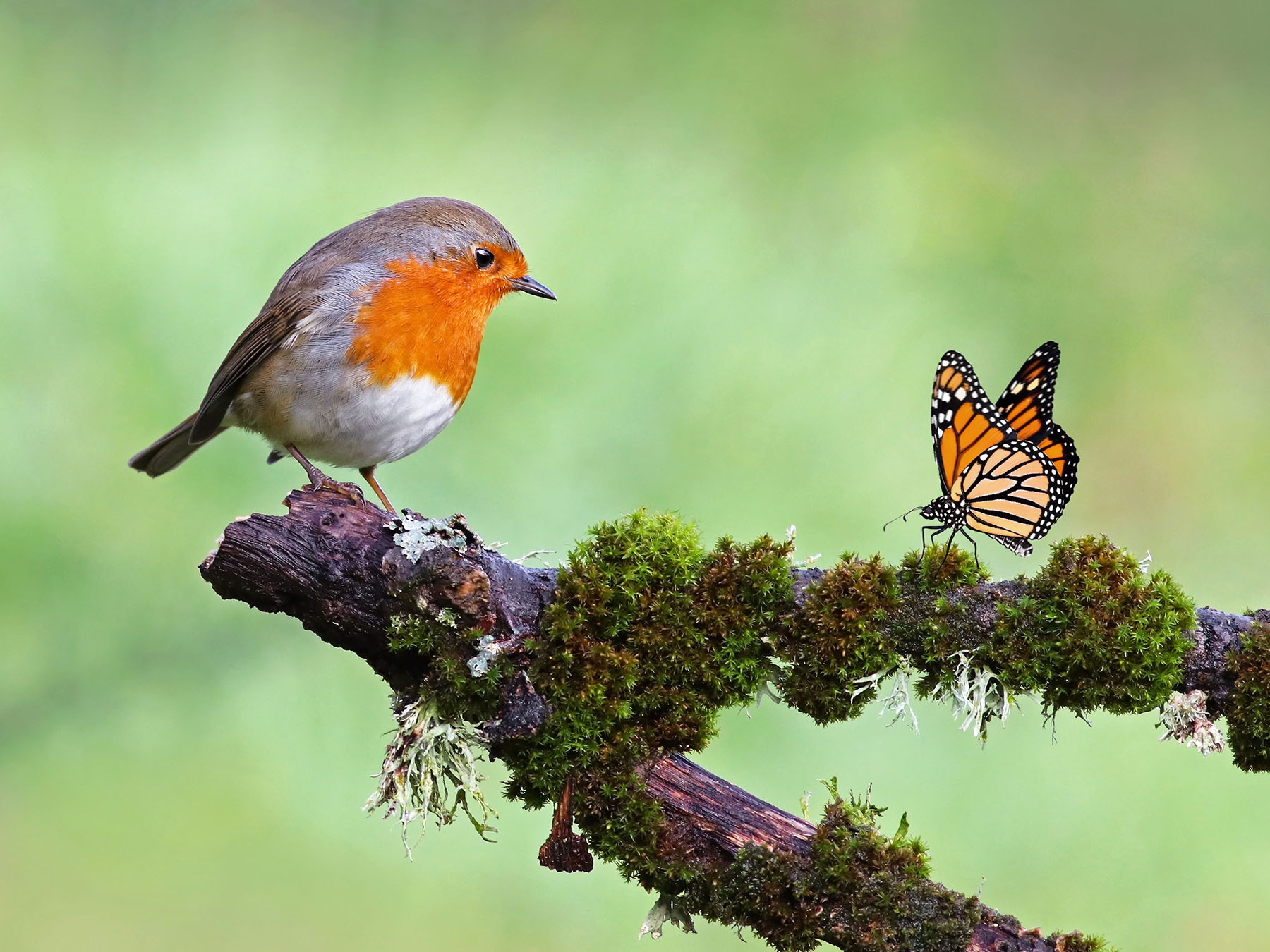
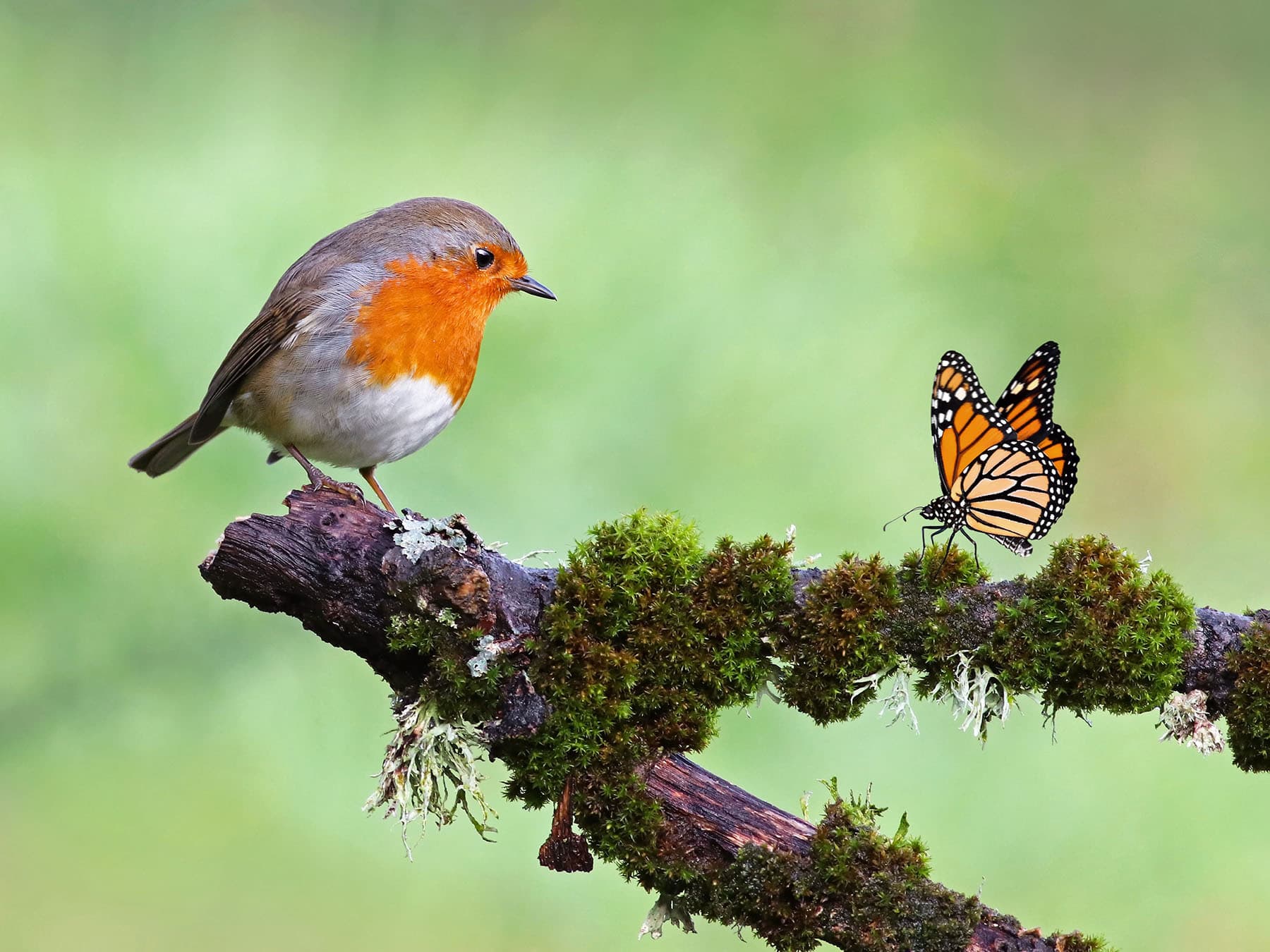 Robin standing on a branch next to a monarch butterfly (Danaus plexippus)
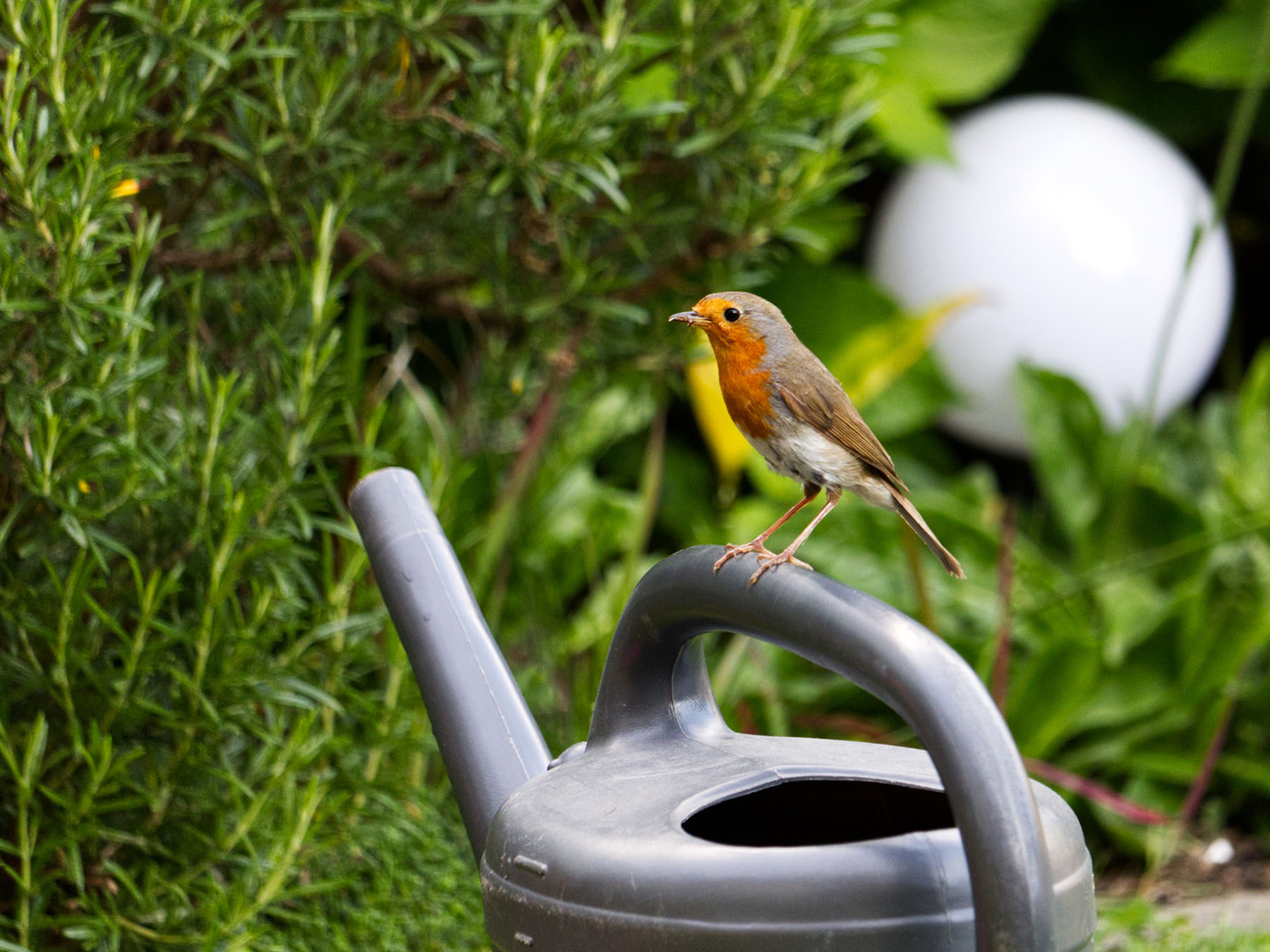
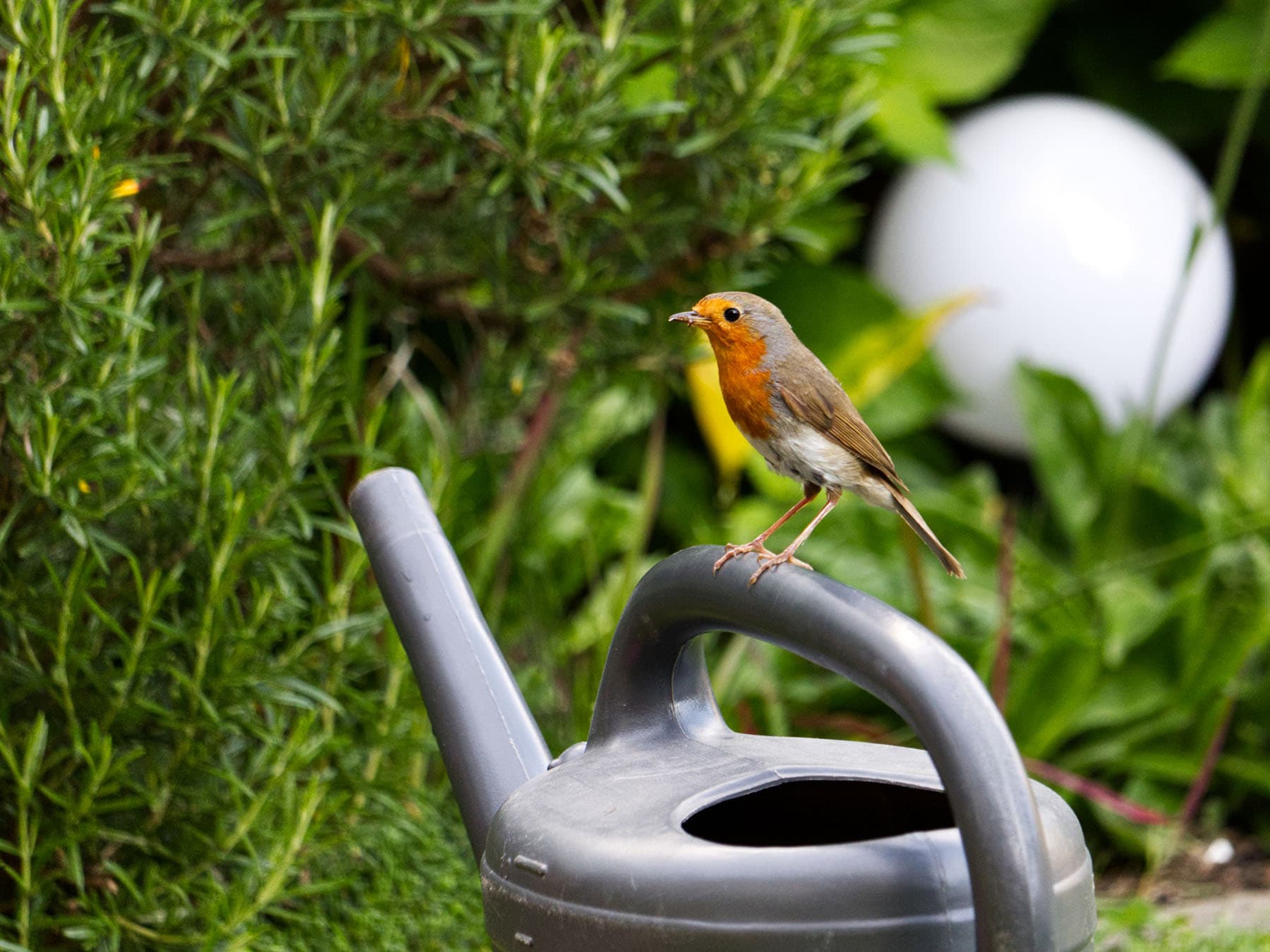 Familiar sight of a Robin in a garden, perched on a watering can
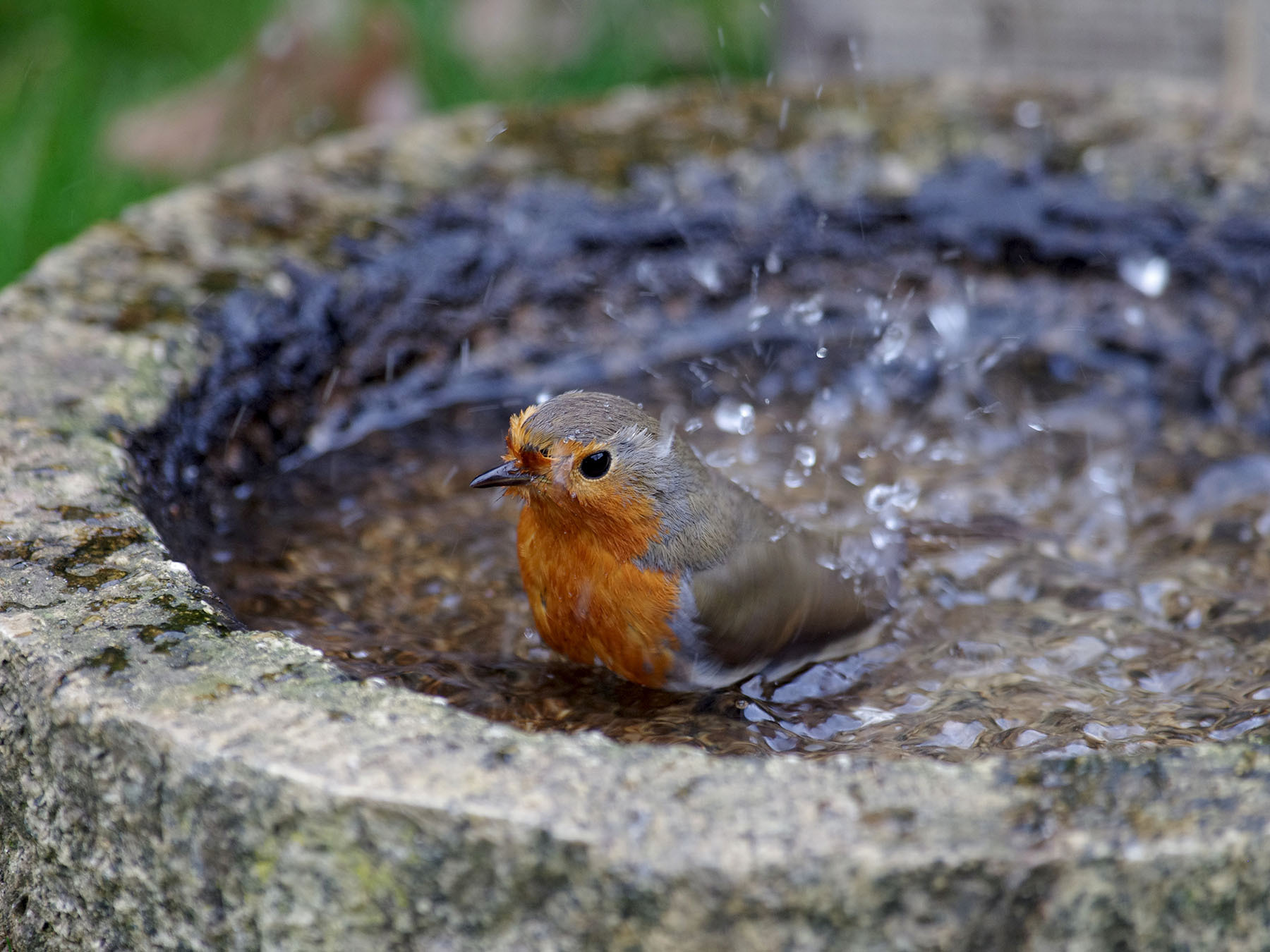
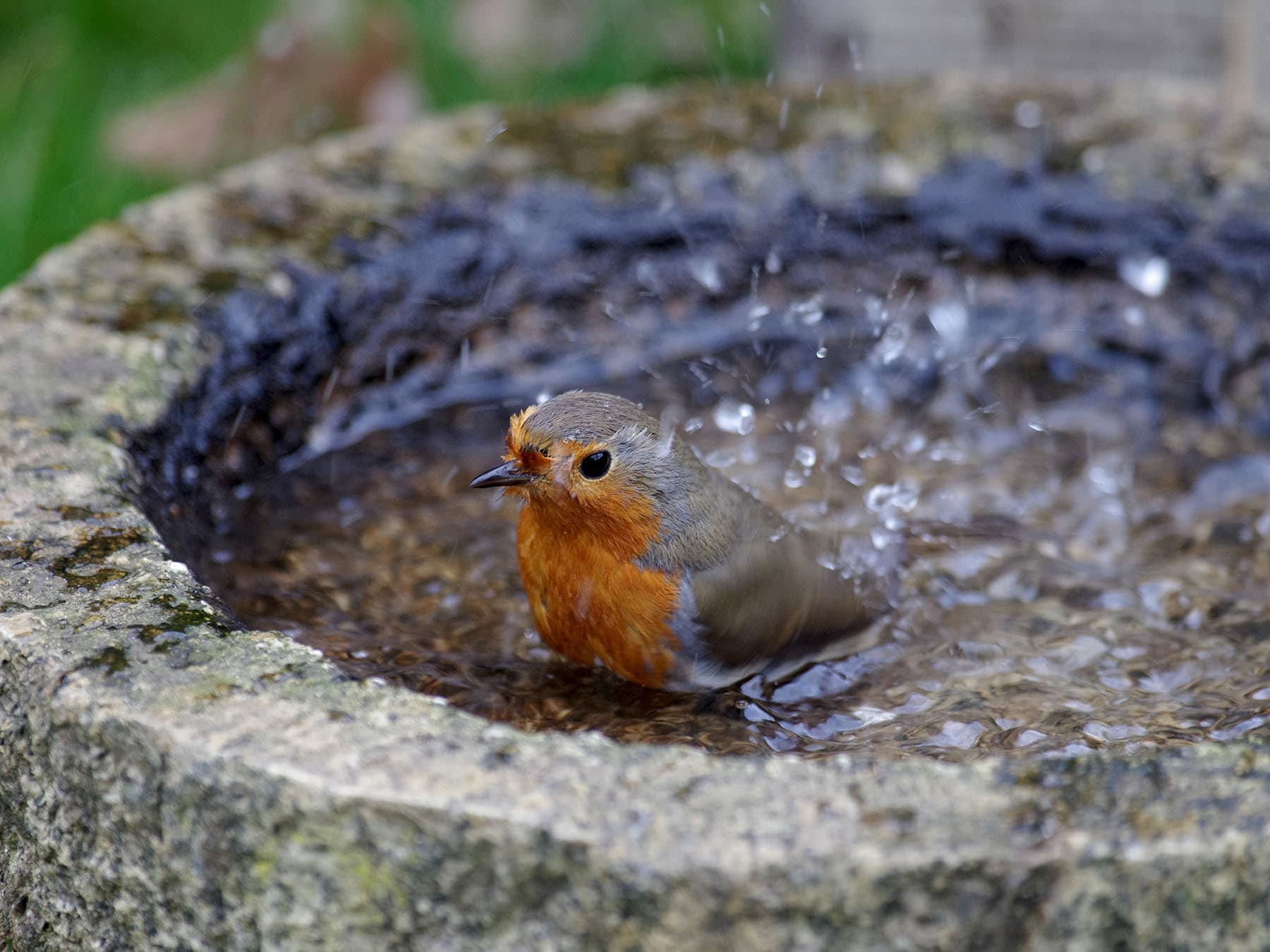 Robin taking a bath in a bird bath
European Robin guides
2 guidesQuick facts
- Length
- 12.5–14 cm
- Wingspan
- 20–22 cm
- Weight
- 15.5–22.8 g
- Lifespan
- 2 years · oldest recorded 19.3 years · UK record 8 years 4 months
- Family
- Old World Flycatchers
- Migration
- Partial migrant
- Global status (IUCN)
- Least Concern
- World population
- 130,000,000 - 201,000,000 mature individuals
- Population trend
- Increasing
- Also called
- Robin, Robin Redbreast
- Scientific name
- Erithacus rubecula
Questions
7Can you tell male and female Robins apart?
Not by their feathers: males and females look alike, and both sing in autumn and winter.
What colour is a Robin's beak?
Dark, almost black, and thin. Its legs are pinkish-brown.
Do baby Robins have a red breast?
No. Young Robins are brown and speckled; the red breast grows in during their first summer moult. See baby Robins.
Why do Robins sing at night?
Mostly in towns, near street lights. Research links it more to daytime noise than to light, so Robins in noisy places may sing when it is quieter.
When do Robins nest?
From mid-March, with most first clutches in April, and often two or three broods into summer. See Robin nesting.
Is the Robin Britain's national bird?
Not officially; the UK has no official national bird. In 2015, 224,438 people voted in a public poll run by David Lindo, and the Robin won with 34% of the votes.
Why are Robins linked with Christmas?
Sources
21- 1BTO. Robin (Erithacus rubecula). BTO BirdFacts. Accessed 25 September 2026. Source (opens in a new tab)
- 2Bosca, J. et al. (2025). Vocal performance in birdsong is an aggressive signal in both females and males: experimental evidence from a field study in European robins. Proceedings of the Royal Society B 292(2053): 20251042. Source (opens in a new tab)
- 3Fuller, R.A., Warren, P.H. and Gaston, K.J. (2007). Daytime noise predicts nocturnal singing in urban robins. Biology Letters 3(4): 368-370. doi:10.1098/rsbl.2007.0134 (opens in a new tab)
- 4BTO. Gardenwatch: Robin. British Trust for Ornithology. Accessed 6 October 2026. Source (opens in a new tab)
- 5Snow, D.W. (1966). Movements of British Robins as shown by ringing. British Birds 59(2): 74. Accessed 6 October 2026. Source (opens in a new tab)
- 6RSPB (2026). How to help garden birds. RSPB news. Accessed 6 October 2026. Source (opens in a new tab)
- 7BTO. Robin nest box plan. British Trust for Ornithology. Accessed 6 October 2026. Source (opens in a new tab)
- 8Lack, D. (1943). The Life of the Robin. Pallas Athene, 2016 (reissue of the 4th edition, 1965; first published by Witherby, London, 1943). ISBN 9781843681304.
- 9Wiltschko, W. and Wiltschko, R. (1972). Magnetic compass of European robins. Science 176(4030): 62-64. doi:10.1126/science.176.4030.62 (opens in a new tab)
- 10Xu, J. et al. (2021). Magnetic sensitivity of cryptochrome 4 from a migratory songbird. Nature 594: 535-540. doi:10.1038/s41586-021-03618-9 (opens in a new tab)
- 11EURING (2023). EURING list of longevity records for European birds (1 September 2023). Accessed 6 October 2026. Source (opens in a new tab)
- 12Stanbury, A. et al. (2021). The status of our bird populations: the fifth Birds of Conservation Concern in the United Kingdom, Channel Islands and Isle of Man and second IUCN Red List assessment of extinction risk for Great Britain. British Birds 114: 723-747. Accessed 6 October 2026.
- 13RSPB. Robin. RSPB Bird A-Z. Accessed 25 September 2026. Source (opens in a new tab)
- 14BTO. Identifying young birds. BTO. Accessed 6 October 2026. Source (opens in a new tab)
- 15Rachel Hoskins (2019). What do robins eat?. Woodland Trust. Accessed 6 October 2026. Source (opens in a new tab)
- 16BirdLife International (2018). Erithacus rubecula. The IUCN Red List of Threatened Species 2018: e.T22709675A131953953. doi:10.2305/IUCN.UK.2018-2.RLTS.T22709675A131953953.en (opens in a new tab)
- 17Countryfile (2015). Britain's official bird is announced. Countryfile. Accessed 6 October 2026. Source (opens in a new tab)
- 18Kirwan, G. M., Collar, N. and Goodman, D. D. (2025). European Robin (Erithacus rubecula), version 1.1. Birds of the World (G. M. Kirwan and B. K. Keeney, editors). Cornell Lab of Ornithology. doi:10.2173/bow.eurrob1.01.1 (opens in a new tab)
- 19BTO (2024). Longevity records for Britain & Ireland in 2024. BTO Online Ringing and Nest Recording Report. Accessed 9 October 2026. Source (opens in a new tab)
- 20Hatchwell, B., Kirwan, G. M. and Goodman, D. D. (2026). Dunnock (Prunella modularis), version 1.2. Birds of the World (J. del Hoyo, A. Elliott, J. Sargatal, D. A. Christie, E. de Juana, R. Ahmed and B. K. Keeney, editors). Cornell Lab of Ornithology. doi:10.2173/bow.dunnoc1.01.2 (opens in a new tab)
- 21Kaufman, K. (2019). Ask Kenn Kaufman: Are American Robins Really Robins?. Audubon Magazine. Accessed 6 October 2026. Source (opens in a new tab)

Checked by
Nathan Cope, founder and editor
Nathan founded Birdfact and leads its writers and contributors in the UK, the US and Canada. He has watched and studied birds for more than ten years, and checks every article and species guide before it’s published.