


Nightingale
Common Nightingale, Rufous Nightingale · Luscinia megarhynchos
By the Birdfact teamChecked by Nathan Cope
On this page14 sections
How to recognise it
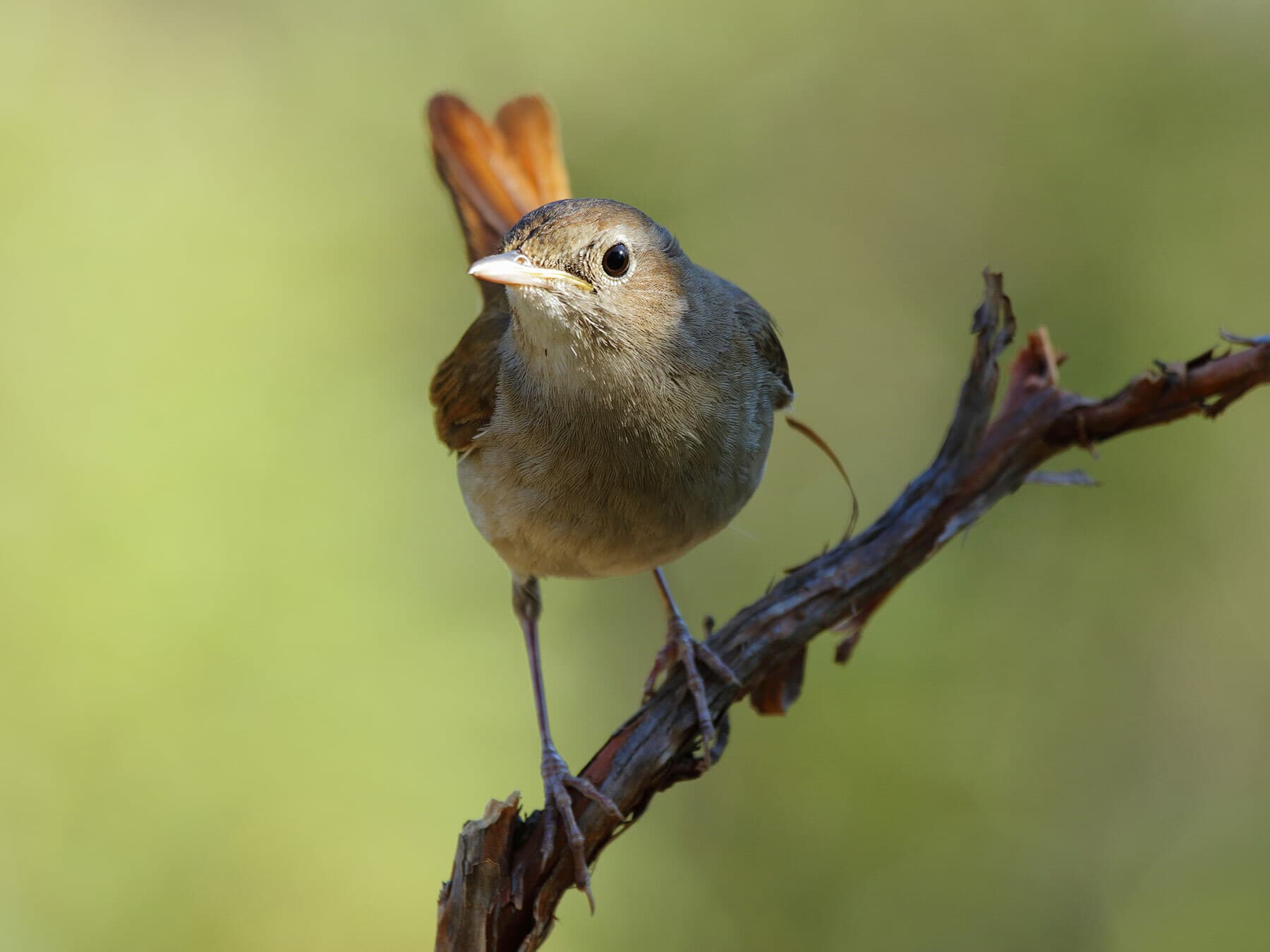
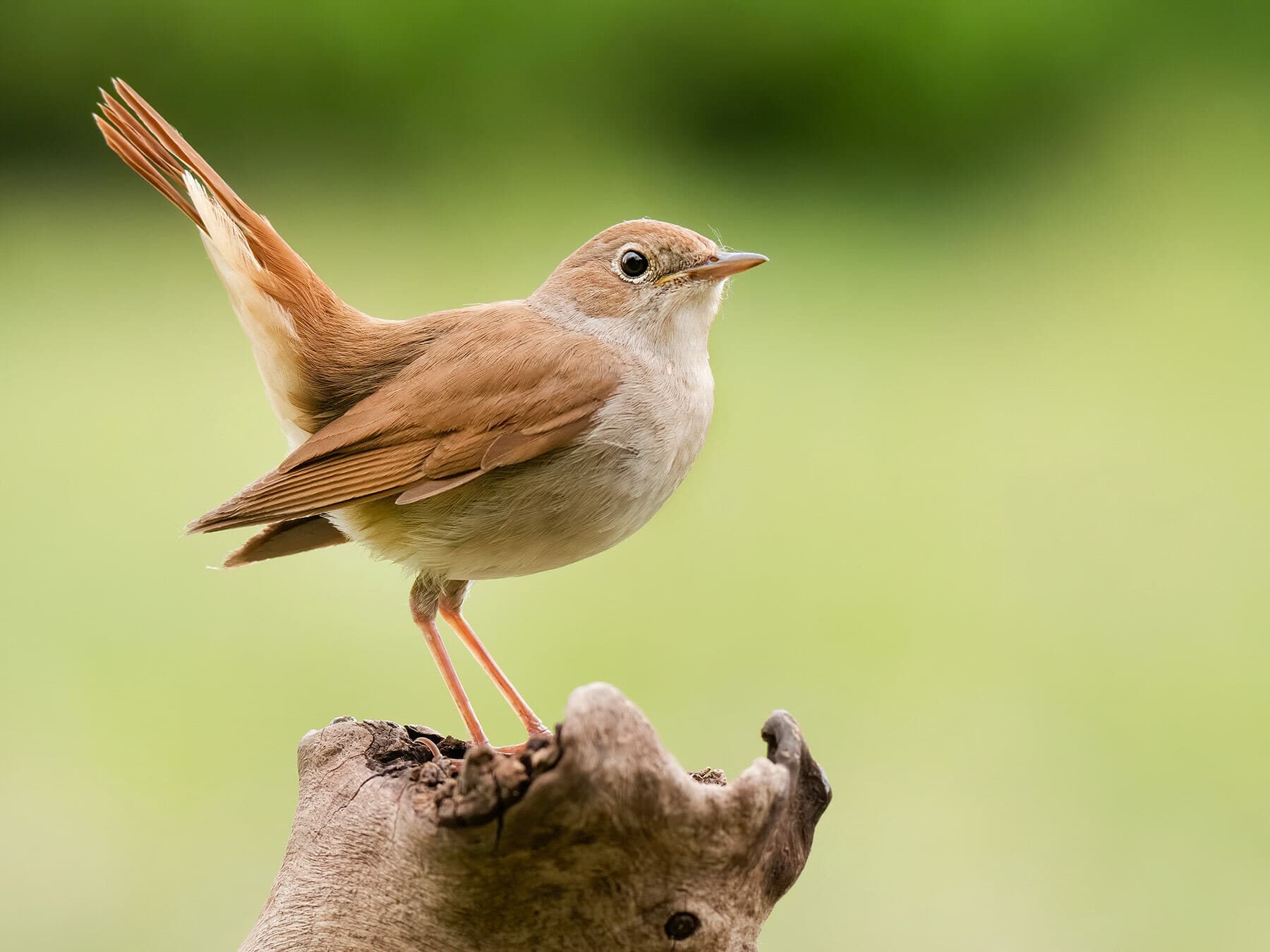
The Nightingale is a small, unassuming bird with a plain brown plumage. Its upperparts are a warm russet-brown, while the underparts are slightly paler. The tail has a distinctive rufous tinge, especially noticeable in flight. The beak is grey with a pale pink base, and the legs are pink as well.
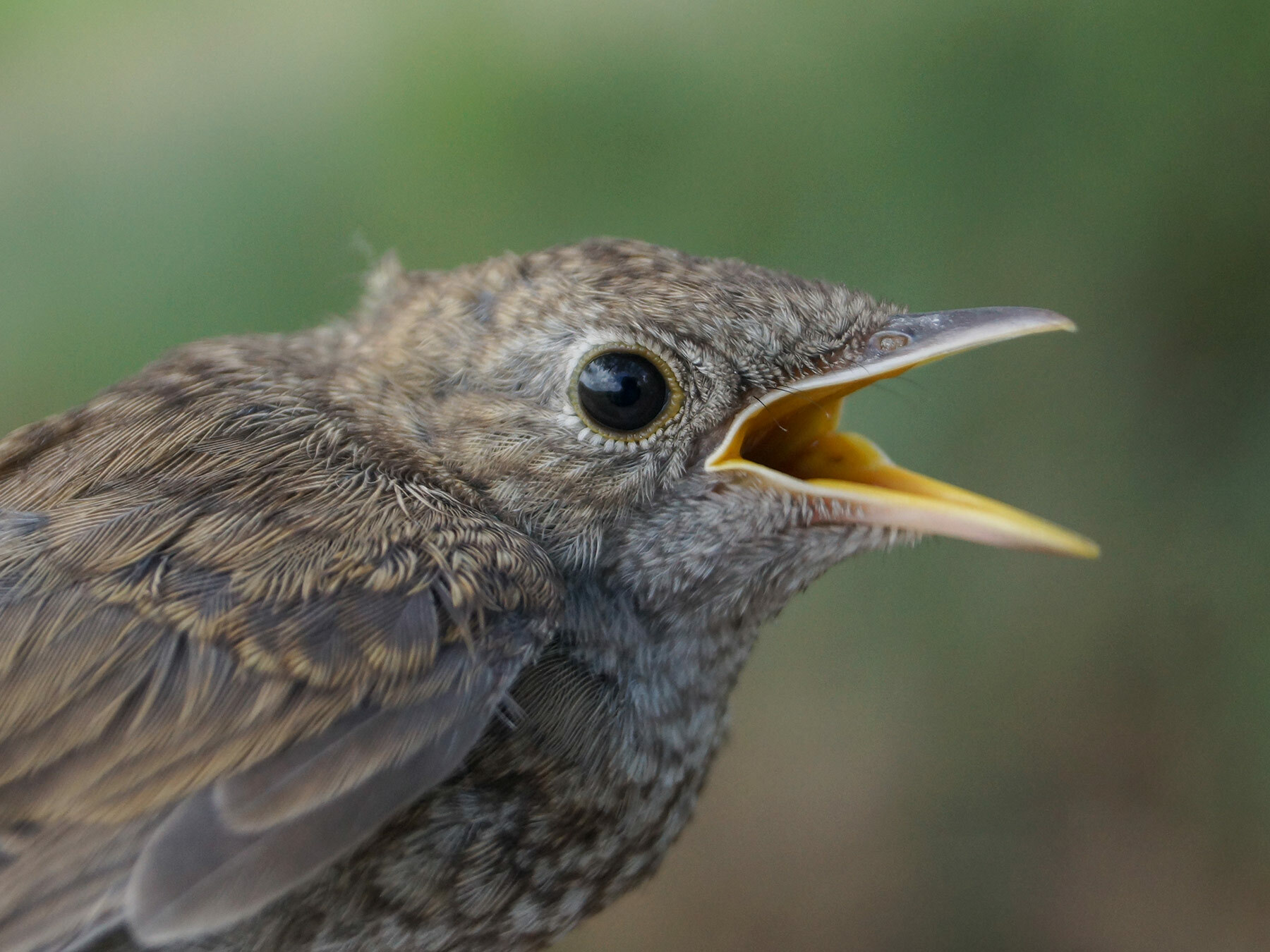
Males and females are virtually identical in appearance. Juveniles resemble adults but may have some subtle spotting on their upperparts. The Nightingale's most striking feature is its large, dark eye, contrasting with its plain plumage.
Its size
Adults- Length
- 15–16.5 cm
- Wingspan
- 23–26 cm
- Weight
- 18–27 g
Its song and calls
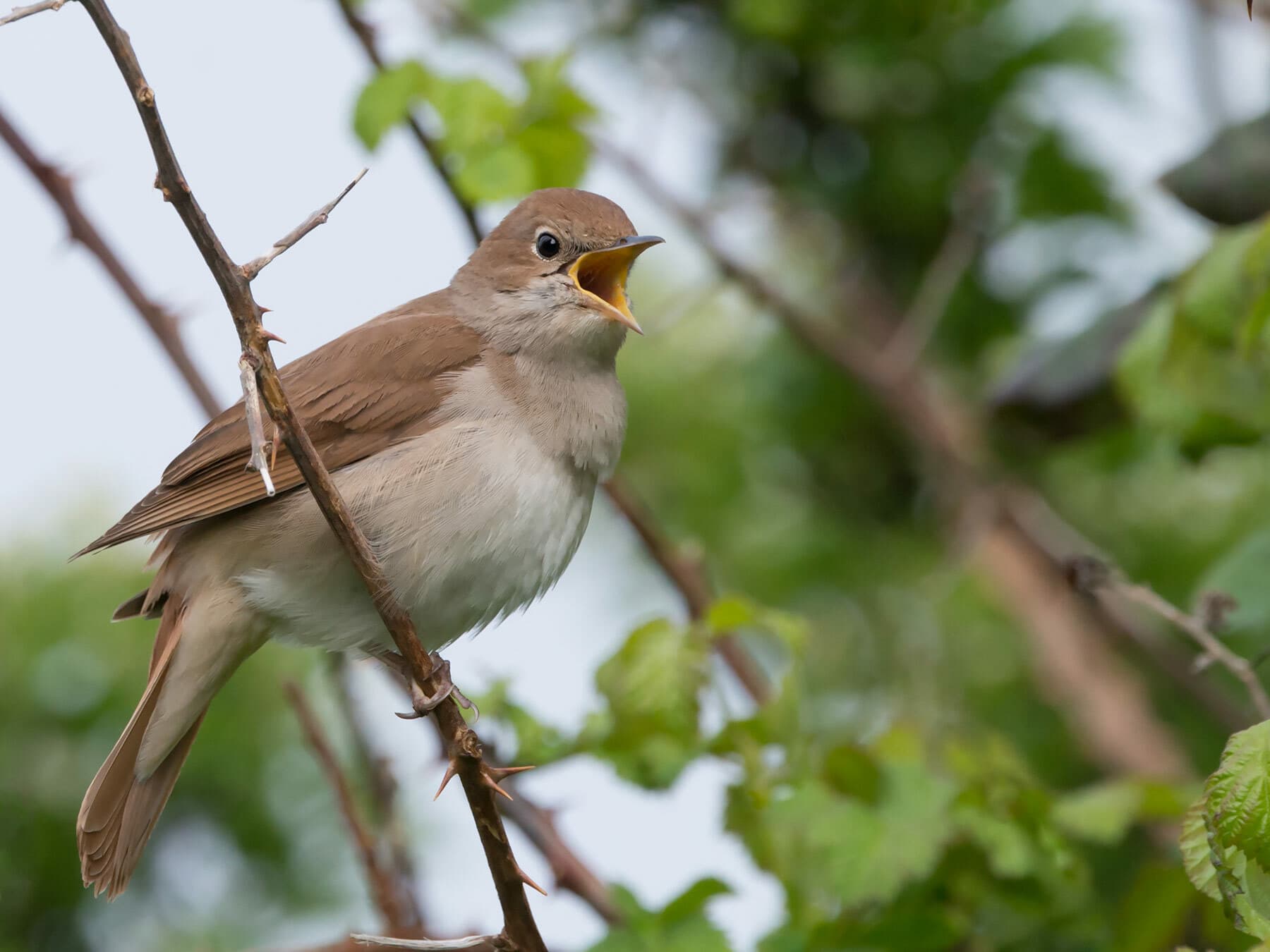
The nightingale probably has the largest range of songs of any bird consisting of a rich variety of loud and soft spectacular whistles, trills and chattering of both high and low notes of differing lengths and speeds, often repeated and frequently culminating in an extremely loud throaty whistle which suddenly ends. Whilst both paired male and female adults will call softly during the breeding season by day around the nesting area, the male bird sings extensively during the night in order to attract a mate using a larger repertoire of songs than those vocalised during the day. In Anglo Saxon times this prolific singing during the night is from where the name of the bird originates, meaning night and song.
- Song0:00 / 0:56
Recorded in Essex, England · April 2024
- Alarm call0:00 / 0:18
Recorded in Bourgogne-Franche-Comté, France · August 2025
When and where to see it
OctoberMostly absent
Most recorded in October
- 1. Cornwallunder 0.1%
- 2. Buckinghamshireunder 0.1%
- 3. East Sussexunder 0.1%
- 4. Oxfordshireunder 0.1%
- 5. Shetland Islandsunder 0.1%
Each dot is a county, state or province: the bigger and darker, the larger the bird’s share of that place’s bird records that month. Grey dots: no regular records. The ringed point is the centre of the bird’s records this month; the arrow shows how it moved since last month, and the dashed loop its path through the year. “Arrivals” colours places where it becomes regular this month (orange) or is in its last regular month (grey). GBIF eBird Observation Dataset, 2019–2024. Map data: Natural Earth, US Census Bureau; place centres © OpenStreetMap contributors.
In your area
See when the Nightingale is recorded in your county, state or province.
How often the Nightingale turns up in the UK through the year, from birdwatchers' records.
United Kingdom
Summer visitor · regularly Apr–Aug · most records in May
Show as a table
| Month | United Kingdom |
|---|---|
| January | – |
| February | – |
| March | <0.001% |
| April | 0.069% (regular) |
| May | 0.10% (regular) |
| June | 0.031% (regular) |
| July | 0.007% (regular) |
| August | 0.005% (regular) |
| September | 0.001% |
| October | 0.001% |
| November | <0.001% |
| December | – |
Recorded regularly in
Worldwide: recorded regularly in 69 countries
Countries where it was recorded in at least 3 of the 6 years 2019–2024. Linked countries have their own bird list.
Europe (35)
- Albania
- Andorra
- Austria
- Belgium
- Bosnia & Herzegovina
- Bulgaria
- Croatia
- Czechia
- Denmark
- France
- Germany
- Gibraltar
- Greece
- Hungary
- Italy
- Kosovo
- Liechtenstein
- Luxembourg
- Malta
- Montenegro
- Netherlands
- North Macedonia
- Poland
- Portugal
- Romania
- Russia
- San Marino
- Serbia
- Slovakia
- Slovenia
- Spain
- Sweden
- Switzerland
- Ukraine
- United Kingdom
Asia (23)
- Armenia
- Azerbaijan
- Bahrain
- China
- Cyprus
- Georgia
- Iran
- Iraq
- Israel
- Jordan
- Kazakhstan
- Kuwait
- Kyrgyzstan
- Lebanon
- Mongolia
- Oman
- Palestinian Territories
- Qatar
- Saudi Arabia
- Tajikistan
- Turkey
- United Arab Emirates
- Uzbekistan
Data: EOD – eBird Observation Dataset (Cornell Lab of Ornithology), accessed via GBIF.org, CC BY 4.0. Records from 2019–2024, aggregated and filtered by Birdfact. How these lists are made
Breeding populations of nightingales are found from the UK across western, central and southern Europe into Russia and Afghanistan, with additional groups in north west Africa. European winter migration to sub-Saharan Africa starts as early as late July early August through to September returning north in April.
Signs and Spotting tips
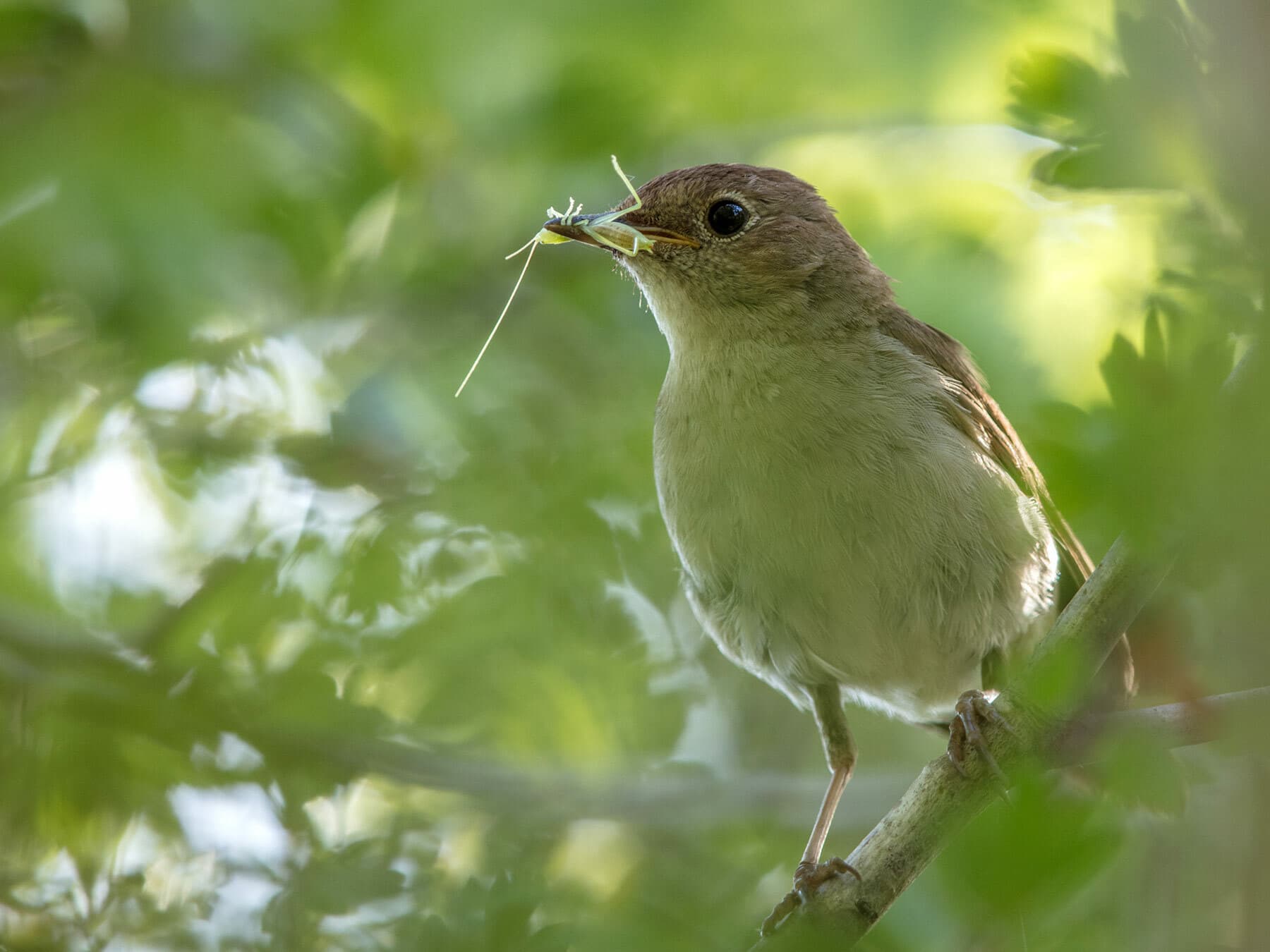
Like many tuneful birds the nightingale is frequently heard long before it is seen. Preferring open woodland and lowland areas with hedgerows and thick low-lying vegetation it frequently presents itself during song but is flighty and will quickly disperse if alarmed. It can be easily confused with the Thrush Nightingale but a quick look at the Common Nightingale’s rufous broad tail with long undertail coverts quickly identifies the two.
What it eats
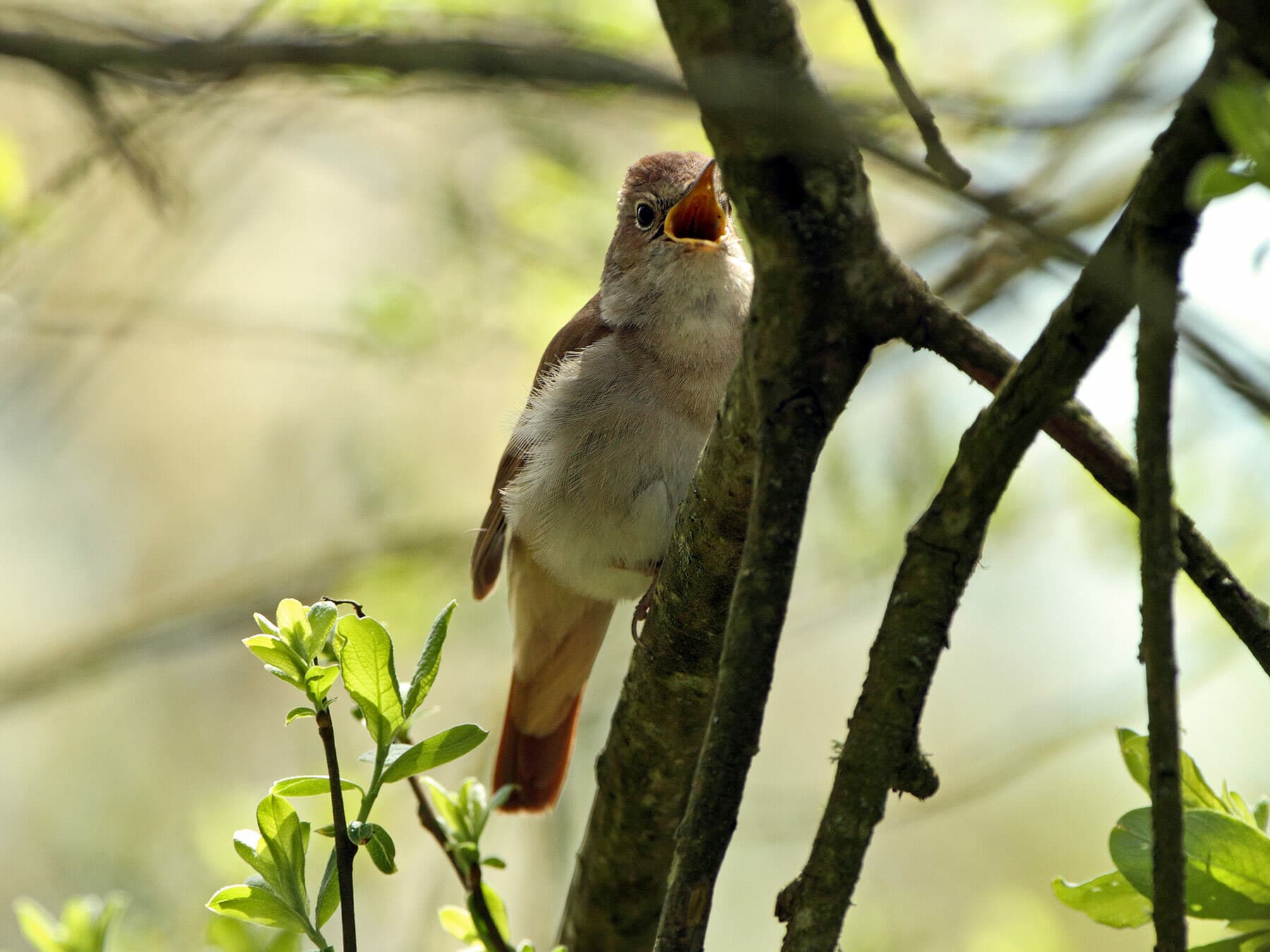
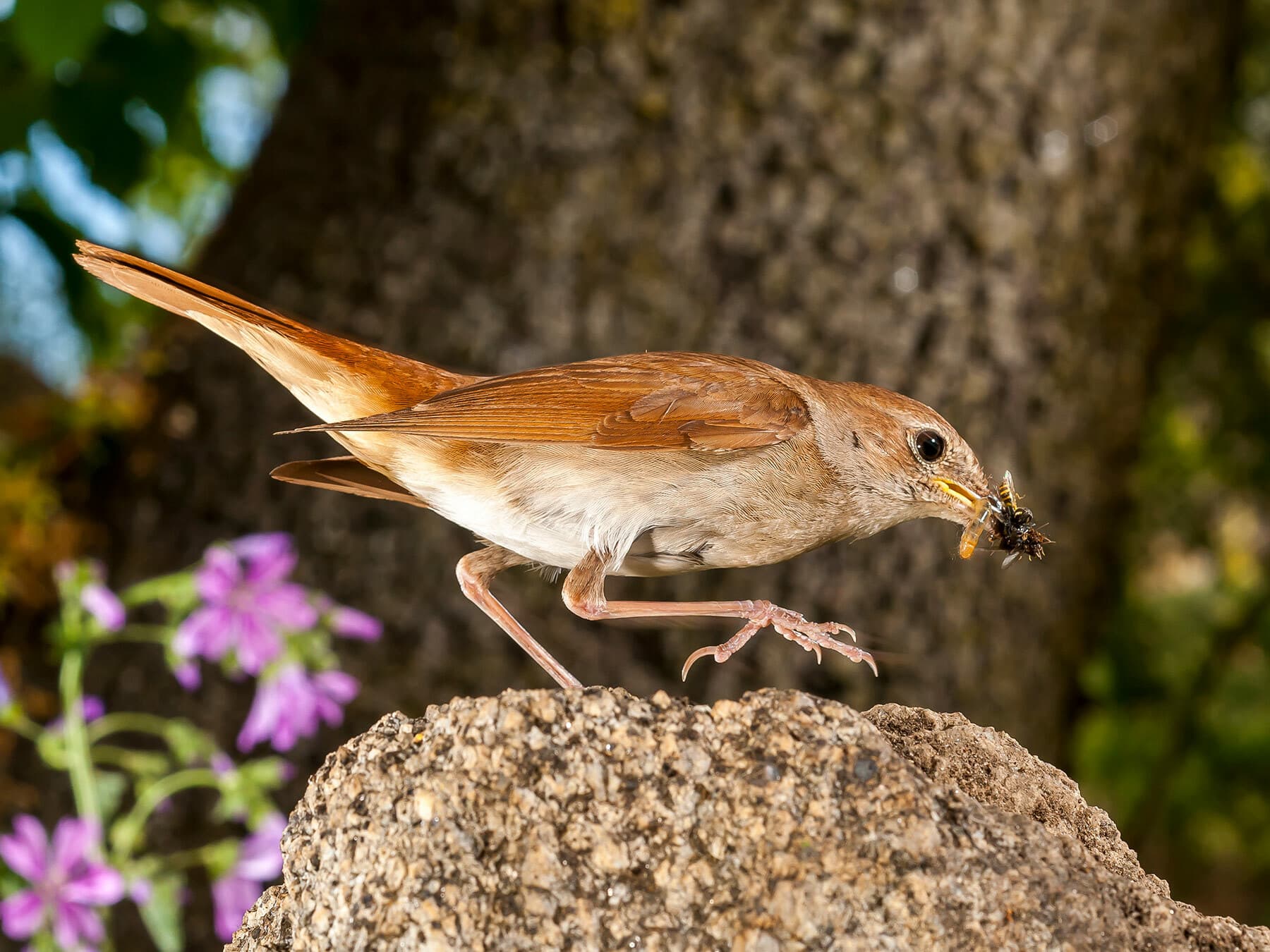
A diet of mainly insects (especially ants and beetles) and larvae, with the addition of berries and worms foraged from the ground, in ditches or under dense undergrowth, is the mainstay of the nightingale.
Nesting and breeding
Dependant upon location, breeding takes place between April to July when usually one brood of 4 – 5 very pale bluish eggs with brown speckling is laid and incubated for up to two weeks. The nest is usually cup shaped and constructed from grass and leaf litter lined with feathers, hair and fine grasses and either built on the ground or very low to the ground amongst thick vegetation. After hatching the young will leave the nest around twelve days later and hide in the immediate area being unable to fly for another three to five days. Young will rely on their parents for up to another month following this period.
Behaviour
Nightingales are secretive birds, often hiding in dense undergrowth. They forage on the ground, hopping and running while searching for insects.
During the breeding season, male Nightingales become more conspicuous, perching in the open to deliver their famous song, often at night.
Lifespan and predators
The average life expectancy for the common nightingale is up to five years.
Conservation
While the Nightingale is currently listed as Least Concern globally, its population is declining in parts of its range, particularly in Western Europe. Habitat loss and degradation, especially of dense scrub and woodland undergrowth, are primary threats.
Conservation efforts focus on preserving and restoring suitable breeding habitats.
What does a Nightingale look like?
The adult bird has predominantly light brown upper parts often referred to as being a warm brown colouration, morphing into a rust or rufous brown tail and rump. The underside is a pale grey to white with a light buff breast and flanks and a grey side to the neck. The eye is very dark surrounded by a pale ring. The beak is grey with a pale pink base and the legs are also pink. Males and females are similar whereas juveniles have mottled spotted upperparts and are a darker brown not unlike an immature robin.
Similar birds
Often mistaken for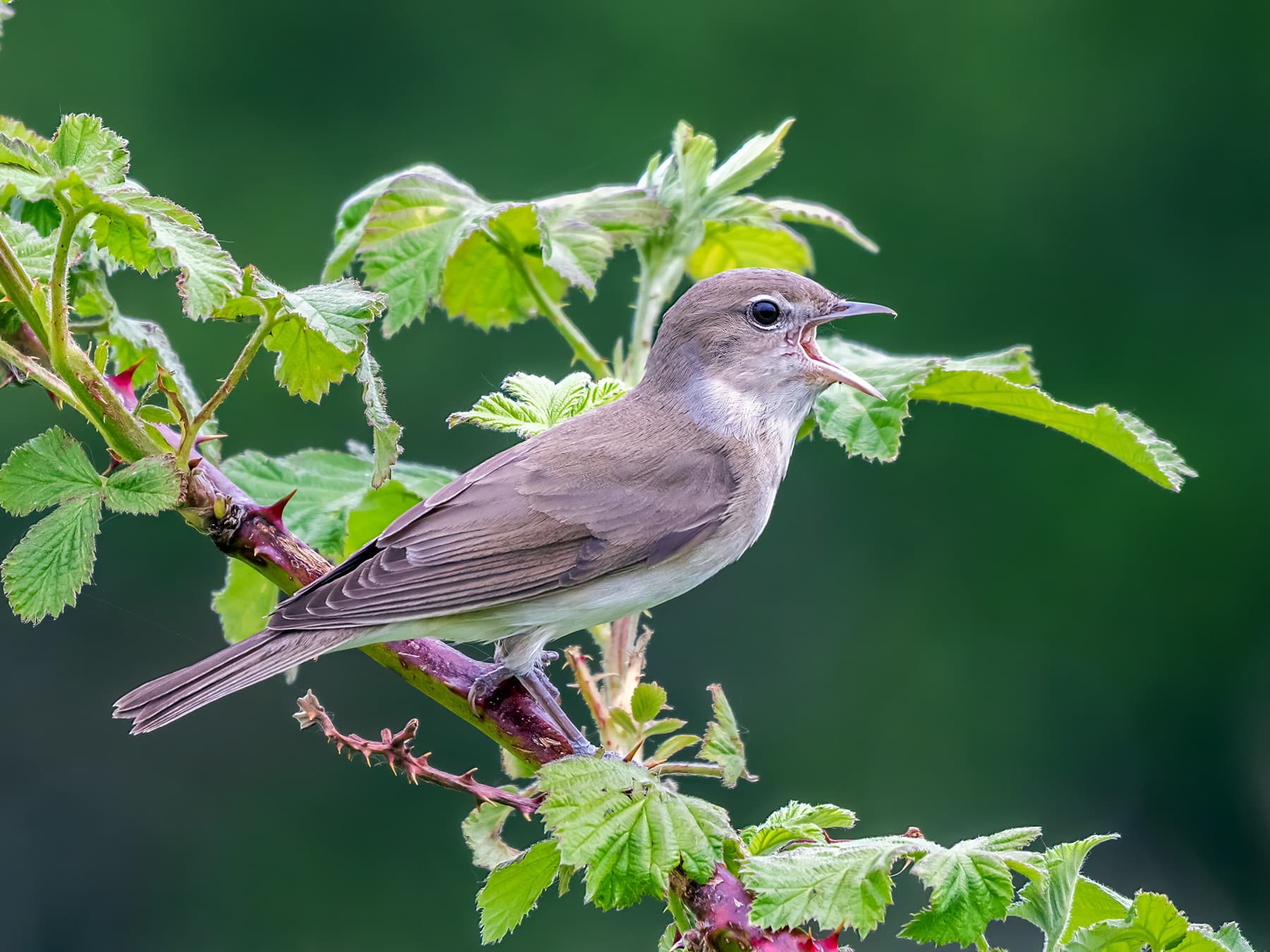
More photos
2 photos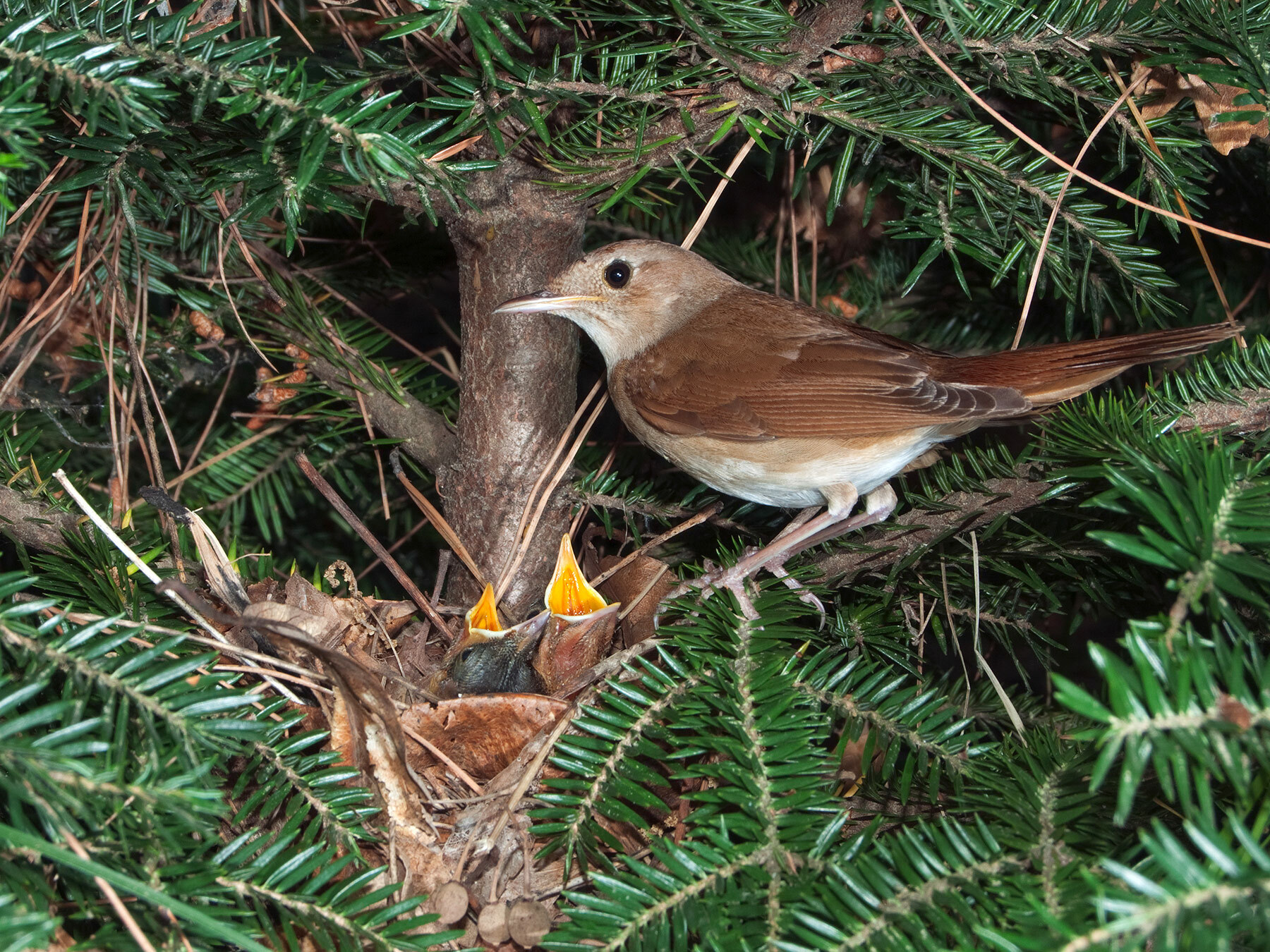
Quick facts
- Length
- 15–16.5 cm
- Wingspan
- 23–26 cm
- Weight
- 18–27 g
- Lifespan
- 5 years · oldest recorded 10.9 years
- Family
- Old World Flycatchers
- Migration
- Long-distance Migrant
- Global status (IUCN)
- Least Concern
- World population
- 43,000,000 - 81,000,000 mature individuals
- Population trend
- Stable
- Also called
- Common Nightingale, Rufous Nightingale
- Scientific name
- Luscinia megarhynchos
Sources
4- 1BirdLife International. 2017. Luscinia megarhynchos (amended version of 2016 assessment). The IUCN Red List of Threatened Species 2017: e.T22709696A111760622. Source (opens in a new tab)
- 2BirdLife International. 2017. Luscinia megarhynchos (amended version of 2016 assessment). The IUCN Red List of Threatened Species 2017: e.T22709696A111760622. Source (opens in a new tab)
- 3BirdLife International. 2017. Luscinia megarhynchos (amended version of 2016 assessment). The IUCN Red List of Threatened Species 2017: e.T22709696A111760622. Source (opens in a new tab)
- 4Fransson et al., EURING list of longevity records for European birds (2010) Source (opens in a new tab)

Checked by
Nathan Cope, founder and editor
Nathan founded Birdfact and leads its writers and contributors in the UK, the US and Canada. He has watched and studied birds for more than ten years, and checks every article and species guide before it’s published.