


Garden Warbler
European Garden Warbler · Sylvia borin
By the Birdfact teamChecked by Nathan Cope
On this page13 sections
How to recognise it
What do Garden Warblers look like?
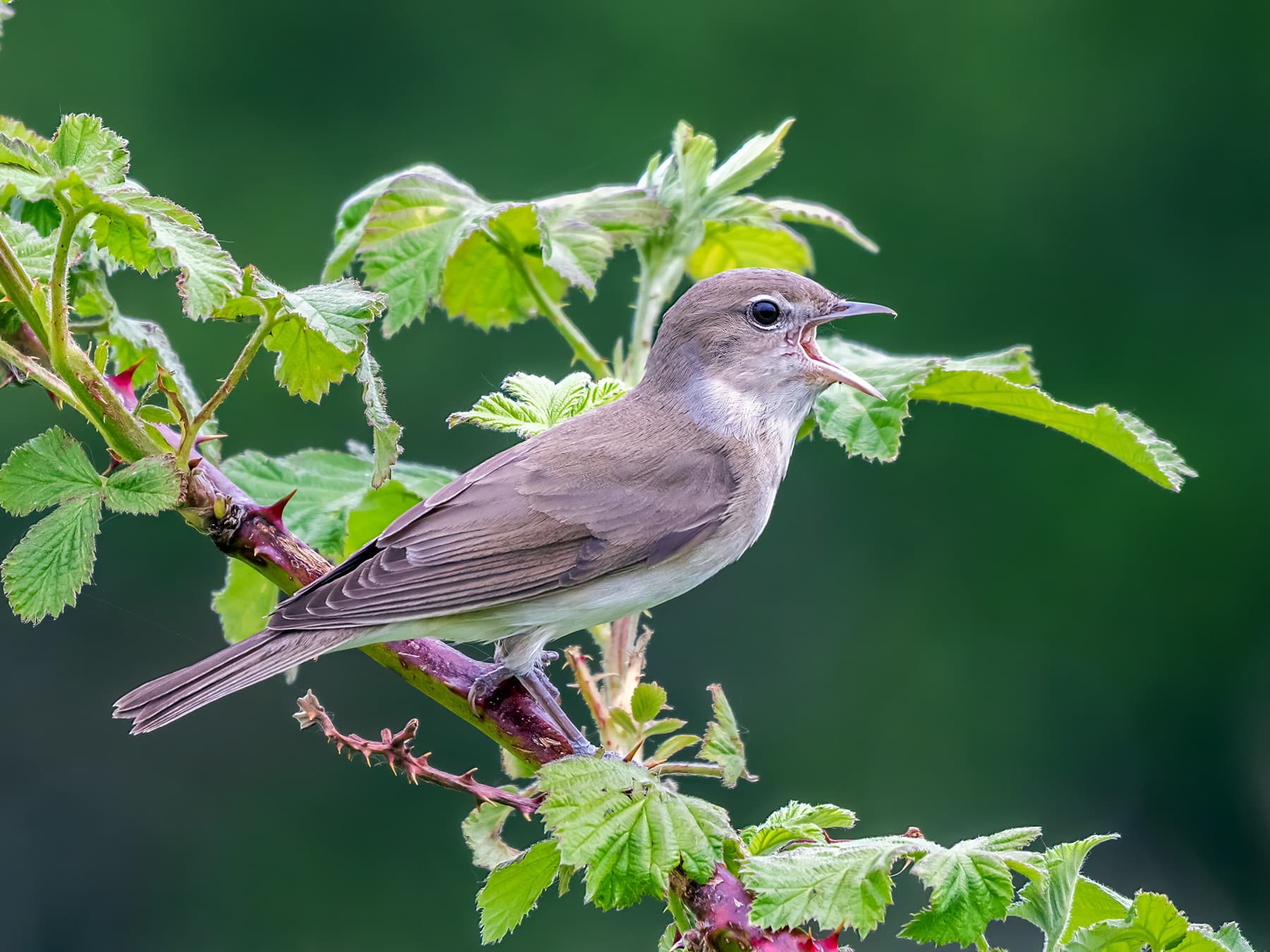
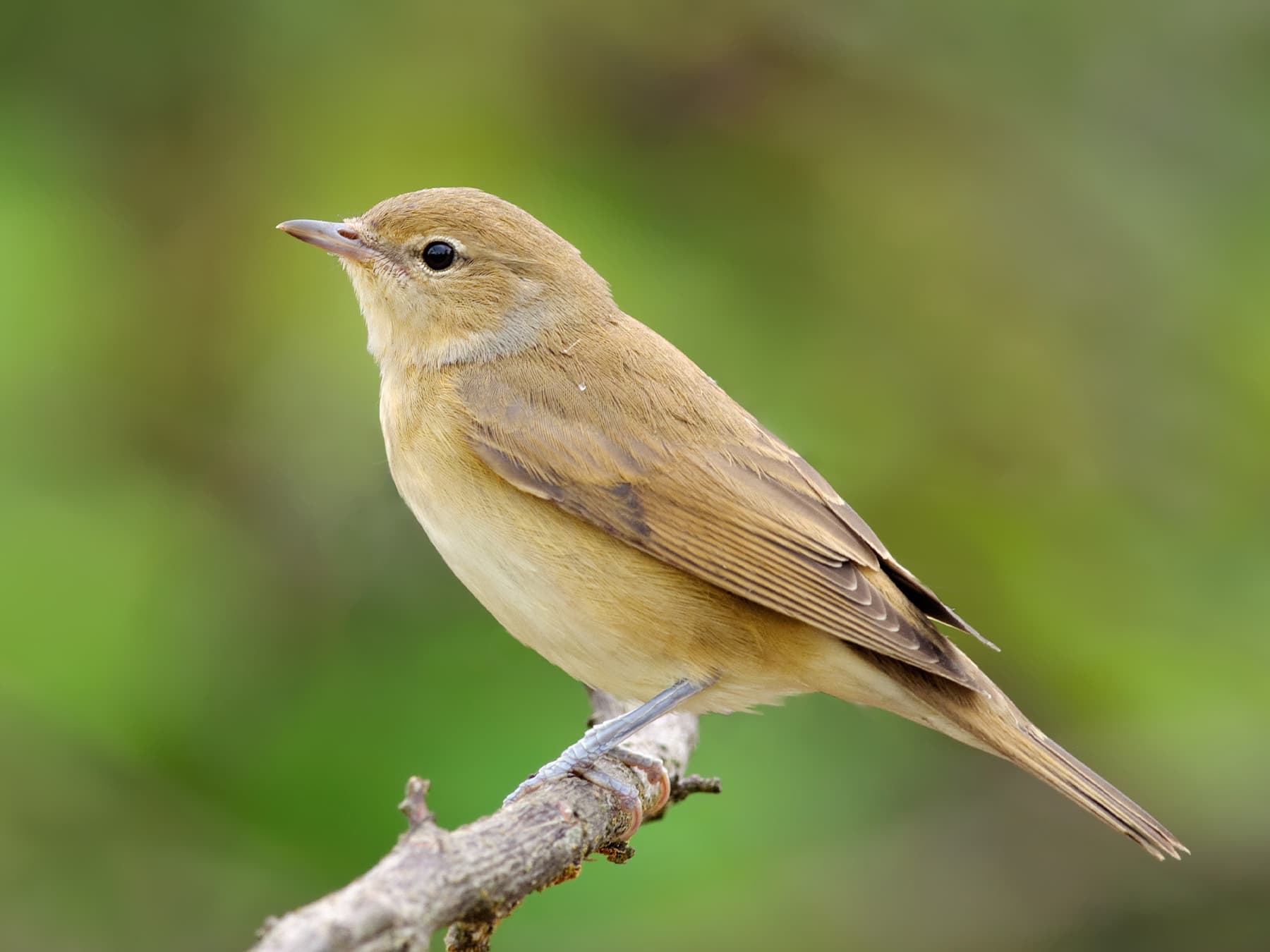
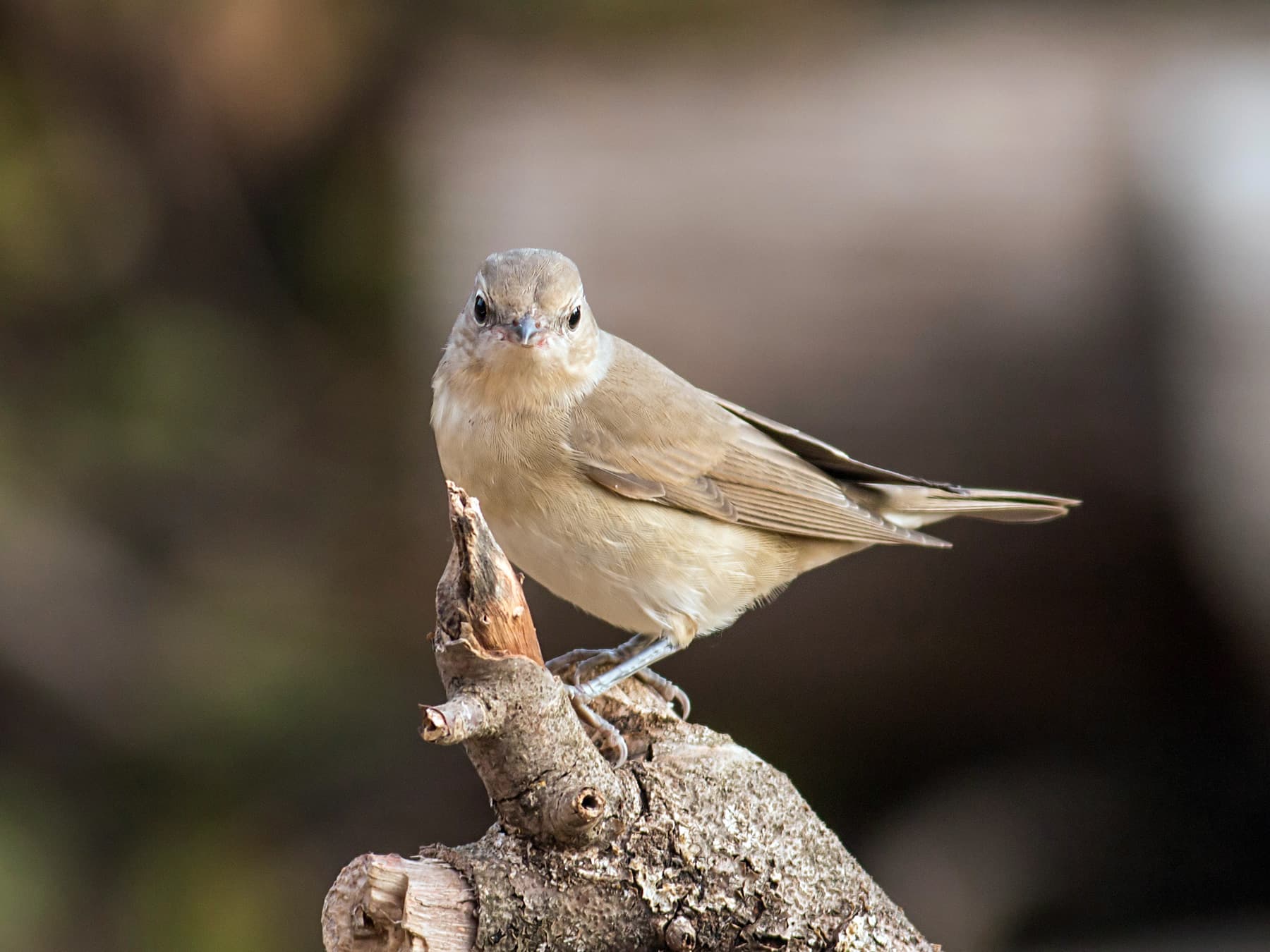
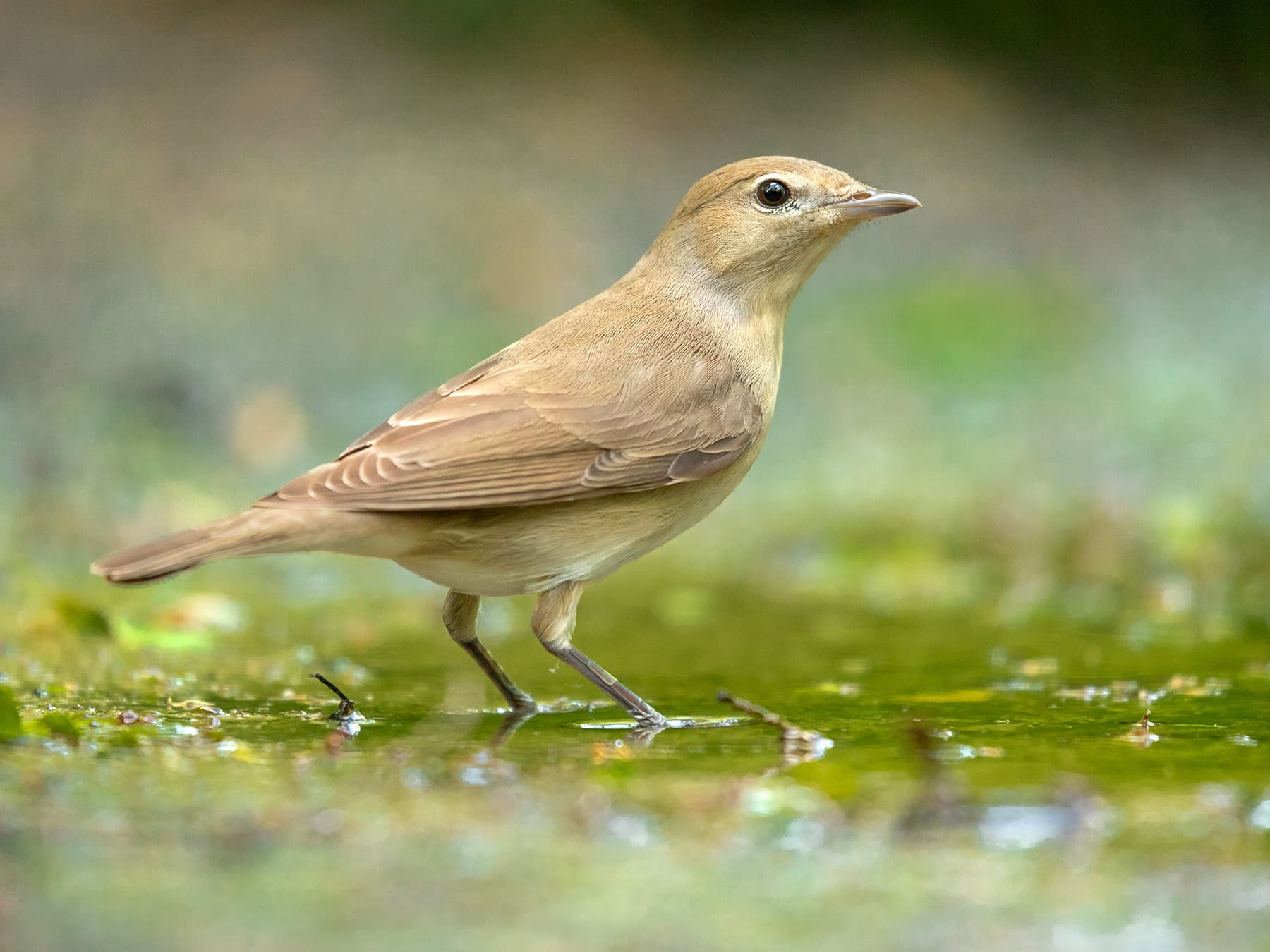
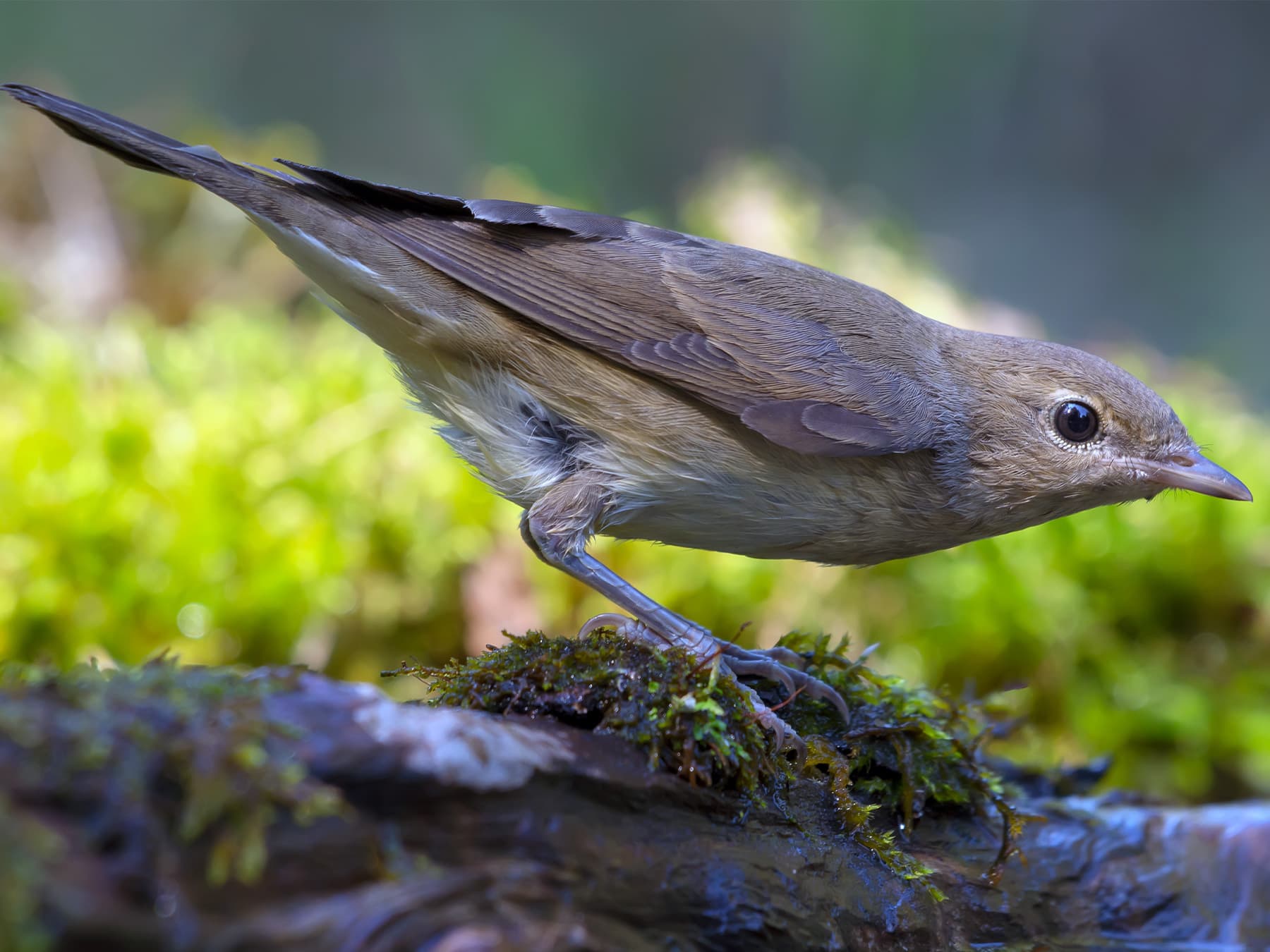
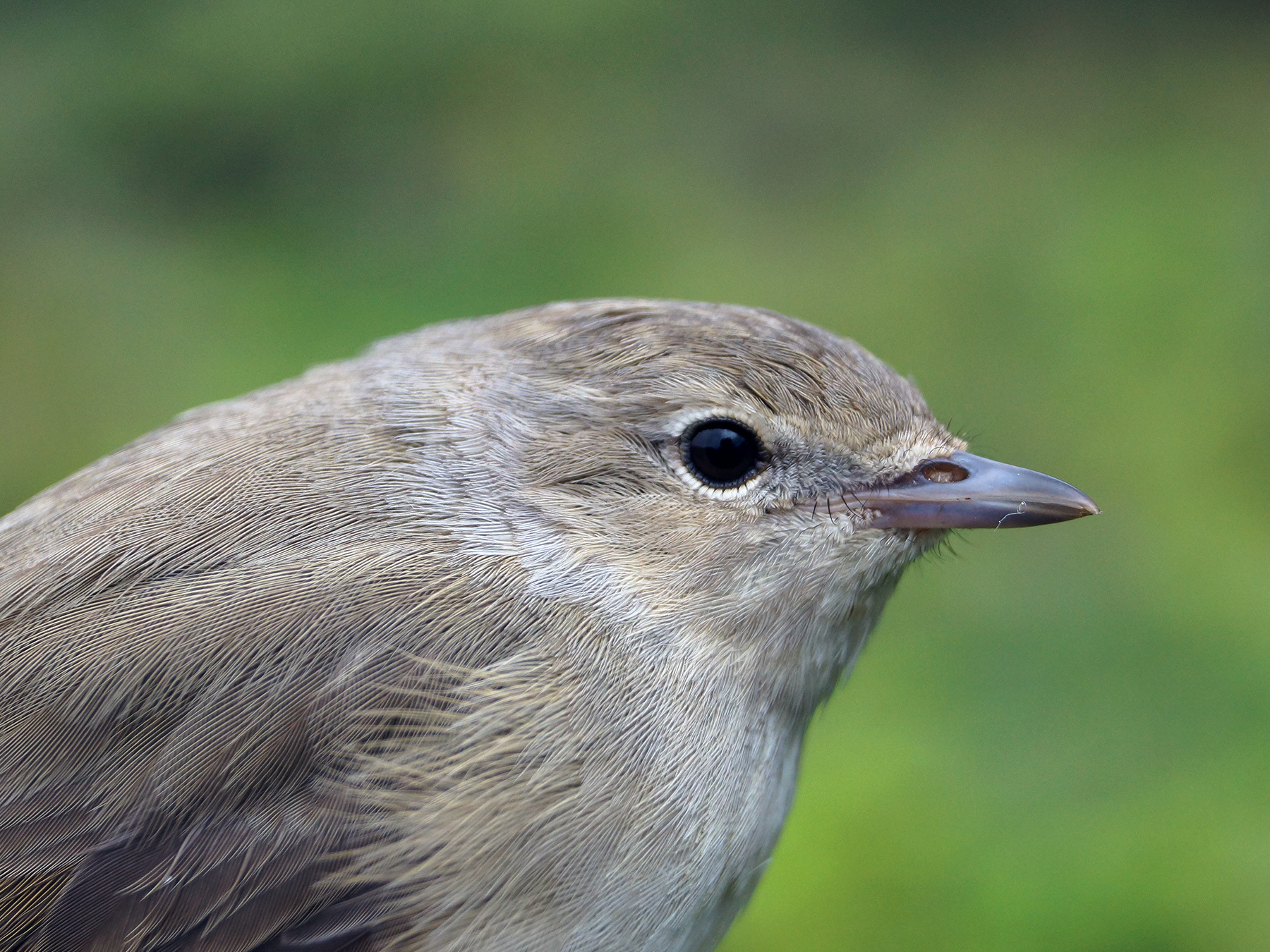
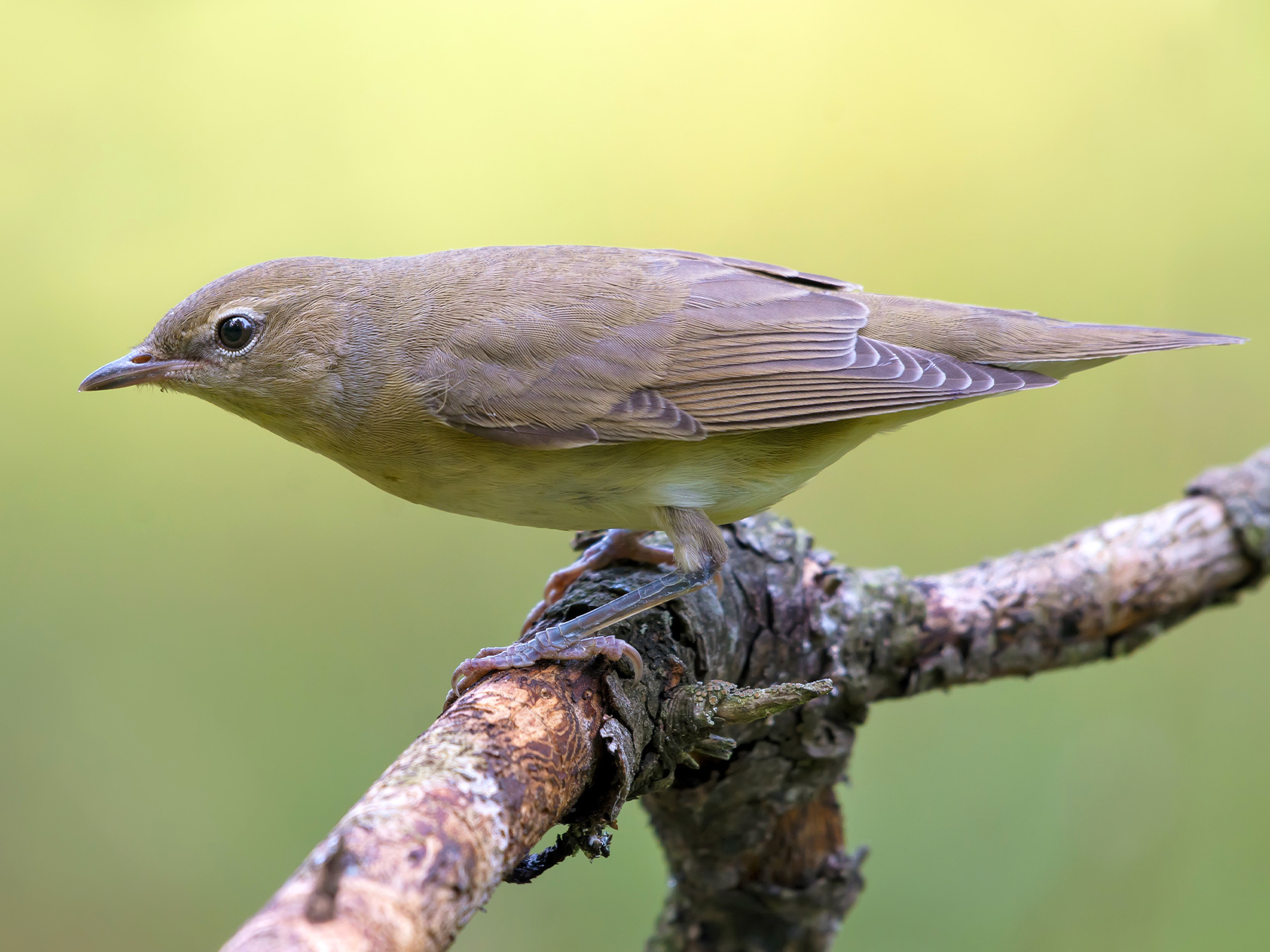
A garden warbler’s plumage does not have any particularly distinguishing features or markings. Upper parts are grey-brown, with a greyer head, a light grey neck patch, and slightly darker wings. The breast and belly are paler grey, sometimes with a buff tinge on the flanks and neck.
The bill is short and stubby, and the legs are grey. There is a faint pale ring around the black eye, and their head is rounded.
Females and males are alike in colouring and size and there are no seasonal plumage changes during the year.
Young garden warblers are also similar to adults, making it difficult to determine the age of an individual bird on sight alone.
How big are Garden Warblers?
A medium-sized warbler, the garden warbler’s rounded head gives it a somewhat thick-set appearance, making it seem chunkier than other similar bird species. Males and females are the same size, falling within the ranges below:
- Length: 14 cm (5.5 in)
- Wingspan: 20 cm to 24.5 cm (7.9 in to 9.4 in)
- Weight: 16 g to 22 g (0.6 oz to 0.8 oz
Its size
Adults- Length
- 14–15 cm
- Wingspan
- 22–24 cm
- Weight
- 16–22 g
Its song and calls
What sound does a Garden Warbler make?
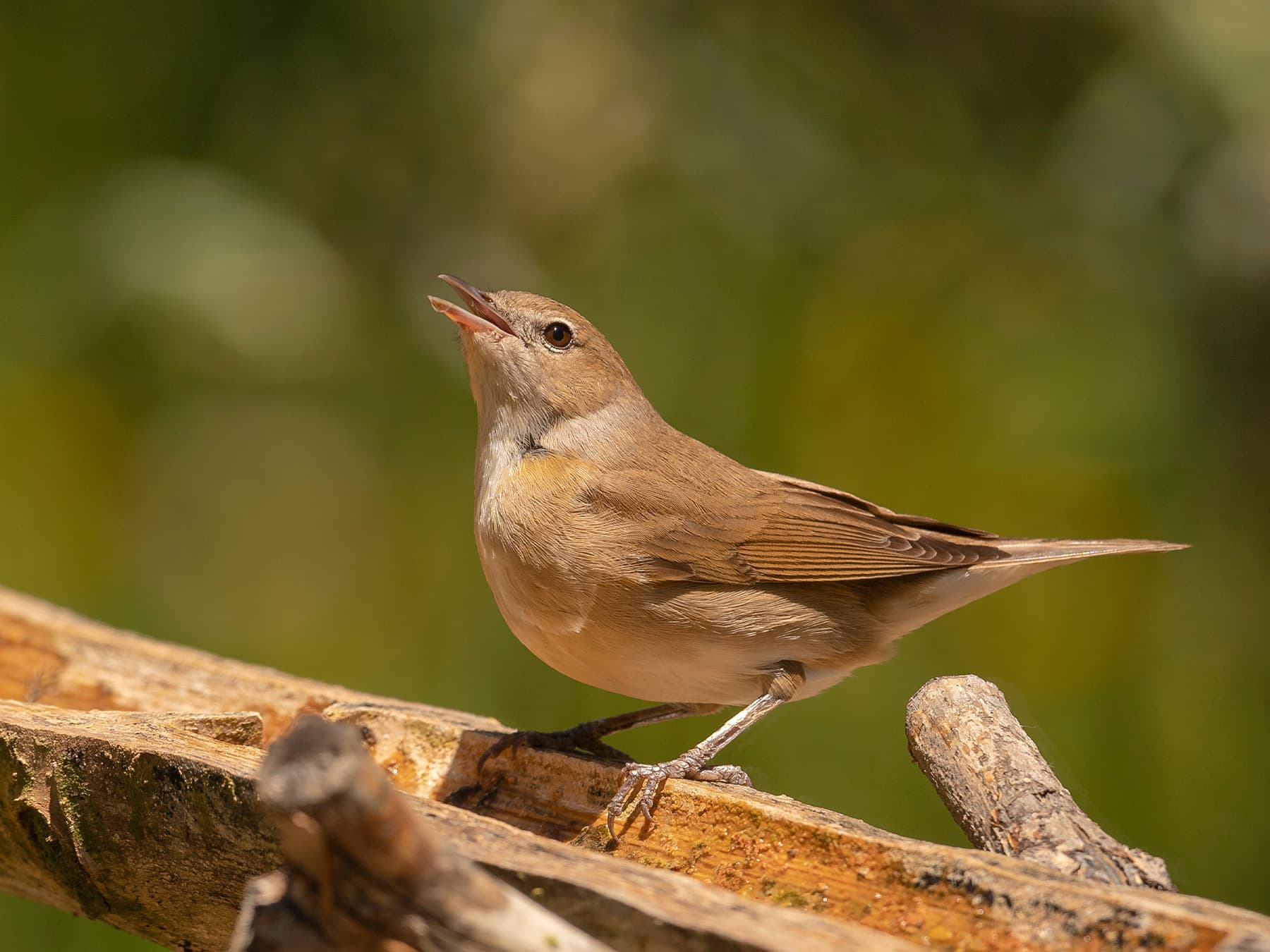
What they lack in distinctive visual appearance, garden warblers more than compensate in musical ability. Their song is tuneful and bubbling, similar to the flowing notes of a blackcap but lower in pitch. Some mimicry also occurs. Their call is a harsh ‘chek-chek’, heard in alarm or when a threat to the nest is detected.
- Song0:00 / 0:51
Recorded in Hauts-de-France, France · April 2025
- Alarm call0:00 / 0:11
Recorded in Normandie, France · June 2023
When and where to see it
OctoberMostly absent
Most recorded in October
- 1. Shetland Islands0.14%
- 2. Orkney Islands0.11%
- 3. Eilean Siarunder 0.1%
- 4. Waterfordunder 0.1%
- 5. Fifeunder 0.1%
Each dot is a county, state or province: the bigger and darker, the larger the bird’s share of that place’s bird records that month. Grey dots: no regular records. The ringed point is the centre of the bird’s records this month; the arrow shows how it moved since last month, and the dashed loop its path through the year. “Arrivals” colours places where it becomes regular this month (orange) or is in its last regular month (grey). GBIF eBird Observation Dataset, 2019–2024. Map data: Natural Earth, US Census Bureau; place centres © OpenStreetMap contributors.
In your area
See when the Garden Warbler is recorded in your county, state or province.
How often the Garden Warbler turns up in the UK and Ireland through the year, from birdwatchers' records.
United Kingdom
Summer visitor · regularly Apr–Sep · most records in May
Ireland
Summer visitor · regularly May–Oct · most records in May
Show as a table
| Month | United Kingdom | Ireland |
|---|---|---|
| January | – | – |
| February | – | – |
| March | <0.001% | – |
| April | 0.098% (regular) | – |
| May | 0.45% (regular) | 0.015% (regular) |
| June | 0.29% (regular) | 0.011% (regular) |
| July | 0.088% (regular) | 0.004% (regular) |
| August | 0.083% (regular) | – |
| September | 0.056% (regular) | 0.004% (regular) |
| October | 0.011% | 0.009% (regular) |
| November | <0.001% | – |
| December | – | – |
Recorded regularly in
Worldwide: recorded regularly in 83 countries
Countries where it was recorded in at least 3 of the 6 years 2019–2024. Linked countries have their own bird list.
Europe (45)
- Åland Islands
- Albania
- Andorra
- Austria
- Belarus
- Belgium
- Bosnia & Herzegovina
- Bulgaria
- Croatia
- Czechia
- Denmark
- Estonia
- Faroe Islands
- Finland
- France
- Germany
- Gibraltar
- Greece
- Hungary
- Iceland
- Ireland
- Isle of Man
- Italy
- Jersey
- Latvia
- Liechtenstein
- Lithuania
- Luxembourg
- Malta
- Moldova
- Montenegro
- Netherlands
- Norway
- Poland
- Portugal
- Romania
- Russia
- Serbia
- Slovakia
- Slovenia
- Spain
- Sweden
- Switzerland
- Ukraine
- United Kingdom
Africa (23)
Asia (15)
- Armenia
- Azerbaijan
- Cyprus
- Georgia
- Iran
- Iraq
- Israel
- Jordan
- Kazakhstan
- Kuwait
- Lebanon
- Palestinian Territories
- Saudi Arabia
- Turkey
- United Arab Emirates
Data: EOD – eBird Observation Dataset (Cornell Lab of Ornithology), accessed via GBIF.org, CC BY 4.0. Records from 2019–2024, aggregated and filtered by Birdfact. How these lists are made
What is the habitat of a Garden Warbler?
Deciduous or mixed woodland are favourite habitats on garden warblers’ breeding grounds. A layer of dense vegetation with shrubs and thickets to forage for insects in are required to support their feeding needs.
In winter, woodlands, forest edges, parks, gardens, and orchards are preferred. Coniferous forests are usually avoided, and lower altitudes are favoured.
What is the range of a Garden Warbler?
Garden warblers have a wide distribution range, with breeding territories stretching across northern Europe from the British Isles in the west as far east as eastern Siberia. Northern Italy and northern Spain form the lower limit of their range during the breeding season, and populations can also be found in northern Turkey.
Migration occurs each autumn to wintering grounds in sub-Saharan Africa, as far south as northern Namibia and parts of South Africa.
Where do Garden Warblers live?
Europe is home to around 80 percent of the world’s garden warblers, with the highest concentrations in Switzerland and Poland.
How rare are Garden Warblers?
Garden warblers may be difficult to spot, because of their non-distinctive plumage and habit of foraging out of sight in woodland vegetation. However, they are among the most common warblers, with a global population of between 41.6 and 67.3 million mature individuals, of which around 80 percent (33.3 to 53.8 million) breed in Europe.
Around 145,000 pairs of garden warblers breed in the UK each year, and although they are not the most commonly spotted summer species, their song is heard throughout British woodlands in spring and summer.
Where can you see Garden Warblers in the UK?
Garden warblers are common throughout England, Wales, and southern Scotland, and the best chances of a sighting are in wooded landscapes, and foraging below hedgerows on agricultural land.
Migration
Do Garden Warblers migrate?
Garden warblers are mostly migratory, leaving their European and Asian breeding grounds in August or September and heading to Africa for winter. They return north the following spring, arriving on breeding grounds in early May. Some populations that breed in North Africa and around the Mediterranean are resident and remain in the same territories all year round.
Are Garden Warblers native to the UK?
Although around 165,000 pairs of garden warblers breed in the UK each year, none remain in the country all year round, with the entire breeding population heading to sub-Saharan Africa for winter.
Tips for seeing it
- Listen for their melodious, flute-like song in woodland edges and gardens
- Look for movement in dense foliage, especially in the lower to middle levels of vegetation
- Observe feeding behaviour on fruit trees during late summer and early autumn
- In the UK, watch for them in hedgerows and scrubland from April to September
What it eats
What do Garden Warblers eat?
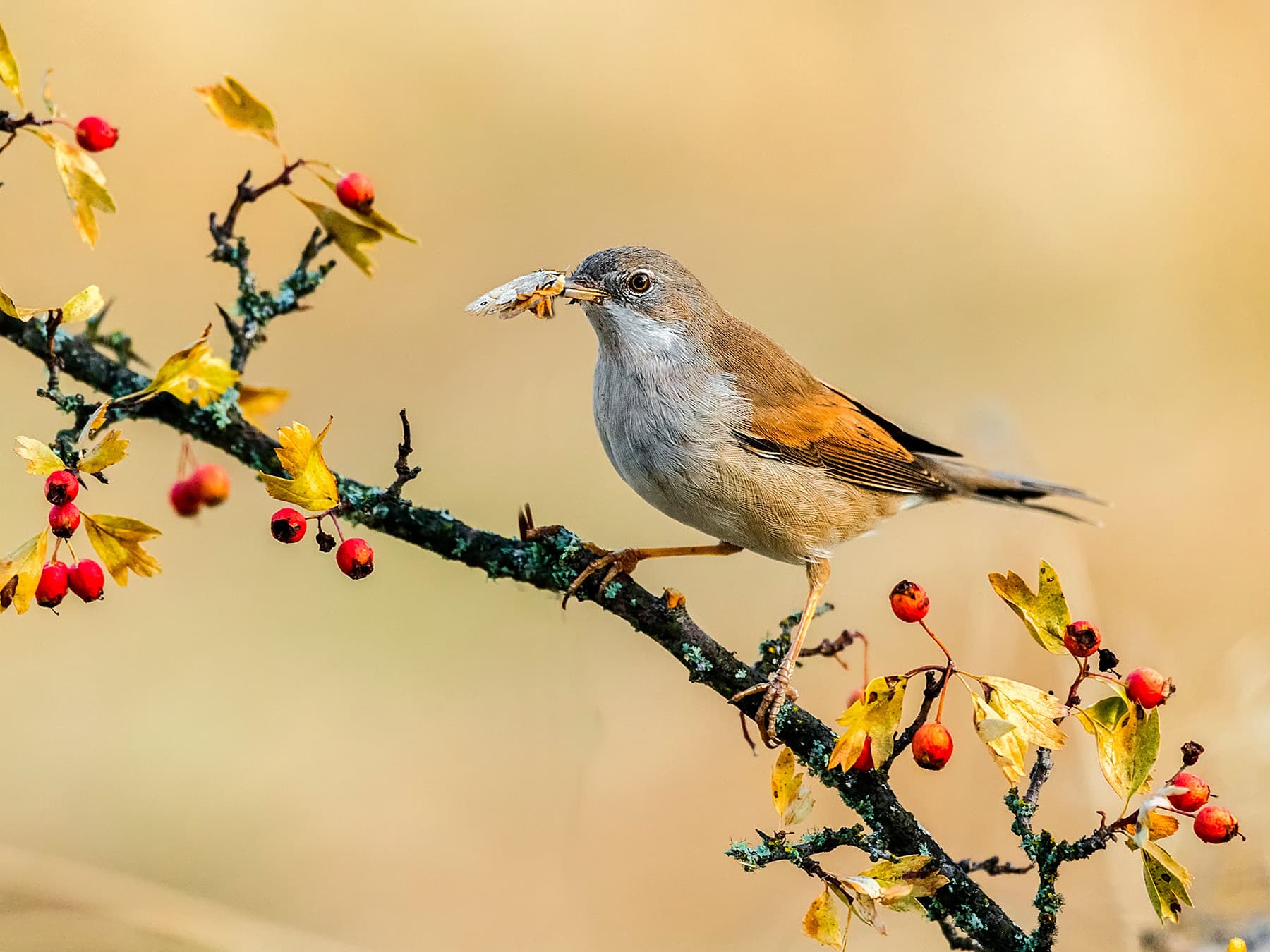
Spiders, insects, and fruit are the main foods in a garden warbler’s diet, with aphids, flies, beetles and caterpillars being of key importance during the breeding season.
Fruit, particularly figs, blackberries, buckthorn, and mulberry, form a major part of their diet later in the summer.
What do Garden Warbler chicks eat?
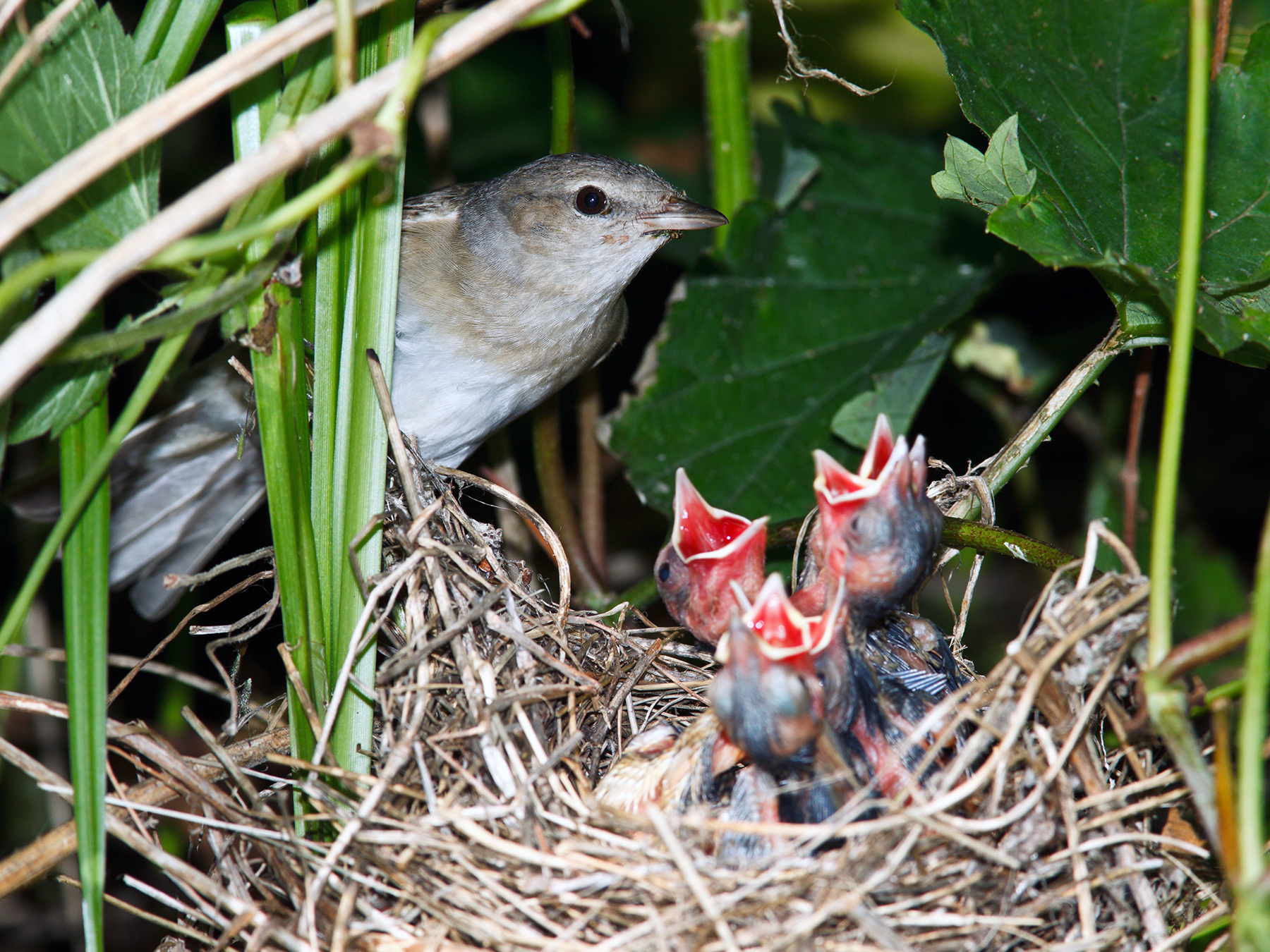
Small insects, larvae, and spiders are fed to garden warbler chicks by both parents.
Nesting and breeding
Where do Garden Warblers nest?
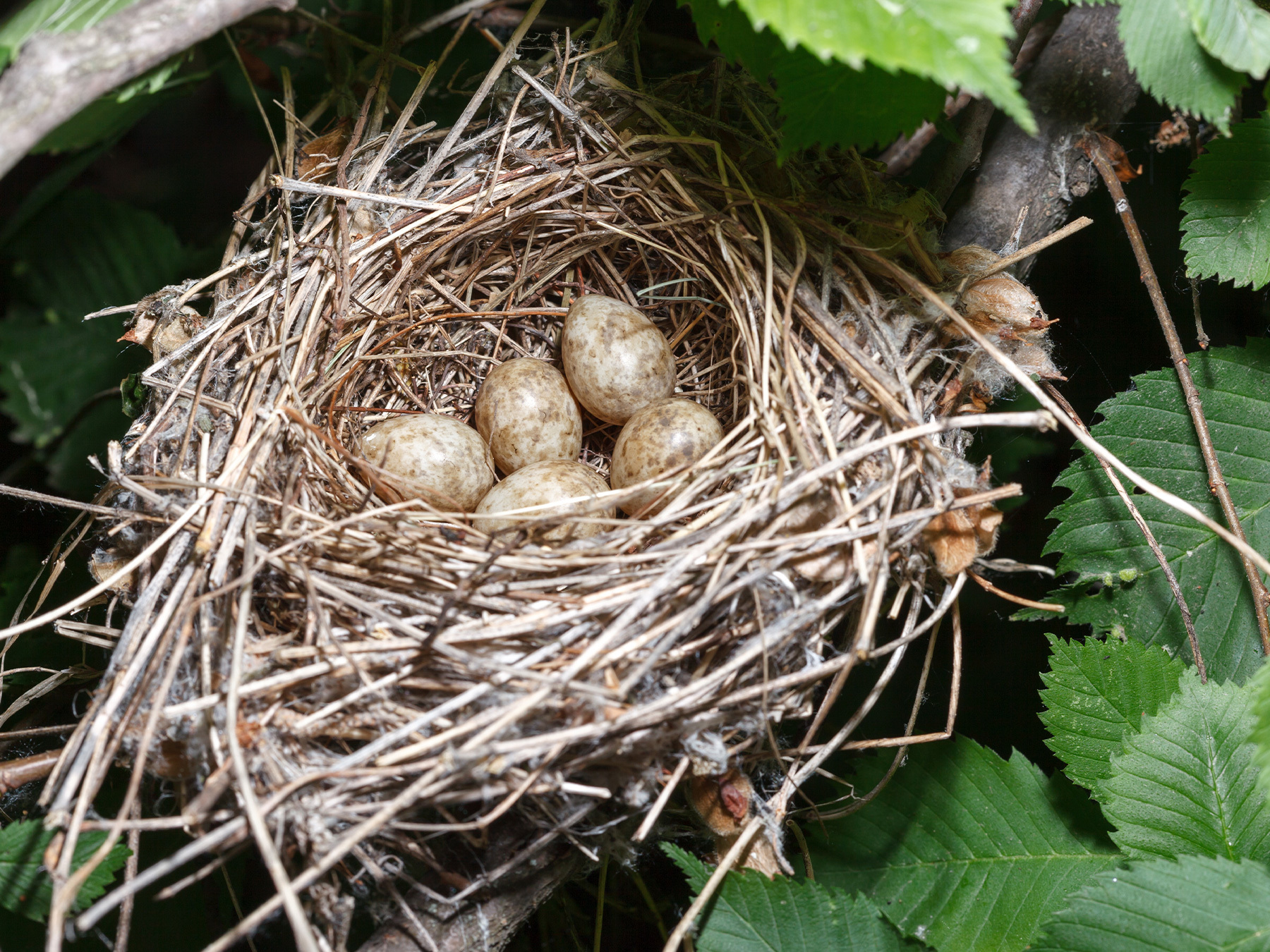
Garden warblers choose well-hidden nesting spots, concealed out of sight in low shrubbery or brambles. Nests are cup-shaped and made from grass, leaves, and twigs, and lined with feathers and animal hair.
When do Garden Warblers nest?
The nesting season for garden warblers lasts from May to July, with pairs usually raising one brood together. Incubation is shared between the sexes and eggs hatch after 10 to 12 days. Hatchlings remain in the nest until they are 11 or 12 days old when they are ready to fledge and are fully independent around 2 weeks later.
What do Garden Warbler eggs look like?
Garden warblers lay oval-shaped eggs, which measure 20 mm by 15 mm (0.8 in by 0.6 in). Eggs are smooth and glossy, and creamy white in colour, with brownish-purple spotting at one end. Between 4 and 5 eggs is most common.
Do Garden Warblers mate for life?
Pairs formed between garden warblers last for the duration of a single breeding season, after which the bond dissolves and a new mate is found the following year.
Behaviour
Are Garden Warblers aggressive?
Garden warblers are a relatively shy and inconspicuous species, and are not naturally aggressive. Nest territories are defended during the breeding season by vocal males, but confrontations rarely become physical.
Lifespan and predators
How long do Garden Warblers live?
The expected lifespan of a garden warbler is around 2 years, although ringing records show that older individuals have survived as long as 10 years and 1 month. Breeding occurs for the first time in one-year-old birds.
What are the predators of Garden Warblers?
Sparrowhawks, falcons, and domestic cats are among the chief threats to garden warblers. Nests are commonly preyed on by jays, crows, and weasels. Their nests are also frequently targeted by cuckoos, who remove the garden warbler’s own eggs and lay their own in their place.
Are Garden Warblers protected?
The Wildlife and Countryside Act, 1981, protects garden warblers against being killed, injured, or taken into captivity.
Are Garden Warblers endangered?
Garden warblers are widespread and abundant, and are classed as a species of least concern globally. In the UK they have Green status on the British Birds of Conservation Concern list, and the population is considered stable.
Conservation
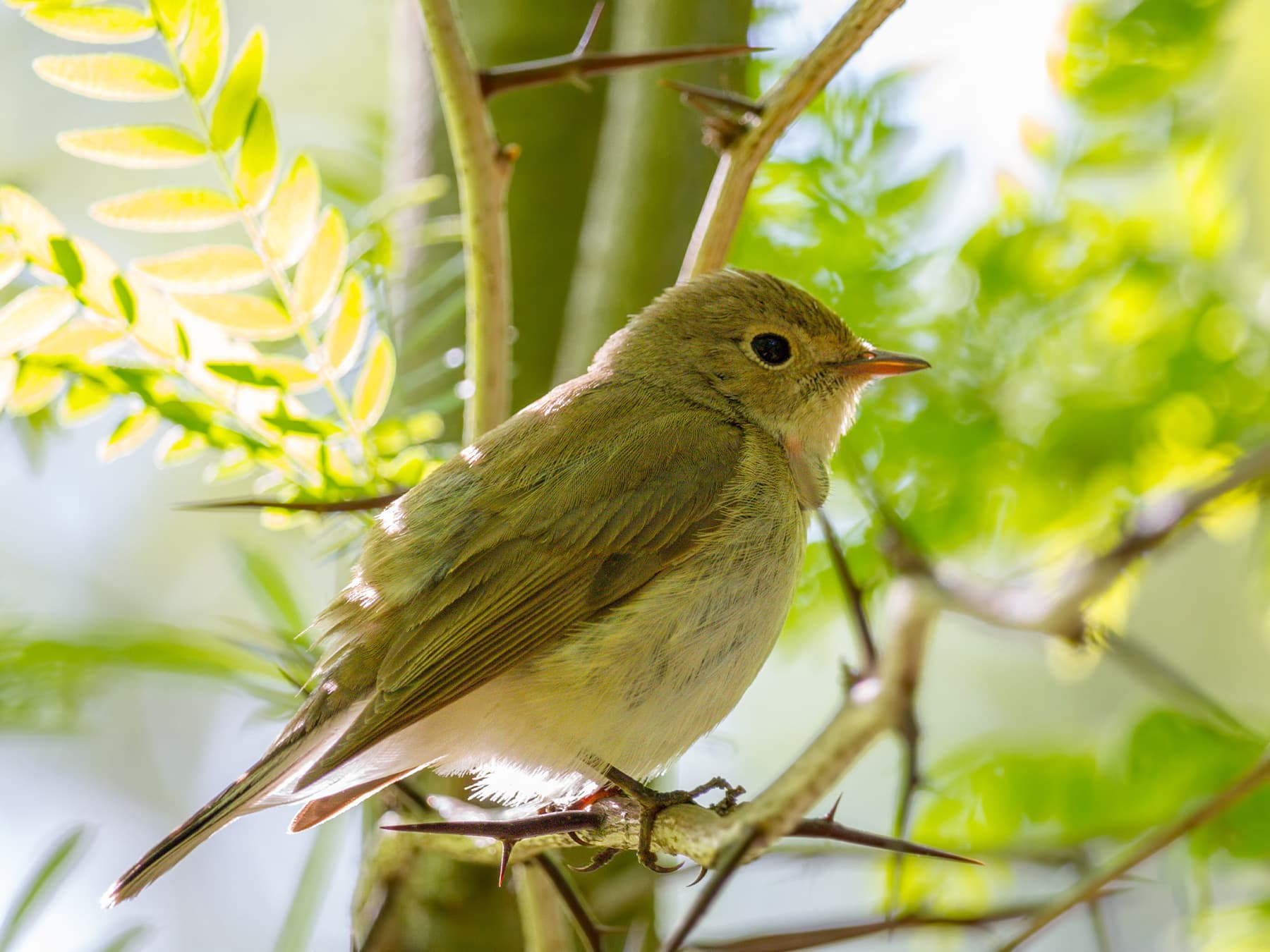
While the Garden Warbler is currently listed as Least Concern, it faces threats from habitat loss in both breeding and wintering grounds. Climate change may also affect its migration patterns and breeding success.
Conservation efforts focus on preserving diverse woodland habitats and reducing the use of pesticides in agricultural areas.
Similar birds
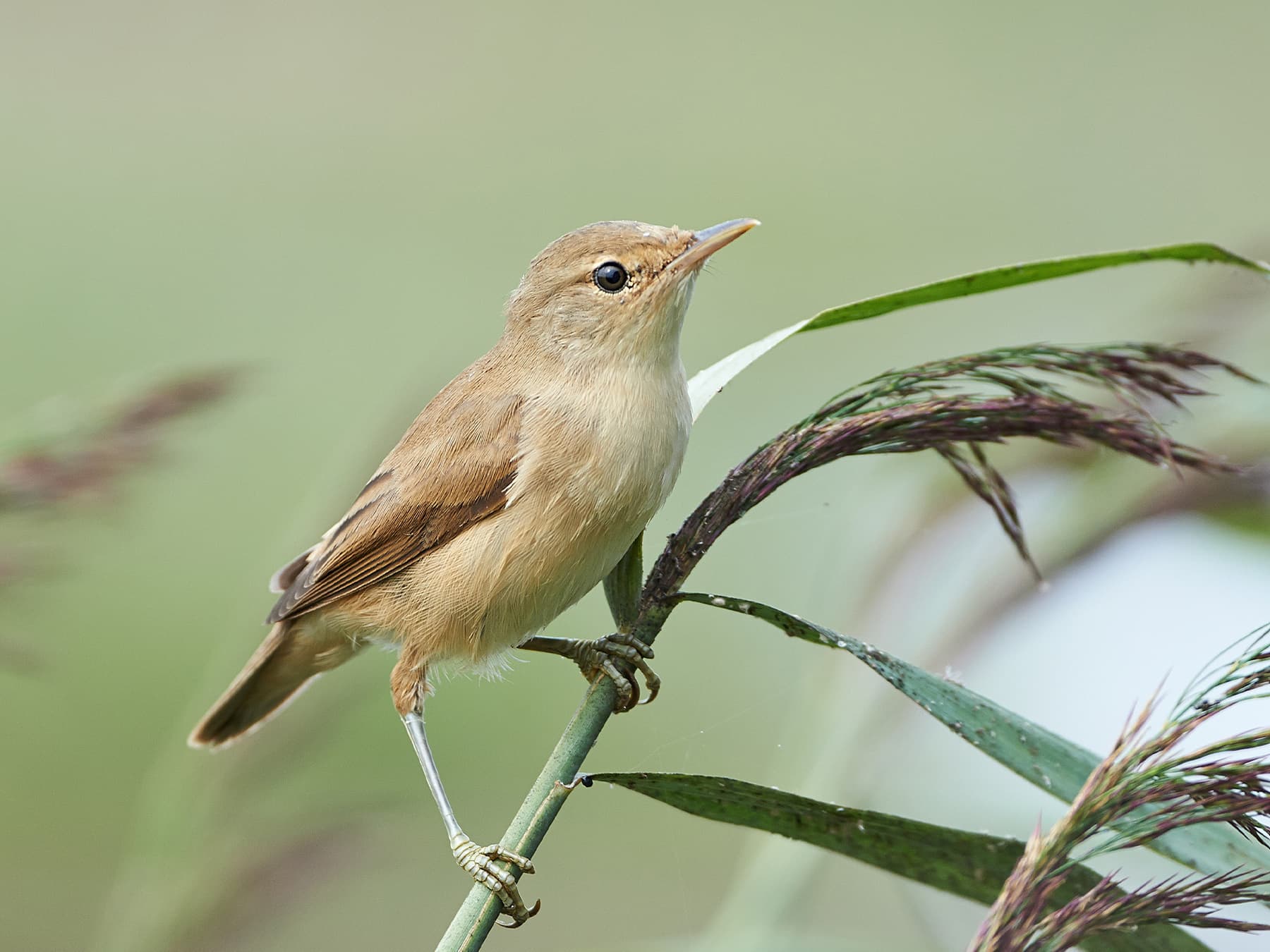
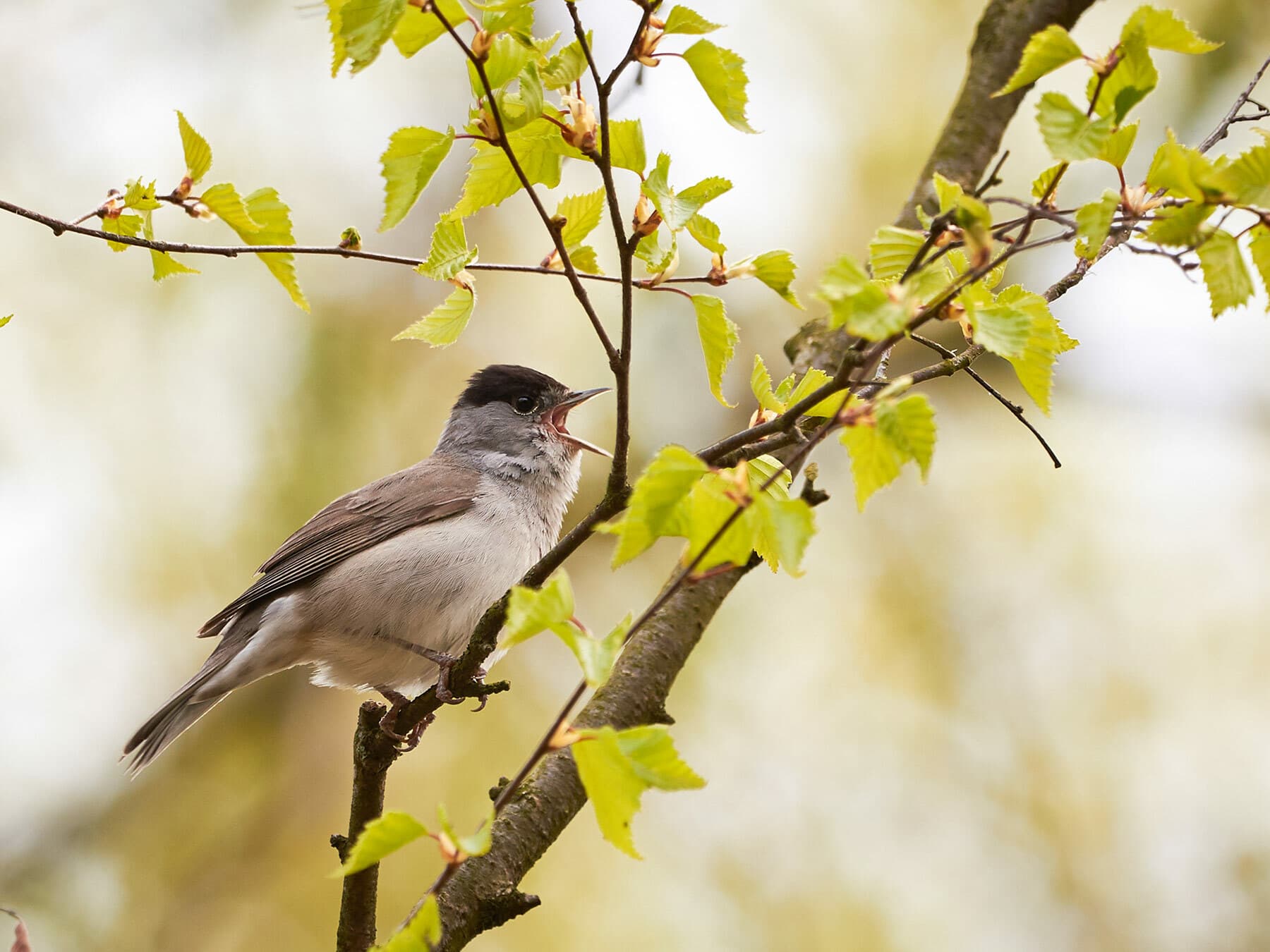
Often mistaken for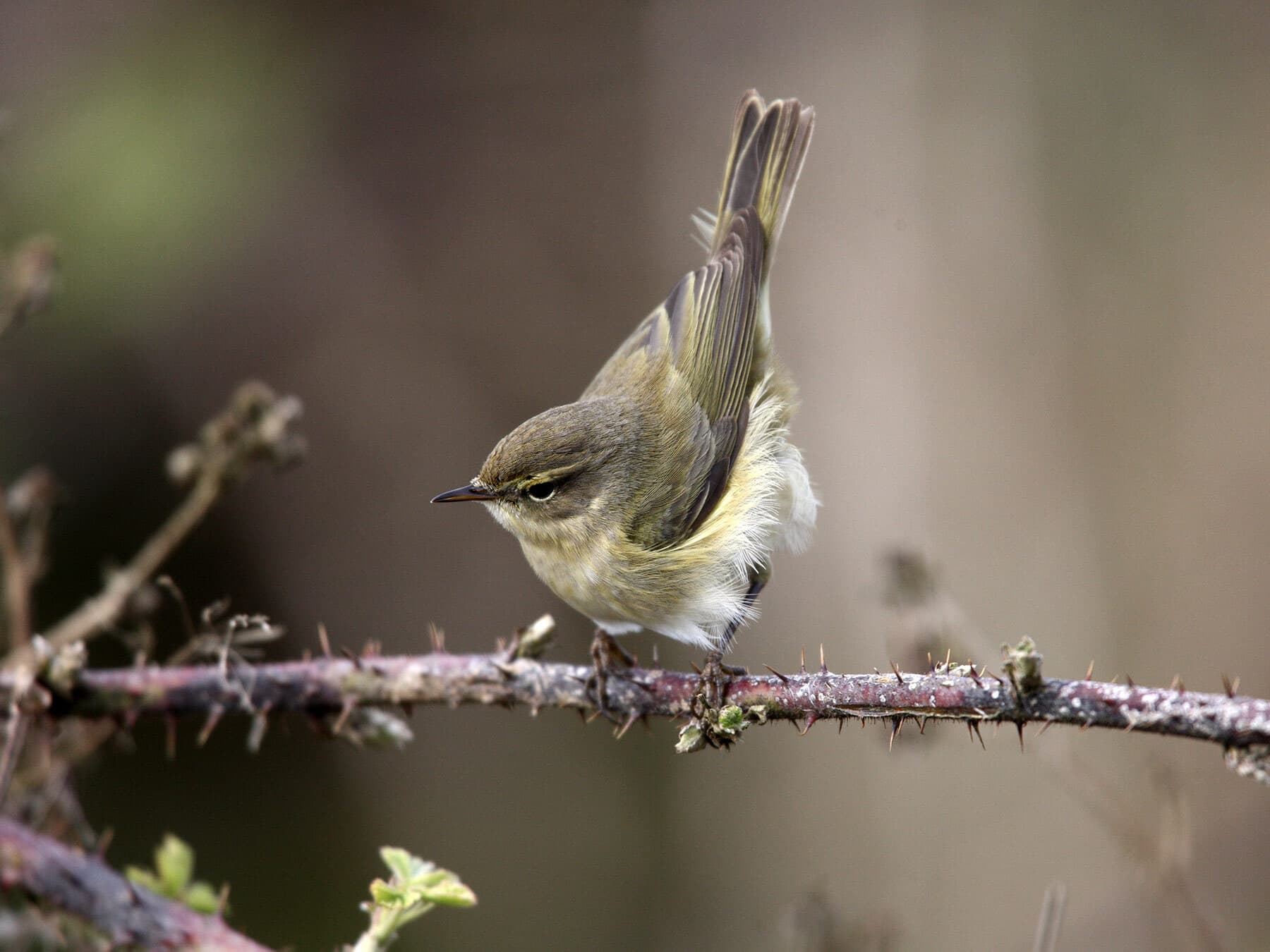
More photos
5 photos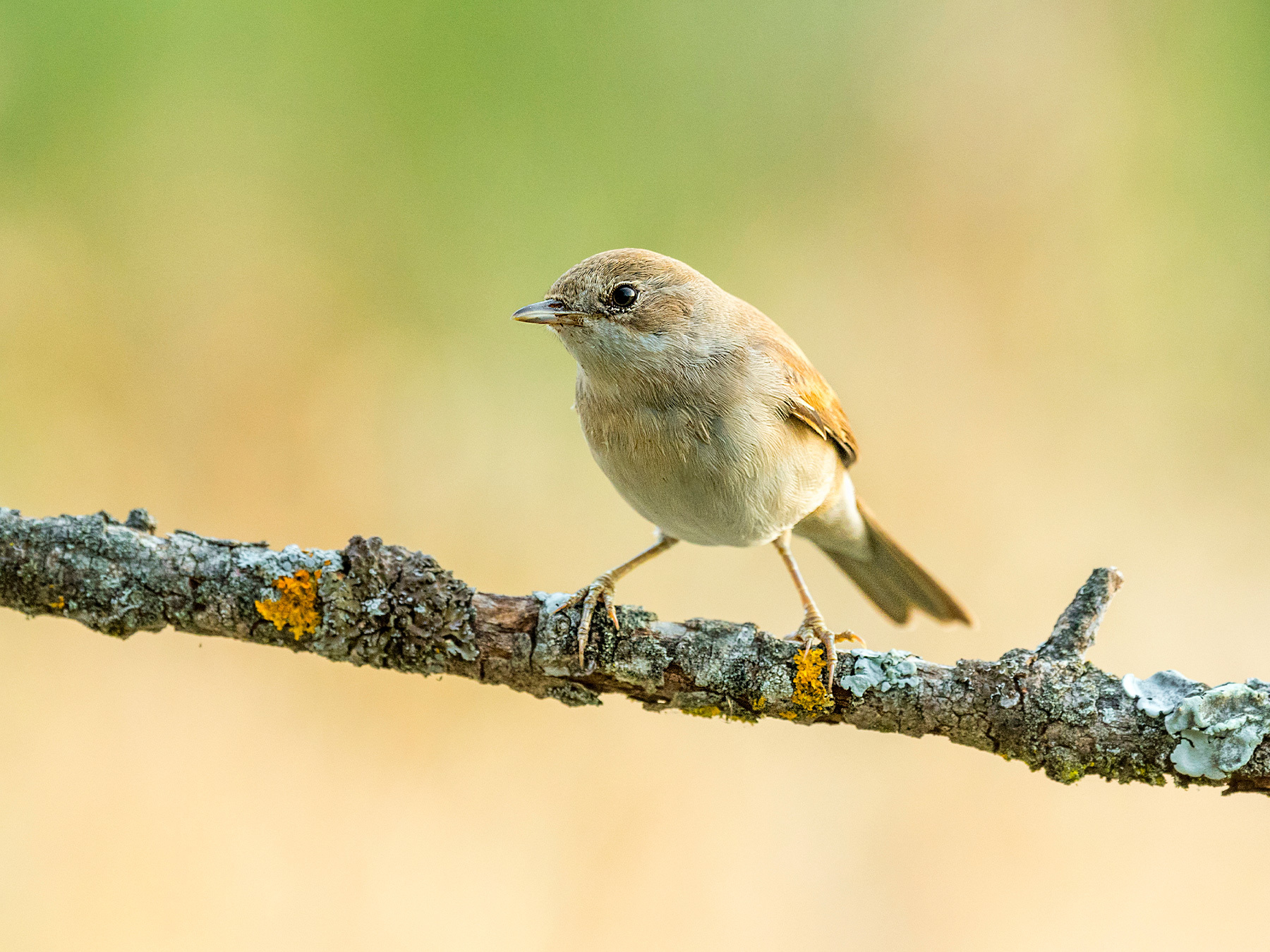
Quick facts
- Length
- 14–15 cm
- Wingspan
- 22–24 cm
- Weight
- 16–22 g
- Lifespan
- 5–8 years · oldest recorded 10 years
- Family
- Sylviid Warblers
- Migration
- Long-distance Migrant
- Global status (IUCN)
- Least Concern
- World population
- 41,000,000 - 67,999,999 mature individuals
- Population trend
- Decreasing
- Also called
- European Garden Warbler
- Scientific name
- Sylvia borin
Sources
4- 1BirdLife International. 2017. Sylvia borin (amended version of 2016 assessment). The IUCN Red List of Threatened Species 2017: e.T22716906A111812037. Source (opens in a new tab)
- 2EBCC (2015)
- 3BirdLife International. 2017. Sylvia borin (amended version of 2016 assessment). The IUCN Red List of Threatened Species 2017: e.T22716906A111812037. Source (opens in a new tab)
- 4BTO longevity records: maximum age from a ringed bird, 10 years, 1 month, 6 days (set in 2015), BirdFacts: Garden Warbler (2015) Source (opens in a new tab)

Checked by
Nathan Cope, founder and editor
Nathan founded Birdfact and leads its writers and contributors in the UK, the US and Canada. He has watched and studied birds for more than ten years, and checks every article and species guide before it’s published.