


Common Reed-warbler
Eurasian Reed-warbler, Common Reed Warbler · Acrocephalus scirpaceus
By the Birdfact teamChecked by Nathan Cope
On this page13 sections
How to recognise it
What do Reed Warblers look like?
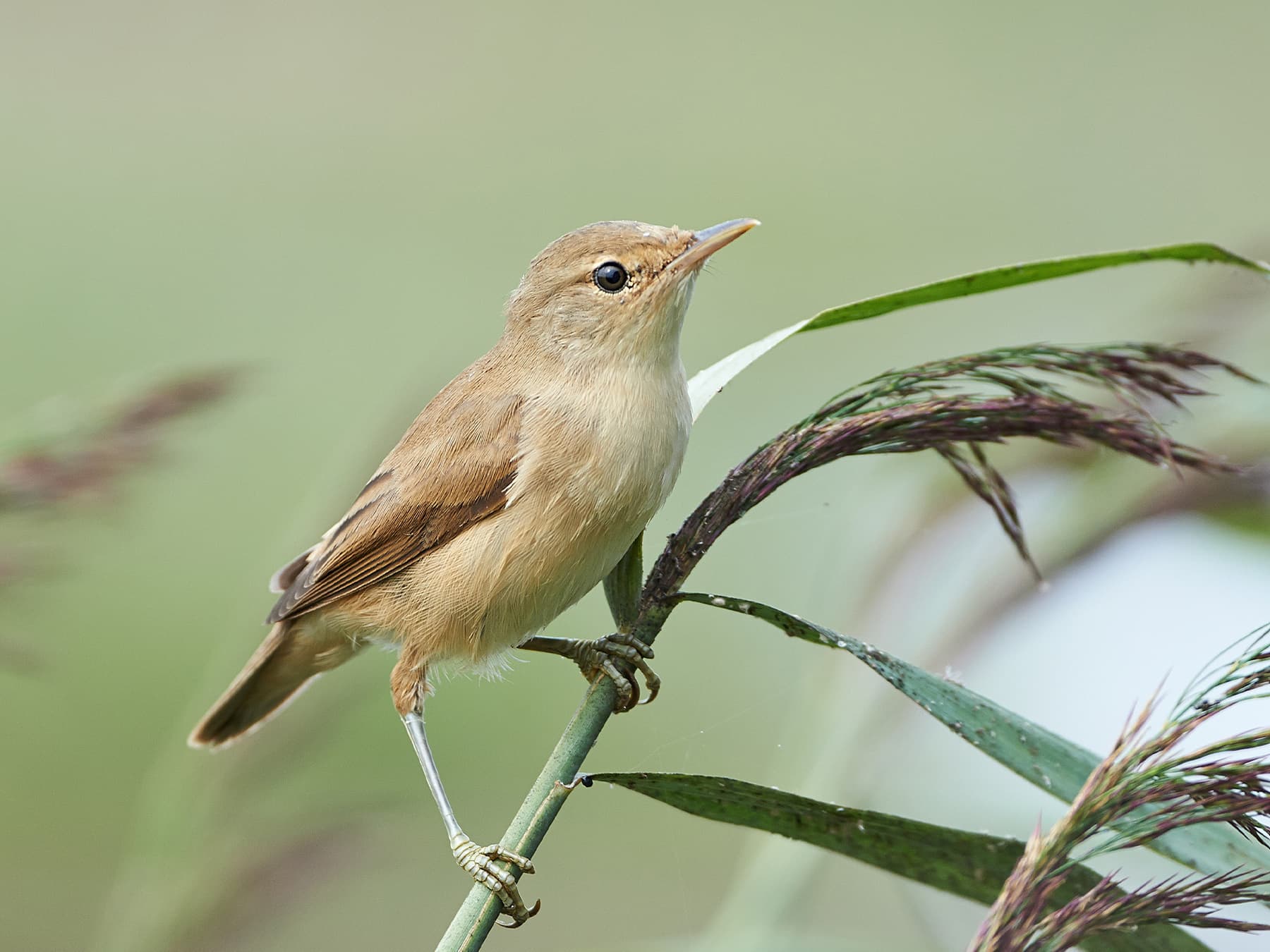
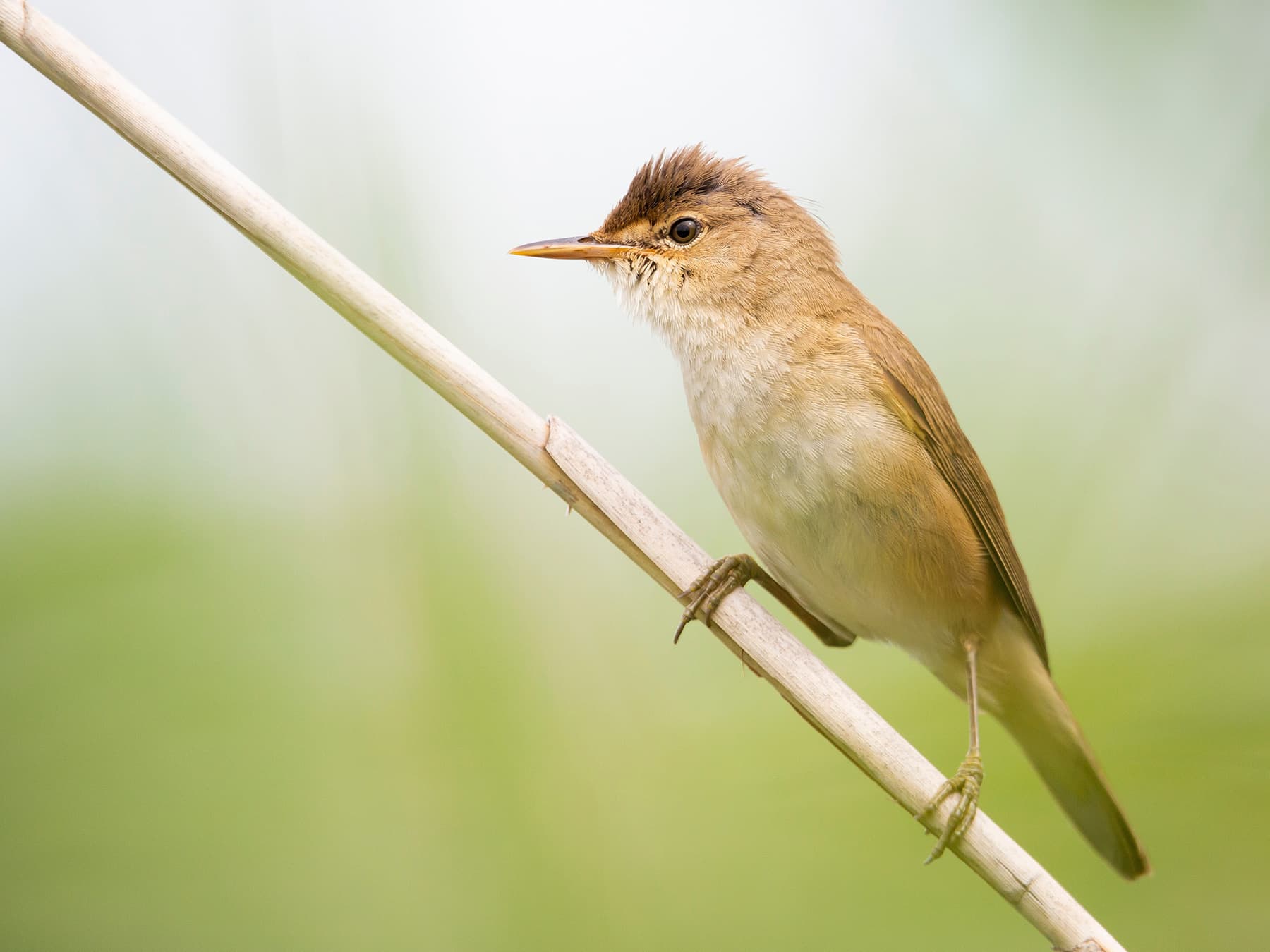
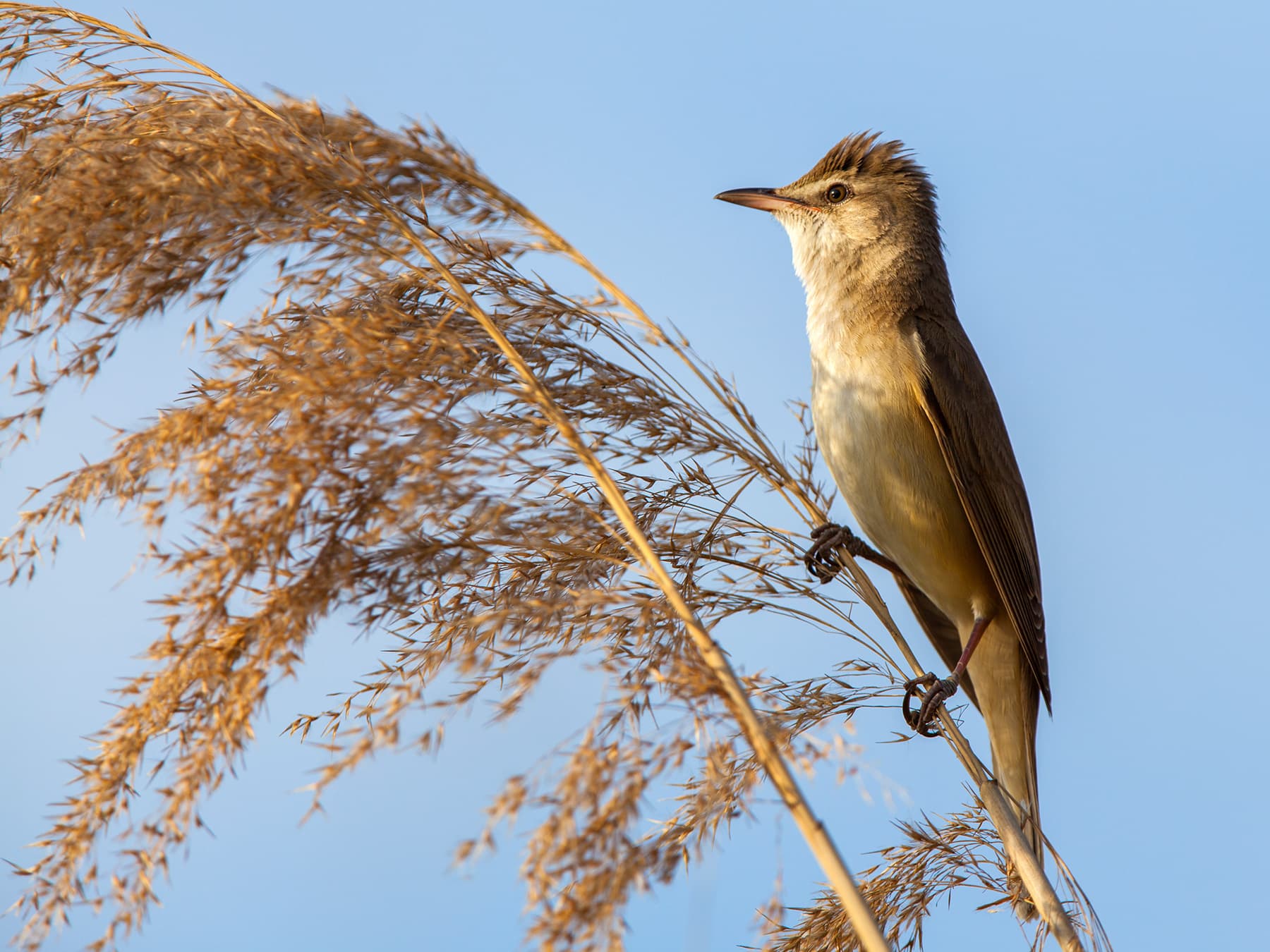
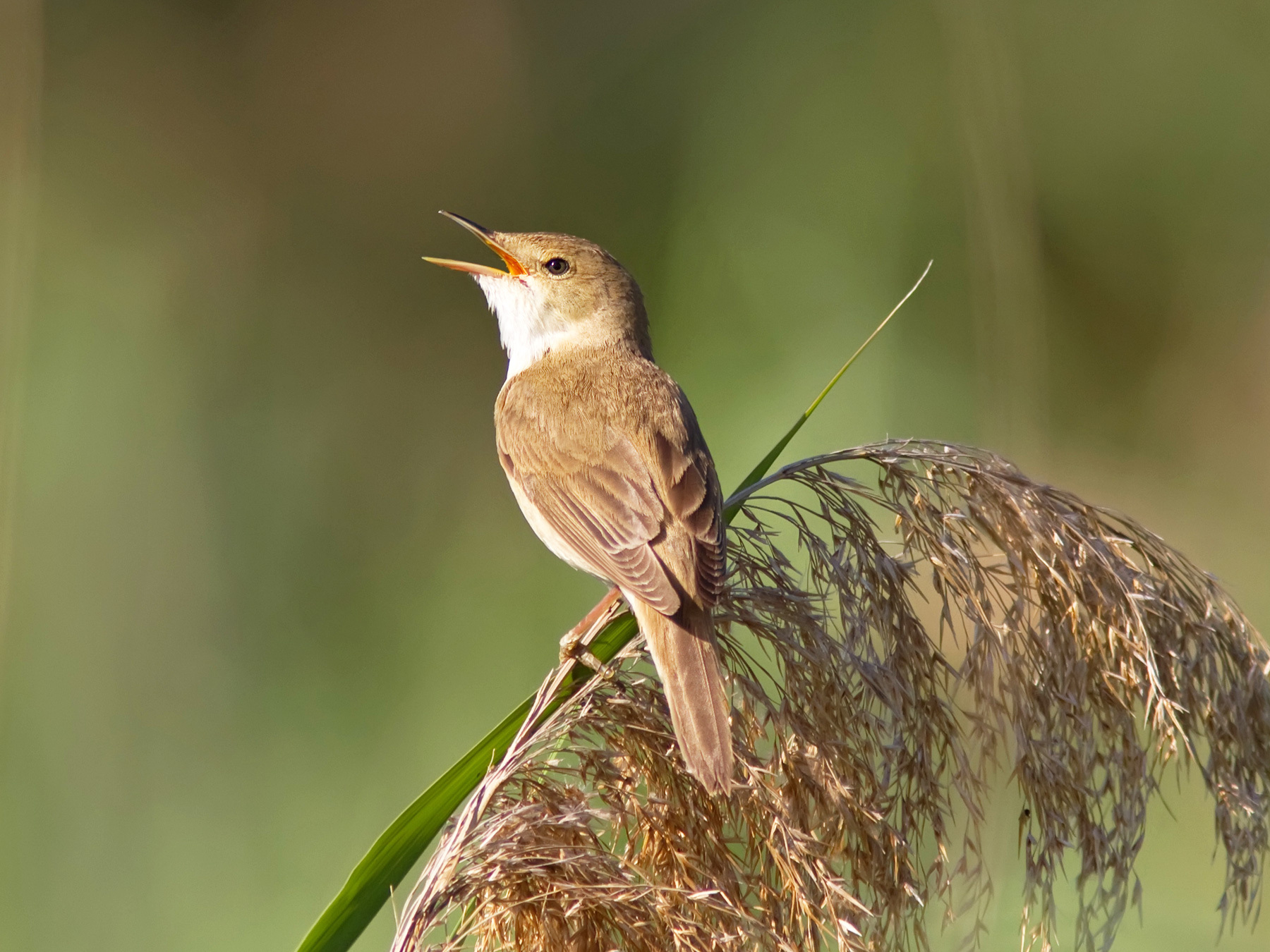
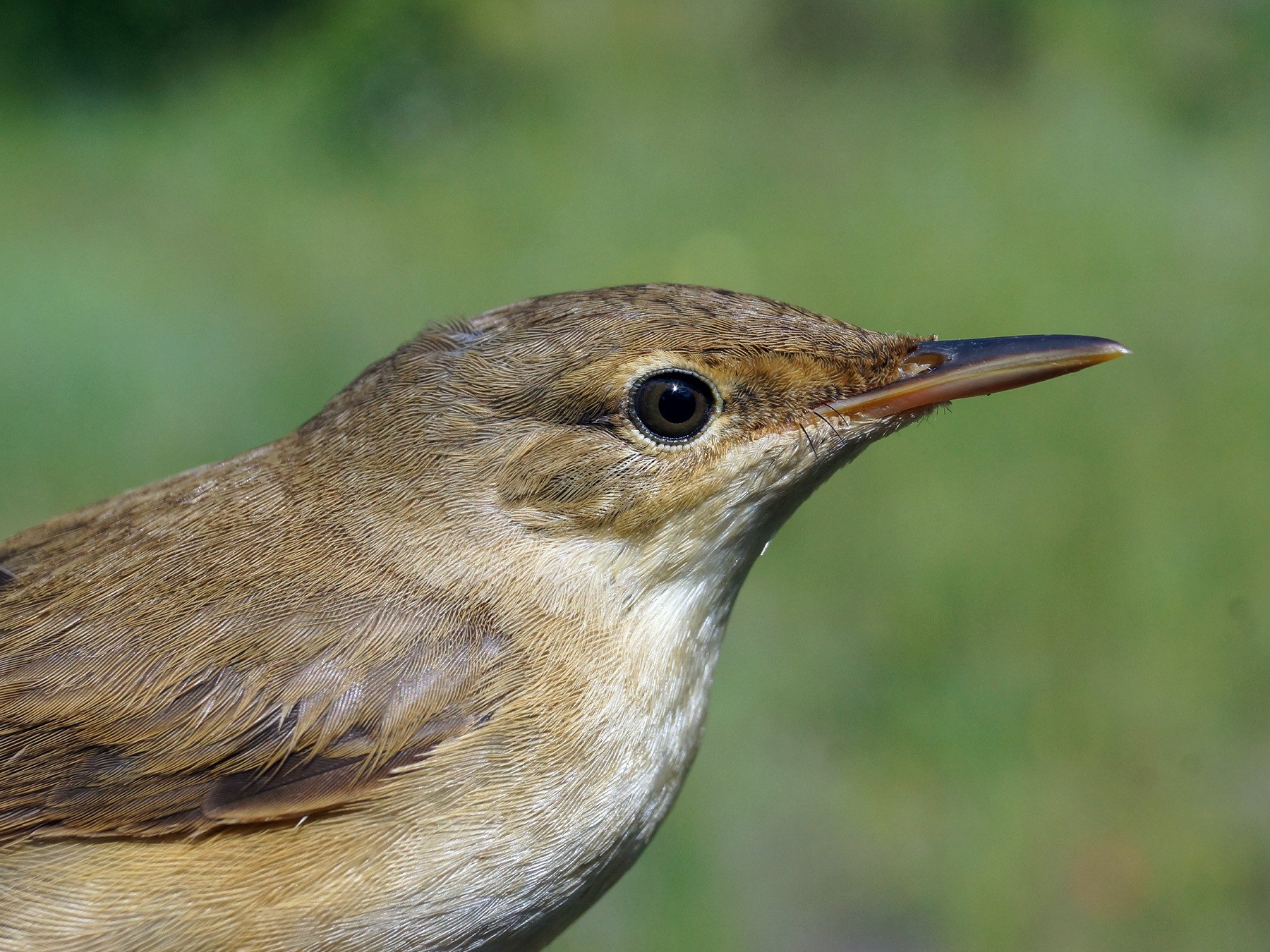
Both male and female reed warblers have sandy-brown upperparts, a light buff lower breast and belly, and a whitish chin and throat. Facial markings are subtle, with a pale eyestripe sometimes visible, and a faint whitish eye ring.
The bill is brownish-grey and narrow: well-suited for their seed-based diet. Their legs are dark grey, which helps to distinguish them from the similar marsh warbler, which has flesh-coloured legs.
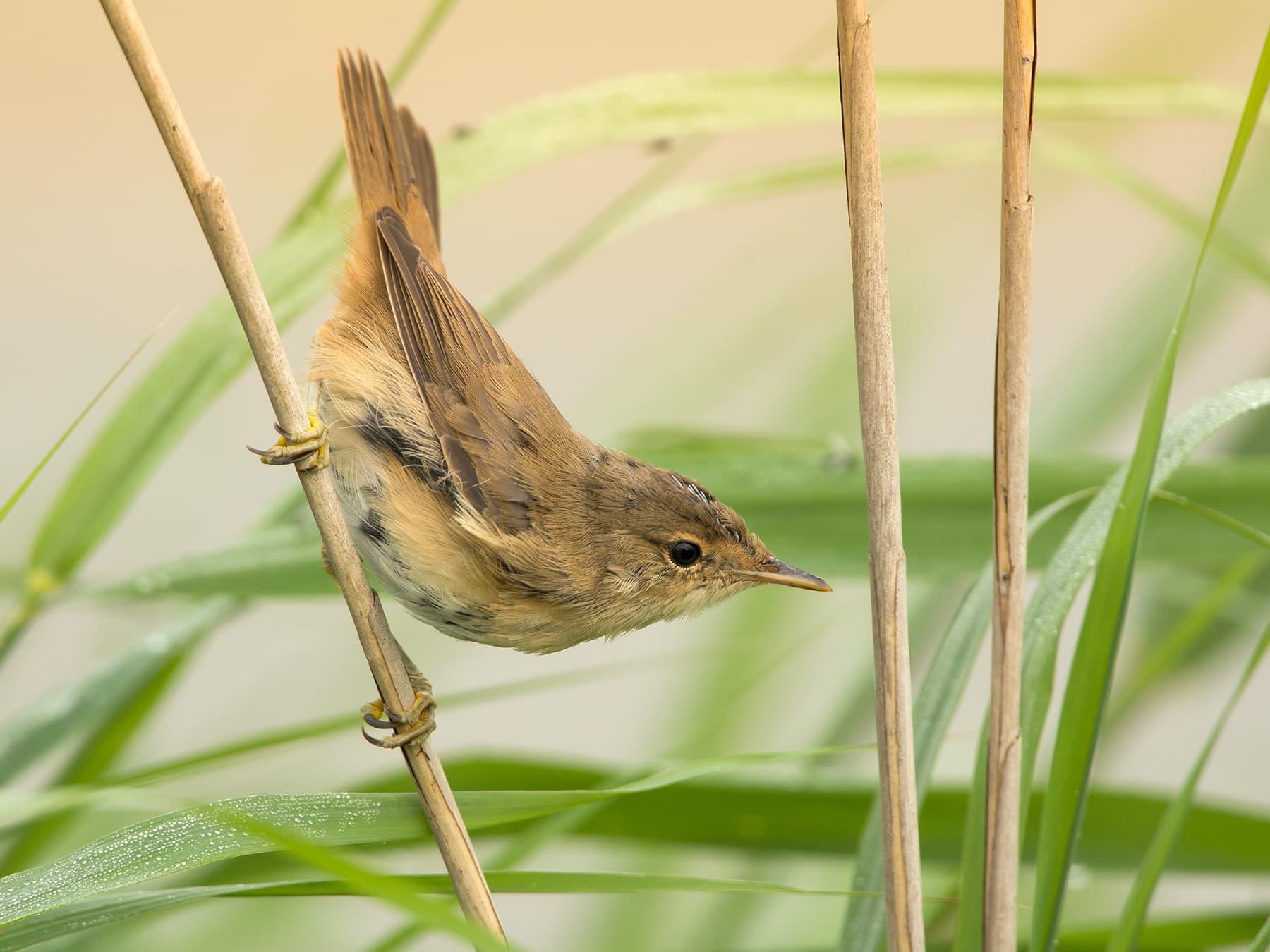
From a distance, juvenile reed warblers are similar to adults, but on closer inspection, young birds can be told apart by their warmer brown plumage and more intense buff colouring on their underparts and flanks.
How big are Reed Warblers?
Reed warblers are small warblers, roughly the same size as a robin or a house sparrow, but with a slimmer shape. There is no size difference between males and females.
- Length: 13 cm to 14 cm (5.1 in to 5.5 in)
- Wingspan: 17 cm to 21 cm (6.7 in to 8.3 in)
- Weight: 10 g to 15 g (0.4 oz to 0.5 oz)
Its size
Adults- Length
- 12.5–14 cm
- Wingspan
- 17–21 cm
- Weight
- 10–15 g
Its song and calls
What sound does a Reed Warbler make?
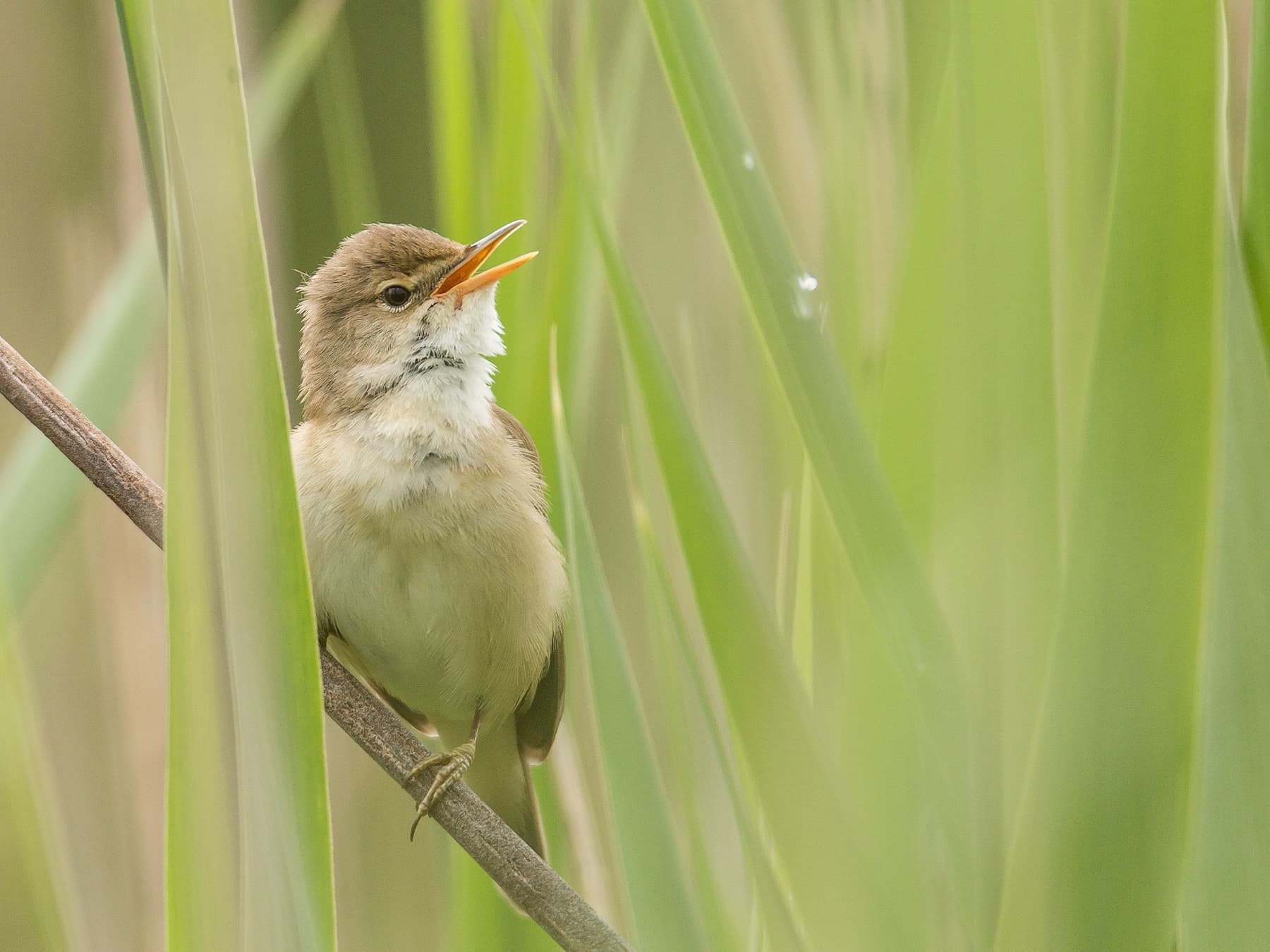
A reed warbler’s song is often a more accurate way of verifying their identity than relying on a visual ID, as they sing from deep inside reedbeds and are extremely hard to spot.
Their song is rhythmic and flowing and consists of alternating chattering and grating phrases, which are then repeated. Some mimicry of other species and sounds may also be heard. In alarm or distress, a sharp ‘tsche’ call is uttered.
- Song0:00 / 1:10
Recorded in Hauts-de-France, France · May 2025
- Call0:00 / 0:21
Recorded in Normandy, France · July 2026
When and where to see it
OctoberMostly absent
Most recorded in October
- 1. Cork0.16%
- 2. Cornwall0.11%
- 3. Pembrokeshire0.10%
- 4. Orkney Islandsunder 0.1%
- 5. Shetland Islandsunder 0.1%
Each dot is a county, state or province: the bigger and darker, the larger the bird’s share of that place’s bird records that month. Grey dots: no regular records. The ringed point is the centre of the bird’s records this month; the arrow shows how it moved since last month, and the dashed loop its path through the year. “Arrivals” colours places where it becomes regular this month (orange) or is in its last regular month (grey). GBIF eBird Observation Dataset, 2019–2024. Map data: Natural Earth, US Census Bureau; place centres © OpenStreetMap contributors.
In your area
See when the Common Reed-warbler is recorded in your county, state or province.
How often the Common Reed-warbler turns up in the UK and Ireland through the year, from birdwatchers' records.
United Kingdom
Summer visitor · regularly Apr–Sep · most records in May
Ireland
Summer visitor · regularly Apr–Oct · most records in May
Show as a table
| Month | United Kingdom | Ireland |
|---|---|---|
| January | – | – |
| February | – | – |
| March | <0.001% | – |
| April | 0.32% (regular) | 0.10% (regular) |
| May | 0.79% (regular) | 0.22% (regular) |
| June | 0.74% (regular) | 0.18% (regular) |
| July | 0.67% (regular) | 0.096% (regular) |
| August | 0.41% (regular) | 0.039% (regular) |
| September | 0.16% (regular) | 0.021% (regular) |
| October | 0.020% | 0.024% (regular) |
| November | 0.001% | – |
| December | – | – |
Recorded regularly in
Worldwide: recorded regularly in 92 countries
Countries where it was recorded in at least 3 of the 6 years 2019–2024. Linked countries have their own bird list.
Europe (44)
- Åland Islands
- Albania
- Austria
- Belarus
- Belgium
- Bosnia & Herzegovina
- Bulgaria
- Croatia
- Czechia
- Denmark
- Estonia
- Finland
- France
- Germany
- Gibraltar
- Greece
- Guernsey
- Hungary
- Ireland
- Isle of Man
- Italy
- Jersey
- Kosovo
- Latvia
- Lithuania
- Luxembourg
- Malta
- Moldova
- Montenegro
- Netherlands
- North Macedonia
- Norway
- Poland
- Portugal
- Romania
- Russia
- Serbia
- Slovakia
- Slovenia
- Spain
- Sweden
- Switzerland
- Ukraine
- United Kingdom
Africa (28)
Asia (20)
- Armenia
- Azerbaijan
- China
- Cyprus
- Georgia
- Iran
- Iraq
- Israel
- Jordan
- Kazakhstan
- Kuwait
- Kyrgyzstan
- Lebanon
- Oman
- Palestinian Territories
- Qatar
- Saudi Arabia
- Turkey
- United Arab Emirates
- Uzbekistan
Data: EOD – eBird Observation Dataset (Cornell Lab of Ornithology), accessed via GBIF.org, CC BY 4.0. Records from 2019–2024, aggregated and filtered by Birdfact. How these lists are made
What is the habitat of a Reed Warbler?
Waterside reedbed environments are required for breeding and are mostly found around the fringes of lakes and ponds, on riverbanks and in ditches. In certain parts of eastern and southern Africa, nests may be built in mangroves.
In winter, reedbeds are not as vital, and reed warblers can be frequently found on scrubland and thickets of papyrus, grass, and bamboo, as well as in mangrove forests.
What is the range of a Reed Warbler?
Reed warblers are found across Europe, from the UK and Scandinavia in the north, as far south as the Mediterranean. Their range extends to North Africa, where a few coastal locations in Morocco, Algeria, and Tunisia have small year-round populations. In the east, breeding grounds reach Central Asia, with Russia, Kazakhstan, and parts of Iran, Turkmenistan and Uzbekistan.
Across much of North Africa, the Middle East, and southern Europe, reed warblers are seen in migration passage only as they travel to and from their wintering grounds in sub-Saharan Africa. Some migrants reach as far south as South Africa, where there are also populations of resident reed warblers.
Where do Reed Warblers live?
Europe’s reed warblers make up around 35 percent of the global population. The largest numbers of these are believed to be in Romania, Sweden and Germany.
How rare are Reed Warblers?
While reed warblers are fairly widespread, sightings are quite uncommon due to their preference to remain hidden out of sight in dense reedbeds. There are 130,000 breeding territories in the UK and a total of between 2.12 and 3.88 million pairs in Europe.
Where can you see Reed Warblers in the UK?
Any reedbed environment, even those with just a few simple strands of reeds and rushes, attracts reed warblers in spring and summer, and they can be found in the largest concentrations across southern England, particularly East Anglia and along the south coast. In recent years, breeding has spread to parts of Scotland.
Migration
Do Reed Warblers migrate?
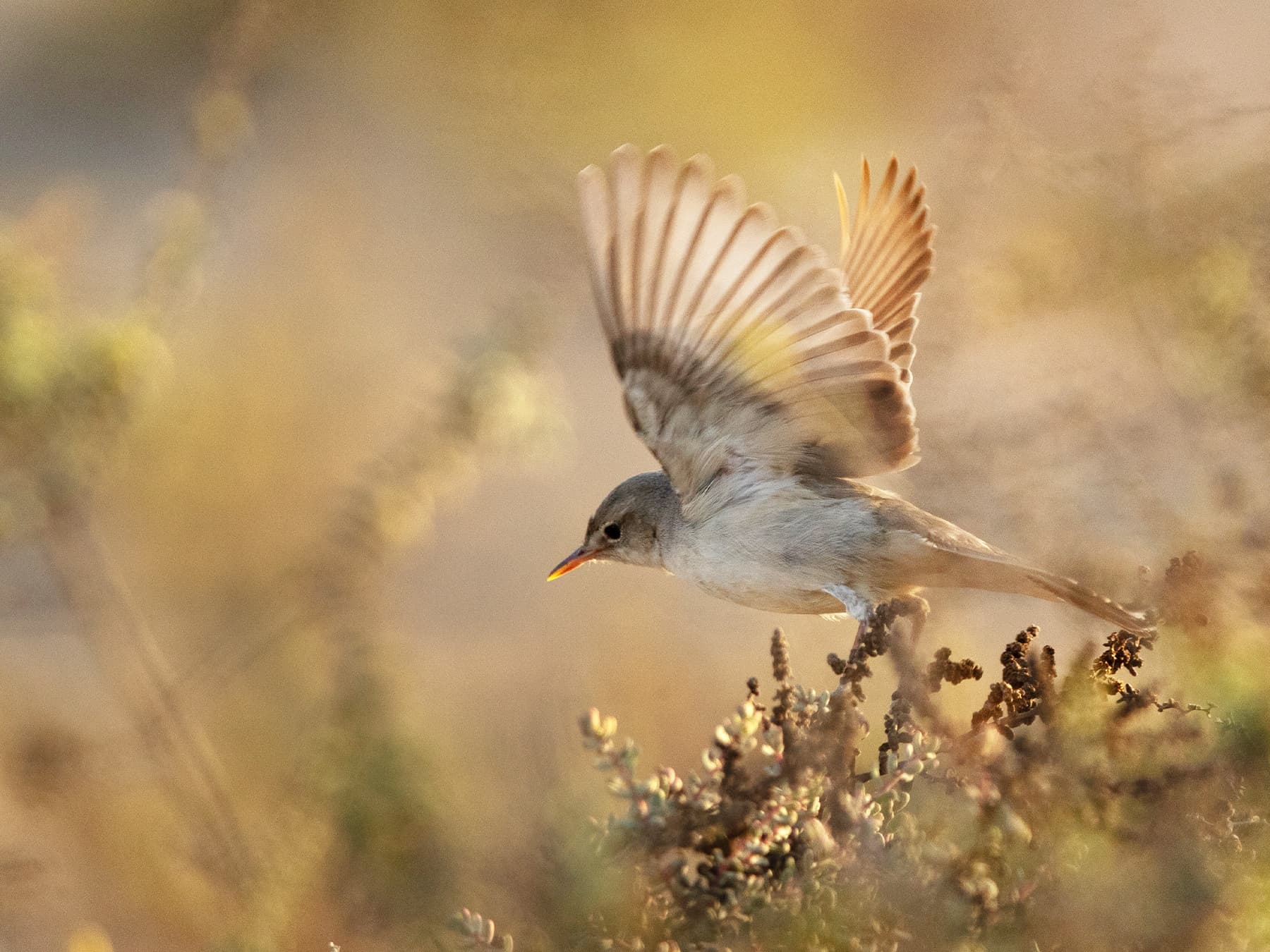
Reed warblers that breed in Europe are migratory, heading south to central and southern Africa once they have finished raising their young on wetlands across Europe and Central Asia. Sub-Saharan Africa is their winter destination, where they overlap with a subpopulation of African reed warblers that are year-round residents in the south of the continent.
Are Reed Warblers native to the UK?
Reed warblers are breeding visitors to the UK, arriving in April each year and leaving later in the summer, with all birds having departed by the end of September. No reed warblers are resident in Britain all year round, spending colder months in Africa, south of the Sahara.
Tips for seeing it
- Listen for their distinctive song in reed beds during spring and summer
- Look for movement in dense vegetation near water bodies
- Observe early morning or late evening when they are most active
- In the UK, visit wetland reserves from April to September for the best chances of spotting them
What it eats
What do Reed Warblers eat?
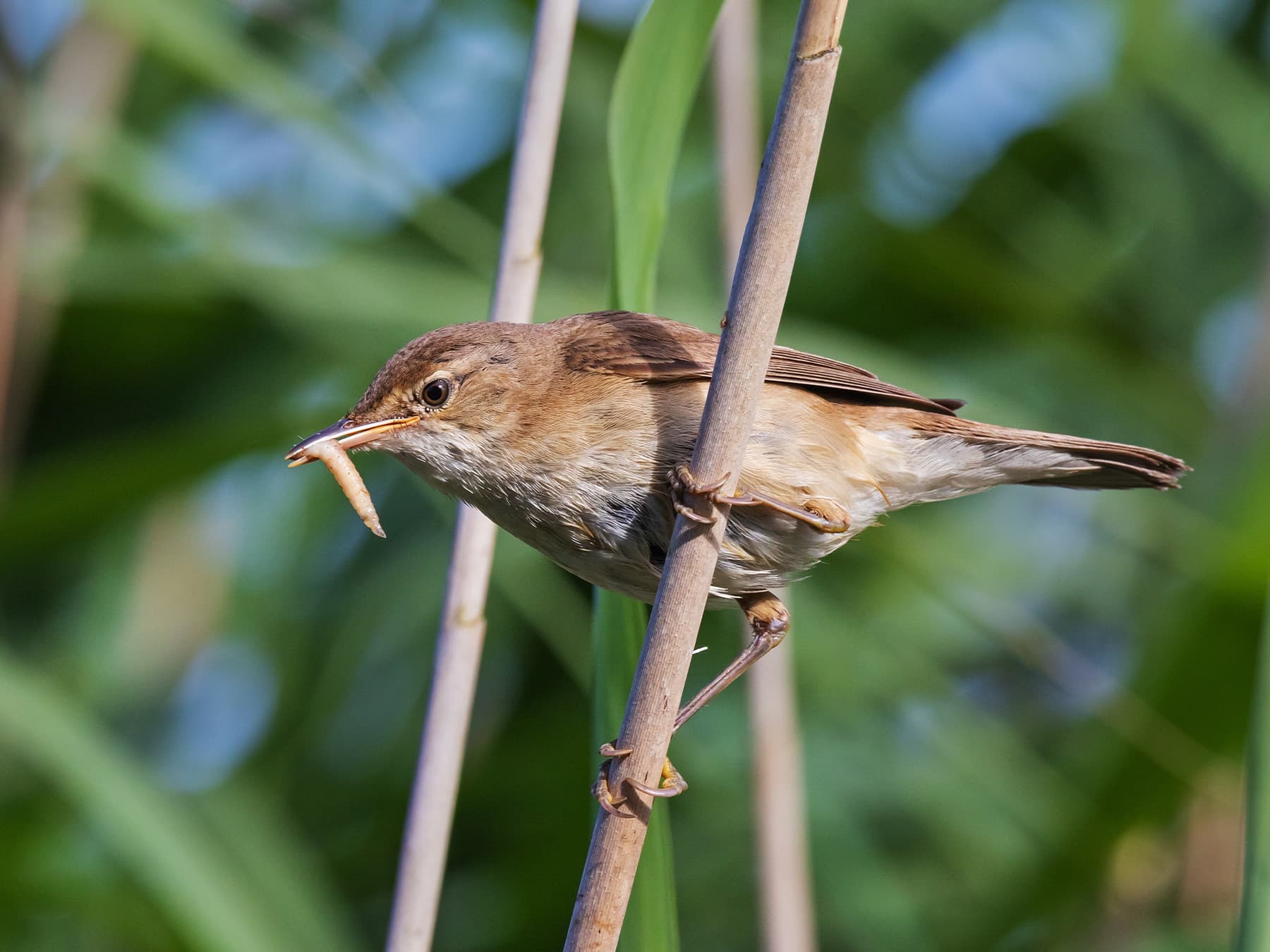
Reed warblers are mainly insectivorous, feeding on small beetles, flies, caterpillars, moths, and insect larvae. They pick prey off the stems and blades of reeds, and tiny spiders and snails may also be caught. In autumn, their diet may occasionally include berries, including currants, elder, cherry and dogwood. Termites, aphids, and mosquitoes are eaten on wintering grounds.
What do Reed Warbler chicks eat?
Feeding reed warbler chicks is a demanding task, with both parents bringing tiny insects and spiders to the nest several times each hour.
Nesting and breeding
Where do Reed Warblers nest?
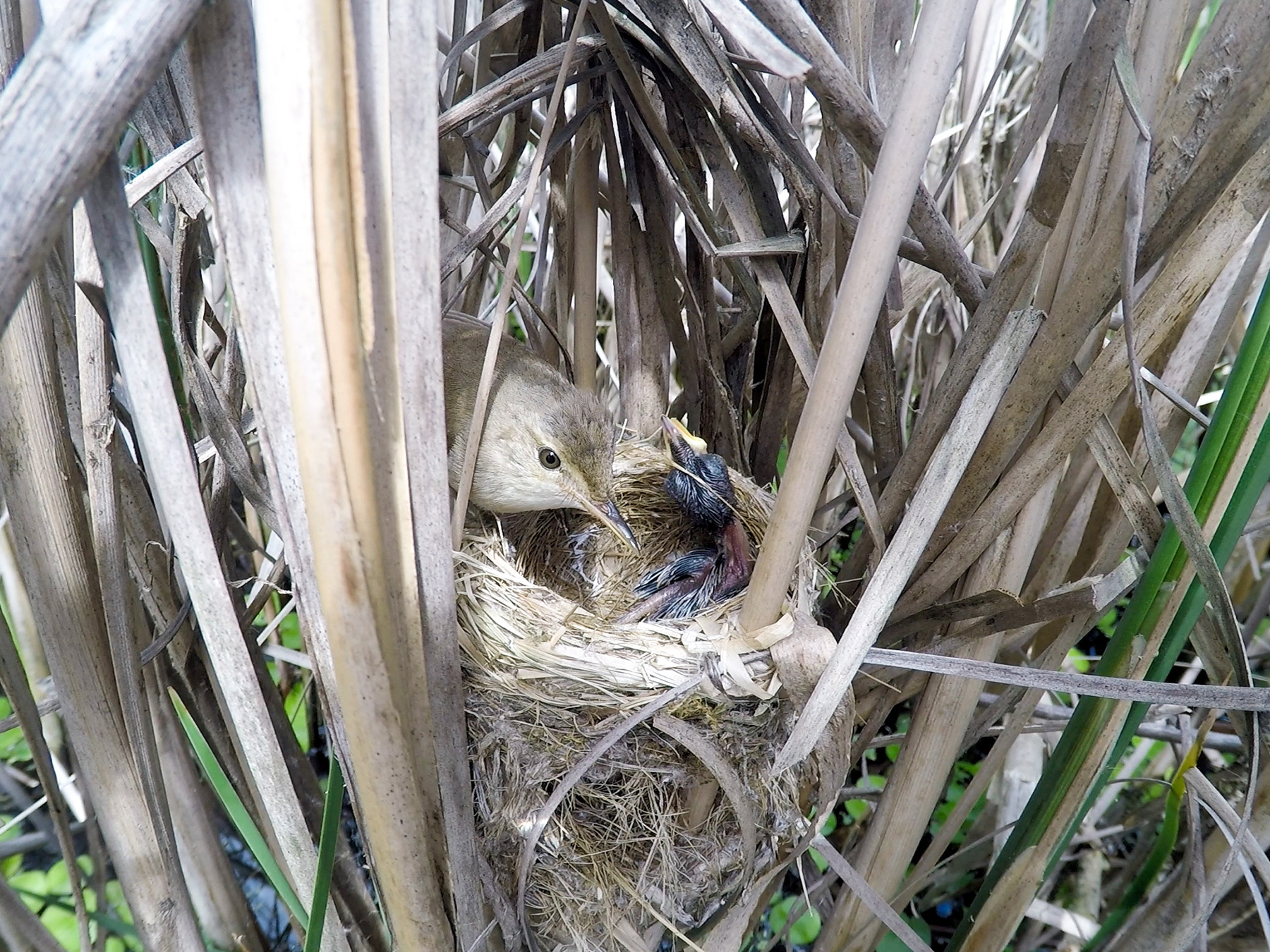
Waterside locations, hidden from sight in dense reedbeds or aquatic grasses, offer ideal spots for nesting reed warblers to build their cup-shaped nests.
Nests, which are cylindrical and neatly woven out of reeds, grasses, leaves, and other plant matter are tethered in place on the stems of reeds, with the female doing most or all of the construction.
When do Reed Warblers nest?
Male reed warblers arrive on breeding grounds ahead of females, from April onwards, and breeding begins in late April or early May. Raising more than one brood in a season is not uncommon, and nesting can last until early August.
Incubation is shared between males and females, and takes 12 days, with young reed warblers fledging at between 11 and 12 days old.
What do Reed Warbler eggs look like?
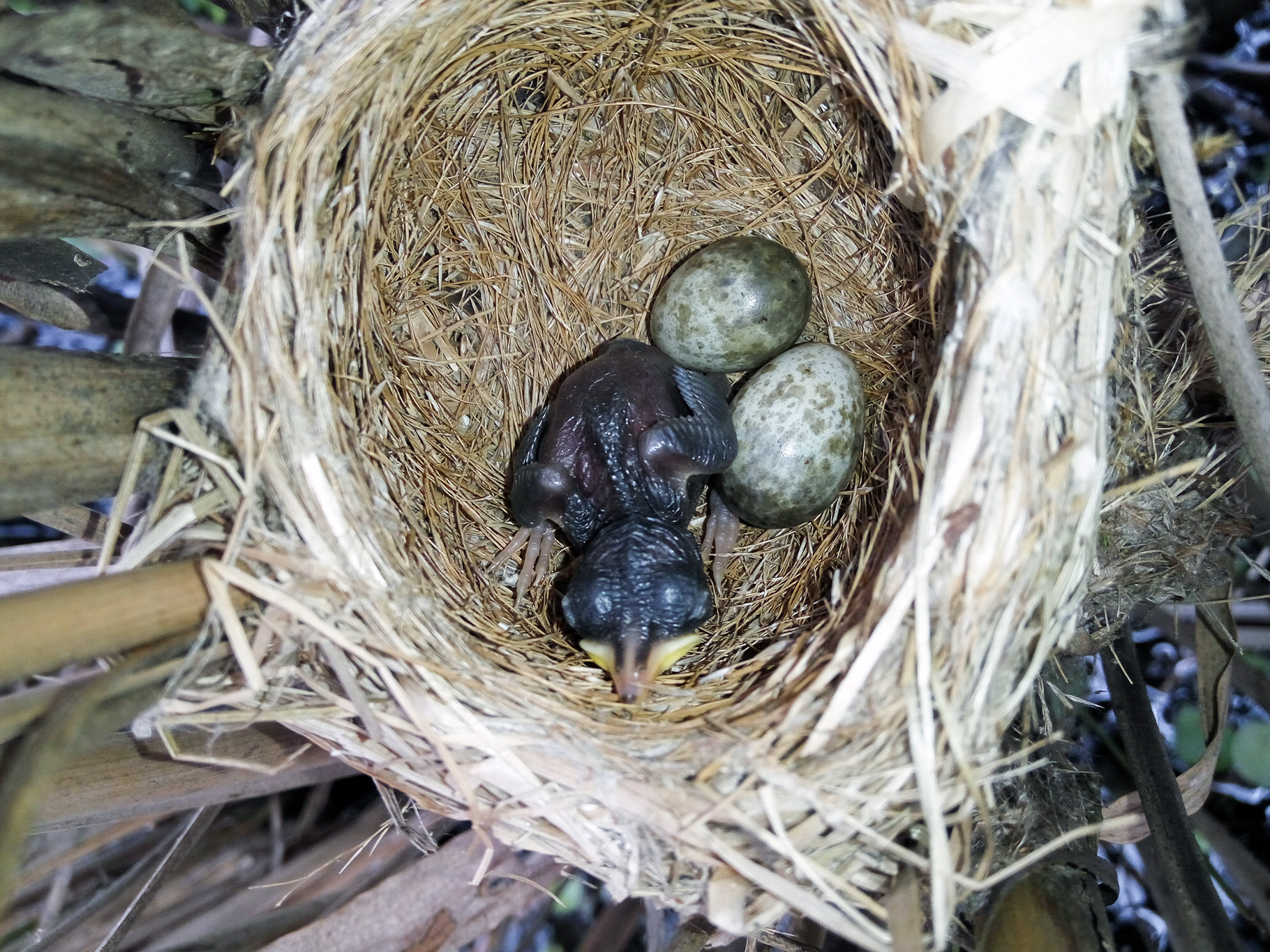
Reed warbler eggs have a pale greenish-white base colour and are marked heavily with dark grey spotting around one end. Four to five eggs are laid, measuring 18 mm by 14 mm (7.1 in by 5.5 in).
Do Reed Warblers mate for life?
Reed warbler pair bonds last for a single breeding season and dissolve once their final brood has fledged. The following year, they usually mate with a different partner.
Behaviour
Are Reed Warblers aggressive?
While reed warblers are not a particularly aggressive or threatening species, they do exhibit territorial behaviour during the breeding season.
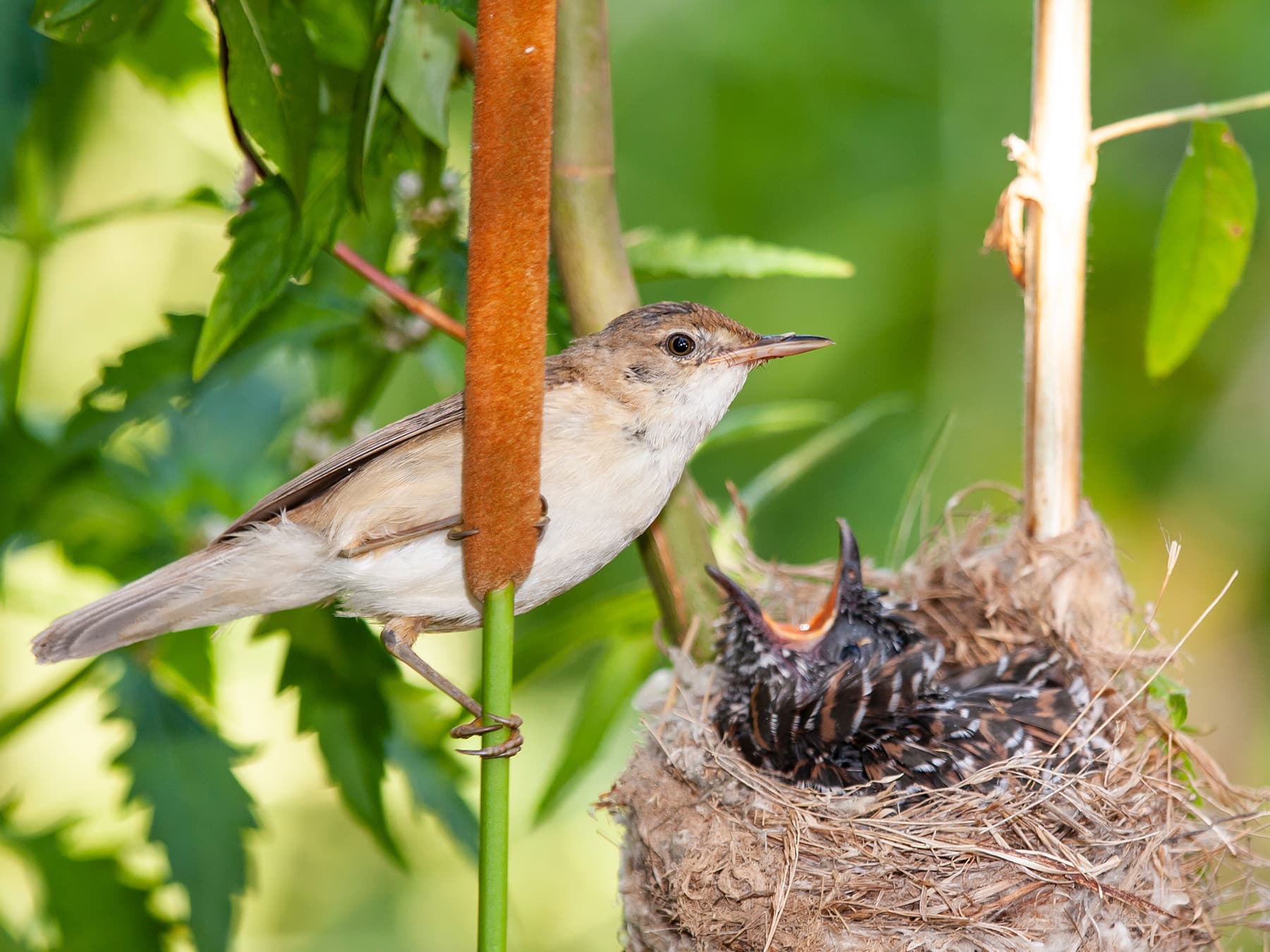
Their nests are frequently used as hosts for cuckoos, and reed warblers have a heightened sense of vigilance, warning other nearby reed warblers with a loud and repetitive alarm call when a cuckoo’s presence is detected nearby.
Lifespan and predators
How long do Reed Warblers live?
Two years is the average lifespan for a reed warbler, with first-time breeding at one year old. Occasionally, much older birds may be recorded via ringing schemes, including one individual that reached 12 years and 11 months.
What are the predators of Reed Warblers?
Reed warblers are particularly vulnerable to avian predators that share their habitats, such as little bitterns and grey herons. Cuckoos are also a key factor in brood failures, as they remove reed warblers’ eggs and replace them with their own. Mice and rats may also raid nests for eggs and young nestlings.
Are Reed Warblers protected?
Reed warblers are included in the Wildlife and Countryside Act, 1981, which offers the species protection from being knowingly killed, injured, or taken into captivity. Although no current wider protection of habitats is in place, reed warblers would benefit from conservation measures to preserve wetlands.
Are Reed Warblers endangered?
Overall, the global, European, and UK populations of reed warblers are stable, and they are classified as a species of least concern. In the UK they have Green status on the British Birds of Conservation Concern list and increases have been recorded in recent years, and there are no immediate threats to their long-term future. However, wetland destruction and reclamation of marshlands have impacted some local populations.
Conservation
While the Common Reed-warbler is currently listed as Least Concern, it faces threats from habitat loss due to drainage of wetlands and changes in water management practices.
Climate change may also affect its breeding and wintering grounds, potentially impacting population numbers in the future.
Similar birds
Often mistaken for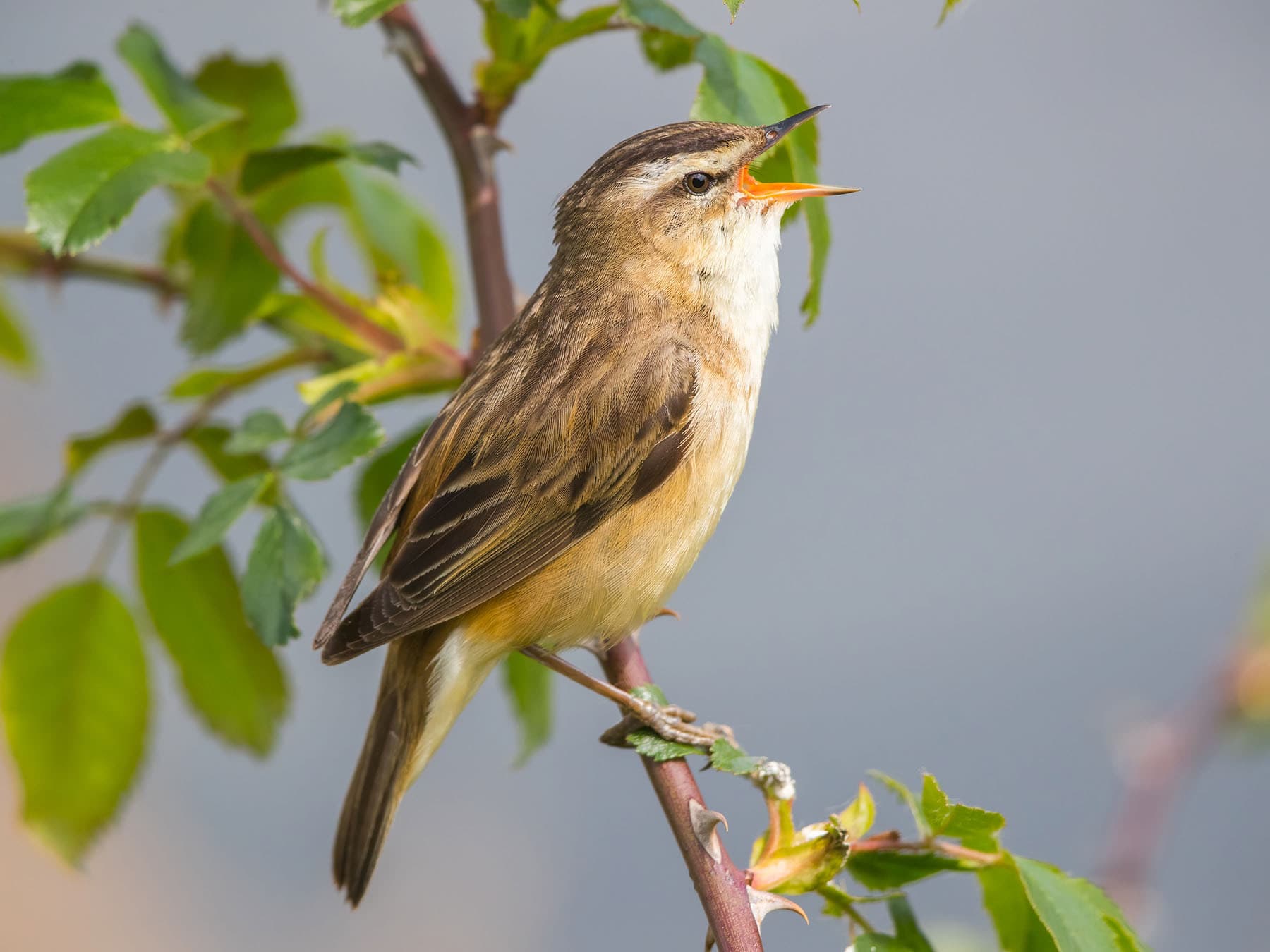
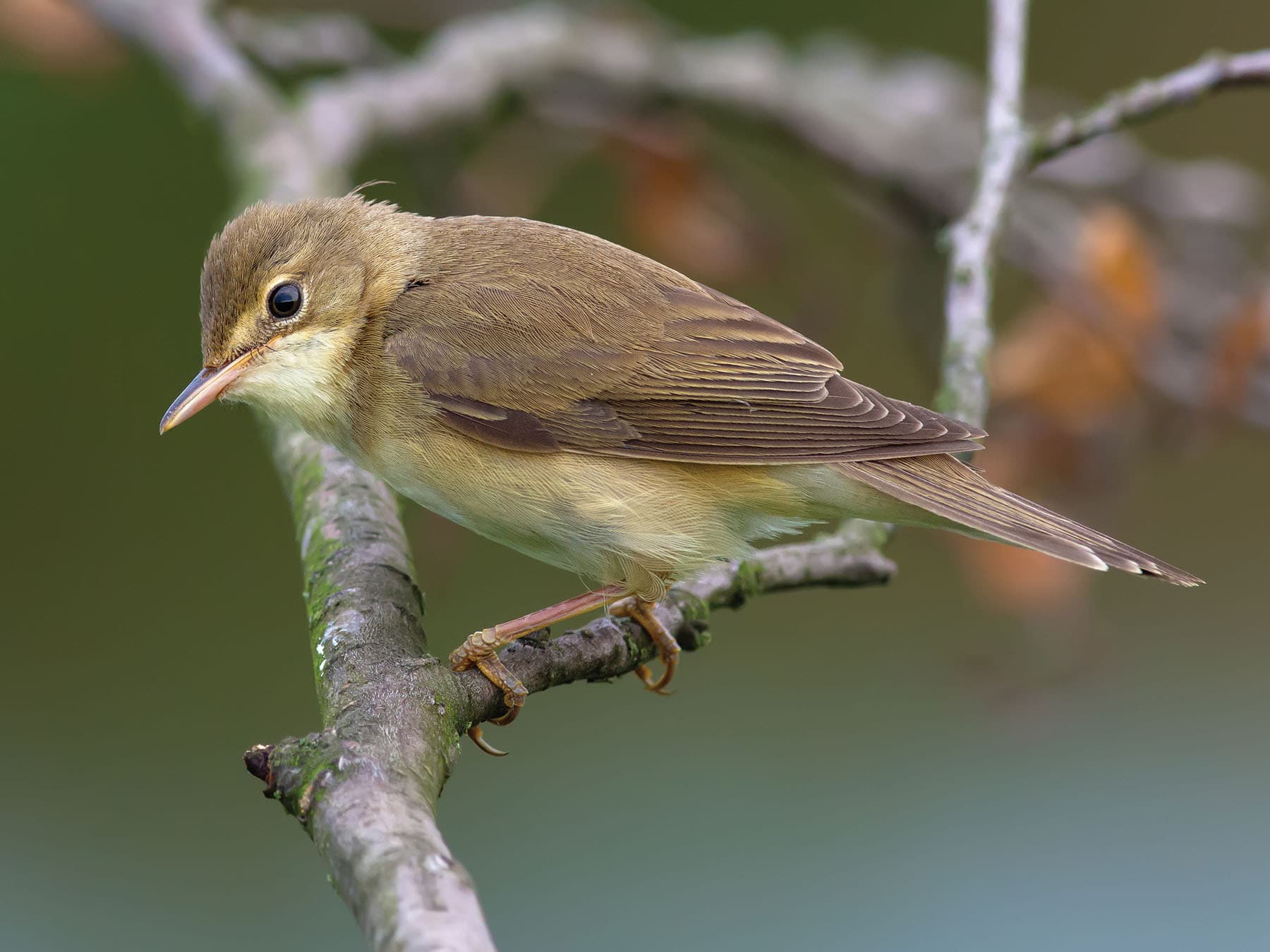
More photos
5 photos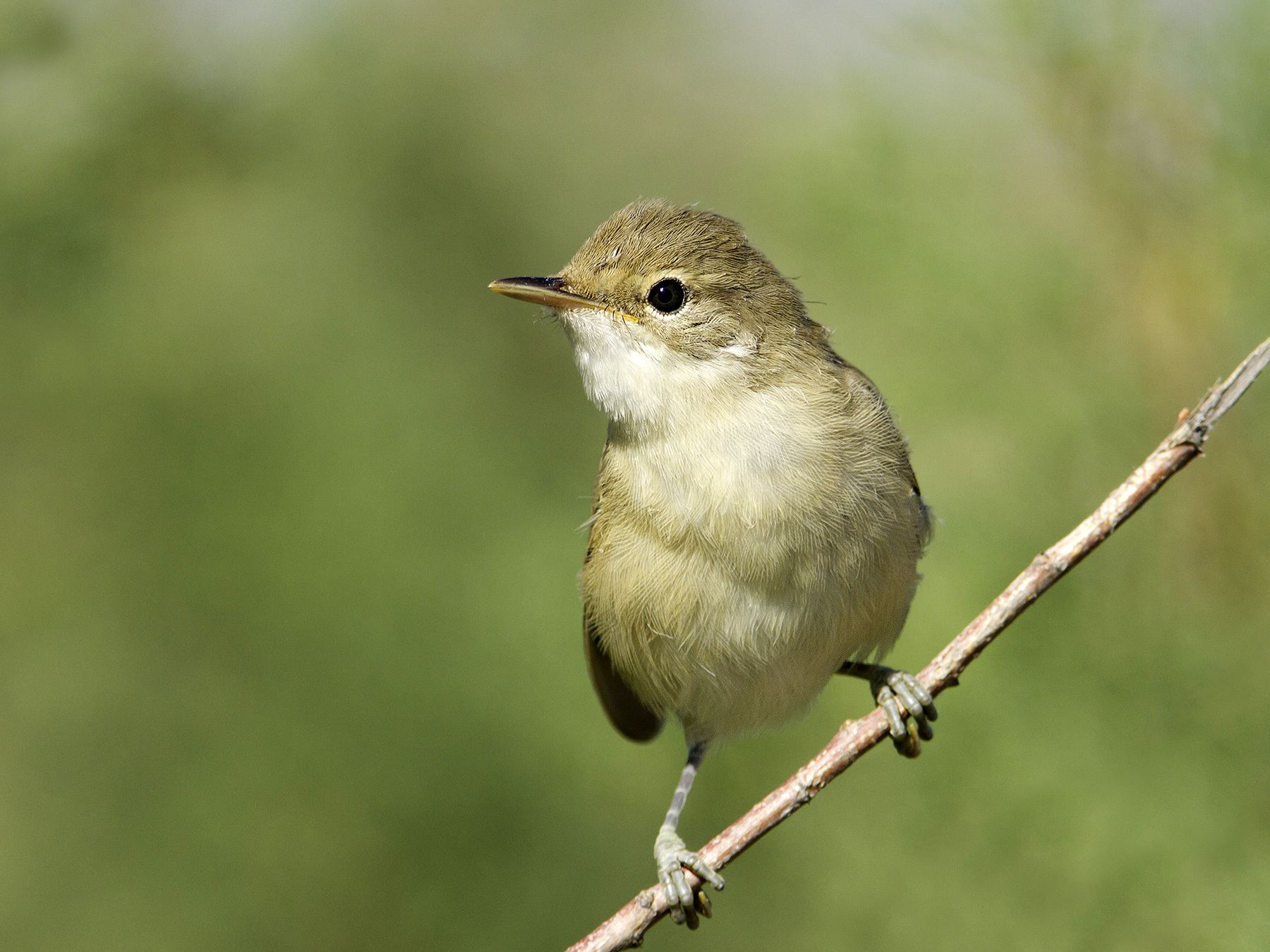
Quick facts
- Length
- 12.5–14 cm
- Wingspan
- 17–21 cm
- Weight
- 10–15 g
- Lifespan
- 2–3 years · oldest recorded 16.9 years
- Family
- Reed Warblers
- Migration
- Long-distance Migrant
- Global status (IUCN)
- Least Concern
- World population
- 12,100,000 - 22,200,000 mature individuals
- Population trend
- Stable
- Also called
- Eurasian Reed-warbler, Common Reed Warbler
- Scientific name
- Acrocephalus scirpaceus
Sources
4- 1BirdLife International. 2019. Acrocephalus scirpaceus (amended version of 2017 assessment). The IUCN Red List of Threatened Species 2019: e.T22714722A155436305. Source (opens in a new tab)
- 2EBCC (2015)
- 3BirdLife International. 2019. Acrocephalus scirpaceus (amended version of 2017 assessment). The IUCN Red List of Threatened Species 2019: e.T22714722A155436305. Source (opens in a new tab)
- 4Fransson et al., EURING list of longevity records for European birds (2010) Source (opens in a new tab)

Checked by
Nathan Cope, founder and editor
Nathan founded Birdfact and leads its writers and contributors in the UK, the US and Canada. He has watched and studied birds for more than ten years, and checks every article and species guide before it’s published.