


Sedge Warbler
European Sedge Warbler · Acrocephalus schoenobaenus
By the Birdfact teamChecked by Nathan Cope
On this page13 sections
How to recognise it
What do Sedge Warblers look like?
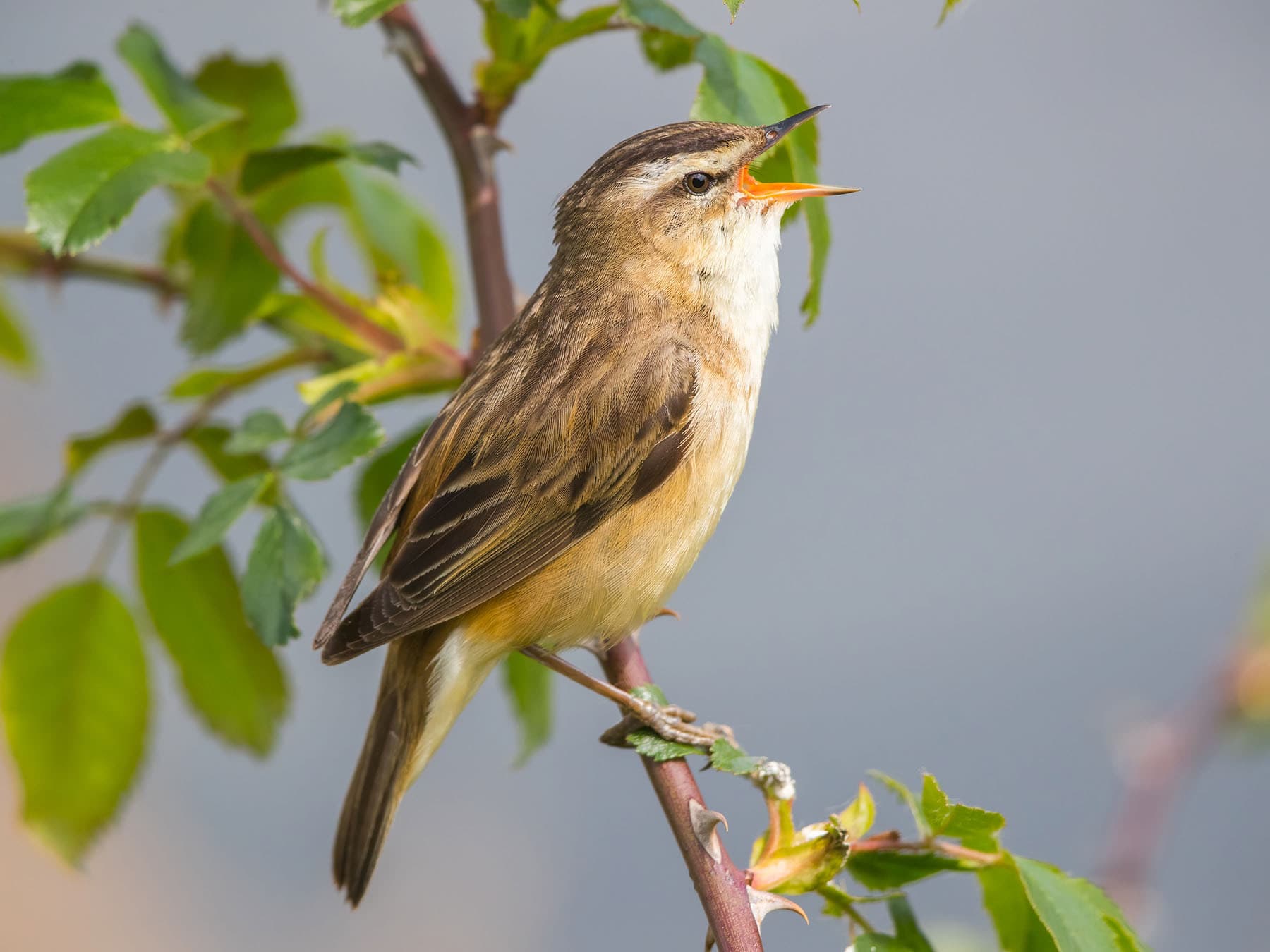
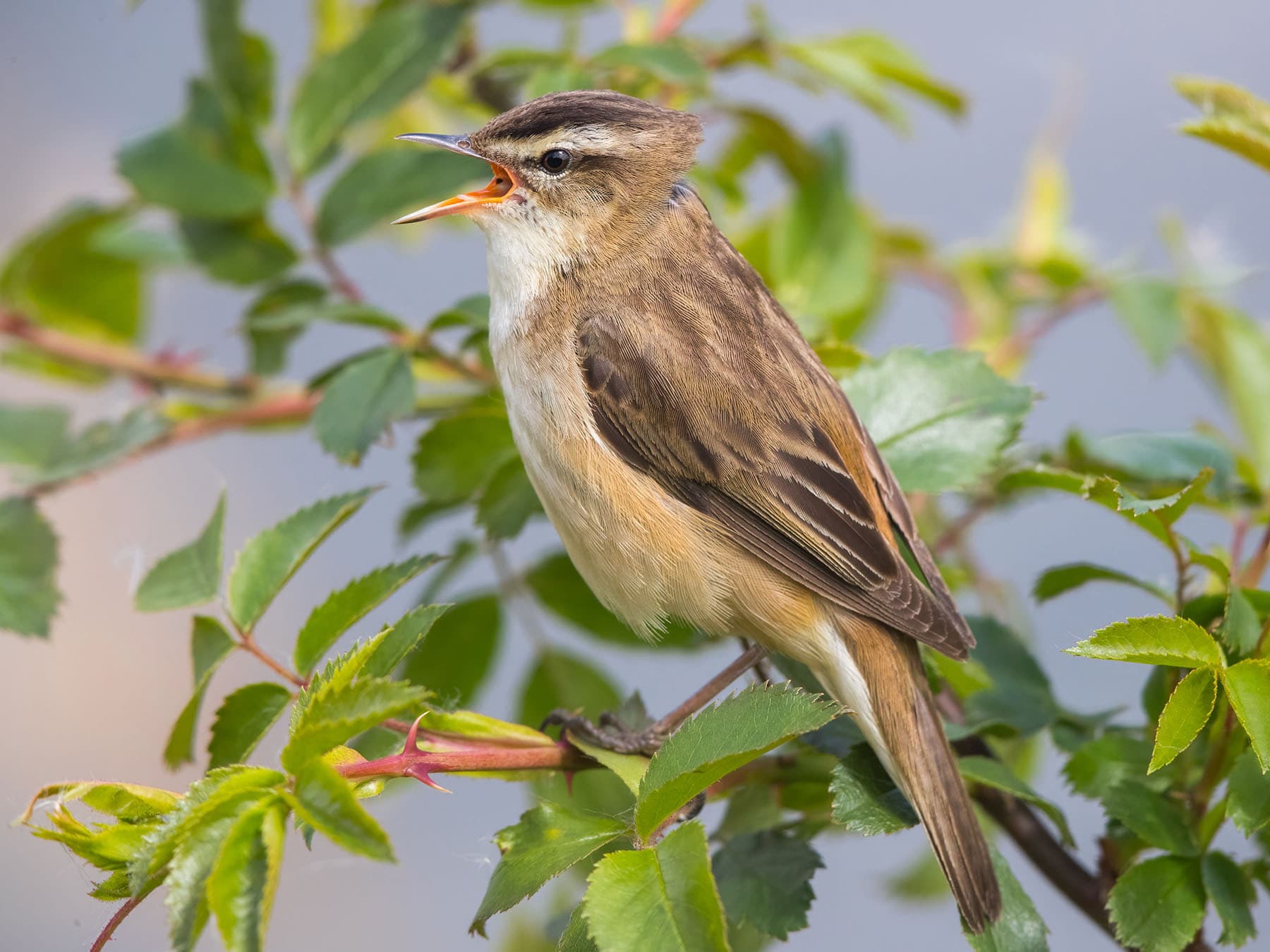
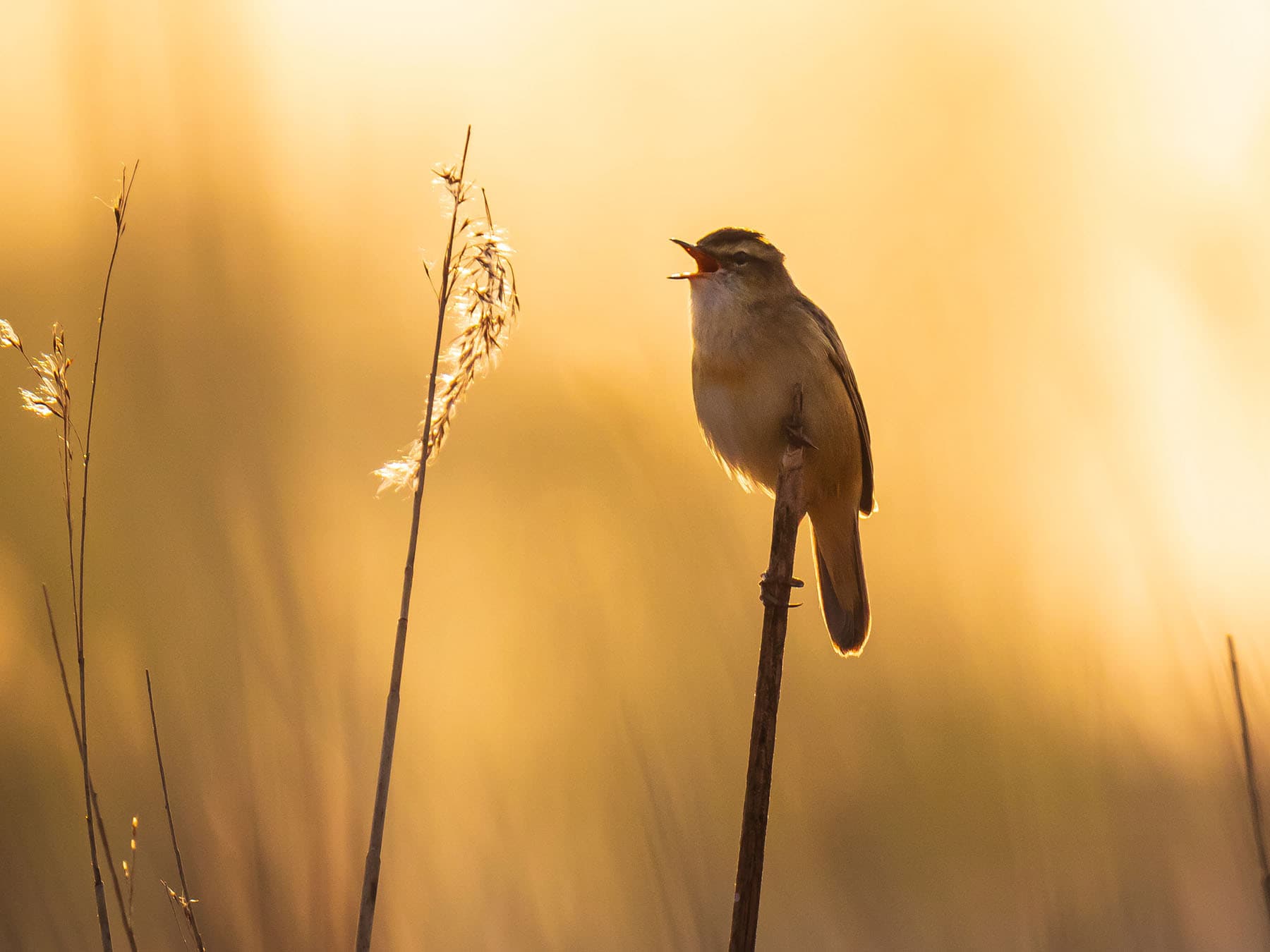
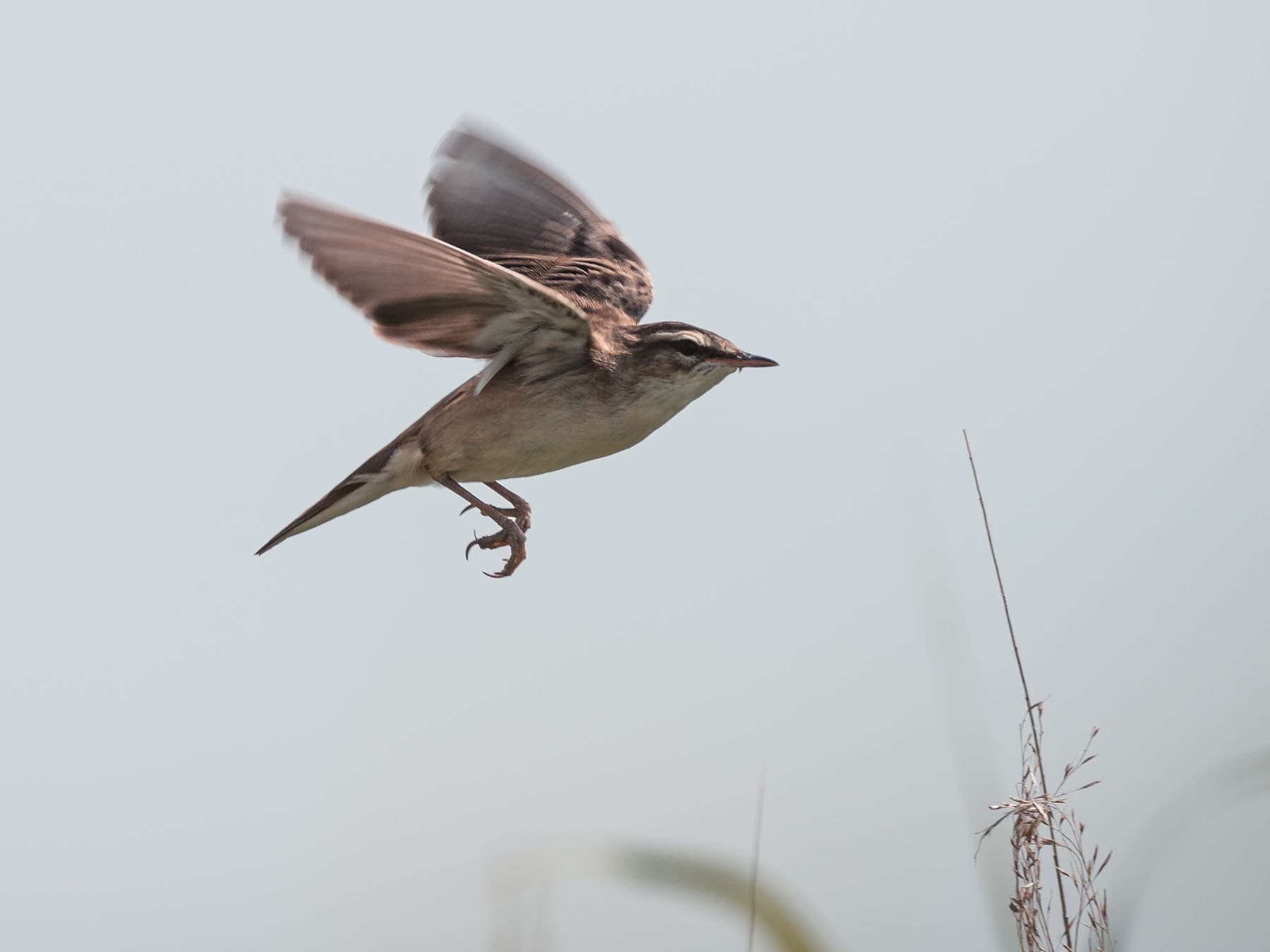
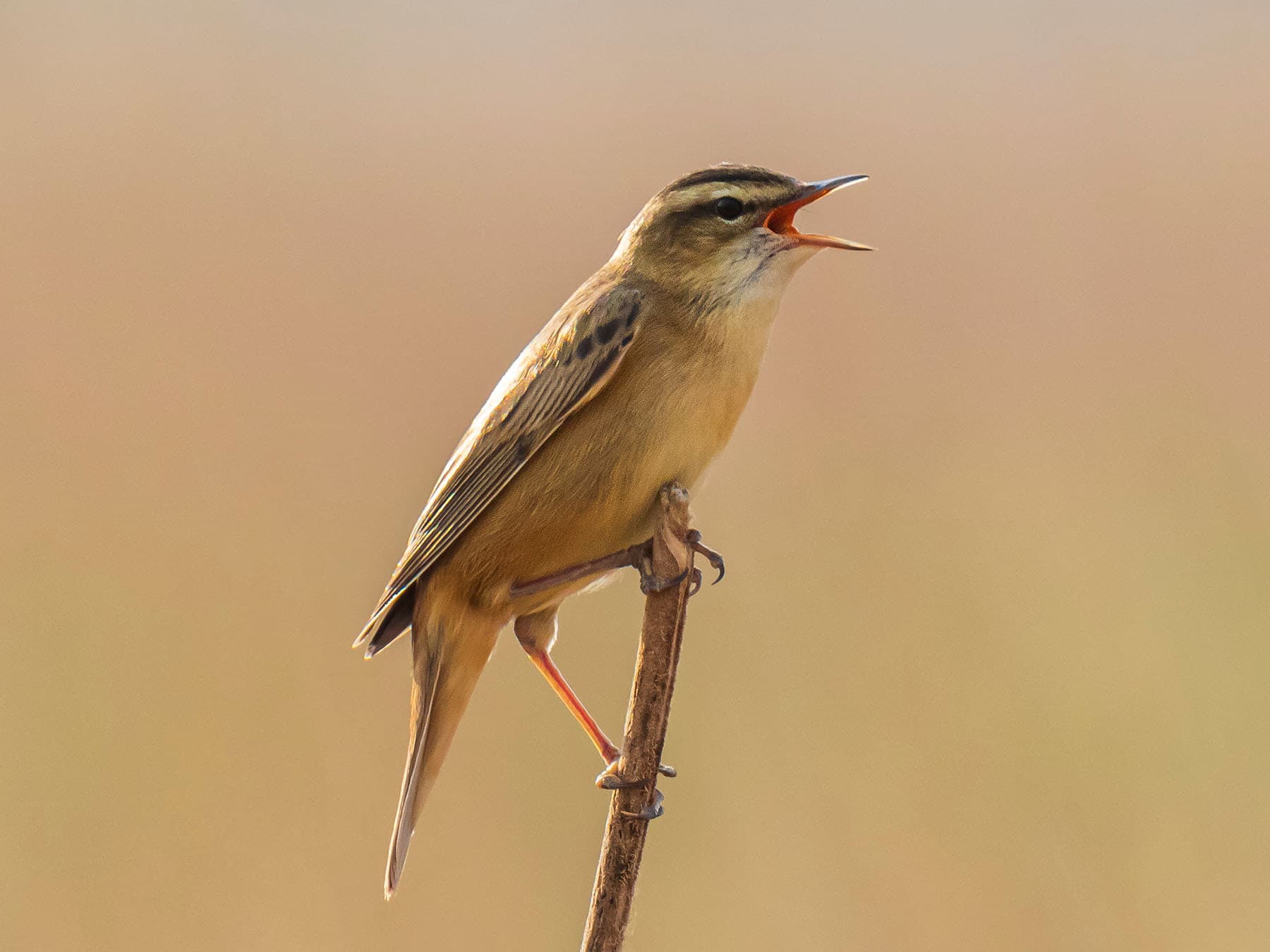
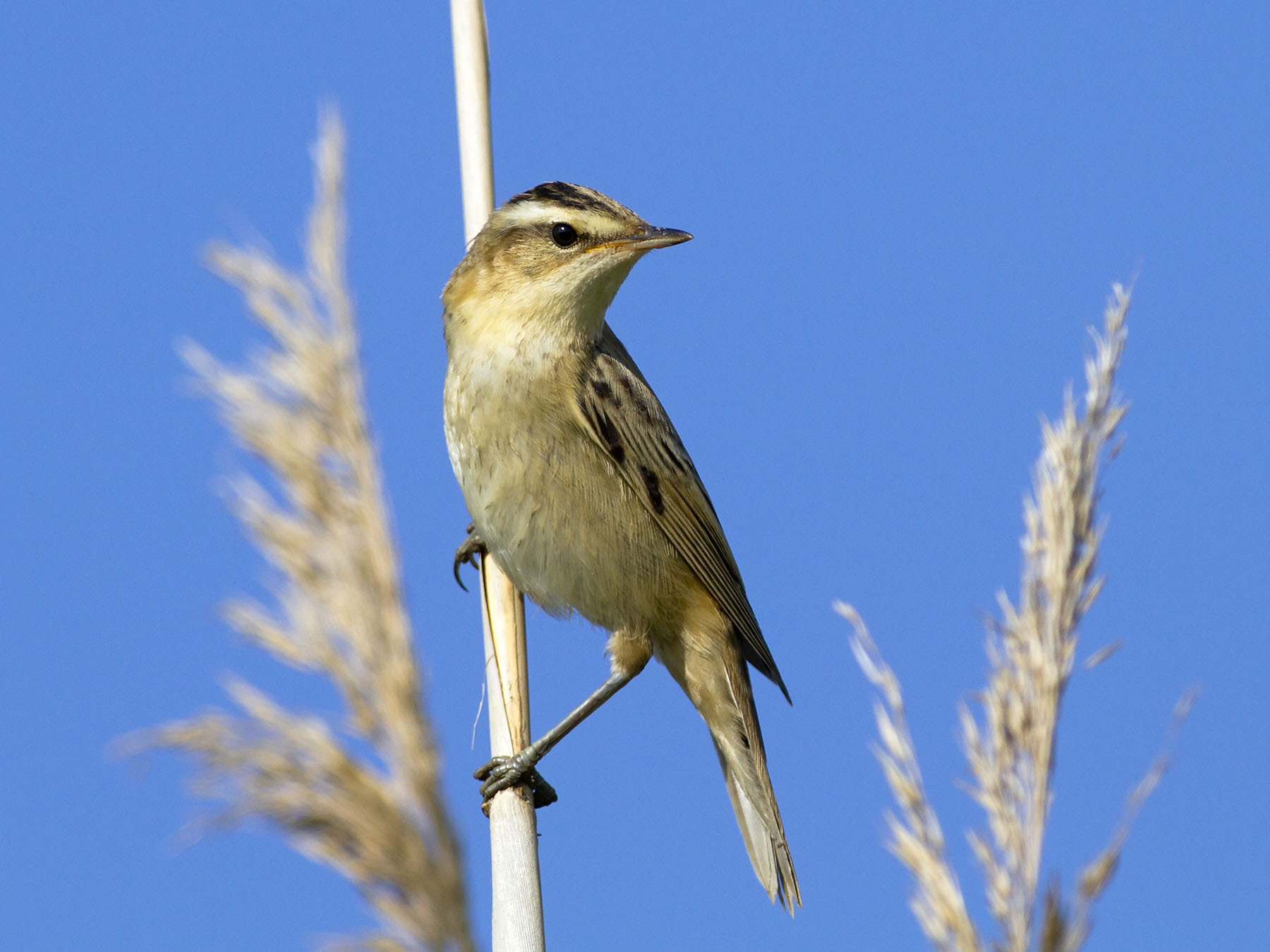
Male and female sedge warblers are identical in appearance. Their backs and wings are streaked dark, and a dull light brown, and their rump is unstreaked and a richer brown.
Sedge warblers have a prominent white eyebrow stripe, and their crown is streaked with black. Beneath their rust-coloured flanks, their underparts are pale, and their legs are brownish-grey.
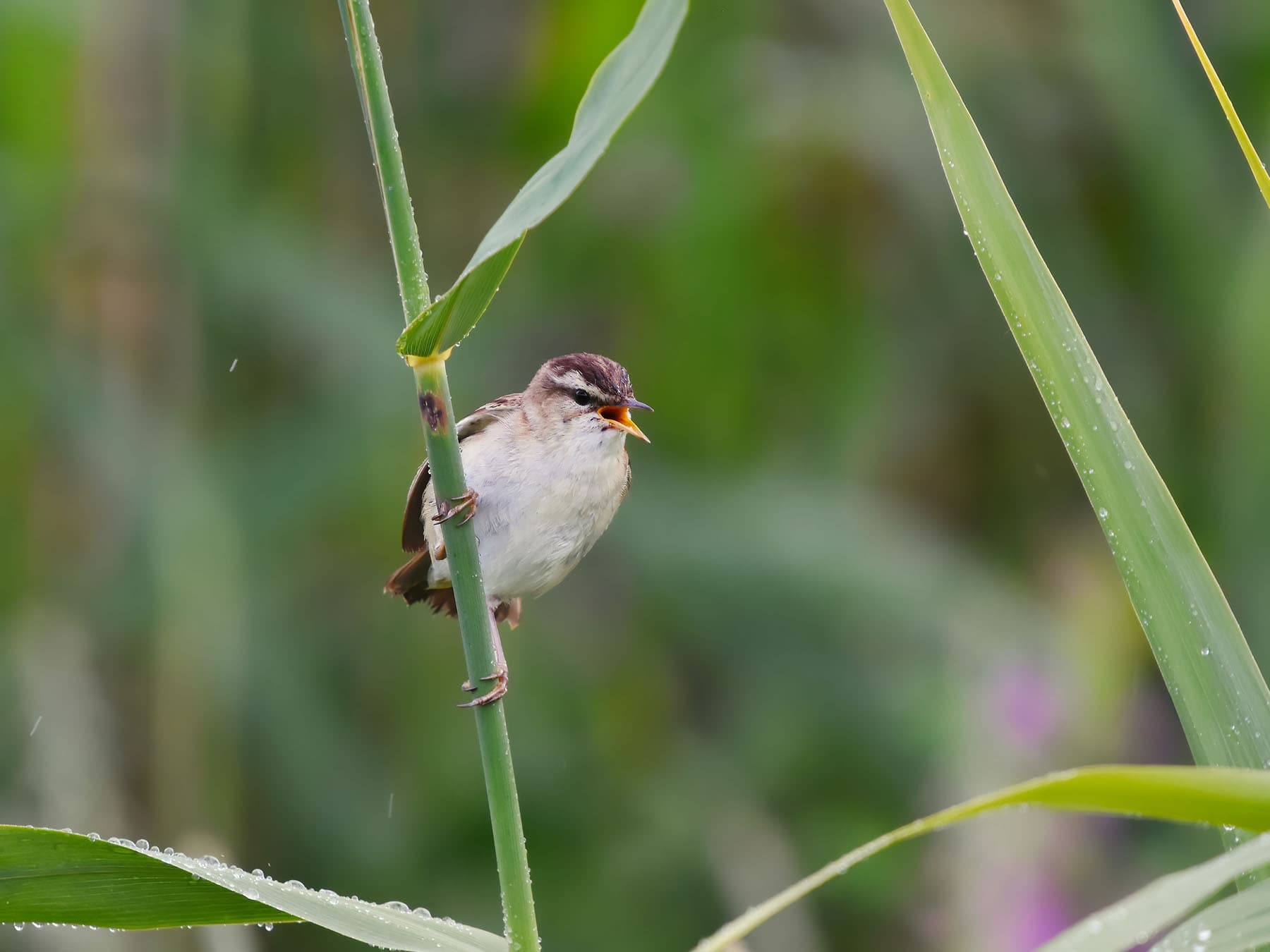
Juvenile sedge warblers have fairly similar markings to adults, but can be accurately distinguished from some distance due to their yellowish colouring, and the presence of a buff-coloured striped along the centre of their crown.
How big are Sedge Warblers?
Male and female sedge warblers are identical in size as well as plumage. They are classed as a medium-sized warbler, and are larger than chiffchaffs and willow warblers, and the same size as reed warblers.
- Length: 13 cm (5.1 in)
- Wingspan: 17 cm to 21 cm (6.7 in to 8.3 in)
- Weight: 10 g to 13 g (0.4 oz to 0.5 oz)
Its size
Adults- Length
- 11.5–13 cm
- Wingspan
- 17–21 cm
- Weight
- 10–15 g
Its song and calls
What sound does a Sedge Warbler make?
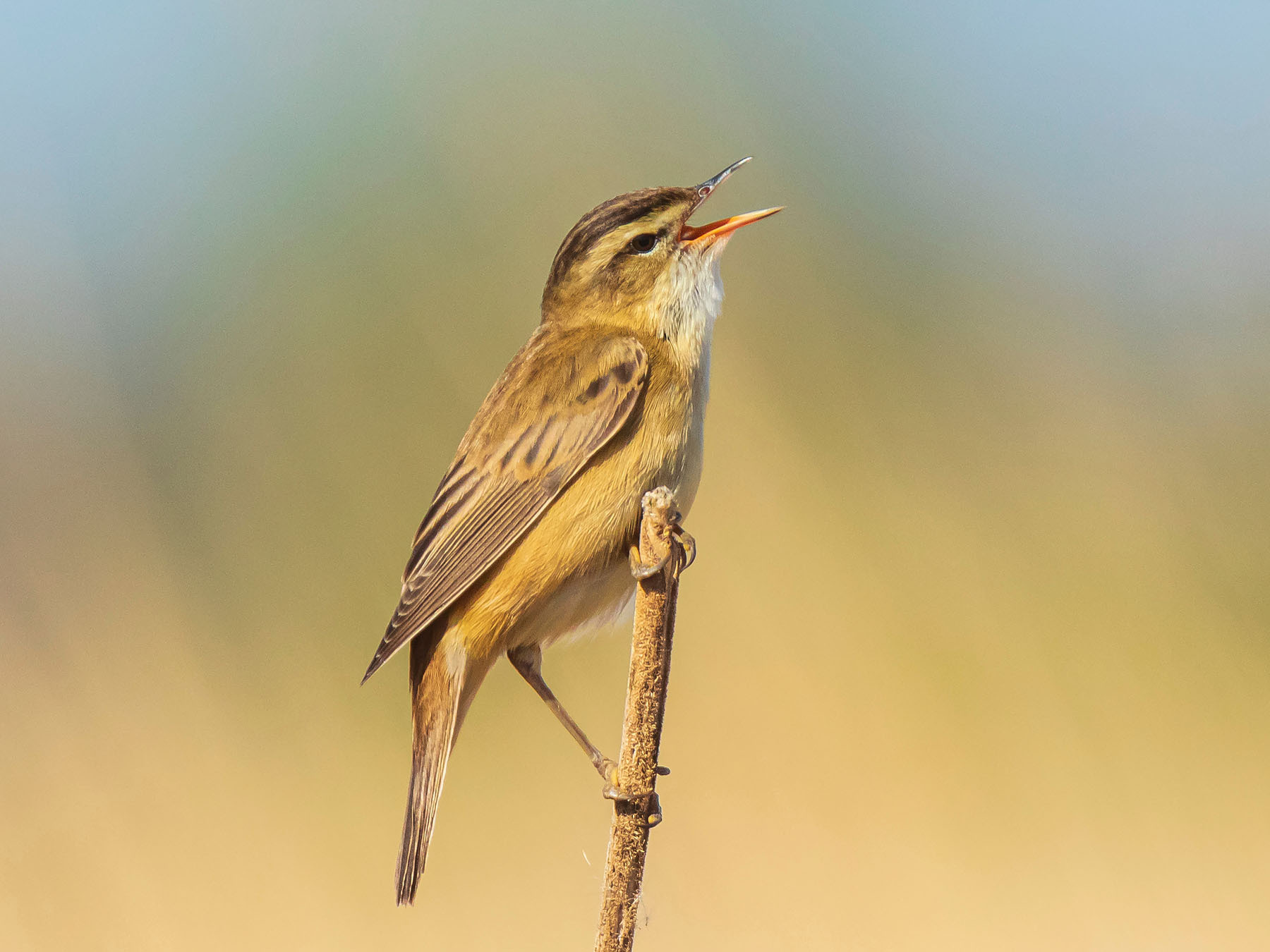
It is claimed that a male sedge warbler never sings the same song twice, relying on a varied and original repertoire of songs to attract a female. Songs are a random series of chattering notes and phrases, and some mimicry of other species may be incorporated.
- Song0:00 / 0:26
Recorded in Thurrock, England · June 2024
- Call0:00 / 0:11
Recorded in Normandy, France · August 2026
When and where to see it
OctoberMostly absent
Most recorded in October
- 1. Somersetunder 0.1%
- 2. Wexfordunder 0.1%
- 3. Perthshire and Kinrossunder 0.1%
- 4. Shetland Islandsunder 0.1%
- 5. Dorsetunder 0.1%
Each dot is a county, state or province: the bigger and darker, the larger the bird’s share of that place’s bird records that month. Grey dots: no regular records. The ringed point is the centre of the bird’s records this month; the arrow shows how it moved since last month, and the dashed loop its path through the year. “Arrivals” colours places where it becomes regular this month (orange) or is in its last regular month (grey). GBIF eBird Observation Dataset, 2019–2024. Map data: Natural Earth, US Census Bureau; place centres © OpenStreetMap contributors.
In your area
See when the Sedge Warbler is recorded in your county, state or province.
How often the Sedge Warbler turns up in the UK and Ireland through the year, from birdwatchers' records.
United Kingdom
Summer visitor · regularly Apr–Sep · most records in May
Ireland
Summer visitor · regularly Apr–Sep · most records in May
Show as a table
| Month | United Kingdom | Ireland |
|---|---|---|
| January | – | – |
| February | – | – |
| March | 0.005% | – |
| April | 0.43% (regular) | 0.26% (regular) |
| May | 0.82% (regular) | 0.78% (regular) |
| June | 0.63% (regular) | 0.60% (regular) |
| July | 0.49% (regular) | 0.44% (regular) |
| August | 0.24% (regular) | 0.16% (regular) |
| September | 0.080% (regular) | 0.072% (regular) |
| October | 0.003% | 0.001% |
| November | <0.001% | – |
| December | – | – |
Recorded regularly in
Worldwide: recorded regularly in 83 countries
Countries where it was recorded in at least 3 of the 6 years 2019–2024. Linked countries have their own bird list.
Europe (43)
- Åland Islands
- Albania
- Austria
- Belarus
- Belgium
- Bosnia & Herzegovina
- Bulgaria
- Croatia
- Czechia
- Denmark
- Estonia
- Finland
- France
- Germany
- Greece
- Guernsey
- Hungary
- Ireland
- Isle of Man
- Italy
- Jersey
- Kosovo
- Latvia
- Lithuania
- Luxembourg
- Malta
- Moldova
- Montenegro
- Netherlands
- North Macedonia
- Norway
- Poland
- Portugal
- Romania
- Russia
- Serbia
- Slovakia
- Slovenia
- Spain
- Sweden
- Switzerland
- Ukraine
- United Kingdom
Africa (24)
Asia (16)
- Armenia
- Azerbaijan
- China
- Cyprus
- Georgia
- Iran
- Israel
- Jordan
- Kazakhstan
- Kuwait
- Lebanon
- Oman
- Palestinian Territories
- Saudi Arabia
- Turkey
- United Arab Emirates
Data: EOD – eBird Observation Dataset (Cornell Lab of Ornithology), accessed via GBIF.org, CC BY 4.0. Records from 2019–2024, aggregated and filtered by Birdfact. How these lists are made
What is the habitat of a Sedge Warbler?
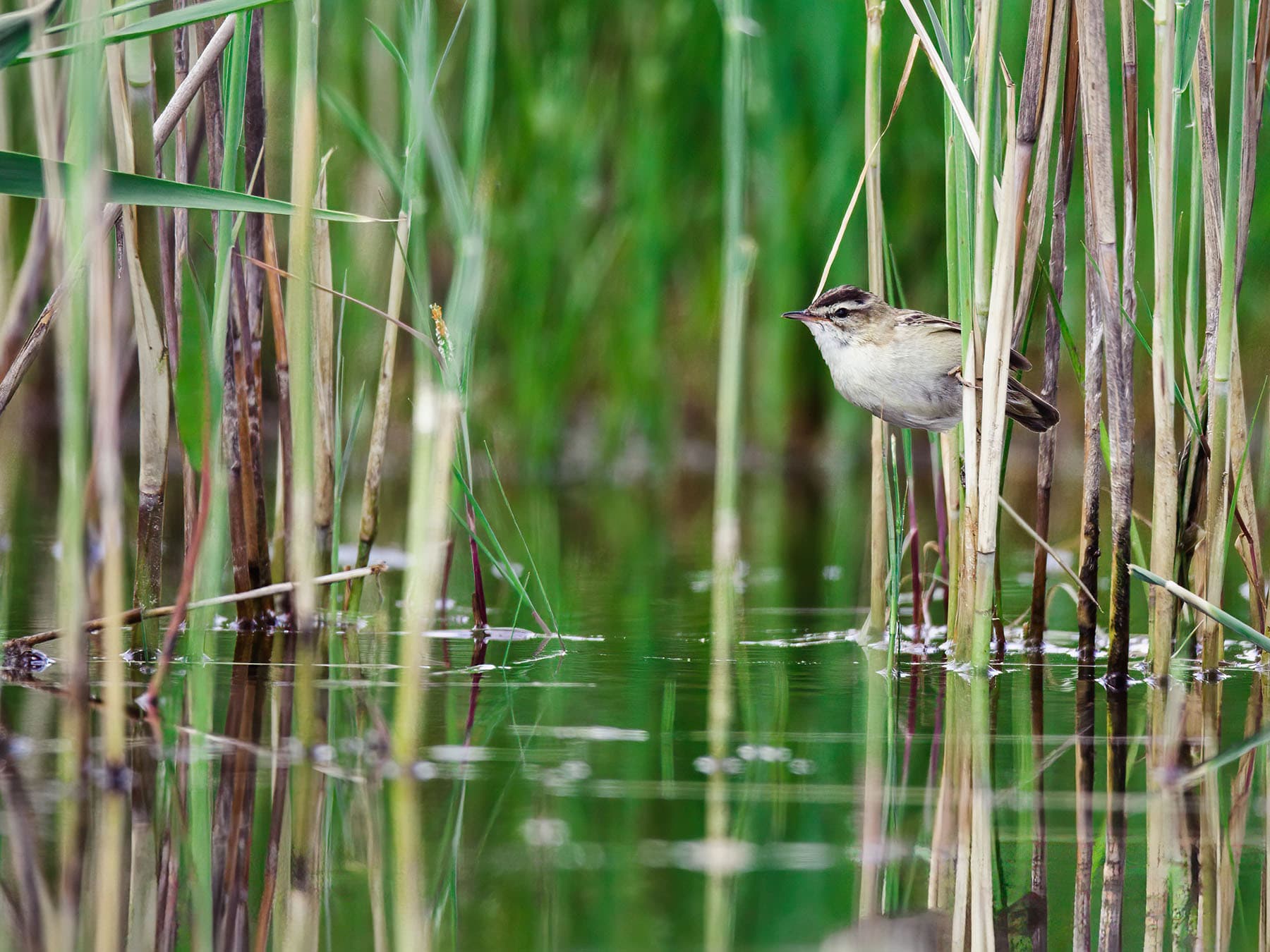
While typically associated with marshlands, and vegetation around the edges of rivers and freshwater pools, sedge warblers are equally at home in a wider range of landscapes, including scrubland, nettle patches, overgrown or neglected orchards and agricultural land, and ditches and hedgerows not immediately close to water.
Non-breeding habitats of sedge warblers include marshes, lowland tropical rainforests, papyrus beds, and wet grasslands.
What is the range of a Sedge Warbler?
Sedge warblers breed throughout northern Europe, as far south as central France, northern Germany, and the Balkans, with more dense concentrations of the population the further east you go.
The range extends eastwards to western Siberia, Turkey and Central Asia. Wintering grounds are found across Africa south of the Sahara desert, as far south as northern Namibia and South Africa.
Where do Sedge Warblers live?
Sedge warblers are not limited to one particular habitat type and are common throughout Britain. Only small tracts of the most uninhabitable uplands of northern England and the Scottish highlands lack any presence of the species.
Wetland habitats, waterside willow perches, marshlands, and grassy scrublands all support foraging and nesting sedge warblers.
How rare are Sedge Warblers?
During the breeding season, from April to late August, sedge warblers are widespread across the UK, and can be seen throughout the country until October, by which point the latest stragglers will have set off on their migrations.
During winter, any sighting of a sedge warbler on UK soil would certainly be classed as rare and highly unusual.
Where can you see Sedge Warblers in the UK?
Sedge warblers breed on UK wetlands and marshes, arriving from April onwards and almost immediately establishing a breeding territory and singing to attract a mate.
Migration
Do Sedge Warblers migrate?
Sedge warblers are migratory birds throughout their range, and arrive on their breeding grounds of marshes and wetlands across Britain in April, before departing for their wintering territories by late August or early September.
Winters are spent in trans-Saharan Africa, from Senegal to Ethiopia, and as far south as northern Namibia and northern South Africa.
Tips for seeing it
- Listen for their distinctive, chattering song in wetland areas
- Look for movement in dense reeds and sedges
- Watch for their characteristic song flights during the breeding season
- In the UK, visit wetland reserves in spring and summer for the best chances of spotting them
What it eats
What do Sedge Warblers eat?
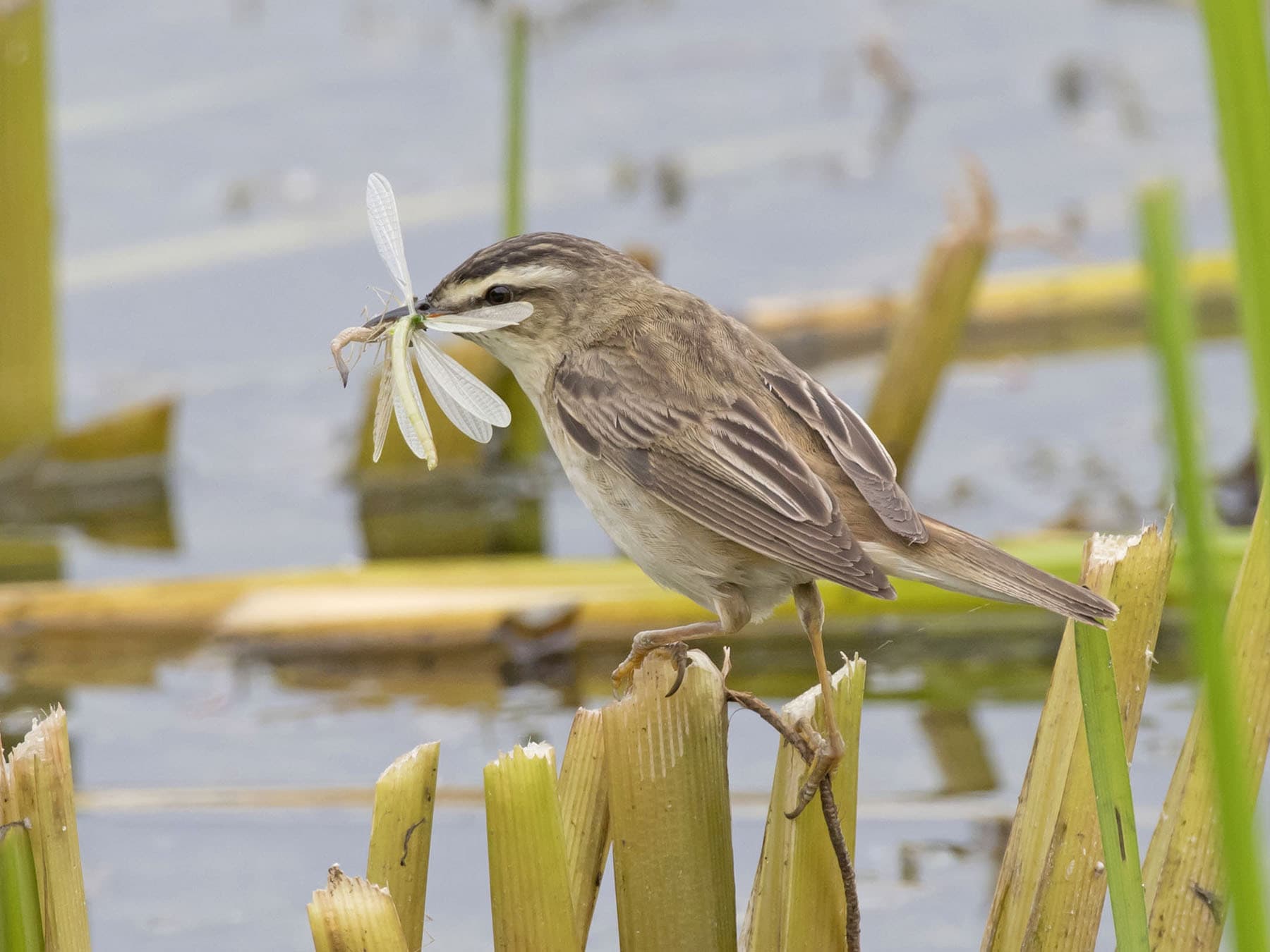
Sedge warblers are omnivorous, with insects and invertebrates forming the bulk of their diet for much of the year. Typical prey includes larvae, caterpillars, beetles, moths, aphids, flies, beetles and grasshoppers. Slugs, snails, and worms are also eaten.
Before sedge warblers set off on their long migration flights southwards to trans-Saharan Africa, insects may be supplemented by seeds, fruit and flowers as they build their fat stores ahead of their lengthy journey.
What do Sedge Warbler chicks eat?
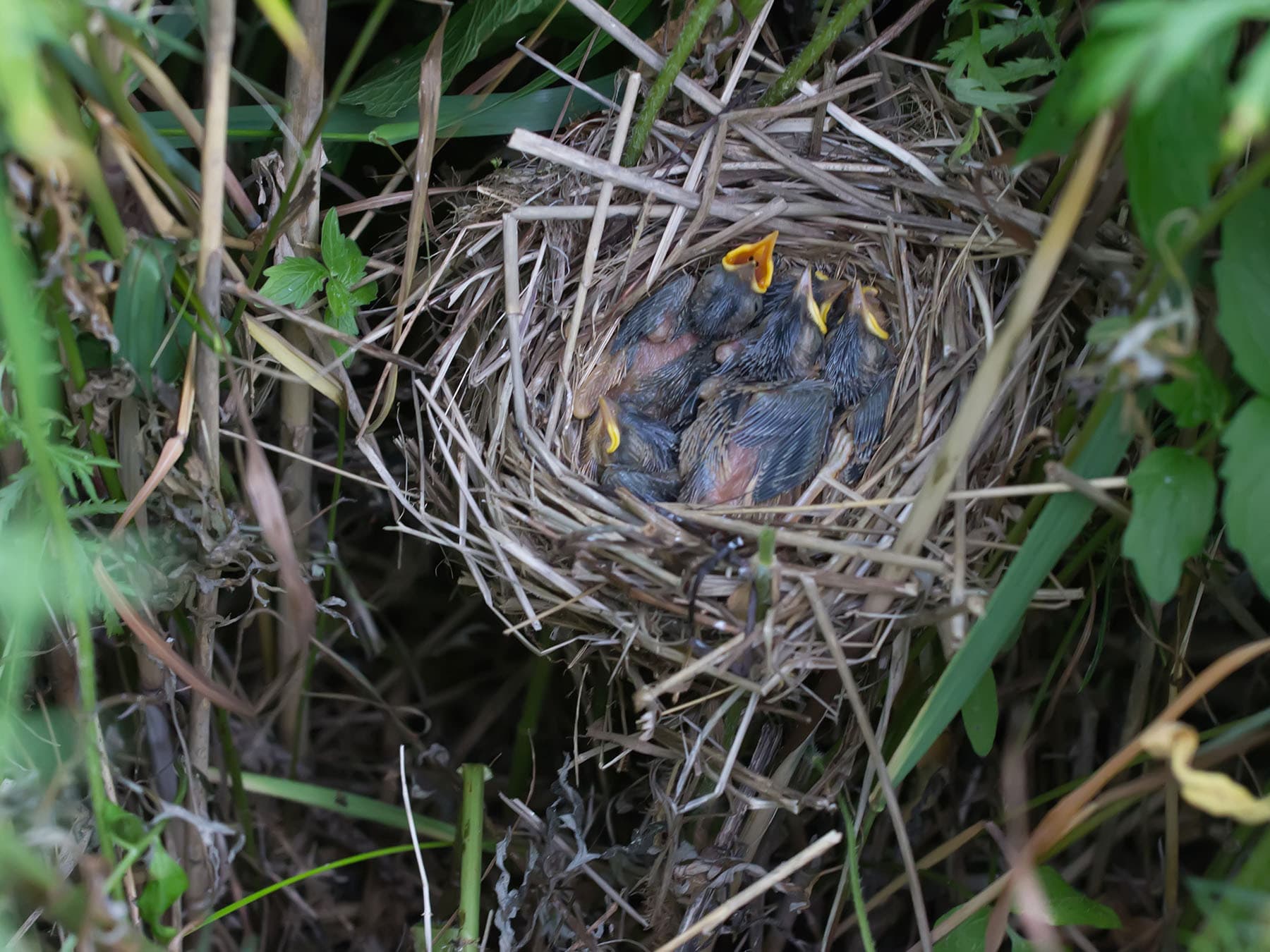
Newly hatched sedge warblers are fed tiny insects, such as aphids, initially regurgitated by both male and female parents. For two further weeks after fledging, young sedge warblers will continue to beg for food before learning to forage for their own insect prey.
Nesting and breeding
Where do Sedge Warblers nest?
Female sedge warblers are solely responsible for nest construction, weaving an outer structure of grass, leaves, moss and sedge around a deep cup, made from fine leaves and stems, and lined with flowers, hair, and down.
A typical nest site is among weeds or tall grasses, or in shrubbery above marshy ground, but typically no higher than 50 cm (20 in) above ground level. The nest is usually well hidden by vegetation, and woven around the vertical stems of plants.
What do Sedge Warbler eggs look like?
Sedge warblers’ eggs are rounded and greenish-yellow in colour, heavily mottled with brown speckles. They measure 18 mm x 13 mm (0.7 in to 0.5 in) and weigh 1.6 g (0.1 oz).
On average between 3 and 5 eggs are laid but some clutches may contain as many as 8 eggs. These are then incubated for 13 to 15 days by the female. The first clutches are laid in late May, and it’s typical for just one brood in a season, although sometimes a second is attempted.
Do Sedge Warblers mate for life?
Sedge warbler pairs usually remain together for the duration of a breeding season, although polygamy is not uncommon, and males may breed with an additional female once their original mate has hatched her young.
If a nesting attempt fails, females will seek a new mate before trying again.
Behaviour
Are Sedge Warblers aggressive?
Some degree of territorial behaviour may be shown between paired males and unpaired individuals entering their patch. It isn’t thought that sedge warblers use song as any form of aggressive behaviour or territorial defence, but purely for the purpose of attracting a female.
Lifespan and predators
How long do Sedge Warblers live?
The typical lifespan of a sedge warbler is around 2 years, although records show individual birds have reached 8 years 8 months. Breeding occurs for the first time at one year.
What are the predators of Sedge Warblers?
There is not much data available about bird species that are the leading threat to sedge warblers, but it’s likely that they are similar to other warblers living in wetland habitats. Warning alarm calls are heard when birds such as sparrowhawks, doves and cuckoos enter their territories.
Nests are likely to be at risk of predation from foxes, weasels, crows, jays and squirrels.
Are Sedge Warblers protected?
Like most wild bird species that breed in the UK, legislation is in place that offers protection to sedge warblers, their nests and their eggs. The Wildlife and Countryside Act, 1981, makes it an offence to knowingly kill, injure or capture a sedge warbler, or to destroy or damage their nests and eggs.
Are Sedge Warblers endangered?
Sedge warblers are ranked as an Amber species on the British Birds of Conservation Concern list. Between 1967 and 2020, the number of sedge warblers breeding in the UK was noted to have declined by 42 percent, leading to this status as a higher risk species.
Throughout their wider range, sedge warblers have the rating as a species of least concern.
Conservation
While currently listed as Least Concern, Sedge Warblers face threats from habitat loss and degradation, particularly in their breeding and wintering grounds.
Conservation efforts focus on protecting and restoring wetland habitats, which are crucial for this species' survival.
More photos
3 photos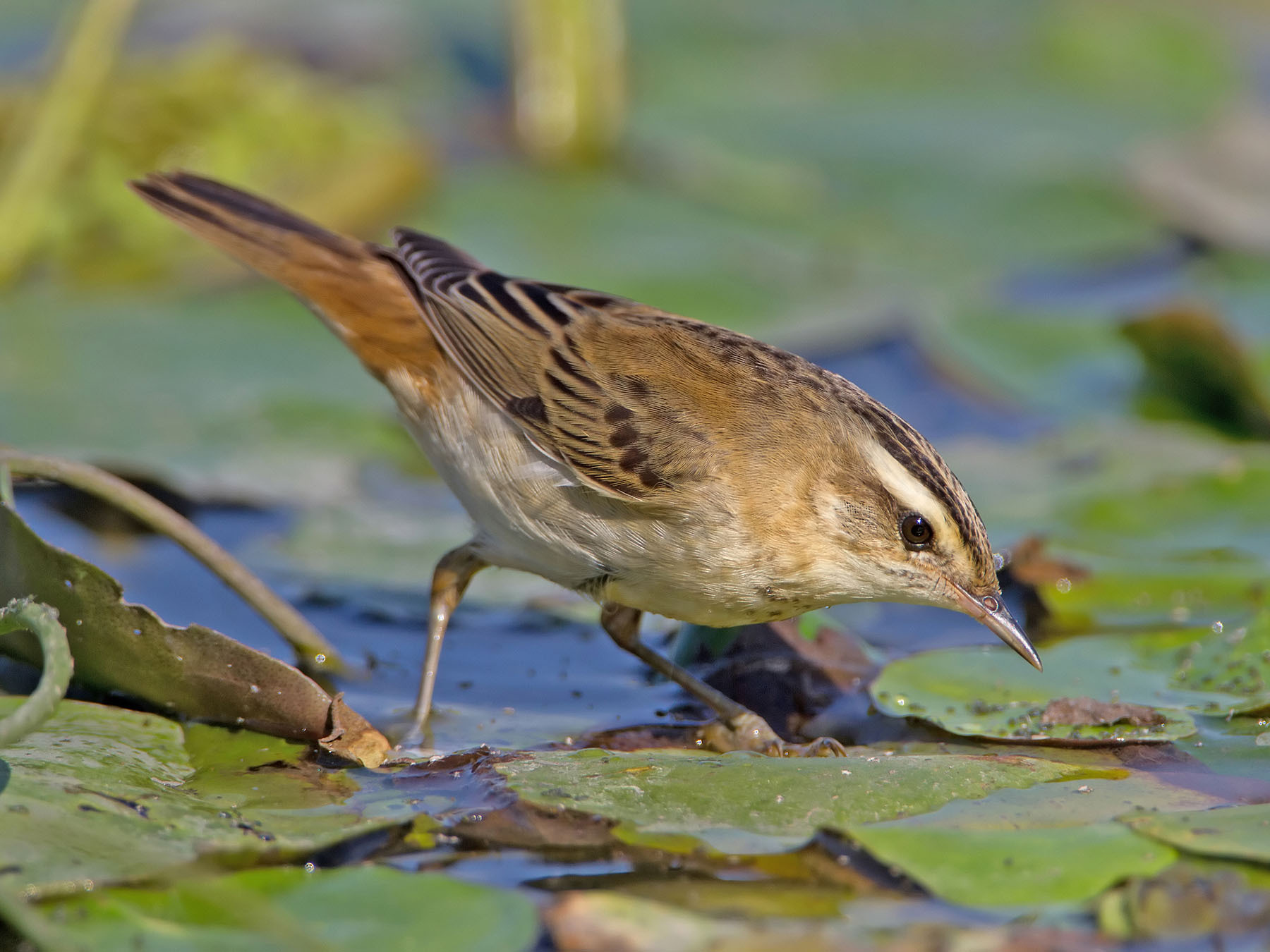
Quick facts
- Length
- 11.5–13 cm
- Wingspan
- 17–21 cm
- Weight
- 10–15 g
- Lifespan
- 2 years · oldest recorded 11.8 years
- Family
- Reed Warblers
- Migration
- Long-distance Migrant
- Global status (IUCN)
- Least Concern
- World population
- 12,750,000 - 21,500,000 mature individuals
- Population trend
- Stable
- Also called
- European Sedge Warbler
- Scientific name
- Acrocephalus schoenobaenus
Questions
1Are Sedge Warblers common?
Sedge warblers are considered widespread summer visitors to Britain, and can be seen and heard in marshland habitats during spring and summer. 2016 data estimates 240,000 breeding territories in the UK.
Sources
4- 1BirdLife International. 2016. Acrocephalus schoenobaenus. The IUCN Red List of Threatened Species 2016: e.T22714700A87569807. Source (opens in a new tab)
- 2EBCC (2015)
- 3BirdLife International. 2016. Acrocephalus schoenobaenus. The IUCN Red List of Threatened Species 2016: e.T22714700A87569807. Source (opens in a new tab)
- 4Fransson et al., EURING list of longevity records for European birds (2010)

Checked by
Nathan Cope, founder and editor
Nathan founded Birdfact and leads its writers and contributors in the UK, the US and Canada. He has watched and studied birds for more than ten years, and checks every article and species guide before it’s published.