
Marsh Warbler
European Marsh Warbler · Acrocephalus palustris
By the Birdfact teamChecked by Nathan Cope
On this page13 sections
How to recognise it
What do Marsh Warblers look like?
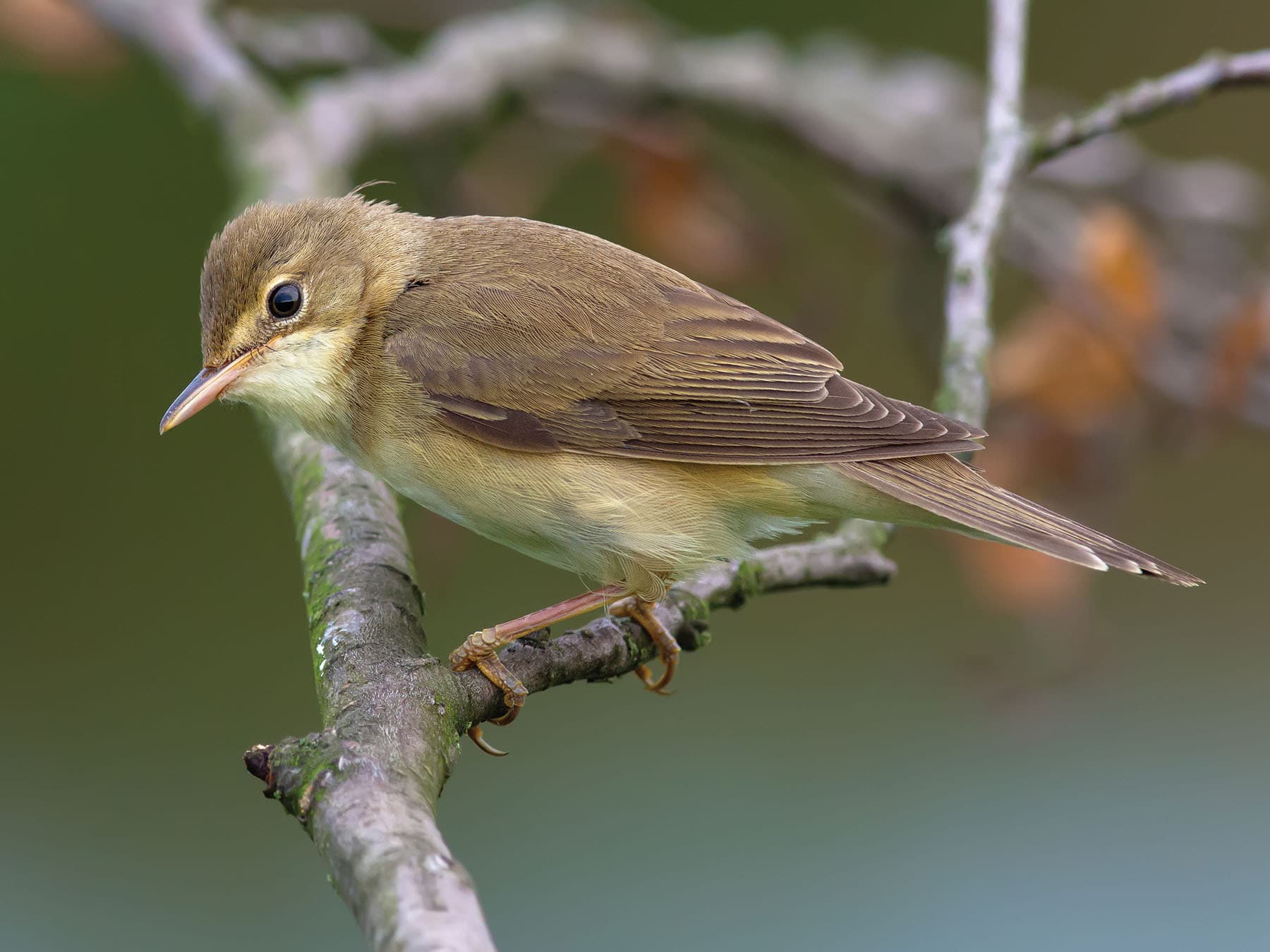
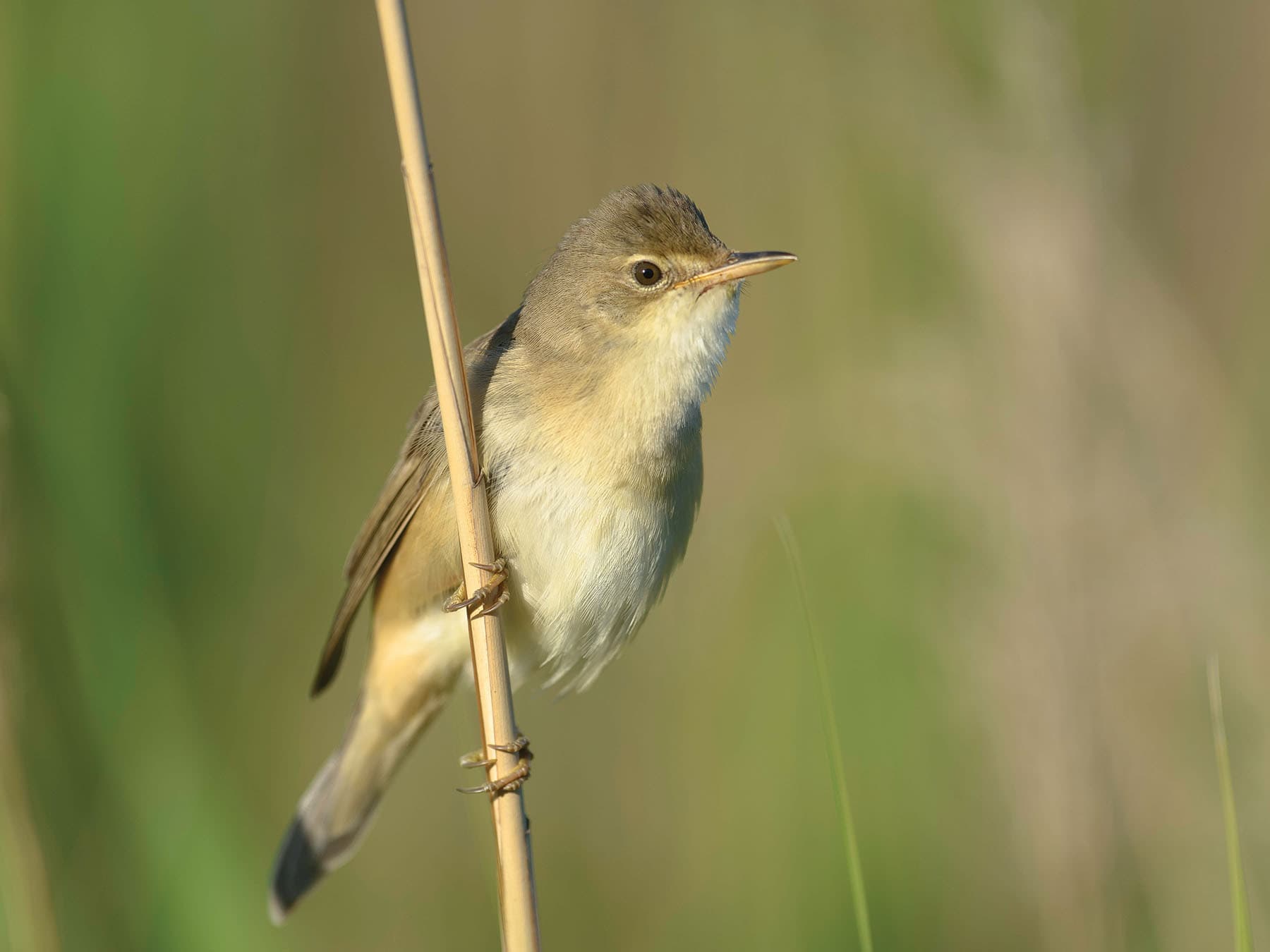
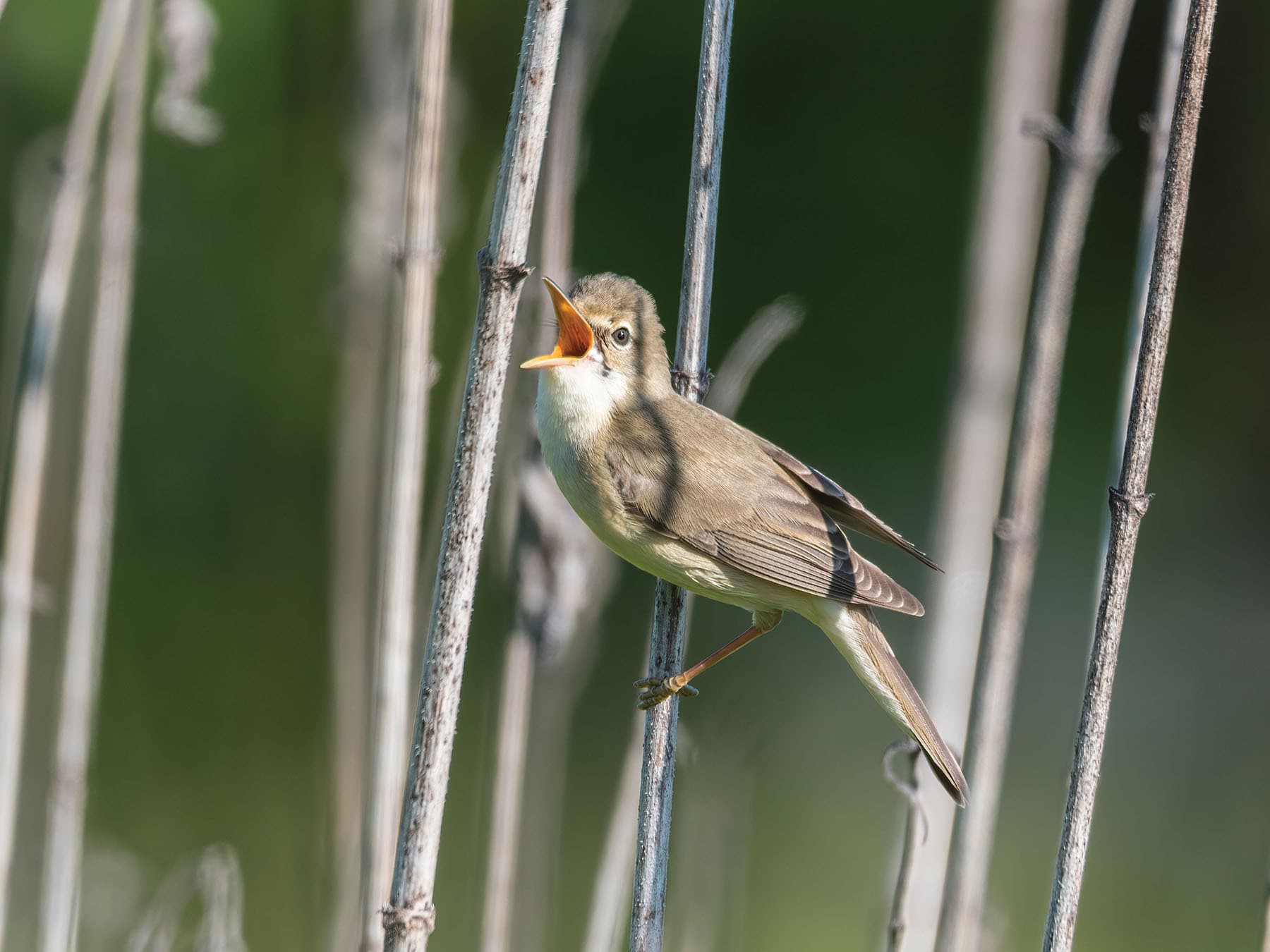
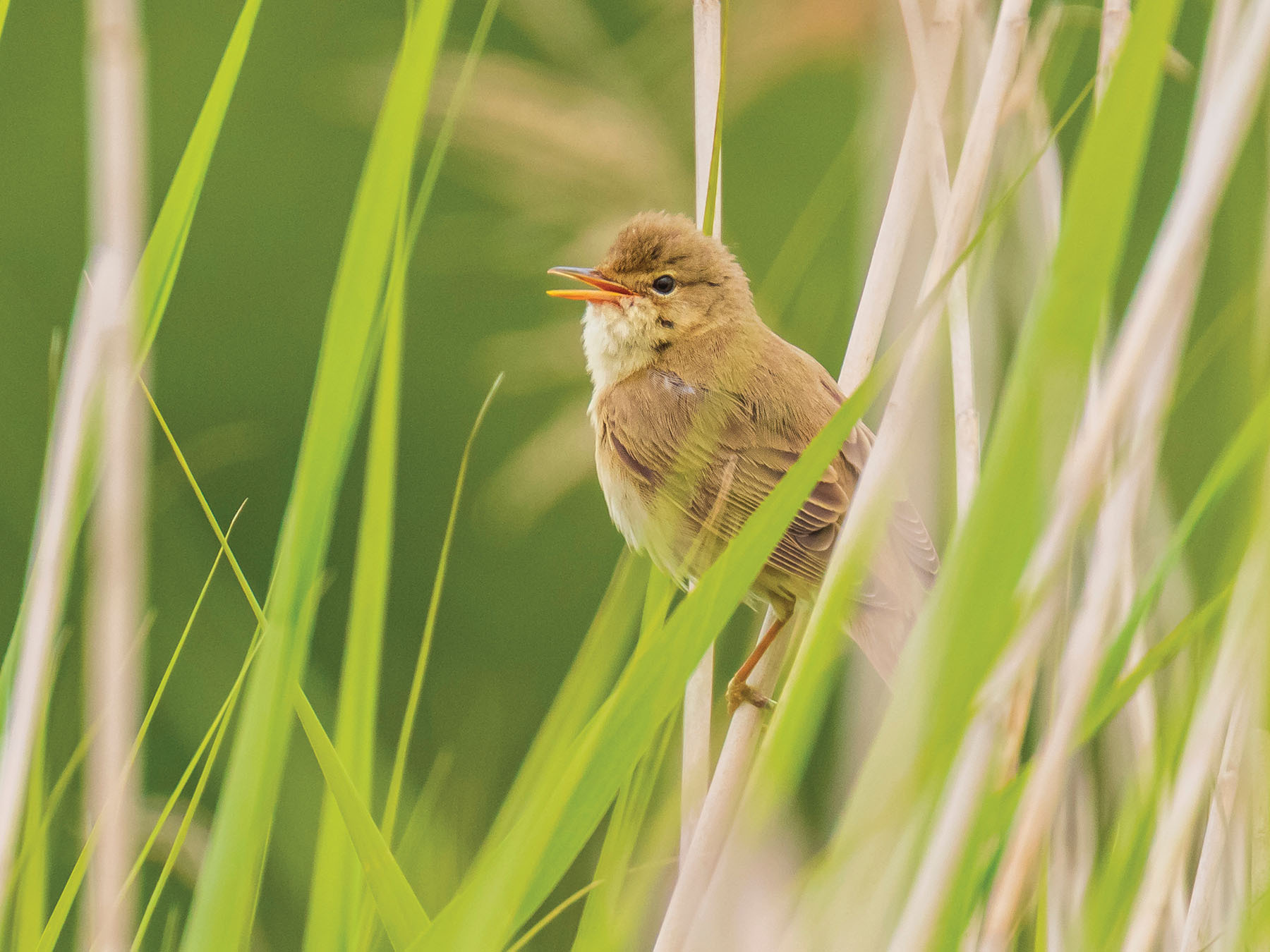
Marsh warblers are small brownish warblers, similar in appearance to the more common reed warbler and often their song is the best way to distinguish between the species.
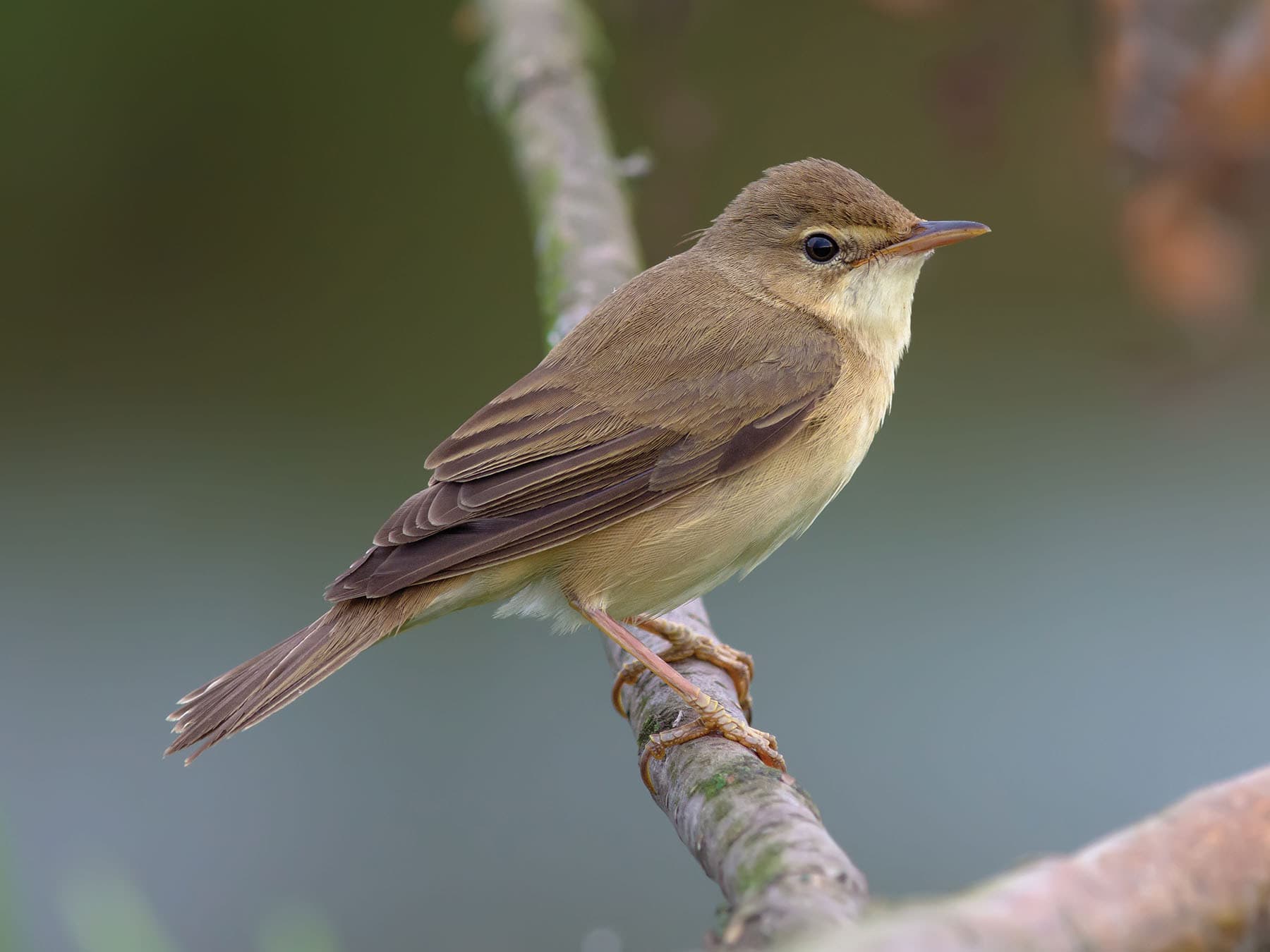
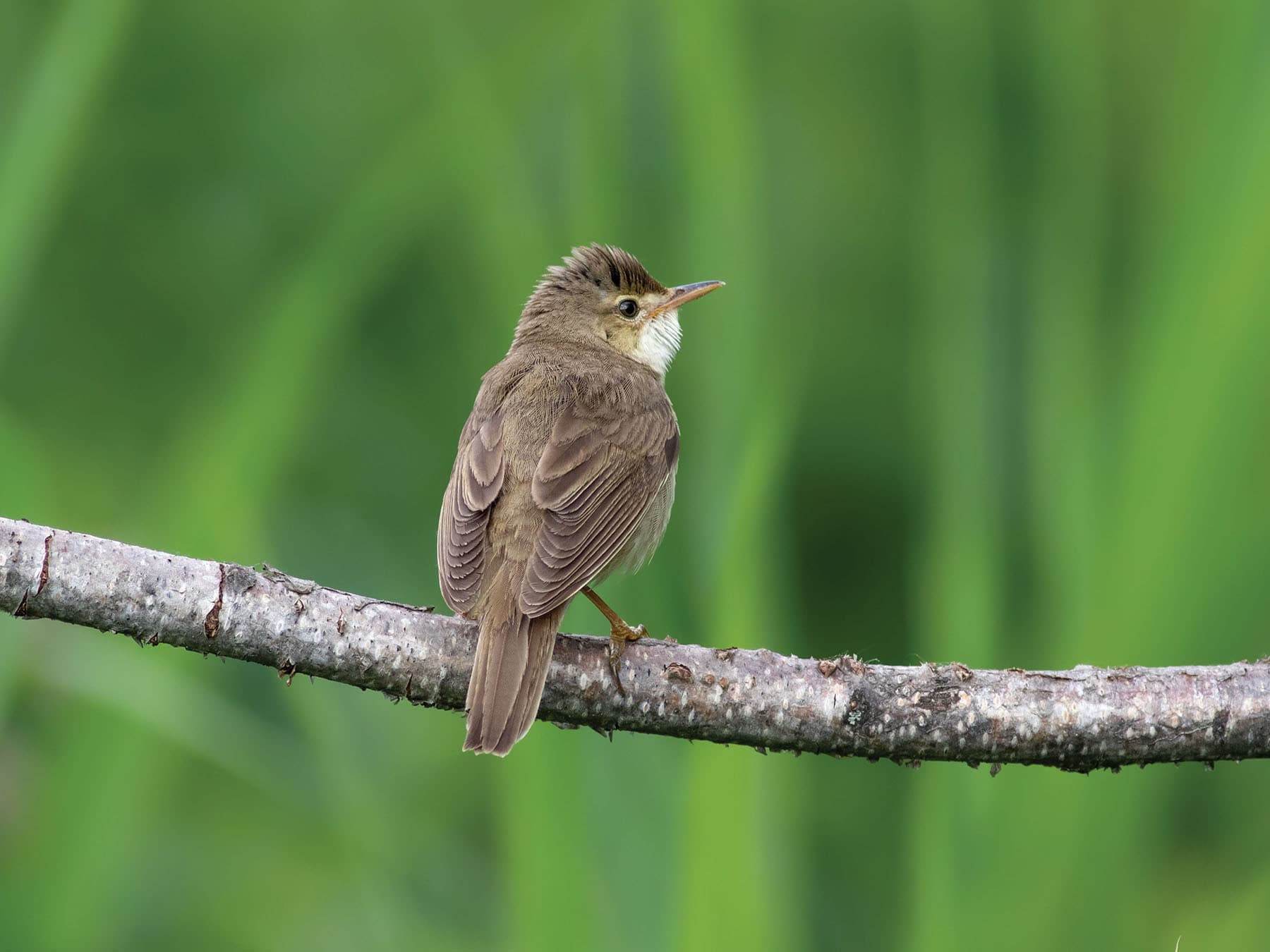
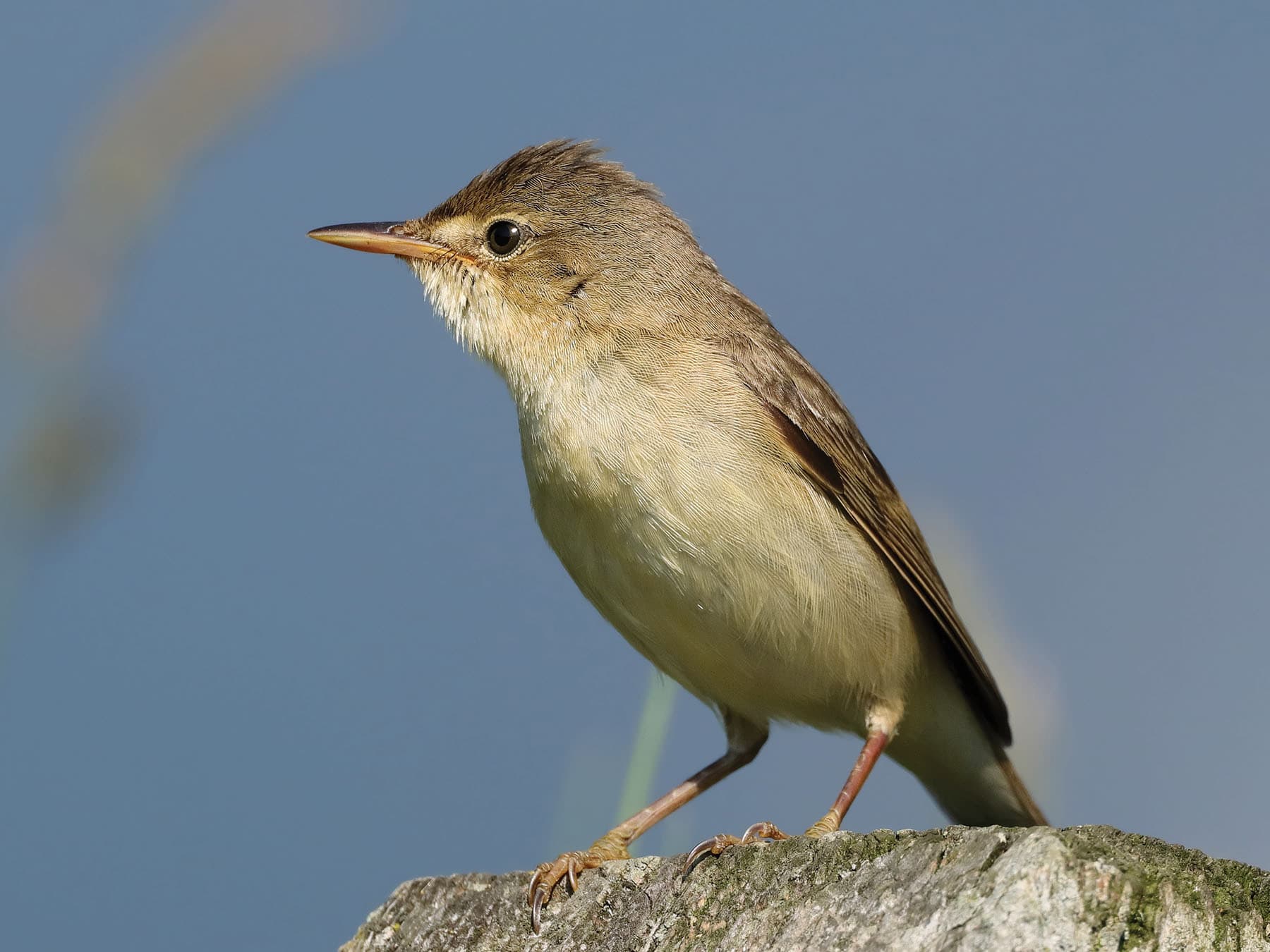
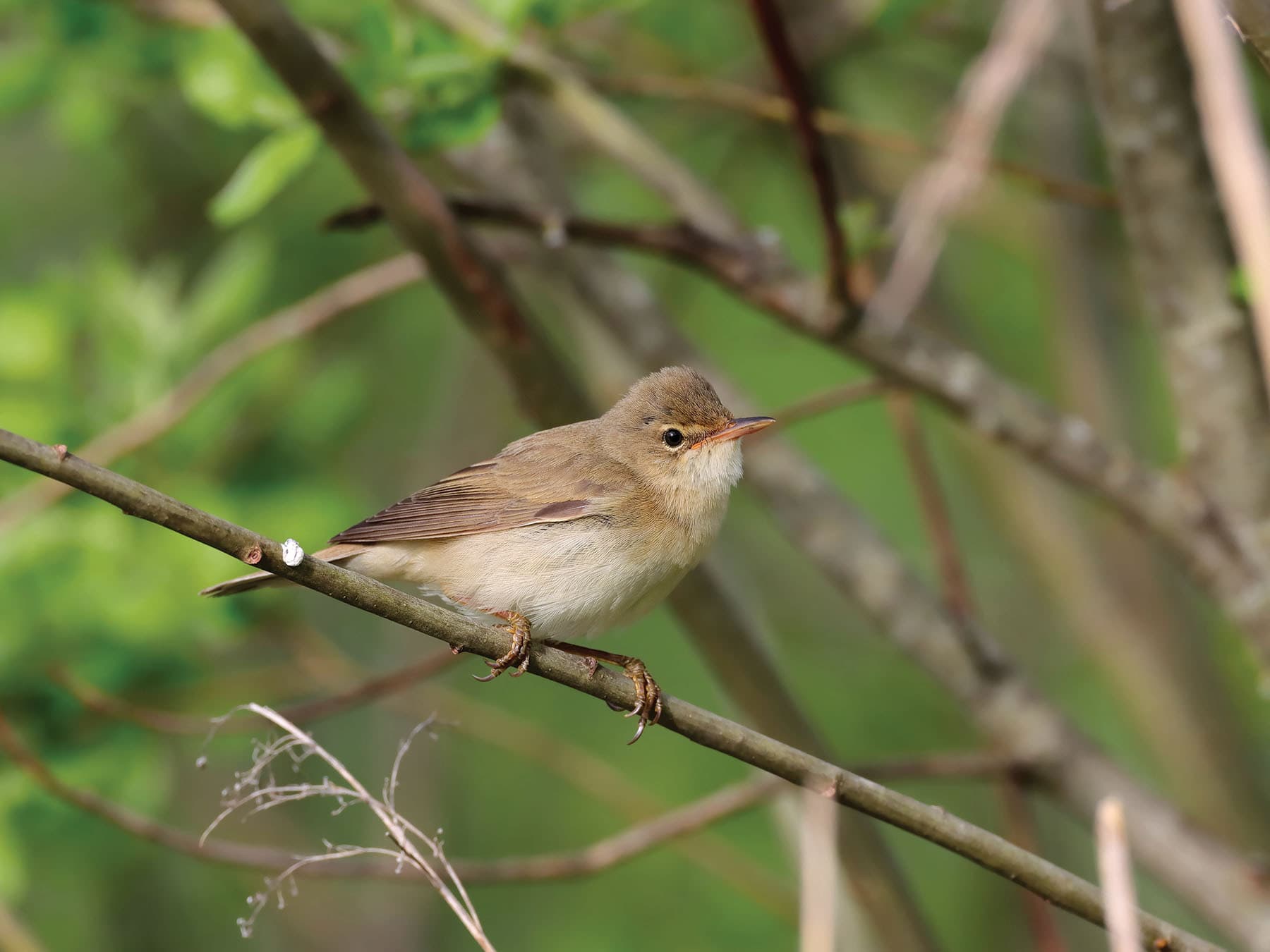
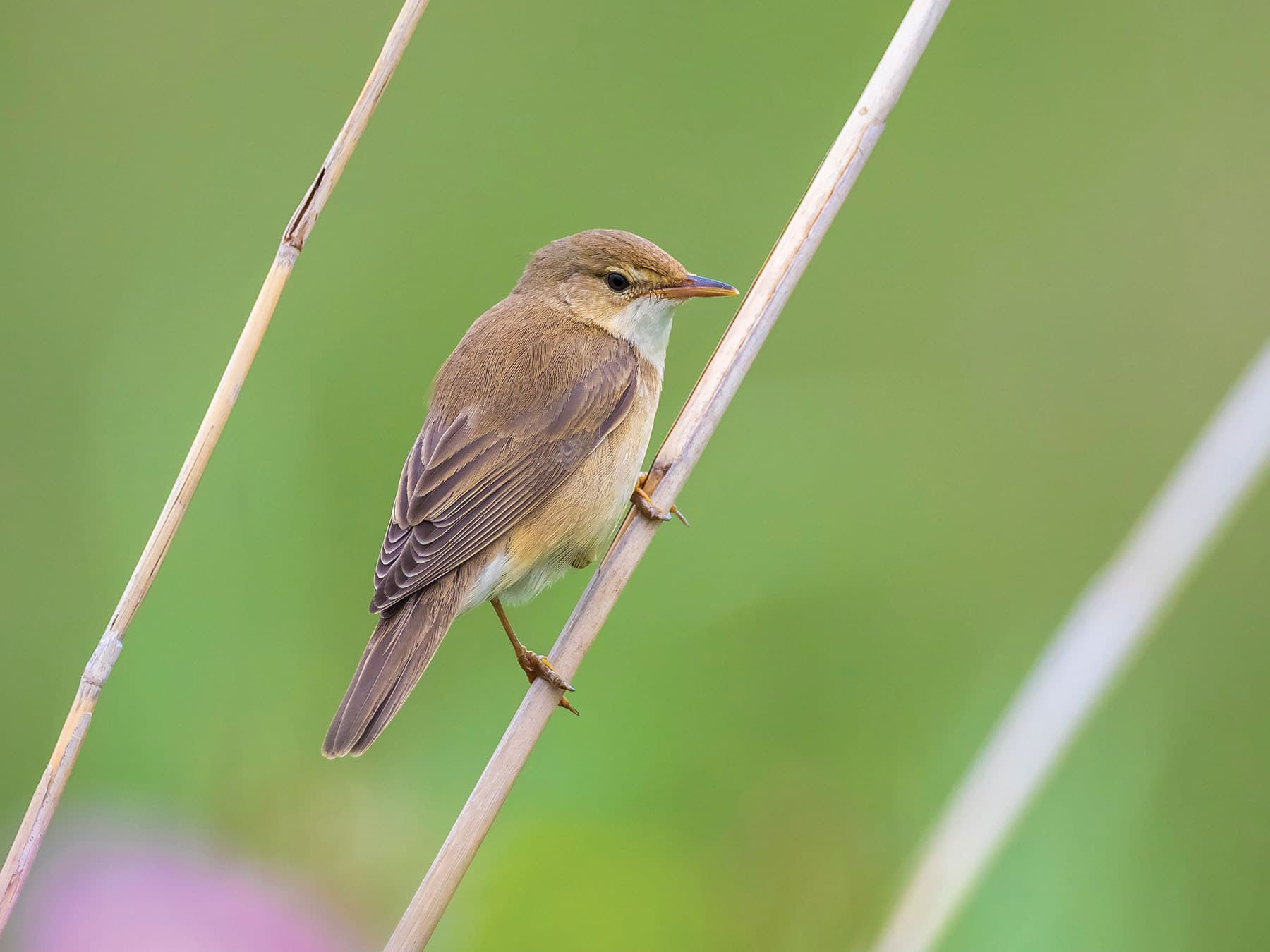
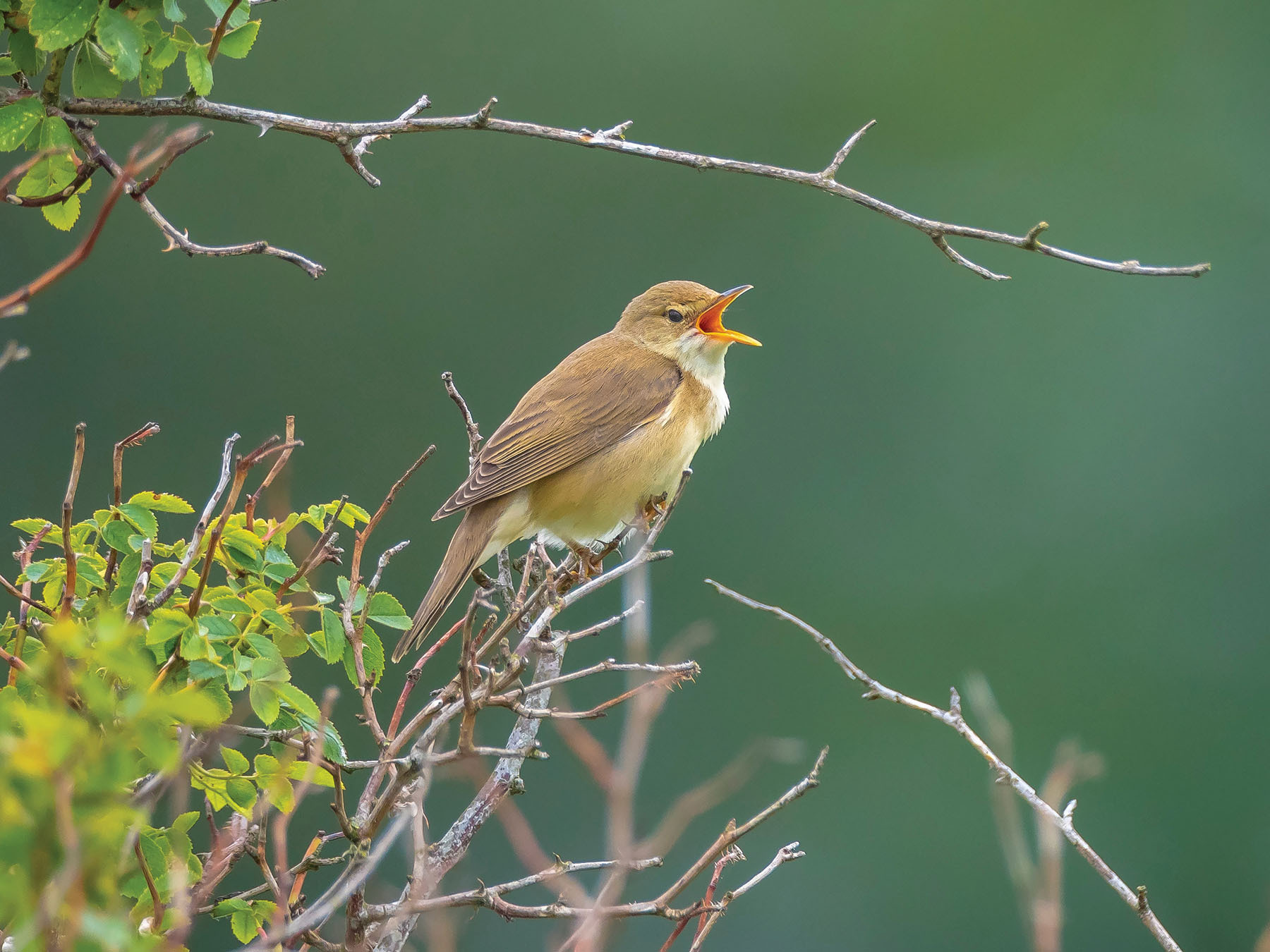
Marsh warblers have an olive-brown back, nape and crown, with a greenish-brown rump and pale brown tail. Wings are also olive-brown, but tipped with darker black-brown feathers.
Facial markings of marsh warblers include a pale cream eye stripe, a white throat and chin, darkening into a yellowish-cream breast and belly, with yellow flanks.
Females and males are alike, with no obvious visual differences between the sexes. Both have pink legs, dark brown eyes, and a light grey bill.
Juvenile marsh warblers have similar markings and colouring to adult birds, although may have a bronze tinge to their plumage, and their legs are slightly darker.
How big are Marsh Warblers?
At 13 cm (5.1 in), marsh warblers are the same size as their close relative the reed warbler. There is no difference in size between males and females, with both falling within the measurement ranges below:
- Length: 13 cm to 15 cm (5.1 in to 5.9 in)
- Wingspan: 18 cm to 21 cm (7.1 in to 8.3 in)
- Weight: 10 g to 15 g (0.4 oz to 0.5 oz)
Its size
Adults- Length
- 12.5–14 cm
- Wingspan
- 17–21 cm
- Weight
- 10–15 g
Its song and calls
What sound does a Marsh Warbler make?
Marsh warblers have a loud, distinctive warbling song, with flowing liquid notes and trills.
They are accomplished mimics and incorporate the songs of almost 100 other species into their own, and are thought to add more melodies to their repertoires each year, learned from spending time in mixed species groups on their wintering grounds in south-eastern Africa.
- Song0:00 / 0:45
Recorded in Östergötland County, Sweden · May 2025
When and where to see it
OctoberLeaving
Most recorded in October
- 1. Shetland Islandsunder 0.1%
- 2. East Riding of Yorkshireunder 0.1%
Each dot is a county, state or province: the bigger and darker, the larger the bird’s share of that place’s bird records that month. Grey dots: no regular records. The ringed point is the centre of the bird’s records this month; the arrow shows how it moved since last month, and the dashed loop its path through the year. “Arrivals” colours places where it becomes regular this month (orange) or is in its last regular month (grey). GBIF eBird Observation Dataset, 2019–2024. Map data: Natural Earth, US Census Bureau; place centres © OpenStreetMap contributors.
In your area
See when the Marsh Warbler is recorded in your county, state or province.
How often the Marsh Warbler turns up in the UK through the year, from birdwatchers' records.
United Kingdom
Summer visitor · regularly May–Oct · most records in June
Show as a table
| Month | United Kingdom |
|---|---|
| January | – |
| February | – |
| March | – |
| April | <0.001% |
| May | 0.002% (regular) |
| June | 0.004% (regular) |
| July | <0.001% (regular) |
| August | <0.001% (regular) |
| September | 0.001% (regular) |
| October | <0.001% (regular) |
| November | – |
| December | – |
Recorded regularly in
Worldwide: recorded regularly in 60 countries
Countries where it was recorded in at least 3 of the 6 years 2019–2024. Linked countries have their own bird list.
Europe (36)
- Åland Islands
- Austria
- Belarus
- Belgium
- Bosnia & Herzegovina
- Bulgaria
- Croatia
- Czechia
- Denmark
- Estonia
- Finland
- France
- Germany
- Greece
- Hungary
- Italy
- Kosovo
- Latvia
- Liechtenstein
- Lithuania
- Luxembourg
- Moldova
- Montenegro
- Netherlands
- North Macedonia
- Norway
- Poland
- Romania
- Russia
- Serbia
- Slovakia
- Slovenia
- Sweden
- Switzerland
- Ukraine
- United Kingdom
Africa (10)
Asia (14)
- Armenia
- Azerbaijan
- Bahrain
- Georgia
- Iran
- Iraq
- Israel
- Kazakhstan
- Kuwait
- Lebanon
- Qatar
- Saudi Arabia
- Turkey
- United Arab Emirates
Data: EOD – eBird Observation Dataset (Cornell Lab of Ornithology), accessed via GBIF.org, CC BY 4.0. Records from 2019–2024, aggregated and filtered by Birdfact. How these lists are made
What is the habitat of a Marsh Warbler?
Ideal habitats for marsh warblers include scrubby, grassland and reedbeds. Marshy vegetation on the edge of swamps, nettle beds and ditches are also popular choices.
What is the range of a Marsh Warbler?
Marsh warblers breed across Europe, from parts of southern England and northern and eastern France in the west, to southern Scandinavia in the north, and eastwards throughout Europe and Central Asia to Kazakhstan.
The southern limits of their breeding range encompass parts of Italy, the Balkans, eastern Turkey and north-west Iran.
In winter, the entire breeding population of marsh tits heads to Malawi, Mozambique, South Africa, Tanzania, Zambia and Zimbabwe.
Where do Marsh Warblers live?
Marsh warblers are common and widespread across much of northern Europe, with Germany having the highest population, with up to 520,000 pairs. Breeding is well established and relatively stable in high numbers across Lithuania, Latvia, Sweden, Estonia and France.
How rare are Marsh Warblers?
Marsh warblers are one of the UK’s rarest breeding birds, with only between 2 and 8 pairs nesting each year. Passage birds may be seen during migration, but confirmed sightings are scarce.
Where can you see Marsh Warblers in the UK?
Established breeding sites of marsh warblers were once found in parts of Worcestershire but in the 21st century seem to be largely concentrated in south-east England, especially Kent.
They are relatively late arrivals, so the best time of seeing a temporary resident marsh warbler is between May and September.
There is perhaps a greater chance of spotting migrant birds in passage, from May to June and August to September, when sightings are possible along the entire eastern coast of Scotland and England.
Migration
Do Marsh Warblers migrate?
All marsh warblers are migratory, leaving their breeding grounds in Europe and Central Asia once they have raised their young, and heading to wintering territories in south-eastern Africa.
Are Marsh Warblers native to the UK?
Only a handful of marsh warblers breed in the UK each year, and once the breeding season ends, they all return to their wintering grounds in south-eastern Africa. There are no resident marsh warblers in Britain all year round, and the species is absent from the island or Ireland.
Tips for seeing it
- Listen for their distinctive, mimicking song, especially at dawn and dusk
- Look for movement in dense vegetation near water bodies
- Visit suitable habitats during the breeding season (late May to July) for the best chance of sightings
- Be patient and quiet, as these birds can be elusive
What it eats
What do Marsh Warblers eat?
The diet of a marsh warbler is mainly insectivorous, with mayflies, damselflies, aphids, and lacewings gleaned from the underside of leaves as they probe the vegetation of their habitat. Snails, larvae, caterpillars and spiders are common prey. In autumn and winter, some berries may also be eaten.
What do Marsh Warbler chicks eat?
Young marsh warblers are initially fed on soft regurgitated invertebrates and sometimes fruit by both parents.
Nesting and breeding
Where do Marsh Warblers nest?
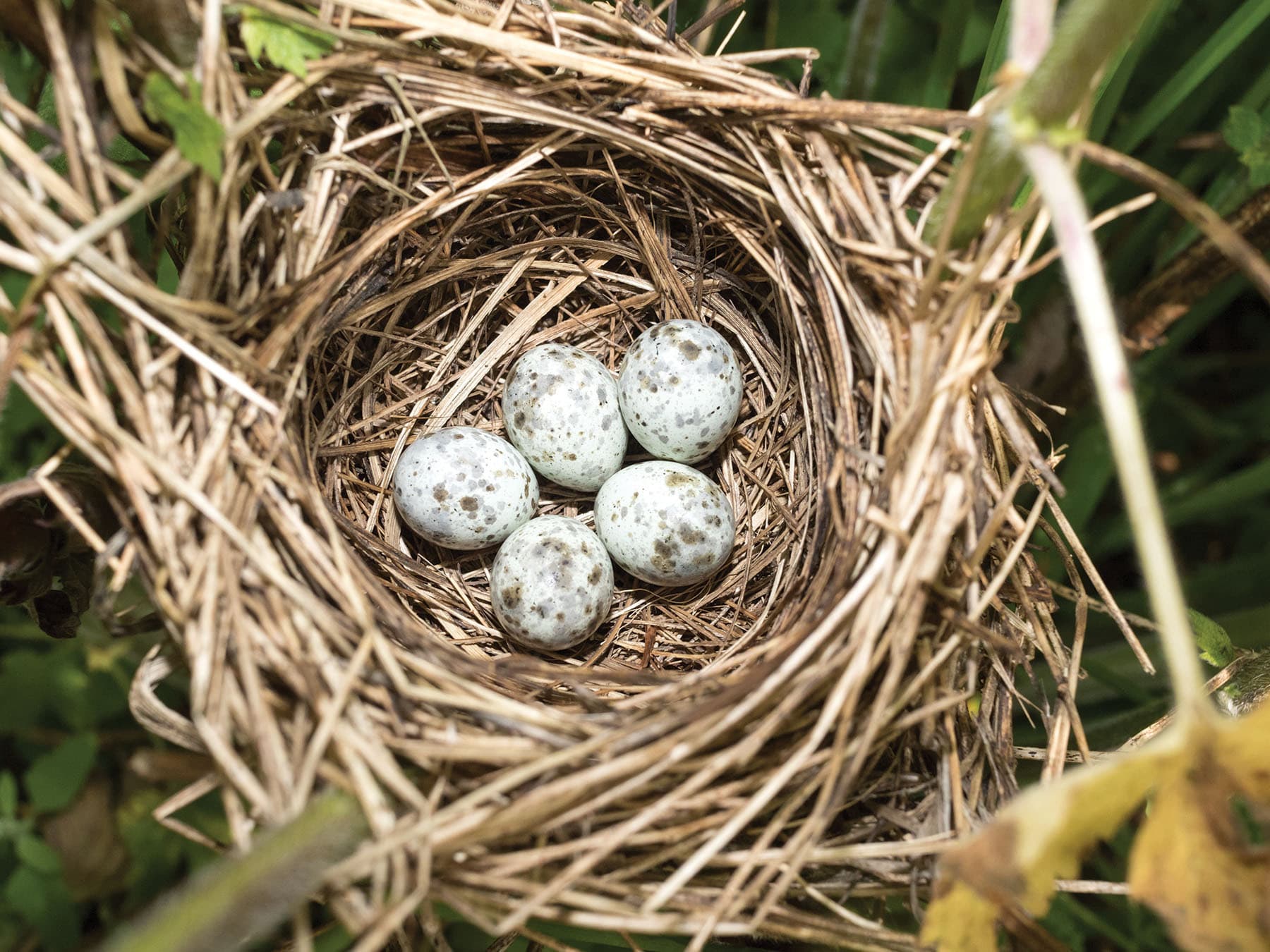
Breeding marsh warblers choose a nesting spot in grass meadows, scrublands or marshlands, frequently located near water. The female builds a cup-shaped nest from dry grass lined with roots and soft plant parts.
Nests are usually built at ground level, putting them at greater risk of failure due to predation.
What do Marsh Warbler eggs look like?
Marsh warblers lay between 3 and 6 pale blue, green, or grey eggs with olive or reddish-brown spots. Eggs are smooth and glossy, and measure 19 mm by14 mm (0.7 in by 0.6 in).
Incubation is undertaken by both the male and female on rotation for between 12 and 14 days. Hatchlings are fed by both parents in the nest for 10 to 11 days before they are ready to fledge.
Do Marsh Warblers mate for life?
Marsh warblers are usually monogamous for the duration of the breeding season and raise one brood together. Some polygamy does occasionally occur. Breeding takes place for the first time at one year of age.
Behaviour
Are Marsh Warblers aggressive?
During the breeding season male marsh warblers will vocally defend their territories against threats. On their wintering grounds, they become more solitary, although may forage and migrate as part of larger mixed-species flocks.
Lifespan and predators
How long do Marsh Warblers live?
Typical lifespan of a marsh warbler is 2 years, although the oldest known individual according to BTO records reached 7 years and 10 months.
What are the predators of Marsh Warblers?
As is typical of ground-nesting birds, crows and jays are among the top predators of marsh warblers and their young. Foxes, stoats and weasels will all opportunistically raid a nest.
Are Marsh Warblers protected?
Protected under the Wildlife and Countryside Act, 1981, marsh warblers are also given additional Schedule 1 protection, meaning as well as it being an offence to kill, injure or capture a bird of this species, their eggs, young and nest sites are also safeguarded.
Are Marsh Warblers endangered?
In the UK, the number of breeding marsh warblers has witnessed a steep decline from 180 pairs at the start of the 20th century, falling to around 60-80 pairs by the 1970s.
Marsh warblers have Red status on the British Birds of Conservation Concern list, but elsewhere in Europe, populations are secure and stable, with an estimated 3.2 to 6.8 million pairs.
Conservation
While currently listed as Least Concern, Marsh Warblers face threats from habitat loss due to drainage of wetlands and changes in agricultural practices.
Conservation efforts focus on preserving and restoring suitable wetland and grassland habitats across their range.
More photos
3 photos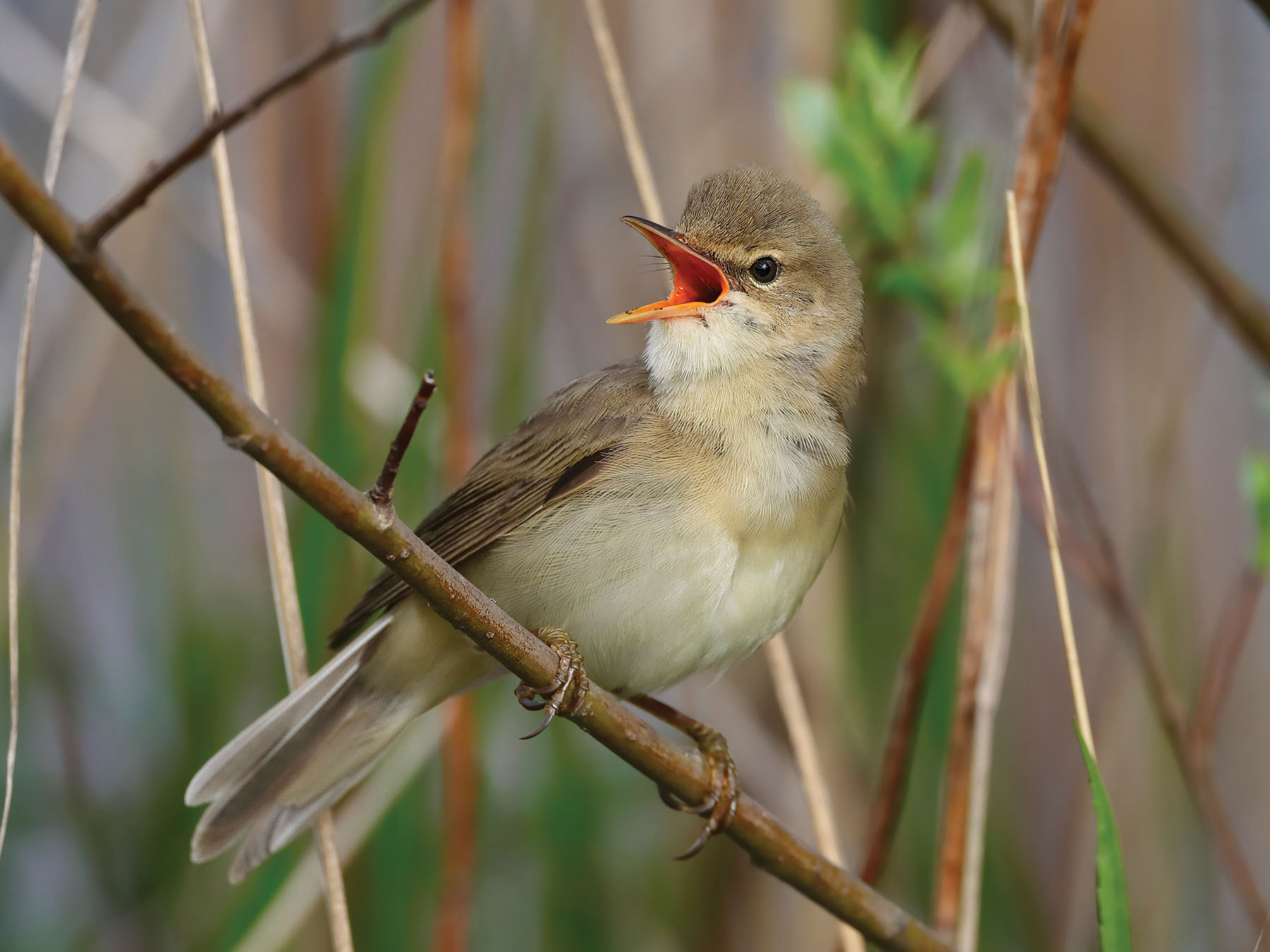
Quick facts
- Length
- 12.5–14 cm
- Wingspan
- 17–21 cm
- Weight
- 10–15 g
- Lifespan
- 3–5 years
- Family
- Reed Warblers
- Migration
- Long-distance Migrant
- Global status (IUCN)
- Least Concern
- World population
- 8,750,000 - 16,000,000 mature individuals
- Population trend
- Stable
- Also called
- European Marsh Warbler
- Scientific name
- Acrocephalus palustris
Questions
2Do Marsh Warblers flock?
Marsh warblers gather into mixed-species flocks during migration and spend time on their wintering grounds closely associating with other warblers and similar-sized songbirds.
How to attract Marsh Warblers?
With numbers of marsh warblers at such a dangerously low level, it’s unlikely that you’ll be lucky enough to attract one, but never say never!
They prefer tall, overgrown vegetation, with plants such as willowherb and nettles. A nearby water source is important, and a presence of aphids as a food source will also be appealing.
Sources
3- 1BirdLife International. 2019. Acrocephalus palustris (amended version of 2016 assessment). The IUCN Red List of Threatened Species 2019: e.T22714741A155434933. Source (opens in a new tab)
- 2EBCC (2015)
- 3BirdLife International. 2019. Acrocephalus palustris (amended version of 2016 assessment). The IUCN Red List of Threatened Species 2019: e.T22714741A155434933. Source (opens in a new tab)

Checked by
Nathan Cope, founder and editor
Nathan founded Birdfact and leads its writers and contributors in the UK, the US and Canada. He has watched and studied birds for more than ten years, and checks every article and species guide before it’s published.