


Chiffchaff
Common Chiffchaff · Phylloscopus collybita
By the Birdfact teamChecked by Nathan Cope
On this page14 sections
How to recognise it
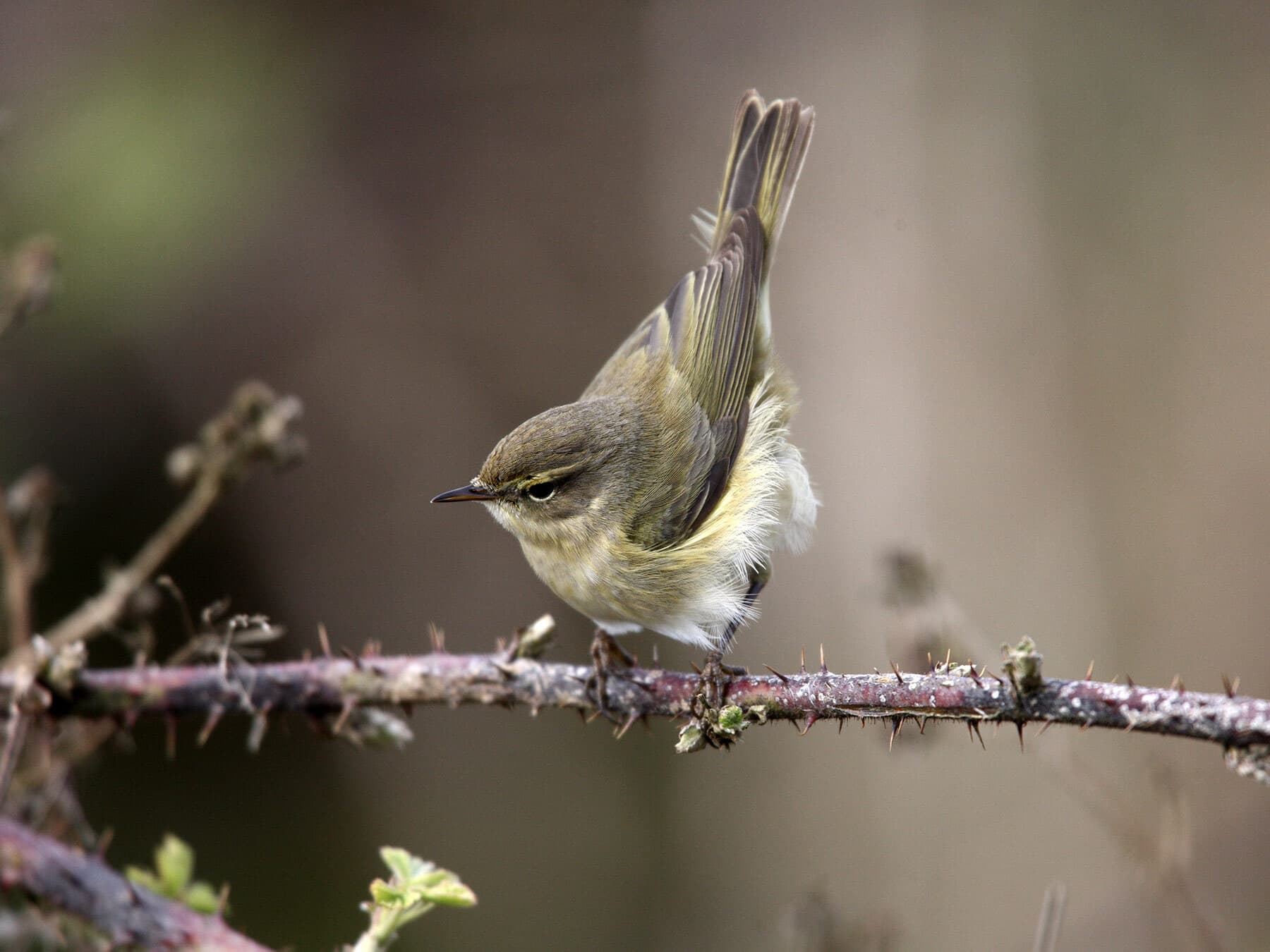
The Chiffchaff is a small, olive-brown warbler with a pale eye stripe and faint wing bars. Its underparts are typically pale with a yellowish tinge, while the upperparts are olive-green to brown. The bird has short, rounded wings and a slightly forked tail.
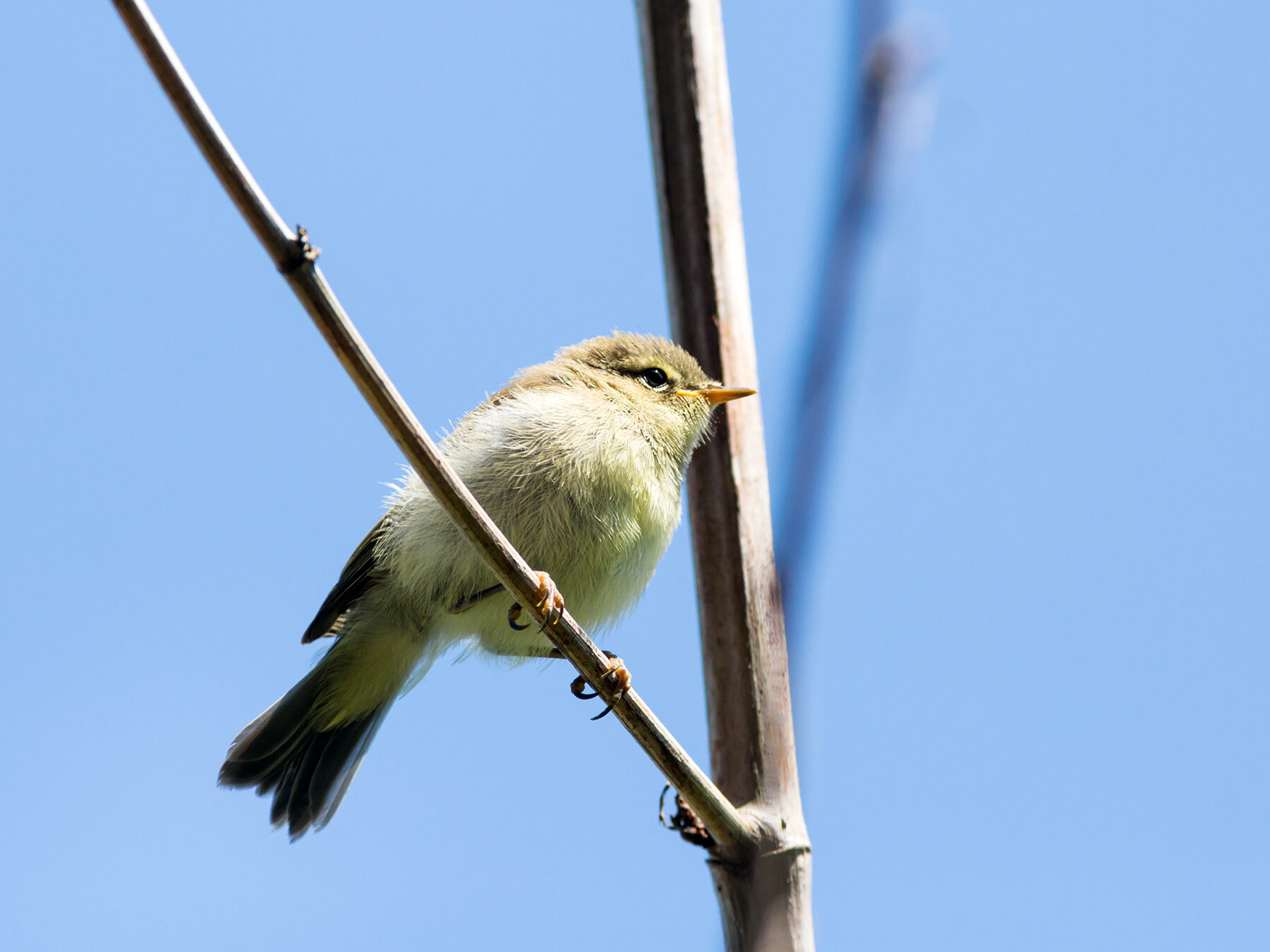
Males and females are virtually identical in appearance, with females being slightly smaller on average. Juveniles closely resemble adults but may appear slightly duller and more yellow-tinged overall.
Its size
Adults- Length
- 10–12 cm
- Wingspan
- 15–21 cm
- Weight
- 6–10 g
Its song and calls
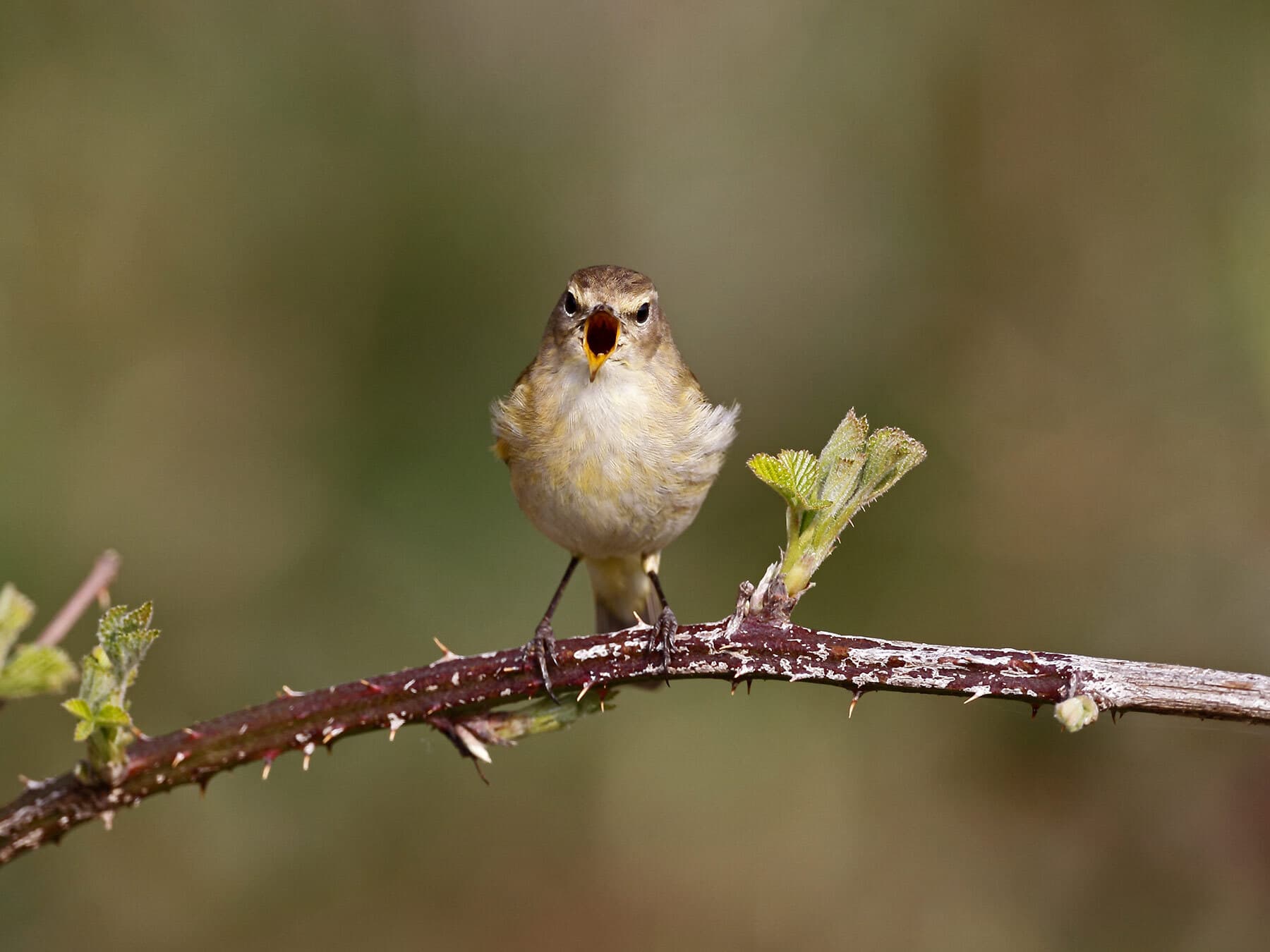
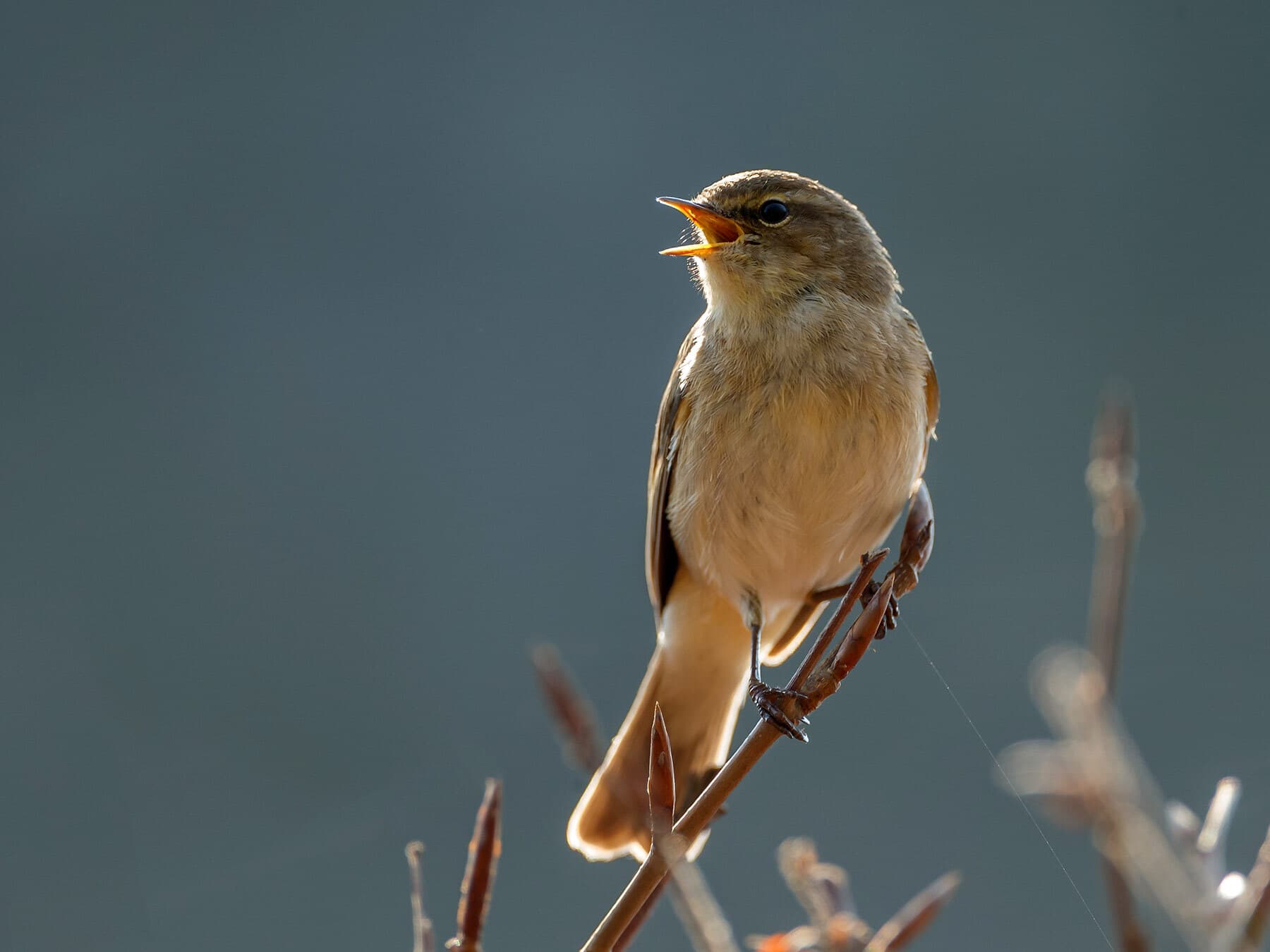
The name of the bird derives from its loud often repeated song of, ‘chiff-chaff, chiff-chaff, chiff-chaff’. The call is a single syllable, ‘hweet’.
- Song0:00 / 1:32
Recorded in Greater London, England · May 2013
- Call0:00 / 0:17
Recorded in County Limerick, Ireland · July 2025
When and where to see it
OctoberLeaving
Most recorded in October
- 1. Vale of Glamorgan2.1%
- 2. Pembrokeshire2.1%
- 3. Cornwall1.9%
- 4. Isle of Wight1.8%
- 5. Dorset1.7%
Each dot is a county, state or province: the bigger and darker, the larger the bird’s share of that place’s bird records that month. Grey dots: no regular records. The ringed point is the centre of the bird’s records this month; the arrow shows how it moved since last month, and the dashed loop its path through the year. “Arrivals” colours places where it becomes regular this month (orange) or is in its last regular month (grey). GBIF eBird Observation Dataset, 2019–2024. Map data: Natural Earth, US Census Bureau; place centres © OpenStreetMap contributors.
In your area
See when the Chiffchaff is recorded in your county, state or province.
How often the Chiffchaff turns up in the UK and Ireland through the year, from birdwatchers' records.
United Kingdom
Summer visitor · all year · most records in April
Ireland
Summer visitor · all year · most records in April
Show as a table
| Month | United Kingdom | Ireland |
|---|---|---|
| January | 0.22% (regular) | 0.14% (regular) |
| February | 0.22% (regular) | 0.082% (regular) |
| March | 1.5% (regular) | 0.55% (regular) |
| April | 2.3% (regular) | 1.1% (regular) |
| May | 2.0% (regular) | 0.92% (regular) |
| June | 1.9% (regular) | 0.80% (regular) |
| July | 1.5% (regular) | 0.41% (regular) |
| August | 1.5% (regular) | 0.32% (regular) |
| September | 1.7% (regular) | 0.47% (regular) |
| October | 1.0% (regular) | 0.35% (regular) |
| November | 0.38% (regular) | 0.12% (regular) |
| December | 0.29% (regular) | 0.10% (regular) |
Recorded regularly in
Worldwide: recorded regularly in 95 countries
Countries where it was recorded in at least 3 of the 6 years 2019–2024. Linked countries have their own bird list.
Europe (50)
- Åland Islands
- Albania
- Andorra
- Austria
- Belarus
- Belgium
- Bosnia & Herzegovina
- Bulgaria
- Croatia
- Czechia
- Denmark
- Estonia
- Faroe Islands
- Finland
- France
- Germany
- Gibraltar
- Greece
- Guernsey
- Hungary
- Iceland
- Ireland
- Isle of Man
- Italy
- Jersey
- Kosovo
- Latvia
- Liechtenstein
- Lithuania
- Luxembourg
- Malta
- Moldova
- Monaco
- Montenegro
- Netherlands
- North Macedonia
- Norway
- Poland
- Portugal
- Romania
- Russia
- San Marino
- Serbia
- Slovakia
- Slovenia
- Spain
- Sweden
- Switzerland
- Ukraine
- United Kingdom
Africa (14)
Data: EOD – eBird Observation Dataset (Cornell Lab of Ornithology), accessed via GBIF.org, CC BY 4.0. Records from 2019–2024, aggregated and filtered by Birdfact. How these lists are made
There are six sub-species of the common chiffchaff with the common chiffchaff (Siberia) being monotypic, that is to say this particular subspecies is unique and has no other related subspecies. Whilst the common chiffchaff (common) is polytypic, meaning having a number of different variants and in this case it relates to a further five variants. The distribution range extends across the whole of Europe, including the United Kingdom, Canary Islands and the Baltic States, through Russia and the Caucasus, Kazakhstan, Turkey, Iraq, Iran, the Middle East, through north, west and east Africa, the Indian sub-continent, Mongolia, China, South Korea and Japan. Those birds who breed within the northern most areas of the range migrate south in late autumn.
Signs and Spotting tips
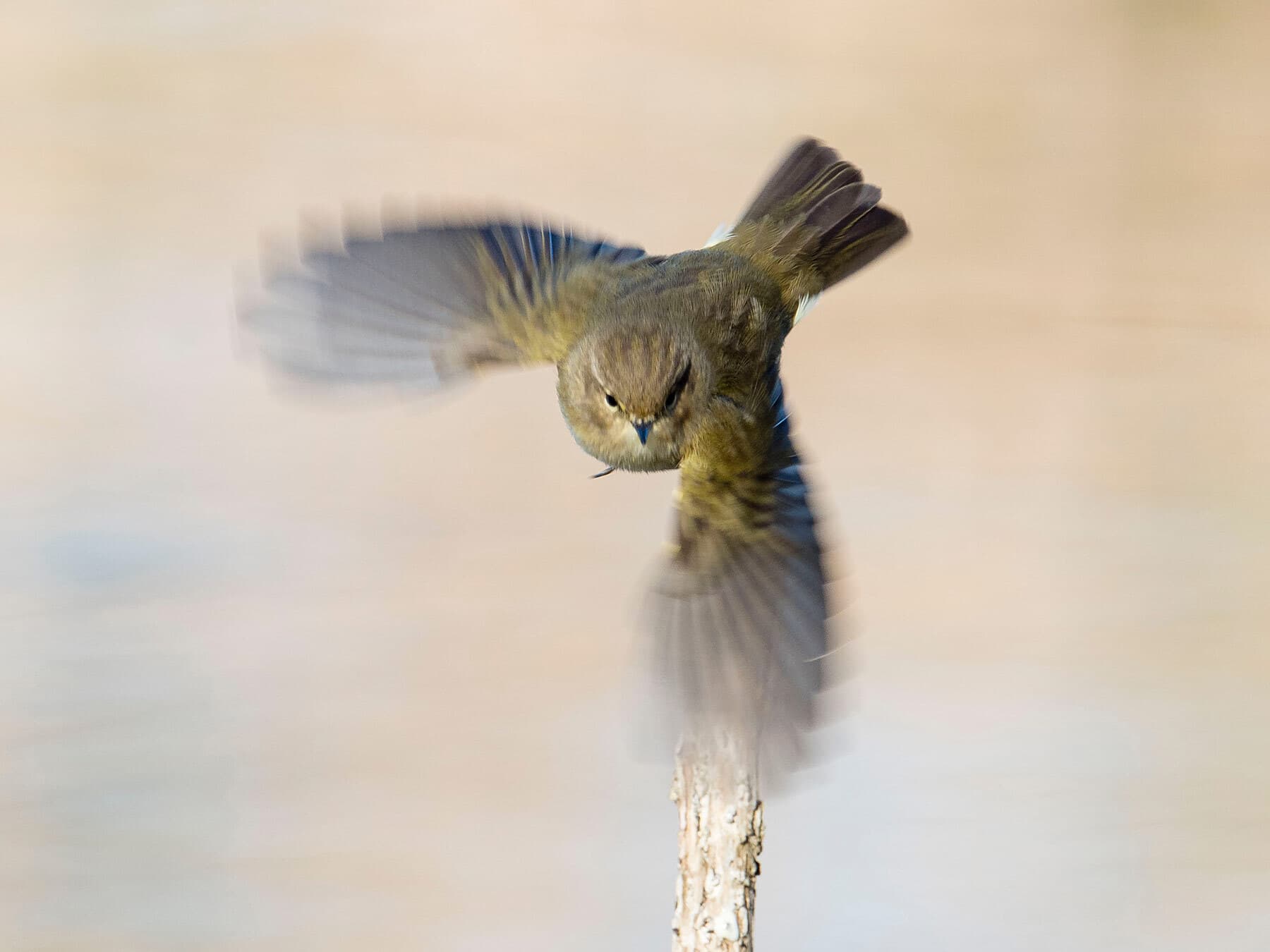
During migration it is often found roosting in bushes and areas of low lying vegetation near water and when returning early to its breeding grounds the common chiffchaff is a prolific singer and one of the earliest species to arrive at the onset of Spring. Weighing only seven grams on average, the chiffchaff is a tiny compact bird recognised by its distinctive and frequently repeated song. Careful observation is required to differentiate it from fellow warblers such as the Willow Warbler or Wood Warbler. The common chiffchaff has a unique downward bobbing movement of its tail which is a further aid to identification. During the summer it is more likely to be found in woodlands and parks and occasionally gardens with taller trees.
What it eats
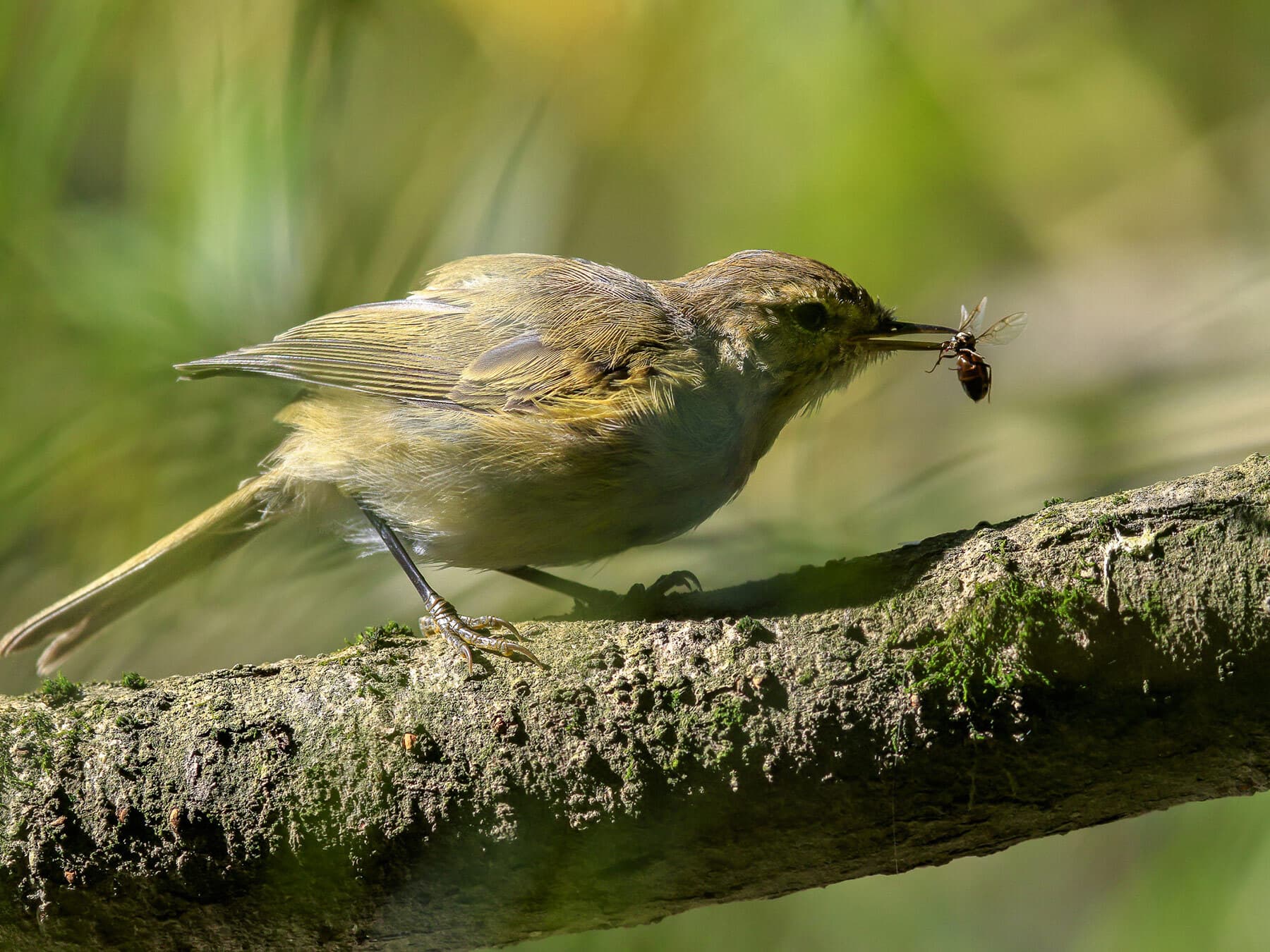
Chiffchaffs are insectivorous and extremely active during daylight, feeding mainly on flies and foraging from leaves amongst trees and bushes, as well as on the ground. Their normal daily intake of flies will usually be equal to a third of their bodyweight.
Nesting and breeding
Common chiffchaffs pair at the beginning of each breeding season which generally lasts between April through to August. A different mate is chosen each breeding season. The breeding range in the main, encompasses Europe and Russia. The adult male will arrive at the breeding grounds up to three weeks prior to the female and choose a territory which it will fiercely protect from all other birds. Once a mate is chosen the female alone will construct a small dome shaped nest out of grasses which is often lined with other soft vegetation and feathers. The nest is built low down in dense vegetation such as thickets or bramble bushes. In the southern and central breeding areas it is normal for the female to produce two broods per season whilst in the cooler north, with shorter summers, one brood is produced annually. Each brood will consist of between 2 – 7 cream coloured eggs with dark spots which are incubated by the female for an average of thirteen days. Fledging occurs some two weeks after hatching and whilst the hatchlings are in the nest they are predominantly cared for and fed by the female with the male taking almost no part at all.
Behaviour
Chiffchaffs are restless and active birds, constantly flitting through foliage in search of insects. They often hover while foraging, a distinctive behaviour among warblers.
During the breeding season, males become highly territorial, vigorously defending their areas with persistent singing and occasional aerial displays.
Lifespan and predators
The average life expectancy for a chiffchaff is up to five years although there is a significant mortality rate during the first twelve months after hatching.
Conservation
While the Chiffchaff is currently listed as Least Concern, it faces threats from habitat loss and climate change. Conservation efforts focus on preserving woodland habitats and monitoring population trends across its range.
It benefits from protection under the Wildlife and Countryside Act in the UK.
What does a Chiffchaff look like?
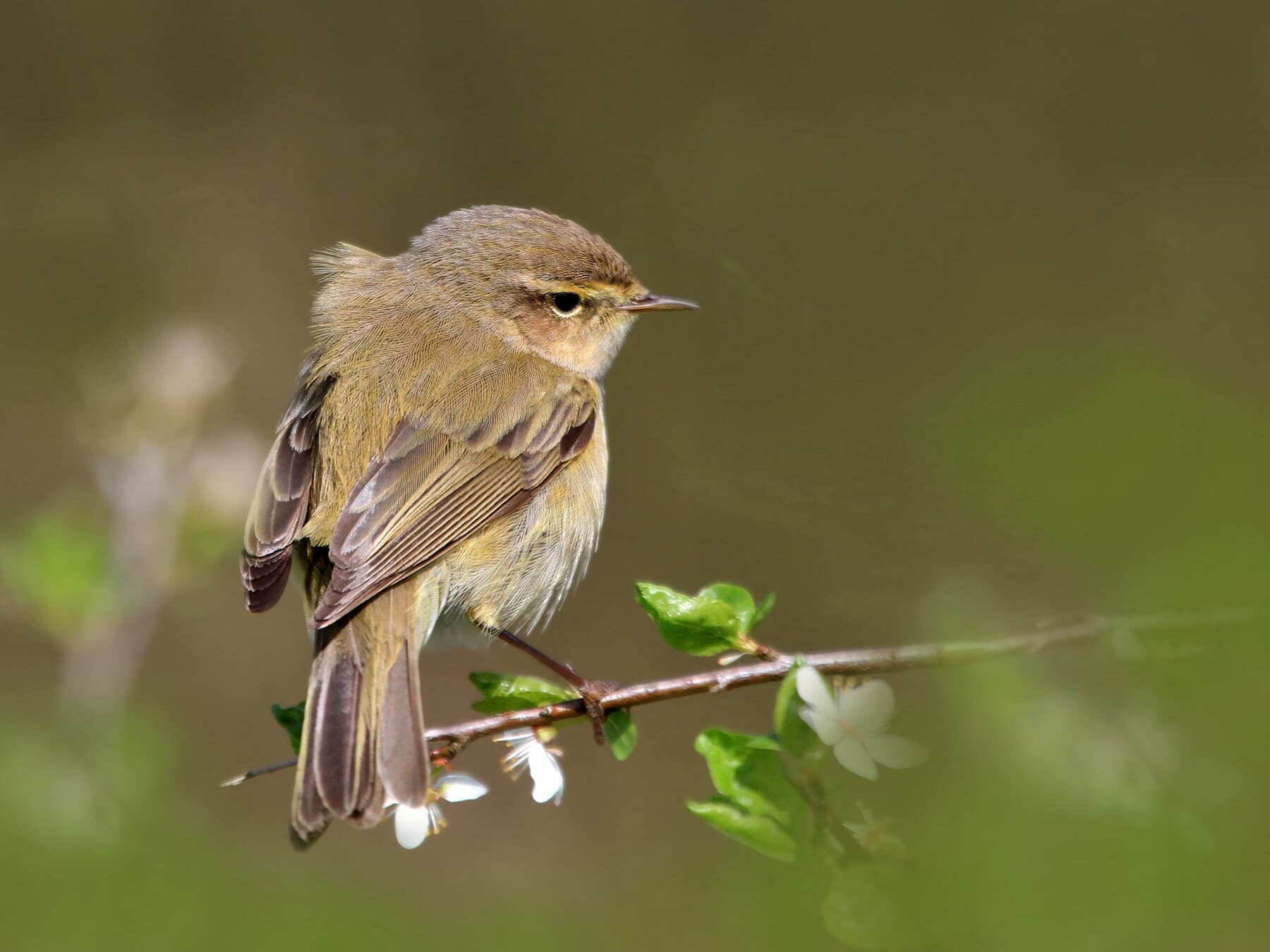
The adult chiffchaff is predominantly mid brown tinged with olive green to the upper body and wings and a much paler yellowy buff brown to the underparts. The top of the head and nape mirror the colour of the upperparts whilst the sides of the neck, chin and throat are similar in colour to that of the breast, belly, flanks and vent. Above the eye there is a narrow pale stripe extending from the base of the bill rearwards; this is commonly referred to as the supercilium. From immediately behind the eye a dark stripe extends back to the nape. The iris is dark brown and there is a subtle thin white crescent under the eye. The wings are short and round and the primary and secondary flight feathers are brown, as are the tail feathers. The legs are thin and black and the bill a very dark brown. Although the adult female is smaller than the adult male, they are identical in plumage and colouration. Juveniles are similar to adults but browner to the upperparts.
Similar birds
Often mistaken for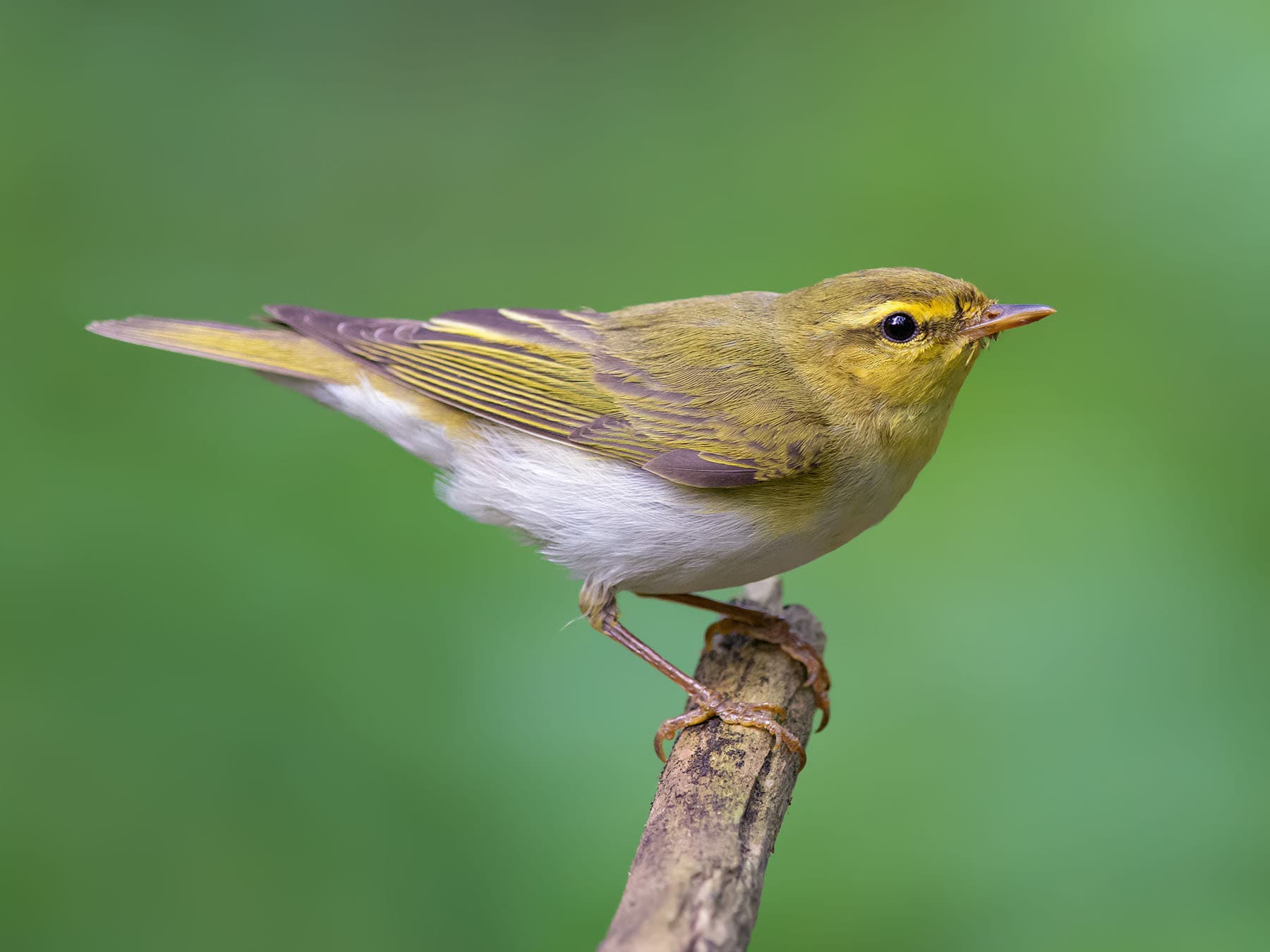
More photos
2 photos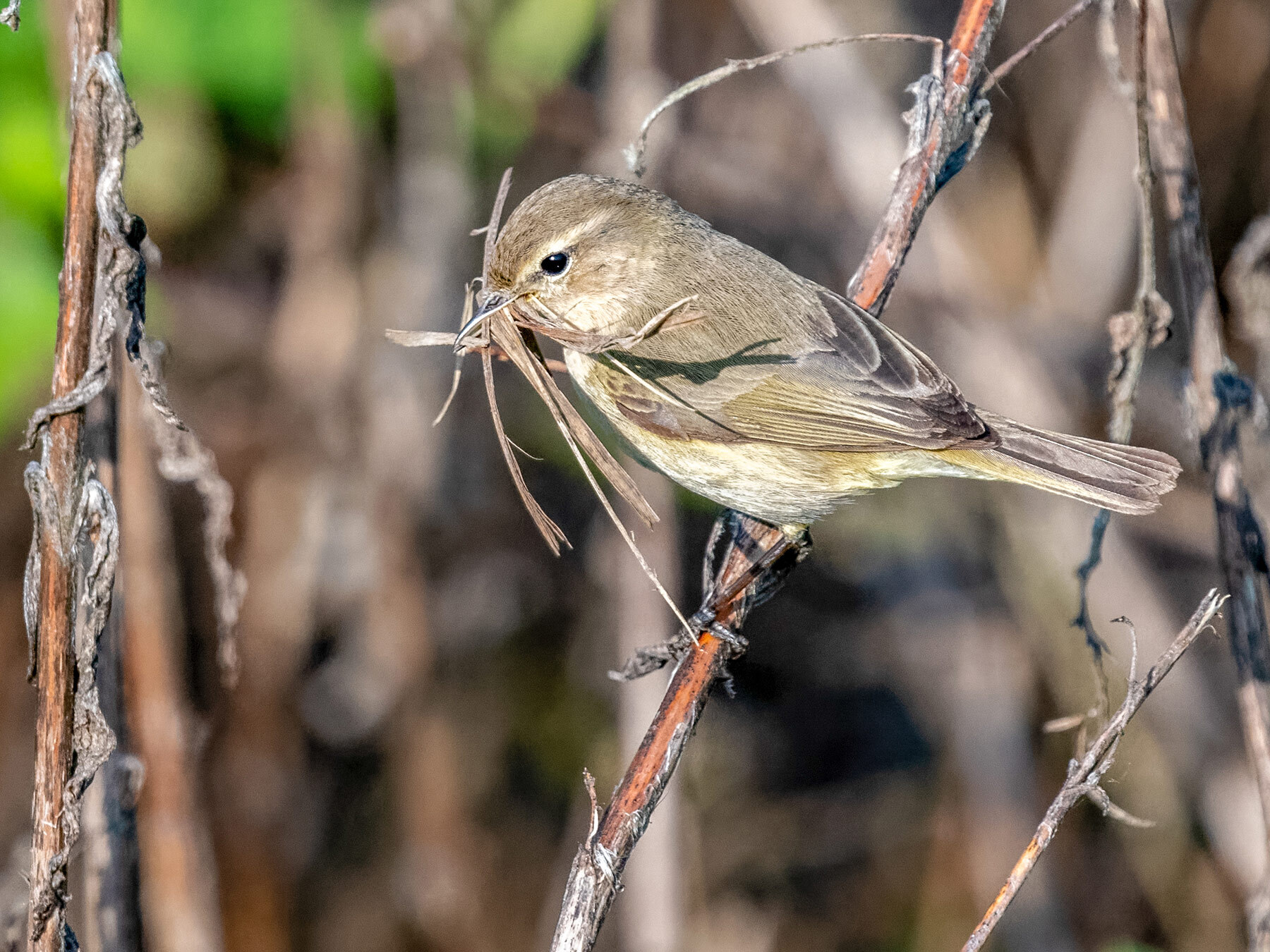
Quick facts
- Length
- 10–12 cm
- Wingspan
- 15–21 cm
- Weight
- 6–10 g
- Lifespan
- 2–3 years · oldest recorded 8 years
- Family
- Leaf Warblers
- Migration
- Partial migrant
- Global status (IUCN)
- Least Concern
- World population
- 10,000,000 - 500,000,000 mature individuals
- Population trend
- Increasing
- Also called
- Common Chiffchaff
- Scientific name
- Phylloscopus collybita
Sources
4- 1BirdLife International. 2019. Phylloscopus collybita (amended version of 2017 assessment). The IUCN Red List of Threatened Species 2019: e.T103843725A155613186. Source (opens in a new tab)
- 2EBCC (2015)
- 3BirdLife International. 2019. Phylloscopus collybita (amended version of 2017 assessment). The IUCN Red List of Threatened Species 2019: e.T103843725A155613186. Source (opens in a new tab)
- 4Fransson et al., EURING list of longevity records for European birds (2010) Source (opens in a new tab)

Checked by
Nathan Cope, founder and editor
Nathan founded Birdfact and leads its writers and contributors in the UK, the US and Canada. He has watched and studied birds for more than ten years, and checks every article and species guide before it’s published.