


Wood Warbler
Phylloscopus sibilatrix
By the Birdfact teamChecked by Nathan Cope
On this page15 sections
How to recognise it
What do Wood Warblers look like?
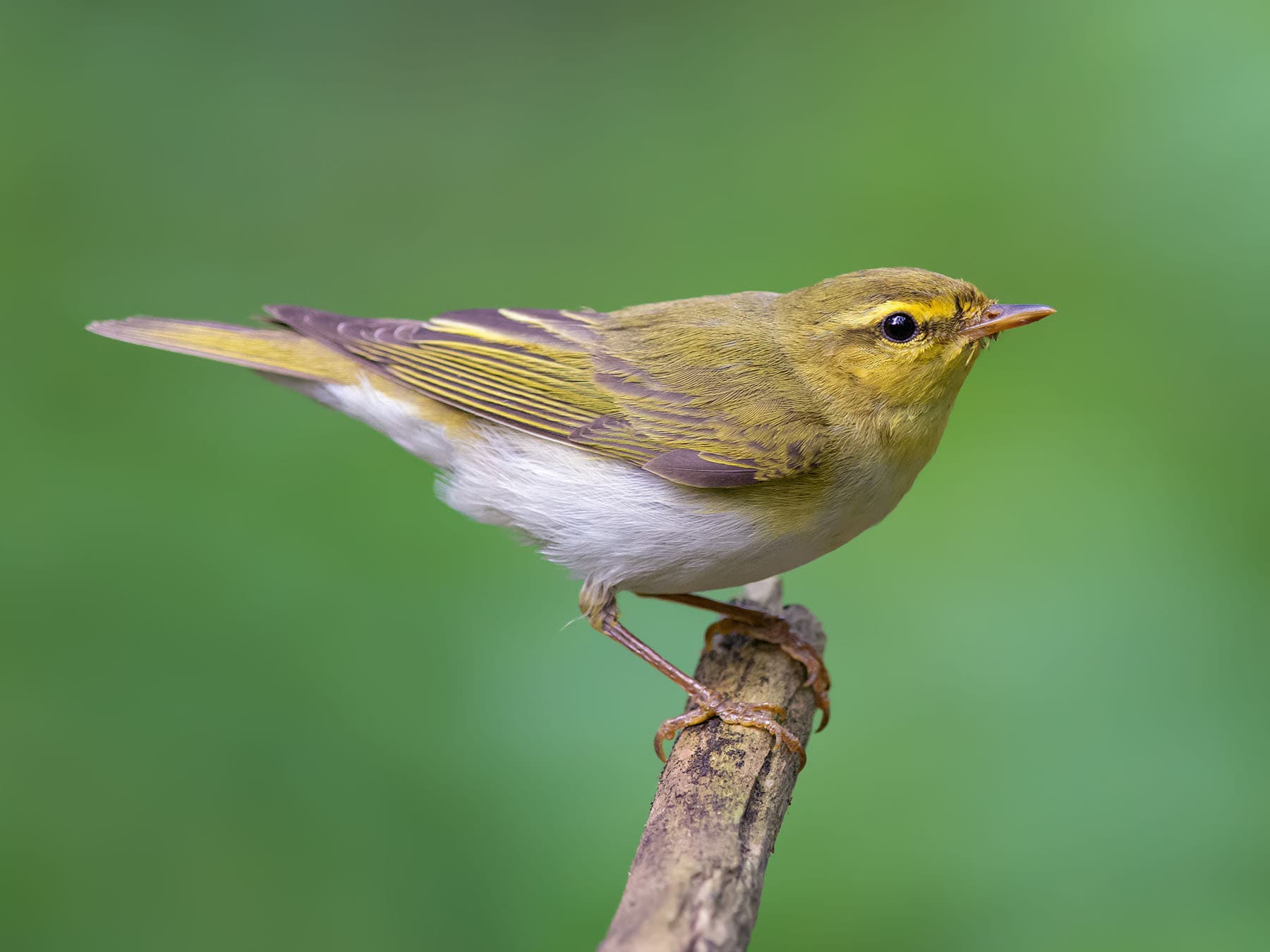
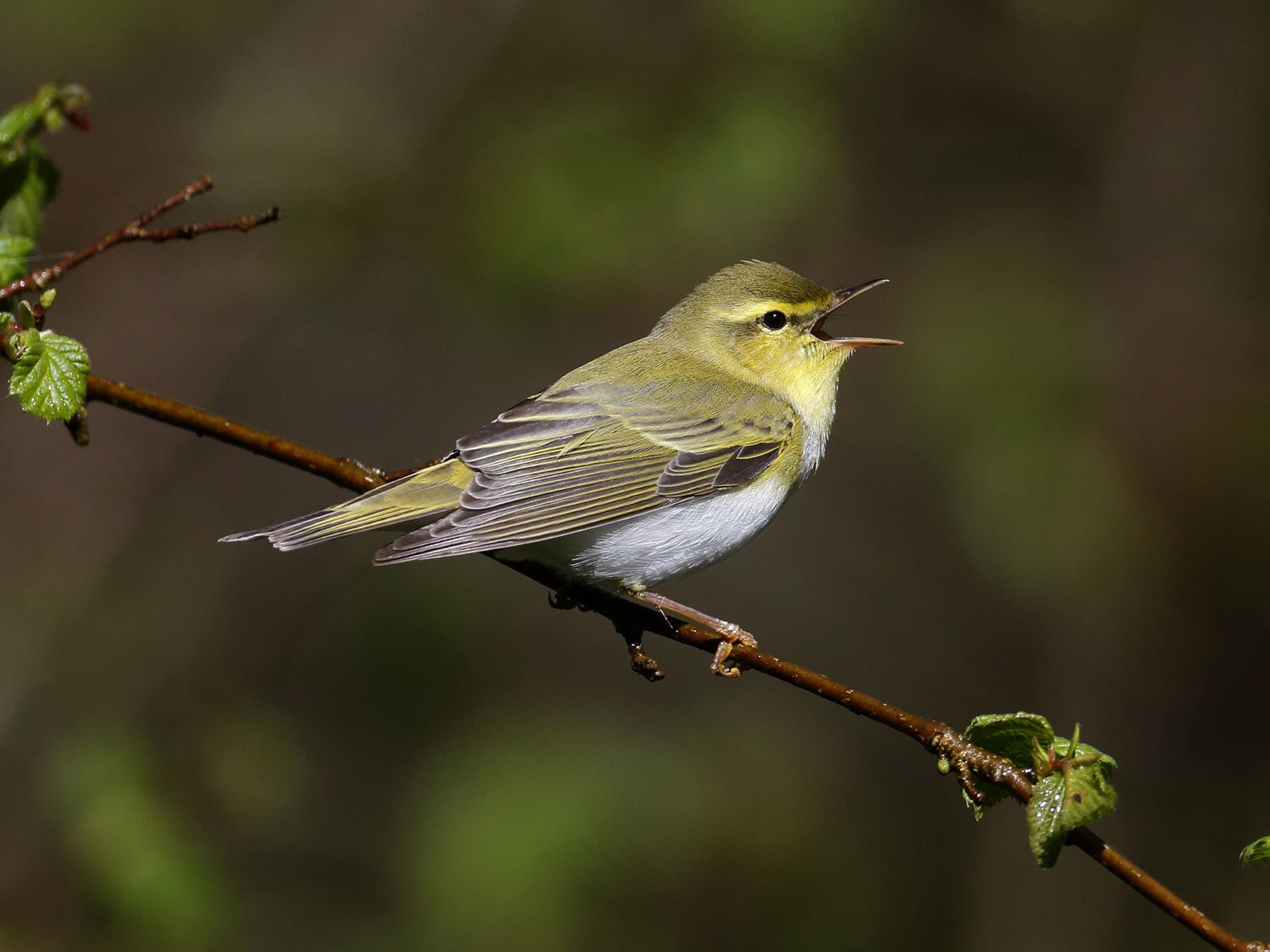
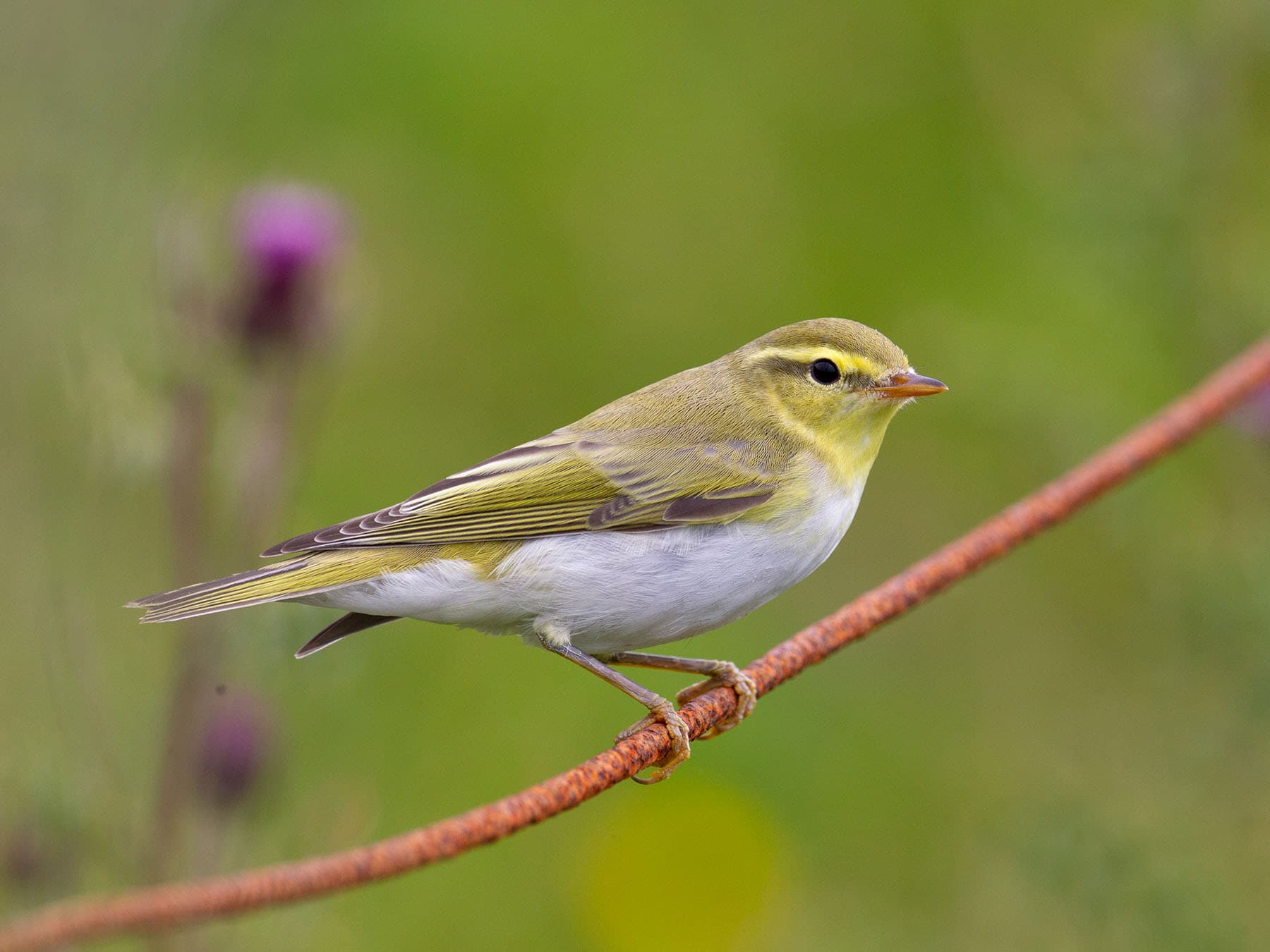
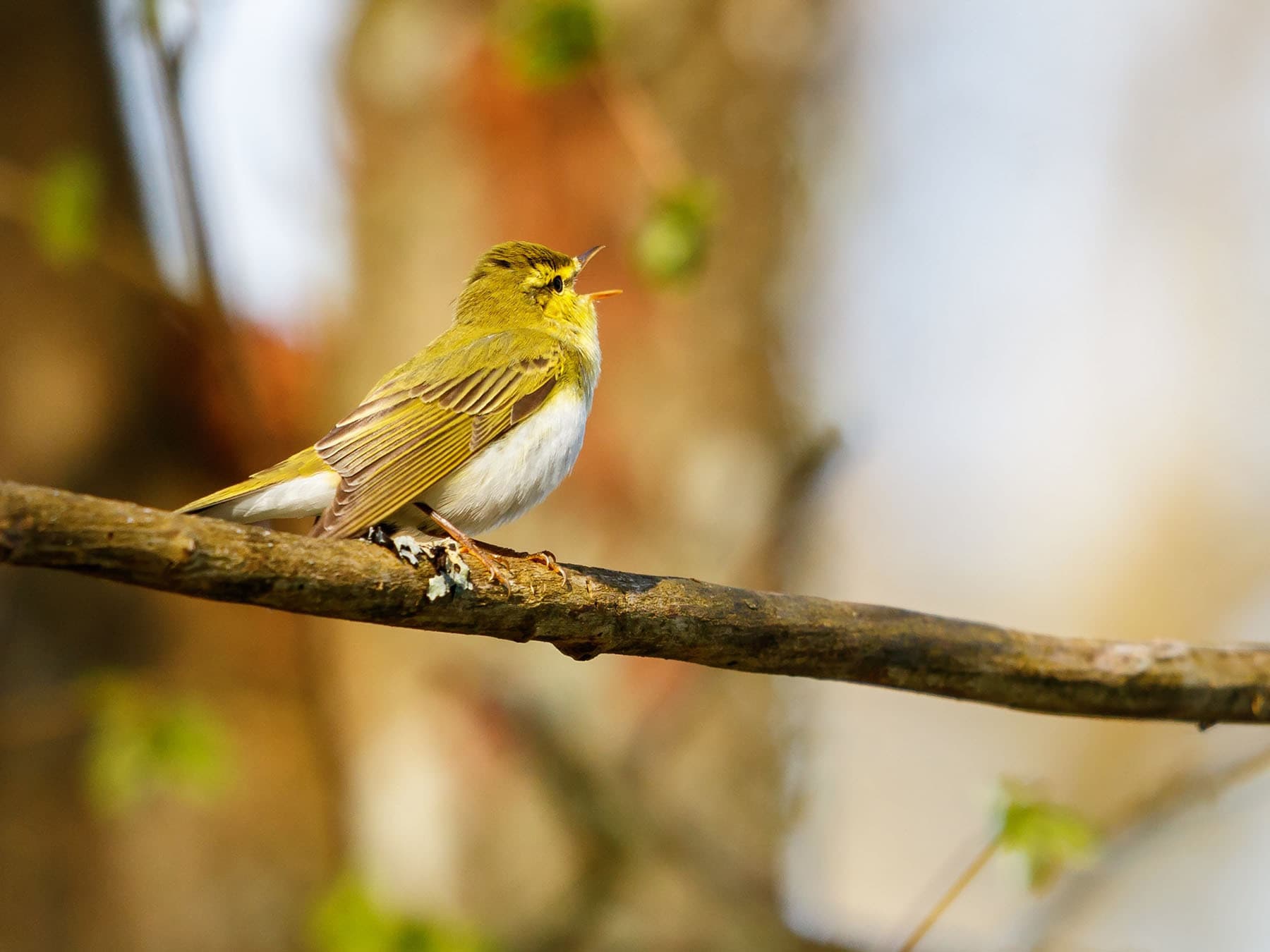
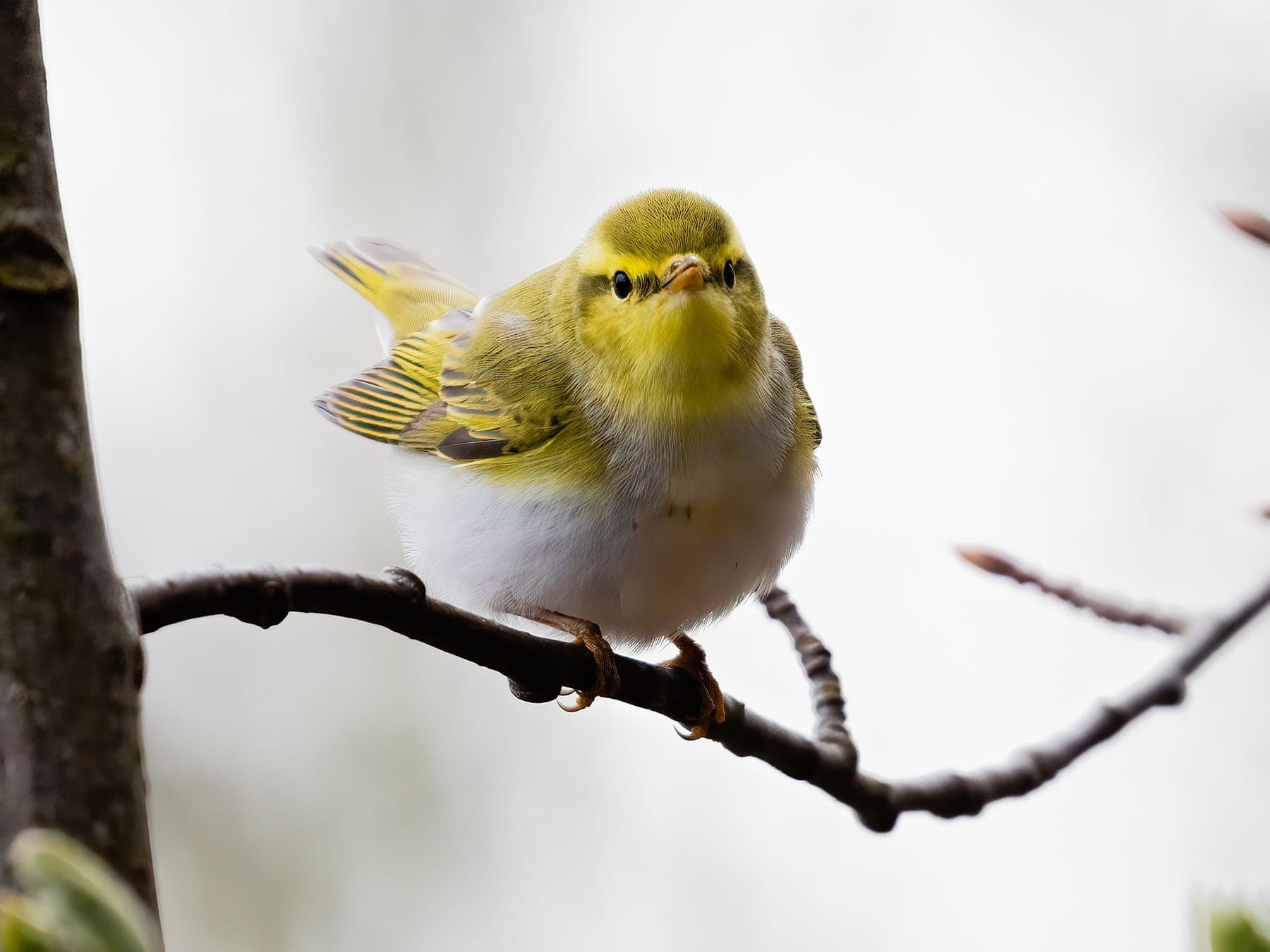
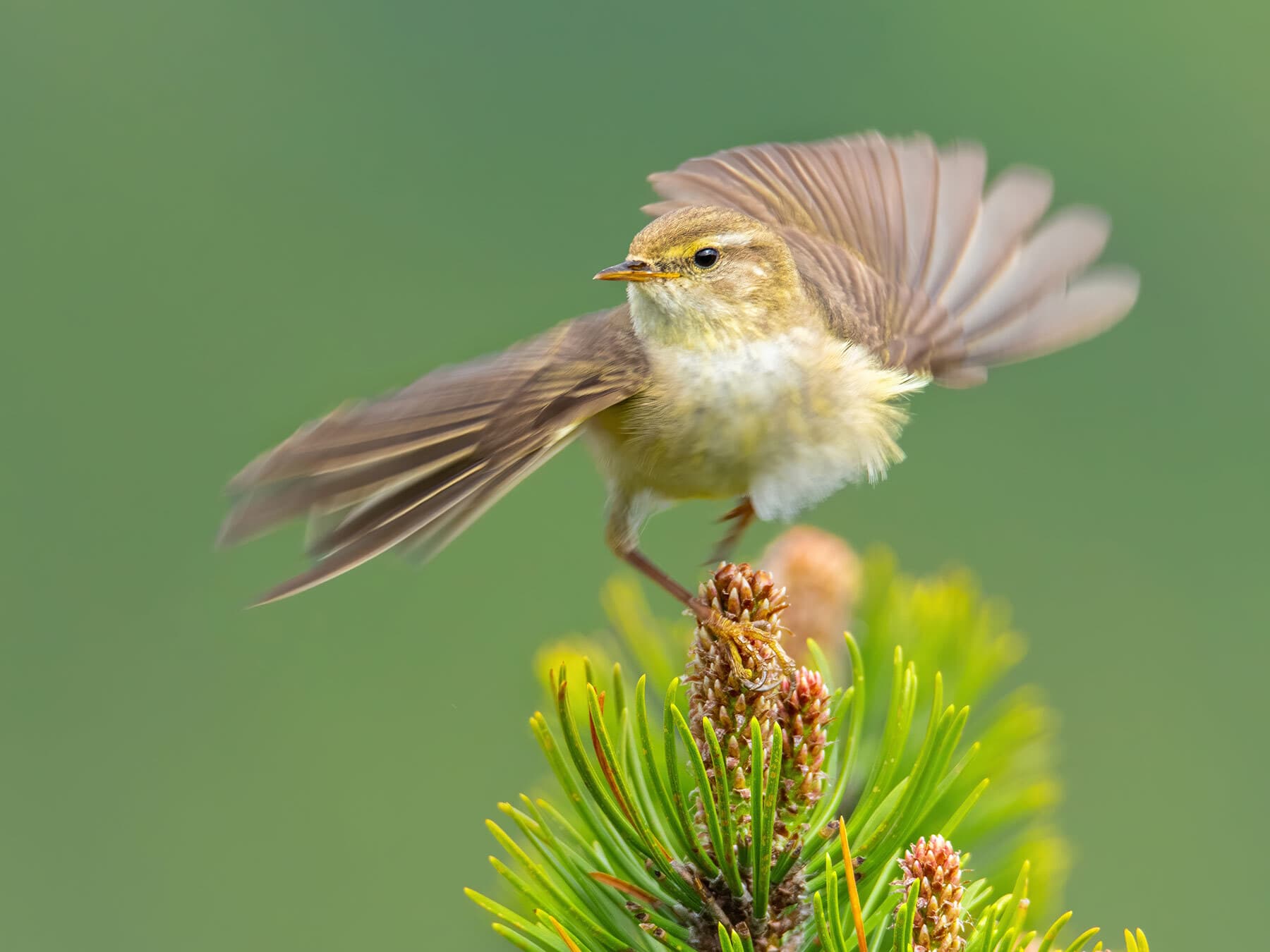
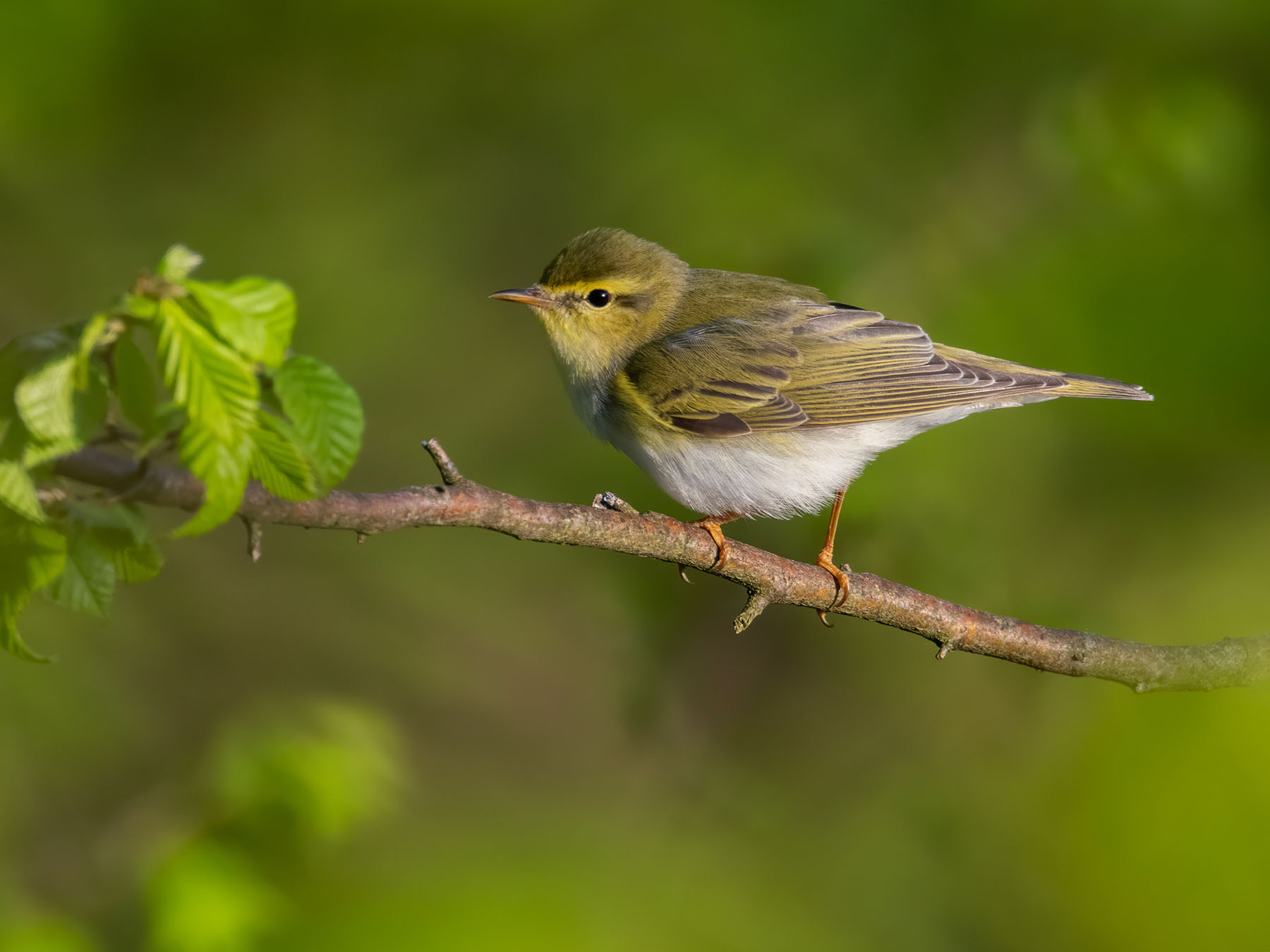
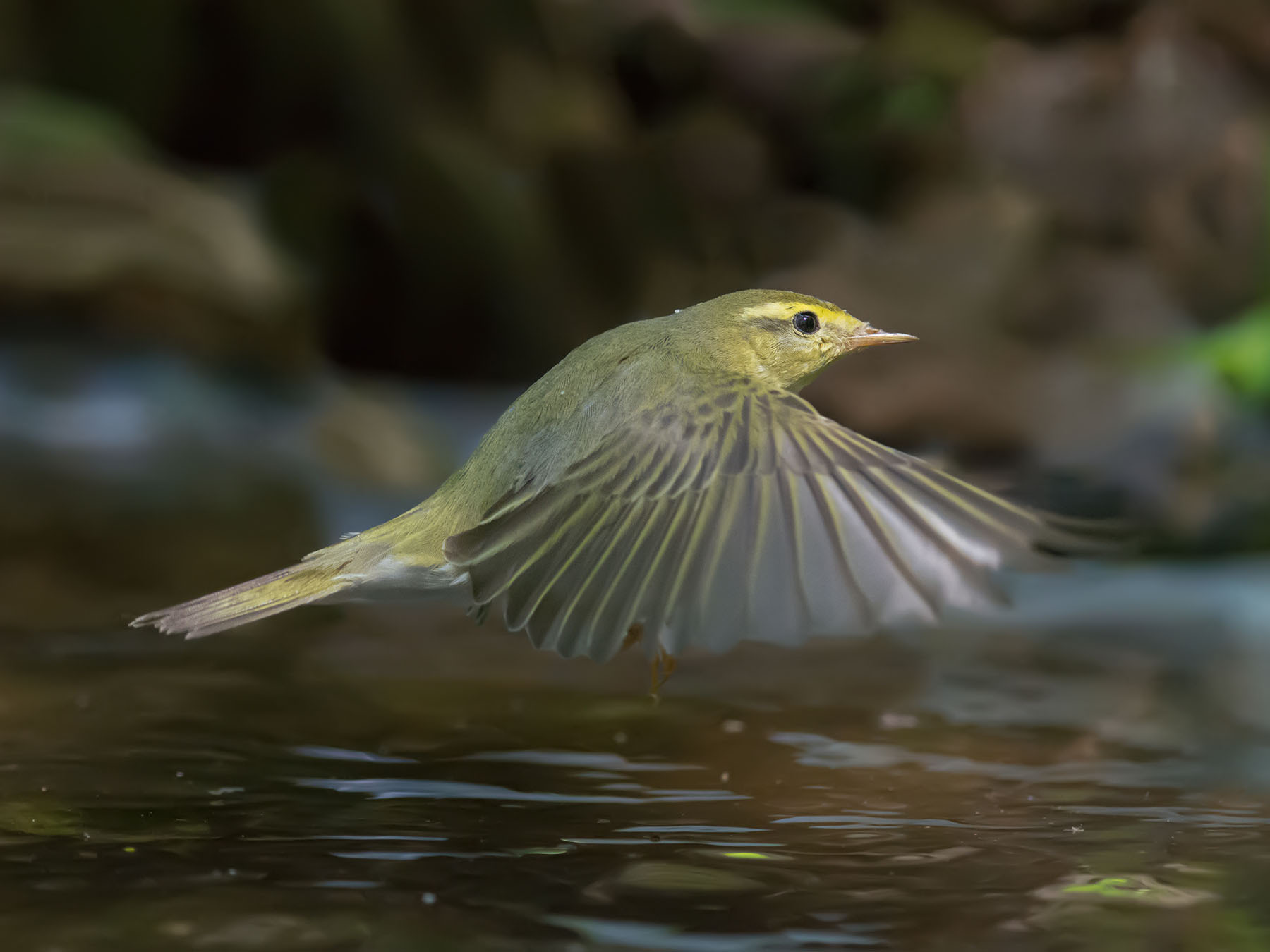
Wood warblers display the typical colouring shared by other leaf warblers, including the chiffchaff, willow warbler and Bonelli’s warbler, with green upper parts and white underparts.
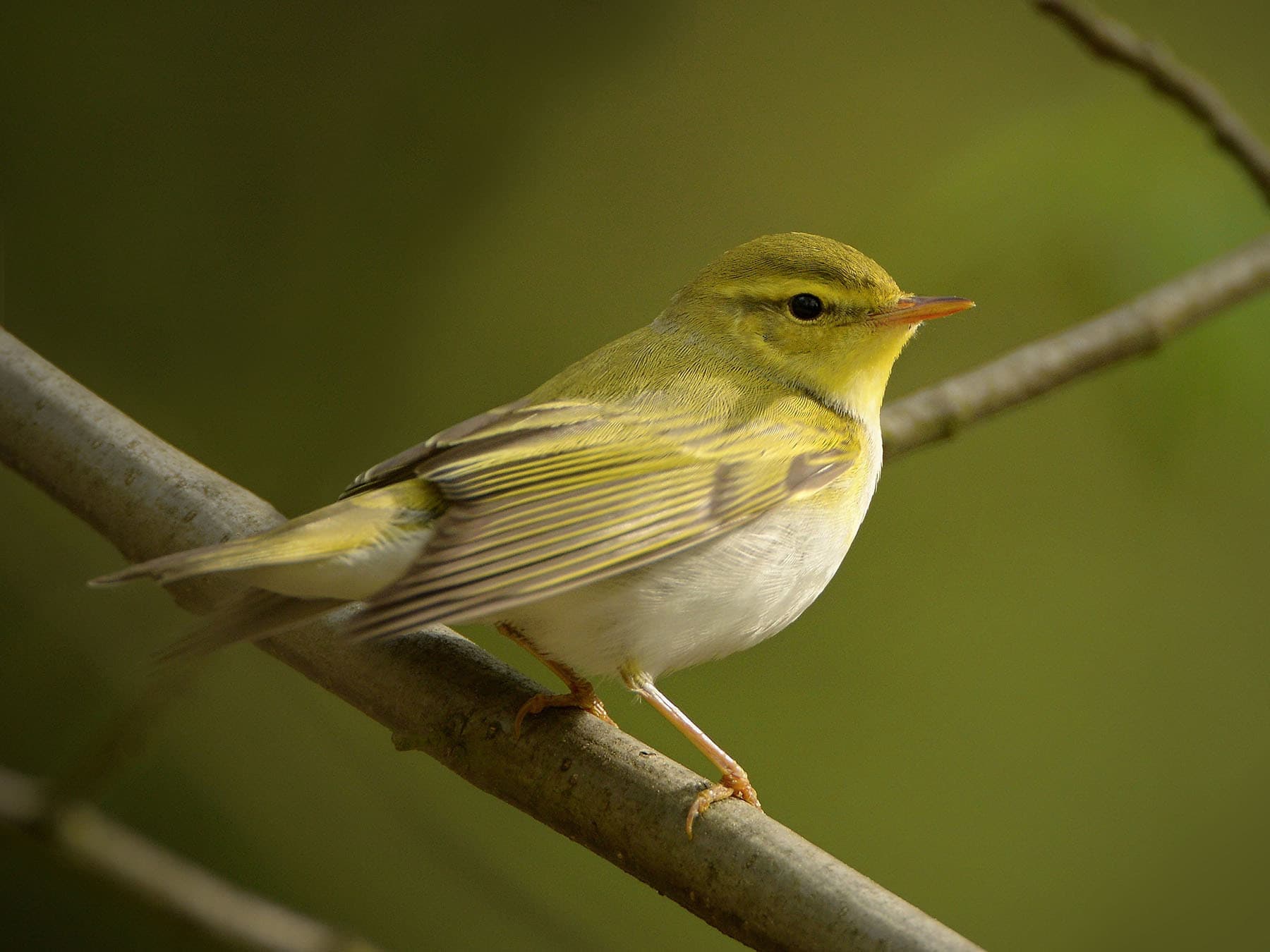
A distinguishing feature of the wood warbler is its lemon-yellow upper breast, yellow stripe above the eye and yellow throat. It has a long tail and its wings are long and pointed.
Female and male wood warblers are alike in size and plumage.
Juvenile wood warblers have a greyish tinge to their upper parts. Their plumage is more washed out than that of adult birds, and the yellow colouring on their throats and breasts is not as clear or extensive as that seen in adults of the species.
How big are Wood Warblers
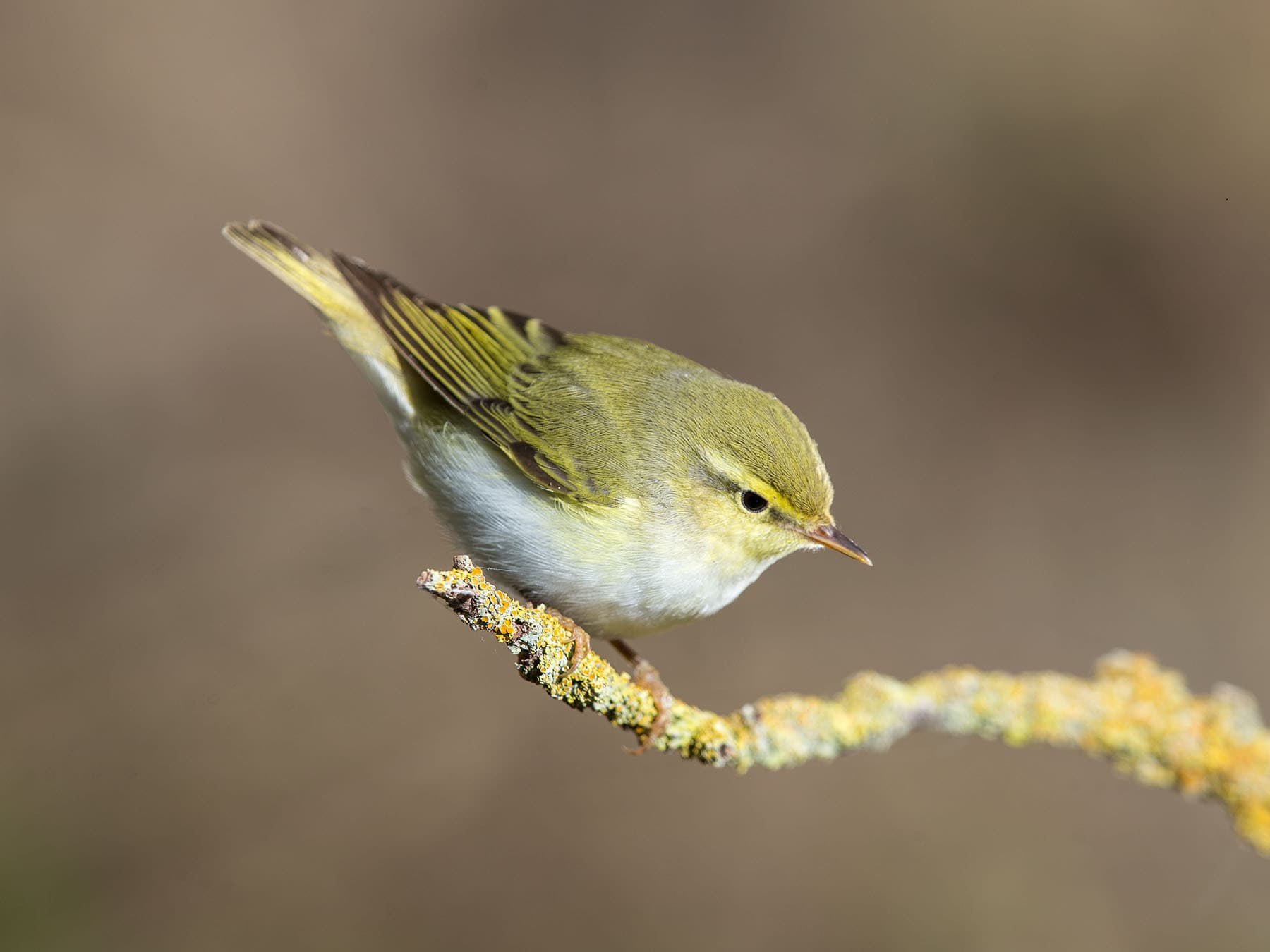
There is no difference in size between male and female wood warblers. Adults are roughly the same size as robins or goldfinches. The average measurement range for the species is:
- Length: 12 cm to 13 cm (4.7 in to 5.1 in)
- Wingspan: 19.5 cm to 24 cm (7.7 in to 9.4 in)
- Weight: 8 g to 12 g (0.3 oz to 0.4 oz)
Its size
Adults- Length
- 11–12.5 cm
- Wingspan
- 20–24 cm
- Weight
- 8–15 g
Its song and calls
What sound does a Wood Warbler make?
Wood warblers have two song types: a high-pitched metallic flowing trill of notes, likened to the sound made by a coin spinning on a tabletop, and a rapid series of descending lower pitch notes. Contact calls heard in aggression or nest defence include a harsh ‘pip’ or ‘sip’ sound.
- Song0:00 / 0:37
Recorded in Noord-Holland, Netherlands · May 2021
- Call0:00 / 0:22
Recorded in Normandie, France · April 2022
When and where to see it
OctoberMostly absent
Most recorded in October
- 1. Shetland Islandsunder 0.1%
- 2. Norfolkunder 0.1%
- 3. Eilean Siarunder 0.1%
- 4. Suffolkunder 0.1%
- 5. East Riding of Yorkshireunder 0.1%
Each dot is a county, state or province: the bigger and darker, the larger the bird’s share of that place’s bird records that month. Grey dots: no regular records. The ringed point is the centre of the bird’s records this month; the arrow shows how it moved since last month, and the dashed loop its path through the year. “Arrivals” colours places where it becomes regular this month (orange) or is in its last regular month (grey). GBIF eBird Observation Dataset, 2019–2024. Map data: Natural Earth, US Census Bureau; place centres © OpenStreetMap contributors.
In your area
See when the Wood Warbler is recorded in your county, state or province.
How often the Wood Warbler turns up in the UK through the year, from birdwatchers' records.
United Kingdom
Summer visitor · regularly Apr–Oct · most records in May
Show as a table
| Month | United Kingdom |
|---|---|
| January | – |
| February | – |
| March | – |
| April | 0.011% (regular) |
| May | 0.046% (regular) |
| June | 0.025% (regular) |
| July | 0.006% (regular) |
| August | 0.007% (regular) |
| September | 0.007% (regular) |
| October | 0.003% (regular) |
| November | – |
| December | – |
Recorded regularly in
Worldwide: recorded regularly in 66 countries
Countries where it was recorded in at least 3 of the 6 years 2019–2024. Linked countries have their own bird list.
Europe (42)
- Åland Islands
- Albania
- Austria
- Belarus
- Belgium
- Bosnia & Herzegovina
- Bulgaria
- Croatia
- Czechia
- Denmark
- Estonia
- Faroe Islands
- Finland
- France
- Germany
- Greece
- Hungary
- Iceland
- Isle of Man
- Italy
- Kosovo
- Latvia
- Lithuania
- Luxembourg
- Malta
- Moldova
- Montenegro
- Netherlands
- North Macedonia
- Norway
- Poland
- Portugal
- Romania
- Russia
- Serbia
- Slovakia
- Slovenia
- Spain
- Sweden
- Switzerland
- Ukraine
- United Kingdom
Asia (13)
- Armenia
- Cyprus
- Georgia
- Israel
- Jordan
- Kazakhstan
- Lebanon
- Mongolia
- Oman
- Palestinian Territories
- Saudi Arabia
- Turkey
- United Arab Emirates
Data: EOD – eBird Observation Dataset (Cornell Lab of Ornithology), accessed via GBIF.org, CC BY 4.0. Records from 2019–2024, aggregated and filtered by Birdfact. How these lists are made
What is the habitat of a Wood Warbler?
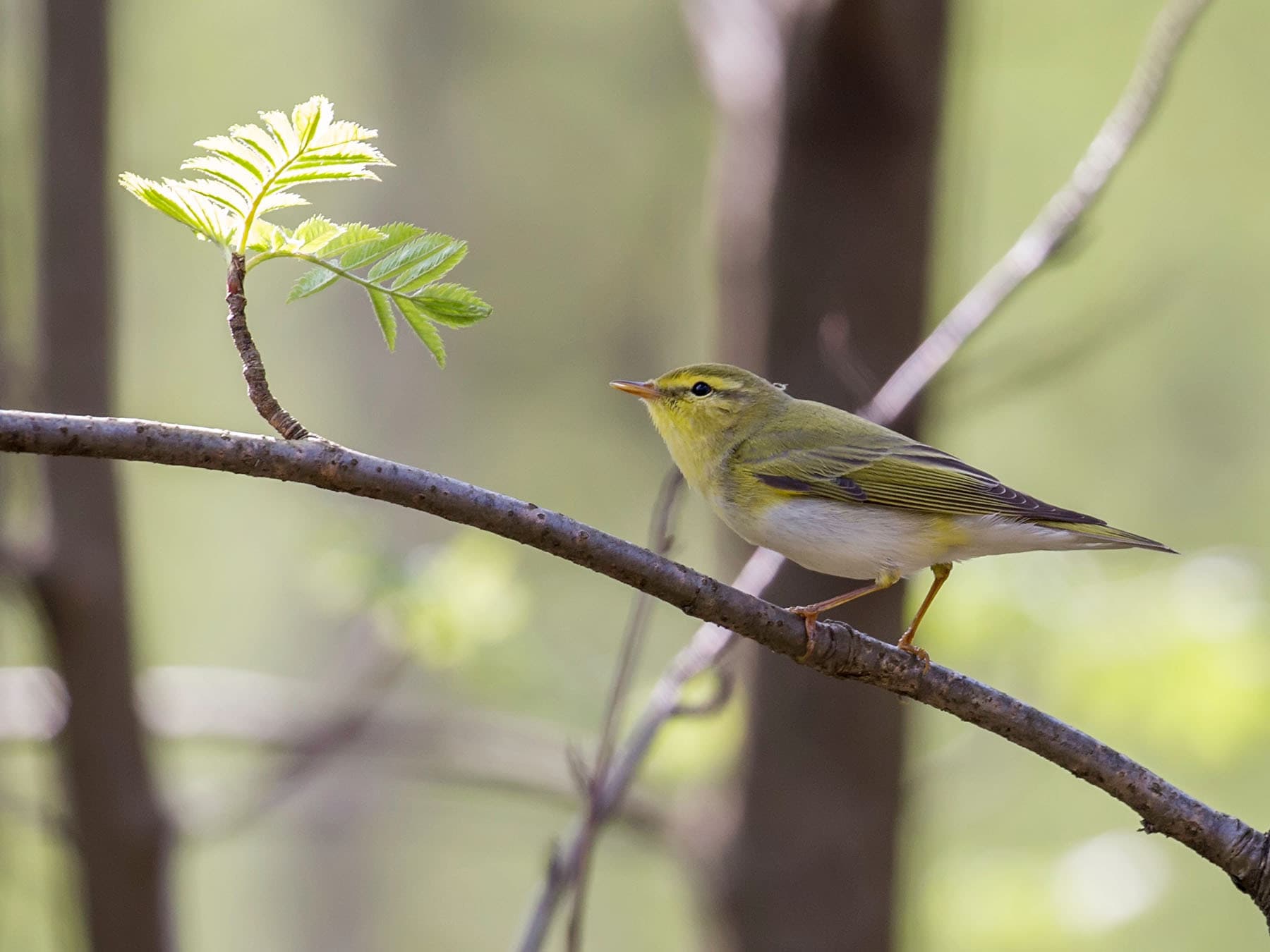
Deciduous woodland with little low-level shrubbery are the most common habitat sought by wood warblers. Beech, oak, hornbeam and sweet chestnut are all popular choices for nesting and foraging.The species prefers closed canopy without clearings, and across Europe, lowland forests are the chief habitat.
In the UK, breeding wood warblers are mainly found in oak woodlands in uplands to the west of the country, which characteristically benefit from a mild, wet Atlantic climate.
What is the range of a Wood Warbler?
Wood warblers breed from the British Isles and western Norway in the west across northern Europe to south-central Siberia in the east.
In the south, the south of France, southern Italy, northern Greece, and north-west Turkey form the extremes of the species’ range, and breeding occasionally takes place further west, into Kazakhstan and the Caucasus region.
Winters are spent south of the Sahara from Senegal in the west, across to South Sudan, and are fairly common winter residents in forests in the Democratic Republic of Congo, Uganda, Rwanda, Kenya and Somalia.
Where do Wood Warblers live?
Within Europe, Germany, Estonia, and Latvia have the most stable populations of wood warblers, while in Belarus and Russia the species is prevalent, with estimates of up to 100 million pairs in Russia.
How rare are Wood Warblers?
In the UK, wood warblers are considered a rare summer visitor, with an estimated 6,500 males arriving to breed each year. This number has fallen dramatically since the 1980s, when annual estimates stood at 17,200 males.
Due to their unobtrusive nature of blending into their woodland surroundings, Wood warblers are fairly hard to spot, making sightings quite rare.
Where can you see Wood Warblers in the UK?
The highest concentrations of wood warblers in Britain are found in oak woodlands of western Wales. The Scottish borders and parts of northern England also welcome visiting breeding wood warblers each spring.
In Ireland, a small but well-established breeding ground can be found in County Wicklow, on the east coast.
Migration
Do Wood Warblers migrate?
Wood warblers are a fully migrational species, breeding across northern, central and southern Europe, before heading across the Mediterranean and northern Africa to spend winters in forested territories south of the Sahara desert.
Are Wood Warblers native to the UK?
Wood warblers come to the UK to breed, but leave each autumn to return to their wintering grounds in sub-Saharan Africa.
No wood warblers remain in Britain during the winter, instead heading for humid evergreen forests, mangroves and wooded savannahs once the British weather starts to become less appealing.
Tips for seeing it
- Look for Wood Warblers in deciduous woodlands, particularly those with beech and oak trees.
- Listen for their distinctive song, which starts with a series of repeated notes and ends in a trill.
- Observe their characteristic hovering behaviour while foraging.
- In the UK, watch for them in spring and summer, particularly in ancient woodlands.
What it eats
What do Wood Warblers eat?
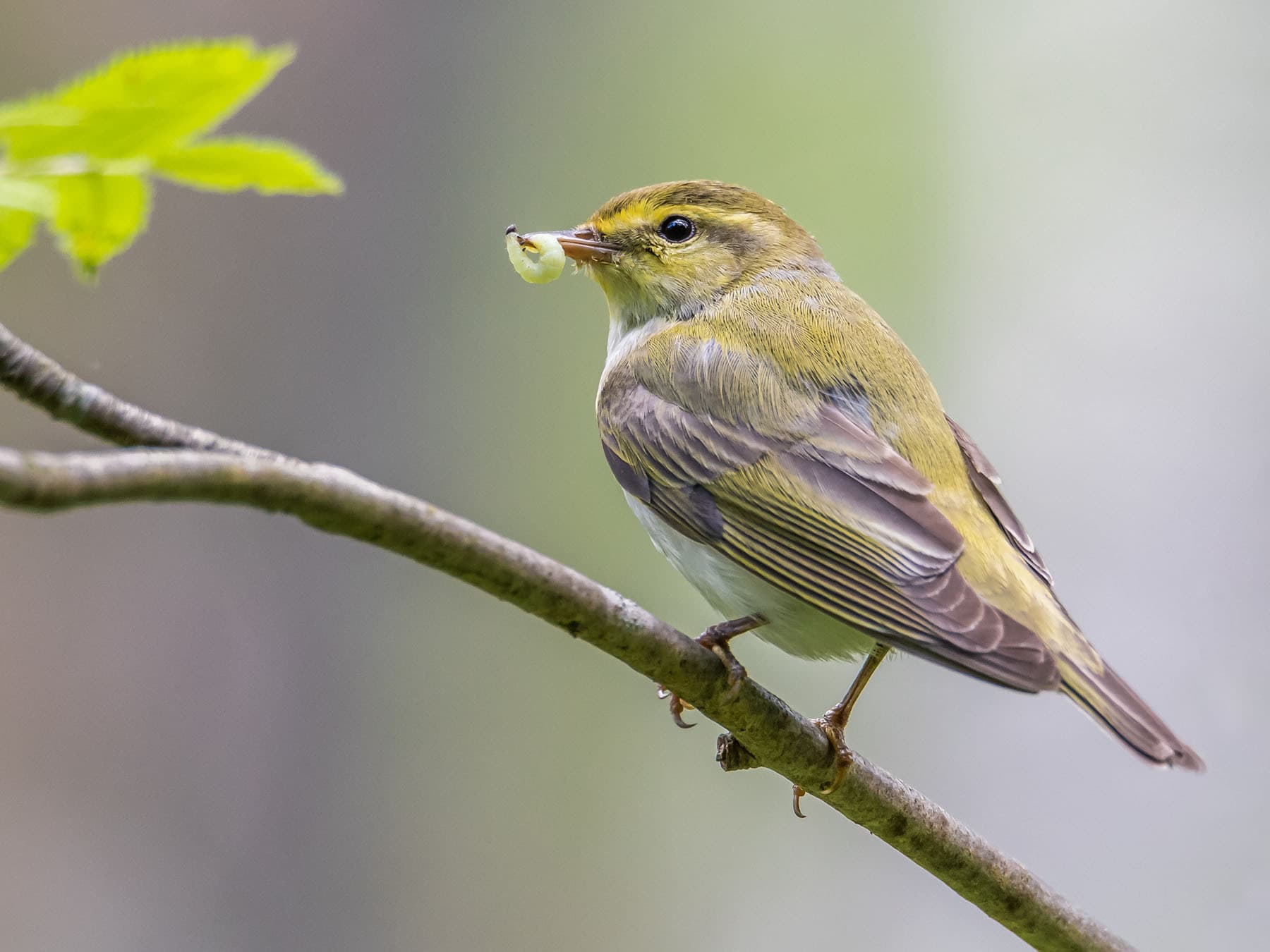
Wood warblers are primarily insectivorous, but later in the year, some fruit may be taken. Flying insects, including mayflies, sawflies, damselflies and lacewings, are frequently caught by the sallying technique of pursuing prey and catching them midflight.
Smaller bugs, larvae, spiders, earwigs and beetles are taken from leaves and tree trunks, as well as from undergrowth.
Fruits that form part of a wood warbler’s late summer diet include buckthorn, plum, elder, bramble and bilberry.
What do Wood Warbler chicks eat?
Young wood warblers are mainly fed on caterpillars and larvae initially, with flies gradually being introduced as they prepare to fend for themselves.
Nesting and breeding
Where do Wood Warblers nest?
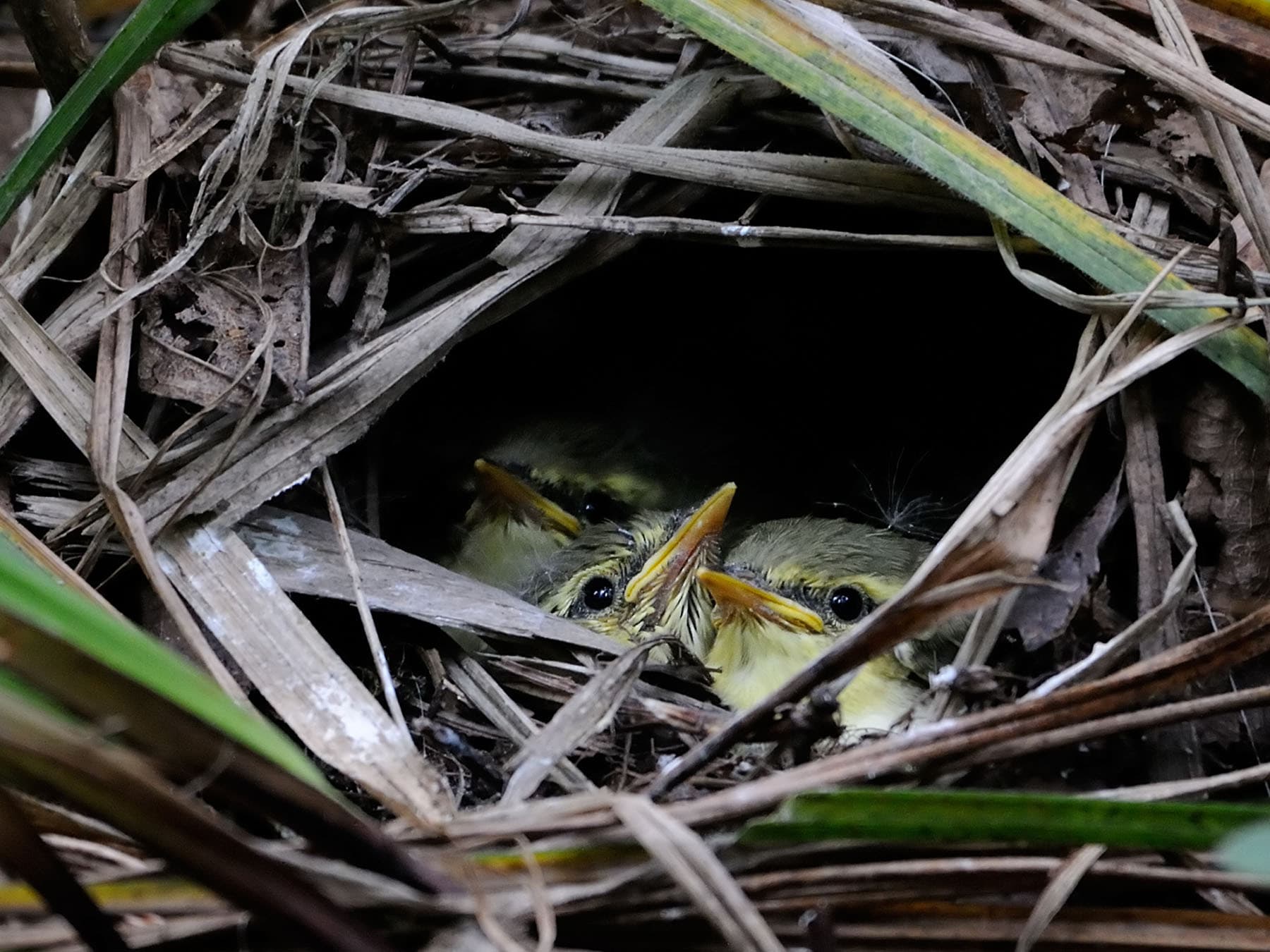
While trees are used for foraging, nest sites established by willow warblers are usually at a much lower level, for example concealed in ground-level vegetation, or against a grassy tussock or a fallen tree.
Nests are dome-shaped, and built from dry grasses, bark, leaves, stems and animal fur, with nest construction undertaken by the female over a period of 3 to 4 days.
What do Wood Warbler eggs look like?
Wood warblers lay between 5 and 7 highly speckled glossy white eggs, measuring around 16 mm by 13 mm (0.6 in by 0.5 in). Eggs are laid in late May, with females alone incubating the clutch for 12 to 13 days.
Do Wood Warblers mate for life?
Most wood warbler pairs remain together for the duration of one breeding season, typically raising one brood together. In subsequent years, a different mate will be chosen. Some extra-pair copulation occasionally does occur.
Behaviour
Are Wood Warblers aggressive?
Vocal aggression may be shown between rival males, or when a threat is sensed near to a nest site, but otherwise wood warblers are generally relatively passive and tolerant of other species on the same territory.
While wood warblers usually forage alone or in pairs, small groups may be seen together in winter with 3 or 4 birds. Migration flocks of up to 15 birds, sometimes mixed-species flocks, may form in passage.
Where do Wood Warblers sleep at night?
Little is known about overnight roosting habits of wood warblers. They are thought to head to the upper canopy of woodland to rest each night, where they are sheltered and protected from ground predators.
Lifespan and predators
How long do Wood Warblers live?
The oldest recorded wood warbler reached 6 years and 11 months. A typical lifespan is much shorter, between 1 and 4 years, with first time breeding in their first year
What are the predators of Wood Warblers?
Avian predators include jays, sparrowhawks and buzzards. Mammals that prey on wood warblers and their nests include pine martens, badgers and foxes.
Are Wood Warblers protected?
Wood warblers are a species protected by the Wildlife and Countryside Act, 1981, which states that it is against the law to knowingly kill, injure or take one into captivity.
Are Wood Warblers endangered?
Wood warbler numbers have fallen significantly in Britain, leading to their classification initially as an Amber status species on the UK Birds of Conservation Concern list in 2002, before being reassessed as a higher risk Red status bird in 2009.
Once relatively common in lowland England, the species is now considered rare in most of the country and breeding is mainly restricted to parts of Wales and regions along the England-Scotland border.
Conservation
While currently listed as Least Concern globally, Wood Warbler populations have declined in parts of Europe, including the UK. Habitat loss in both breeding and wintering grounds poses a significant threat.
Conservation efforts focus on protecting mature deciduous woodlands and studying their migration patterns.
Similar birds
Often mistaken for
More photos
3 photos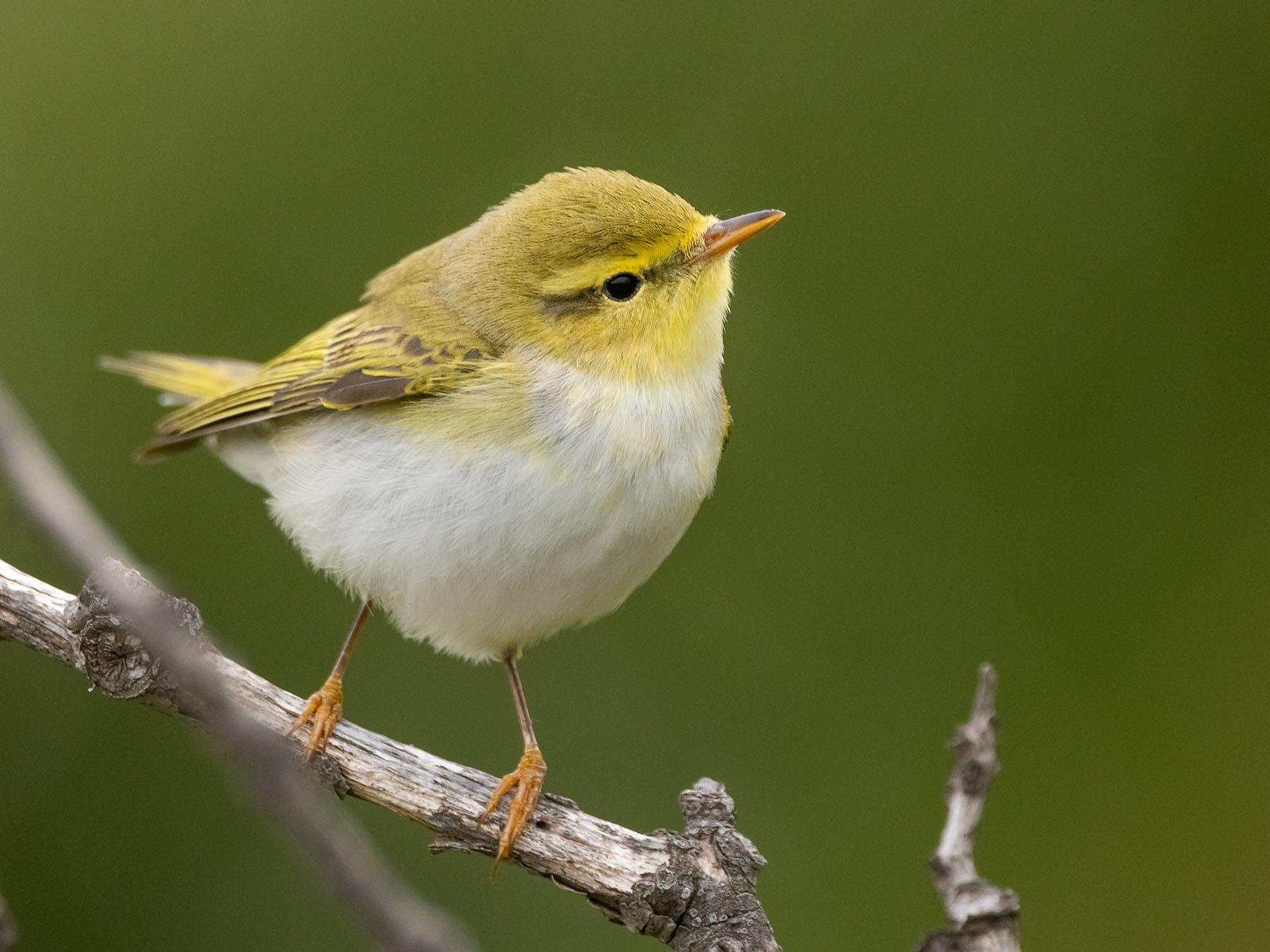
Wood Warbler guides
1 guidesQuick facts
- Length
- 11–12.5 cm
- Wingspan
- 20–24 cm
- Weight
- 8–15 g
- Lifespan
- 2–4 years · oldest recorded 10.2 years
- Family
- Leaf Warblers
- Migration
- Long-distance Migrant
- Global status (IUCN)
- Least Concern
- World population
- 17,600,000 - 27,600,000 mature individuals
- Population trend
- Decreasing
- Scientific name
- Phylloscopus sibilatrix
Questions
1How to attract Wood Warblers?
Wood warblers are not frequent visitors to residential areas or urban settings, and seek wooded environments for nesting that offer a rich and diverse range of insects to provide them with foraging opportunities.
On the rarest of occasions, migrating wood warblers may be tempted to take a brief stopover in landscapes with native trees and a variety of insect-attracting flowering plants, such as redtwig dogwood, hibiscus, raspberry, goldenrod and pussy willow.
Sources
4- 1BirdLife International. 2016. Phylloscopus sibilatrix. The IUCN Red List of Threatened Species 2016: e.T22715260A87668662. Source (opens in a new tab)
- 2EBCC (2015)
- 3BirdLife International. 2016. Phylloscopus sibilatrix. The IUCN Red List of Threatened Species 2016: e.T22715260A87668662. Source (opens in a new tab)
- 4Fransson et al., EURING list of longevity records for European birds (2010) Source (opens in a new tab)

Checked by
Nathan Cope, founder and editor
Nathan founded Birdfact and leads its writers and contributors in the UK, the US and Canada. He has watched and studied birds for more than ten years, and checks every article and species guide before it’s published.