


Grasshopper Warbler
Grasshopper Bird, Reeler, Common Grasshopper Warbler · Locustella naevia
By the Birdfact teamChecked by Nathan Cope
On this page13 sections
How to recognise it
What do Grasshopper Warblers look like?
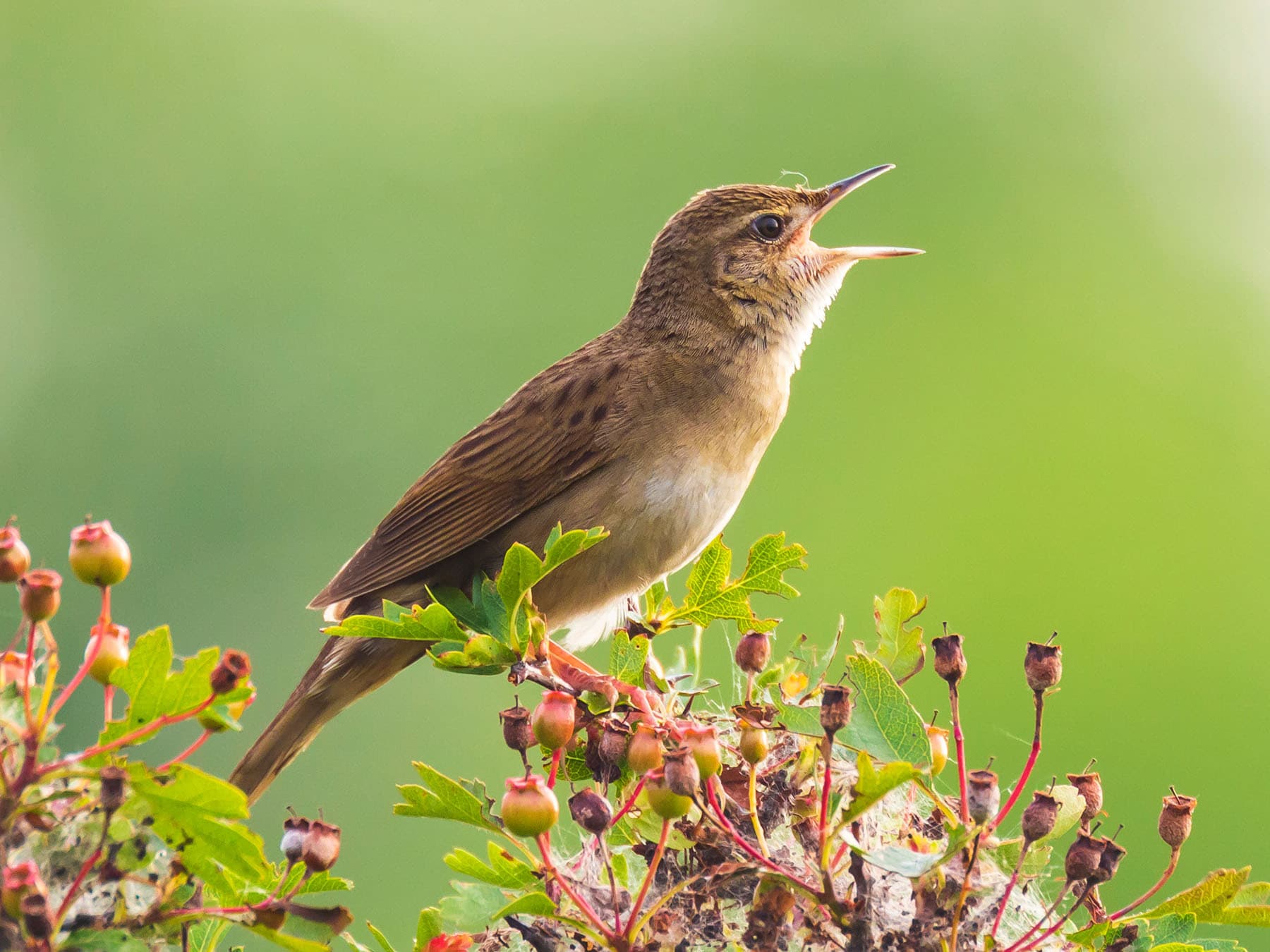
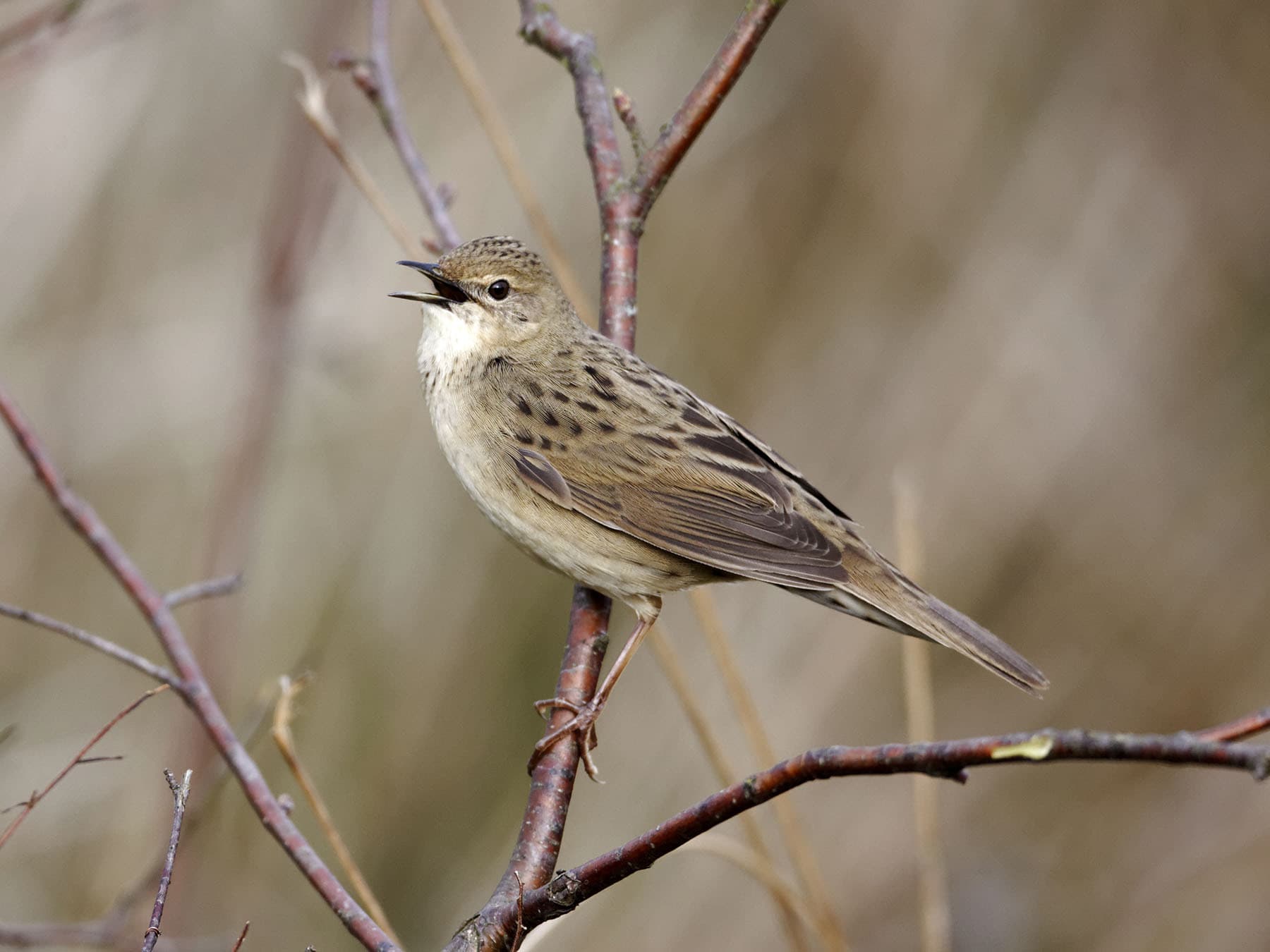
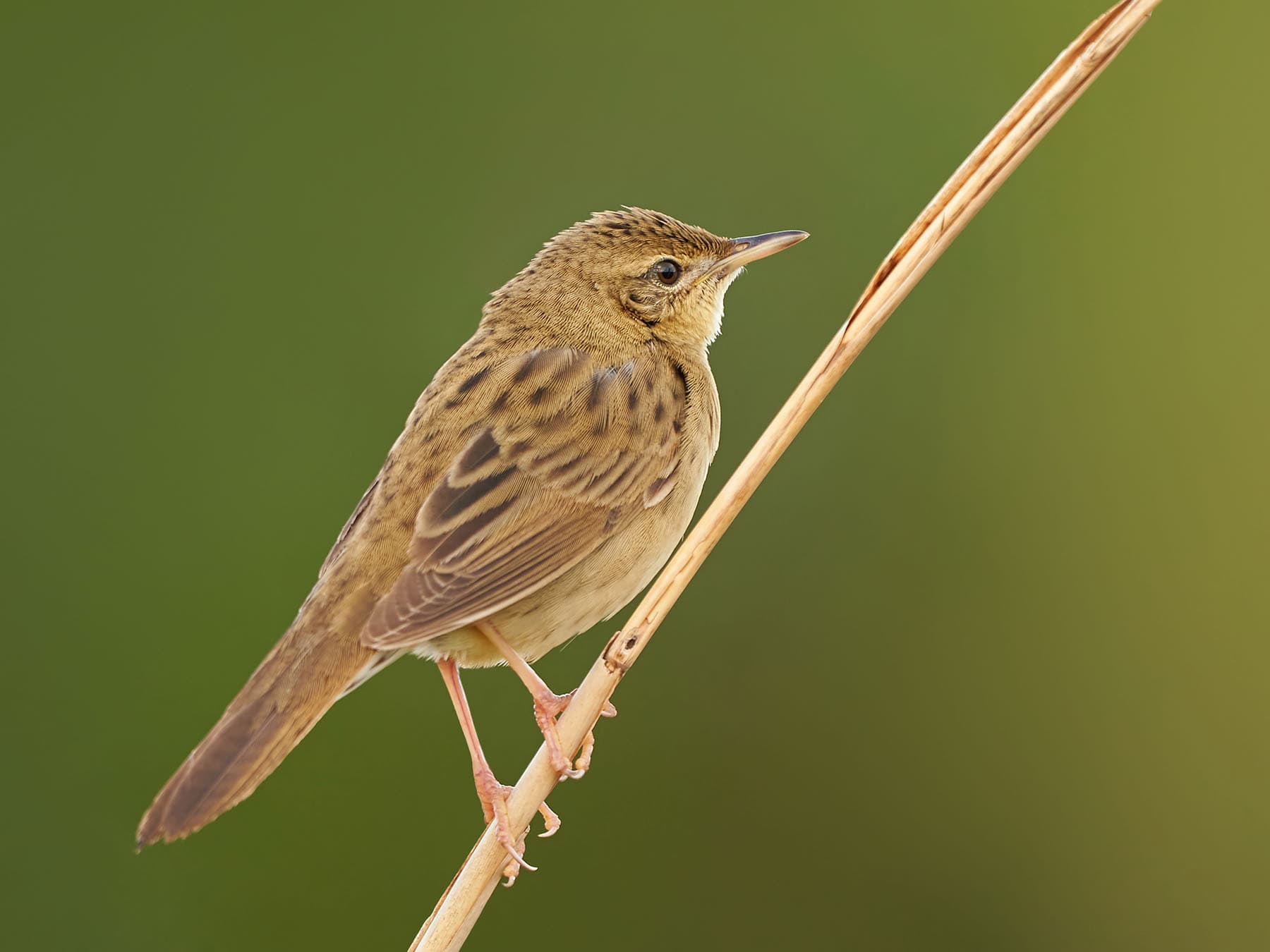
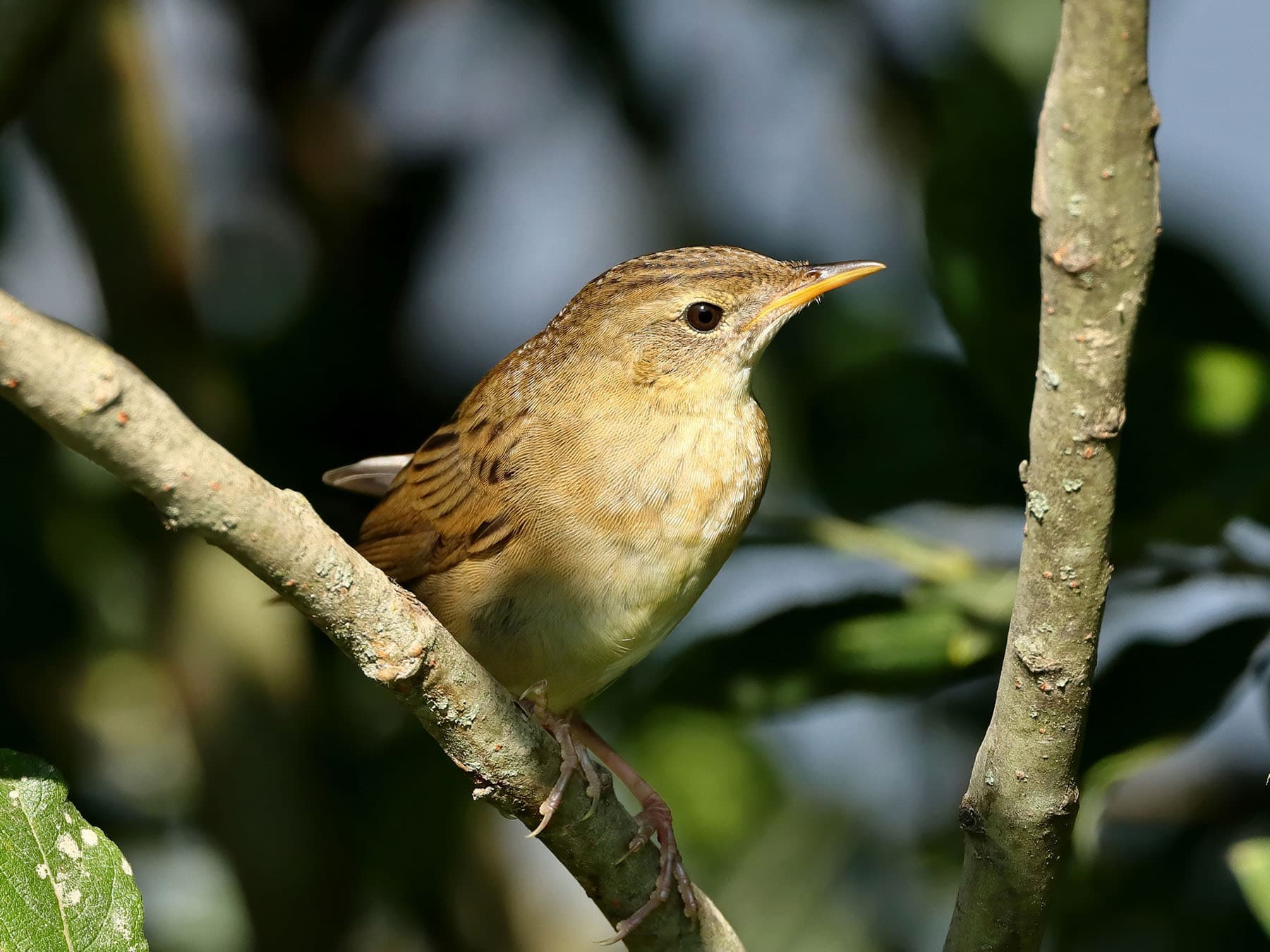
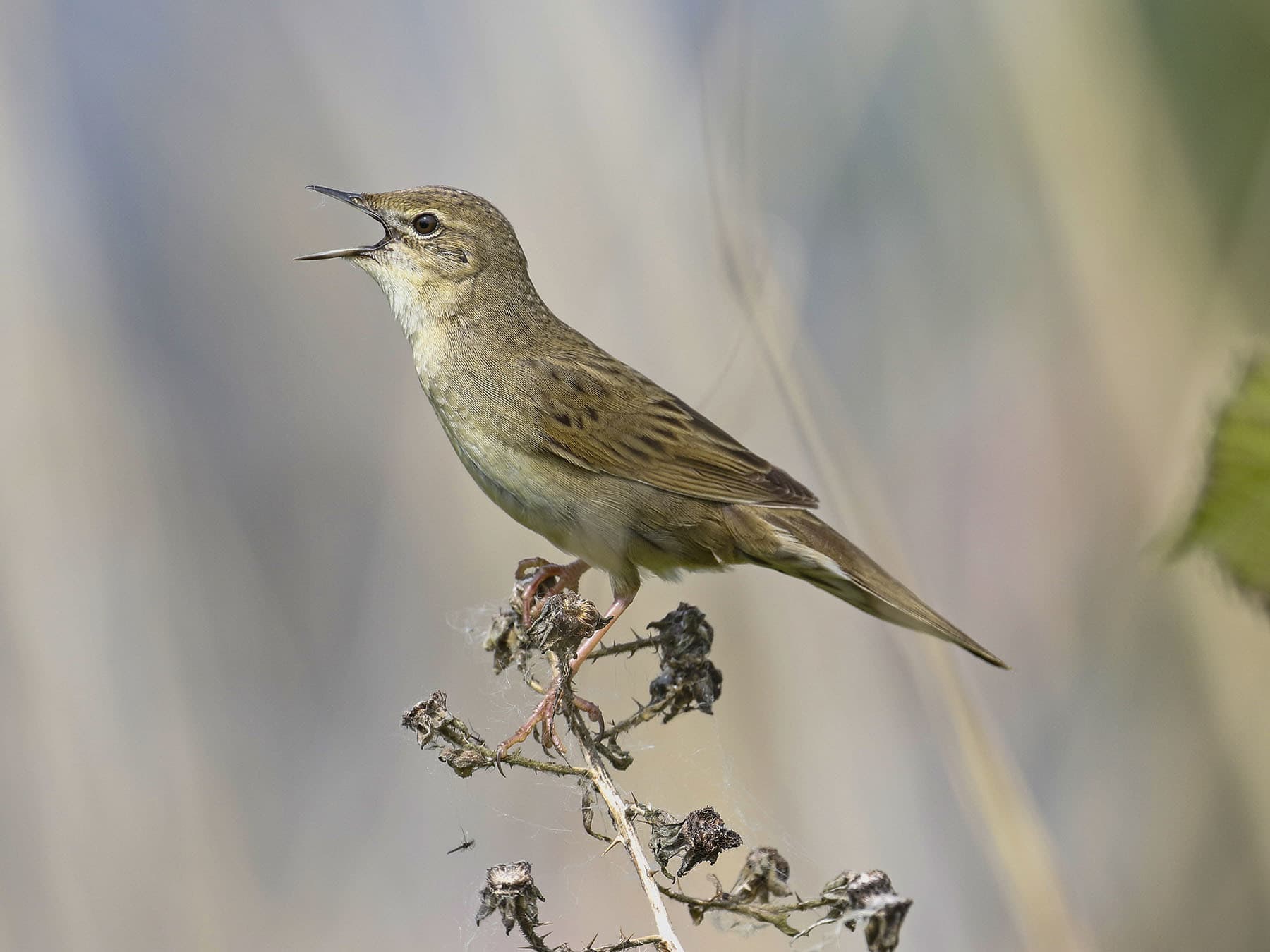
Grasshopper warblers are rather indistinctive medium-sized brown warblers. Their lack of notable markings serves them well, allowing them to remain hidden in undergrowth, and to skulk in reedbeds without being detected.
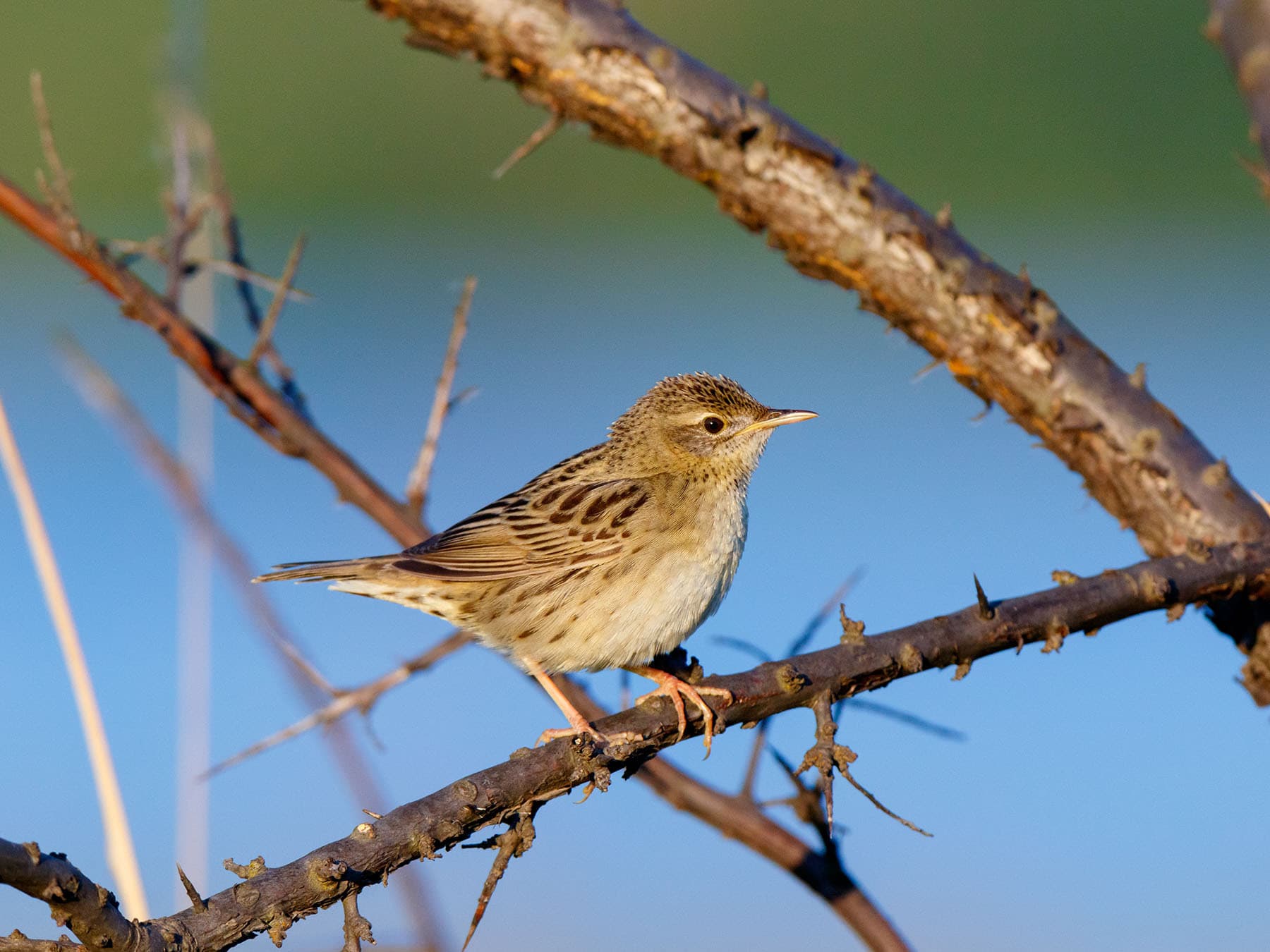
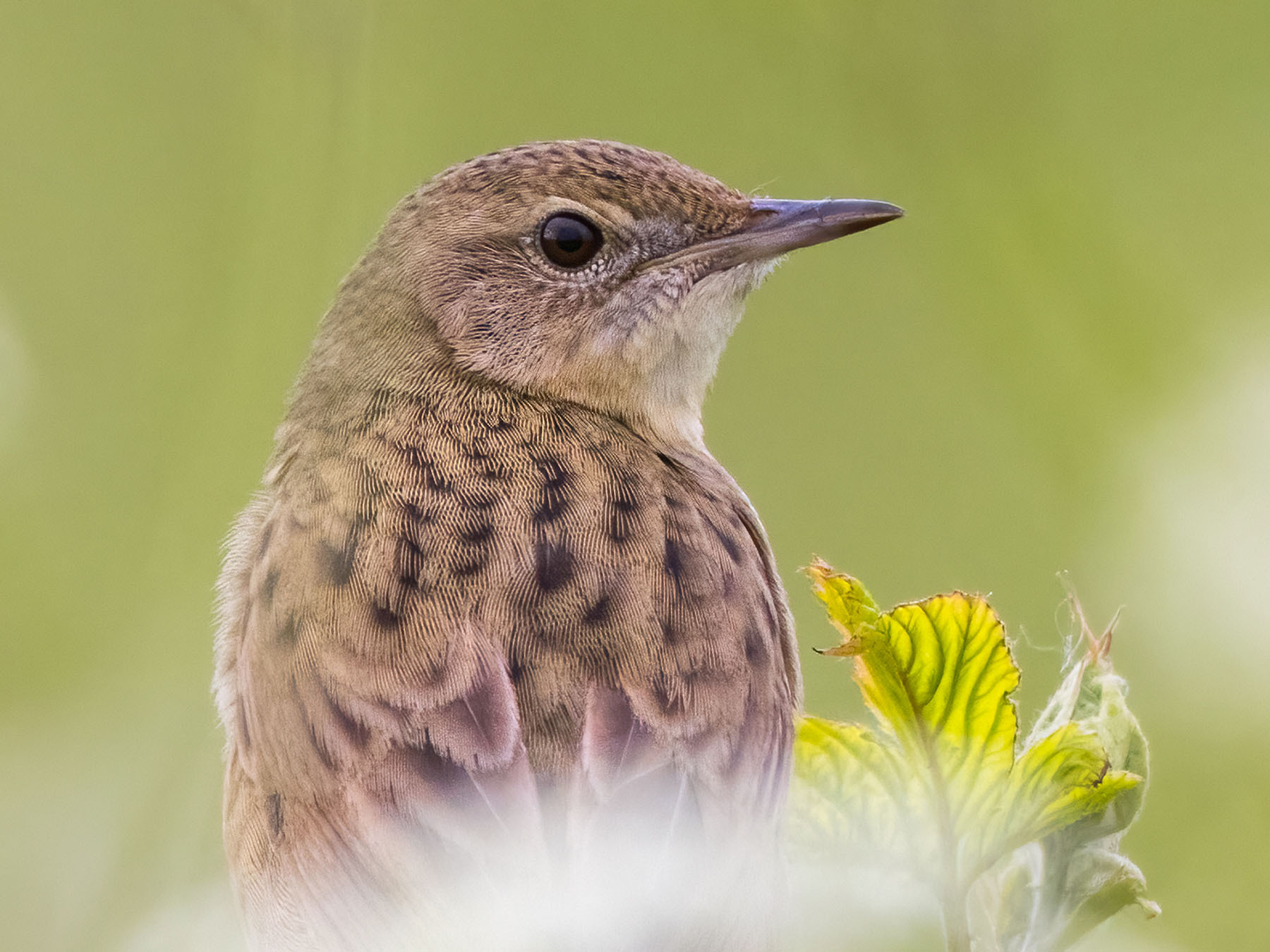
As is usually the case for warblers, there is no difference in appearance between males and females. Adult grasshopper warblers are olive-brown, streaked with darker brown.
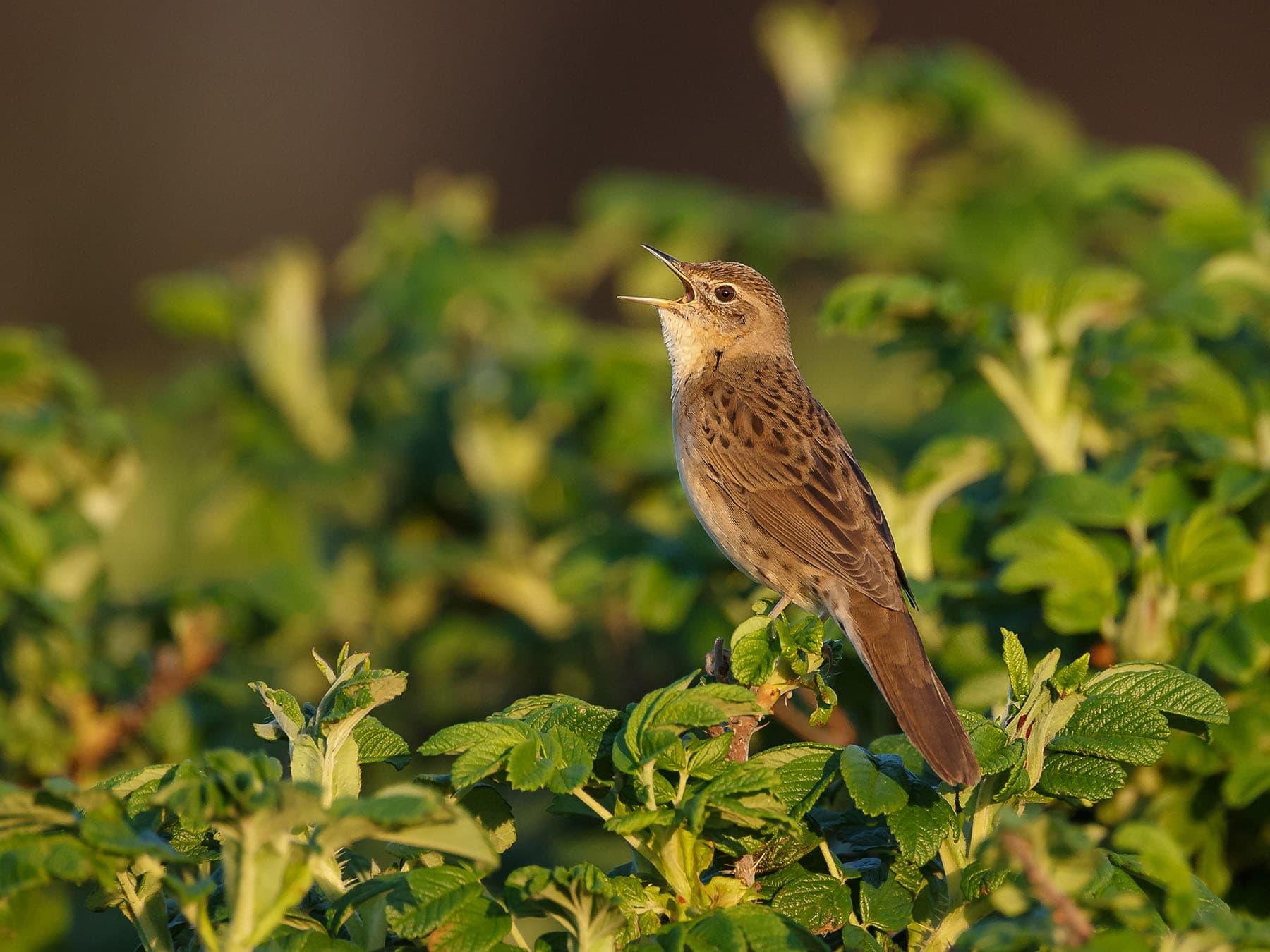
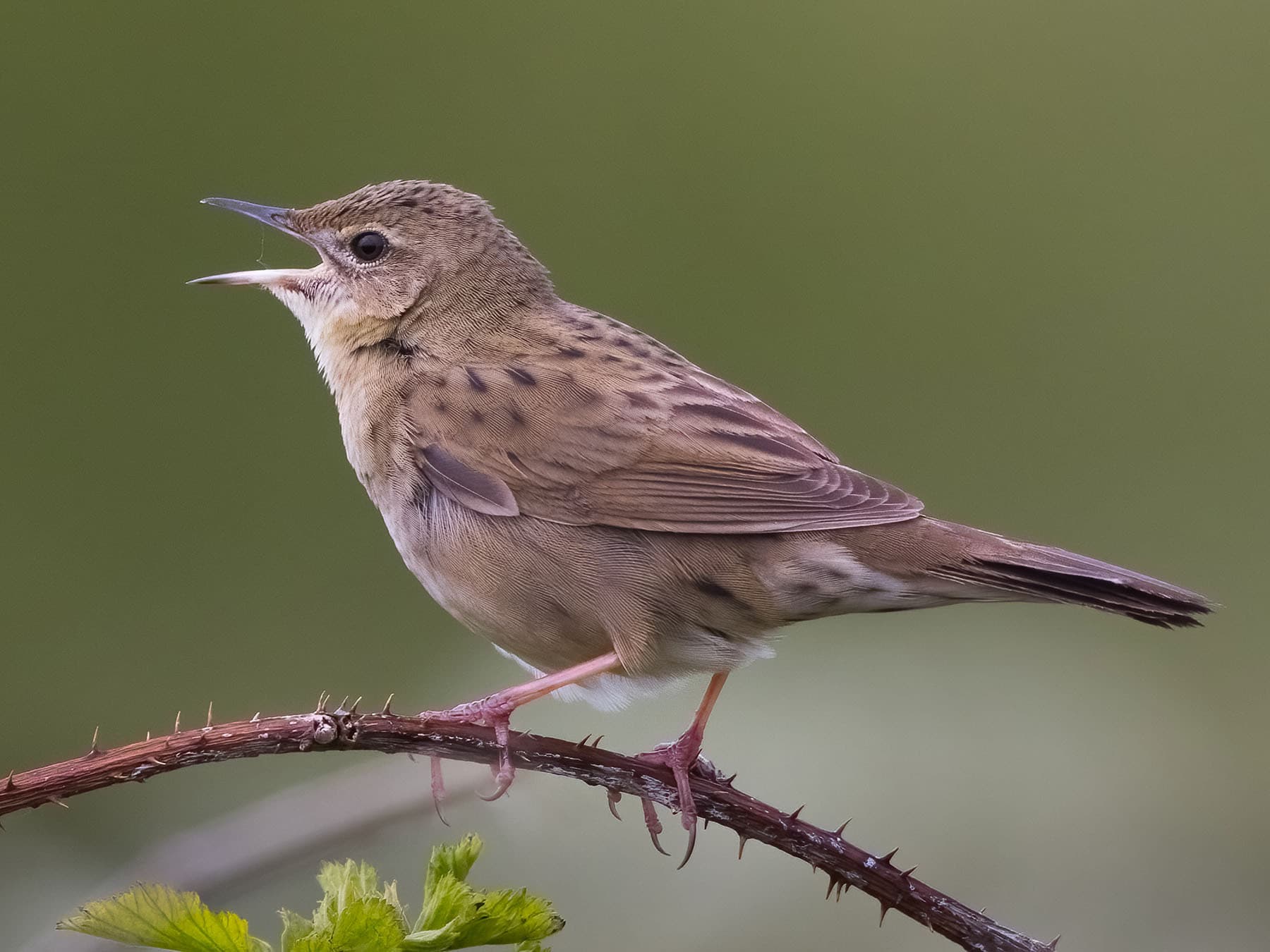
Their underparts are creamy-brown and mottled with dark spotting on parts of the breast and flanks. Their reddish brown tail is streaked with darker grey-brown markings. They have a faint lighter eye stripe, and the rest of their face is mostly pale grey.
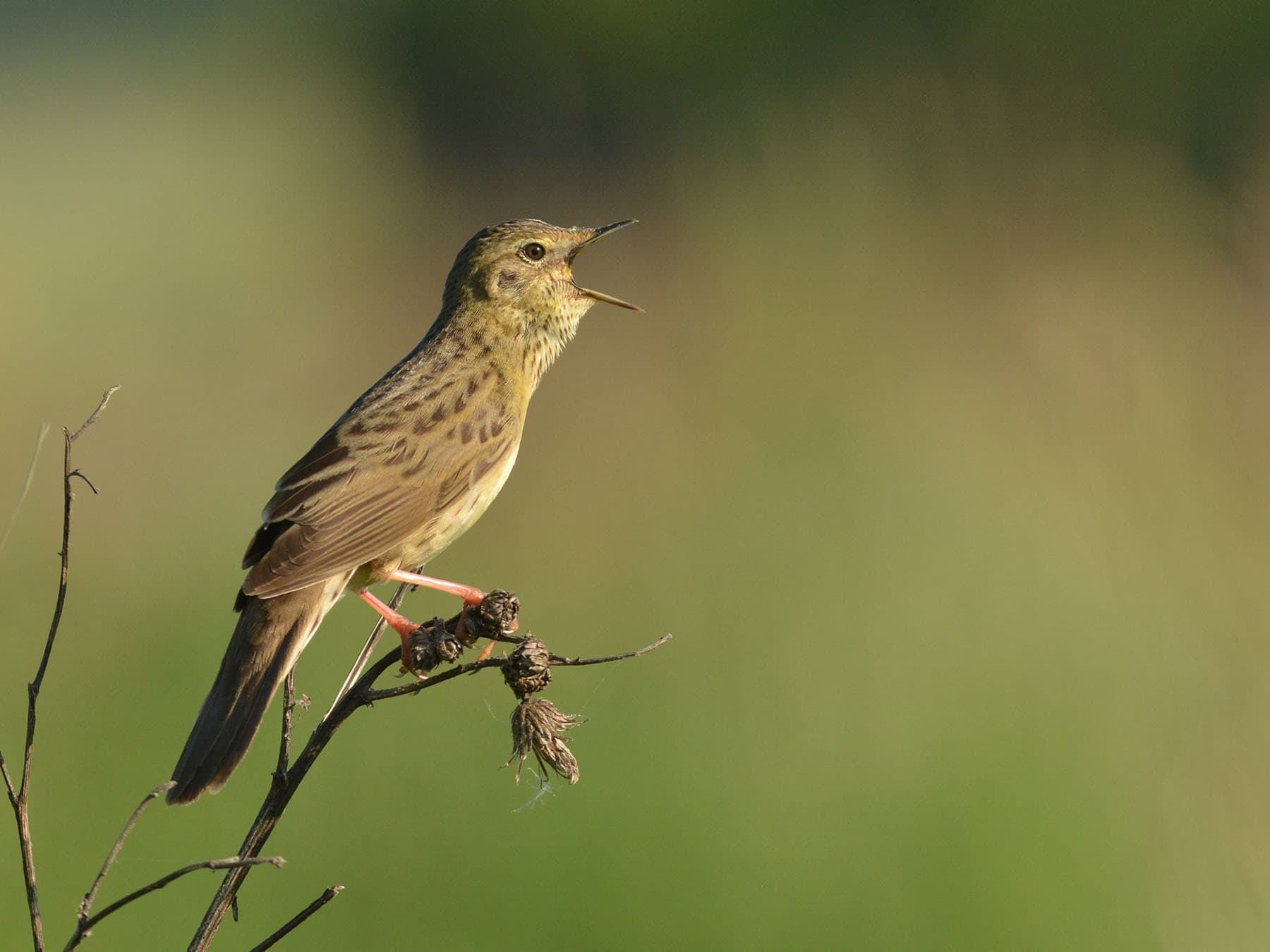
Young grasshopper warblers resemble adults, but their underparts are slightly more yellow.
How big are Grasshopper Warblers?
As well as looking identical, male and female grasshopper warblers are the same size and weight. They are considered medium members of the warbler family, and are roughly the same size as robins and goldfinches, and slightly smaller than house sparrows.
- Length: 12 cm to 13.5 cm (4.7 in to 5.3 in)
- Wingspan: 15 cm to 19 cm (5.9 in to 7.5 in)
- Weight: 11 g to 16 g (0.4 oz to 0.6 oz)
Its size
Adults- Length
- 12–13 cm
- Wingspan
- 15–18 cm
- Weight
- 11–15 g
Its song and calls
What sound does a Grasshopper Warbler make?
The grasshopper warbler’s distinctive call sounds almost cicada-like, with a rapid-fire of trilled monotone clicks.
- Song0:00 / 0:56
Recorded in Hauts-de-France, France · April 2025
When and where to see it
OctoberMostly absent
Most recorded in October
- 1. Dorsetunder 0.1%
- 2. Pembrokeshireunder 0.1%
- 3. Shetland Islandsunder 0.1%
- 4. Orkney Islandsunder 0.1%
- 5. East Sussexunder 0.1%
Each dot is a county, state or province: the bigger and darker, the larger the bird’s share of that place’s bird records that month. Grey dots: no regular records. The ringed point is the centre of the bird’s records this month; the arrow shows how it moved since last month, and the dashed loop its path through the year. “Arrivals” colours places where it becomes regular this month (orange) or is in its last regular month (grey). GBIF eBird Observation Dataset, 2019–2024. Map data: Natural Earth, US Census Bureau; place centres © OpenStreetMap contributors.
In your area
See when the Grasshopper Warbler is recorded in your county, state or province.
How often the Grasshopper Warbler turns up in the UK and Ireland through the year, from birdwatchers' records.
United Kingdom
Summer visitor · regularly Apr–Sep · most records in April
Ireland
Summer visitor · regularly Apr–Sep · most records in May
Show as a table
| Month | United Kingdom | Ireland |
|---|---|---|
| January | – | – |
| February | – | – |
| March | – | – |
| April | 0.11% (regular) | 0.10% (regular) |
| May | 0.11% (regular) | 0.11% (regular) |
| June | 0.070% (regular) | 0.073% (regular) |
| July | 0.067% (regular) | 0.046% (regular) |
| August | 0.021% (regular) | 0.007% (regular) |
| September | 0.008% (regular) | 0.006% (regular) |
| October | 0.001% | – |
| November | – | – |
| December | – | – |
Recorded regularly in
Worldwide: recorded regularly in 44 countries
Countries where it was recorded in at least 3 of the 6 years 2019–2024. Linked countries have their own bird list.
Europe (31)
Africa (2)
- Morocco
- Senegal
Data: EOD – eBird Observation Dataset (Cornell Lab of Ornithology), accessed via GBIF.org, CC BY 4.0. Records from 2019–2024, aggregated and filtered by Birdfact. How these lists are made
What is the habitat of a Grasshopper Warbler?
During the breeding season, grasshopper warblers head for scrublands, sedge, reedbeds and marshes. They are also attracted by the cover offered by bramble and nettle beds, moorlands, and the fringes of grazing fields.
Wintering habitats include bushy grasslands, woodland undergrowth, low-lying floodland, rice fields and scrubland.
What is the range of a Grasshopper Warbler?
Grasshopper warblers breed across Europe, from Britain and Ireland, southern Scandinavia and Finland in the north, as far south as the Alps, northern Spain and Portugal. To the east, the range extends across eastern Europe into Russia, reaching north-west China and much of central Asia.
Less is known about the wintering grounds of the grasshopper warbler, but the species is confirmed in isolated patches of West Africa, including Senegal, Mali, Sierra Leone and Ghana, as well as parts of Ethiopia and India.
Where do Grasshopper Warblers live?
There are no resident populations of grasshopper warblers anywhere in the world. Breeding and wintering are always in two distinct locations thousands of miles apart.
Lowland landscapes are preferred for both breeding and wintering, with altitudes of up to 500 m preferred across most of Europe.
In the UK, grasshopper warblers’ breeding grounds are scattered across the country, and they are observed to avoid upland areas and large settlements.
How rare are Grasshopper Warblers?
There are around 12,000 breeding pairs of grasshopper warblers in the UK, so they are not the most common bird you’ll see, but their numbers are considered stable. Outside of the breeding season, there’s close to zero chance of spotting one.
Grasshopper warblers that breed in the UK leave for their winter territories during August. Birds seen in September and October are usually migrants in passage from breeding grounds in Scandinavia. Between late October and the end of March, sightings are practically non-existent.
Where can you see Grasshopper Warblers in the UK?
Grasshopper warblers have been dubbed the ‘most inconspicuous bird in the Western Palearctic’, and its fondness for skulking out of sight in dense waterside vegetation makes it hard to spot, even in the right locations.
With a huge amount of patience, you may get lucky waiting it out in scrubland or marshland environments throughout England, Wales and southern Scotland, by listening out for the distinctive grasshopper-like call.
Migration
Do Grasshopper Warblers migrate?
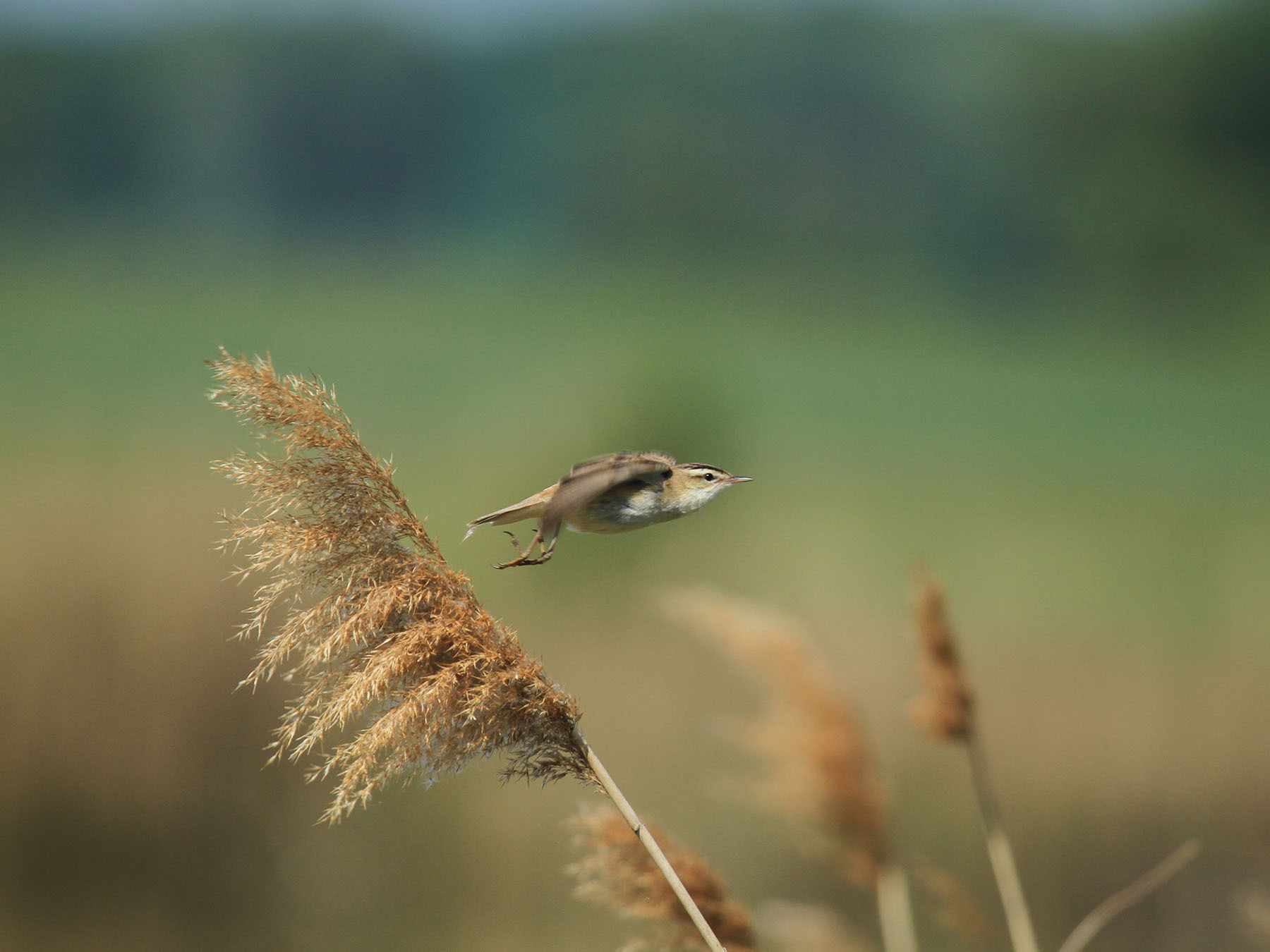
Grasshopper warblers are migratory, and have distinct breeding and wintering grounds thousands of miles apart. Grasshopper warblers arrive to breed in the UK from April onwards, and head back to their southern wintering grounds, found in West Africa, from August.
Birds that breed further east across Europe and into Asia are also believed to migrate southwards, spending winter months at sites in Kenya and Ethiopia in East Africa, and to parts of northern and western India.
Tips for seeing it
- Listen for the bird's distinctive, insect-like song, especially at dawn or dusk. They are frequently heard singing at night, particularly early in the breeding season.
- Search in areas of dense, low vegetation such as reed beds or scrubby grasslands
- Look for movement low in the vegetation rather than trying to spot the bird directly
- Be patient, as these birds are notoriously difficult to see
What it eats
What do Grasshopper Warblers eat?
The diet of grasshopper warblers is chiefly insect-based, consisting mainly of flies, moths, beetles, aphids, dragonflies and mayflies and their larvae. Spiders, woodlice, and small molluscs are also eaten.
Grasshopper warblers forage on the ground, sifting through vegetation and finding tiny insects on the foliage.
What do Grasshopper Warbler chicks eat?
Grasshopper warbler young are fed aphids, green caterpillars, woodlice and flies by both parents.
Nesting and breeding
Where do Grasshopper Warblers nest?
Nest-building is a joint effort for grasshopper warblers, with males and females both involved in gathering materials and nest construction.
Nests are built on or close to the ground, concealed in dense vegetation, such as deep into brambles or sedge, reedbeds, gorse bushes or among grassy tussocks.
Nest materials, including grasses, sedge and mosses, are woven into a well-defined cup shape, and lined with finer grasses and plant parts.
What do Grasshopper Warbler eggs look like?
Grasshopper warbler eggs are creamy white in colour and speckled with fine reddish spots or blotches. Eggs measure 18 mm by 14 mm (0.7 in by 0.6 in) and weigh about 1.7 g (0.1 oz).
A typical clutch contains 4 to 6 eggs, and incubation, which is shared between males and females, lasts for around 14 days.
Do Grasshopper Warblers mate for life?
Pairs of grasshopper warblers stay together for the duration of the breeding season, and most commonly raise two broods together.
Behaviour
Are Grasshopper Warblers aggressive?
Grasshopper warblers are observed to be solitary and territorial birds, and especially vocal when defending their nest sites.
Lifespan and predators
How long do Grasshopper Warblers live?
Around 2 years is thought to be a typical lifespan for grasshopper warblers, although a ringed individual, discovered in 1986, was recorded to have reached 5 years.
What are the predators of Grasshopper Warblers?
The clever distracting call of a grasshopper warbler acts as a deterrent to many predators, who are tricked into thinking that it is an insect rather than a bird that they are hearing. Nest predators may include rats and weasels.
Are Grasshopper Warblers protected?
As a bird that breeds in Britain, grasshopper warblers enjoy protection offered by the Wildlife and Countryside Act, 1981, which legislates against them being hunted, killed, injured or captured. The Act also prevents their nests and eggs being deliberately destroyed or damaged.
Are Grasshopper Warblers endangered?
Declines in grasshopper warbler numbers were noted between the 1960s and 1980s, due to habitat loss and degradation in both wintering and breeding grounds used by the species.
Grasshopper warblers are on the UK’s Red List of Birds of Conservation Concern. However, there are signs that things are looking up for these undergrowth hide-and-seek champions, with the BTO stating a 23% rise between 1985 and 2009, declaring that grasshopper numbers are now stable.
Conservation
While listed as Least Concern globally, Grasshopper Warbler populations have declined in parts of Europe due to habitat loss. Conservation efforts focus on maintaining suitable breeding habitats, including wet grasslands and young forestry plantations.
More photos
3 photos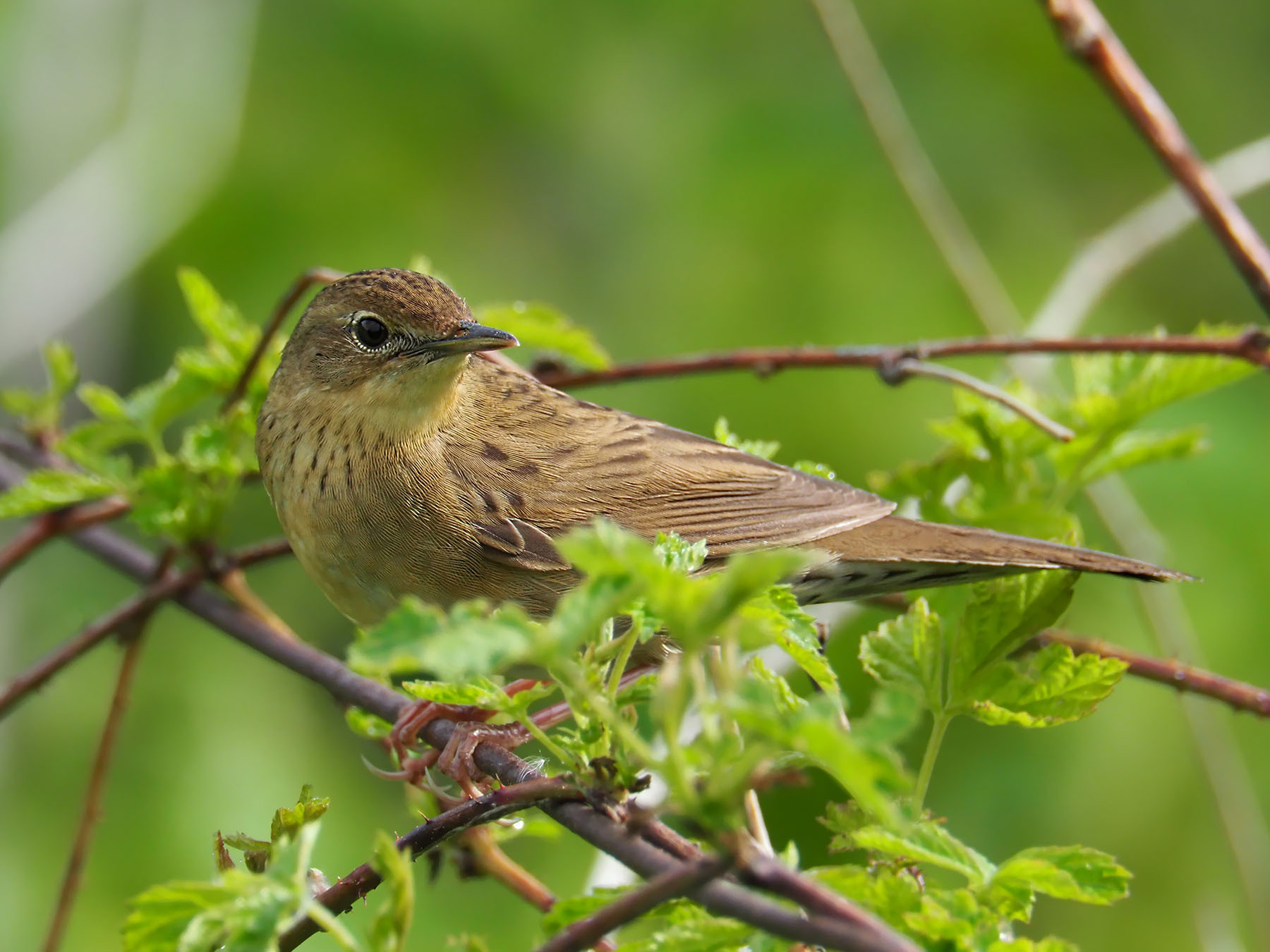
Quick facts
- Length
- 12–13 cm
- Wingspan
- 15–18 cm
- Weight
- 11–15 g
- Lifespan
- 2–3 years
- Family
- Grasshopper Warblers
- Migration
- Long-distance Migrant
- Global status (IUCN)
- Least Concern
- World population
- 3,050,000 - 5,400,000 mature individuals
- Population trend
- Stable
- Also called
- Grasshopper Bird, Reeler, Common Grasshopper Warbler
- Scientific name
- Locustella naevia
Questions
1What time of day can you hear a Grasshopper Warbler?
The mechanical clicking sound made by male grasshopper warblers is heard during the breeding season, particularly between April and June. Grasshopper warblers sing from dusk until dawn, but are frequently heard singing at night, particularly early in the breeding season.
Sources
3- 1BirdLife International. 2017. Locustella naevia (amended version of 2016 assessment). The IUCN Red List of Threatened Species 2017: e.T22714657A118740792. Source (opens in a new tab)
- 2EBCC (2015)
- 3BirdLife International. 2017. Locustella naevia (amended version of 2016 assessment). The IUCN Red List of Threatened Species 2017: e.T22714657A118740792. Source (opens in a new tab)

Checked by
Nathan Cope, founder and editor
Nathan founded Birdfact and leads its writers and contributors in the UK, the US and Canada. He has watched and studied birds for more than ten years, and checks every article and species guide before it’s published.