


Blackcap
Eurasian Blackcap, Northern Nightingale · Sylvia atricapilla
By the Birdfact teamChecked by Nathan Cope
On this page15 sections
How to recognise it
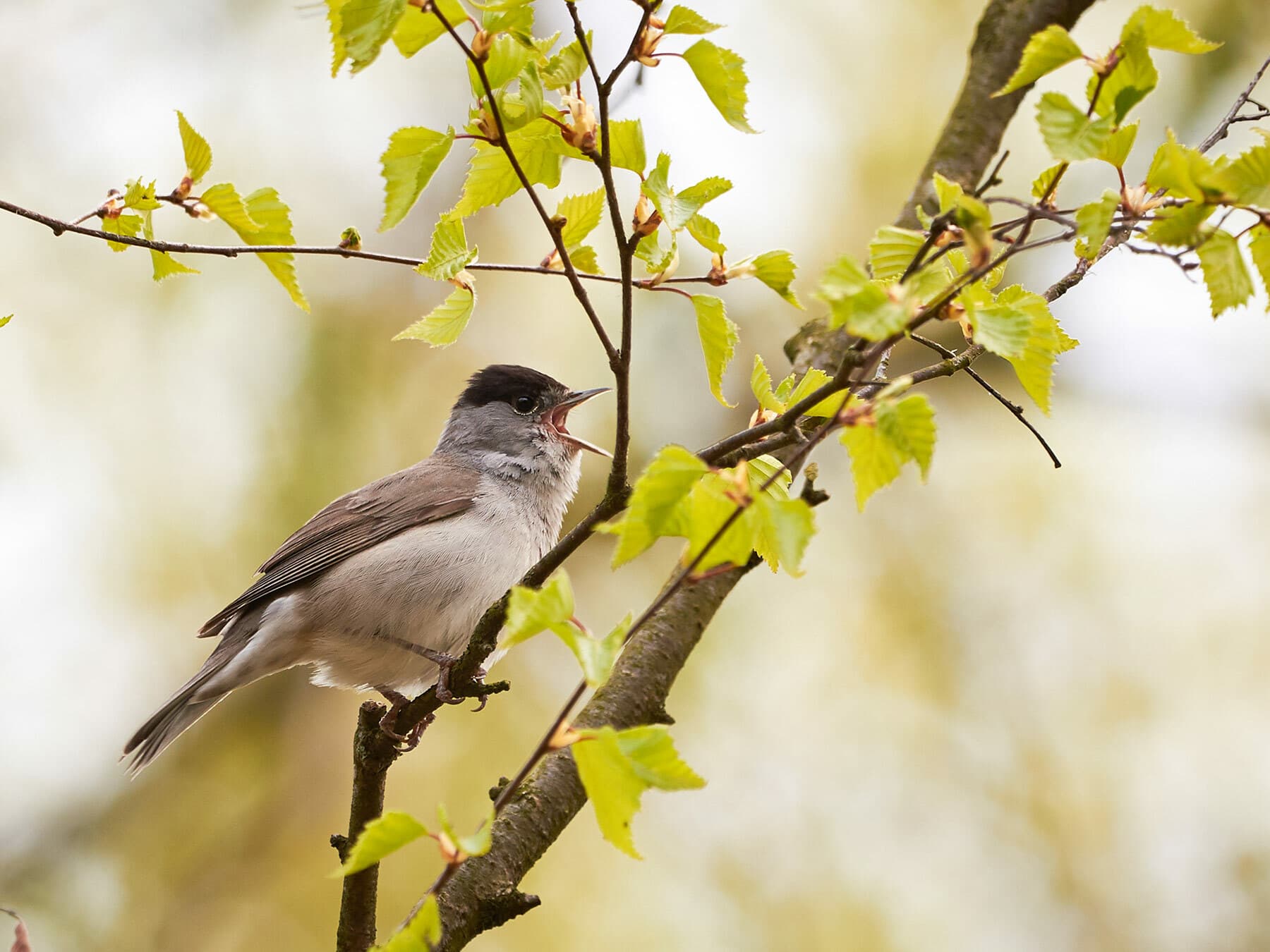
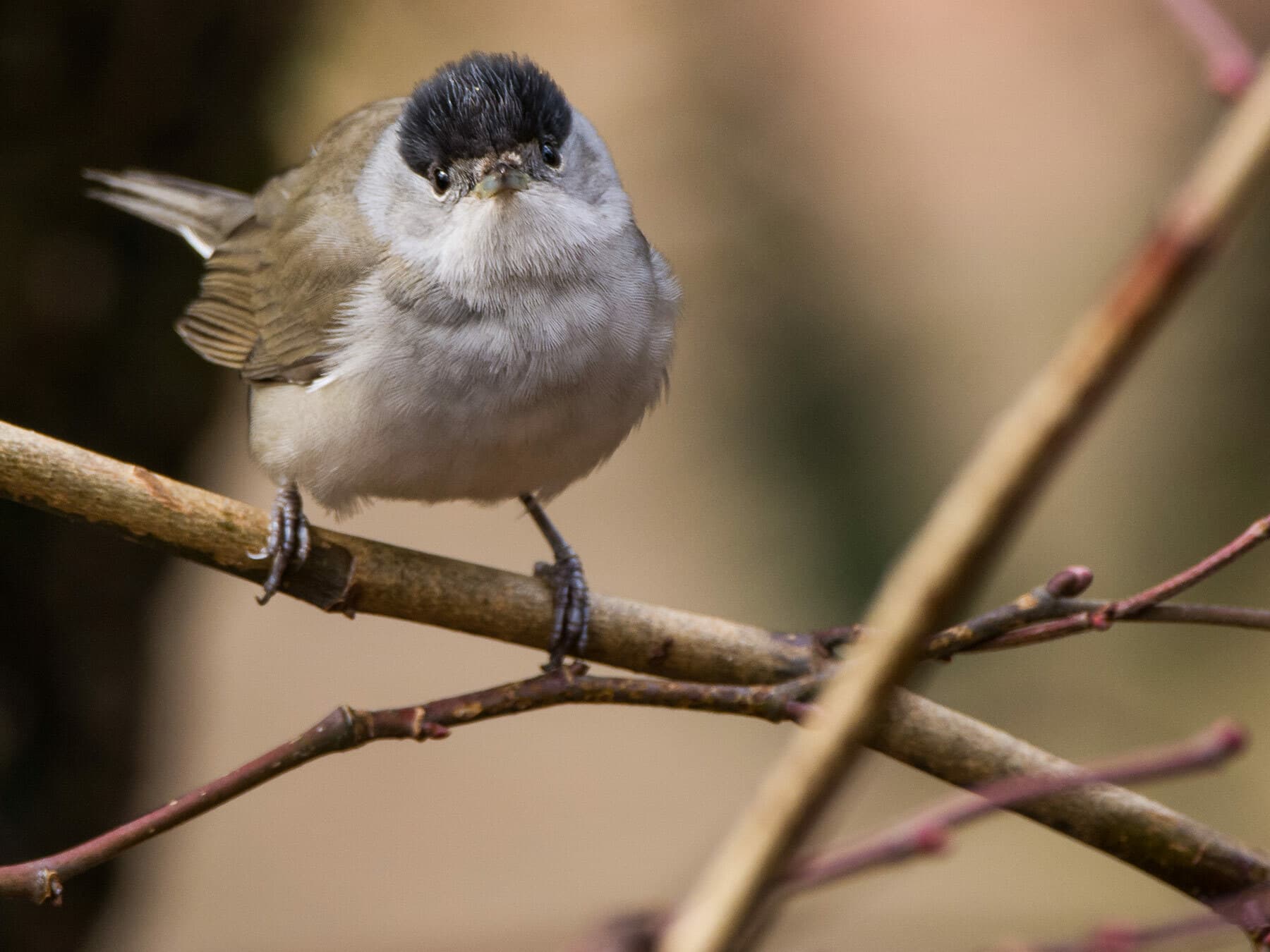
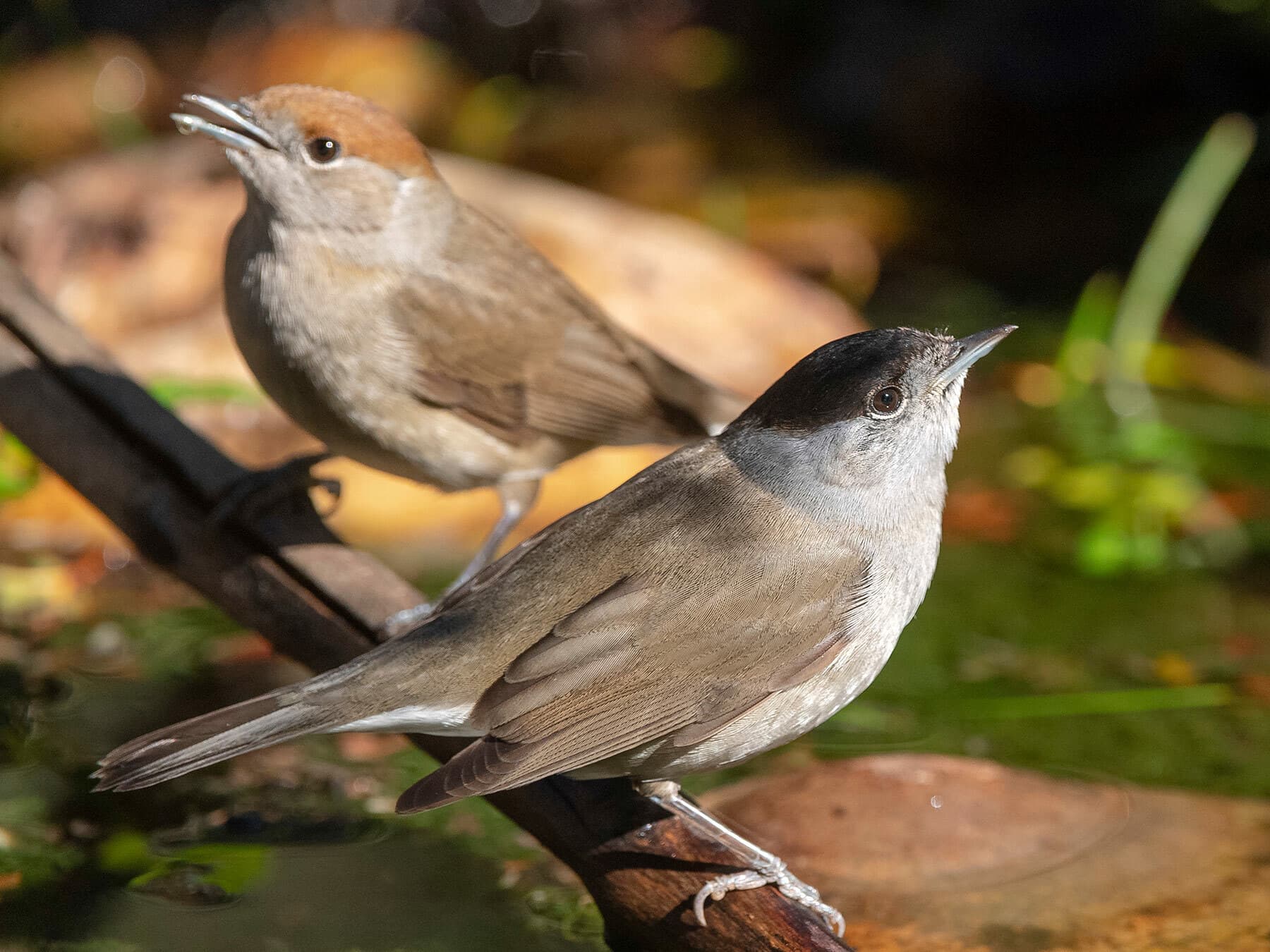
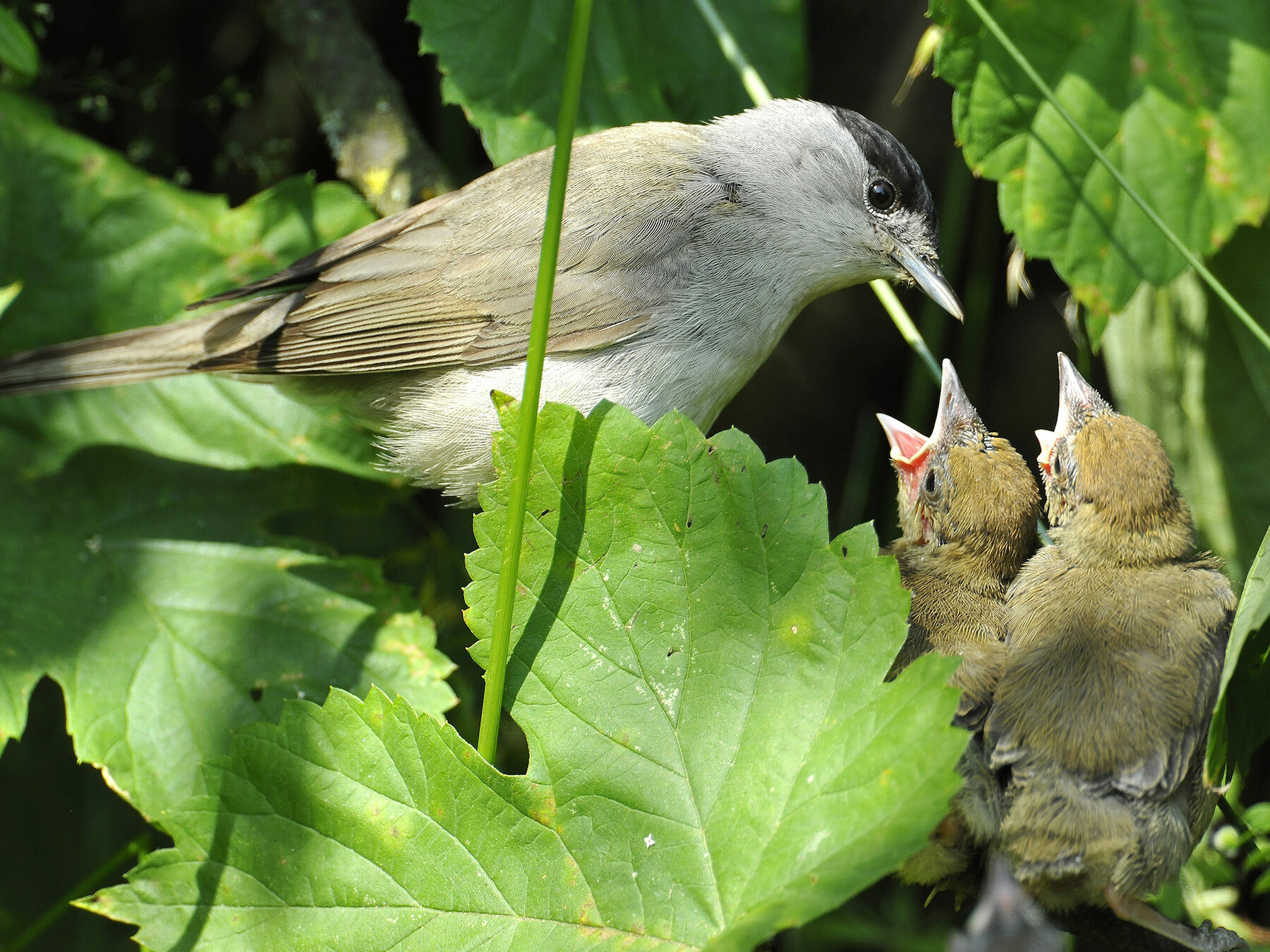
The Blackcap is a small, sleek warbler with a distinctive appearance. Males have a neat black cap on top of their grey head and neck, contrasting with olive-brown upperparts and pale grey underparts. Their wings are darker grey-brown.
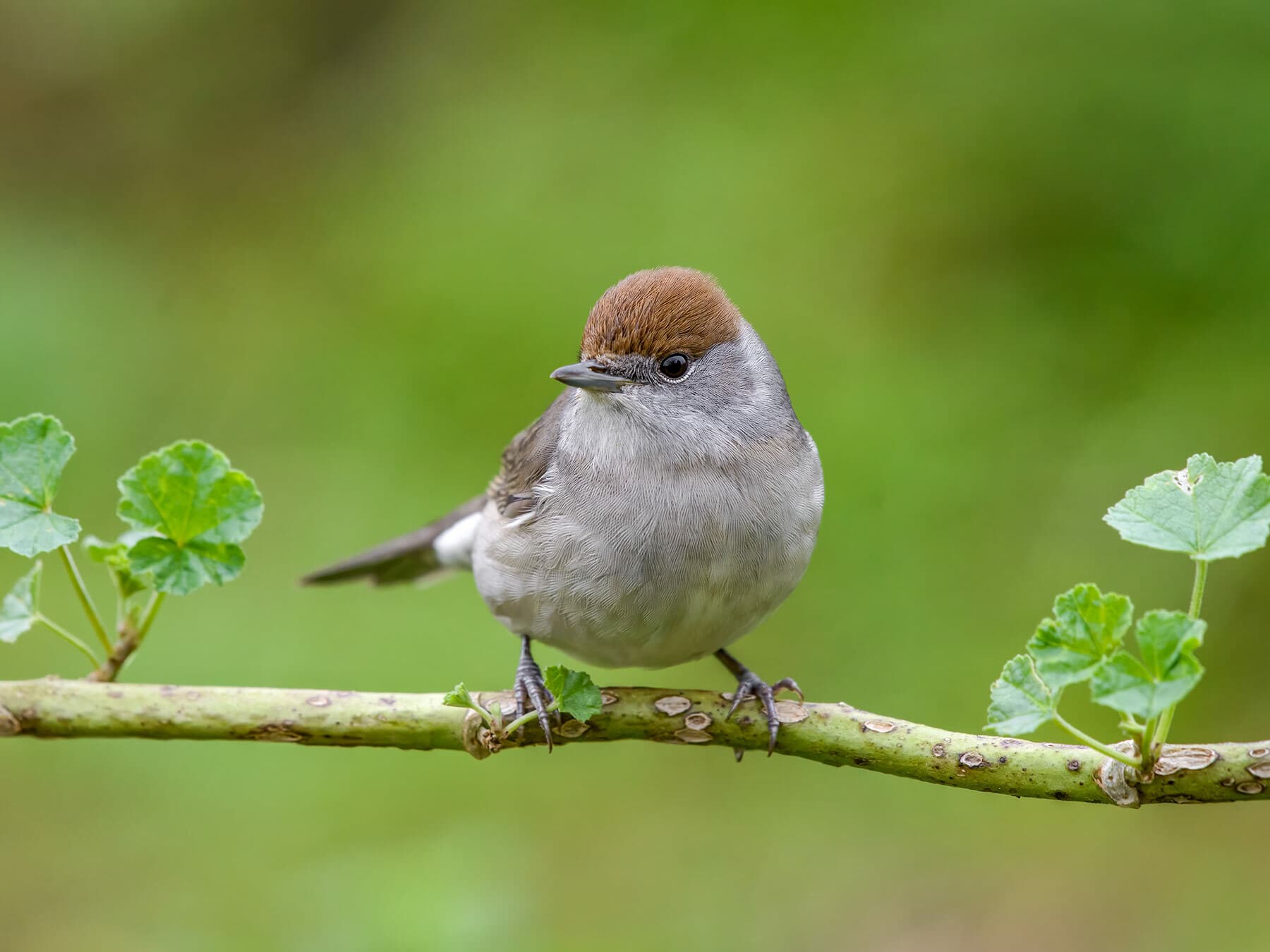
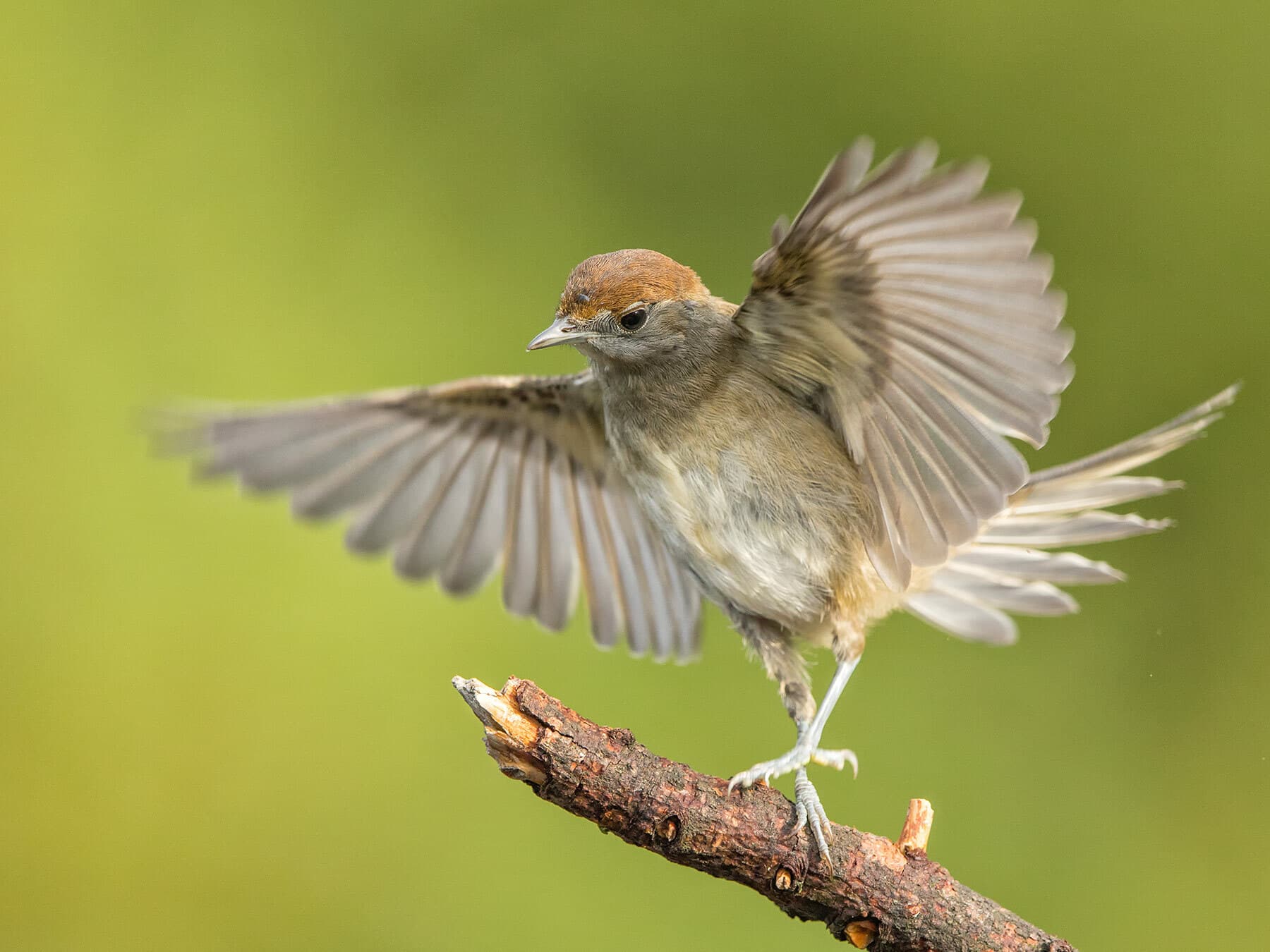
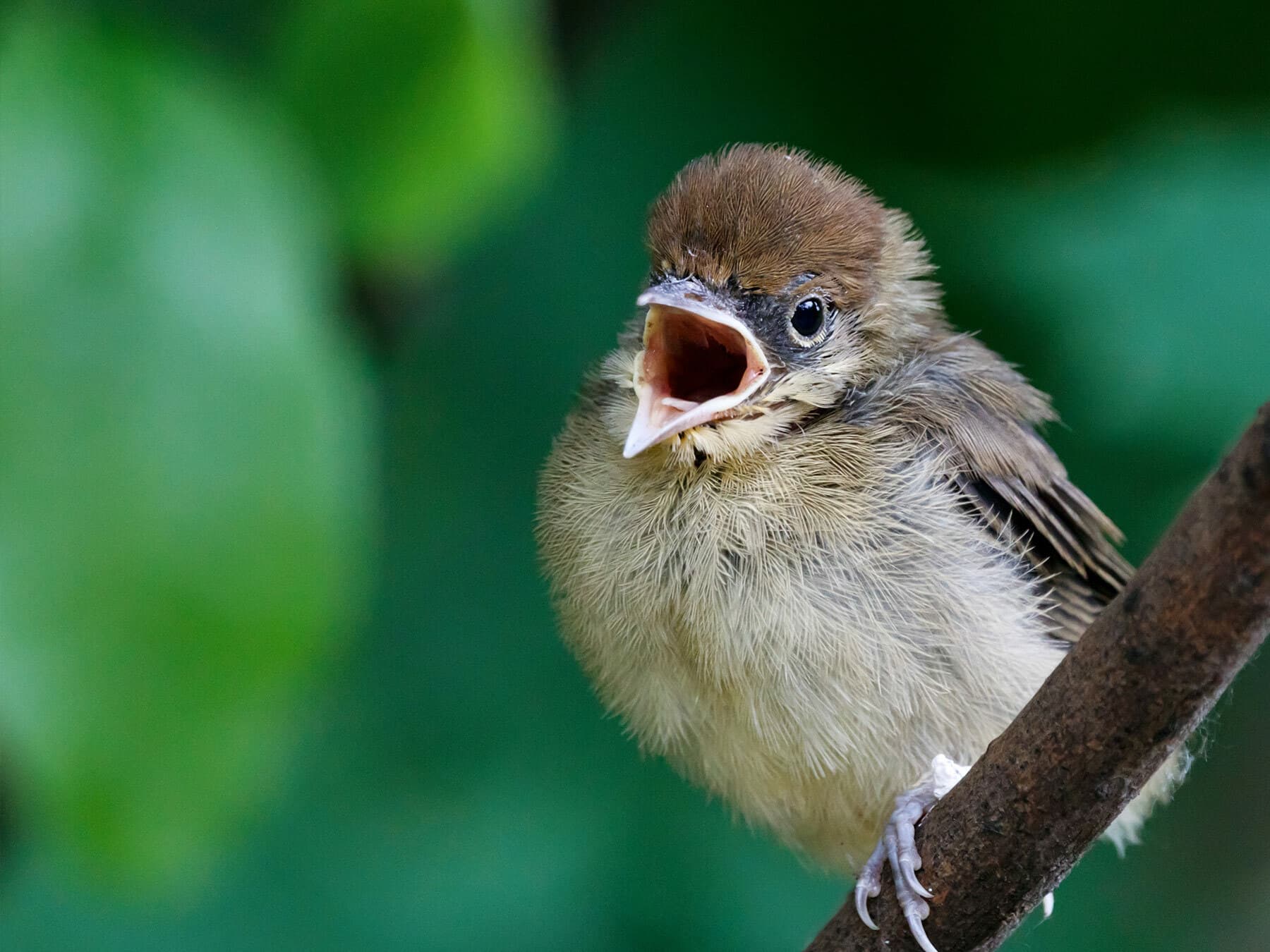
Females are different to males, with a rusty-brown cap, while juveniles lack the cap entirely, showing an overall greyish-brown plumage. Both sexes have a slender black bill and grey legs.
Its size
Adults- Length
- 13–15 cm
- Wingspan
- 20–23 cm
- Weight
- 14–20 g
Its song and calls
As a warbler the blackcap is obviously a proficient singer and can often be heard calling from trees, thick undergrowth and low-lying cover. The call itself is a short hard ‘tac’ or ‘tac- tac’ whilst the song is a loud rapid warbling, often lasting up to half a minute in duration, rising to a high pitched finale.
- Song0:00 / 0:39
Recorded in Thurrock, England · June 2024
- Call0:00 / 0:37
Recorded in Central Bohemian Region, Czech Republic · June 2024
When and where to see it
OctoberLeaving
Most recorded in October
- 1. Shetland Islands2.2%
- 2. Pembrokeshire1.4%
- 3. Vale of Glamorgan1.1%
- 4. Carlow1.0%
- 5. Orkney Islands1.0%
Each dot is a county, state or province: the bigger and darker, the larger the bird’s share of that place’s bird records that month. Grey dots: no regular records. The ringed point is the centre of the bird’s records this month; the arrow shows how it moved since last month, and the dashed loop its path through the year. “Arrivals” colours places where it becomes regular this month (orange) or is in its last regular month (grey). GBIF eBird Observation Dataset, 2019–2024. Map data: Natural Earth, US Census Bureau; place centres © OpenStreetMap contributors.
In your area
See when the Blackcap is recorded in your county, state or province.
How often the Blackcap turns up in the UK and Ireland through the year, from birdwatchers' records.
United Kingdom
Summer visitor · all year · most records in May
Ireland
Summer visitor · all year · most records in May
Show as a table
| Month | United Kingdom | Ireland |
|---|---|---|
| January | 0.15% (regular) | 0.37% (regular) |
| February | 0.16% (regular) | 0.29% (regular) |
| March | 0.35% (regular) | 0.40% (regular) |
| April | 1.7% (regular) | 1.3% (regular) |
| May | 1.8% (regular) | 1.4% (regular) |
| June | 1.6% (regular) | 1.2% (regular) |
| July | 1.1% (regular) | 0.55% (regular) |
| August | 0.73% (regular) | 0.22% (regular) |
| September | 0.64% (regular) | 0.20% (regular) |
| October | 0.35% (regular) | 0.17% (regular) |
| November | 0.093% (regular) | 0.12% (regular) |
| December | 0.14% (regular) | 0.33% (regular) |
Recorded regularly in
Worldwide: recorded regularly in 87 countries
Countries where it was recorded in at least 3 of the 6 years 2019–2024. Linked countries have their own bird list.
Europe (50)
- Åland Islands
- Albania
- Andorra
- Austria
- Belarus
- Belgium
- Bosnia & Herzegovina
- Bulgaria
- Croatia
- Czechia
- Denmark
- Estonia
- Faroe Islands
- Finland
- France
- Germany
- Gibraltar
- Greece
- Guernsey
- Hungary
- Iceland
- Ireland
- Isle of Man
- Italy
- Jersey
- Kosovo
- Latvia
- Liechtenstein
- Lithuania
- Luxembourg
- Malta
- Moldova
- Monaco
- Montenegro
- Netherlands
- North Macedonia
- Norway
- Poland
- Portugal
- Romania
- Russia
- San Marino
- Serbia
- Slovakia
- Slovenia
- Spain
- Sweden
- Switzerland
- Ukraine
- United Kingdom
Africa (19)
Asia (18)
- Armenia
- Azerbaijan
- Bahrain
- Cyprus
- Georgia
- Iran
- Iraq
- Israel
- Jordan
- Kazakhstan
- Kuwait
- Lebanon
- Oman
- Palestinian Territories
- Qatar
- Saudi Arabia
- Turkey
- United Arab Emirates
Data: EOD – eBird Observation Dataset (Cornell Lab of Ornithology), accessed via GBIF.org, CC BY 4.0. Records from 2019–2024, aggregated and filtered by Birdfact. How these lists are made
Blackcaps are partial migrants and widespread throughout most of Central, Southern and Northwest Europe, the Northeast Atlantic islands including Azores, Cape Verde, Madeira and the Canaries, Western Asia as far as Central Russia and Northwest Africa. During winter months those from the colder regions of Scandinavia migrate south, mainly to countries surrounding the Mediterranean or sub-Saharan Africa. Over the last fifty years or so blackcaps have also regularly migrated from northern Germany to overwinter in the United Kingdom. This oddity is explained by some researchers as being down to the fact that many British gardens have winter bird feeders so food is in abundance and freely available. There are five sub-species of the nominate with slight variations in appearance, predominantly down to subtle differences in the colour shade and to the extent of the area covered by the black cap of the male.
Signs and Spotting tips
Forests and woodland areas are the preferred habitats of blackcaps, particularly those with a covering of heavy undergrowth and bushes. Orchards, parks, hedgerows and gardens in more urban areas are also popular. The song of the male is often the first indication of the presence of a blackcap and once spotted the distinctive black cap of the male or rufous brown cap of the female are the primary aid to identification. They are relatively solitary birds although may feed together during the winter months from berry laden bushes.
What it eats
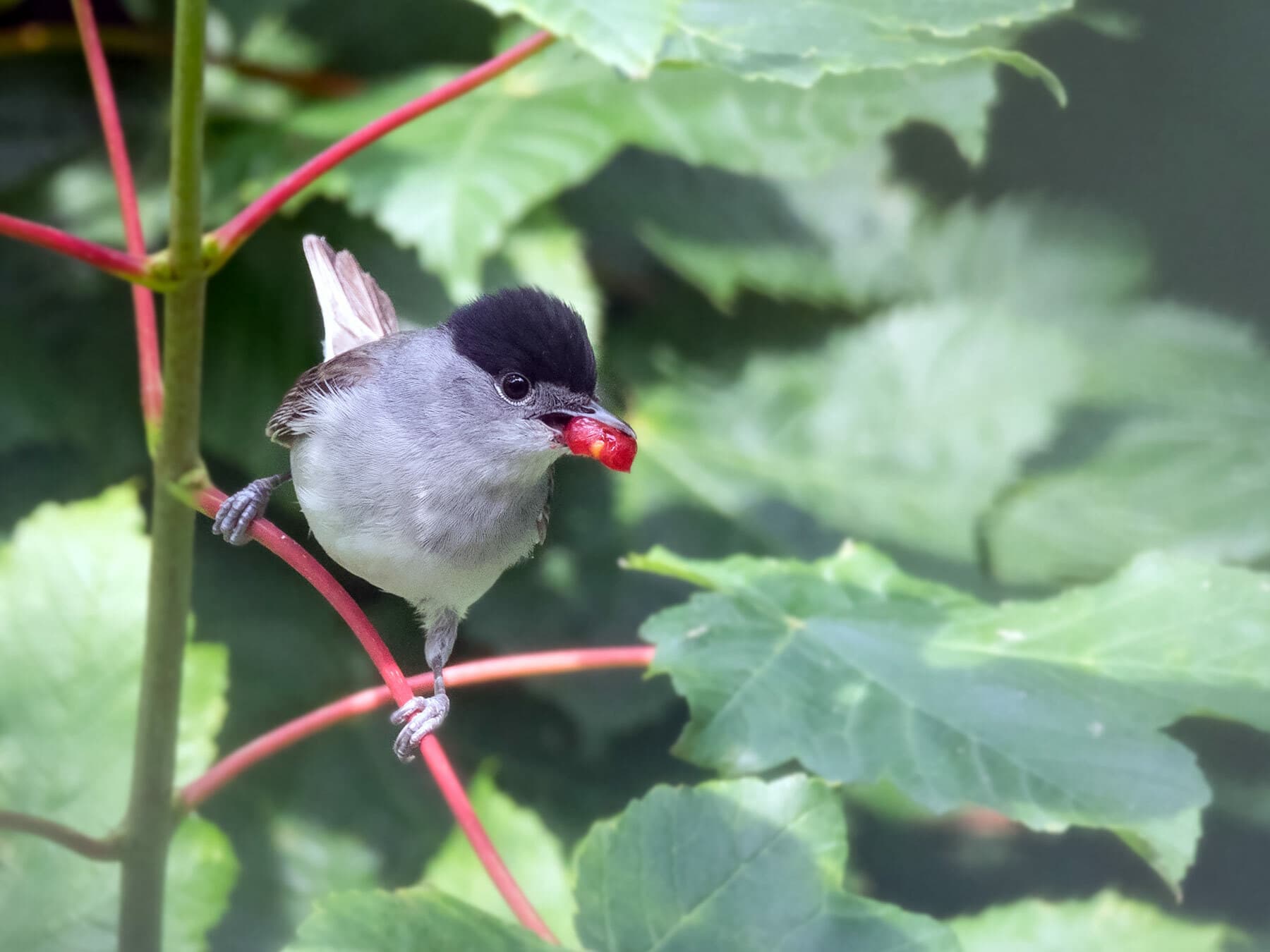
During the breeding season the blackcap prefers insects and larvae including grasshoppers, beetles, mayflies and small spiders, which it collects off leaves or from twigs and even through ground foraging, although the latter is not as common. As the end of summer approaches their tastes change and they prefer fruits, berries and seeds. In the springtime they can often been seen balancing on small branches taking pollen from tree blossom.
Nesting and breeding
Small cup shaped nests are constructed out of grasses and stems by both parents and generally located inside bushes at roughly a metre above the ground. Up to two broods, occasionally three in some of the Atlantic islands, averaging 4 or 5 buff coloured eggs, with grey brown blotches, are laid between April to August. Those birds on the very fringes of their normal range may produce outside of these time parameters. Both parents incubate the eggs which hatch at around two weeks. Fledging occurs roughly twelve days later.
Behaviour
Blackcaps are known for their agile movements, often seen flitting through foliage in search of insects. They exhibit a unique 'hovering' behaviour while foraging, momentarily suspending themselves to pluck berries or insects from leaves.
During the breeding season, males become fiercely territorial, engaging in vocal battles to defend their nesting areas.
Lifespan and predators
The lifespan of the blackcap is normally up to five years although some ringed birds have been recorded at almost twice that age.
Conservation
What does a Eurasian Blackcap look like?
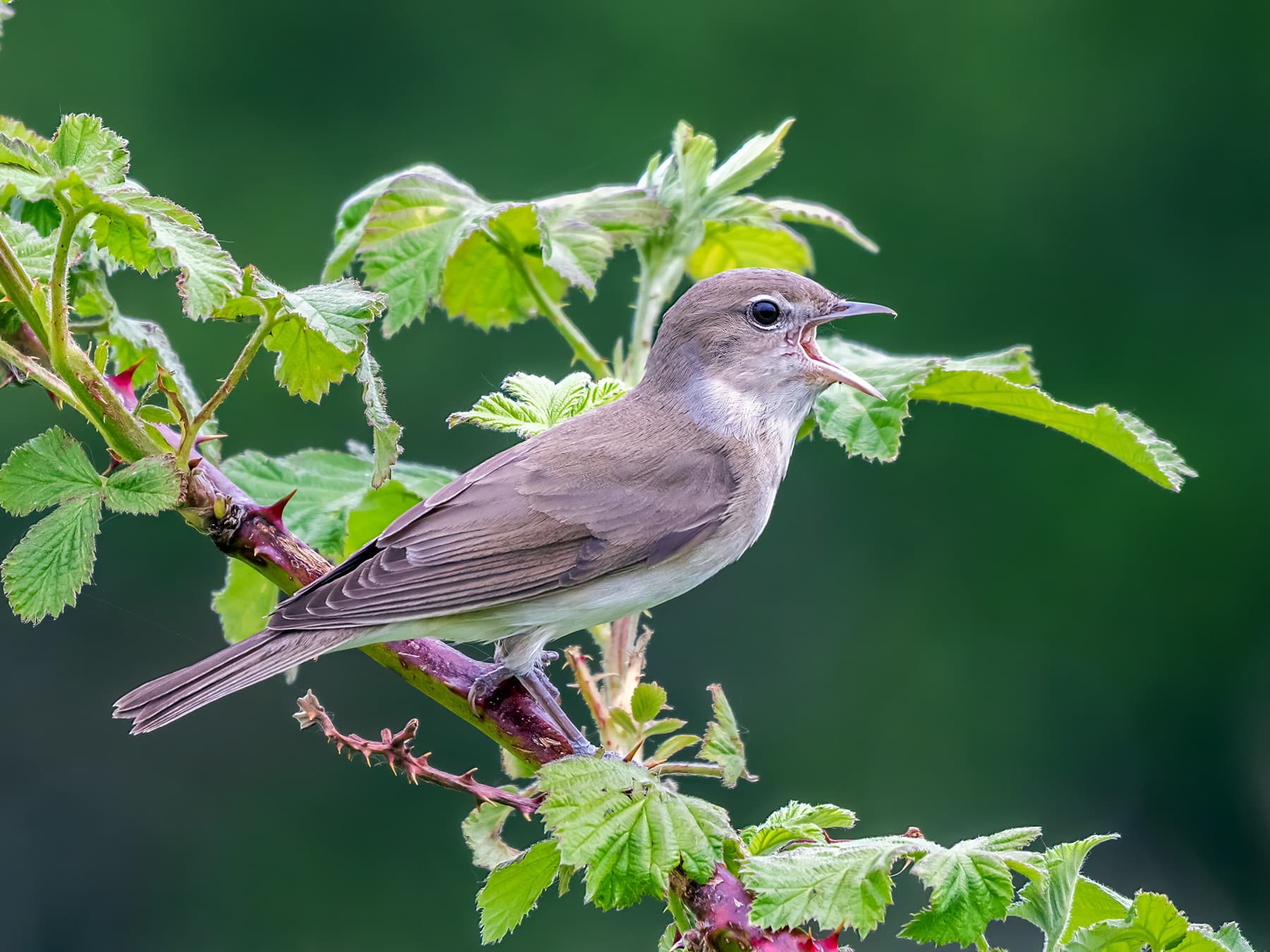
The adult male blackcap has mainly olive grey upper parts with a pale grey underside. The face and throat are grey and there is a white semi-circular eye ring around the base of the eye terminating where it joins with a distinctive narrow black cap. This black area extends from the forehead, across the crown to the nape. The upperwing area and the medium length tail are a dark grey. The eyes are a dark brown and the bill slate grey with grey legs. The adult female is similar to the male but overall with a brownish shade and the blackcap is replaced with a brown or rufous cap. The juvenile resembles the female but with more buff colour to the upperparts and a less obvious brown cap.
Similar birds
Often mistaken for
More photos
2 photos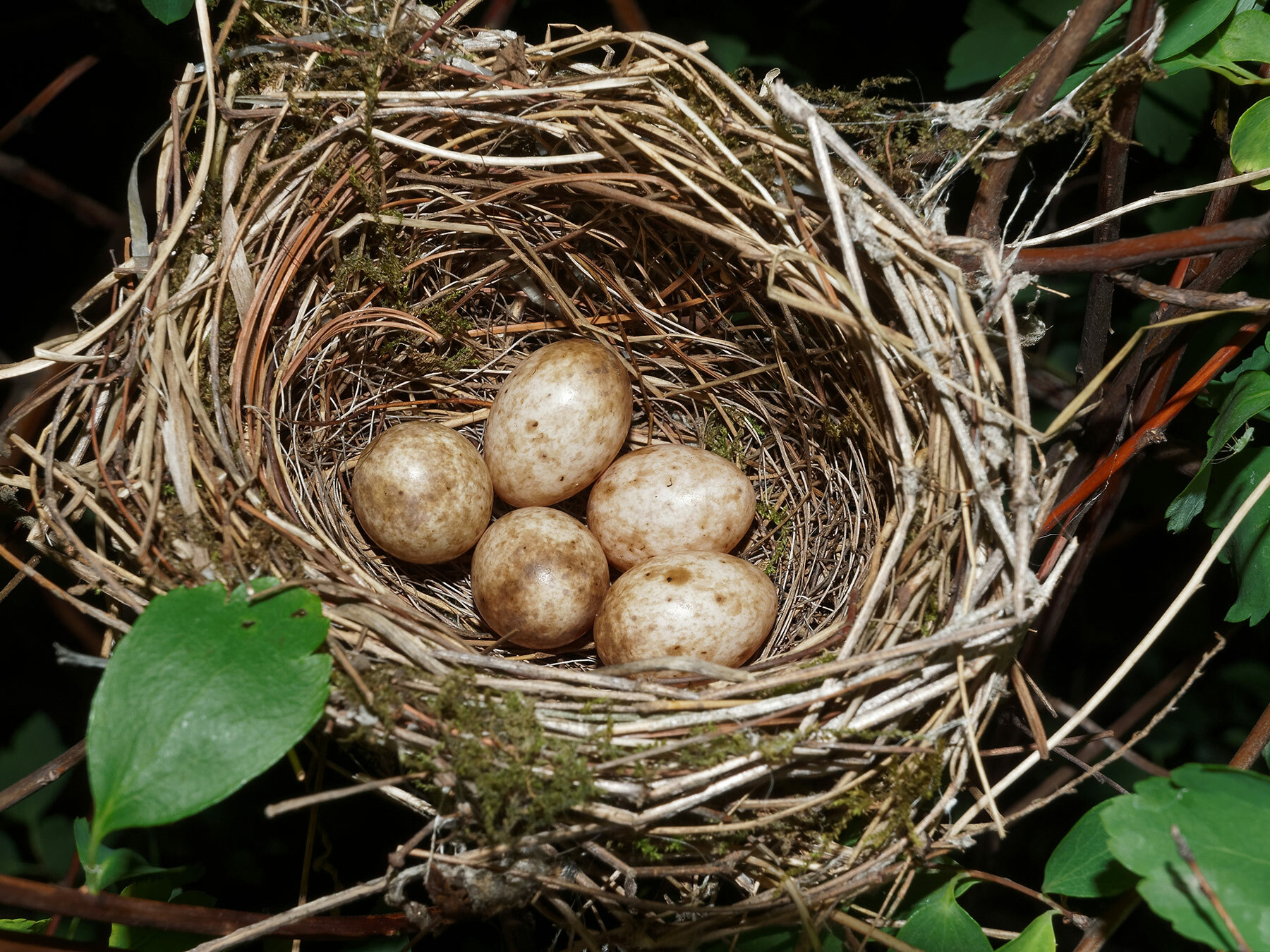
Blackcap guides
1 guidesQuick facts
- Length
- 13–15 cm
- Wingspan
- 20–23 cm
- Weight
- 14–20 g
- Lifespan
- 5 years · oldest recorded 13.8 years
- Family
- Sylviid Warblers
- Migration
- Partial migrant
- Global status (IUCN)
- Least Concern
- World population
- 101,000,000 - 161,000,000 mature individuals
- Population trend
- Increasing
- Also called
- Eurasian Blackcap, Northern Nightingale
- Scientific name
- Sylvia atricapilla
Sources
4- 1BirdLife International. 2016. Sylvia atricapilla. The IUCN Red List of Threatened Species 2016: e.T22716901A87681382. Source (opens in a new tab)
- 2EBCC (2015)
- 3BirdLife International (2015) Source (opens in a new tab)
- 4Fransson et al., EURING list of longevity records for European birds (2010) Source (opens in a new tab)

Checked by
Nathan Cope, founder and editor
Nathan founded Birdfact and leads its writers and contributors in the UK, the US and Canada. He has watched and studied birds for more than ten years, and checks every article and species guide before it’s published.