


Sardinian Warbler
Curruca melanocephala
By the Birdfact teamChecked by Nathan Cope
On this page13 sections
How to recognise it
What do Sardinian Warblers look like?
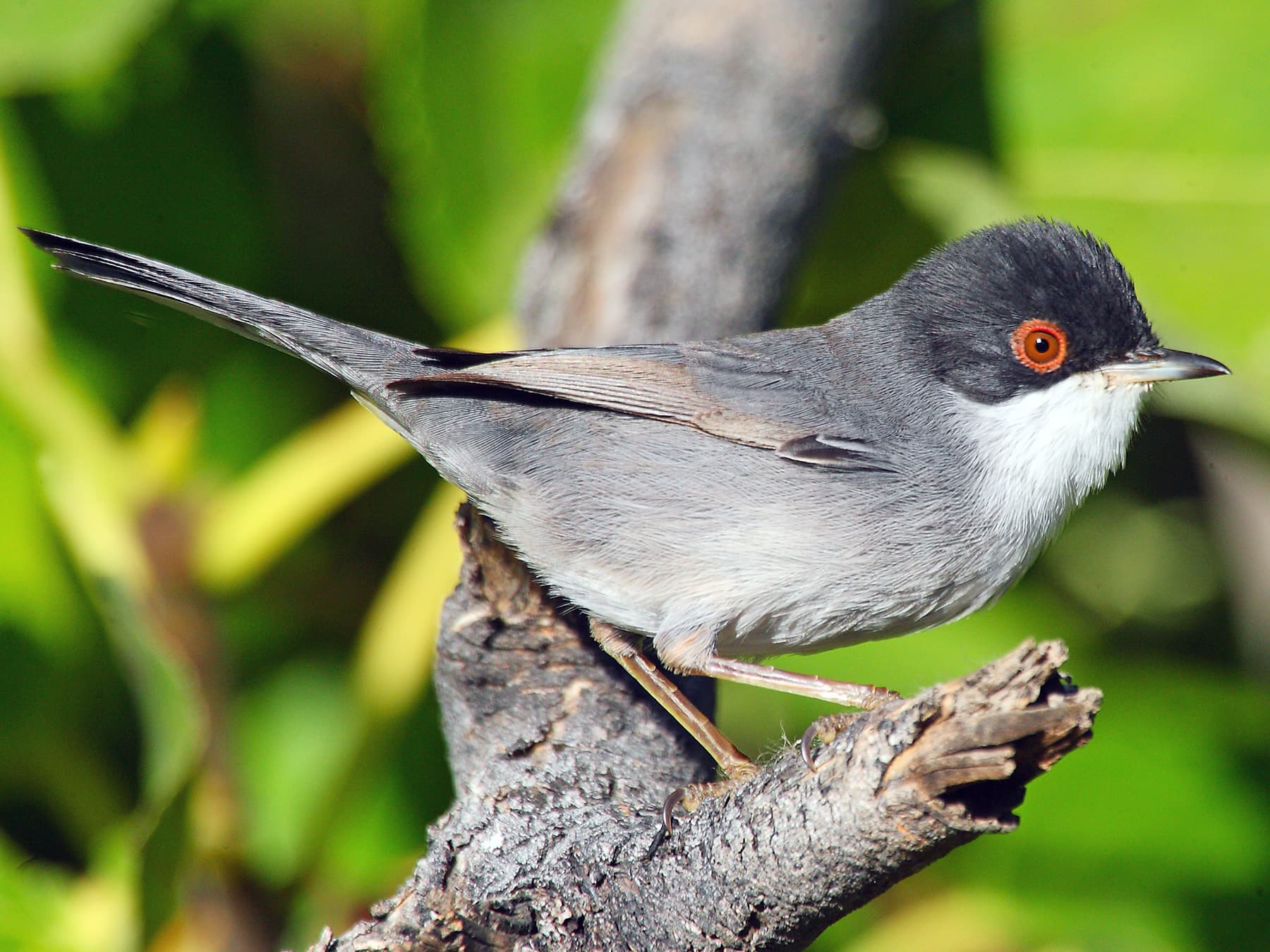
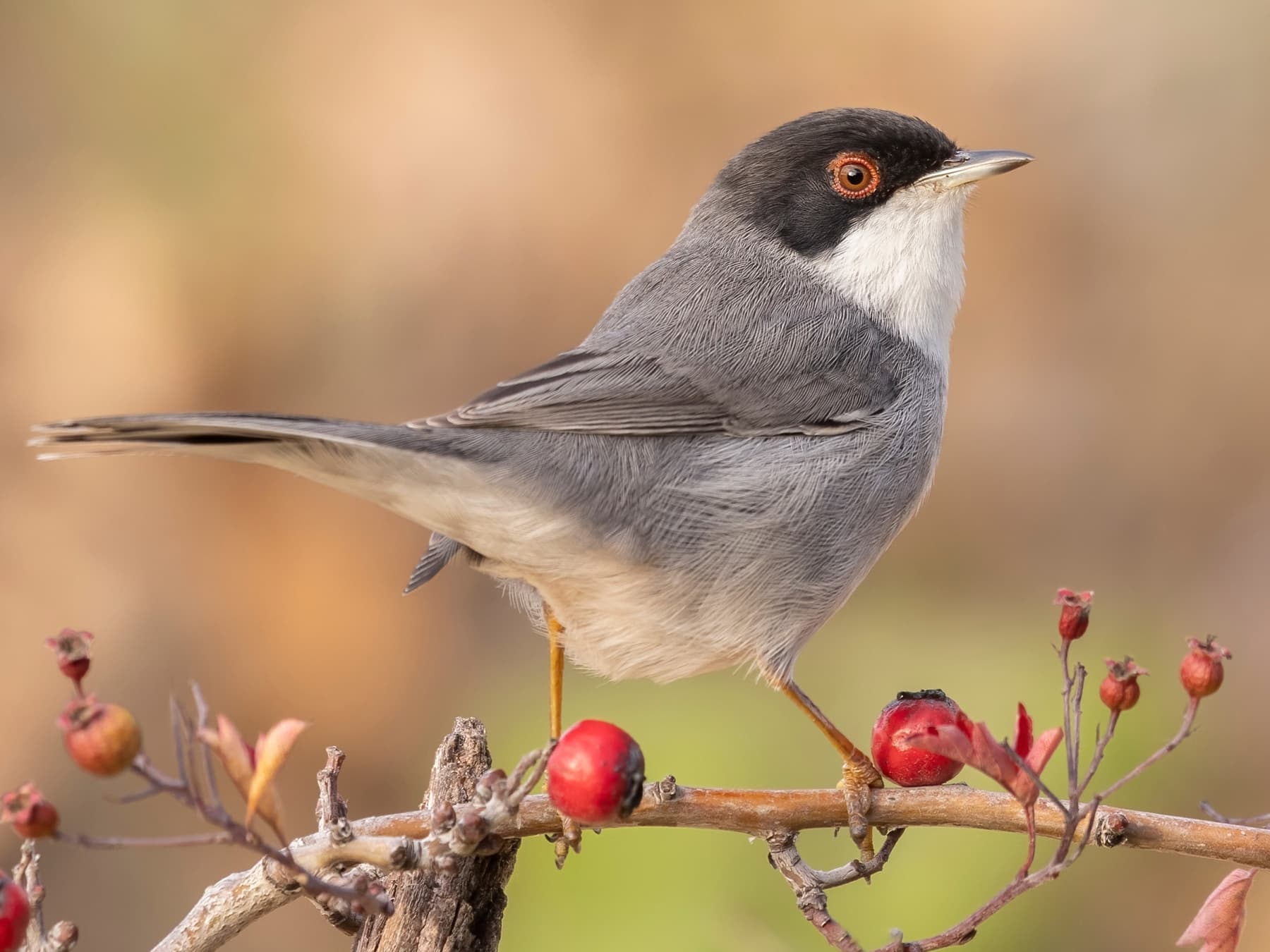
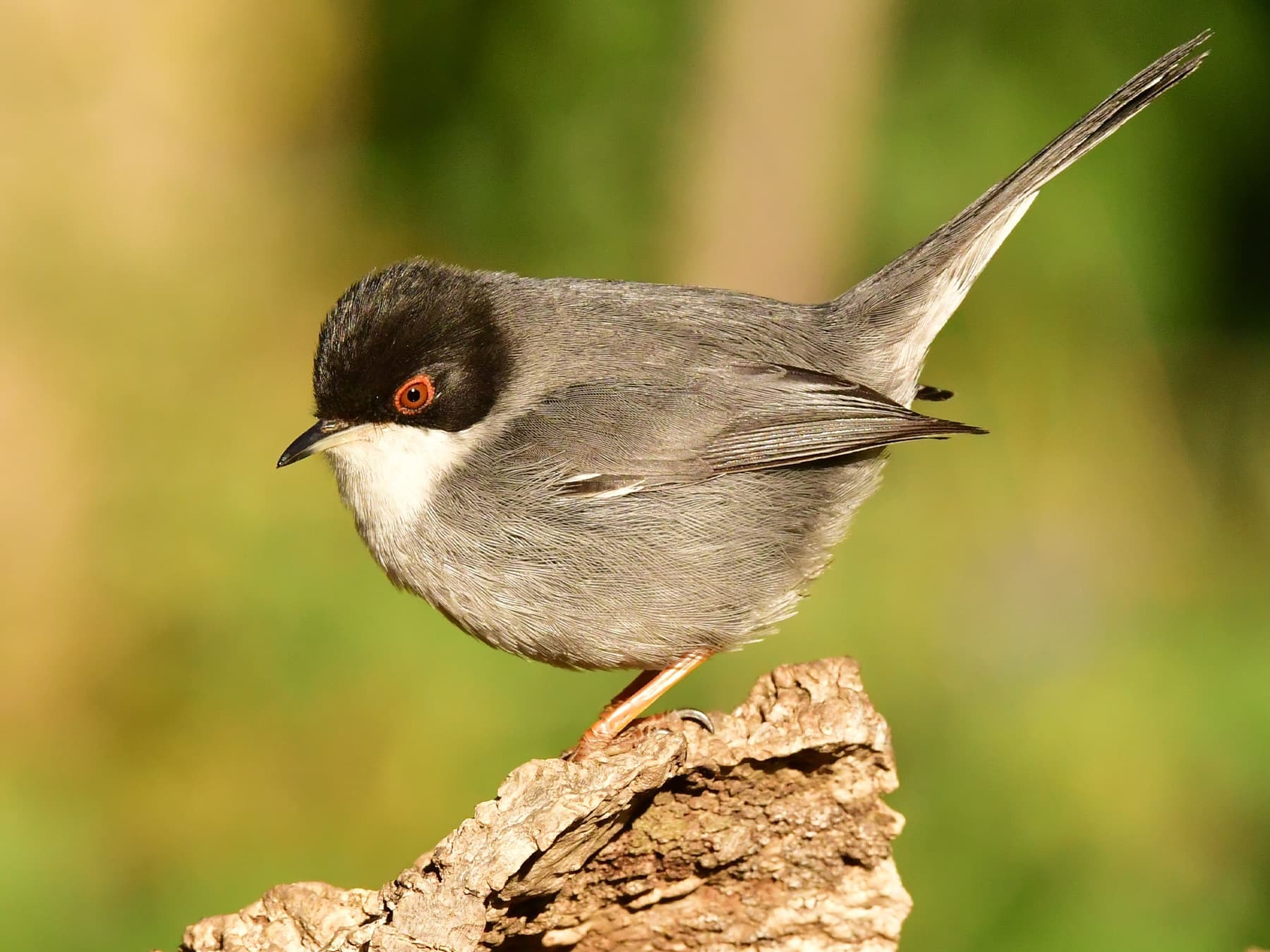
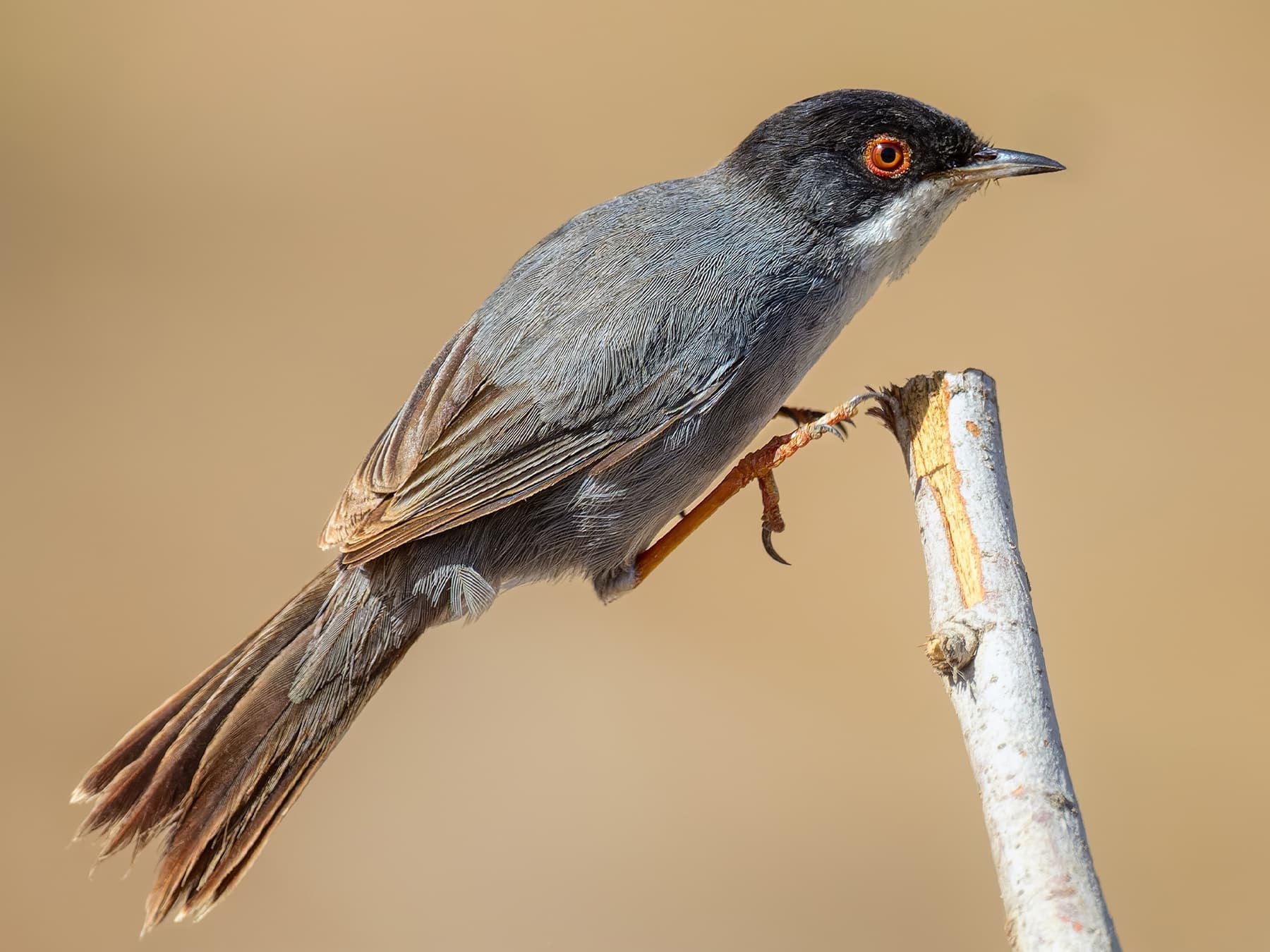
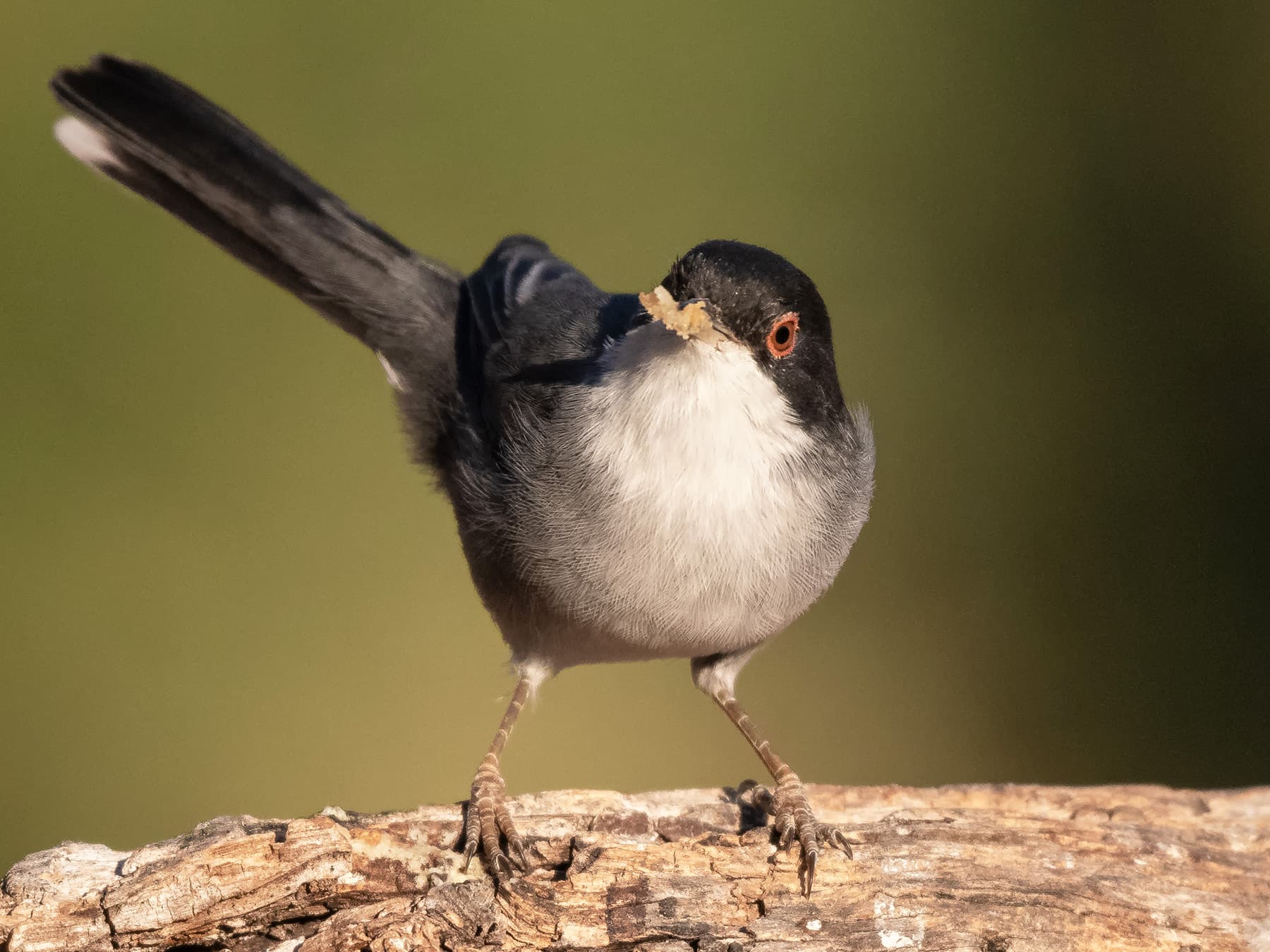
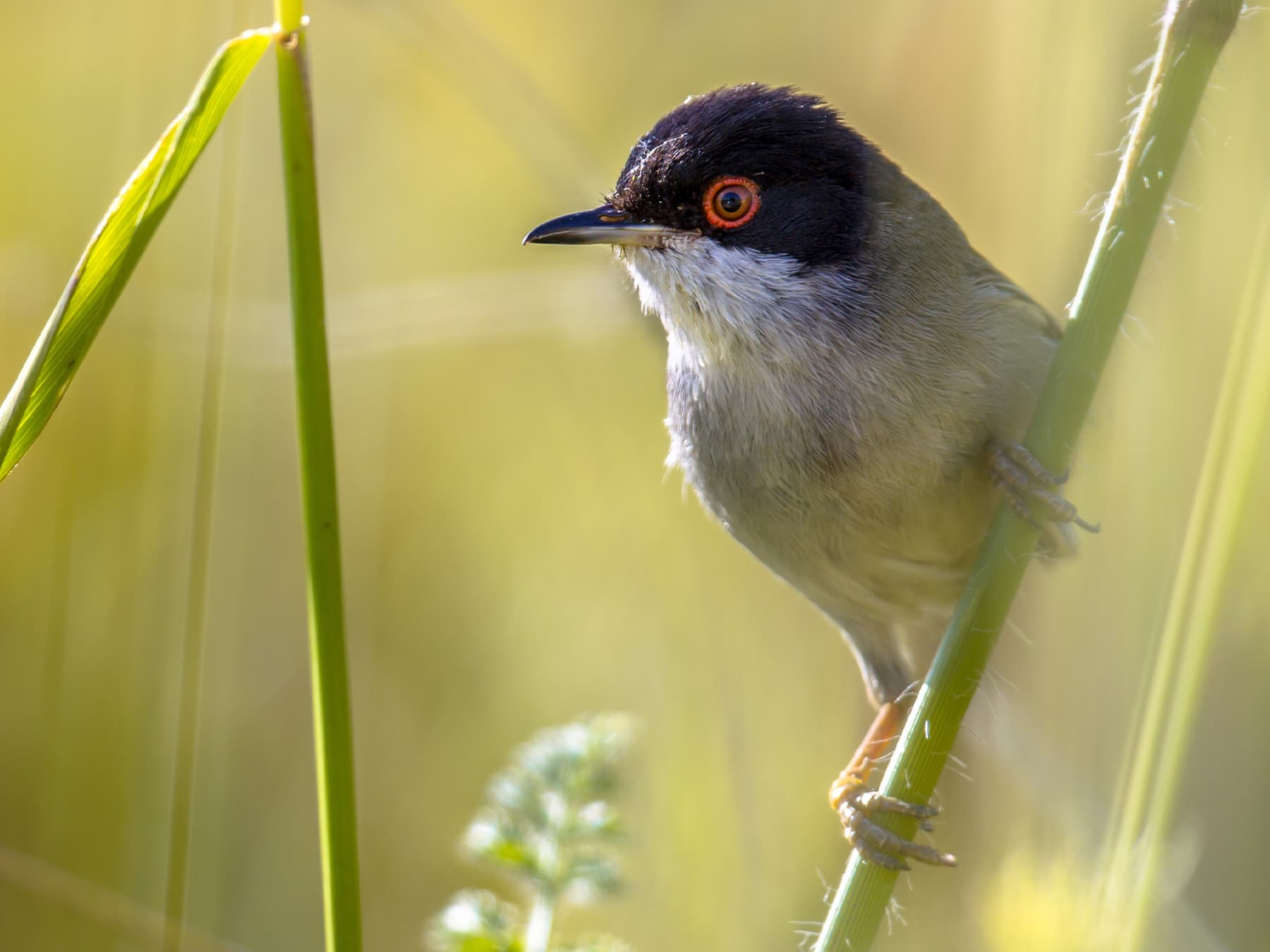
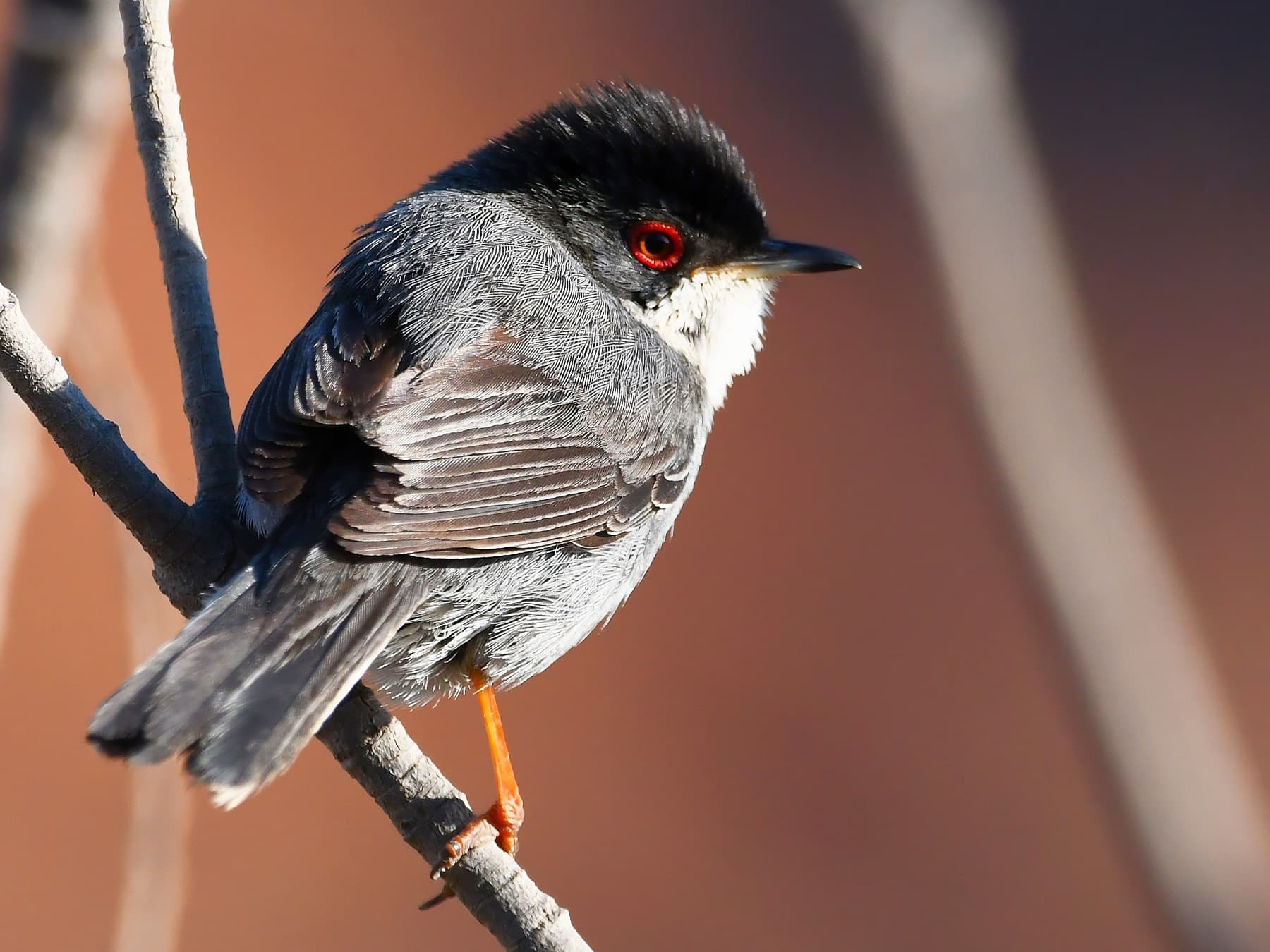
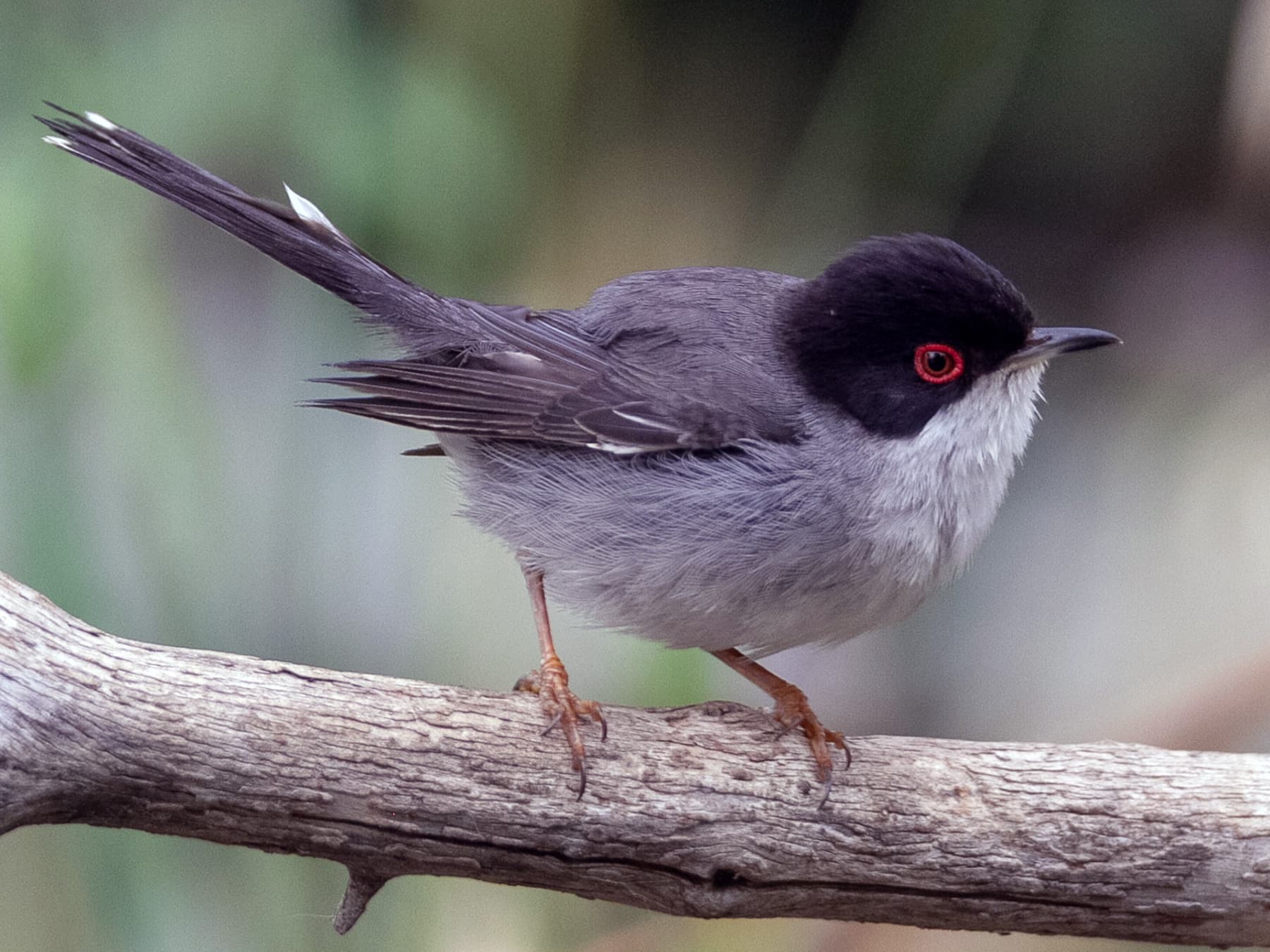
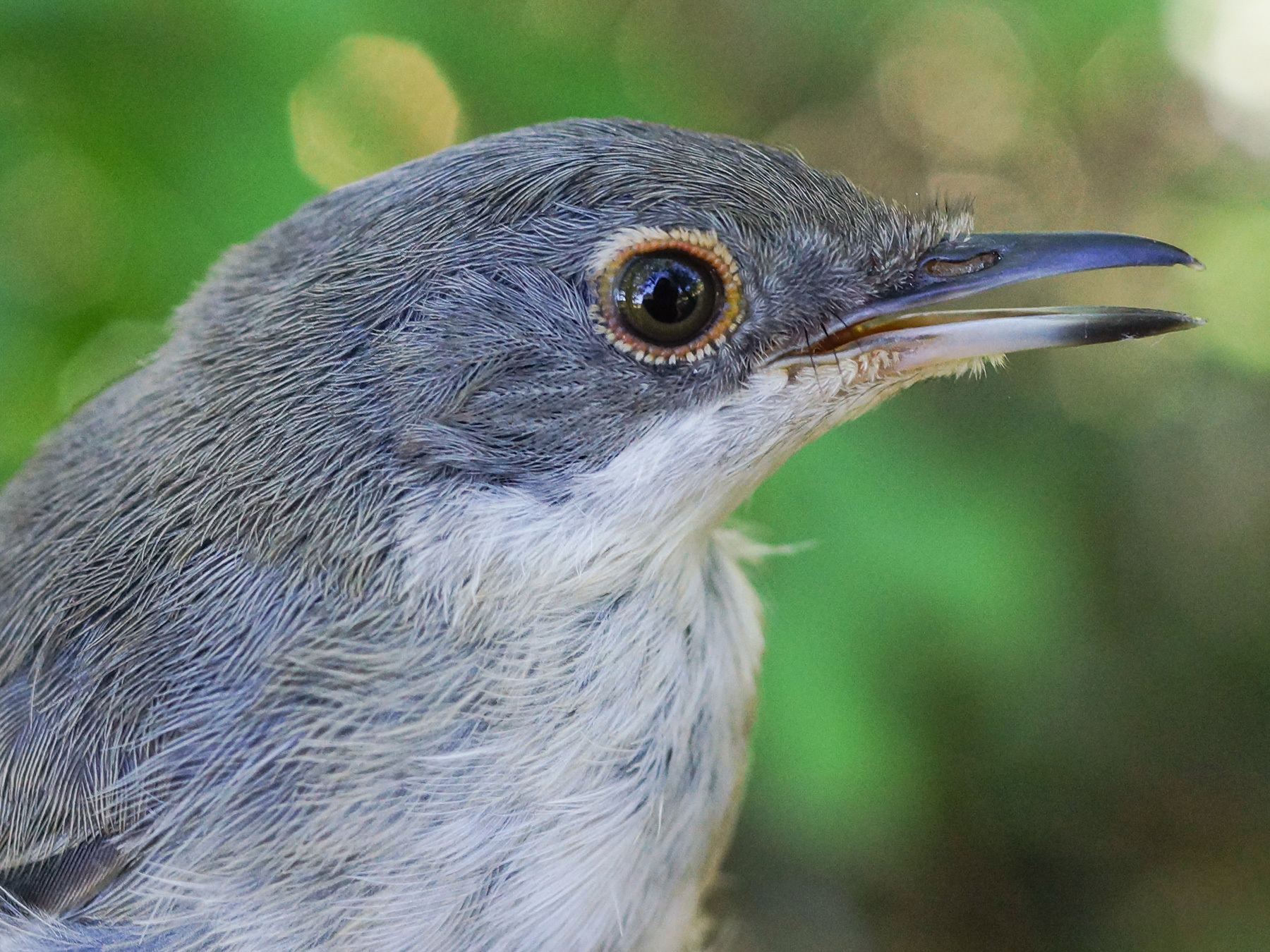
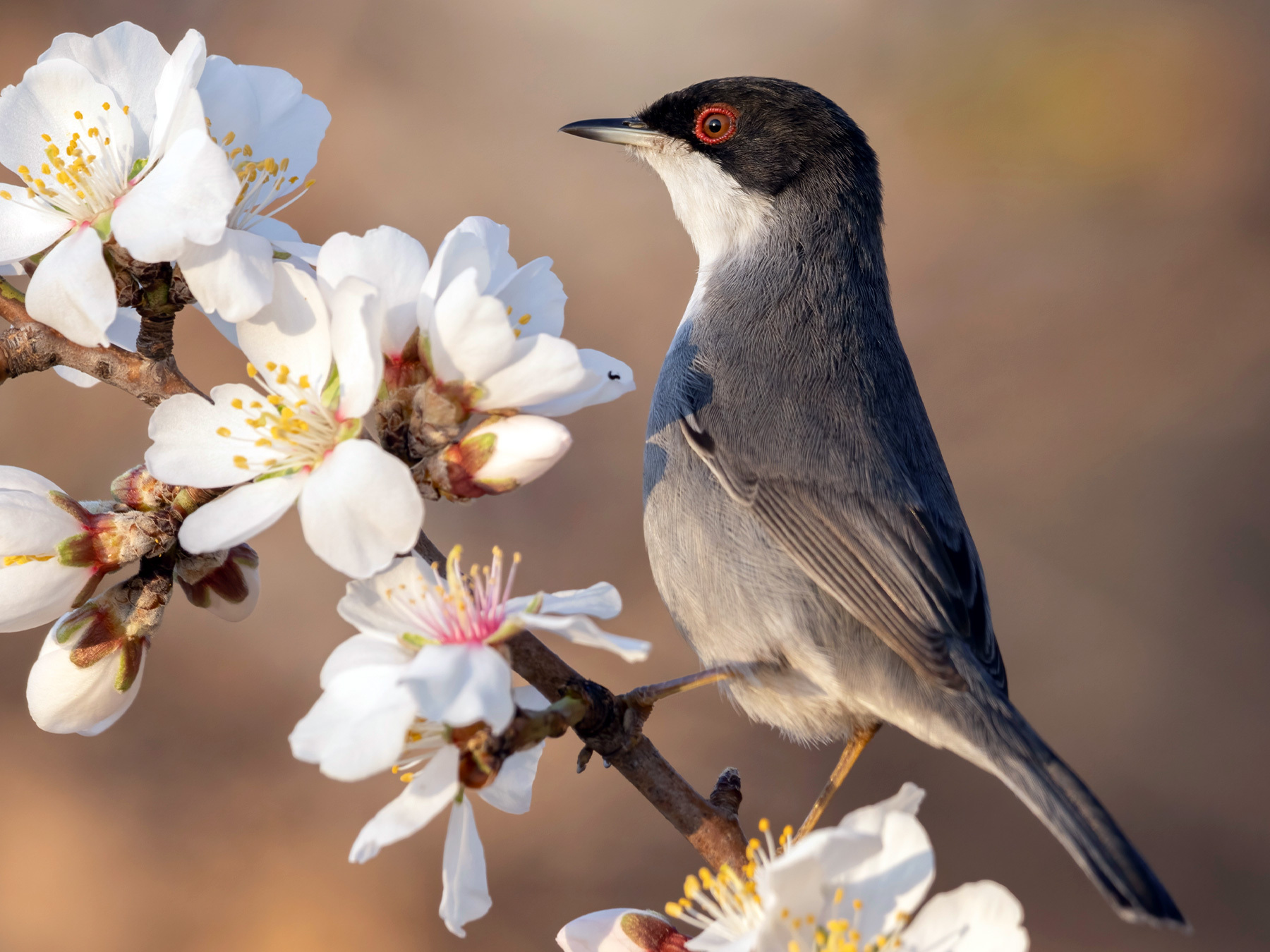
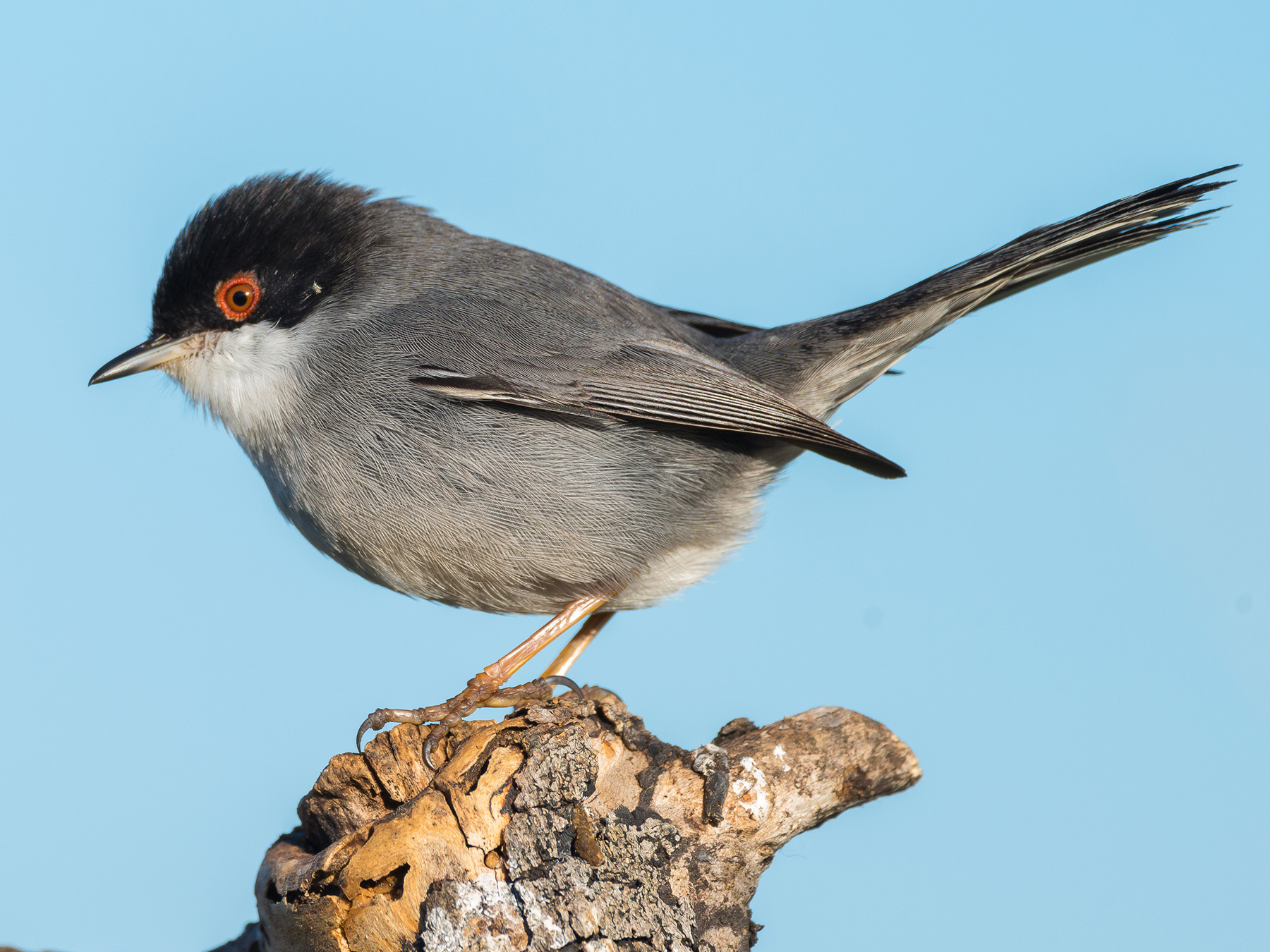
Male Sardinian warblers have a strongly contrasting plumage: a black head and upper face, white throat, light grey back and wings, and a paler greyish-white belly. Its tail is dark, edged with white, and it has brownish legs. The eye is reddish-brown, surrounded by a pinkish-orange eye ring.
Outside of the breeding season, their plumage becomes duller, with the upperparts an olive-grey and the black head becoming less rich in colour.
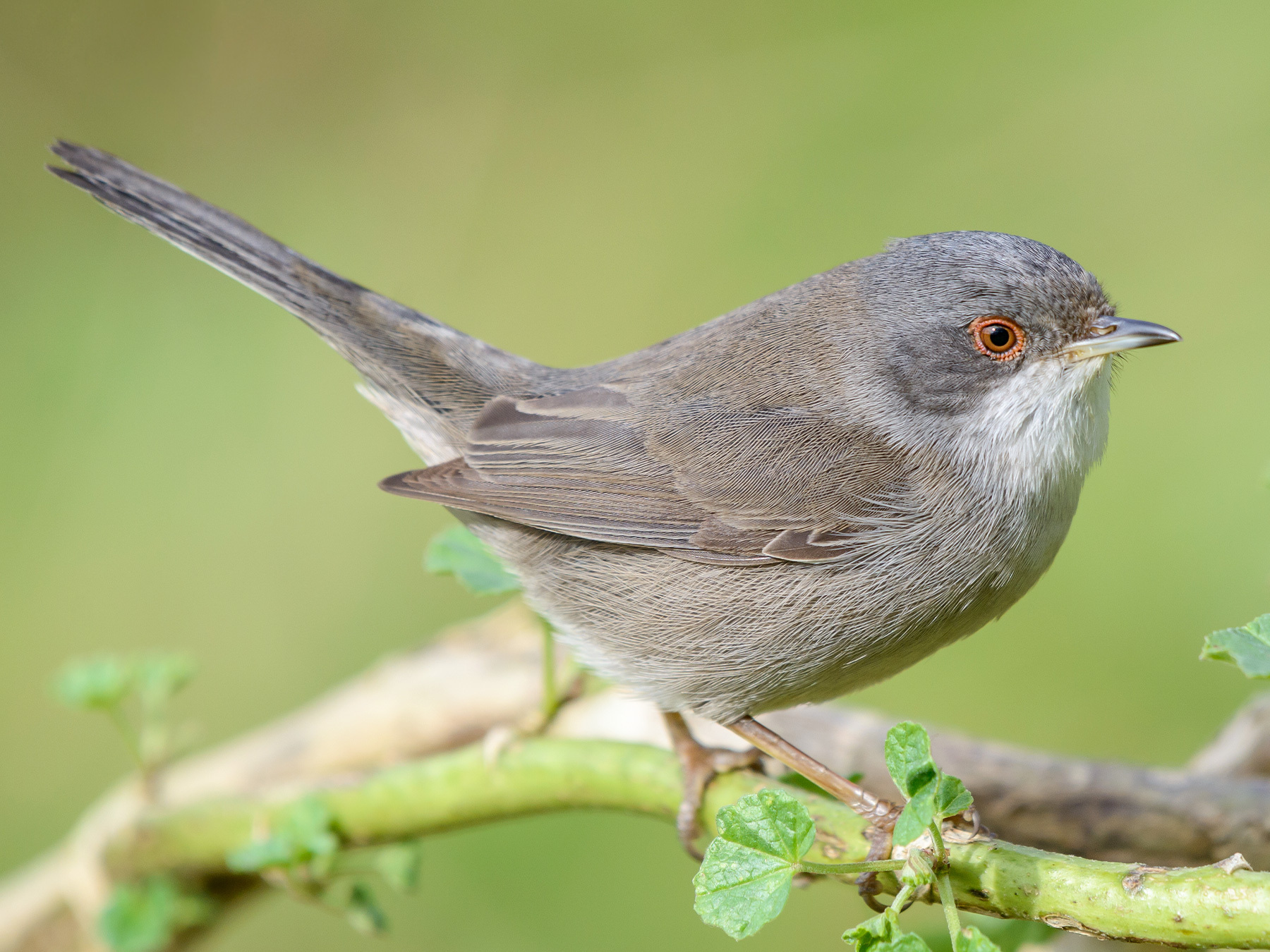
Females are generally duller in appearance than males, with a grey head and a paler reddish eye ring. The throat is white, darkening into a grey-brown belly and flanks, while the upperparts and wings are pale brown. The female’s tail has white outer edges but is otherwise brown.
Juvenile Sardinian warblers resemble adult females, although there is less contrast between the colours, and they are altogether browner, with brownish heads, and buff-brown wing patterning.
How big are Sardinian Warblers?
Sardinian warblers are small, compact birds, with a similar stature to a robin. There is no difference in size between males and females.
- Length: 13.5 cm (5.3 in)
- Wingspan: 15 cm to 18 cm (5.9 in to 7.1 in)
- Weight: 10 g to 15 g (0.4 oz to 0.5 oz)
Its size
Adults- Length
- 13–14 cm
- Wingspan
- 15–18 cm
- Weight
- 10–15 g
Its song and calls
What sound does a Sardinian Warbler make?
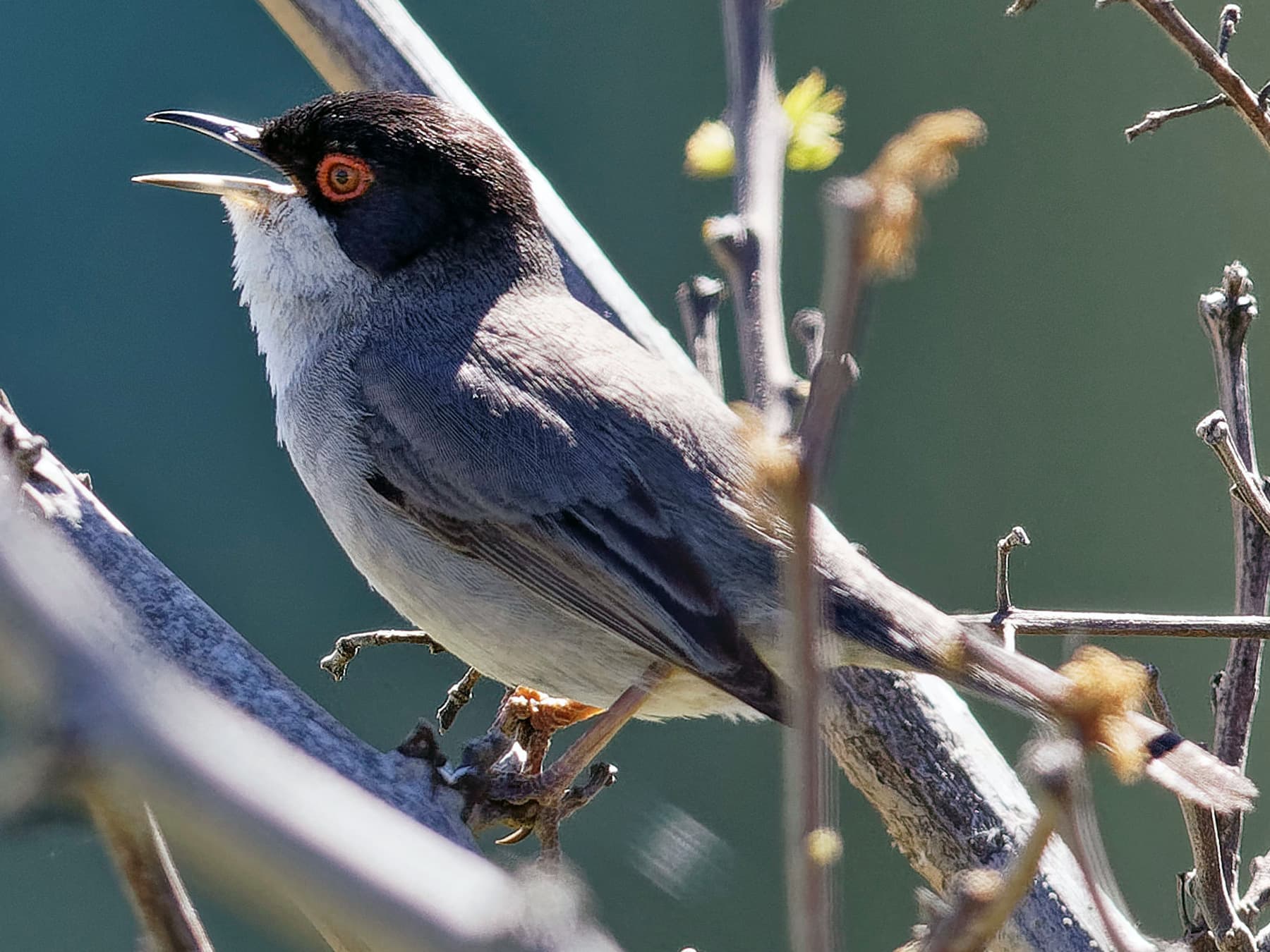
The loud, chattering song of Sardinian warblers can be heard from upper branches of bushes and shrubs, consisting of a rapid whistling ‘t-tra, t-tra, t–tra’ with a rattling ‘trrr, trrr, trrr’ lasting for between 2 and 5 seconds.
- Song0:00 / 0:06
Recorded in Provence-Alpes-Côte d'Azur, France · December 2022
- Alarm call0:00 / 0:16
Recorded in Occitanie, France · August 2025
When and where to see it
The Sardinian Warbler is not recorded regularly in the UK, Ireland, the United States or Canada.
United Kingdom: recorded in 4 of the 6 years; Ireland: recorded in 1 of the 6 years. Too few years to count as a regular visitor.
Worldwide: recorded regularly in 30 countries
Countries where it was recorded in at least 3 of the 6 years 2019–2024. Linked countries have their own bird list.
Data: EOD – eBird Observation Dataset (Cornell Lab of Ornithology), accessed via GBIF.org, CC BY 4.0. Records from 2019–2024, aggregated and filtered by Birdfact. How these lists are made
What is the habitat of a Sardinian Warbler?
Sardinian warblers are adaptable and widespread and thrive in a range of diverse landscapes and habitats.
Warm, arid regions are preferred, with scrubland and open country, interspersed with hedgerows and bushy undergrowth, but Sardinian warblers will also readily nest in urban areas, gardens, coastal sites, and farmland and have also been observed to establish breeding grounds in countryside destroyed by wildfires.
Winter habitats are similar, with desert shrubland, olive and oak plantations, mangrove fringes, and dry grasslands also popular.
What is the range of a Sardinian Warbler?
Sardinian warblers live and breed across southern Europe and North Africa, from southern Portugal and Spain in the west, across Italy, Greece, and into western Turkey in the east.
The species is found on the Canary Isles and is widespread on Mediterranean islands, including Sardinia, Corsica, Sicily, and Cyprus, and further south across North Africa, in Morocco, Algeria, Tunisia, Libya, Egypt, and in the coastal Mediterranean regions of the Middle East, including Lebanon and Israel.
In winter, some populations may spread southwards and are found further along the coastal regions of western Africa, as far south as Senegal as well as inland in Mali and Niger, and along the length of the Nile in Egypt, into Sudan.
Where do Sardinian Warblers live?
Sardinian warblers are found all year round in the highest concentrations in regions that border the Mediterranean and on its islands, in particular southern Spain, southern Italy, southern Greece, Cyprus, Sardinia, Malta, the Balearic islands, and around Gibraltar and the northern tip of Morocco.
How rare are Sardinian Warblers?
In their range, in coastal regions around the Mediterranean, Sardinian warblers are widespread and abundant and are frequently the most common avian species in certain areas. There are up to an estimated 16 million breeding pairs in Europe, although this number is thought to be lower than the true number.
Where can you see Sardinian Warblers in the UK?
Sardinian warblers do not breed in the UK and are not regular visitors, either in passage or as winter migrants. Occasional reports of vagrant birds occur, most frequently in spring, and sightings have been made across the country rather than limited to one particular geographical location.
Migration
Do Sardinian Warblers migrate?
Unlike many warbler species which are fully migratory, Sardinian warblers are largely sedentary. However, populations further to the north of their distribution range and those that breed furthest east, in eastern Turkey, Romania, and Bulgaria leave their breeding grounds each autumn and head west and south during winter.
Island populations, for example in the Balearics, Canaries, Corsica, and Sardinia, there is little seasonal movement, but in other coastal areas, a temporary shift inland may occur once breeding is complete.
North African populations move south, both inland and along the West African coast to wintering grounds that also sometimes welcome birds from further afield, including parts of Europe.
Are Sardinian Warblers native to the UK?
Sardinian warblers are not native to the UK and are extremely rare, vagrant visitors, with only occasional sightings reported. Most of these sightings occur in spring, thought to be birds that have temporarily strayed off course from their return to Mediterranean breeding grounds.
Tips for seeing it
- Look for movement in dense Mediterranean scrub and low vegetation
- Listen for their distinctive rattling call, often given from exposed perches
- Watch for the male's conspicuous black cap and throat
- Observe their quick, darting movements as they forage
- In the UK, check coastal areas in southern England for rare sightings
What it eats
What do Sardinian Warblers eat?
Invertebrates, including a wide variety of beetles, caterpillars, moths, and spiders, are the most important component of a Sardinian warbler’s diet. In autumn and winter, as well as during the breeding season, some fruit and berries are also eaten, particularly buckthorn, figs, blackberries, and olives. Food is foraged from the ground as well as from low tree branches.
What do Sardinian Warbler chicks eat?
Young Sardinian warblers are fed small insects and their larvae by both parents, with small spiders and bugs fed in the first few days before progressing to larger items, such as caterpillars. Buckthorn berries are a common source of food for Sardinian warbler nestlings on Spanish breeding grounds.
Nesting and breeding
Where do Sardinian Warblers nest?
Sardinian warblers choose well-hidden nest sites close to the ground and concealed by shrubbery, particularly brambles, and shrubbery. In Spain, nests may also be built in the lower branches of small trees, with kermes oak being a popular choice.
Nests are built by the male and female together, who construct a cup-shaped nest by weaving twigs, grasses, and spiders’ webs. The female adds a softer inner lining of grass and tufts.
When do Sardinian Warblers nest?
The earliest broods of Sardinian warblers have been observed in February, although the peak breeding season is between March and June. Incubation, which is shared between pairs once the final egg of a clutch is laid, lasts for between 12 and 15 days.
What do Sardinian Warbler eggs look like?
Between three and five buff-brown eggs, heavily mottled with dark brown, are laid by Sardinian warblers. Eggs are semi-spherical and measure 18 mm by 14 mm (0.7 in by 0.6 in).
Do Sardinian Warblers mate for life?
Sardinian warbler pairs remain together for the duration of the nesting season, during which up to three broods may be raised. After breeding, pairs disperse, and although many populations are sedentary and do not travel far from their nesting territories, it’s usual for a new mate to be found the following spring.
Behaviour
Are Sardinian Warblers aggressive?
Sardinian warblers have a reputation for being aggressive and intolerant of other birds of the same species entering their territory while breeding. A loud, harsh ‘tschra’ call is heard in nest defence, and to assert a claim to a territory, a mate, or a feeding site.
Lifespan and predators
How long do Sardinian Warblers live?
The typical lifespan of a Sardinian warbler is thought to be between 1 and 5 years, although records show individual birds have reached 8 years and 4 months. First-time breeding occurs at one year of age.
What are the predators of Sardinian Warblers?
Sardinian warblers’ nests may be attacked by ground predators, such as snakes and rats. Larger birds, including crows and magpies, as well as chameleons and cats are also opportunistic predators of nestlings, although Sardinian warblers are known to be fierce defenders of their nests against predators of any size.
Are Sardinian Warblers protected?
Within Europe, there are no active and specific conservation measures in place for Sardinian warblers.
Are Sardinian Warblers endangered?
Due to their ability to adapt to different environments, Sardinian warblers are widespread and in no immediate danger of population decline. They are classed as a species of least concern globally, and their breeding range has expanded to include parts of Bulgaria and Romania.
Cold winters can potentially be deadly, with the survival of these tiny birds not always guaranteed when subzero temperatures hit, for example in 1946 and 1962, exceptionally cold weather in southern France led to a significant decline in numbers of Sardinian warblers locally.
Conservation
While the Sardinian Warbler is listed as Least Concern due to its large range and stable population, it faces localised threats from habitat loss and degradation. Climate change may affect its distribution, potentially expanding its range northward.
Conservation efforts focus on preserving Mediterranean scrubland habitats.
Similar birds
Often mistaken for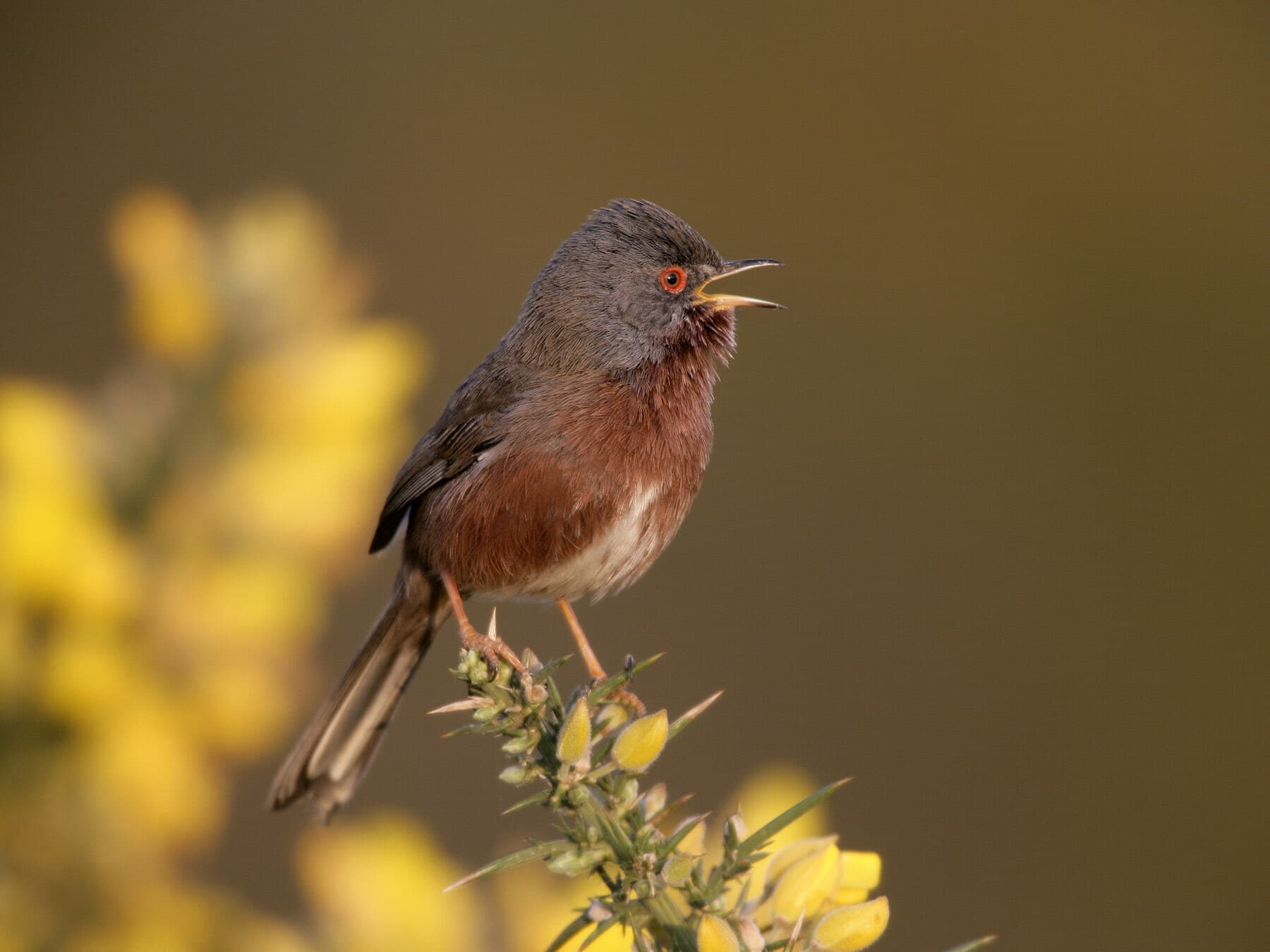
More photos
5 photos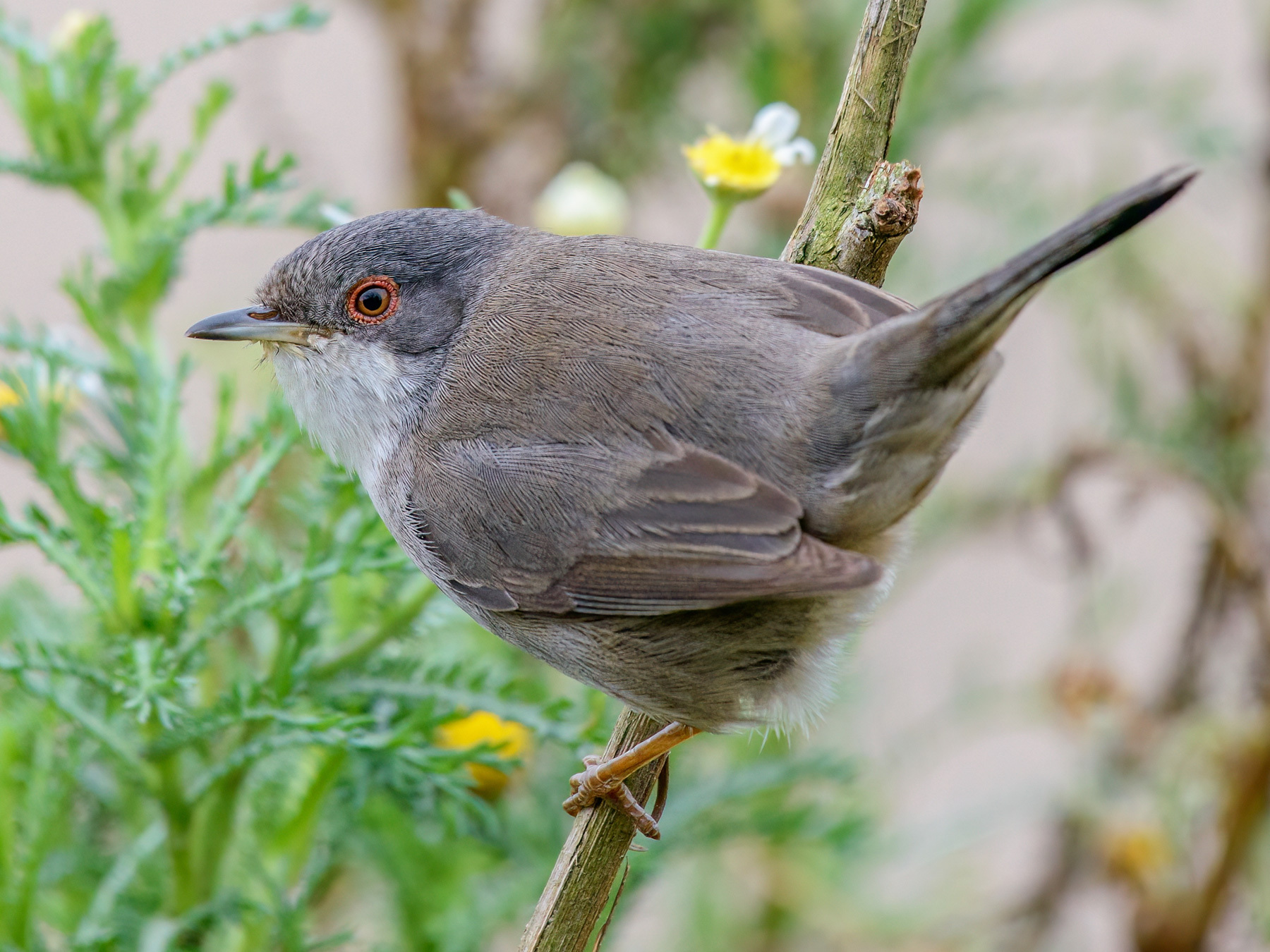
Quick facts
- Length
- 13–14 cm
- Wingspan
- 15–18 cm
- Weight
- 10–15 g
- Lifespan
- 1–5 years · oldest recorded 8.3 years
- Family
- Sylviid Warblers
- Migration
- Partial migrant
- Global status (IUCN)
- Least Concern
- World population
- 25,500,000 - 53,500,000 mature individuals
- Population trend
- Increasing
- Scientific name
- Curruca melanocephala
Sources
4- 1BirdLife International. 2018. Sylvia melanocephala. The IUCN Red List of Threatened Species 2018: e.T22716959A132113832. Source (opens in a new tab)
- 2EBCC (2015)
- 3BirdLife International. 2018. Sylvia melanocephala. The IUCN Red List of Threatened Species 2018: e.T22716959A132113832. Source (opens in a new tab)
- 4Fransson et al., EURING list of longevity records for European birds (2010) Source (opens in a new tab)

Checked by
Nathan Cope, founder and editor
Nathan founded Birdfact and leads its writers and contributors in the UK, the US and Canada. He has watched and studied birds for more than ten years, and checks every article and species guide before it’s published.