


Dartford Warbler
Provençal Warbler · Curruca undata
By the Birdfact teamChecked by Nathan Cope
On this page14 sections
How to recognise it
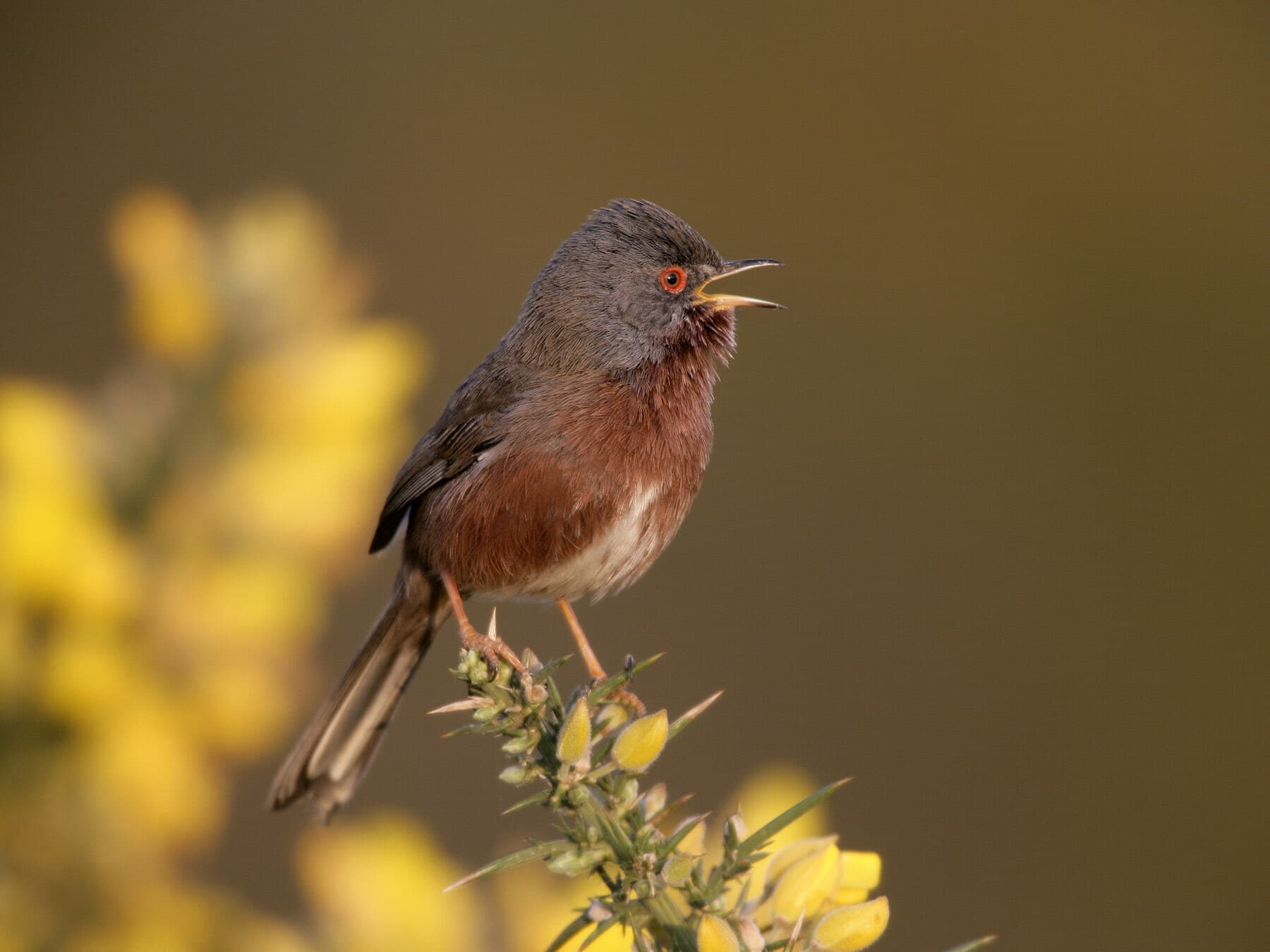
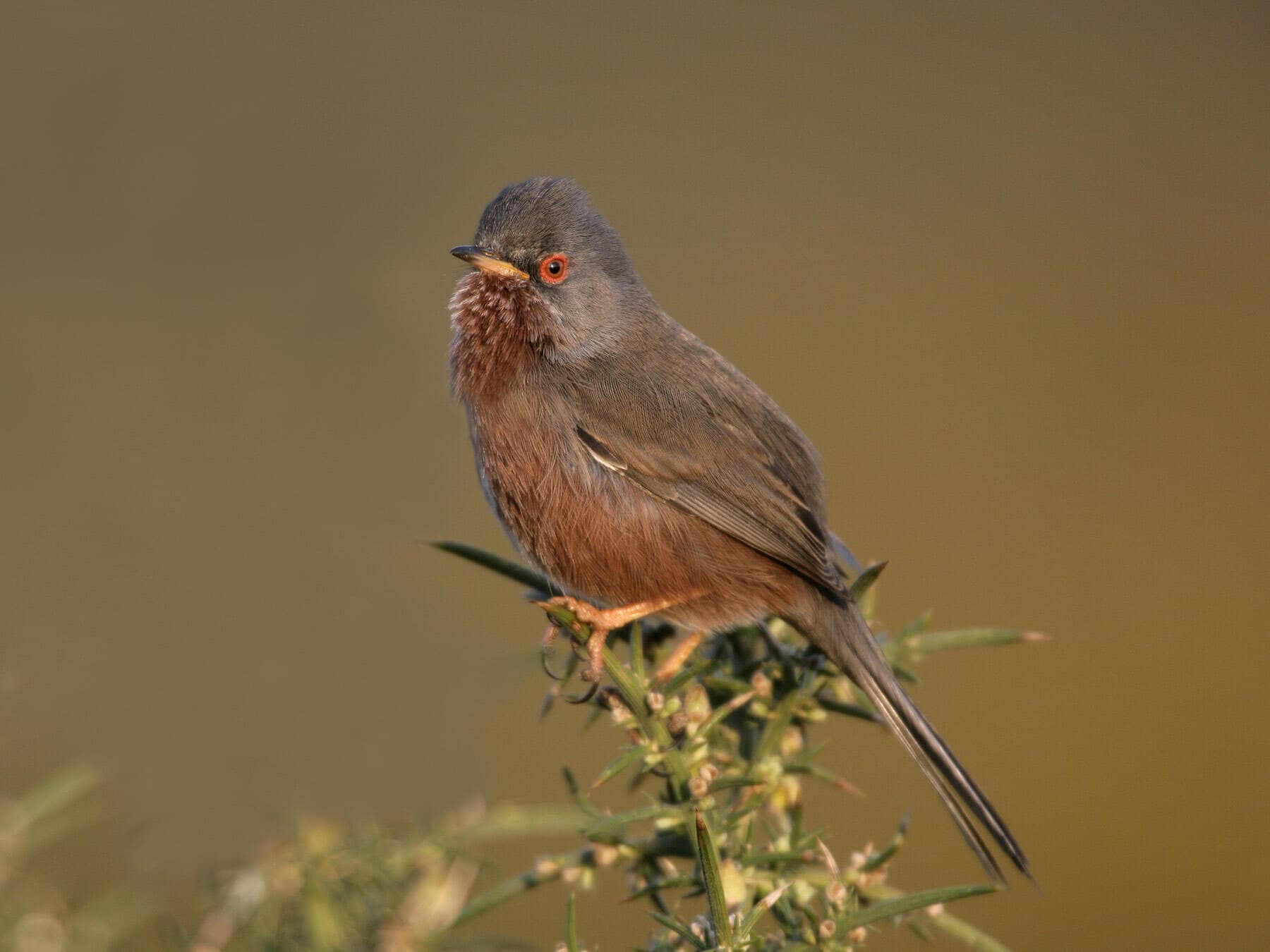
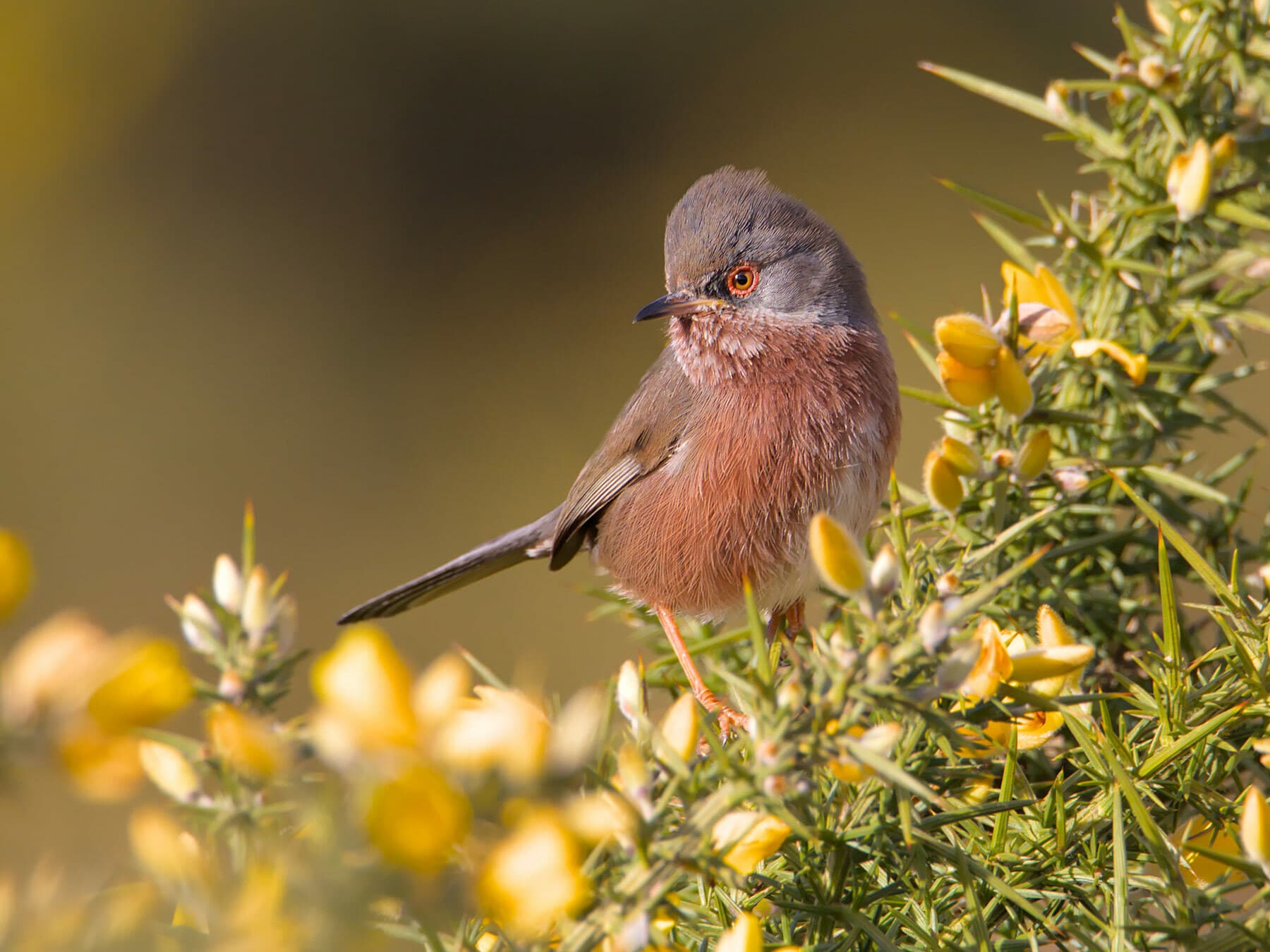
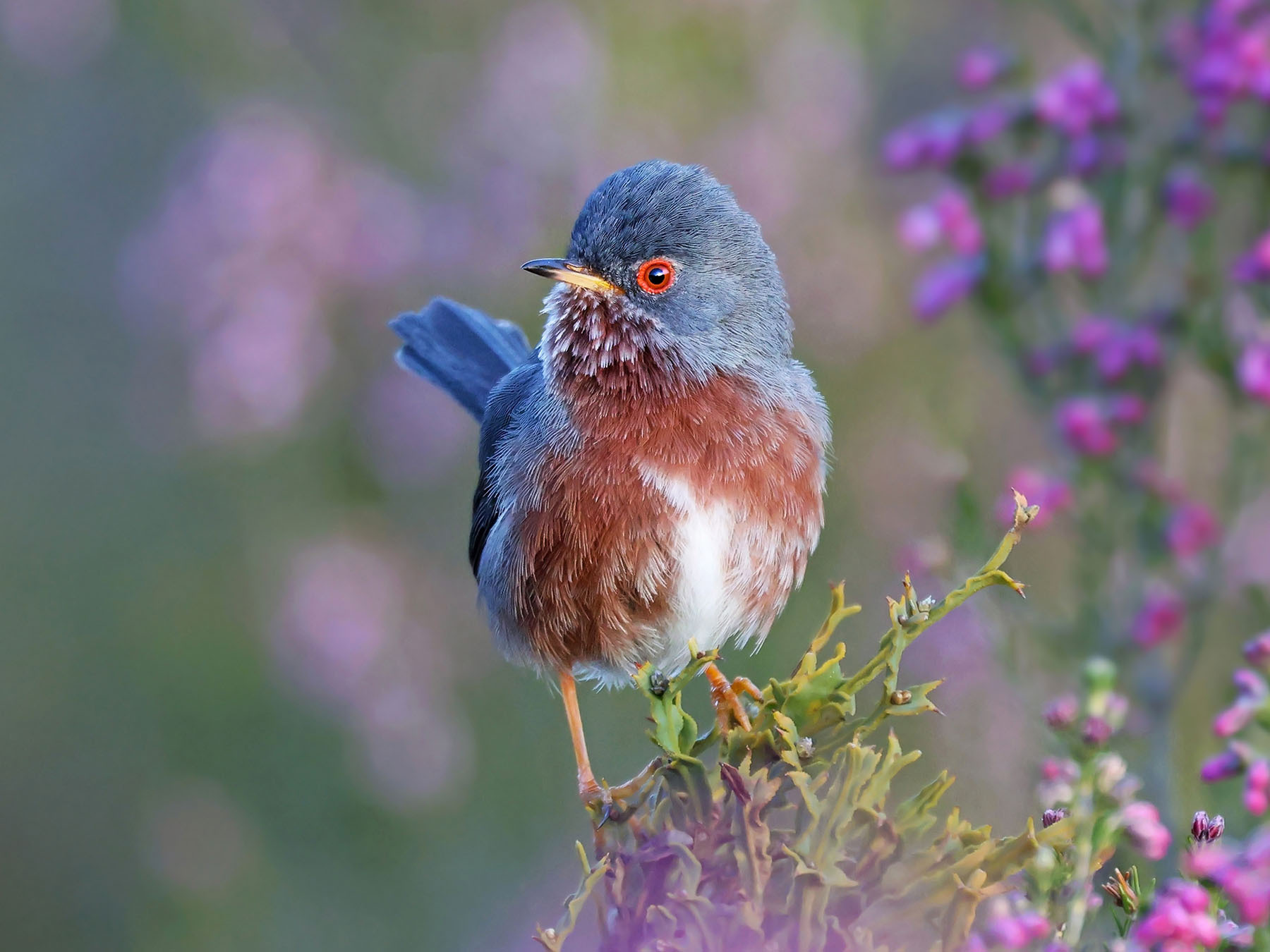
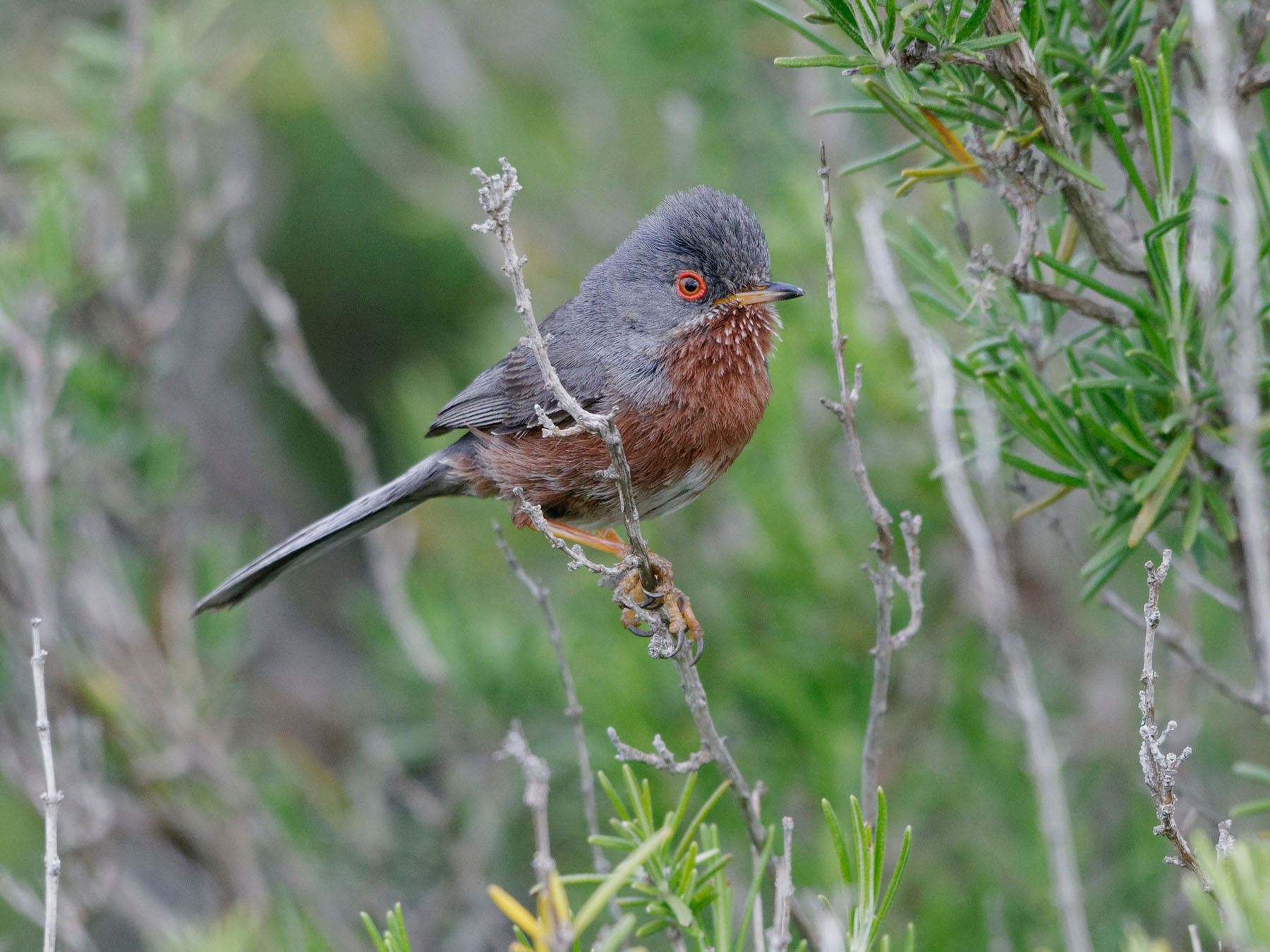
The Dartford Warbler is a small, long-tailed warbler with distinctive dark grey upperparts and wine-red underparts. It has a slender build, with a relatively long tail often held cocked. The bird's red eye ring contrasts sharply with its dark plumage.
Males are more brightly coloured than females, with deeper red underparts and darker grey backs. Juveniles resemble females but have duller plumage overall, lacking the adult's red eye ring.
Its size
Adults- Length
- 12–13 cm
- Wingspan
- 15–18 cm
- Weight
- 9–12 g
Its song and calls
A rather fast low reverberating almost scratchy warble interspersed with higher notes similar to ‘chirr – chirr – chirr’.
- Song0:00 / 0:44
Recorded in Normandie, France · March 2026
- Alarm call0:00 / 0:11
Recorded in Normandie, France · October 2025
When and where to see it
How often the Dartford Warbler turns up in the UK through the year, from birdwatchers' records.
Recorded in United Kingdom, but eBird withholds many records of this sensitive species to protect it, so no months are shown.
Worldwide: recorded regularly in 9 countries
Countries where it was recorded in at least 3 of the 6 years 2019–2024. Linked countries have their own bird list.
Data: EOD – eBird Observation Dataset (Cornell Lab of Ornithology), accessed via GBIF.org, CC BY 4.0. Records from 2019–2024, aggregated and filtered by Birdfact. How these lists are made
Dartford warblers are UK breeding residents normally found in lowland areas of heather or gorse particularly around the south and south-west heathland areas of England.
Signs and Spotting tips
Often difficult to spot as they forage amongst heather or low lying gorse; on a warm summer’s day you will find them sunbathing on a flowering gorse bush or quickly flitting about in flight between bushes. The shape and colouration, particularly of the male aids identification although it is easy to confuse it with the vagrant Subalpine Warbler, an extremely rare visitor to our shores from continental southern Europe and Africa.
What it eats
Its favoured diet is insects and spiders which it forages for in low undergrowth, but it will also select berries and seeds, particularly in the winter time.
Nesting and breeding
Dartford warblers normally pair for life and a cup shaped nest is usually built by both birds close to the ground in either heather or gorse on gently sloping coastal heathland. The female lays up to three broods between April and July each brood consisting of between 3 to 5 eggs. The eggs are coloured very pale green or white with brown speckles. Eggs hatch after two weeks and the chicks fledge after a further fourteen days.
Behaviour
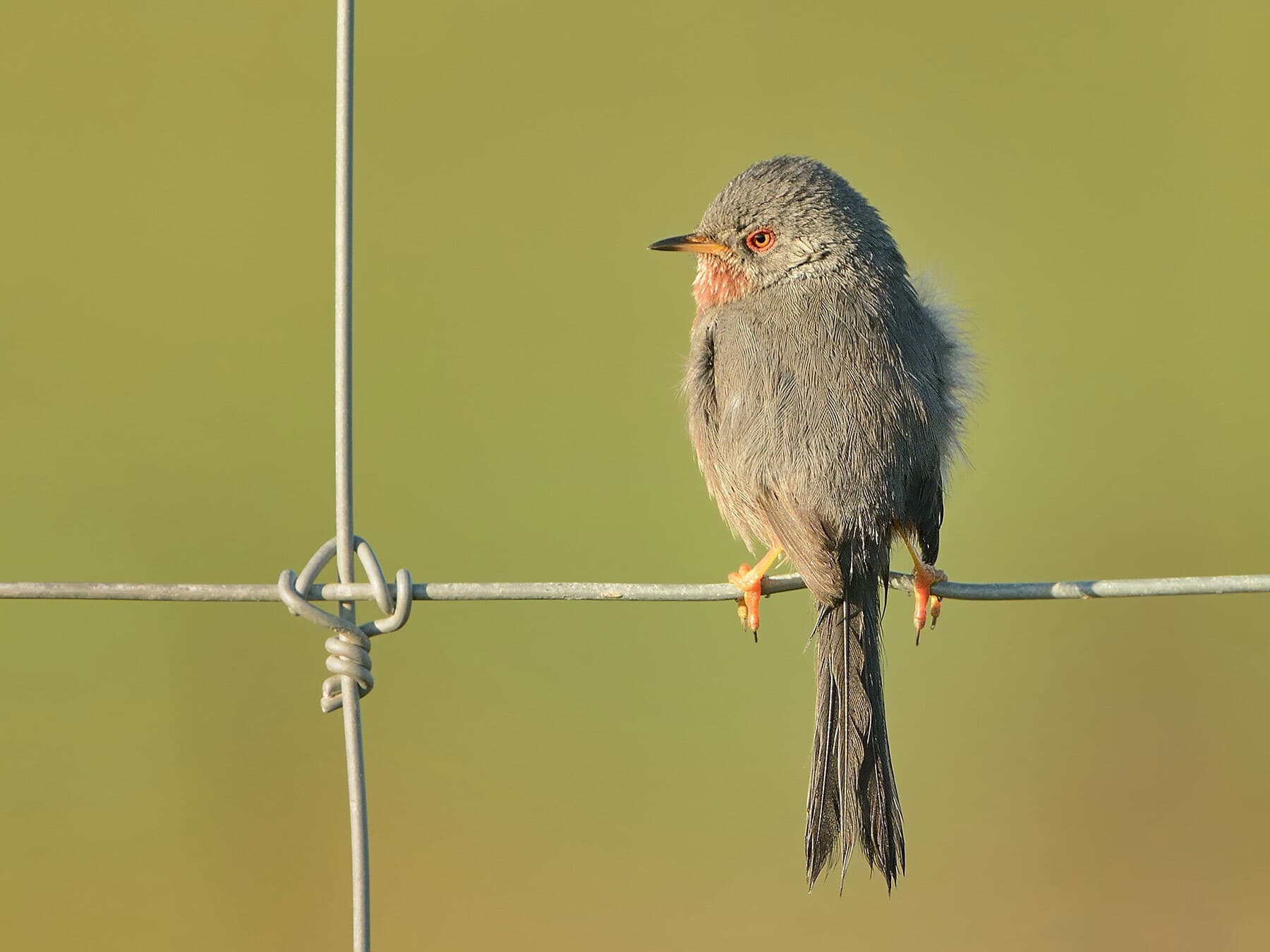
Dartford Warblers are active and restless birds, often seen flitting rapidly through dense vegetation. They have a characteristic habit of cocking their long tails while perched.
These birds are typically secretive but may become more visible during the breeding season when males perform song flights.
Lifespan and predators
As with most UK warblers, the average life span of the Dartford is up to five years.
Conservation
The Dartford Warbler is classified as Near Threatened due to its vulnerability to harsh winters and habitat loss.
Conservation efforts focus on maintaining and restoring heathland habitats, particularly in southern England where the species has its northernmost breeding range.
What does a Dartford Warbler look like?
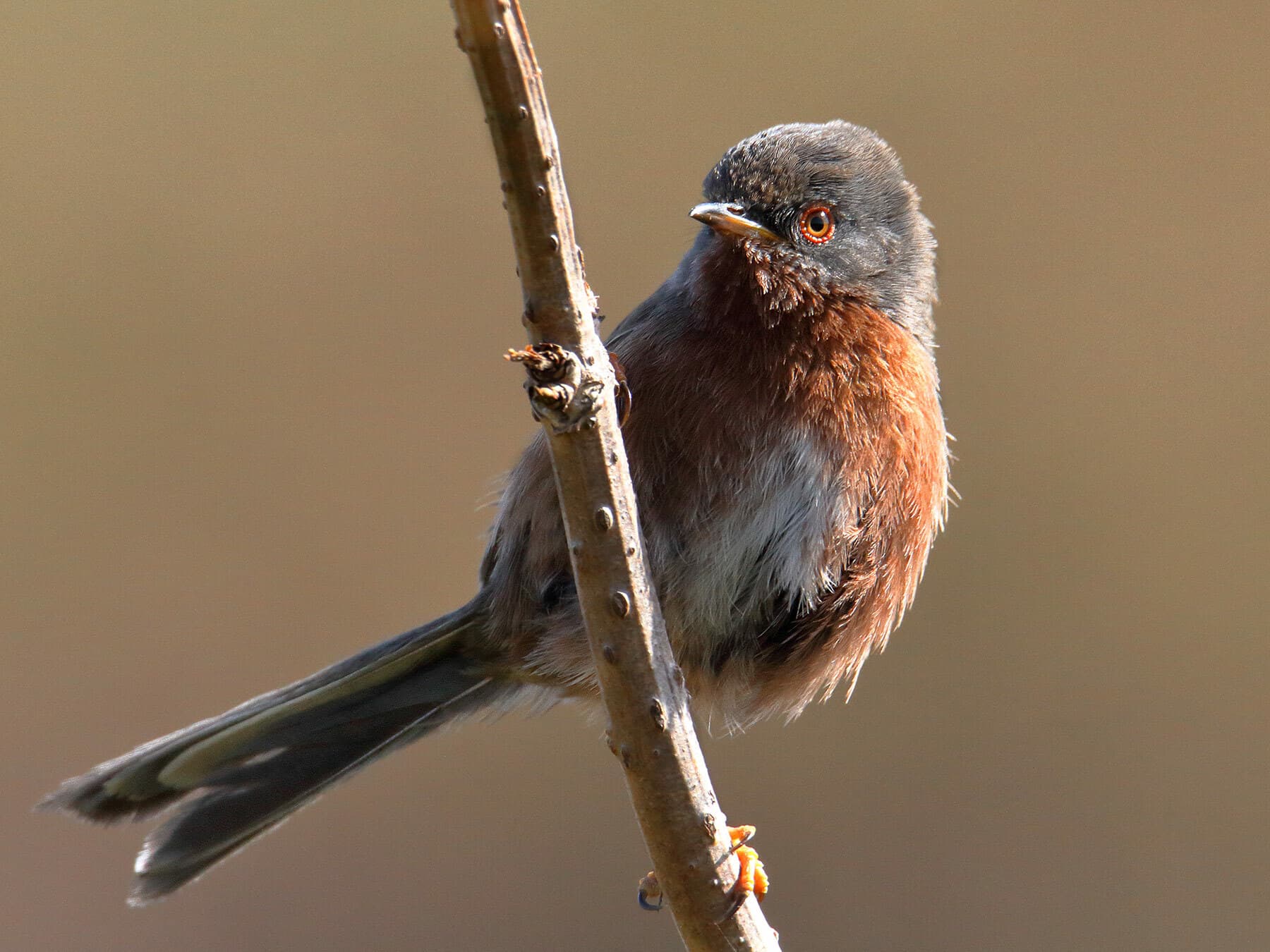
The adult male is a richly coloured reddish brown breasted warbler with a red eye and bold red eye ring. Its rufous brown throat is patterned with pale buff coloured spots and its red brown underside morphs into mid brown with a dirty white belly. It has a brown grey back and long dark slender tail. The forehead is distinctive, pronounced and grey in colour. It has short, rounded grey wings, a short spiky bill with a yellowish base and pale legs and feet.
The female is not as bright as the male and lacks the red breast colouration and is overall a more greyish coloured bird. The juvenile is similar to the female but with even more grey hues.
Similar birds
Often mistaken for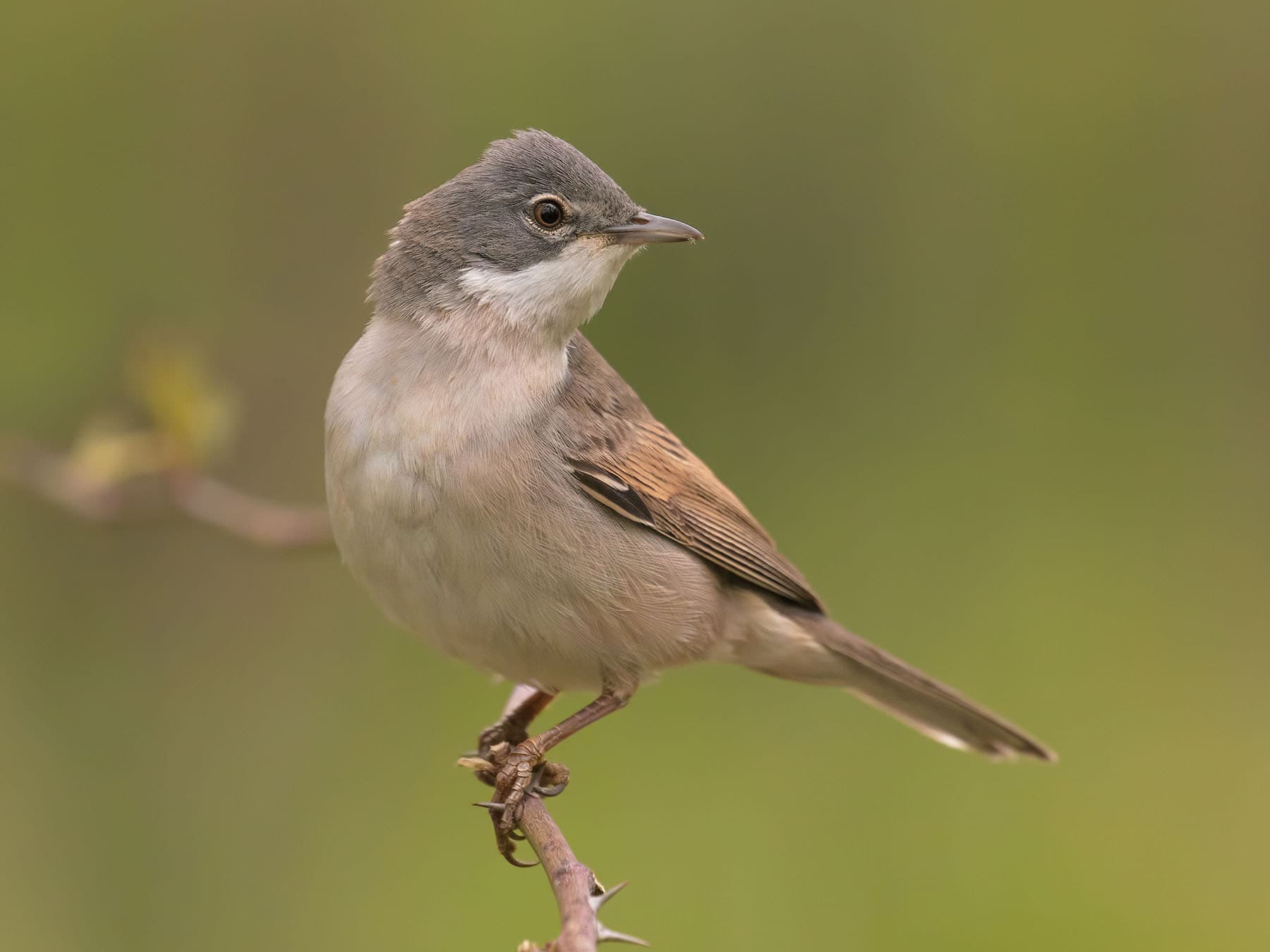
More photos
3 photos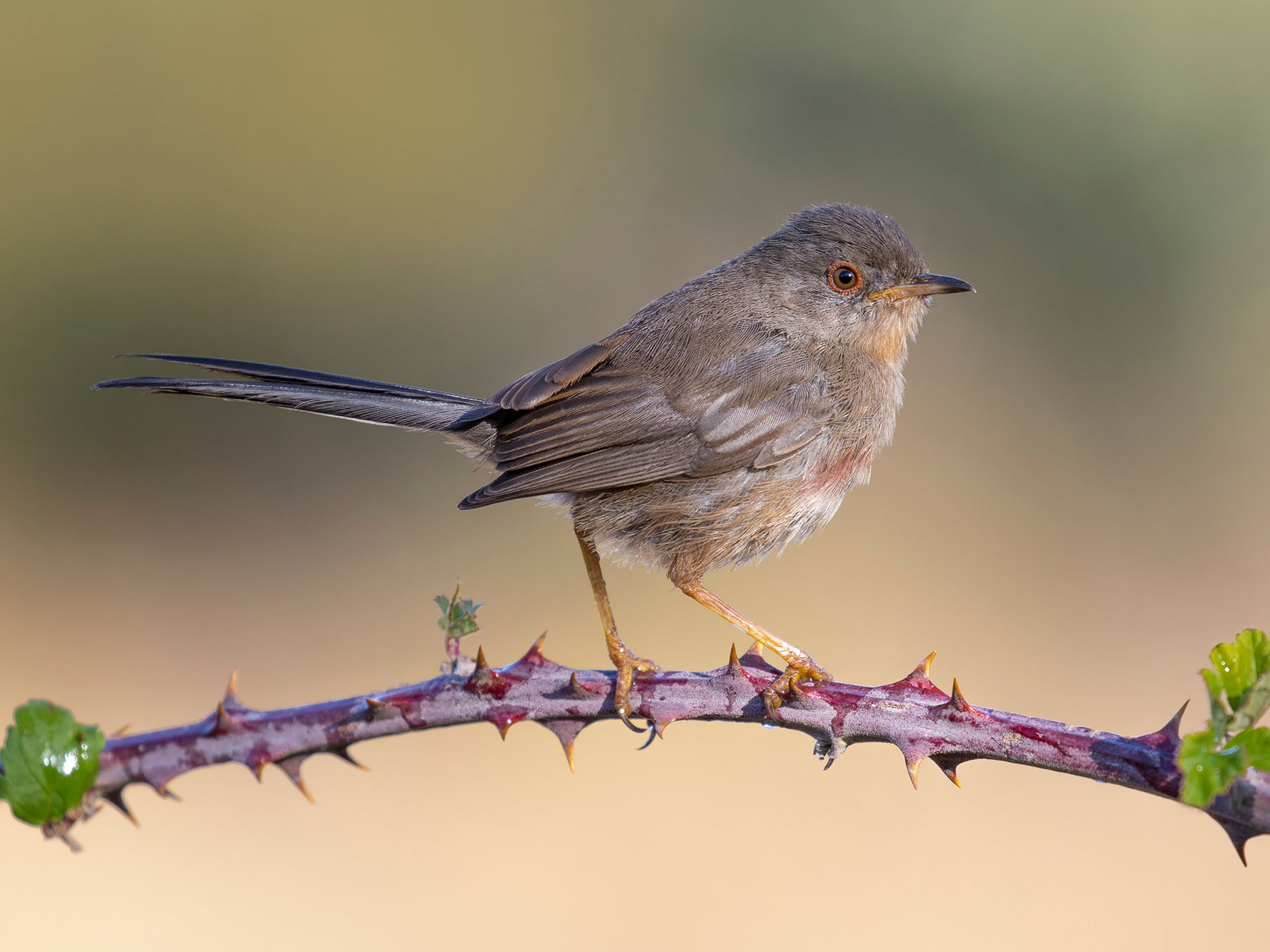
Quick facts
- Length
- 12–13 cm
- Wingspan
- 15–18 cm
- Weight
- 9–12 g
- Lifespan
- 3–5 years
- Family
- Sylviid Warblers
- Migration
- Resident
- Global status (IUCN)
- Near Threatened
- World population
- 1,400,000 - 3,400,000 mature individuals
- Population trend
- Population decreasing, vulnerable to severe winters
- Also called
- Provençal Warbler
- Scientific name
- Curruca undata
Sources
3- 1BirdLife International. 2022. Curruca undata. The IUCN Red List of Threatened Species 2022: e.T22716984A205920935. Source (opens in a new tab)
- 2BirdLife International. 2022. Curruca undata. The IUCN Red List of Threatened Species 2022: e.T22716984A205920935. Source (opens in a new tab)
- 3BirdLife International. 2022. Curruca undata. The IUCN Red List of Threatened Species 2022: e.T22716984A205920935. Source (opens in a new tab)

Checked by
Nathan Cope, founder and editor
Nathan founded Birdfact and leads its writers and contributors in the UK, the US and Canada. He has watched and studied birds for more than ten years, and checks every article and species guide before it’s published.