


Lesser Whitethroat
Curruca curruca
By the Birdfact teamChecked by Nathan Cope
On this page13 sections
How to recognise it
What do Lesser Whitethroats look like?
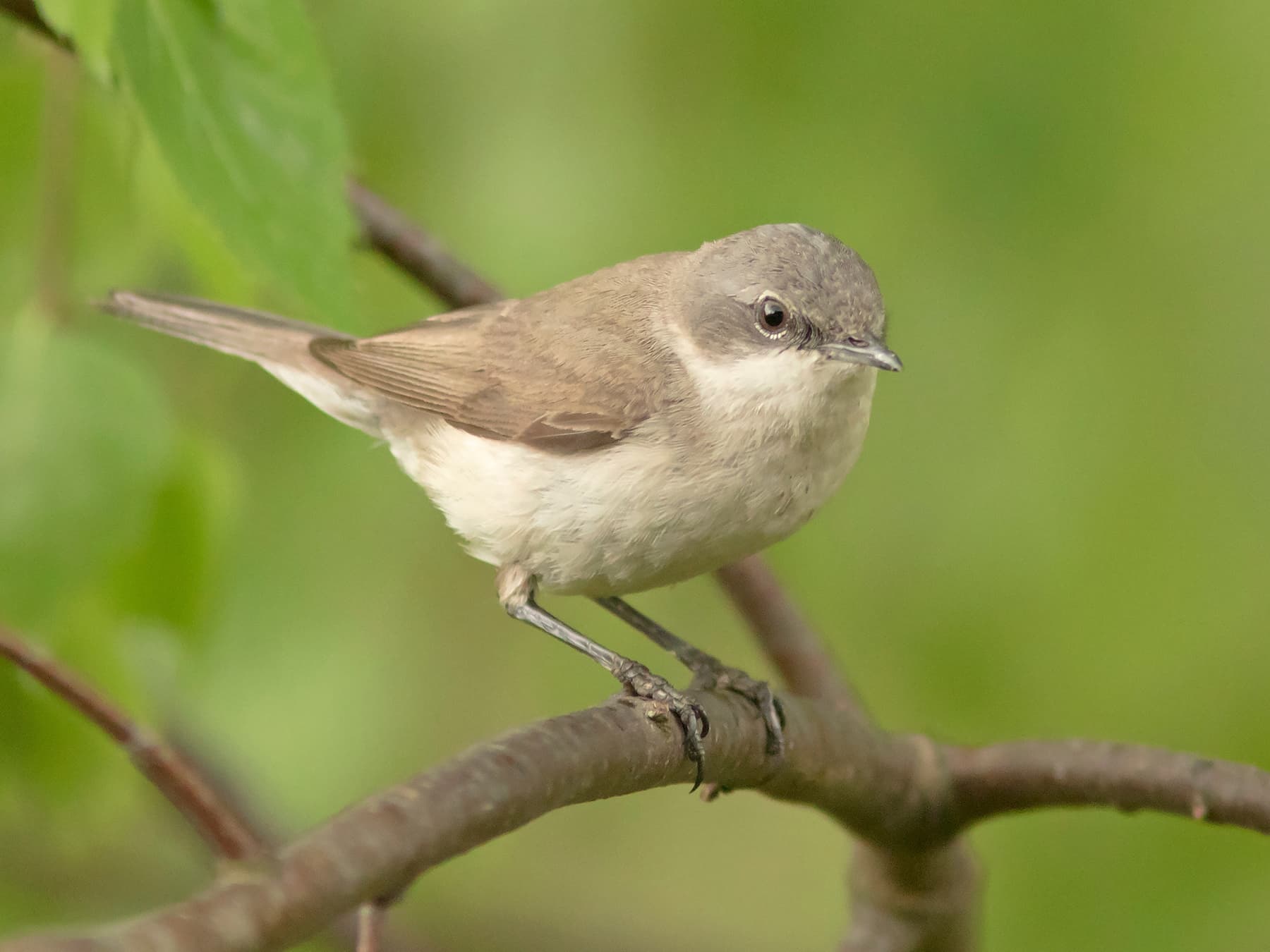
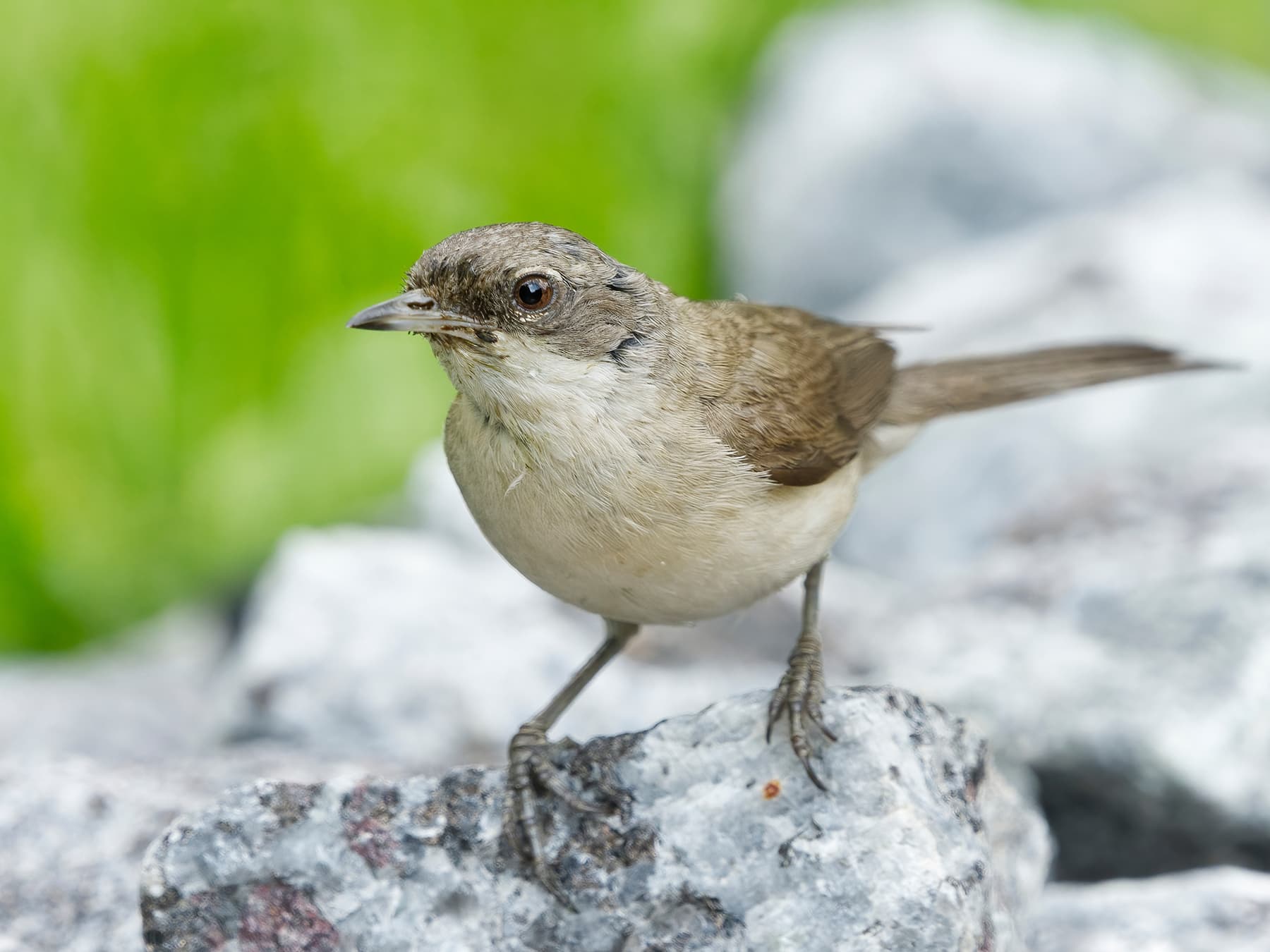
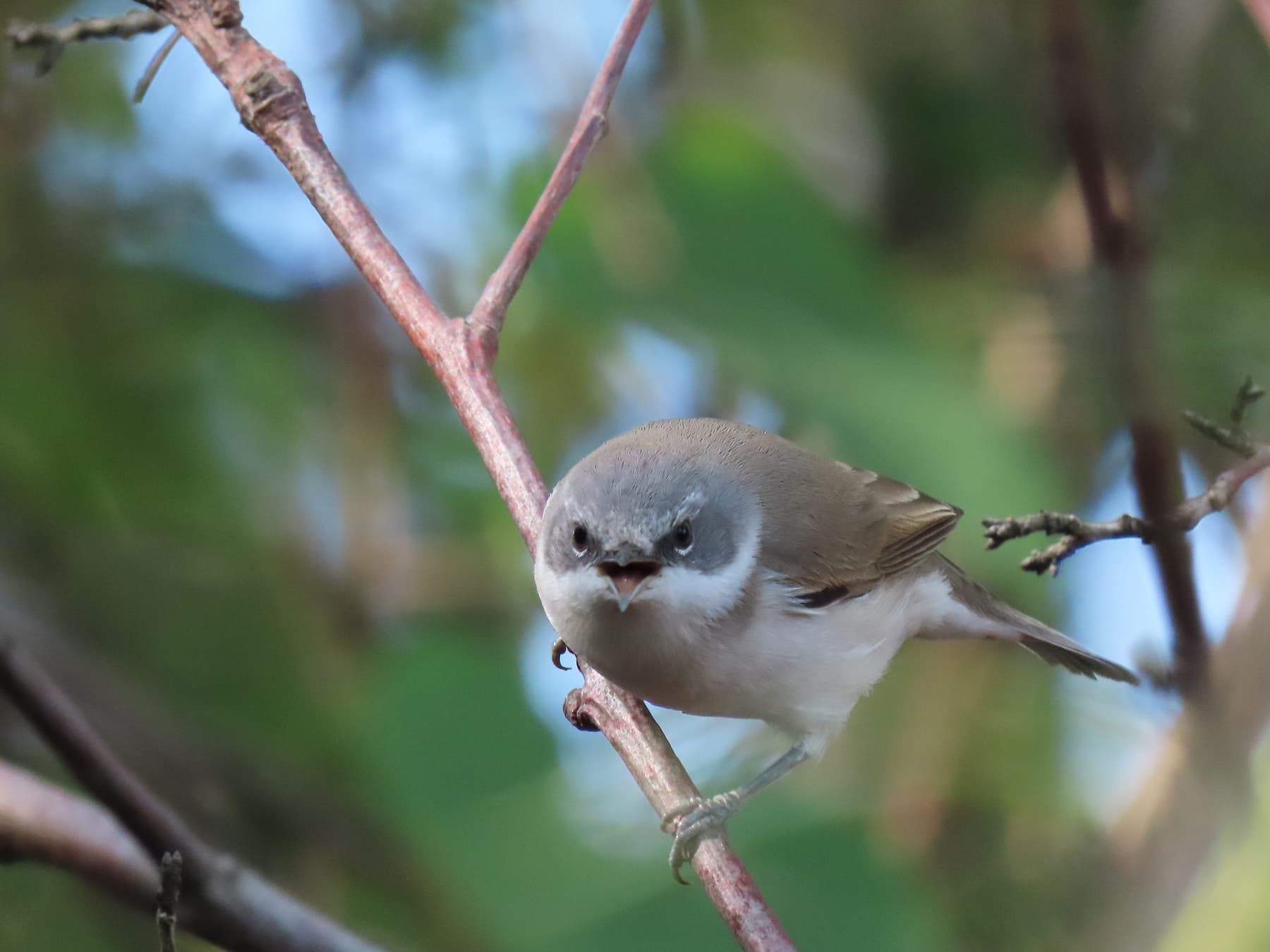
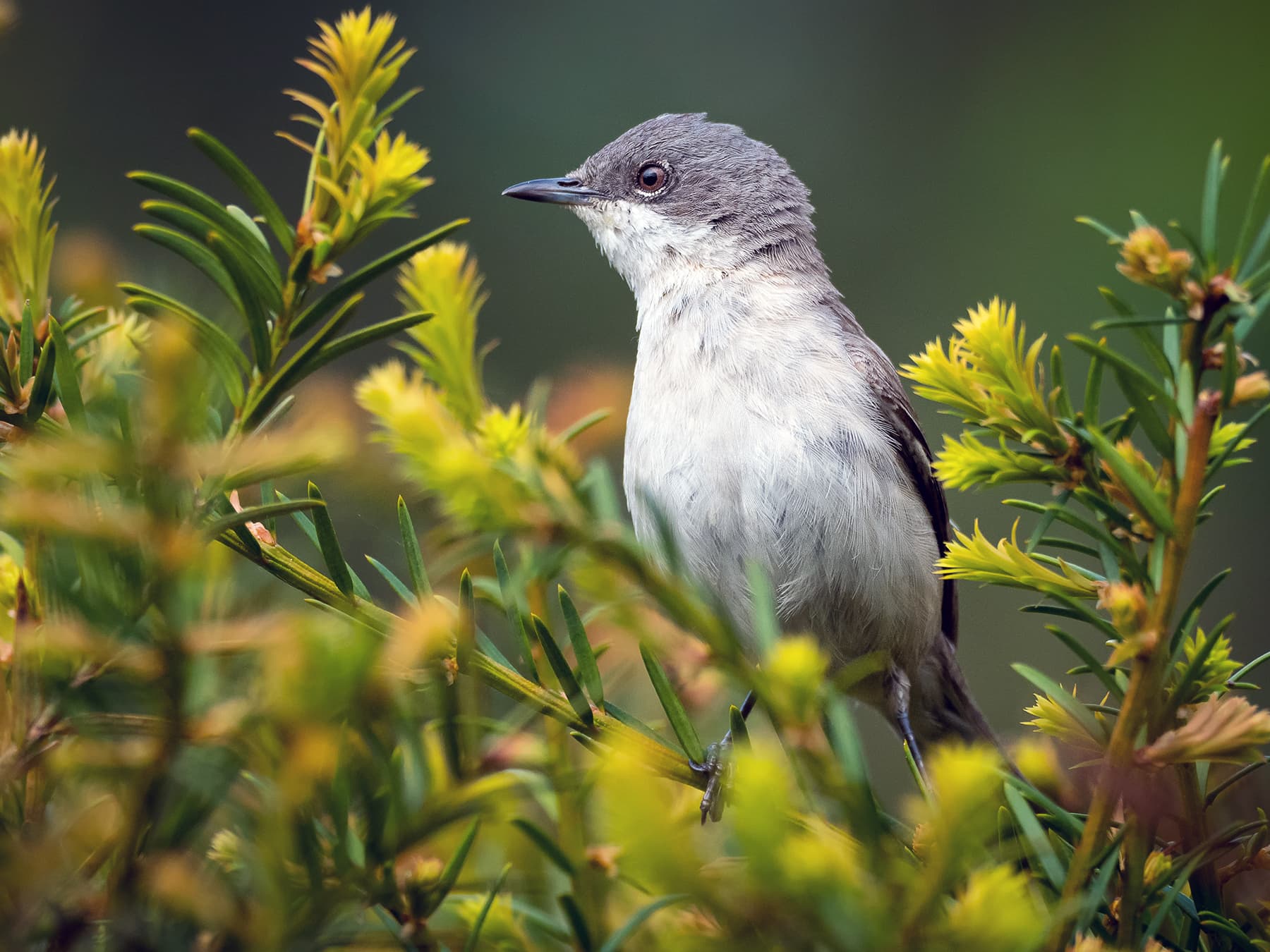
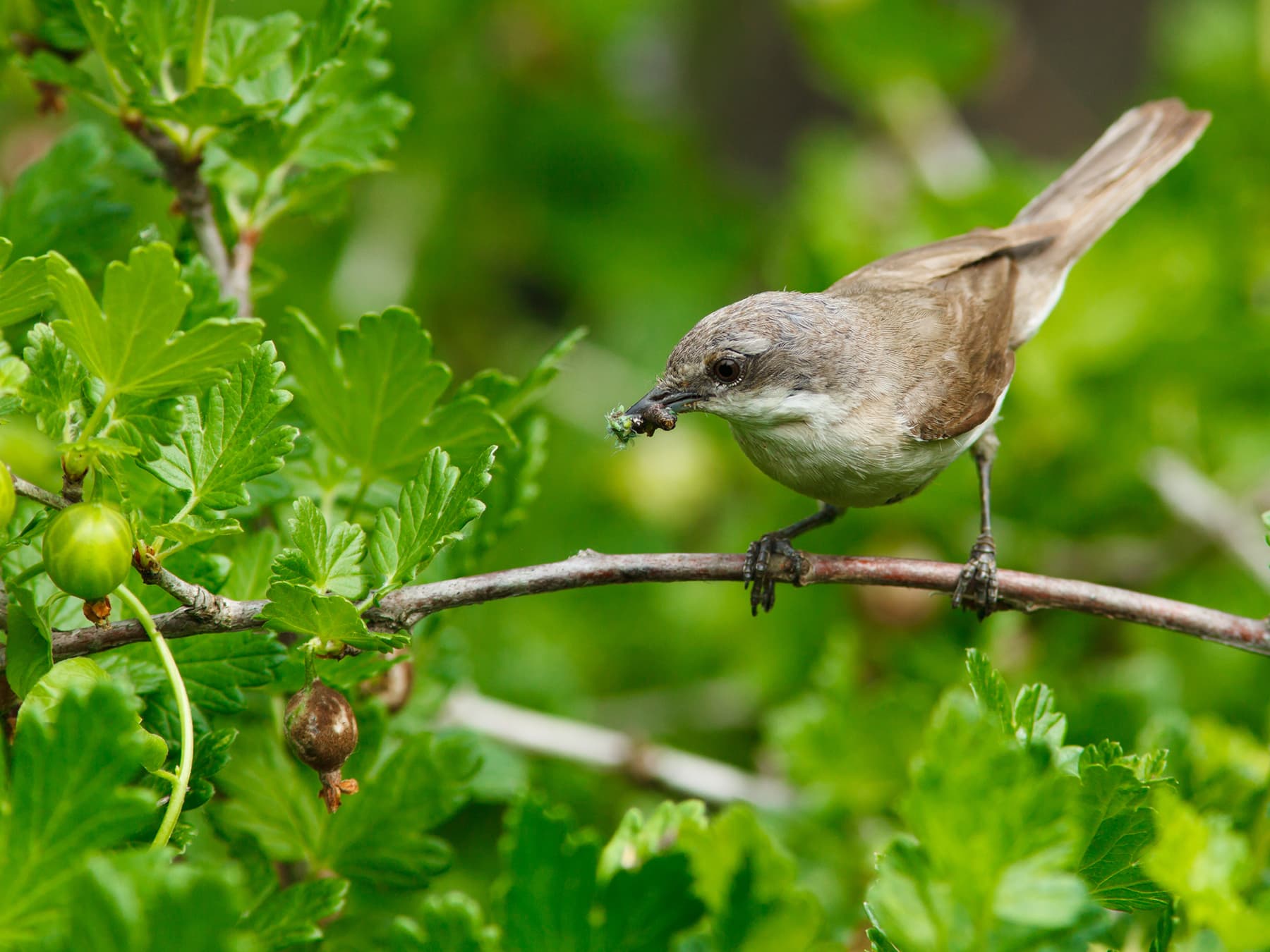
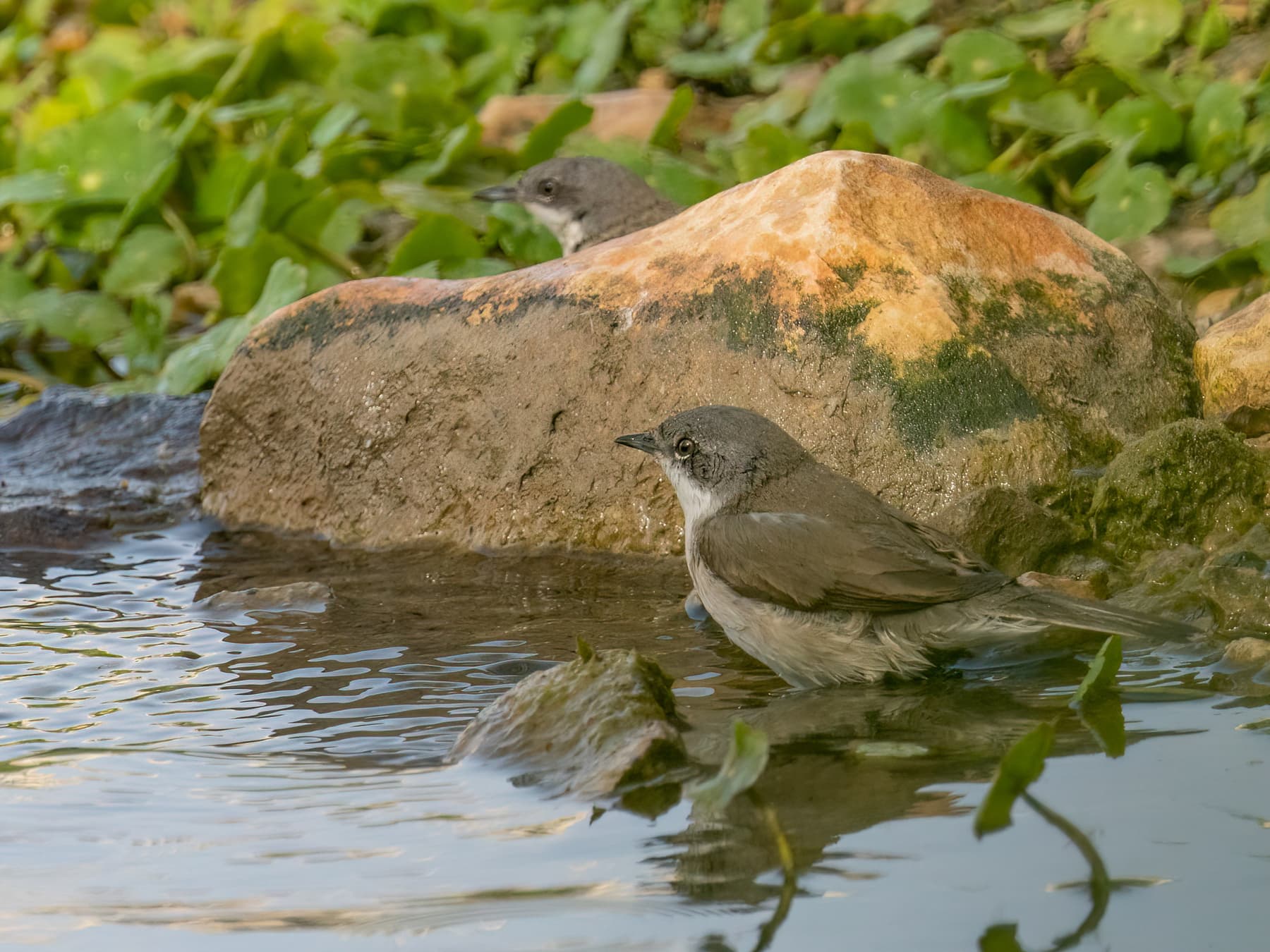
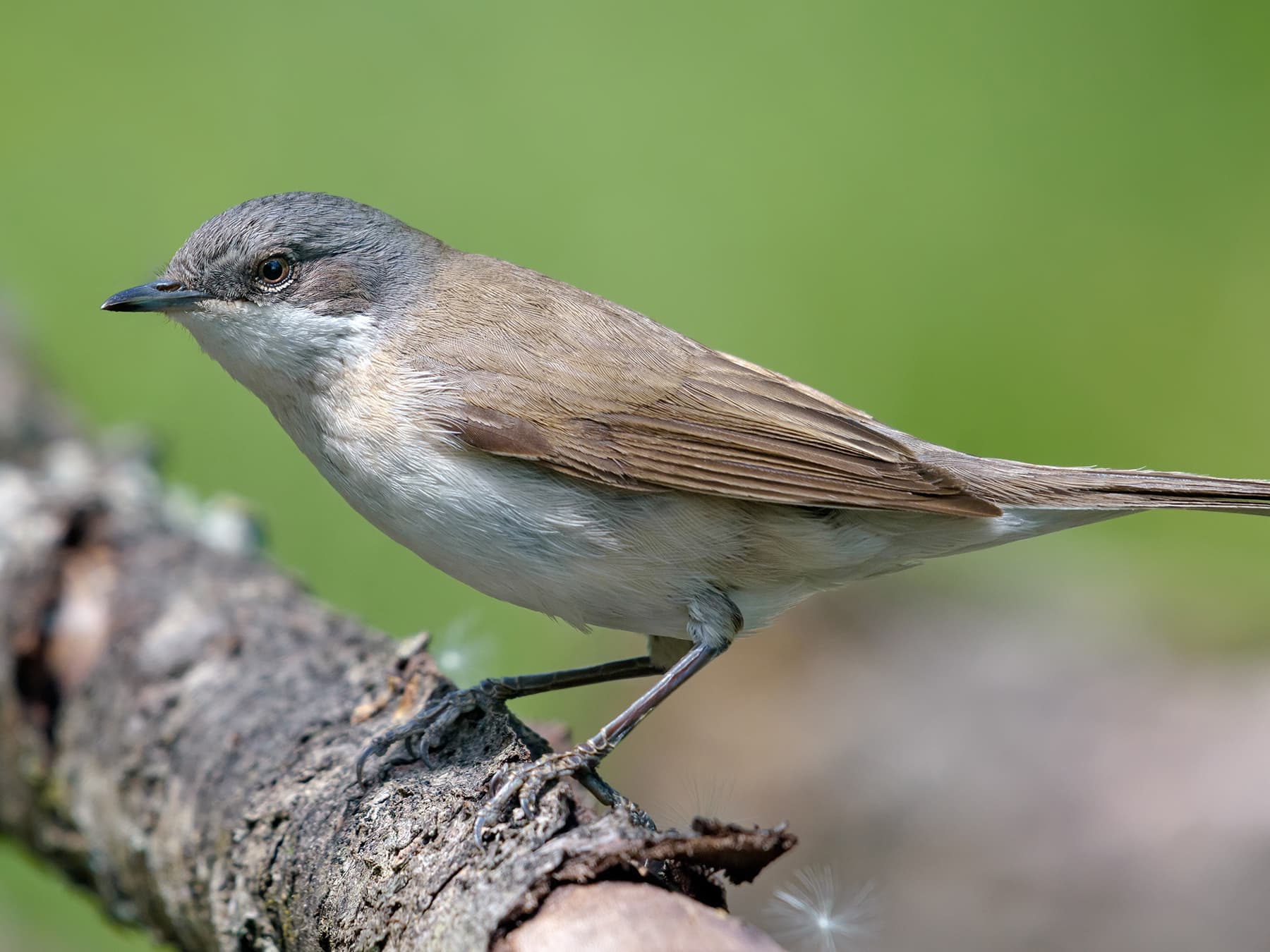
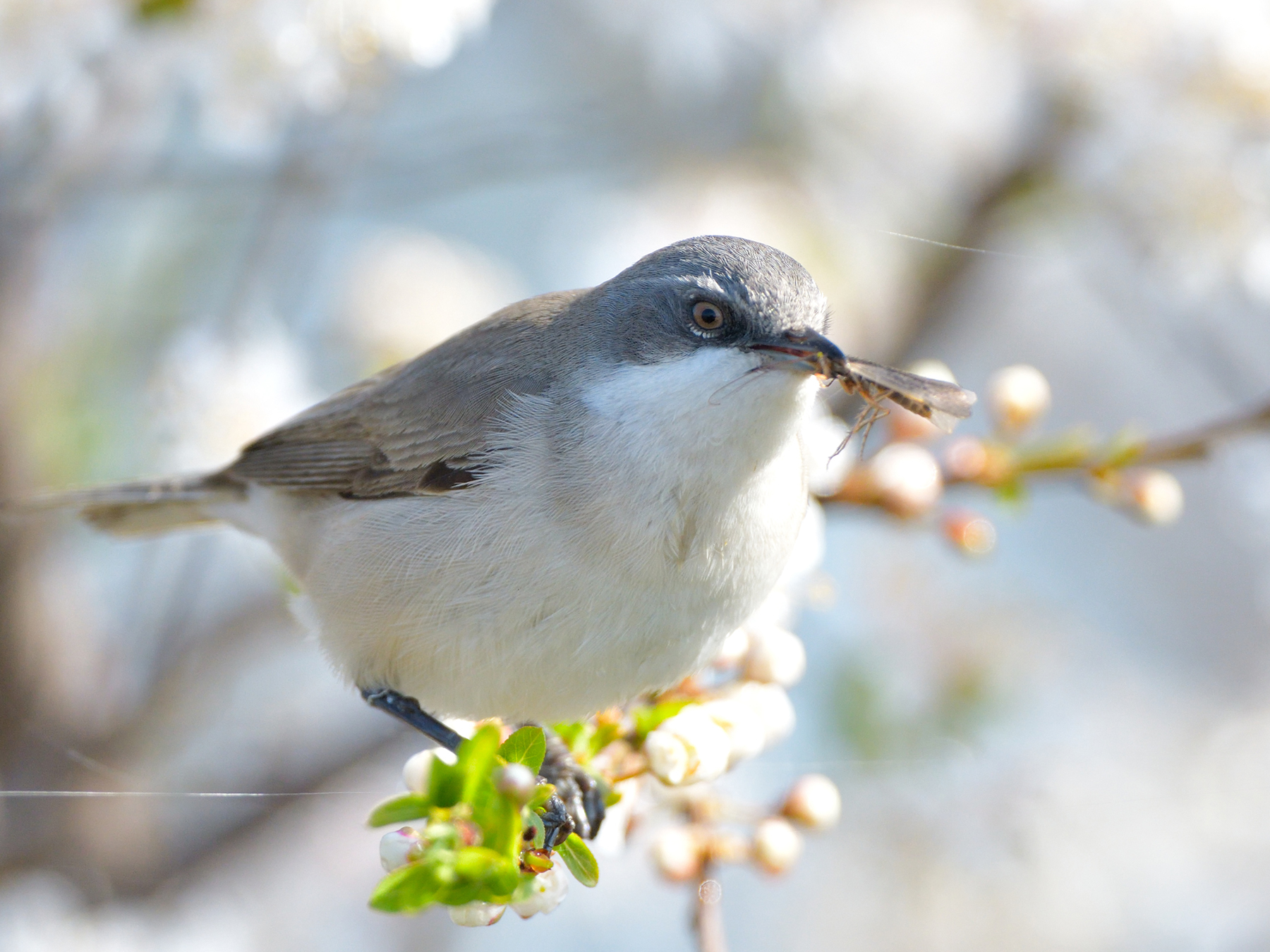
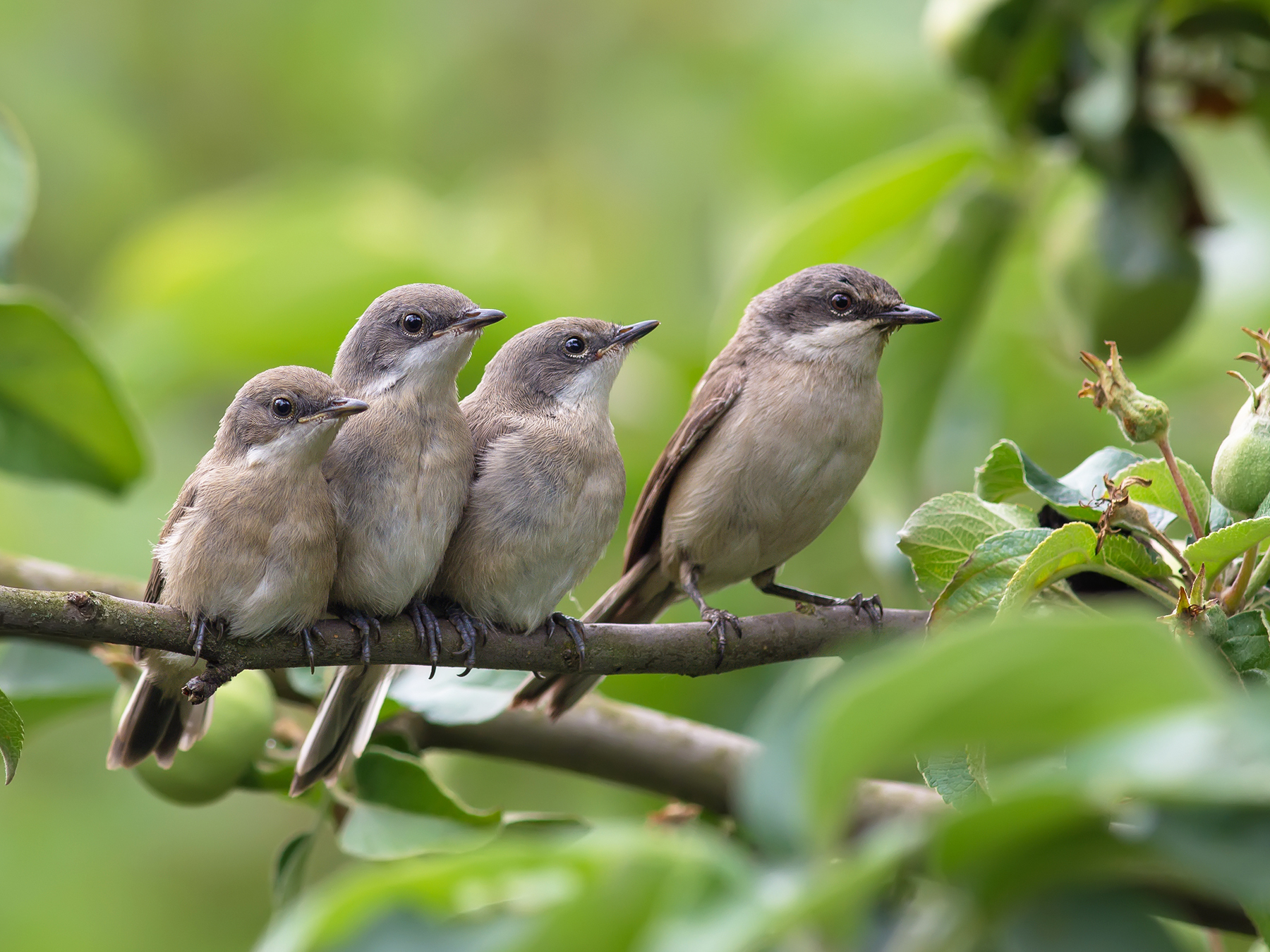
Male and female lesser whitethroats are alike in appearance, with a mid-grey head and nape, a darker grey facial mask with charcoal grey cheeks, a characteristically white throat, off-white underparts and a darker brown back and upper wings.
In some birds, a lighter eye stripe is faintly visible. Its tail is relatively short, dark grey-brown with white edges, and it has greyish legs.
They can be told apart from the larger whitethroat as they have shorter tails, and the darker cheek patches are missing in the larger species.
How big are Lesser Whitethroats
Tiny and lightweight, lesser whitethroats are slightly larger than a blue tit and a couple of centimetres smaller than the common whitethroat. Males and females are the same size and weight.
- Length: 13 cm (5.1 in)
- Wingspan: 18 cm (7.1 in)
- Weight: 12 g (0.4 oz)
Its size
Adults- Length
- 11–12.5 cm
- Wingspan
- 17–21 cm
- Weight
- 9–14 g
Its song and calls
What sound does a Lesser Whitethroat make?
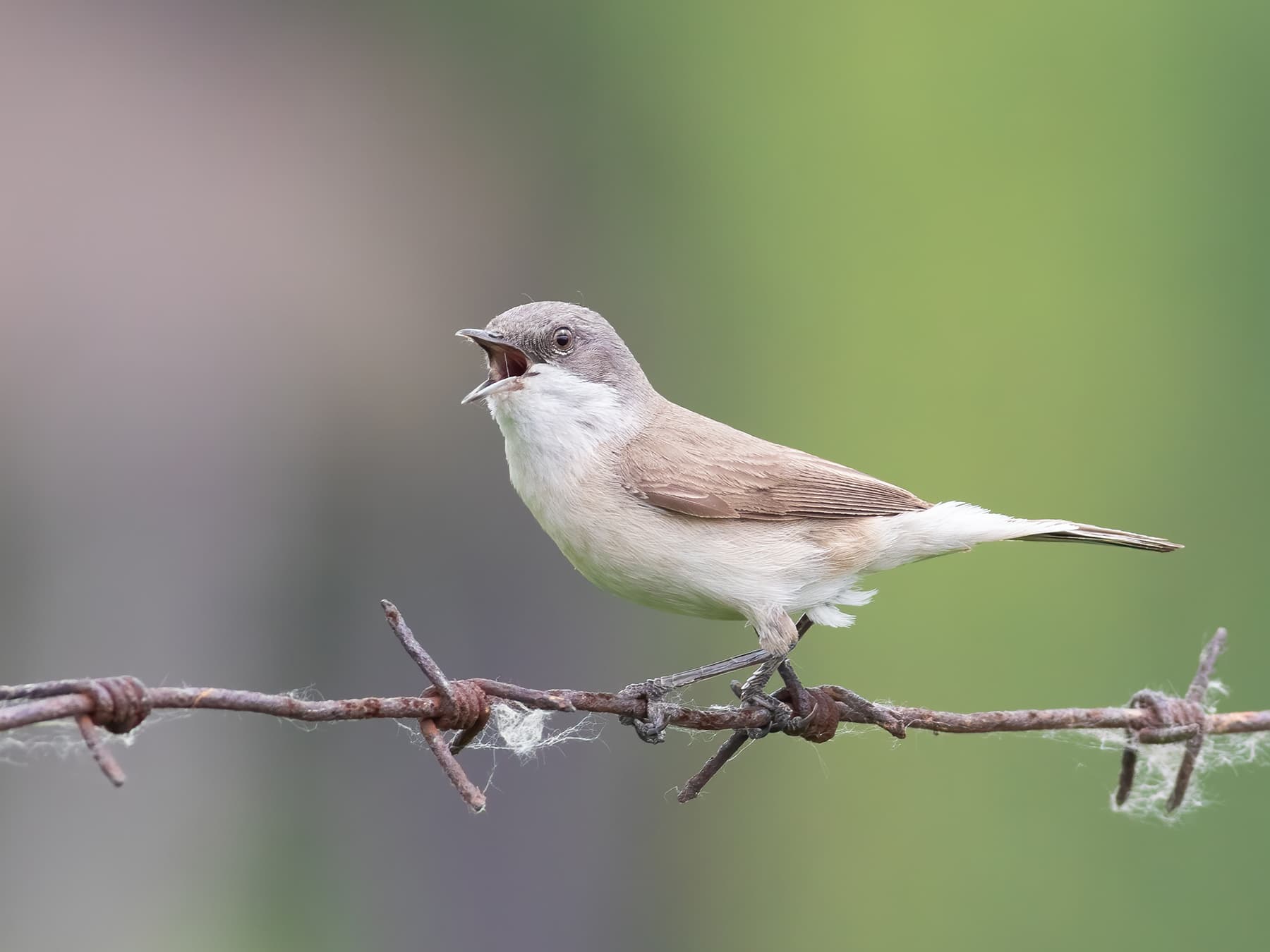
The harsh, cackling song of a lesser whitethroat is often the first indication that one is nearby, as they are fairly hard to spot, but their distinctive rattling cry gives away their presence.
Another familiar song consists of repeated warbling trilled notes and some mimicry of other species.
- Song0:00 / 0:15
Recorded in Normandie, France · June 2023
- Call0:00 / 0:21
Recorded in Normandie, France · October 2023
When and where to see it
OctoberLeaving
Most recorded in October
- 1. Shetland Islands0.34%
- 2. Orkney Islands0.26%
- 3. Donegal0.23%
- 4. Pembrokeshire0.22%
- 5. Cork0.22%
Each dot is a county, state or province: the bigger and darker, the larger the bird’s share of that place’s bird records that month. Grey dots: no regular records. The ringed point is the centre of the bird’s records this month; the arrow shows how it moved since last month, and the dashed loop its path through the year. “Arrivals” colours places where it becomes regular this month (orange) or is in its last regular month (grey). GBIF eBird Observation Dataset, 2019–2024. Map data: Natural Earth, US Census Bureau; place centres © OpenStreetMap contributors.
In your area
See when the Lesser Whitethroat is recorded in your county, state or province.
How often the Lesser Whitethroat turns up in the UK and Ireland through the year, from birdwatchers' records.
United Kingdom
Summer visitor · regularly Apr–Oct · most records in May
Ireland
Passage migrant · regularly May–Oct · most records in October
Show as a table
| Month | United Kingdom | Ireland |
|---|---|---|
| January | <0.001% | <0.001% |
| February | <0.001% | – |
| March | <0.001% | <0.001% |
| April | 0.18% (regular) | <0.001% |
| May | 0.35% (regular) | 0.010% (regular) |
| June | 0.18% (regular) | <0.001% |
| July | 0.083% (regular) | – |
| August | 0.17% (regular) | – |
| September | 0.15% (regular) | 0.013% (regular) |
| October | 0.036% (regular) | 0.047% (regular) |
| November | 0.002% | 0.002% |
| December | <0.001% | – |
Recorded regularly in
Worldwide: recorded regularly in 74 countries
Countries where it was recorded in at least 3 of the 6 years 2019–2024. Linked countries have their own bird list.
Europe (42)
- Åland Islands
- Albania
- Austria
- Belarus
- Belgium
- Bosnia & Herzegovina
- Bulgaria
- Croatia
- Czechia
- Denmark
- Estonia
- Faroe Islands
- Finland
- France
- Germany
- Greece
- Hungary
- Iceland
- Ireland
- Isle of Man
- Italy
- Kosovo
- Latvia
- Liechtenstein
- Lithuania
- Luxembourg
- Moldova
- Montenegro
- Netherlands
- North Macedonia
- Norway
- Poland
- Portugal
- Romania
- Russia
- Serbia
- Slovakia
- Slovenia
- Sweden
- Switzerland
- Ukraine
- United Kingdom
Data: EOD – eBird Observation Dataset (Cornell Lab of Ornithology), accessed via GBIF.org, CC BY 4.0. Records from 2019–2024, aggregated and filtered by Birdfact. How these lists are made
What is the habitat of a Lesser Whitethroat?
Lesser whitethroats breed in areas of dense shrubbery and vegetation cover, around the edges of forests, with plenty of foliage, as well as scrubland, areas of dense farmland hedgerows, parks and gardens, and young conifer plantations.
What is the range of a Lesser Whitethroat?
The breeding range of lesser whitethroats extends from Britain in the west, across Scandinavia and Finland in the north to the Ural Mountains of Russia in the east. To the south, the species breeds across mainland Europe from France and Italy, through the Balkan states into the Middle East, into western Iran.
Winters are spent in north-east and central Africa, as well as the Middle East and parts of south-west Asia.
Where do Lesser Whitethroats live?
Across Europe, there are an estimated 4.8 million breeding pairs of lesser whitethroats. Central Europe is a particular stronghold, with Poland, Romania, and Russia supporting stable populations.
How rare are Lesser Whitethroats?
Lesser whitethroats are widespread across the UK during the breeding season, but have a reputation for being secretive and relatively hard to spot, which makes sightings rather rare. With around 79,000 breeding pairs, they are certainly not the rarest visitors to breed in the British Isles.
Where can you see Lesser Whitethroats in the UK?
Breeding grounds of lesser whitethroat are found across England, but missing from the uplands of the south-west corner. In Wales and Scotland, the species is only present in scattered lowland areas.
Migration
Do Lesser Whitethroats migrate?
The entire European population departs each autumn, heading south or south-east towards the Middle East, where many birds then continue further to reach withering grounds located in central and eastern Africa.
Lesser whitethroats migrate at night, leaving as early as mid-July, with most birds arriving at their winter destination by October. The return trip begins between late January and early April.
Are Lesser Whitethroats native to the UK?
No lesser whitethroats are present in the UK all year round, arriving only to breed early in the year and leaving before temperatures drop significantly in the autumn. Sightings are only likely between March and October.
Tips for seeing it
- Look for quick movements in dense shrubs and low trees
- Listen for their distinctive rattling call, often given from cover
- In the UK, watch for them in hedgerows and scrubland from April to September
- Observe their feeding behaviour, often gleaning insects from leaves
What it eats
What do Lesser Whitethroats eat?
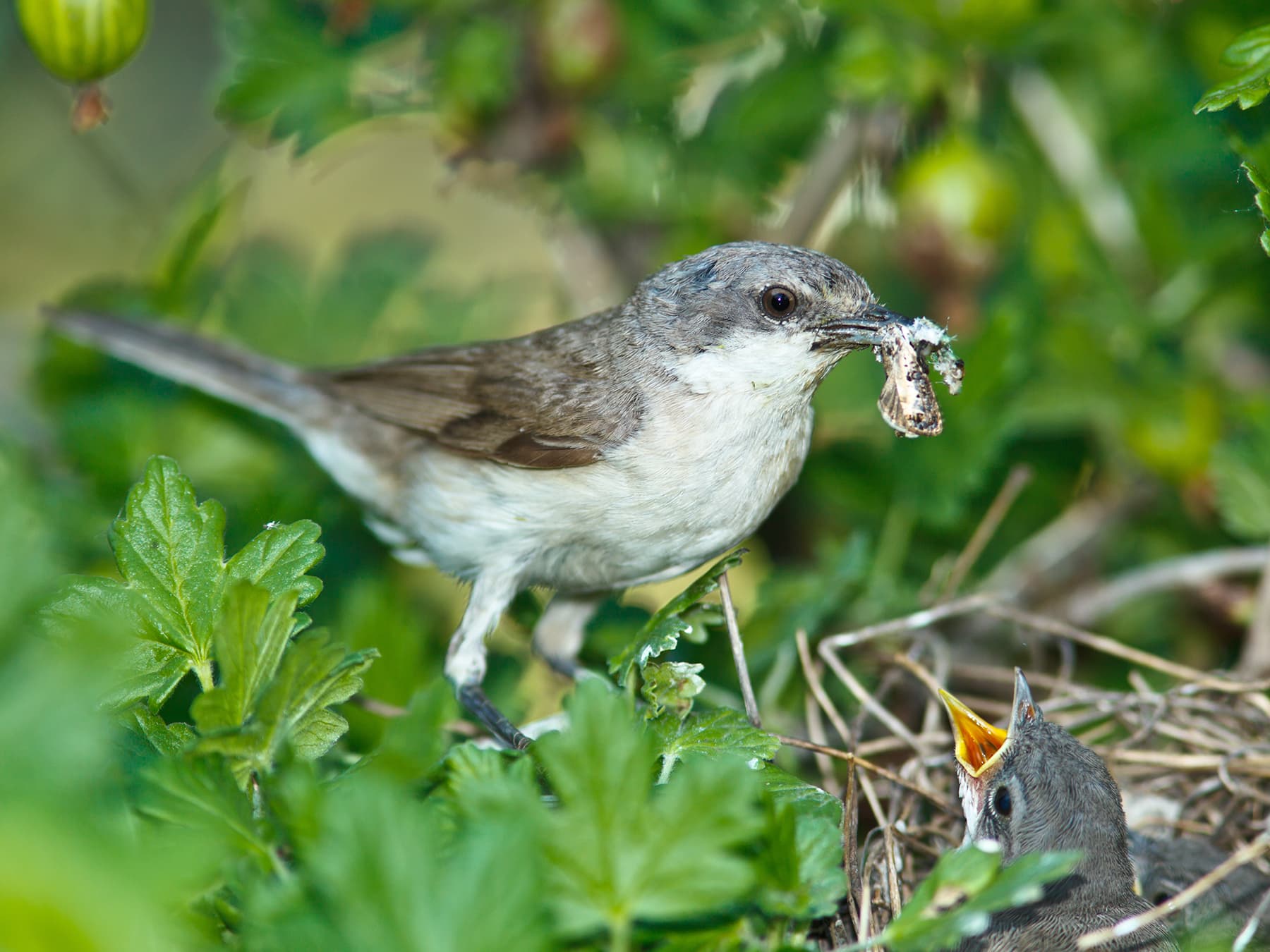
Lesser whitethroats are mainly insectivorous, with insects the chief prey taken in summer months.
Invertebrates that are commonly eaten include larvae, ants, beetles, bugs, and flies, as well as some slugs and small snails.
Outside of the breeding season, fruit, nectar and berries become more important, as well as some seeds and pollen.
What do baby Lesser Whitethroats eat?
Caterpillars are among the most common prey fed to lesser whitethroat nestlings in the early stages of life. Other food in a young lesser whitethroat’s diet includes larvae, bugs and flies.
Nesting and breeding
Where do Lesser Whitethroats nest?
Male lesser whitethroats construct a series of temporary nests to attract and impress a potential mate, and the site of one of these may be used for breeding. The nest is then refined by the pair working together to construct a deep cup, tucked into a hedgerow, shrub, or thorny tree, up to 3 m (0.9 ft) off the ground.
Grass, rootlets and twigs are used for the outer nest, which is held in place by moss and spiders’ webs and lined with animal fur and hair.
When do Lesser Whitethroats nest?
The breeding season for lesser whitethroats begins in late April and can last until early August. One brood per season is usual, although occasionally a second may be attempted.
What do Lesser Whitethroat eggs look like?
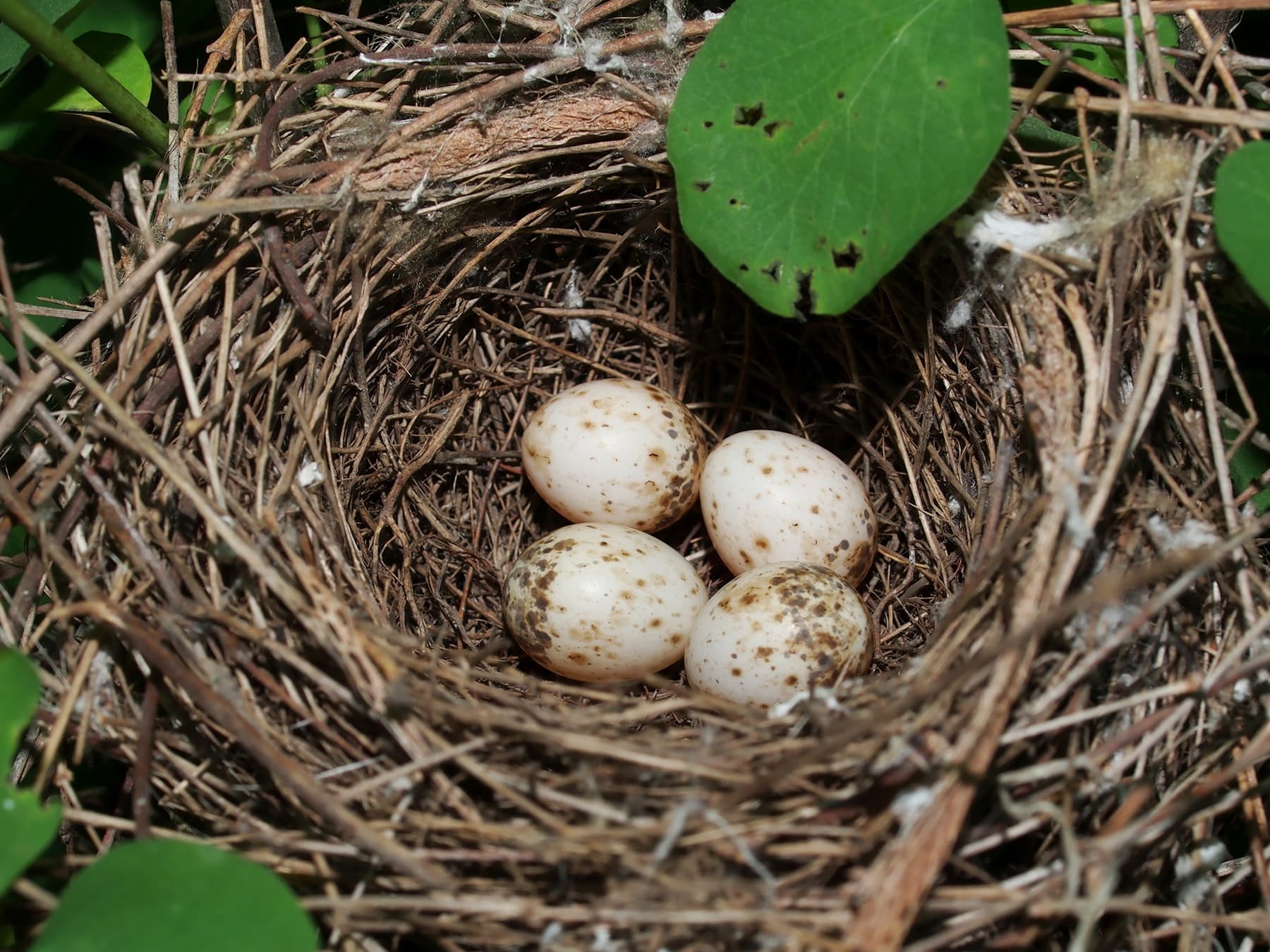
Lesser whitethroat eggs are creamy white in colour, and heavily marked with darker grey speckles.
They measure 17 mm by 13 mm (0.7 in by 0.5 in) and are incubated for between 11 and 12 days by both parents in turn. A typical clutch contains 4 to 5 eggs.
Do Lesser Whitethroats mate for life?
Lesser whitethroats pair up ahead of the breeding season and remain together while raising their young. Pair bonds don’t last until the following year, but pairs are monogamous for the duration of the season.
Behaviour
Are Lesser Whitethroats aggressive?
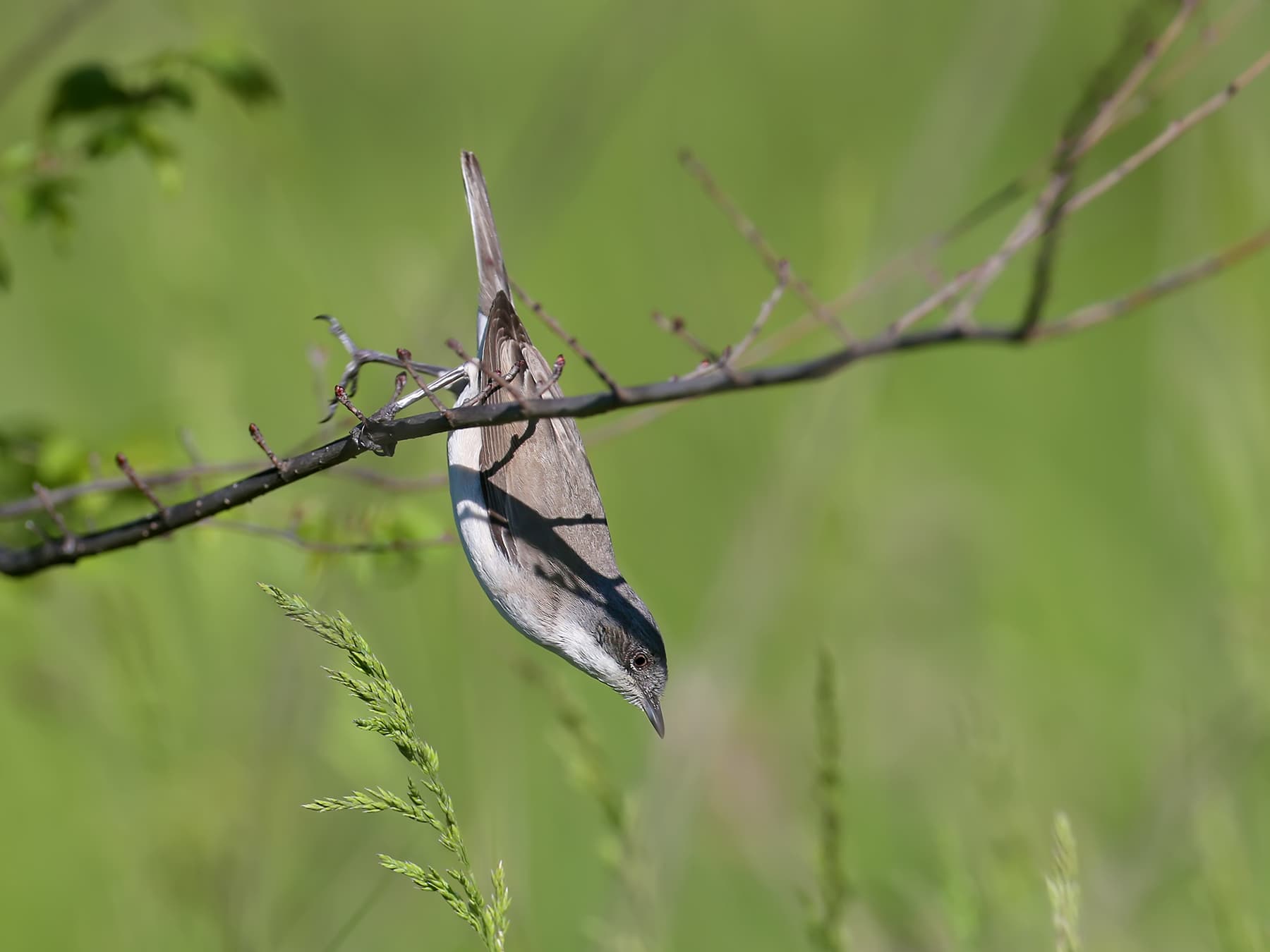
A solitary and territorial bird, the lesser whitethroat does not tolerate the presence of other birds of the same species nearby, particularly while nesting. Vocal aggression around the nest site is frequently heard from defensive males.
Lifespan and predators
How long do Lesser Whitethroats live?
The average lifespan of a lesser whitethroat is between 1 and 5 years, with 2 years being typical.
Breeding occurs for the first time at one year. Individual birds have been recorded to live longer, with one ringed lesser whitethroat reaching 9 years of age in 2008.
What are the predators of Lesser Whitethroats?
Cats and squirrels are among the leading predators of lesser whitethroats and their nests, although human activity is also believed to play a part in their mortality rates, with more than 50 percent of deaths of ringed individuals in north-west Europe being due to both accidental and deliberate human involvement.
Are Lesser Whitethroats protected?
The Wildlife and Countryside Act, of 1981, offers protection to lesser whitethroats, safeguarding them from being deliberately killed, injured, or taken into captivity.
Are Lesser Whitethroats endangered?
Throughout their European range, lesser whitethroats are considered a species of least concern and they are rated with ‘green’ status on the British birds of Conservation Concern list.
Conservation
The Lesser Whitethroat is currently listed as Least Concern by the IUCN. However, like many migratory birds, it faces threats from habitat loss along its migration routes and in its wintering grounds. Climate change may also affect its breeding success and migration patterns in the future.
Similar birds
Often mistaken for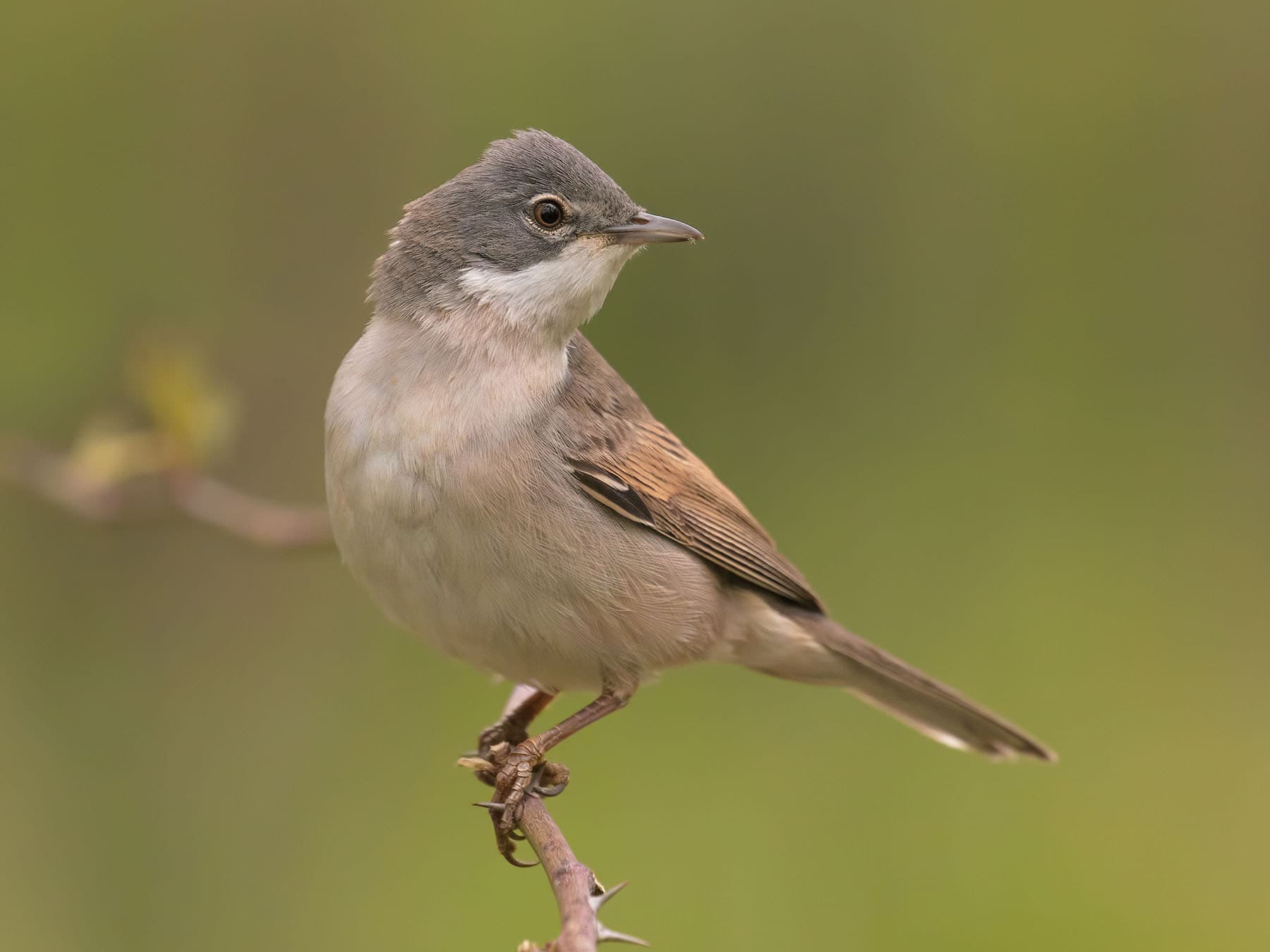
More photos
3 photos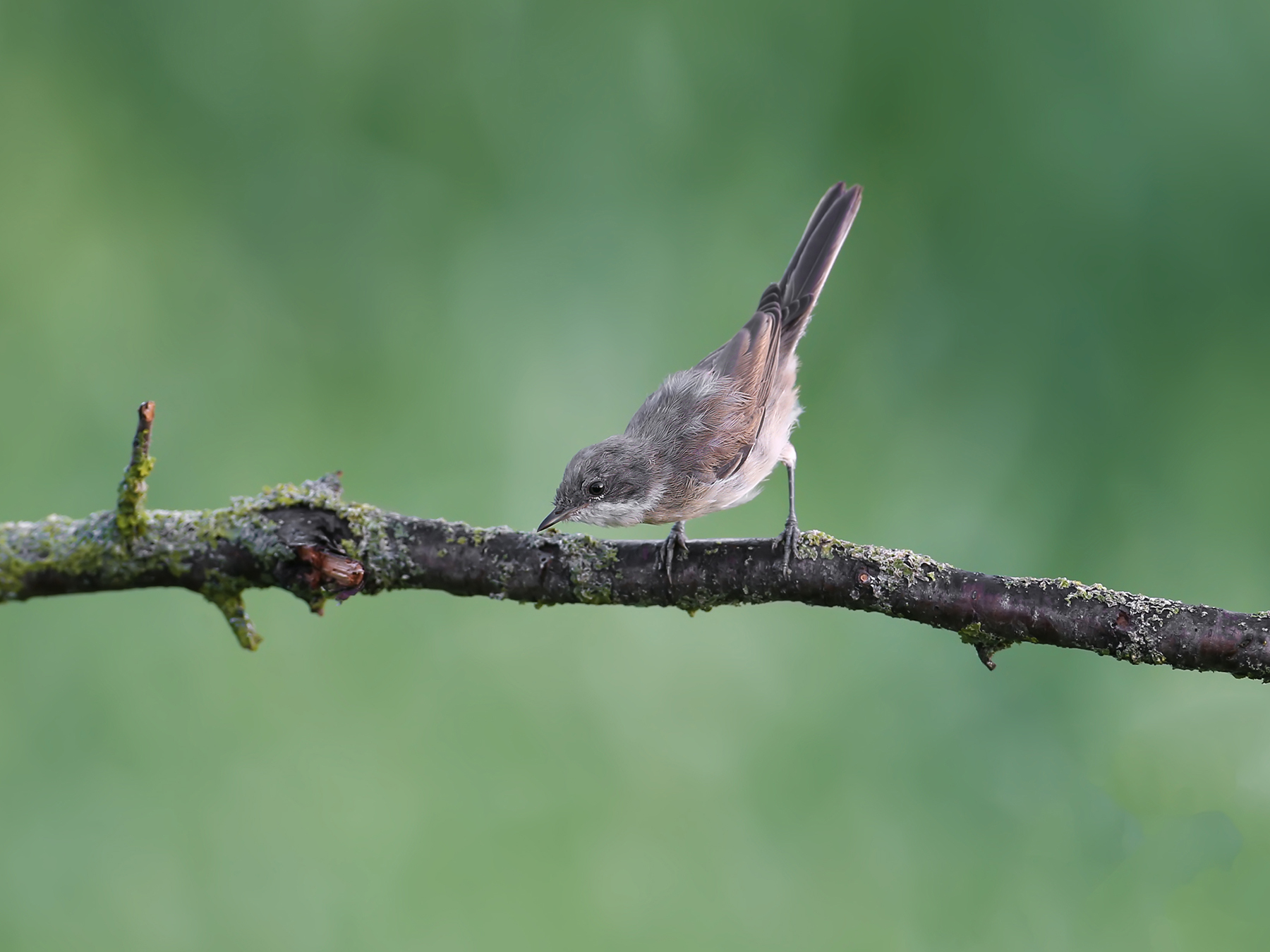
Quick facts
- Length
- 11–12.5 cm
- Wingspan
- 17–21 cm
- Weight
- 9–14 g
- Lifespan
- 2–5 years · oldest recorded 9 years
- Family
- Sylviid Warblers
- Migration
- Long-distance Migrant
- Global status (IUCN)
- Least Concern
- World population
- 21,300,000 - 35,500,000 mature individuals
- Population trend
- Stable
- Scientific name
- Curruca curruca
Sources
4- 1BirdLife International. 2019. Sylvia curruca (amended version of 2017 assessment). The IUCN Red List of Threatened Species 2019: e.T22734992A155625468. Source (opens in a new tab)
- 2EBCC (2015)
- 3BirdLife International. 2019. Sylvia curruca (amended version of 2017 assessment). The IUCN Red List of Threatened Species 2019: e.T22734992A155625468. Source (opens in a new tab)
- 4BTO longevity records: maximum age from a ringed bird, 9 years, 2 days (set in 2008), BirdFacts: Lesser Whitethroat (2008) Source (opens in a new tab)

Checked by
Nathan Cope, founder and editor
Nathan founded Birdfact and leads its writers and contributors in the UK, the US and Canada. He has watched and studied birds for more than ten years, and checks every article and species guide before it’s published.