


Whitethroat
Common Whitethroat · Curruca communis
By the Birdfact teamChecked by Nathan Cope
On this page14 sections
How to recognise it
What do Whitethroats look like?
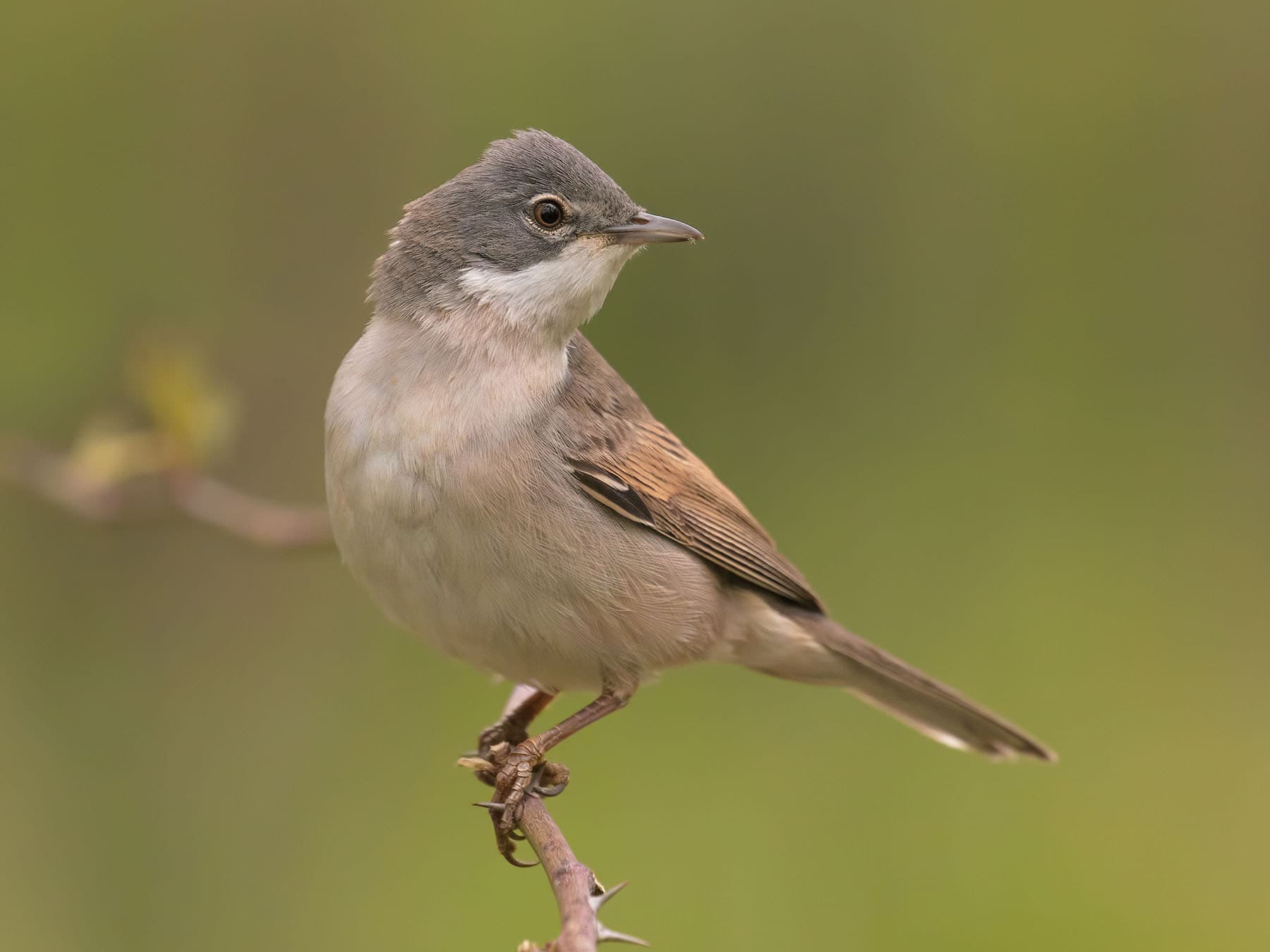
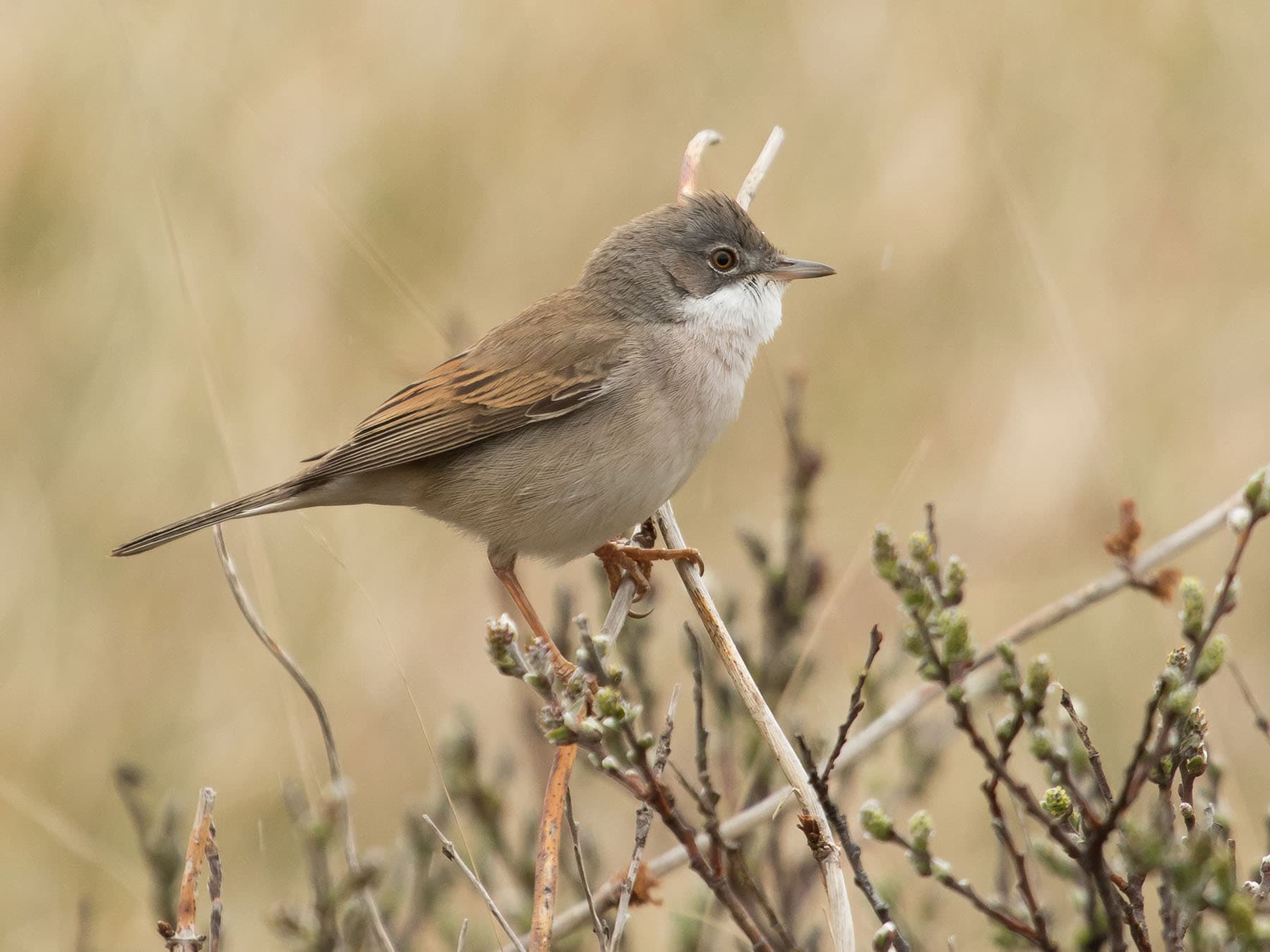
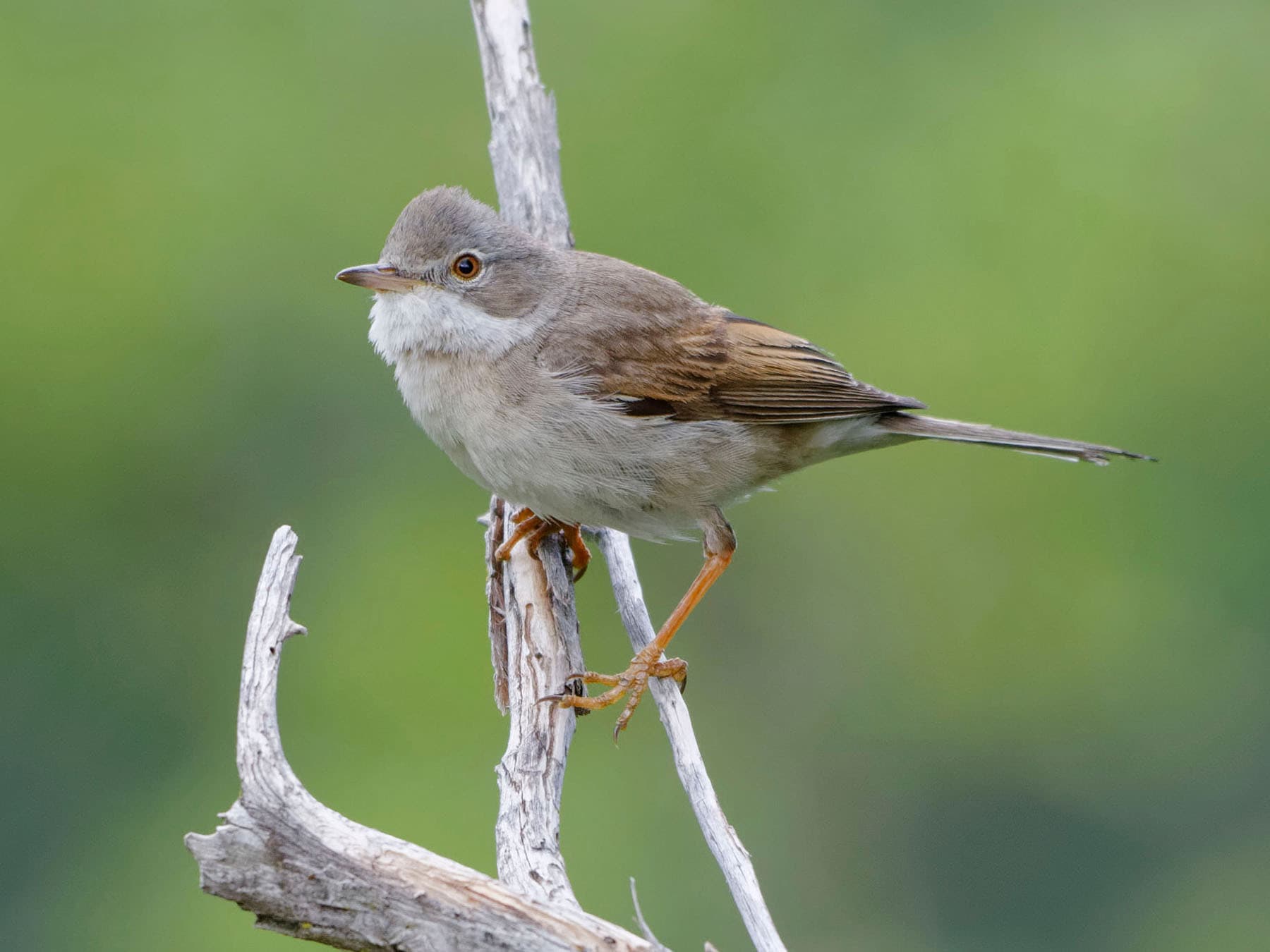
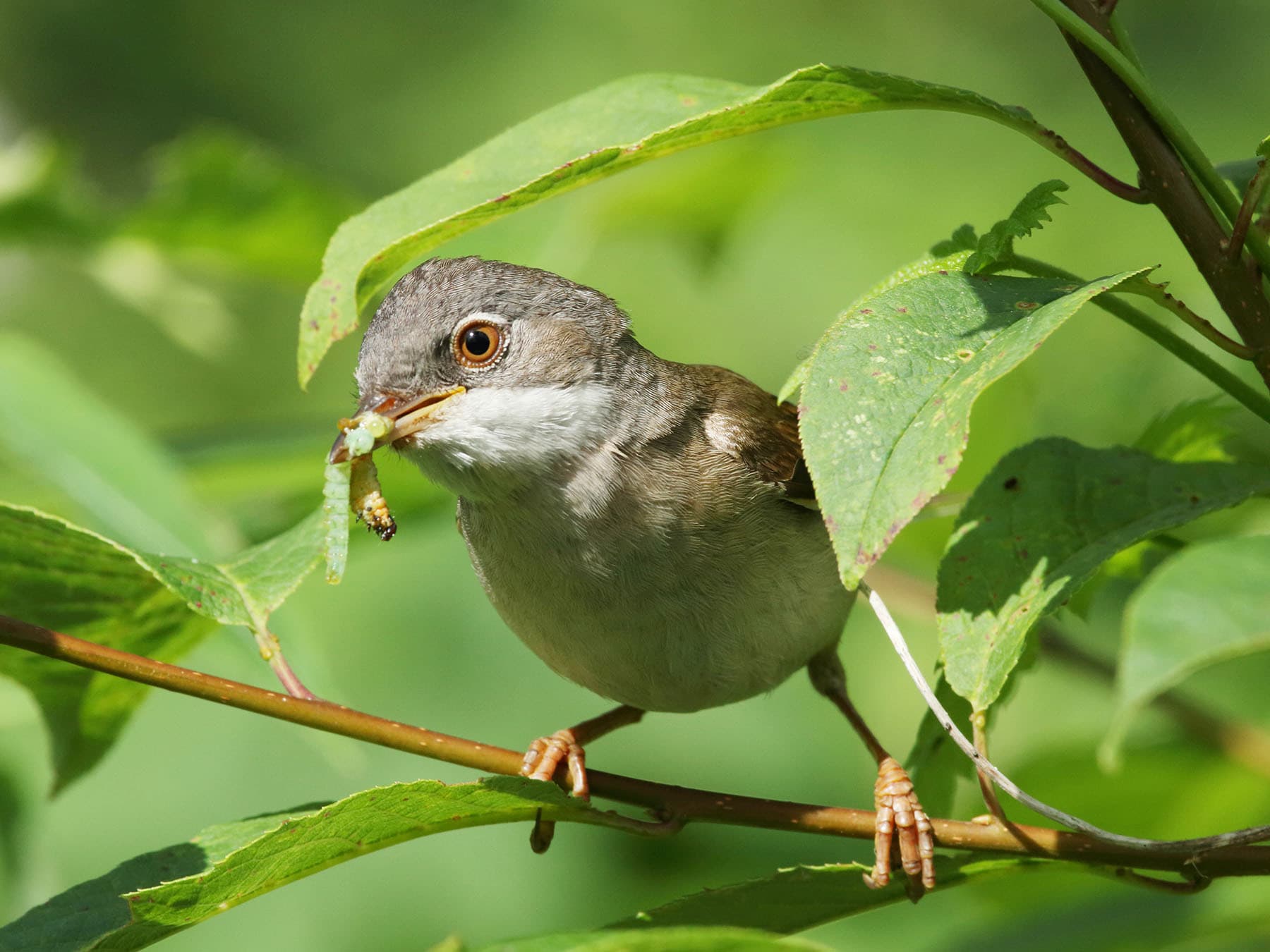
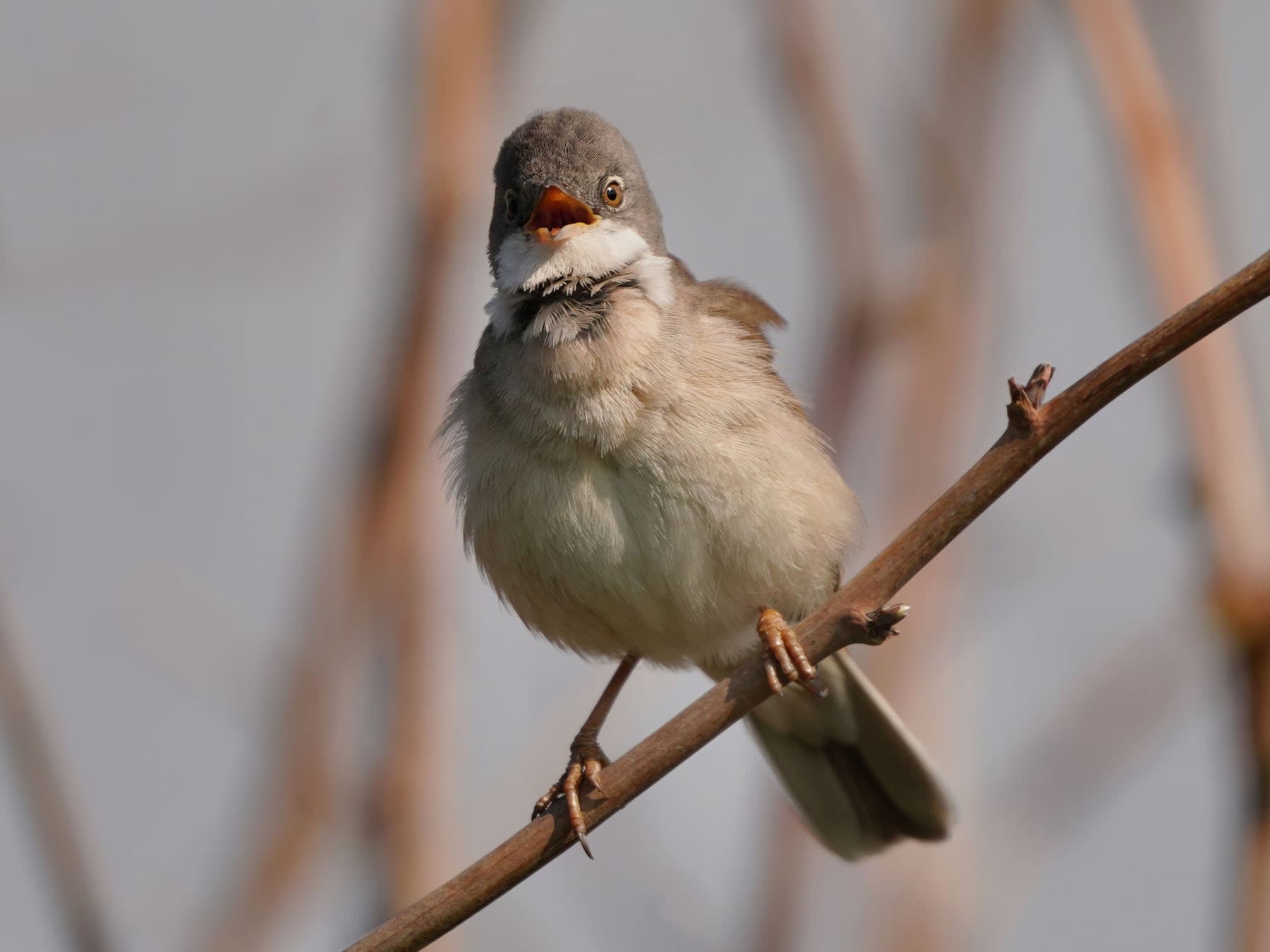
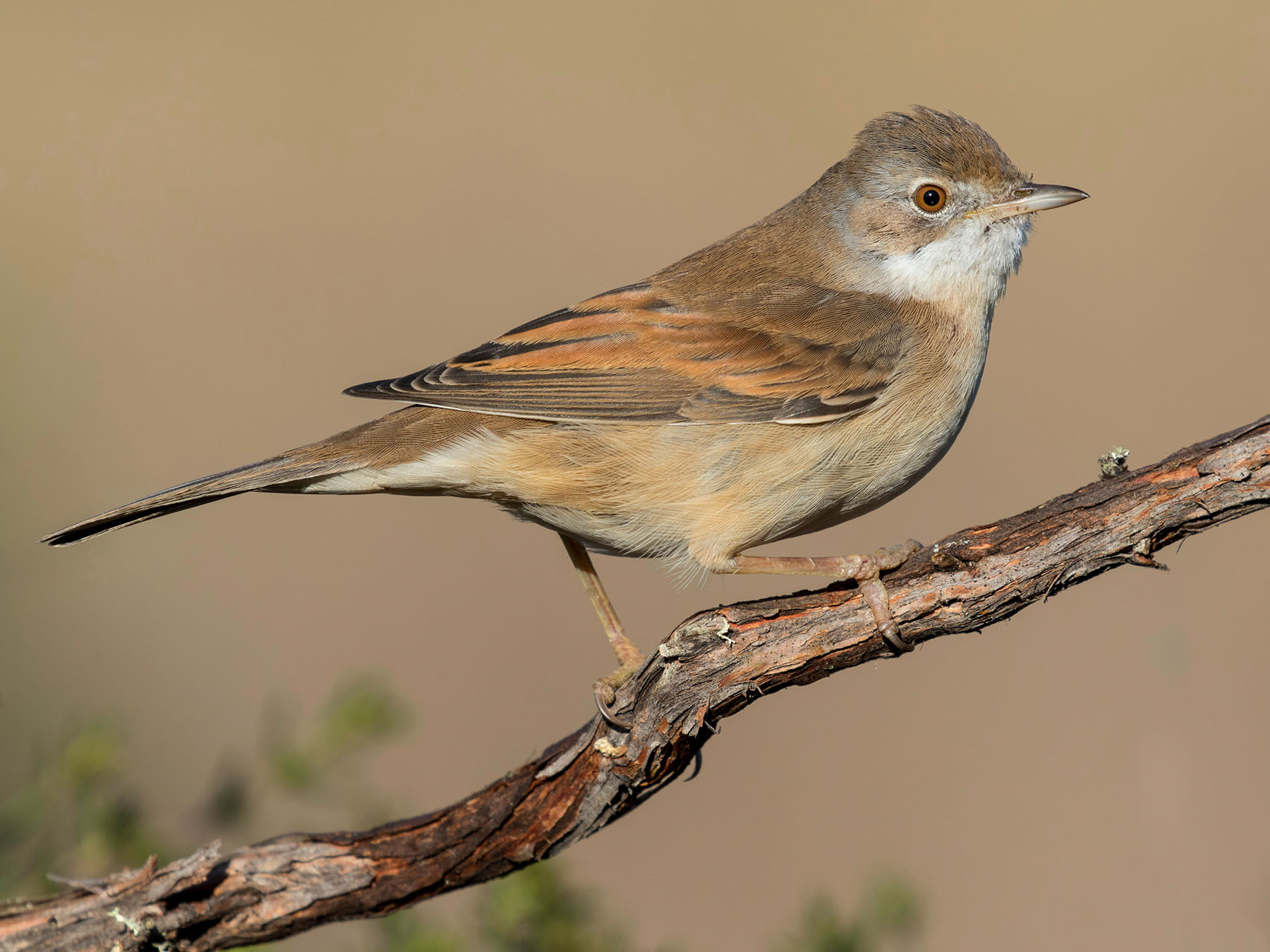
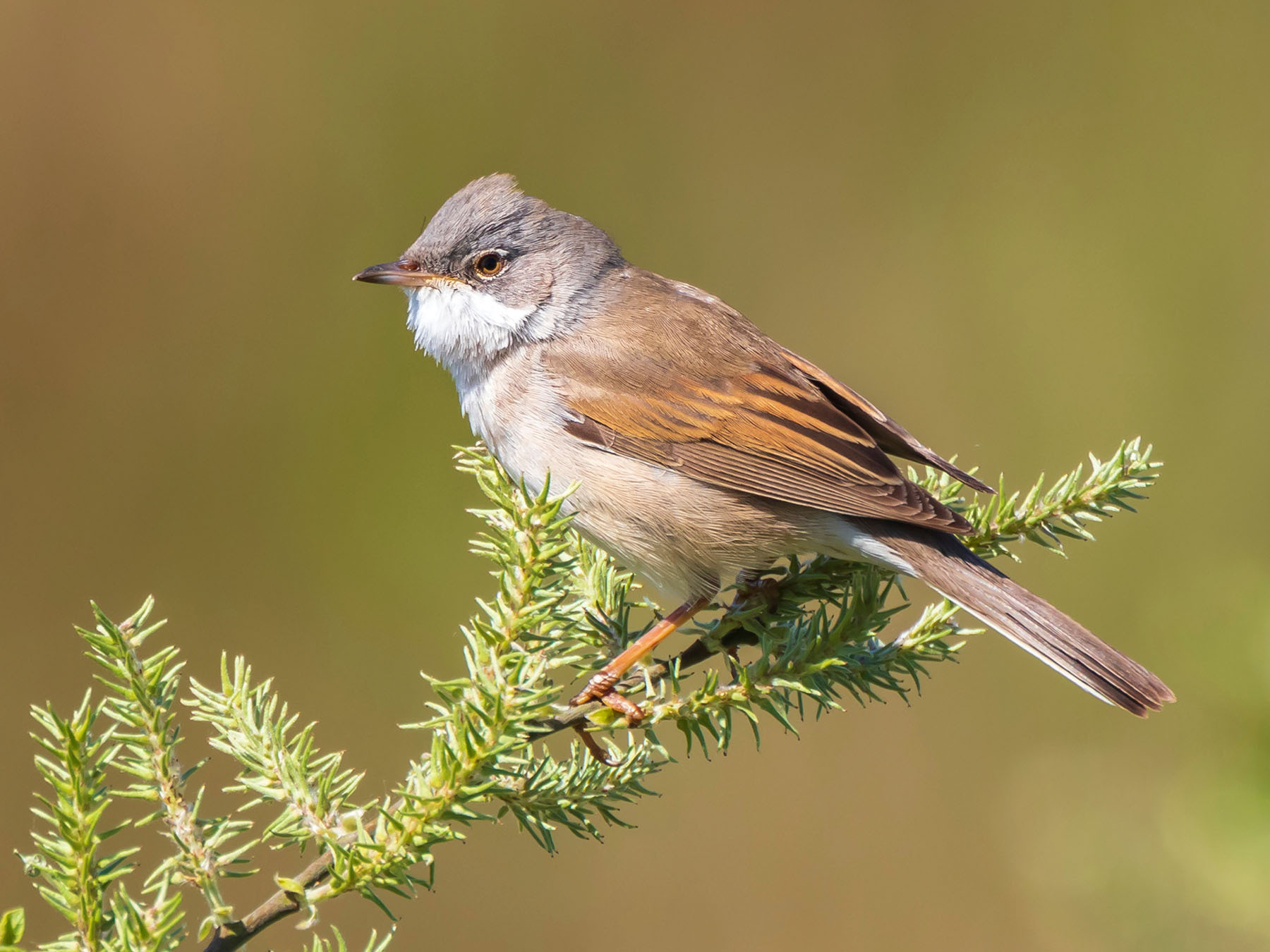
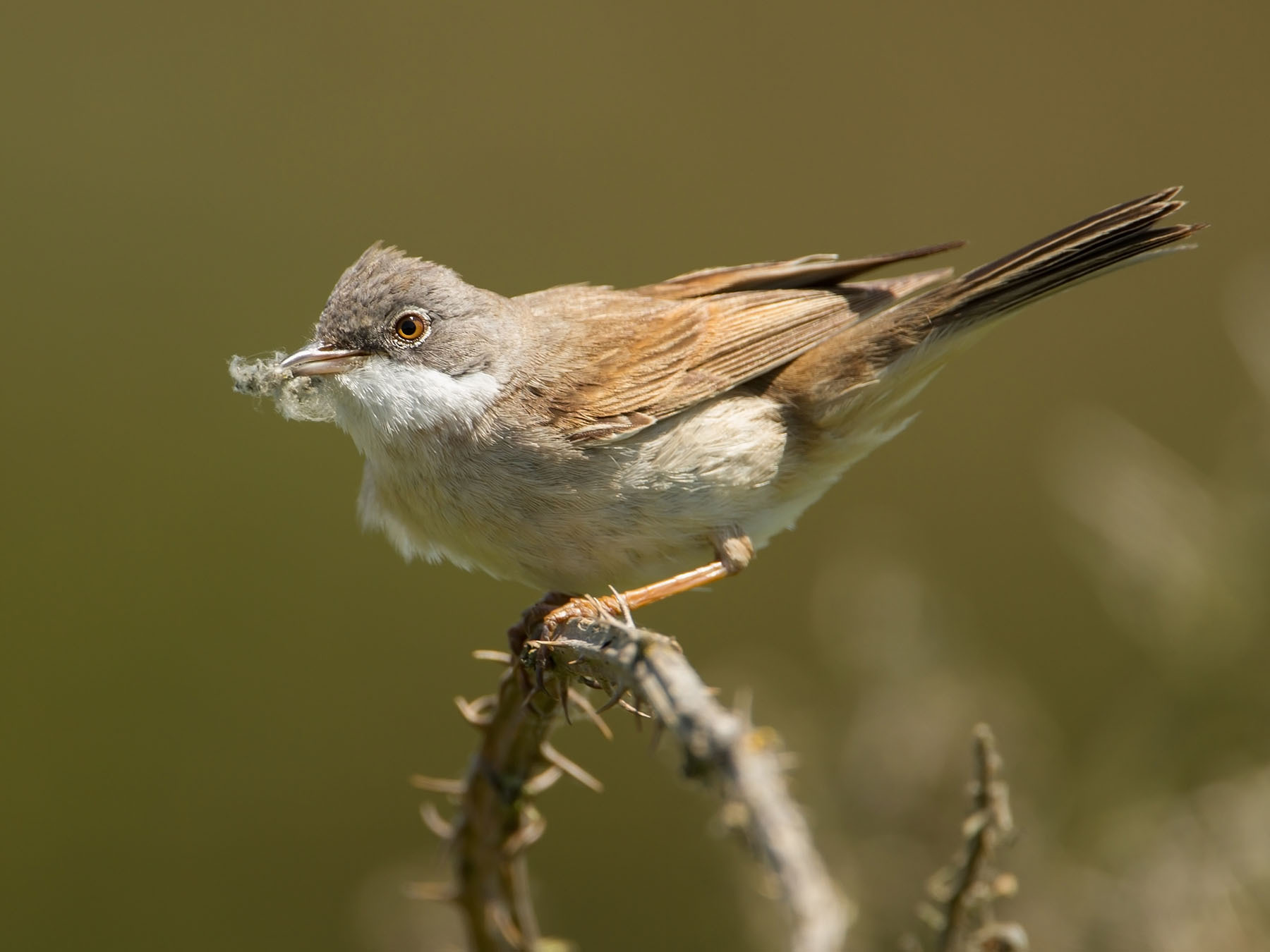
As you might expect, a white throat is one of the key distinguishing features of a whitethroat. Male whitethroats have a grey head, grey-brown back and wings, and a pinkish-off-white breast, belly and underparts.
Their eyes are olive-brown, surrounded by a thin white eye-ring, and their bill is yellowish, tinged with grey.
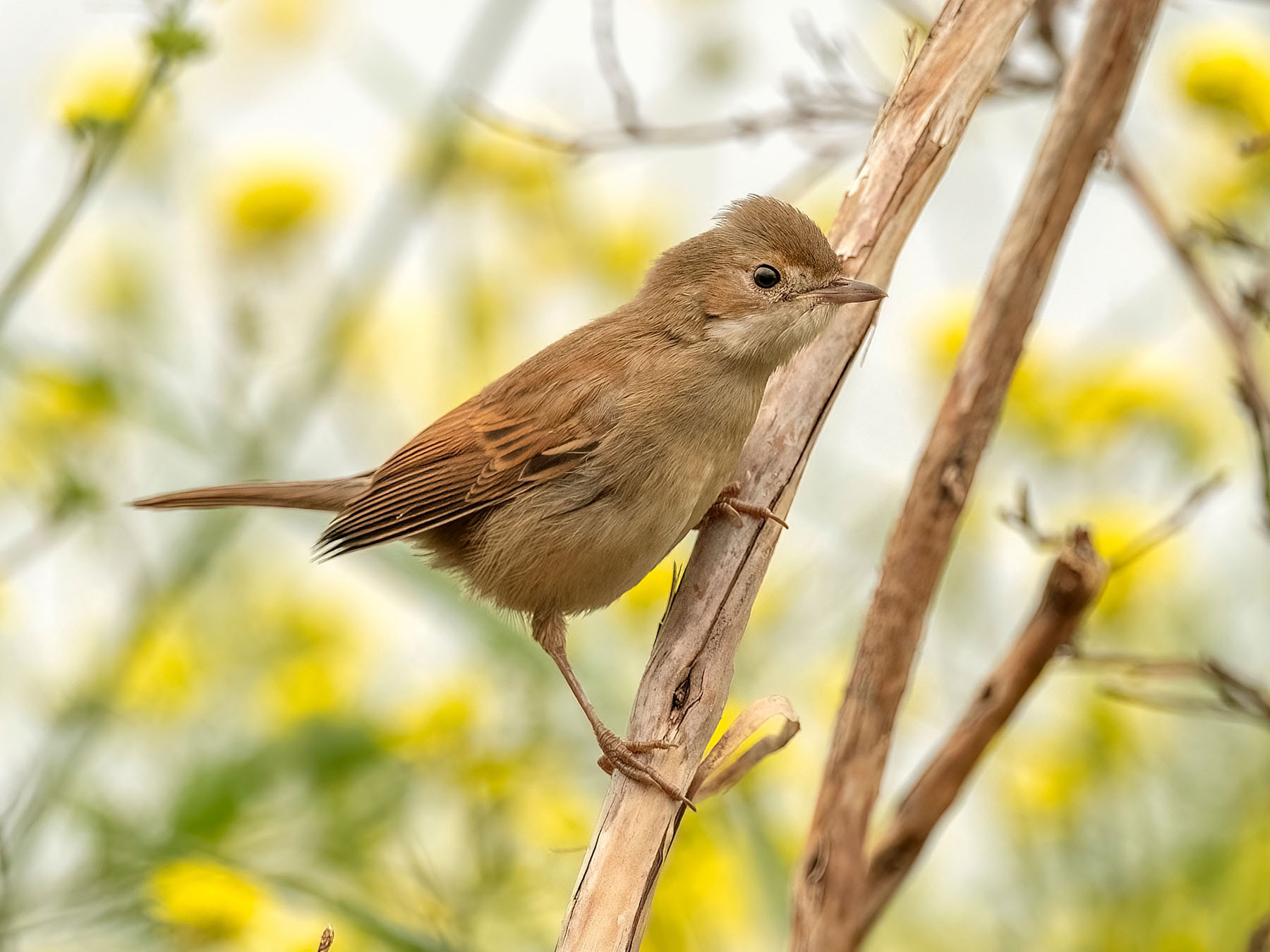
In female whitethroats, the white throat patch is smaller and less prominent, and their head is brown instead of grey. Females have grey-brown legs, in contrast to those of the male, which are a yellowish brown.
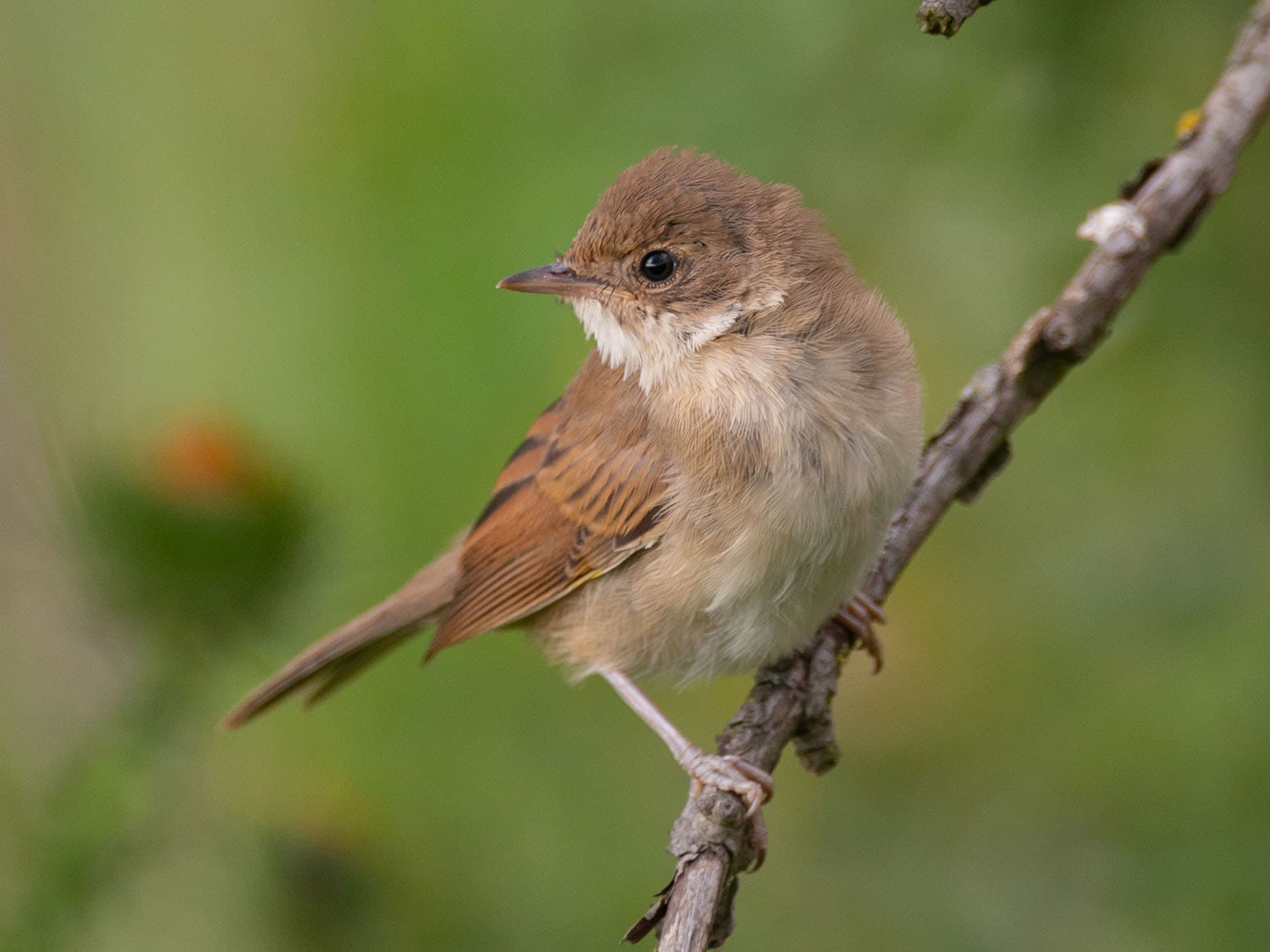
Juvenile whitethroats have buff-brown upperparts. Their chin and throat are off-white, and their underparts are a dull buff shade, with some sandy edges to wing feathers.
A similar species, the lesser whitethroat, is smaller and has dark patches on its cheeks.
How big are Whitethroats?
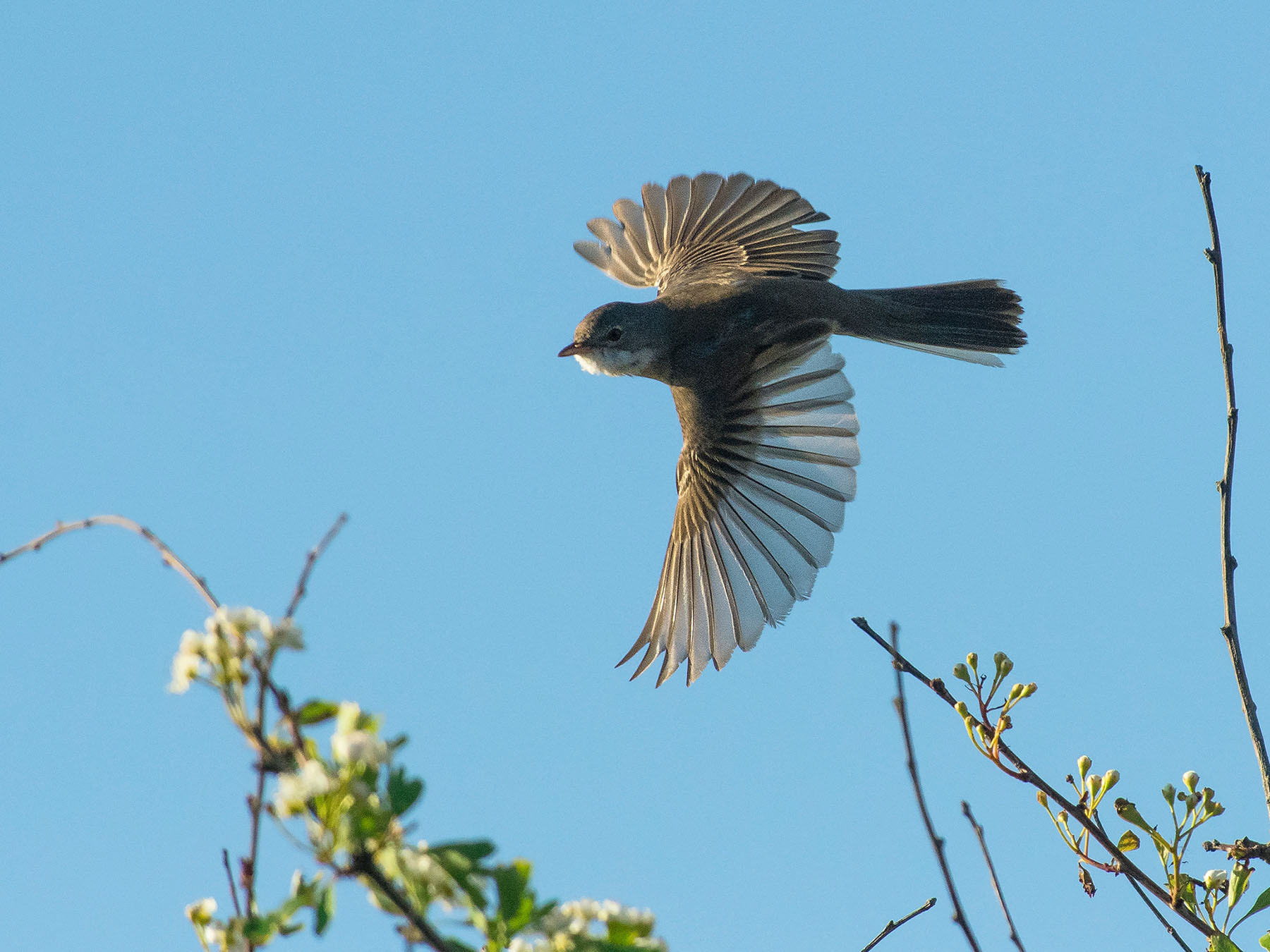
Whitethroats are active birds, with large heads and long flicking tails. They are around the same size as house sparrows and great tits. There isn’t any noticeable difference in size between male and female whitethroats.
- Length: 14 cm to 17 cm (5.5 in to 6.7 in)
- Weight: 12 g to 18 g (0.4 oz to 0.6 oz)
- Wingspan: 18.5 cm to 23 cm (7.3 in to 9 in)
Its size
Adults- Length
- 13–15 cm
- Wingspan
- 20–23 cm
- Weight
- 13–18 g
Its song and calls
What sound does a Whitethroat make?
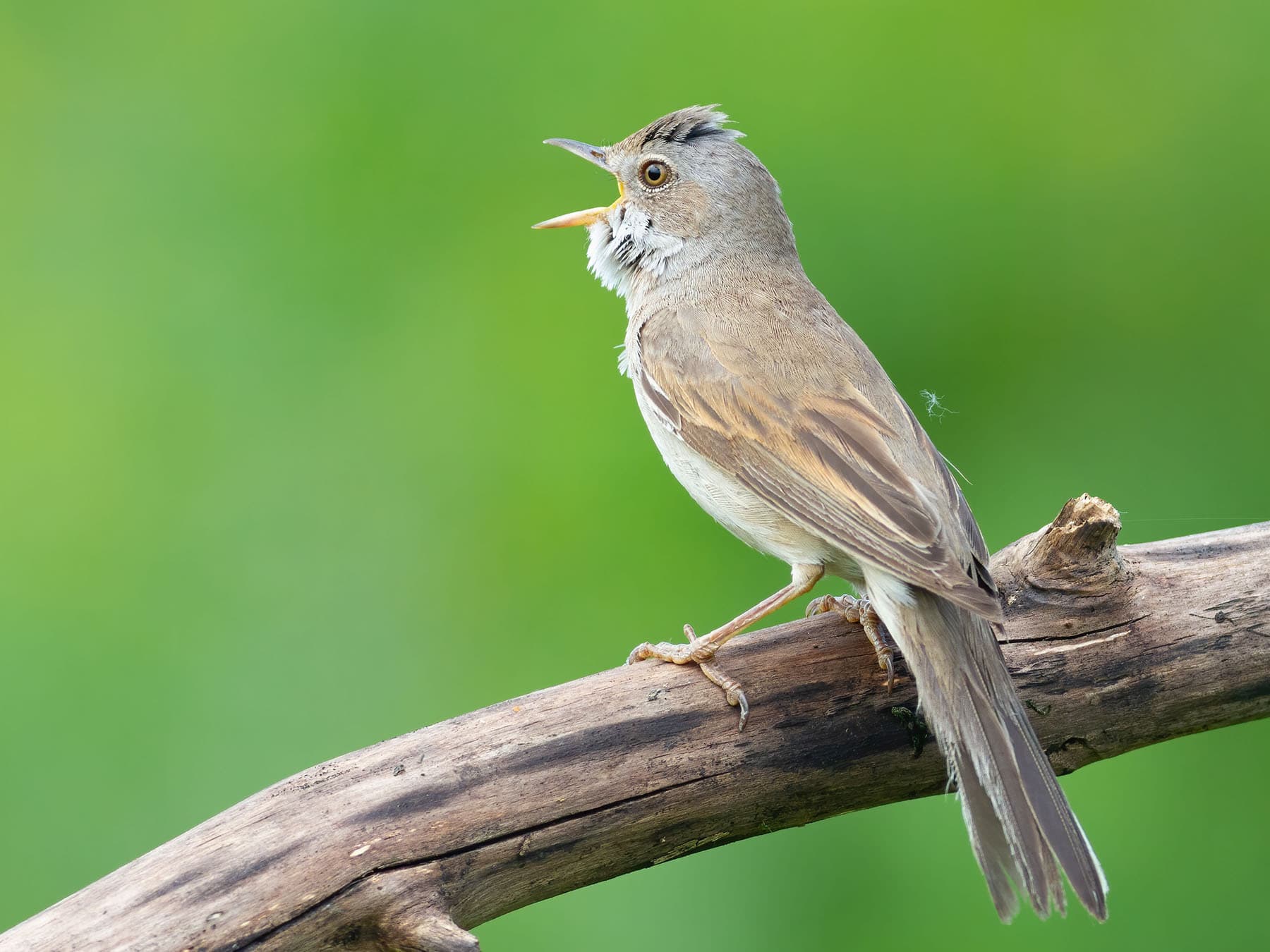
Whitethroats are classed as warblers, and naturally have a wide and diverse range of calls and songs. A common song is a rapid-fire, scratchy warbling song, with alternating high and low notes. Calls include a harsh, buzzing churring alarm call, and a “wheet-wheet-wheet” contact call.
- Song0:00 / 0:16
Recorded in Thurrock, England · June 2024
- Call0:00 / 0:20
Recorded in Normandie, France · June 2024
When and where to see it
OctoberMostly absent
Most recorded in October
- 1. Cornwallunder 0.1%
- 2. Falkirkunder 0.1%
- 3. East Sussexunder 0.1%
- 4. Orkney Islandsunder 0.1%
- 5. Gwyneddunder 0.1%
Each dot is a county, state or province: the bigger and darker, the larger the bird’s share of that place’s bird records that month. Grey dots: no regular records. The ringed point is the centre of the bird’s records this month; the arrow shows how it moved since last month, and the dashed loop its path through the year. “Arrivals” colours places where it becomes regular this month (orange) or is in its last regular month (grey). GBIF eBird Observation Dataset, 2019–2024. Map data: Natural Earth, US Census Bureau; place centres © OpenStreetMap contributors.
In your area
See when the Whitethroat is recorded in your county, state or province.
How often the Whitethroat turns up in the UK and Ireland through the year, from birdwatchers' records.
United Kingdom
Summer visitor · regularly Apr–Sep · most records in May
Ireland
Summer visitor · regularly Apr–Sep · most records in May
Show as a table
| Month | United Kingdom | Ireland |
|---|---|---|
| January | – | – |
| February | <0.001% | – |
| March | <0.001% | – |
| April | 0.56% (regular) | 0.079% (regular) |
| May | 1.4% (regular) | 0.53% (regular) |
| June | 1.2% (regular) | 0.44% (regular) |
| July | 0.81% (regular) | 0.25% (regular) |
| August | 0.63% (regular) | 0.093% (regular) |
| September | 0.31% (regular) | 0.067% (regular) |
| October | 0.012% | 0.001% |
| November | <0.001% | – |
| December | <0.001% | – |
Recorded regularly in
Worldwide: recorded regularly in 89 countries
Countries where it was recorded in at least 3 of the 6 years 2019–2024. Linked countries have their own bird list.
Europe (45)
- Åland Islands
- Albania
- Austria
- Belarus
- Belgium
- Bosnia & Herzegovina
- Bulgaria
- Croatia
- Czechia
- Denmark
- Estonia
- Faroe Islands
- Finland
- France
- Germany
- Gibraltar
- Greece
- Guernsey
- Hungary
- Ireland
- Isle of Man
- Italy
- Jersey
- Kosovo
- Latvia
- Lithuania
- Luxembourg
- Malta
- Moldova
- Montenegro
- Netherlands
- North Macedonia
- Norway
- Poland
- Portugal
- Romania
- Russia
- Serbia
- Slovakia
- Slovenia
- Spain
- Sweden
- Switzerland
- Ukraine
- United Kingdom
Africa (19)
Asia (25)
- Armenia
- Azerbaijan
- Bahrain
- China
- Cyprus
- Georgia
- India
- Iran
- Iraq
- Israel
- Jordan
- Kazakhstan
- Kuwait
- Kyrgyzstan
- Lebanon
- Mongolia
- Oman
- Pakistan
- Palestinian Territories
- Qatar
- Saudi Arabia
- Tajikistan
- Turkey
- United Arab Emirates
- Uzbekistan
Data: EOD – eBird Observation Dataset (Cornell Lab of Ornithology), accessed via GBIF.org, CC BY 4.0. Records from 2019–2024, aggregated and filtered by Birdfact. How these lists are made
What is the habitat of a Whitethroat?
Open countryside at lower altitudes is the preferred habitat of whitethroats. Scrubland bushes and hedgerows provide ideal nest cover and foraging opportunities. Woodlands, dense tree cover of more than 3m to 4m (10 ft to 13 ft) in height, and busy residential areas are avoided.
What is the range of a Whitethroat?
Whitethroats breed across northern Europe, with Ireland and Britain forming the western extreme of their range, which stretches as far as southern Norway, Sweden and Finland in the north, western Russia and into central Asia in the east, and south as far as northern Spain, Italy and across Greece and Turkey.
Winters are spent in West and Central Africa, from Senegal in the west, to Sudan in the east, and as far south as South Africa.
Where do Whitethroats live?
Whitethroats generally avoid both mountainous and urban areas, but can be seen in open countryside and hedgerows along railway lines, footpaths and bramble patches. They are most common in central, southern and eastern parts of England.
Across their wider range, the largest populations of breeding whitethroats are found in Switzerland and Ukraine, with much of western and central Europe recording slight declines in numbers.
In winter, the Sahel region of Africa is the final destination of most of Europe’s breeding whitethroats, and environmental conditions such as desertification have caused changes to the population and settlement patterns of the species.
How rare are Whitethroats?
During the spring and summer, whitethroats are relatively widespread across Britain, with over 1.1 million breeding pairs arriving from wintering grounds in the Sahel, just south of the Sahara Desert in central Africa.
They are common visitors during the breeding season, but it is unlikely that you’ll spot one after late September, as migration south begins from August onwards.
Where can you see Whitethroats in the UK?
During spring and summer, whitethroats are widespread across the UK and are only really absent from the highest terrain, including the Pennines, Cairngorms and Snowdonia.
Whitethroats breed as far north as Shetland, but are most numerous in southern, central and eastern England, where they can be seen between April and September each year.
Migration
Do Whitethroats migrate?
Whitethroats are a fully migratory species – no whitethroats are native to Britain, and they arrive here in spring to breed, before returning to their winter territories in sub-Saharan Africa each autumn.
Tips for seeing it
- Look for Whitethroats in scrubby areas, hedgerows, and field margins
- Listen for their scratchy, warbling song, often delivered from an exposed perch
- Watch for their characteristic display flight during the breeding season
- In the UK, they are common summer visitors, arriving in April and leaving by September
What it eats
What do Whitethroats eat?
Whitethroats’ diets change throughout the year, with insects and invertebrates being of most importance during the spring and summer, and the focus shifting to berries during the autumn and winter.
Insects, particularly beetles, bugs and caterpillars, are the main element of a breeding whitethroat’s diet, while during migration and into winter months berries, in particular redcurrants, blackcurrants, sandalwood, and buckthorn, form an important share of their food intake.
What do Whitethroat chicks eat?
Young Whitethroat chicks are fed on insects and invertebrates, with parent birds selecting softer prey to feed to their offspring. The early diet of young whitethroats contains spiders, larvae and caterpillars. As they become more independent, beetles and bugs are also introduced.
Nesting and breeding
Where do Whitethroats nest?
Perfecting the ideal nest is of great importance to breeding whitethroats. Males build several nests in a territory which are then examined by the female for suitability, before she ultimately chooses the one that she thinks will stand up to the task of raising young.
Occasionally none of the male’s efforts will impress, and a female will take over, constructing a new nest in a different location.
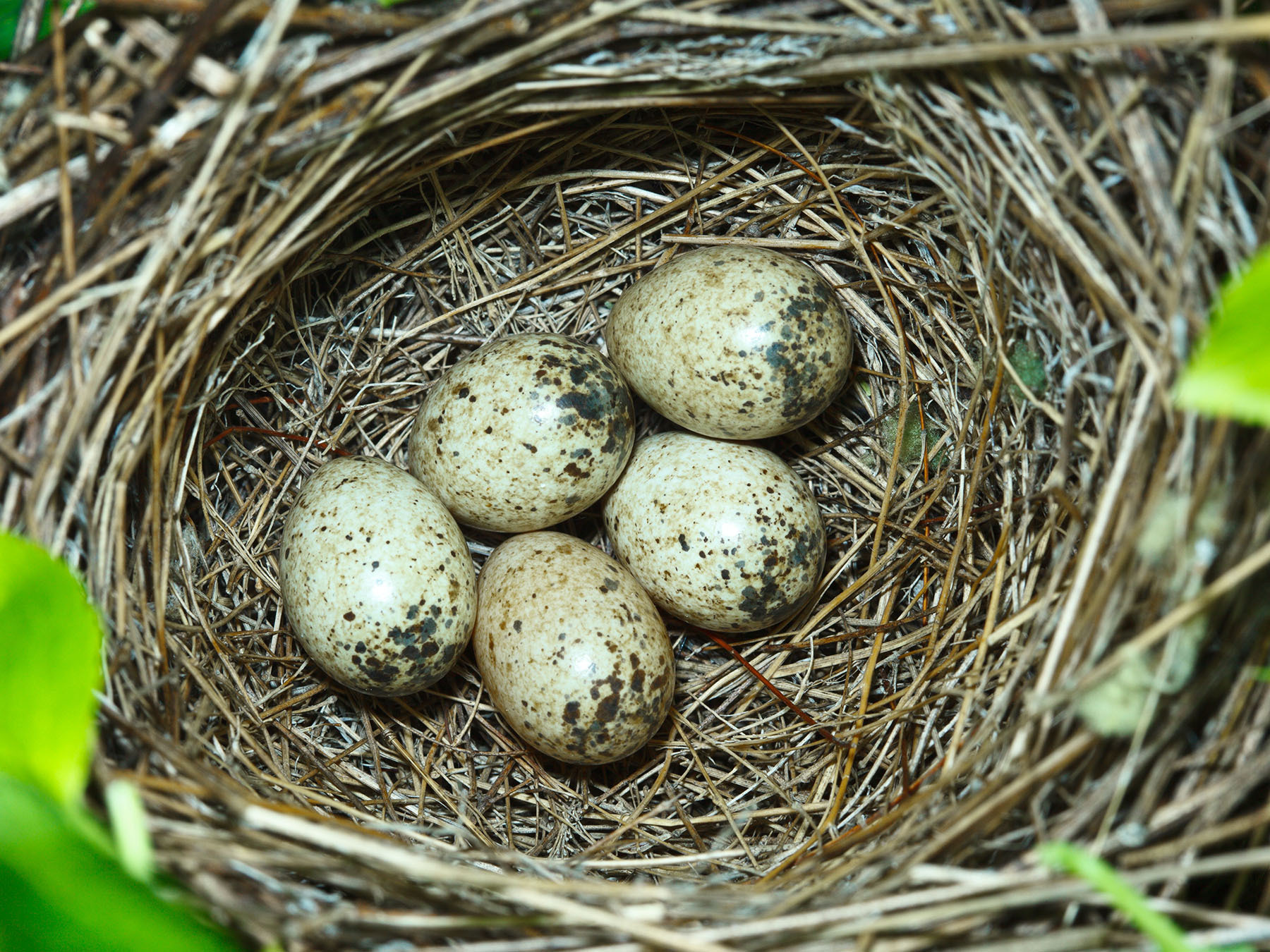
Nests are constructed low down in bushes, particularly brambles, or concealed deep into long grassy thickets. Deep cup-shaped nests are crafted from grass, leaves, moss, hair and spiders’ webs.
What do Whitethroat eggs look like?
A typical whitethroat clutch contains 4 to 5 smooth, glossy pale green-blue eggs, which are marked with dark olive-brown speckles. Eggs measure 18 mm by 14 mm (0.7 in by 0.6 in) and weigh around 1.8 g (0.06 oz).
Incubation is shared between both males and females, with young hatching after between 11 and 13 days. Whitethroats raise either up to two broods each season, with the earliest eggs laid in May.
Do Whitethroats mate for life?
Whitethroats are typically a monogamous species, although males may occasionally breed with a second mate in a separate territory. It’s uncertain whether the pair bonds continue from one season to the next.
Males return to breeding grounds ahead of females, and do exhibit strong loyalty to territories they have successfully bred on in previous years.
Behaviour
Are Whitethroats aggressive?
Whitethroats are curious and inquisitive birds that actively explore their surroundings – when they come across a threat or an intruder to their territory, their response is usually an aggressive churring call. Aggression is also observed during courtship and the breeding season.
Where do Whitethroats sleep at night?
Whitethroats are observed to be one of the earliest species to roost each evening, settling into their bramble thickets or thorny hedgerows close to dusk, and not surfacing until after many of their neighbouring birds have already awoken to join in with the dawn chorus.
Lifespan and predators
How long do Whitethroats live?
On average, whitethroats enjoy a lifespan of around 2 years, breeding for the first time at one year of age. A ringed whitethroat was recorded as having reached 7 years and 9 months in 2011.
What are the predators of Whitethroats?
Birds of prey, particularly tawny owls and sparrowhawks, are among the main predators of whitethroats, as well as carrion crows. Predatory mammals also pose a threat, including martens, weasels, stoats and foxes.
Are Whitethroats protected?
Whitethroats are included in the Wildlife and Countryside Act, 1981, which protects wild birds in England, Scotland and Wales against being intentionally killed, injured or captured.
Their eggs and nest sites are also protected against by law, meaning they cannot be destroyed or damaged.
Are Whitethroats endangered?
In their wider range, whitethroats have a secure and stable population and are rated as a species of least concern by the IUCN. In Britain, they are categorised as Amber on the Birds of Conservation Concern species list.
The inclusion of whitethroats as a species of moderate concern reflects a decline in breeding in the UK of 63 per cent between 1967 and 2020.
Conservation
While the Whitethroat is currently listed as Least Concern, populations have experienced fluctuations. They faced a significant decline in the late 1960s due to drought in their African wintering grounds.
Conservation efforts focus on maintaining suitable breeding habitats, particularly hedgerows and scrubland in agricultural areas.
Similar birds
Often mistaken for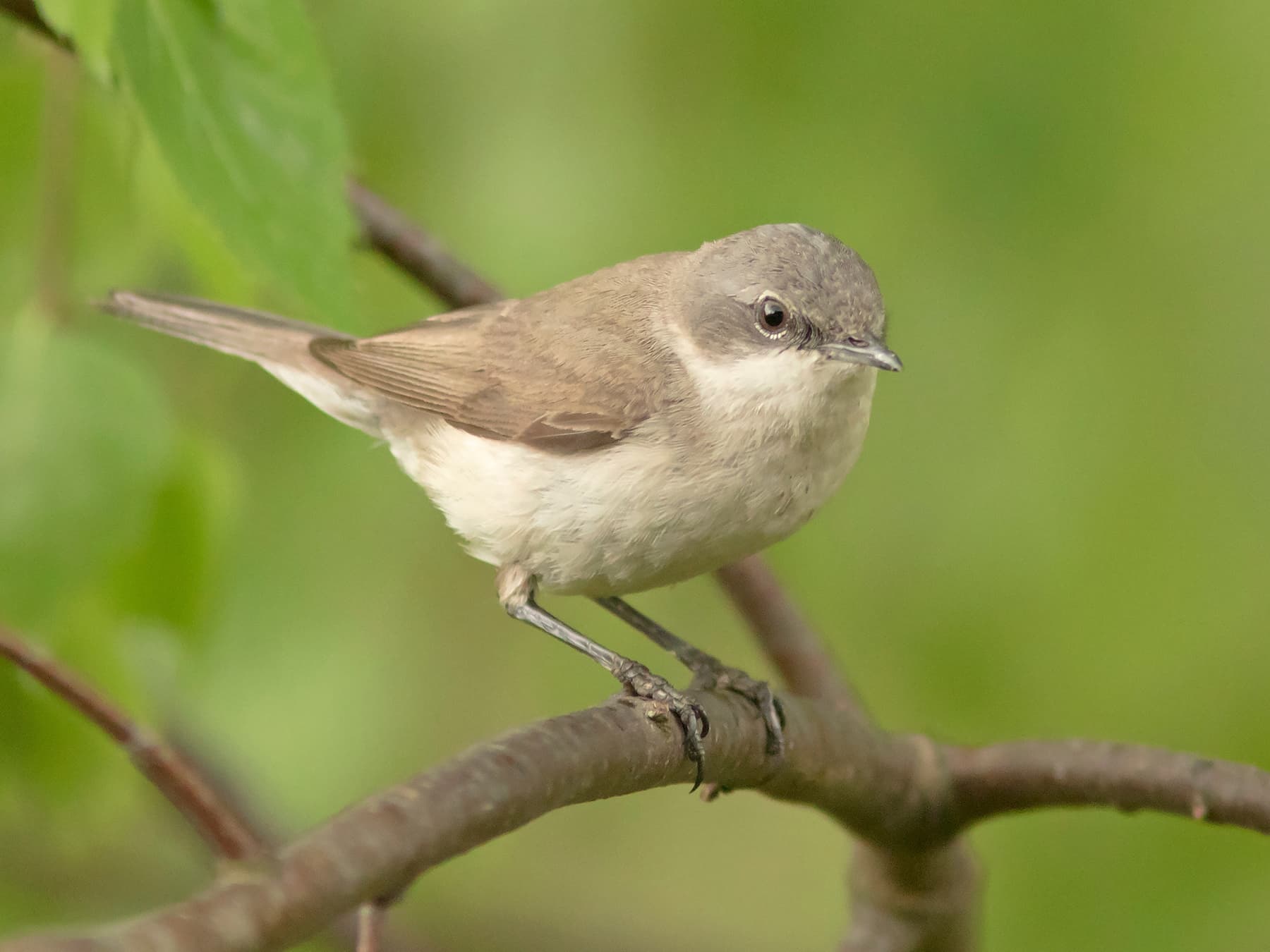
More photos
7 photos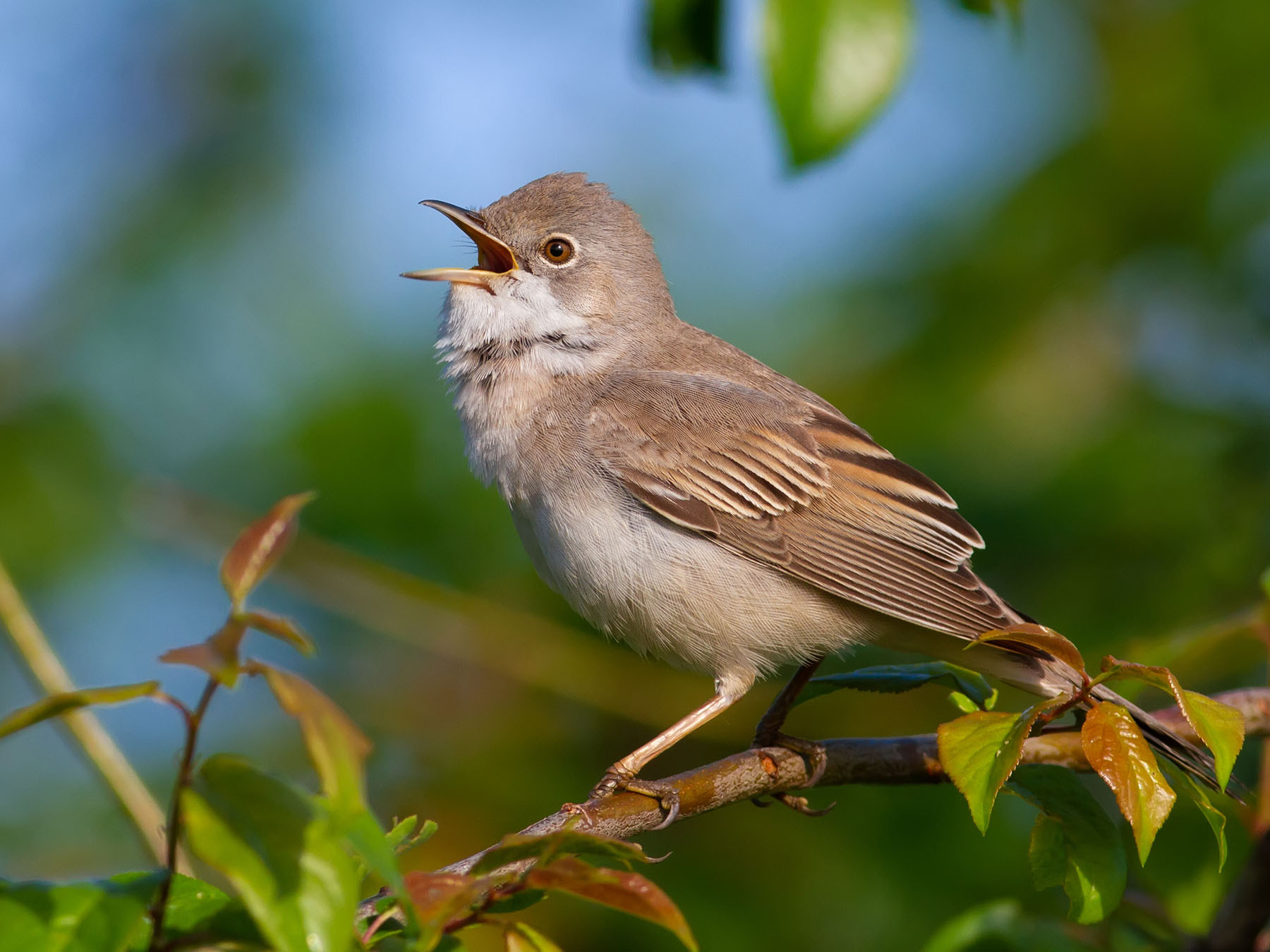
Quick facts
- Length
- 13–15 cm
- Wingspan
- 20–23 cm
- Weight
- 13–18 g
- Lifespan
- 2 years · oldest recorded 9 years
- Family
- Sylviid Warblers
- Migration
- Long-distance Migrant
- Global status (IUCN)
- Least Concern
- World population
- 53,200,000 - 85,500,000 mature individuals
- Population trend
- Increasing
- Also called
- Common Whitethroat
- Scientific name
- Curruca communis
Questions
1Do Whitethroats breed in the UK?
Whitethroats are summer visitors to the UK, arriving ahead of the breeding season in mid-April, raising their young and then departing for wintering grounds in Africa by October.
Sources
4- 1BirdLife International. 2019. Sylvia communis (amended version of 2017 assessment). The IUCN Red List of Threatened Species 2019: e.T22716910A155623300. Source (opens in a new tab)
- 2EBCC (2015)
- 3BirdLife International. 2019. Sylvia communis (amended version of 2017 assessment). The IUCN Red List of Threatened Species 2019: e.T22716910A155623300. Source (opens in a new tab)
- 4Fransson et al., EURING list of longevity records for European birds (2010) Source (opens in a new tab)

Checked by
Nathan Cope, founder and editor
Nathan founded Birdfact and leads its writers and contributors in the UK, the US and Canada. He has watched and studied birds for more than ten years, and checks every article and species guide before it’s published.