Identification · Updated 8 Oct 2026
Coal Tit vs Great Tit: How to Tell Them Apart
By the Birdfact teamChecked by Nathan Cope
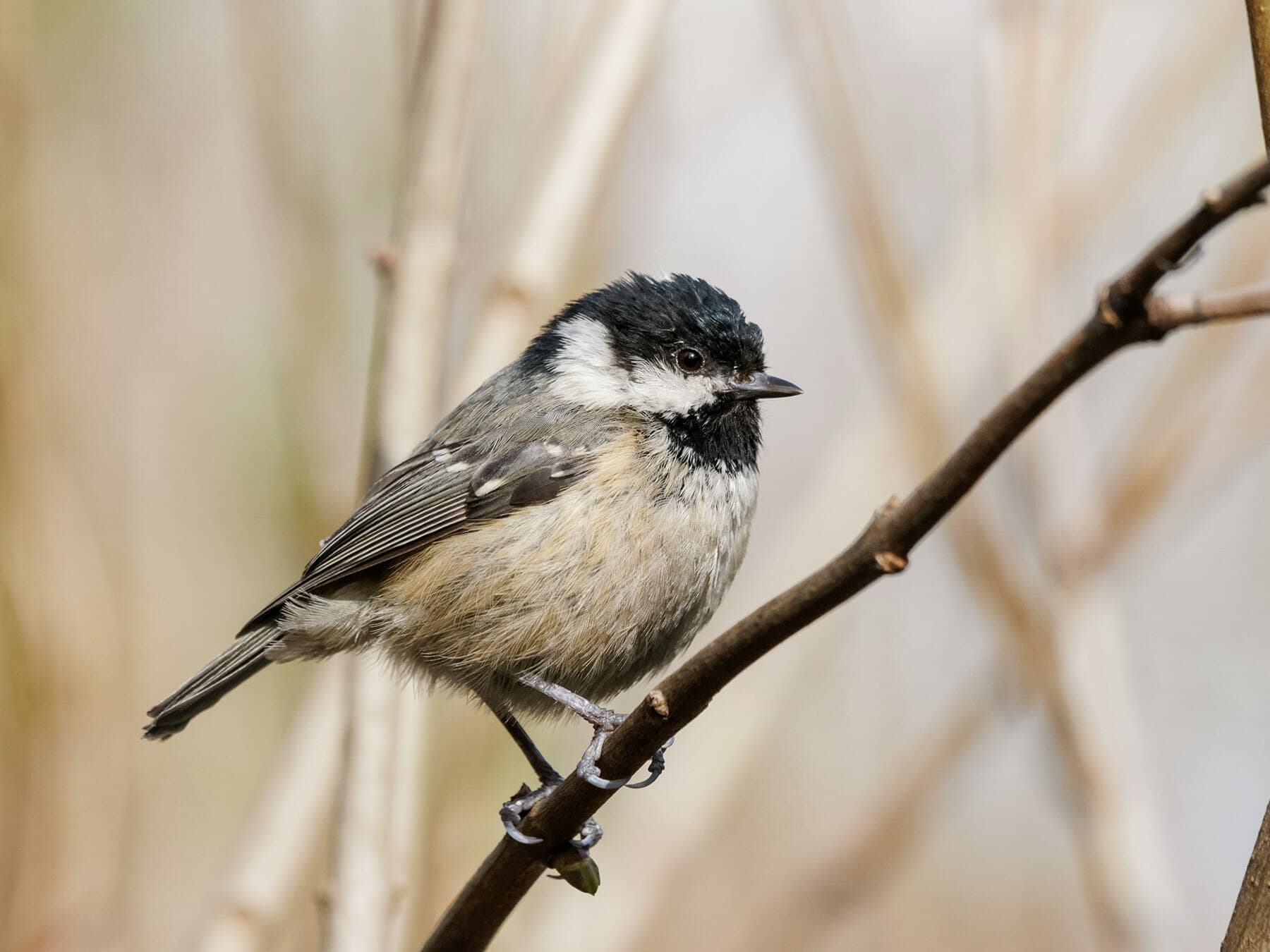
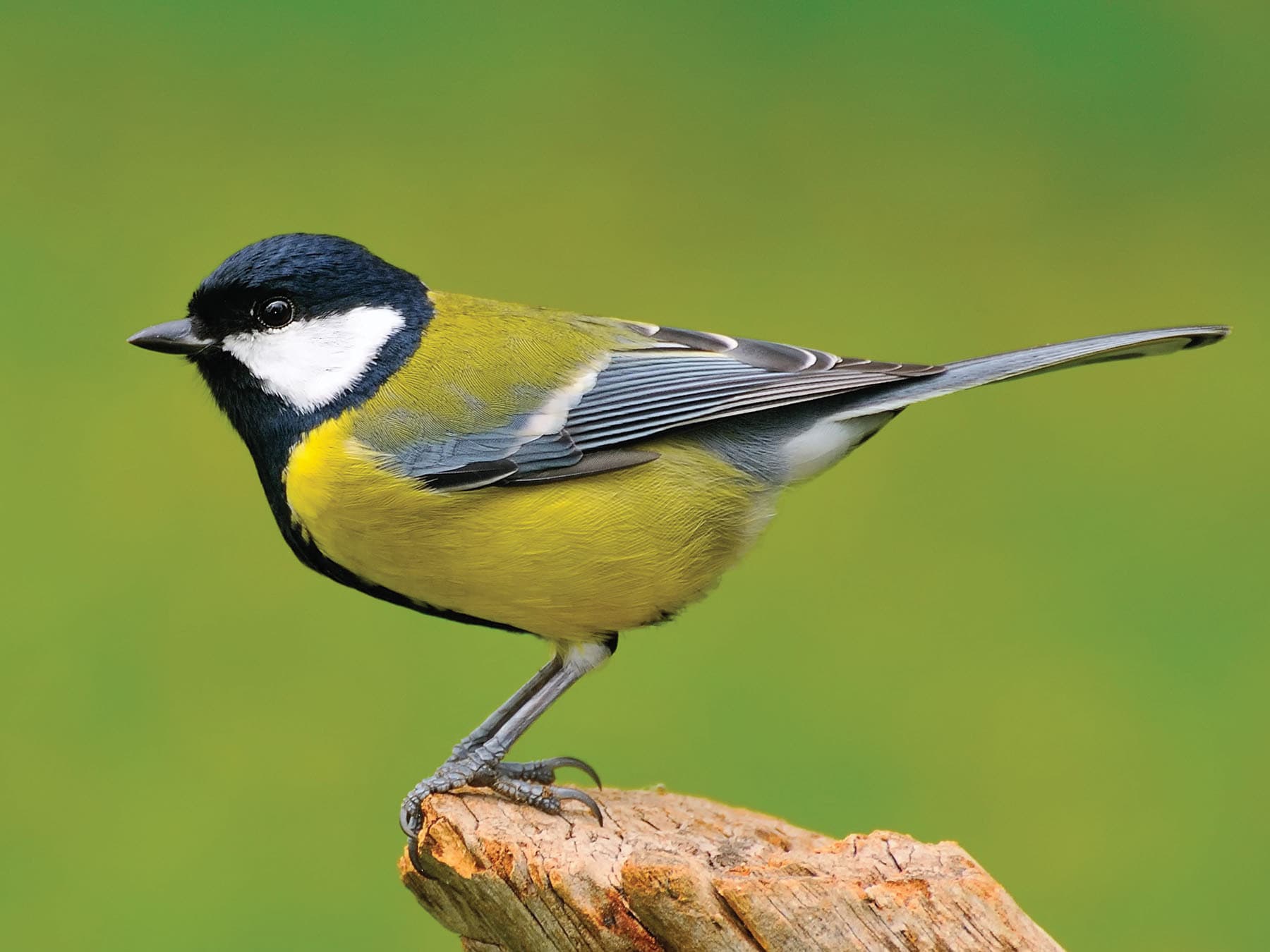
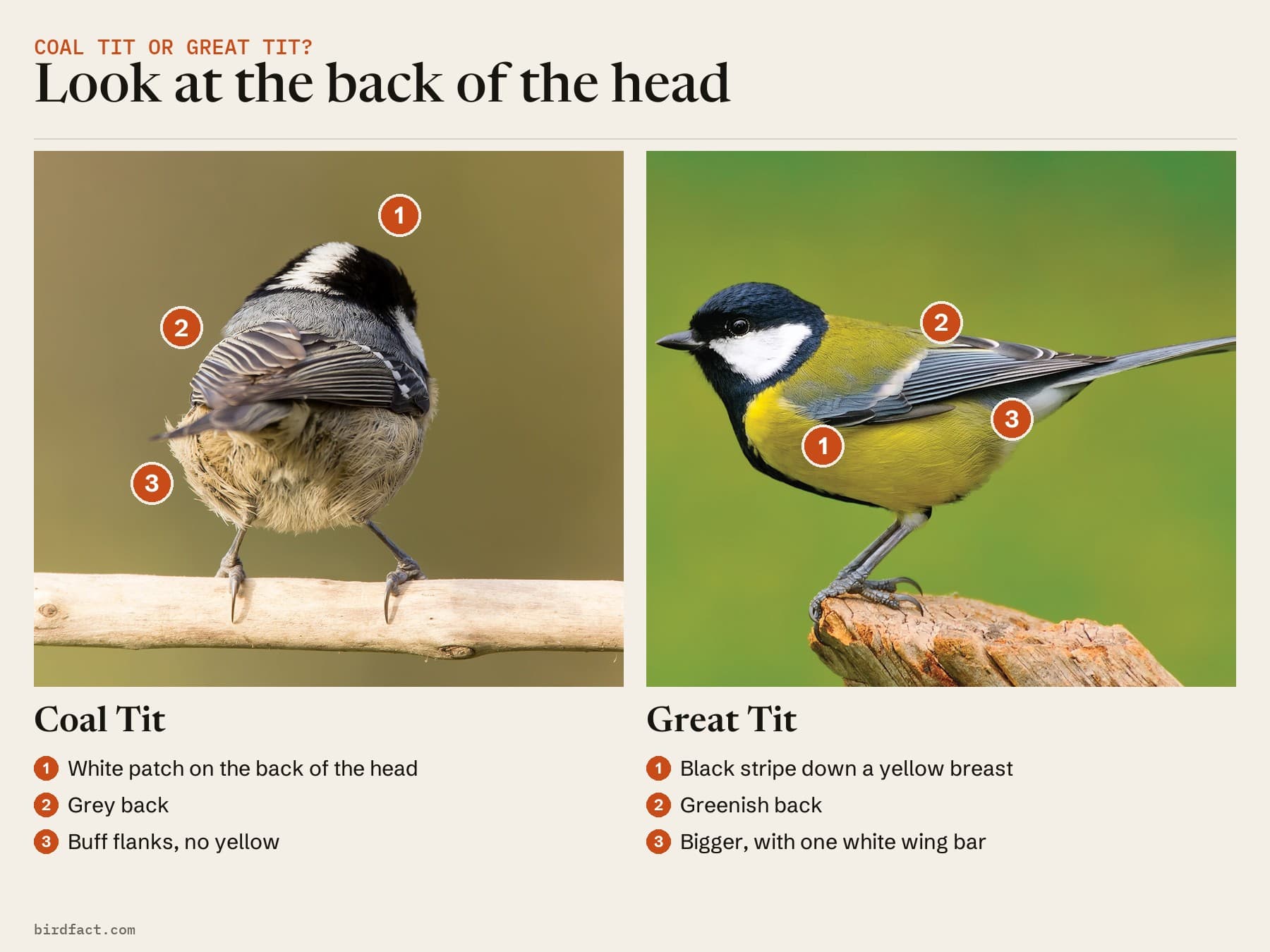
A Coal Tit is much smaller, with a white patch on the back of its black head, two white wing bars and buff, not yellow, underparts. A Great Tit has at most a small whitish spot on the nape, one wing bar and a black stripe down a yellow breast.
On this page11 sections
Side by side, to scale
3D models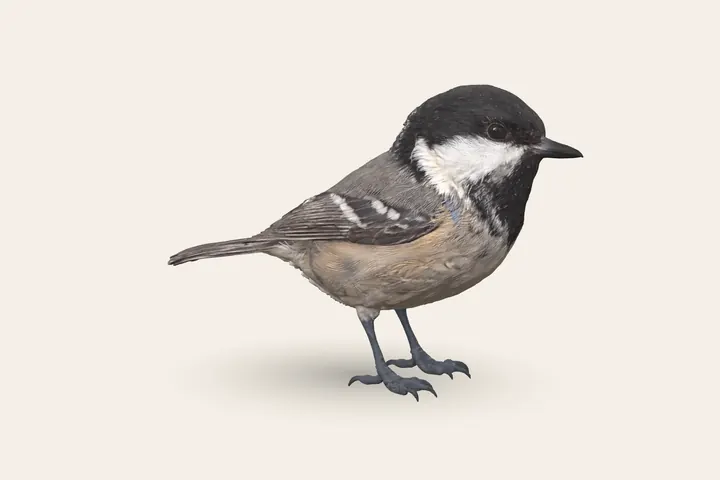
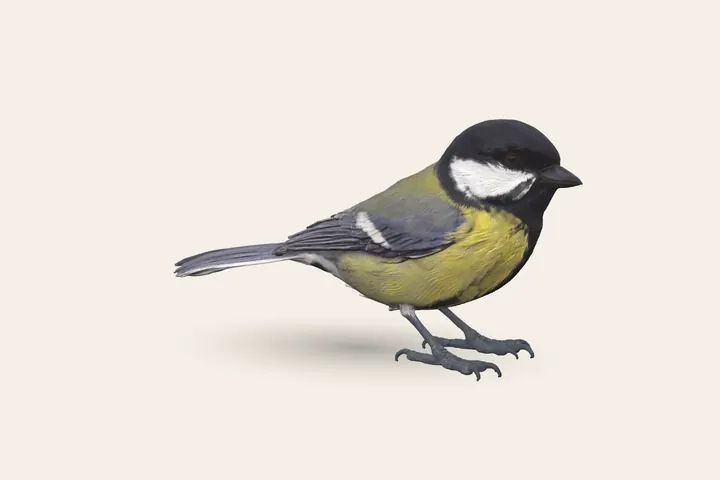
A Great Tit is about a quarter longer than a Coal Tit.
3D models · lengths from each species page · How we make our birds · Report a problem
© 2026 NC Digital Limited (Birdfact). All rights reserved. These 3D models may be viewed on this page and shared by link only. Downloading, extracting, copying or reusing them, or using them to train machine-learning models, is not permitted without our written permission. Using our models
Coal Tit or Great Tit at a glance
| Great Tit | Coal Tit | |
|---|---|---|
| Length | 14 cm | 11.5 cm |
| Weight (UK adults) | 18.6 g | 9.1 g |
| Back of the head | Black, at most a small whitish spot | A big white patch |
| Underparts | Yellow, with a black stripe | Whitish, with buff flanks; no stripe |
| Wing bars | One | Two |
| Back | Green | Grey to olive-grey |
| Song | Loud, sharp tea-cher | Same rhythm, higher and more slurred |
| Favourite trees | Broadleaves | Conifers |
| Stores food | No | Yes |
| UK breeding population | 2.4 million territories | 660,000 territories |
Size
The white nape patch
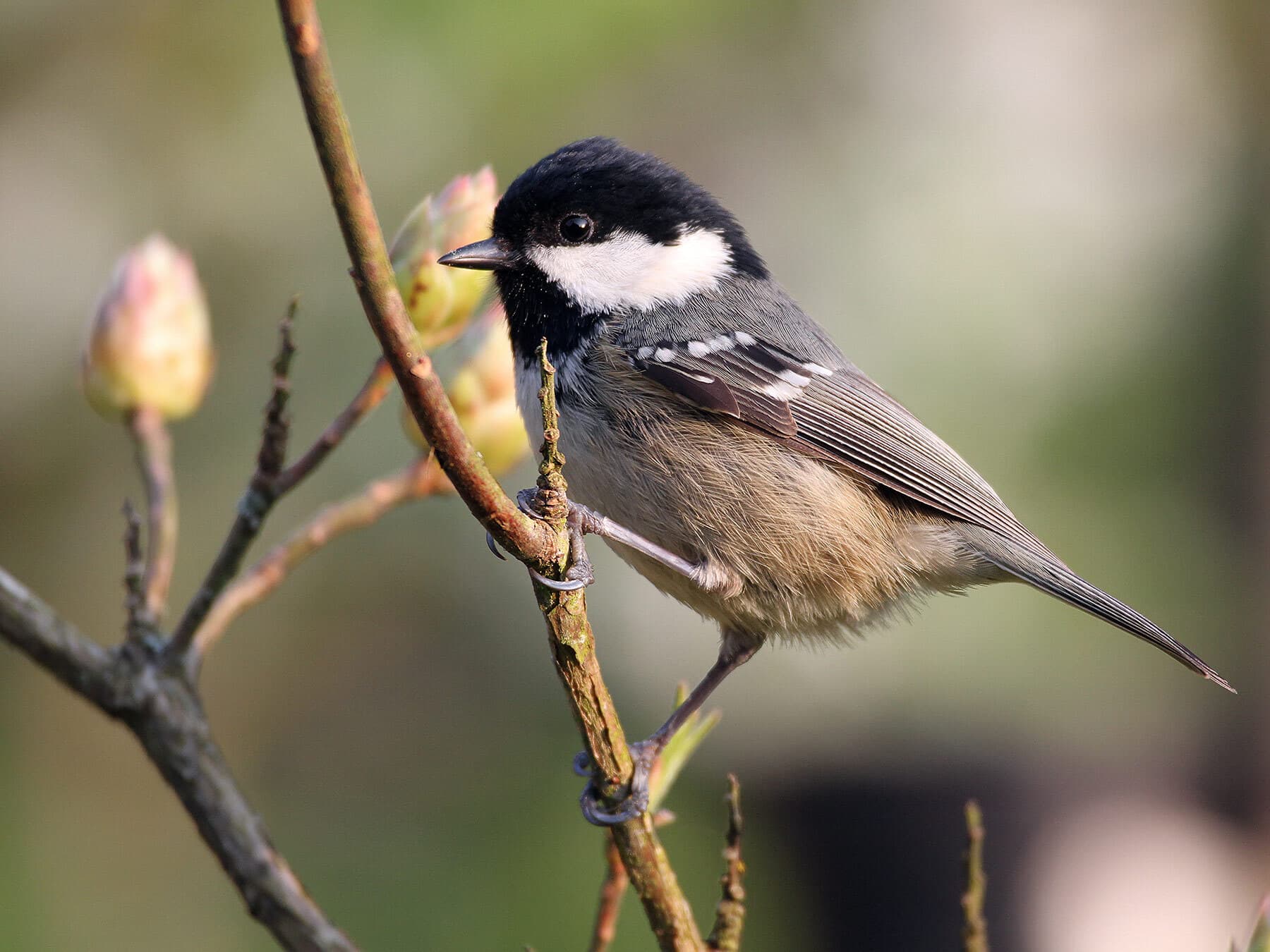
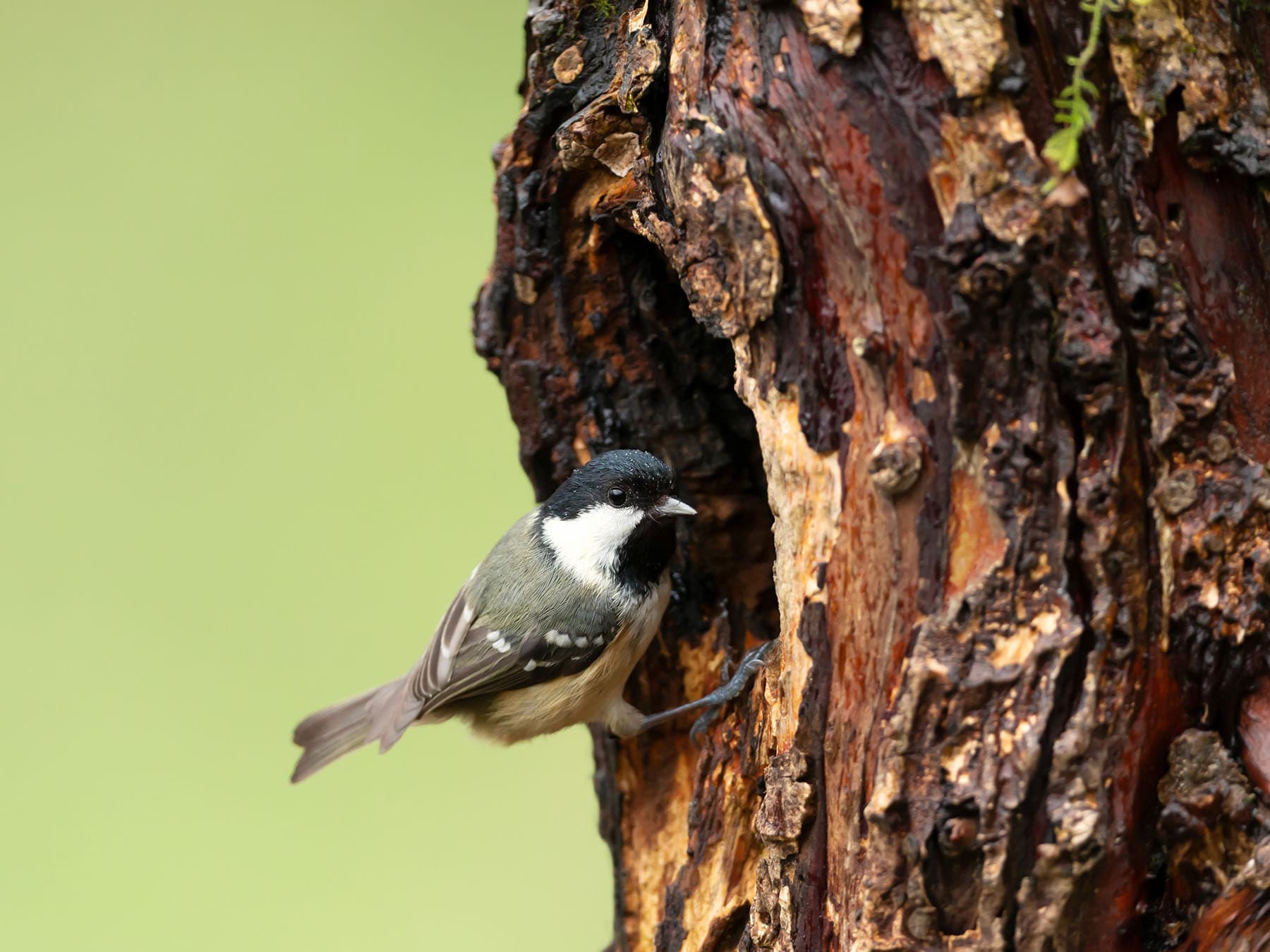
Both birds have a black cap and white cheeks, so look at the back of the head. A Coal Tit has a large, clean white patch on the nape; a Great Tit has at most a small whitish spot there, fading into its green back. The nape patch also separates a Coal Tit from Marsh and Willow Tits, which have none.1
Underparts, back and wings
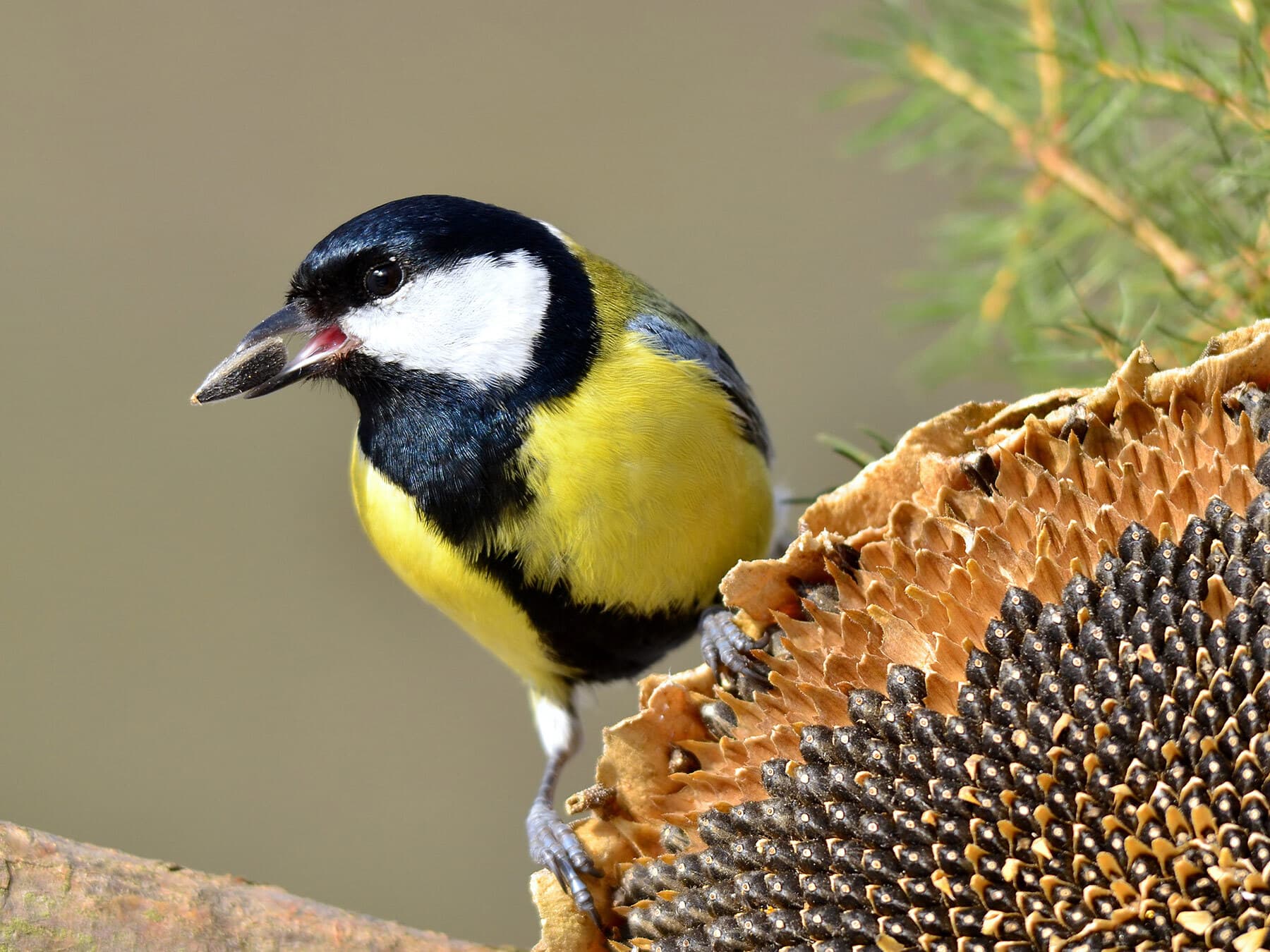
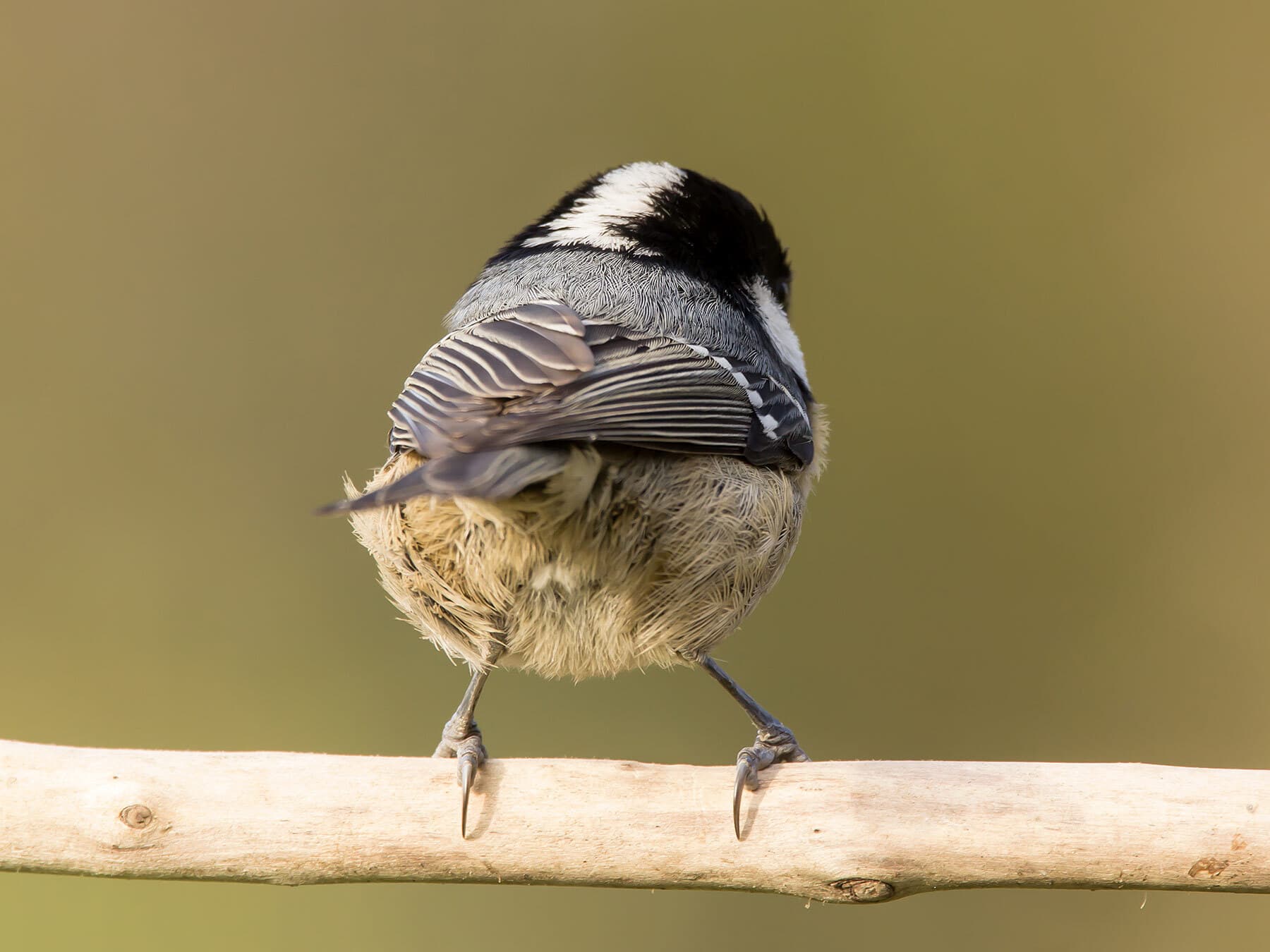
A Great Tit is bright yellow below, split by a black stripe. A Coal Tit has no yellow and no stripe: its breast and belly are whitish and its flanks buff. British Coal Tits have creamy cheeks and warm buff flanks.
Above, the Great Tit is green with blue-grey wings and a single white wing bar. The Coal Tit is grey to olive-grey, with two white wing bars.
Young Coal Tits and young Great Tits
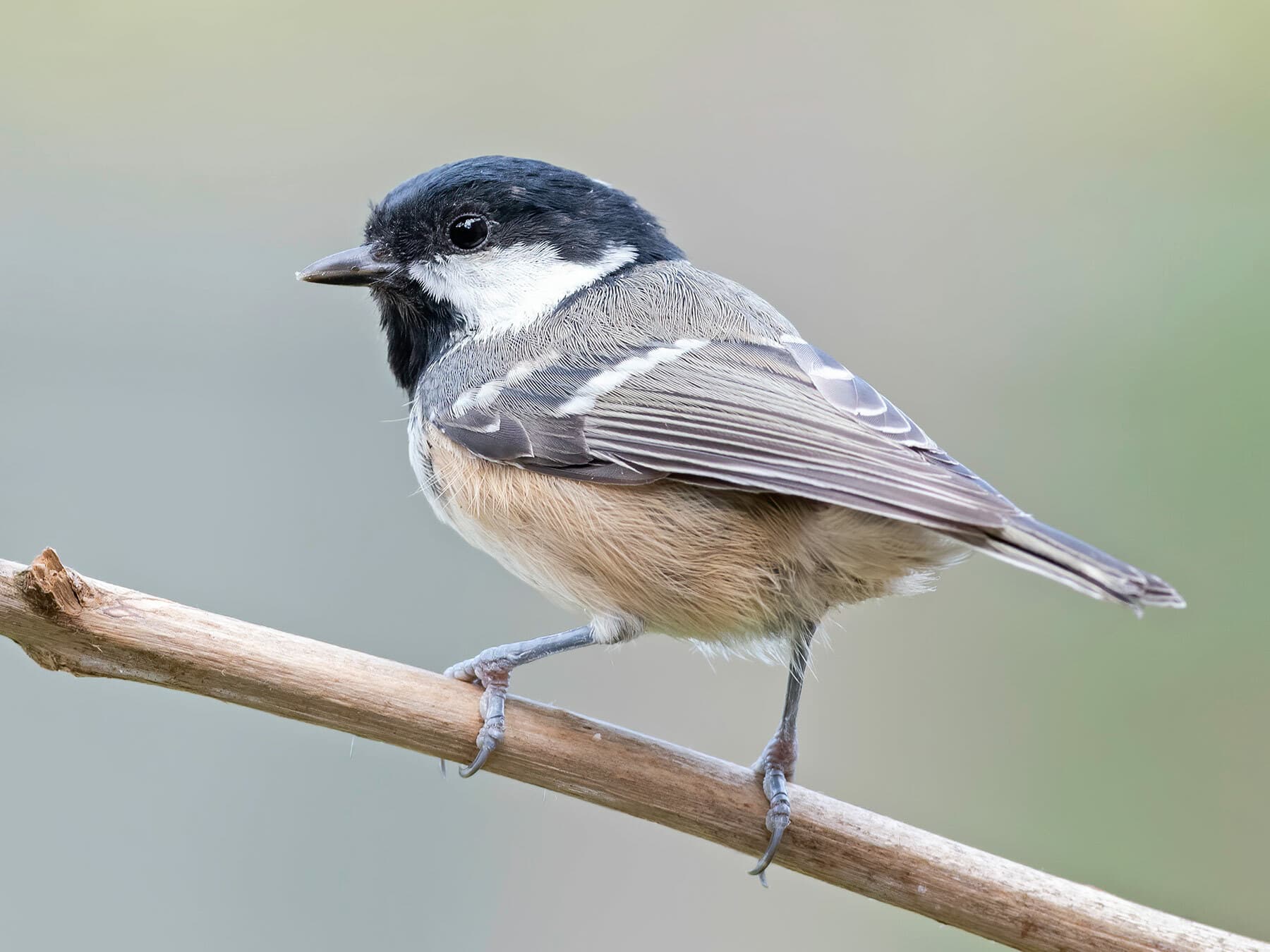
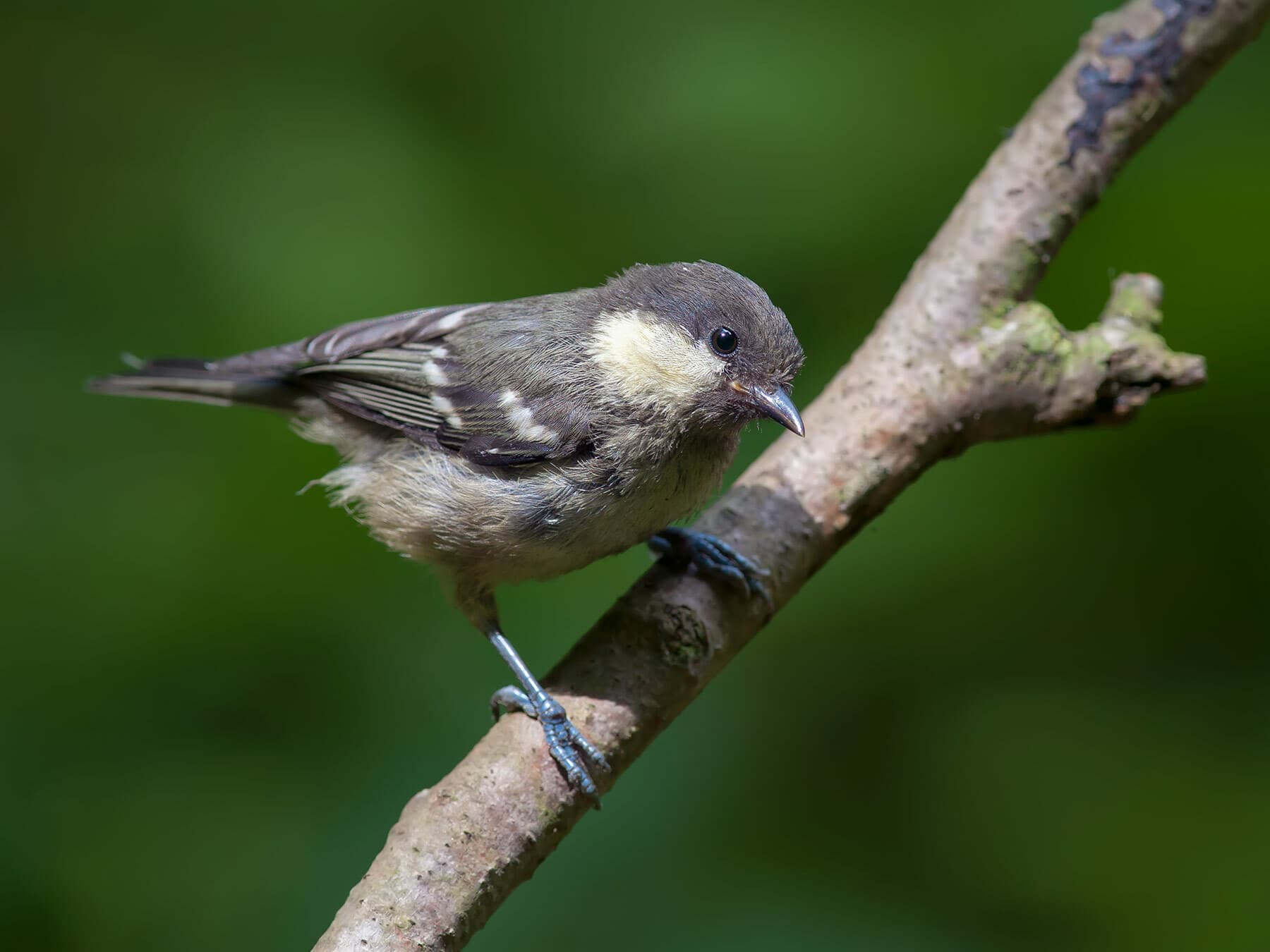
Young birds of both species have yellowish cheeks in summer, which can cause confusion. A young Coal Tit has a sooty cap, a smaller, yellowish nape patch and yellowish underparts, but it still shows the two wing bars and has no stripe down the breast. Irish Coal Tits have pale yellow cheeks and underparts even as adults.4
A young Great Tit has a brownish cap, a dark grey bib and stripe, and a single wing bar.
Song and calls
This is where they are most alike. The Coal Tit's song has the same two-syllable rhythm as the Great Tit's tea-cher, but it is higher and more slurred, something like teehuu, teechuu.3 Coal Tit calls are mellow and plaintive, a pui or tsuee, and a thin sisisi like a Goldcrest's. More: Great Tit song and calls.
Where they live and how they feed
Coal Tits are birds of conifers. In the breeding season the BTO's surveys find them most often in coniferous woods, and they are densest in conifer plantations; they spread with forestry plantations and garden evergreens. Great Tits are found most often in broadleaved woods, and in gardens, parks and villages.
A Coal Tit feeds acrobatically high in conifers, hanging from cones. It also stores food, mostly seeds, from June to December, and in gardens it takes food from feeders to store for later.4, 1 Great Tits do not store food; they may even raid Coal Tits' stores. More: what Great Tits eat.
At feeders the Great Tit wins: both Great and Blue Tits are dominant over Coal Tits.3
Nesting
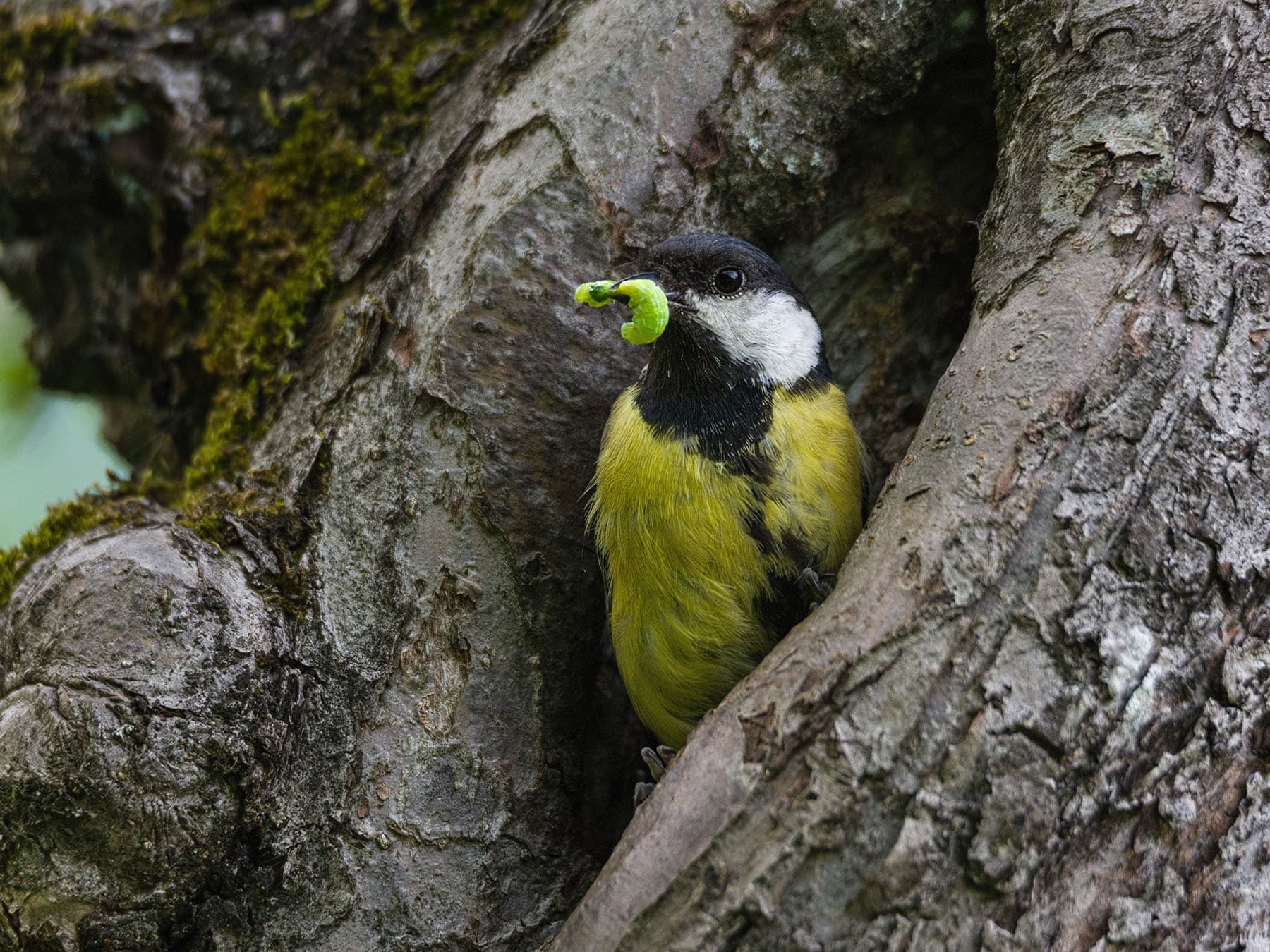
Both nest in holes, but a Coal Tit chooses a hole with a narrow entrance, sometimes at ground level: in a trunk or stump, a wall, among roots, or even in the ground under stones or in a mouse hole. It uses nest boxes only occasionally, while Great Tits prefer them.
In Britain a Coal Tit typically lays 9 or 10 eggs, against 7 to 9 for a Great Tit, incubates for 14 to 16 days and its young fly at 16 to 19 days.3 Young Coal Tits then stay together in thick cover for a few days rather than following their parents, as most young tits do.
Which is more common?
The Great Tit, by far. The BTO estimated 2.4 million Great Tit territories in the UK in 2016, against 660,000 for the Coal Tit. Coal Tit numbers grew in the middle of the last century and have changed little since the mid-1970s; Great Tits have grown by 67% since 1967.3
How long do they live?
A Coal Tit that survives to breed typically lives about 2 years, a Great Tit about 3. The oldest on the BTO's ringing records for Britain and Ireland are a Great Tit of 10 years, 10 months and 29 days and a Coal Tit of 9 years, 2 months and 25 days.5
Sources
- RSPB. Coal tit. RSPB Birds A-Z. Accessed 7 October 2026. Source
- BTO. Great Tit (Parus major). BTO BirdFacts. Accessed 6 October 2026. Source
- BTO. Coal Tit (Periparus ater). BTO BirdFacts. Accessed 7 October 2026. Source
- Gosler, A., Clement, P. (2023). Coal Tit (Periparus ater), version 1.1. Birds of the World (B. K. Keeney and S. M. Billerman, editors). Cornell Lab of Ornithology. doi:10.2173/bow.coatit2.01.1
- BTO (2024). Longevity records for Britain & Ireland in 2024. BTO Online Ringing Report. Accessed 6 October 2026. Source
- Kirwan, G. M., Sly, N. D., Gosler, A., Clement, P., Christie, D. A., Moura, N., Pyle, P. (2024). Great Tit (Parus major), version 2.0. Birds of the World (G. M. Kirwan and N. D. Sly, editors). Cornell Lab of Ornithology. doi:10.2173/bow.gretit1.02