Facts · Updated 11 Oct 2026
What Do Great Tits Eat? Diet and Garden Feeding
By the Birdfact teamChecked by Nathan Cope
Caterpillars, insects and spiders in spring and summer; beech mast, hazelnuts and other seeds in winter. Their chicks are raised mostly on caterpillars, and in gardens Great Tits take sunflower hearts, peanuts and fat from hanging feeders.
On this page8 sections
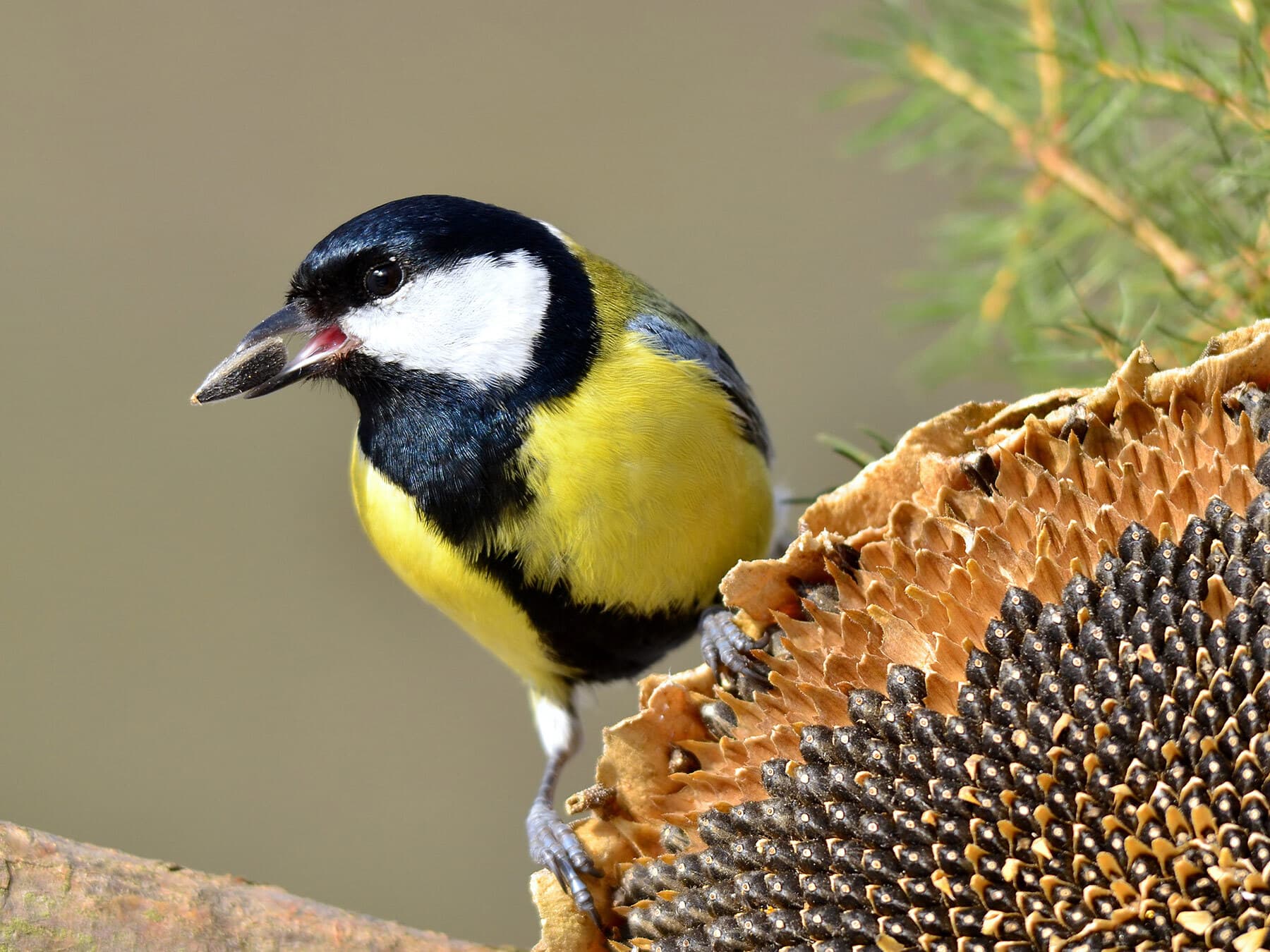
This page covers the Great Tit's food through the year, what the chicks are fed, how Great Tits find and open their food, a few surprising items, and how to feed them safely in the garden. For the bird in general, see Great Tit identification and facts.
What Great Tits eat through the year
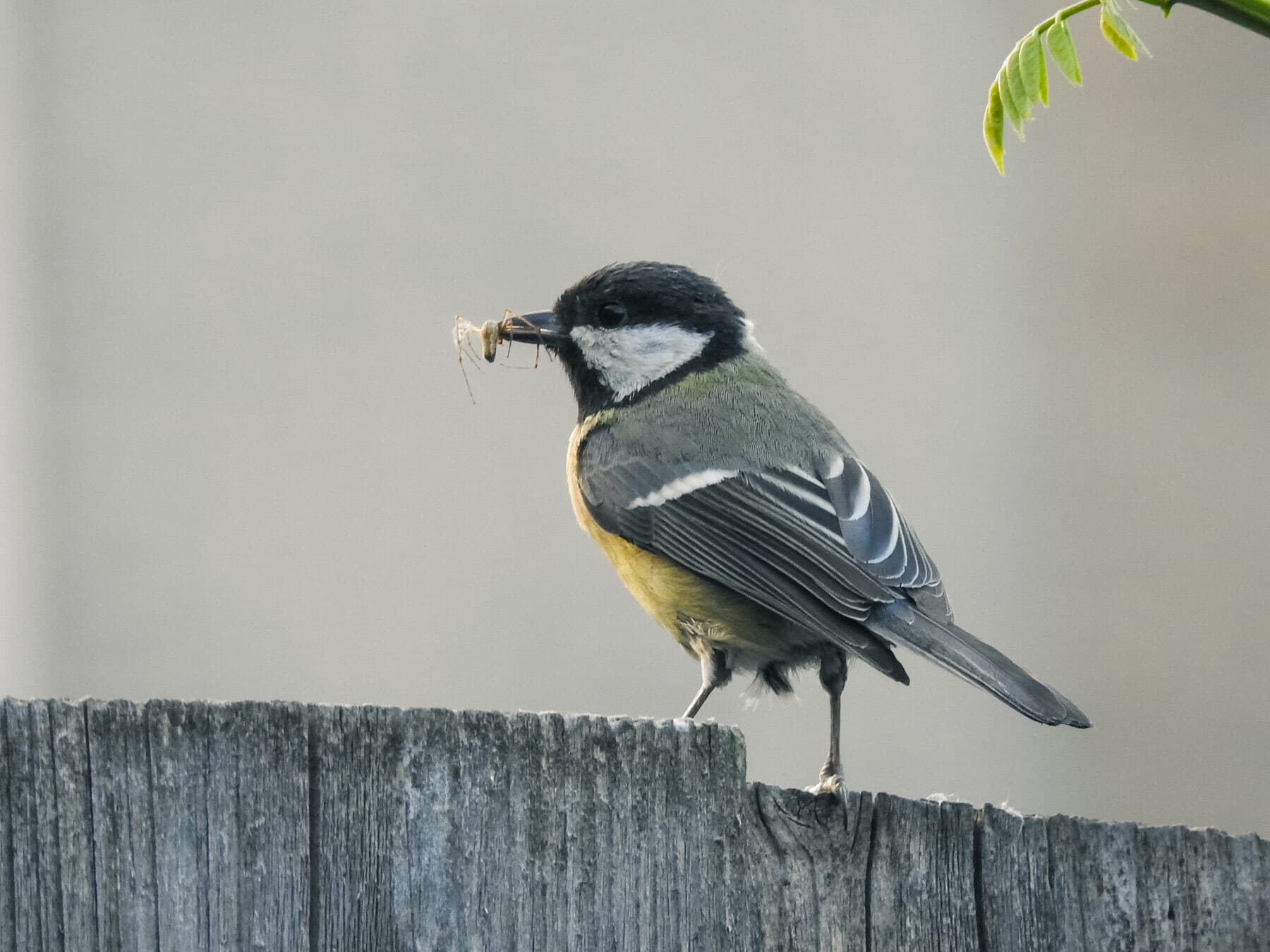
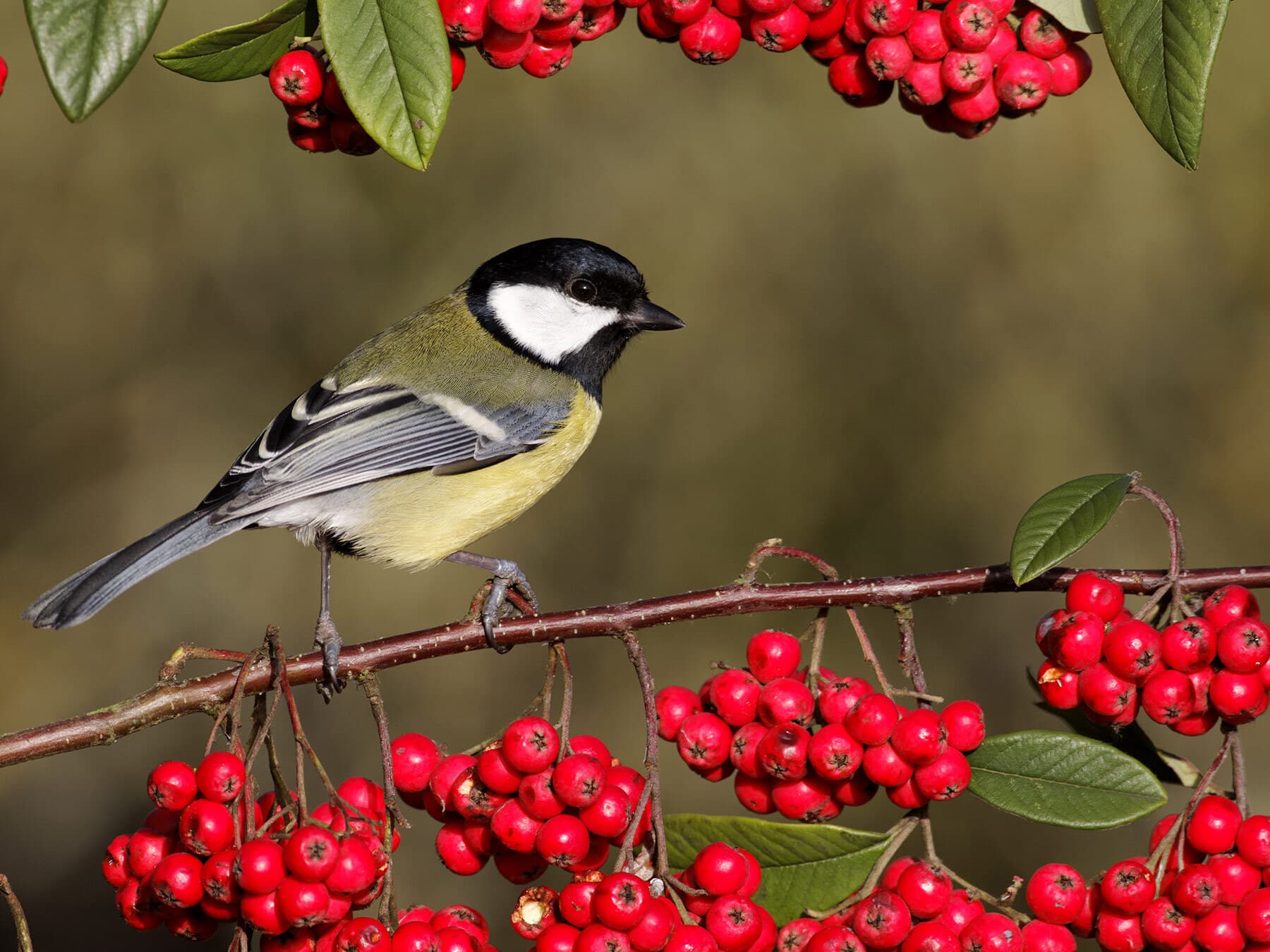
In spring and summer Great Tits eat mostly small invertebrates, usually less than 1 cm long: caterpillars and moths, flies, beetles, aphids and other bugs, ants, earwigs, spiders, even bees and wasps, whose stings they usually remove. They also take snails.1
In autumn and winter they turn to seeds and nuts, especially beech mast and hazelnuts, along with berries and spilt grain in fields. Now and then they take nectar from flowers such as currants, and sap.
What Great Tit chicks are fed
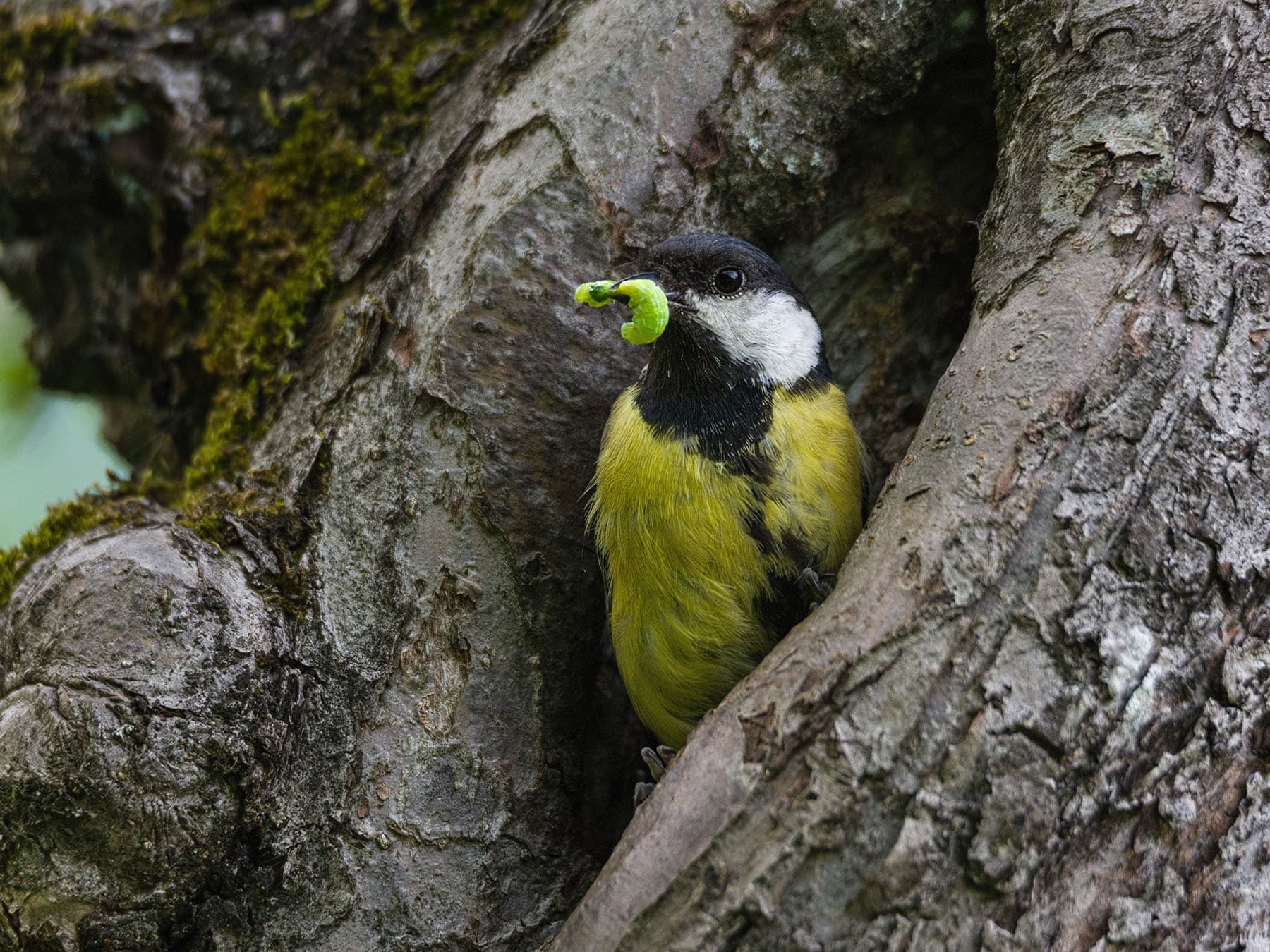
Mostly caterpillars, especially in broadleaved woods; in pine woods the parents bring more spiders, beetles and sawfly larvae.
Great Tits time their nesting to the spring flush of caterpillars. In the average year in Britain, the first eggs are laid about a month before caterpillars peak, so the chicks are at their hungriest soon after. When the caterpillar peak comes early, the birds shift too, but only about half as far: 5.3 days for every 10.2 In the Netherlands, this growing mismatch is thought to be one reason second broods have become rarer.
How Great Tits find and open food
They search all levels of a tree but mostly the lower and inner branches, picking food off leaves, twigs and bark. Outside the breeding season, males especially feed on the ground, on fallen seeds and berries.
A hard seed or nut is carried to a branch, held under one foot and hammered with the bill until the kernel can be pulled out; larger seeds may be wedged into bark first. Great Tits rarely catch insects in flight, but they often hover for a moment at garden feeders. Experiments show they can find caterpillars by the scent a plant gives off when it is being eaten.
Unlike Coal Tits and Marsh Tits, Great Tits do not store food, though they may raid the stores those tits make.
Clever feeders
Great Tits are quick to learn where food is, especially from a partner or flock-mates. In an experiment by Oxford researchers, two birds in each of several wild groups were taught one of two new ways of getting food. The technique spread to an average of 75% of the birds in each group, 414 birds solved it 57,909 times, and each group kept to its own method for two generations.3
A Great Tit has been seen using a conifer needle as a tool to pull larvae out of a hole in a tree, and, like Blue Tits, Great Tits learned to open milk-bottle tops on doorsteps to drink the cream.
Do Great Tits eat bats?
Sometimes, when food is scarce. At a cave in Hungary, Great Tits search out hibernating pipistrelle bats in winter, kill them and eat them. Researchers saw 18 kills over two winters; when they gave the tits other food, bat hunting dropped sharply. In a playback test, the tits were drawn to the calls of bats waking up, and records of the habit at that cave go back more than ten years.4
Winter food and survival
Winter food matters a great deal. Great Tits' survival rises and falls with the beech-mast crop, and in poor beech years, extra food put out by researchers helped both young and adult birds survive.1
In the UK, numbers have grown by 67% since 1967, probably because more adults survive each year; milder winters and garden feeding may have played a part.2 In severe winter weather, one estimate has a Great Tit eating 44% of its own weight in sunflower seeds.
Feeding Great Tits in your garden
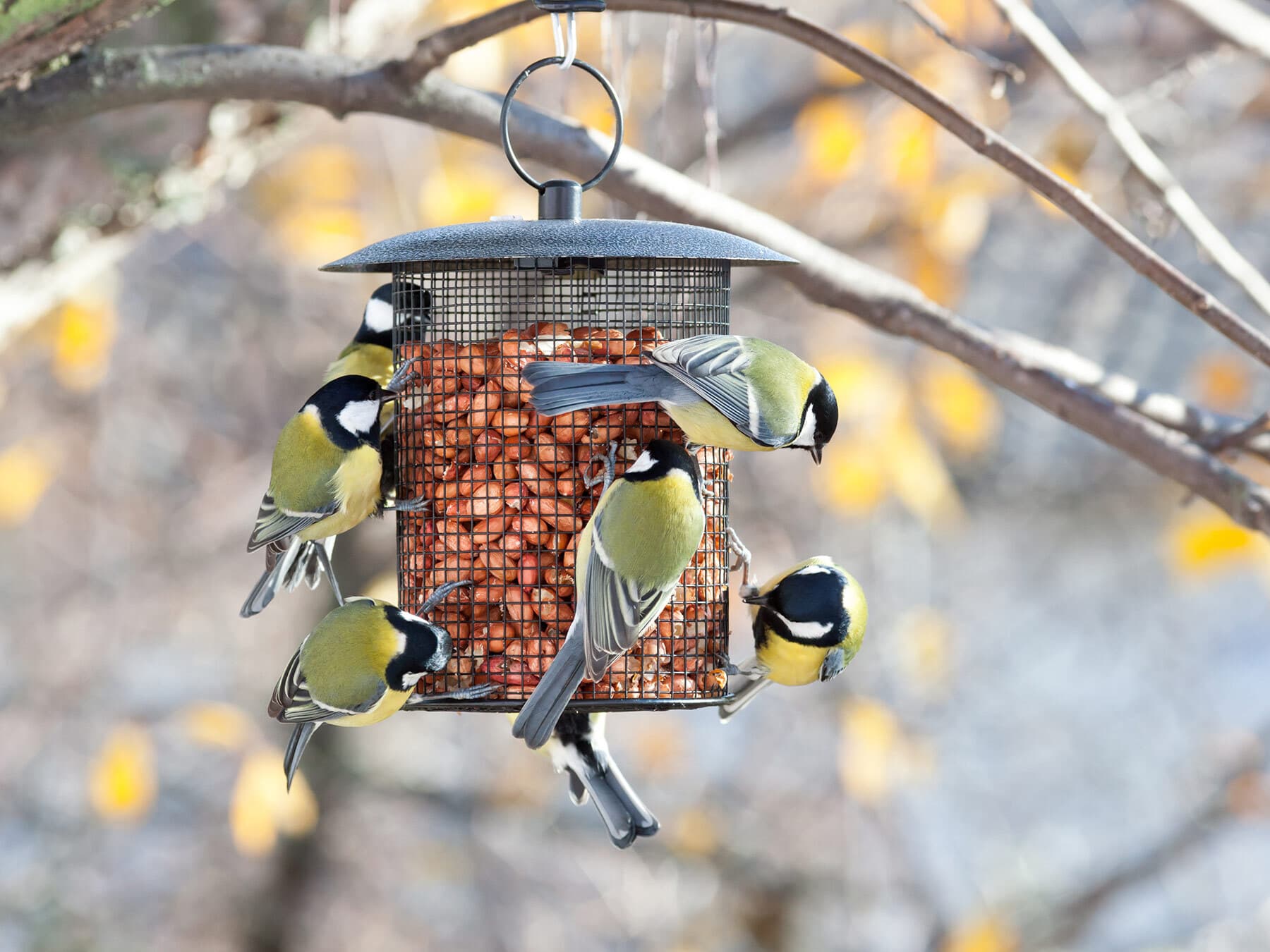
The RSPB suggests sunflower hearts in a hanging seed feeder, peanuts in a hanging mesh feeder, and fat balls in a hanging mesh feeder: all good for tits. Never use mesh bags, which can trap birds' feet. Hang feeders out of reach of cats and a couple of metres from thick cover, so small birds can escape a Sparrowhawk.5
Since July 2026 the RSPB advises feeding with the seasons. From 1 November to 30 April you can offer the full range of foods. From 1 May to 31 October, pause seed and peanuts and offer only small amounts of fat balls, suet or mealworms. Use hanging feeders, not bird tables, trays or window feeders, where disease spreads most easily; clean feeders weekly and change water every day.6
Good hygiene matters for Great Tits too: a form of avian pox, first recorded in UK Great Tits in 2006, is increasing, and feeders may help it spread.
Sources
- Kirwan, G. M., Sly, N. D., Gosler, A., Clement, P., Christie, D. A., Moura, N., Pyle, P. (2024). Great Tit (Parus major), version 2.0. Birds of the World (G. M. Kirwan and N. D. Sly, editors). Cornell Lab of Ornithology. doi:10.2173/bow.gretit1.02
- BTO. Great Tit (Parus major). BTO BirdFacts. Accessed 6 October 2026. Source
- Aplin, L. M., Farine, D. R., Morand-Ferron, J., Cockburn, A., Thornton, A., Sheldon, B. C. (2015). Experimentally induced innovations lead to persistent culture via conformity in wild birds. Nature 518(7540): 538-541. doi:10.1038/nature13998
- Estók, P., Zsebők, S., Siemers, B. M. (2010). Great tits search for, capture, kill and eat hibernating bats. Biology Letters 6(1): 59-62. doi:10.1098/rsbl.2009.0611
- RSPB. How and what to feed your garden birds. RSPB. Accessed 6 October 2026. Source
- RSPB (2026). How to help garden birds. RSPB news. Accessed 6 October 2026. Source