Facts · Updated 8 Oct 2026
Great Tit Nesting: Nests, Eggs, Chicks and Boxes
By the Birdfact teamChecked by Nathan Cope
Great Tits nest in tree holes and nest boxes. In Britain they lay 7 to 9 speckled eggs from late April, the female incubates for about two weeks, and the chicks fly at 18 to 21 days old.
On this page11 sections
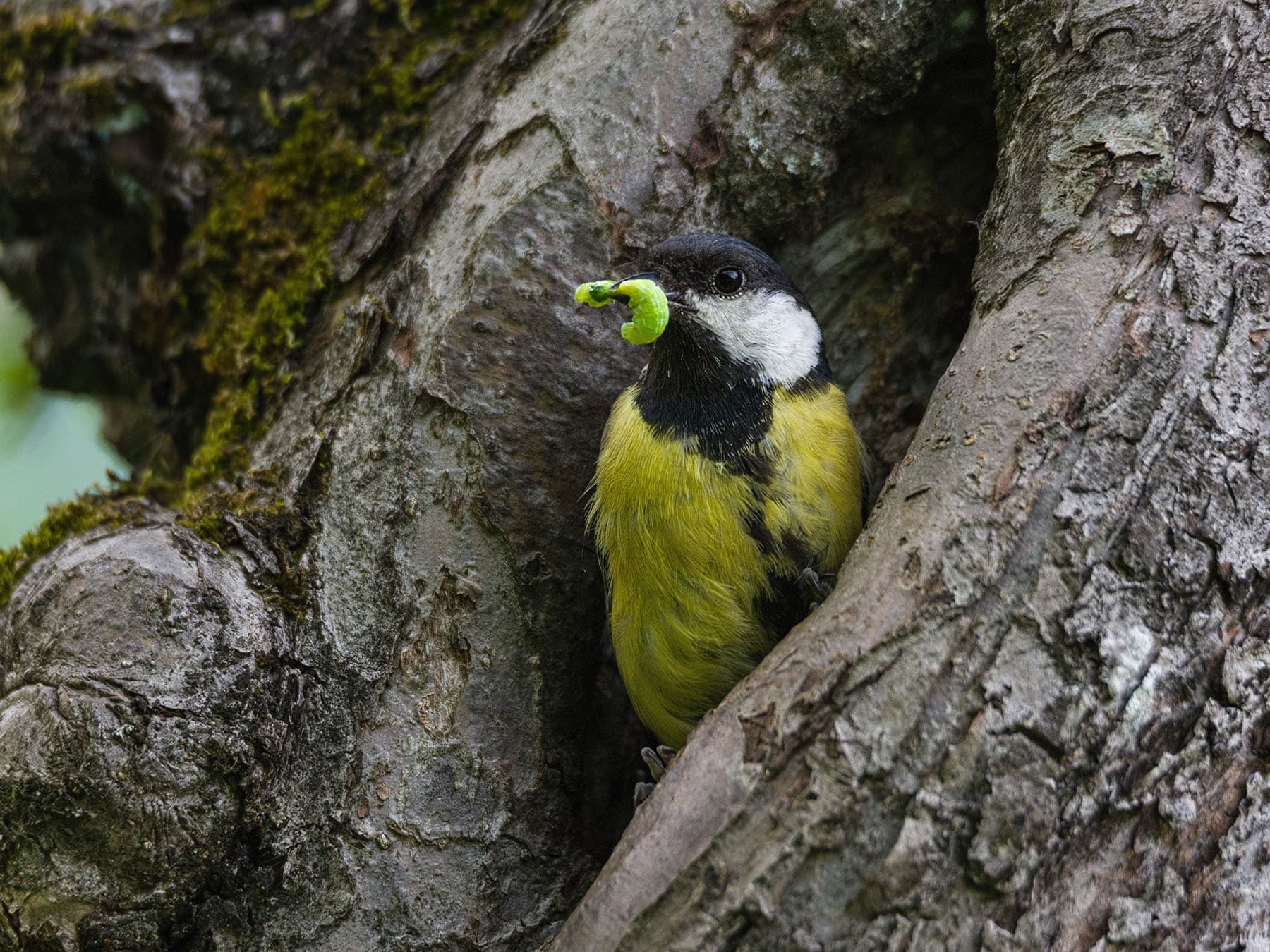
This page follows a Great Tit nest from the first hole-hunting in late winter to the young leaving home: where they nest, the nest itself, eggs, incubation, chicks, fledging, and how to put up a box they will use. For the bird in general, see Great Tit identification and facts.
When do Great Tits nest?
Pairs look at possible nest holes from the autumn onwards, but the search gets serious in March and April. In Britain the first eggs are laid on 26 April on average, and the BTO's range runs from 10 April to 17 May.1
Nesting is getting earlier as springs warm: UK Great Tits now lay about nine days earlier than in 1968. Pairs that try for a second brood lay again from early June to late July.
Where do Great Tits nest?
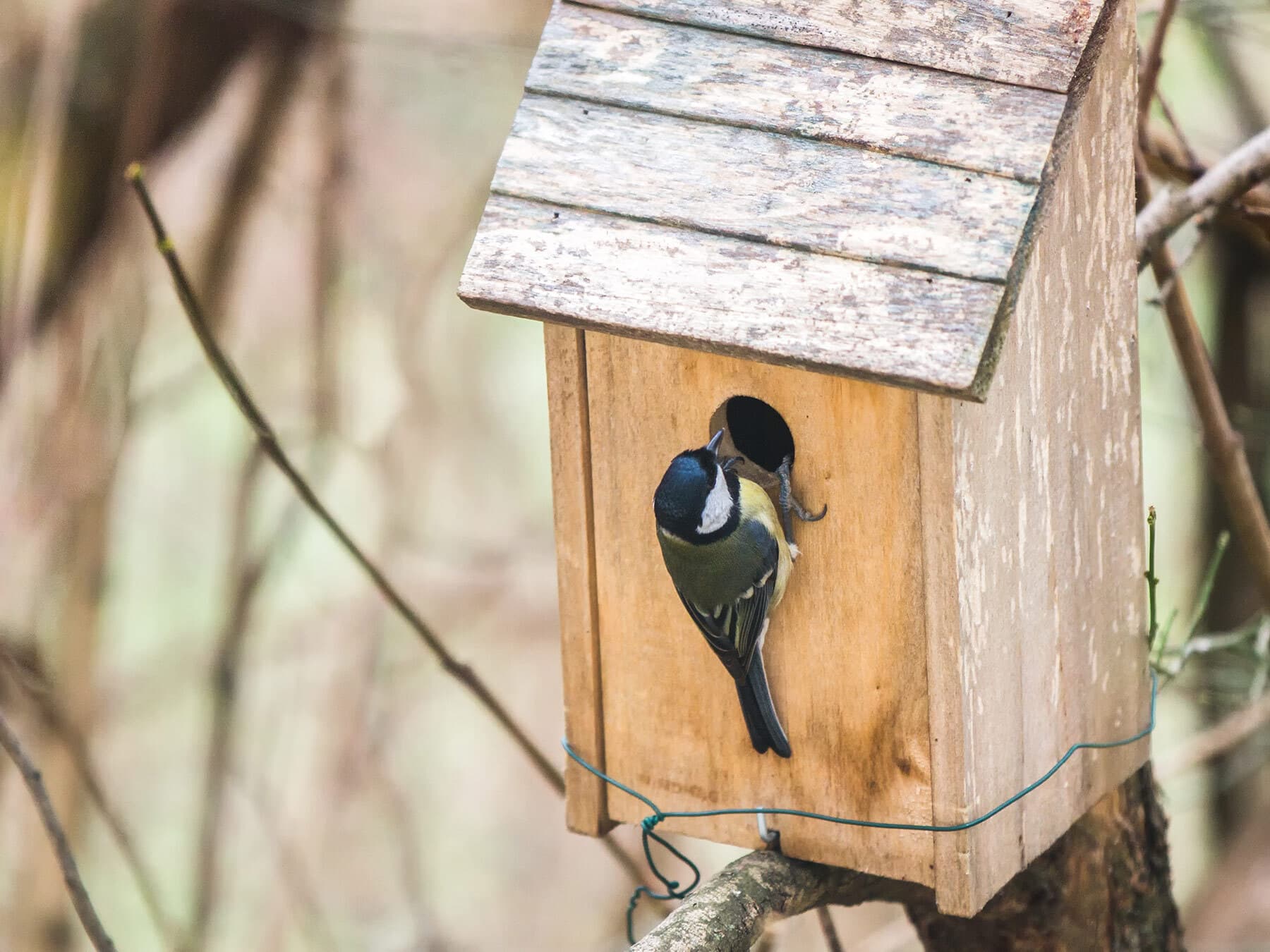
In holes. Natural tree holes and nest boxes are the usual sites, and where boxes are put up Great Tits prefer them; whole populations can come to depend on them. Holes in walls and other structures, and old squirrel dreys, are used only rarely. A Dutch study of natural nests found a clear preference for holes less than 4 m up.2
The female makes the final choice from holes the male shows her. A male often hammers at a box's entrance hole, probably as a display, and the female pecks at it later, perhaps to test how sound the wood is.3
The nest
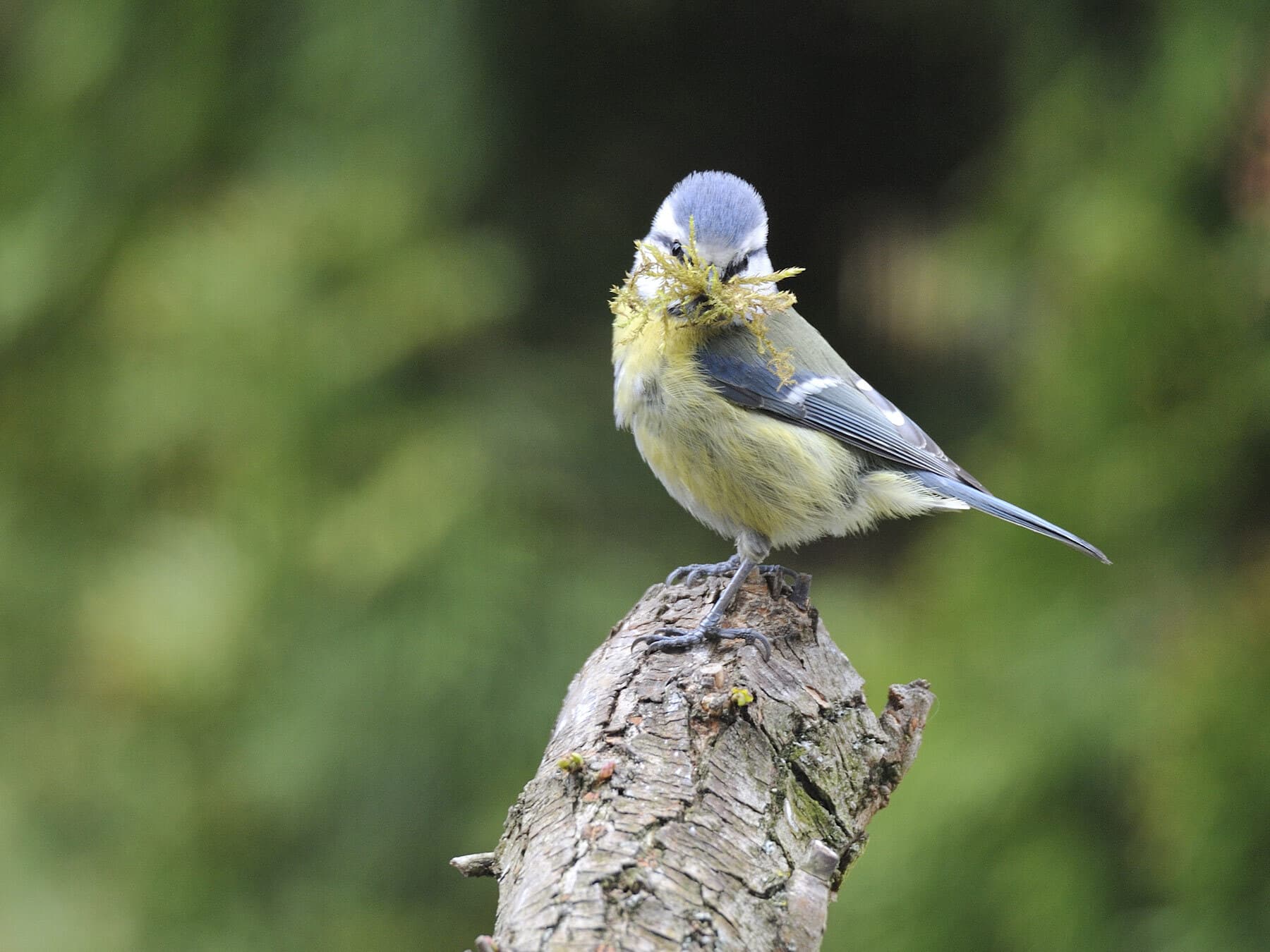
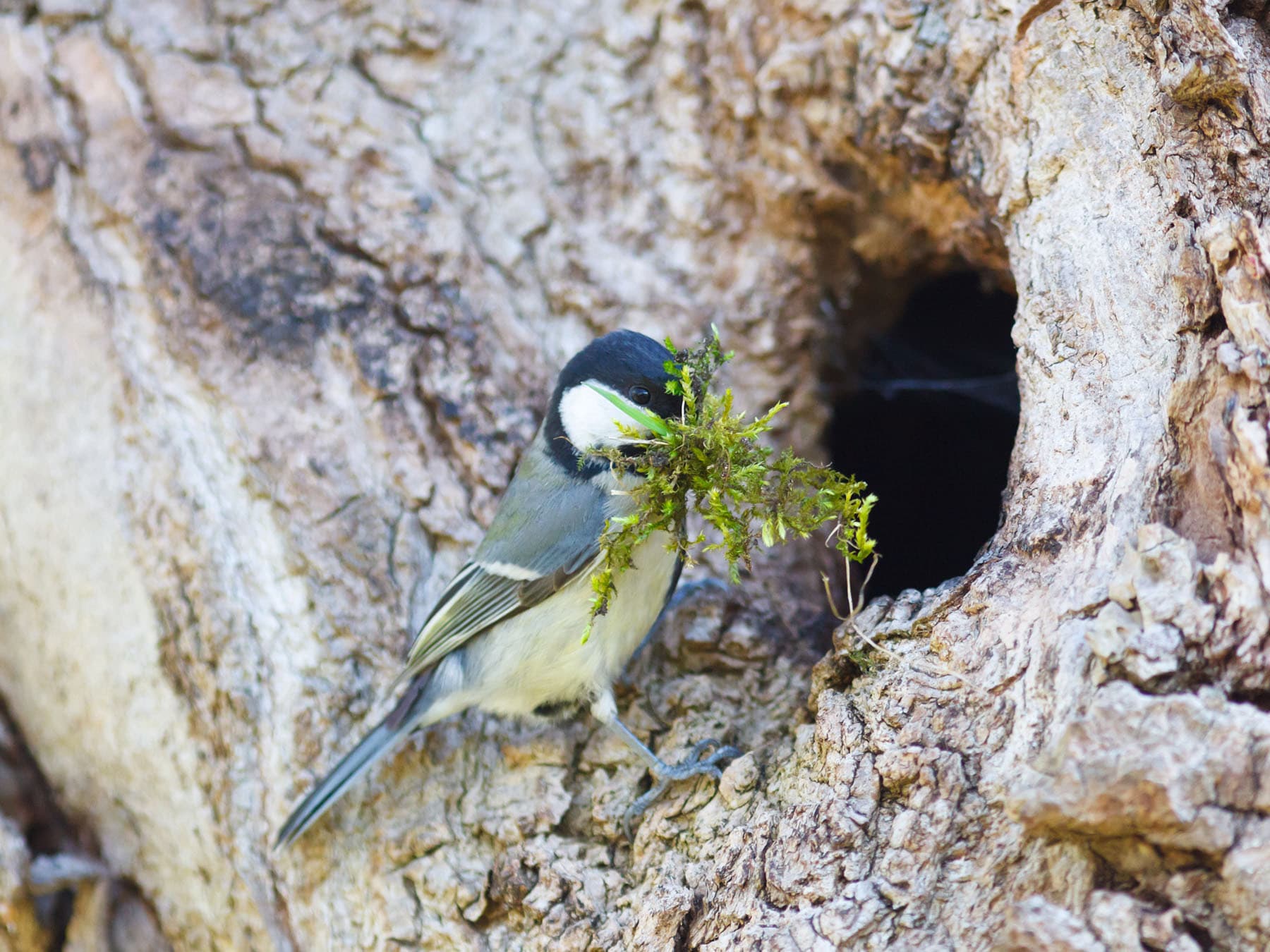
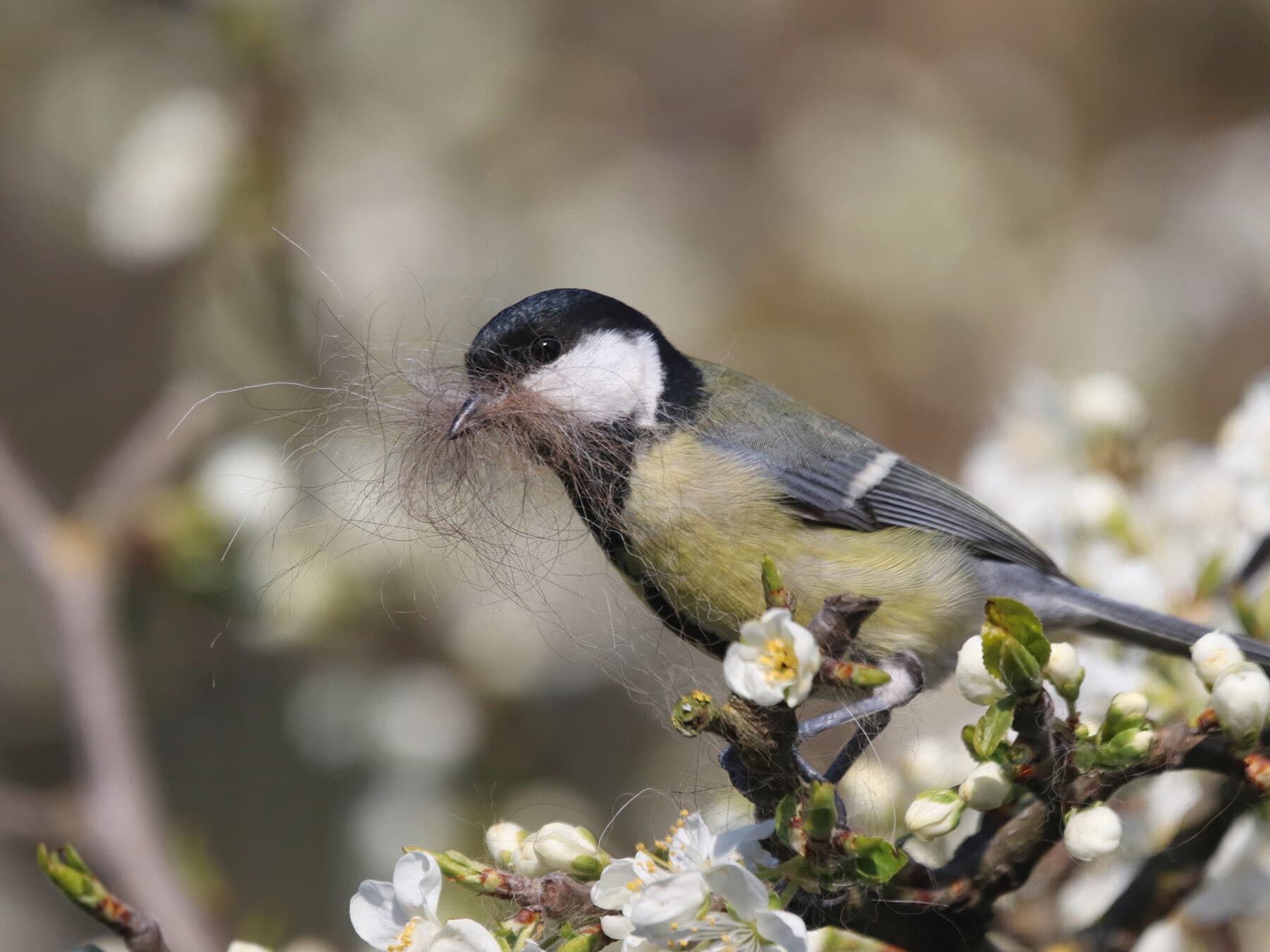
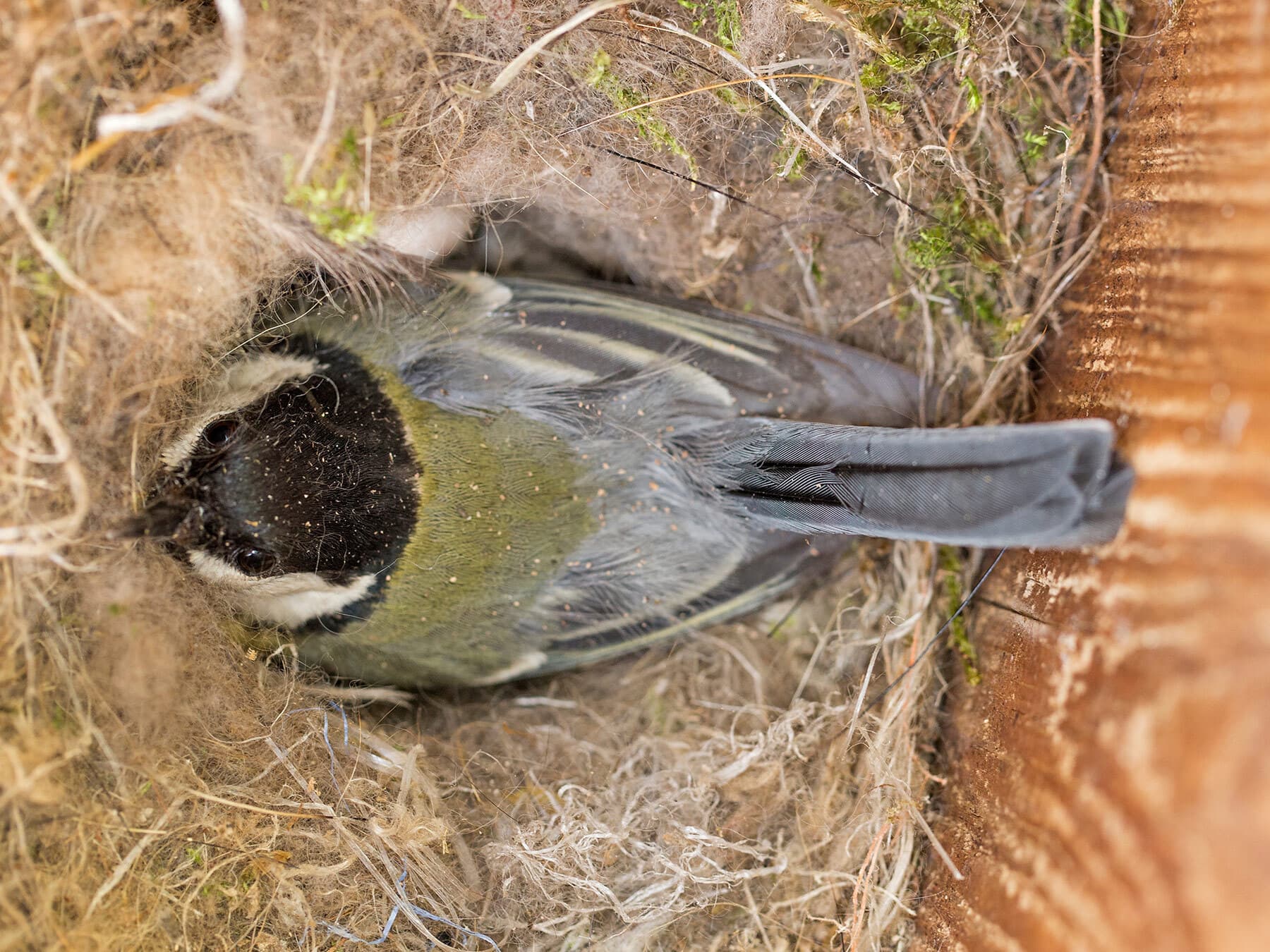
Only the female builds. She carries in moss for the base, with some dry grass, and shapes a cup in the middle. The lining is hair, fur, wool, threads, grass, leaves or moss, and she keeps adding to it from just before the first egg until she starts to incubate. The male stays close and chases off intruders.
Eggs
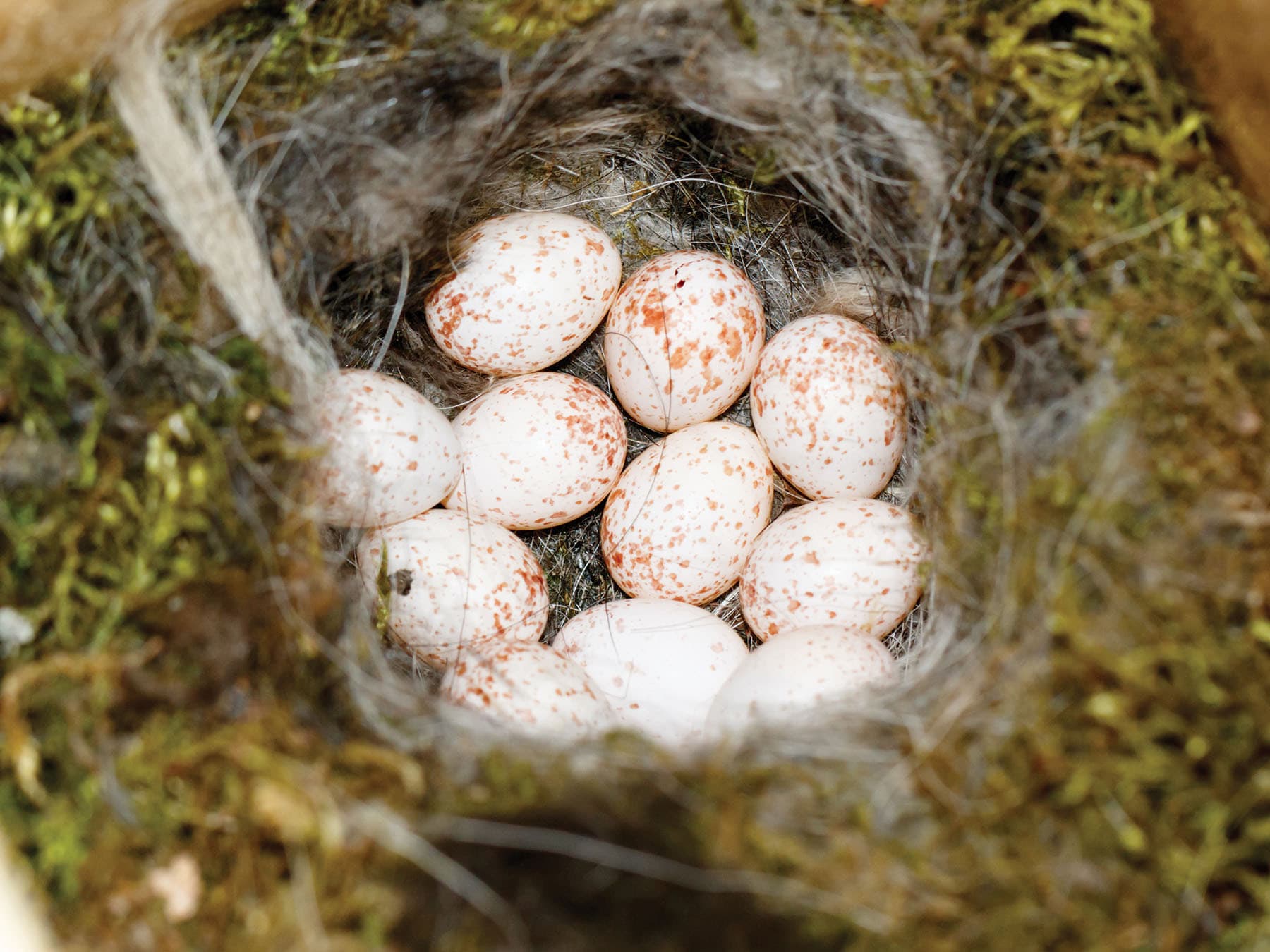
The female lays one egg a day, usually before dawn, starting before the nest is quite finished. In Britain a clutch is typically 7 to 9 eggs, and the BTO's nest records range from 2 to 16.1 Across the whole range clutches average about 9 to 11 in many populations, with up to 18 recorded.
The eggs are white with reddish-brown speckles or spots, mostly at the broad end, and smooth rather than glossy. Each is about 18 by 14 mm and weighs 1.7 g.
Incubation
Only the female incubates. In Britain incubation typically takes 13 to 14 days (12 to 16 in the BTO's records). For the first few days the male brings her food, on or off the nest. The eggs hatch over two or three days.
Chicks
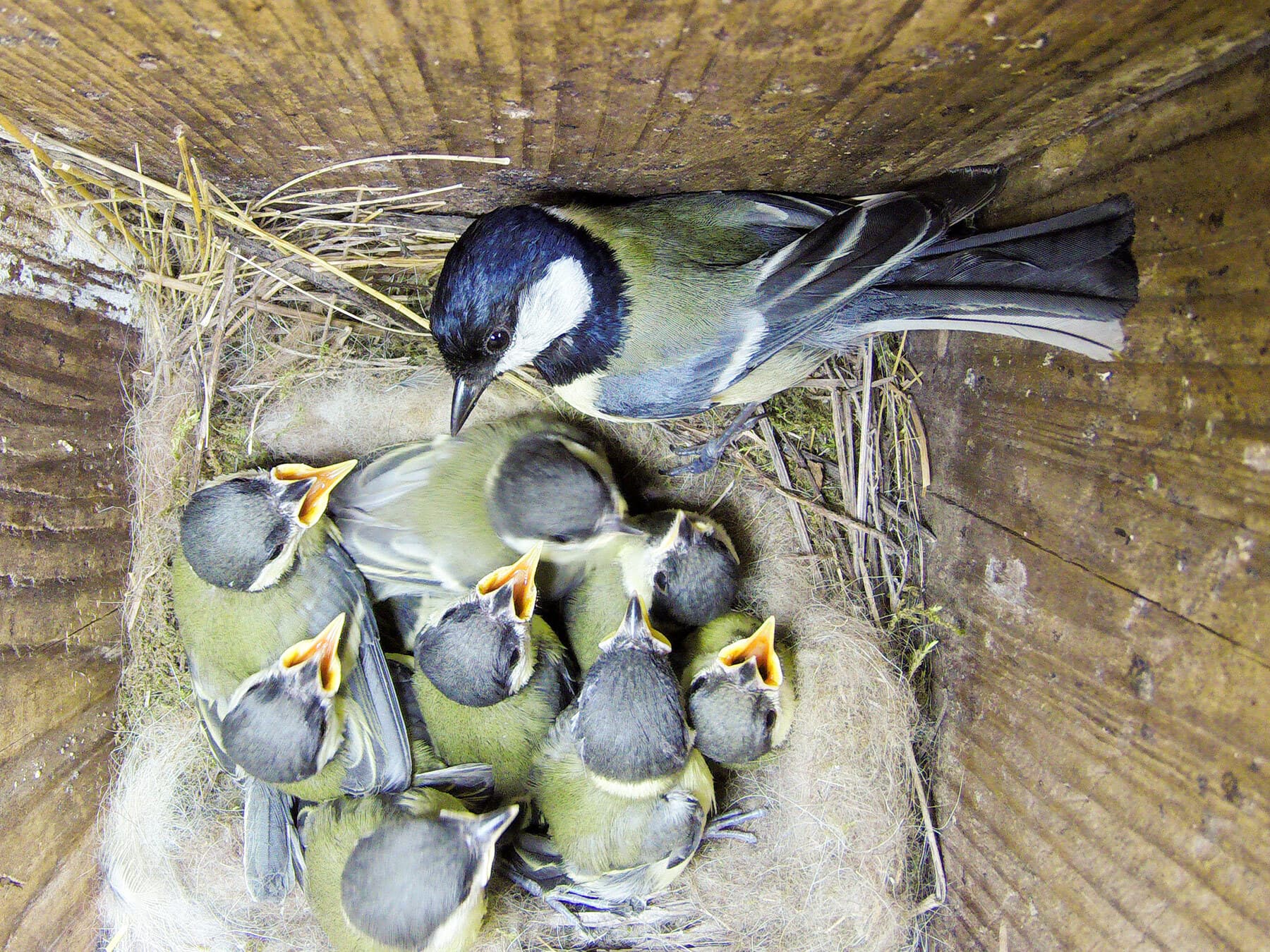
The chicks hatch naked and pink, with closed eyes, a pale yellowish gape and tufts of dark grey down. The female broods them for at least the first week and sleeps in the nest hole until they are about two weeks old.
Both parents bring food, mostly caterpillars. At first the male brings most of it; the female's share grows as the chicks get older. From about 6 to 8 days old, the chicks fall silent and crouch when a parent gives the alarm.
Fledging
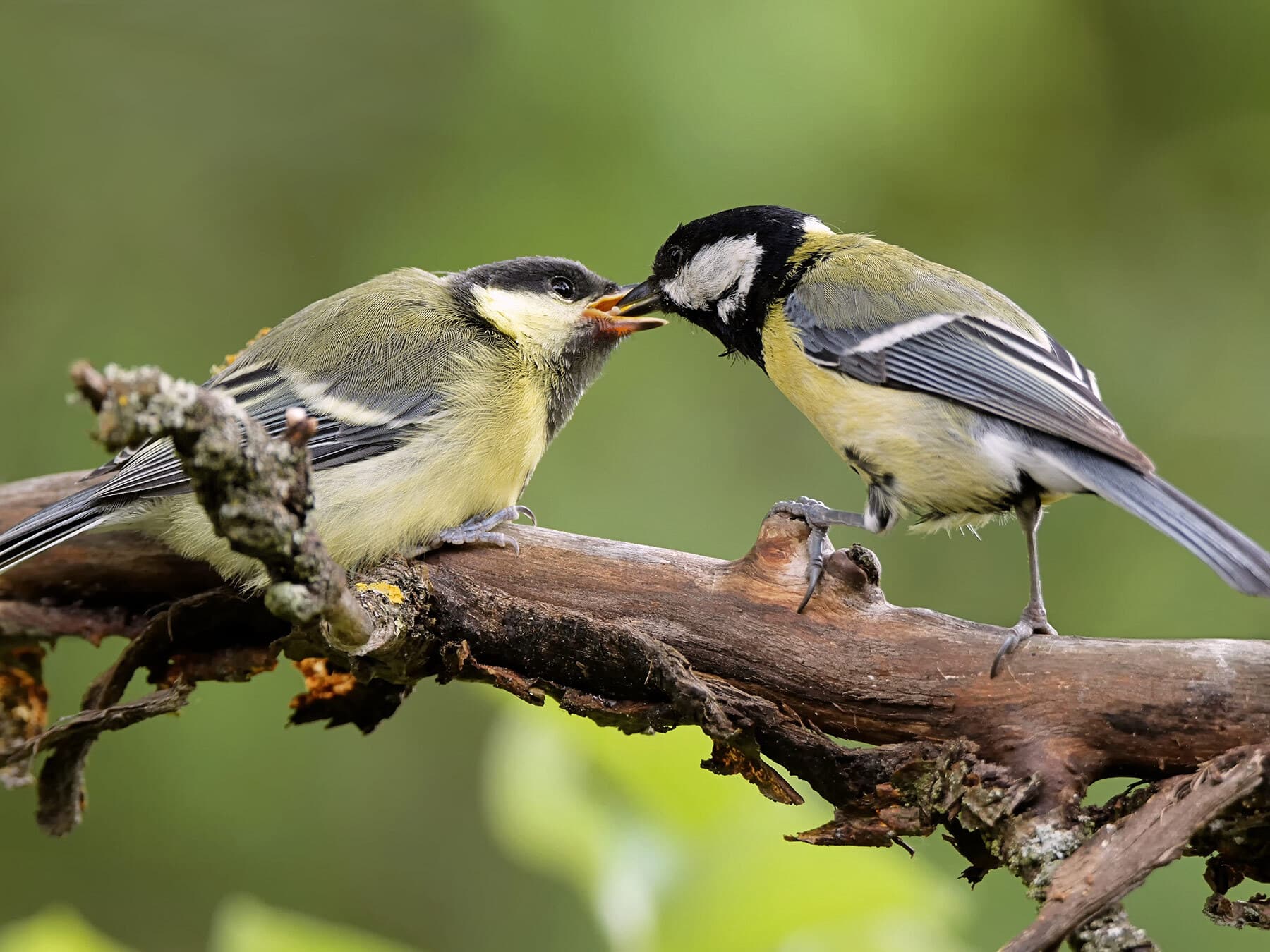
The chicks leave at 18 to 21 days old in Britain. The whole brood usually leaves within about 45 minutes, though sometimes over more than a day. The parents look after the young for another 2 to 4 weeks, feeding them almost entirely for the first week, while the fledglings beg with a repeated zi zi zi and shivering wings. From their second day out, they start pecking at leaves for themselves.2
These first days are dangerous. In a Swiss study, 32% of young Great Tits died in the first four days after leaving the nest, mostly to predators.
Broods
In Britain, usually one, sometimes two. Second broods are more common in some places: in Hungary, 36% of females in forest and 44% in towns raised two. In the Netherlands, 21.7% of females had second broods between 1955 and 2004, a share that has been falling.2
Nest predators
In southern England the Weasel is the main nest predator: in a study from 1947 to 1975 it took 23.3% of 4,131 nests, and between 6.6% and 52.9% in different years. Squirrels, Pine Martens, small rodents and Great Spotted Woodpeckers take eggs and chicks too.
A female disturbed on the nest puts on a hissing display: she raises her head, fluffs her white cheeks, spreads her wings and tail, hisses, snaps her bill and claps her wings.2
Nest boxes
Great Tits use small hole-fronted boxes. The BTO recommends a box with a 32 mm entrance hole, which suits all the small hole-nesting birds, with walls at least 15 mm thick and a floor of at least 130 square centimetres, since birds may lay fewer eggs in a cramped box. Leave off the perch: it gives squirrels and Weasels a foothold.4
Fix it 1 to 3 m up a tree trunk with a clear flight path, out of the strongest sun and the prevailing wind and rain. Pairs start looking in the second half of February, so a box up by late winter has a good chance, but it is never too early: some birds roost in boxes in winter. Old nests can be cleared out between 1 September and 31 January.5
Sources
- BTO. Great Tit (Parus major). BTO BirdFacts. Accessed 6 October 2026. Source
- Kirwan, G. M., Sly, N. D., Gosler, A., Clement, P., Christie, D. A., Moura, N., Pyle, P. (2024). Great Tit (Parus major), version 2.0. Birds of the World (G. M. Kirwan and N. D. Sly, editors). Cornell Lab of Ornithology. doi:10.2173/bow.gretit1.02
- RSPB. Our ultimate guide to nestboxes. Accessed 6 October 2026. Source
- BTO. Buying a nest box. Accessed 6 October 2026. Source
- BTO. Putting up a nest box. Accessed 6 October 2026. Source
- BTO. Nest boxes for birds. Accessed 6 October 2026. Source