Identification · Updated 7 Oct 2026
Siskin or Greenfinch? How to Tell Them Apart
By the Birdfact teamChecked by Nathan Cope
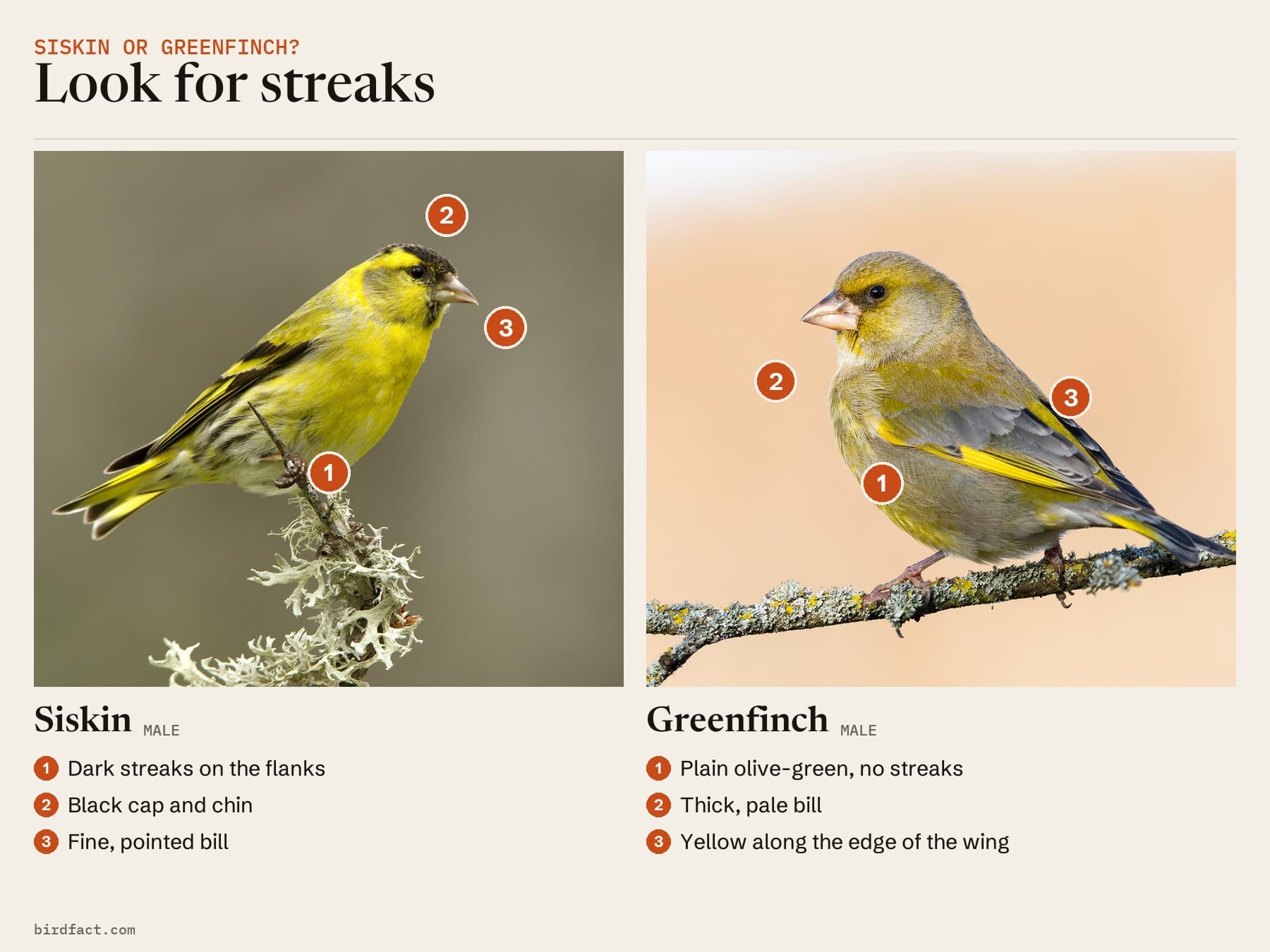
Look for streaks and the bill. A Siskin is small and streaky with a fine bill, and the male has a black cap; a Greenfinch is bigger and plain, with a heavy pale bill. Males, females and young birds compared, with their calls, feeding and how common each is.
On this page10 sections
Comparison table
The main differences at a glance.
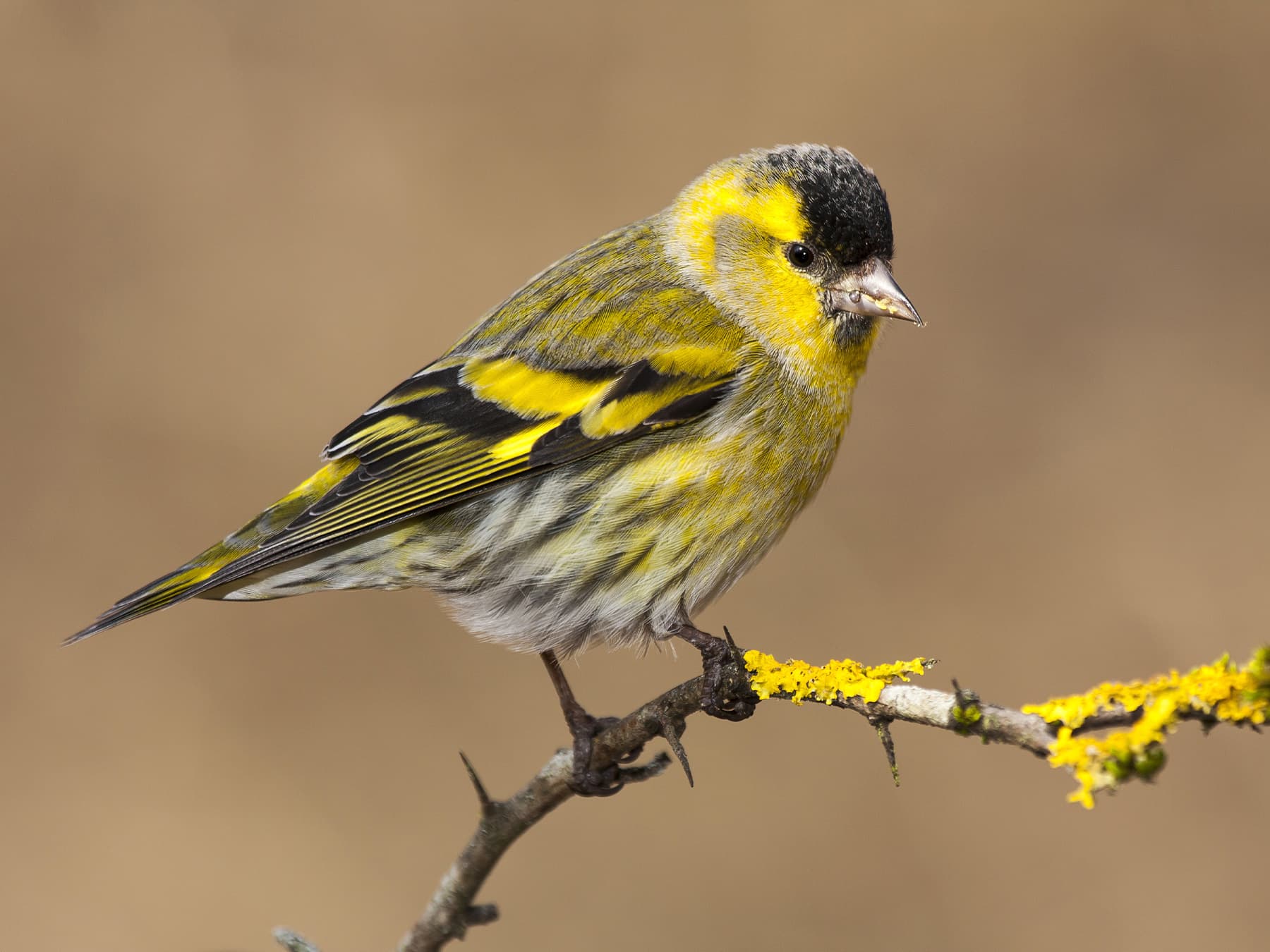
| Siskin | Greenfinch | |
|---|---|---|
| Length | 11-12 cm | About 15 cm |
| Weight | 12.9 g on average | 27.7 g on average |
| Bill | Fine and pointed | Heavy, cone-shaped, pinkish |
| Streaks | Streaked above and on the flanks (both sexes) | Plain adults; only young birds are streaked |
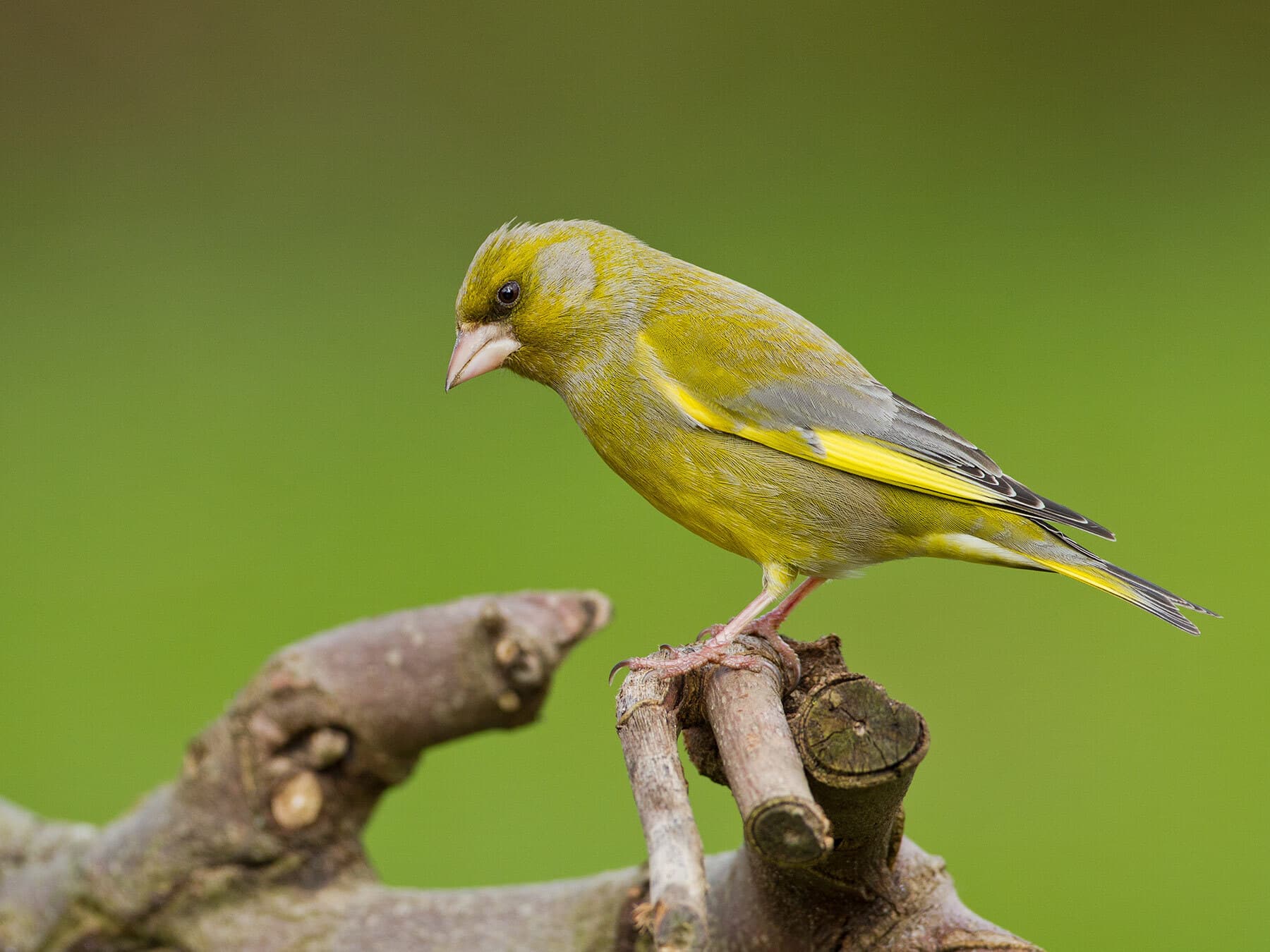
| Head (male) | Black cap and small black bib, yellow stripe over the eye | Olive-green, no cap |
| Wings | Two yellow wing bars, one across the coverts, one across the flight feathers | A yellow stripe along the edge of the wing |
| Rump | Bright yellow | Yellow-green (male) |
| Feeds | High in conifers, alders and birches; hanging feeders in late winter | Ground, bushes and trees; feeders |
| UK pairs (2016) | 445,000 | 785,000 |
| UK status | Green | Red |
Size and shape
The Siskin is clearly the smaller bird: 11 to 12 cm long against about 15 cm, and roughly half the weight. BTO's average weights are 12.9 g for a Siskin and 27.7 g for a Greenfinch.3, 4 A Siskin is slim, with a distinctly forked tail and a narrow bill; a Greenfinch is stocky and broad-headed, with a short forked tail and a strong conical bill.
Males
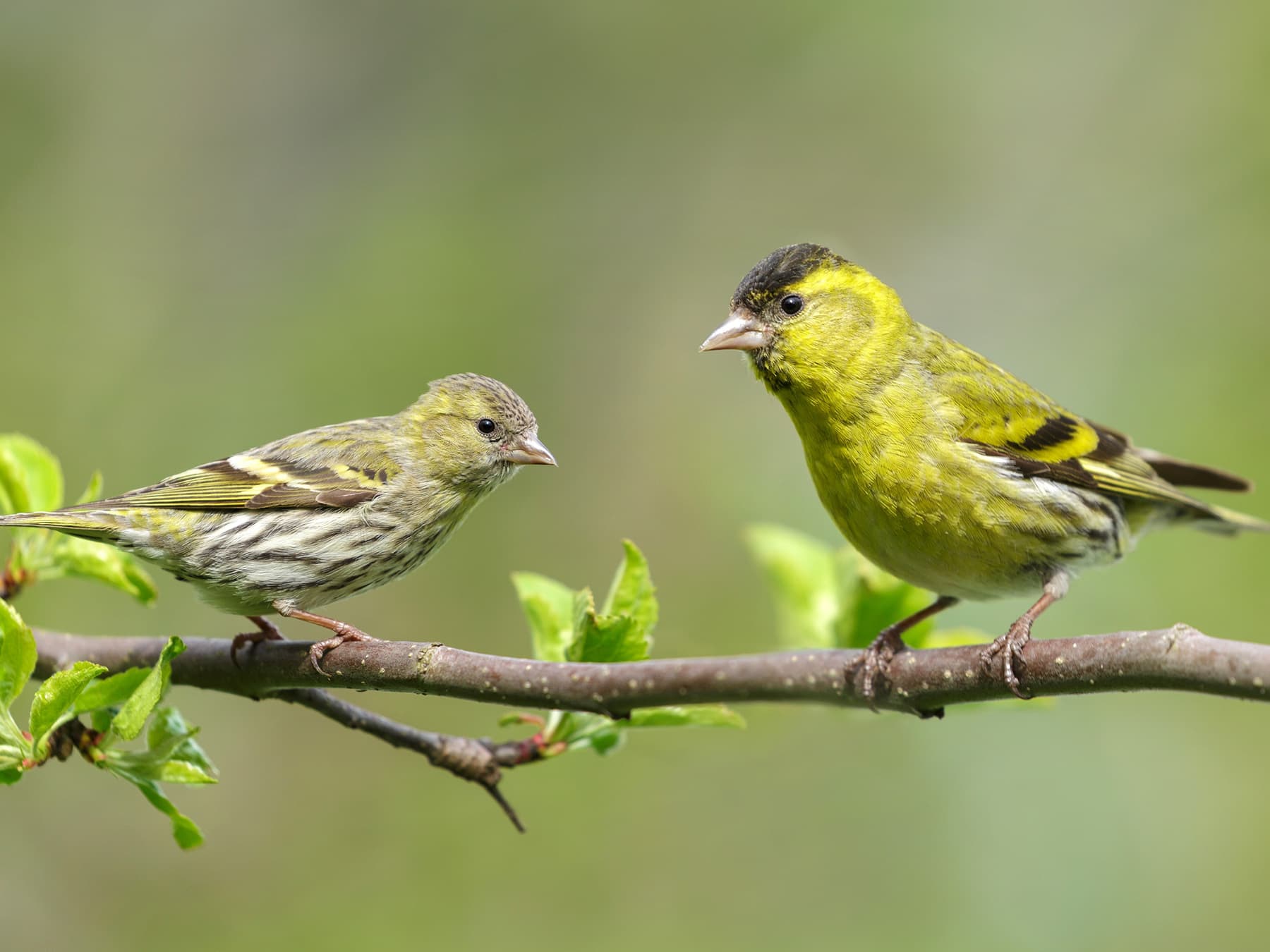
A male Siskin is bright yellow-green, with a black cap from the forehead to the crown, a short black bib, a yellow stripe over the eye, black streaks on the back and flanks, and a bright yellow rump. His black wings carry two yellow bars, one across the coverts and one across the flight feathers.
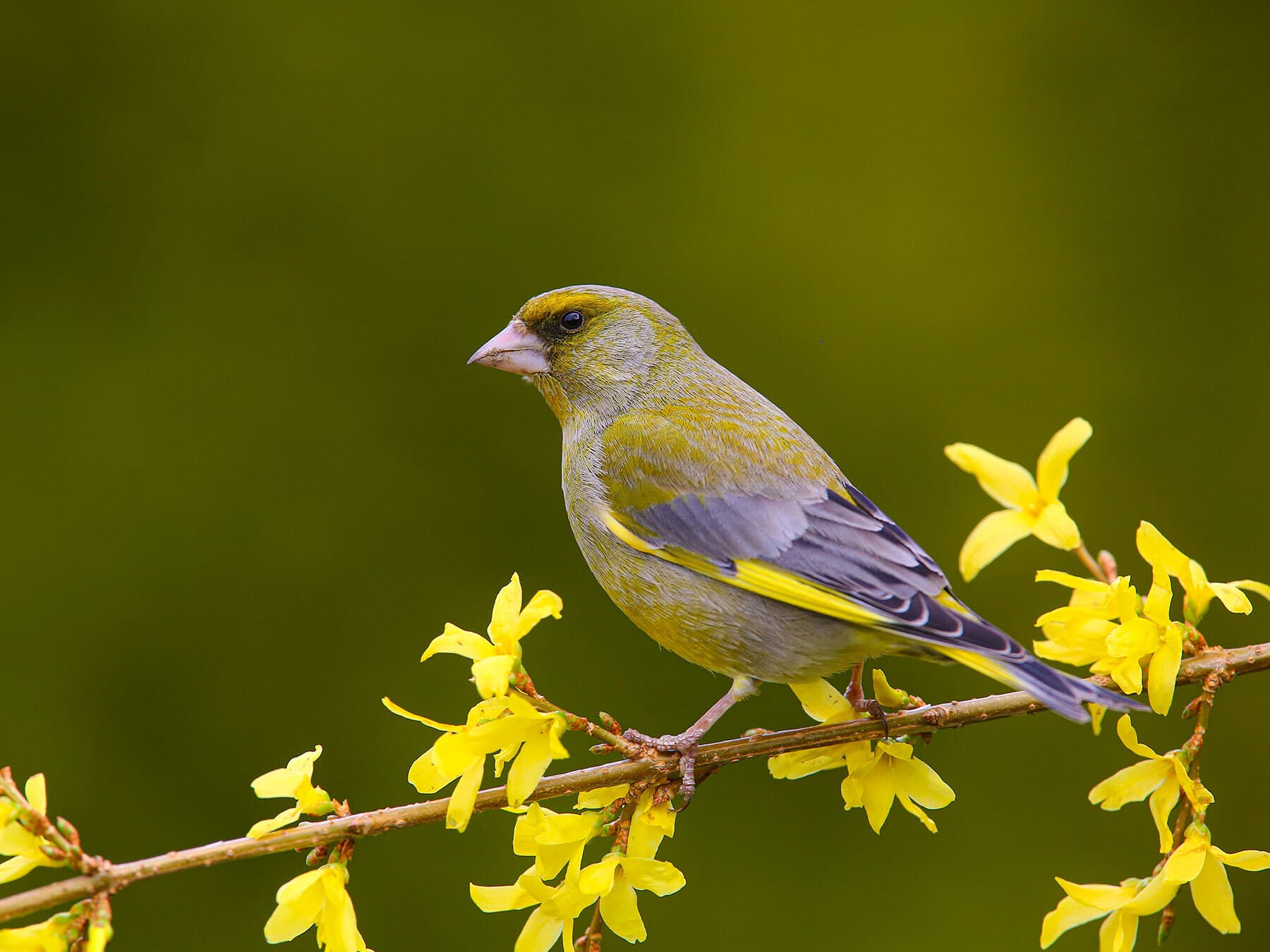
A male Greenfinch is plain olive-green with no streaks, no cap and no bib, yellowish on the breast, with a grey panel in the wing and a single yellow stripe along its edge.5
Females
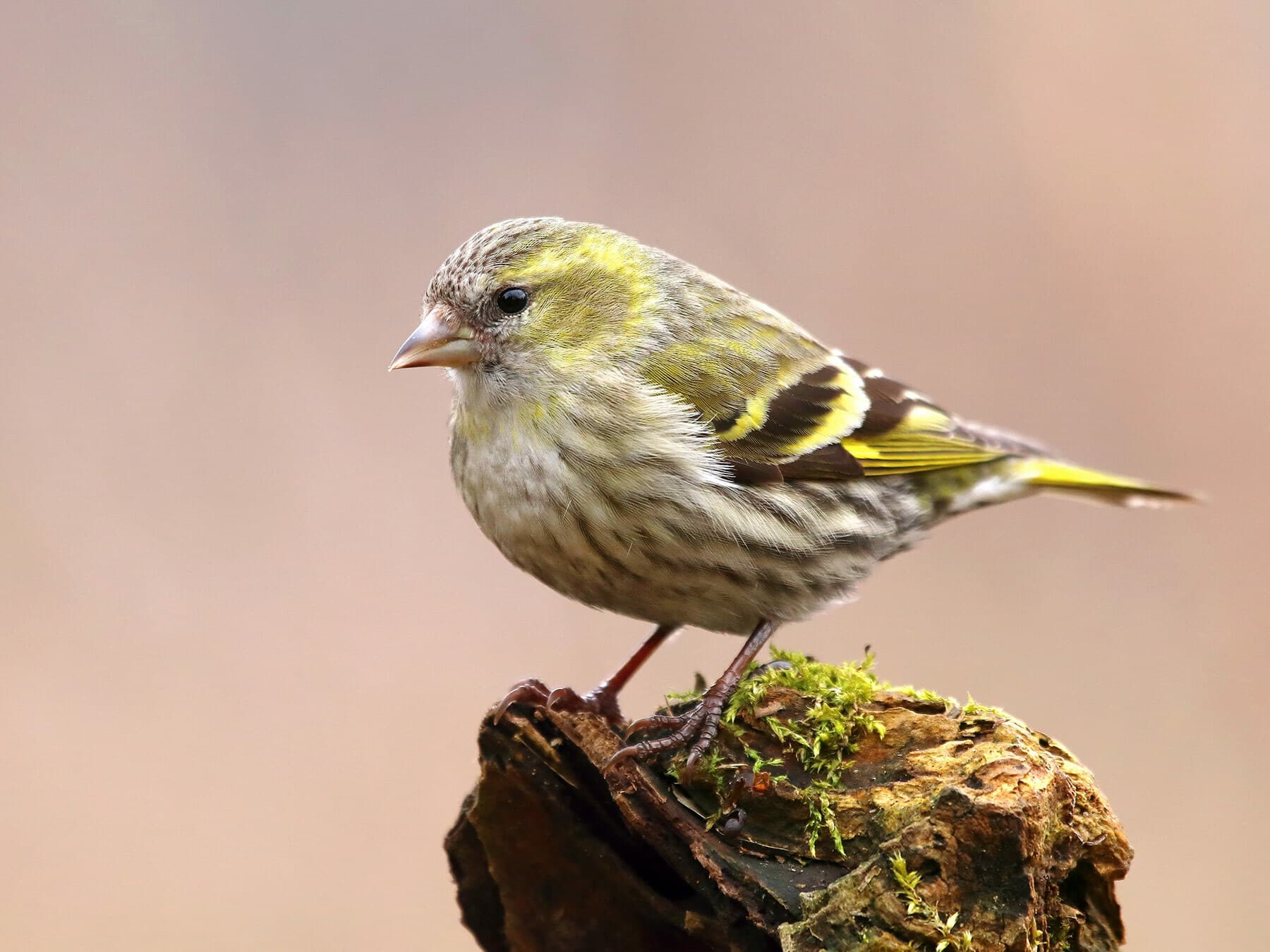
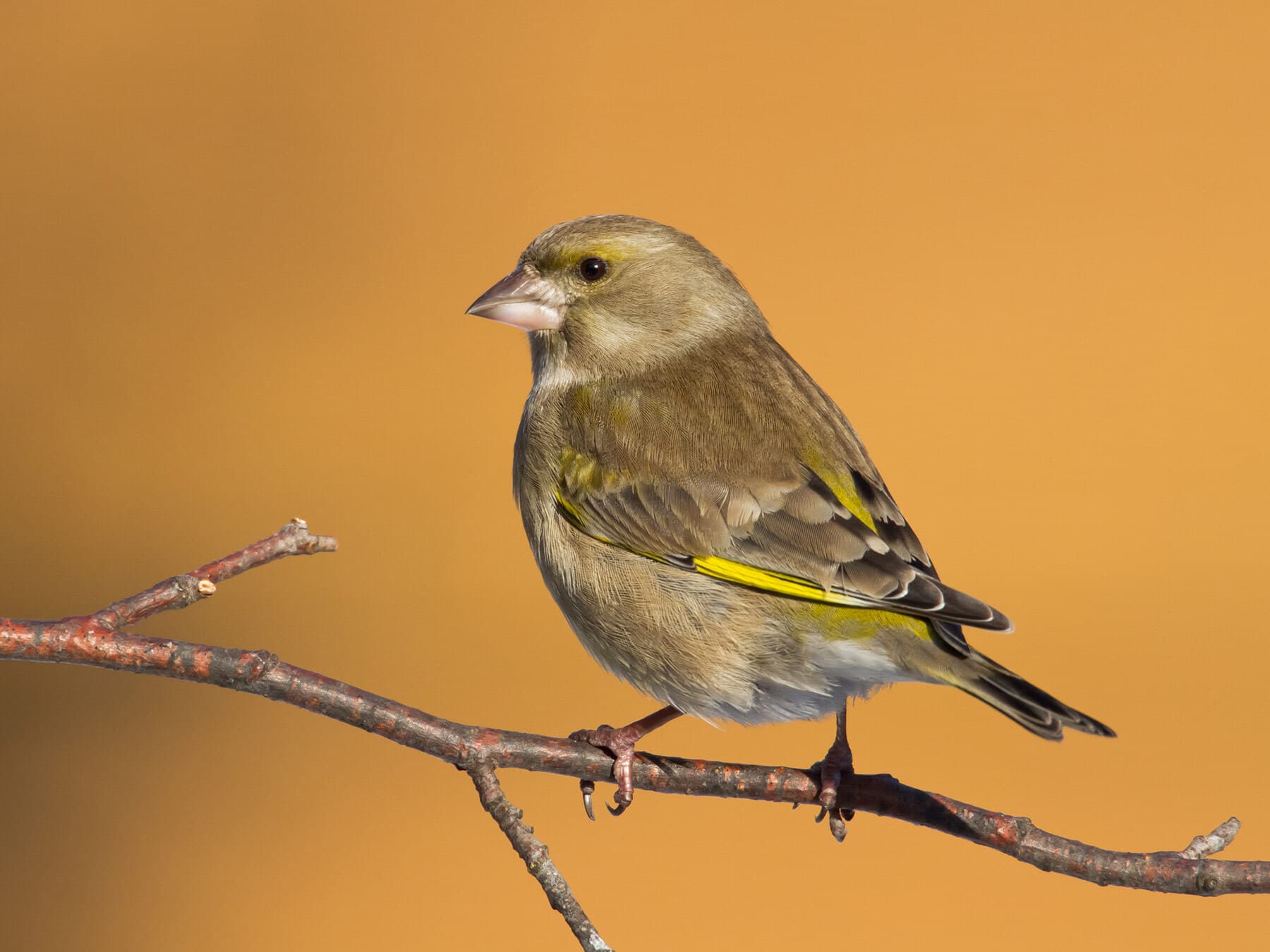
A female Siskin has no black cap: she is greenish-grey, heavily streaked with black above and on her pale yellowish breast and flanks, and white on the belly. A female Greenfinch is grey-brown and unstreaked, with a thin yellow line along the wing. More: female Greenfinches.
Young birds
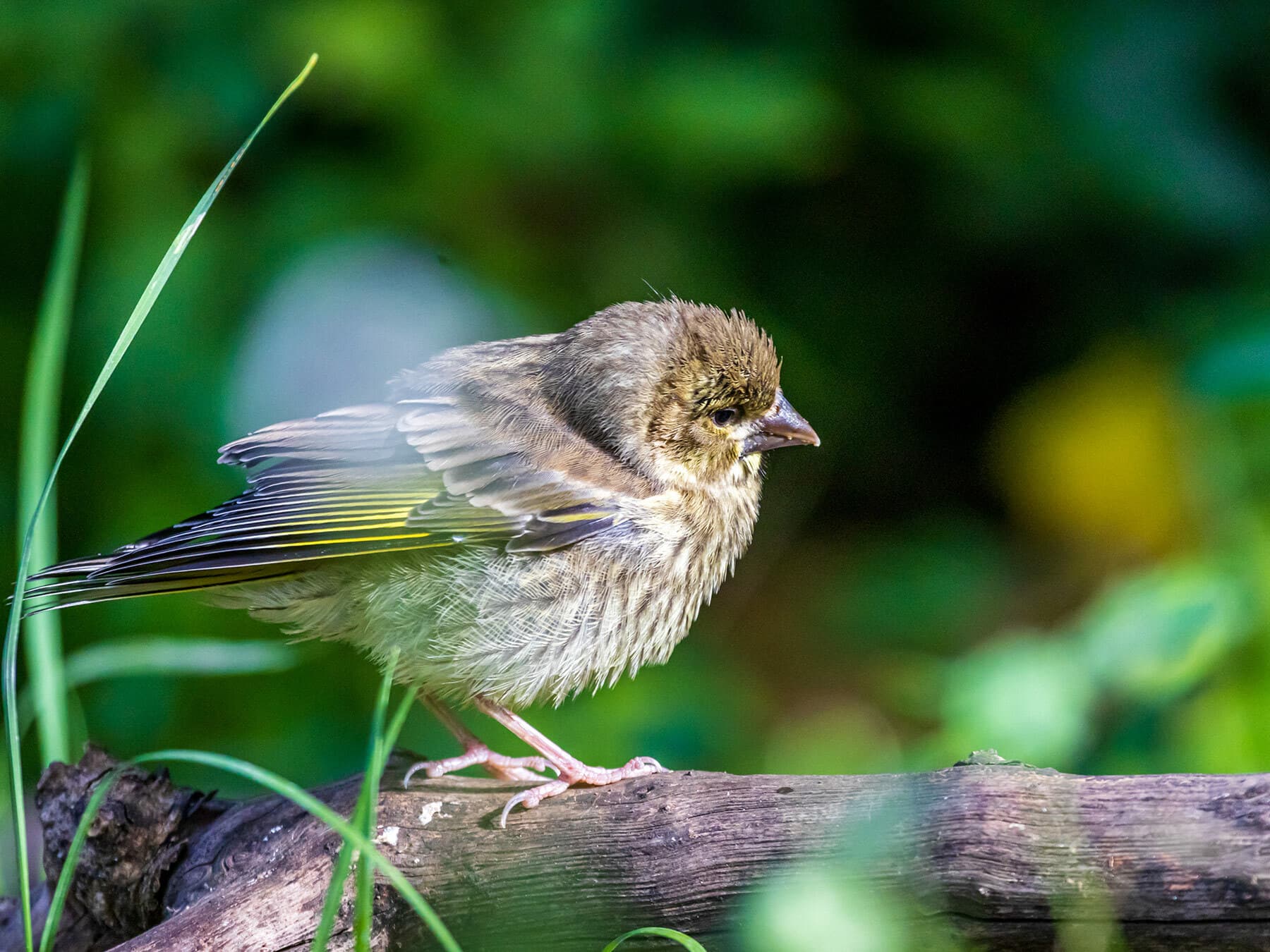
Young Greenfinches are streaked too, so look at the bill and the size: a young Greenfinch has the heavy, pale bill of its parents and is noticeably bigger. A young Siskin is buffish-brown and streaked, with a pale stripe over the eye and two buff wing bars.
Calls and song
A Siskin's song is a fast jumble of thin, high, jangling notes, twitters and wheezes, and its call a clear, ringing tsuu-ee, often given in flight. A Greenfinch has a twittering song broken by a long, nasal wheeze, and a fast twittering contact call.
Where and how they feed
Siskins are tree-top feeders. They hang like tits from slender twigs to pull seeds from open cones, and in winter work along alders and birches by streams and lakes. They have visited garden feeders since the early 1960s, mostly in late winter and more often in years when the cone crop is poor. Greenfinches feed on the ground as well as in bushes and trees, and in gardens favour sunflower seeds.
Where and when to see them
Both birds live in Britain and Ireland all year. The Siskin breeds mainly in conifer woods and is most numerous in Scotland and Wales, and birds from the Continent arrive in winter. The Greenfinch is a bird of villages, towns, gardens and farmland across almost the whole country. More: Greenfinch and Siskin.
Which is more common?
There were about 785,000 pairs of Greenfinches and 445,000 pairs of Siskins in the UK in 2016, but they are heading in opposite directions. The Siskin has increased by 55% since 1995 and is Green-listed. The Greenfinch has fallen by 66% since 1967, mostly because of the disease trichomonosis, and is Red-listed.
Eurasian Siskin
Spinus spinus
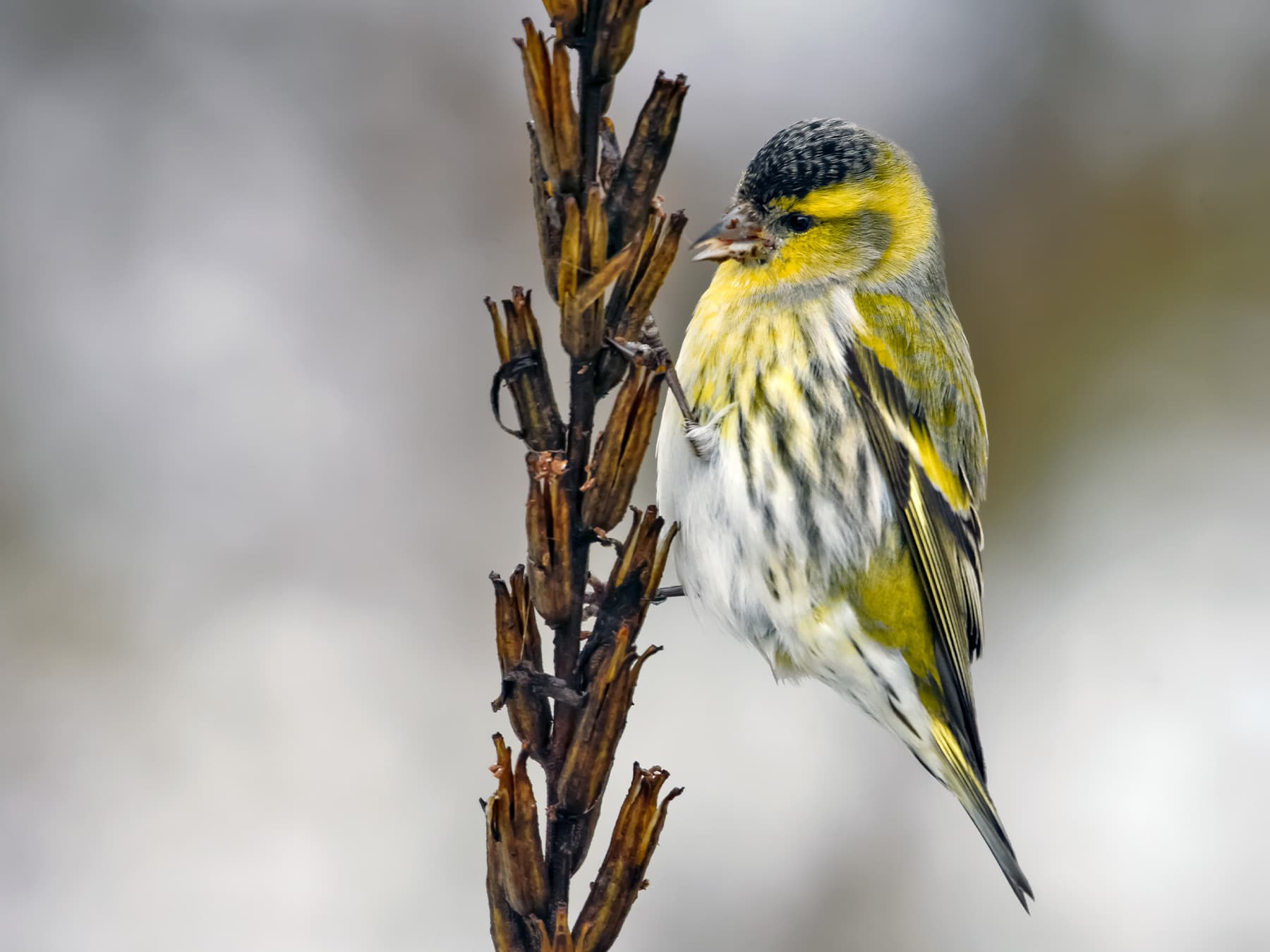
This vibrant yellow-and-green little finch brightens forests and gardens across Eurasia with its cheerful song and acrobatic feeding habits.
Greenfinch
Chloris chloris
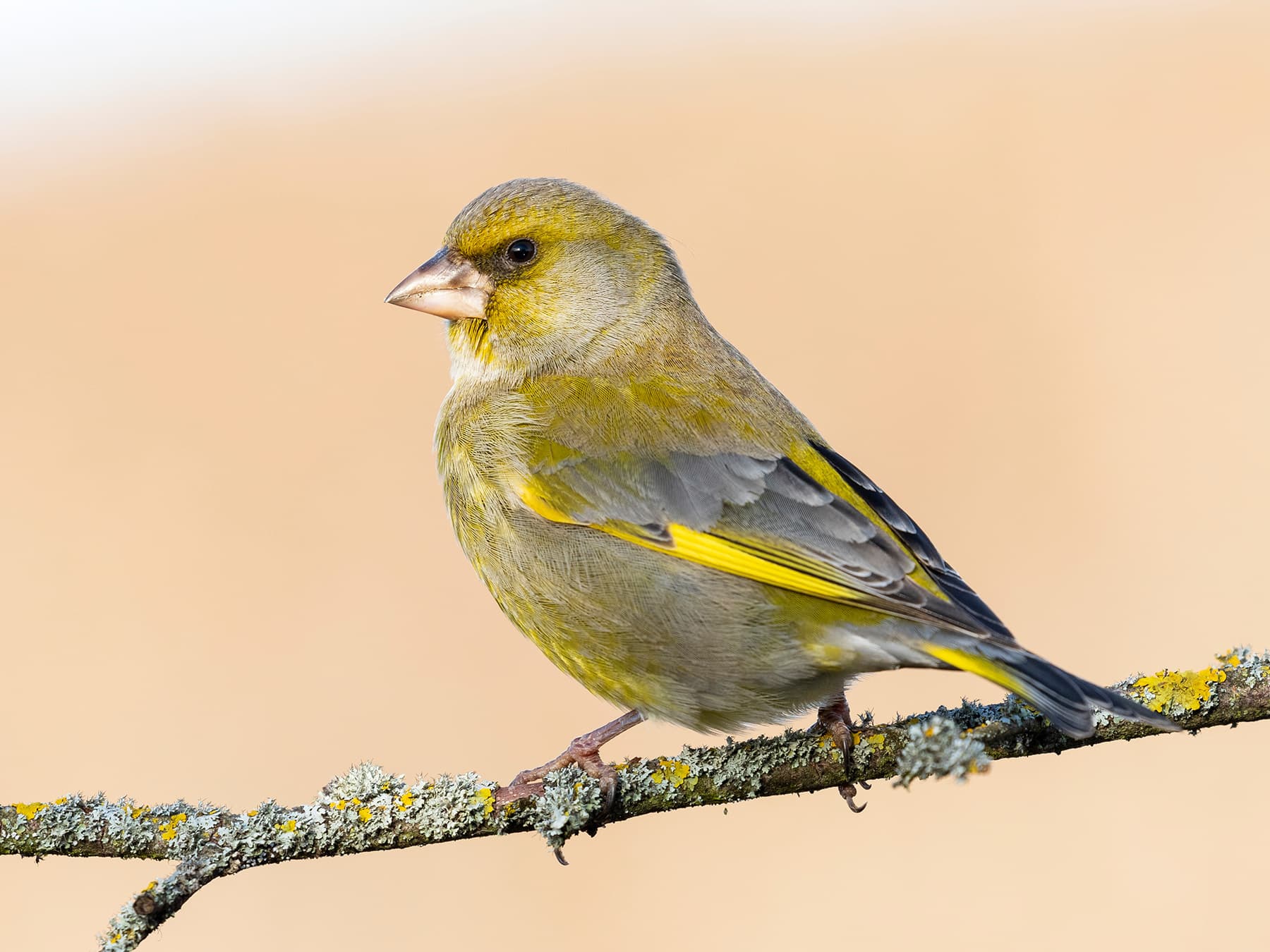
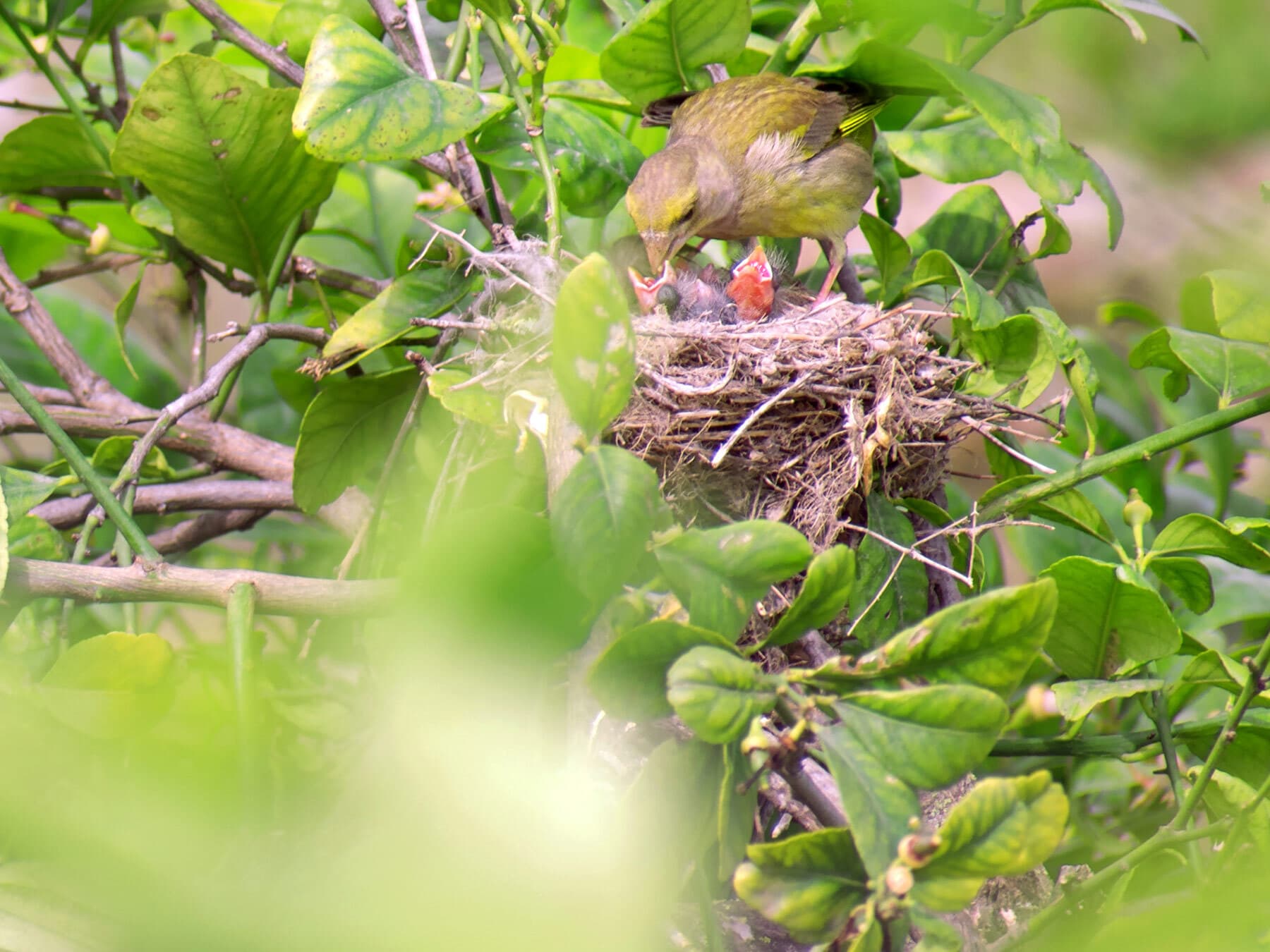
The Greenfinch is a stocky, olive-green finch with a heavy pale bill and a flash of yellow in its wings and tail, found in gardens, villages, parks and farmland across Britain and Ireland all year. On
Sources
- Clement, P. (2020). Eurasian Siskin (Spinus spinus), version 1.0. Birds of the World (J. del Hoyo et al., editors). Cornell Lab of Ornithology. doi:10.2173/bow.eursis.01
- RSPB. Siskin. RSPB Birds A-Z. Accessed 7 October 2026. Source
- BTO. Siskin (Spinus spinus). BTO BirdFacts. Accessed 7 October 2026. Source
- BTO. Greenfinch (Chloris chloris). BTO BirdFacts. Accessed 7 October 2026. Source
- Clement, P., de Juana, E. (2020). European Greenfinch (Chloris chloris), version 1.0. Birds of the World (J. del Hoyo, A. Elliott, J. Sargatal, D. A. Christie and E. de Juana, editors). Cornell Lab of Ornithology. doi:10.2173/bow.eurgre1.01
- RSPB. Greenfinch. RSPB Birds A-Z. Accessed 7 October 2026. Source