Facts · Updated 8 Oct 2026
What Do Greenfinches Eat? Diet and Feeding Greenfinches Safely
By the Birdfact teamChecked by Nathan Cope
Greenfinches eat seeds above all, especially big ones, plus buds, berries and a few insects. In gardens they love sunflower seeds. What they eat through the year, what their chicks are fed, and how to feed them without spreading the disease behind their decline.
On this page10 sections
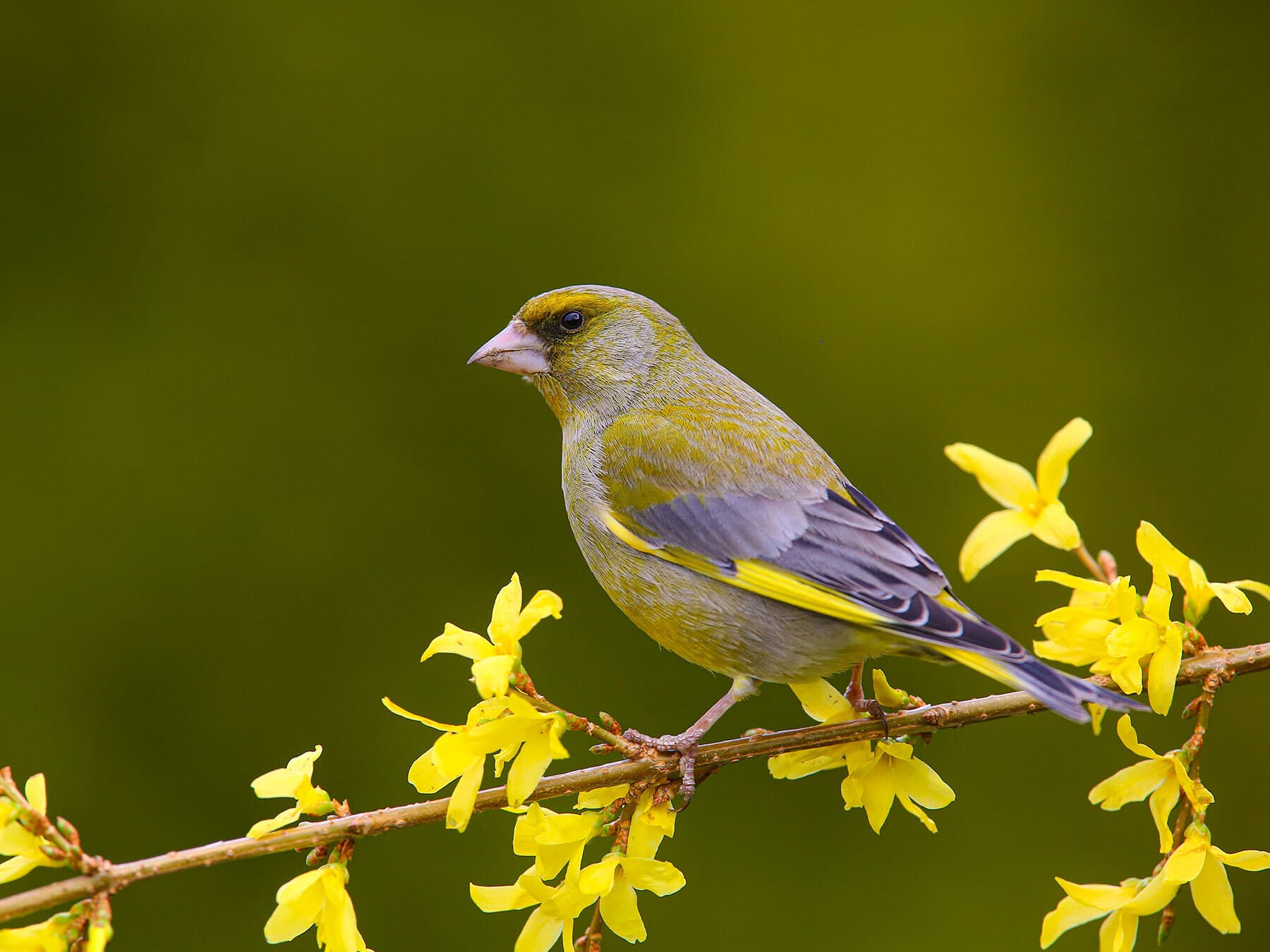
What Greenfinches eat in the wild through the year, what their chicks are fed, what to put out for them, and how to feed them without spreading the disease behind their decline. For the bird itself, see Greenfinch identification, song and facts.
What do Greenfinches eat?
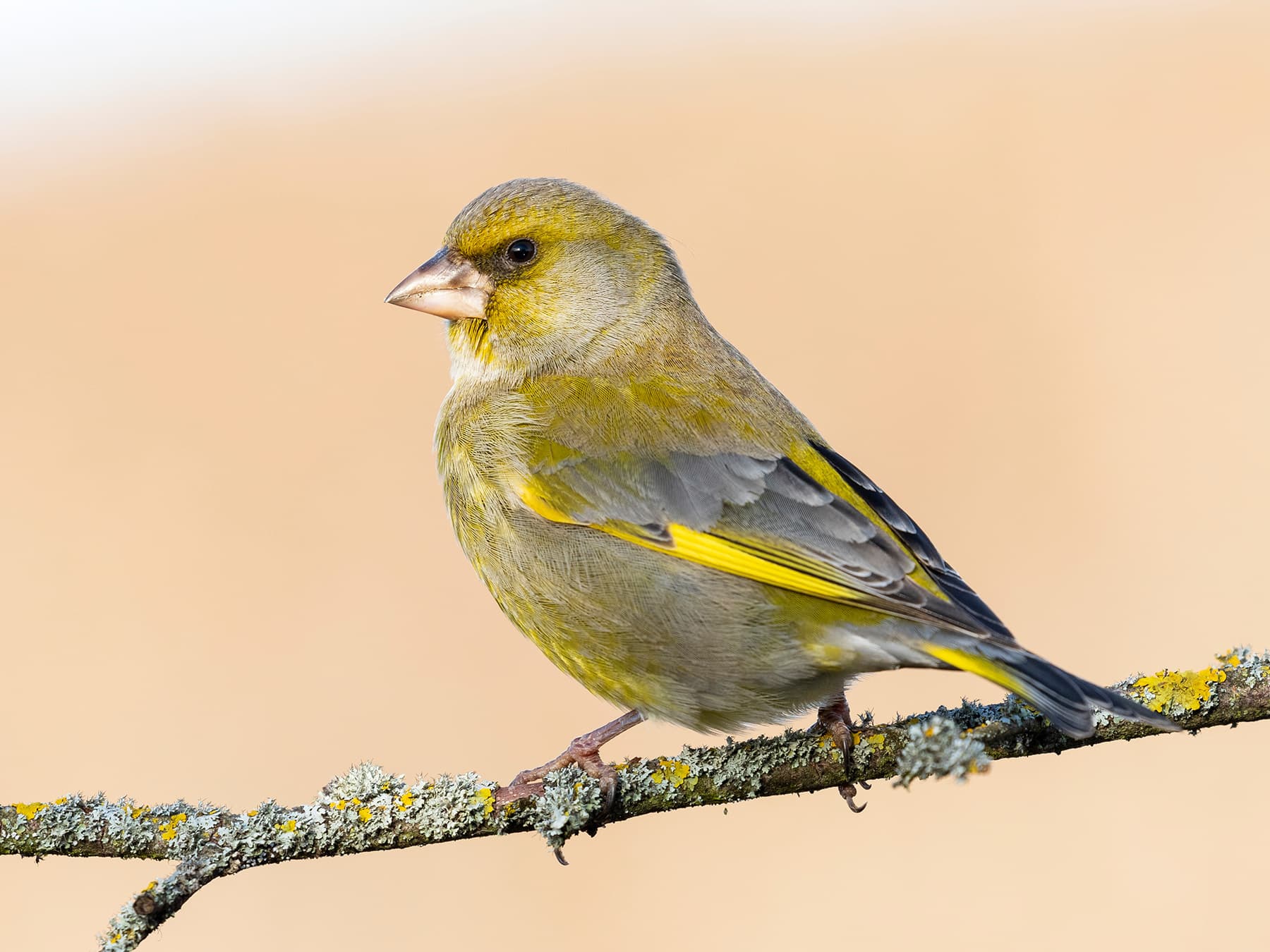
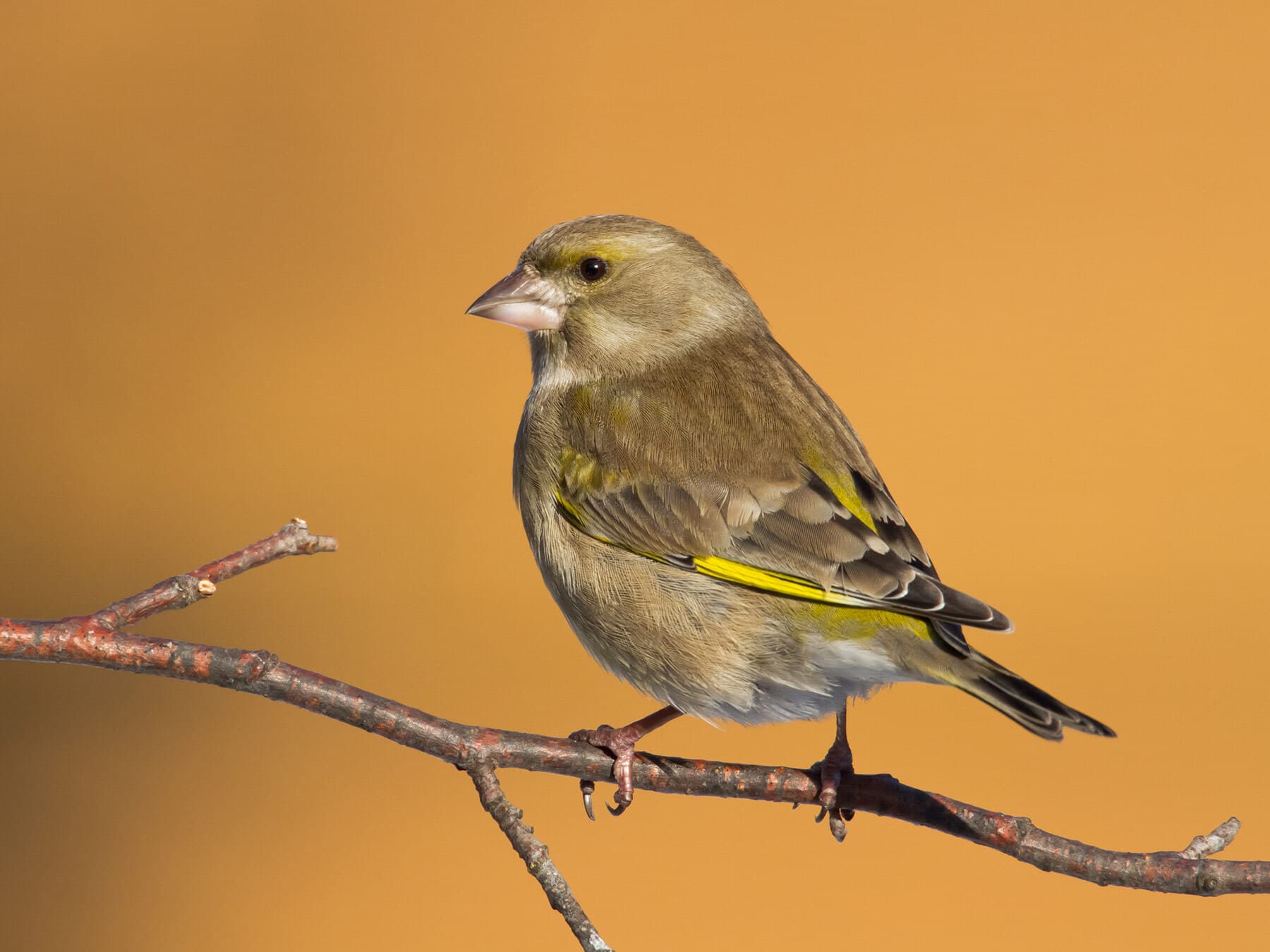
Seeds, mostly. A Greenfinch's heavy bill takes large seeds, and Ian Newton's study of British finches found it lives mainly on the large seeds of trees, cereal crops and farmland weeds.1
The list of plants is long: seeds, buds and flowers of yew, juniper, larch, spruce, hornbeam, beech, elm, sycamore and ash; bramble, rose, hawthorn, cotoneaster and pyracantha; and weeds such as chickweed, groundsel, dandelion, thistles and shepherd's-purse, as well as grasses and cereals. It also takes some insects and spiders.2
How they feed
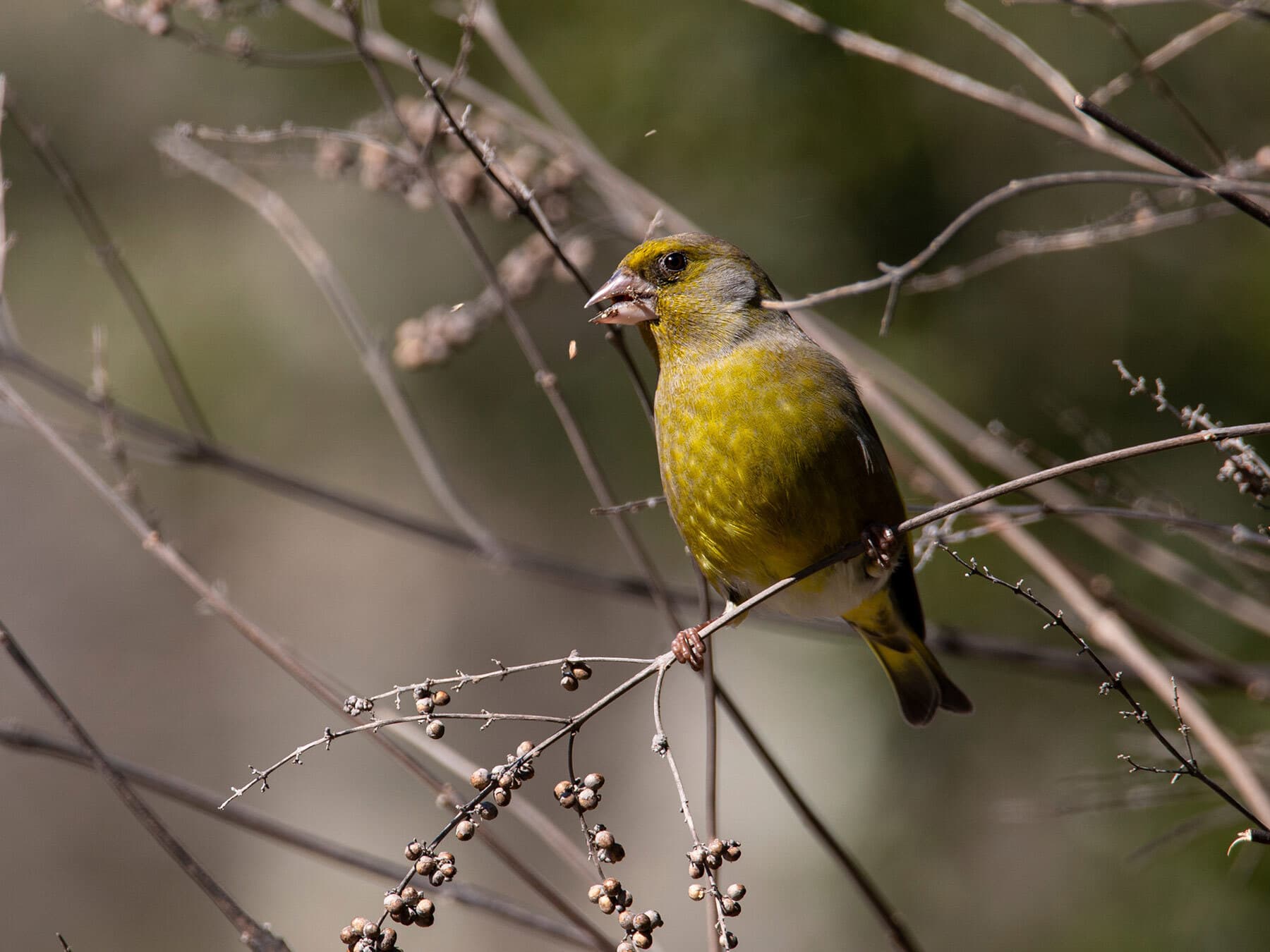
On the ground, in low plants and at every level in bushes and trees. They are versatile: a Greenfinch will hang upside down on a plant or a feeder, slide down a stem, or hold a seed head under its foot while it works the seeds out.
With bramble and yew berries it wants the seed, not the fruit: it squeezes the berry in its bill, drops the pulp and keeps the seeds.
Winter
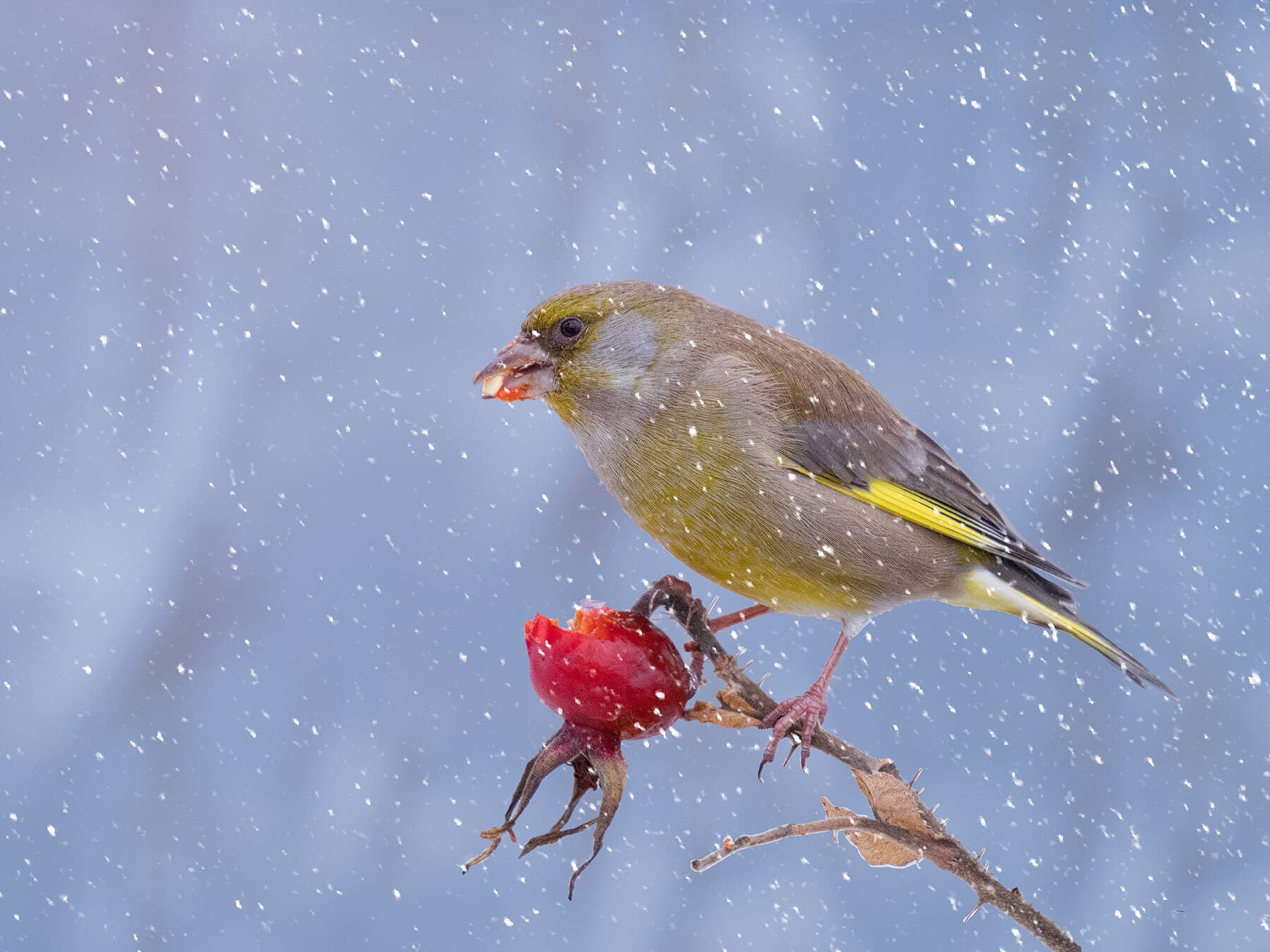
Seeds of all kinds. Outside the breeding season Greenfinches roam in flocks over stubbles and weedy fields, along hedges and on the coast, often with Linnets, Tree Sparrows, Yellowhammers and Reed Buntings, and many come to gardens. Before roosting they fill their gullets with food to last the night: up to 2.5 cubic centimetres in a Greenfinch.
Food for the chicks
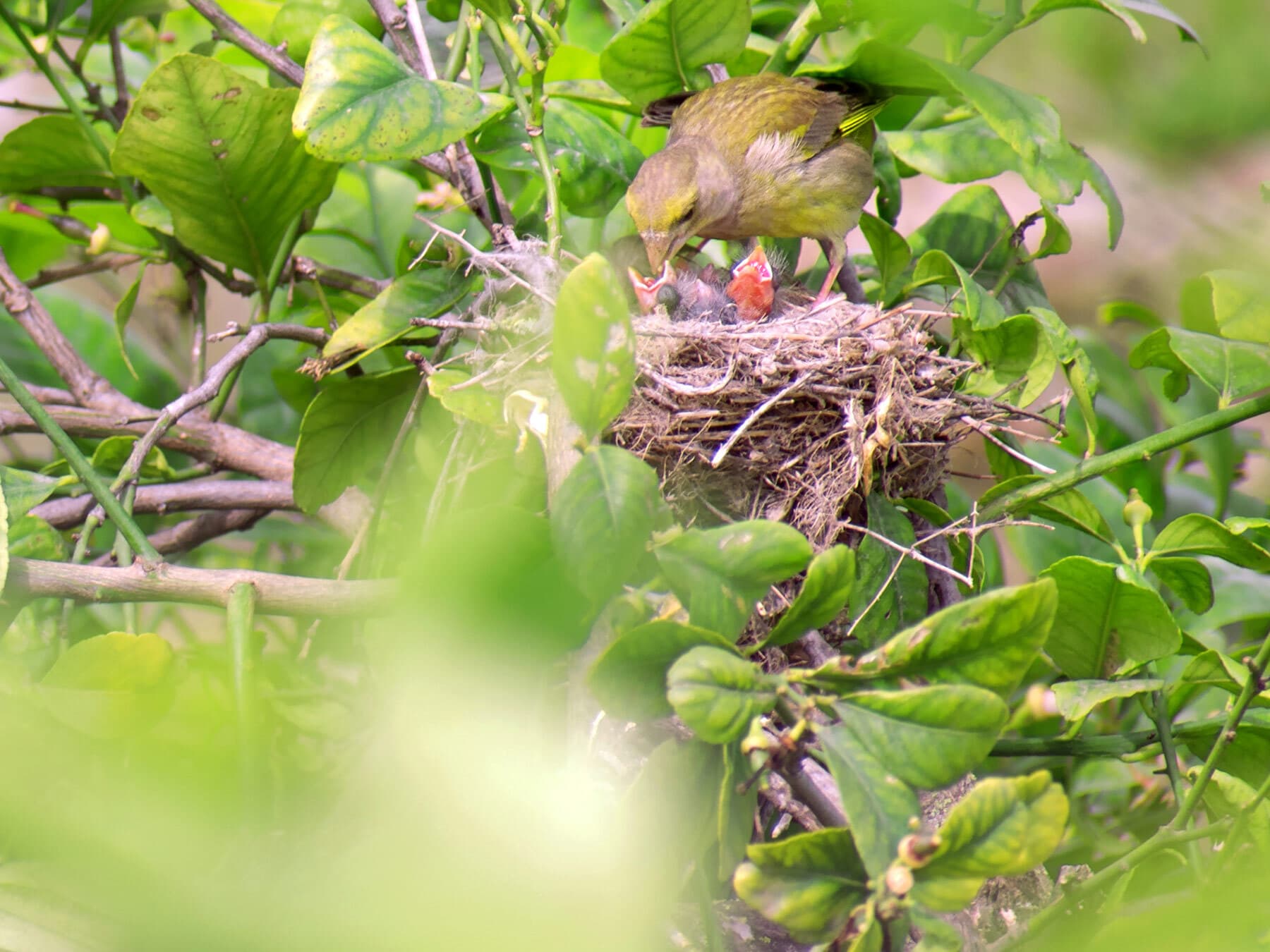
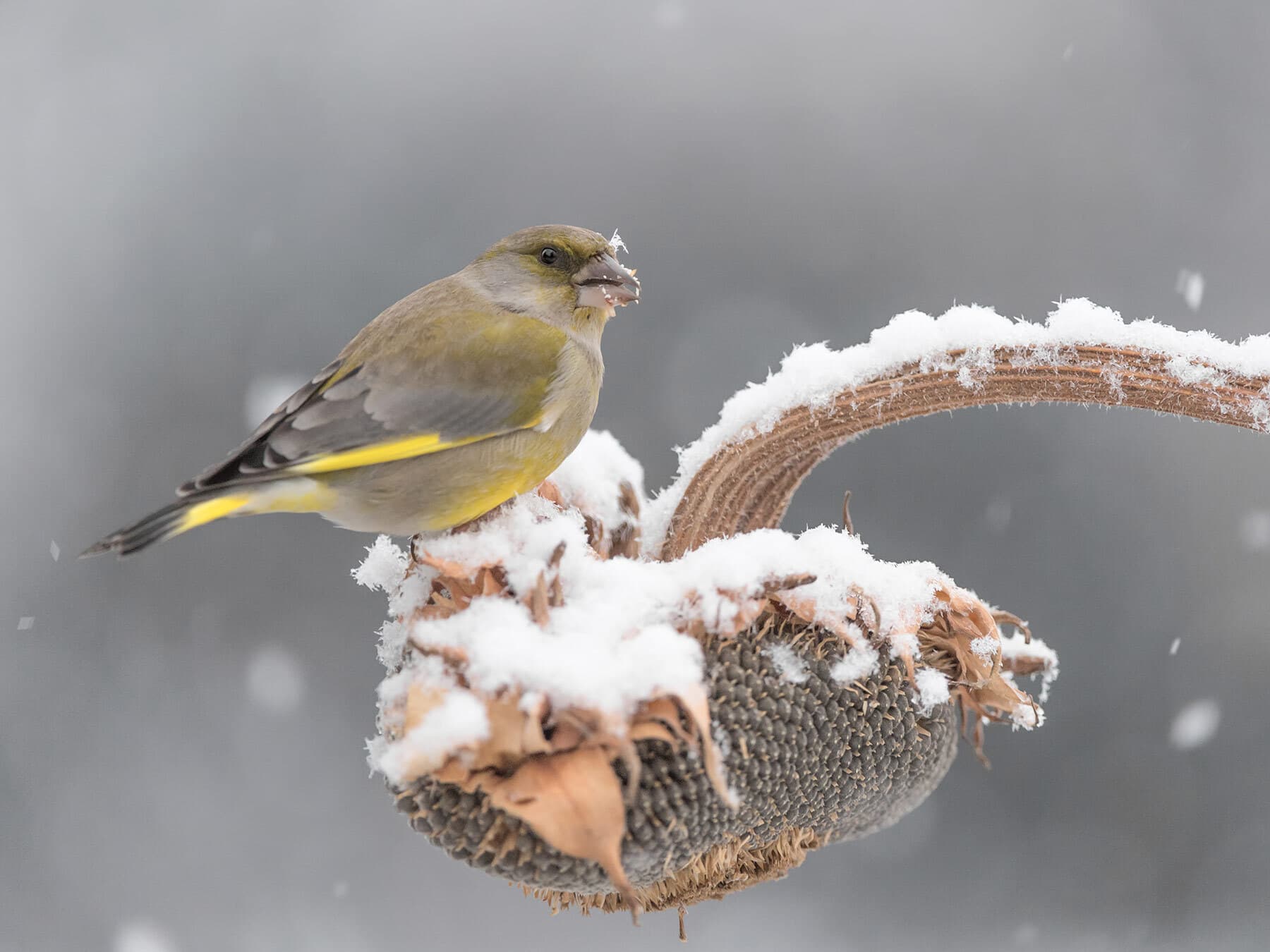
The sources differ. Birds of the World describes nestlings fed mostly on insect larvae. But a study that sampled the food of 3- to 10-day-old nestlings in orange groves in eastern Spain found them fed mainly on seeds, leaves and bulbs, with aphids appearing early in the season but making up little of the diet.3 A review of finch nestling diets notes that some finches raise their young almost entirely on seeds, which the parents swallow and bring back up for the chicks.4 Both parents feed the chicks. More: Greenfinch nesting.
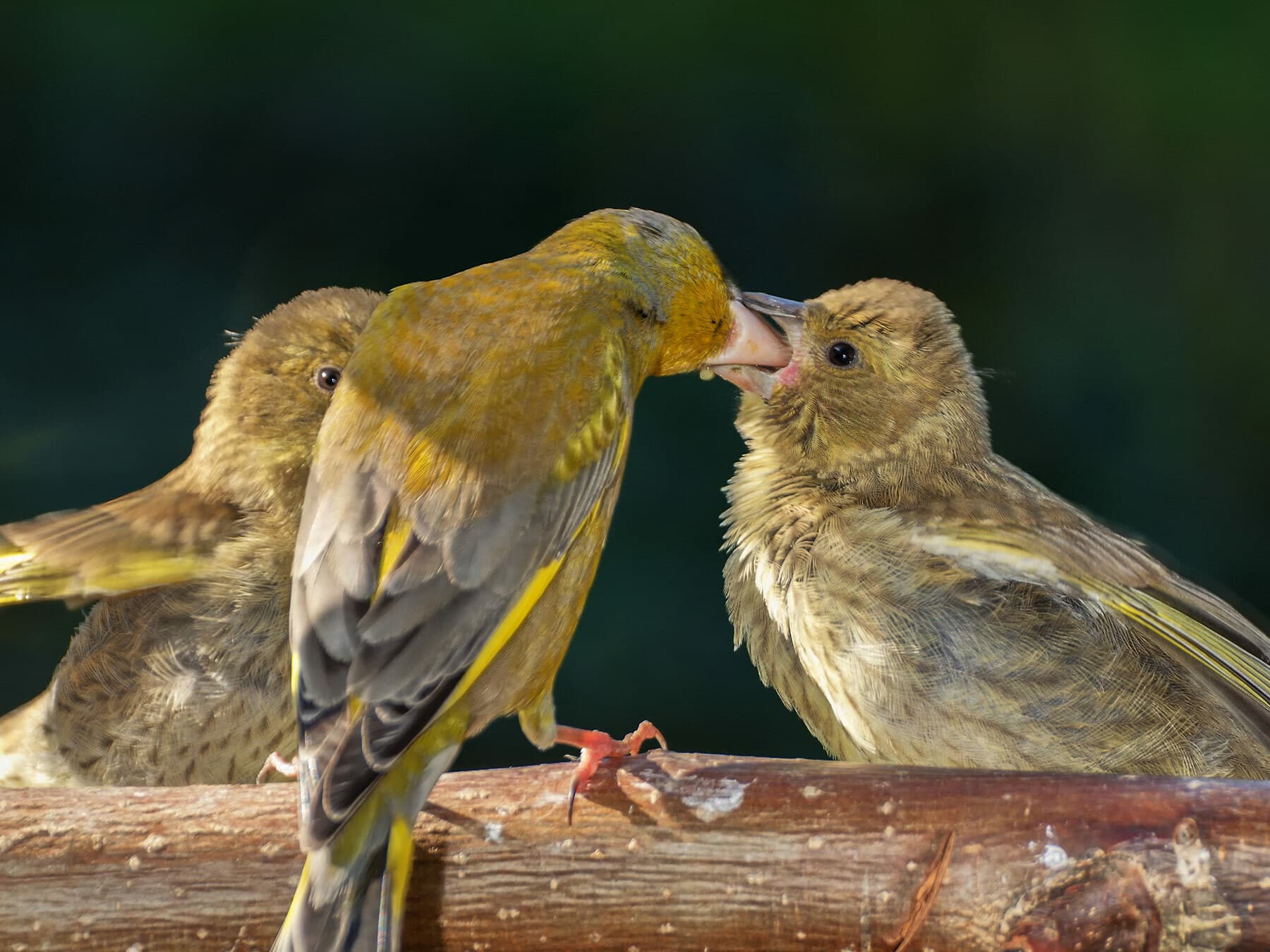
Feeding on the ground
They feed on the ground as well as in trees and bushes, and in gardens they will pick up seed under feeders. But seed on the ground or on a bird table is exactly where the disease trichomonosis spreads, so do not put food out that way where Greenfinches visit.5
Feeding Greenfinches safely
The RSPB pictures Greenfinches feasting on black sunflower seeds, and recommends sunflower hearts in a hanging feeder for finches. Greenfinches also take peanuts; buy aflatoxin-free nuts and put them in a proper feeder, never loose or in a mesh bag.6
The RSPB's latest guidance, brought in because of trichomonosis, is to feed seasonally and safely. From 1 November to 30 April you can put out seed and peanuts. From 1 May to 31 October, pause them and offer only small amounts of mealworms, fat balls or suet, which finches rarely eat, so the risk to them is lower. Use hanging feeders, not bird tables, window feeders or feeders with trays; put out only what is eaten in a day or two; and move feeders around now and then.7
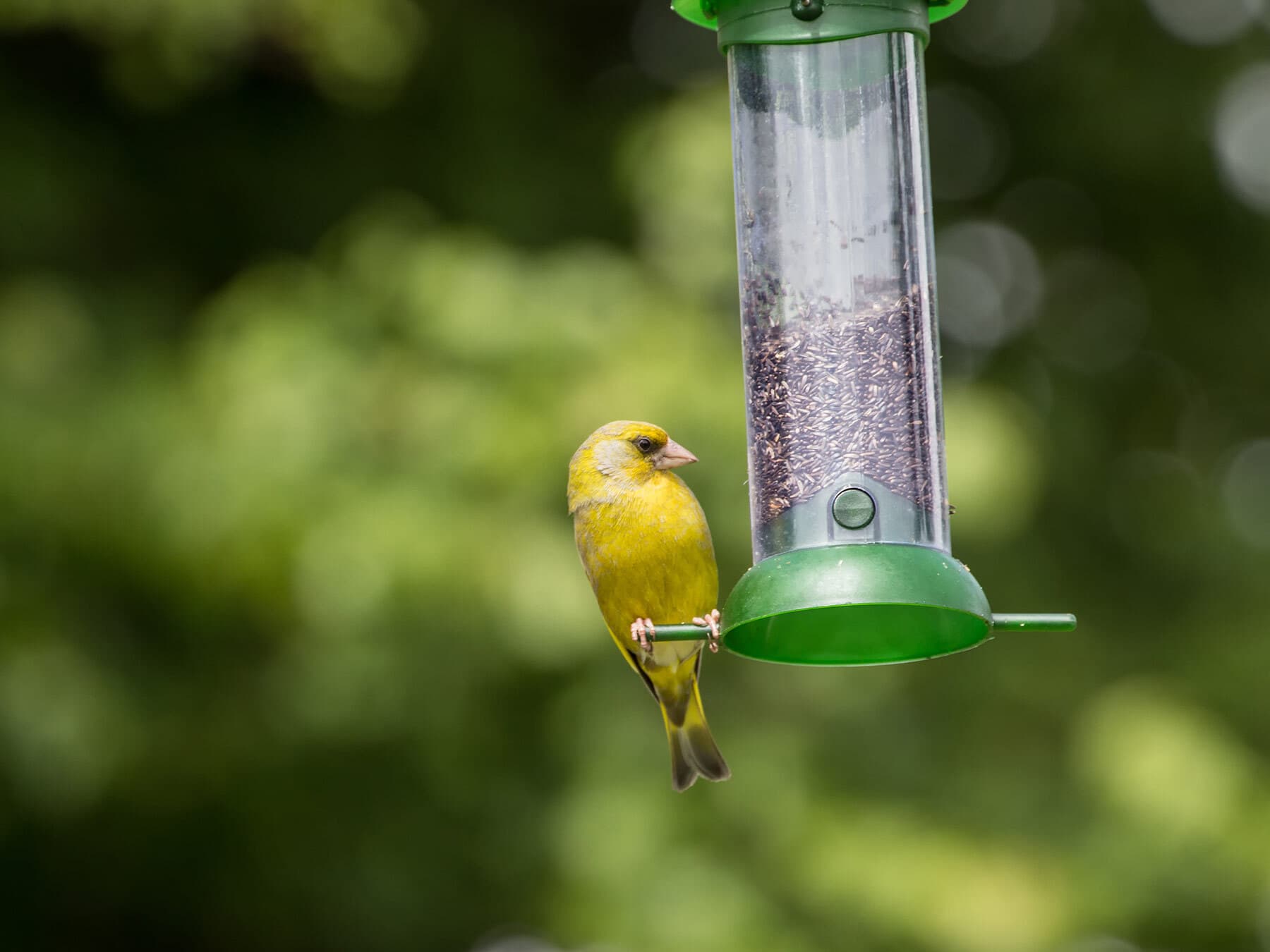
Feeder hygiene and disease
Since 2005, the Greenfinch has been the bird most often affected by finch trichomonosis, caused by a microscopic parasite that damages the throat so birds struggle to swallow. A sick bird regurgitates food it cannot get down, and the next bird to eat it can be infected, so the disease spreads where birds crowd together at feeders, bird tables and bird baths. Outbreaks peak from June to September. Declines have been steepest around houses, where food is put out.8 The whole story of the disease and the decline: Greenfinch disease and decline.
Clean feeders and bird baths at least once a week with hot soapy water and a mild disinfectant, rinse and dry them, and clear old food and droppings from under feeders. If you see a sick bird, fluffed up, drooling or with wet feathers around its face, empty the bird bath and stop feeding for at least 2 to 4 weeks so the birds spread out, then start again slowly; if it comes back, stop for 3 to 6 months. The parasite is no risk to people or pets.
Water
They do drink, but the parasite can survive in water, so the RSPB advises putting out water only if you can change it every day; a pond is better.
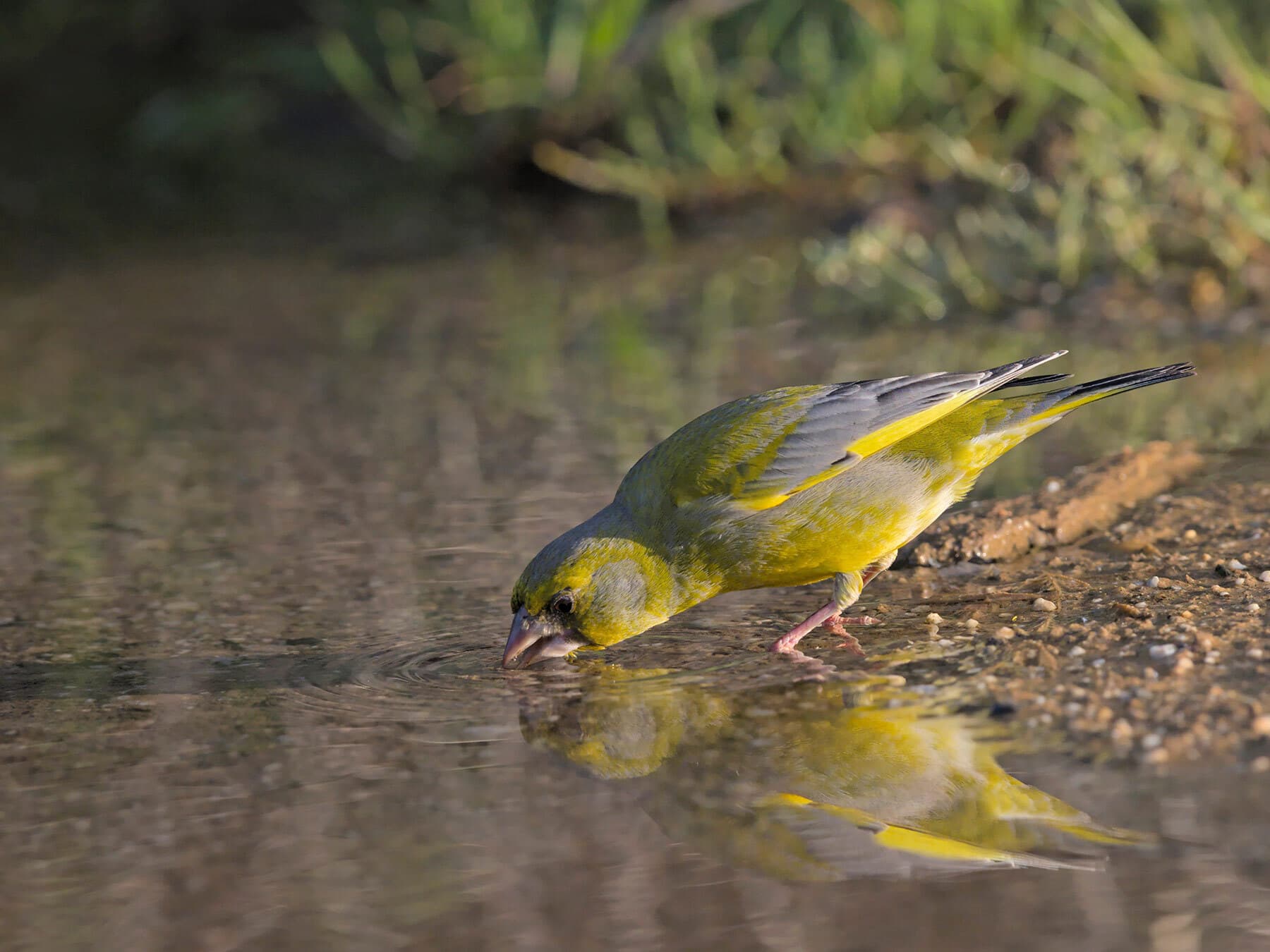
Plants that feed Greenfinches
In the long term, the RSPB suggests helping birds find their own food by filling gardens with plants such as sunflowers, teasels and ivy; Greenfinches also take the seeds of many garden shrubs, from cotoneaster and pyracantha to yew.
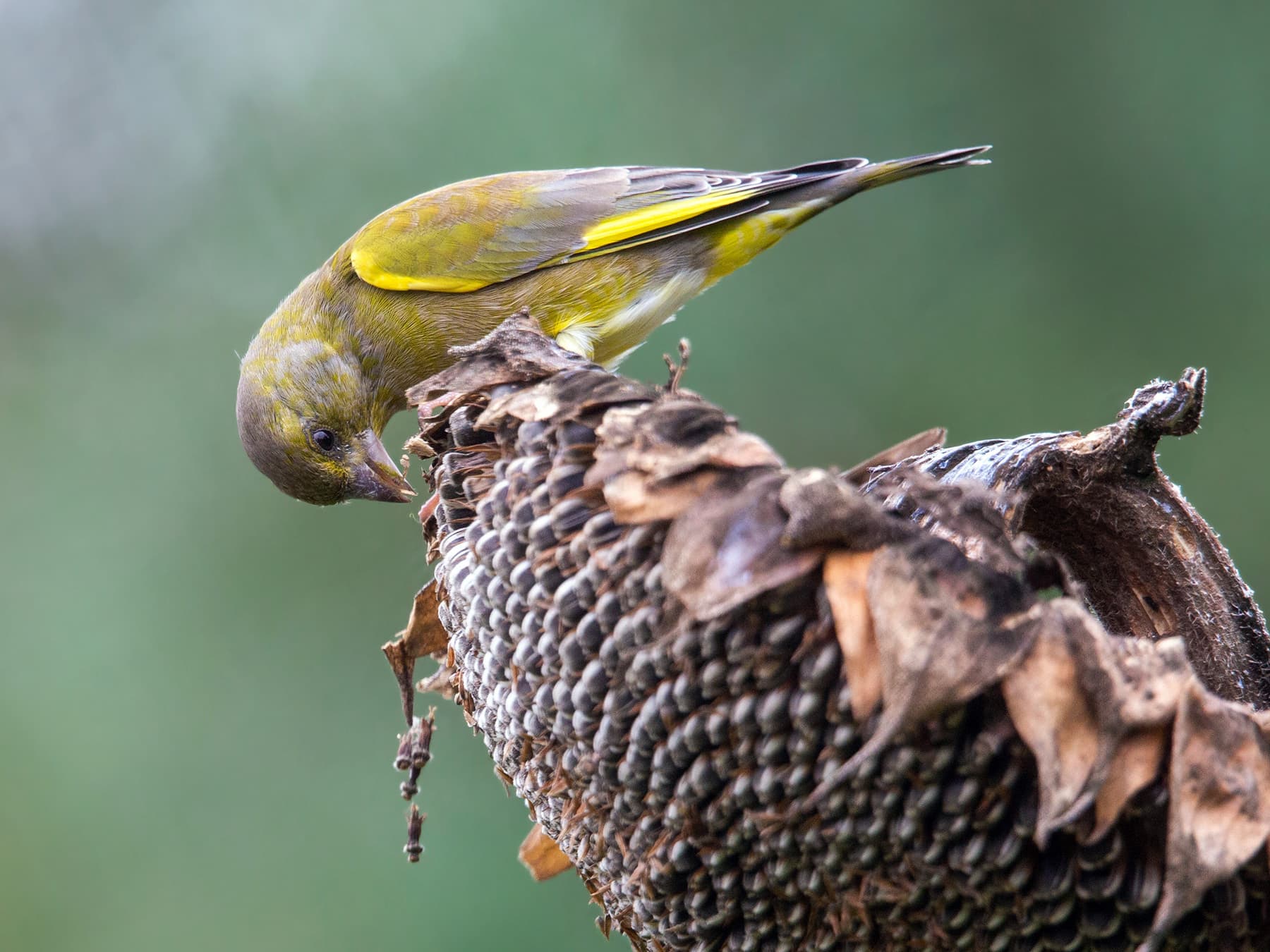
Sources
- Newton, I. (1967). The adaptive radiation and feeding ecology of some British finches. Ibis 109: 33-96. doi:10.1111/j.1474-919x.1967.tb00005.x
- Clement, P., de Juana, E. (2020). European Greenfinch (Chloris chloris), version 1.0. Birds of the World (J. del Hoyo, A. Elliott, J. Sargatal, D. A. Christie and E. de Juana, editors). Cornell Lab of Ornithology. doi:10.2173/bow.eurgre1.01
- Gil-Delgado, J. A., Guijarro, D., Vives-Ferrándiz, C. (2009). The nestling diet of greenfinch Carduelis chloris in orange groves of eastern Spain. Ardeola 56: 205-214. Accessed 7 October 2026.
- Hernández, Á. (2022). Diet and grit characteristics in young Eurasian Bullfinches (Pyrrhula pyrrhula) inhabiting Iberian hedgerows. Ornis Fennica 99. doi:10.51812/of.124715
- Garden Wildlife Health. Trichomonosis in garden birds. Garden Wildlife Health (ZSL, BTO, Froglife, RSPB). Accessed 7 October 2026. Source
- RSPB. How and what to feed your garden birds. RSPB. Accessed 7 October 2026. Source
- RSPB (2026). Our latest guidance on feeding garden birds. RSPB news. Accessed 7 October 2026. Source
- Hanmer, H. J., Cunningham, A. A., John, S. K., Magregor, S. K., Robinson, R. A., Seilern-Moy, K. et al. (2022). Habitat-use influences severe disease-mediated population declines in two of the most common garden bird species in Great Britain. Scientific Reports 12: 15055. doi:10.1038/s41598-022-18880-8
- RSPB. Greenfinch. RSPB Birds A-Z. Accessed 7 October 2026. Source
- BTO. Trichomonosis. BTO, Helping birds: disease. Accessed 7 October 2026. Source
- Robinson, R. A., Lawson, B., Toms, M. P., Peck, K. M., Kirkwood, J. K., Chantrey, J. et al. (2010). Emerging infectious disease leads to rapid population declines of common British birds. PLoS ONE 5: e12215. doi:10.1371/journal.pone.0012215
- Lawson, B., Robinson, R. A., Toms, M. P., Risely, K., MacDonald, S., Cunningham, A. A. (2018). Health hazards to wild birds and risk factors associated with anthropogenic food provisioning. Philosophical Transactions of the Royal Society B 373: 20170091. doi:10.1098/rstb.2017.0091
- BTO. Greenfinch (Chloris chloris). BTO BirdFacts. Accessed 7 October 2026. Source