Facts · Updated 8 Oct 2026
Greenfinch Nesting: Nests, Eggs and Baby Greenfinches
By the Birdfact teamChecked by Nathan Cope
Greenfinches nest in dense bushes, hedges and conifers, often several pairs close together. The female builds a cup of twigs and moss, lays 4 or 5 eggs from April, and most pairs raise two broods. When, where, the eggs, how long each stage takes, and the young.
On this page12 sections
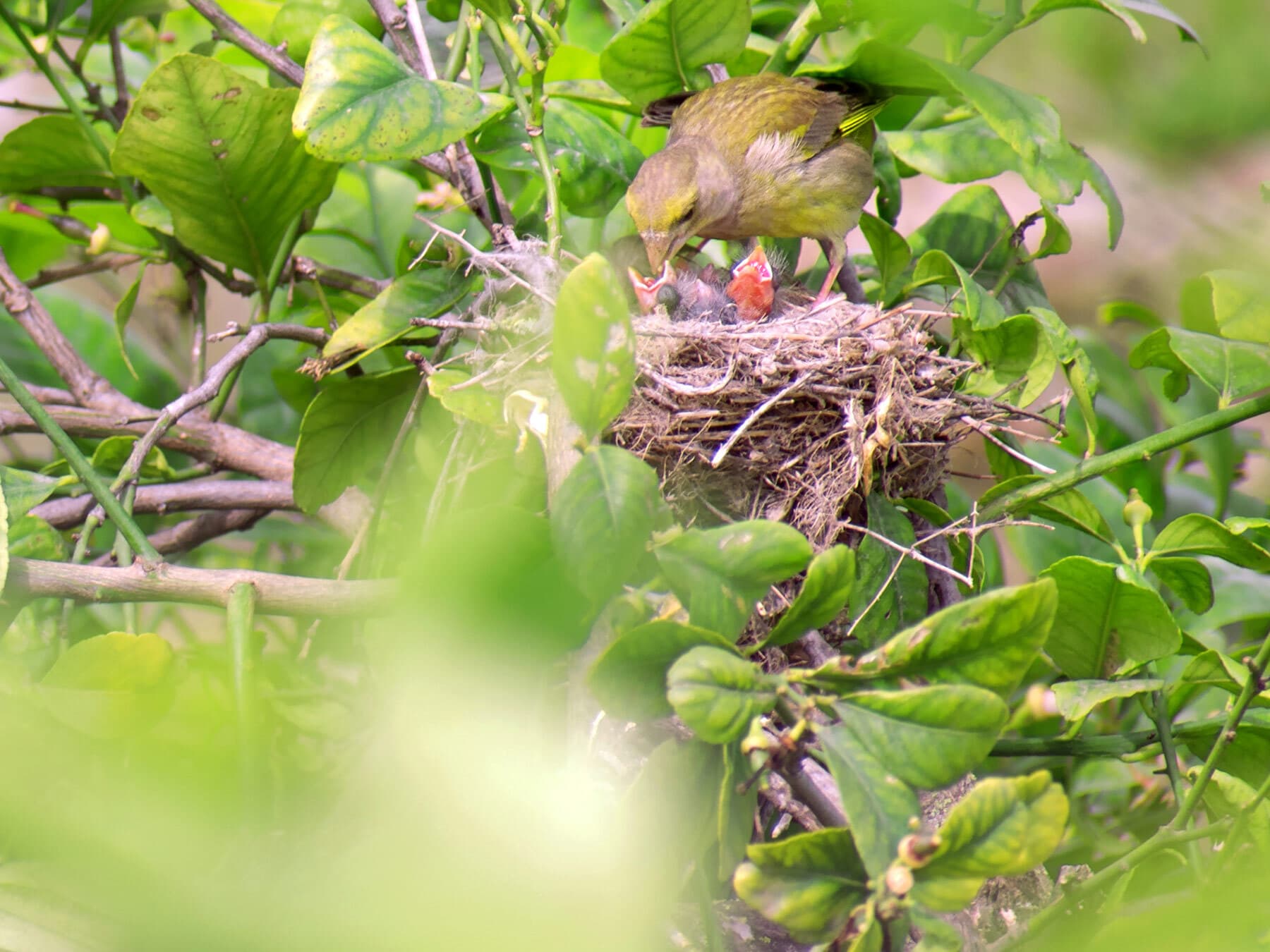
This page follows a Greenfinch nest from building to fledging: when and where they nest, the nest and eggs, how long each stage takes, and the young. For the bird itself, see Greenfinch identification, song and facts.
When do Greenfinches nest?
Where do Greenfinches nest?
In thick cover: a dense bush, a hedge or a tree, especially a conifer or other evergreen, or in creepers. Nests are anywhere from 1 to 20 m up. In gardens, look in thick evergreen hedges and conifers.
Greenfinches do not hold territories. Some pairs nest alone, others in loose groups, with nests sometimes as little as 1.5 m apart.
The nest
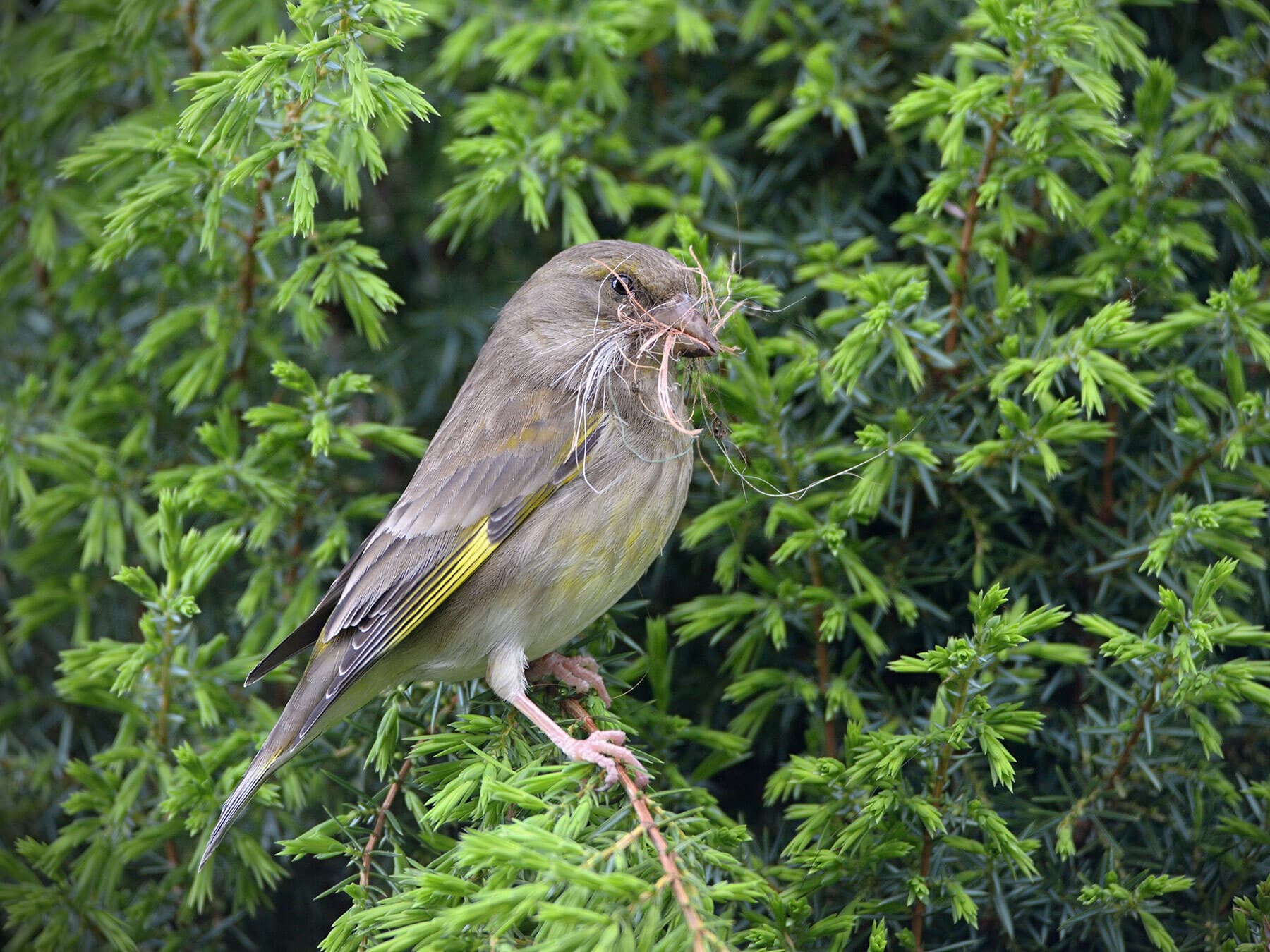
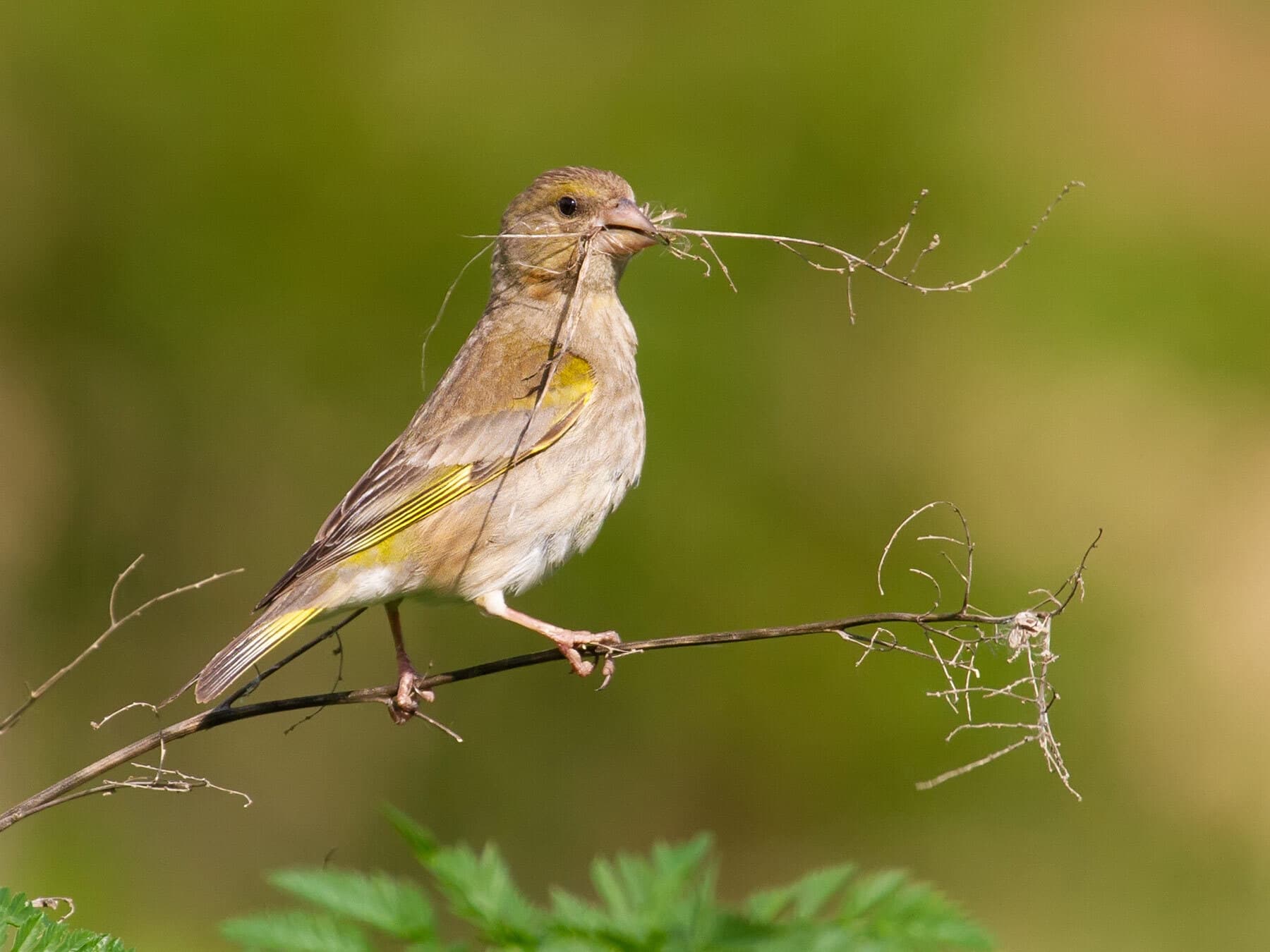
A well-made cup of dry twigs, grass and moss, with lichens, plant fibres and down, hair and feathers.
Building
The female builds it on her own. The male goes with her while she collects the material.
Eggs
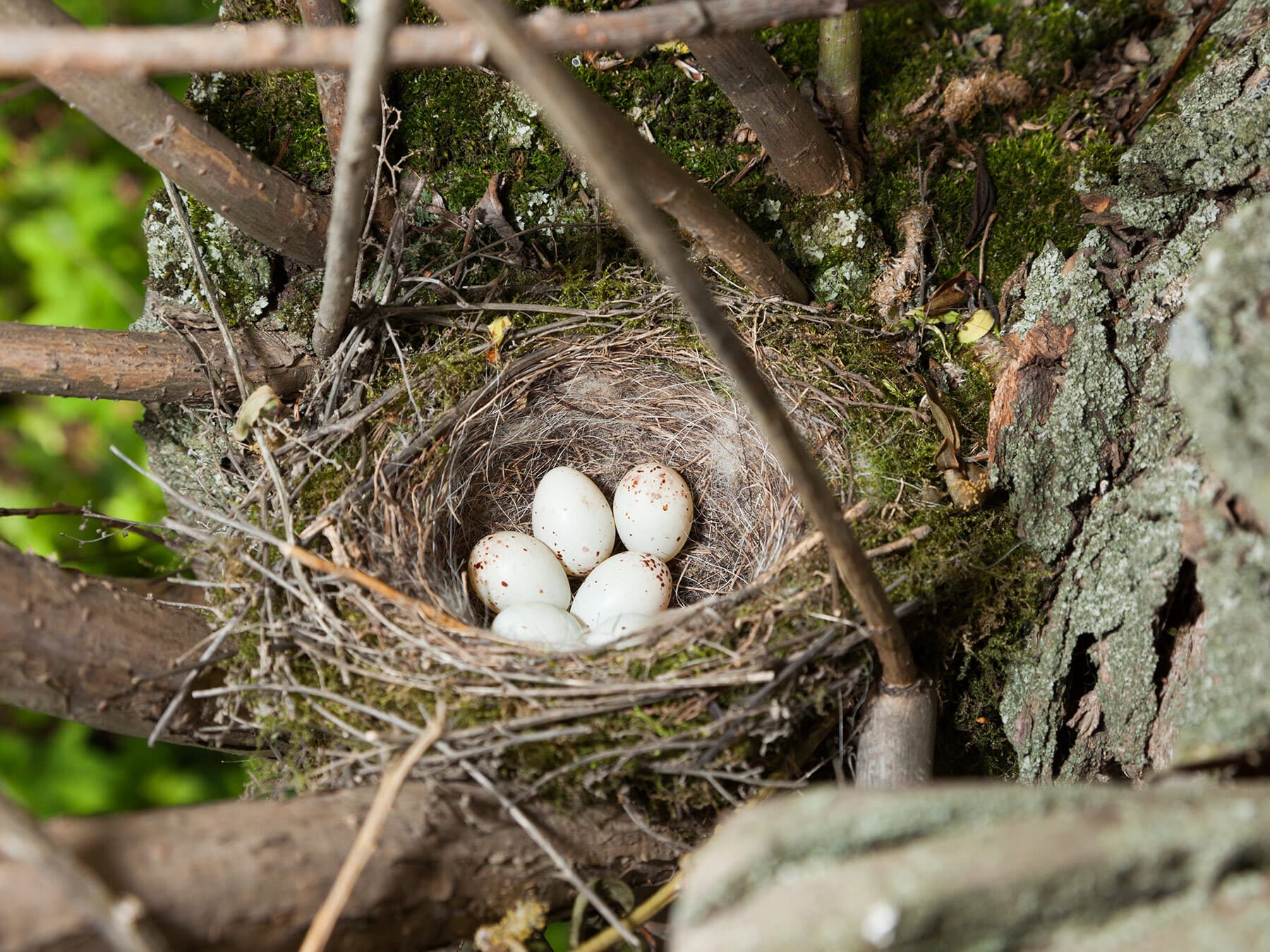
A clutch is usually 4 or 5 eggs, 4.72 on average in BTO records, though anything from 2 to 7 has been found. Each egg is about 20 by 15 mm and weighs 2.2 g. The shells are pale, anything from buff or greyish to bluish white, with pinkish blotches and a scatter of darker spots, reddish, purple or black.
Incubation
Incubation takes about 14 days. Only the female incubates, and BTO records give an average of 13.7 days, ranging from 11 to 16.5. While she sits, the male brings her food on the nest.
Baby Greenfinches
The chicks hatch helpless and downy, and both parents feed them. They leave the nest at 13.5 to 16 days old, 14.9 days on average. Young of the first brood are fed by their parents for up to 14 days after they leave.
What the chicks are fed is not settled: Birds of the World says mostly insect larvae, while a study in Spain found mainly seeds. See what baby Greenfinches eat.
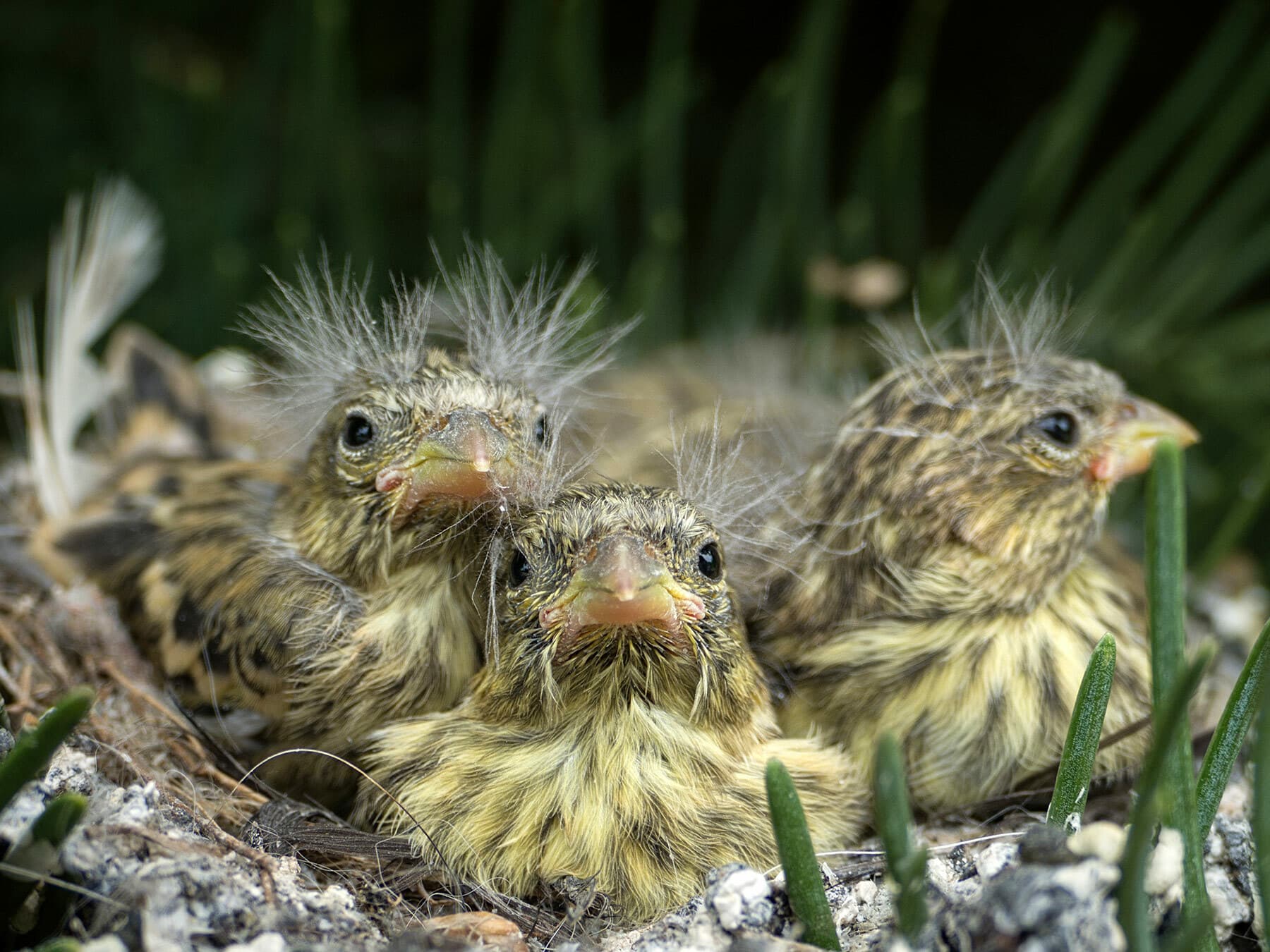
Young Greenfinches
They look like a female, but browner and streaked, with thin yellow edges in the wing. See young Greenfinches for photos.
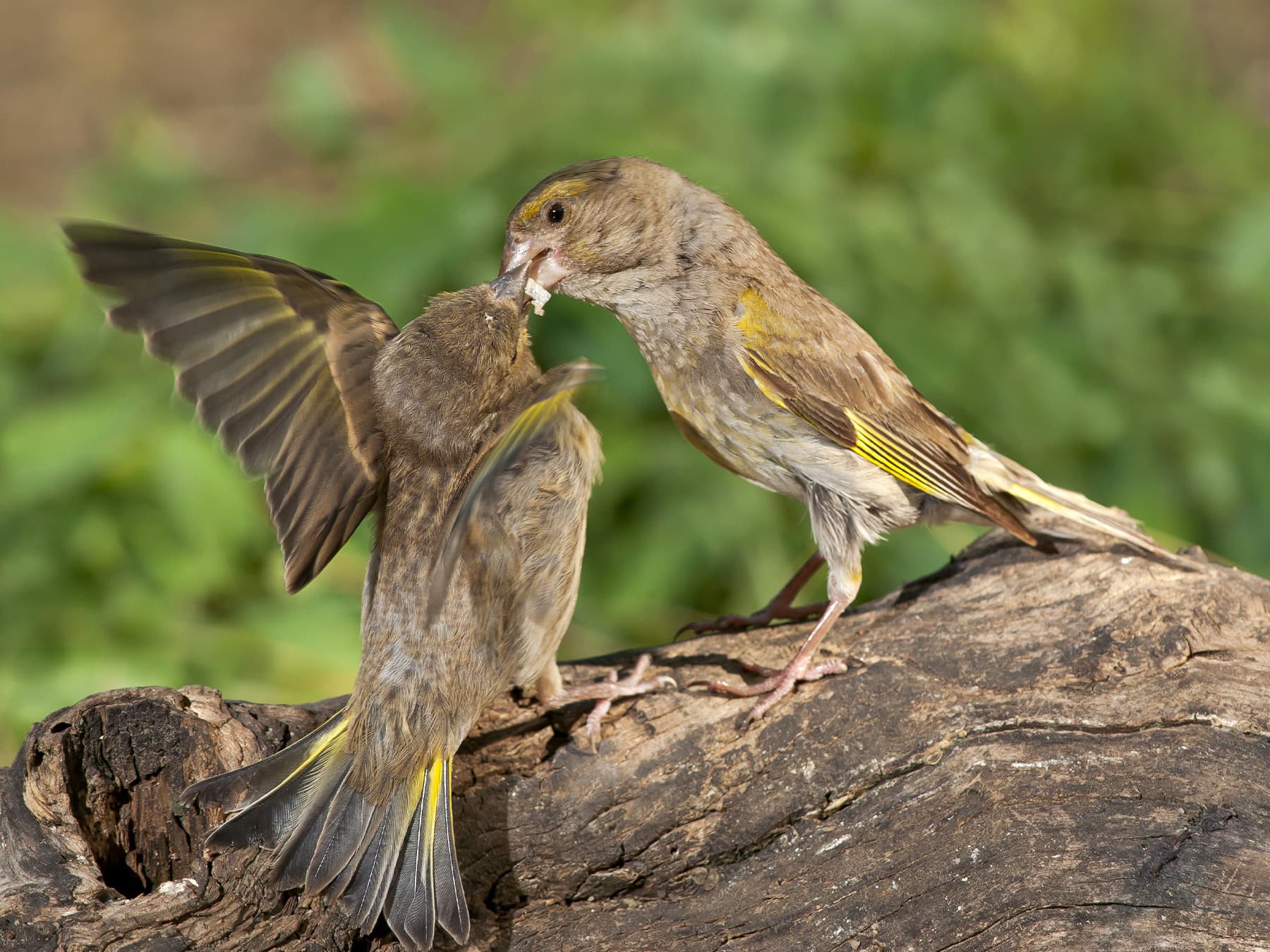
Nest success
In a British sample of 1,589 eggs in 300 clutches, 68.6% hatched and 52.9% produced young that left the nest, an average of 2.55 young per nesting attempt. Losses were to people, cats, rodents, crows, gulls and poor weather.
Nest boxes
Greenfinches build their own open cup in dense cover, and they are not among the species the BTO lists for any type of nest box.3 Dense evergreen shrubs and hedges give them places to nest.
Hedges and the law
Greenfinches are among the songbirds that nest in hedges, and BTO work on hedge-nesting birds found that most species still had eggs or chicks in some nests after the end of July.4 Check a hedge for active nests before you cut it in spring or summer.
All wild birds' nests are protected. In England and Wales it is an offence intentionally to take, damage or destroy the nest of any wild bird while it is in use or being built. In Scotland the offence also covers doing so recklessly, and interfering with the nest.5 In Northern Ireland it covers doing so intentionally or recklessly.6
Sources
- Clement, P., de Juana, E. (2020). European Greenfinch (Chloris chloris), version 1.0. Birds of the World (J. del Hoyo, A. Elliott, J. Sargatal, D. A. Christie and E. de Juana, editors). Cornell Lab of Ornithology. doi:10.2173/bow.eurgre1.01
- BTO. Greenfinch (Chloris chloris). BTO BirdFacts. Accessed 7 October 2026. Source
- BTO. Nest boxes for birds. BTO, Helping birds. Accessed 7 October 2026. Source
- Hanmer, H. J., Leech, D. I. (2024). Breeding periods of hedgerow-nesting birds in England. BTO Research Report 762. British Trust for Ornithology, Thetford. Accessed 7 October 2026. Source
- UK Parliament (1981). Wildlife and Countryside Act 1981, section 1. Accessed 7 October 2026. Source
- UK Government (1985). The Wildlife (Northern Ireland) Order 1985, article 4. Accessed 7 October 2026. Source
- RSPB. Greenfinch. RSPB Birds A-Z. Accessed 7 October 2026. Source