


Eurasian Siskin
Siskin · Spinus spinus
By the Birdfact teamChecked by Nathan Cope
On this page14 sections
How to recognise it
What do Siskins look like?
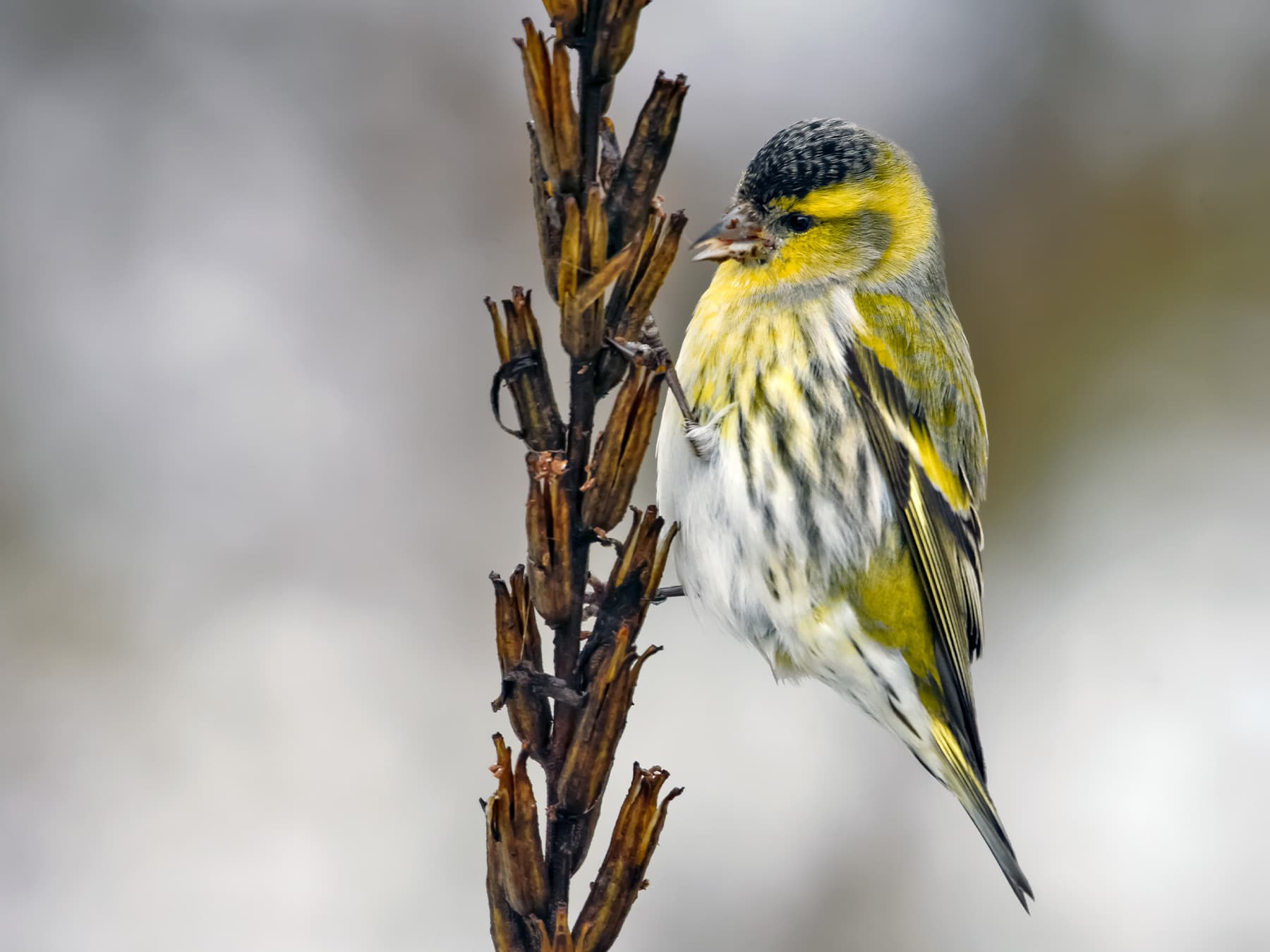
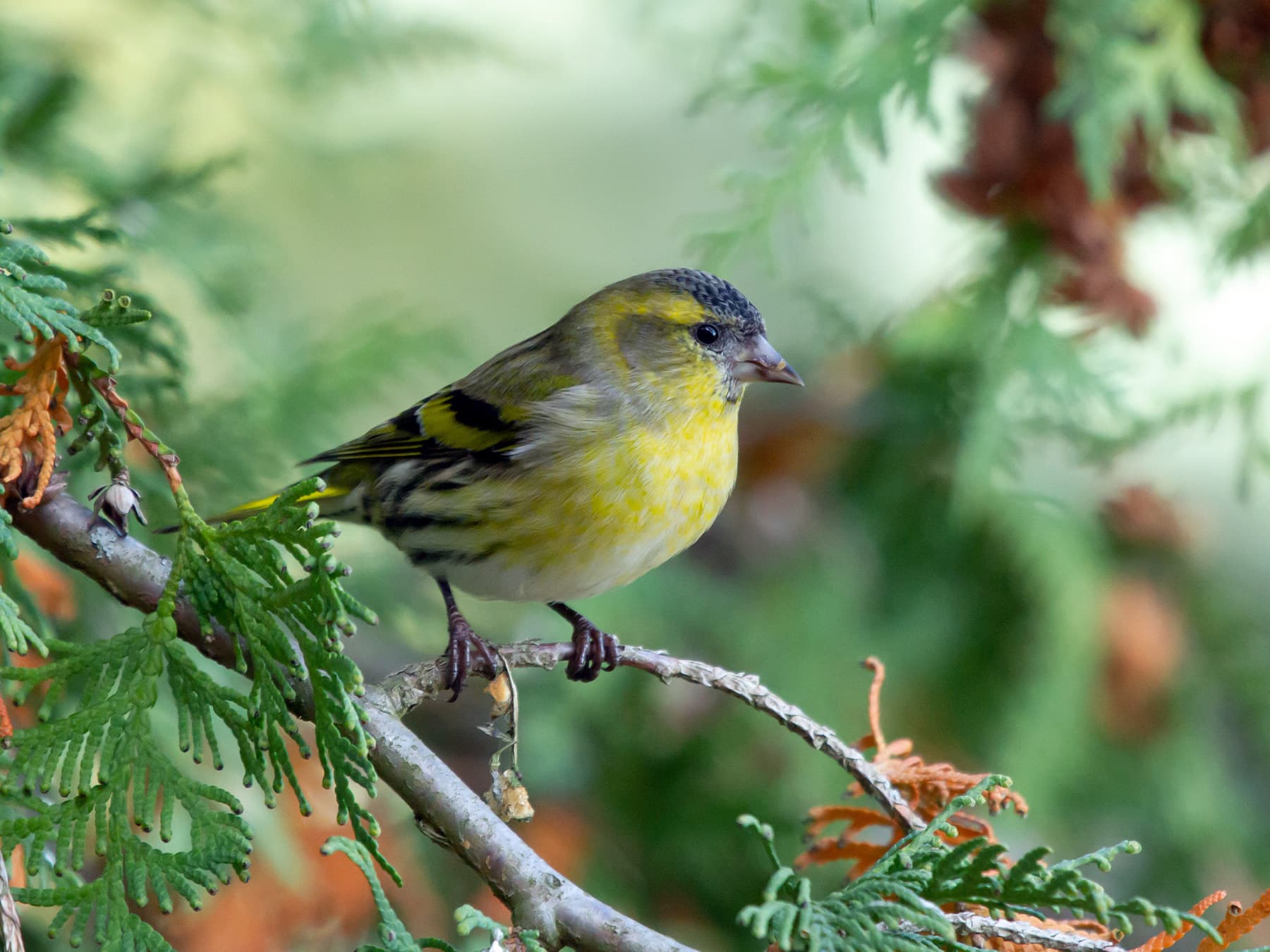
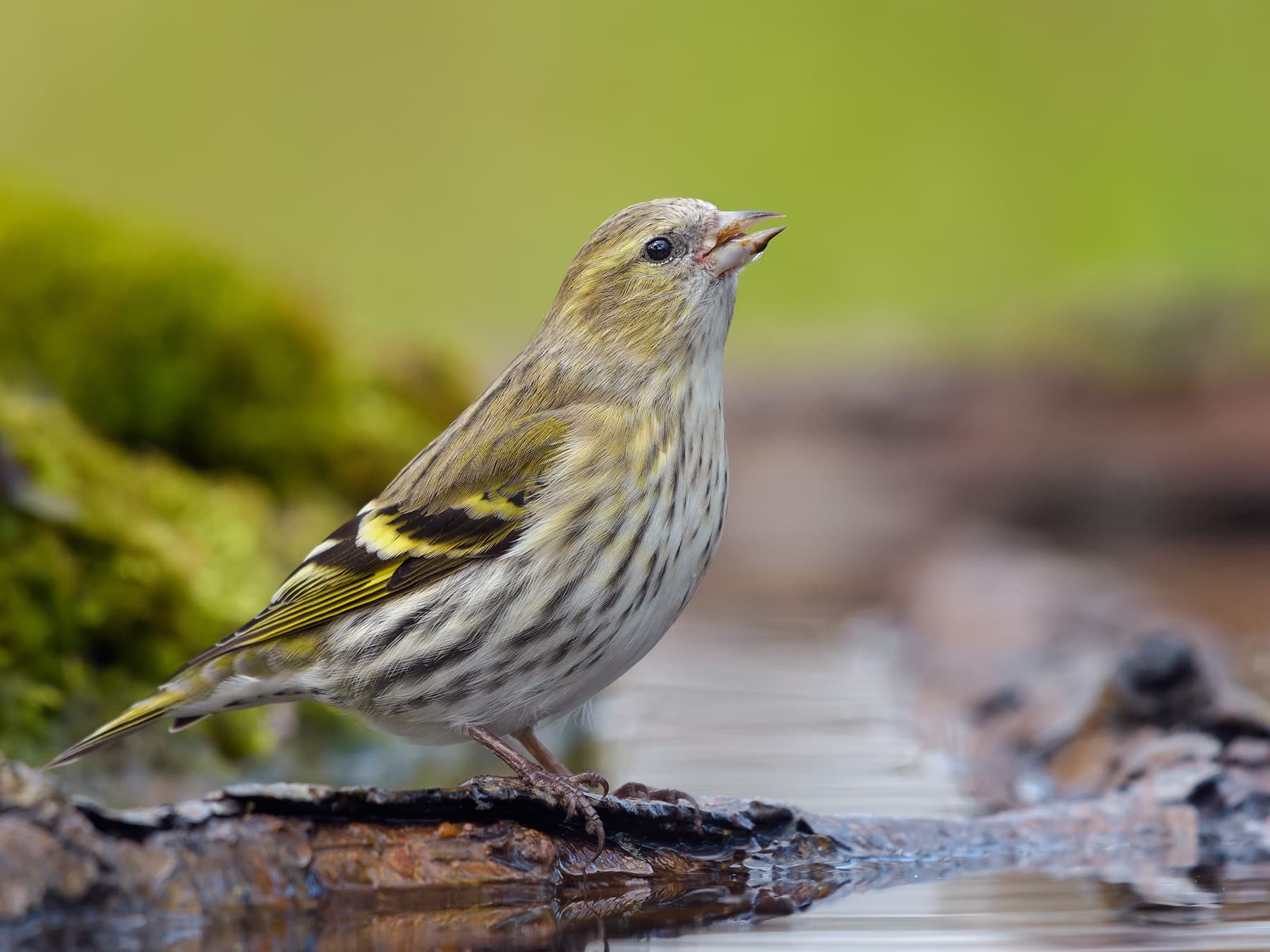
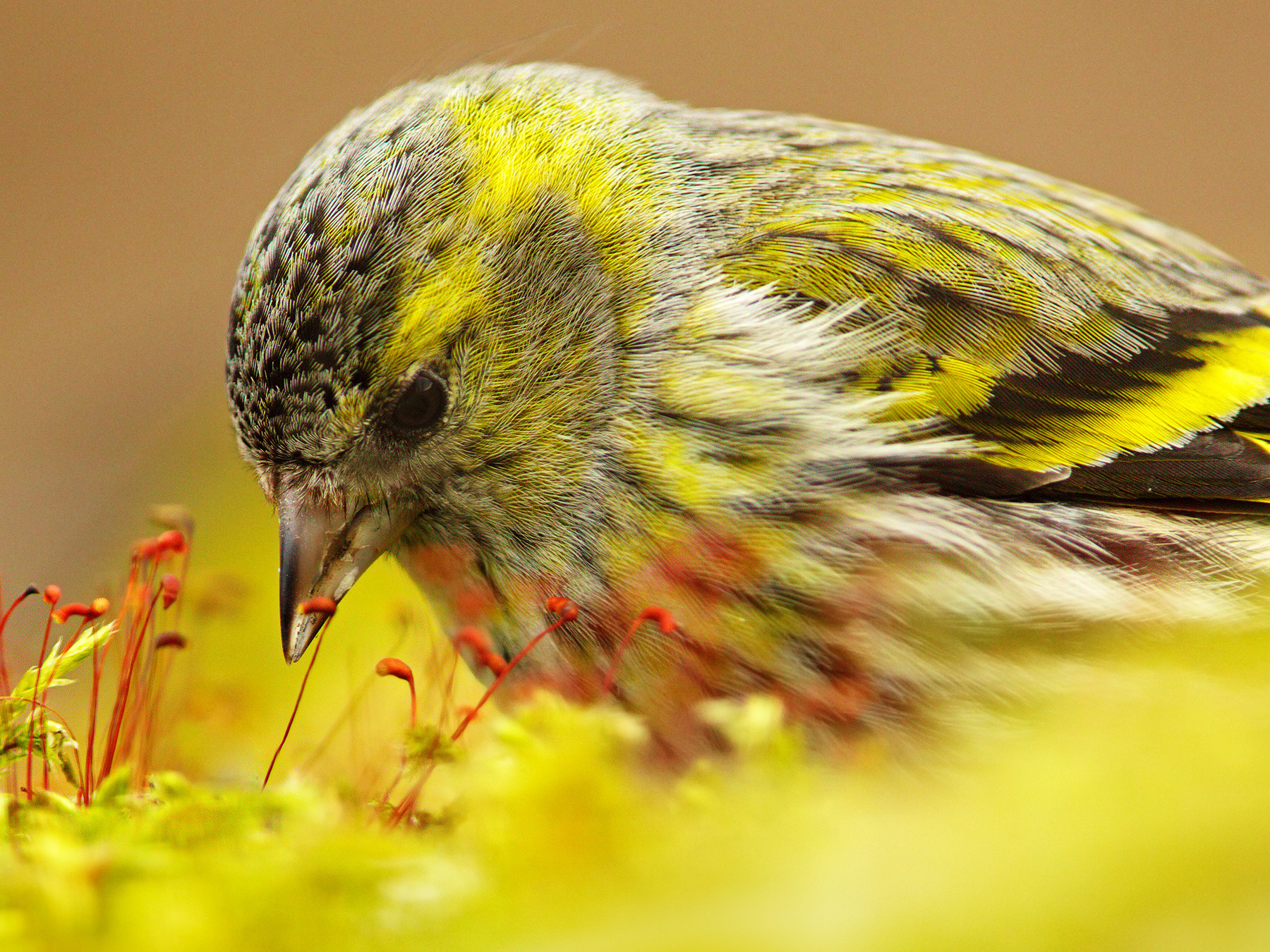
Siskins are small, stocky finches with slim, sharply pointed conical bills and forked tails. Both sexes have yellowish upperparts with whitish underparts and streaks on their flanks and bellies. They are naturally tame, so getting a good view of these active birds is fairly easy.
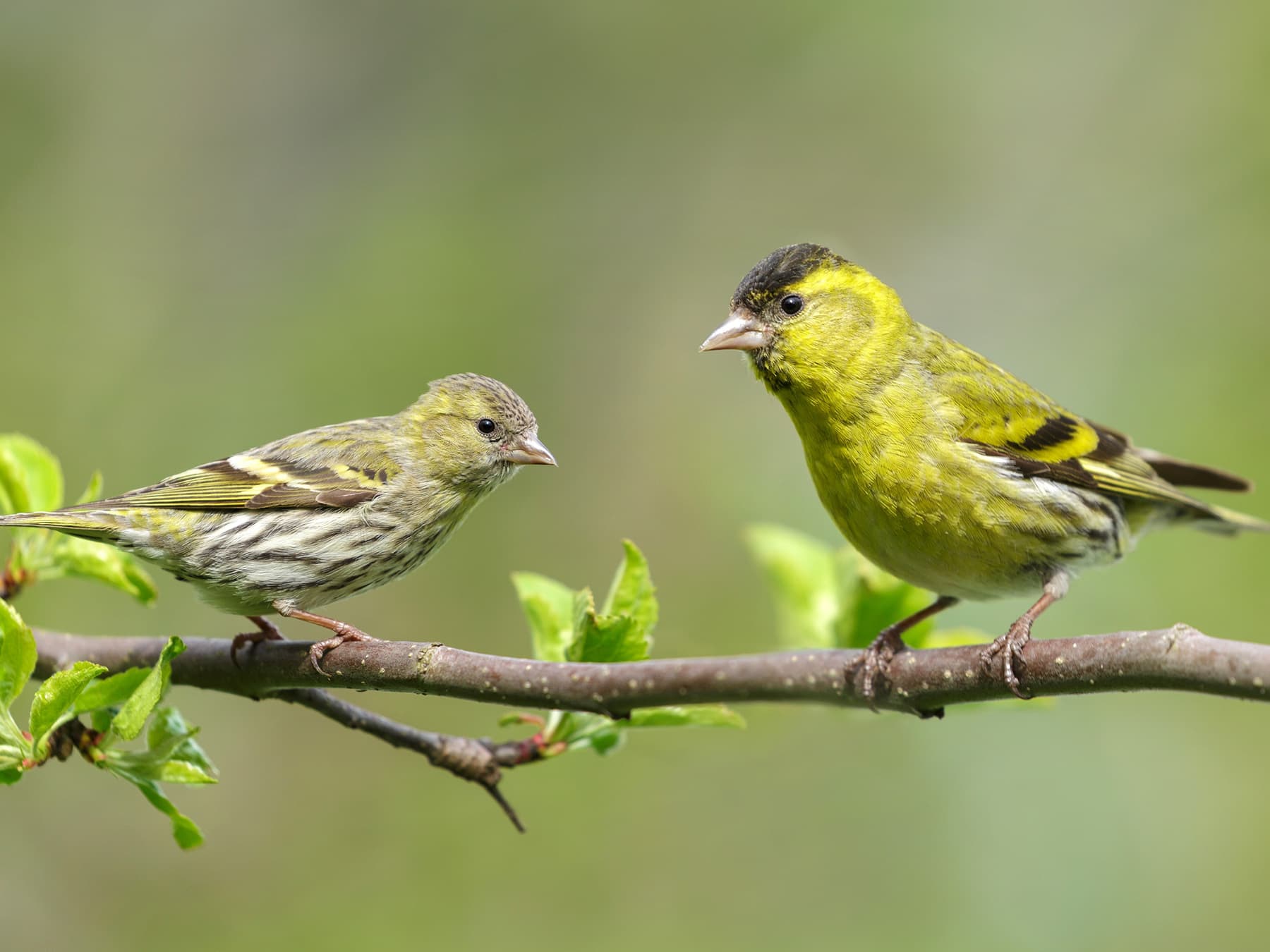
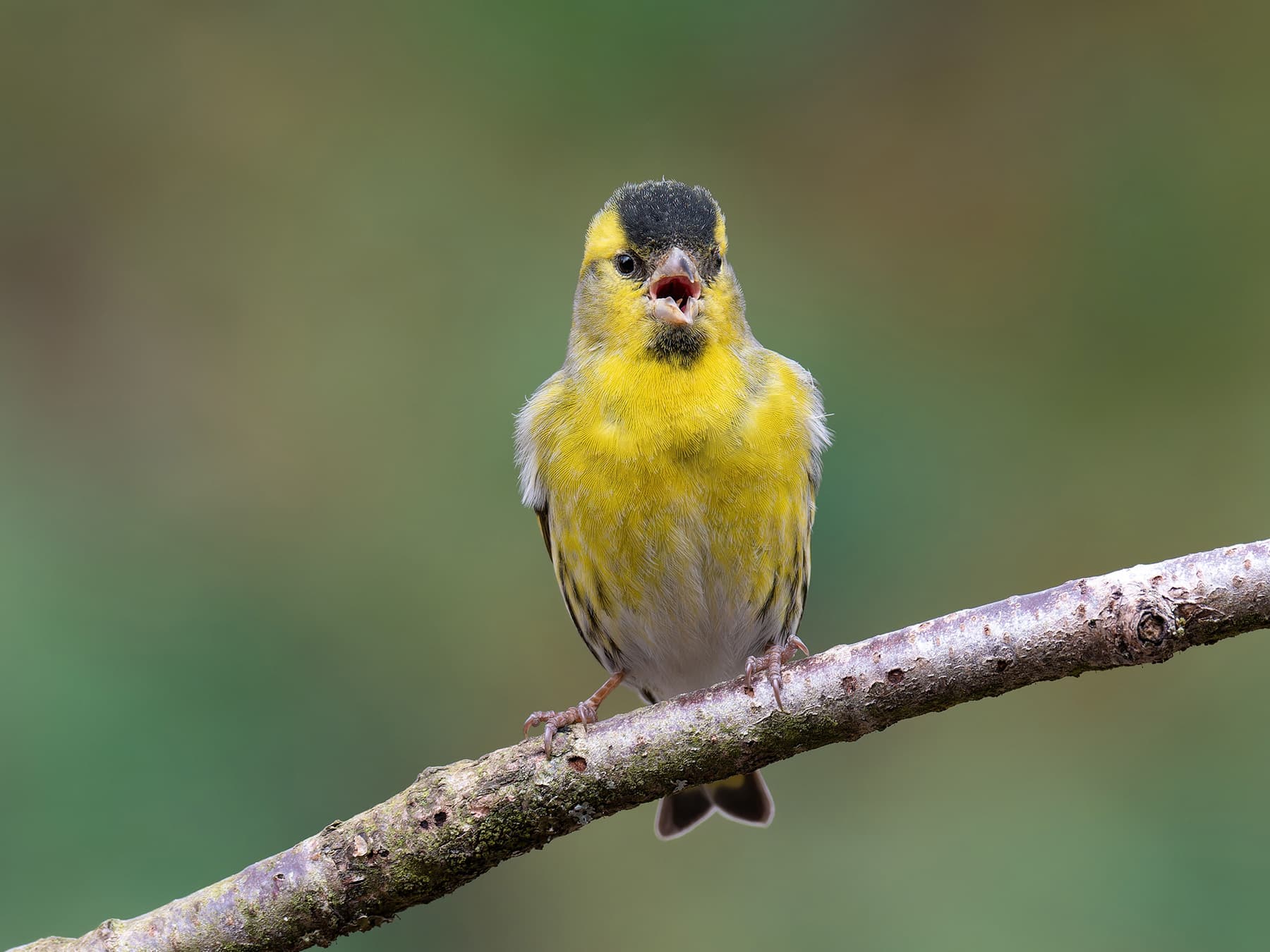
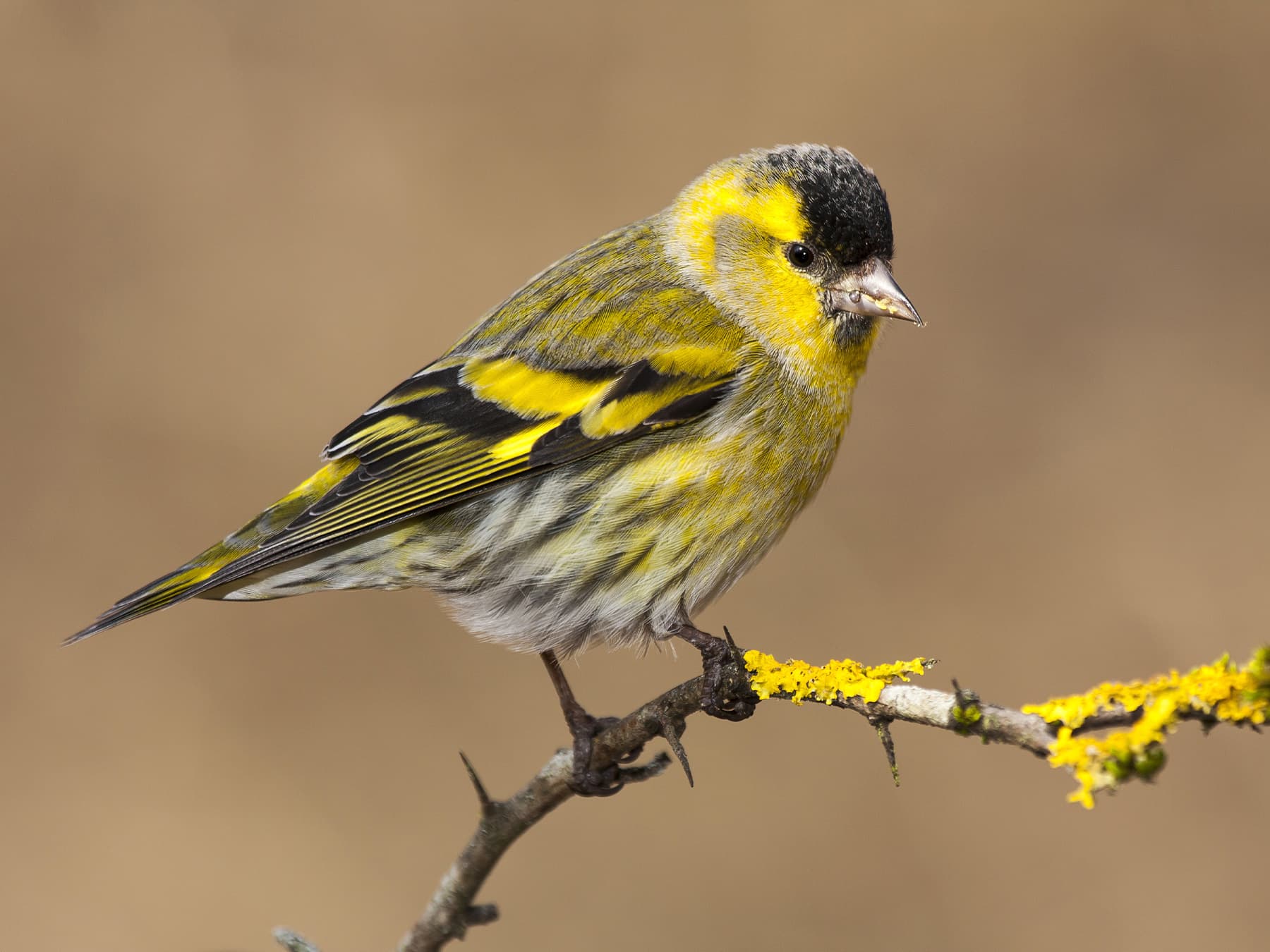
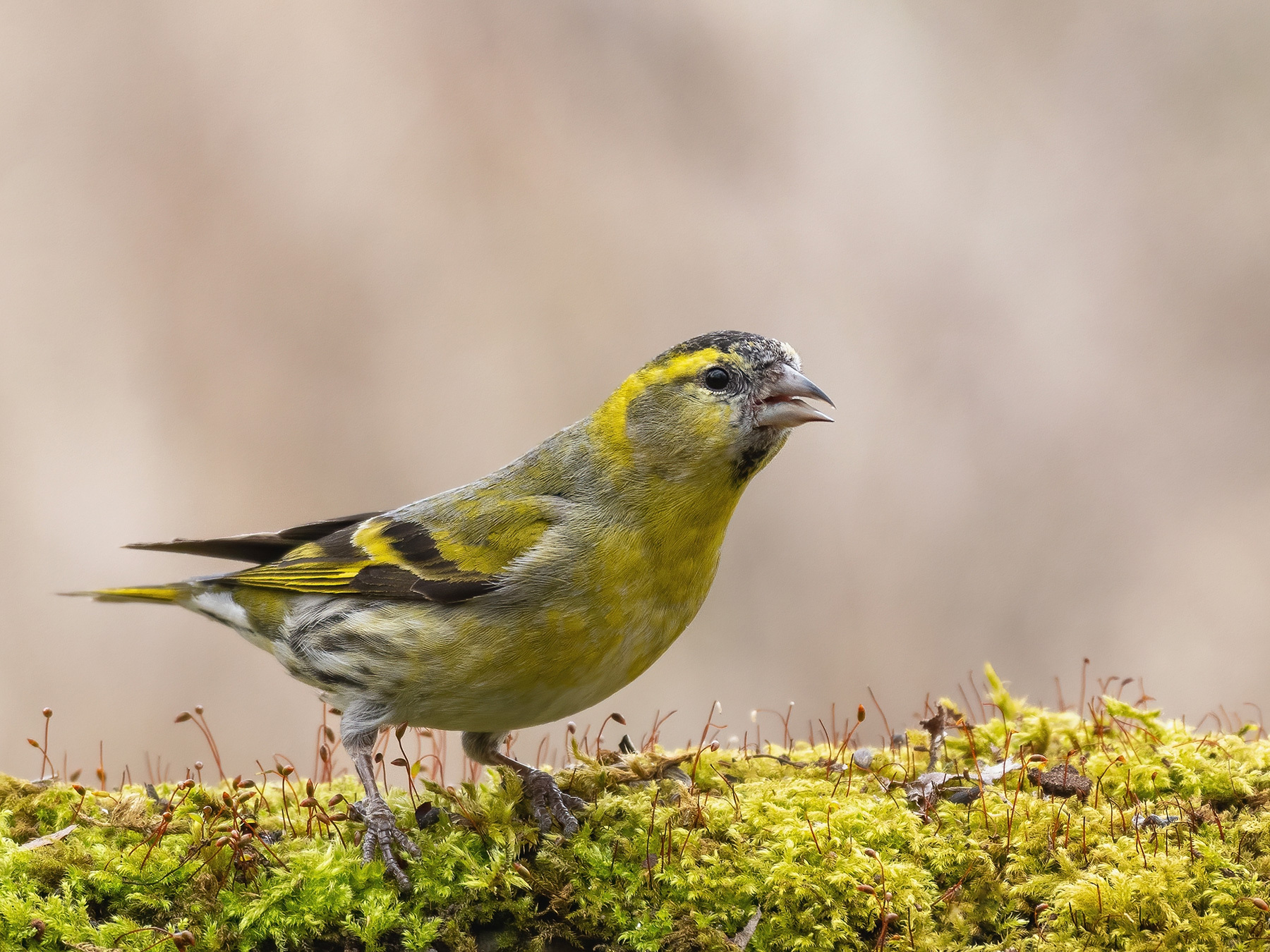
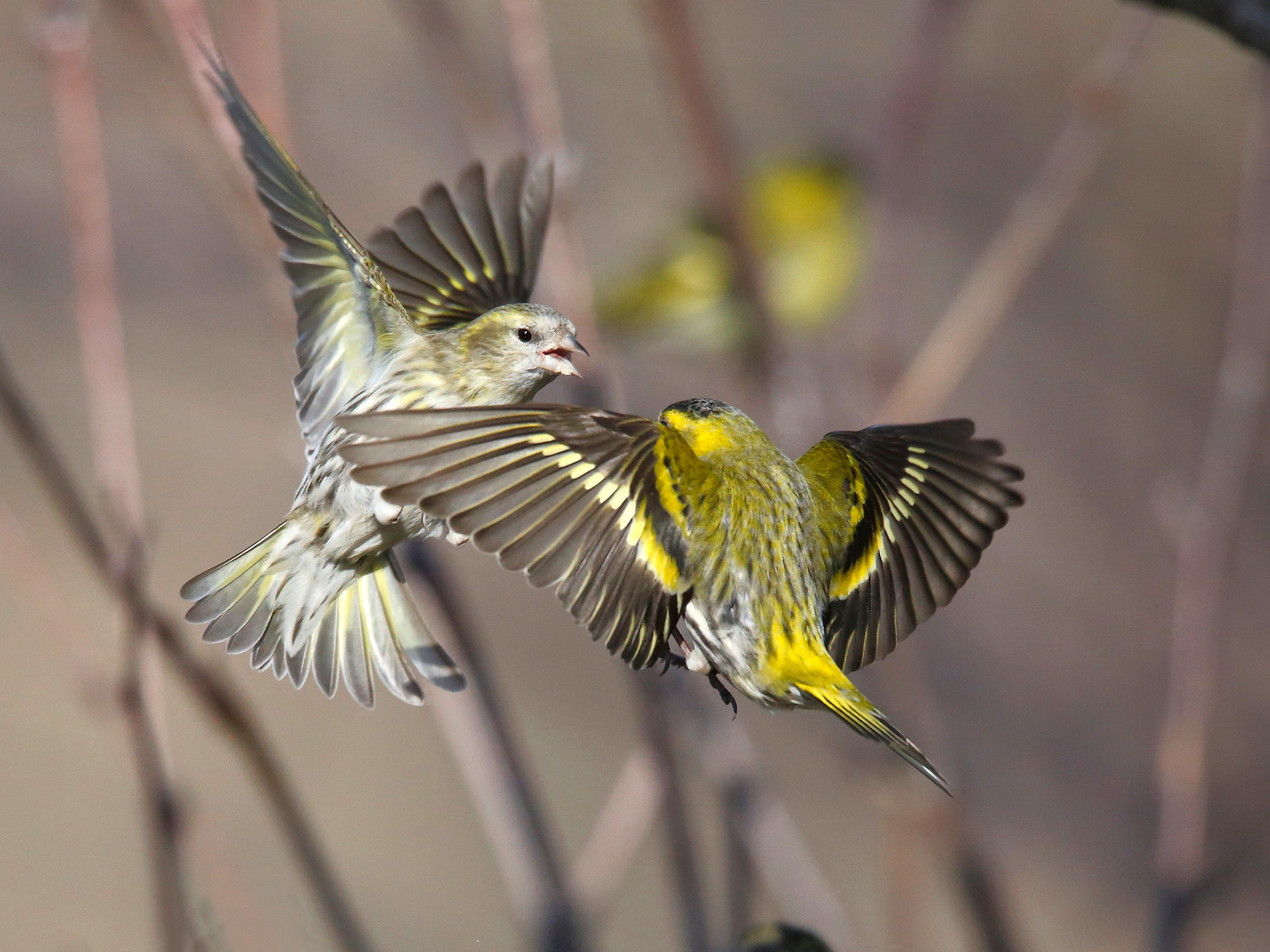
Male Siskins are particularly colourful little birds with yellow markings on their tail, wings, rump, and face that stand out boldly both in flight and when perched. They have a greenish upper back and a black cap, and their wings are mostly black with a bold yellow streak running along the centre.
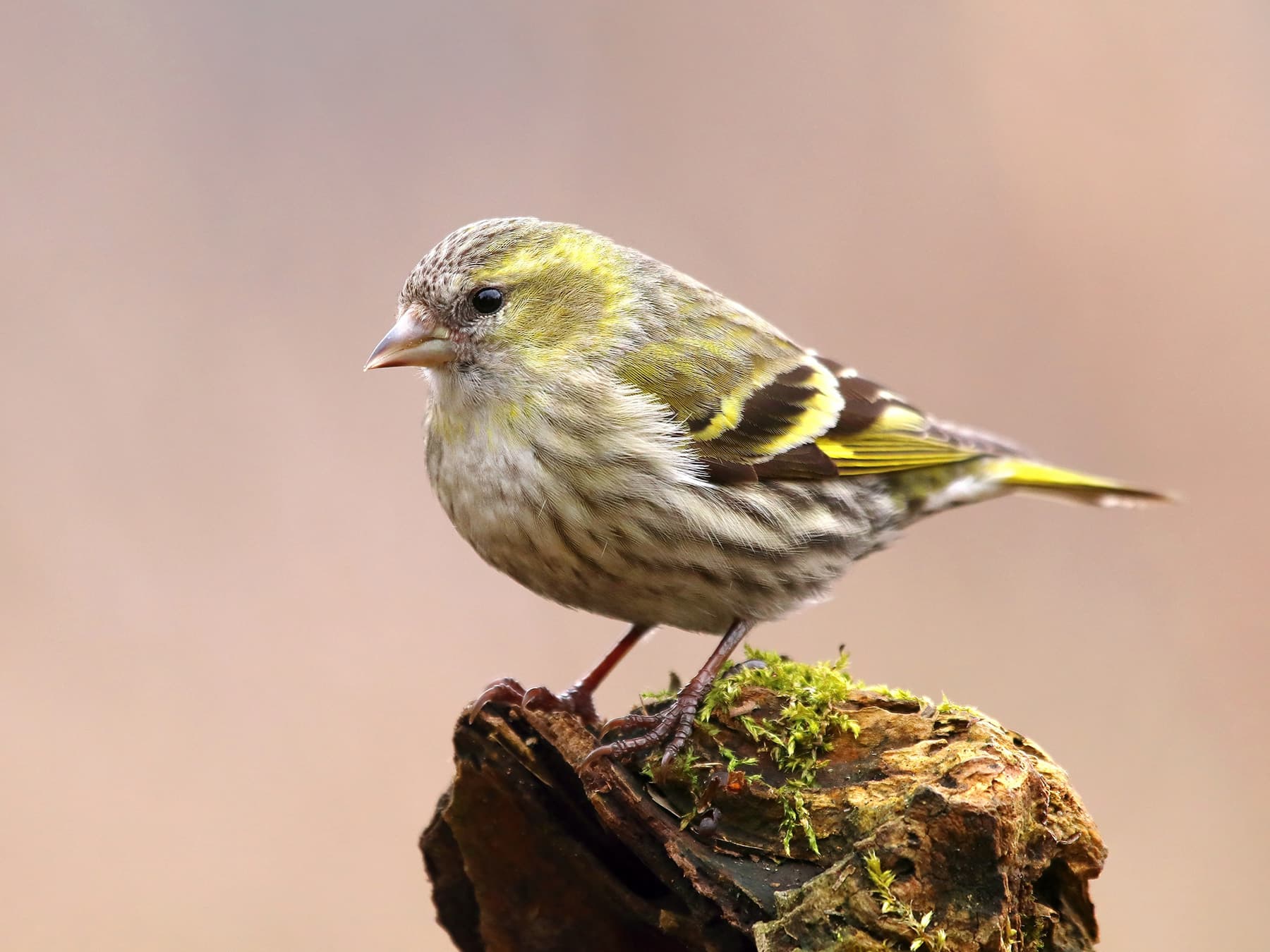
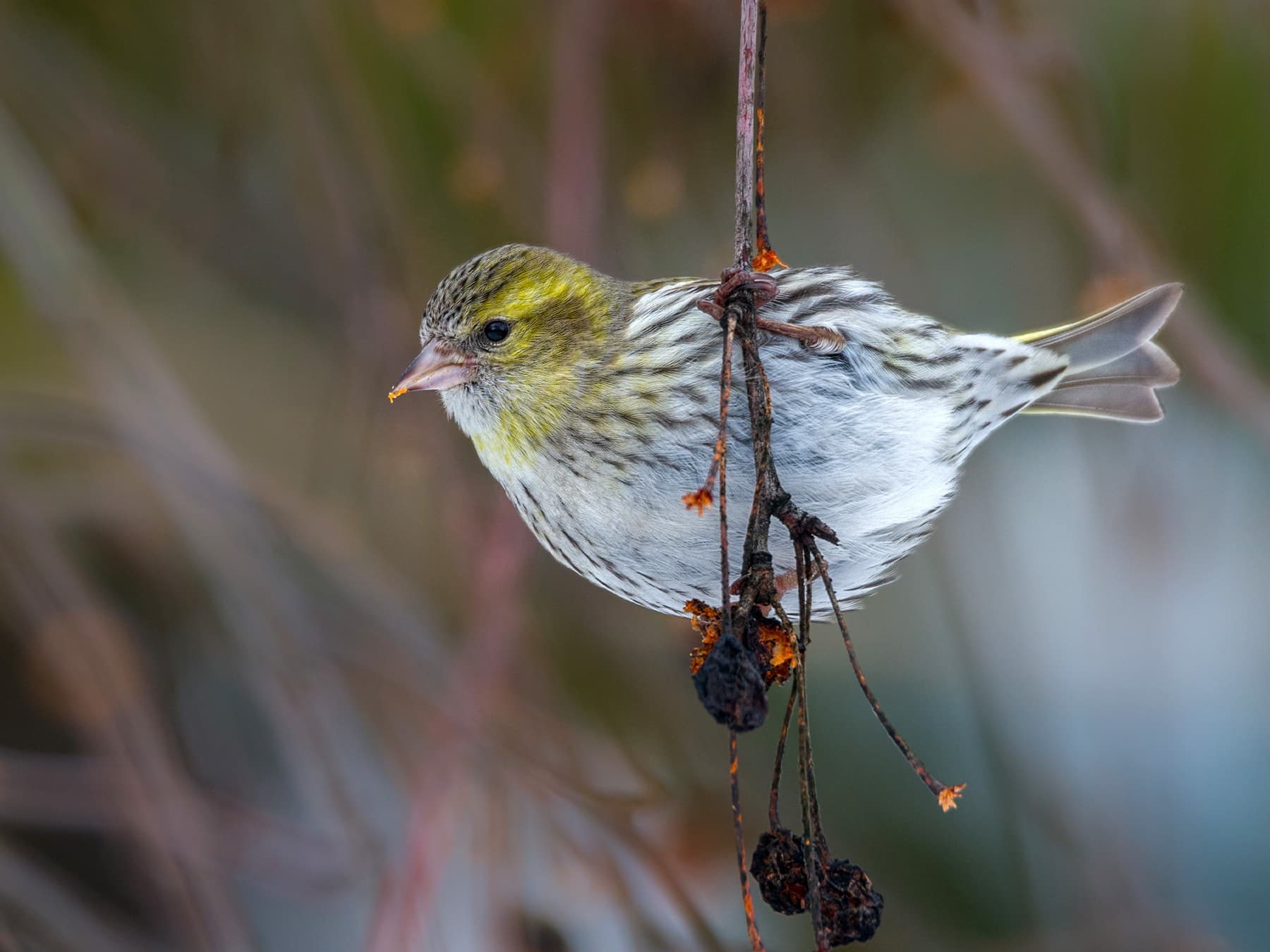
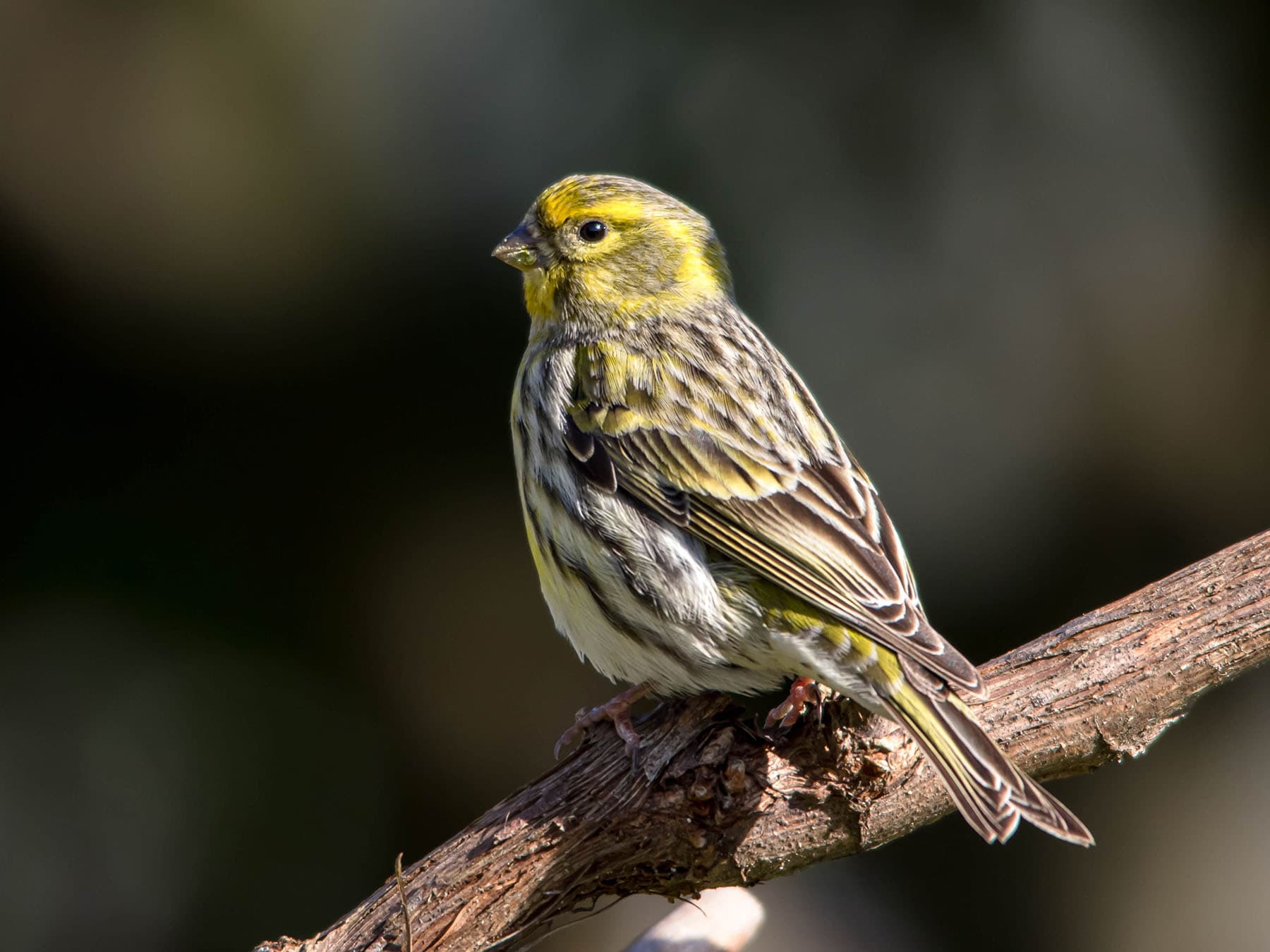
Females are duller than males with a hint of yellowish green on the upperparts and no black cap. Their underparts and back are heavily streaked. They are slightly smaller than males, although plumage differences are a much better way to distinguish them. Juveniles are similar to females but more heavily streaked and generally duller.
The Siskin is most often confused with the Greenfinch, which is about 50% larger. Check out this comparison guide for more useful tips to tell them apart.
How big are Siskins?
Siskins are small, stout-bodied songbirds, slightly smaller than the Goldfinch.
Length
Most adult Siskins have a body length of 11 to 12 centimetres.
Weight
These stocky little birds weigh 11 to 18 grams.
Wingspan
Adult wingspans measure 20 to 23 centimetres.
Its size
Adults- Length
- 11–12.5 cm
- Wingspan
- 20–23 cm
- Weight
- 10–18 g
Its song and calls
What sound does a Siskin make?
Siskins are vocal birds that call loudly in flight, producing clear, two-noted calls that rise or fall in pitch. The male’s song is a complex mix of twittering with the odd jarring note thrown in. They sing in flight or from a prominent perch so that their voice will carry.
- Call0:00 / 0:13
Recorded in Abruzzo, Italy · October 2023
When and where to see it
OctoberArriving
Most recorded in October
- 1. Longford2.5%
- 2. Herefordshire1.9%
- 3. Rhondda, Cynon, Taff1.8%
- 4. Midlothian1.6%
- 5. Carlow1.4%
Each dot is a county, state or province: the bigger and darker, the larger the bird’s share of that place’s bird records that month. Grey dots: no regular records. The ringed point is the centre of the bird’s records this month; the arrow shows how it moved since last month, and the dashed loop its path through the year. “Arrivals” colours places where it becomes regular this month (orange) or is in its last regular month (grey). GBIF eBird Observation Dataset, 2019–2024. Map data: Natural Earth, US Census Bureau; place centres © OpenStreetMap contributors.
In your area
See when the Eurasian Siskin is recorded in your county, state or province.
How often the Eurasian Siskin turns up in the UK and Ireland through the year, from birdwatchers' records.
United Kingdom
Resident · all year · most records in October
Ireland
Resident · all year · most records in February
Show as a table
| Month | United Kingdom | Ireland |
|---|---|---|
| January | 0.41% (regular) | 0.36% (regular) |
| February | 0.49% (regular) | 0.49% (regular) |
| March | 0.51% (regular) | 0.48% (regular) |
| April | 0.27% (regular) | 0.34% (regular) |
| May | 0.22% (regular) | 0.27% (regular) |
| June | 0.26% (regular) | 0.26% (regular) |
| July | 0.22% (regular) | 0.26% (regular) |
| August | 0.12% (regular) | 0.11% (regular) |
| September | 0.23% (regular) | 0.16% (regular) |
| October | 0.54% (regular) | 0.33% (regular) |
| November | 0.50% (regular) | 0.28% (regular) |
| December | 0.39% (regular) | 0.28% (regular) |
Recorded regularly in
Worldwide: recorded regularly in 73 countries
Countries where it was recorded in at least 3 of the 6 years 2019–2024. Linked countries have their own bird list.
Europe (47)
- Åland Islands
- Albania
- Andorra
- Austria
- Belarus
- Belgium
- Bosnia & Herzegovina
- Bulgaria
- Croatia
- Czechia
- Denmark
- Estonia
- Faroe Islands
- Finland
- France
- Germany
- Gibraltar
- Greece
- Hungary
- Iceland
- Ireland
- Isle of Man
- Italy
- Jersey
- Kosovo
- Latvia
- Liechtenstein
- Lithuania
- Luxembourg
- Malta
- Moldova
- Montenegro
- Netherlands
- North Macedonia
- Norway
- Poland
- Portugal
- Romania
- Russia
- Serbia
- Slovakia
- Slovenia
- Spain
- Sweden
- Switzerland
- Ukraine
- United Kingdom
Asia (23)
- Armenia
- Azerbaijan
- China
- Cyprus
- Georgia
- Hong Kong SAR China
- Iran
- Iraq
- Israel
- Japan
- Jordan
- Kazakhstan
- Kuwait
- Kyrgyzstan
- Lebanon
- Mongolia
- Palestinian Territories
- South Korea
- Taiwan
- Tajikistan
- Turkey
- United Arab Emirates
- Uzbekistan
Data: EOD – eBird Observation Dataset (Cornell Lab of Ornithology), accessed via GBIF.org, CC BY 4.0. Records from 2019–2024, aggregated and filtered by Birdfact. How these lists are made
What is the habitat of a Siskin?
Siskins are primarily birds of coniferous (pine, spruce, etc.) forests, and they have adapted well to managed plantations. They also visit mixed woodlands and gardens, especially in the winter when natural food sources are scarce.
What is the range of a Siskin?
Siskins are widespread in Europe and Asia, occurring in two widely separated regions. The western population lives in much of Europe and Western Asia, reaching North Africa in the south. They also range across most of the United Kingdom, including England, Wales, Scotland, and Northern Ireland.
The eastern population occurs mostly in Russia, China, Japan, and North and South Korea. Even with such a wide gap between their ranges in the east and west, Eurasian Siskins have not been split into separate subspecies.
Where do Siskins live?
Siskins are mostly tree dwellers. They are agile birds that forage actively in the upper branches, and although they may feed among lower vegetation and descend to drink, they rarely forage on the ground.
How rare are Siskins?
Siskins are common birds in the United Kingdom, especially in years when poor food crops see large numbers visit from abroad. Their numbers have increased, and their range has expanded locally, probably due to the establishment of conifer plantations. According to Birdlife International, their global population could number well over 49 million individuals.
Where can you see Siskins in the UK?
Siskins occur practically throughout the United Kingdom but are most common in conifer forests in the north and west. While they may feed in herbs and weeds, it’s best to look and listen for these birds up high among the branches of Alders, Spruces, and Pines.
Migration
Do Siskins migrate?
Siskins are both resident and migratory birds. They can be seen throughout the year in the United Kingdom, and numbers increase in the winter when birds arrive from mainland Europe. Their movements can be irregular, governed by food availability.
Are Siskins native to the UK?
The Siskin is native to the United Kingdom.
Tips for seeing it
- Look for Siskins in coniferous forests or mixed woodlands
- Listen for their distinctive twittering calls and chattering song
- Watch for their acrobatic feeding behaviour on alder and birch trees
- In the UK, check garden feeders during the winter months
- Observe flocking behaviour with other finch species
What it eats
What do Siskins eat?
Siskins are primarily seed-eaters, although they will take some fruit and insects. These birds usually feed on the seeds of conifers and deciduous trees, although they may visit garden bird feeders in the winter.
They have rather delicate bills and prefer finer foods like niger seeds at bird feeders. However, they will also accept sunflower hearts and shelled peanuts.
What do Siskin chicks eat?
Like many seed-eating birds, Siskin parents begin by feeding their chicks small insects. They will wean the young birds onto their adult diet (conifer seeds) as they mature.
Nesting and breeding
Where do Siskins nest?
Siskins are breeding residents in suitable habitats across the United Kingdom. They build their nests high above the ground in trees, typically in a conifer. Pairs might nest alone or in the company of several others, and their nest is a neat cup of plant material, spider webs, and animal hair.
When do Siskins nest?
Siskins nest in the spring and summer from March until August. They time their breeding season to coincide with good food availability, and in most years, they can raise a second brood. Siskin eggs hatch after just under a fortnight, and the helpless young chicks remain in the nest for a further two weeks.
What do Siskin eggs look like?
Siskins lay one or two clutches per year. Each clutch consists of three to five speckled blue eggs, each measuring about 16 millimetres long and 12 millimetres wide.
Do Siskins mate for life?
Siskins are monogamous in the breeding season, although they probably choose a new mate each year.
Behaviour
Are Siskins aggressive?
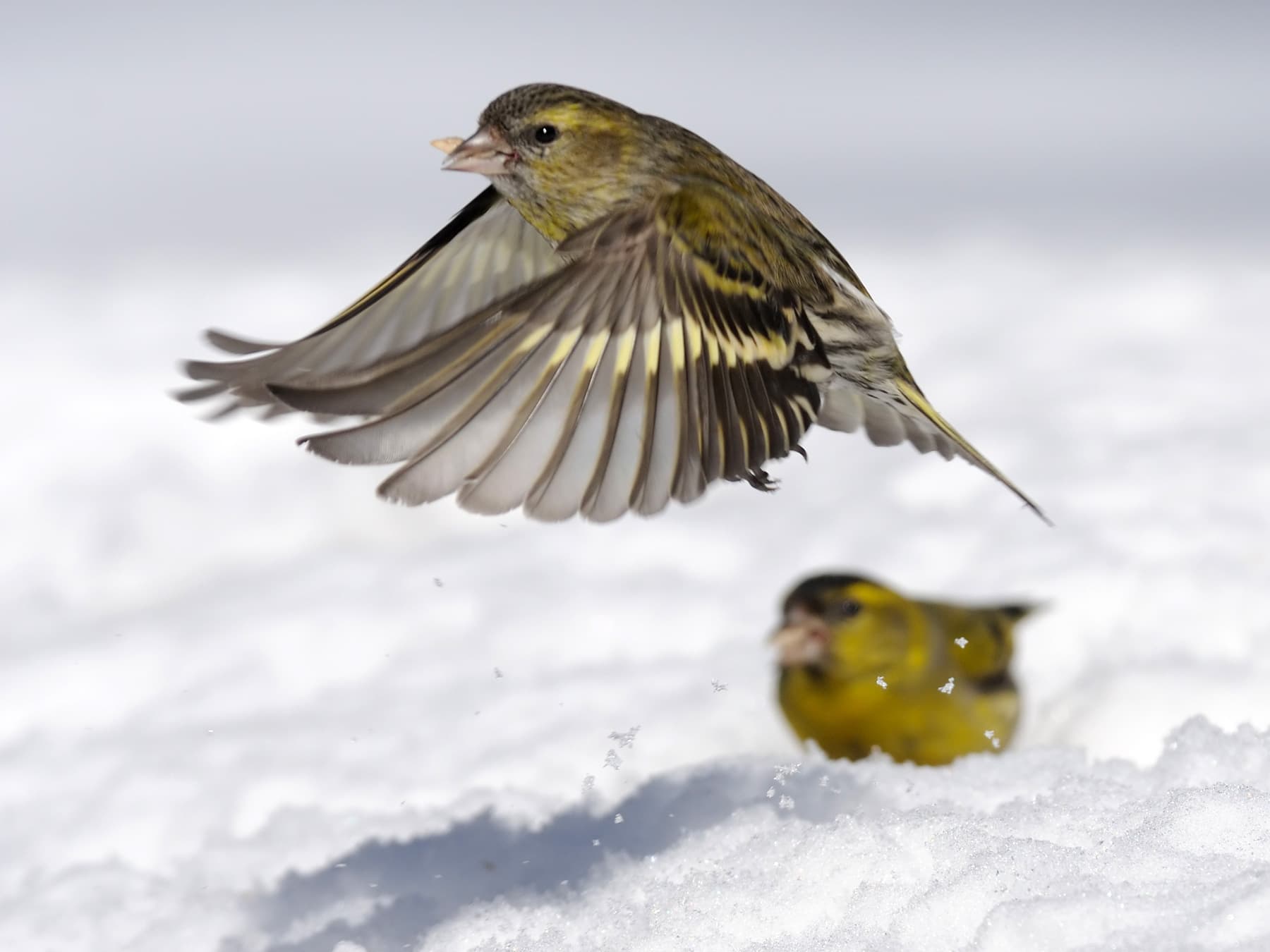
Siskins are highly social little birds, particularly in the non-breeding season when hundreds may gather, often in mixed-species flocks. They are not particularly territorial, often nesting in loose groups, although they do have a dominance structure within the group.
Lifespan and predators
How long do Siskins live?
Siskins have a life expectancy of about two years, although they can survive for over 13 years in captivity.
What are the predators of Siskins?
Siskins find themselves rather low on the food chain and are vulnerable to a variety of predators. Domestic cats and Sparrowhawks probably feed on adults while their young and eggs are eaten by squirrels.
Are Siskins protected?
Siskins are protected by the Wildlife and Countryside Act in the United Kingdom.
Are Siskins endangered?
Siskins are a ‘Least Concern’ species on the IUCN Red List, although their global population is thought to be decreasing. They have a green conservation status in the United Kingdom.
Conservation
While currently listed as Least Concern, Eurasian Siskins face threats from habitat loss due to deforestation and climate change.
Conservation efforts focus on protecting coniferous forests and promoting sustainable forestry practices. In some areas, winter feeding in gardens helps support populations during harsh weather.
Similar birds
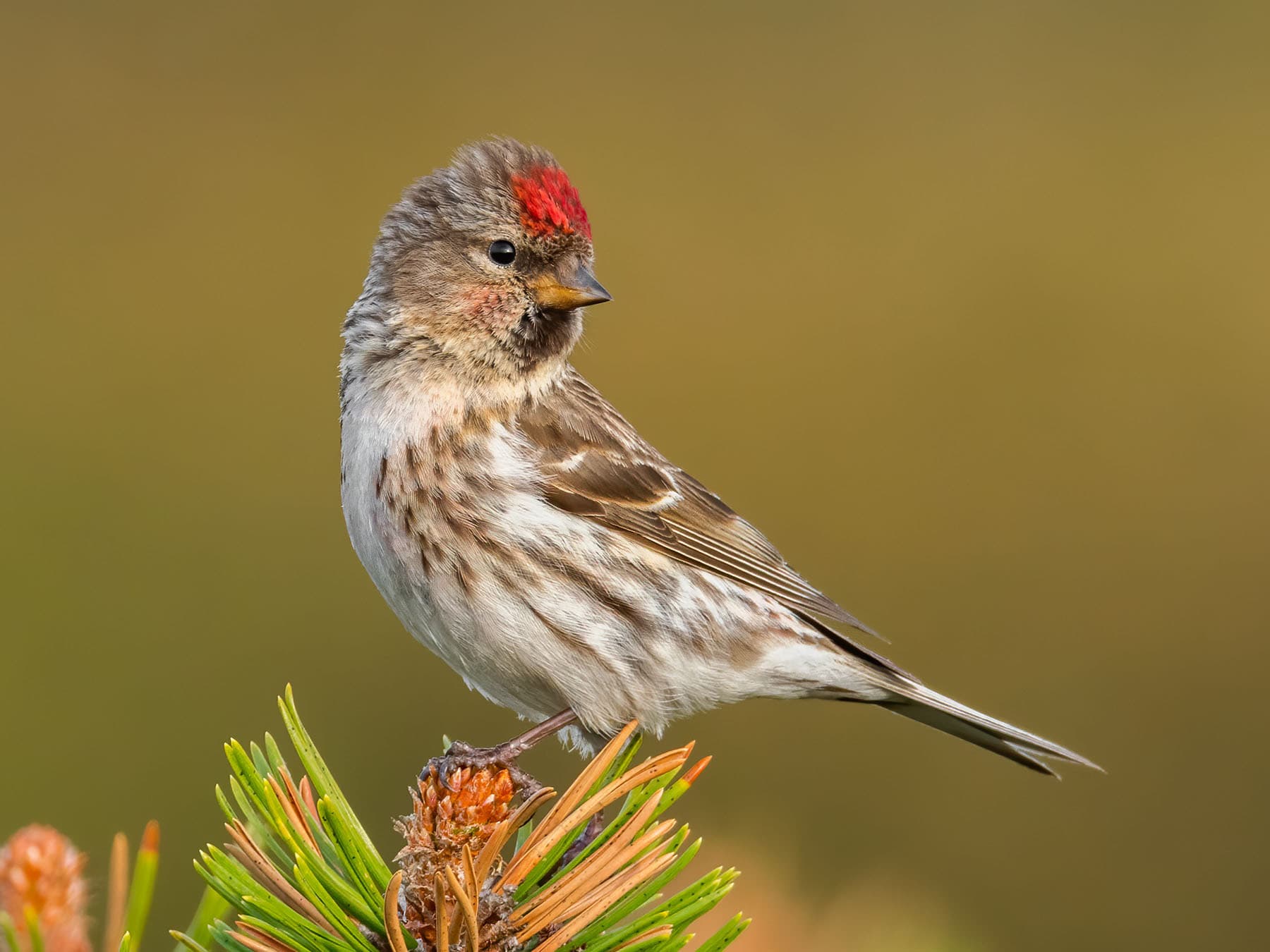
Often mistaken for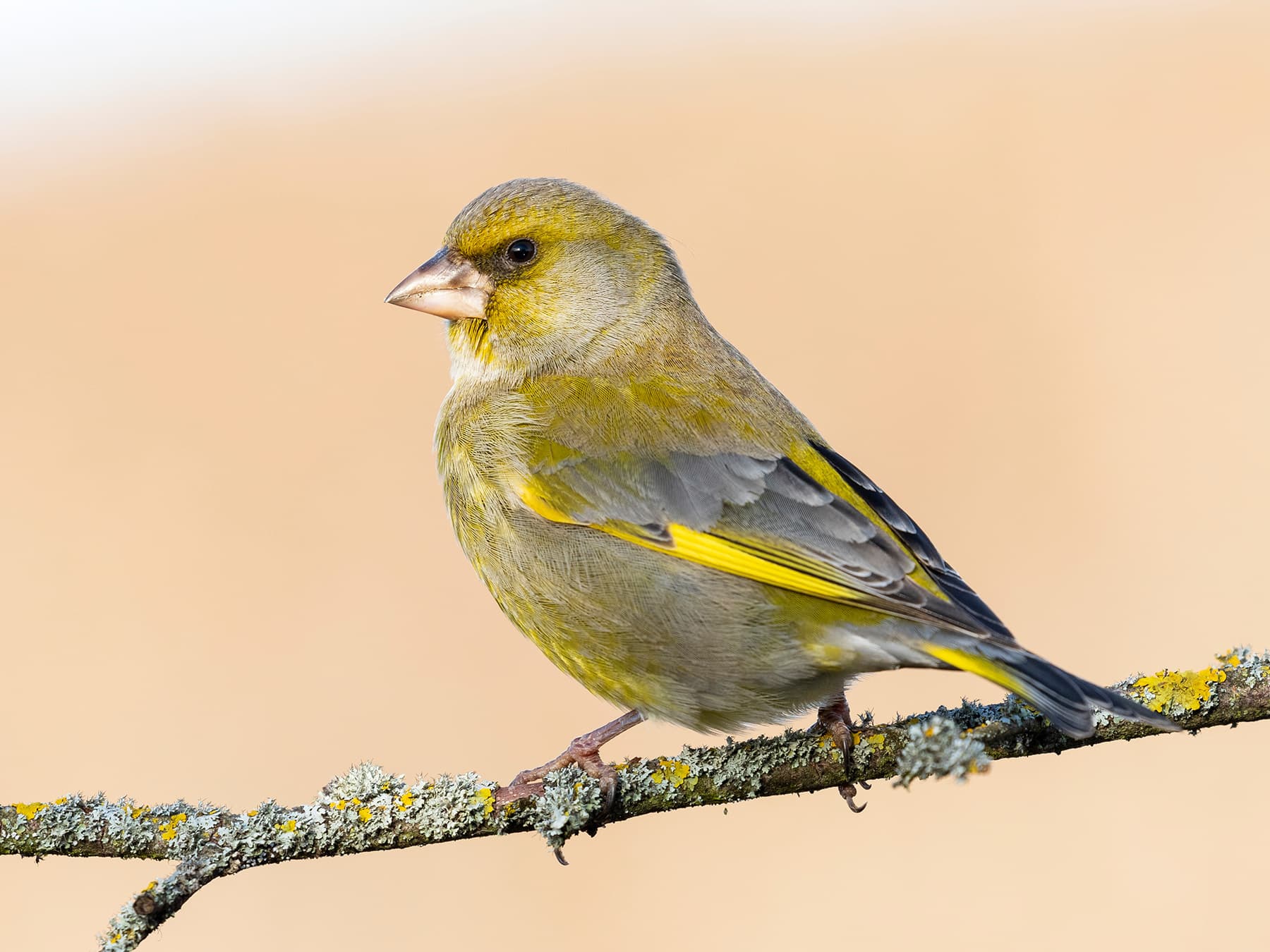
More photos
4 photos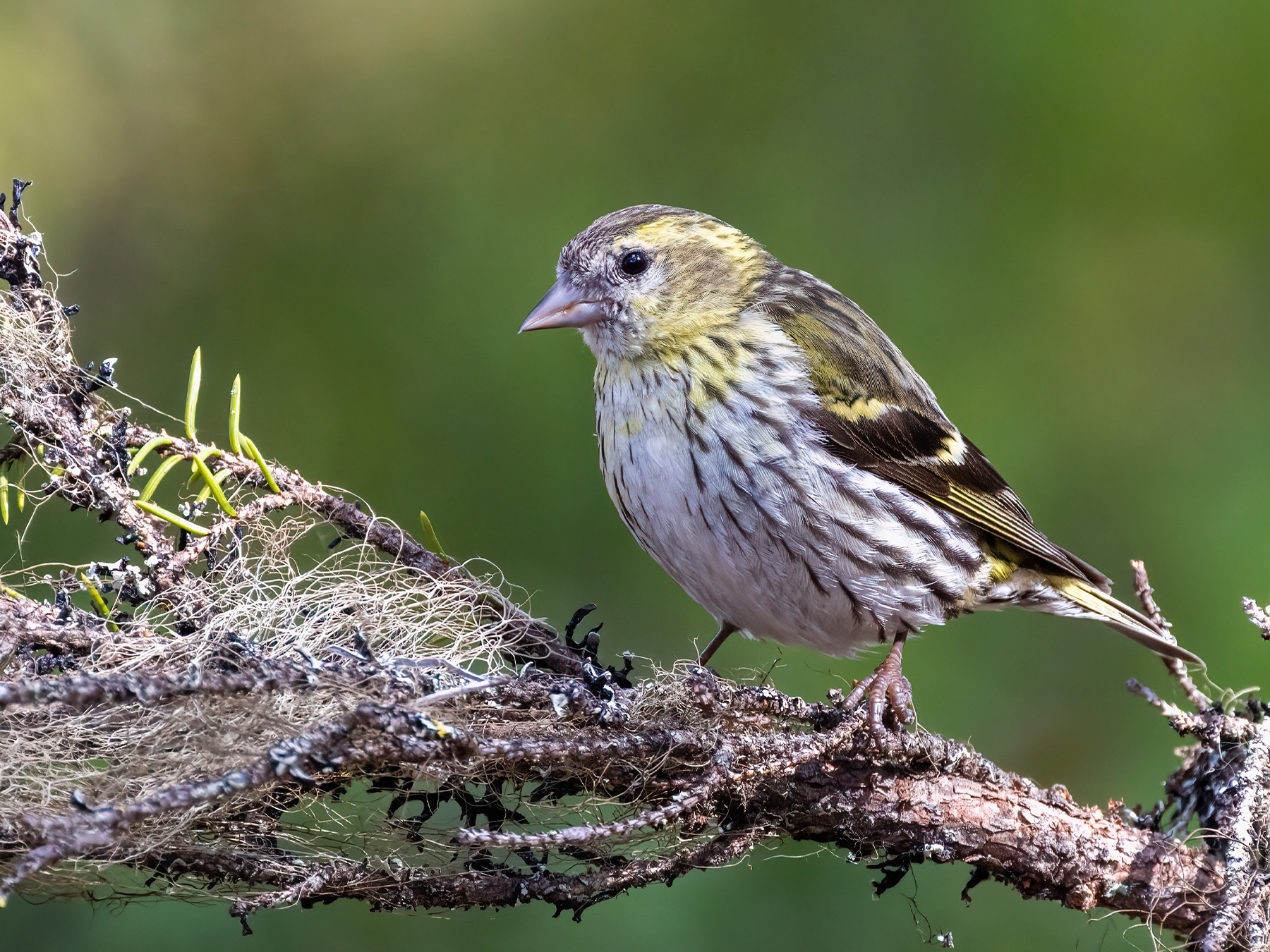
Eurasian Siskin guides
3 guidesQuick facts
- Length
- 11–12.5 cm
- Wingspan
- 20–23 cm
- Weight
- 10–18 g
- Lifespan
- 2–3 years · oldest recorded 13.5 years
- Family
- Finches
- Migration
- Partial migrant
- Global status (IUCN)
- Least Concern
- World population
- 49,000,000 - 77,000,000 mature individuals
- Population trend
- Decreasing
- Also called
- Siskin
- Scientific name
- Spinus spinus
Sources
4- 1BirdLife International. 2017. Spinus spinus (amended version of 2016 assessment). The IUCN Red List of Threatened Species 2017: e.T22720354A111126041. Source (opens in a new tab)
- 2EBCC (2015)
- 3BirdLife International. 2017. Spinus spinus (amended version of 2016 assessment). The IUCN Red List of Threatened Species 2017: e.T22720354A111126041. Source (opens in a new tab)
- 4Fransson et al., EURING list of longevity records for European birds (2010) Source (opens in a new tab)

Checked by
Nathan Cope, founder and editor
Nathan founded Birdfact and leads its writers and contributors in the UK, the US and Canada. He has watched and studied birds for more than ten years, and checks every article and species guide before it’s published.