


Yellowhammer
Emberiza citrinella
By the Birdfact teamChecked by Nathan Cope
On this page14 sections
How to recognise it
What do Yellowhammers look like?
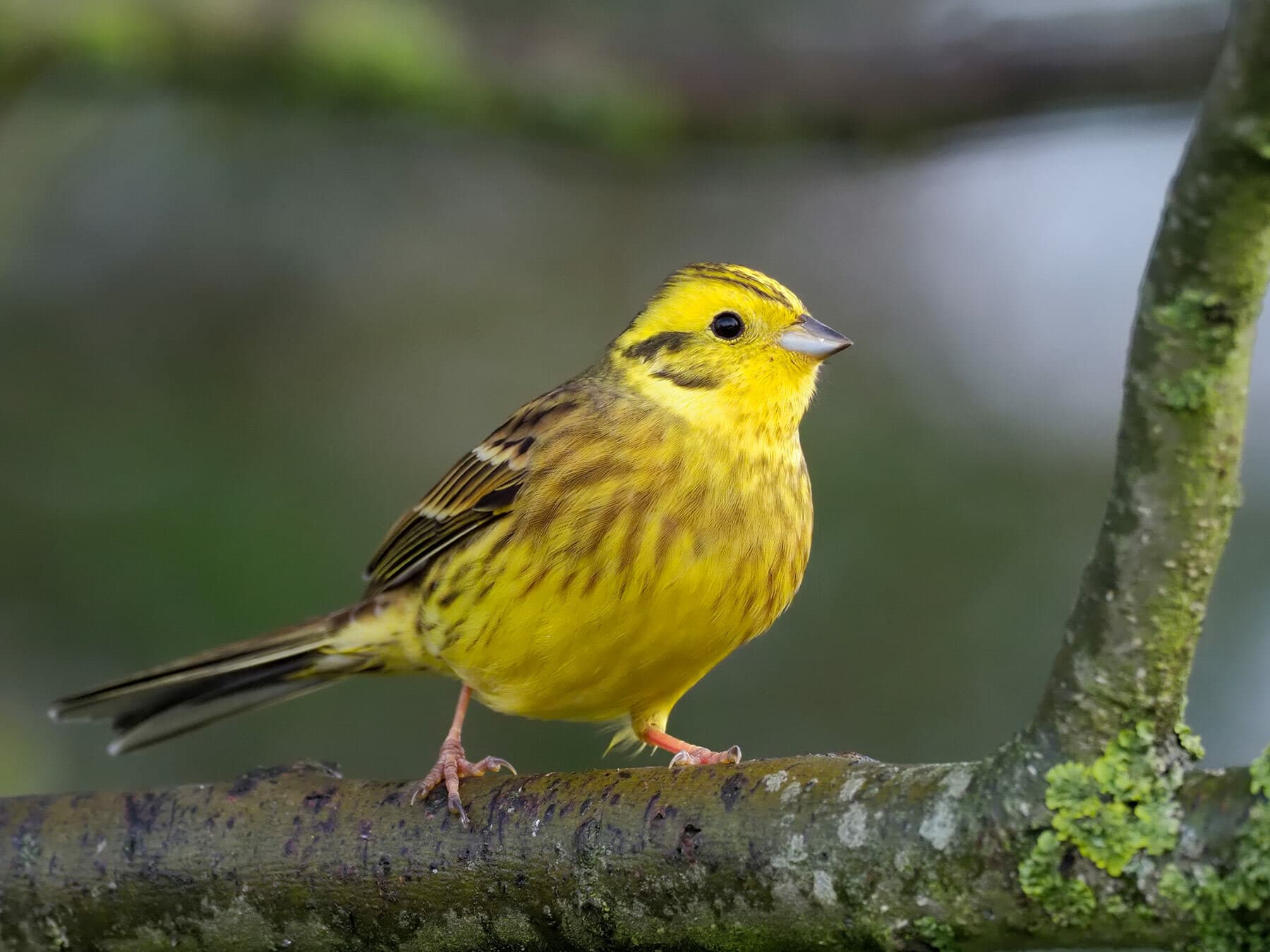
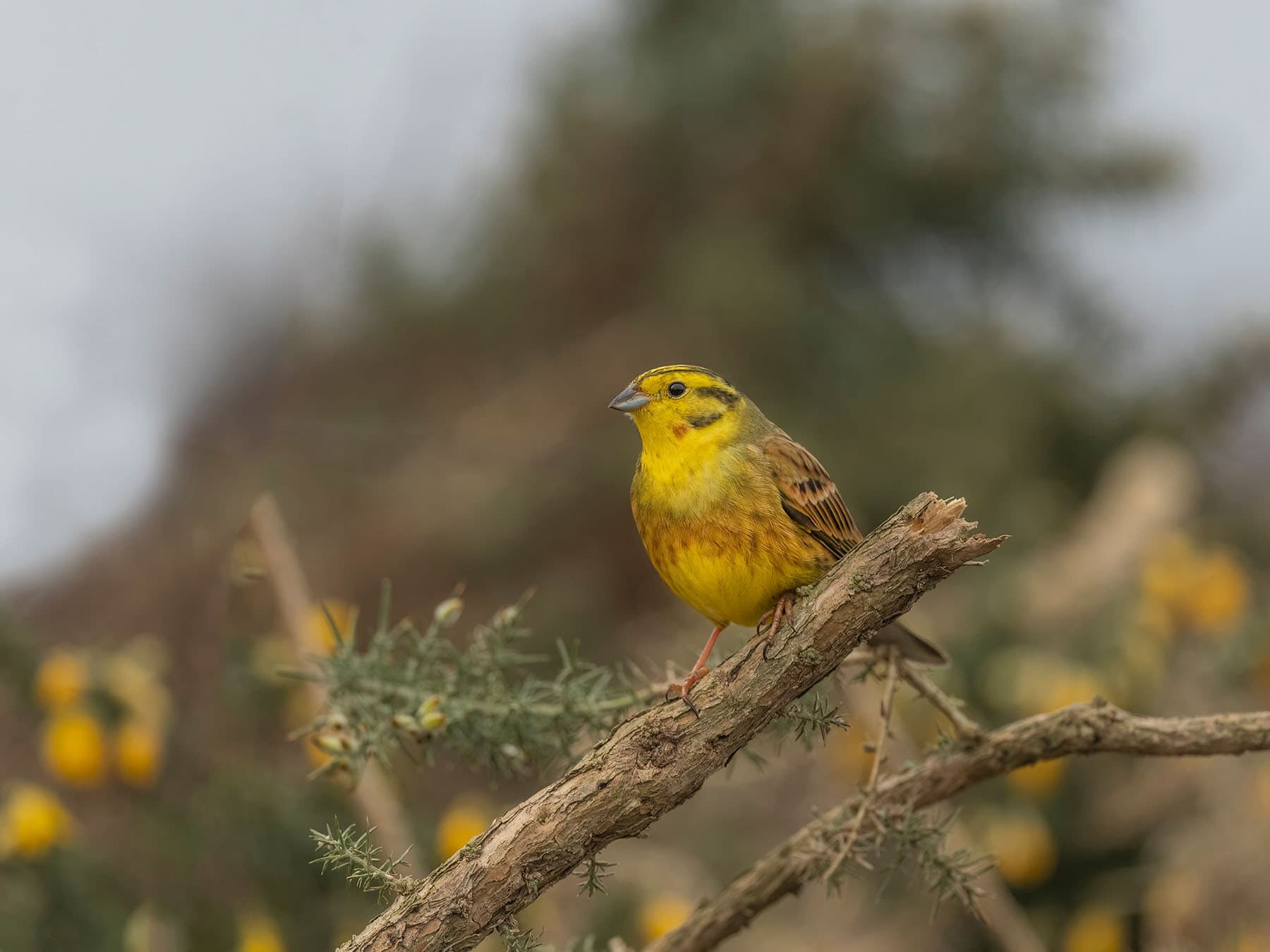
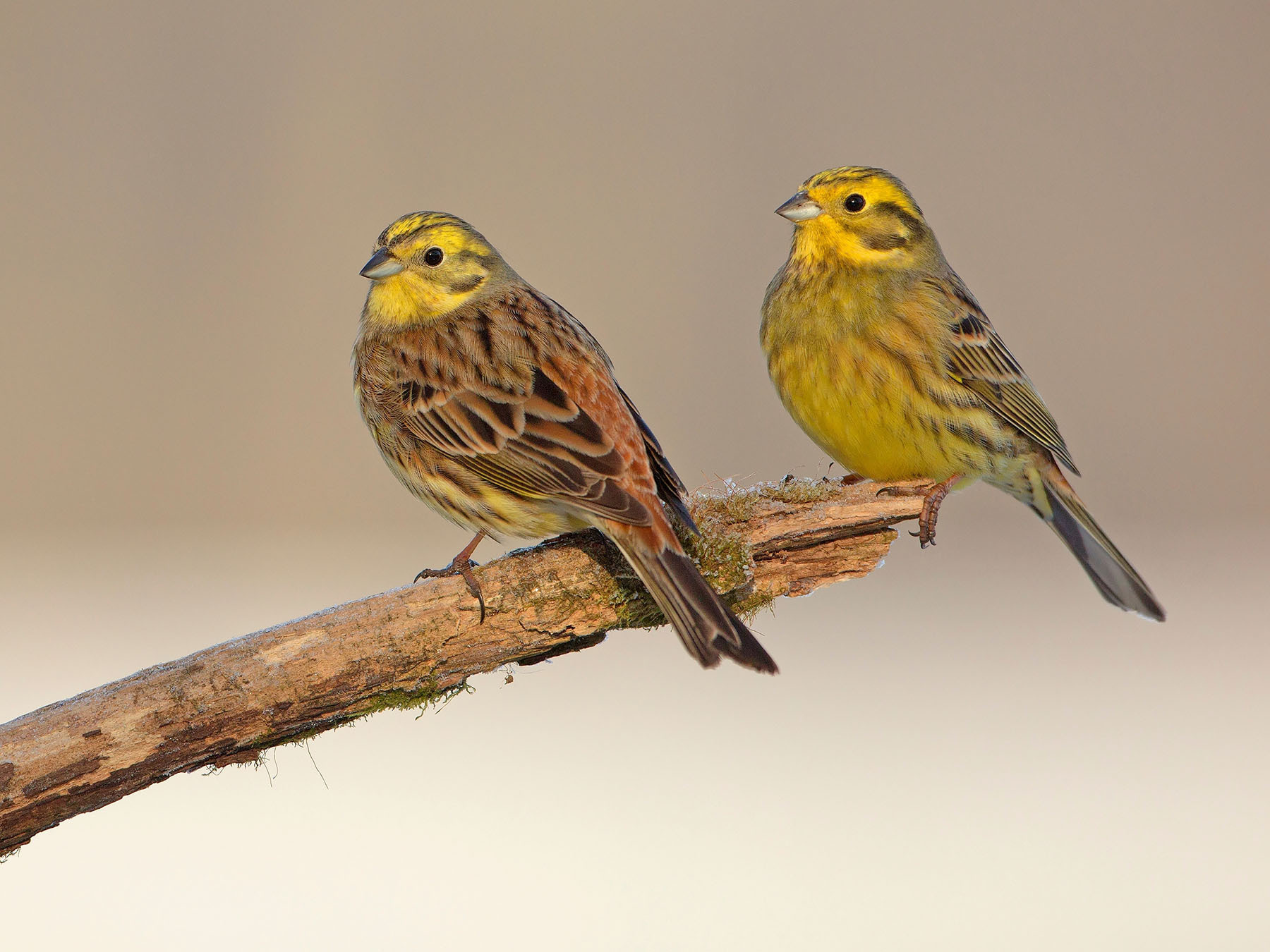
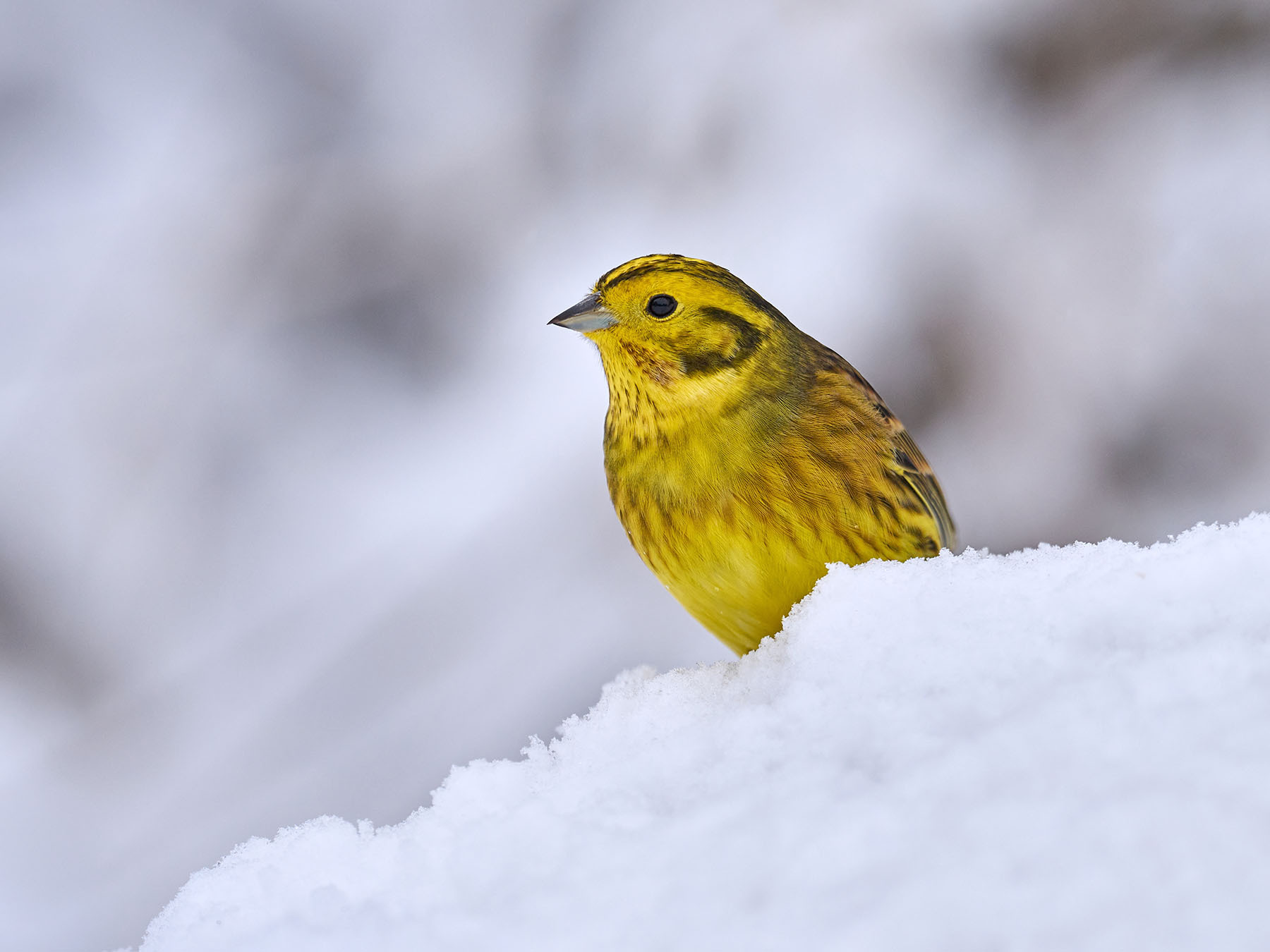
Male yellowhammers have a distinctive bright yellow head and belly, contrasted against a streaky olive-brown body and chestnut rump. Their tail is dark, lined with white outer feathers, which are visible in flight. Black facial markings are present around the eye and on the crown.
As summer progresses, the colouring of the male becomes more subdued, although the head remains yellow, and the reddish-brown rump is still visible.
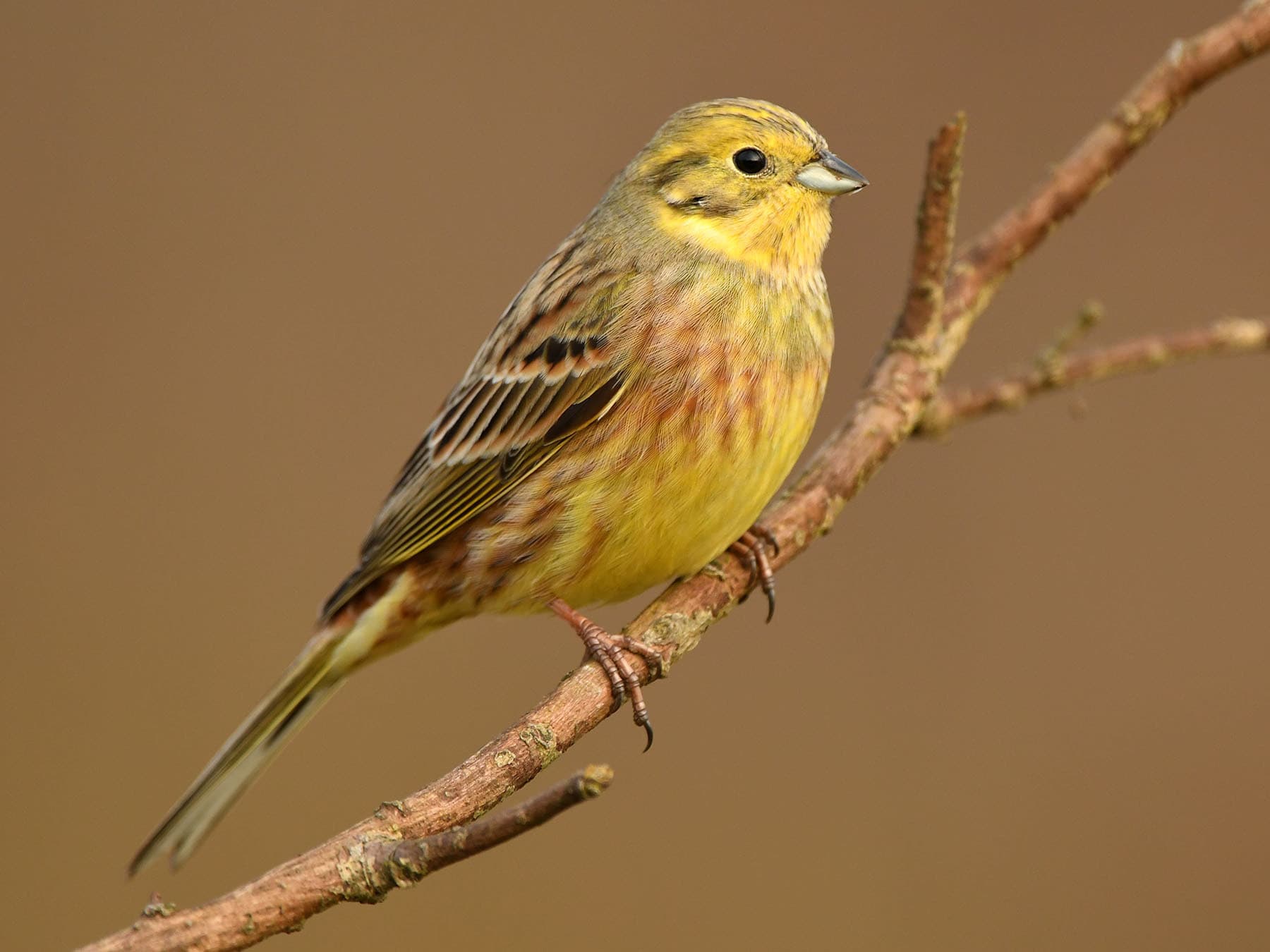
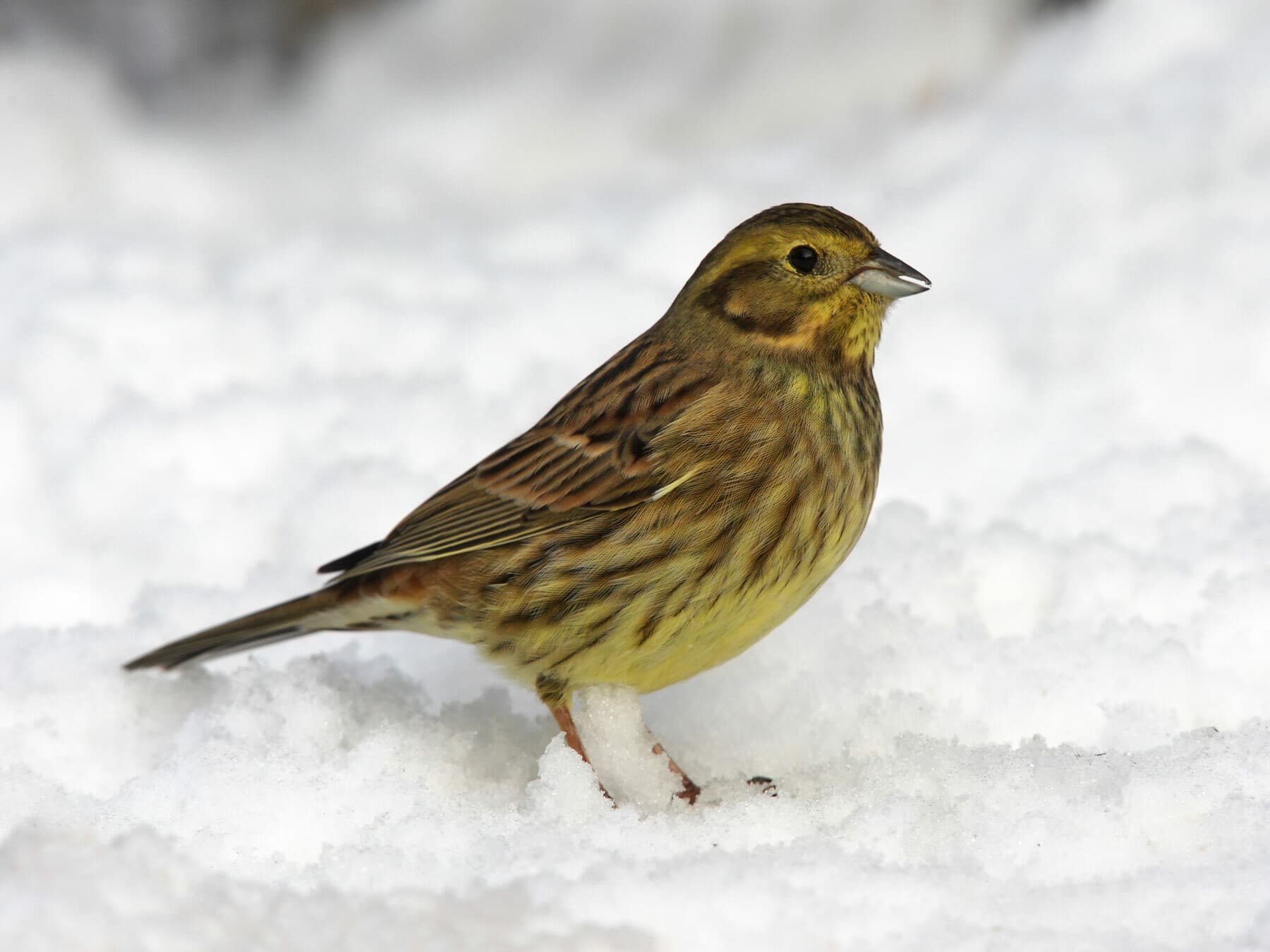
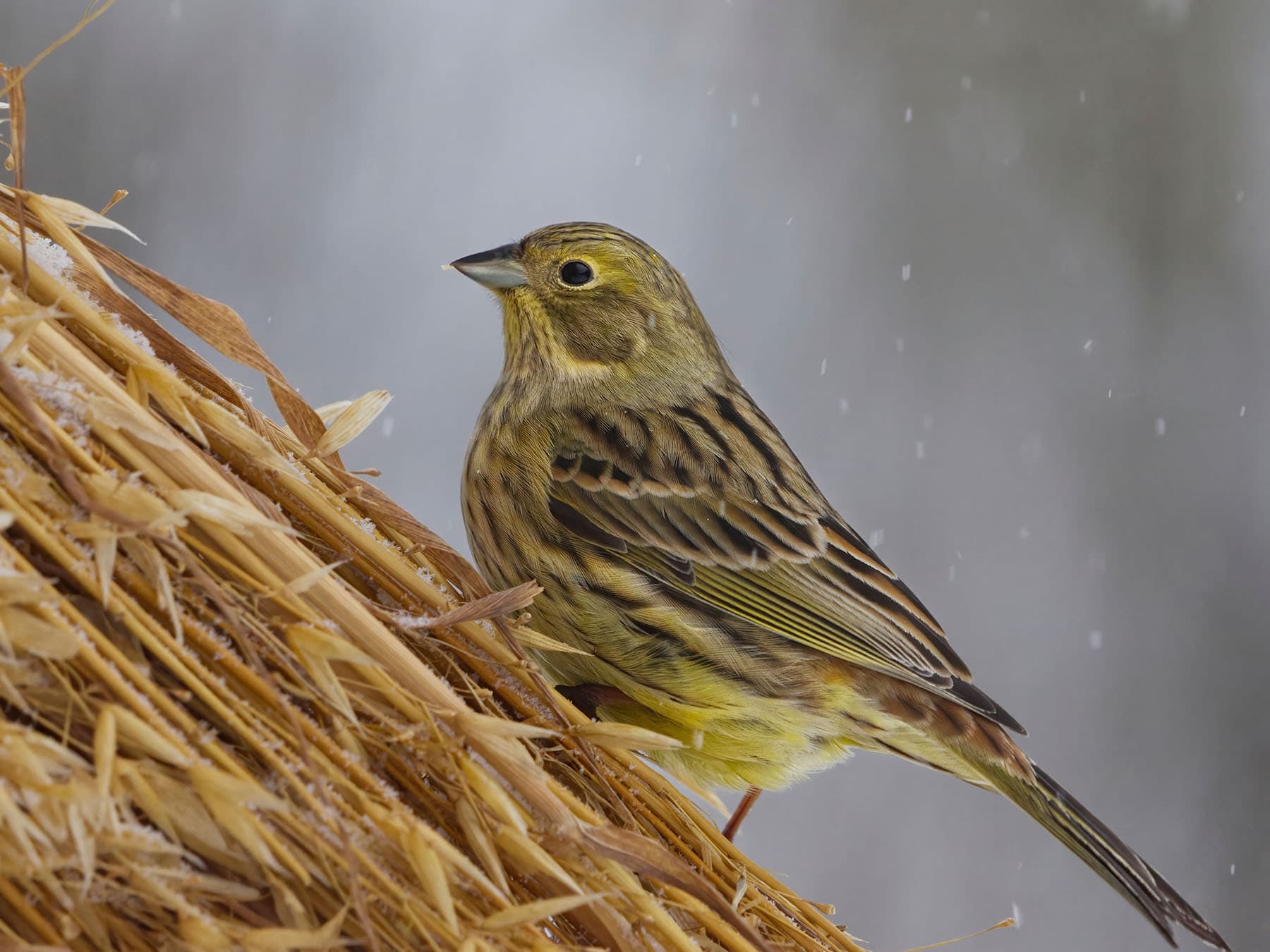
Female yellowhammers are similar to males but lack the vibrant yellow colouring on their head and belly, instead displaying a more muted streaked appearance. Tinges of yellow can be seen on the head, rather than the distinct blocks of colour seen in the male. Like males, females have a chestnut rump and black and white tails.
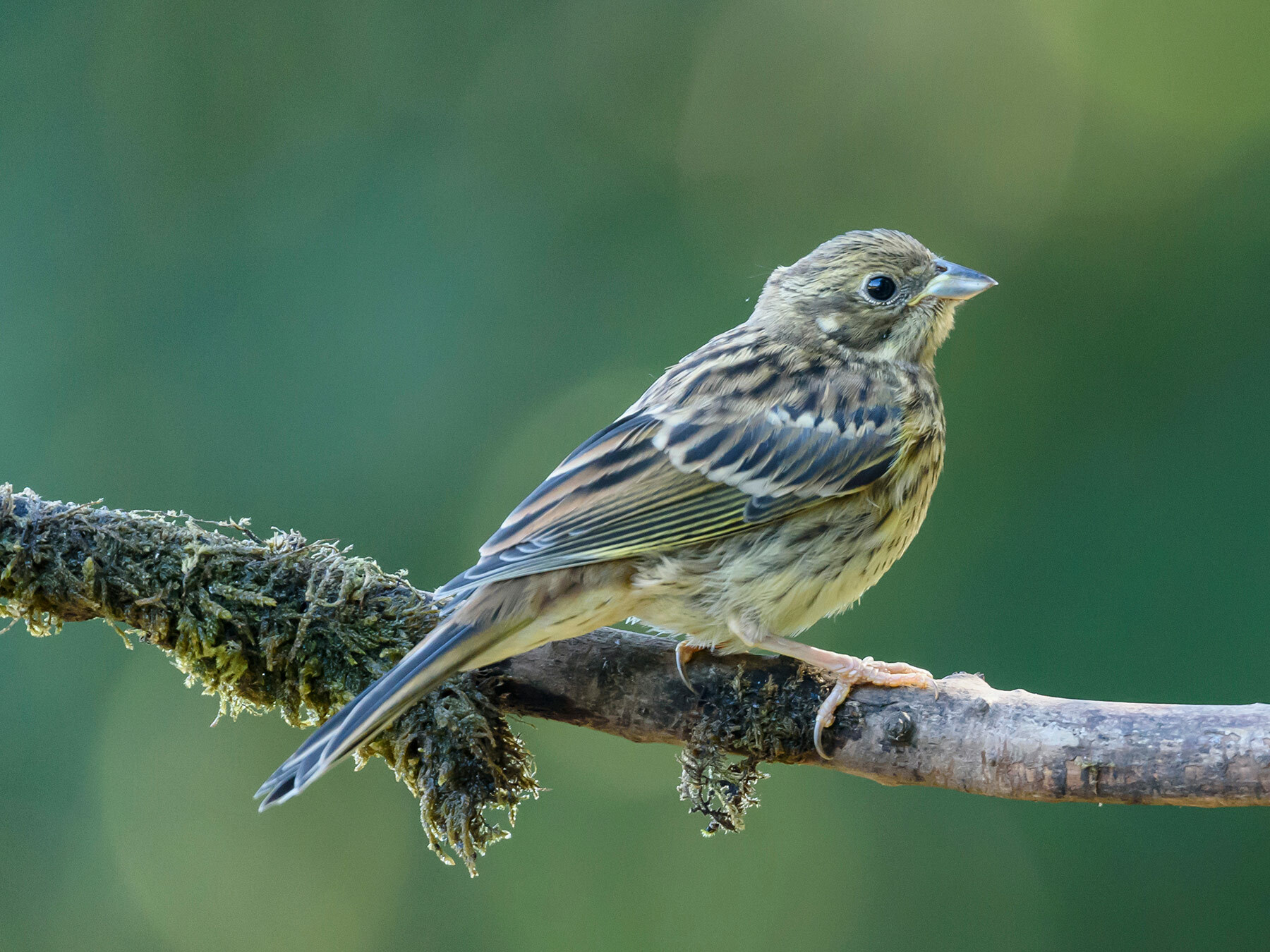
Juvenile yellowhammers are similar in appearance to adult females, but their plumage is duller, with heavy dark brown streaks on the belly, back and upper wings.
How big are Yellowhammers?
Yellowhammers are sparrow-sized birds. There is no real difference in body length between males and females, although males have longer wings and tails.
- Length: 16 cm to 16.5 cm (6.3 in to 6.5 in)
- Weight: 23.3 g to 28.9 g (0.8 oz to 1.0 oz)
- Wingspan: 23 cm to 29.5cm (9.1 in to 11.6 in)
Its size
Adults- Length
- 15.5–17 cm
- Wingspan
- 23–29.5 cm
- Weight
- 20–36 g
Its song and calls
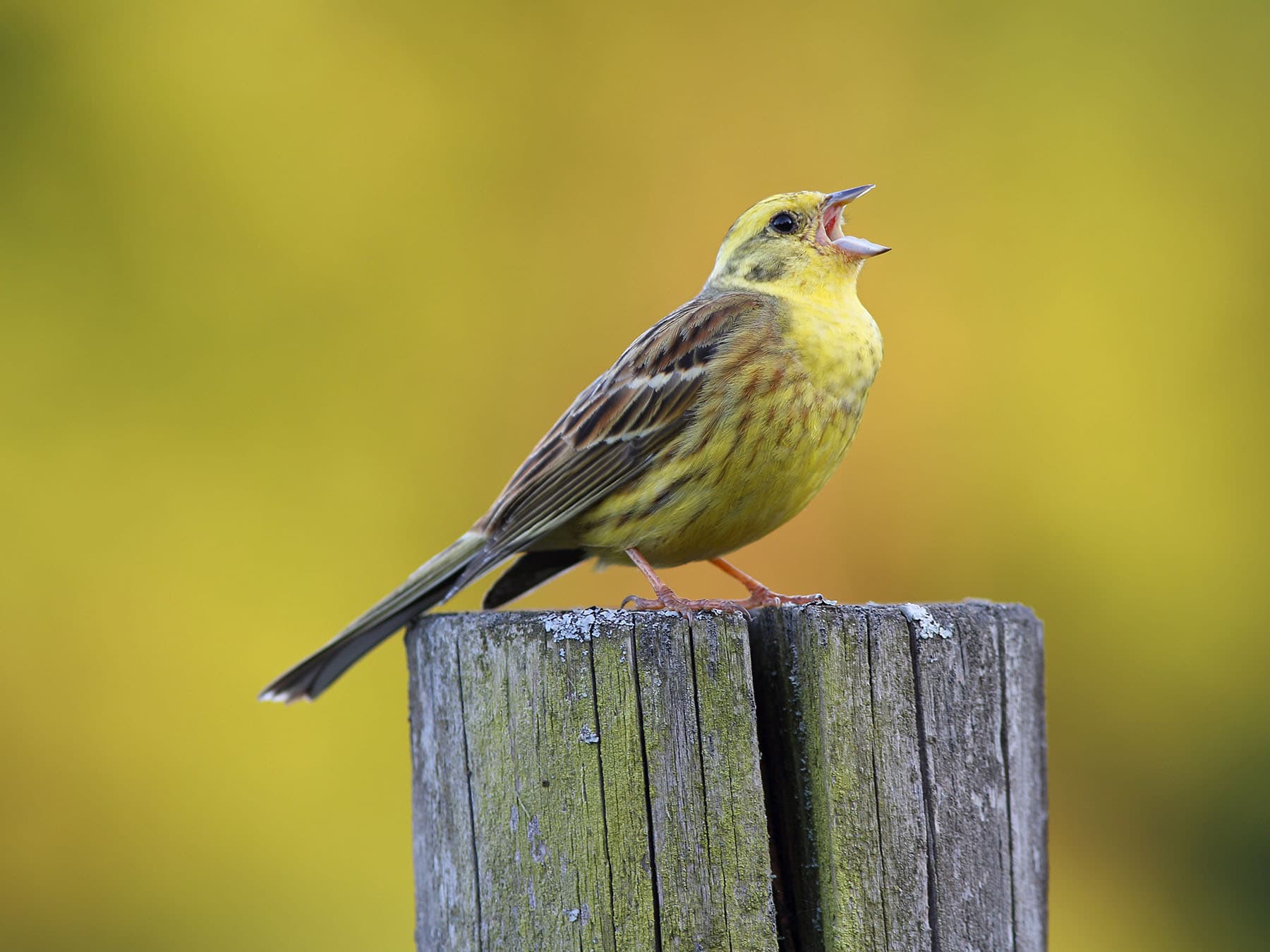
The iconic call of a yellowhammer is often likened to the phrase ‘a little bit of bread and no cheese’, although in males this is usually abbreviated to ‘a little bit of bread’.
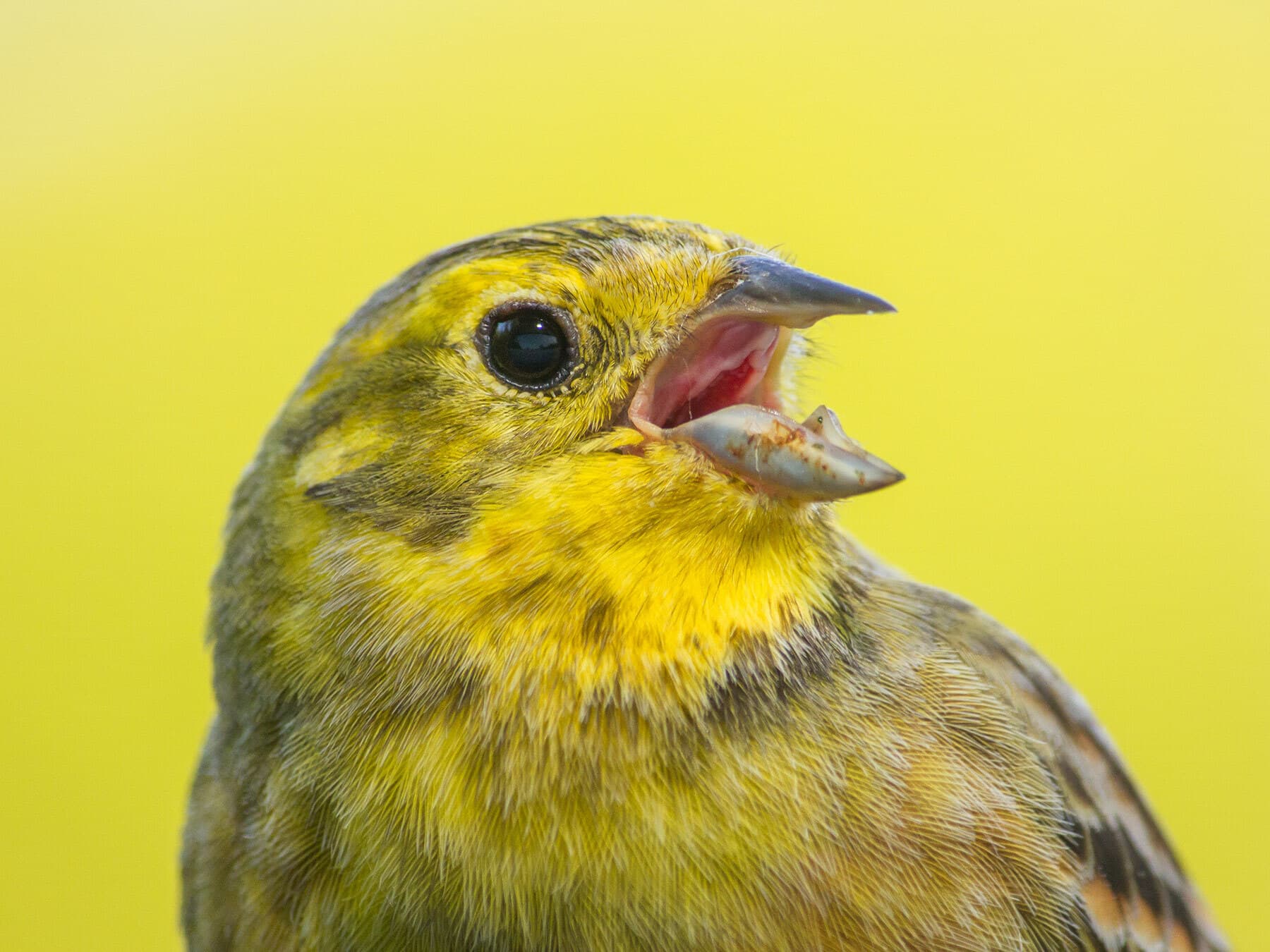
Males can be heard singing from rural treetops, fence posts and other vantage points, with a series of between 5 and 12 twittering ‘zi-zi-zi-zi-zi-ziiiiiii’ notes.
- Song0:00 / 0:57
Recorded in Devon, England
Lawrence Shove / The British Library Board · Wikimedia Commons · CC BY-SA 4.0
- Call0:00 / 1:02
Recorded in Kalmar County, Sweden · May 2024
When and where to see it
OctoberArriving
Most recorded in October
- 1. Carlow1.6%
- 2. Clackmannanshire0.96%
- 3. Aberdeenshire0.91%
- 4. Scottish Borders0.86%
- 5. Fife0.71%
Each dot is a county, state or province: the bigger and darker, the larger the bird’s share of that place’s bird records that month. Grey dots: no regular records. The ringed point is the centre of the bird’s records this month; the arrow shows how it moved since last month, and the dashed loop its path through the year. “Arrivals” colours places where it becomes regular this month (orange) or is in its last regular month (grey). GBIF eBird Observation Dataset, 2019–2024. Map data: Natural Earth, US Census Bureau; place centres © OpenStreetMap contributors.
In your area
See when the Yellowhammer is recorded in your county, state or province.
How often the Yellowhammer turns up in the UK and Ireland through the year, from birdwatchers' records.
United Kingdom
Resident · all year · most records in June
Ireland
Resident · all year · most records in July
Show as a table
| Month | United Kingdom | Ireland |
|---|---|---|
| January | 0.23% (regular) | 0.14% (regular) |
| February | 0.27% (regular) | 0.14% (regular) |
| March | 0.33% (regular) | 0.087% (regular) |
| April | 0.34% (regular) | 0.12% (regular) |
| May | 0.38% (regular) | 0.11% (regular) |
| June | 0.44% (regular) | 0.14% (regular) |
| July | 0.42% (regular) | 0.16% (regular) |
| August | 0.20% (regular) | 0.067% (regular) |
| September | 0.14% (regular) | 0.025% (regular) |
| October | 0.22% (regular) | 0.061% (regular) |
| November | 0.22% (regular) | 0.065% (regular) |
| December | 0.22% (regular) | 0.097% (regular) |
Recorded regularly in
Worldwide: recorded regularly in 57 countries
Countries where it was recorded in at least 3 of the 6 years 2019–2024. Linked countries have their own bird list.
Europe (41)
- Åland Islands
- Albania
- Andorra
- Austria
- Belarus
- Belgium
- Bosnia & Herzegovina
- Bulgaria
- Croatia
- Czechia
- Denmark
- Estonia
- Finland
- France
- Germany
- Greece
- Hungary
- Ireland
- Italy
- Kosovo
- Latvia
- Liechtenstein
- Lithuania
- Luxembourg
- Moldova
- Montenegro
- Netherlands
- North Macedonia
- Norway
- Poland
- Portugal
- Romania
- Russia
- Serbia
- Slovakia
- Slovenia
- Spain
- Sweden
- Switzerland
- Ukraine
- United Kingdom
Asia (15)
- Armenia
- Azerbaijan
- China
- Georgia
- India
- Iran
- Israel
- Kazakhstan
- Kyrgyzstan
- Lebanon
- Mongolia
- Palestinian Territories
- Tajikistan
- Turkey
- Uzbekistan
Oceania (1)
Data: EOD – eBird Observation Dataset (Cornell Lab of Ornithology), accessed via GBIF.org, CC BY 4.0. Records from 2019–2024, aggregated and filtered by Birdfact. How these lists are made
What is the habitat of a Yellowhammer?
Yellowhammers thrive in mixed farming landscapes, interspersed with hedgerows, ditches and scrubland. In winter months they favour winter stubbles, overgrown scrubland and pastureland, as well as areas around livestock grain feeding stations, where they opportunistically feed on spilled animal feed.
What is the range of a Yellowhammer?
Yellowhammers are found across a wide geographical range throughout central and Northern Europe.
The main distribution range of breeding yellowhammers extends from Spain and the UK in the west, to Greece and the Balkan states in the south, and into parts of Turkey and western Russia to the east, and throughout the Baltic states in the north.
Where do Yellowhammers live?
Yellowhammers prefer rural landscapes and open countryside to built-up urban areas, and the species is less likely to be found in upland regions.
Yellowhammers are less common in northern and western England, for example in the Pennines and Highlands of Scotland, or on Scotland’s offshore islands.
How rare are Yellowhammers?
Yellowhammers are on the UK’s red list as a species of concern due to the sharp decline in population numbers in recent decades.
In 2020 they were estimated to be around 700,000 breeding territories in the UK, so there are plenty of them around in the wild, but they certainly aren’t as common or widespread as they once were.
Where can you see Yellowhammers in the UK?
As arable farmland is the most popular habitat of yellowhammers, they are most common in regions where this is the dominant landscape, with areas such as eastern England traditionally having high concentrations.
Any areas of open countryside and fields planted with cereal crops could offer foraging opportunities for yellowhammers, so head to this kind of setting to improve your chance of a sighting.
Migration
Do Yellowhammers migrate?
European yellowhammers usually remain in the same territories all year round, travelling short distances from their breeding grounds in winter to form larger mixed species flocks to forage together on open farmlands.
Tips for seeing it
- Listen for the male's distinctive 'little bit of bread and no cheese' song
- Look for bright yellow heads in hedgerows and field edges
- Observe their ground-feeding behaviour in open fields
- In the UK, participate in the RSPB's annual Big Garden Birdwatch to help monitor populations
What it eats
What do Yellowhammers eat?
Seeds and grains are the most important foods in a yellowhammer’s diet, with some insects also eaten during the breeding season, to provide extra protein.
In autumn, agricultural fields offer a supply of cereal grains, particularly wheat and oats. Pine, spruce and beech seeds are eaten, as well as grapes and mistletoe berries.
Insects, particularly mayflies, springtails, crickets, grasshoppers, beetles and earwigs, may also be caught, with yellowhammers almost exclusively foraging on the ground. Earthworms, woodlice, millipedes and snails are also eaten.
What do baby Yellowhammers eat?
Baby yellowhammers are fed insects by both parents for the first week after hatching, and, after this, are introduced to seeds.
Grasslands and edges of pastureland are a good source of insect life, and busy, foraging yellowhammer parents are a common sight during the breeding season.
Nesting and breeding
Where do Yellowhammers nest?
Yellowhammers build their nests at or near to ground level, hidden in hedgerow vegetation or tucked against the base of a tree or thorny shrubbery, camouflaged by clumps of grass.
Boundary hedgerows near to ditches are preferred to woodlands. Females are primarily in charge of nest building, but males may bring additional material. Nests are made from grasses, leaves and moss, and lined with rootlets and animal hair.
What do Yellowhammer eggs look like?
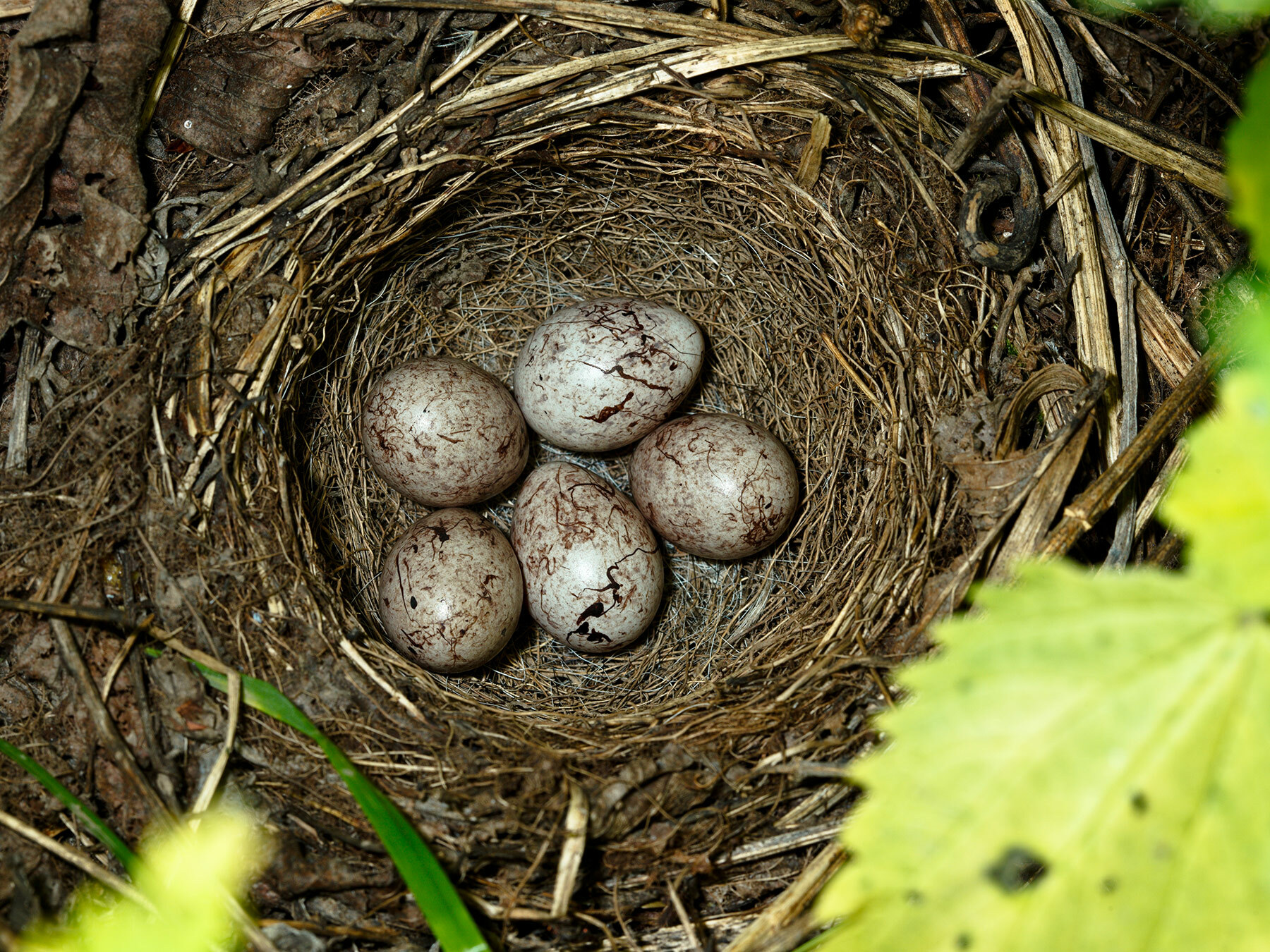
Yellowhammer eggs are usually white but may be tinged with blue, purple or grey. Eggs are smooth and glossy and marked with dark violet specks. A typical yellowhammer clutch contains 3 to 5 eggs, which are incubated for 12 to 14 days by the female alone.
Do Yellowhammers mate for life?
Yellowhammers are a monogamous species, mating for life and raising two or three broods together each year. Breeding begins in April and may continue until September.
Behaviour
Are Yellowhammers aggressive?
At the outset of the breeding season, male yellowhammers are observed to put on aggressive displays while establishing their territories. Aggressive behaviour is most commonly observed between two males than between mixed sex pairs.
Outside of the breeding season, yellowhammers are a sociable, gregarious species, integrating into large, loose flocks with finches, sparrows and buntings and feeding on arable fields and ditches alongside farmland.
Lifespan and predators
How long do Yellowhammers live?
The typical lifespan of a yellowhammer is approximately 3 years. However, much older yellowhammers have been reported through ringing records, including one individual that reached 11 years and 9 months.
What are the predators of Yellowhammers?
Sparrowhawks, goshawks and hobbies are among the chief predators of yellowhammers. Their nest sites are also frequently raided by crows, jays and magpies, as well as mice, rats and other small rodents.
Are Yellowhammers protected?
The Wildlife and Countryside Act, 1981, offers protection to yellowhammers against being killed, injured or taken into captivity. The same Act makes it a criminal offence to knowingly damage or destroy their nest and their eggs.
Are Yellowhammers endangered?
Yellowhammers were placed on the Red List as a severely declining species in 2002, due to concerns over a steep decline in population.
This fall in numbers is linked to change in land use, with differing farming practices leading to a loss in suitable habitat.
Yellowhammers went extinct in the Isle of Man in 2016. Within their wider European range, yellowhammers are considered a species of least concern.
Conservation
While listed as Least Concern globally, Yellowhammer populations have declined significantly in parts of Europe, including the UK. This decline is largely attributed to changes in farming practices, particularly the loss of winter stubble fields and hedgerows.
Conservation efforts focus on promoting wildlife-friendly farming methods.
Similar birds
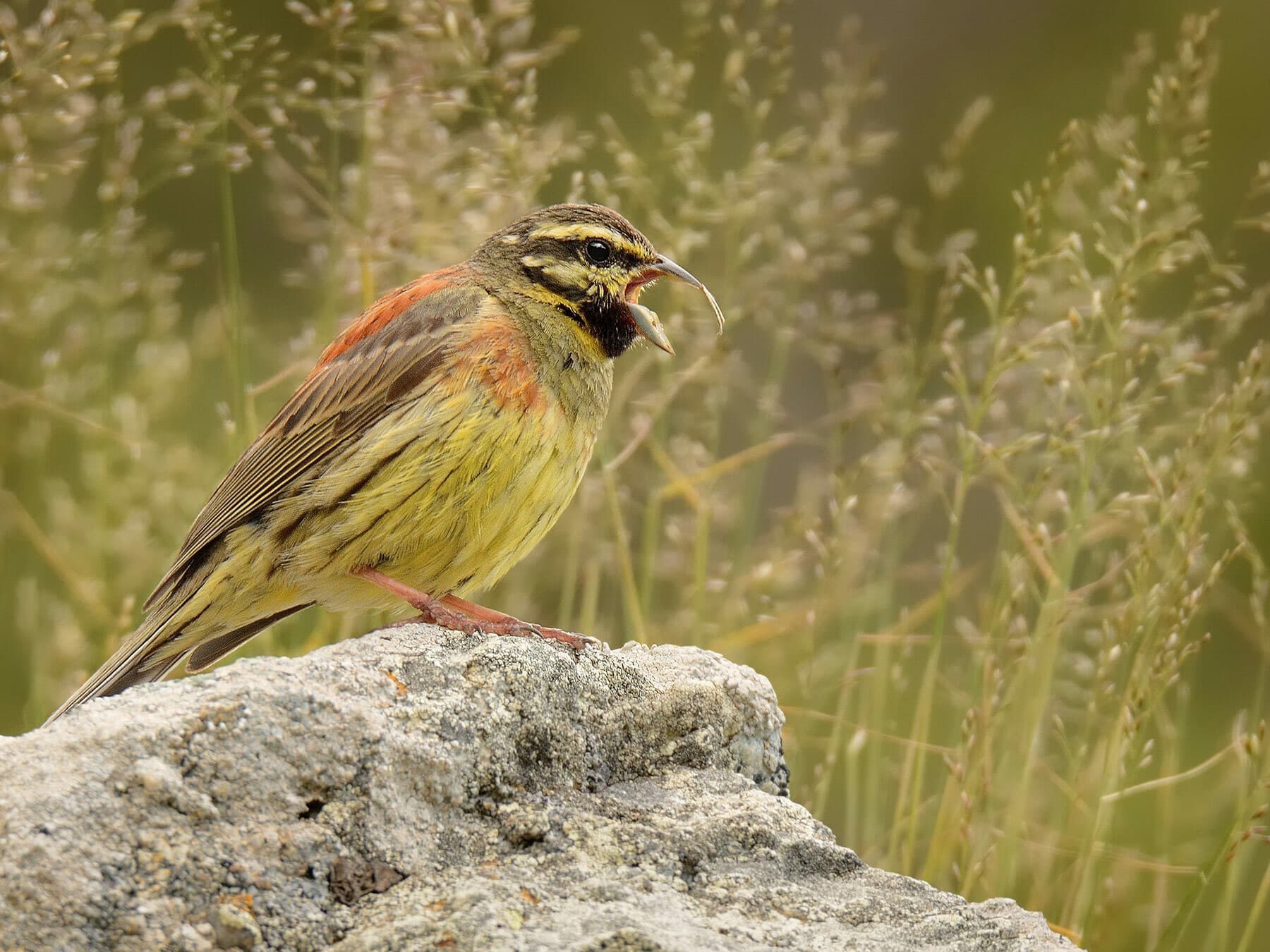
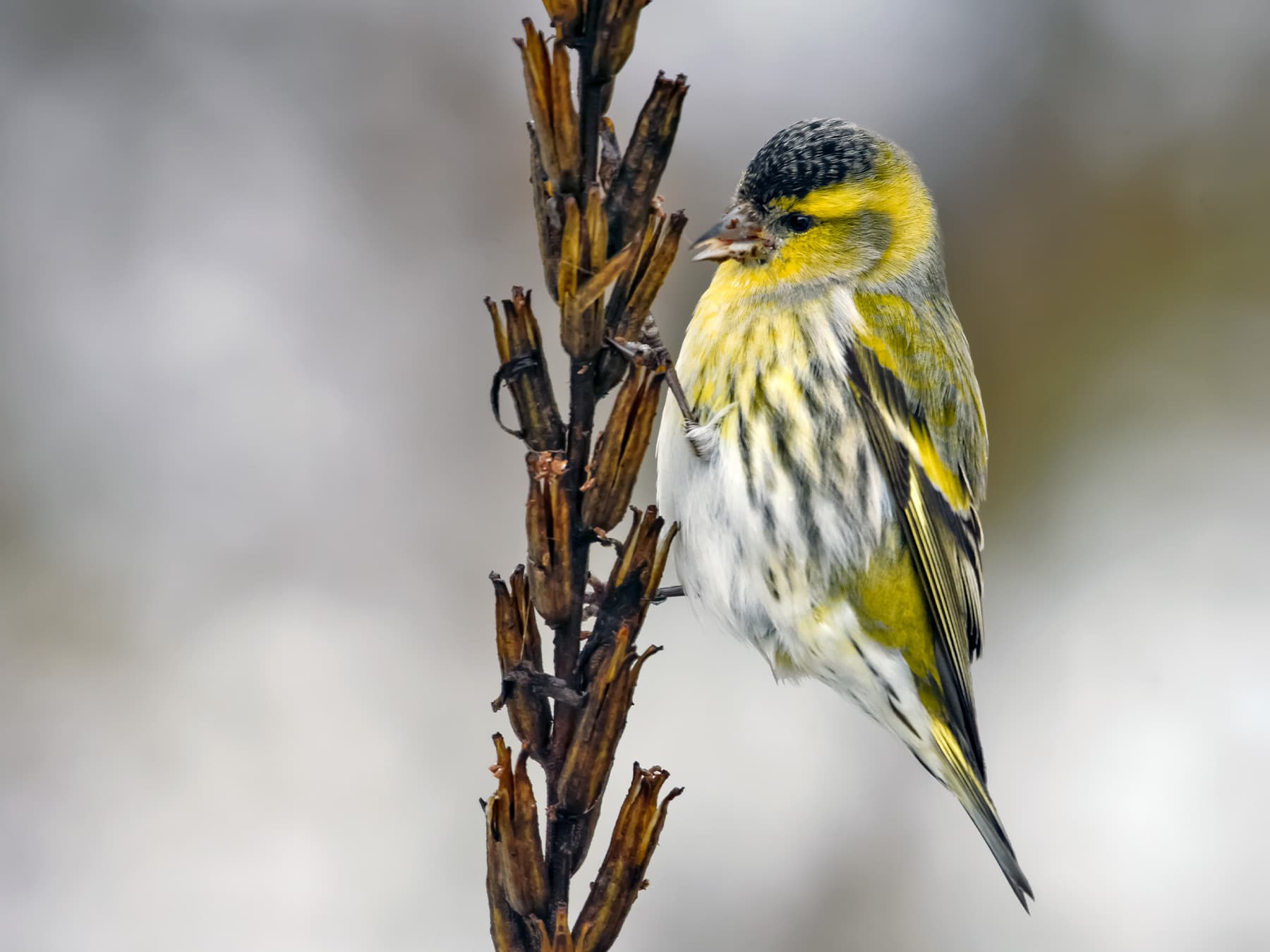
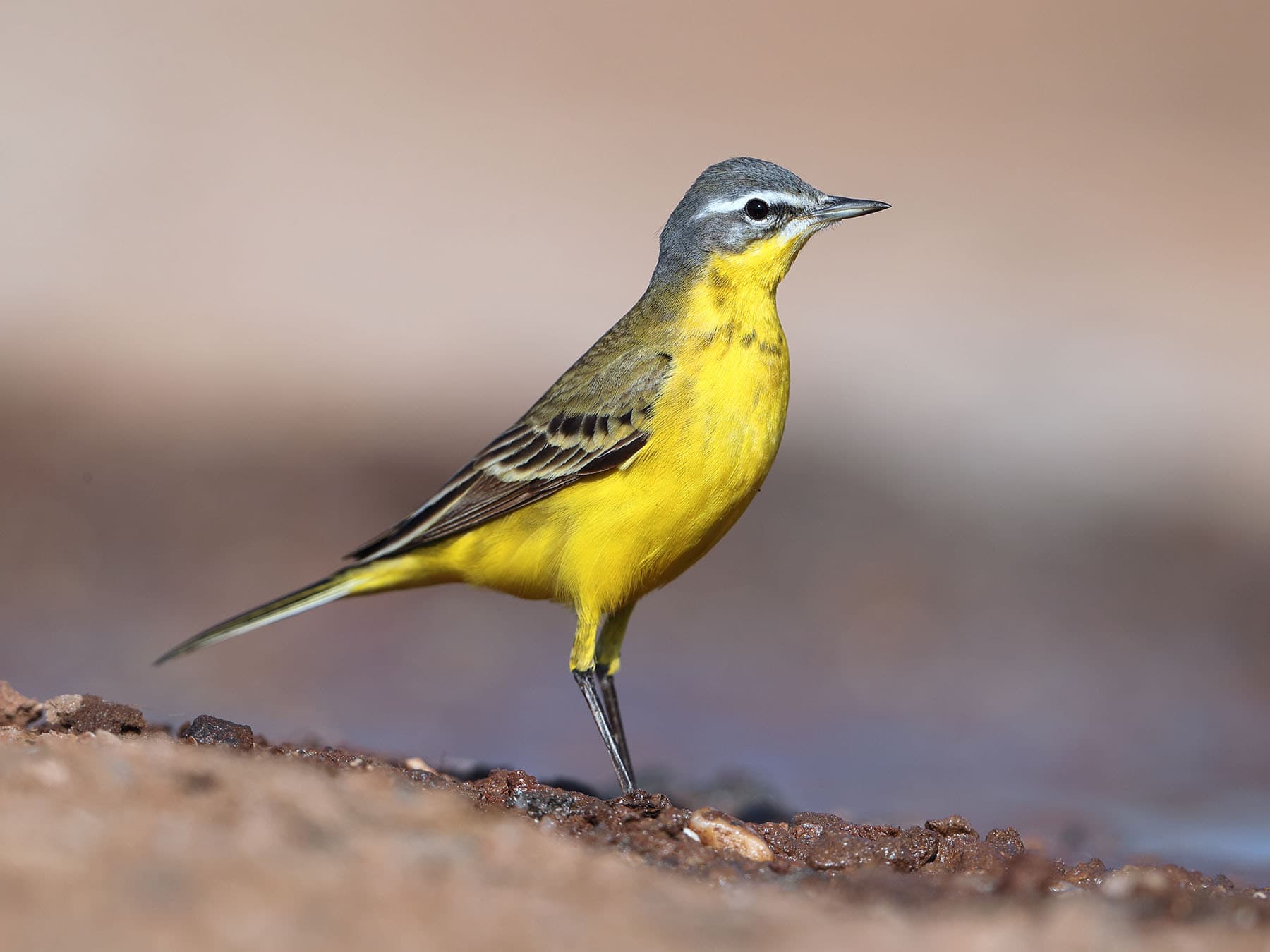
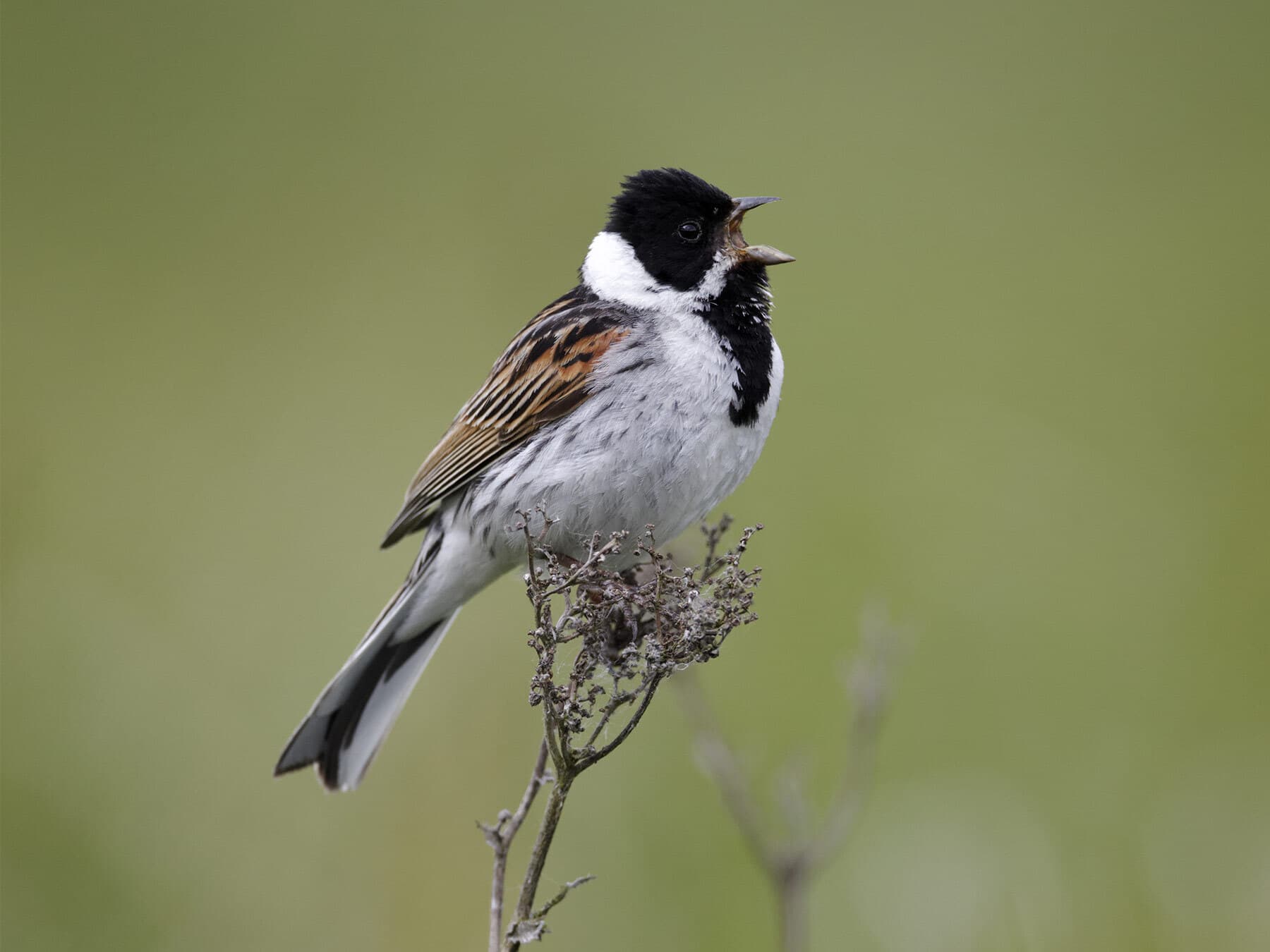
Often mistaken for
More photos
5 photos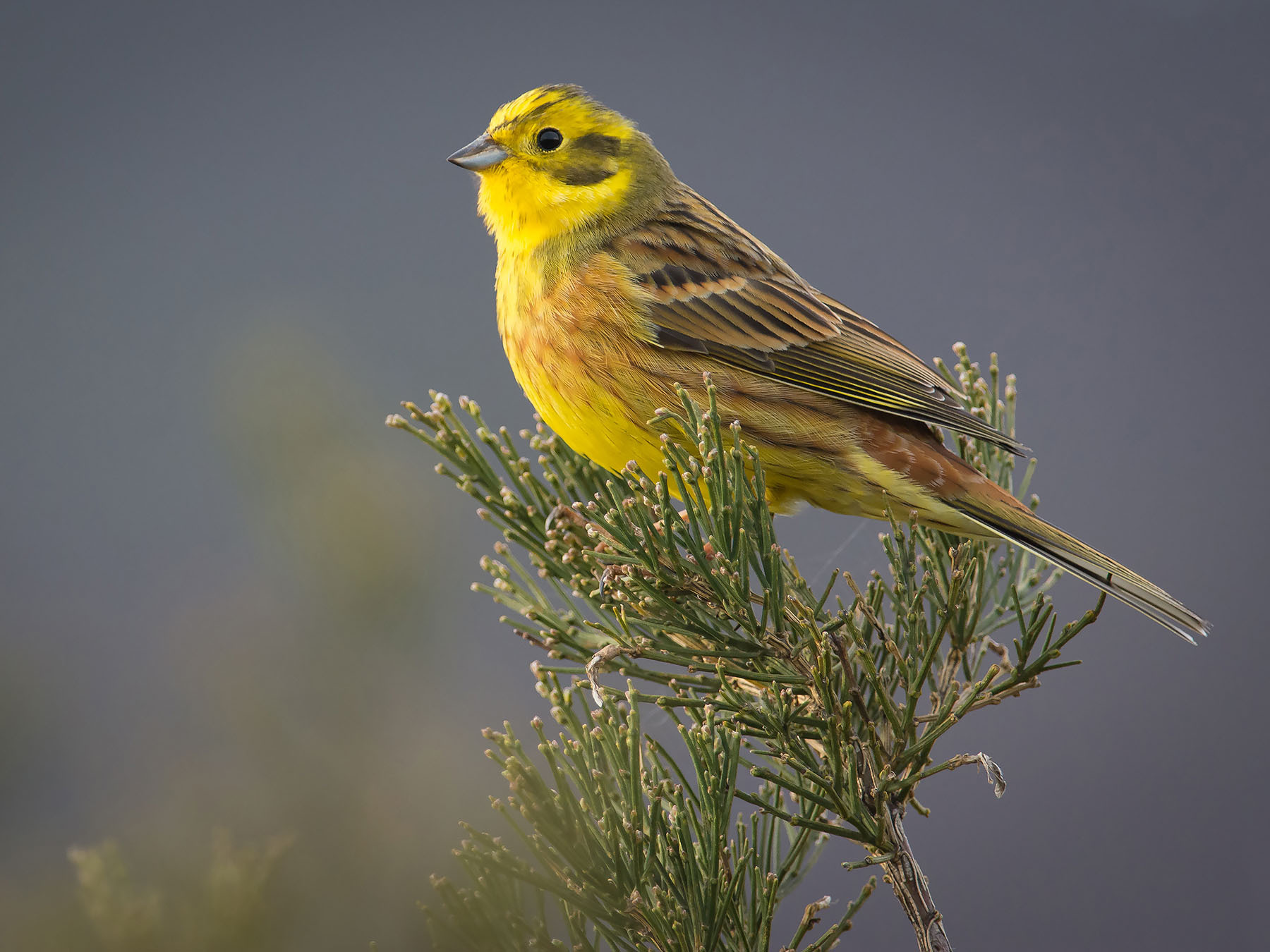
Yellowhammer guides
1 guidesQuick facts
- Length
- 15.5–17 cm
- Wingspan
- 23–29.5 cm
- Weight
- 20–36 g
- Lifespan
- 3–6 years · oldest recorded 13.2 years
- Family
- Buntings
- Migration
- Partial migrant
- Global status (IUCN)
- Least Concern
- World population
- 42,000,000 - 66,000,000 mature individuals
- Population trend
- Population decreasing due to habitat loss
- Scientific name
- Emberiza citrinella
Sources
4- 1BirdLife International. 2016. Emberiza citrinella. The IUCN Red List of Threatened Species 2016: e.T22720878A89289181. Source (opens in a new tab)
- 2EBCC (2015)
- 3BirdLife International. 2016. Emberiza citrinella. The IUCN Red List of Threatened Species 2016: e.T22720878A89289181. Source (opens in a new tab)
- 4Fransson et al., EURING list of longevity records for European birds (2010) Source (opens in a new tab)

Checked by
Nathan Cope, founder and editor
Nathan founded Birdfact and leads its writers and contributors in the UK, the US and Canada. He has watched and studied birds for more than ten years, and checks every article and species guide before it’s published.