


Corn Bunting
Common Corn Bunting · Emberiza calandra
By the Birdfact teamChecked by Nathan Cope
On this page13 sections
How to recognise it
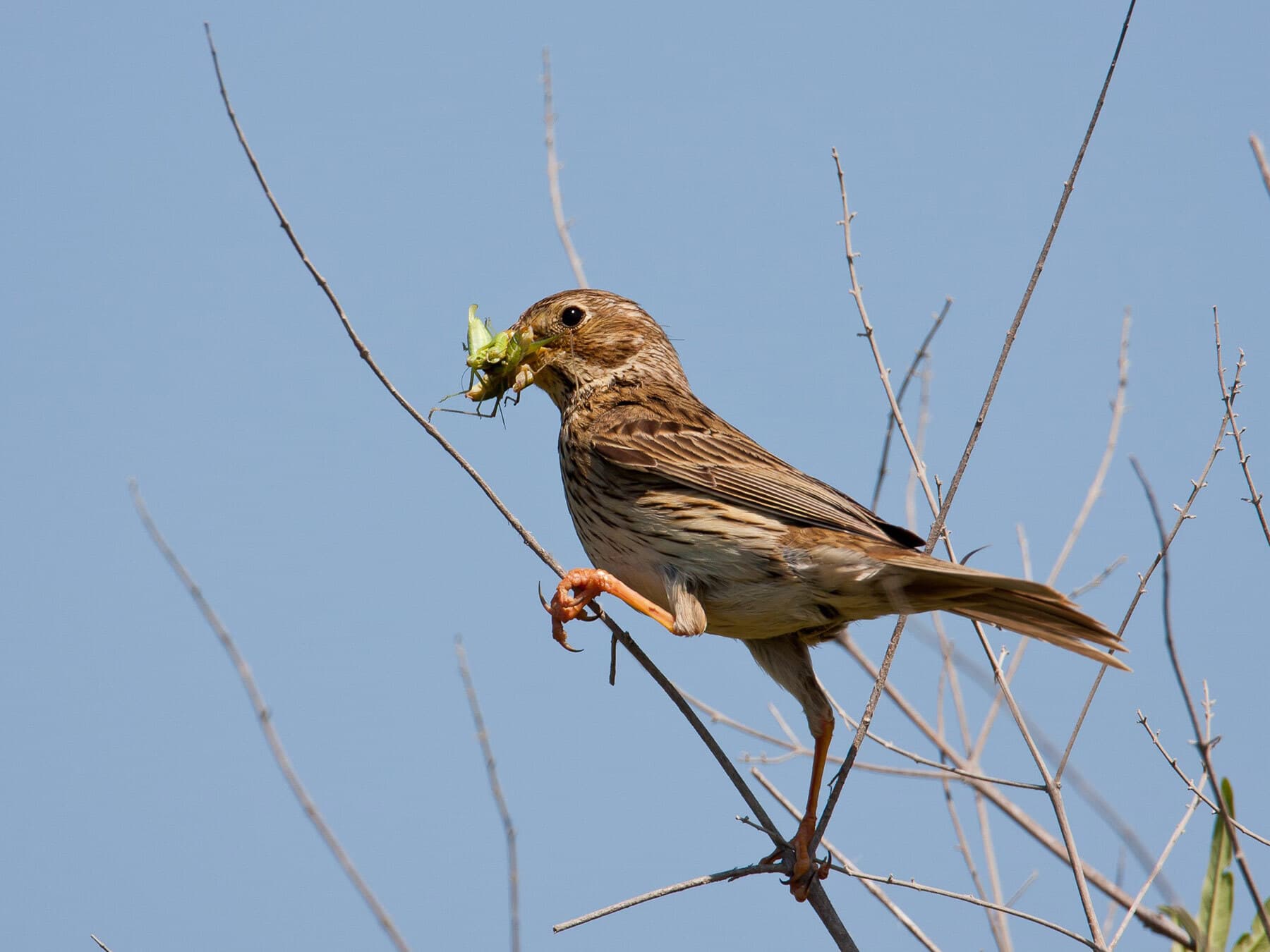
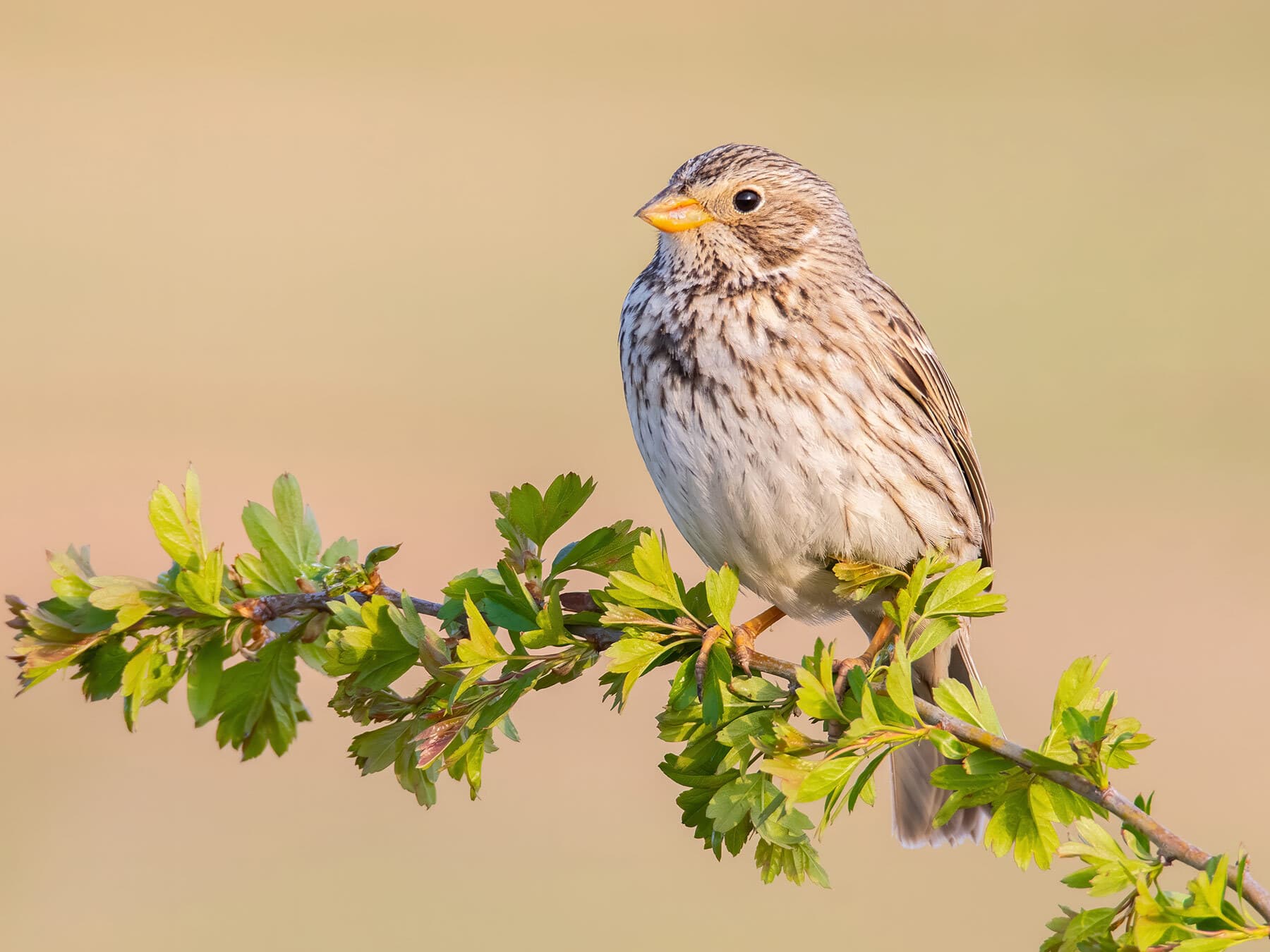
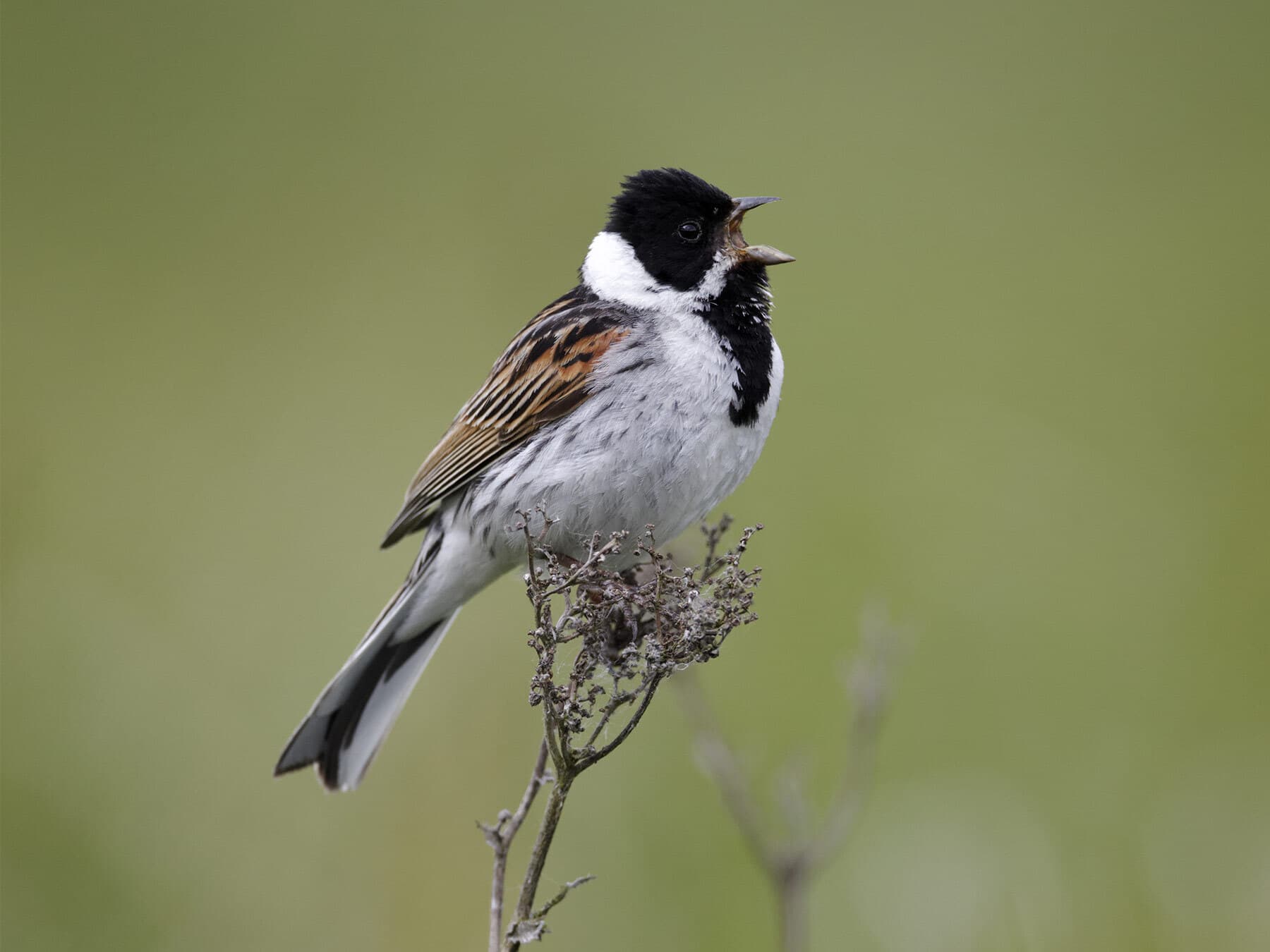
The Corn Bunting is a plump, sparrow-sized bird with overall brown plumage streaked with darker markings. It has a large, robust bill, a short tail, and a distinctive 'heavy-headed' appearance. The underparts are pale buff with fine streaking.
Both males and females look similar. Juveniles closely resemble adults but may have slightly fresher-looking feathers with more defined streaking.
Its size
Adults- Length
- 16–19 cm
- Wingspan
- 26–32 cm
- Weight
- 38–55 g
Its song and calls
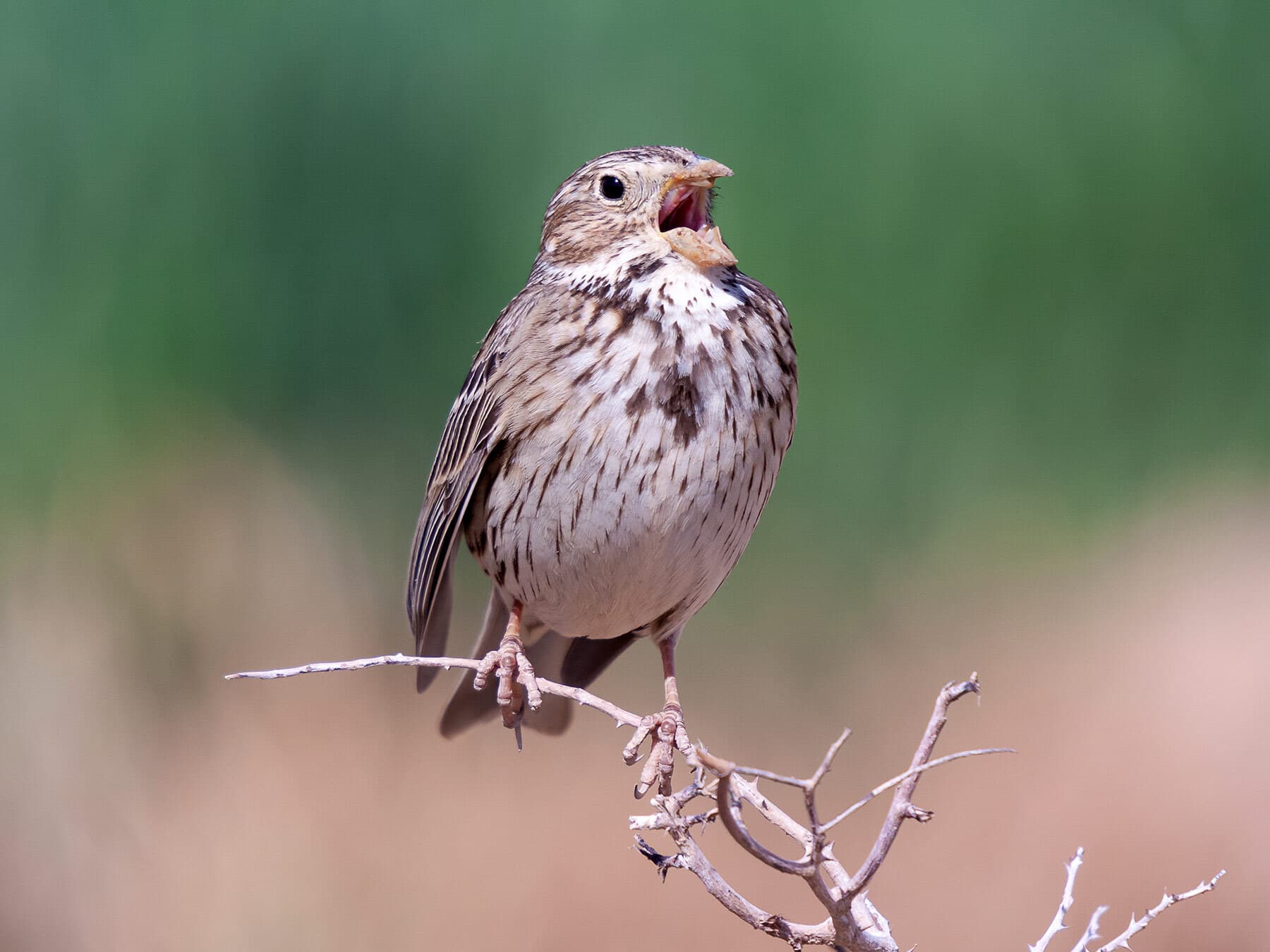
Whilst the call is a short staccato ‘kwit, kwit’ sound, the song itself is a metallic, repetitive, ‘ti-ti-ti-tchee-chirrichirrichirri’, often sung from a fence post, overhead cable or perch in a bush.
- Song0:00 / 0:53
Recorded in Dorset, England
Lawrence Shove / The British Library Board · Wikimedia Commons · CC BY-SA 4.0
- Call0:00 / 0:15
Recorded in Ústí nad Labem Region, Czech Republic · May 2025
When and where to see it
OctoberArriving
Most recorded in October
- 1. Wiltshire0.35%
- 2. Kent0.14%
- 3. Cambridgeshire0.13%
- 4. East Sussex0.13%
- 5. Essex0.12%
Each dot is a county, state or province: the bigger and darker, the larger the bird’s share of that place’s bird records that month. Grey dots: no regular records. The ringed point is the centre of the bird’s records this month; the arrow shows how it moved since last month, and the dashed loop its path through the year. “Arrivals” colours places where it becomes regular this month (orange) or is in its last regular month (grey). GBIF eBird Observation Dataset, 2019–2024. Map data: Natural Earth, US Census Bureau; place centres © OpenStreetMap contributors.
In your area
See when the Corn Bunting is recorded in your county, state or province.
How often the Corn Bunting turns up in the UK through the year, from birdwatchers' records.
United Kingdom
Resident · all year · most records in June
Show as a table
| Month | United Kingdom |
|---|---|
| January | 0.052% (regular) |
| February | 0.044% (regular) |
| March | 0.052% (regular) |
| April | 0.071% (regular) |
| May | 0.10% (regular) |
| June | 0.12% (regular) |
| July | 0.10% (regular) |
| August | 0.035% (regular) |
| September | 0.020% (regular) |
| October | 0.027% (regular) |
| November | 0.039% (regular) |
| December | 0.042% (regular) |
Recorded regularly in
Worldwide: recorded regularly in 59 countries
Countries where it was recorded in at least 3 of the 6 years 2019–2024. Linked countries have their own bird list.
Europe (34)
Asia (21)
- Armenia
- Azerbaijan
- China
- Cyprus
- Georgia
- Iran
- Iraq
- Israel
- Jordan
- Kazakhstan
- Kuwait
- Kyrgyzstan
- Lebanon
- Oman
- Palestinian Territories
- Qatar
- Saudi Arabia
- Tajikistan
- Turkey
- United Arab Emirates
- Uzbekistan
Data: EOD – eBird Observation Dataset (Cornell Lab of Ornithology), accessed via GBIF.org, CC BY 4.0. Records from 2019–2024, aggregated and filtered by Birdfact. How these lists are made
In the main the corn bunting is a resident breeder throughout south and central Europe and North Africa into eastern Asia as far as Kazakhstan. Small colonies breeding in central eastern Europe, Ukraine, southwest Russia and Belarus migrate south to the coastal regions of North Africa, the Arabian Peninsula and from Afghanistan to northeast China. They tend to congregate in farmland with hedgerows and limited tree growth, arable land with cereal crops and low lying pastures and rolling meadows.
Signs and Spotting tips
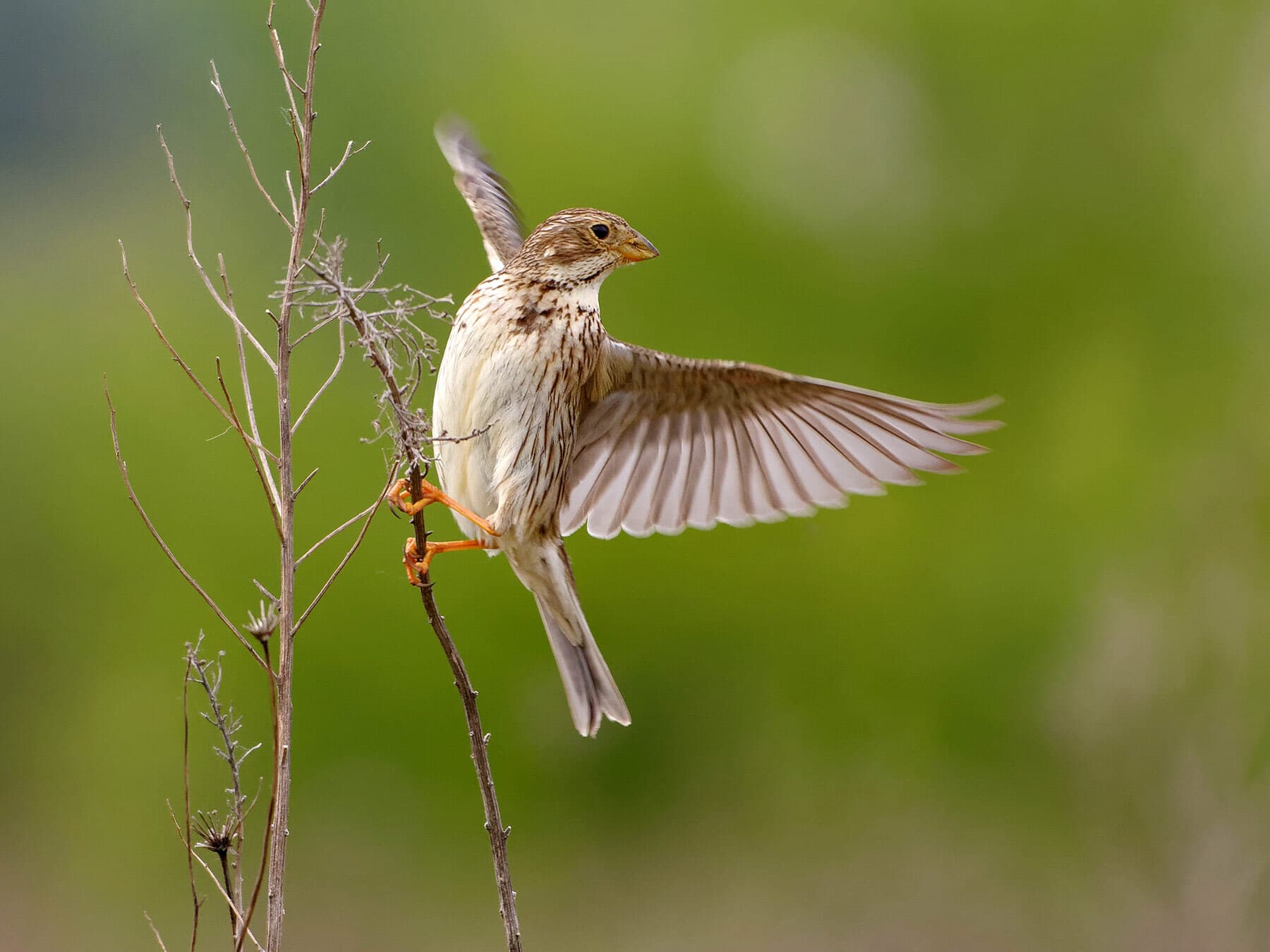
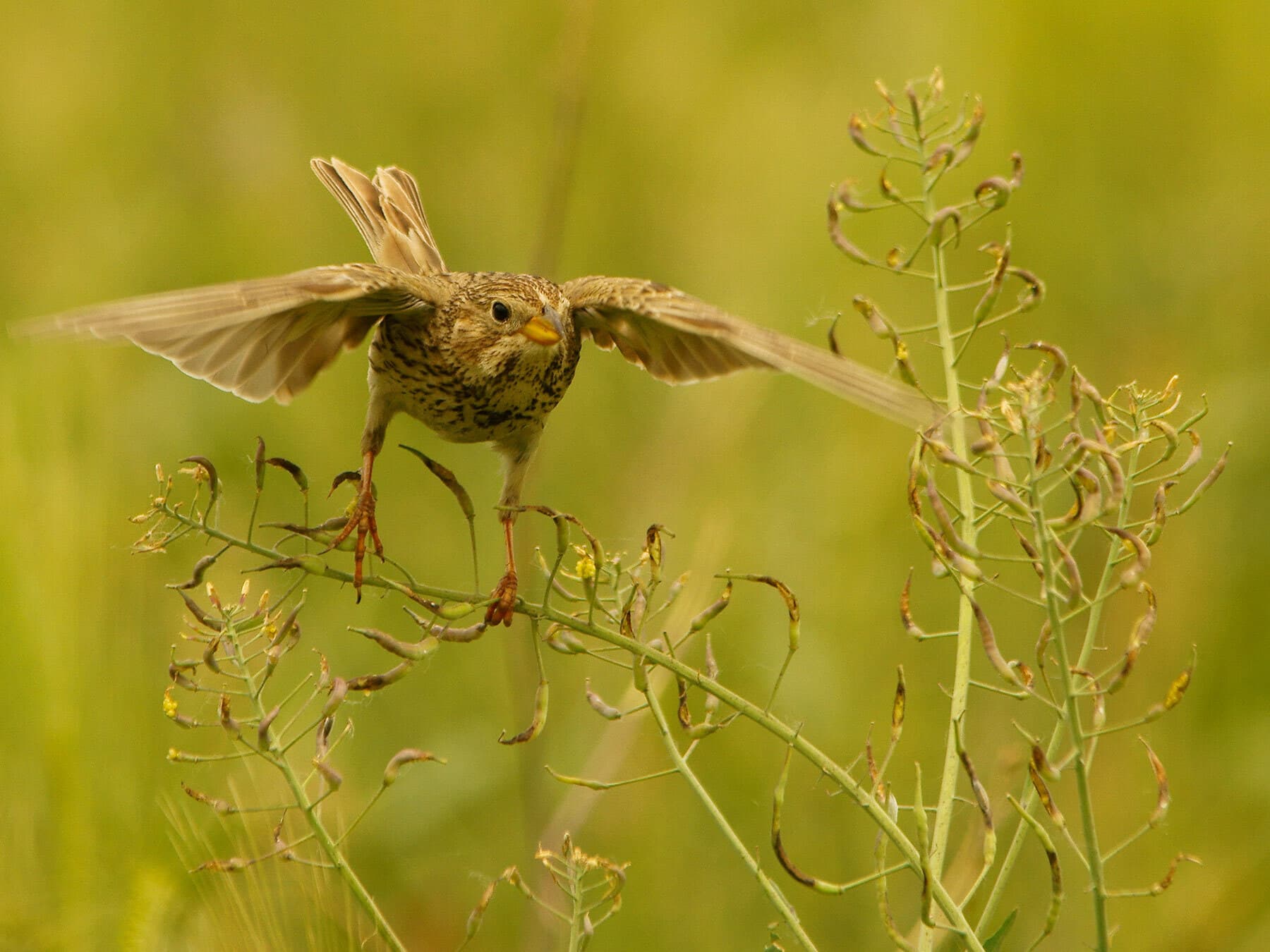
When seen foraging, the corn bunting tends to hop or creep across the ground as opposed to walking and often feeds in small groups, taking flight and hiding in hedges when disturbed. During winter months large flocks of them are frequently seen foraging together. In flight the lack of patternation on their wings and tail is more obvious as is their habit of dangling their legs when aloft. The metallic song is often likened to the sound of jangling keys.
What it eats
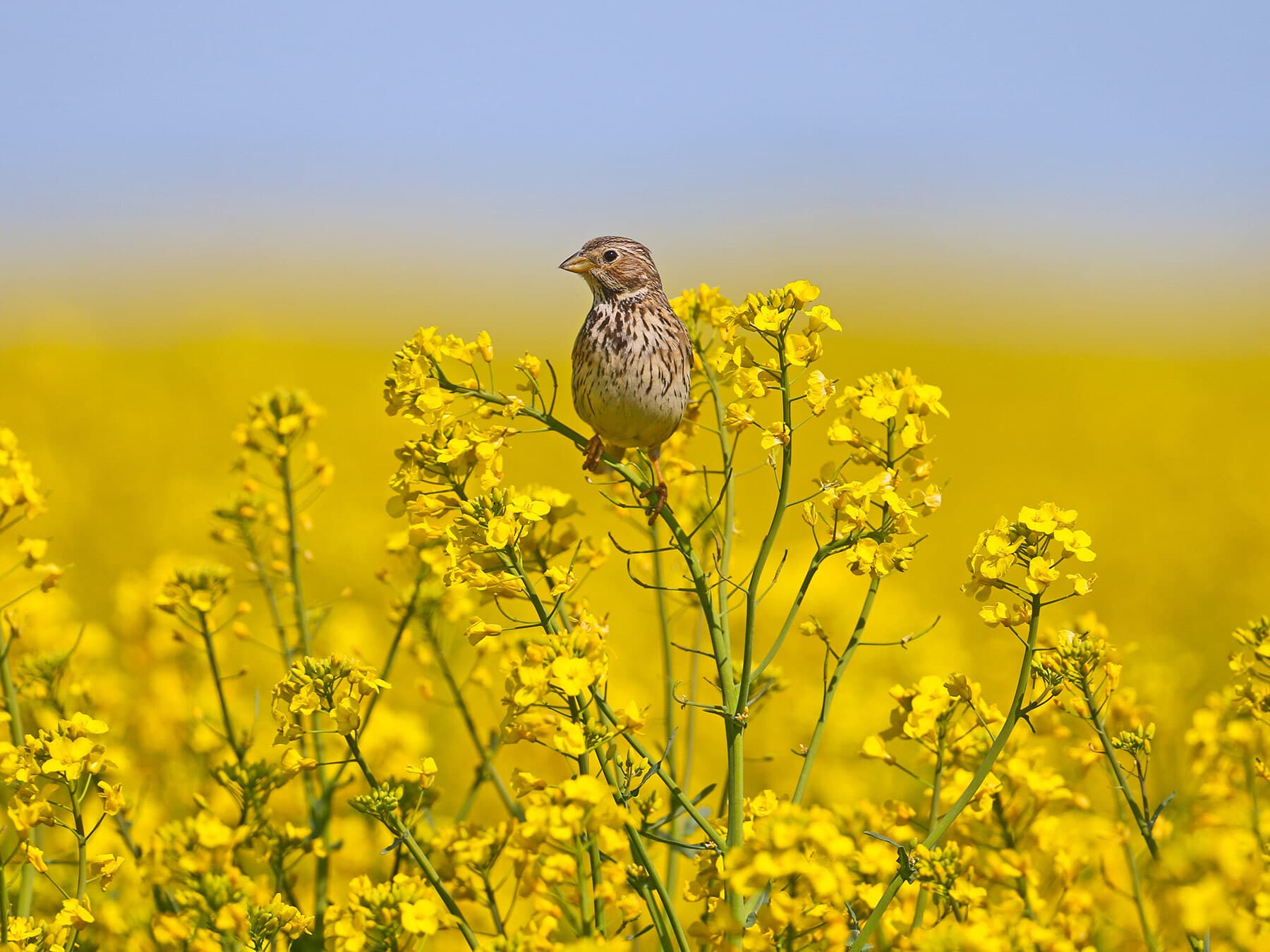
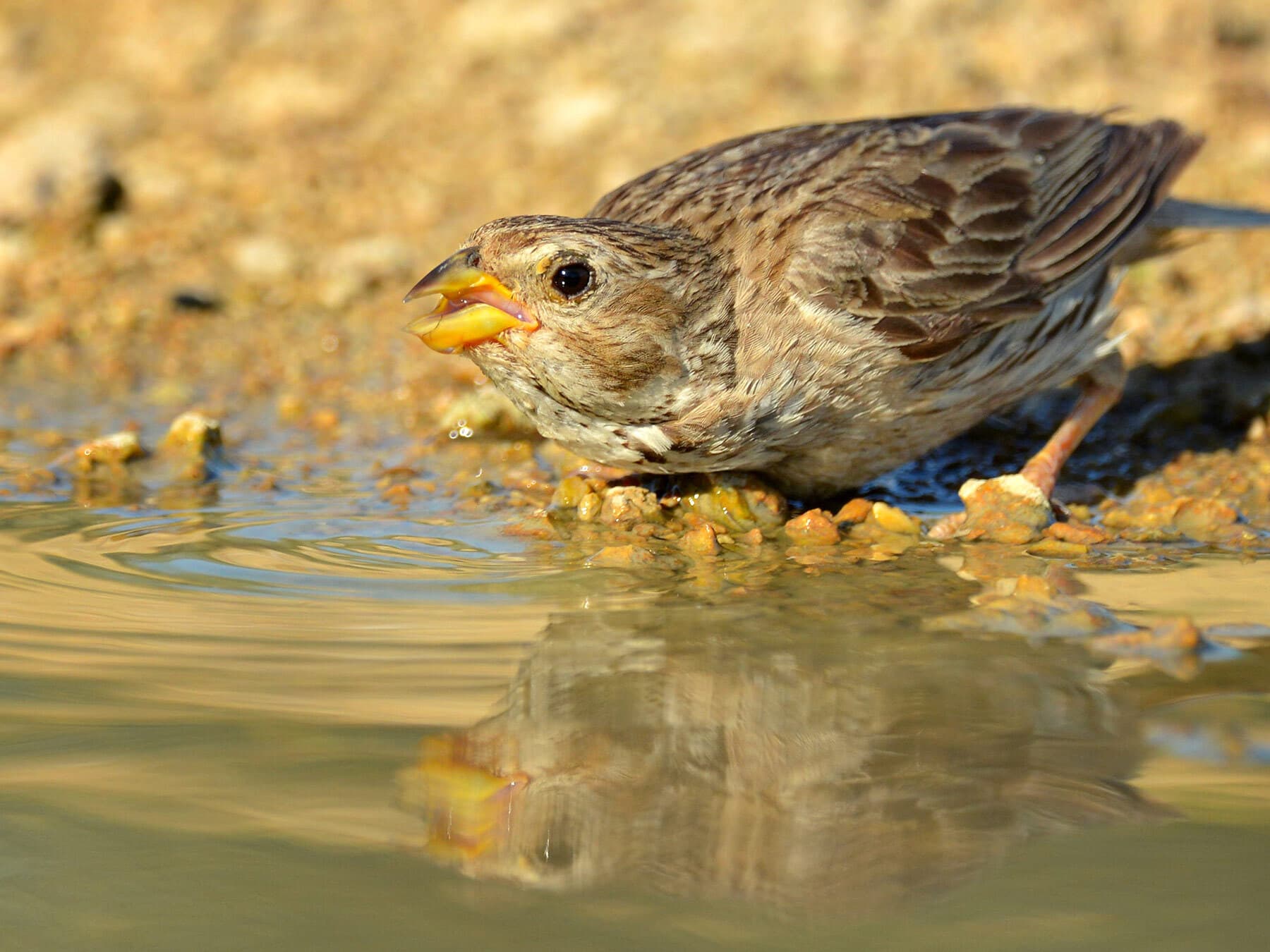
A ground feeder and forager the corn bunting eats mainly seeds in the winter and both insects and seeds and grains during the summer months.
Nesting and breeding
Across their range, dependent upon geographical location, the breeding season extends from late March until June when nests are built directly on the ground by the female from grass and roots, often lined with small leaves and fine grasses. One or two broods are produced annually each consisting of an average of 4 – 6 very pale blue, speckled eggs, which are incubated by the female alone for up to two weeks. The chicks remain in the nest for between ten to thirteen days frequently leaving before they are able to fly. Breeding males will often mate with other females and instances of male birds mating with up to eighteen different females in one season, whilst not common, have been documented in the past.
Behaviour
Corn Buntings are often seen perched prominently on fence posts, wires, or tall stems, singing their characteristic song. They typically forage on the ground in small groups, moving with a shuffling gait. During the breeding season, males become territorial and perform short, fluttering display flights.
Lifespan and predators
The life expectancy of a corn bunting is between two to three years.
Conservation
While listed as Least Concern globally, Corn Bunting populations have declined significantly in parts of Europe, particularly in the UK. Agricultural intensification, including loss of field margins and winter stubble, poses the main threat.
Conservation efforts focus on promoting wildlife-friendly farming practices.
What does a Corn Bunting look like?
The adult corn bunting is a stocky, medium sized, predominantly brown coloured bird, with darker brown or black streaks. The back is a mid brown streaked with dark brown from the nape to the base of the tail. The head is paler with less patternation whilst the crown has dark stripes. The upperwing feathers and tail are plain brown whilst the underparts are a paler brown with similar dark streaks, particularly to the breast and flanks. Often the dark streaks that run down the breast will morph together forming a central dark chest patch. The underbelly streaking extends towards the vent whilst the belly itself is a pale greyish buff. The eye is very dark surrounded by a pale eye ring and the bill is powerful, triangular and large, with the upper mandible fitting into the larger and broader lower mandible, typical of a seed eater and is yellowish in colour. Male and female birds have identical plumage whilst the male is considerably larger than the female. Juveniles resemble adults although the brown buff base colour which surrounds the bird is found across both the upper and lower parts.
Similar birds
Often mistaken for
Quick facts
- Length
- 16–19 cm
- Wingspan
- 26–32 cm
- Weight
- 38–55 g
- Lifespan
- 3–5 years
- Family
- Buntings
- Migration
- Partial migrant
- Global status (IUCN)
- Least Concern
- World population
- 180,000,000 - 319,999,999 mature individuals
- Population trend
- Decreasing
- Also called
- Common Corn Bunting
- Scientific name
- Emberiza calandra
Sources
2- 1BirdLife International. 2019. Emberiza calandra (amended version of 2018 assessment). The IUCN Red List of Threatened Species 2019: e.T22721020A155499724. Source (opens in a new tab)
- 2BirdLife International. 2019. Emberiza calandra (amended version of 2018 assessment). The IUCN Red List of Threatened Species 2019: e.T22721020A155499724. Source (opens in a new tab)

Checked by
Nathan Cope, founder and editor
Nathan founded Birdfact and leads its writers and contributors in the UK, the US and Canada. He has watched and studied birds for more than ten years, and checks every article and species guide before it’s published.