


Serin
European Serin · Serinus serinus
By the Birdfact teamChecked by Nathan Cope
On this page15 sections
How to recognise it
What do Serins look like?
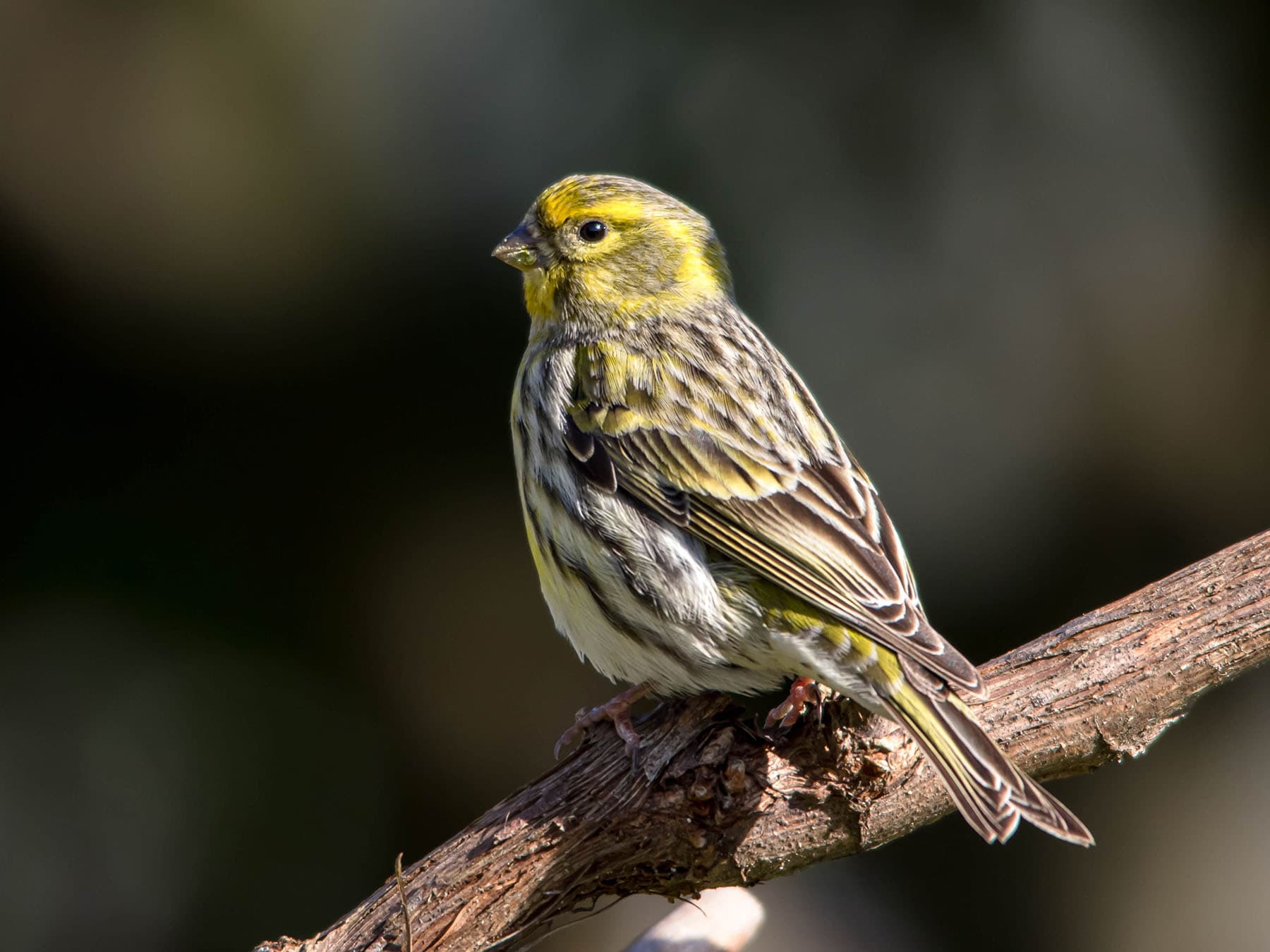
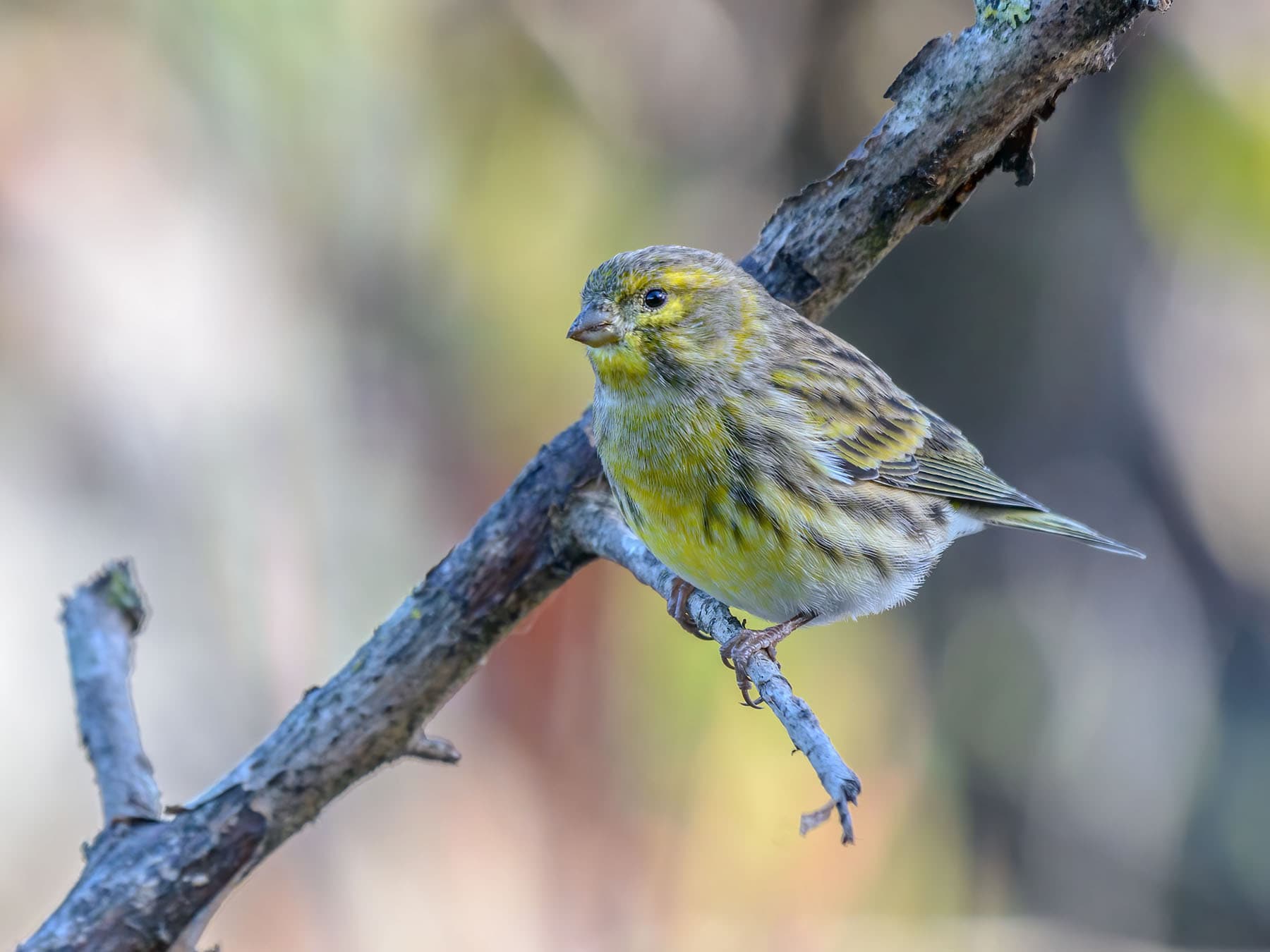
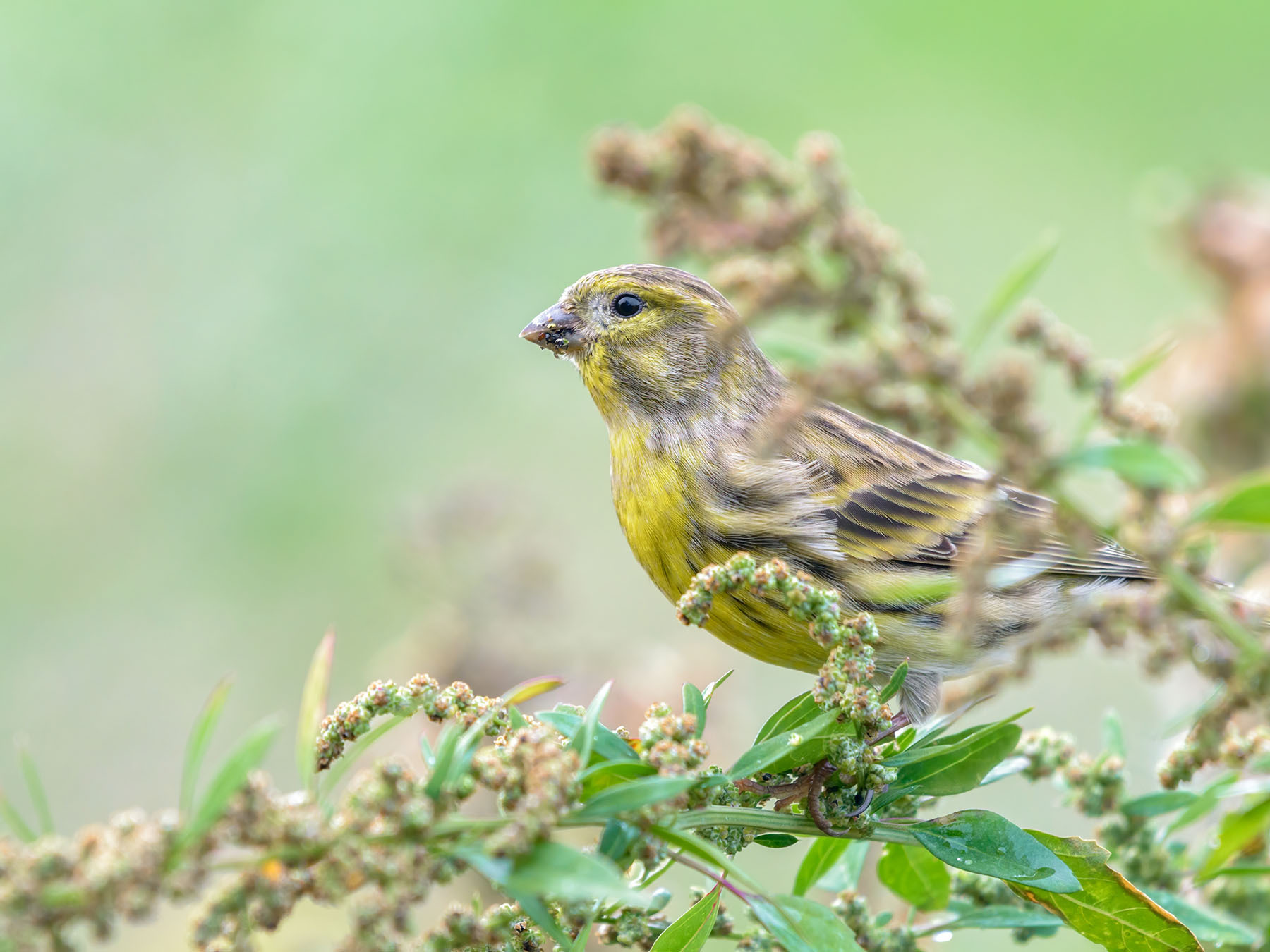
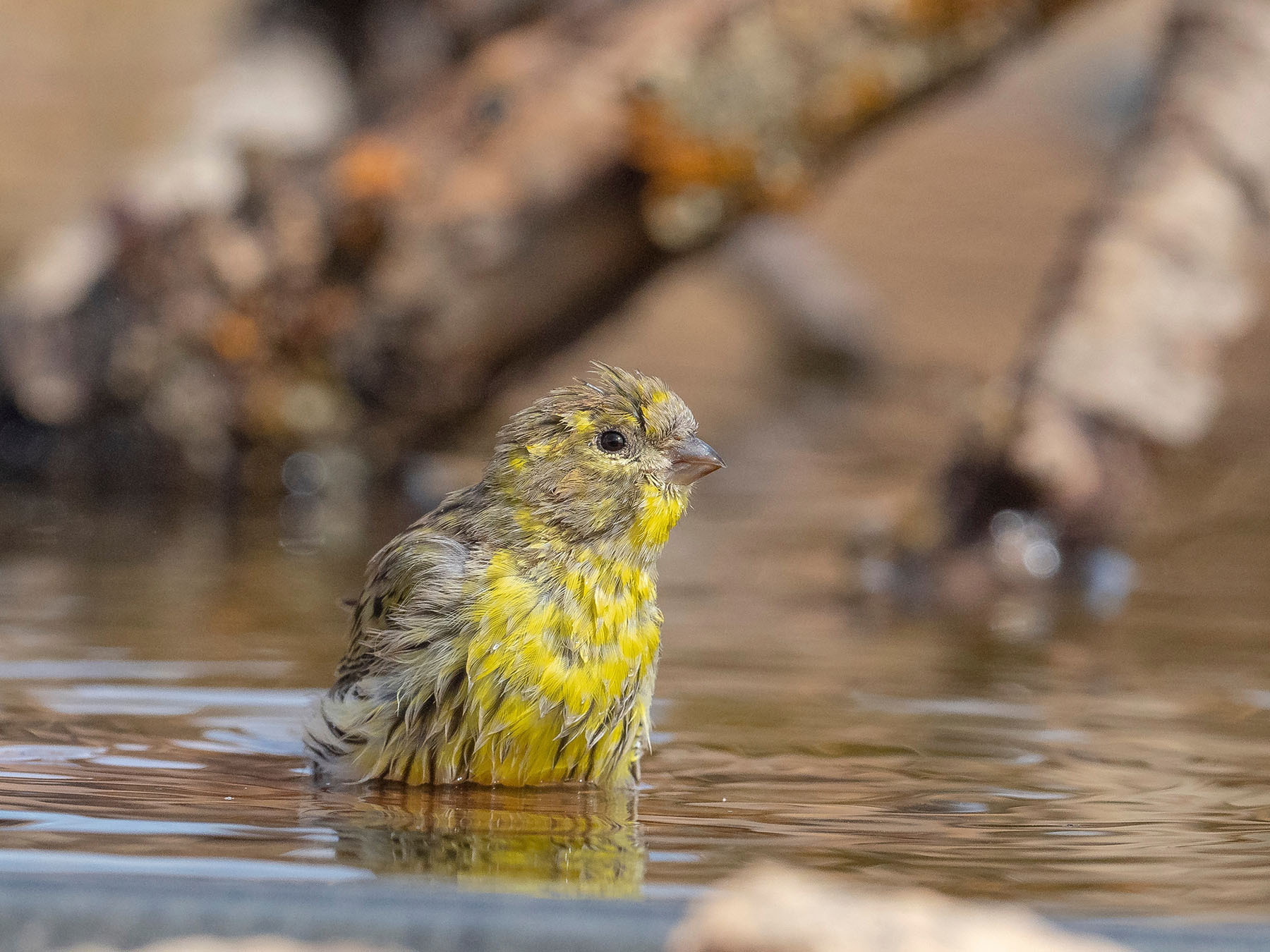
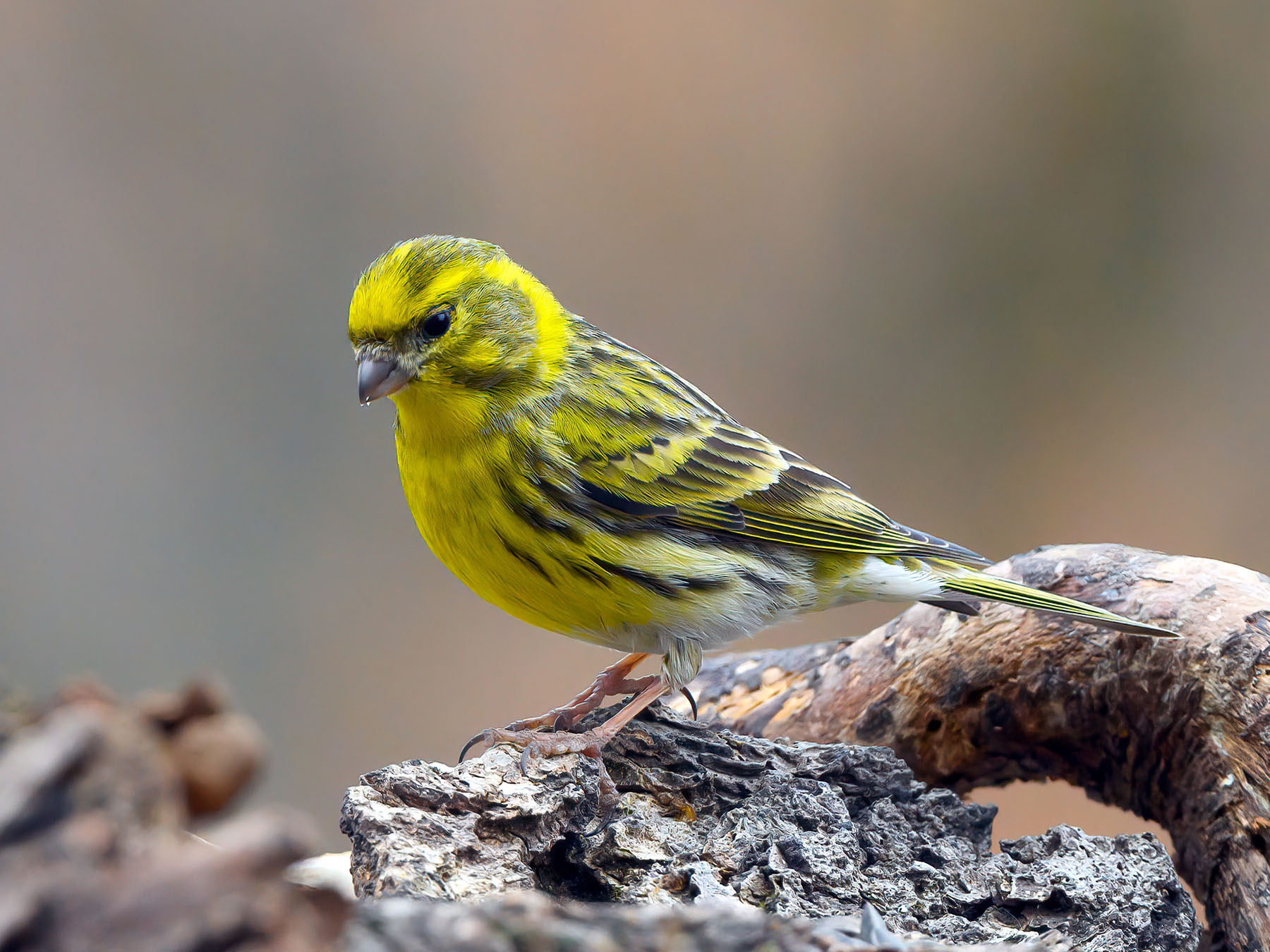
Serins or European Serins, are small finches with varying degrees of streaky yellow and green-brown plumage, short stubby bills, forked tails, and brownish-pink legs.
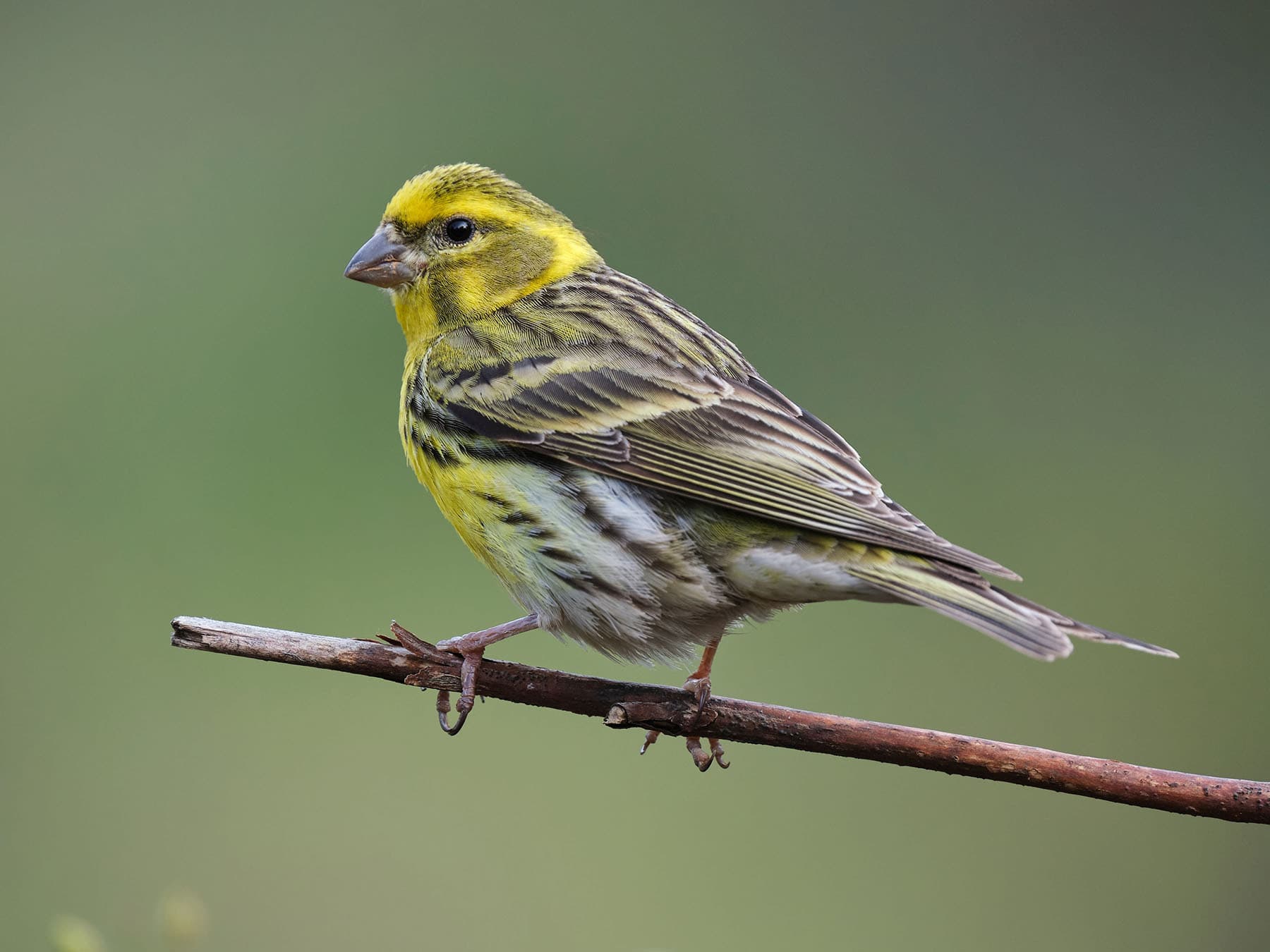
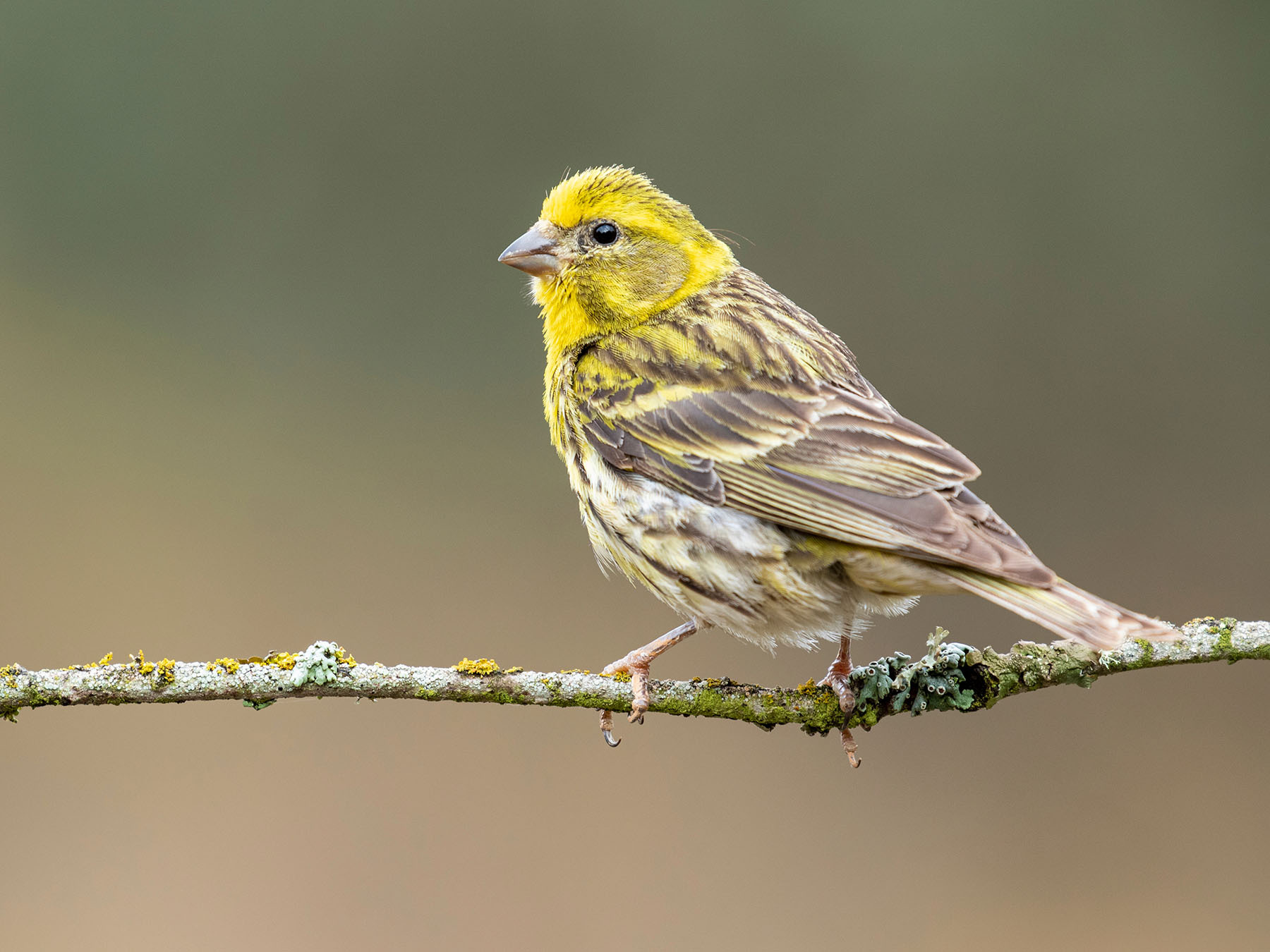
Male serins have stronger yellow coloring than females, with bold yellow breast, face, wing bars, outer tail feathers and paler yellow rump. A male serin’s belly and flanks are whitish, and streaked with light brown.
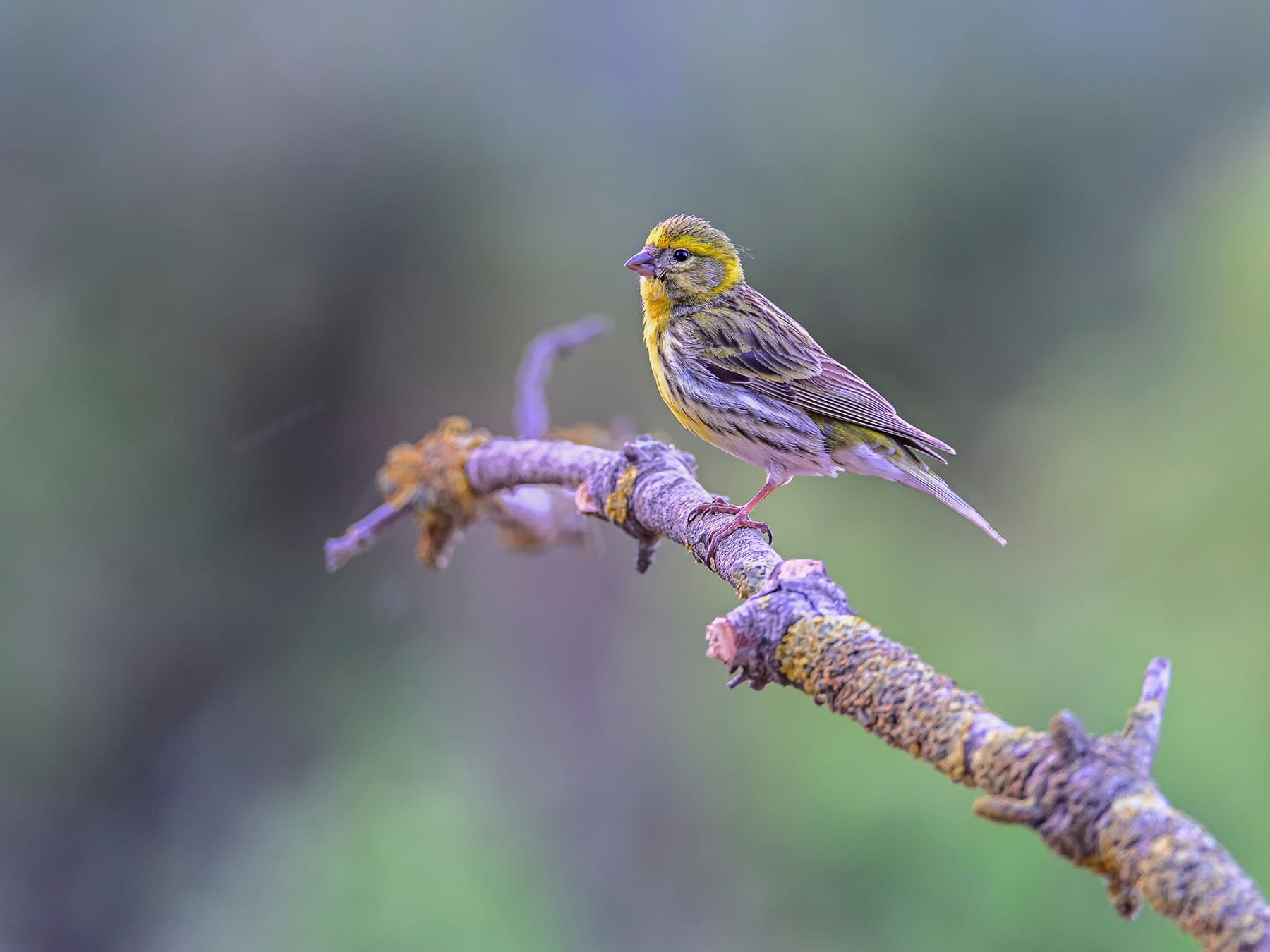
Females are similar in appearance to males, but have less bold colouring, with more muted shades of yellow replacing the vibrant buttercup tones of the male.
Female Serins are heavily streaked with greenish-grey markings; this is particularly noticeable on the female serins breast, which is marked with dark criss-cross lines, in contrast to the plain yellow of the male.
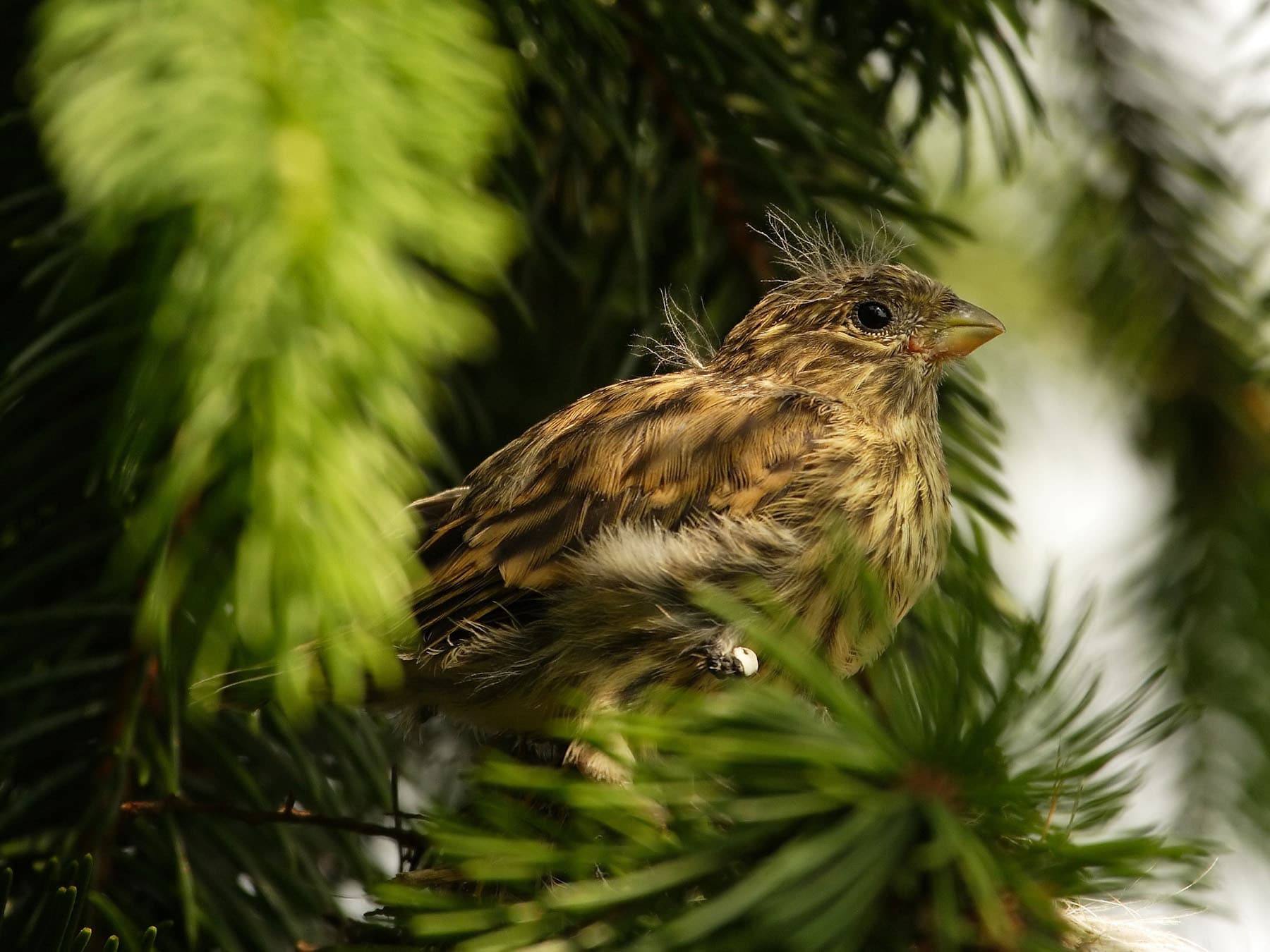
Juvenile serins lack the distinctive bright yellow colouring seen on adult males of the species. They are a buff shade of off-white all over, and heavily marked with contrasting darker grey-brown stripes.
How big are Serins?
Serins are the smallest European member of the finch family, measuring only 11 cm to 12 cm in length, around the same size as or slightly smaller than a blue tit. Males and females are around the same size.
- Length: 11 cm to 12 cm (4.3 in to 4.7 in)
- Wingspan: 18 cm to 20 cm (7.1 in to 7.9 in)
- Weight: 12 g to 15 g (0.4 oz to 0.5 oz)
Its size
Adults- Length
- 11–12 cm
- Wingspan
- 20–23 cm
- Weight
- 10–15 g
Its song and calls
What sound does a Serin make?
Unlike the tuneful melody of their close cousin the canary, serins are known for their jangly, rasping, somewhat haphazard song, heard from perches on telephone wires or treetops.
The delicate rapid notes, sung almost exclusively by the male serin, can be heard all year round, although less frequently in autumn and winter.
- Song0:00 / 0:51
Recorded in Occitanie, France · May 2026
- Call0:00 / 0:43
Recorded in Normandie, France · October 2023
When and where to see it
OctoberArriving
Most recorded in October
- 1. Cornwallunder 0.1%
- 2. East Riding of Yorkshireunder 0.1%
- 3. Dorsetunder 0.1%
Each dot is a county, state or province: the bigger and darker, the larger the bird’s share of that place’s bird records that month. Grey dots: no regular records. The ringed point is the centre of the bird’s records this month; the arrow shows how it moved since last month, and the dashed loop its path through the year. “Arrivals” colours places where it becomes regular this month (orange) or is in its last regular month (grey). GBIF eBird Observation Dataset, 2019–2024. Map data: Natural Earth, US Census Bureau; place centres © OpenStreetMap contributors.
In your area
See when the Serin is recorded in your county, state or province.
How often the Serin turns up in the UK through the year, from birdwatchers' records.
United Kingdom
Passage migrant · regularly Oct–Jun · most records in May
Show as a table
| Month | United Kingdom |
|---|---|
| January | <0.001% (regular) |
| February | <0.001% |
| March | <0.001% (regular) |
| April | 0.001% (regular) |
| May | 0.002% (regular) |
| June | 0.001% (regular) |
| July | <0.001% |
| August | <0.001% |
| September | <0.001% |
| October | 0.002% (regular) |
| November | <0.001% (regular) |
| December | <0.001% |
Recorded regularly in
Worldwide: recorded regularly in 55 countries
Countries where it was recorded in at least 3 of the 6 years 2019–2024. Linked countries have their own bird list.
Europe (44)
- Albania
- Andorra
- Austria
- Belarus
- Belgium
- Bosnia & Herzegovina
- Bulgaria
- Croatia
- Czechia
- Denmark
- Estonia
- Finland
- France
- Germany
- Gibraltar
- Greece
- Hungary
- Italy
- Kosovo
- Latvia
- Liechtenstein
- Lithuania
- Luxembourg
- Malta
- Moldova
- Monaco
- Montenegro
- Netherlands
- North Macedonia
- Norway
- Poland
- Portugal
- Romania
- Russia
- San Marino
- Serbia
- Slovakia
- Slovenia
- Spain
- Sweden
- Switzerland
- Ukraine
- United Kingdom
- Vatican City
Data: EOD – eBird Observation Dataset (Cornell Lab of Ornithology), accessed via GBIF.org, CC BY 4.0. Records from 2019–2024, aggregated and filtered by Birdfact. How these lists are made
What is the habitat of a Serin?
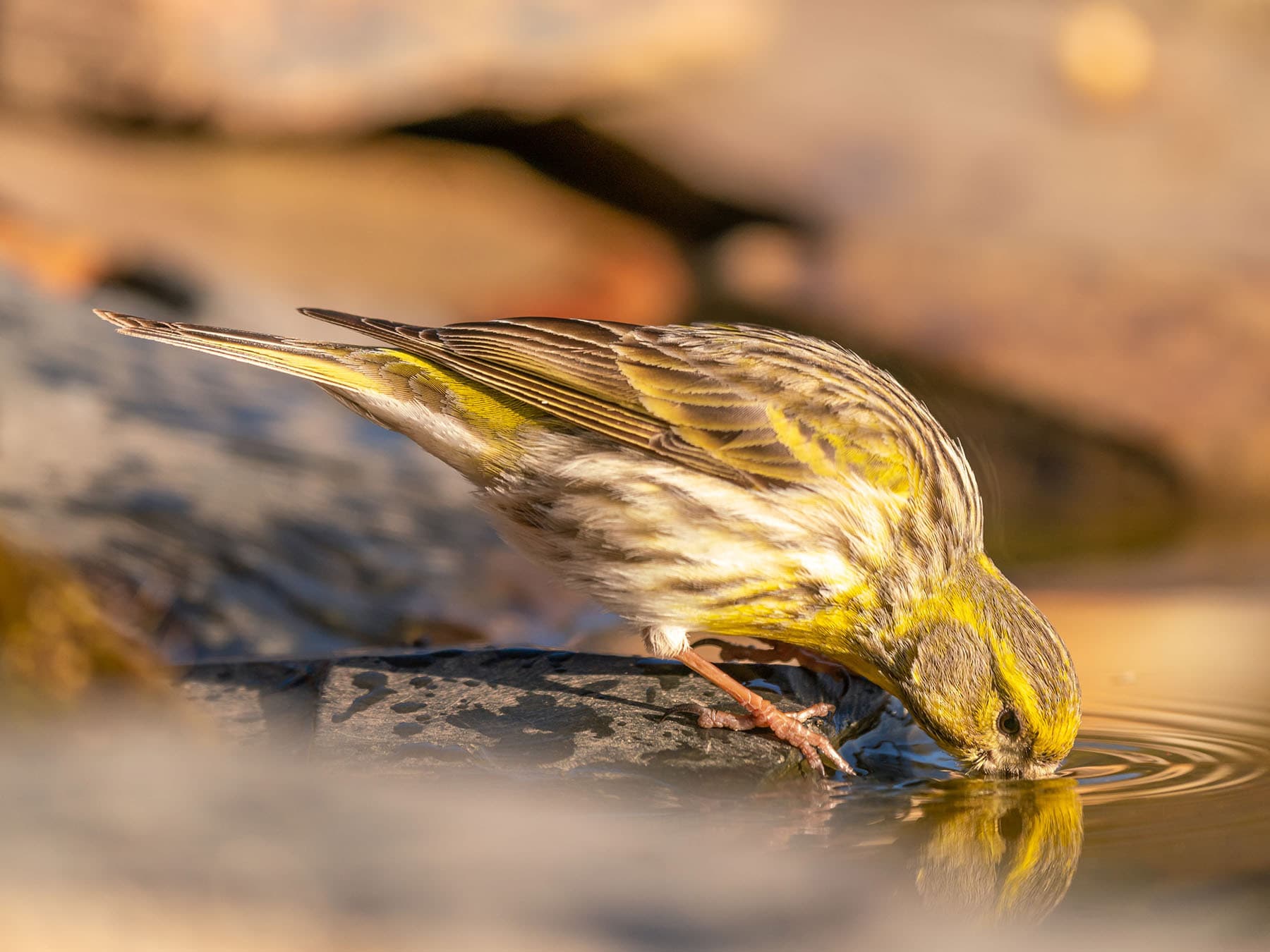
Across Europe, serins are commonly spotted in parks, gardens, cities, farmland and on the outer edges of forests. Serins are active birds, and are regularly seen in open landscapes out of the breeding season, gathering in large flocks, to forage and drink together.
What is the range of a Serin?
Serins are common across Europe, apart from the British Isles and northern Scandinavia.
Their breeding range extends to western Russia and Belarus in the east, and as far south as north Africa, with large populations of serins resident all year round along the Mediterranean coasts of Morocco and Egypt.
To the west, breeding serins are present in the Canary Isles, while to the east, the range extends to Iran, Iraq and eastern Turkey.
Where do Serins live?
Serins are adaptable birds that thrive in a range of different landscapes, from sea-level lowlands to the mountainous slopes of the Pyrenees, Alps and Carpathian mountain ranges.
They are found in city centres and residential areas, as well as in rural settings, orchards, pastures, forests and farmland. Human company does not seem to trouble serins, and they are commonly spotted in busy and densely populated areas.
How rare are Serins?
Seeing a serin in the UK is unusual and would be a sought-after tick on any birdwatcher’s species list. Only a handful of serin sightings are reported in the UK each year, and breeding pairs are highly uncommon.
Where can you see Serins in the UK?
The best time to stand the slightest chance of a serin sighting is during spring passage to their breeding grounds in northern Europe, with migrating birds briefly spotted along the south and east coast most years.
Reports of UK breeding pairs are sporadic, with only one or two pairs noted each year. These sightings are limited to eastern and southern England, Devon, Dorset, Sussex and East Anglia, as well as occasionally on the Channel Islands.
Migration
Do Serins migrate?
Many serins are migratory, breeding in eastern and northern Europe in the spring and summer and flying southwest to spend winters in Egypt, Israel and eastern Turkey. Serins that breed across much of western Europe are resident in the same territories all year round.
Serin sightings are most common in the UK between March and April, as migrating birds return to their breeding grounds in northern Europe.
Tips for seeing it
- Look for Serins in open woodlands, parks, and gardens with scattered trees
- Listen for their high-pitched, rapid-trilling song, often delivered from treetops
- Observe feeders in urban areas, where they may visit for seeds
- In the UK, focus on southern coastal areas during spring and autumn migrations
What it eats
What do Serins eat?
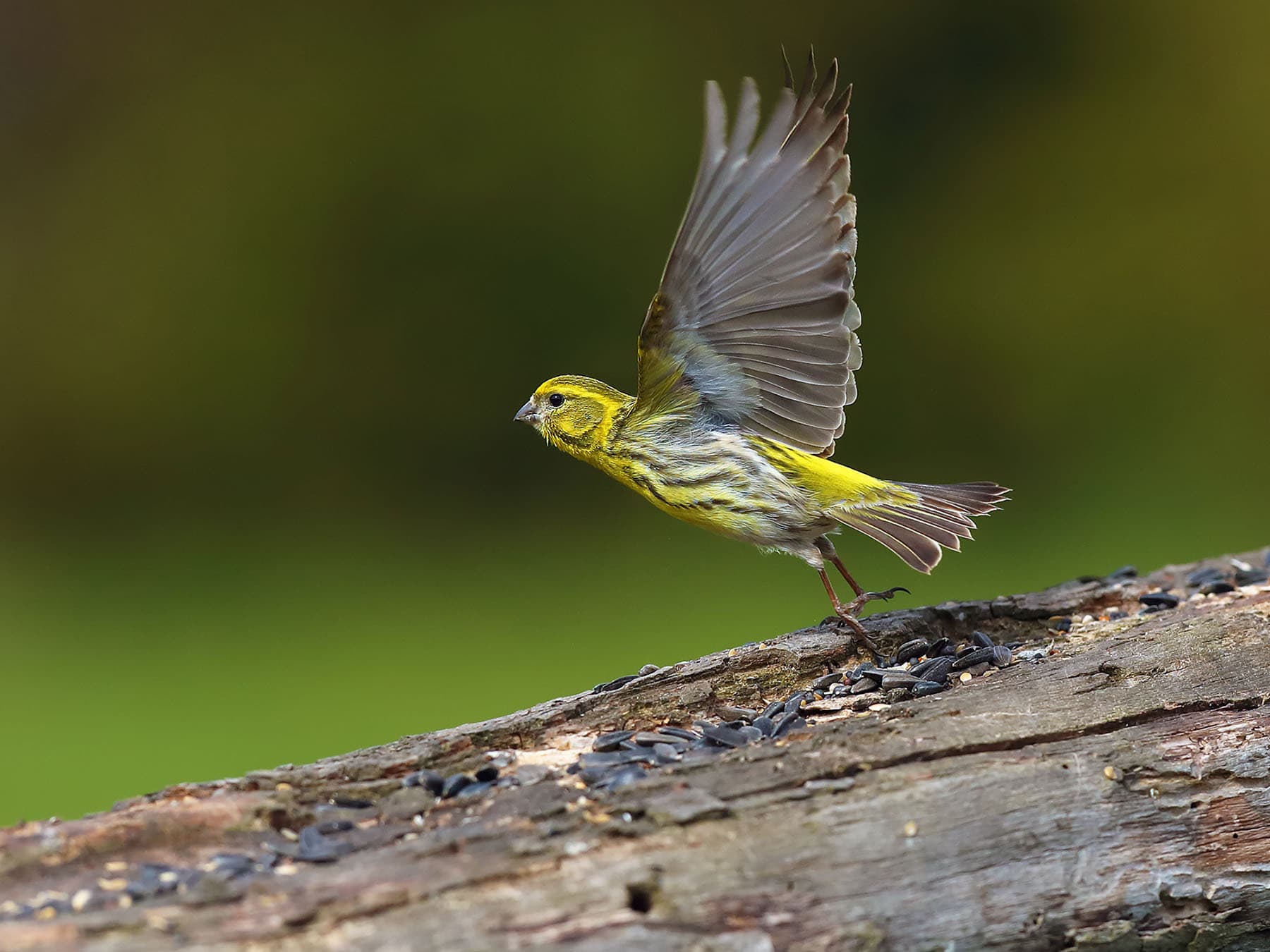
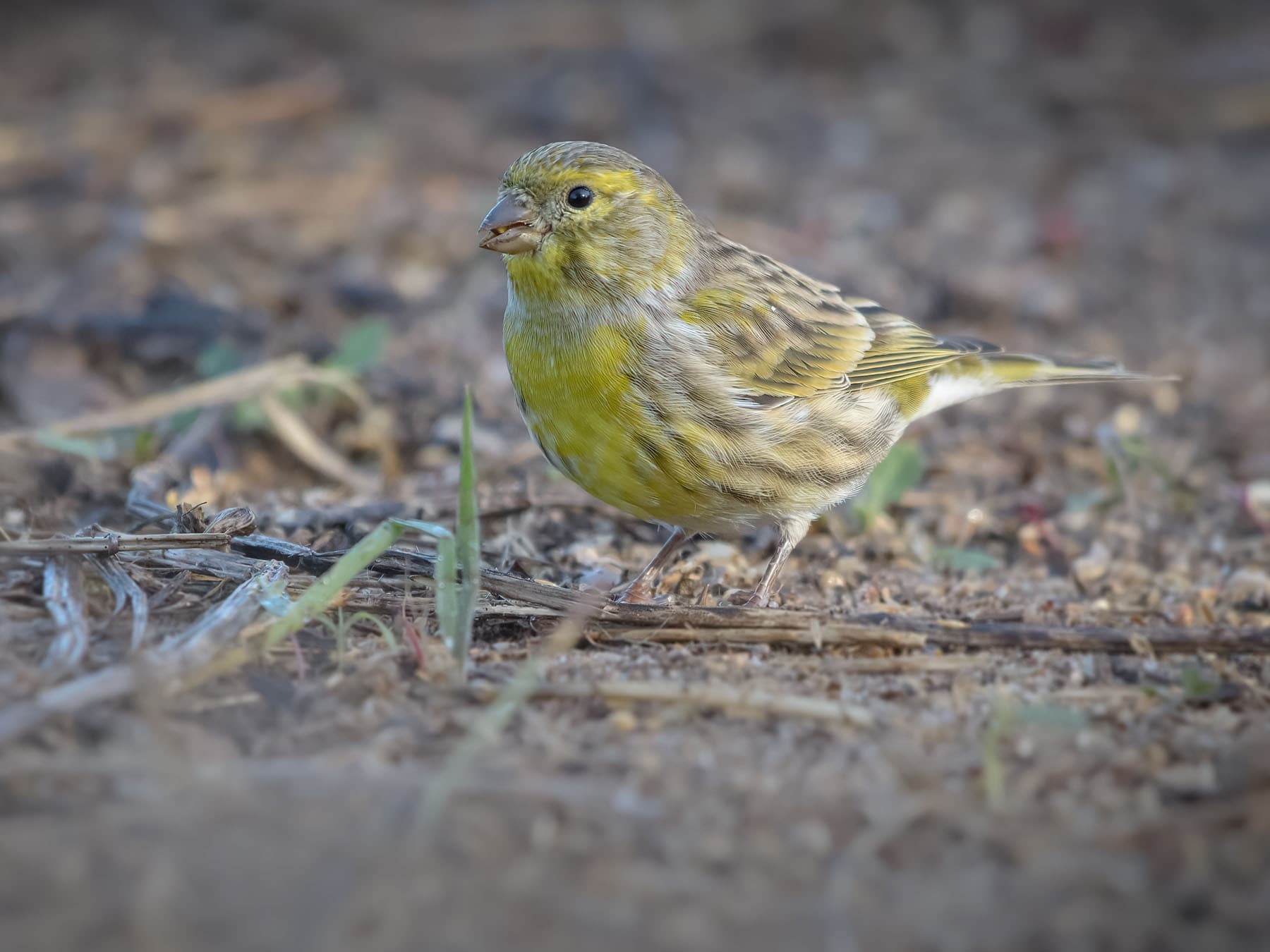
The main diet of serins consists of small seeds, buds, shoots, and flowers. During the breeding season, they also forage for insects and small invertebrates such as spiders and larvae.
What do Serin chicks eat?
Insects, such as tiny grasshoppers, and larvae are fed to serin hatchlings by both parents for the first few weeks of their life. Once they are able to forage for themselves, seeds and buds will also be eaten.
Nesting and breeding
Where do Serins nest?
Serins nest in the branches of bushes and trees, particularly fruit trees or conifers. Females construct cup-shaped nests from grasses, leaves, moss and other plants, which are then lined with feathers and animal fur.
What do Serin eggs look like?
Serin eggs are a glossy pale blue-green in colour, specked with brownish-red markings. They measure 16 mm by 12 mm (0.6 in by 0.5 in), and weigh on average 1.2 g (0.04 oz).
Two broods are normal for serins, with between three and five eggs in a typical clutch. Only the female incubates the eggs, which hatch after 12 to 13 days.
Do Serins mate for life?
Serins are monogamous during the breeding season, pairing up in April and raising up to two broods together. Each year new pairs will form, and pair bonds are unlikely to be maintained through the winter.
Behaviour
Are Serins aggressive?
Male serins may show signs of vocal aggression if their nest site is encroached upon but otherwise are not particularly defensive of their breeding or feeding territories, and will form loose foraging groups with other finches during winter months.
These winter flocks can potentially grow to more than 100 birds.
Lifespan and predators
How long do Serins live?
Serins have a relatively short life expectancy of just under 2 years, although an example of a ringed individual that lived for over 13 years has been reported.
What are the predators of Serins?
Serins’ eggs and nests may be targeted by corvids, including jays, magpies and crows. Small raptors may also raid serin nests during the breeding season.
Are Serins protected?
In the UK, serins are rare visitors, and protected as wild birds under the Wildlife and Countryside Act, 1981. This means they cannot be intentionally killed, injured or captured, and their eggs and nests cannot be deliberately destroyed or damaged.
Are Serins endangered?
Serins are currently designated as an IUCN species of least concern. Numbers are decreasing in some parts of their range due to habitat loss, but across Europe there are an estimated 10 to 13 million breeding pairs, the majority of which live in Spain all year round.
In Britain, serins have been moved to a ‘black list’ of Birds of Conservation Concern, as they have ceased breeding in the country.
Conservation
While the Serin is currently listed as Least Concern, some local populations have experienced declines due to habitat loss and agricultural intensification.
Conservation efforts focus on maintaining diverse habitats and promoting wildlife-friendly farming practices in their range.
Similar birds
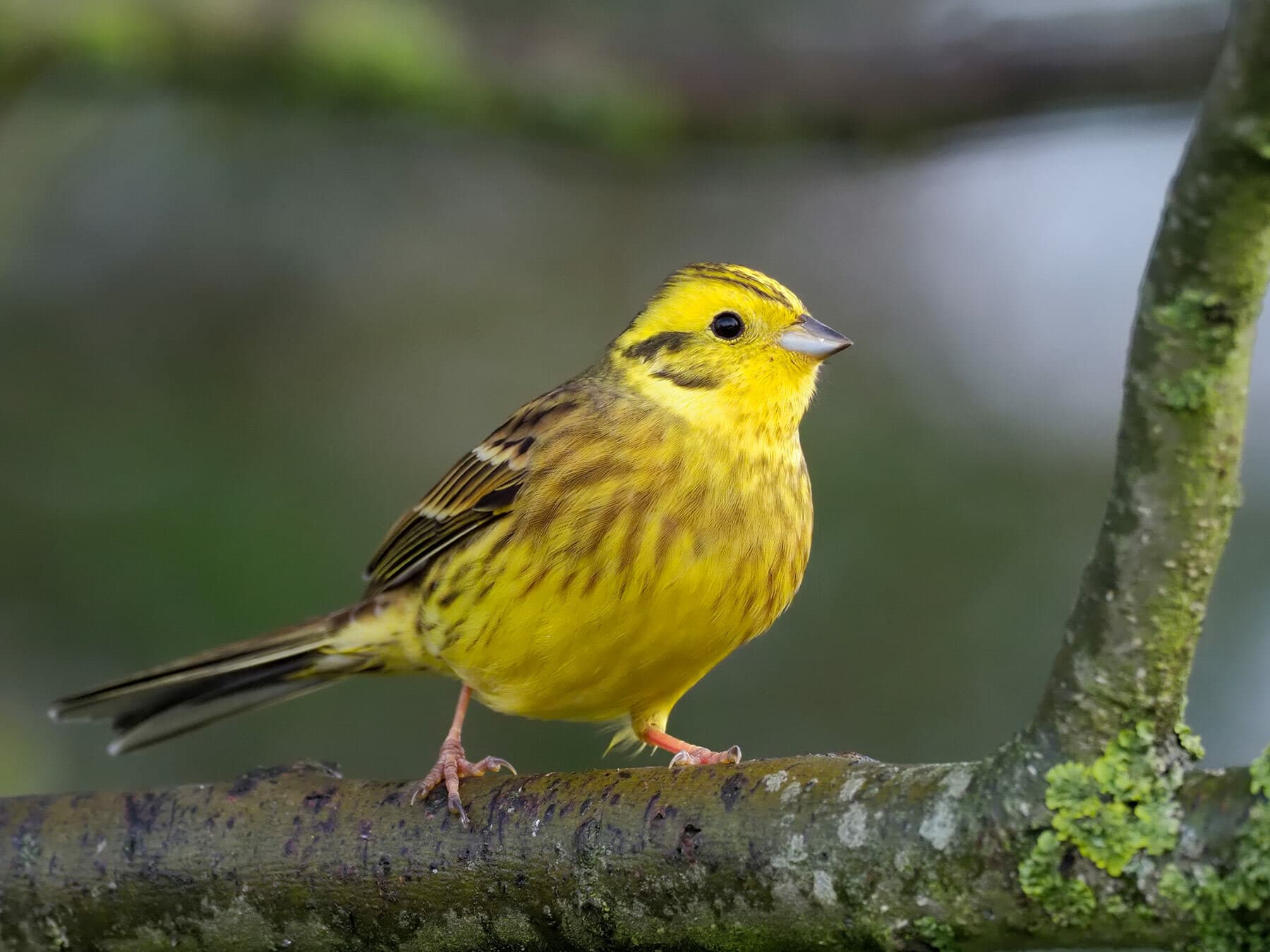
Often mistaken for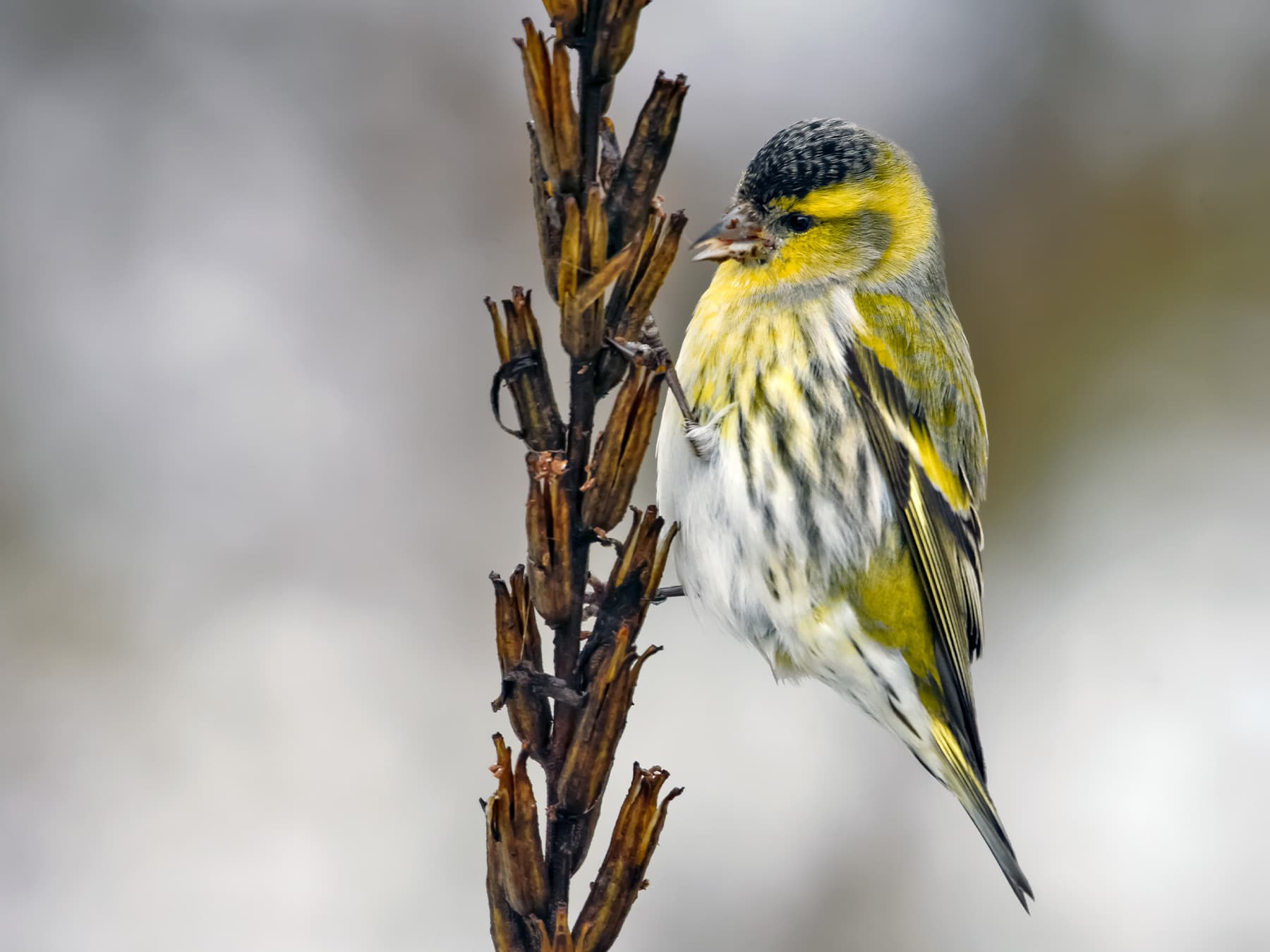
More photos
5 photos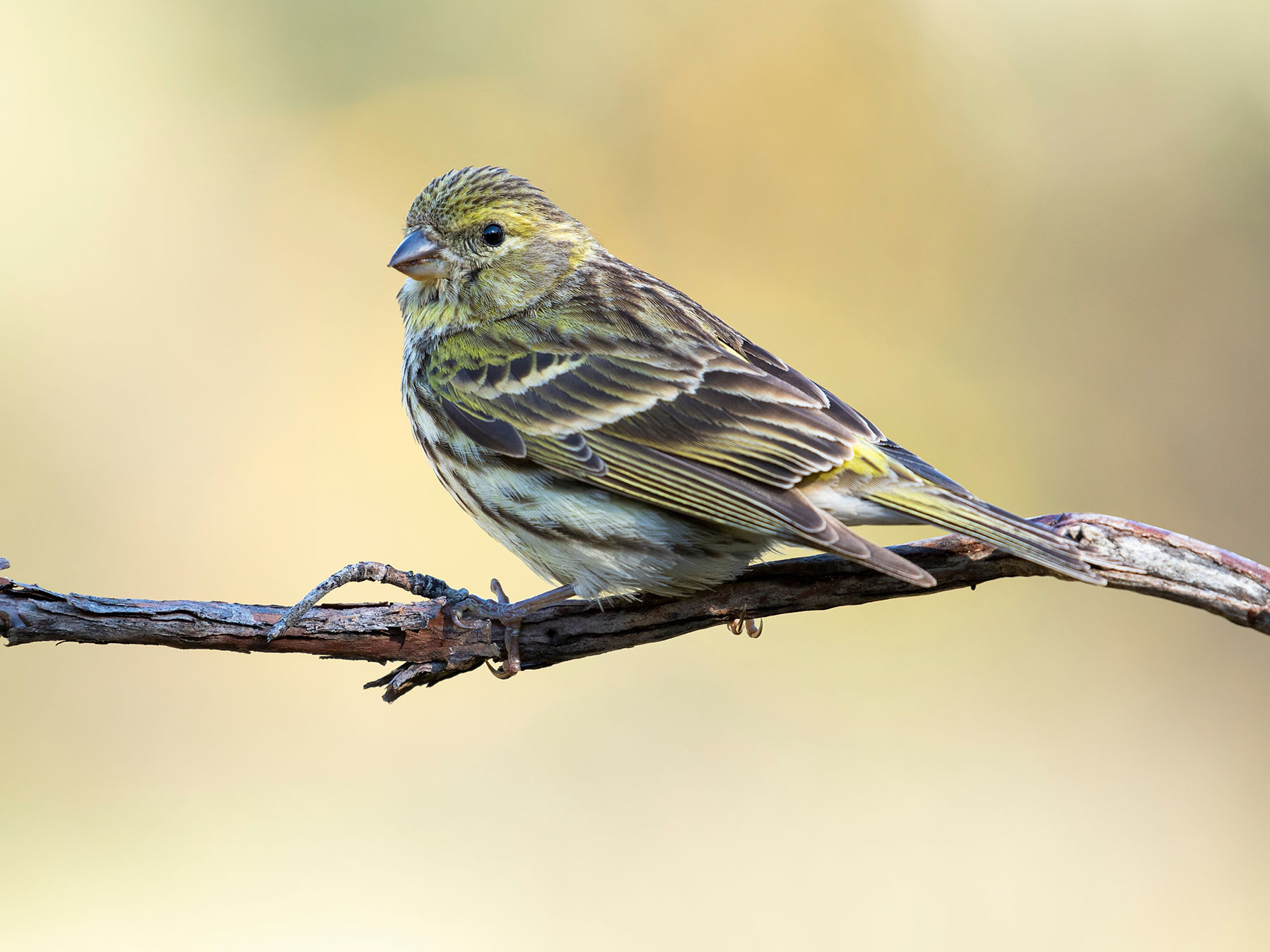
Serin guides
1 guidesQuick facts
- Length
- 11–12 cm
- Wingspan
- 20–23 cm
- Weight
- 10–15 g
- Lifespan
- 2–3 years · oldest recorded 13.3 years
- Family
- Finches
- Migration
- Partial migrant
- Global status (IUCN)
- Least Concern
- World population
- 46,500,000 - 70,000,000 mature individuals
- Population trend
- Decreasing
- Also called
- European Serin
- Scientific name
- Serinus serinus
Questions
2Is a Serin a finch?
The serin is a finch, and is the smallest member of the finch family that lives in Europe. It’s related to the Atlantic canary, native to the Azores, Madeira and the Canary Islands.
How to pronounce Serin
The species name comes from ‘serin’, the French word for a canary. It’s pronounced ‘seh-rin’.
Sources
4- 1BirdLife International. 2018. Serinus serinus. The IUCN Red List of Threatened Species 2018: e.T22720049A132136209. Source (opens in a new tab)
- 2EBCC (2015)
- 3BirdLife International. 2018. Serinus serinus. The IUCN Red List of Threatened Species 2018: e.T22720049A132136209. Source (opens in a new tab)
- 4Fransson et al., EURING list of longevity records for European birds (2010) Source (opens in a new tab)

Checked by
Nathan Cope, founder and editor
Nathan founded Birdfact and leads its writers and contributors in the UK, the US and Canada. He has watched and studied birds for more than ten years, and checks every article and species guide before it’s published.