


Cirl Bunting
Zizi Bunting · Emberiza cirlus
By the Birdfact teamChecked by Nathan Cope
On this page15 sections
How to recognise it
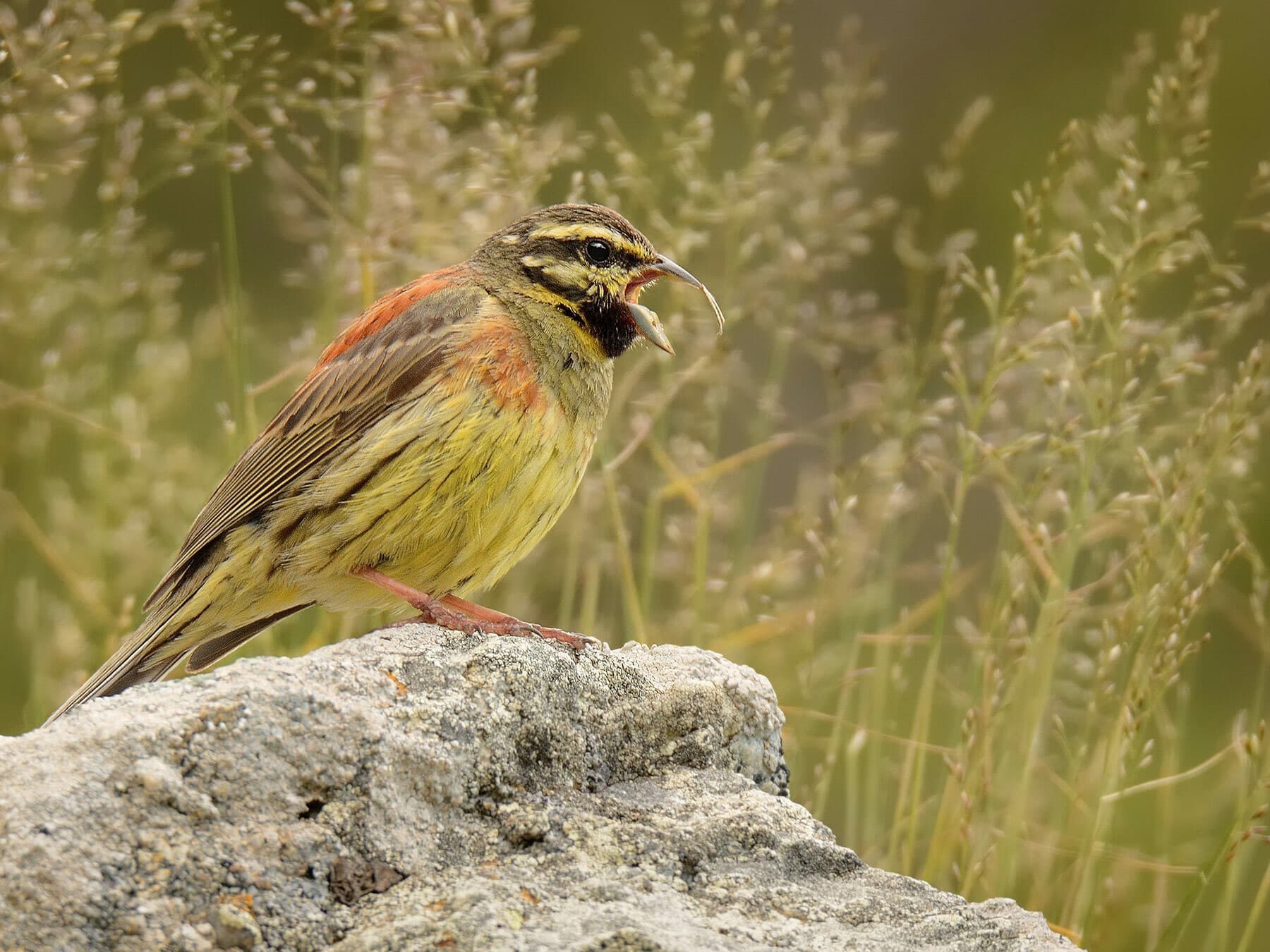
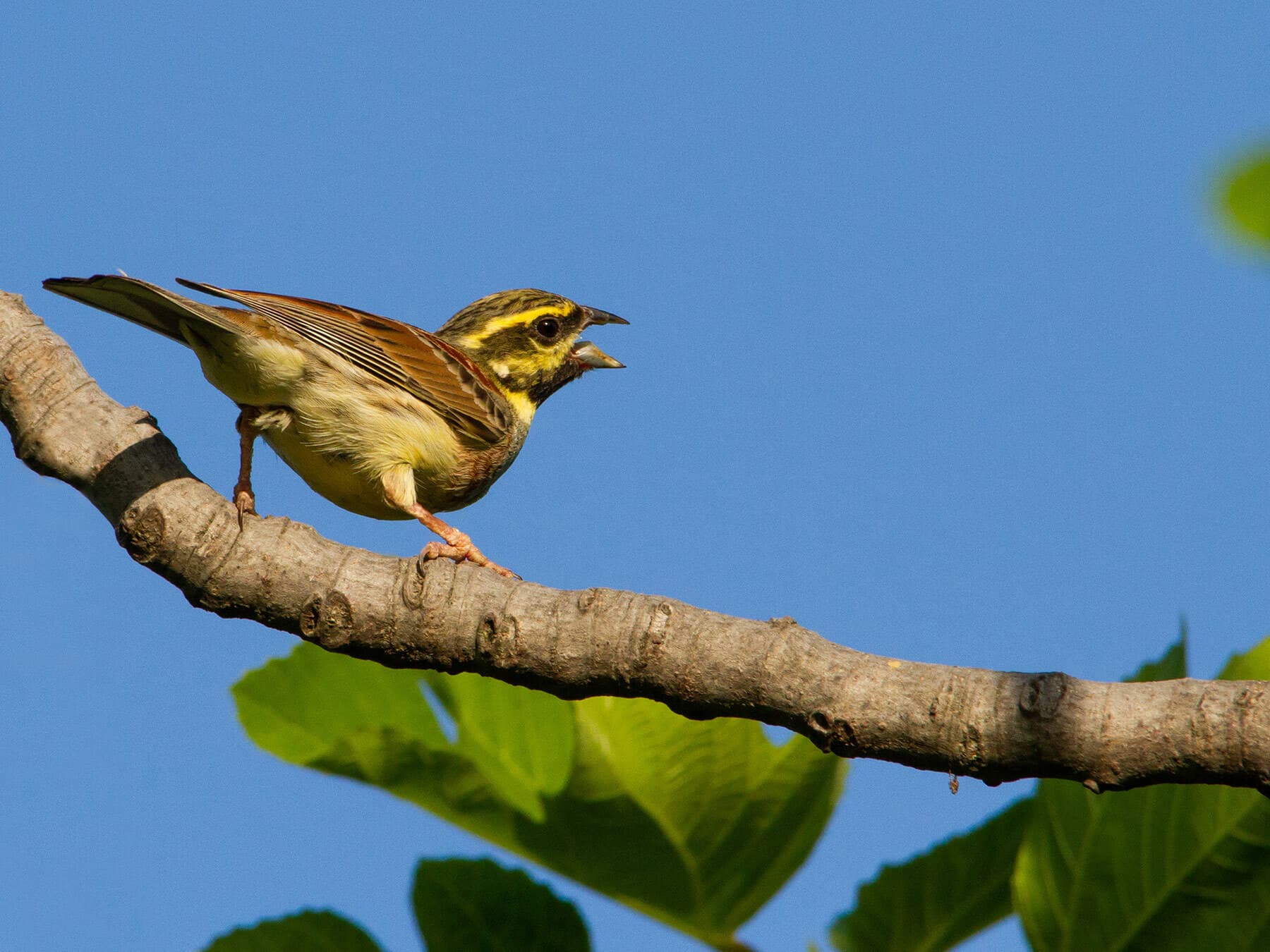
The Cirl Bunting is a small, colourful bird with a distinctive appearance. Males have a bright yellow head with a black crown, eye stripe, and chin. Their back is chestnut-brown, contrasting with an olive-green rump and yellow underparts.
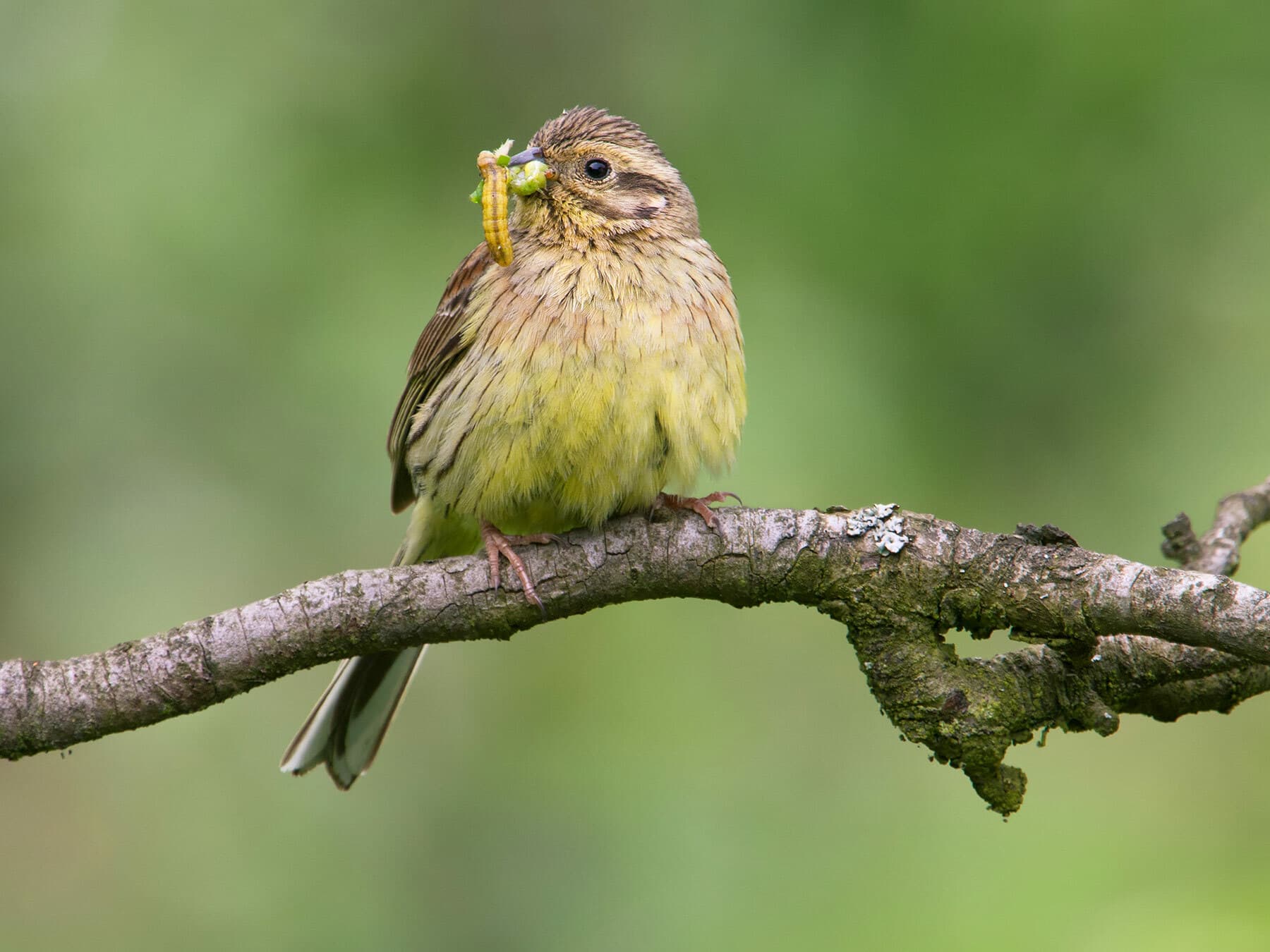
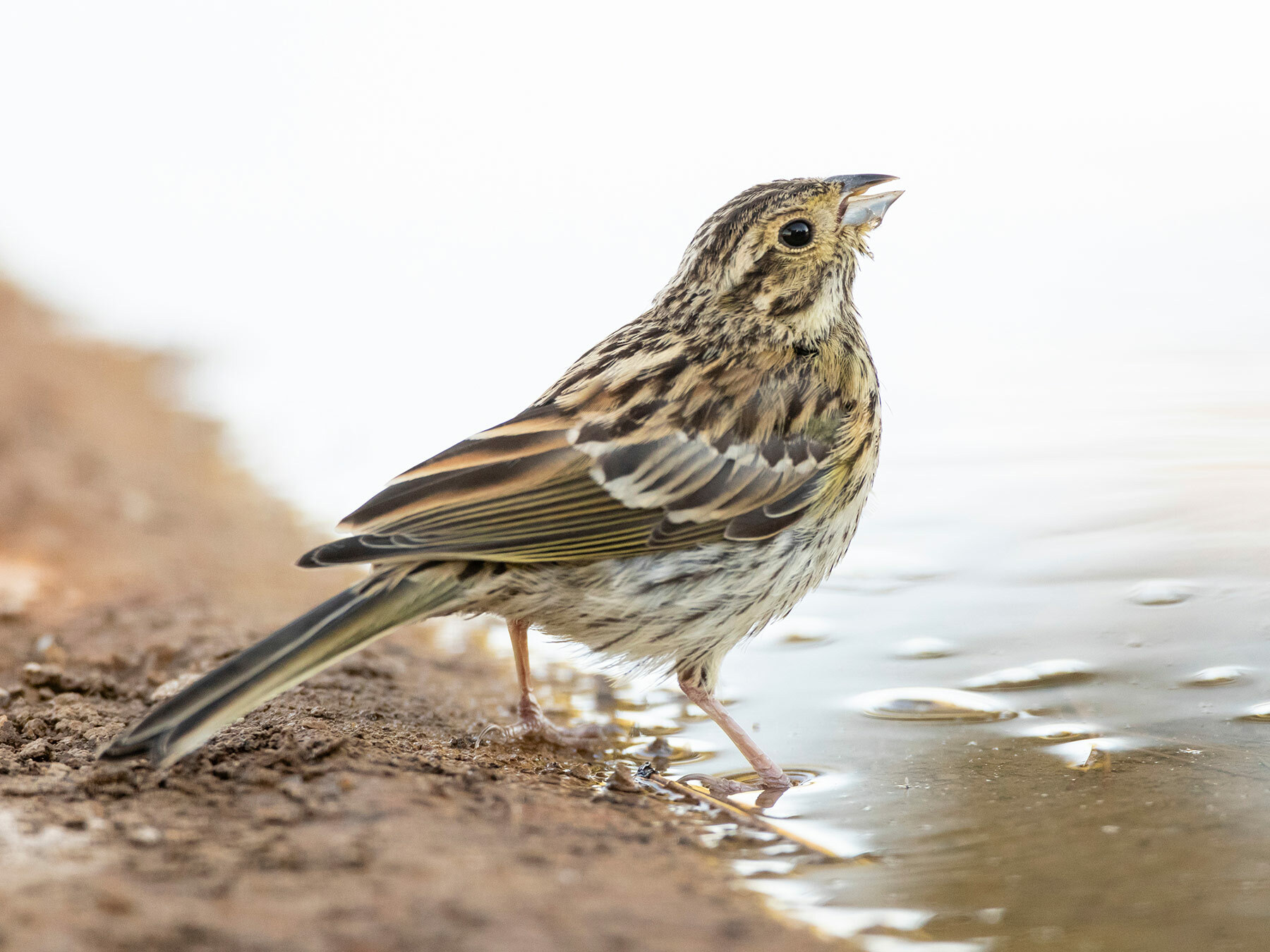
Females, with a brown-streaked body and a yellowish wing bar, aren't as colourful as males. Both sexes have a grey bill and pink legs. Juveniles resemble females but with heavier streaking.
Its size
Adults- Length
- 15–16.5 cm
- Wingspan
- 22–25 cm
- Weight
- 20–25 g
Its song and calls
The male cirl bunting’s call is a high pitched, short, solitary note of ‘sip’. The song consists of a metallic sounding trilling similar to ‘ti – ti – ti – ti -ti’ often sung from a bush or perched in a tree and is loud enough to be heard from a distance of up to half a kilometre.
- Song0:00 / 0:10
Recorded in Decentralized Administration of Attica, Greece · April 2023
- Flight call0:00 / 0:12
Recorded in Normandie, France · October 2024
When and where to see it
OctoberIn season
Most recorded in October
- 1. Devon0.45%
- 2. Dorsetunder 0.1%
- 3. Cornwallunder 0.1%
Each dot is a county, state or province: the bigger and darker, the larger the bird’s share of that place’s bird records that month. Grey dots: no regular records. The ringed point is the centre of the bird’s records this month; the arrow shows how it moved since last month, and the dashed loop its path through the year. “Arrivals” colours places where it becomes regular this month (orange) or is in its last regular month (grey). GBIF eBird Observation Dataset, 2019–2024. Map data: Natural Earth, US Census Bureau; place centres © OpenStreetMap contributors.
In your area
See when the Cirl Bunting is recorded in your county, state or province.
How often the Cirl Bunting turns up in the UK through the year, from birdwatchers' records.
Recorded in United Kingdom, but eBird withholds many records of this sensitive species to protect it, so no months are shown.
Recorded regularly in
Worldwide: recorded regularly in 27 countries
Countries where it was recorded in at least 3 of the 6 years 2019–2024. Linked countries have their own bird list.
Europe (22)
- Albania
- Andorra
- Austria
- Bosnia & Herzegovina
- Bulgaria
- Croatia
- France
- Germany
- Greece
- Italy
- Jersey
- Kosovo
- Luxembourg
- Montenegro
- North Macedonia
- Portugal
- Romania
- Serbia
- Slovenia
- Spain
- Switzerland
- United Kingdom
Asia (1)
Oceania (1)
Data: EOD – eBird Observation Dataset (Cornell Lab of Ornithology), accessed via GBIF.org, CC BY 4.0. Records from 2019–2024, aggregated and filtered by Birdfact. How these lists are made
This non migratory little bird is predominantly found within the temperate regions of southern Europe particularly around the Mediterranean, mainland Spain and Portugal, central and southern France, Italy, the Balkans and island groups including the Balearics, Greek Isles, Sicily and Sardinia and regions in north west Africa. Small numbers can be found along the south coast of the UK, particularly between the cities of Exeter and Plymouth and larger populations within the southern hemisphere on New Zealand’s South Island.
Signs and Spotting tips
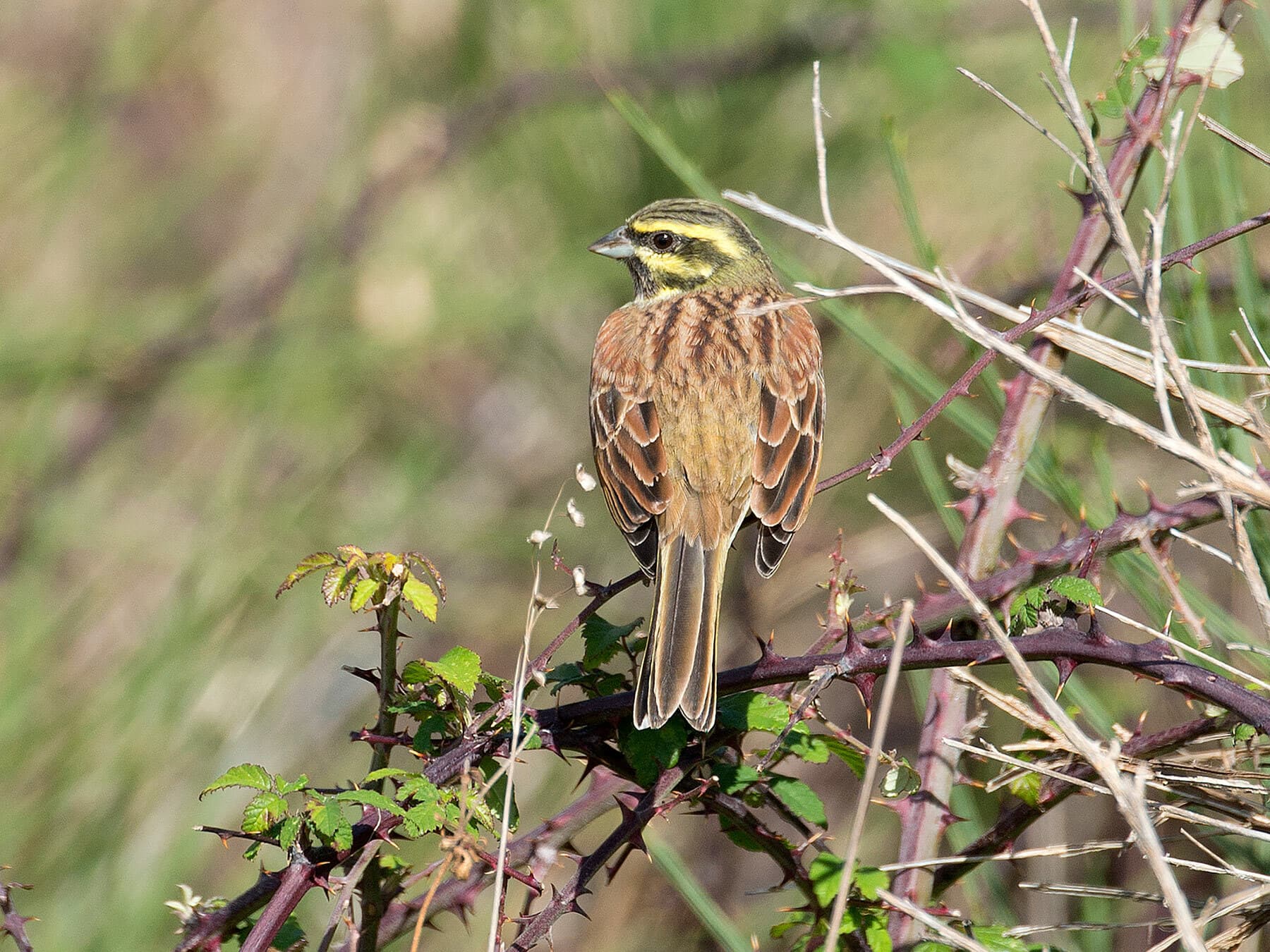
Warm, generally gentle bushy slopes, farmland or small wooded areas fringed with hedges or scrub are ideal venues from which to study cirl buntings. In size and basic appearance resembling a finch but with a longer tail, the male can often be seen singing from the tops of bushes or heard vocalising amongst the trees, requiring patience and an eagle’s eye to spot! They can frequently be seen in small flocks. As with most buntings the bill is short and broad, dark grey to black above and a blue grey below. The bill is constructed in such a way so that the upper mandible, which is smaller than the wider and deeper lower mandible, fits neatly into it.
What it eats
During the summer the bird’s preferred diet consists of insects and in particular grasshoppers or locusts. In the winter when there is a scarcity of insects cirl buntings feed on grass seeds and cereal grains foraged from the ground.
Nesting and breeding
Females build the nest alone over three to four days from twigs, stalks and grasses, lined with fine grass and hair and located low down in bushes or scrub. Dependent upon region, an average of two broods are produced annually between, mid April to late August, usually consisting of 2 – 5 greyish white, brown speckled eggs which are incubated by the female for up to two weeks. Both parents feed the young in the nest and fledging will normally occur between eleven and thirteen days.
Behaviour
Cirl Buntings are often seen perched on top of hedges or low trees, singing their distinctive song. They forage on the ground in small groups, moving with quick, jerky hops.
During the breeding season, males become territorial and engage in aerial displays to attract mates.
Lifespan and predators
The normal lifespan for a cirl bunting is two to three years.
Conservation
Once widespread in southern England, Cirl Buntings experienced a severe decline in the 20th century.
Conservation efforts, including targeted agri-environment schemes, have helped stabilise and increase their population in recent years, particularly in Devon.
What does a Cirl Bunting look like?
The breeding plumage of the adult male cirl bunting is striking. The crown of the head and the nape are greyish green with black streaks. The supercilium, which is the area from the base of the bill running above the eye to the rear of the bird’s head, is yellow. This wide yellow band is bisected by a black eye stripe extending from the cere across the eye to the ear coverts. The chin and throat are black and the underside of the bird is pale yellow with a rufous rust patch on either side of the upper breast. Upperparts are medium brown with an olive green rump, marginal and lesser upper wing coverts. The upperwing primary and secondary feathers are brown/black edged with a rufous rust hue. The tail is black with white sides. Winter plumage on the adult male is such as to partially obscure the distinctive breeding patternation and colouring of the summer. In winter, overall there are pale tips to feathers and the head feathers are black with light brown tips. Generally, the ‘winter’ male appears less interesting losing much of the bold ‘summer’ characteristics. The female is not unlike the winter male although paler and more grey with a bolder striping on the head and fine streaks on the breast and belly.
Similar birds
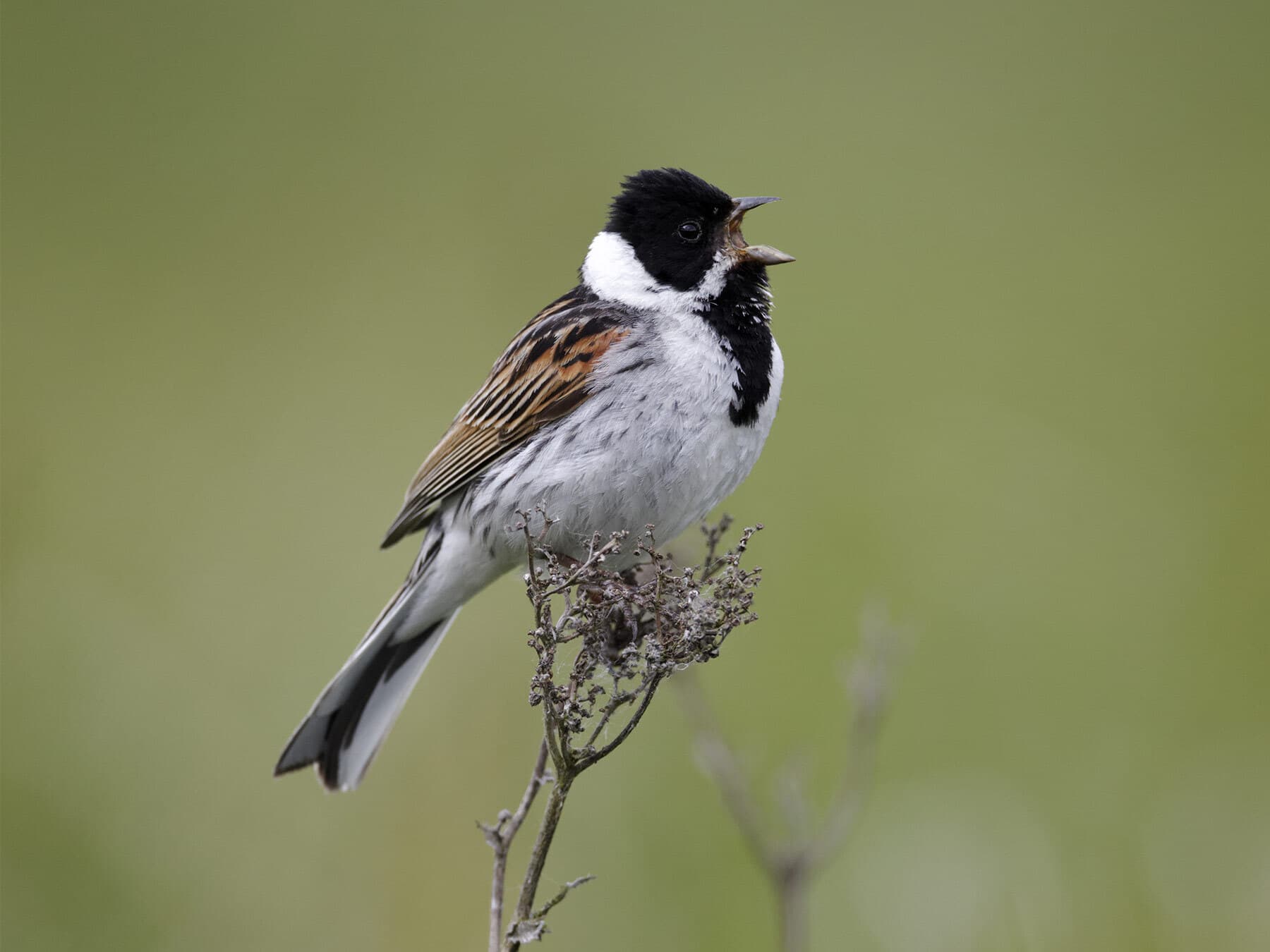
Often mistaken for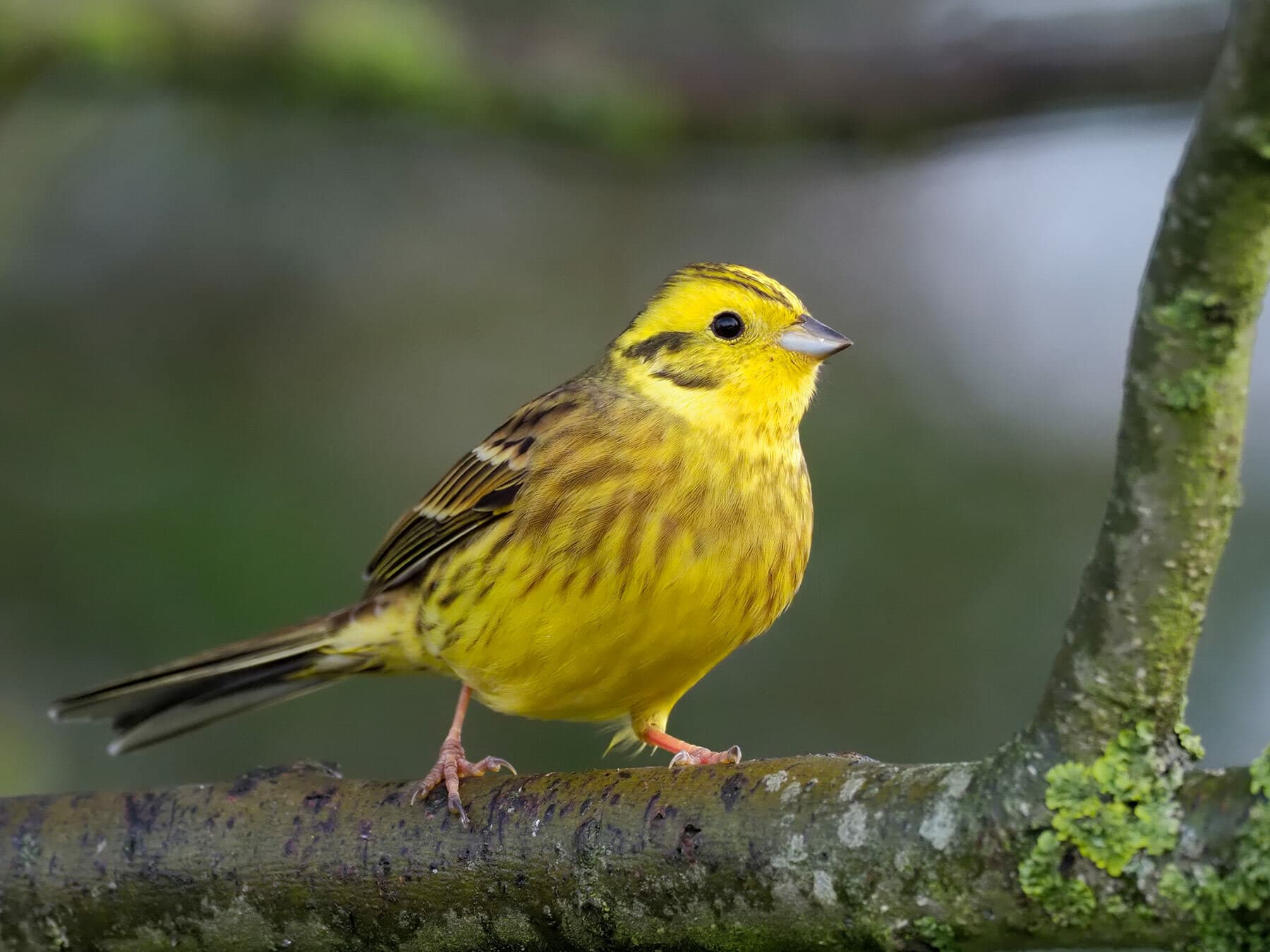
More photos
2 photos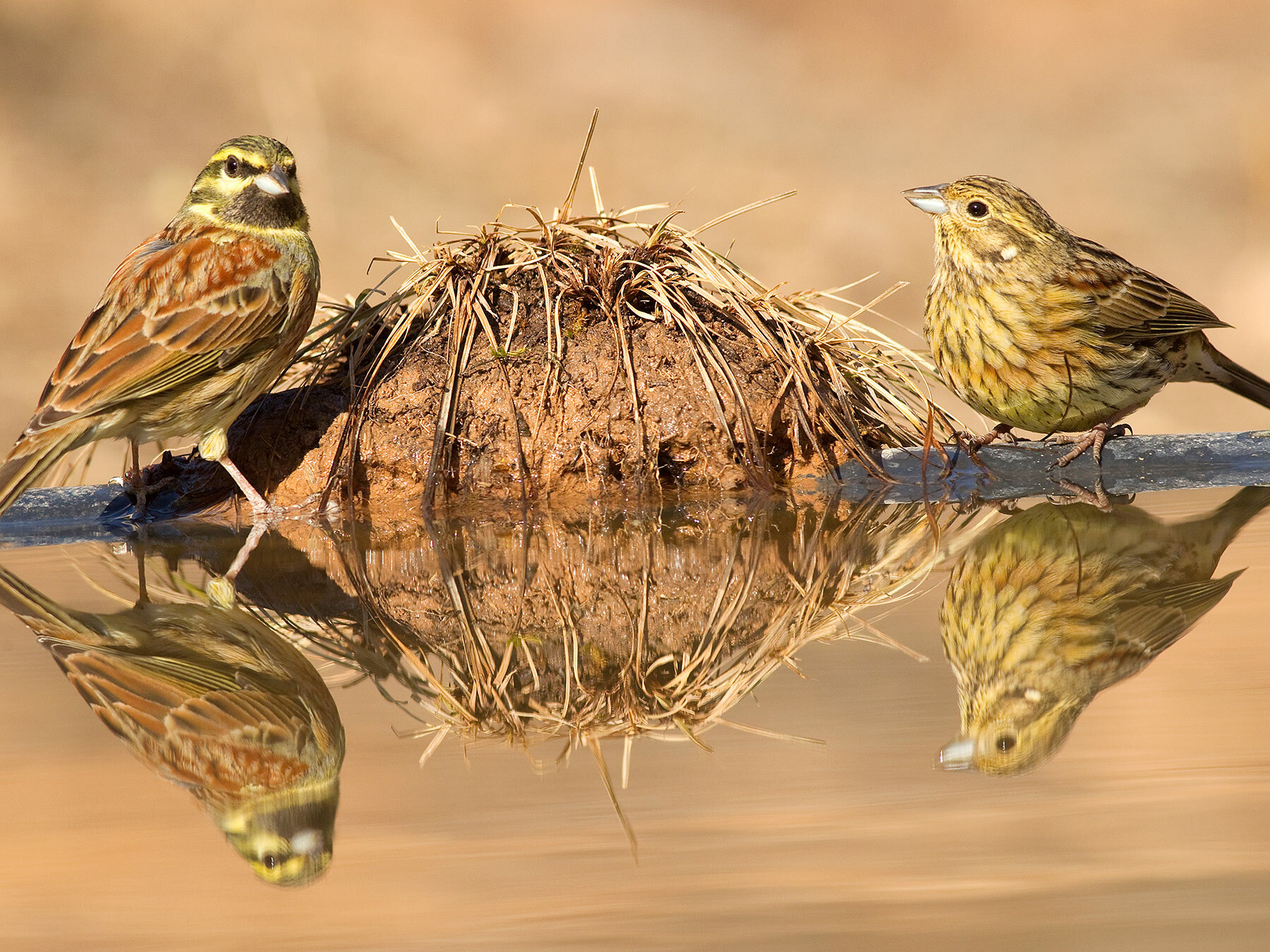
Cirl Bunting guides
1 guidesQuick facts
- Length
- 15–16.5 cm
- Wingspan
- 22–25 cm
- Weight
- 20–25 g
- Lifespan
- 2–3 years · oldest recorded 6.1 years
- Family
- Buntings
- Migration
- Partial migrant
- Global status (IUCN)
- Least Concern
- World population
- 4,970,000 - 9,300,000 mature individuals
- Population trend
- Increasing
- Also called
- Zizi Bunting
- Scientific name
- Emberiza cirlus
Sources
4- 1BirdLife International. 2018. Emberiza cirlus. The IUCN Red List of Threatened Species 2018: e.T22720888A132004013. Source (opens in a new tab)
- 2EBCC (2015)
- 3BirdLife International. 2018. Emberiza cirlus. The IUCN Red List of Threatened Species 2018: e.T22720888A132004013. Source (opens in a new tab)
- 4Moller, Sociality, age at first reproduction and senescence: comparative analyses of birds, J Evol Biol, 19:682-689 (2006) Source (opens in a new tab)

Checked by
Nathan Cope, founder and editor
Nathan founded Birdfact and leads its writers and contributors in the UK, the US and Canada. He has watched and studied birds for more than ten years, and checks every article and species guide before it’s published.