


Yellow Wagtail
Western Yellow Wagtail · Motacilla flava
By the Birdfact teamChecked by Nathan Cope
On this page15 sections
How to recognise it
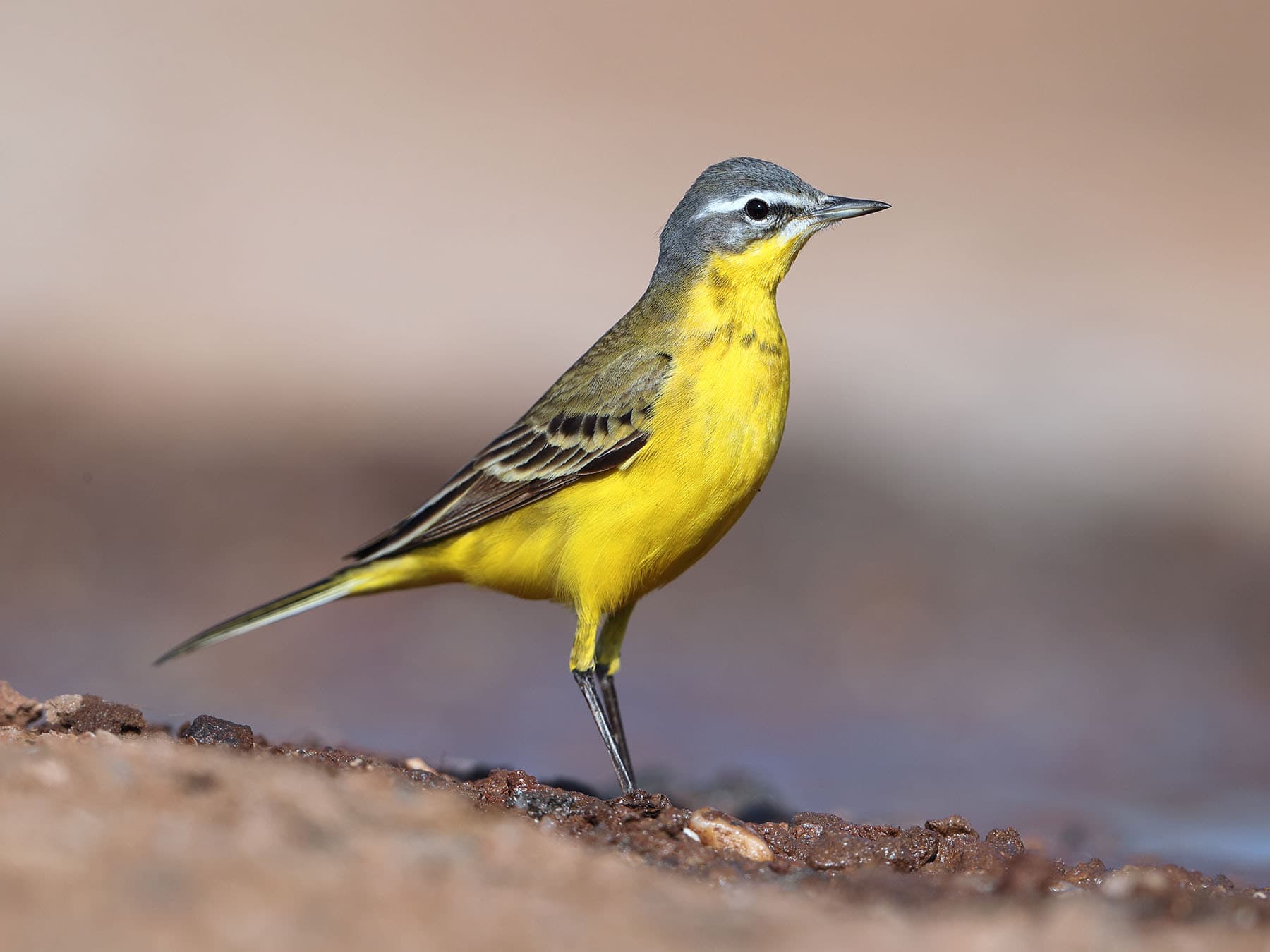
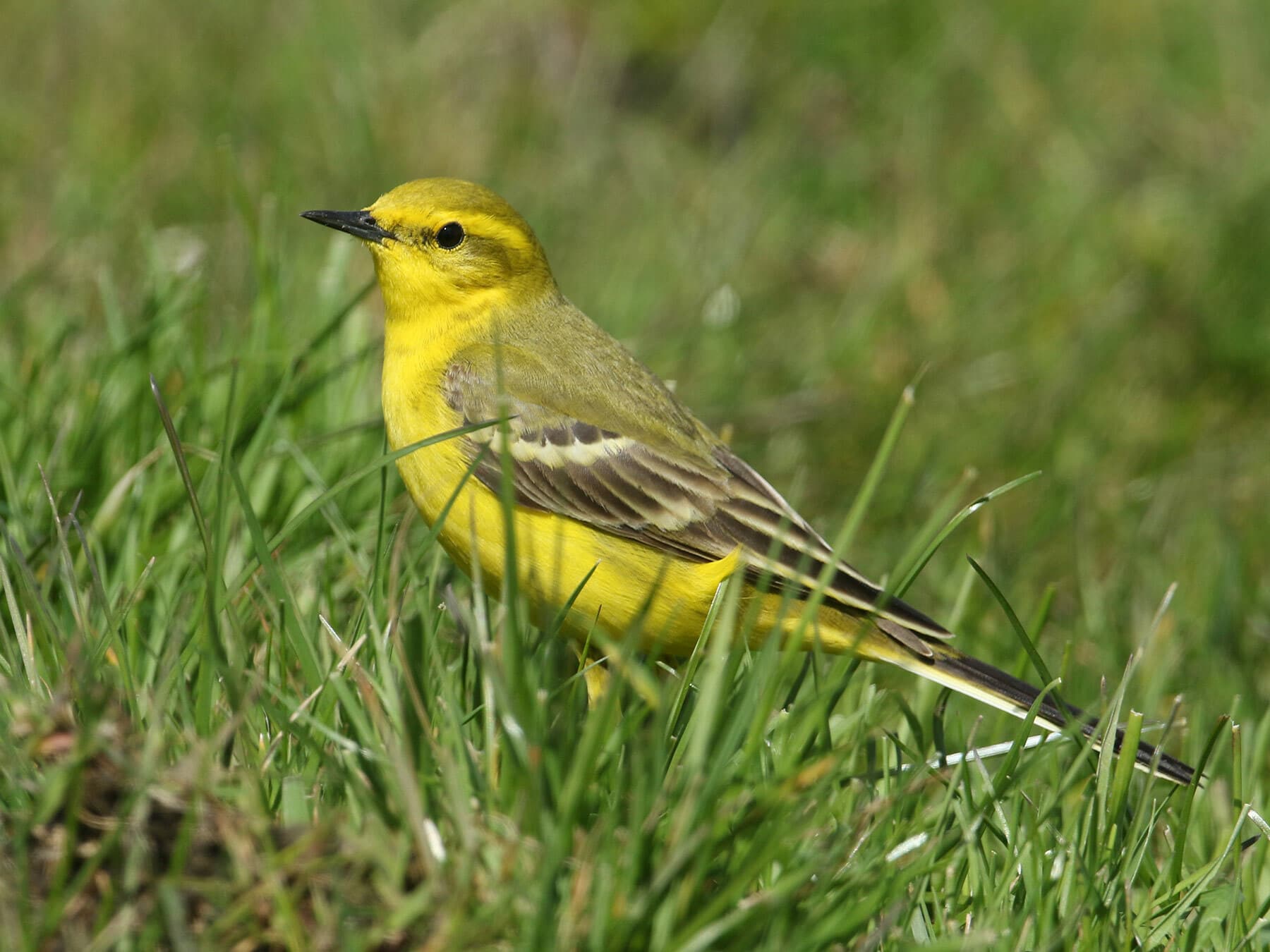
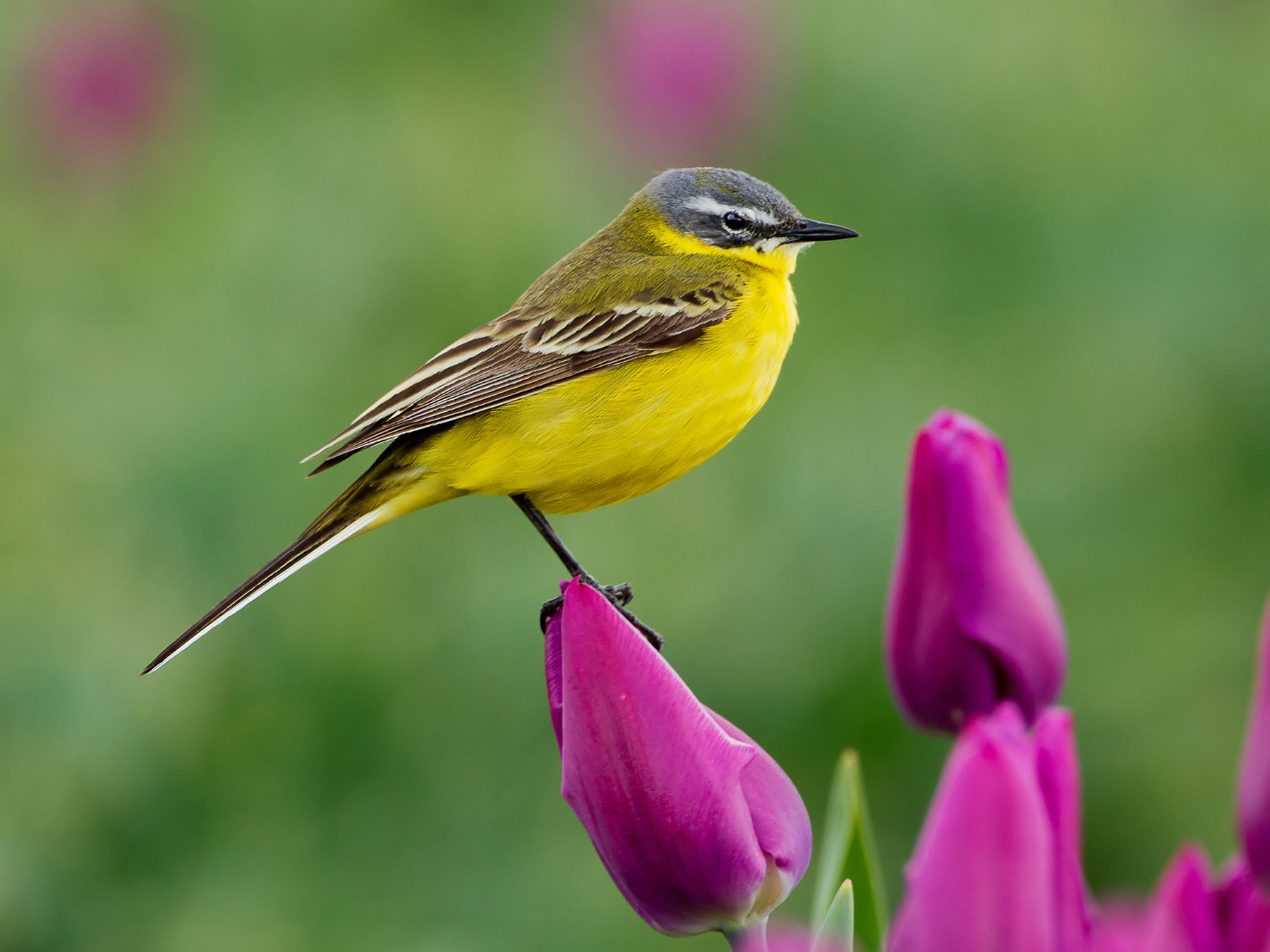
The Yellow Wagtail is a slender, long-tailed bird with a distinctive yellow underside. Males in breeding plumage have a bright yellow face and underparts, olive-green upperparts, and a dark head that varies in colour depending on the subspecies.
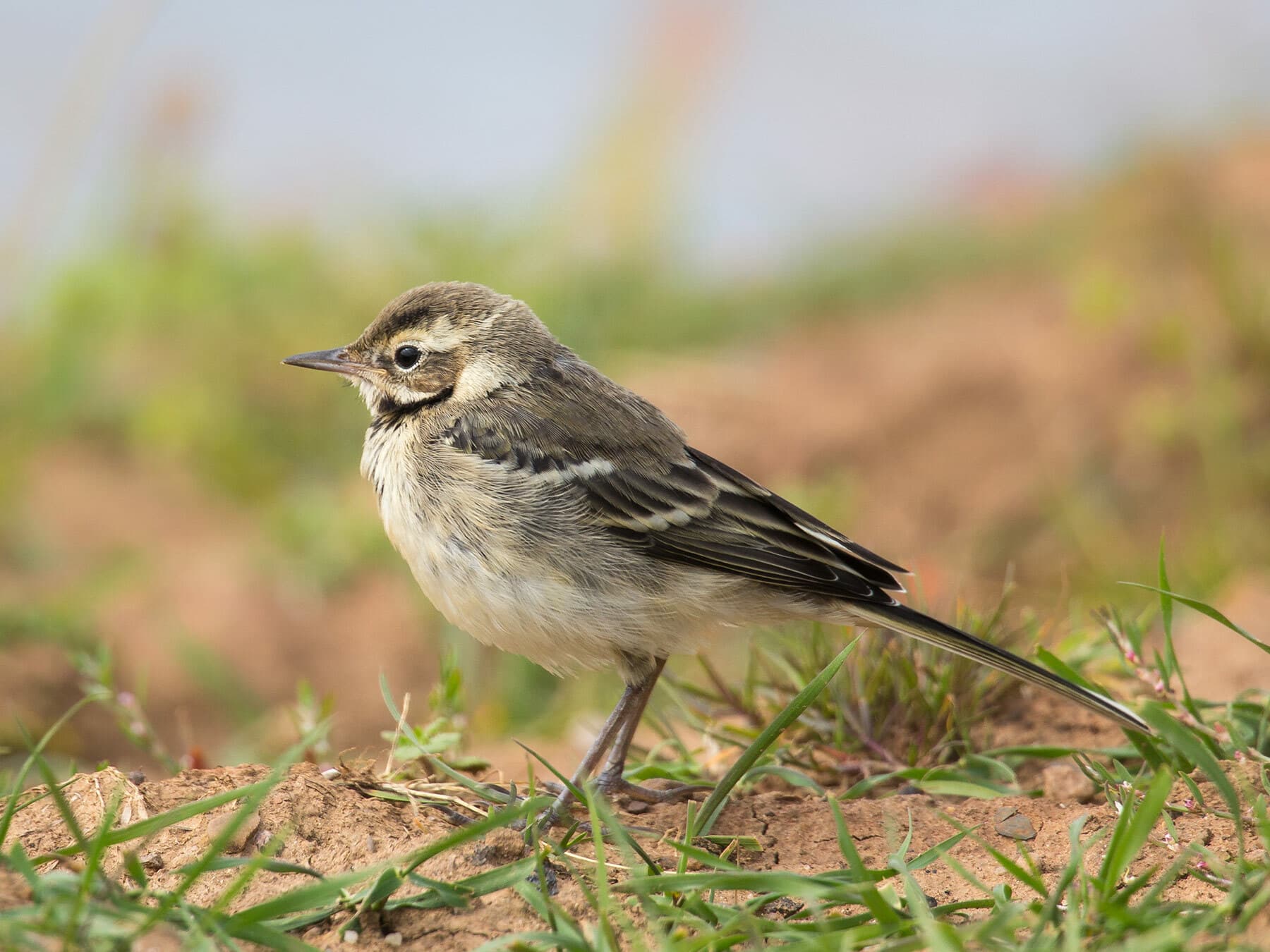
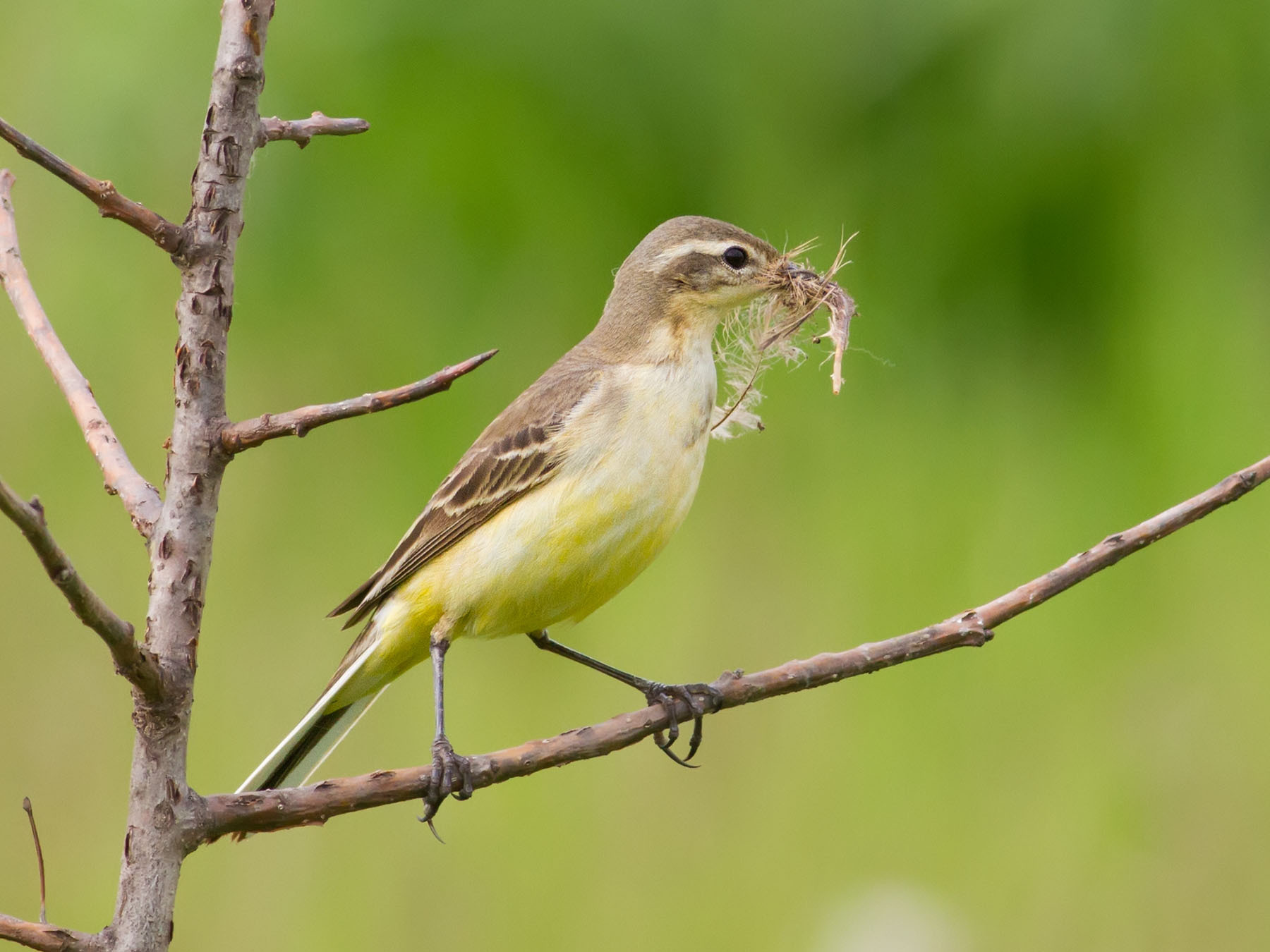
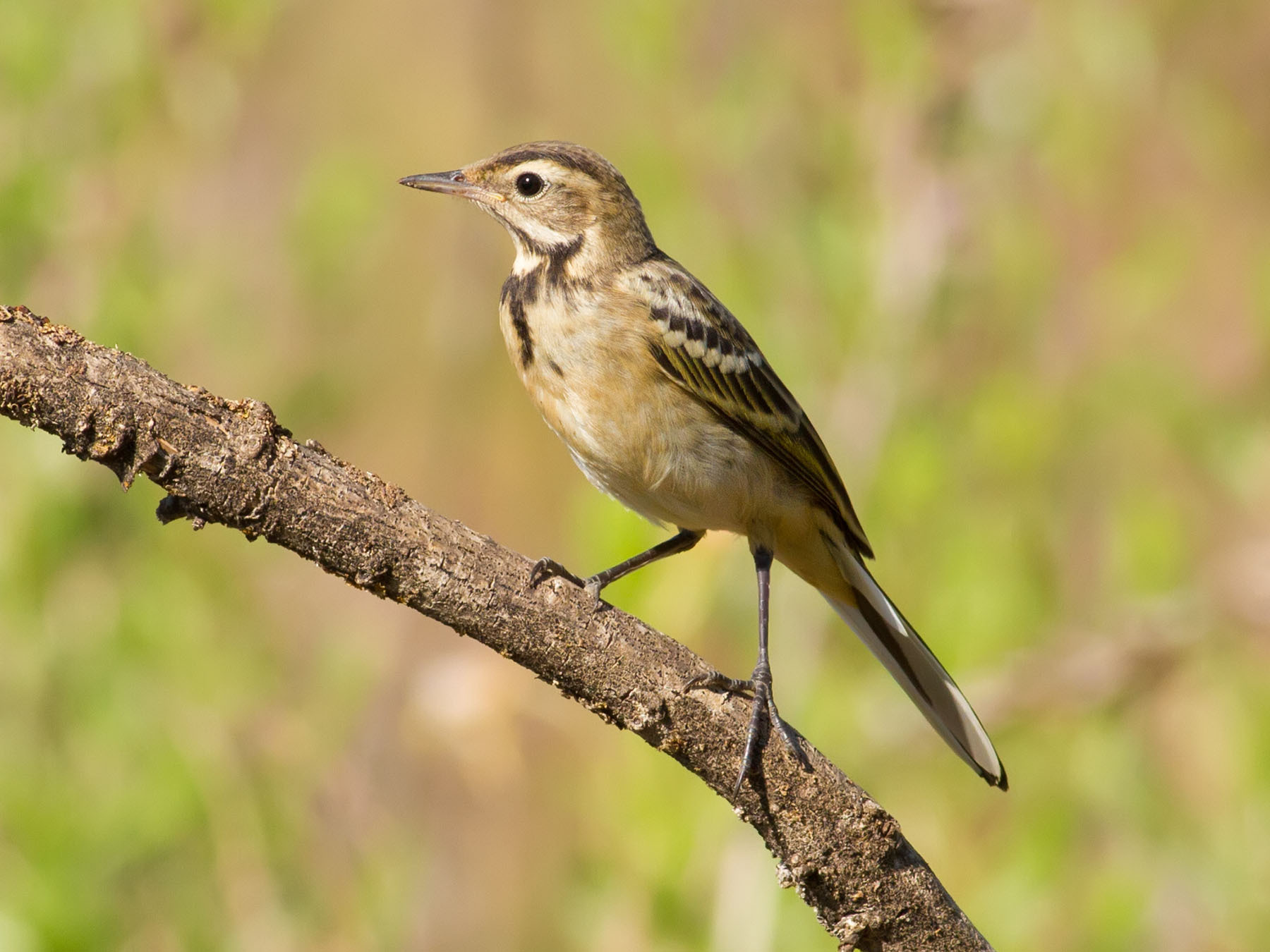
Females and non-breeding males are duller, with olive-brown upperparts and pale yellow underparts. Juveniles are even more subdued, with buff-tinged plumage and dark spots on the breast.
Its size
Adults- Length
- 15–17 cm
- Wingspan
- 23–27 cm
- Weight
- 15–25 g
Its song and calls
Yellow wagtails have a loud distinctive call often repeated with a sound similar to 'tsweep' or 'tsli'.
- Song0:00 / 0:25
Recorded in Normandie, France · May 2023
- Call0:00 / 0:13
Recorded in Volyn Oblast, Ukraine · June 2025
When and where to see it
OctoberLeaving
Most recorded in October
- 1. Pembrokeshire0.16%
- 2. East Sussexunder 0.1%
- 3. Corkunder 0.1%
- 4. Cornwallunder 0.1%
- 5. West Sussexunder 0.1%
Each dot is a county, state or province: the bigger and darker, the larger the bird’s share of that place’s bird records that month. Grey dots: no regular records. The ringed point is the centre of the bird’s records this month; the arrow shows how it moved since last month, and the dashed loop its path through the year. “Arrivals” colours places where it becomes regular this month (orange) or is in its last regular month (grey). GBIF eBird Observation Dataset, 2019–2024. Map data: Natural Earth, US Census Bureau; place centres © OpenStreetMap contributors.
In your area
See when the Yellow Wagtail is recorded in your county, state or province.
How often the Yellow Wagtail turns up in the UK and Ireland through the year, from birdwatchers' records.
United Kingdom
Summer visitor · regularly Apr–Oct · most records in August
Ireland
Passage migrant · regularly Apr–Oct · most records in September
Show as a table
| Month | United Kingdom | Ireland |
|---|---|---|
| January | – | – |
| February | <0.001% | – |
| March | 0.003% | – |
| April | 0.22% (regular) | 0.004% (regular) |
| May | 0.22% (regular) | 0.010% (regular) |
| June | 0.11% (regular) | – |
| July | 0.16% (regular) | – |
| August | 0.37% (regular) | 0.004% |
| September | 0.31% (regular) | 0.011% (regular) |
| October | 0.022% (regular) | 0.010% (regular) |
| November | <0.001% | 0.001% |
| December | – | – |
Recorded regularly in
Worldwide: recorded regularly in 114 countries
Countries where it was recorded in at least 3 of the 6 years 2019–2024. Linked countries have their own bird list.
Europe (45)
- Åland Islands
- Albania
- Andorra
- Austria
- Belarus
- Belgium
- Bosnia & Herzegovina
- Bulgaria
- Croatia
- Czechia
- Denmark
- Estonia
- Faroe Islands
- Finland
- France
- Germany
- Gibraltar
- Greece
- Guernsey
- Hungary
- Ireland
- Italy
- Jersey
- Kosovo
- Latvia
- Lithuania
- Luxembourg
- Malta
- Moldova
- Montenegro
- Netherlands
- North Macedonia
- Norway
- Poland
- Portugal
- Romania
- Russia
- Serbia
- Slovakia
- Slovenia
- Spain
- Sweden
- Switzerland
- Ukraine
- United Kingdom
Africa (40)
- Algeria
- Benin
- Botswana
- Burkina Faso
- Cameroon
- Central African Republic
- Chad
- Congo - Brazzaville
- Congo - Kinshasa
- Côte d’Ivoire
- Djibouti
- Egypt
- Equatorial Guinea
- Ethiopia
- Gabon
- Gambia
- Ghana
- Guinea
- Guinea-Bissau
- Kenya
- Liberia
- Libya
- Malawi
- Mauritania
- Morocco
- Mozambique
- Namibia
- Nigeria
- Rwanda
- Senegal
- Sierra Leone
- Somalia
- South Africa
- Sudan
- Tanzania
- Tunisia
- Uganda
- Western Sahara
- Zambia
- Zimbabwe
Data: EOD – eBird Observation Dataset (Cornell Lab of Ornithology), accessed via GBIF.org, CC BY 4.0. Records from 2019–2024, aggregated and filtered by Birdfact. How these lists are made
Yellow Wagtails arrive in the UK from April returning to Africa in late September. Whilst they can be found in almost any region of the UK they tend to breed and limit themselves to central and eastern England, particularly East Anglia and Lincolnshire. They are often seen running and skipping around wet pastures and marsh areas as well as arable farmland.
Signs and spotting tips
Those seeking out yellow wagtails should confine themselves to the bird’s favoured habitats and bear in mind they can easily be confused with other wagtails, particularly the grey wagtail who has a grey back and white throat. They are easy to spot on the ground particularly as they frequently ‘wag’ their tails up and down as they move.
Do Yellow Wagtails migrate?
These birds are summer visitors to the UK and usually spend time from March all the way through to September here. When the weather starts to get a bit colder in the winter, they migrate to western Africa and typically congregate in communal roosts.
What it eats
Being a forager and ground feeder, the bird prefers wet meadows and cattle pastures where it feeds off beetles, flies and other insects. It is often seen in the company of horses and other livestock who disturb the insects upon which the yellow wagtail feeds.
Threats and conservation
Yellow Wagtails are listed as a Red species which means there's a concern for their conservation. This is down to the large declining breeding numbers. Since the 1970s, it's believed that the number has fallen by up to 80%, which could be linked to changes in farming practice.
Nesting and breeding
Yellow wagtails nest on the ground either in feather and grass lined scrapes or on grass or tussock mounds. Between May and July they may rear up to two broods annually consisting of 5 -6 buff grey eggs with light brown markings.
Behaviour
Yellow Wagtails are known for their constant tail-wagging behaviour, which gives them their name. They are often seen running quickly across open ground, chasing insects.
These birds are gregarious, forming large flocks during migration and in winter roosts.
Lifespan and predators
Yellow wagtails can live for up to five years although the average is closer to three.
Conservation
While listed as Least Concern globally, Yellow Wagtail populations are declining in parts of Europe due to habitat loss and agricultural intensification.
Conservation efforts focus on preserving wetlands and promoting wildlife-friendly farming practices.
What does a Yellow Wagtail look like?
The adult male is a striking bird with bright yellow underparts and an olive green back. The wings are dark almost black with two white bars on top and the tail black with white sides. It has a bright yellow stripe across the top of its eye and a green crown with long slender black legs and a dark grey black bill. The yellow wagtail has the shortest tail of the three species of wagtails found in the UK, the others being the grey wagtail and the pied wagtail. The adult female is similar to the male although much paler in colour. Juveniles are mainly buff and light olive green coloured with black and white wings.
Similar birds
Often mistaken for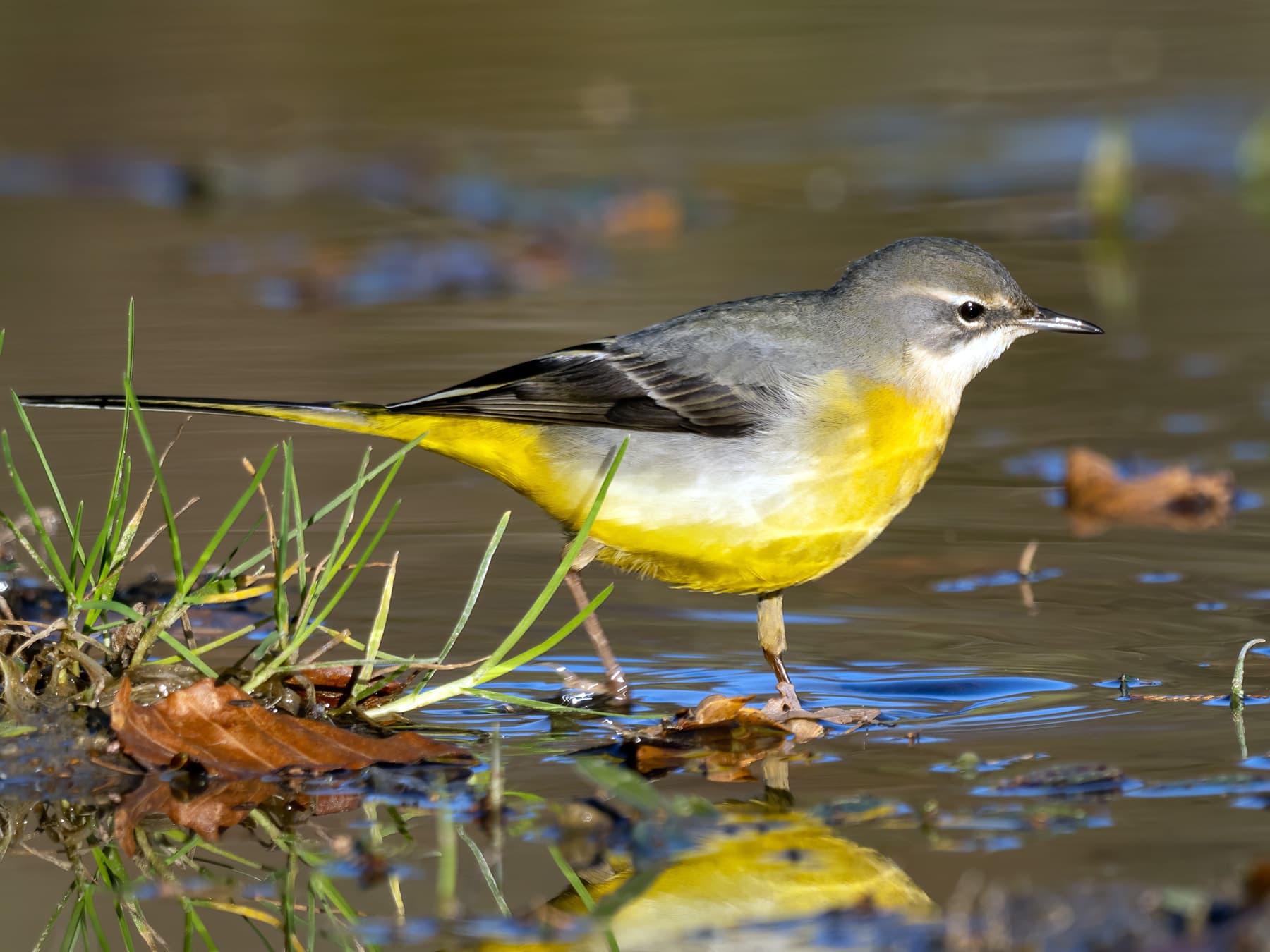
More photos
4 photos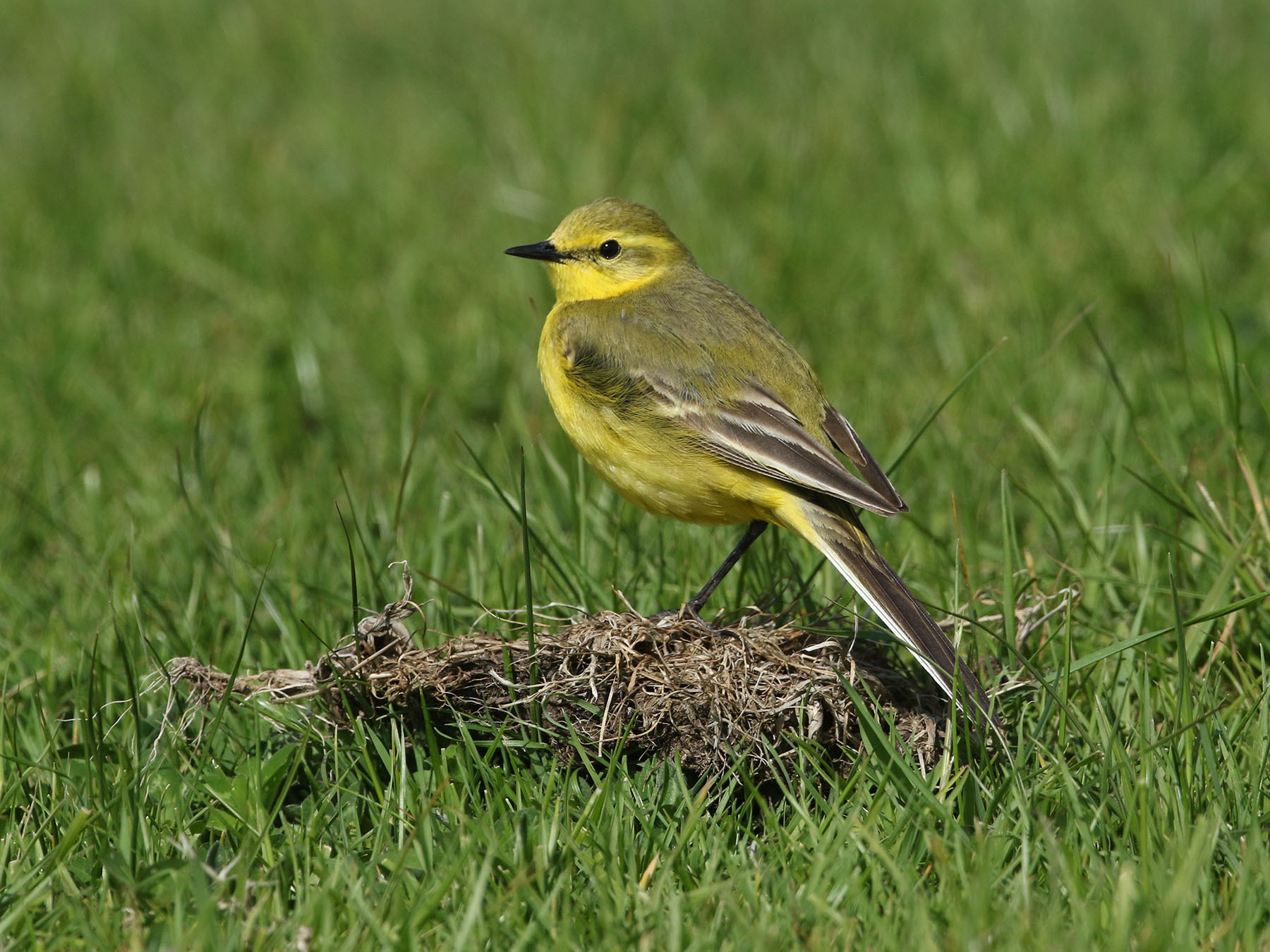
Yellow Wagtail guides
1 guidesQuick facts
- Length
- 15–17 cm
- Wingspan
- 23–27 cm
- Weight
- 15–25 g
- Lifespan
- 3 years · oldest recorded 8.8 years
- Family
- Wagtails & Pipits
- Migration
- Long-distance Migrant
- Global status (IUCN)
- Least Concern
- World population
- 64,000,000 - 107,000,000 mature individuals
- Population trend
- Overall population decreasing due to habitat loss
- Also called
- Western Yellow Wagtail
- Scientific name
- Motacilla flava
Sources
4- 1BirdLife International. 2019. Motacilla flava (amended version of 2018 assessment). The IUCN Red List of Threatened Species 2019: e.T103822349A155602678. Source (opens in a new tab)
- 2EBCC (2015)
- 3BirdLife International. 2019. Motacilla flava (amended version of 2018 assessment). The IUCN Red List of Threatened Species 2019: e.T103822349A155602678. Source (opens in a new tab)
- 4Fransson et al., EURING list of longevity records for European birds (2010) Source (opens in a new tab)

Checked by
Nathan Cope, founder and editor
Nathan founded Birdfact and leads its writers and contributors in the UK, the US and Canada. He has watched and studied birds for more than ten years, and checks every article and species guide before it’s published.