


Grey Wagtail
Gray Wagtail · Motacilla cinerea
By the Birdfact teamChecked by Nathan Cope
On this page15 sections
How to recognise it
What do Grey Wagtails look like?
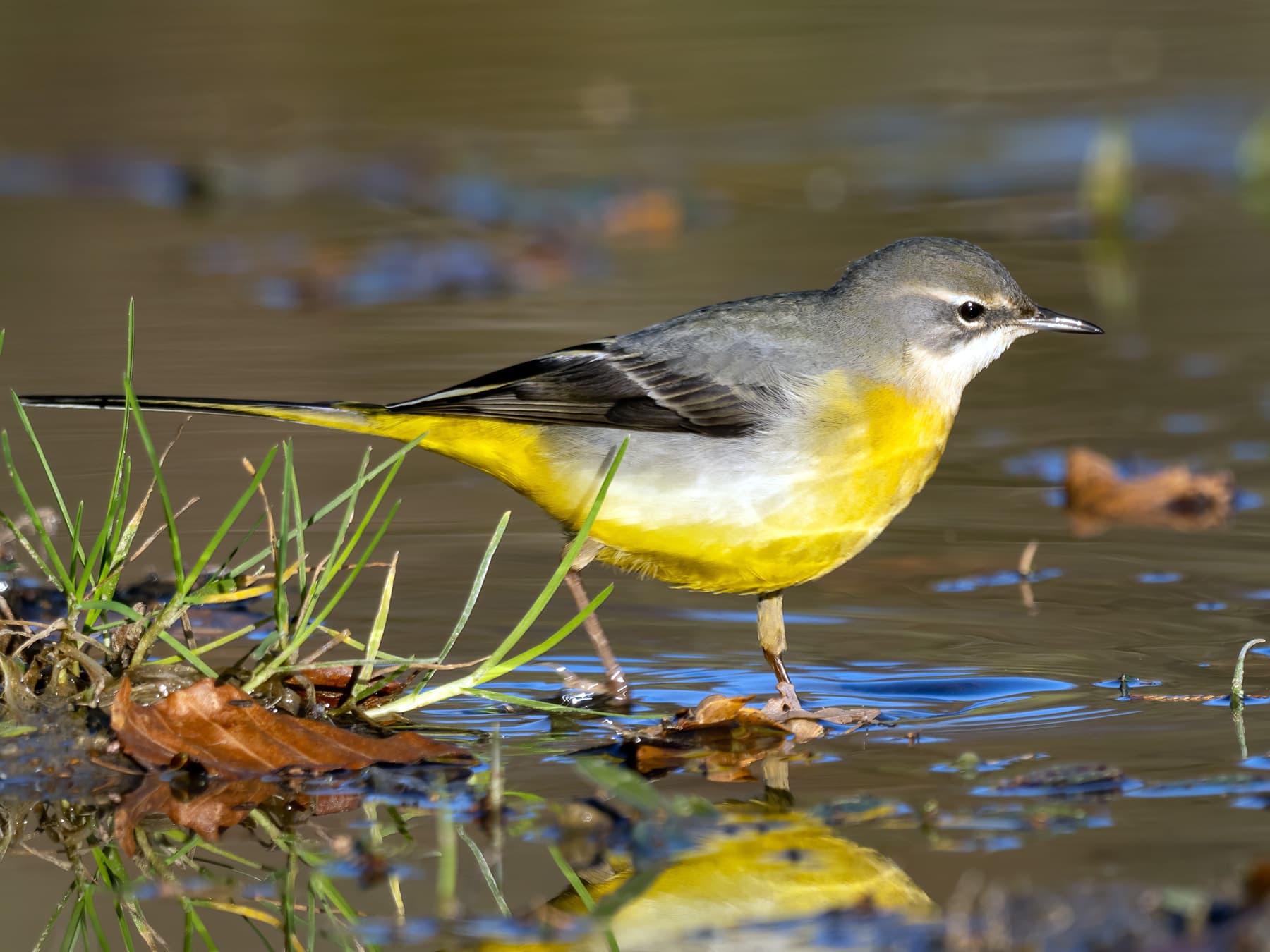
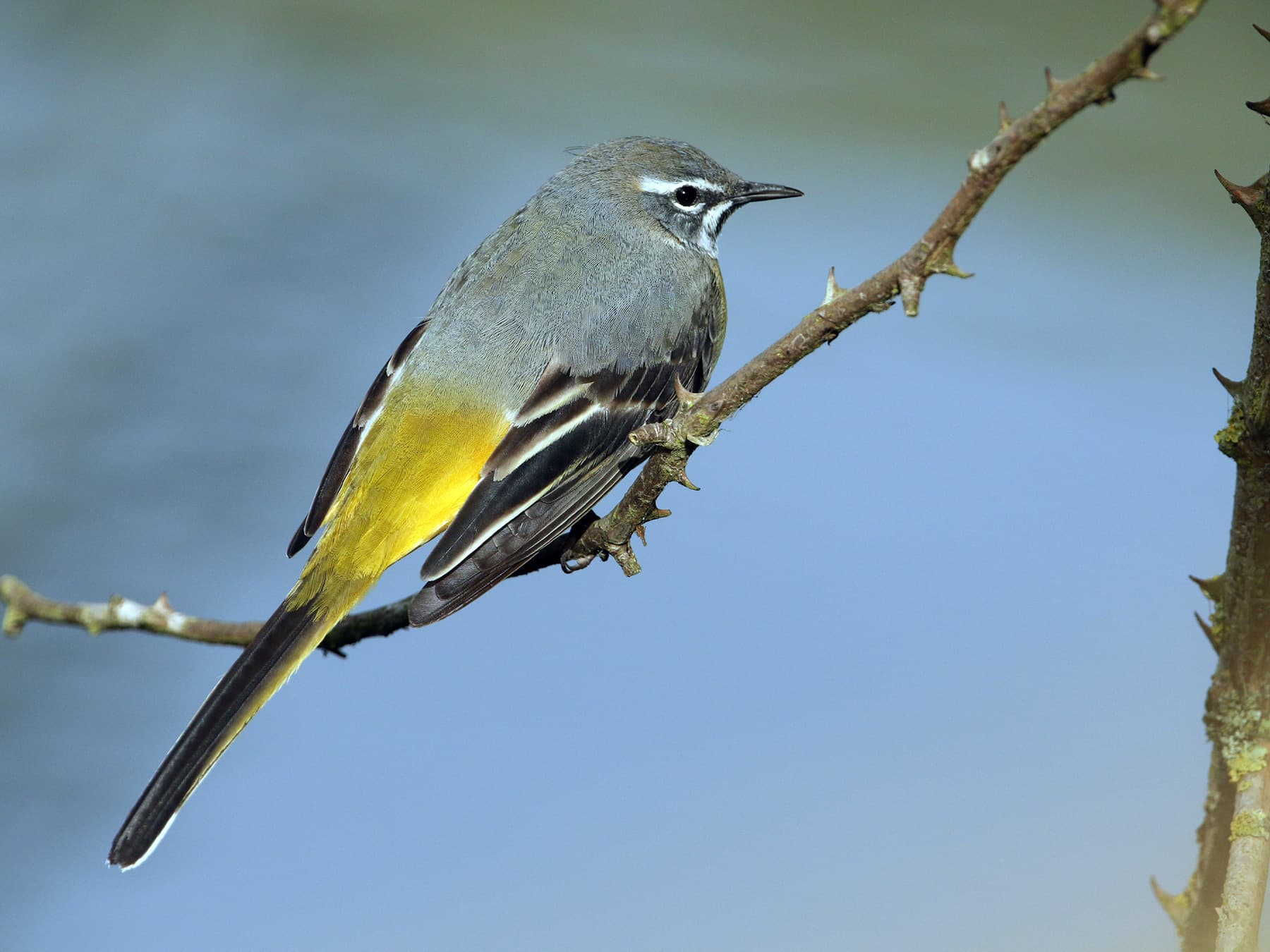
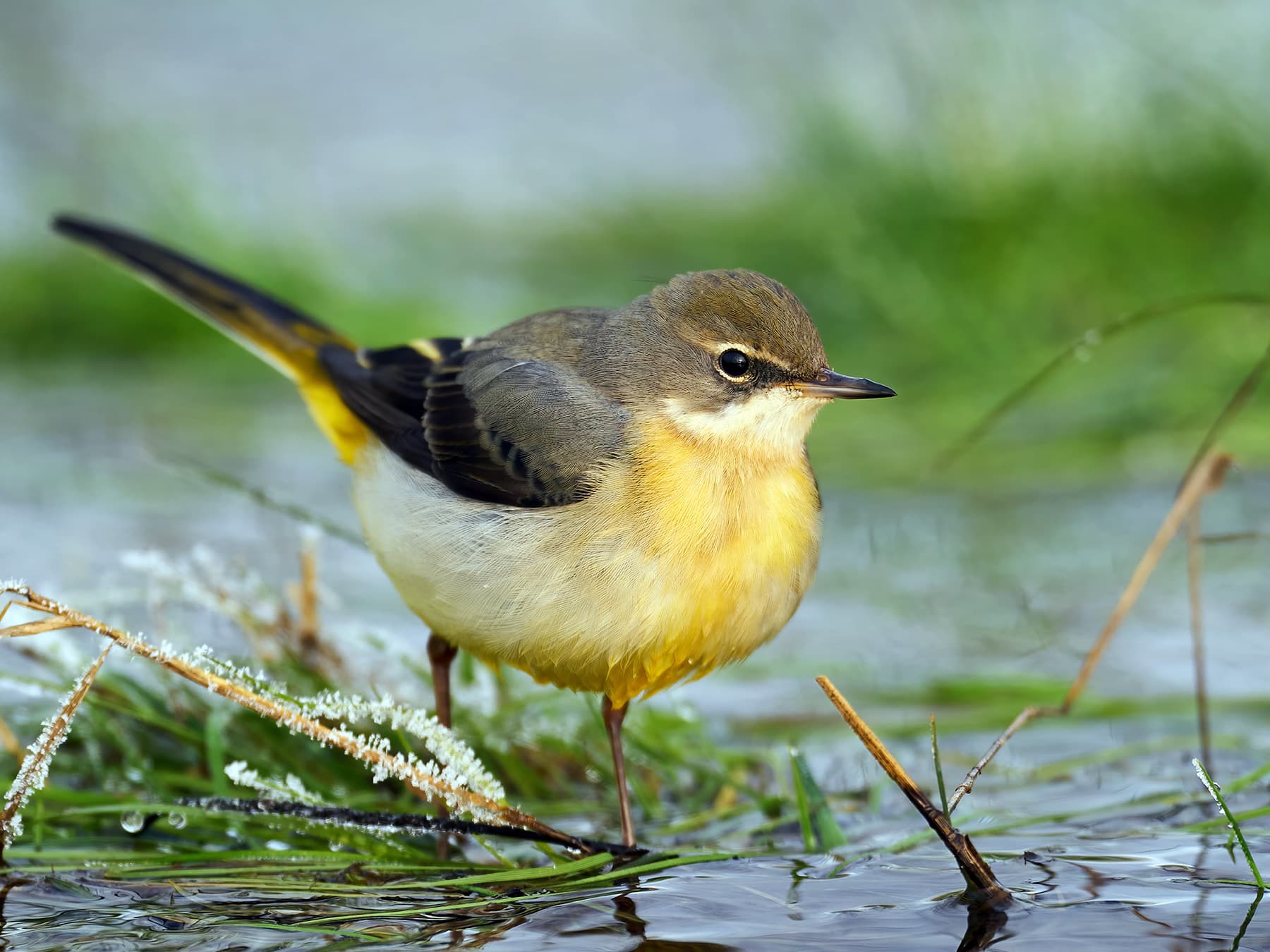
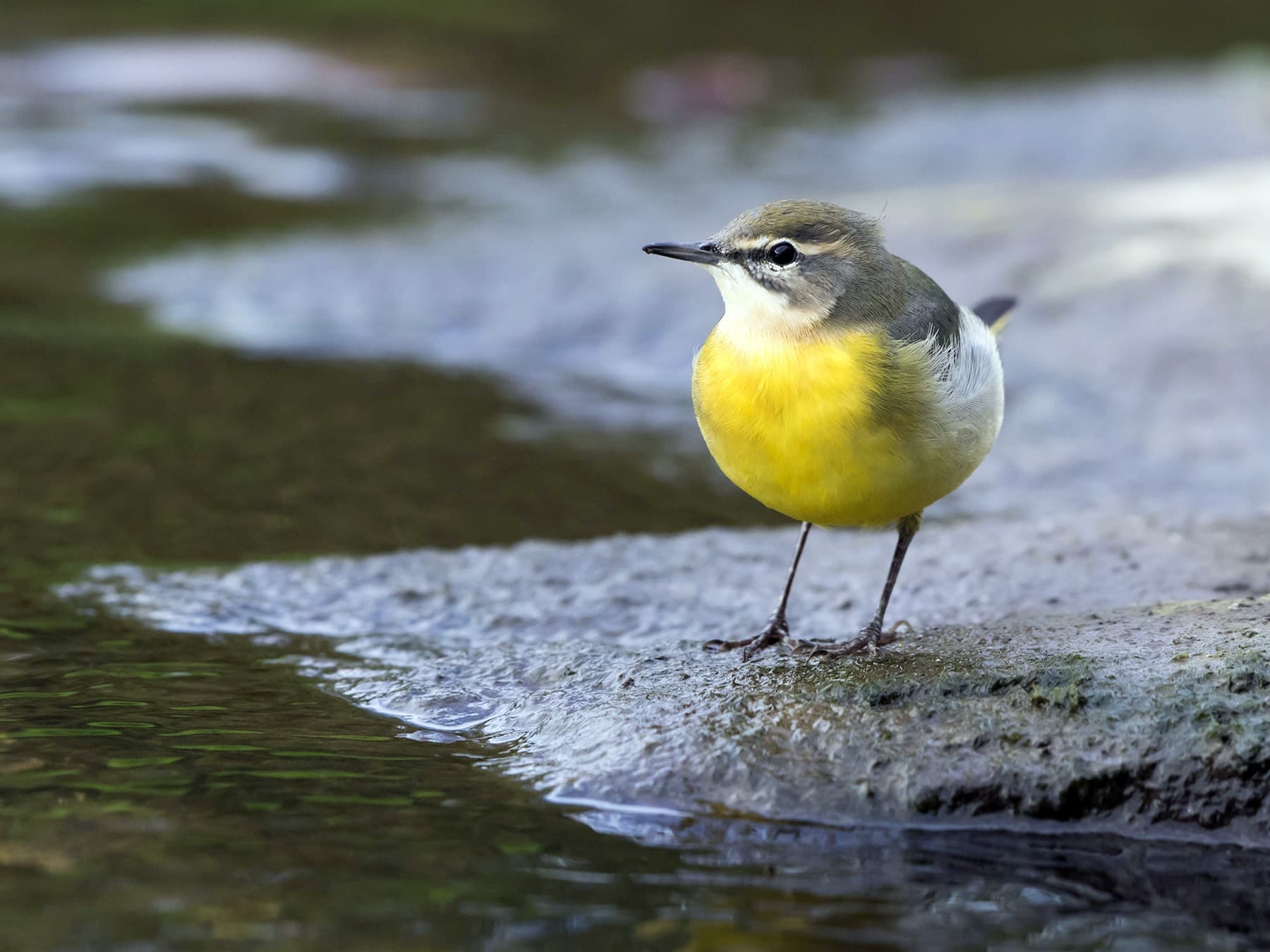
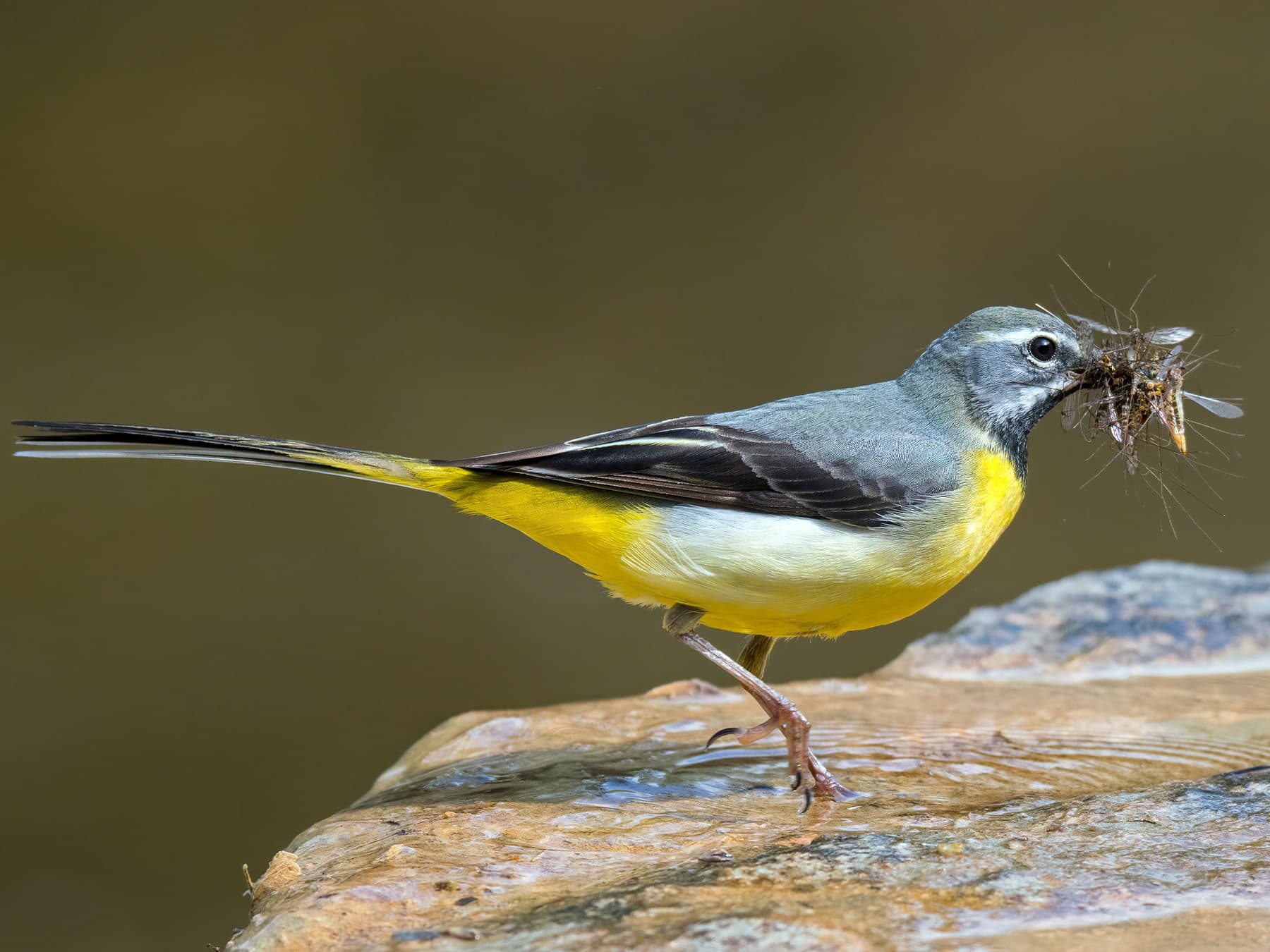
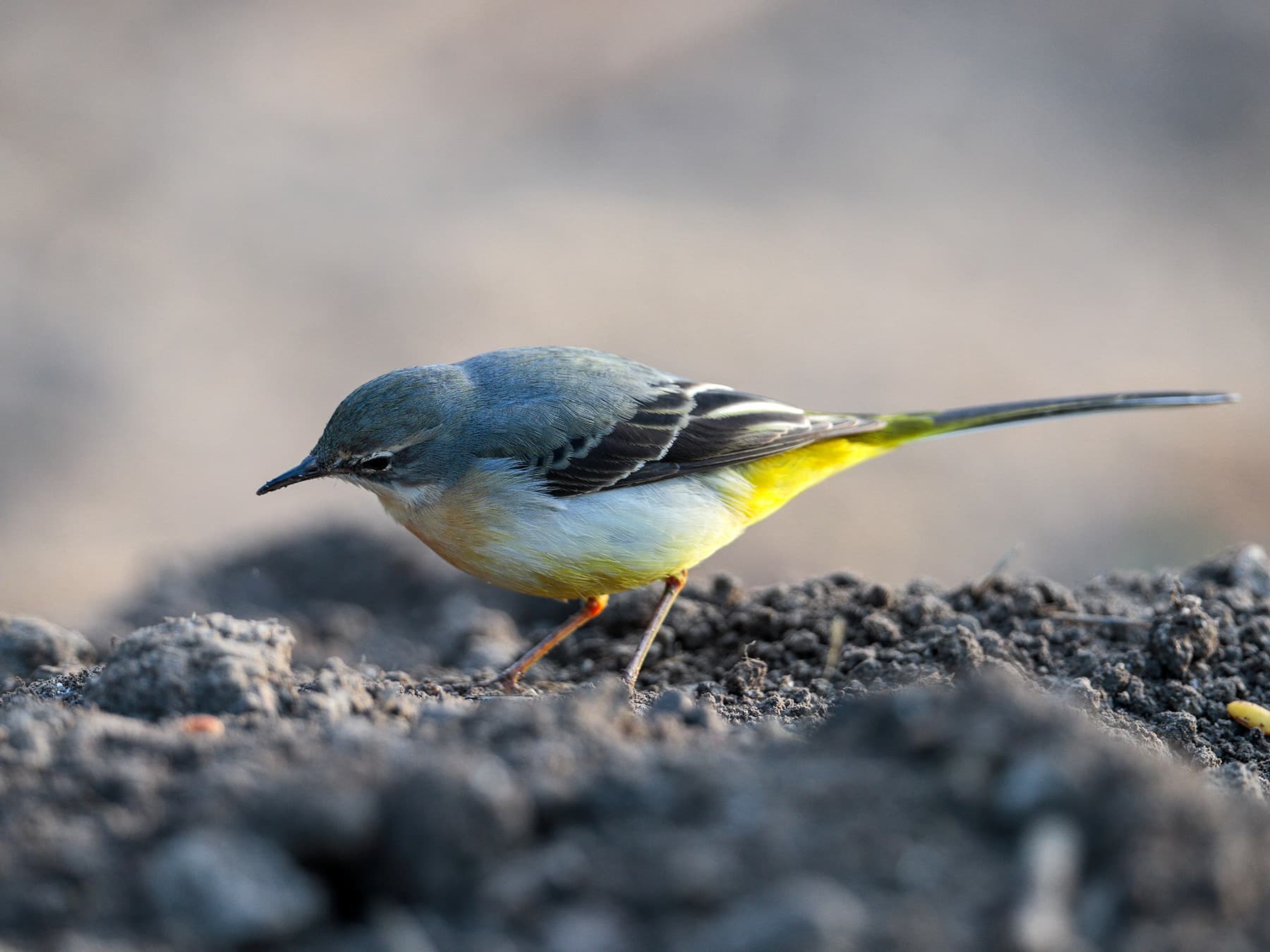
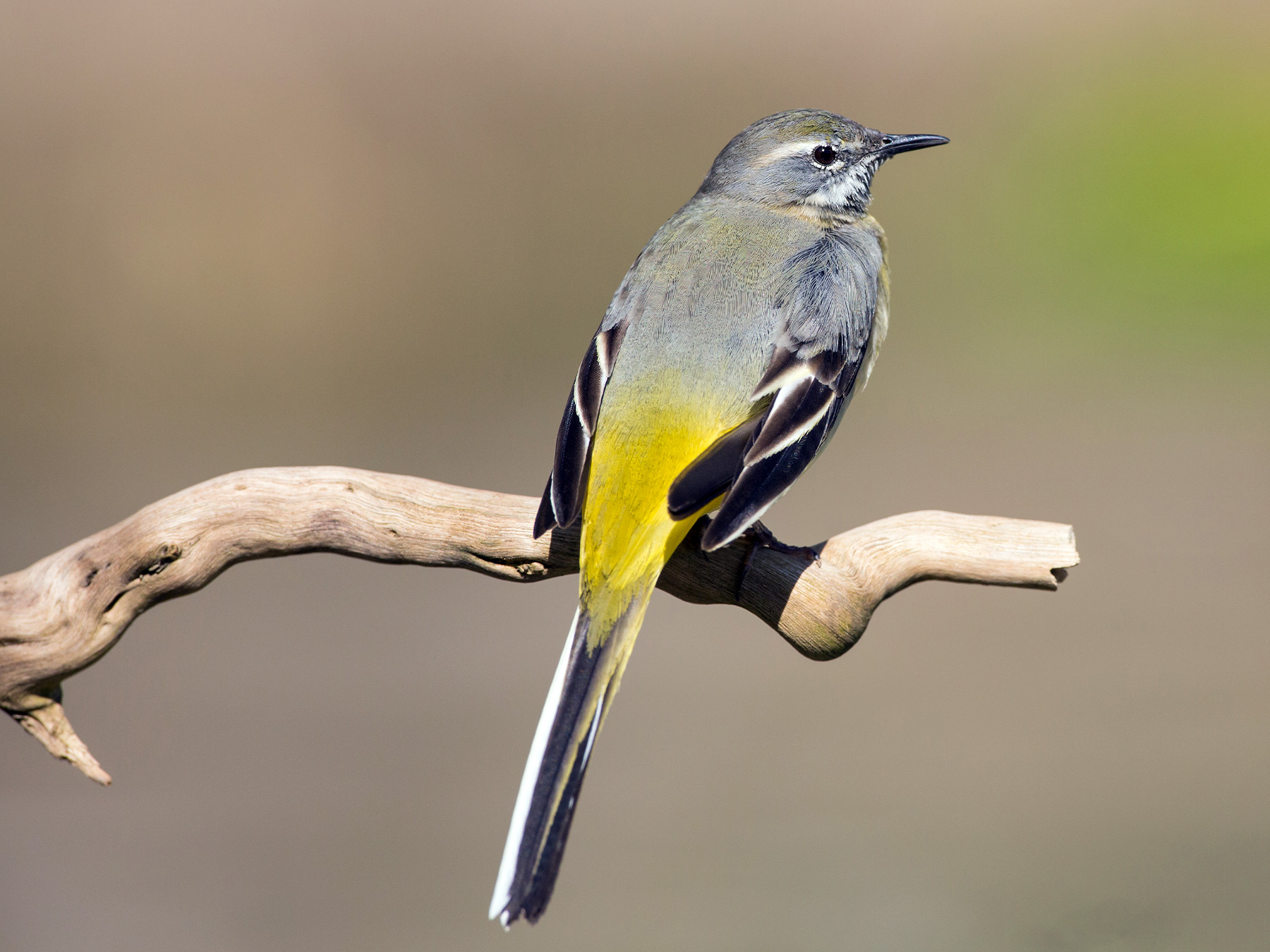
The Grey Wagtail is a dainty bird with a long tail and delicate pinkish legs. They are uniform grey from the crown to the lower back but have a yellow rump and underparts. Their tail is black with white outer edges, and their wings are black above, with a central white stripe visible in flight.
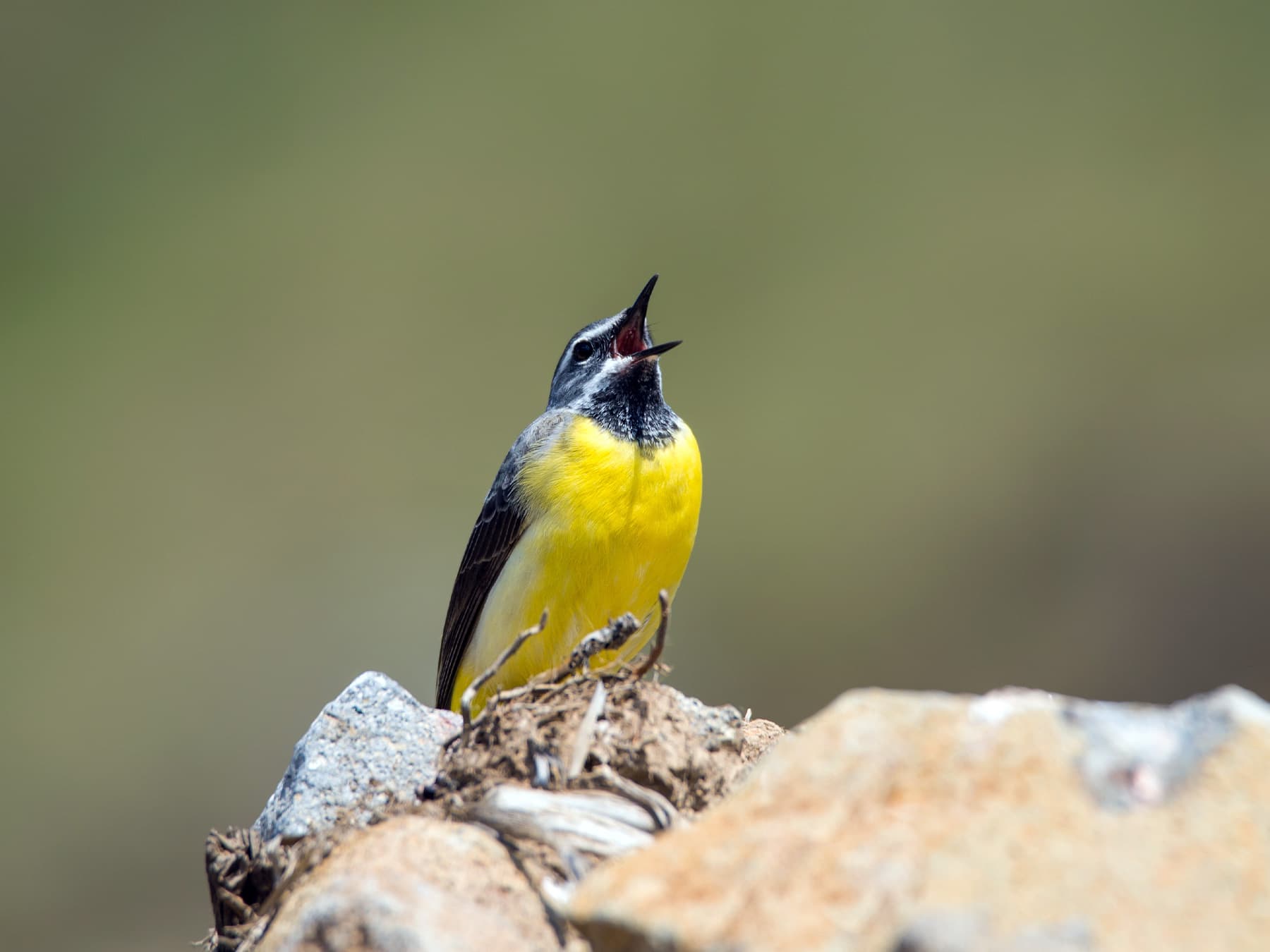
Most female Grey Wagtails have a white throat in the breeding season while breeding males develop a bold black chin. Non-breeding females have less yellow plumage on their undersides than males, with most colour under the tail area.
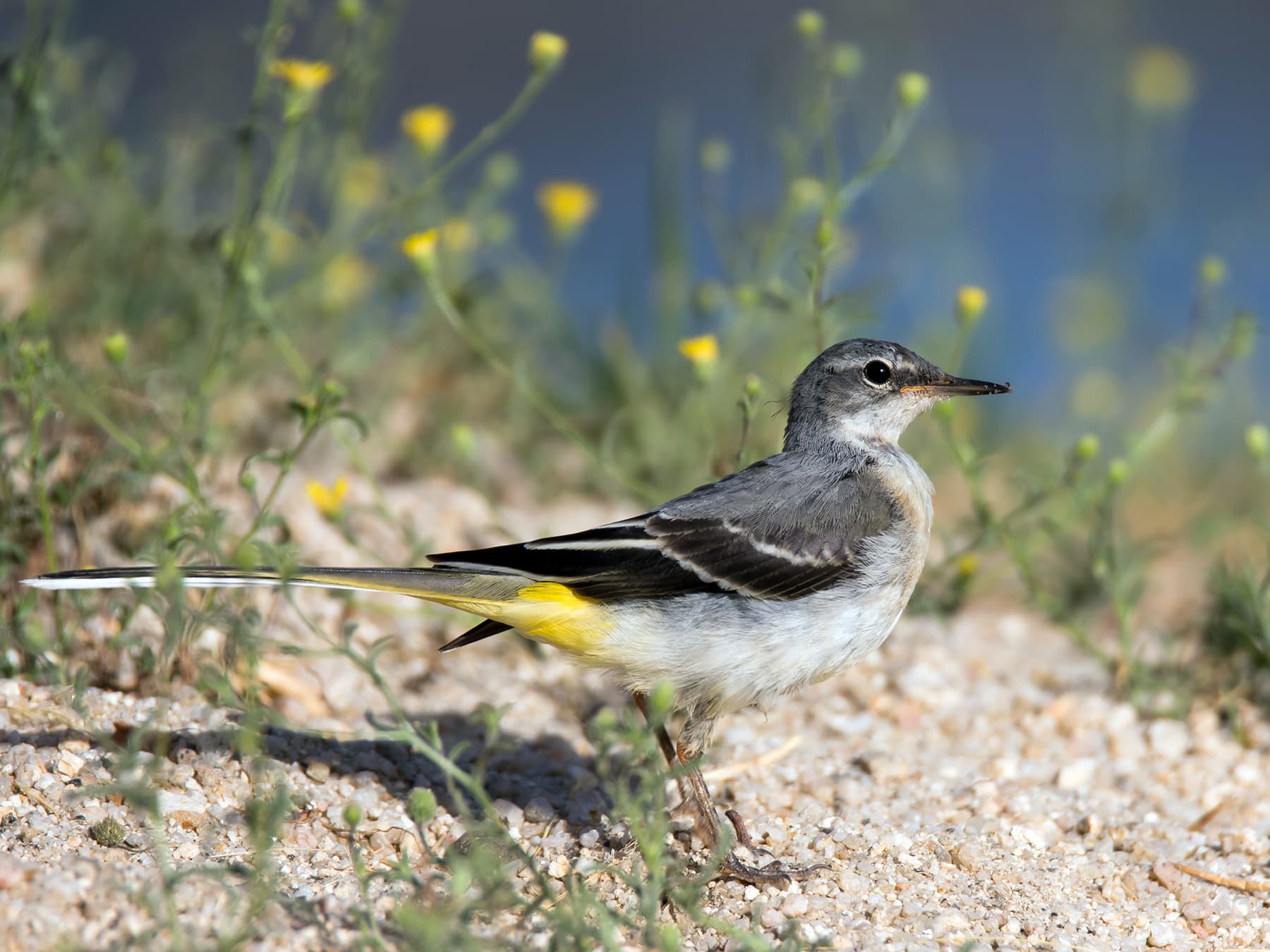
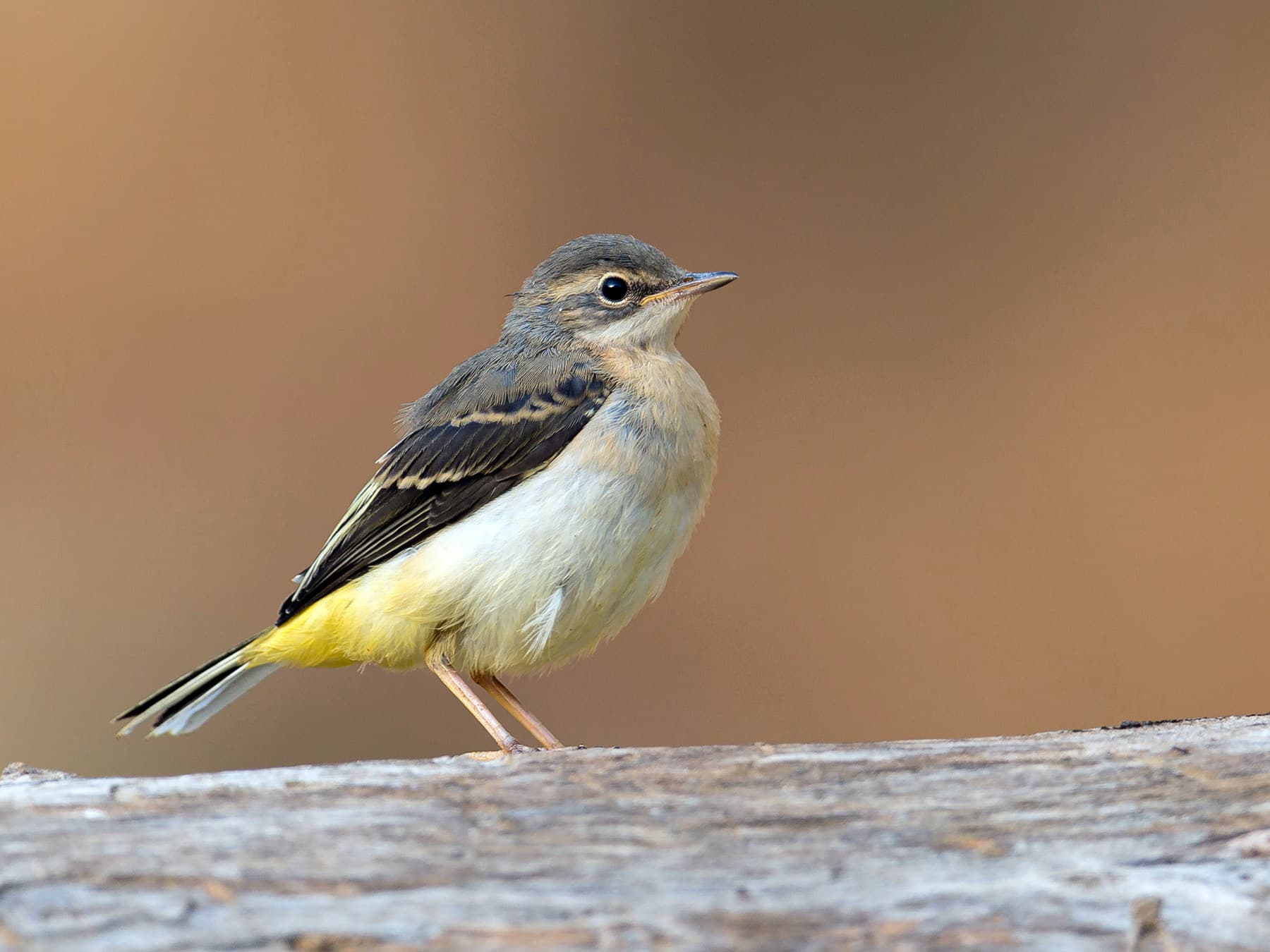
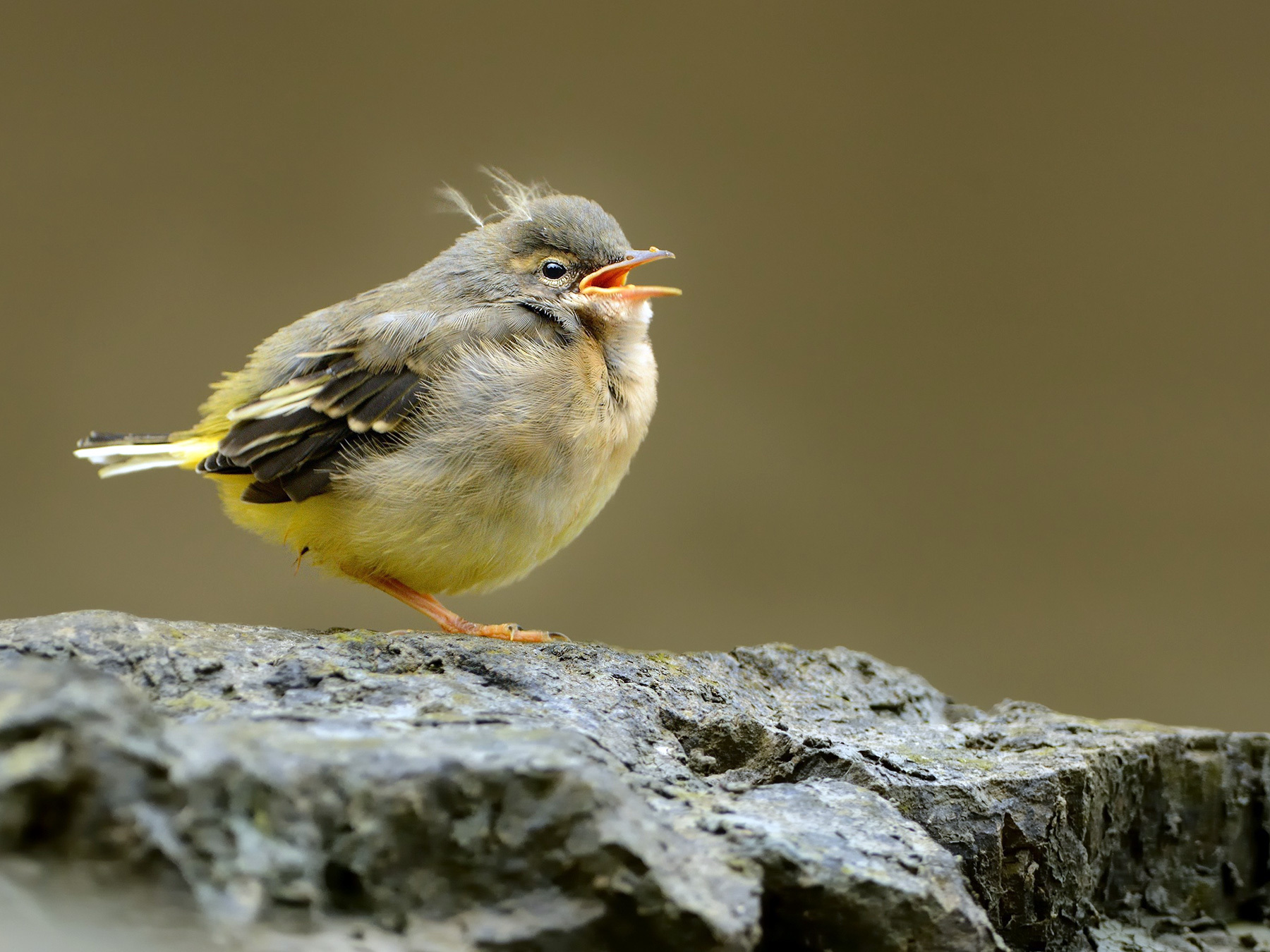
Juvenile birds resemble adult females but have an olive tinge to their upperparts and duller markings.
Grey Wagtails are most easily confused with the Yellow Wagtail, a migratory species that visit the UK each spring and summer. That species has black (not pinkish) legs and a shorter tail. Breeding male Yellow Wagtails have completely yellow underparts and greenish upperparts, while females and juveniles have dull yellow and buff plumages, respectively.
How big are Grey Wagtails?
Grey Wagtails are short-legged, elongated birds that are slimmer and longer-tailed than the more common Pied Wagtail.
Length
Adults measure 17 to 20 centimetres in length, much of which is made up by their long, constantly wagging tails.
Weight
Adults weigh 14 to 22 grams, with males being slightly heavier.
Wingspan
Typical wingspans measure 25 to 27 centimetres, and males have slightly longer wings on average.
Its size
Adults- Length
- 17–20 cm
- Wingspan
- 25–30 cm
- Weight
- 15–25 g
Its song and calls
What sound does a Grey Wagtail make?
Grey Wagtails make rapid ‘tchick’ or ‘tchi-tchi’ calls, similar to the Pied Wagtail. Males produce a high-pitched song that includes trilling, ‘tzi-tzi-tzi’, or slower ‘tzee-tzee-tzee’ phrases during their display flight.
- Song0:00 / 0:09
Recorded in Açores, Portugal · April 2025
- Call0:00 / 0:51
Recorded in Hauts-de-France, France · April 2025
When and where to see it
OctoberPeak season
Most recorded in October
- 1. Bristol1.8%
- 2. Cardiff1.5%
- 3. Manchester1.5%
- 4. Rhondda, Cynon, Taff1.5%
- 5. Wrexham1.5%
Each dot is a county, state or province: the bigger and darker, the larger the bird’s share of that place’s bird records that month. Grey dots: no regular records. The ringed point is the centre of the bird’s records this month; the arrow shows how it moved since last month, and the dashed loop its path through the year. “Arrivals” colours places where it becomes regular this month (orange) or is in its last regular month (grey). GBIF eBird Observation Dataset, 2019–2024. Map data: Natural Earth, US Census Bureau; place centres © OpenStreetMap contributors.
In your area
See when the Grey Wagtail is recorded in your county, state or province.
How often the Grey Wagtail turns up in the UK and Ireland through the year, from birdwatchers' records.
United Kingdom
Resident · all year · most records in October
Ireland
Resident · all year · most records in September
Show as a table
| Month | United Kingdom | Ireland |
|---|---|---|
| January | 0.37% (regular) | 0.46% (regular) |
| February | 0.36% (regular) | 0.47% (regular) |
| March | 0.38% (regular) | 0.53% (regular) |
| April | 0.30% (regular) | 0.44% (regular) |
| May | 0.29% (regular) | 0.56% (regular) |
| June | 0.31% (regular) | 0.55% (regular) |
| July | 0.30% (regular) | 0.38% (regular) |
| August | 0.30% (regular) | 0.34% (regular) |
| September | 0.60% (regular) | 0.66% (regular) |
| October | 0.65% (regular) | 0.62% (regular) |
| November | 0.56% (regular) | 0.61% (regular) |
| December | 0.43% (regular) | 0.45% (regular) |
Recorded regularly in
Worldwide: recorded regularly in 102 countries
Countries where it was recorded in at least 3 of the 6 years 2019–2024. Linked countries have their own bird list.
Europe (47)
- Albania
- Andorra
- Austria
- Belgium
- Bosnia & Herzegovina
- Bulgaria
- Croatia
- Czechia
- Denmark
- Estonia
- Faroe Islands
- Finland
- France
- Germany
- Gibraltar
- Greece
- Guernsey
- Hungary
- Iceland
- Ireland
- Isle of Man
- Italy
- Jersey
- Kosovo
- Latvia
- Liechtenstein
- Lithuania
- Luxembourg
- Malta
- Moldova
- Monaco
- Montenegro
- Netherlands
- North Macedonia
- Norway
- Poland
- Portugal
- Romania
- Russia
- Serbia
- Slovakia
- Slovenia
- Spain
- Sweden
- Switzerland
- Ukraine
- United Kingdom
Asia (45)
- Armenia
- Azerbaijan
- Bahrain
- Bangladesh
- Bhutan
- Brunei
- Cambodia
- China
- Cyprus
- Georgia
- Hong Kong SAR China
- India
- Indonesia
- Iran
- Iraq
- Israel
- Japan
- Jordan
- Kazakhstan
- Kuwait
- Kyrgyzstan
- Laos
- Lebanon
- Macao SAR China
- Malaysia
- Mongolia
- Myanmar (Burma)
- Nepal
- Oman
- Pakistan
- Palestinian Territories
- Philippines
- Qatar
- Saudi Arabia
- Singapore
- South Korea
- Sri Lanka
- Taiwan
- Tajikistan
- Thailand
- Timor-Leste
- Turkey
- United Arab Emirates
- Uzbekistan
- Vietnam
Data: EOD – eBird Observation Dataset (Cornell Lab of Ornithology), accessed via GBIF.org, CC BY 4.0. Records from 2019–2024, aggregated and filtered by Birdfact. How these lists are made
What is the habitat of a Grey Wagtail?
Grey Wagtails live along fast-flowing, rocky streams and rivers in hilly, forested areas in the breeding season. They are not strictly associated with flowing water in the winter when they feed in lowland habitats like farmland, gardens, and sewage works.
What is the range of a Grey Wagtail?
Grey Wagtails have a wide distribution in Europe, Asia, and Africa. They occur through most of southern, central, and western Europe but are largely absent from the east and north.
Migratory populations breed across Russia, Mongolia, and China, and they are present throughout the year in Japan. They overwinter in southeast Asia, the Indian Subcontinent, parts of the Middle East, and East Africa. Resident populations also occur in Madeira, the Canary Islands, and the Azores.
Where do Grey Wagtails live?
Grey Wagtails spend most of their time on the ground, walking about and wagging their tails as they search for food. They often perch on rocks in streams, overhanging branches, and even rooftops.
How rare are Grey Wagtails?
Grey Wagtails can be common in suitable habitats like streams. However, they are territorial in the breeding season, so you’re unlikely to see more than one pair or family group on a stretch of riverfront. They change habitats in the non-breeding season, and this is when birdwatchers are most likely to spot them in farmland or even towns and villages.
Where can you see Grey Wagtails in the UK?
Grey Wagtails are widespread in the United Kingdom, occurring throughout most of England, Wales, Scotland, and Northern Ireland. Look out for them along rivers and streams in upland areas in the summer and a variety of lowland habitats (including suburban areas) in the winter.
Migration
Do Grey Wagtails migrate?
Grey Wagtails are not strictly migratory, although some birds do leave the country to overwinter in southern Europe. Many birds that summer at higher elevations will make shorter altitudinal migrations to warmer lowland areas in the winter, and some also visit from Continental Europe.
Are Grey Wagtails native to the UK?
Grey Wagtails are a native species in the United Kingdom, with historical records dating back many centuries.
Tips for seeing it
- Look for Grey Wagtails near fast-flowing streams and rivers
- Listen for their sharp, metallic 'zit-zit' call
- Observe their characteristic tail-wagging behaviour
- In the UK, check bridges and weirs in urban areas during winter
- Grey Wagtails are most easily confused with the Yellow Wagtail, a migratory species that visit the UK each spring and summer. That species has black (not pinkish) legs and a shorter tail. Breeding male Yellow Wagtails have completely yellow underparts and greenish upperparts, while females and juveniles have dull yellow and buff plumages, respectively.
What it eats
What do Grey Wagtails eat?
Grey Wagtails hunt for insects and small aquatic invertebrates. Flies and midges dominate their diet, although they eat a variety of organisms, including snails, shrimp, beetles, dragonflies, and spiders. They find most of their food on the ground but may catch prey in shallow water or flight.
What do Grey Wagtail chicks eat?
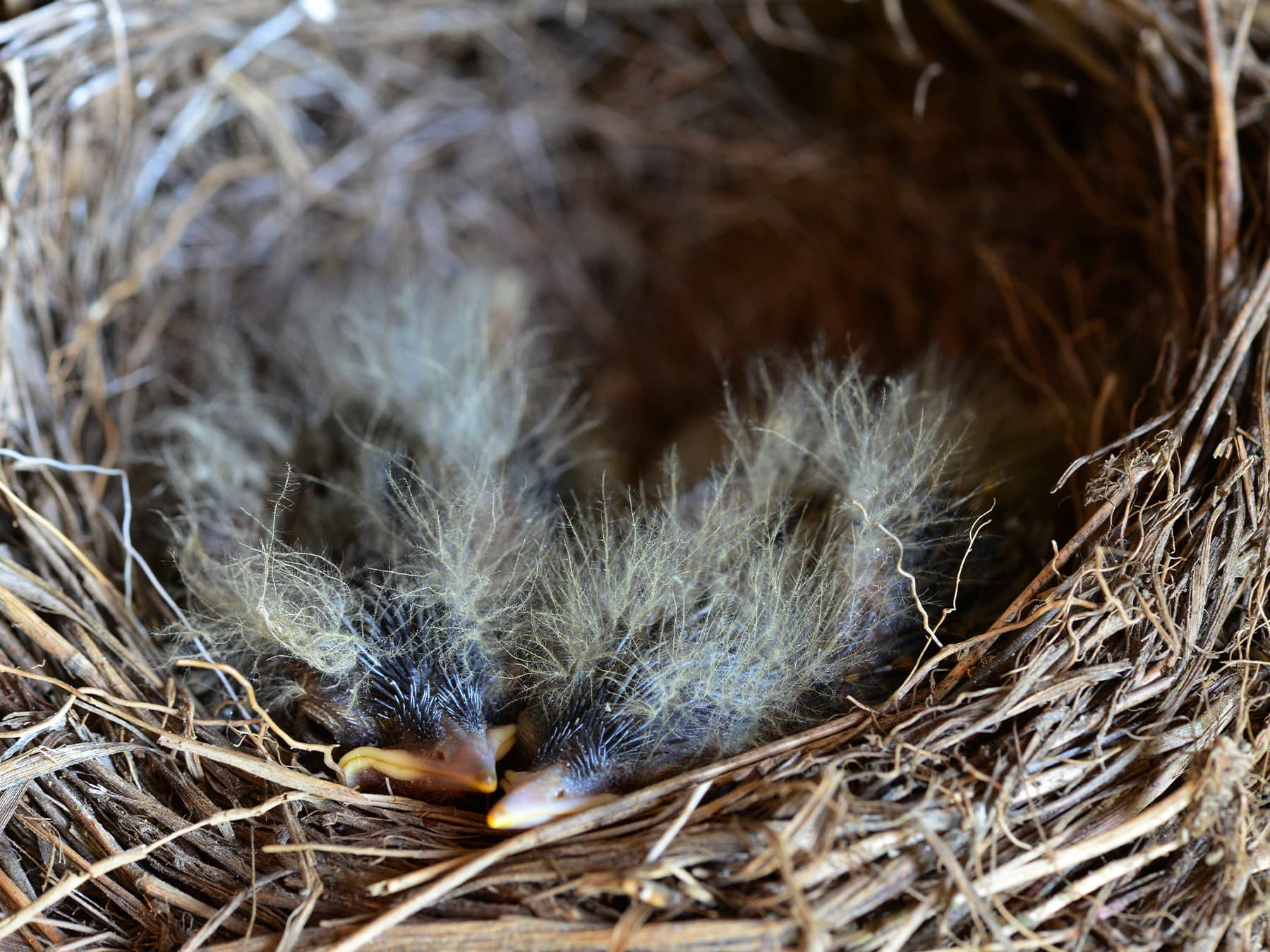
Grey Wagtail chicks eat small invertebrates delivered by both parents.
Do Grey Wagtails use bird feeders?
Grey Wagtails rarely visit bird feeders, although they may eat mealworms from the ground or a platform feeder.
Nesting and breeding
Where do Grey Wagtails nest?
Grey Wagtails usually nest along streams and rivers, building their nests in the riverbank, on a small rock ledge, among tree roots, or in suitable artificial sites like bridges and rock walls. Their nest is a cup of plant material and animal hair.
When do Grey Wagtails nest?
Grey Wagtails nest from late March to August, usually producing two broods and sometimes even a third. Their eggs hatch after about 12 days, and the chicks leave the nest 12 to 15 days later. The young birds will be fed for another two or three weeks before gaining independence.
What do Grey Wagtail eggs look like?
Grey Wagtails typically lay five (3 - 7) eggs, each measuring 19 millimetres long and 14 millimetres wide. Their eggs are cream-coloured with fine greyish spots.
Do Grey Wagtails mate for life?
Grey Wagtails are monogamous when breeding and form strong pair bonds. Whether they mate for life is uncertain, although the same nest sites may be used year after year, perhaps by the same birds.
Behaviour
Are Grey Wagtails aggressive?
Grey Wagtails are highly territorial in the breeding season when pairs defend their own stretch along a stream or river. Their territories may extend for hundreds of metres.
Where do Grey Wagtails sleep at night?
Grey Wagtails roost in vegetation like trees and reedbeds. They may gather at communal roosts in the winter, sometimes in mixed flocks with Pied Wagtails.
Lifespan and predators
How long do Grey Wagtails live?
Grey Wagtails have a maximum recorded lifespan of seven years.
What are the predators of Grey Wagtails?
Grey Wagtails could fall prey to various small carnivores, including Domestic Cats, Sparrowhawks, and Tawny Owls.
Are Grey Wagtails protected?
The Wildlife and Countryside Act 1981 protects Grey Wagtails in the United Kingdom.
Are Grey Wagtails endangered?
Grey Wagtails are on the UK’s amber list due to earlier declines, although their population has stabilised and they have been promoted from the red list. Globally, they are ranked as a ‘Least Concern’ species on the IUCN Red List with a stable population trend.
Why is the Grey Wagtail endangered?
While not endangered, Grey Wagtails are vulnerable to harsh winters, which may reduce their population substantially in some years. Fortunately, they are relatively resilient to stream pollution, perhaps because they catch much of their prey outside of the water.
Conservation
While listed as Least Concern globally, Grey Wagtail populations have declined in parts of Europe, including the UK. Factors include habitat loss, water pollution, and climate change. Conservation efforts focus on improving water quality and protecting riparian habitats.
Similar birds
Often mistaken for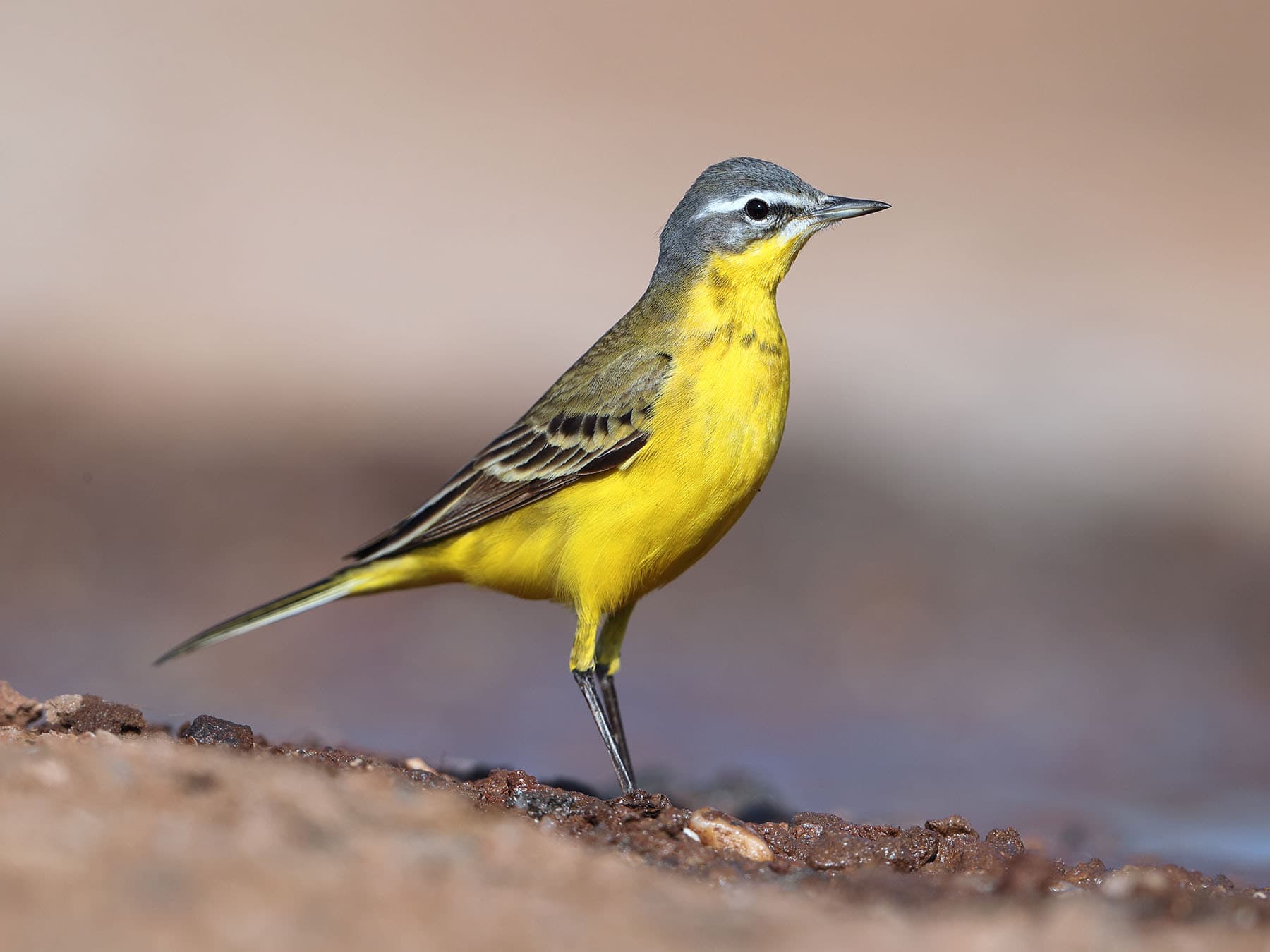
More photos
3 photos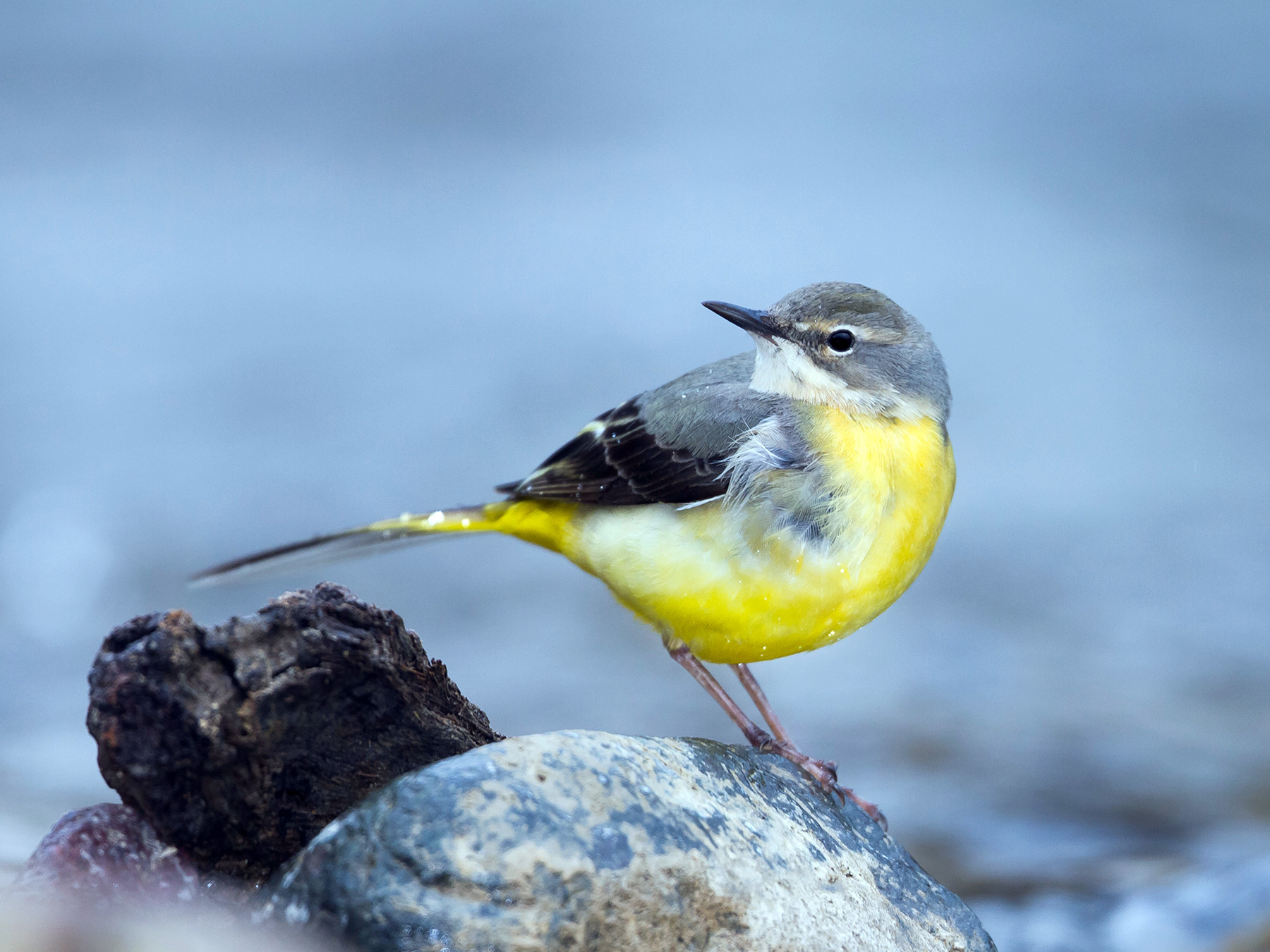
Grey Wagtail guides
1 guidesQuick facts
- Length
- 17–20 cm
- Wingspan
- 25–30 cm
- Weight
- 15–25 g
- Lifespan
- 2–5 years
- Family
- Wagtails & Pipits
- Migration
- Partial migrant
- Global status (IUCN)
- Least Concern
- World population
- 6,900,000 - 19,800,000 mature individuals
- Population trend
- Stable
- Also called
- Gray Wagtail
- Scientific name
- Motacilla cinerea
Questions
1How do I attract Grey Wagtails to my garden?
Grey Wagtails are difficult to attract, especially in the summer when they nest along upland streams. They often visit gardens in winter but show little interest in birdfeeders. Installing a water feature with a waterfall or cascade probably offers the best chance of attracting these birds, and they may well feed on mealworms scattered on the ground or a low-platform feeder.
Sources
3- 1BirdLife International. 2017. Motacilla cinerea (amended version of 2016 assessment). The IUCN Red List of Threatened Species 2017: e.T22718392A111215843. Source (opens in a new tab)
- 2EBCC (2015)
- 3BirdLife International. 2017. Motacilla cinerea (amended version of 2016 assessment). The IUCN Red List of Threatened Species 2017: e.T22718392A111215843. Source (opens in a new tab)

Checked by
Nathan Cope, founder and editor
Nathan founded Birdfact and leads its writers and contributors in the UK, the US and Canada. He has watched and studied birds for more than ten years, and checks every article and species guide before it’s published.