


Lesser Redpoll
Acanthis cabaret
By the Birdfact teamChecked by Nathan Cope
On this page14 sections
How to recognise it
What do Lesser Redpolls look like?
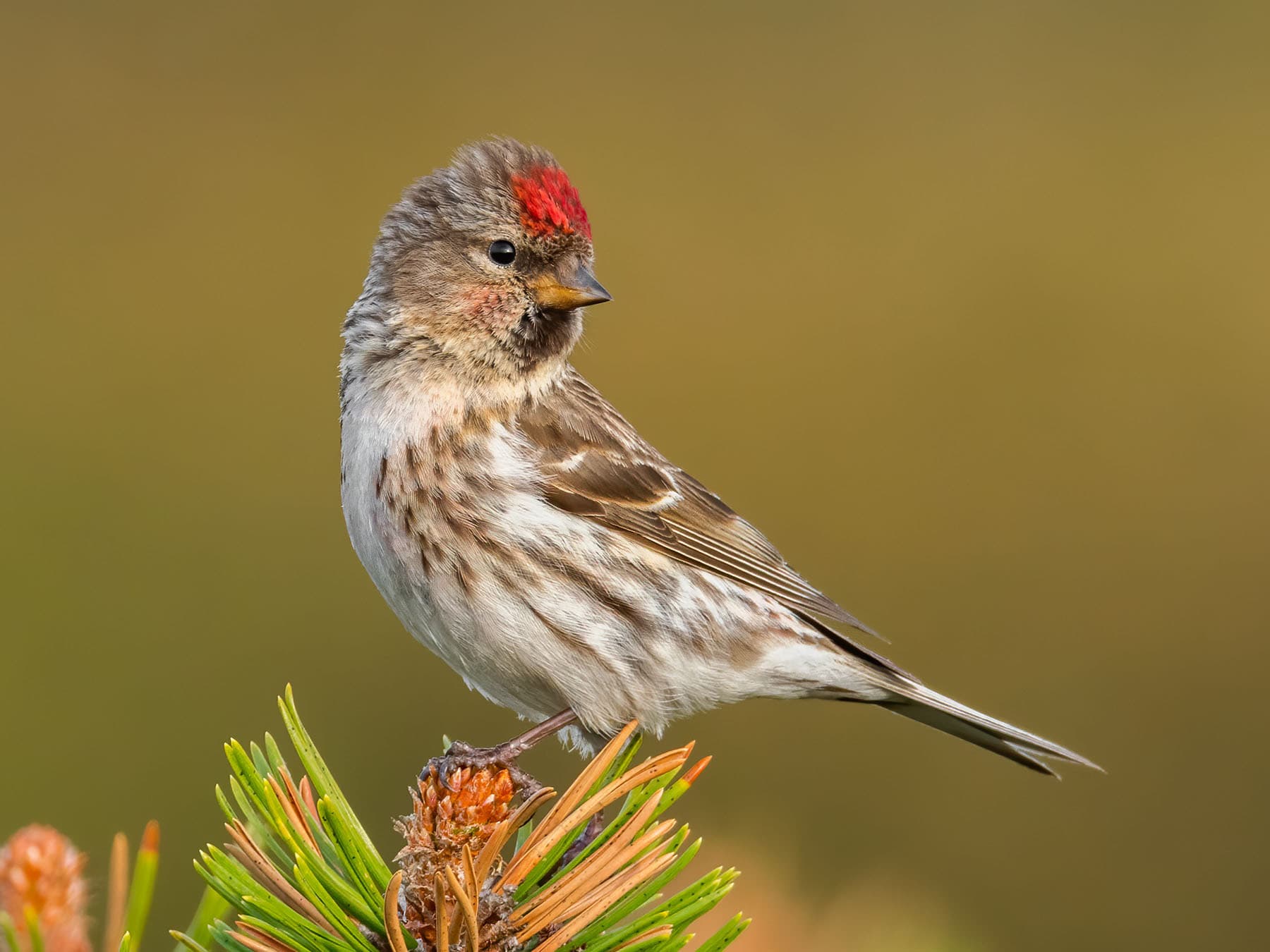
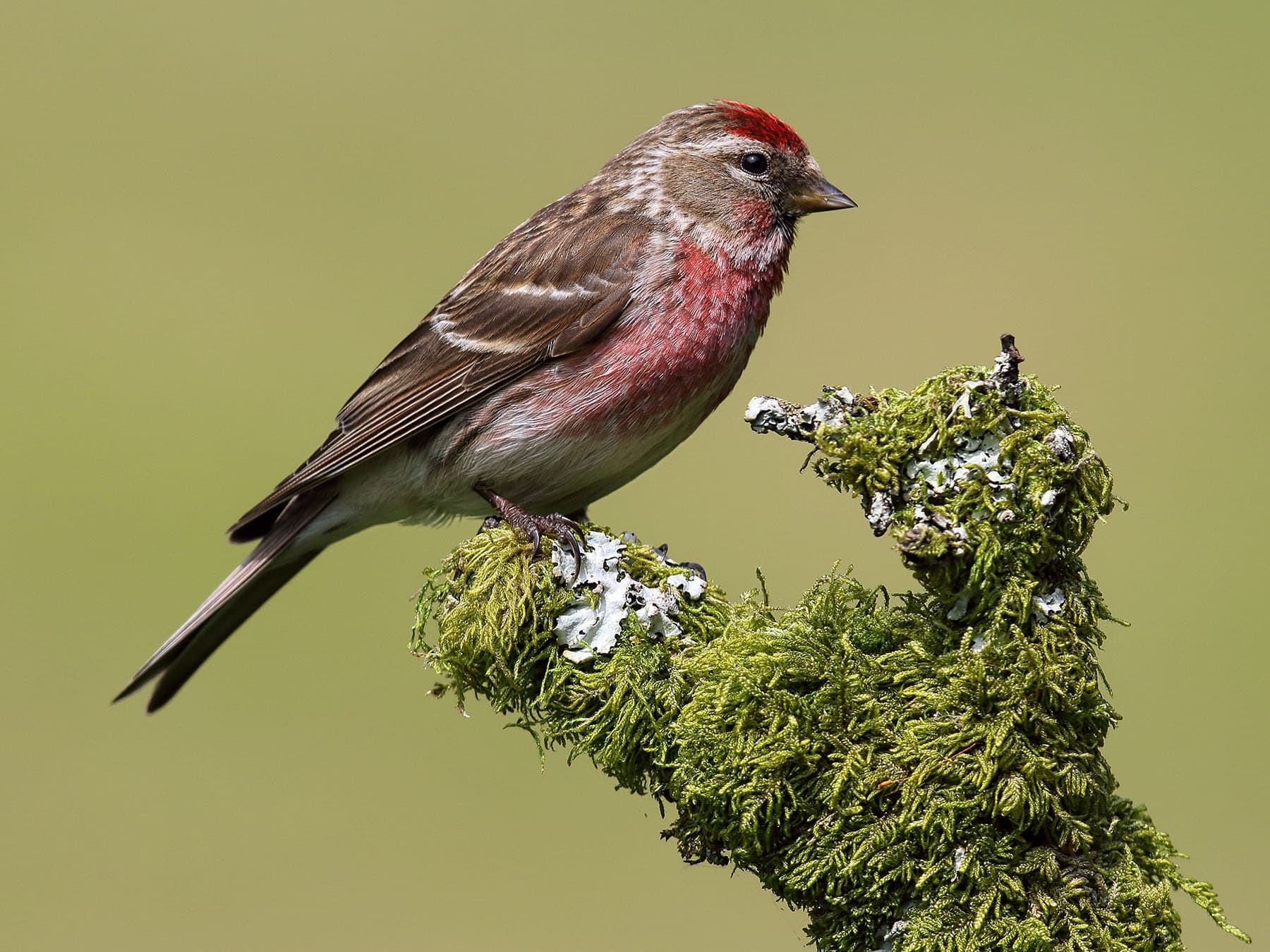
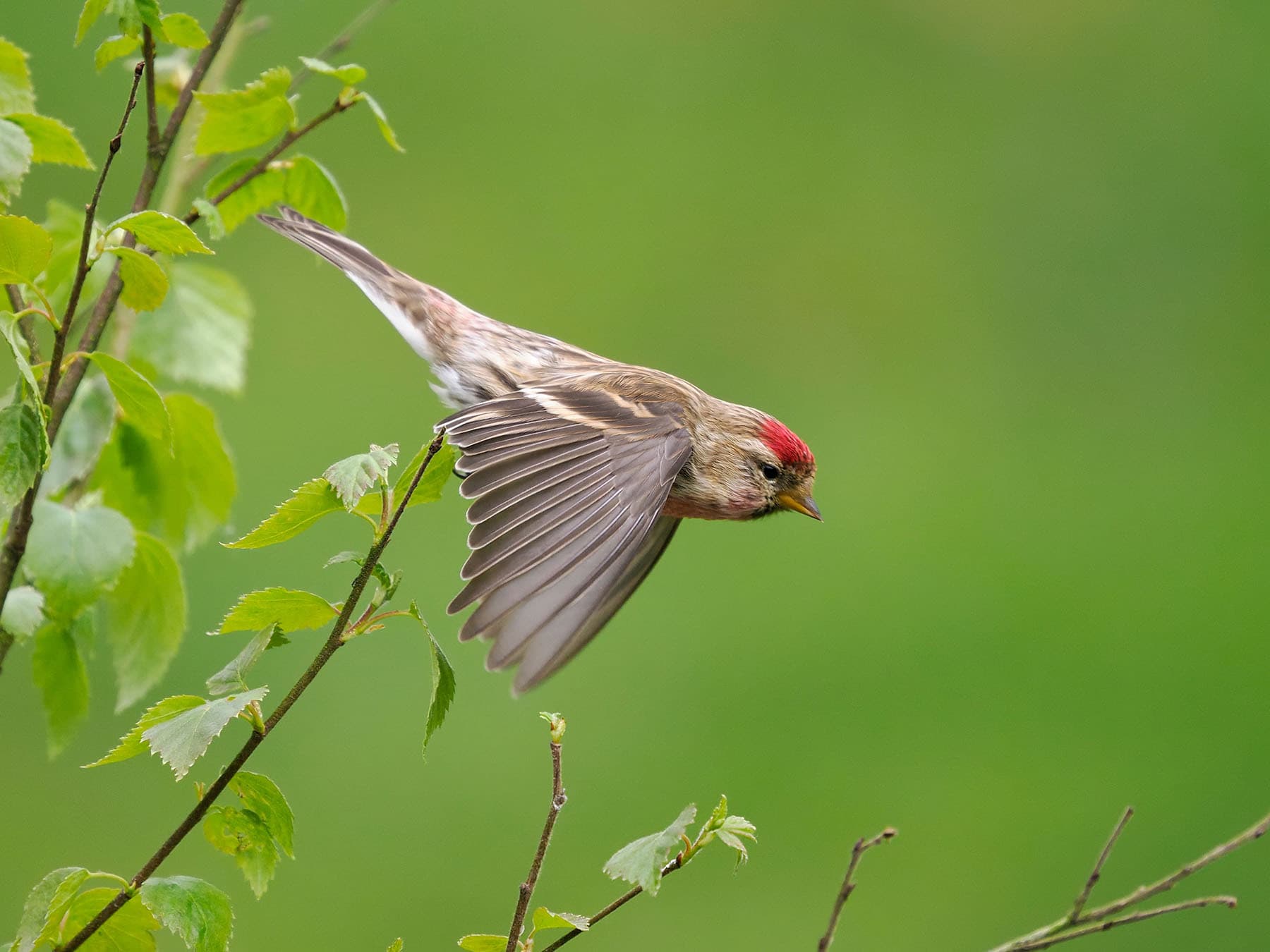
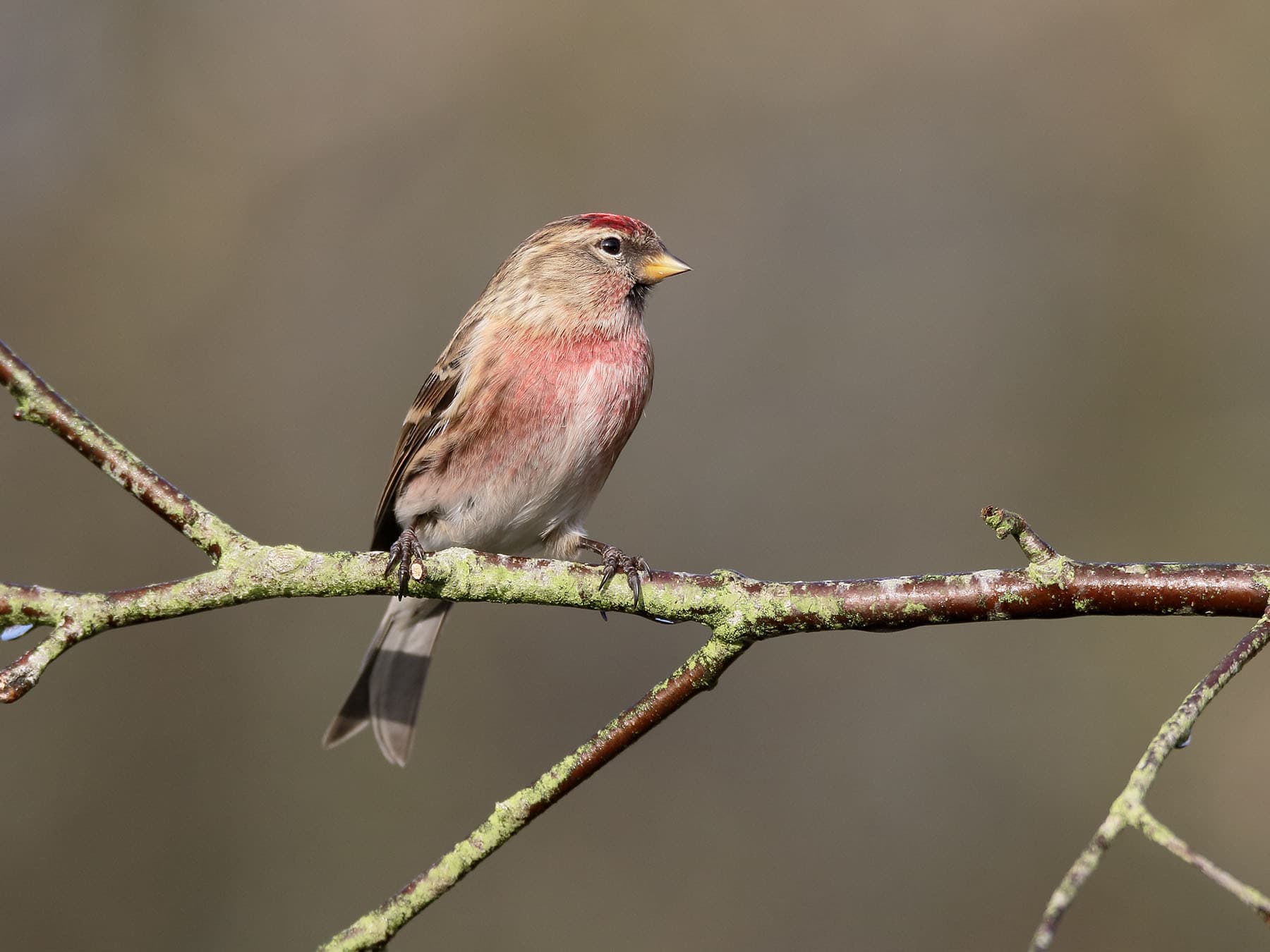
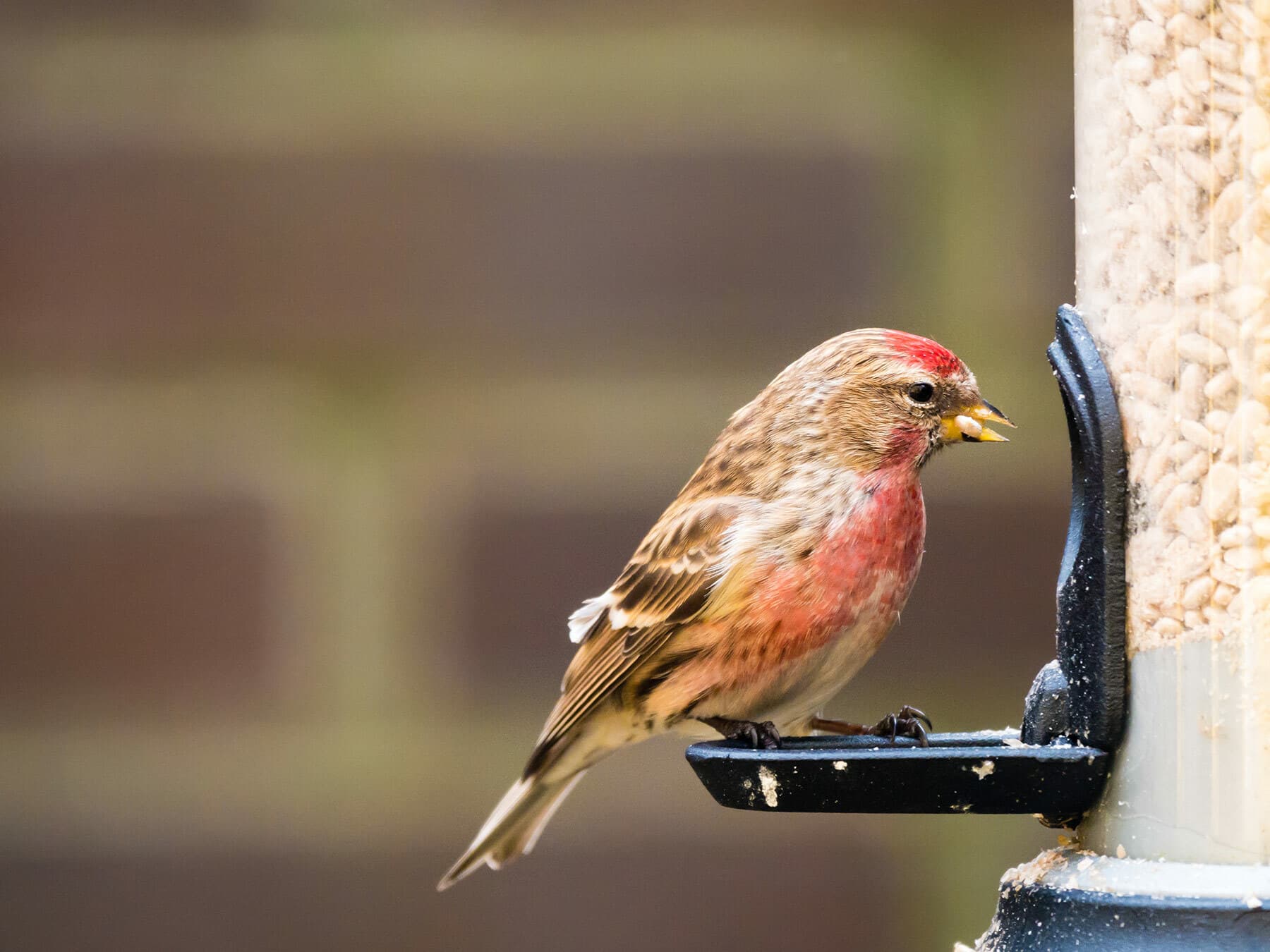
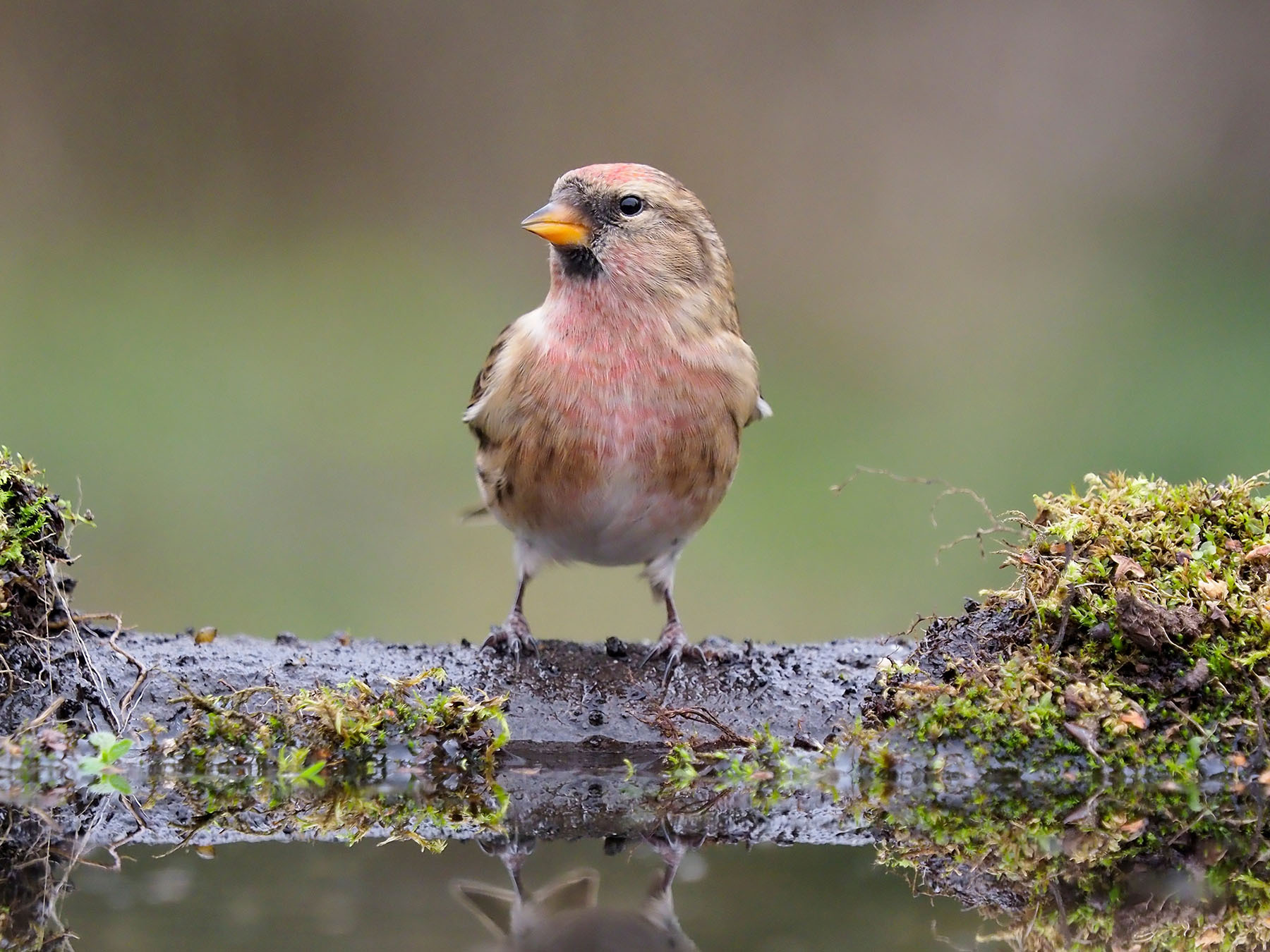
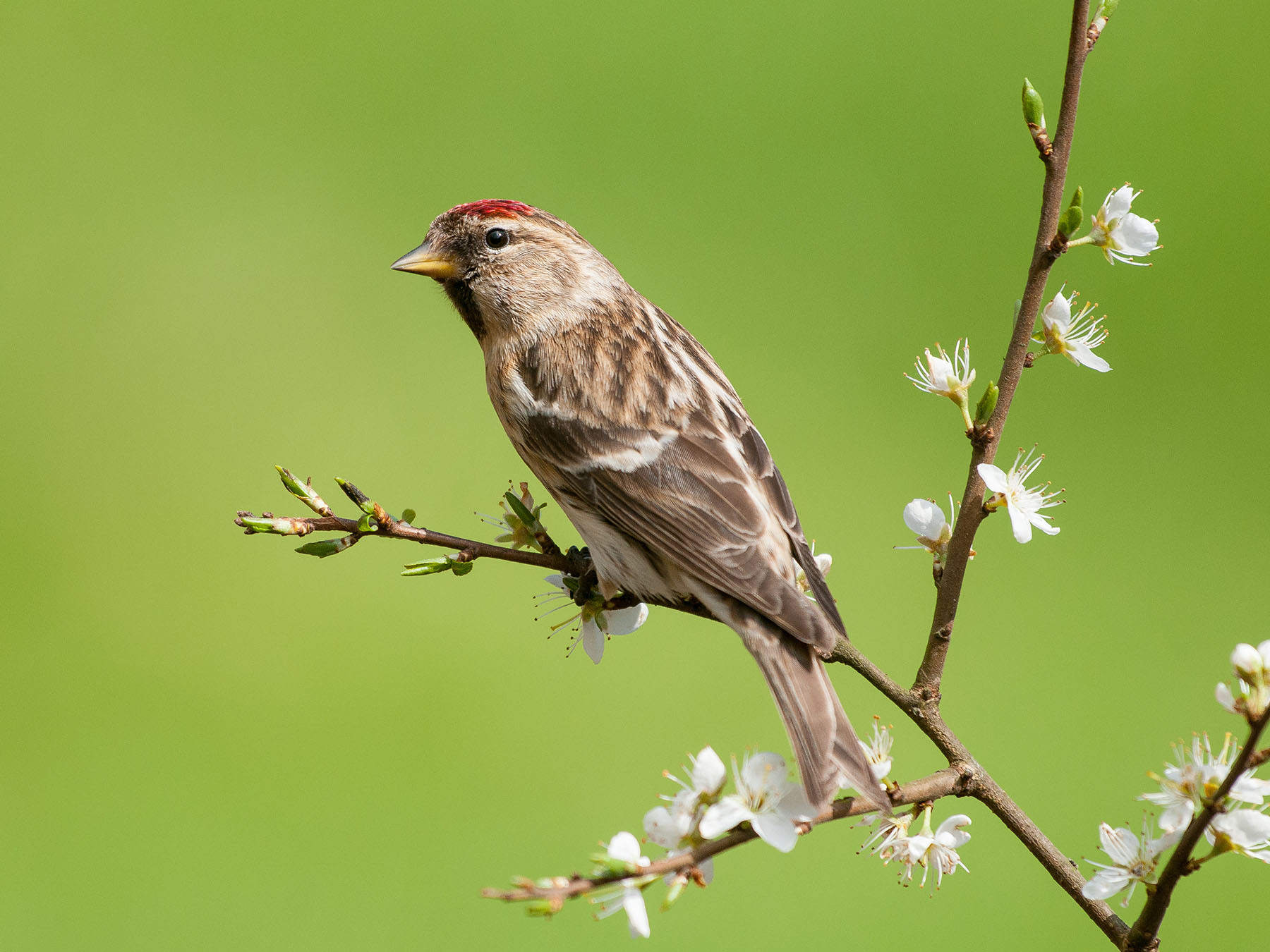
During the breeding season, male lesser redpolls have a clearly visible red ‘poll’ – patch of crown feathers – and a reddish-pink breast. Other distinctive facial markings include a black lower forehead and a small black patch of feathers at the base of the bill. The head and nape are dark brown, mottled with lighter buff streaks.
The male lesser redpoll’s rump is a pale buff colour, tinged with pink, and the forked tail is cinnamon brown, with darker edges. Wings are also darker brown, with creamy buff wing bars that are visible in flight. Underparts are pale: a white belly, streaked with darker markings, and warmer orange-brown flanks.
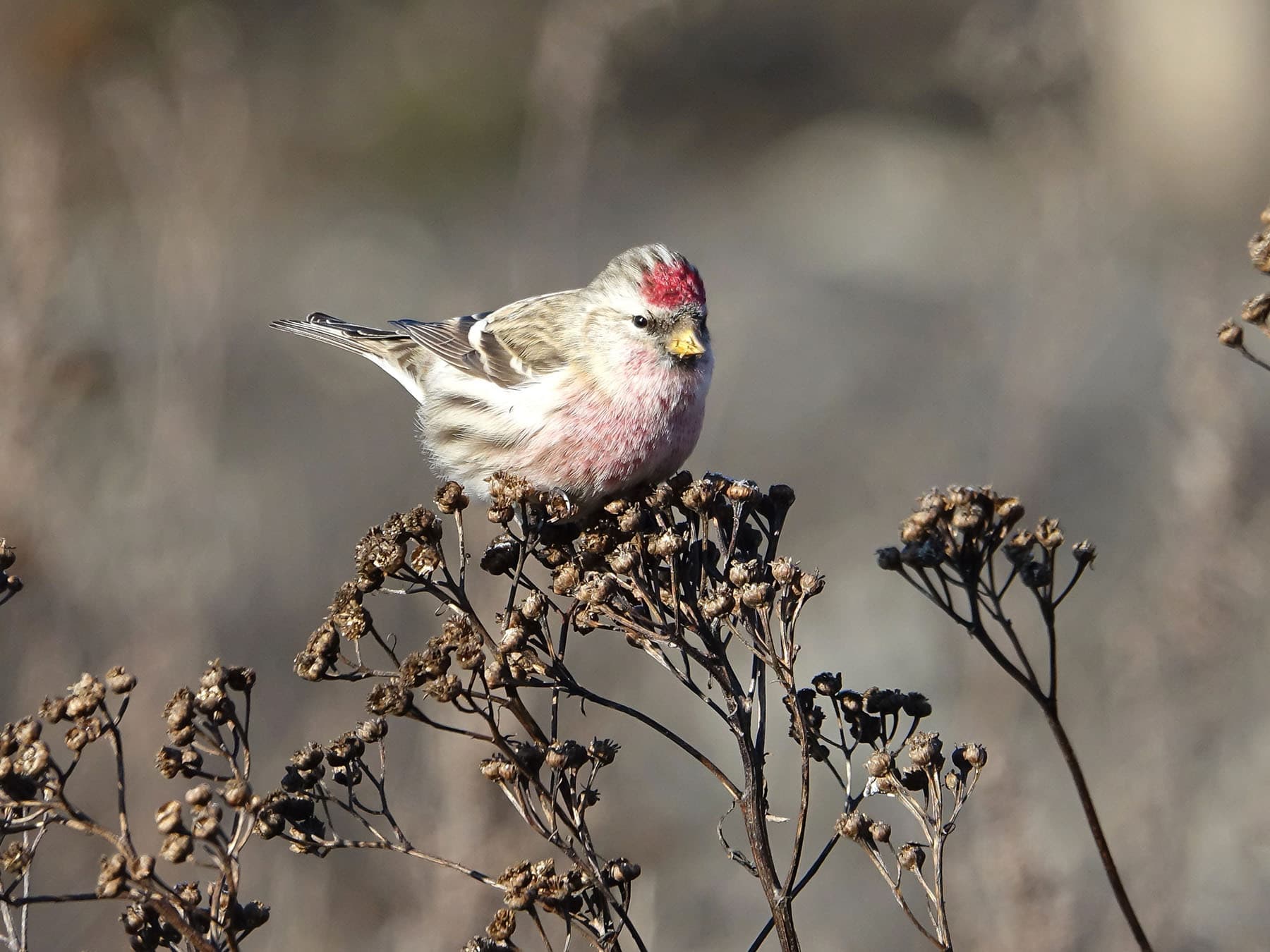
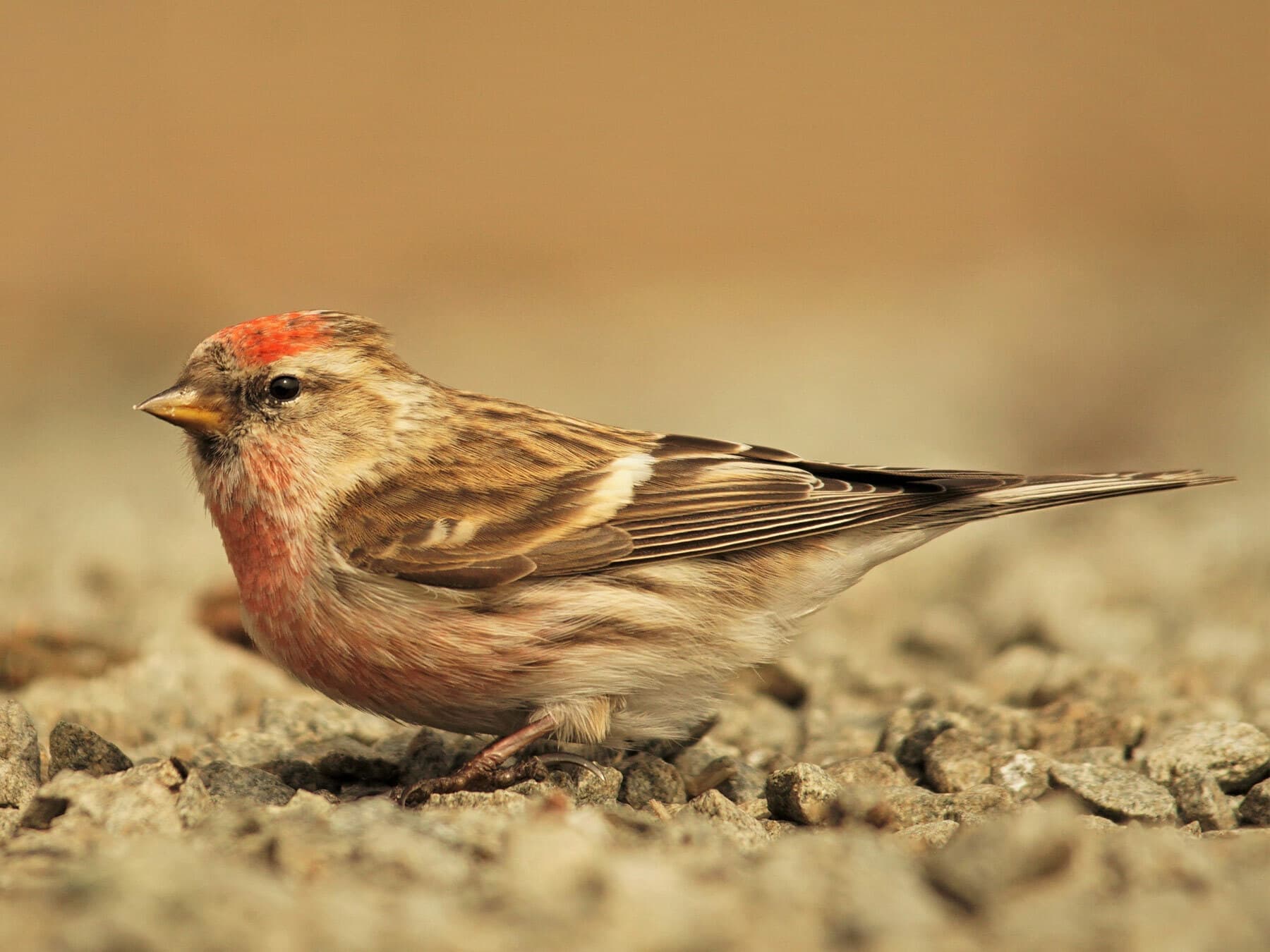
Non-breeding males moult into an alternative, less showy plumage, retaining a faintly red head and more streaky reddish colouring on the breast.
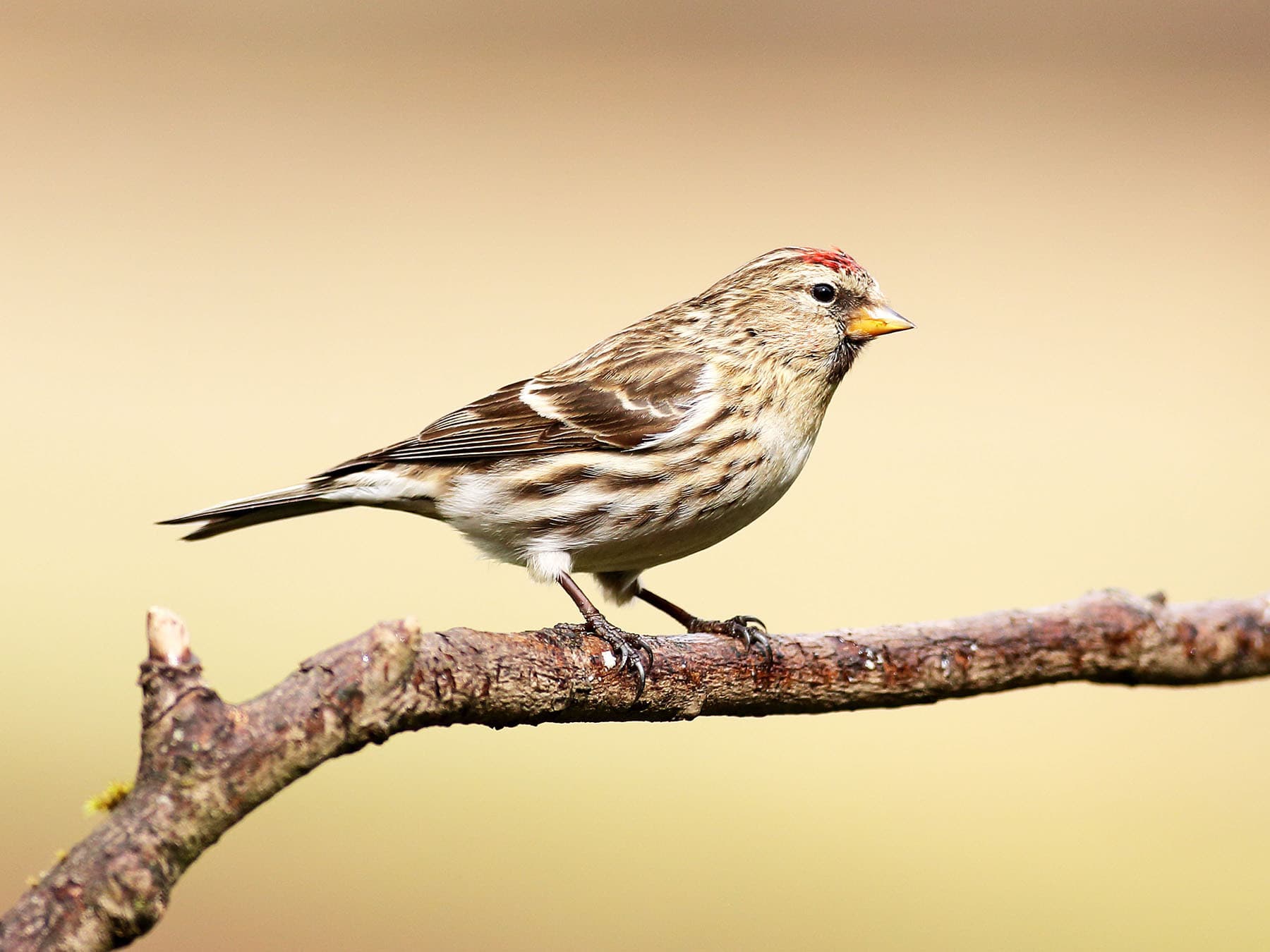
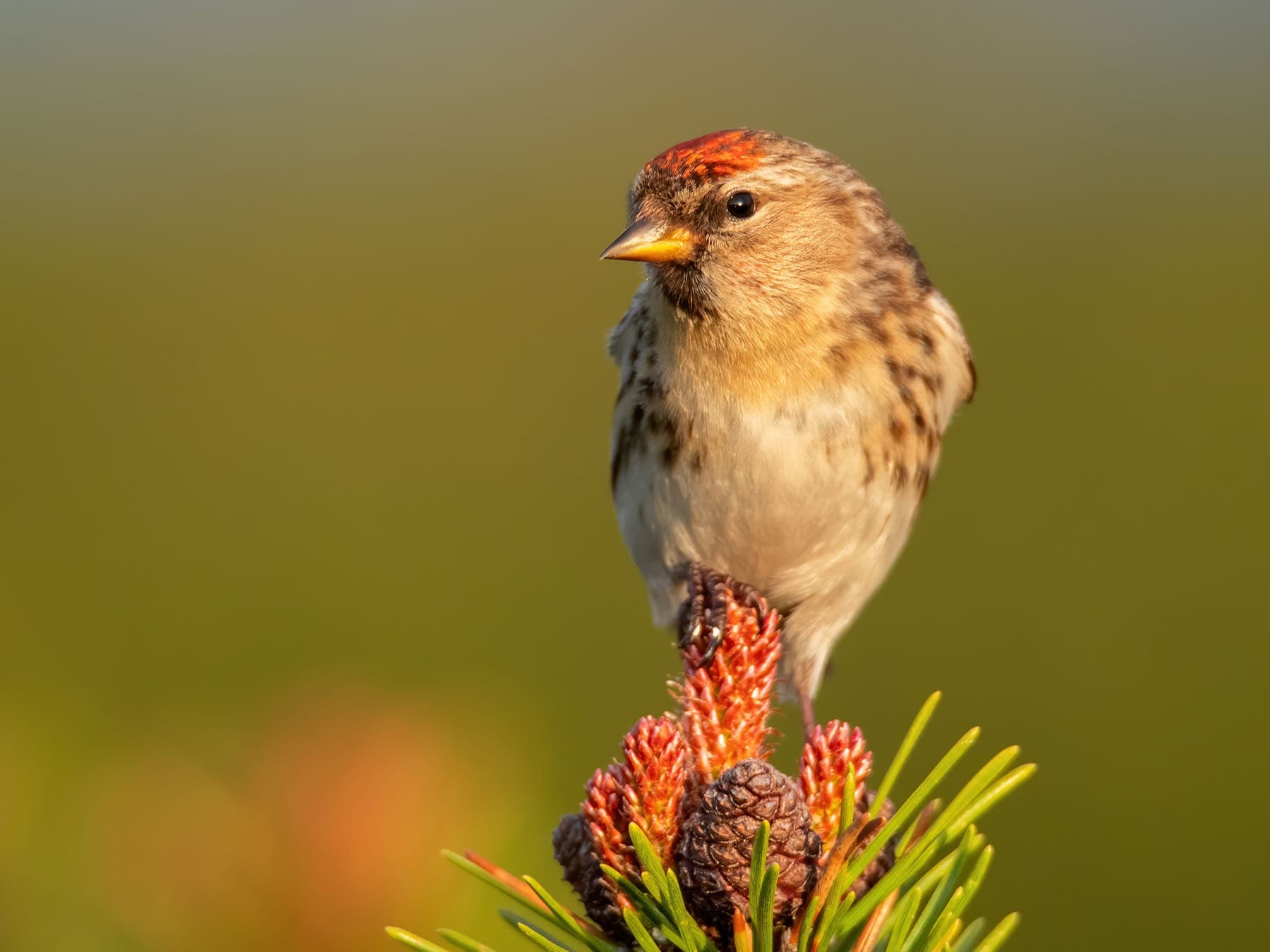
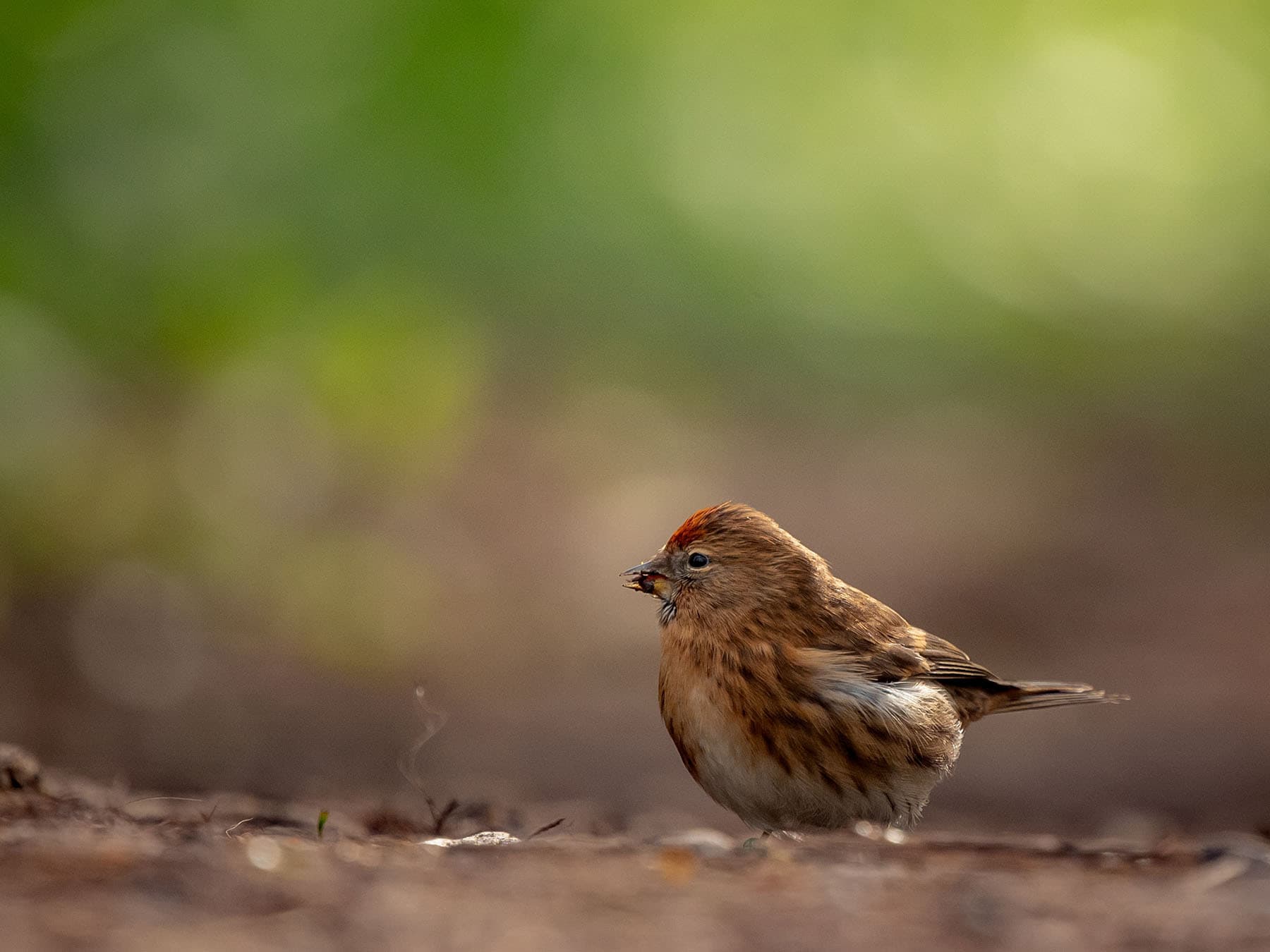
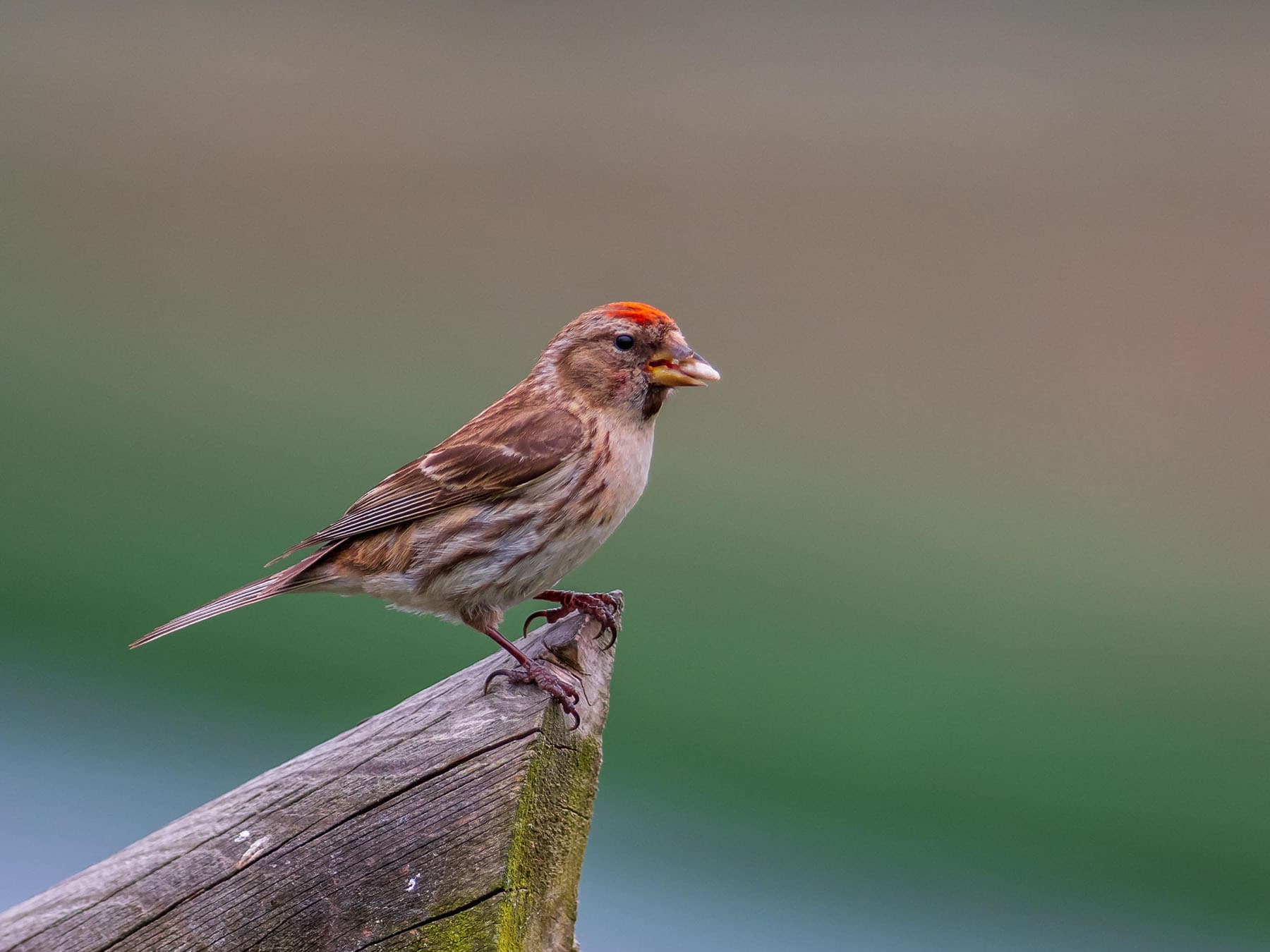
Female lesser redpolls resemble males in non-breeding plumage but their red crown patch is smaller and less bright and in some cases no red is present at all. Their breast is a paler buff shade, with darker markings rather than overly pink.
Juvenile lesser redpolls are similar in appearance to adult females but have not developed any red colouring on their heads, and are more heavily streaked, with less black on their chins and some pale pink patches visible on the breast.
How big are Lesser Redpolls?
Lesser redpolls are one of the smallest bird species likely to show up at back garden bird feeders in search of seeds. Males and females are roughly the same size and both sexes fall within the following measurement ranges:
- Length: 11.5 cm to 12.5 cm (4.5 in to 4.9 in)
- Wingspan: 20 cm to 22.5 cm (7.9 in to 8.9 in)
- Weight: 9 g to 12 g (0.32 oz to 0.42 oz)
Its size
Adults- Length
- 11–13 cm
- Wingspan
- 20–22.5 cm
- Weight
- 9–12 g
Its song and calls
What sound does a Lesser Redpoll make?
The flowing trilled notes of a male lesser redpoll in song can be heard from perches in high branches of trees or in flight, with buzzes interspersed with a ‘chut-ut-ut-ut’ call. A repetitive, almost metallic ‘tje’ sound can also be heard in flight, while a sharp ‘zeeze’ sound serves as a warning or alarm call.
- Song0:00 / 0:11
Recorded in Valais, Switzerland · June 2019
- Flight call0:00 / 0:08
Recorded in Normandie, France · November 2021
When and where to see it
What is the habitat of a Lesser Redpoll?
The preferred habitats of lesser redpolls for breeding include deciduous and coniferous woodlands, primarily birch and larch. Open heathland, conifer plantations, sand dunes, alder carrs, hedgerows, parks and gardens, and woodlands crossed by streams and rivers are also popular.
In the Alps, lesser redpolls are mostly found conifer woods, alpine meadows and pastures at altitudes of 1400 m (4,600 ft) and above.
What is the range of a Lesser Redpoll?
Lesser redpolls breed across western Europe, from the British Isles in the west to Poland in the east. The northern limit of their breeding range extends into south-west Norway and southern Sweden as far south as the Alps and the Carpathian Mountains in the south.
Non-breeding populations of lesser redpolls are present across northern, central and southern Europe, including throughout much of France, Belgium and the Netherlands.
Lesser redpolls were introduced into New Zealand in 1862 and have since become a widely established species in the country.
Where do Lesser Redpolls live?
European countries with the most concentrated populations of lesser redpolls include Switzerland and Germany. The range of lesser redpolls has increased over the last 50 years with breeding now established in Romania, Slovakia, and across the Netherlands, Belgium and Denmark.
How rare are Lesser Redpolls?
Around 260,000 pairs of lesser redpolls are estimated to breed in Britain each year, and as they are becoming increasingly observed as garden visitors in search of nyjer seed, sightings are not as unusual as they once were.
However, species numbers are in decline, due to loss of habitat, in particular hedgerows and a lack of young coniferous woodland.
Where can you see Lesser Redpolls in the UK?
Prime breeding areas for lesser redpolls are found in Scotland, Wales and northern and eastern England. Fewer breeding grounds are located in central, southern and south-west England although some nesting does occur in these regions and there is an increased presence of the species in these areas in winter months.
Signs and spotting tips
Lesser redpolls are perhaps easiest to see in winter months when they flock together and the trees in which they feed have lost their leaves.
Migrating birds in spring and autumn are sometimes found in short vegetation replenishing their energy for the onward journey.
Lesser redpolls are gregarious and often group in flocks to forage for food.
Migration
Do Lesser Redpolls migrate?
Lesser redpolls are partial migrants, but are usually native to and resident in the UK all year round. Within the UK, populations may witness a temporary shift southwards as winter approaches.
In addition, in years when alder, birch and larch trees have not produced successful or abundant crops, they will relocate to regions where these tree crops are more fruitful.
Are Lesser Redpolls native to the UK?
Around 260,000 redpolls are estimated to live in the UK all year round. Some movement does occur within the country, with many birds that breed in Scotland, the north of England and in Wales temporarily move southwards as conditions become harsher, but return to their original breeding grounds the following spring.
What it eats
What do Lesser Redpolls eat?
Seeds form the largest element of a lesser redpoll’s diet, with alder, larch, birch, spruce and beech the most common. Willowherb and sorrel are also important.
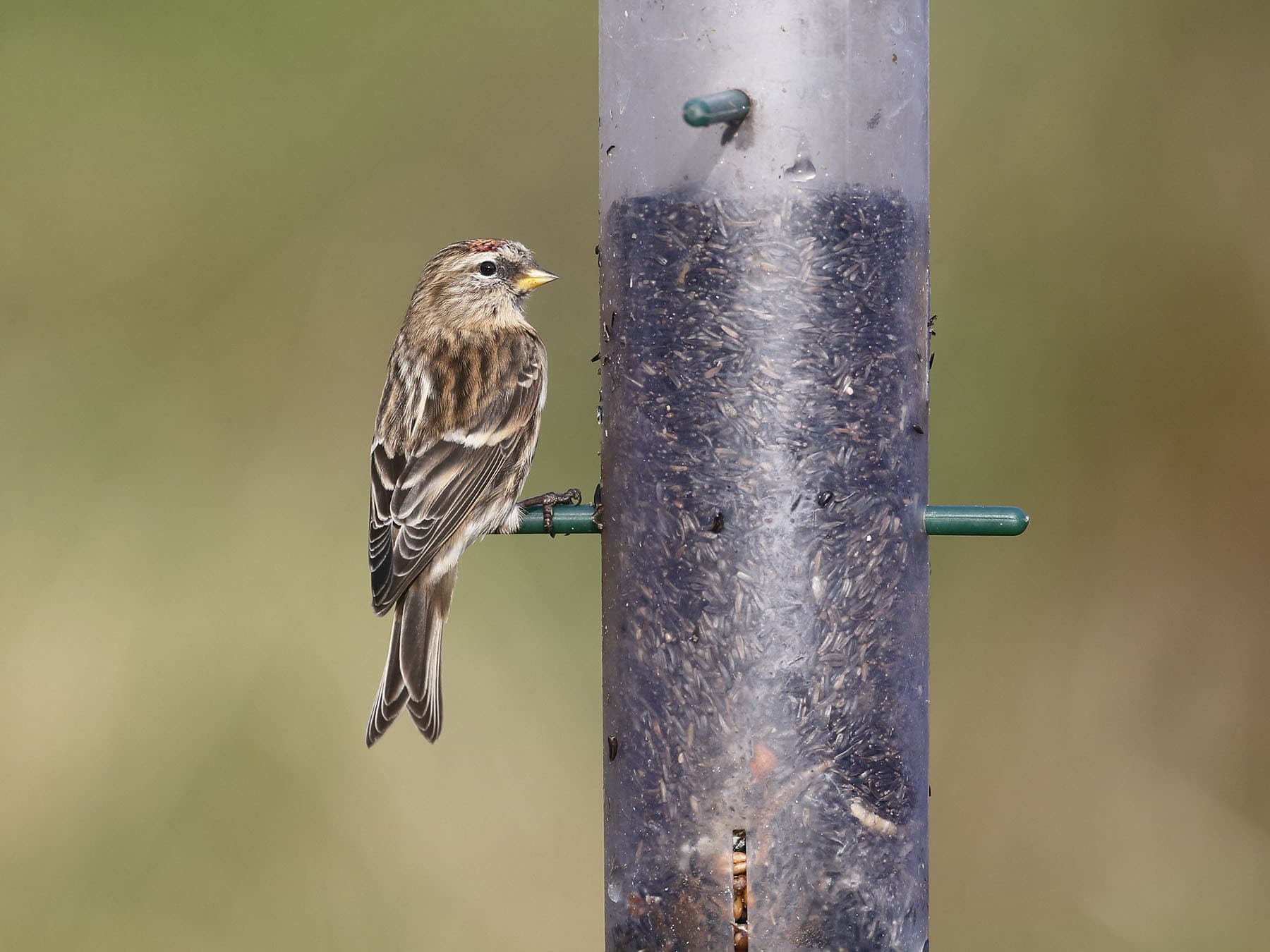
Lesser redpolls feed mainly in trees, but can also be seen foraging on the ground and visiting back garden bird feeders, particularly for nyjer seed, both in the breeding season and in winter months.
At times when seeds are in shorter supply, some buds, fruit and invertebrates are eaten, which are picked from the ground or from leaves of low vegetation. During the height of the breeding season, insects and caterpillars are of greater importance
What do Lesser Redpoll chicks eat?
At first, lesser redpoll hatchlings are fed on beetle larvae, small flying insects and caterpillars. They fledge at between 9 and 14 days, often before they are able to fly, and become fully independent by 26 days, mastering the art of foraging for seeds as well as insects.
Nesting and breeding
Where do Lesser Redpolls nest?
Female lesser redpolls construct platform nests in the branches of trees or shrubs, up to 5 m (16 ft) above ground.
Males may assist with gathering nesting material, such as leaves, moss, twigs, heather stems, bark, roots and animal fur. Old nest material may be reused in a new nest.
Nests are often located close to the trunk of the tree, and commonly chosen tree species include birch, pine, larch, spruce and juniper.
What do Lesser Redpoll eggs look like?
Lesser redpolls’ eggs measure 17 mm by 13 mm (0.7 in by 0.5 in) and are pale blue to greenish-blue, and marked with reddish-purple streaky spots and lines.
Normally, a clutch contains between 4 and 6 eggs, which are incubated by the female alone. During incubation, which lasts for around 10 to 12 days, the female is brought food by her mate, who then shares hatchling feeding duties.
Do Lesser Redpolls mate for life?
Pair bonds between lesser redpolls are generally monogamous for the duration of a single breeding season but no longer. Two broods in a season is normal, although if it’s a poor year for tree crops, only one brood may be attempted.
Behaviour
Are Lesser Redpolls aggressive?
Lesser redpolls are a relatively sociable species, and even during breeding, loosely colonial nesting may occur with up to six breeding pairs often found in close proximity to each other.
Winter foraging flocks may number up to 100 birds on occasion, and where migration takes place, small groups may travel to wintering grounds together.
Where do Lesser Redpolls sleep at night?
As lesser redpolls are small, secretive birds and relatively hard to spot even in daylight, it’s no surprise that little is known about their usual night-time roosting spots. Like other small finches, it’s probable that they hunker down for the night in the trees close to their foraging grounds.
Lifespan and predators
How long do Lesser Redpolls live?
The average lifespan of a lesser redpoll is thought to be around 2 years, with first-time breeding at the age of 1 year. Data from ringing projects has recorded the oldest individual lesser redpoll at 6 years and 10 months.
What are the predators of Lesser Redpolls?
Lesser redpoll nests are at a relatively high risk of predation, in particular from crows, magpies, squirrels and domestic cats.
Are Lesser Redpolls protected?
Under the Wildlife and Countryside Act, 1981 it is illegal to knowingly kill, injure or capture a lesser redpoll.
Are Lesser Redpolls endangered?
Classed as Red status birds on the UK’s Birds of Conservation Concern list, lesser redpolls have witnessed a steep decline in population in the late 20th century.
This is thought to be due to shortages and losses of habitat, such as hedgerows and conifer plantations, and change of land use. The current outlook is slightly more positive, with moderate increases recorded in Scotland, and no overall change between 1995 and 2020.
Conservation
Lesser Redpoll populations have experienced declines in parts of their range, particularly in the UK.
Conservation efforts focus on maintaining suitable habitats, including birch and alder woodlands, which are crucial for their survival.
Similar birds
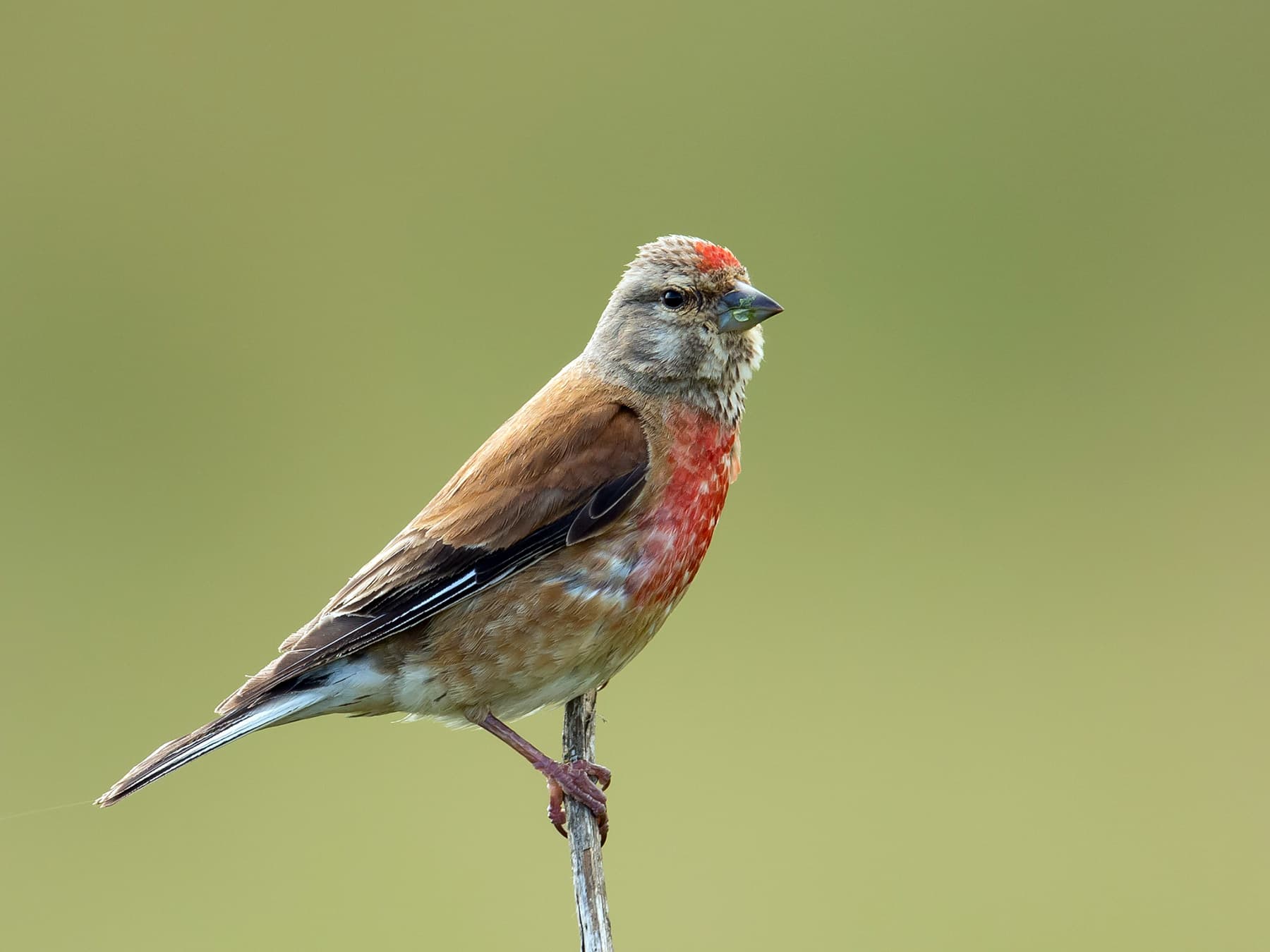
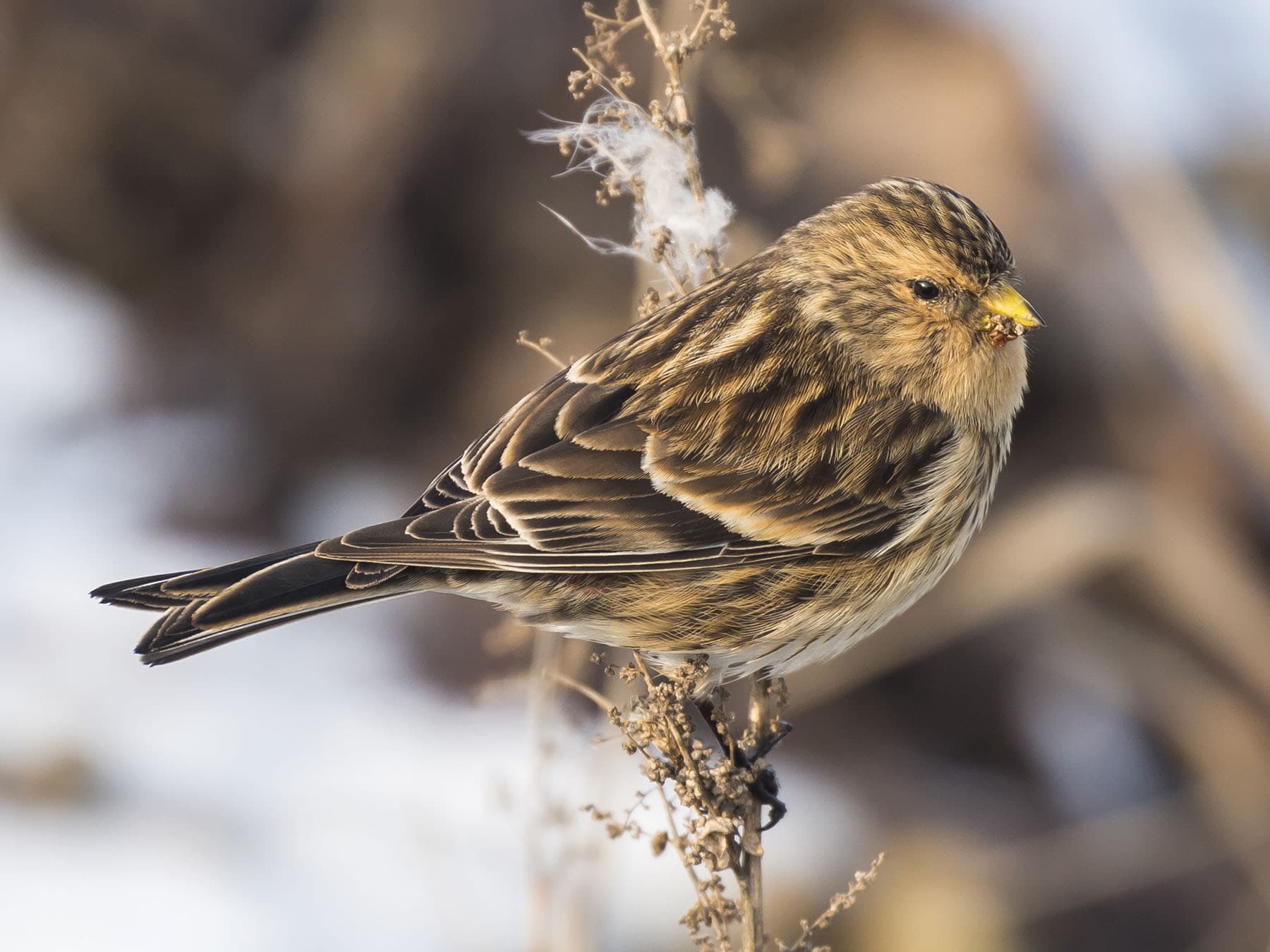
Often mistaken for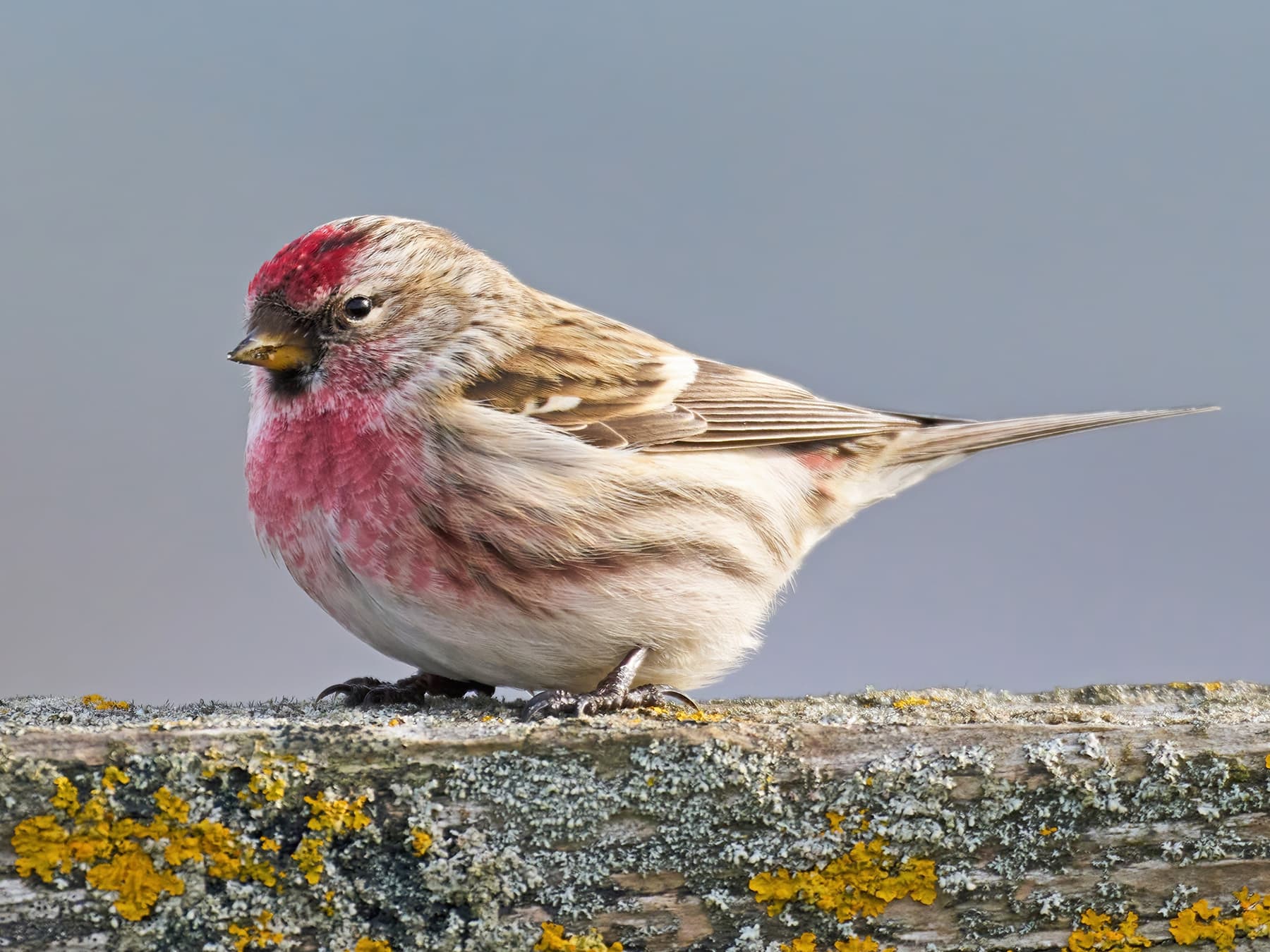
More photos
3 photos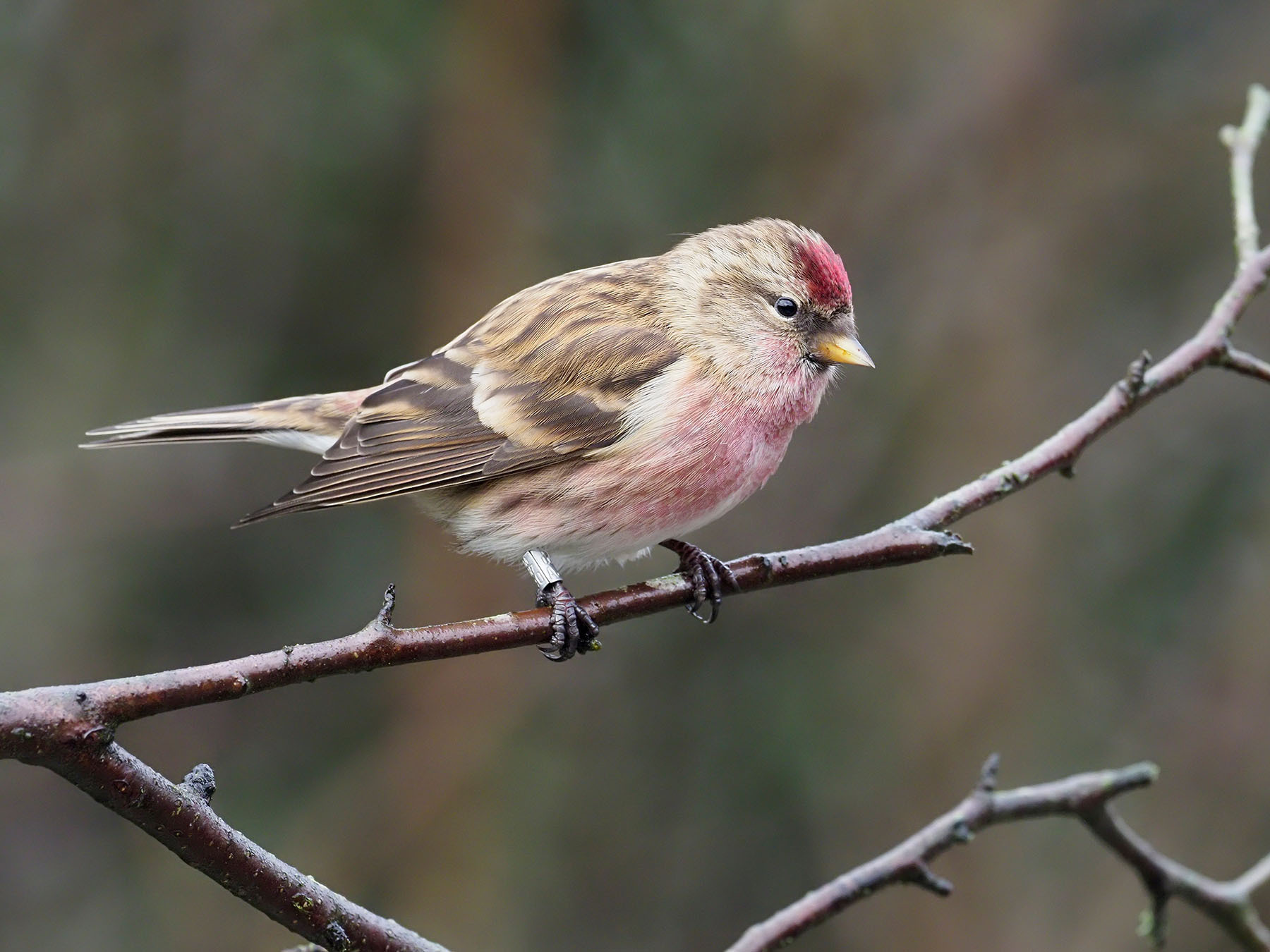
Lesser Redpoll guides
1 guidesQuick facts
- Length
- 11–13 cm
- Wingspan
- 20–22.5 cm
- Weight
- 9–12 g
- Lifespan
- 2–5 years
- Family
- Finches
- Migration
- Partial migrant
- Global status (IUCN)
- Not Evaluated
- World population
- 260,000 breeding pairs (UK)
- Population trend
- Decreasing
- Scientific name
- Acanthis cabaret
Questions
1Do Lesser Redpolls breed in the UK?
Lesser redpolls breed in several regions of the British Isles, with Wales, much of northern and central Scotland and the north of England being home to the highest concentrations of lesser redpoll nesting territories.

Checked by
Nathan Cope, founder and editor
Nathan founded Birdfact and leads its writers and contributors in the UK, the US and Canada. He has watched and studied birds for more than ten years, and checks every article and species guide before it’s published.