


Linnet
Common Linnet, Eurasian Linnet · Linaria cannabina
By the Birdfact teamChecked by Nathan Cope
On this page14 sections
How to recognise it
What do Linnets look like?
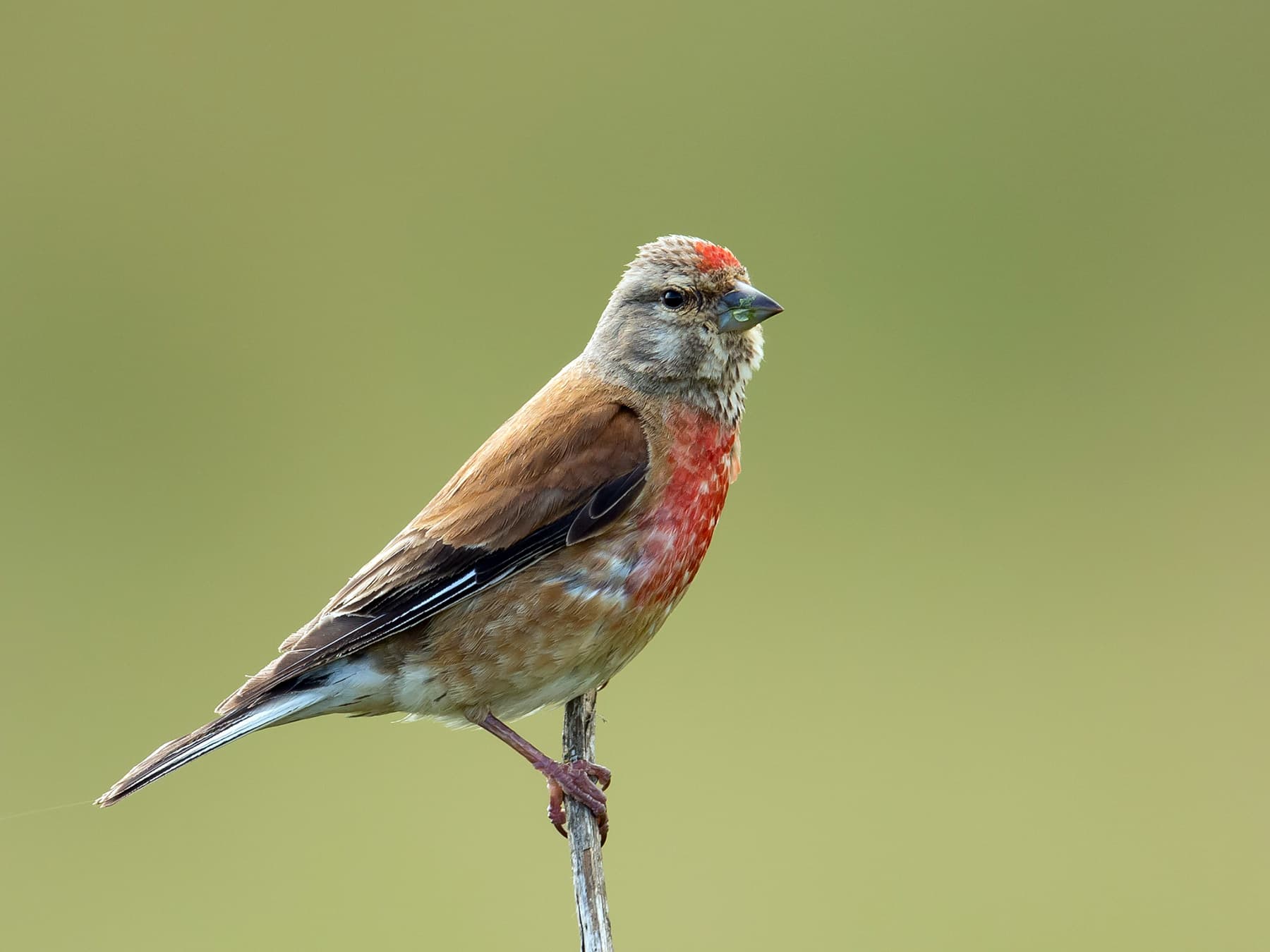
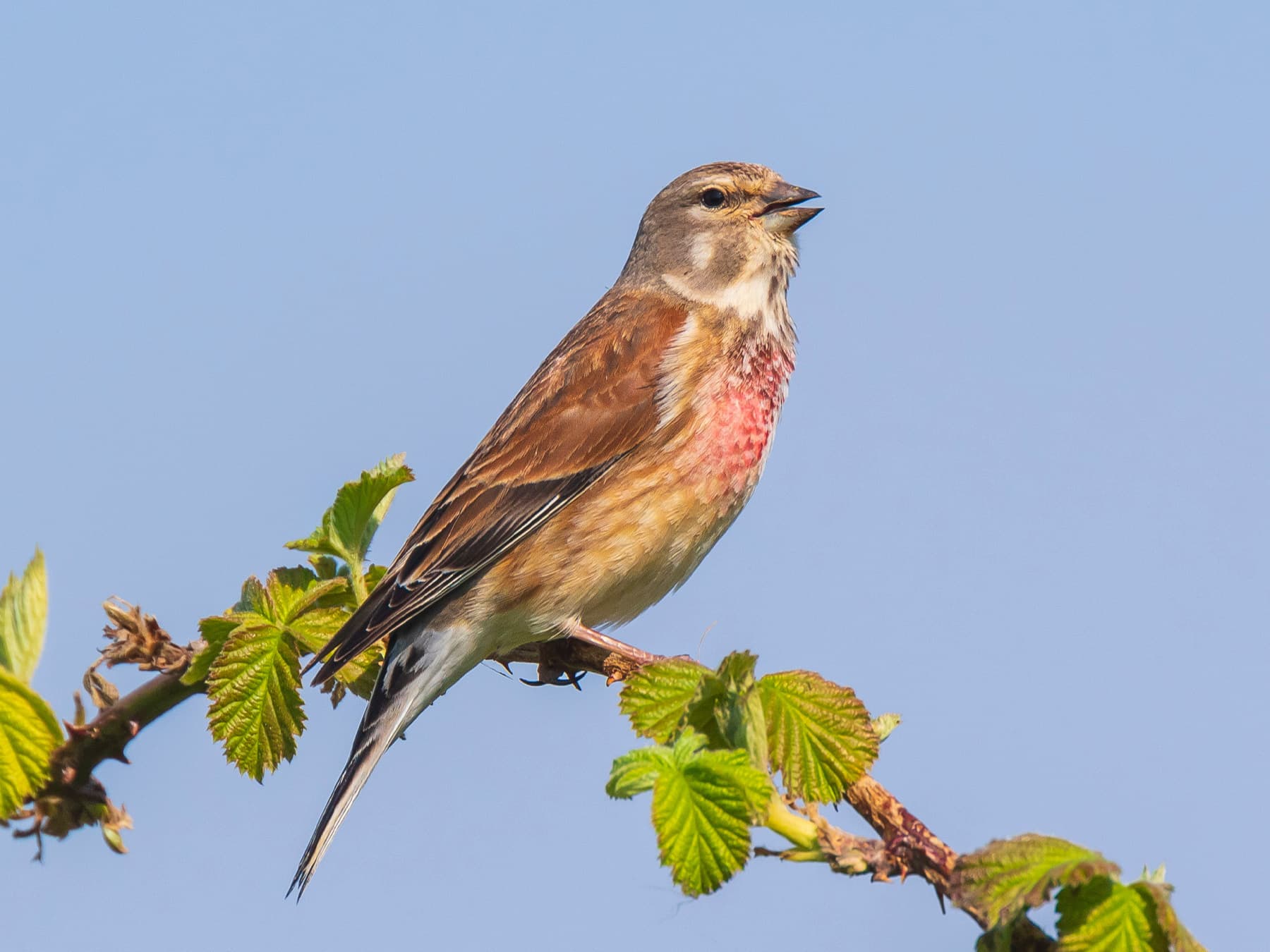
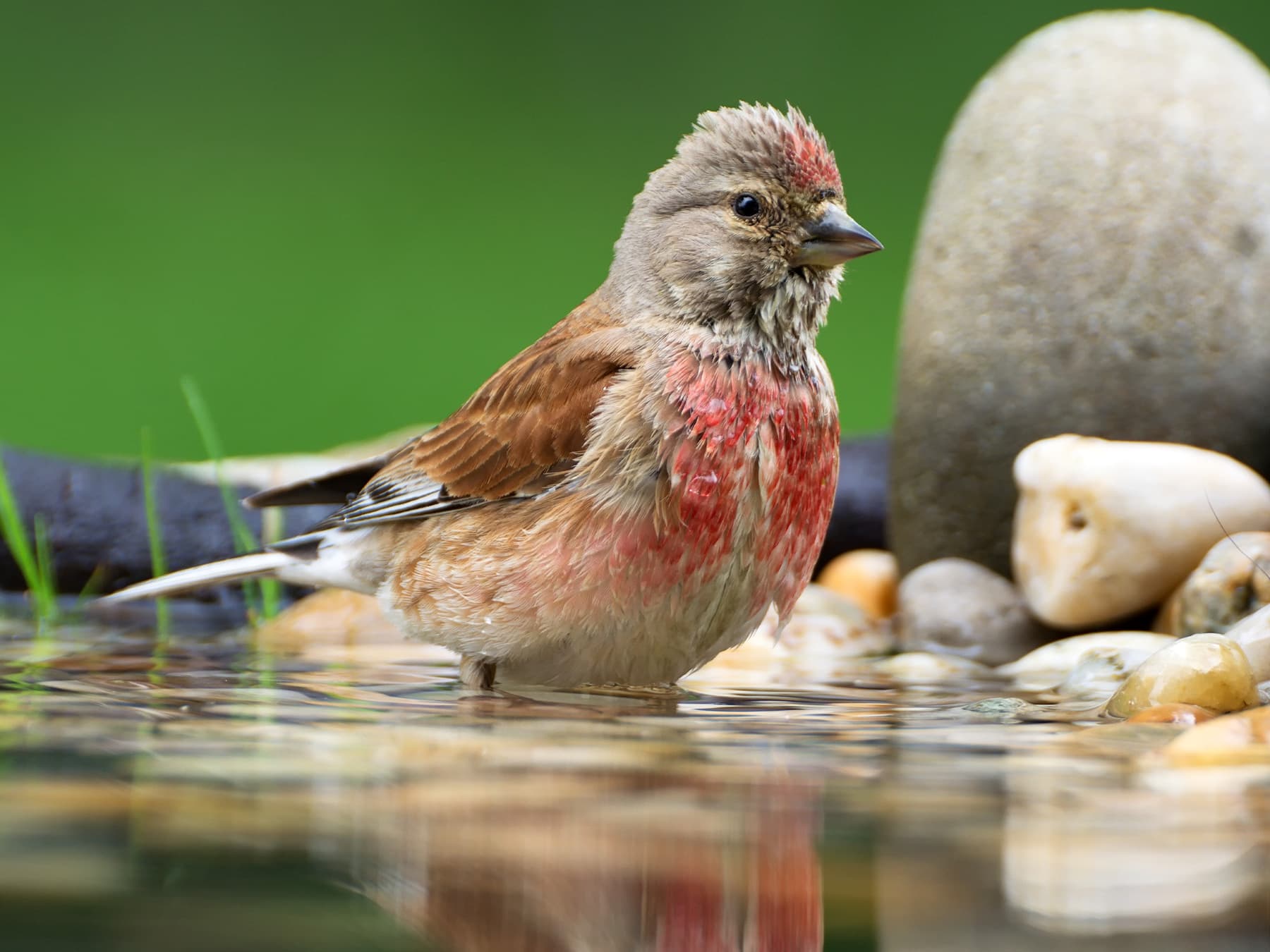
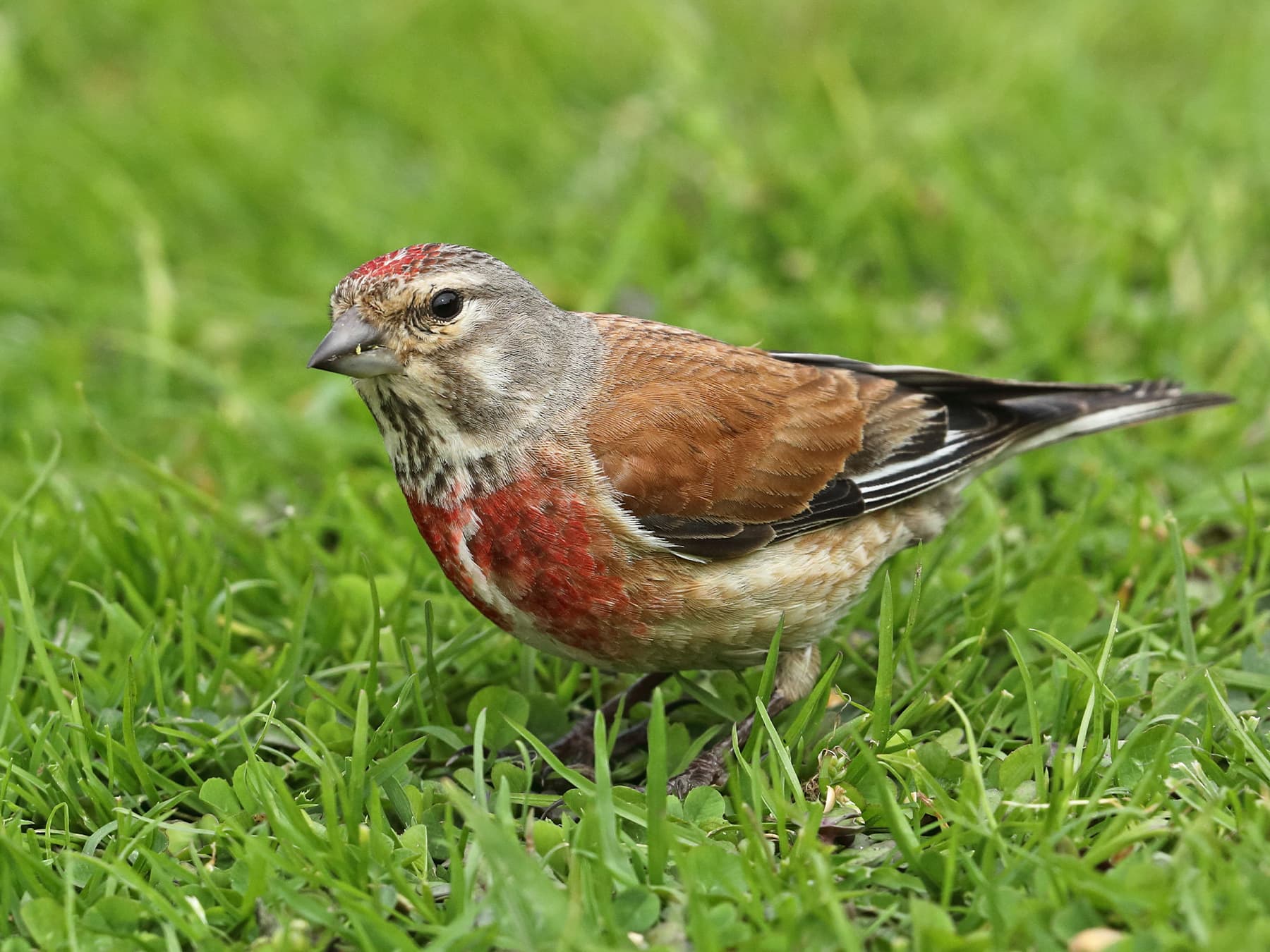
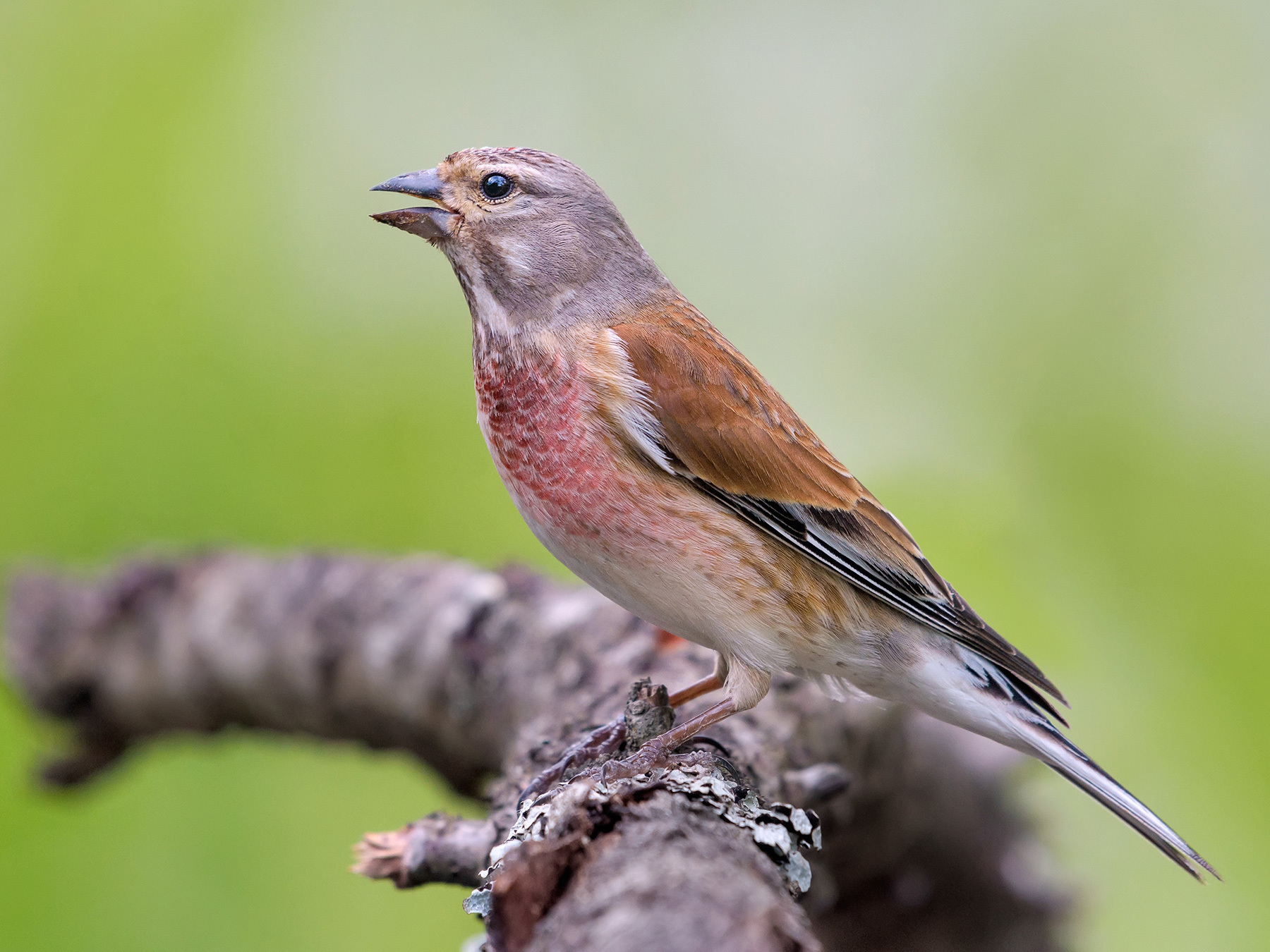
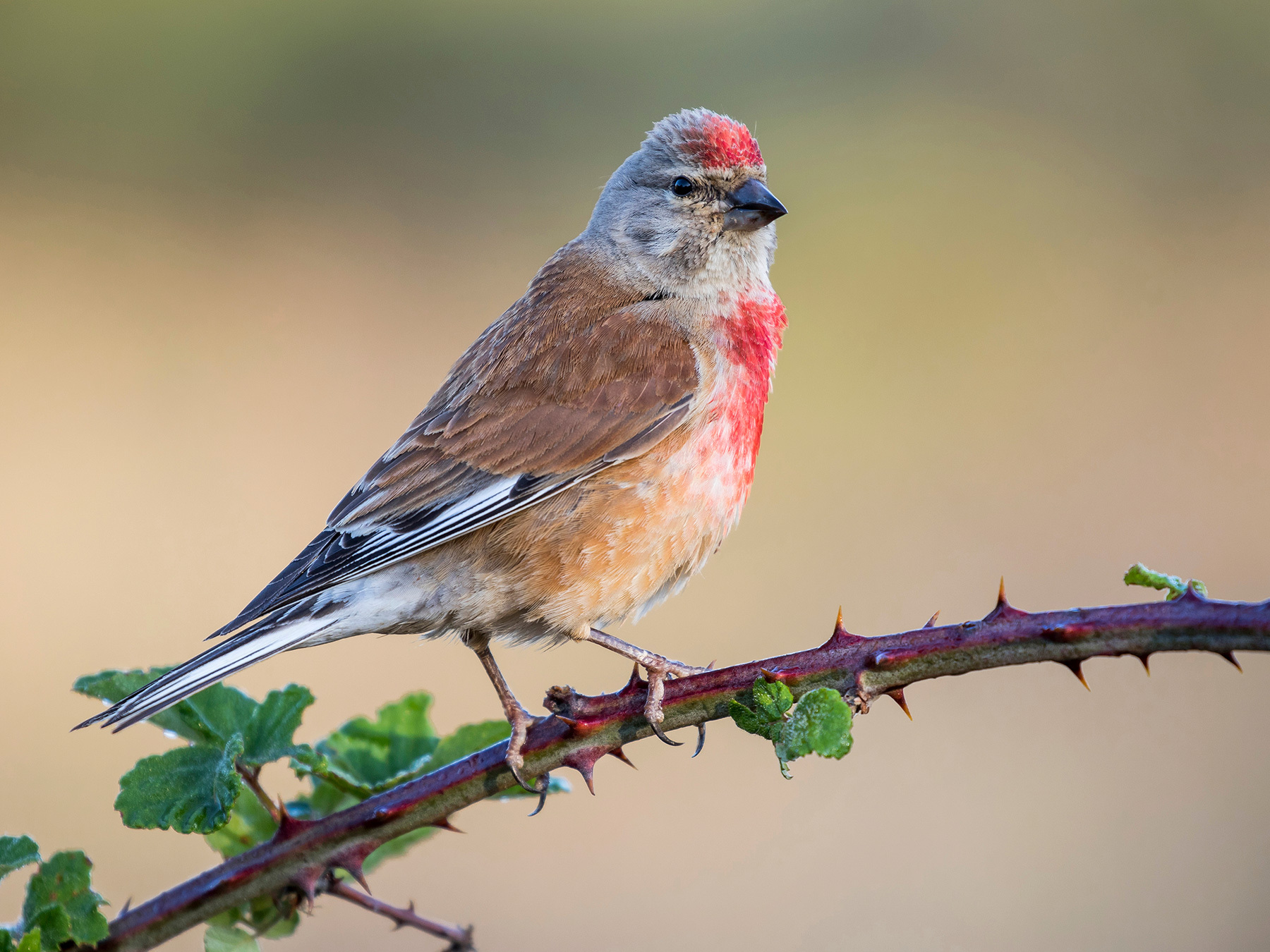
The most notable feature of a linnet is only present in males of the species, making it easy to distinguish between the sexes. Males have a rosy pink forecrown and crimson streaking across their throats and breast. This contrasts with its otherwise rather dull colouring, with a reddish-brown back, dark wings, a grey head, and a pale whitish breast and belly.
Outside of the breeding season, males lose their pinkish colouring, becoming a dull brown, with pale breast feathers. Legs are pinkish, eyes a dark brownish-black, and a horn-grey bill.
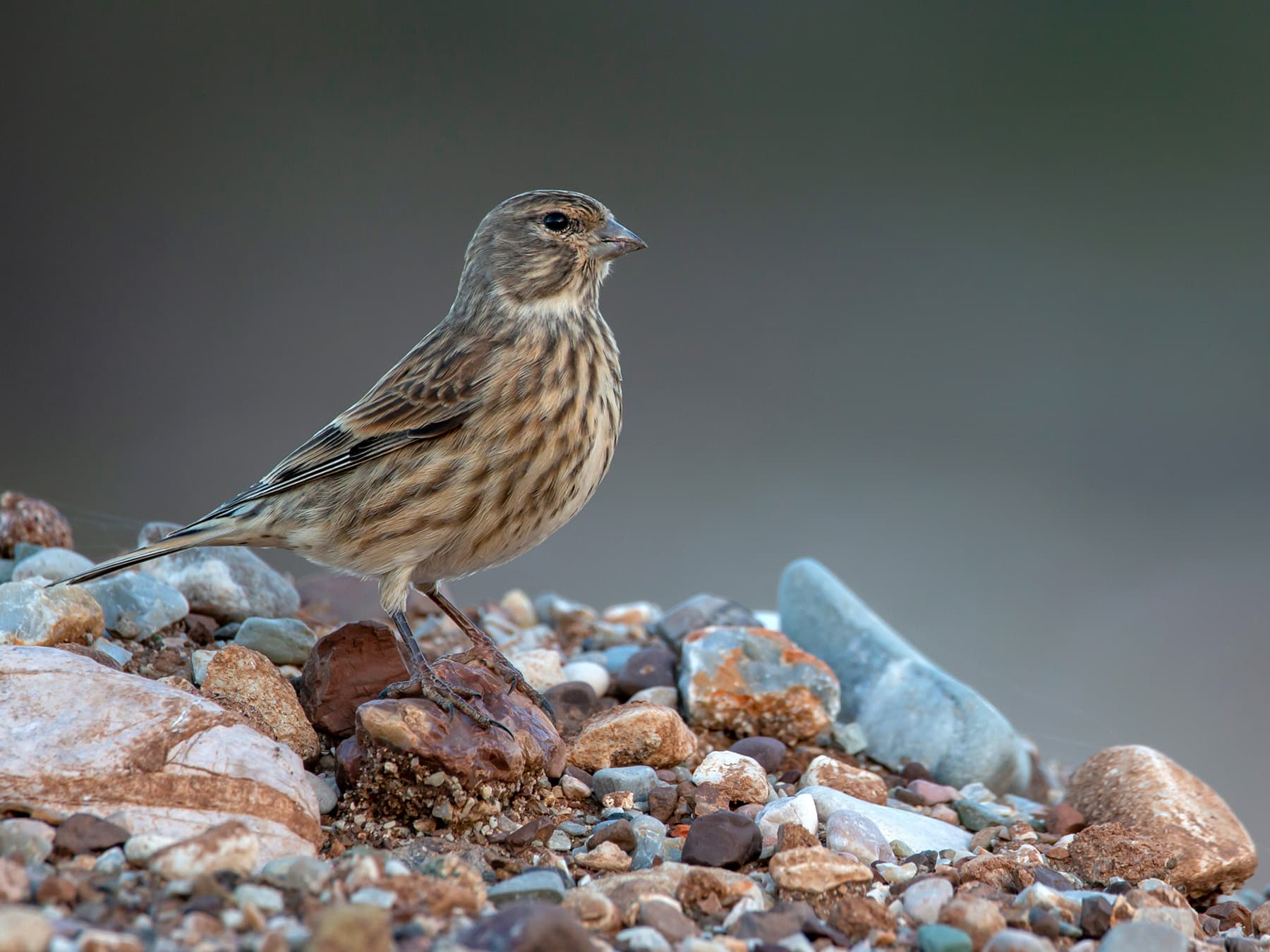
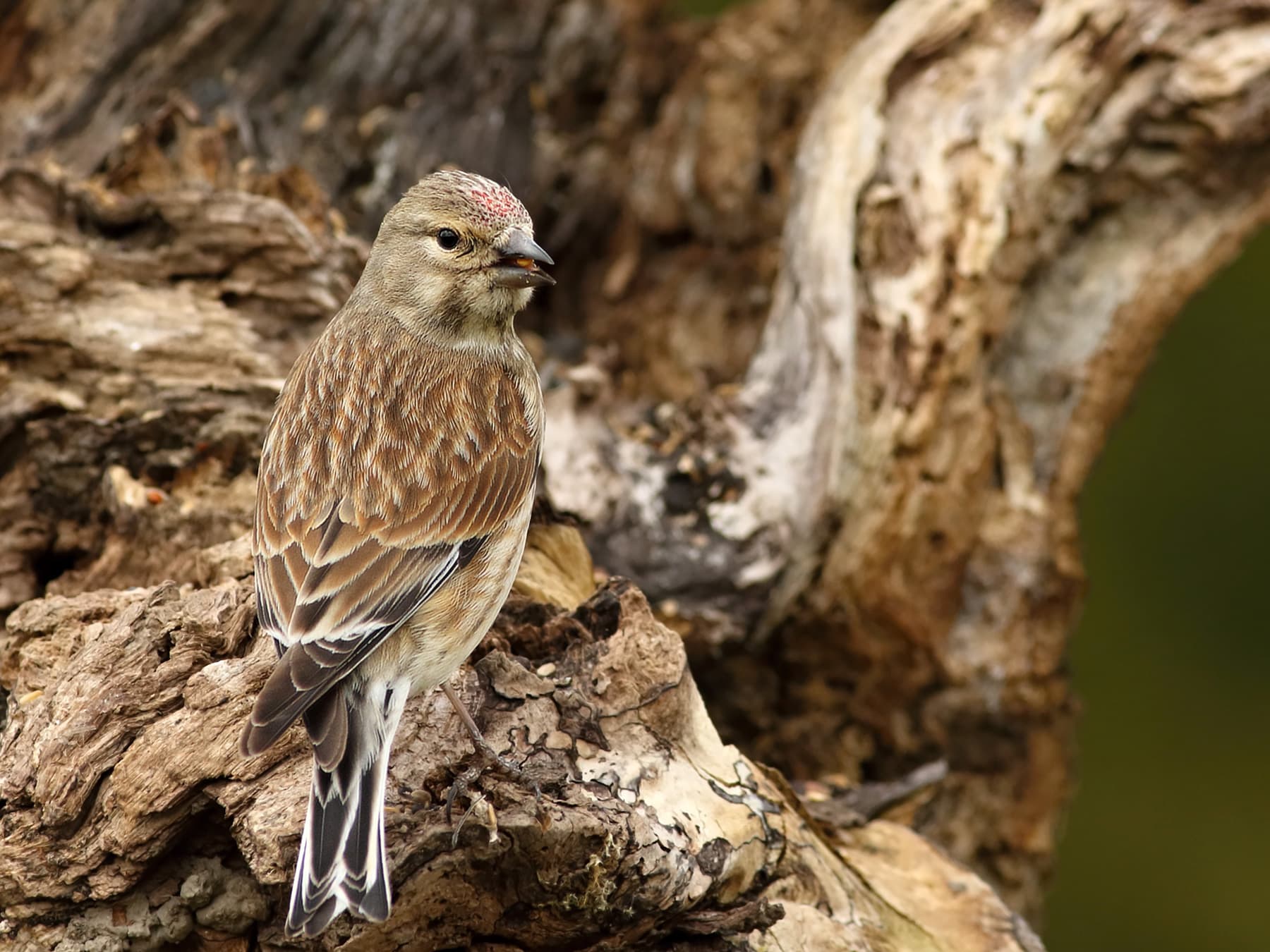
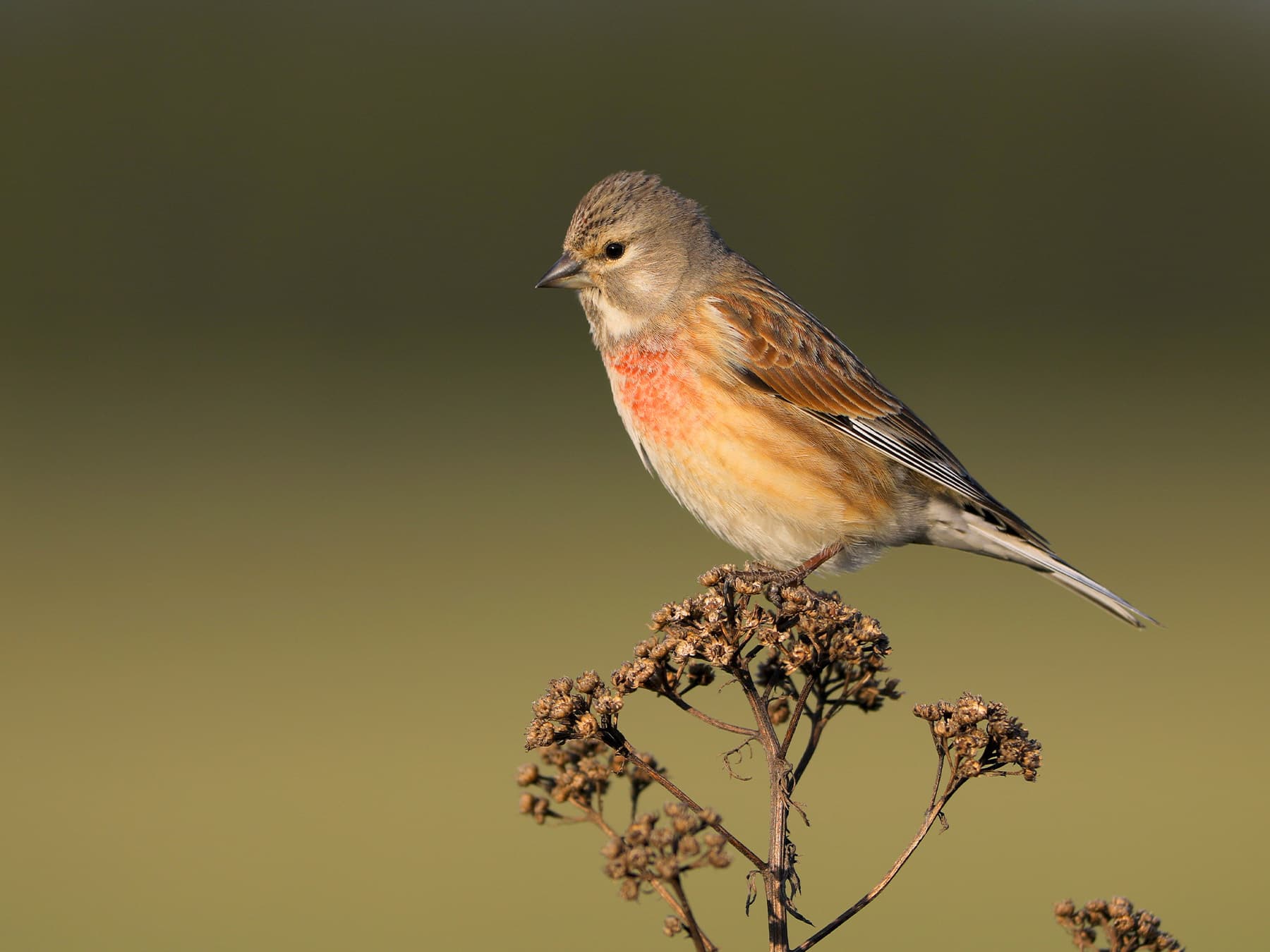
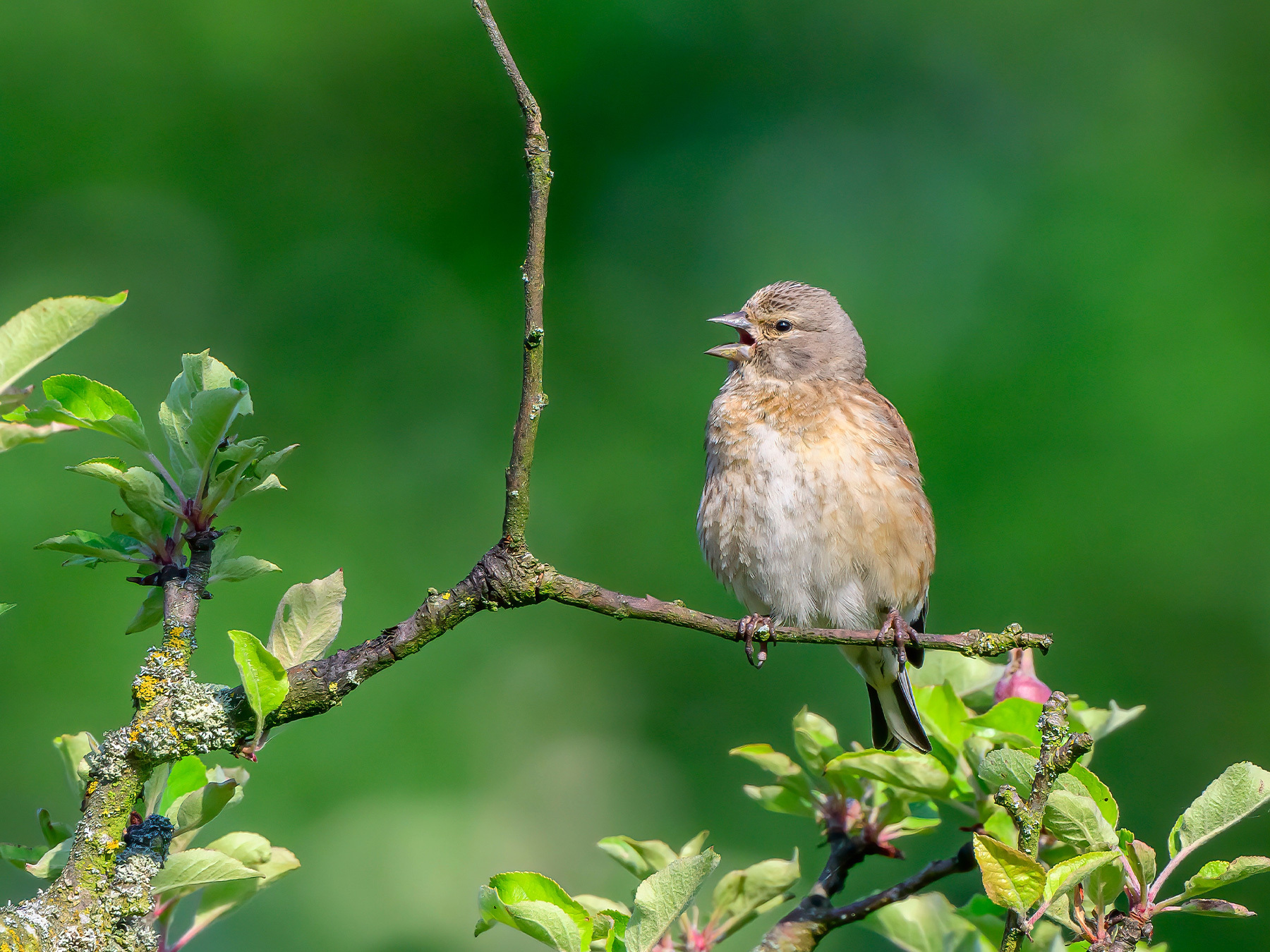
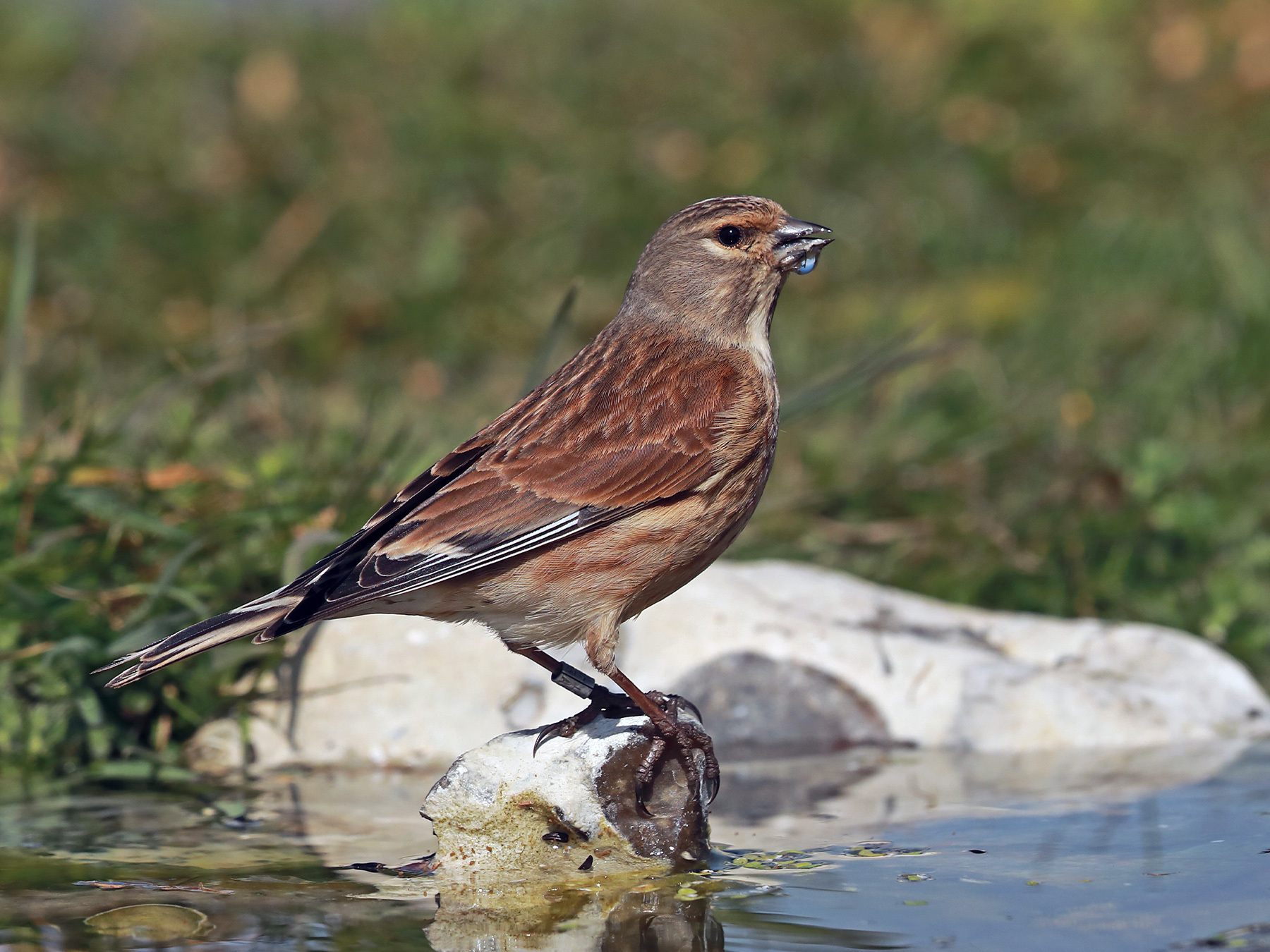
Females lack any pink whatsoever and have greyish-brown upperparts, greyish-buff underparts, and streaky spotted brown speckling on the pale breast. Their faces, also greyish-brown, feature paler markings around the eye.
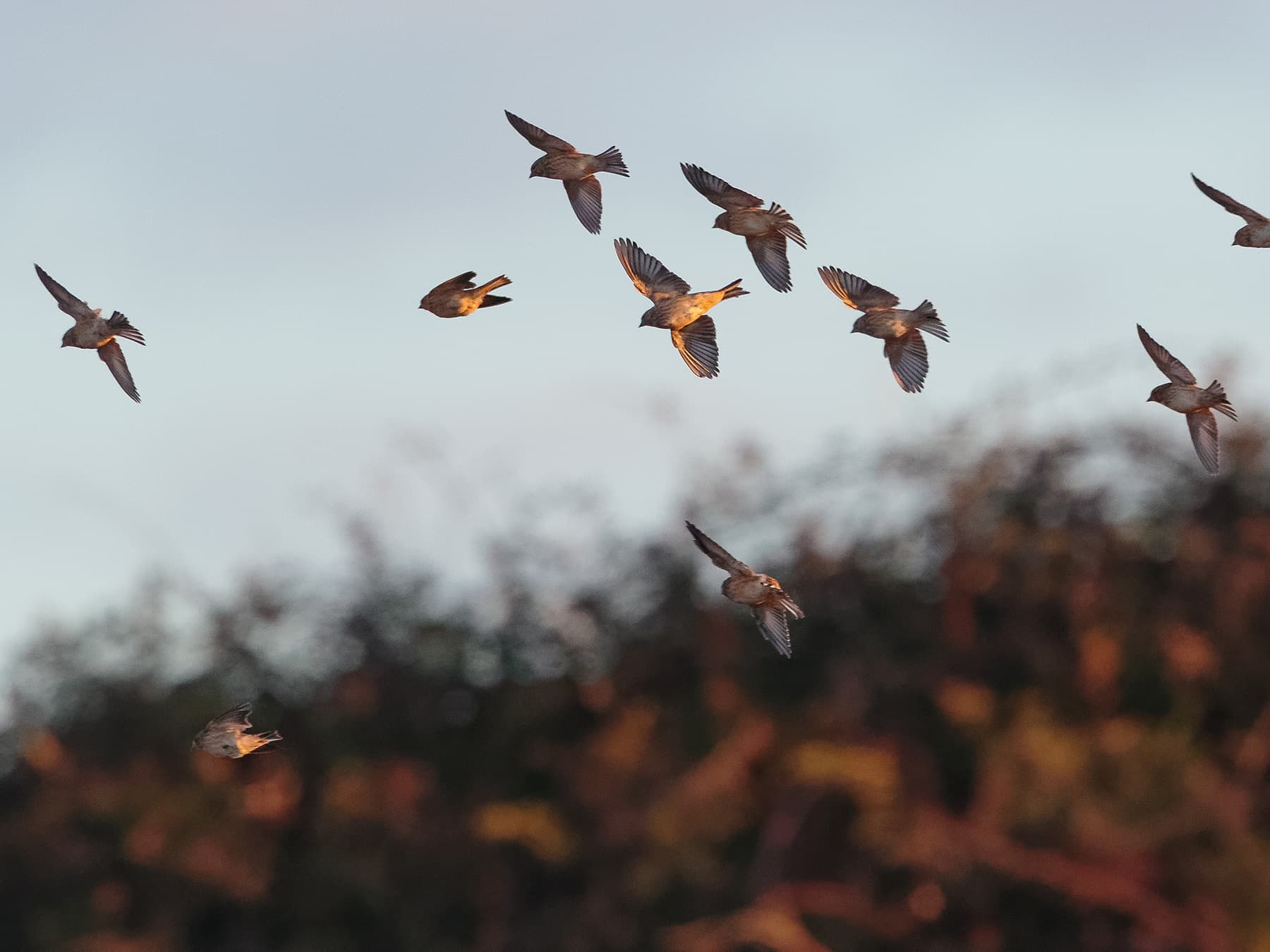
A forked tail and white wing patch are present all year round and visible in flight, which has a distinctive undulating pattern. These markings can be seen in male, female and juvenile linnets.
Juvenile birds are similar to adult females, but more streaked and with an overall duller appearance.
How big are Linnets?
Linnets are one of the smaller, slimmer members of the finch family, smaller than greenfinches and chaffinches, but slightly larger than goldfinches and siskins. Males are usually slightly larger than females in all aspects.
- Length: 13.5 cm (5.3 in)
- Wingspan: 21 cm to 25.5 cm (8.3 in to 10 in)
- Weight: 15 g to 22 g (0.6 oz to 0.8 oz)
Its size
Adults- Length
- 13–14 cm
- Wingspan
- 21–25 cm
- Weight
- 15–20 g
Its song and calls
What sound does a Linnet make?
Male linnets deliver a lilting, twittering song, from songposts often located at the top of a bush or a prominent perch in a tree. Rapid trilling calls can be heard in flight or near the nest site during breeding, which have a distinctive ‘tetter-tett’ sound.
- Song0:00 / 0:25
Recorded in Jura, Switzerland · April 2025
- Call0:00 / 0:26
Recorded in Normandie, France · February 2022
When and where to see it
OctoberIn season
Most recorded in October
- 1. Vale of Glamorgan1.9%
- 2. Pembrokeshire1.7%
- 3. Wexford1.6%
- 4. Denbighshire1.5%
- 5. Wicklow1.5%
Each dot is a county, state or province: the bigger and darker, the larger the bird’s share of that place’s bird records that month. Grey dots: no regular records. The ringed point is the centre of the bird’s records this month; the arrow shows how it moved since last month, and the dashed loop its path through the year. “Arrivals” colours places where it becomes regular this month (orange) or is in its last regular month (grey). GBIF eBird Observation Dataset, 2019–2024. Map data: Natural Earth, US Census Bureau; place centres © OpenStreetMap contributors.
In your area
See when the Linnet is recorded in your county, state or province.
How often the Linnet turns up in the UK and Ireland through the year, from birdwatchers' records.
United Kingdom
Resident · all year · most records in July
Ireland
Resident · all year · most records in July
Show as a table
| Month | United Kingdom | Ireland |
|---|---|---|
| January | 0.42% (regular) | 0.62% (regular) |
| February | 0.42% (regular) | 0.67% (regular) |
| March | 0.61% (regular) | 0.71% (regular) |
| April | 0.99% (regular) | 1.2% (regular) |
| May | 0.96% (regular) | 1.2% (regular) |
| June | 0.97% (regular) | 1.2% (regular) |
| July | 1.1% (regular) | 1.4% (regular) |
| August | 1.0% (regular) | 1.3% (regular) |
| September | 0.90% (regular) | 1.2% (regular) |
| October | 0.87% (regular) | 1.1% (regular) |
| November | 0.58% (regular) | 0.80% (regular) |
| December | 0.42% (regular) | 0.63% (regular) |
Recorded regularly in
Worldwide: recorded regularly in 66 countries
Countries where it was recorded in at least 3 of the 6 years 2019–2024. Linked countries have their own bird list.
Europe (46)
- Åland Islands
- Albania
- Andorra
- Austria
- Belarus
- Belgium
- Bosnia & Herzegovina
- Bulgaria
- Croatia
- Czechia
- Denmark
- Estonia
- Finland
- France
- Germany
- Gibraltar
- Greece
- Guernsey
- Hungary
- Ireland
- Isle of Man
- Italy
- Jersey
- Kosovo
- Latvia
- Liechtenstein
- Lithuania
- Luxembourg
- Malta
- Moldova
- Montenegro
- Netherlands
- North Macedonia
- Norway
- Poland
- Portugal
- Romania
- Russia
- Serbia
- Slovakia
- Slovenia
- Spain
- Sweden
- Switzerland
- Ukraine
- United Kingdom
Asia (17)
- Armenia
- Azerbaijan
- China
- Cyprus
- Georgia
- Iran
- Iraq
- Israel
- Jordan
- Kazakhstan
- Kyrgyzstan
- Lebanon
- Mongolia
- Palestinian Territories
- Tajikistan
- Turkey
- Uzbekistan
Data: EOD – eBird Observation Dataset (Cornell Lab of Ornithology), accessed via GBIF.org, CC BY 4.0. Records from 2019–2024, aggregated and filtered by Birdfact. How these lists are made
What is the habitat of a Linnet?
Linnets have adapted well to living in a diverse range of habitats, including untended common land and rough ground, expanses of heathland, hedgerows on agricultural land, saltmarshes, and in parks and gardens.
Gorse and heather are particularly important for foraging and nesting, and some low trees are also necessary for song posts.
What is the range of a Linnet?
Linnets are found across west, central, and northern Europe, from Scandinavia in the north to Spain in the south. Across the Mediterranean, linnets breed in Morocco, Algeria and Tunisia.
To the east, the range extends across Greece, the Balkan states, and into Turkey, and further north through Poland, the Baltic States, and southern Russia to western Siberia.
In the northern parts of the range, linnets are breeding visitors only, while wintering grounds are present in Egypt, Iran, and parts of Afghanistan and Pakistan.
Where do Linnets live?
Europe’s breeding population of linnets is concentrated mainly in Spain, France and Ukraine. Germany and Russia also have notable populations, while in Finland and the UK, some small recovery to numbers has been recorded in recent times due to linnets adapting their range to include more parks and gardens.
How rare are Linnets?
Linnets are declining across their global range, but are still a very numerous species, with a global population of up to 98 million individuals, of which around 63.7 million are estimated to live in Europe. Sightings in winter are particularly common when they join large flocks with other finches and can be seen foraging on wasteland and scrub patches.
Where can you see Linnets in the UK?
Linnets are present in much of the UK all year round, with more than 560,000 breeding territories in Britain. They are widespread across England and eastern Wales but particularly concentrated in coastal regions from the south-east of England to eastern Scotland.
Migration
Do Linnets migrate?
Linnets are a partially migratory species, with northern populations moving seasonally between breeding and wintering grounds. In much of central, western, and southern Europe, they are sedentary birds, resident all year round in the same territories, and joined in winter by migrants from further north and east into Russia.
Are Linnets native to the UK?
Around 560,000 pairs of linnets breed in the UK each year and remain in the country all year round. To the north of England and in much of Wales, linnets are seen in summer only and move slightly further afield to lower-lying land or undertake short migrations to continental Europe once winter approaches.
Tips for seeing it
- Look for Linnets in open countryside with scattered bushes and hedgerows
- Listen for their distinctive twittering calls and melodious song
- Observe flocking behaviour in autumn and winter
- In the UK, visit coastal areas and farmland edges for better chances of spotting
What it eats
What do Linnets eat?
Linnets are primarily seed-eaters, foraging on the ground and in bushes for arable weeds, including thistle, dock, knotgrass, hawthorn, birch, dandelion and mayweed. When breeding, their diet also contains some invertebrates, including larvae and small snails. Fruit and buds are also eaten.
What do Linnet chicks eat?
Unlike other finches that feed their young on insects, linnets raise their chicks exclusively on seeds. Small weed seeds are regurgitated directly into the bills of nestlings, particularly wildflower seeds and dandelion spores.
Nesting and breeding
Where do Linnets nest?
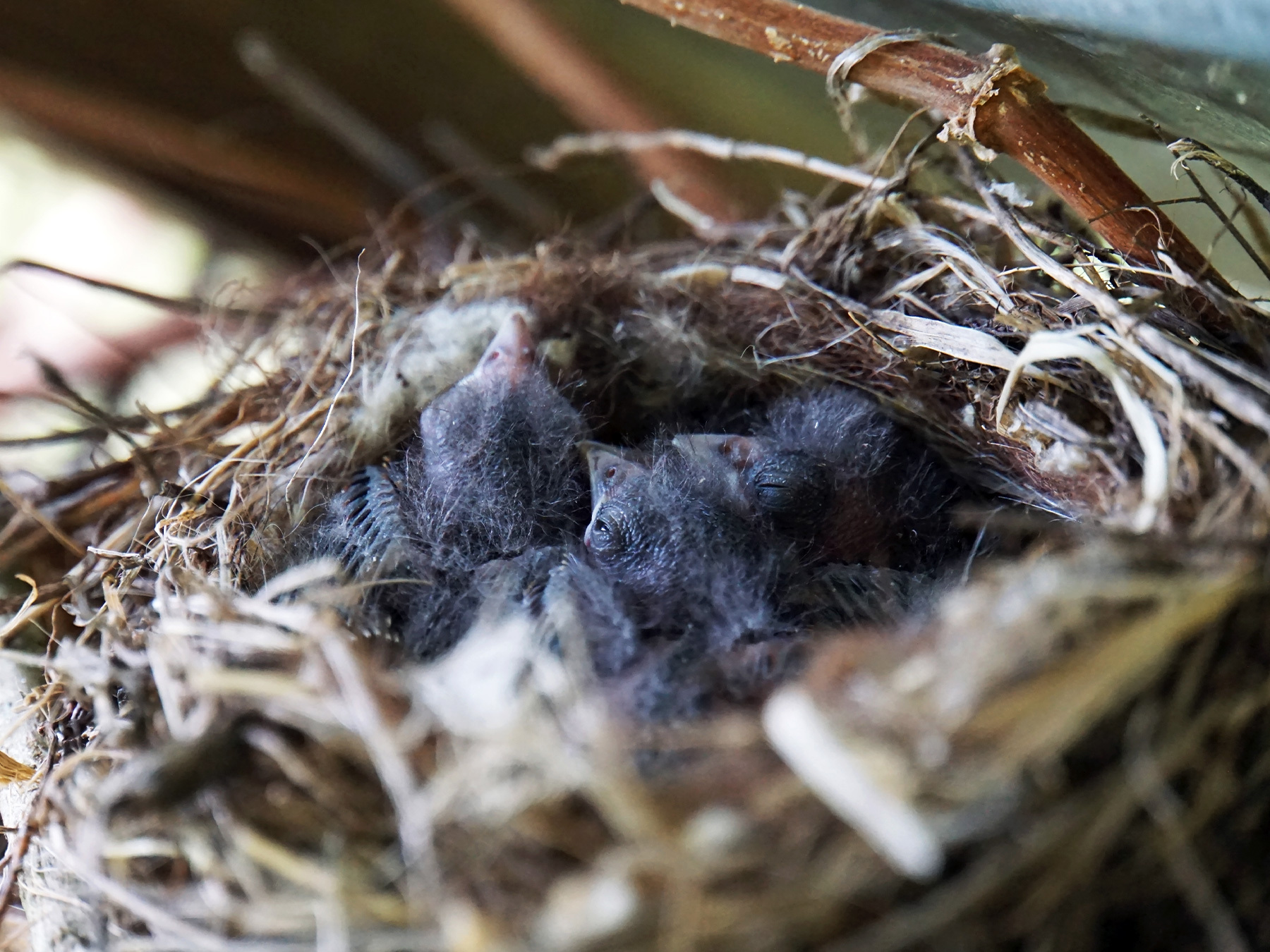
Nest sites are chosen deep into thorny vegetation, such as blackthorn, gorse, bramble, or rose bushes, and mostly lower than 2 m off the ground. Occasionally nests are built in hedges or young conifers or at ground level, concealed by shrubbery. Female linnets construct cup-shaped nests, using small twigs, moss, and roots, and are lined with animal fur, feathers, and soft plant fibers.
When do Linnets nest?
Linnets have a fairly long breeding season, lasting from mid-April to early August, during which pairs raise two or three broods together. Only females incubate, with eggs hatching after 11 to 13 days. During this time, the male brings food to his mate, and both parents feed hatchlings in the nest before they fledge at 13 to 14 days.
What do Linnet eggs look like?
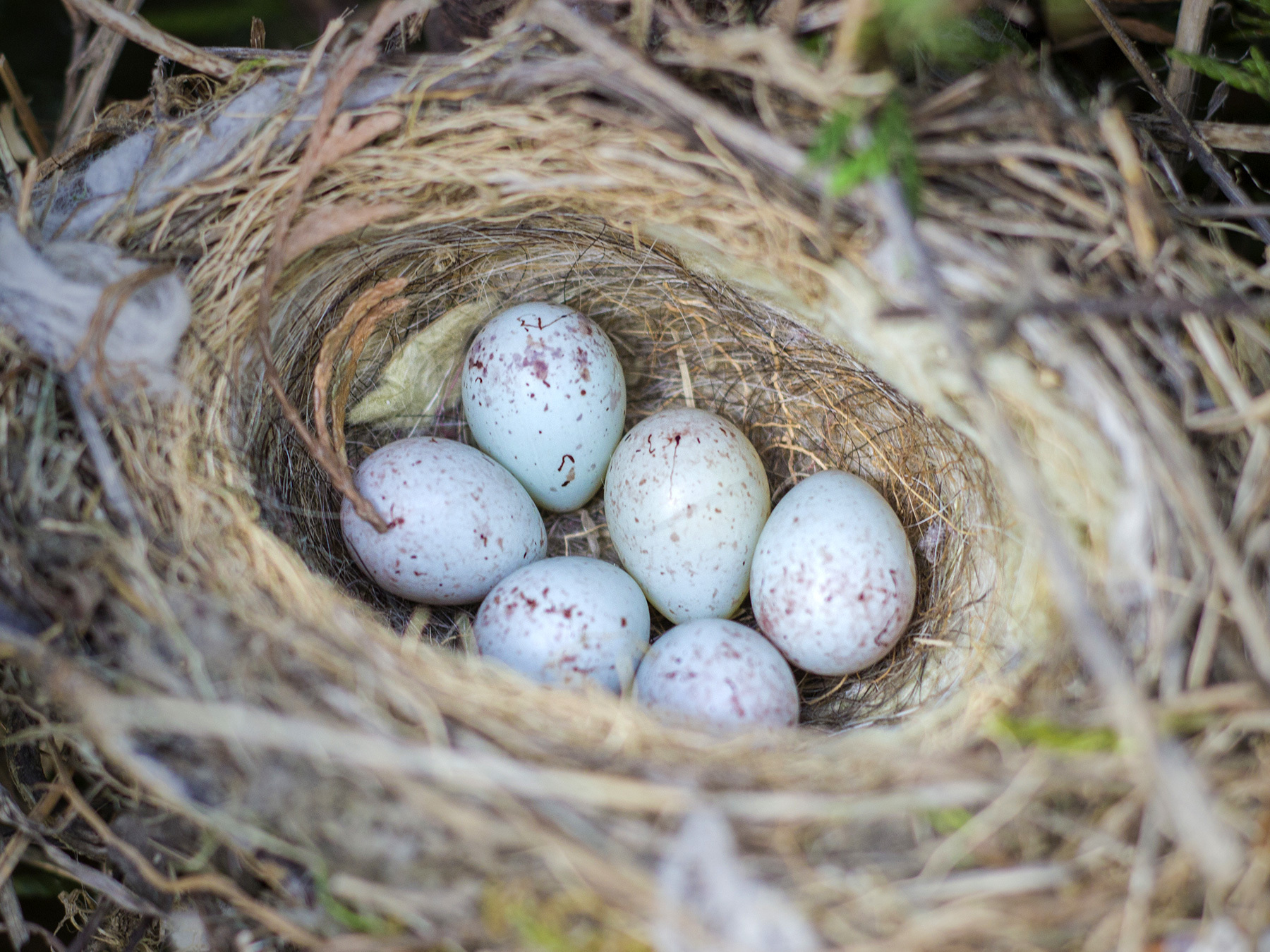
Linnet eggs are pale blue, streaked with purple or brown markings. Eggs are smooth, measuring between 18 mm by 13 mm (0.7 in by 0.5 in). A typical clutch contains four or five eggs.
Do Linnets mate for life?
Linnets are a seasonally monogamous species, forming strong bonds with a mate and raising two or three broods together in a breeding season. After breeding is complete, pairs separate and new mates are chosen the following spring.
Behaviour
Are Linnets aggressive?
Male linnets are especially territorial during the breeding season and will defend the nest and surrounding area. Once their young have gained independence, linnets become more sociable and form large mixed-species flocks with other finches, particularly siskins.
Lifespan and predators
How long do Linnets live?
On average, linnets have a fairly short life expectancy, with 2 years being typical. Older individuals have been identified through ringing schemes, including one that reached 8 years and 3 months. Breeding is possible once they reach maturity, at one year.
What are the predators of Linnets?
Sparrowhawks and red-backed shrikes are among the predators of linnets and their young. Eggs and nestlings may be targeted by crows, foxes, weasels, rats, cats, and martens.
Are Linnets protected?
Linnets are registered as Schedule I birds under the Wildlife and Countryside Act, 1981, which offers protection to their young, eggs, and nest sites against being disturbed or destroyed. This legislation works alongside the standard protection the Act offers to wild birds in the UK against being killed, injured, or taken into captivity.
Are Linnets endangered?
Declines in linnet populations have been recorded in every country they live in, and in the UK, between 1970 and 2014, the linnet population fell by 57 percent. This worrying decrease led to the species being designated with Red status on the British Birds of Conservation Concern list. Despite moderate declines in numbers across Europe, linnets are classified as a species of least concern.
Factors contributing to the fall include intensification of agriculture and removal of hedgerow nesting habitats and use of herbicides to remove vital weeds from foraging grounds.
Conservation
While listed as Least Concern globally, Linnet populations have declined in parts of Europe, including the UK. This decline is largely attributed to changes in farming practices reducing seed availability.
Conservation efforts focus on maintaining diverse habitats and promoting wildlife-friendly farming techniques.
Similar birds
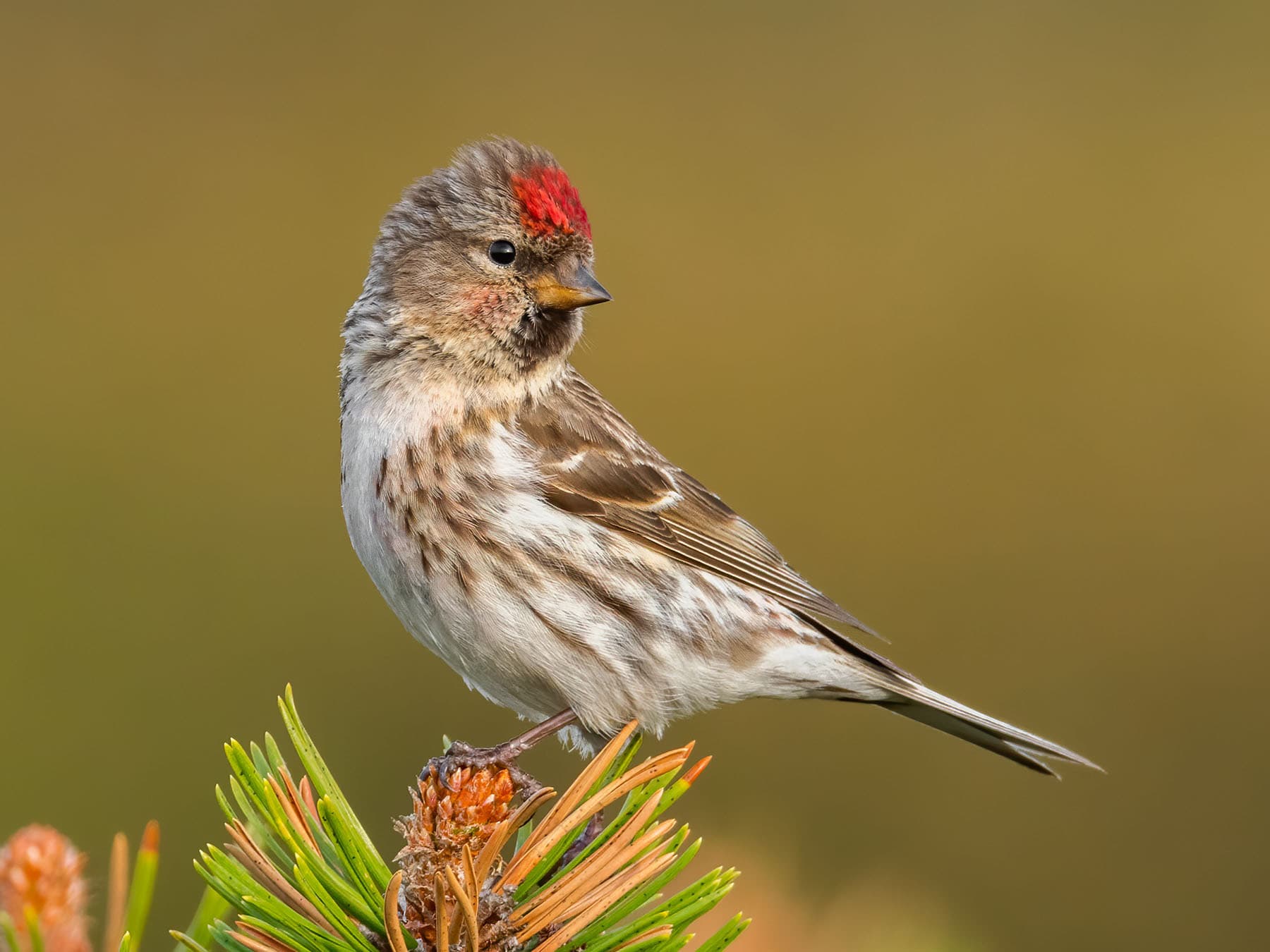
Often mistaken for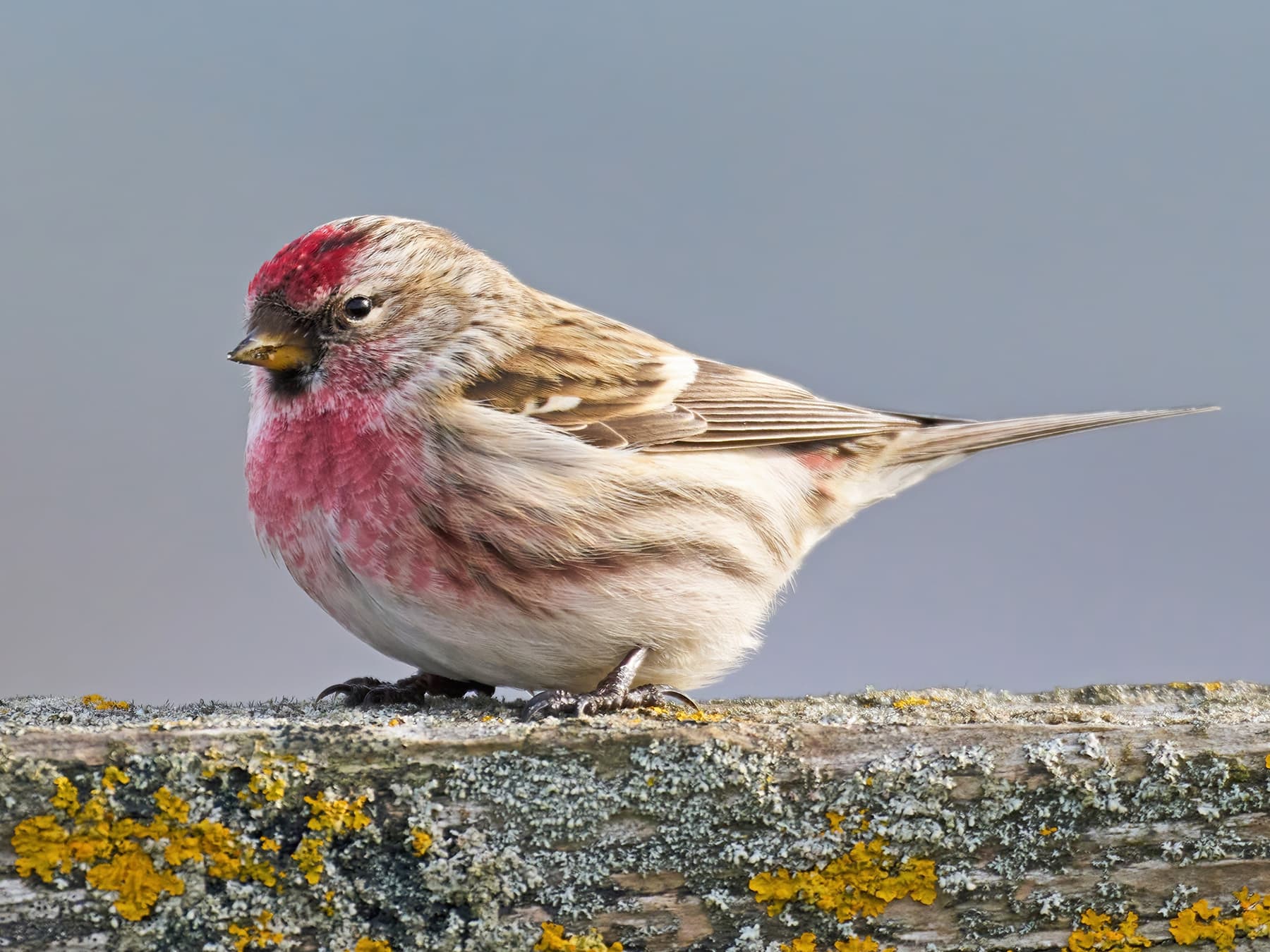
More photos
7 photos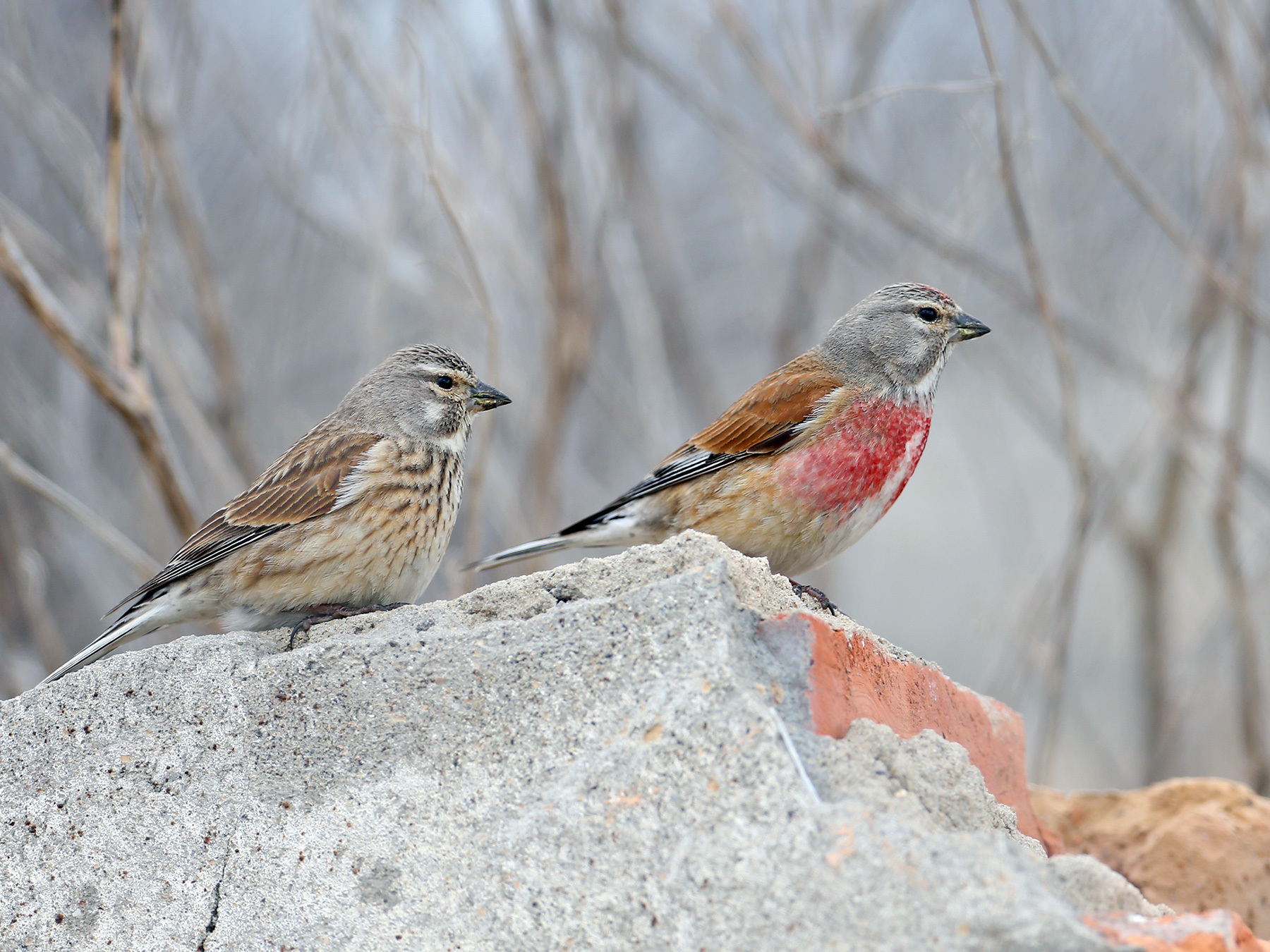
Linnet guides
1 guidesQuick facts
- Length
- 13–14 cm
- Wingspan
- 21–25 cm
- Weight
- 15–20 g
- Lifespan
- 2–3 years
- Family
- Finches
- Migration
- Partial migrant
- Global status (IUCN)
- Least Concern
- World population
- 54,000,000 - 98,000,000 mature individuals
- Population trend
- Decreasing
- Also called
- Common Linnet, Eurasian Linnet
- Scientific name
- Linaria cannabina
Sources
3- 1BirdLife International. 2018. Linaria cannabina. The IUCN Red List of Threatened Species 2018: e.T22720441A132139778. Source (opens in a new tab)
- 2EBCC (2015)
- 3BirdLife International. 2018. Linaria cannabina. The IUCN Red List of Threatened Species 2018: e.T22720441A132139778. Source (opens in a new tab)

Checked by
Nathan Cope, founder and editor
Nathan founded Birdfact and leads its writers and contributors in the UK, the US and Canada. He has watched and studied birds for more than ten years, and checks every article and species guide before it’s published.