


Common Redpoll
Redpoll, Mealy Redpoll · Acanthis flammea
By the Birdfact teamChecked by Nathan Cope
On this page15 sections
How to recognise it
What do Common Redpolls look like?
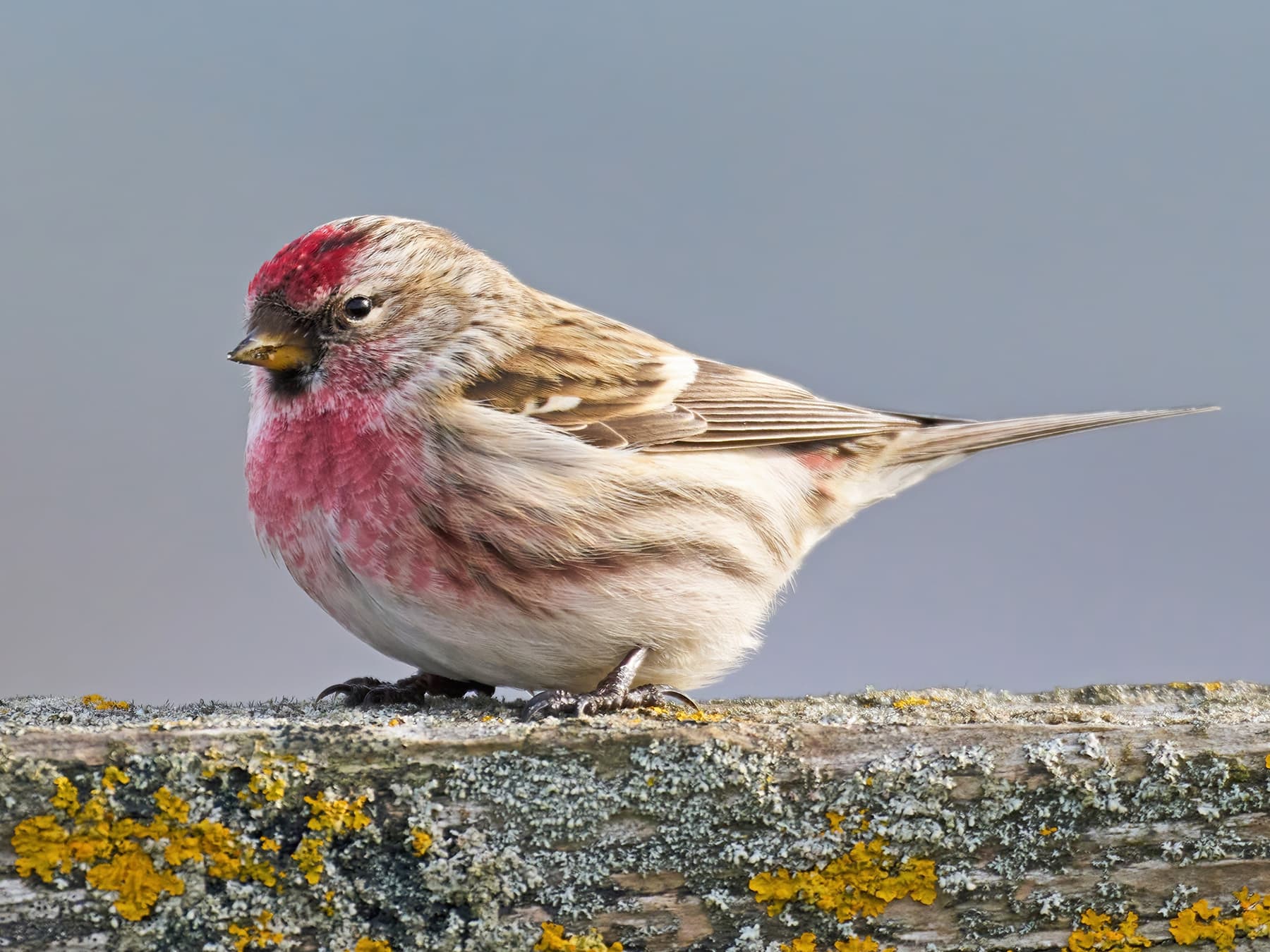
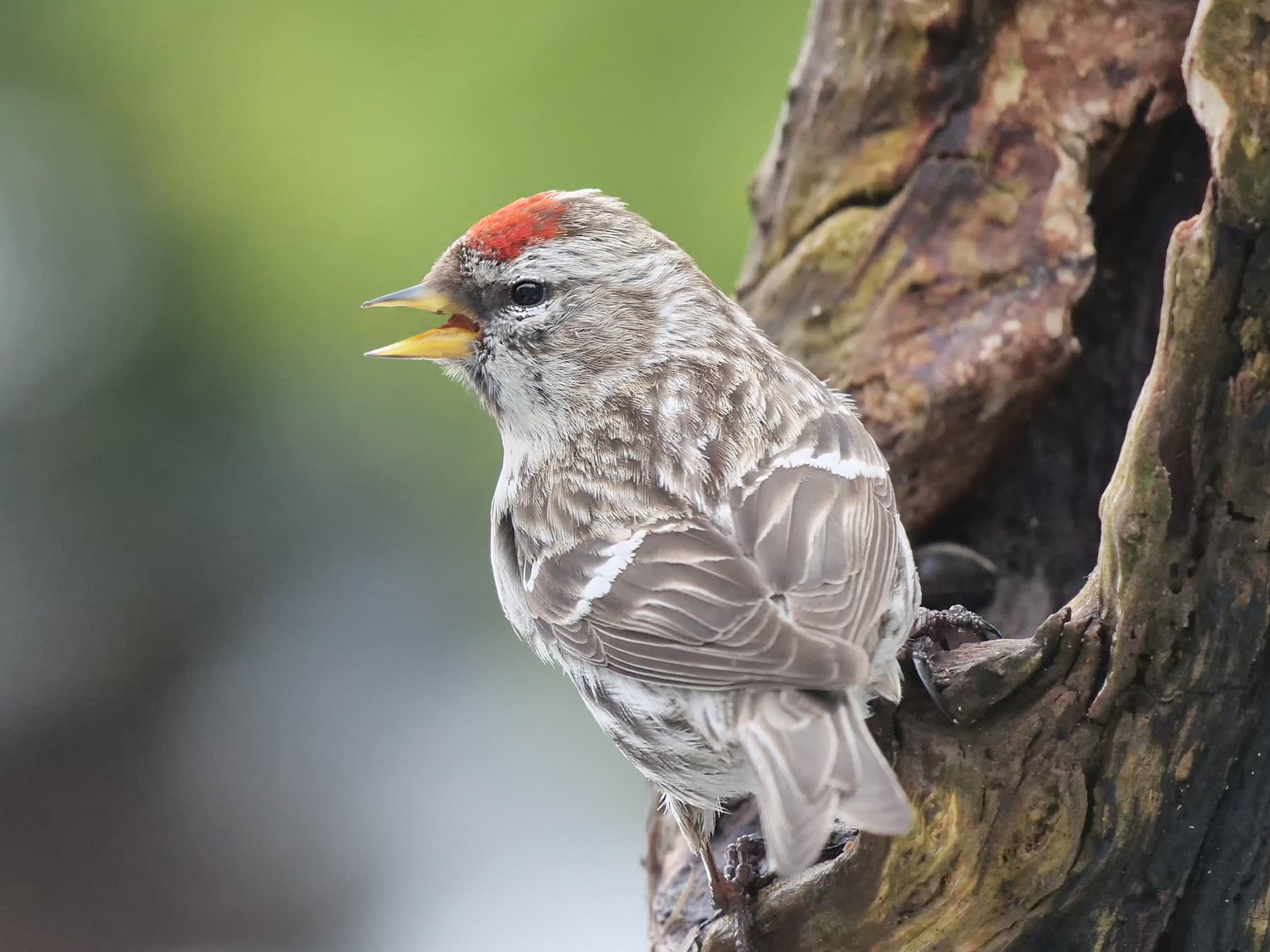
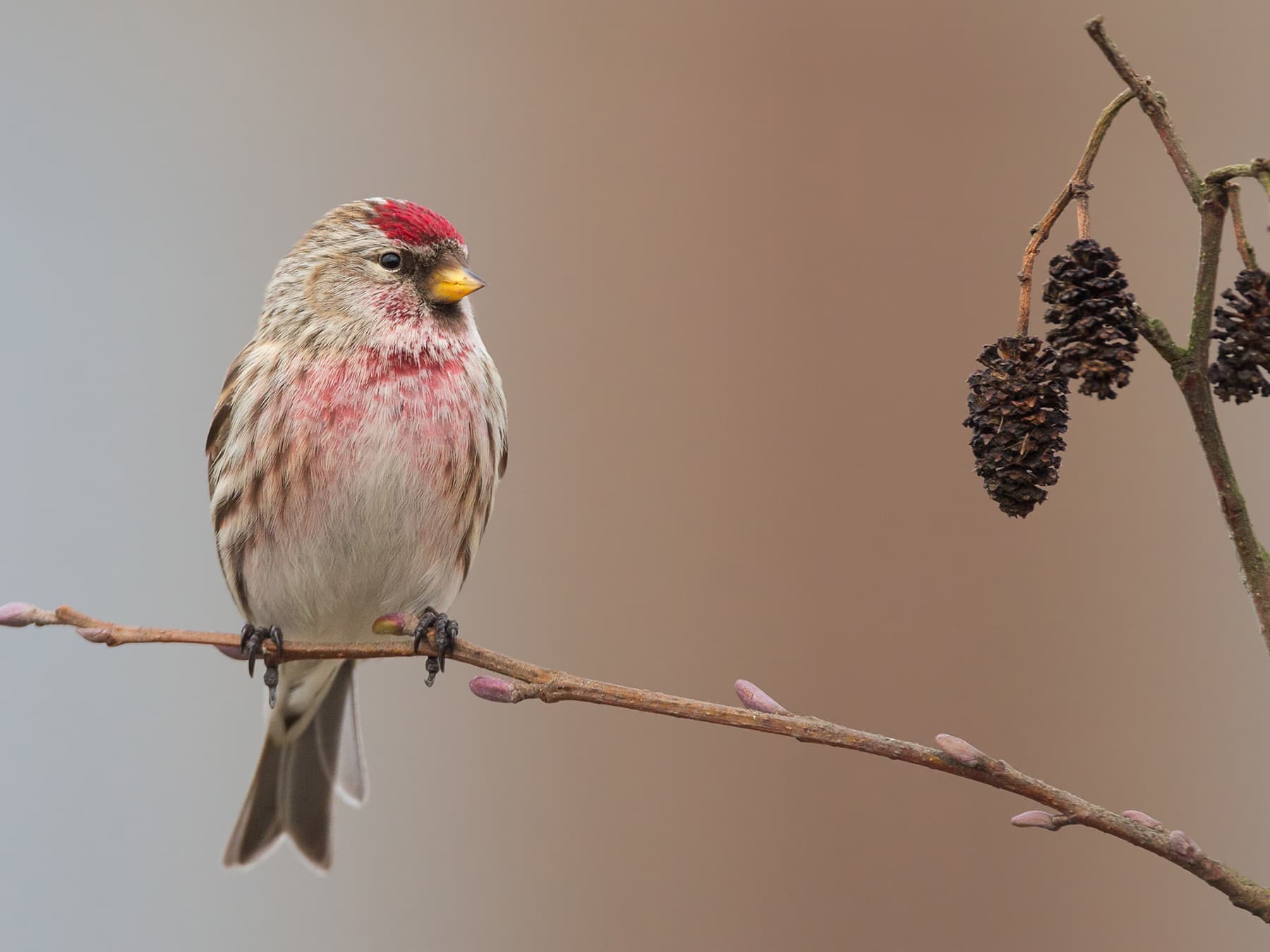
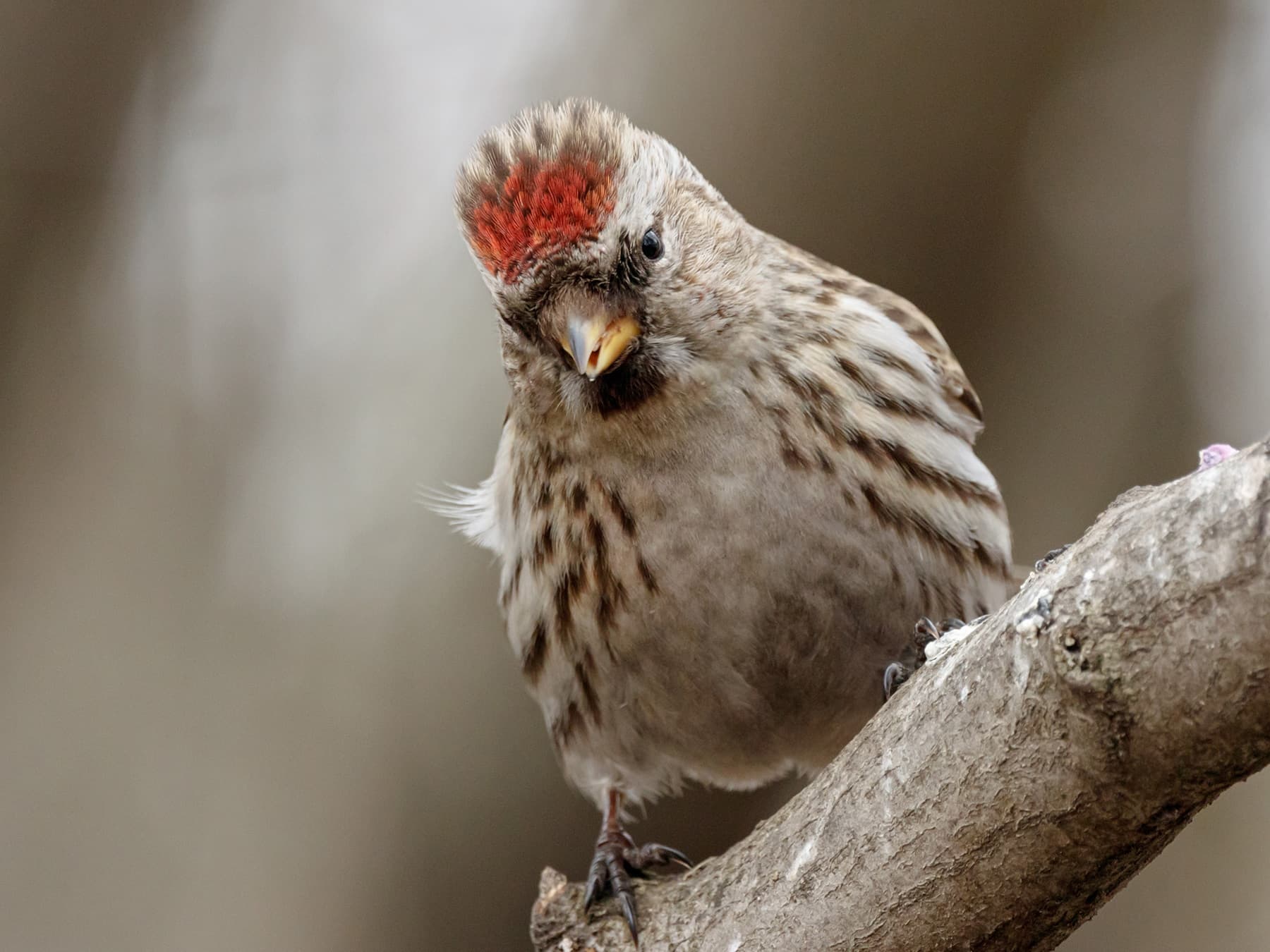
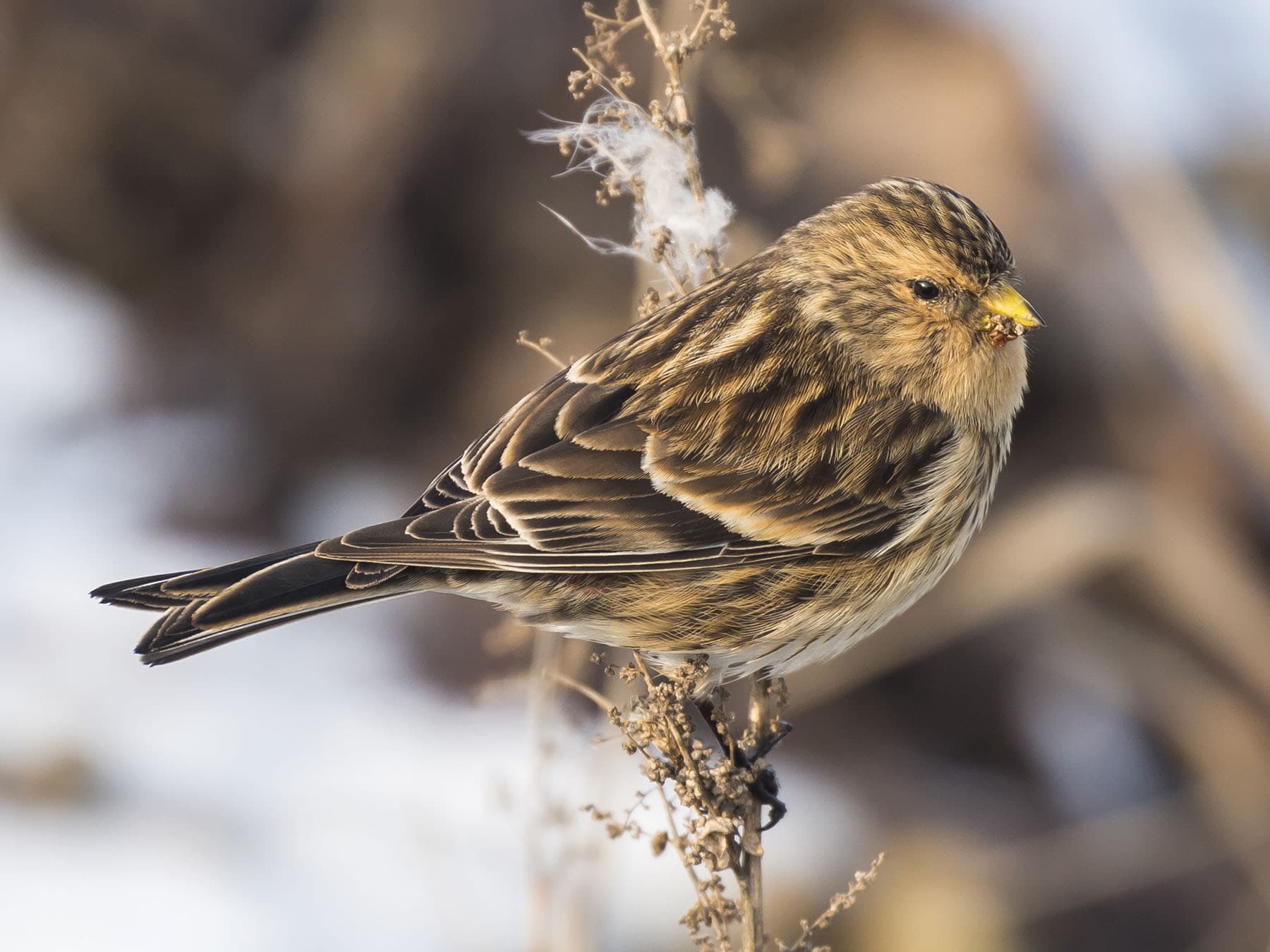
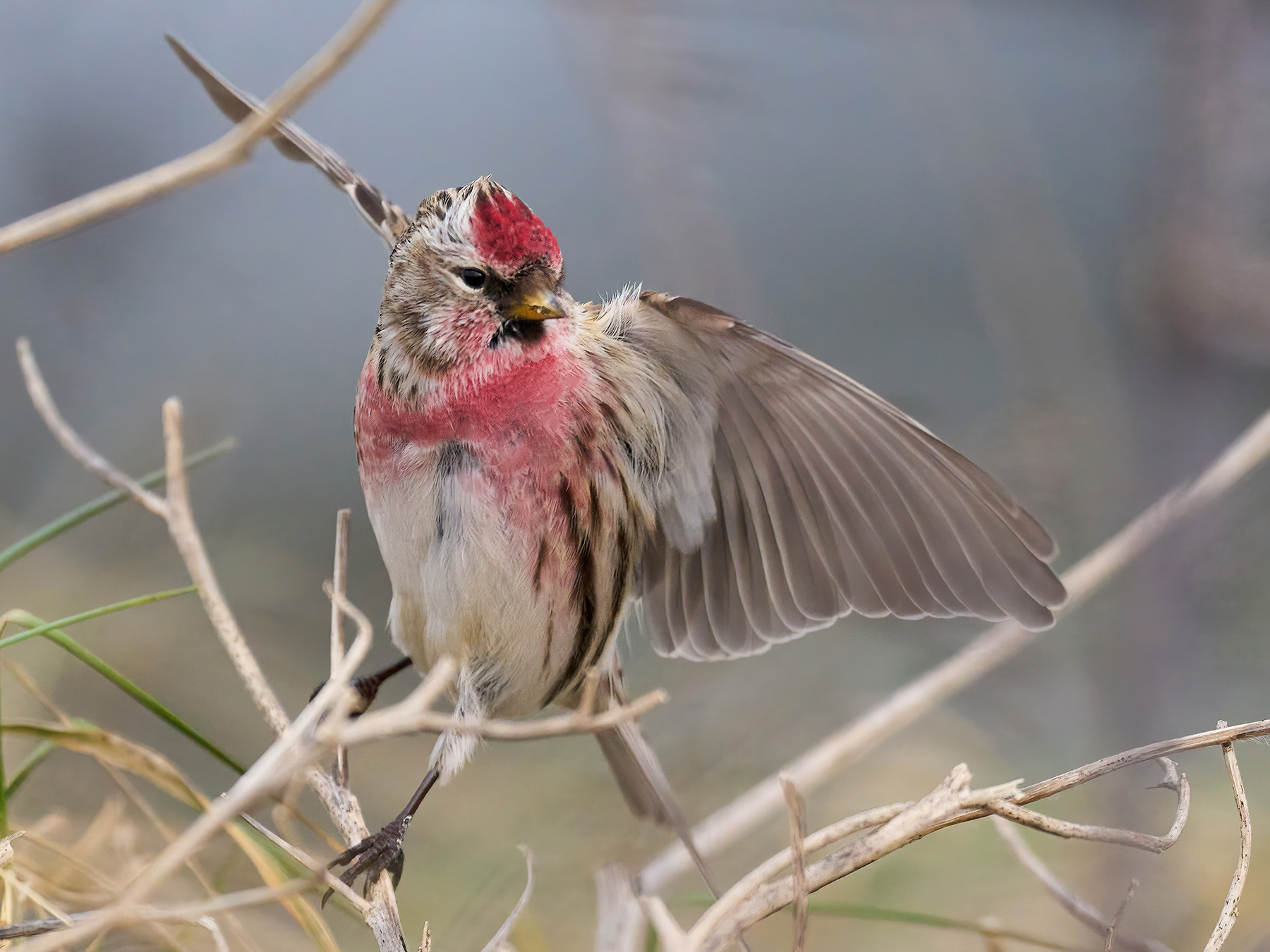
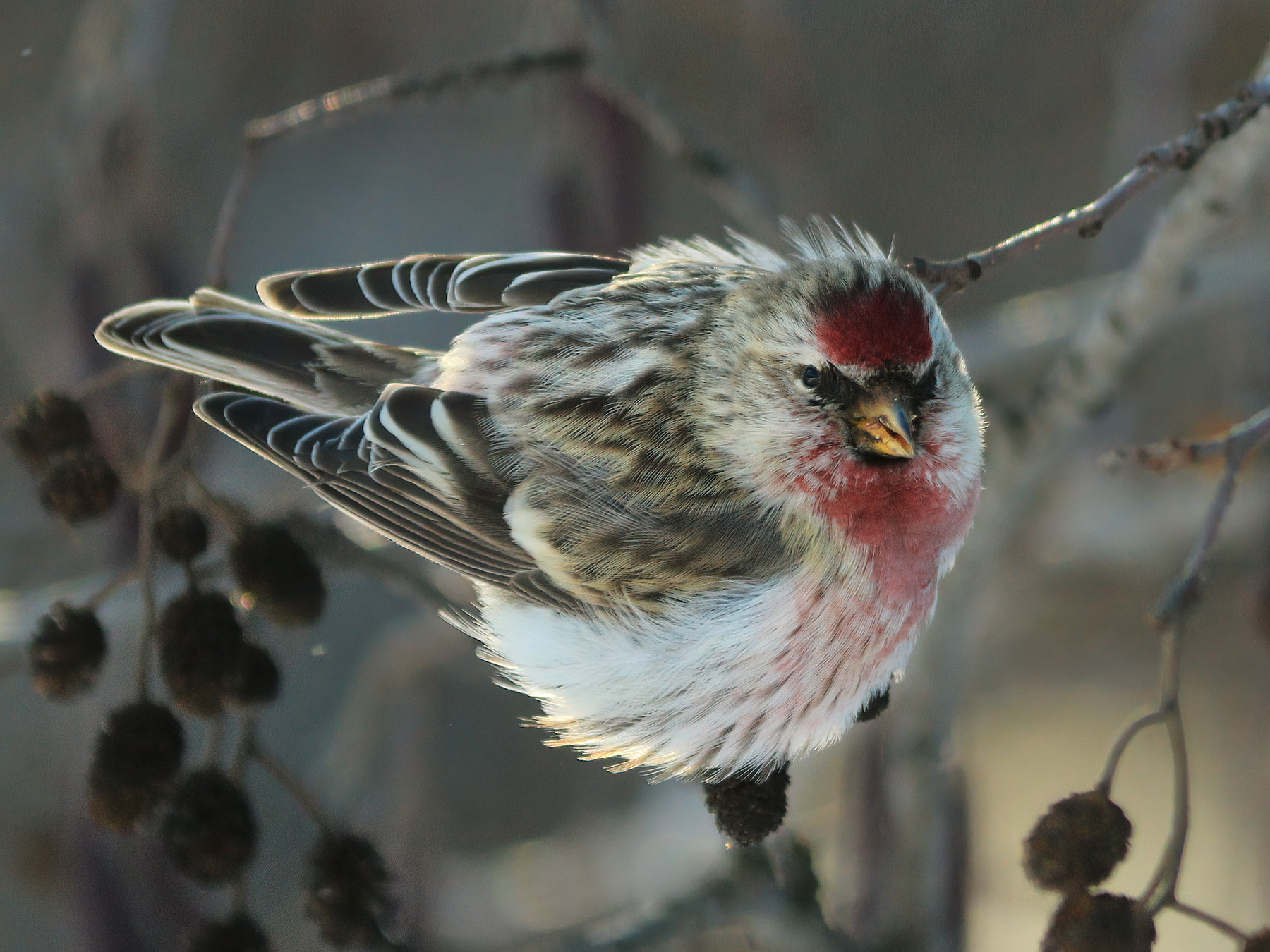
The common redpoll is also sometimes known as the mealy redpoll. It is similar in appearance to the lesser redpoll, but is larger and paler, with streaky brown upperparts. Its underparts are whitish, streaked with black, and two white lines are visible on their folded wings.
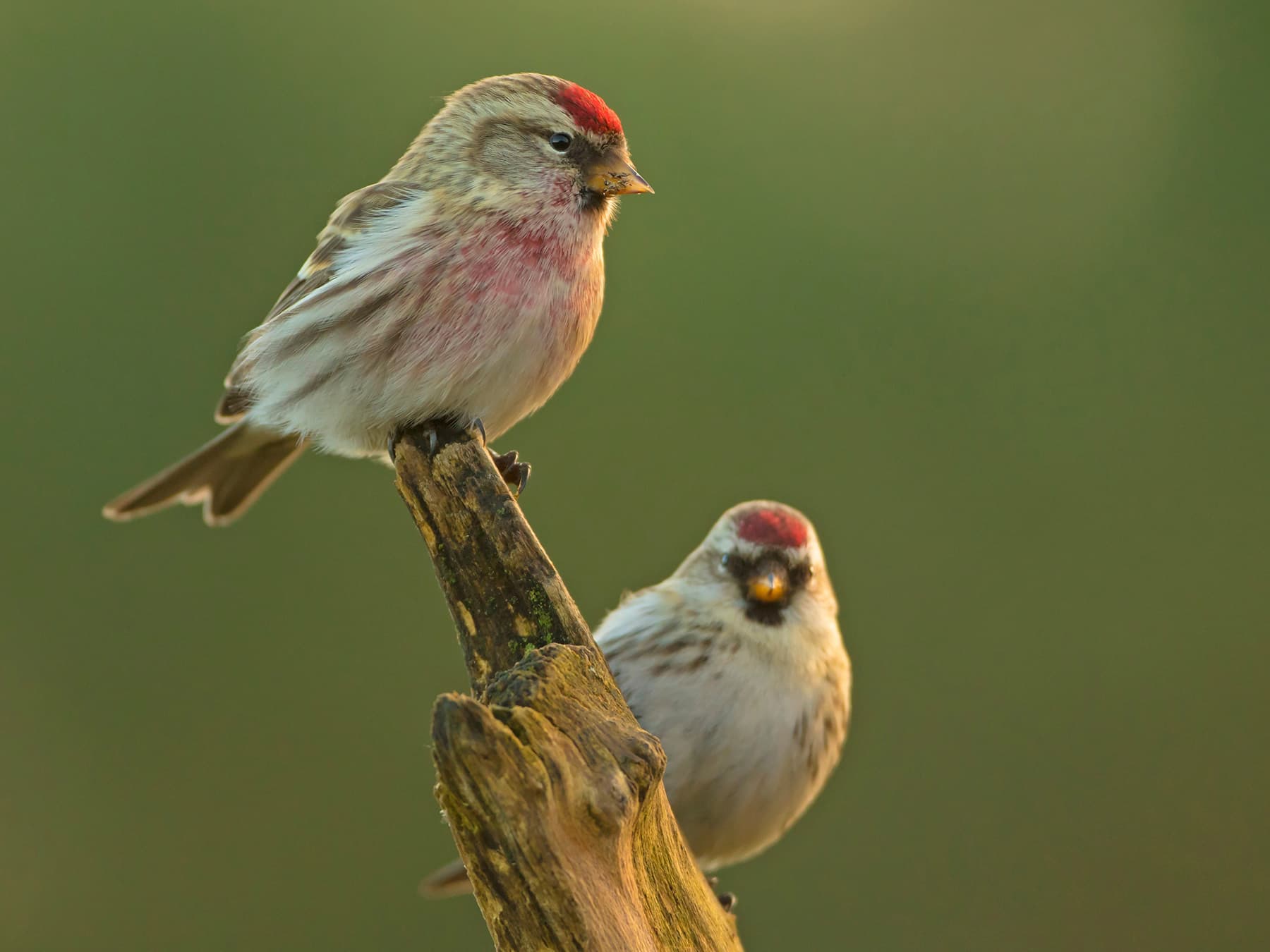
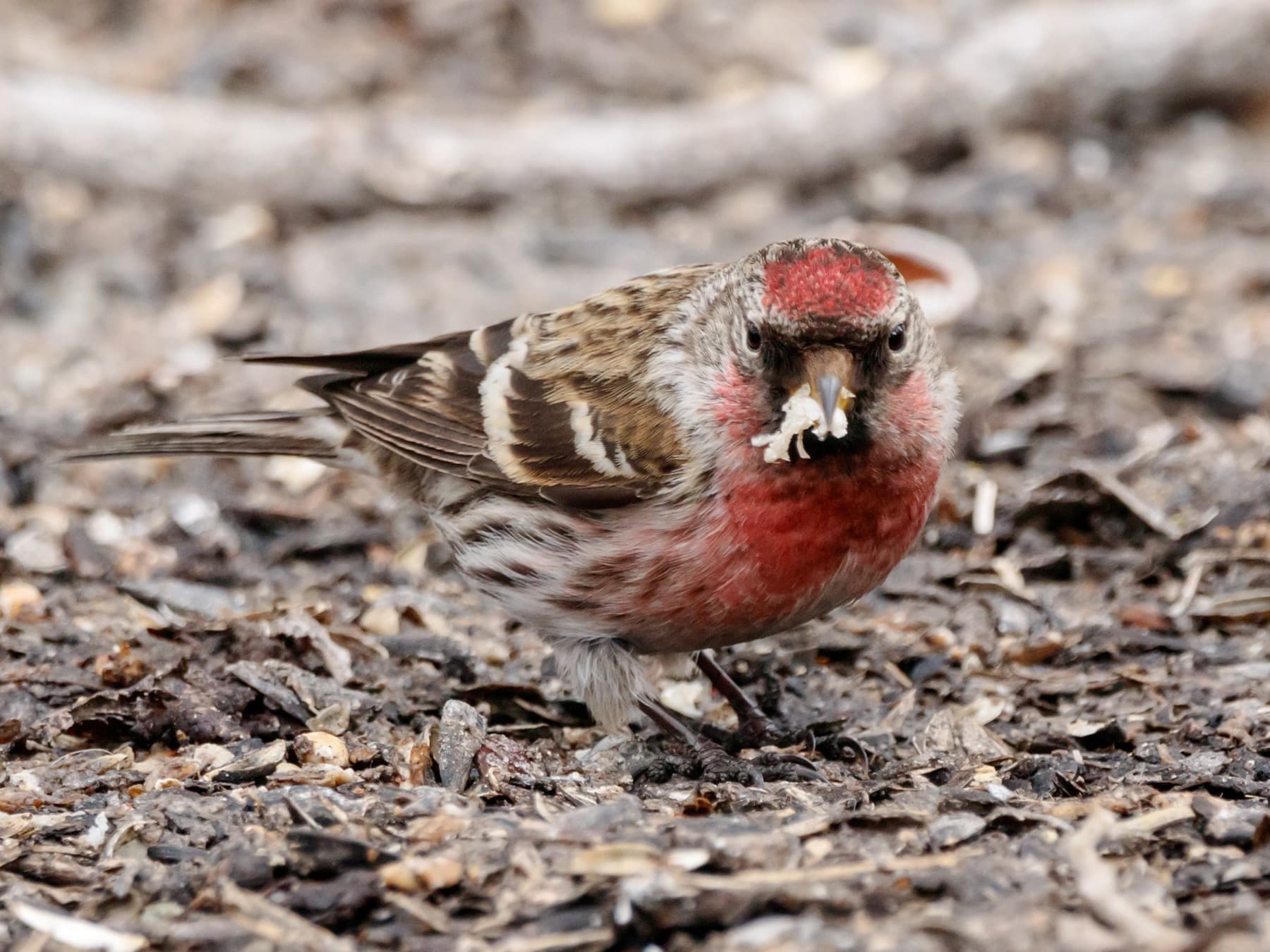
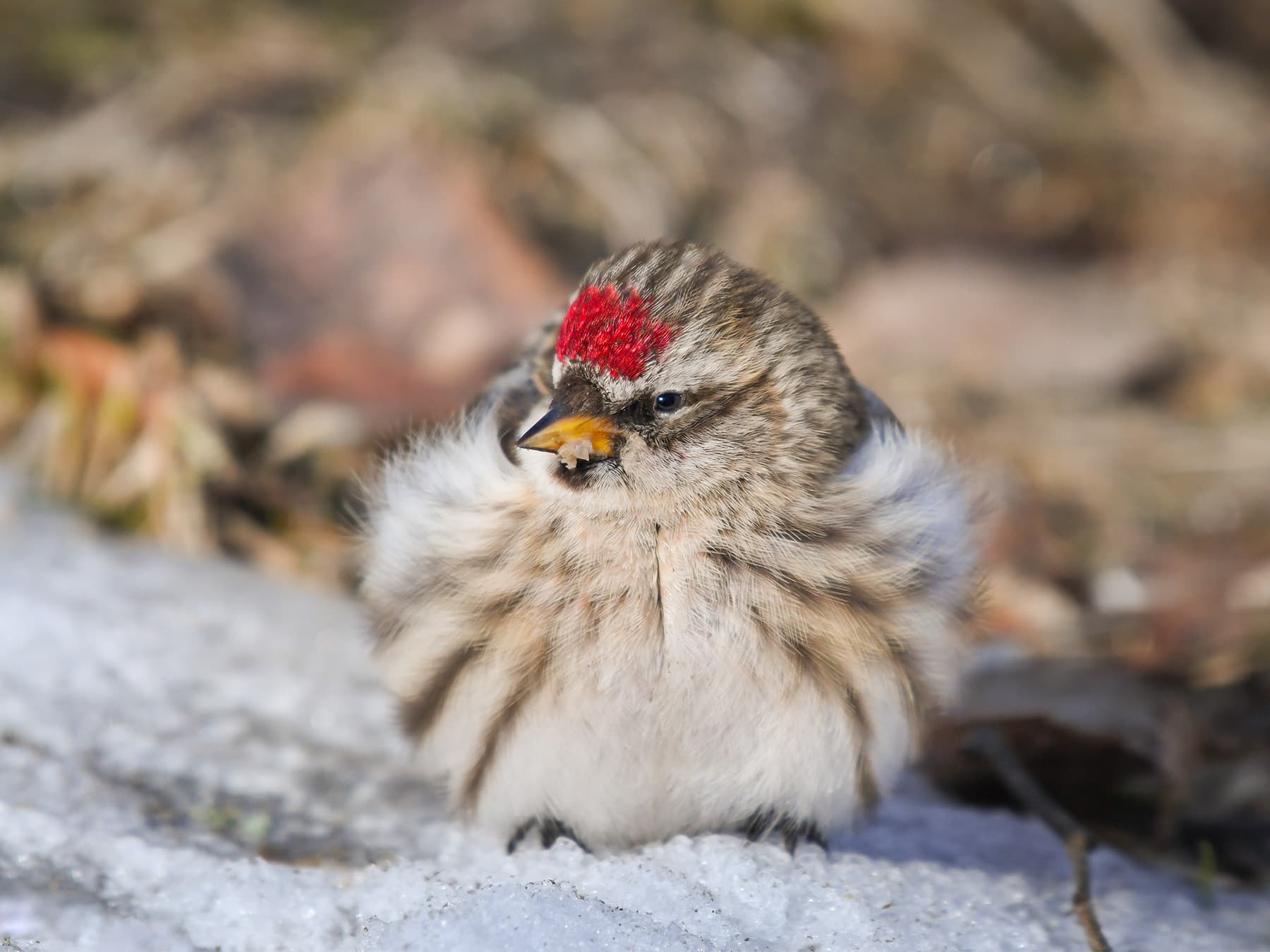
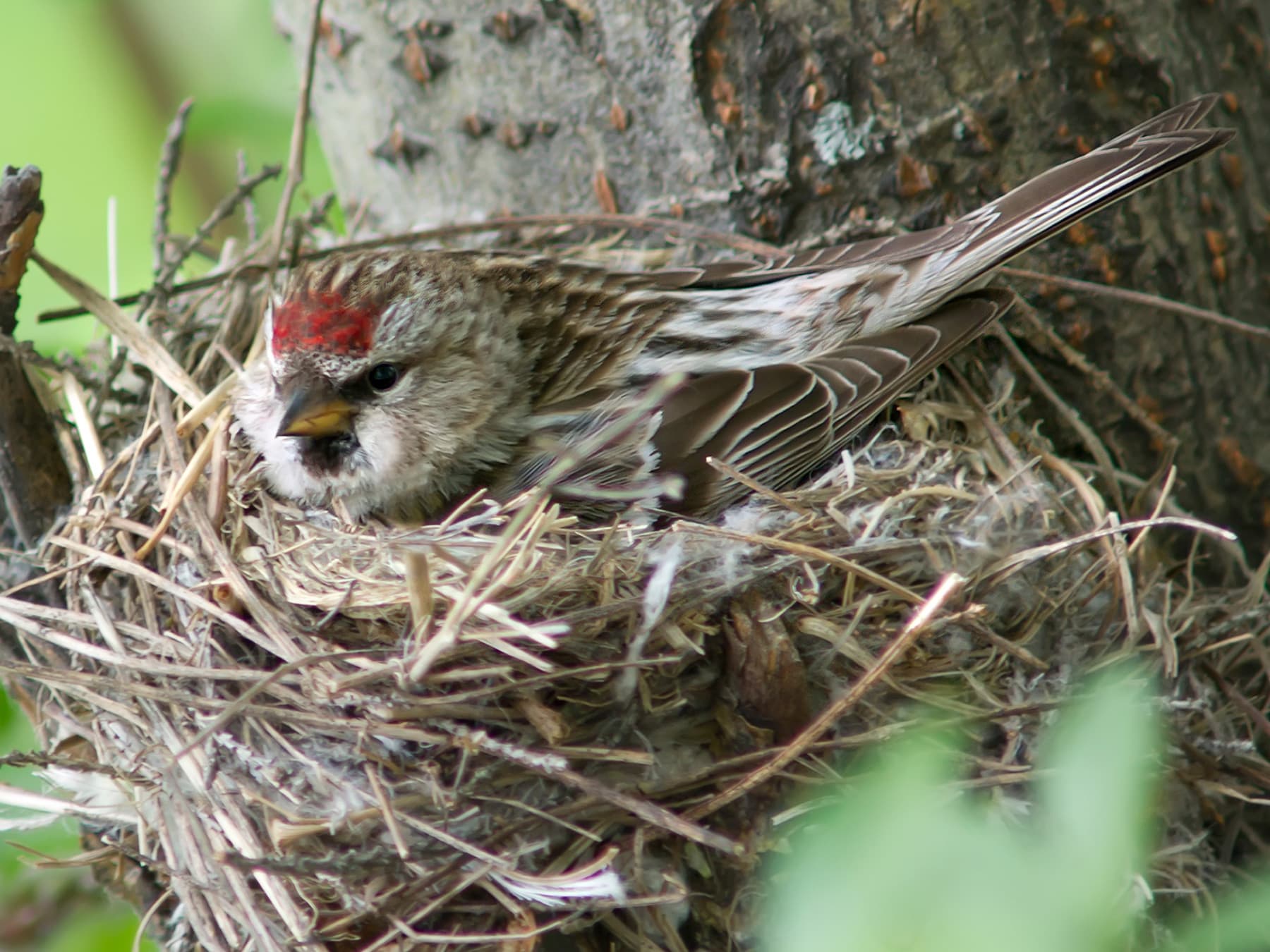
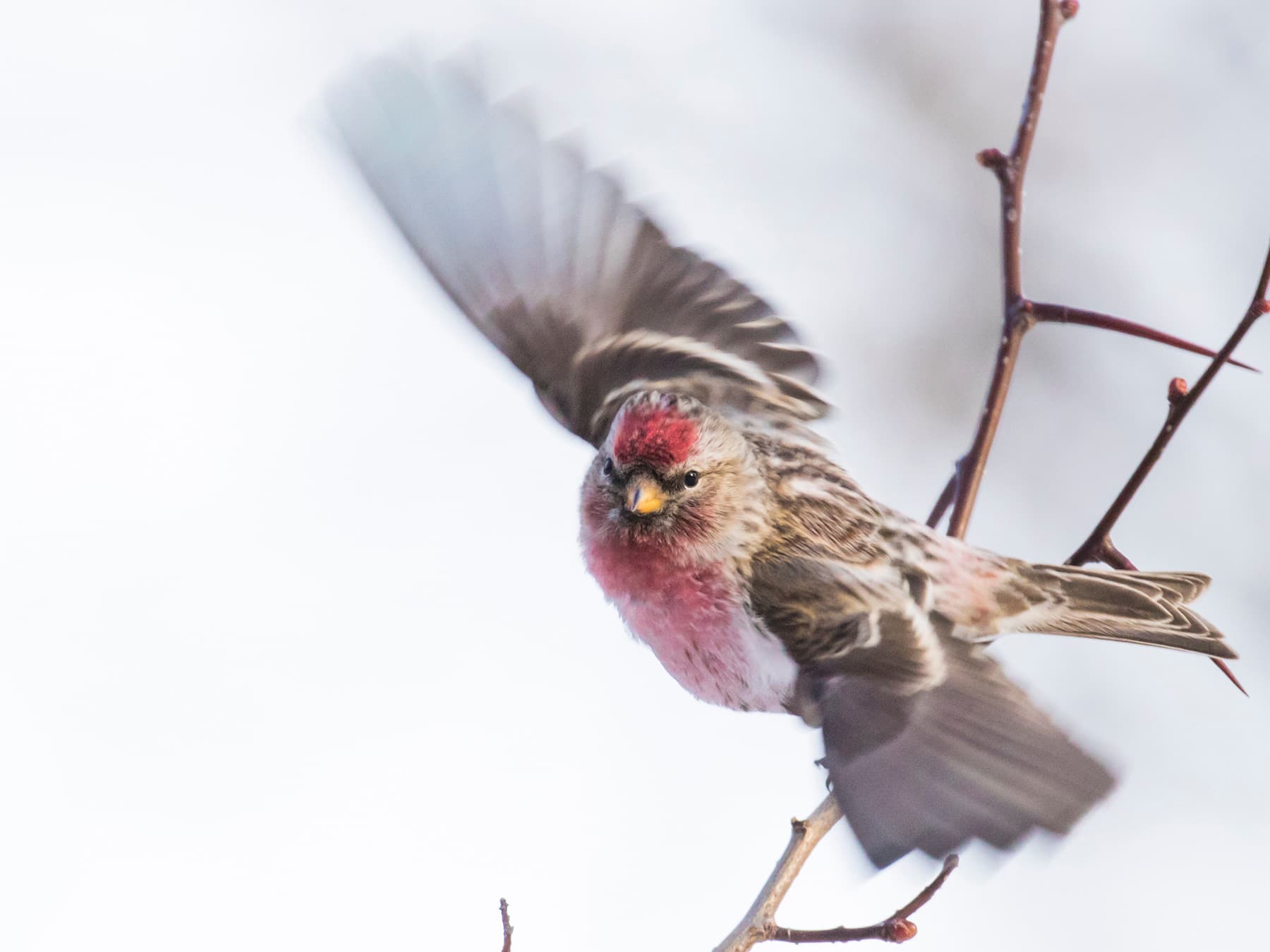
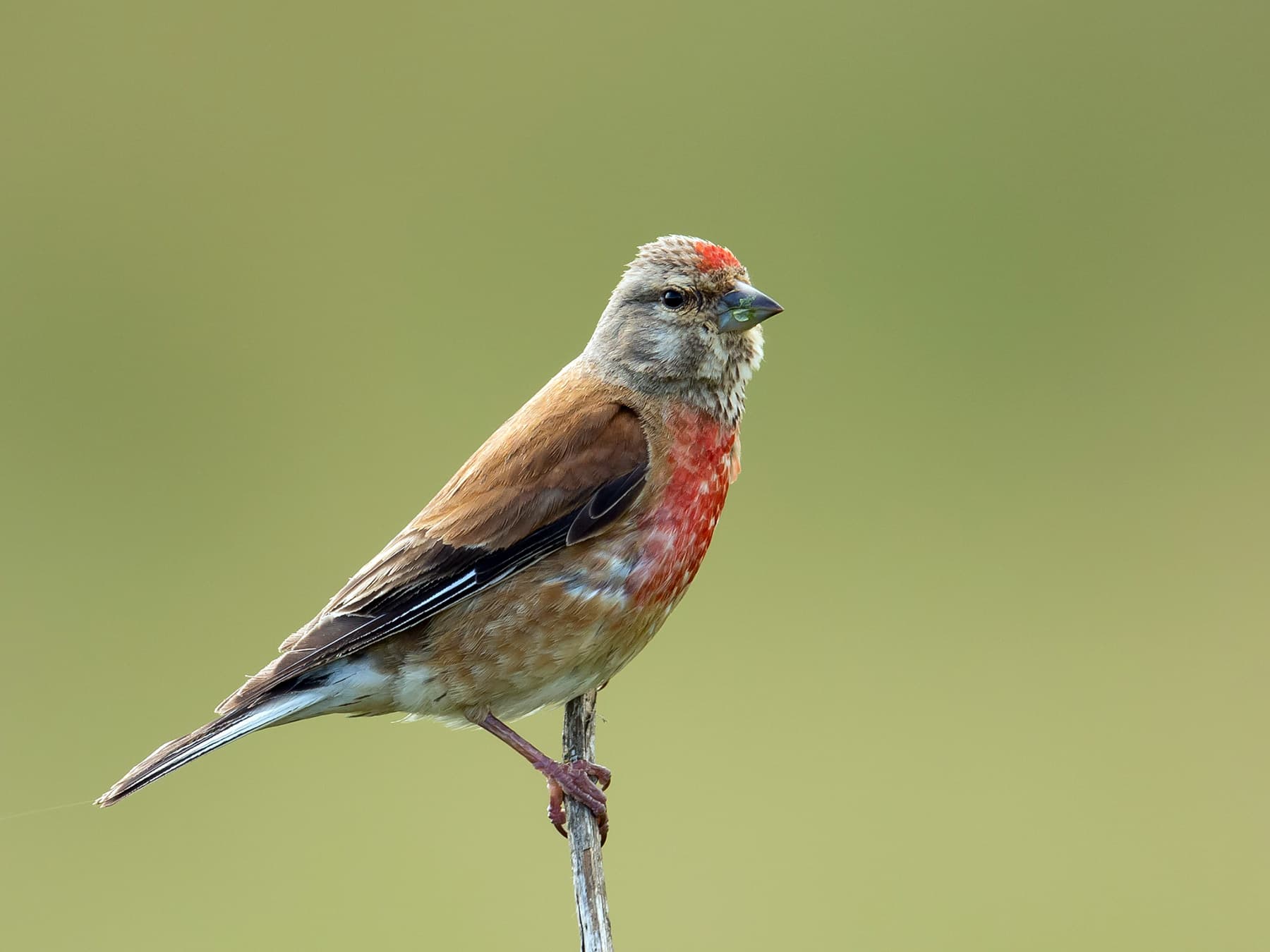
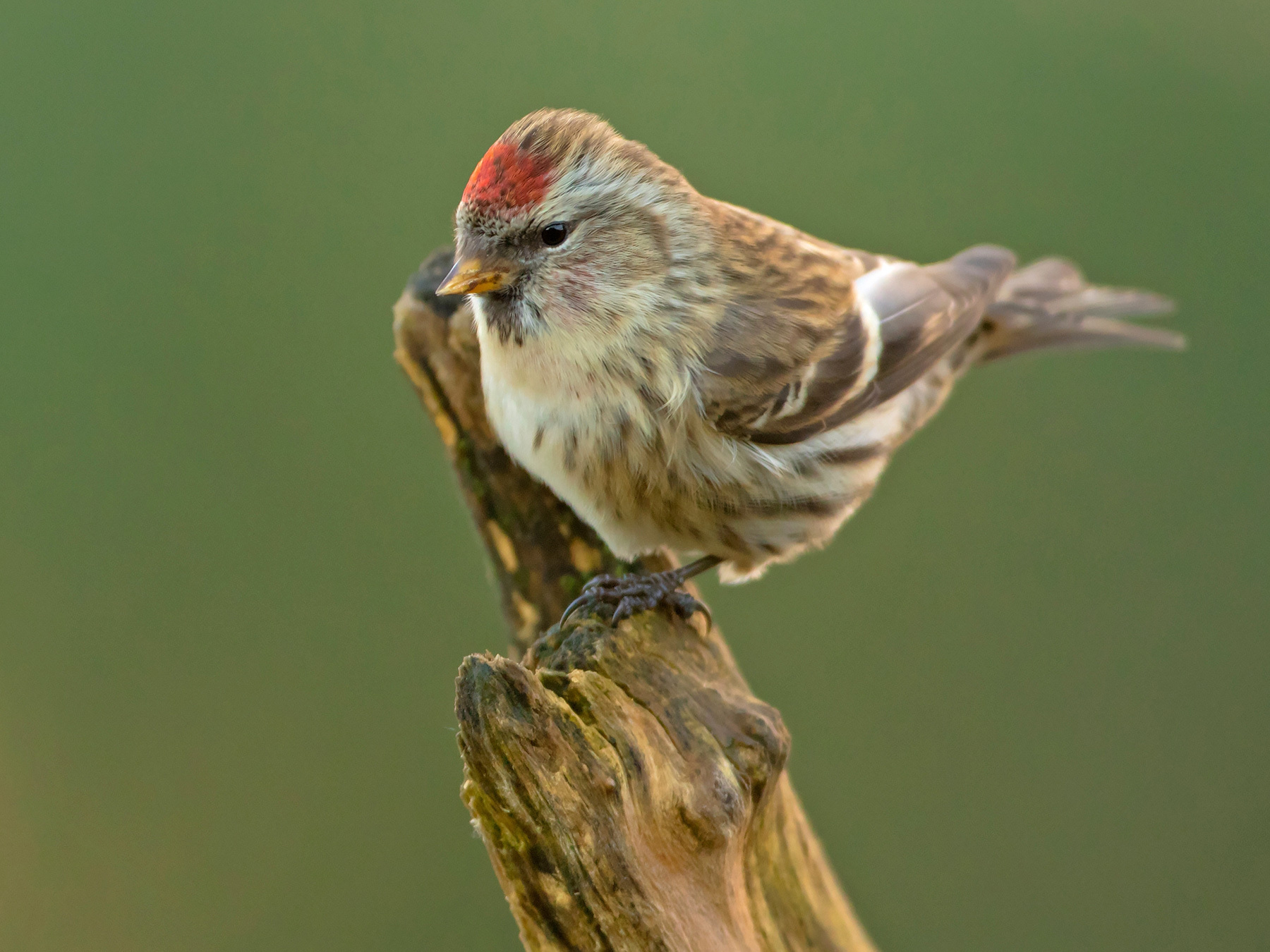
Perhaps the key identifying feature is the red ‘poll’, a crimson crown, and on male birds, pinkish streaking is visible across the breast and on the rump. They have a black chin patch and a short, conical bill, which is yellow, tipped with dark gray. Eyes are dark brown and legs are brown.
Females are similar to males, but with a darker, more streaked plumage, and red only visible on their crown. Their chin patch is more rounded than that of the male, but not as rich a black.
In winter, both males and females become paler than the deeper tones seen in summer months.
Juvenile common redpolls are similar to adult females, with an all-over brown, streaky appearance, with darker markings across their head. No red patch on the crown, breast or rump is present, and their underparts have an off-white, buff wash.
How big are Common Redpolls?
Common redpolls are larger than lesser redpolls and similar in size to its fellow finches, the house finch and the American goldfinch. There is no difference in size between males and females.
- Length: 12 cm to 14 cm (4.7 in to 5.5 in)
- Wingspan: 20 cm to 25 cm (7.9 in to 9.8 in)
- Weight: 12 g to 16 g (0.4 oz to 0.6 oz)
Its size
Adults- Length
- 11.5–14 cm
- Wingspan
- 19–22 cm
- Weight
- 10–18 g
Its song and calls
What sound does a Common Redpoll make?
Three main calls are commonly heard: a chattering call when perched or in flight, a nasal whistle when feeding or used as a contact call to round up newly fledged young, and a rattle that is used to alert other nearby birds of a threat.
- Song and calls0:00 / 0:10
Recorded in Reykjavíkurborg, Iceland · June 2023
- Flight call0:00 / 0:13
Recorded in Normandie, France · November 2023
When and where to see it
OctoberArriving
Most recorded in October
- 1. Longford1.3%
- 2. Antrim1.2%
- 3. Shetland Islands0.92%
- 4. Midlothian0.90%
- 5. Tipperary0.77%
Each dot is a county, state or province: the bigger and darker, the larger the bird’s share of that place’s bird records that month. Grey dots: no regular records. The ringed point is the centre of the bird’s records this month; the arrow shows how it moved since last month, and the dashed loop its path through the year. “Arrivals” colours places where it becomes regular this month (orange) or is in its last regular month (grey). GBIF eBird Observation Dataset, 2019–2024. Map data: Natural Earth, US Census Bureau; place centres © OpenStreetMap contributors.
In your area
See when the Common Redpoll is recorded in your county, state or province.
How often the Common Redpoll turns up in the UK, Ireland, the United States and Canada through the year, from birdwatchers' records.
United Kingdom
Resident · all year · most records in October
Ireland
Resident · all year · most records in December
United States
Winter visitor · regularly Oct–Aug · most records in February
Canada
Winter visitor · regularly Oct–Apr · most records in February
Show as a table
| Month | United Kingdom | Ireland | United States | Canada |
|---|---|---|---|---|
| January | 0.17% (regular) | 0.24% (regular) | 0.076% (regular) | 1.0% (regular) |
| February | 0.16% (regular) | 0.19% (regular) | 0.11% (regular) | 1.4% (regular) |
| March | 0.16% (regular) | 0.17% (regular) | 0.060% (regular) | 0.91% (regular) |
| April | 0.12% (regular) | 0.16% (regular) | 0.018% (regular) | 0.30% (regular) |
| May | 0.091% (regular) | 0.15% (regular) | 0.009% (regular) | 0.029% |
| June | 0.090% (regular) | 0.16% (regular) | 0.042% (regular) | 0.034% |
| July | 0.079% (regular) | 0.16% (regular) | 0.015% (regular) | 0.025% |
| August | 0.037% (regular) | 0.072% (regular) | 0.007% (regular) | 0.011% |
| September | 0.077% (regular) | 0.099% (regular) | 0.005% | 0.005% |
| October | 0.26% (regular) | 0.26% (regular) | 0.008% (regular) | 0.11% (regular) |
| November | 0.24% (regular) | 0.24% (regular) | 0.038% (regular) | 0.46% (regular) |
| December | 0.16% (regular) | 0.29% (regular) | 0.041% (regular) | 0.57% (regular) |
Recorded regularly in
Worldwide: recorded regularly in 41 countries
Countries where it was recorded in at least 3 of the 6 years 2019–2024. Linked countries have their own bird list.
Data: EOD – eBird Observation Dataset (Cornell Lab of Ornithology), accessed via GBIF.org, CC BY 4.0. Records from 2019–2024, aggregated and filtered by Birdfact. How these lists are made
What is the habitat of a Common Redpoll?
Coniferous forests and tundra landscapes both support breeding common redpoll pairs. Heathland with birch scrub, as well as willows, rowan, alder, juniper, spruce and pine, are preferred nesting habitats.
In winter, common redpolls are found in similar landscapes, moving inland from coastal scrublands in search of food supplies.
What is the range of a Common Redpoll?
The wide distribution range of common redpolls extends across northern latitudes of Europe, Asia, northern North America, Greenland and Iceland.
In winter, a shift southwards occurs, and the range extends further into the United States, and scattered sites across northern Europe.
Where do Common Redpolls live?
Russia has the largest population of common redpolls, with estimates ranging from 10 million to 100 million. Iceland, Sweden, Finland and Norway report the highest concentrations.
How rare are Common Redpolls?
The North American population is estimated at around 200,000, while in Europe figures are estimated at up to 2.4 million, with a further 10 to 100 million in Russia.
Known as ‘winter finches’ common redpolls breed in Arctic landscapes, but may spread southwards when conditions are particularly harsh, so in colder years, sightings become less of a rarity across much of the northern US.
In the UK, the common redpoll is actually far less common than its close relative, the lesser redpoll. Breeding pairs are exceedingly rare in Britain, with only around 12 pairs annually, although this number increases to around 335 individuals in winter.
Where can you see Common Redpolls in North America?
North American nesting grounds of common redpolls are found in Alaska and parts of northern Canada.
Between September and December, post-breeding birds migrate into southern Canada and across the northern half of the US, where they are most commonly spotted during May.
Where can you see Common Redpolls in the UK?
Sightings can never be guaranteed, but the best place to look for common redpolls is the eastern coast of Scotland and England, particularly during the autumn and winter.
Migrant birds are present in the UK between October and April, when they depart for their breeding grounds in Iceland, Greenland and northern Eurasia.
Migration
Do Common Redpolls migrate?
Common redpolls are partial migrants.
If enough food sources are present in their breeding grounds, and local conditions are not totally inhospitable, it’s likely that they will remain on their home patch all year round. But equally, if temperatures plunge to an intolerable level or food stocks run low, migration south is likely.
Across northern Eurasia, including the Arctic landscapes of Siberia and Russia, migration in winter is common, with breeding birds temporarily shifting southwards into Scandinavia, the British Isles and parts of continental Europe.
Are Common Redpolls native to North America?
In North America, common redpolls breed in Alaska and across much of Canada. Once breeding is complete, migration south begins, although some individuals remain in their breeding territories if enough food resources are available.
Are Common Redpolls native to the UK?
Only a handful of common redpoll pairs breed in the UK each year but are joined by a few hundred winter arrivals. It’s very rare for common redpolls to be resident in the British Isles all year round, as both breeding and wintering grounds are most often found further north.
Tips for seeing it
- Look for flocks feeding on birch or alder trees in winter
- Listen for their distinctive 'chut-chut-chut' call while in flight
- Check backyard feeders during irruption years in southern parts of their range
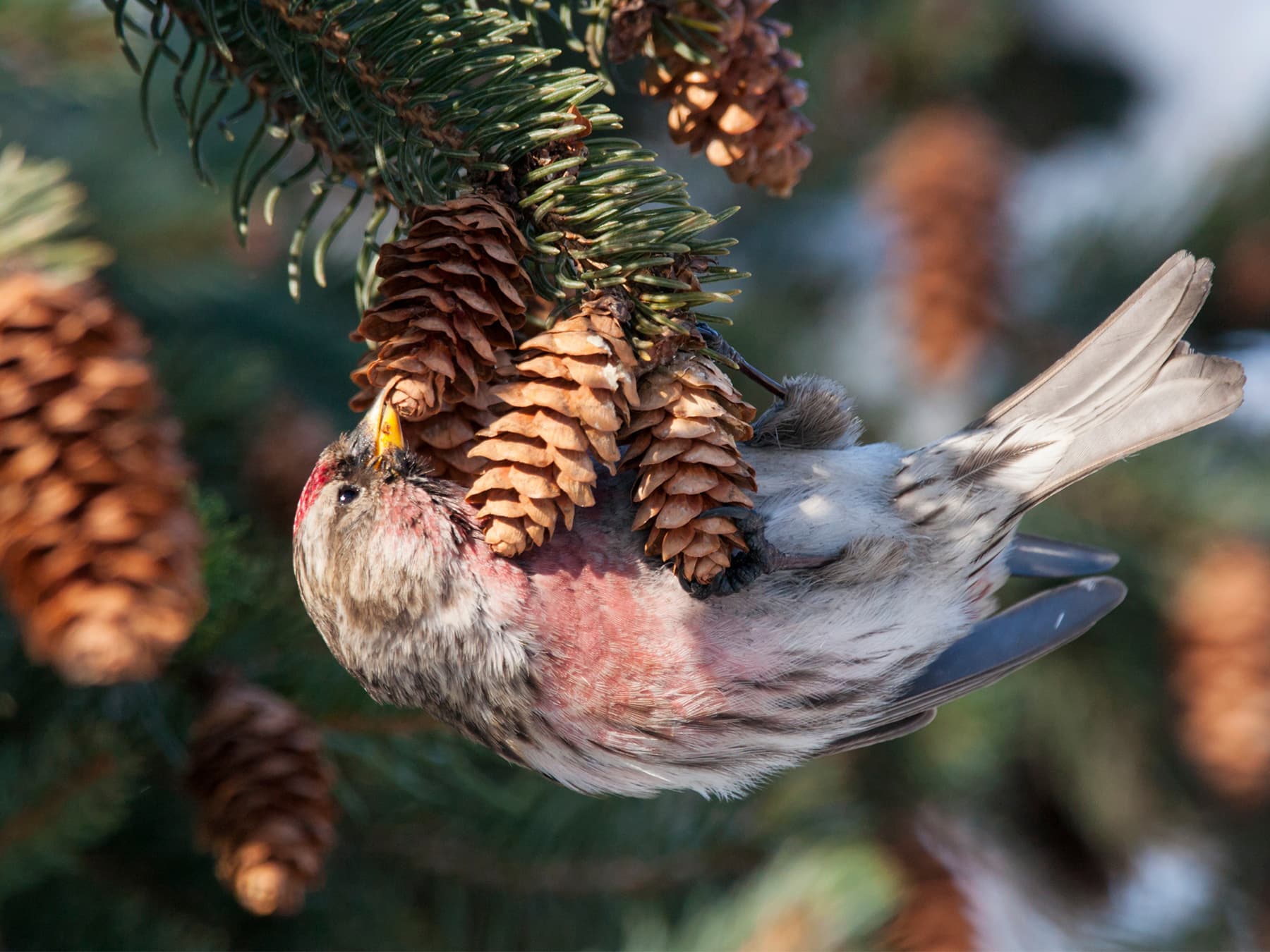
- Observe their acrobatic feeding behavior, often hanging upside down
What it eats
What do Common Redpolls eat?
Common redpolls follow a mainly seed-based diet, feeding on spruce, alder and birch trees. In summer, insects are also eaten.
They are a highly acrobatic species and are fascinating to observe hanging upside-down, delicately stripping tiny seeds from catkins.
What do Common Redpoll chicks eat?
Insects and spiders are the most common foods in a young redpolls diet. Chicks are also fed on tiny seeds.
Nesting and breeding
Where do Common Redpolls nest?
Males and females check out suitable nest sites together before the female begins construction. Most popular nest settings are in branches close to the trunk of an alder, spruce or willow tree, or lower down in dense bushes in tundra landscapes.
Nests are made with an outer layer of twigs, an internal layer of bark, roots and lichen, and an inner lining of down, buds and reindeer fur.
When do Common Redpolls nest?
May and June are the most common months for common redpolls to begin nesting, although in some locations, for example, Canada’s Northwest Territories, laying may be as early as April.
Second broods are fairly common, and are usually completed by September.
What do Common Redpoll eggs look like?
Between three and seven eggs are laid, which are pale greenish-white to icy blue in color and are marked with pale reddish-lilac spotting.
Eggs measure around 17 mm by 13 mm (0.7 in by 0.5 in), and are incubated by the female alone, for 11 days. While incubating, the female is brought food while on the nest by the male, but will also leave the eggs unattended for brief periods.
Do Common Redpolls mate for life?
No evidence exists to suggest that common redpolls mate for life.
It’s far more likely that pairs remain together only for the duration of a single breeding season and find a new mate the following year. Pairs usually raise two broods together in a typical season.
Behaviour
Are Common Redpolls aggressive?
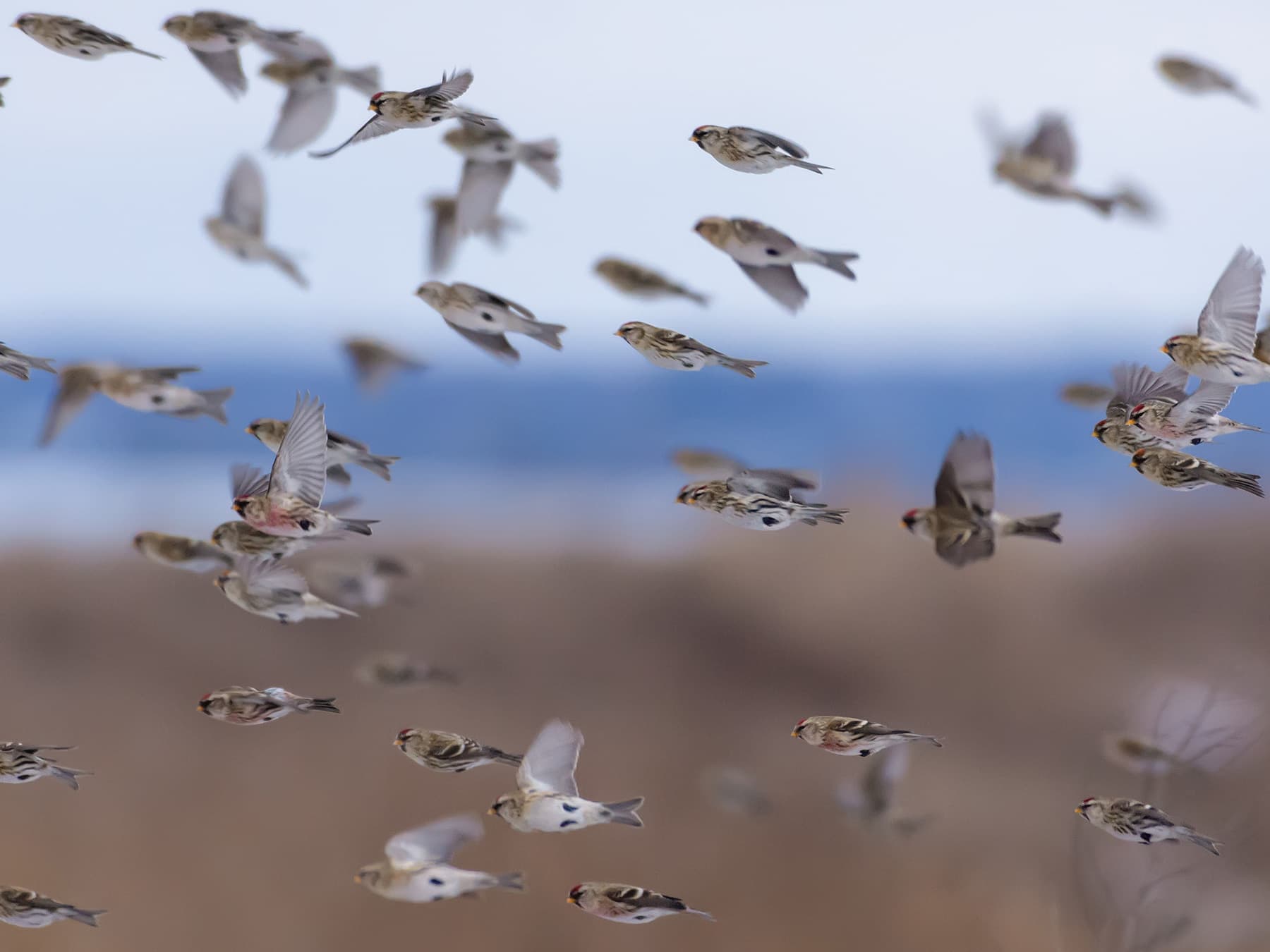
Although they are relatively small birds, common redpolls can be feisty, mobbing or nipping at intruders that venture too close to their nest sites. They are usually fairly sociable birds, forming feeding flocks with other finches during winter.
Where do Common Redpolls sleep at night?
Common redpolls have been observed to roost communally in flocks of up to a thousand birds, settling overnight on expanses of birch scrubland.
They also are known to use chambers they make in the snow, roosting in a small tunnel below the surface of the snow to conserve body heat.
Lifespan and predators
How long do Common Redpolls live?
On average, common redpolls have a lifespan in the wild of between two and three years, with reports of much older individual birds recorded, including a banded bird that reached over 9 years. In captivity, it is believed their potential life expectancy is greater still, with anecdotal reports of up to 25 years.
What are the predators of Common Redpolls?
Predators of adult common redpolls include sparrowhawks, merlins, jays, owls, and great-grey shrikes. Nests are targeted by squirrels, crows and cats.
Are Common Redpolls protected?
Under the United States Migratory Bird Treaty Act of 1917, it is an offense to kill, capture, injure, export or import a common redpoll or its eggs.
A similar law in the UK, the Wildlife and Countryside Act, 1918, protects common redpolls from being knowingly killed, harmed or taken into captivity. As Schedule I birds under the same act, their eggs and nest sites have additional protection against being destroyed or disturbed.
Are Common Redpolls endangered?
Across their global distribution range, common redpolls are classed as a species of least concern. However, in the UK, they have Red status on the British Birds of Conservation Concern list, due to their limited breeding numbers.
Population data for the UK, however, is positive and encouraging, with signs of slight increases in both breeding and wintering numbers being recorded in recent years.
Conservation
While currently listed as Least Concern, Common Redpolls face threats from climate change affecting their breeding habitats. Conservation efforts focus on protecting boreal forests and Arctic tundra ecosystems.
Providing winter food sources in southern regions can also support populations during irruption years.
Similar birds
Often mistaken for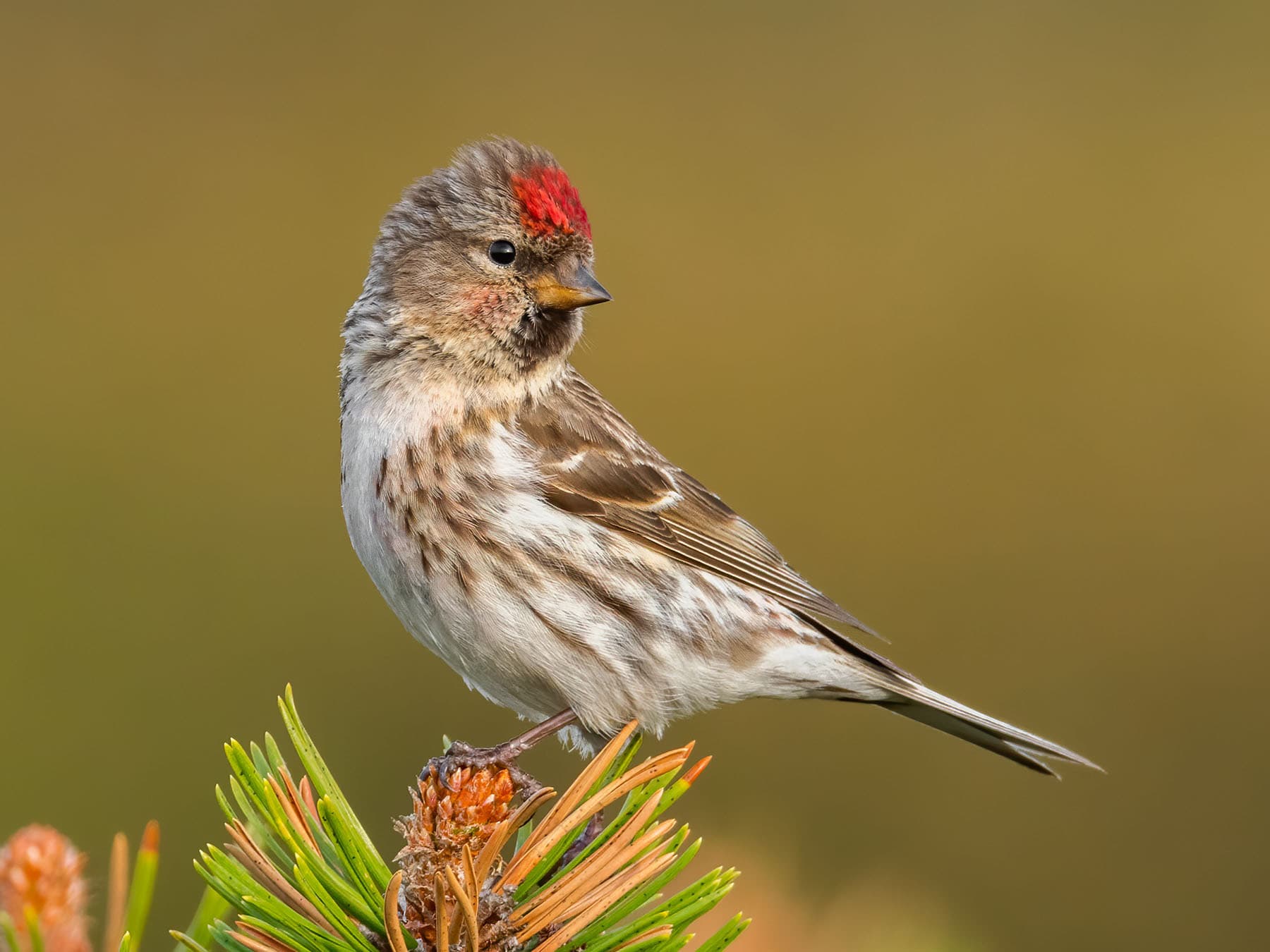
More photos
4 photos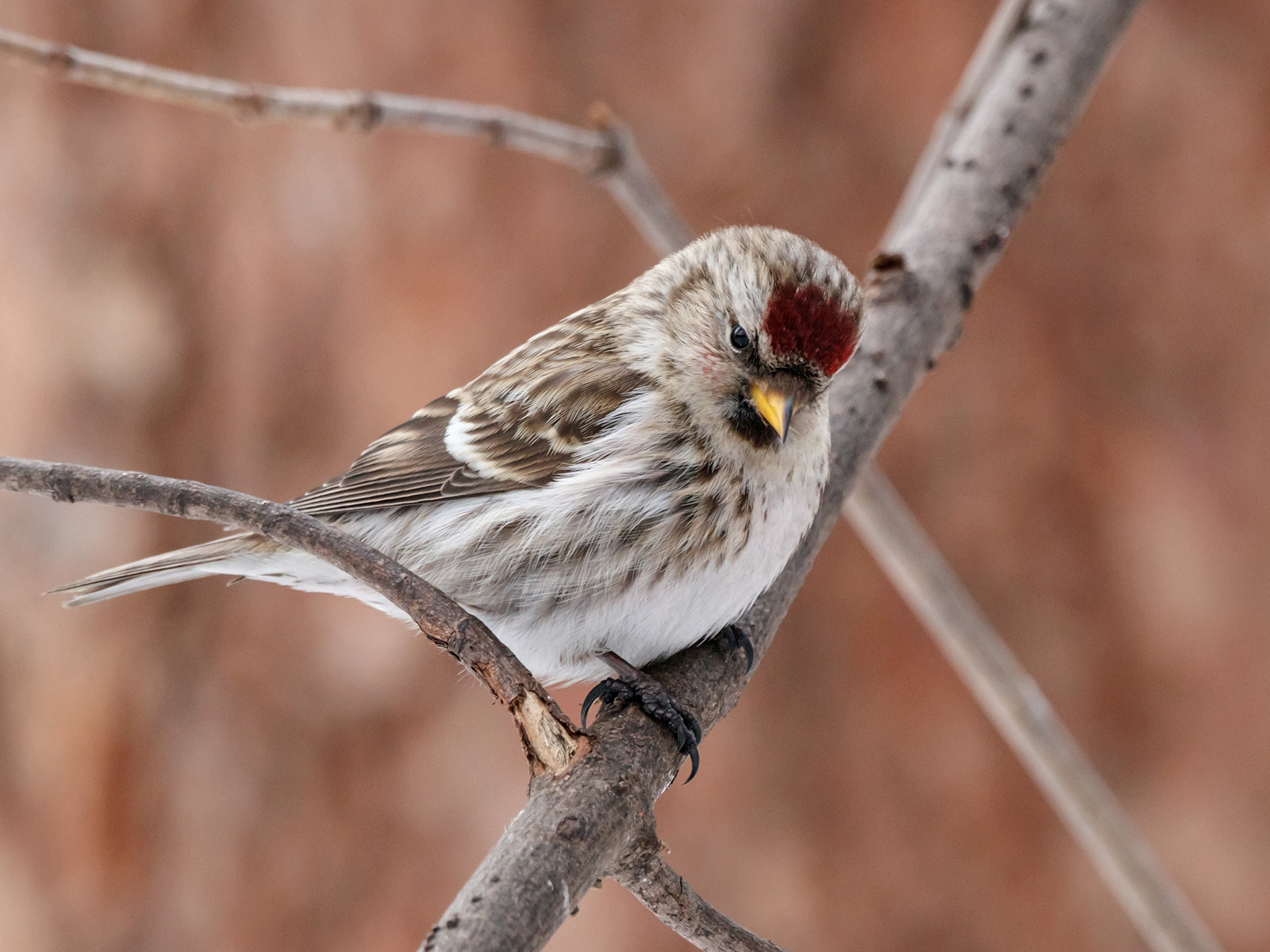
Common Redpoll guides
1 guidesQuick facts
- Length
- 11.5–14 cm
- Wingspan
- 19–22 cm
- Weight
- 10–18 g
- Lifespan
- 2–5 years
- Family
- Finches
- Migration
- Irruptive migrant
- Global status (IUCN)
- Least Concern
- World population
- 50,000,000 - 149,999,999 mature individuals
- Population trend
- Decreasing
- Also called
- Redpoll, Mealy Redpoll
- Scientific name
- Acanthis flammea
Questions
1How do you attract Redpolls?
Particularly in winter, when their natural sources of tree seeds may be running low, redpolls may venture into gardens to visit well-stocked feeders.
Niger seeds are a particular favorite.
Sources
3- 1BirdLife International. 2019. Acanthis flammea (amended version of 2018 assessment). The IUCN Red List of Threatened Species 2019: e.T22725044A155292529. Source (opens in a new tab)
- 2BirdLife International. 2019. Acanthis flammea (amended version of 2018 assessment). The IUCN Red List of Threatened Species 2019: e.T22725044A155292529. Source (opens in a new tab)
- 3BirdLife International. 2019. Acanthis flammea (amended version of 2018 assessment). The IUCN Red List of Threatened Species 2019: e.T22725044A155292529. Source (opens in a new tab)

Checked by
Nathan Cope, founder and editor
Nathan founded Birdfact and leads its writers and contributors in the UK, the US and Canada. He has watched and studied birds for more than ten years, and checks every article and species guide before it’s published.