


Twite
Mountain Linnet · Linaria flavirostris
By the Birdfact teamChecked by Nathan Cope
On this page15 sections
How to recognise it
What do Twites look like?
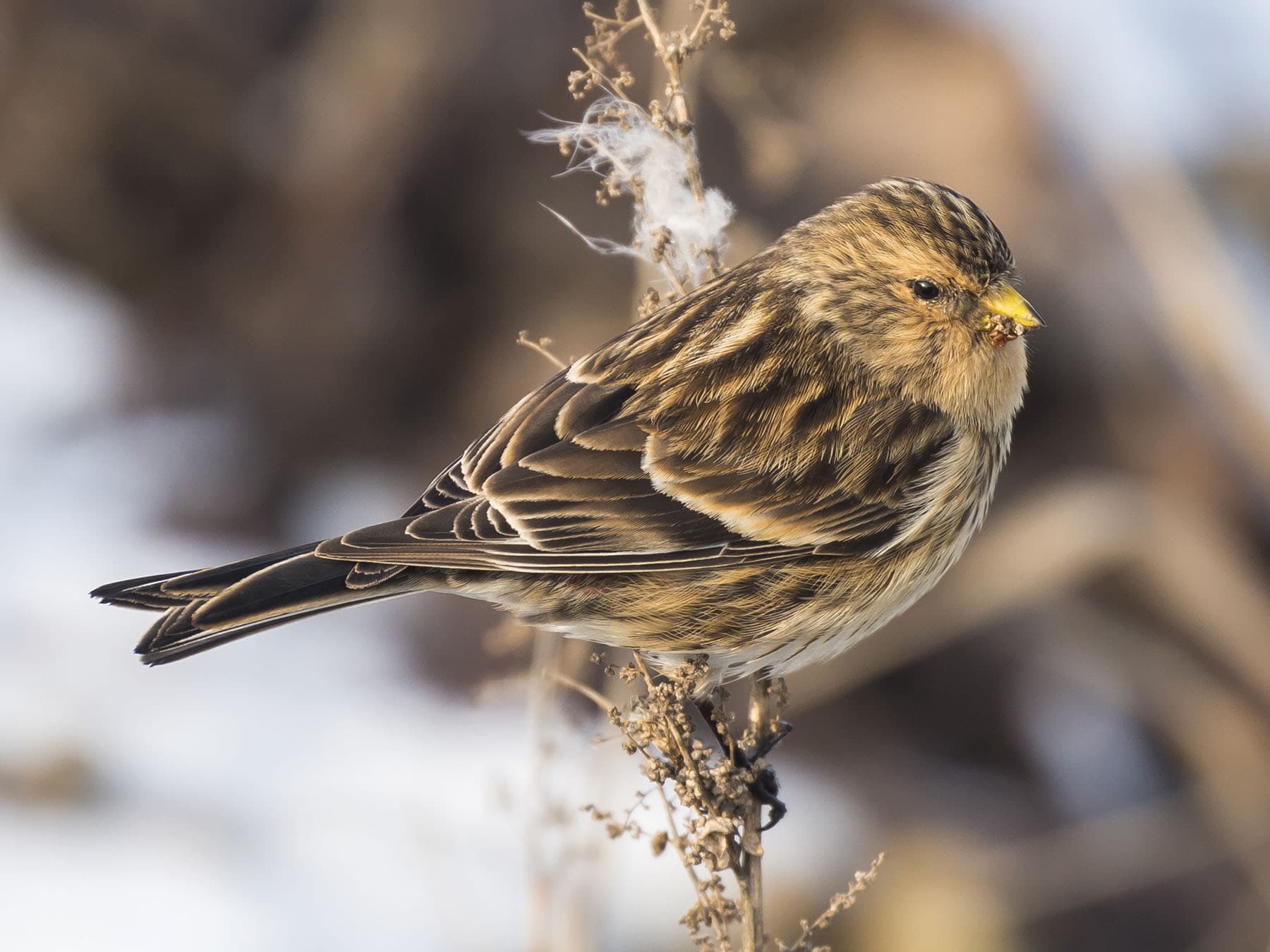
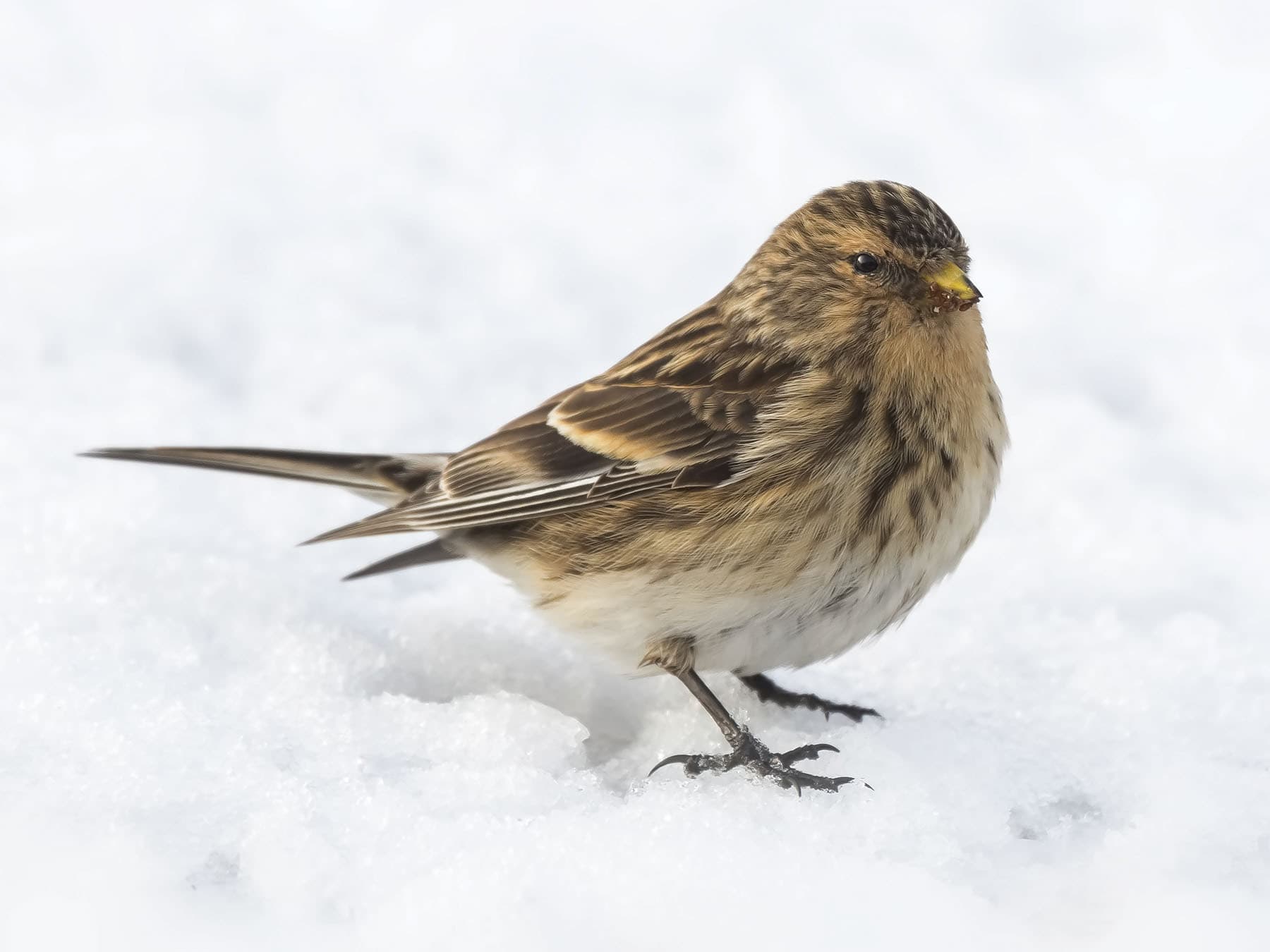
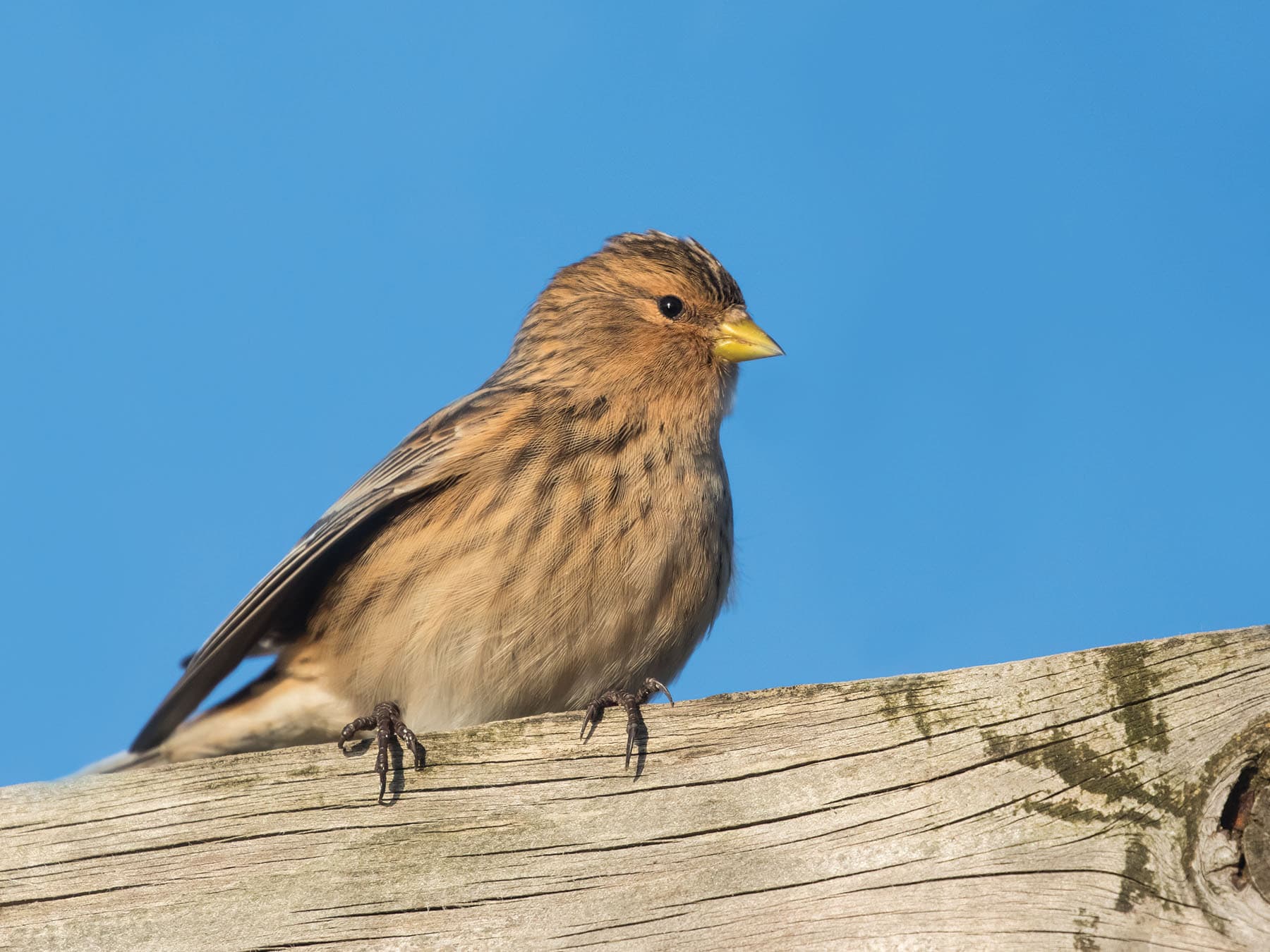
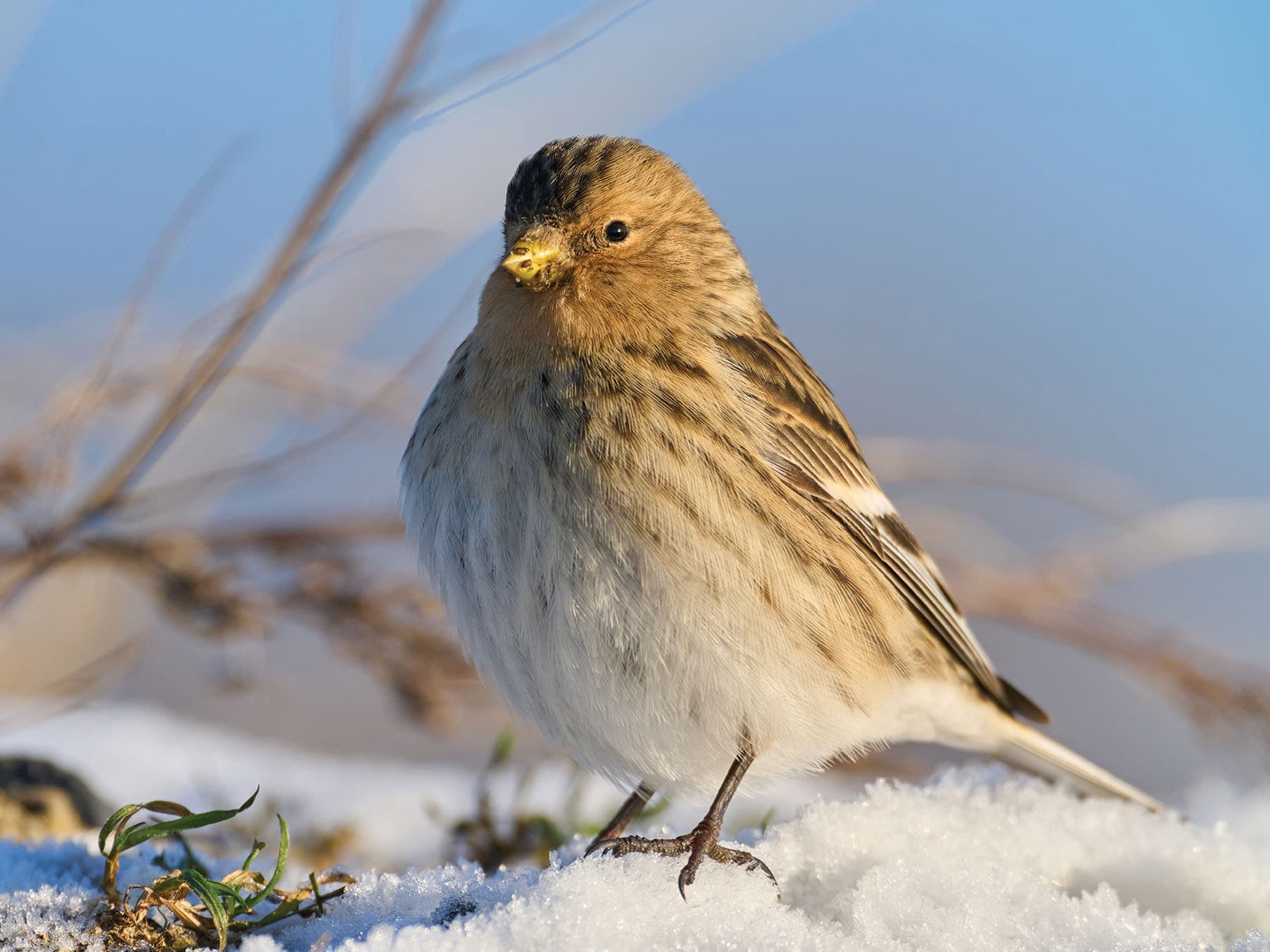
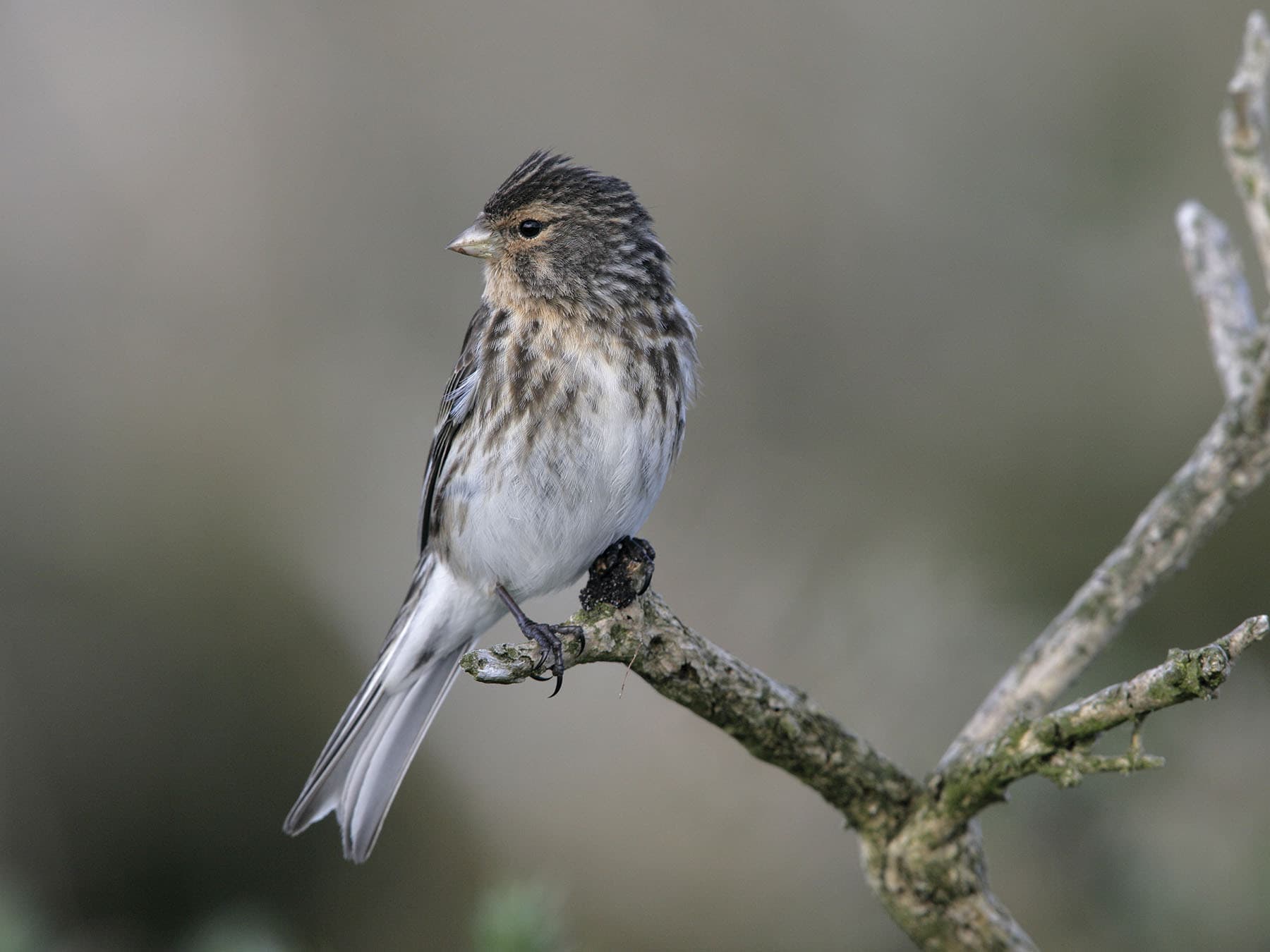
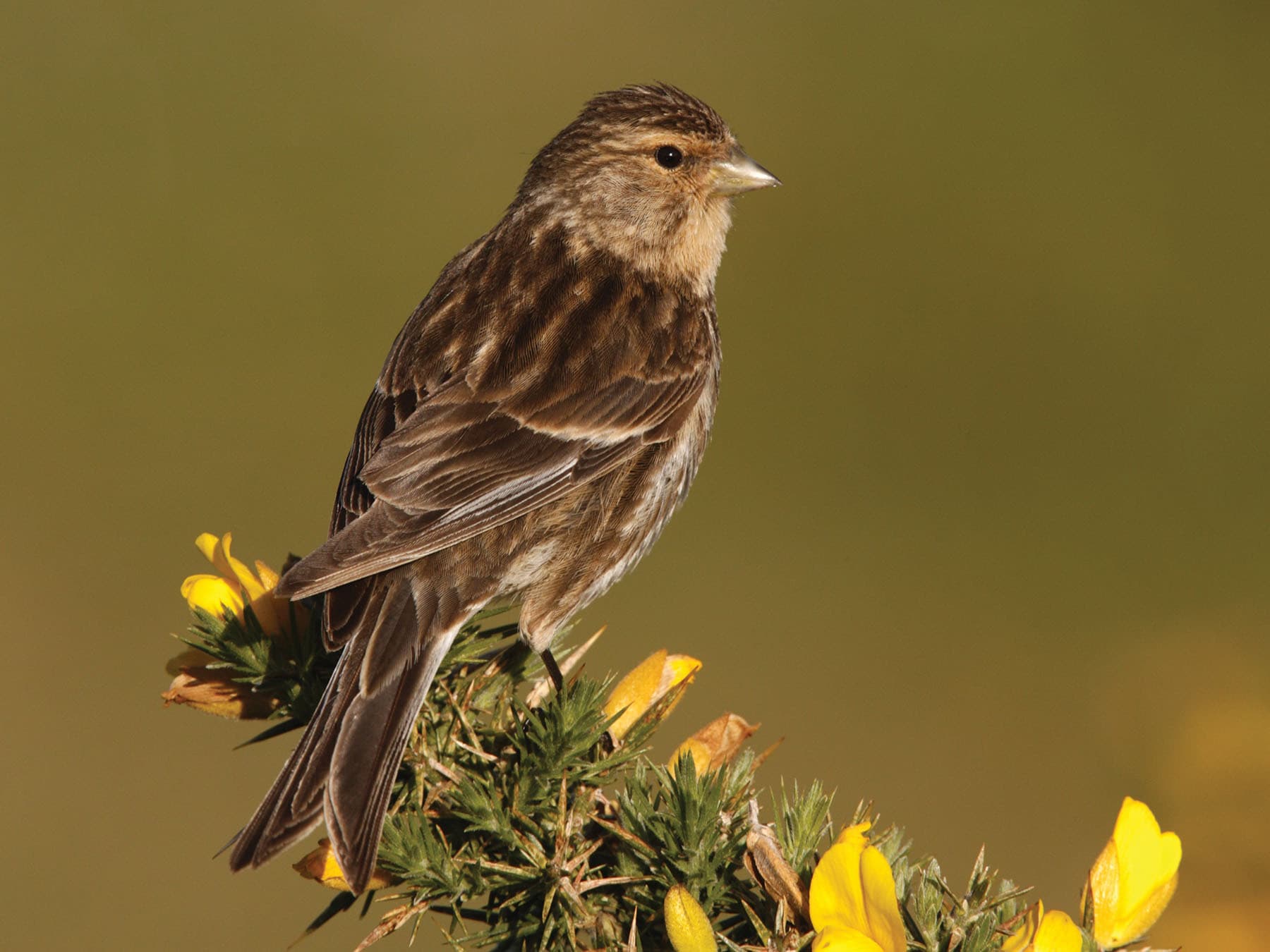
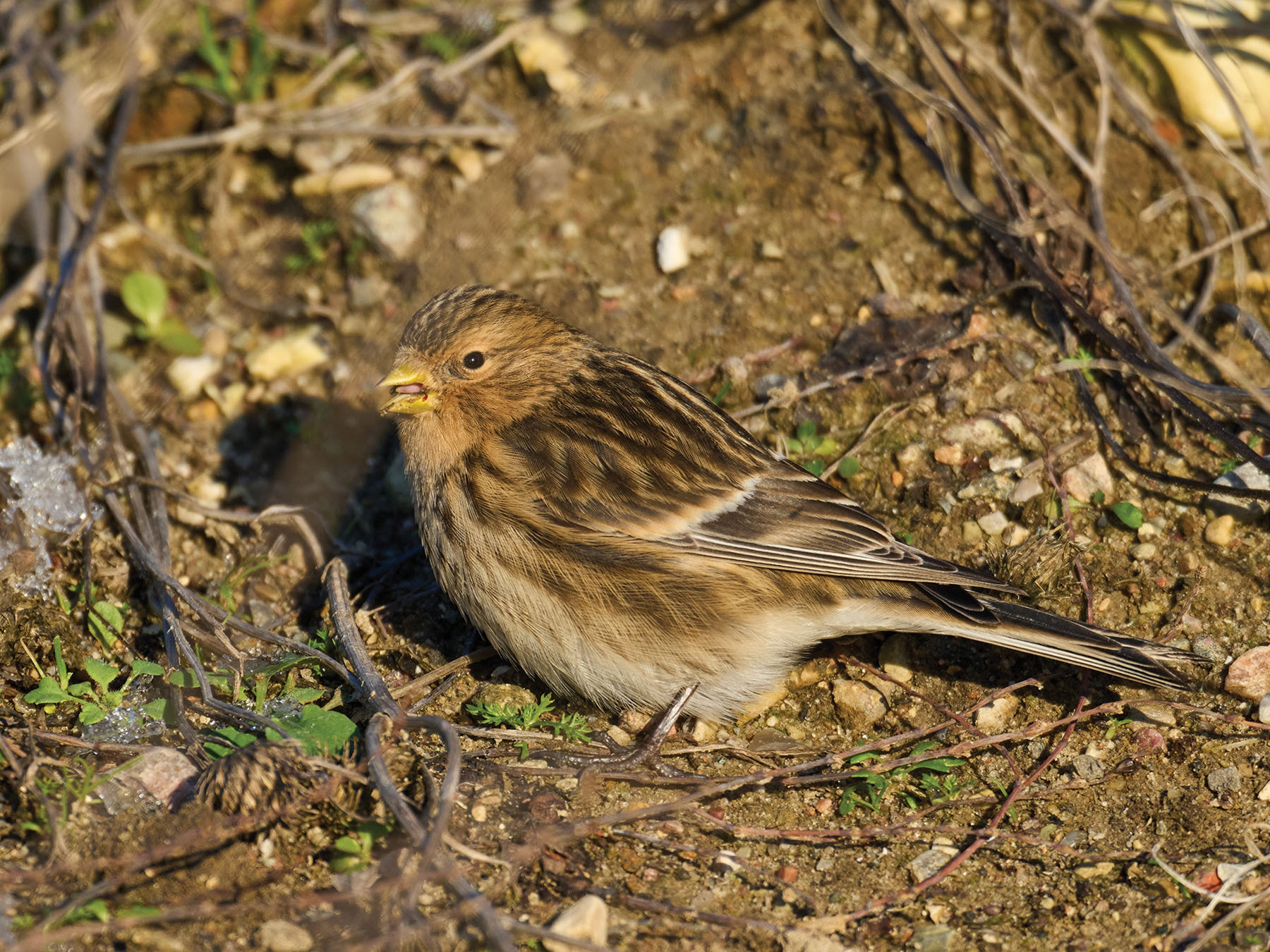
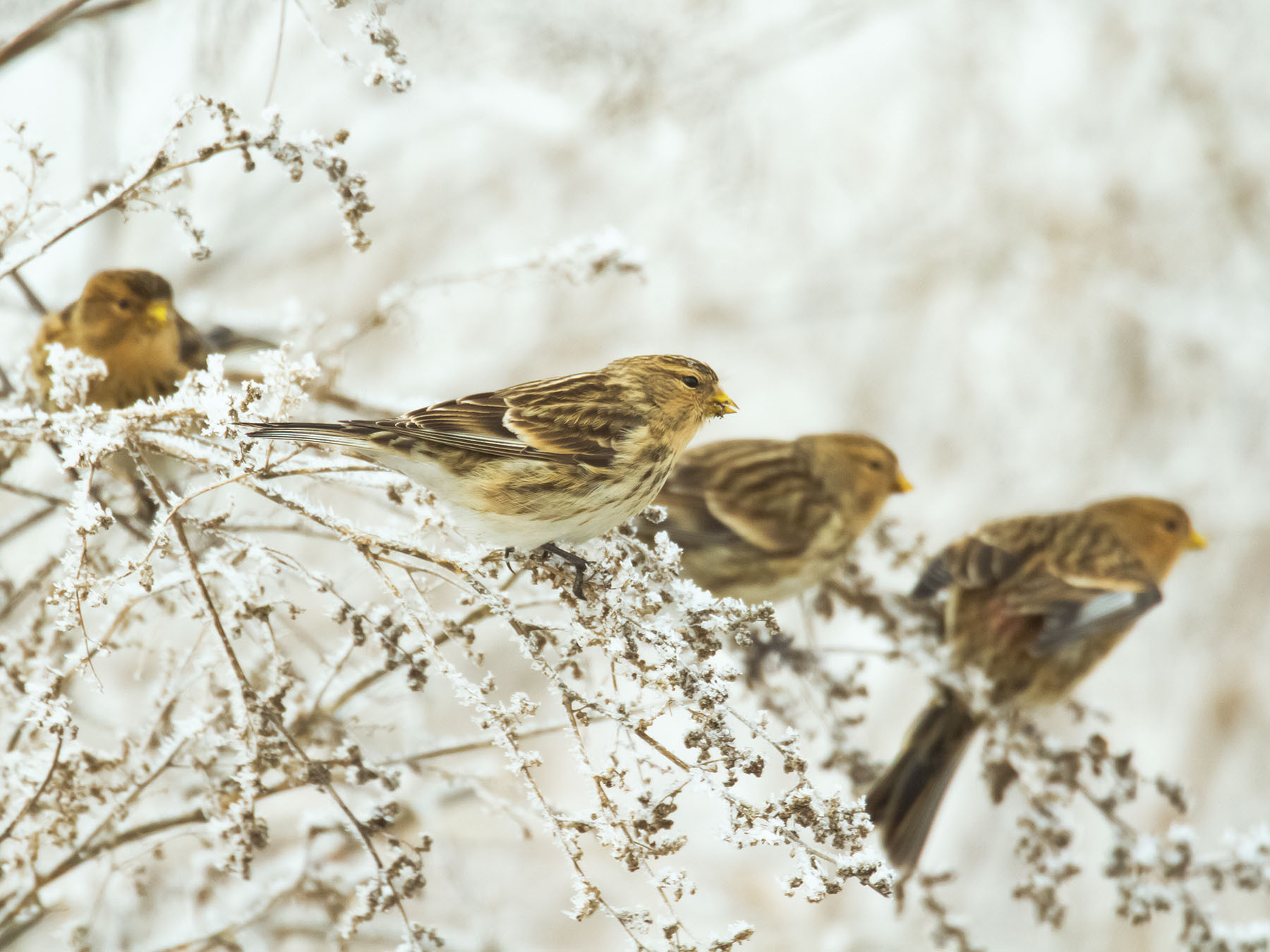
Twites are small, brown finches, with streaky light and dark brown plumage, and a distinctive short stubby beak, which is yellow in winter and turns grey in summer. Their breast and belly are a paler shade of buff, with darker streaks on the breast and flanks.
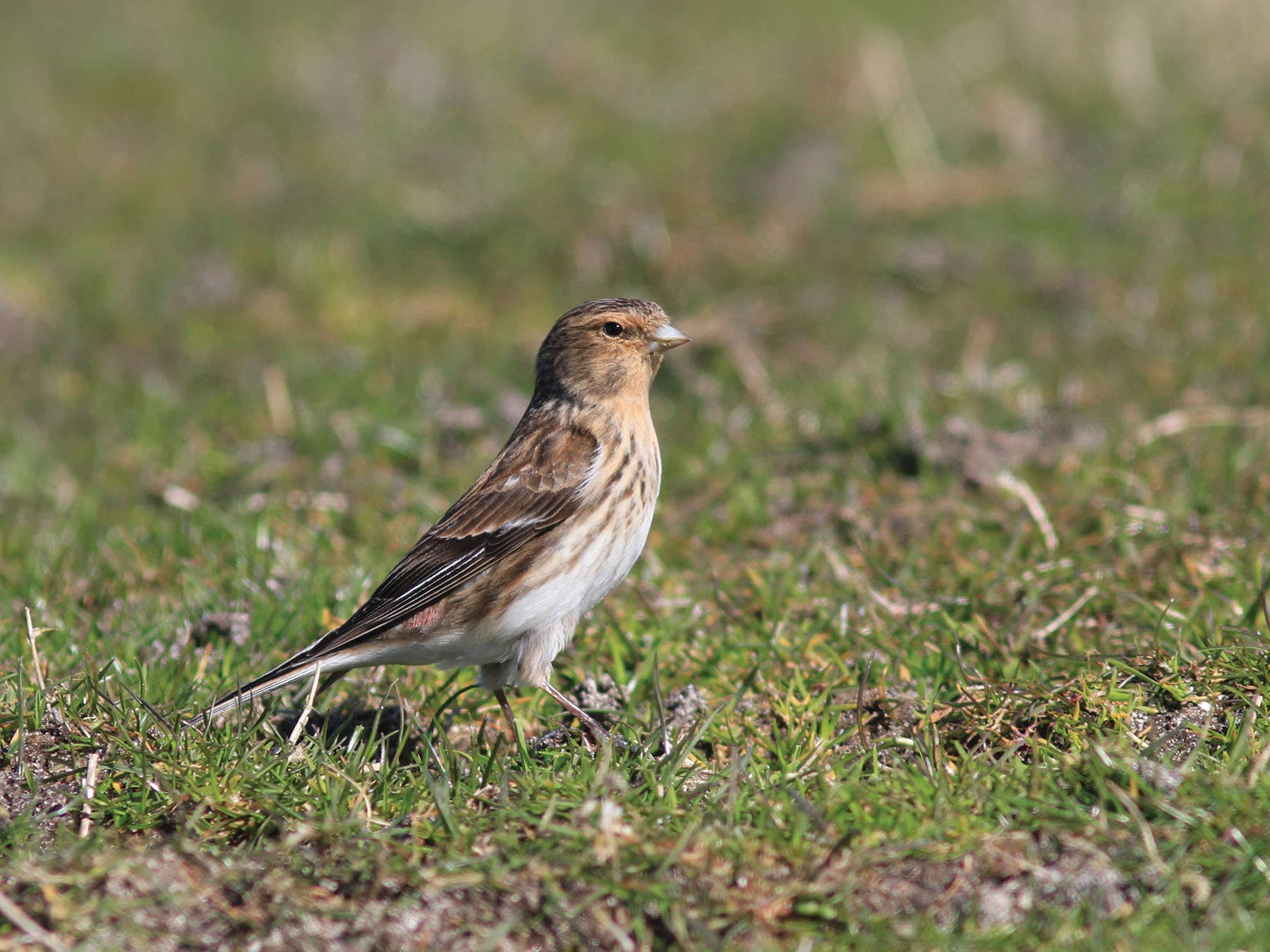
Male twites have a pinkish rump, although this is usually hidden by the wings when perched. Pale barring is visible across the dark wings, and their dark brown tail is slightly forked.
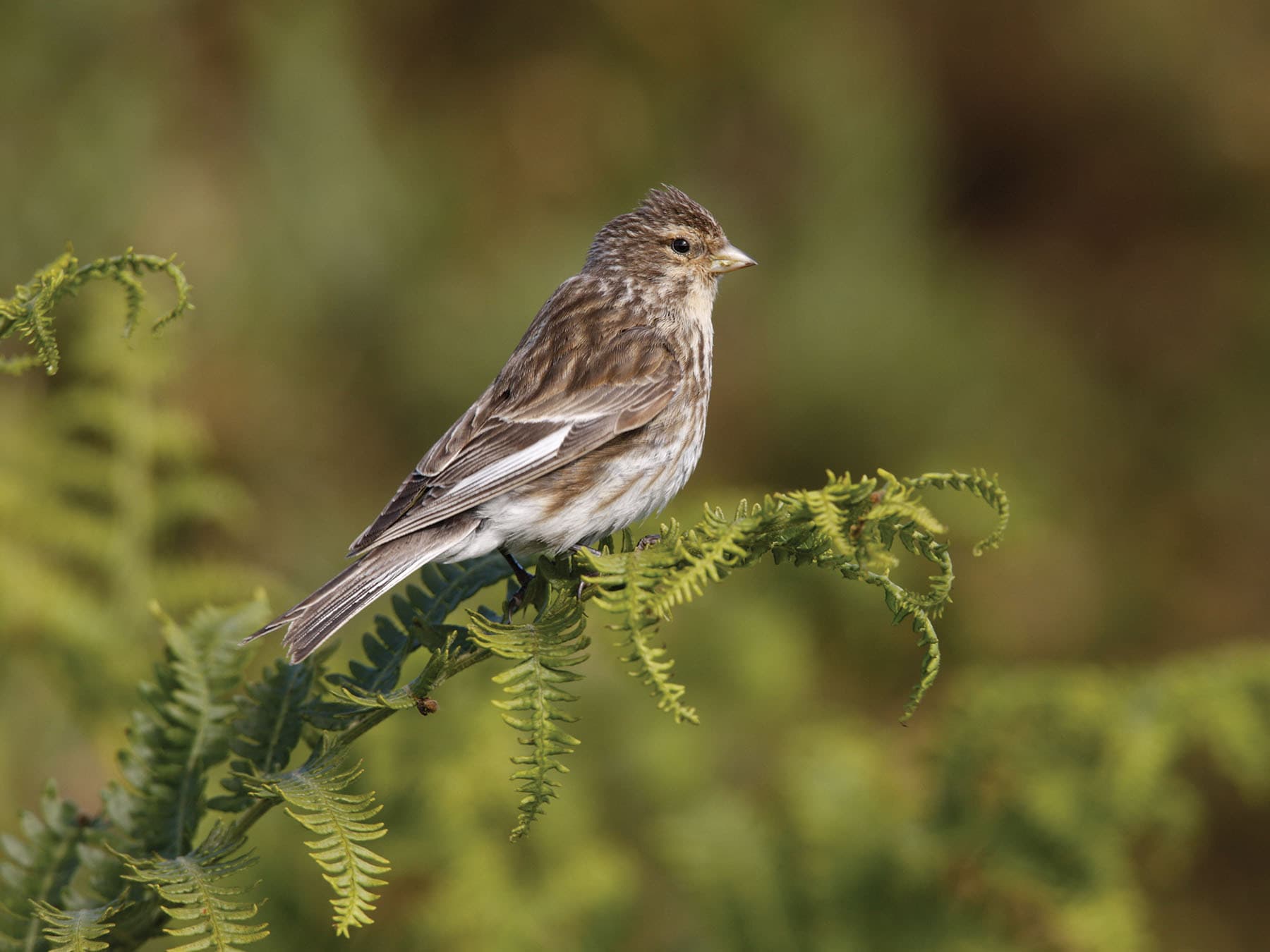
Female twites are similar in appearance to males, but there are a few subtle differences that make it possible to make a positive identification between the sexes. Female twites do not have the same pink tinge to their rump, which is instead a buff colour, and the white markings on their wings is less well defined.
Young twites look like adult females, but with richer, warmer tones of brown-buff colouring.
How big are Twites?
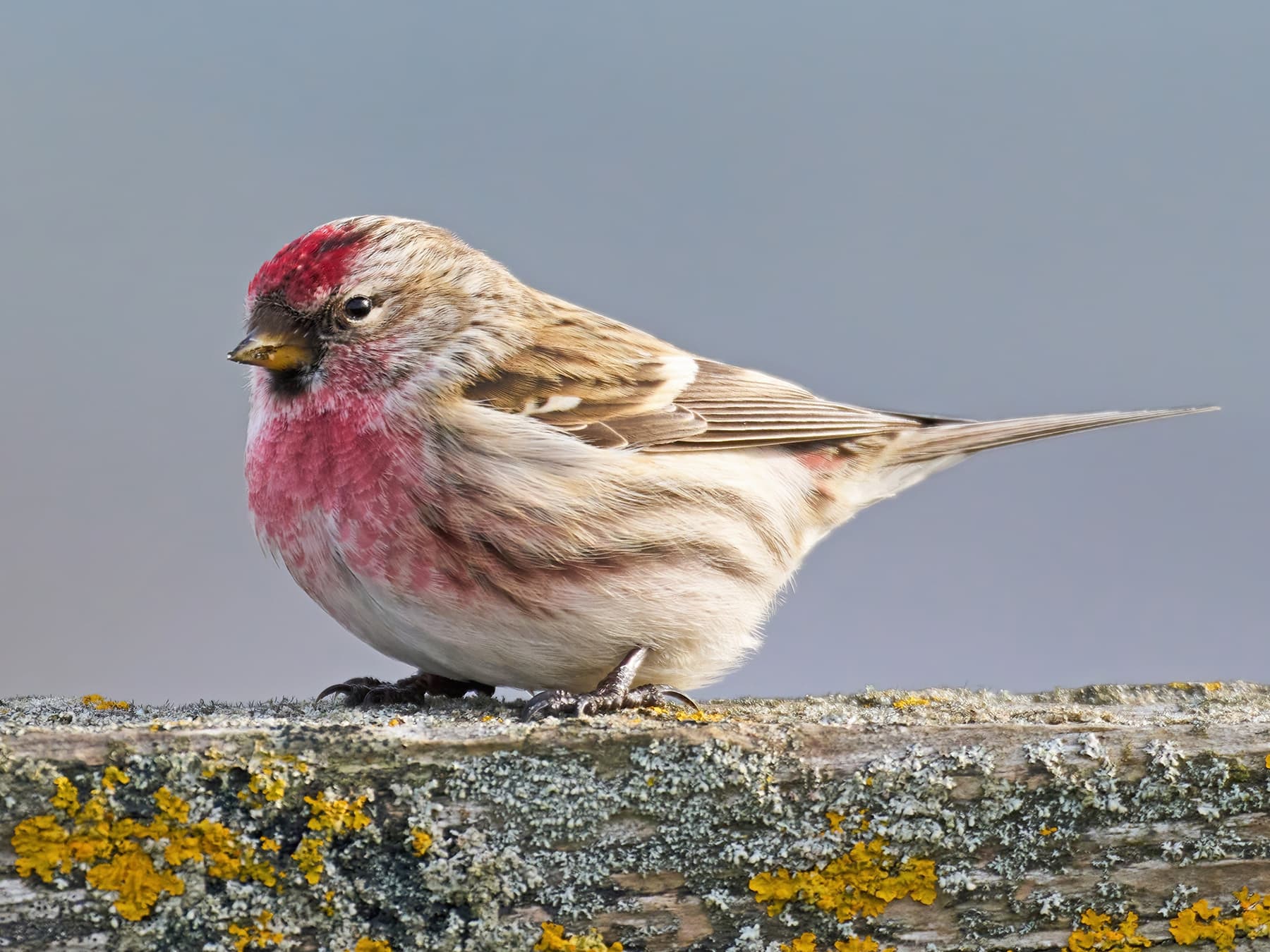
A relatively small finch, the twite is similar in size to its related species the linnet, but with a longer and more noticeably forked tail. Data shows only marginal differences between the slightly larger male and smaller female in size.
- Length: 12 cm to 14cm (4.7 in to 5.5 in)
- Wingspan: 22 cm to 24cm (8.7 in to 9.4 in)
- Weight: 13 g to 18 g (0.5 oz to 0.6 oz)
Its size
Adults- Length
- 13–14 cm
- Wingspan
- 21–23 cm
- Weight
- 15–20 g
Its song and calls
What sound does a Twite make?
The species’ name “twite” comes from the distinctive, nasal rising “twi-ett” call.
- Song0:00 / 0:15
Recorded in Mtskheta-Mtianeti, Georgia · April 2023
When and where to see it
OctoberArriving
Most recorded in October
- 1. Shetland Islands1.2%
- 2. Antrim1.1%
- 3. Eilean Siar0.78%
- 4. Orkney Islands0.51%
- 5. Derry0.40%
Each dot is a county, state or province: the bigger and darker, the larger the bird’s share of that place’s bird records that month. Grey dots: no regular records. The ringed point is the centre of the bird’s records this month; the arrow shows how it moved since last month, and the dashed loop its path through the year. “Arrivals” colours places where it becomes regular this month (orange) or is in its last regular month (grey). GBIF eBird Observation Dataset, 2019–2024. Map data: Natural Earth, US Census Bureau; place centres © OpenStreetMap contributors.
In your area
See when the Twite is recorded in your county, state or province.
How often the Twite turns up in the UK and Ireland through the year, from birdwatchers' records.
United Kingdom
Resident · all year · most records in October
Ireland
Resident · regularly Oct–Jul · most records in February
Show as a table
| Month | United Kingdom | Ireland |
|---|---|---|
| January | 0.027% (regular) | 0.016% (regular) |
| February | 0.020% (regular) | 0.018% (regular) |
| March | 0.017% (regular) | 0.004% |
| April | 0.013% (regular) | 0.007% (regular) |
| May | 0.028% (regular) | 0.002% (regular) |
| June | 0.026% (regular) | 0.009% (regular) |
| July | 0.021% (regular) | 0.006% (regular) |
| August | 0.021% (regular) | <0.001% |
| September | 0.036% (regular) | 0.001% |
| October | 0.065% (regular) | 0.004% (regular) |
| November | 0.031% (regular) | 0.013% (regular) |
| December | 0.022% (regular) | 0.012% (regular) |
Recorded regularly in
Worldwide: recorded regularly in 30 countries
Countries where it was recorded in at least 3 of the 6 years 2019–2024. Linked countries have their own bird list.
Data: EOD – eBird Observation Dataset (Cornell Lab of Ornithology), accessed via GBIF.org, CC BY 4.0. Records from 2019–2024, aggregated and filtered by Birdfact. How these lists are made
What is the habitat of a Twite?
The preferred breeding habitats of twites are expanses of treeless moorland, particularly coastal plains and higher ground, including slopes, grassy hillsides and heath-covered rocky steppes.
During winter, coastal fringes provide a suitable habitat for overwintering twites from northern Europe, and lower altitude sites are also popular.
What is the range of a Twite?
Twites breed from Ireland and the British Isles in the west, around the entire coast of Norway and across the border into Arctic Russia. Winter months are spent further south in Europe, between Ireland in the west, through northern France as far west as Poland, and into Ukraine, Slovakia and Hungary.
Isolated wintering grounds are also found in Turkey. To the west, a further population of twites is present, with resident birds across central Asia from the Caspian Sea as far as Mongolia in the east, and south-western China to the south.
Where do Twites live?
The European population of twites was estimated at between 166,000 and 566,800 pairs, not including Russia. The majority of these live in Norway.
How rare are Twites?
During breeding season, twites are relatively scarce, with only 12 pairs thought to breed in England, and less than 8,000 pairs in total breeding across the entire UK (in Wales and Scotland).
In winter, twites from Europe arrive in Britain and Ireland in their tens of thousands, resulting in the species becoming temporarily far less rare between October and March.
Where can you see Twites in the UK?
Breeding in the UK is limited to a few specific areas of moorland in northern England, and is slightly more widespread across north Wales and the Scottish Highlands. In winter some twites remain in coastal northern and west Scotland.
According to data retrieved from ringing records, twites that breed to the east of the Pennines migrate to the south-east coast in winter.
Those to the west of the Pennines spend winter months between Lancashire and the Hebrides, while almost the entire Welsh population of twites spends winter months in Flintshire.
Migration
Do Twites migrate?
Twites are mostly migratory, usually spending winter months some distance from where they breed. UK breeding populations of twites do stay within the UK all year round, but relocate to different geographical areas as soon as temperatures start to drop.
The eastern and south-eastern coasts of England play host to thousands of incoming twites each winter, seeking temporary relief from the harshest conditions in northern Norway and Arctic Russia.
Are Twites native to the UK?
Less than 8,000 twites are believed to be year-round residents in the UK, with the vast majority of this number breeding in Wales and Scotland.
Although they do not spend the entire year within the same territory, they do not leave British shores in winter, temporarily relocating southwards until spring.
Tips for seeing it
- Look for Twites in coastal areas and upland regions of the UK
- Listen for their distinctive nasal 'twite' call
- Observe their bouncy flight pattern and tendency to flock
- Check for yellow bills and, in males, pink rumps during breeding season
What it eats
What do Twites eat?
Twites follow a mainly plant-based diet, with grains, seeds and buds the most important element. Some invertebrates may also be eaten, including larvae, flies and beetles.
What do Twite chicks eat?
Baby twites are initially fed on a diet of softened regurgitated seeds. Once they fledge and begin to forage for themselves, they widen their food intake to include harder seeds from a wider range of weeds, grasses and seaweeds.
Nesting and breeding
Where do Twites nest?
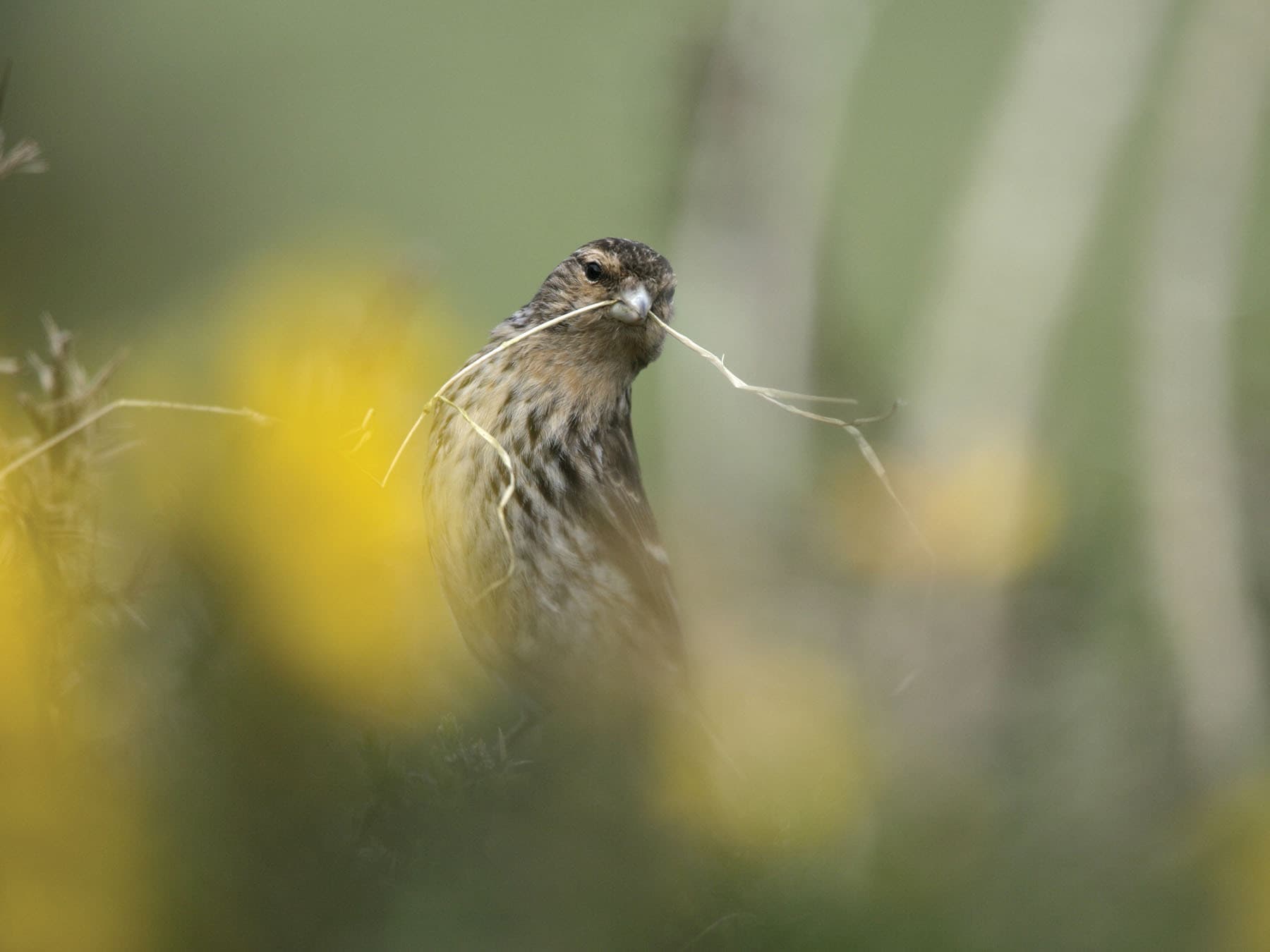
Twites nest in low vegetation, usually deep into bushes or shrubbery, and usually as close to the ground as possible, if not on the ground itself. Nest sites are concealed by grasses, rushes or clumps of roots.
The nest is constructed by the female twite, crafting a deep cup of heather, bracken and grass, and lined with animal fur and soft feathers.
What do Twite eggs look like?
Twite eggs are pale to dark blue in colour, and streaked with reddish-brown spotting. A typical clutch contains 3 to 6 eggs, which are incubated by the female alone for 12 to 13 days.
Do Twites mate for life?
Each breeding season, twites form monogamous pairs, remaining together to raise their young and occasionally pair bonds may last for more than one season. Raising two broods in one year is typical, with the breeding season lasting between April and August.
Behaviour
Are Twites aggressive?
Twites are territorial birds during the breeding season, although occasionally semi-colonial nesting grounds may be established, with up to 15 pairs nesting in close proximity to each other.
Once breeding is complete, larger winter flocks begin to gather, with sometimes hundreds of twites foraging together.
Lifespan and predators
How long do Twites live?
The oldest recorded ringed twite reached an age of 6 years and 7 months. Breeding occurs for the first time at one year.
What are the predators of Twites?
It is believed that the main predators of twites are stoats and weasels.
Are Twites protected?
Twites are a Schedule 1 species under the Wildlife and Countryside Act, 1981, meaning that as well as it being illegal to kill, injure or capture a wild twite, it is also an offence to disturb their nest sites and damage or destroy their eggs.
Are Twites endangered?
Only around 7,850 pairs of twites breed in the UK each year, with only an estimated 12 pairs in England, leading to the species being given Red status on the British Birds of Conservation Concern list in 1996.
Each winter, up to 135,000 migrating twites arrive in Britain and Ireland, which temporarily boosts the UK’s population. Across Europe, they are considered a species of least concern.
Conservation
While globally listed as Least Concern, Twite populations have declined significantly in parts of their range, particularly in the UK.
Conservation efforts focus on maintaining suitable breeding habitats and providing winter feeding areas. Sustainable farming practices play a crucial role in their conservation.
Similar birds
Often mistaken for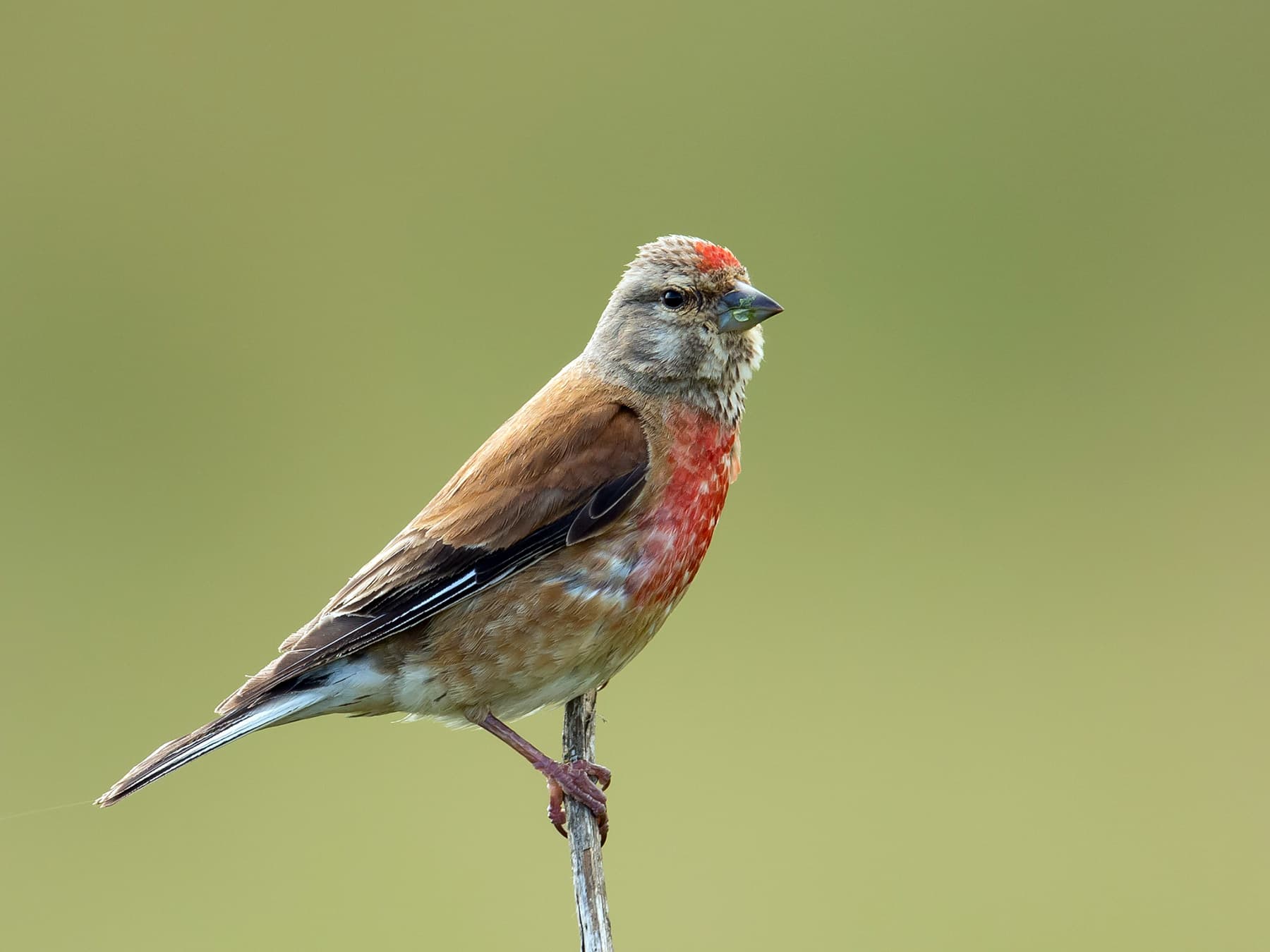
More photos
3 photos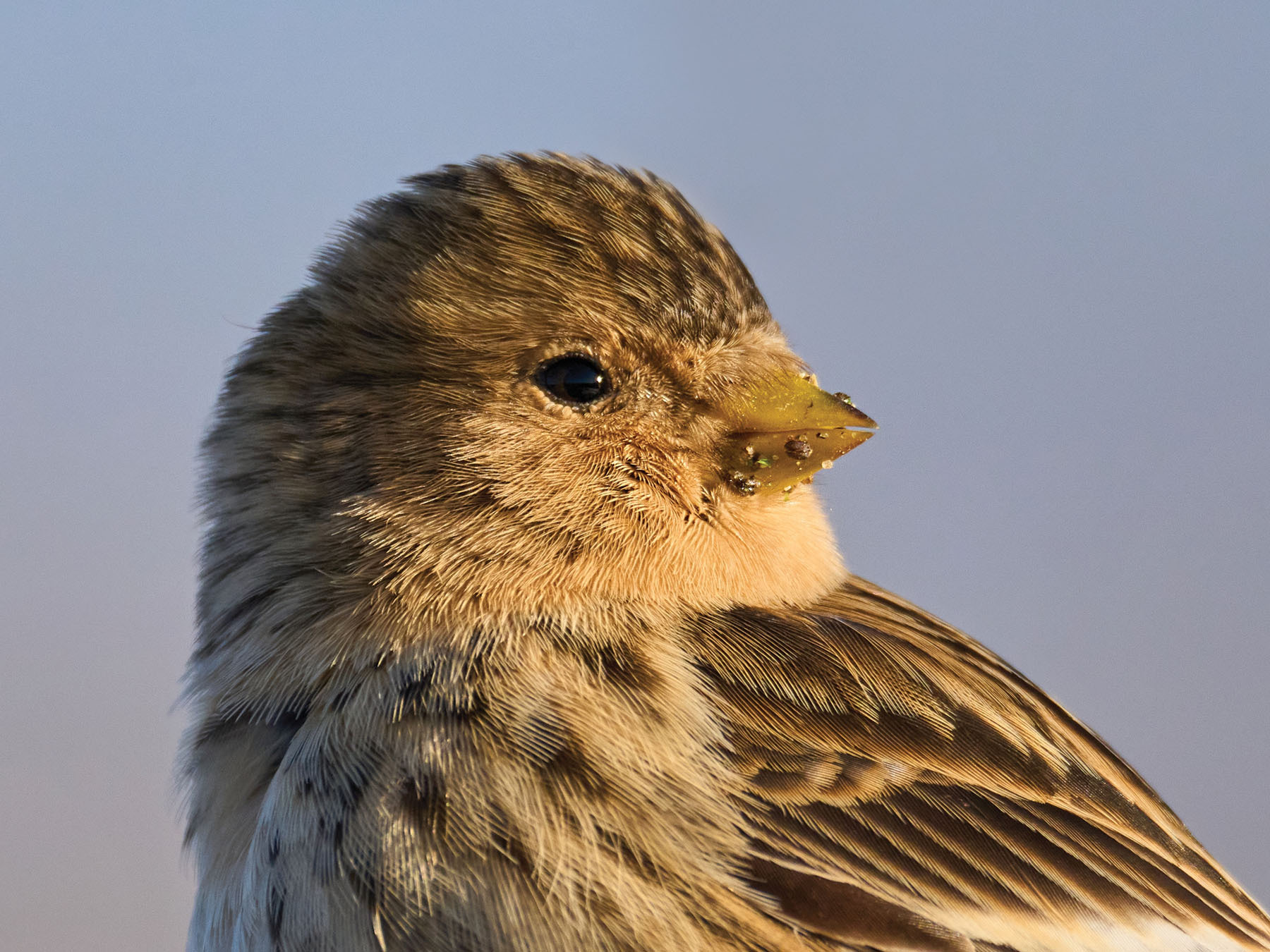
Twite guides
1 guidesQuick facts
- Length
- 13–14 cm
- Wingspan
- 21–23 cm
- Weight
- 15–20 g
- Lifespan
- 3–5 years · oldest recorded 6.1 years
- Family
- Finches
- Migration
- Partial migrant
- Global status (IUCN)
- Least Concern
- World population
- 3,280,000 - 15,100,000 mature individuals
- Population trend
- Decreasing
- Also called
- Mountain Linnet
- Scientific name
- Linaria flavirostris
Questions
1How to attract Twites?
Efforts are underway to revive the struggling twite populations in the UK, with farmers offered advice on how to make their land twite-friendly to encourage breeding by the Twite Recovery Project.
Twites will be attracted by open meadows and grasslands which offer foraging opportunities for a variety of seeds on which they can feed their young.
Moorland sites are used for nesting, and taller vegetation around the edges of heaths, with bracken and plenty of weeds, such as sorrel and dandelion, will also be beneficial to breeding twites.
By agreeing to cut hay later in the year, farmers can encourage breeding twites to nest on their land.
Sources
4- 1BirdLife International. 2017. Linaria flavirostris (amended version of 2016 assessment). The IUCN Red List of Threatened Species 2017: e.T22720438A111128447. Source (opens in a new tab)
- 2BirdLife International. 2017. Linaria flavirostris (amended version of 2016 assessment). The IUCN Red List of Threatened Species 2017: e.T22720438A111128447. Source (opens in a new tab)
- 3BirdLife International. 2017. Linaria flavirostris (amended version of 2016 assessment). The IUCN Red List of Threatened Species 2017: e.T22720438A111128447. Source (opens in a new tab)
- 4Moller, Sociality, age at first reproduction and senescence: comparative analyses of birds, J Evol Biol, 19:682-689 (2006) Source (opens in a new tab)

Checked by
Nathan Cope, founder and editor
Nathan founded Birdfact and leads its writers and contributors in the UK, the US and Canada. He has watched and studied birds for more than ten years, and checks every article and species guide before it’s published.