


House Finch
Hollywood Finch · Haemorhous mexicanus
By the Birdfact teamChecked by Nathan Cope
See it in 3D
2 plumages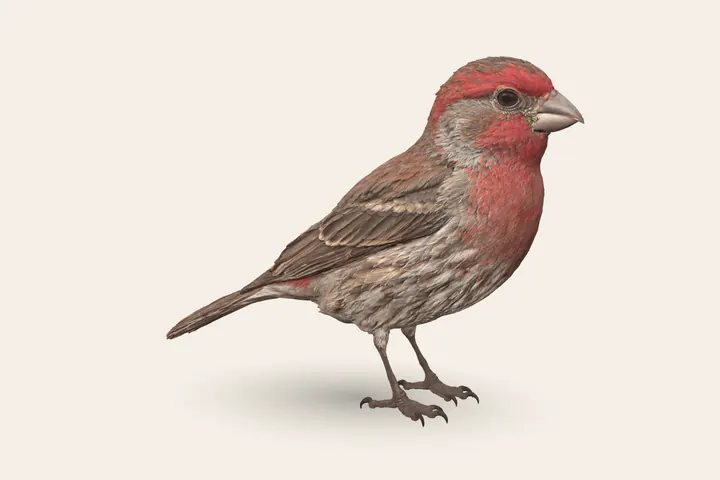 3D model
A House Finch is 5–6 in (13–15 cm) long, bill to tail.
3D model · Male · Length 5–6 in (13–15 cm) · How we make our birds · Report a problem
© 2026 NC Digital Limited (Birdfact). All rights reserved. This 3D model may be viewed on this page and shared by link only. Downloading, extracting, copying or reusing it, or using it to train machine-learning models, is not permitted without our written permission. Using our models
On this page16 sections
How to recognise it
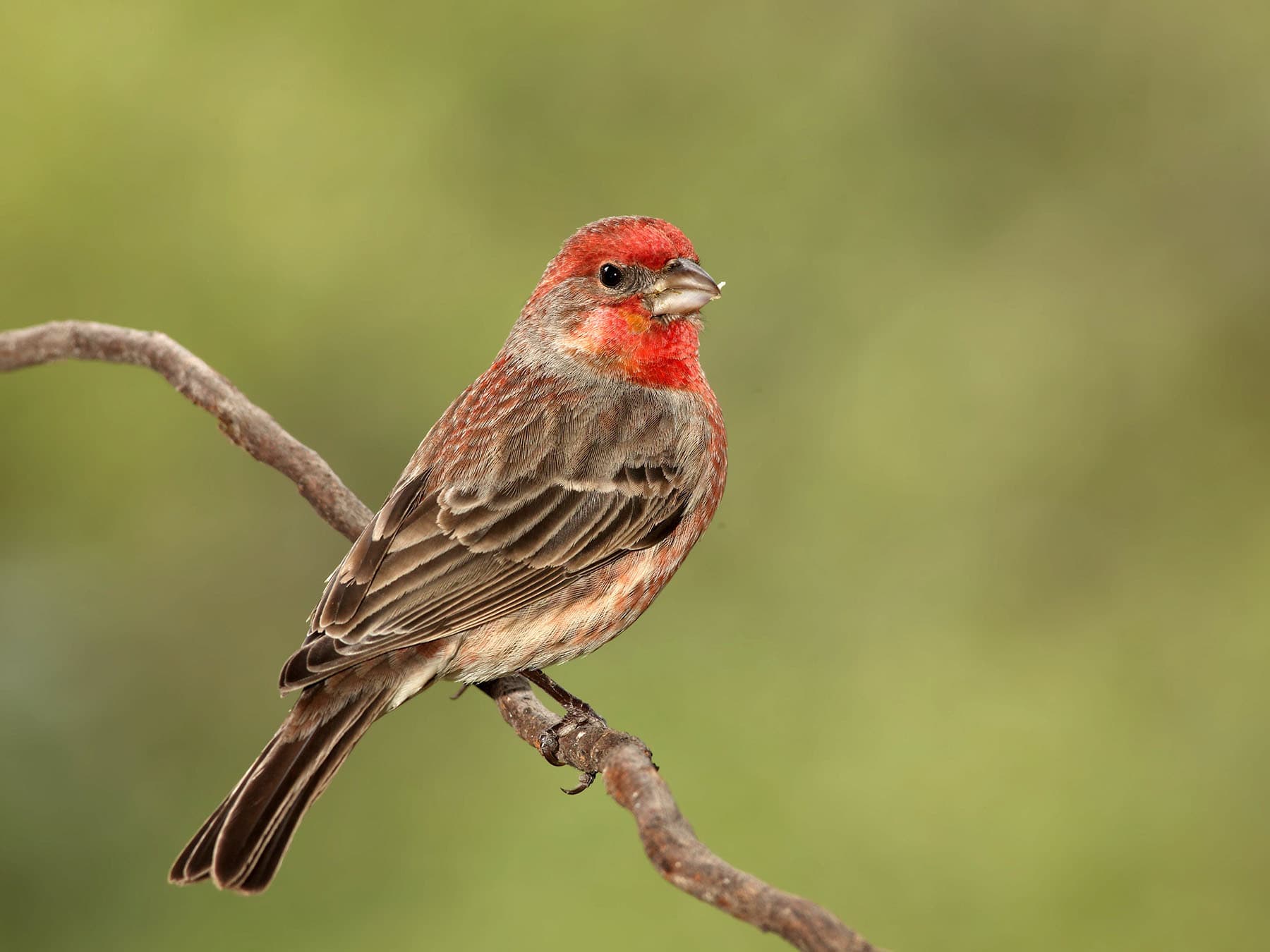
A House Finch is a small finch, 5 to 6 inches (13-15 cm) long,1 about the size of a House Sparrow but slimmer.2 It has a stout bill with a curved top edge, a flattish head, short wings that make the tail look long, and only a shallow notch in the tail.
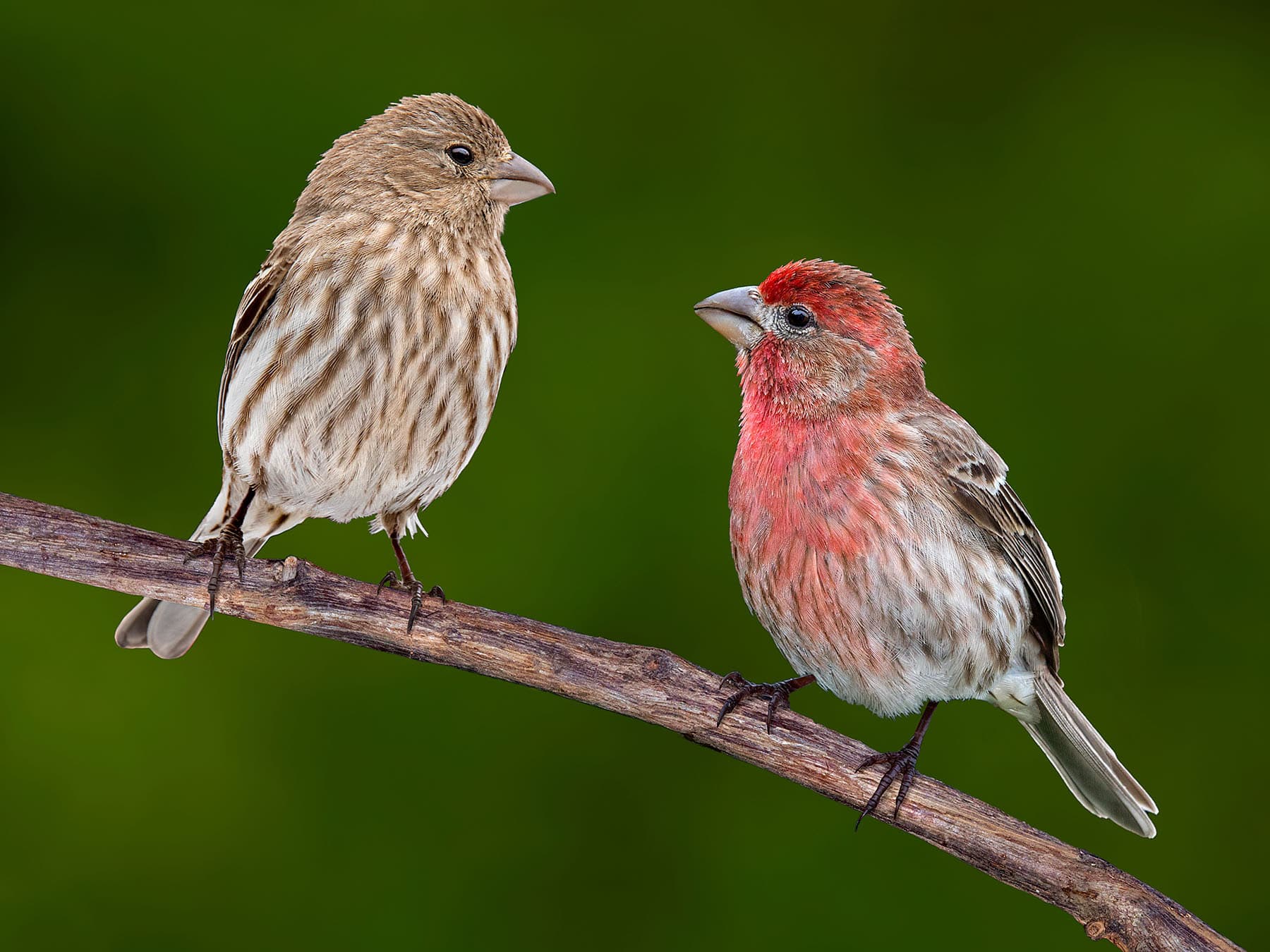
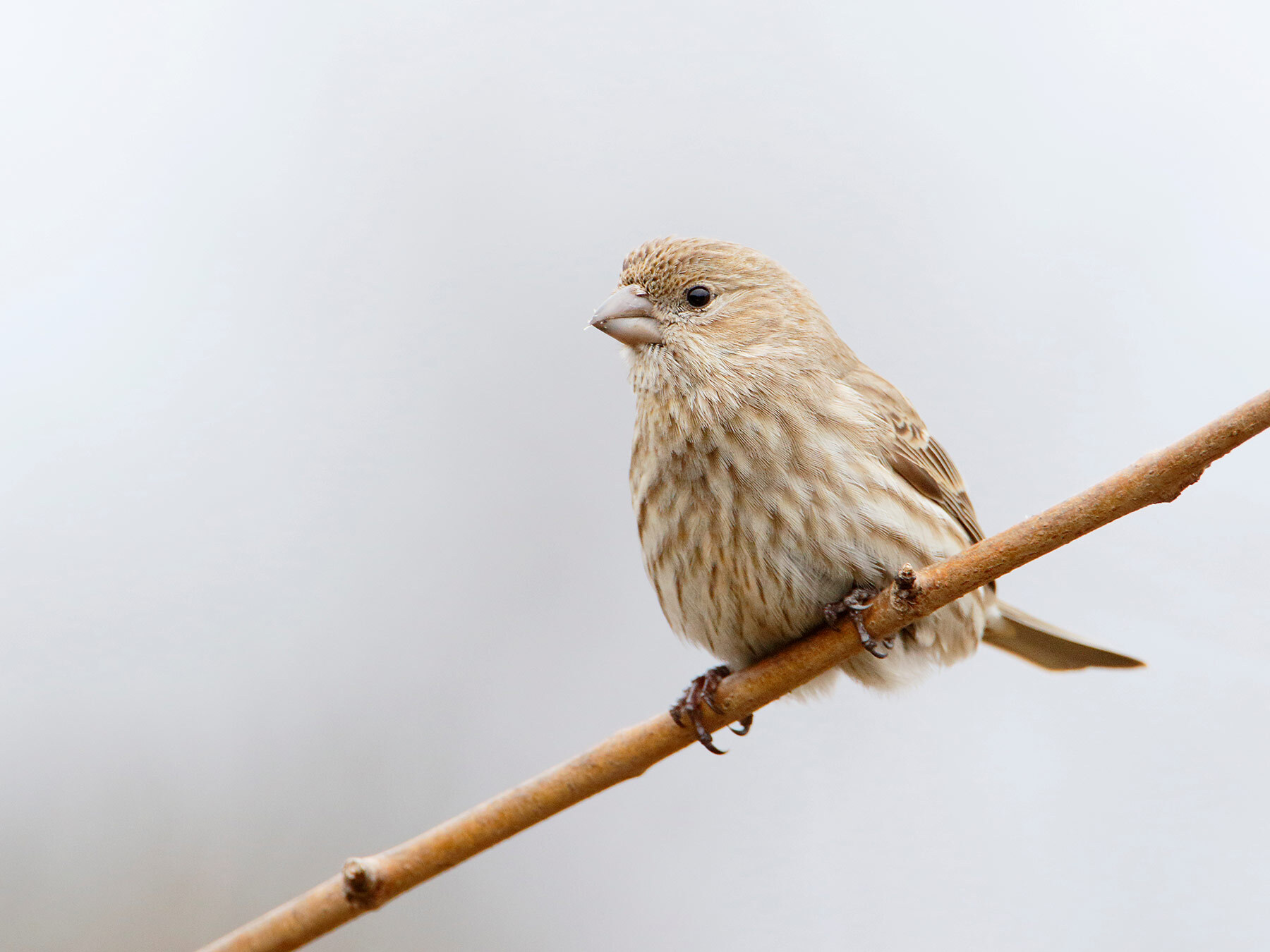
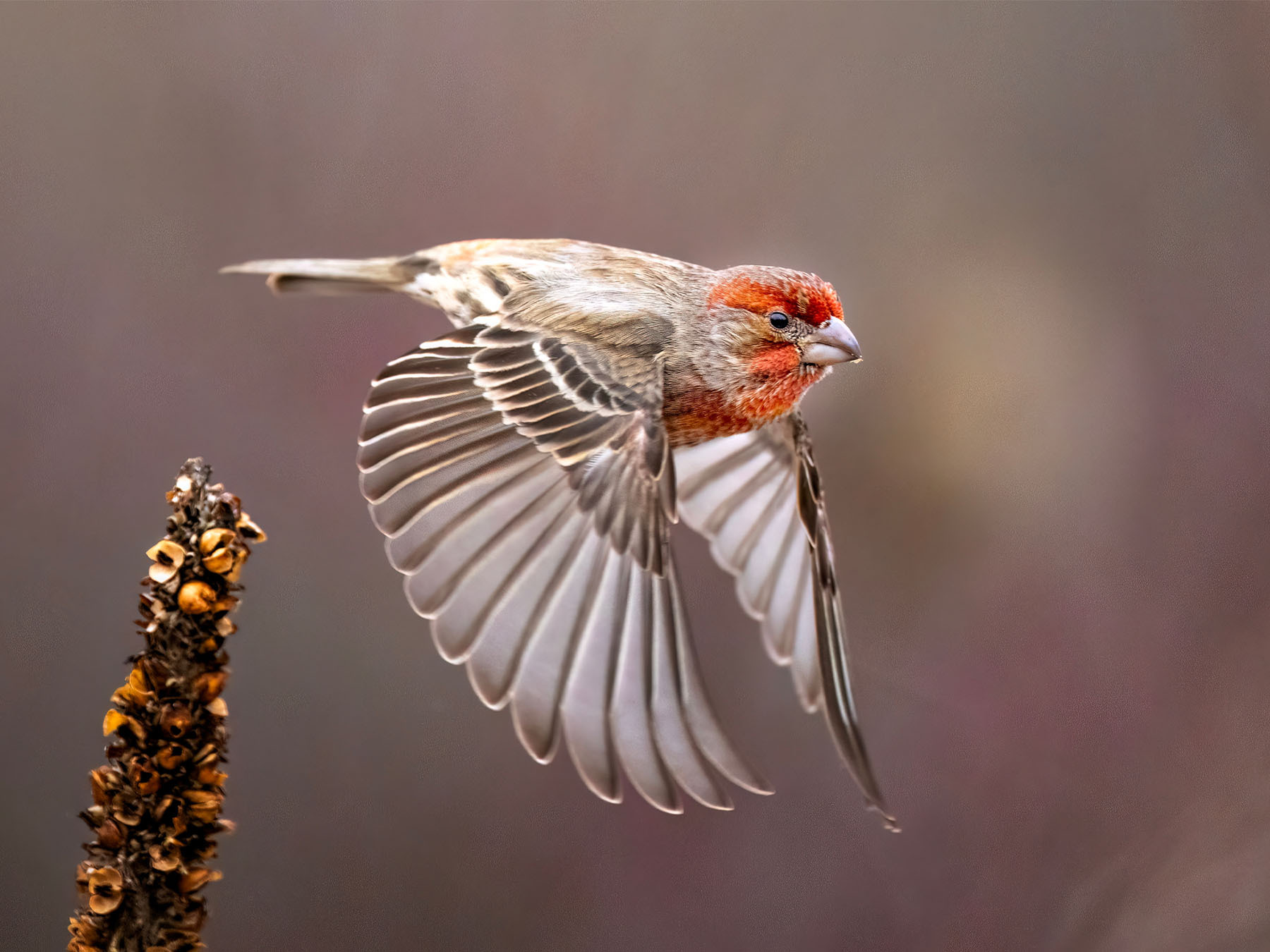
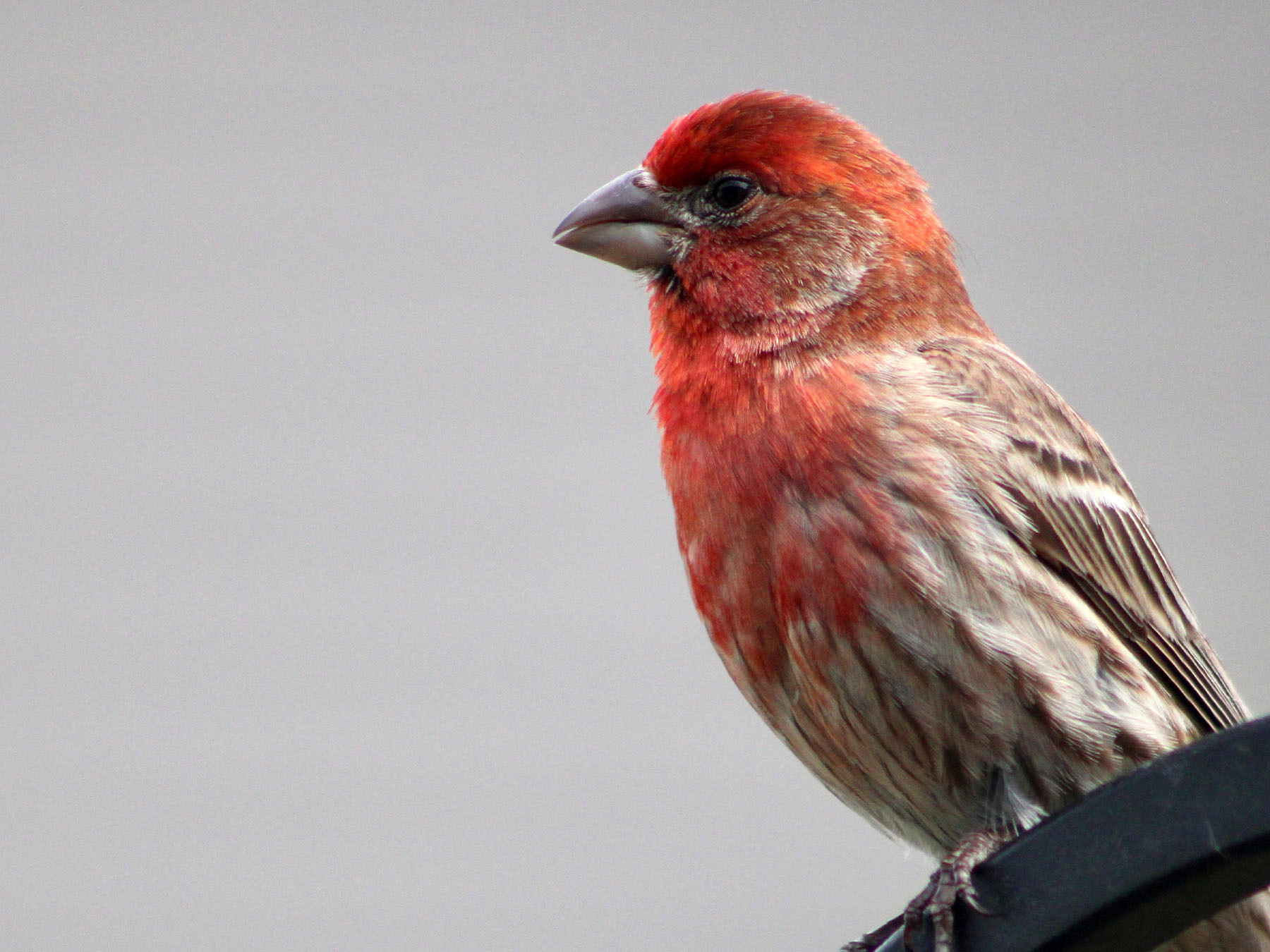
The adult male is red on the forehead, the stripe over the eye, the throat and the upper breast, often with a browner crown and cheeks. His back, wings and tail are streaky brown, his belly whitish with brown streaks down the flanks, and his rump is red, which shows when he flies.2 The female lacks the male's red: she is plain grayish-brown, with thick, blurry streaks all over the underparts and a face with no clear markings.
House Finches are noisy and social. Look for small flocks at feeders, on lawns and on wires, or perched high in a tree. They sit at a feeder cracking seeds rather than grabbing one and flying off, and their flight is bouncy.
Male, female and young
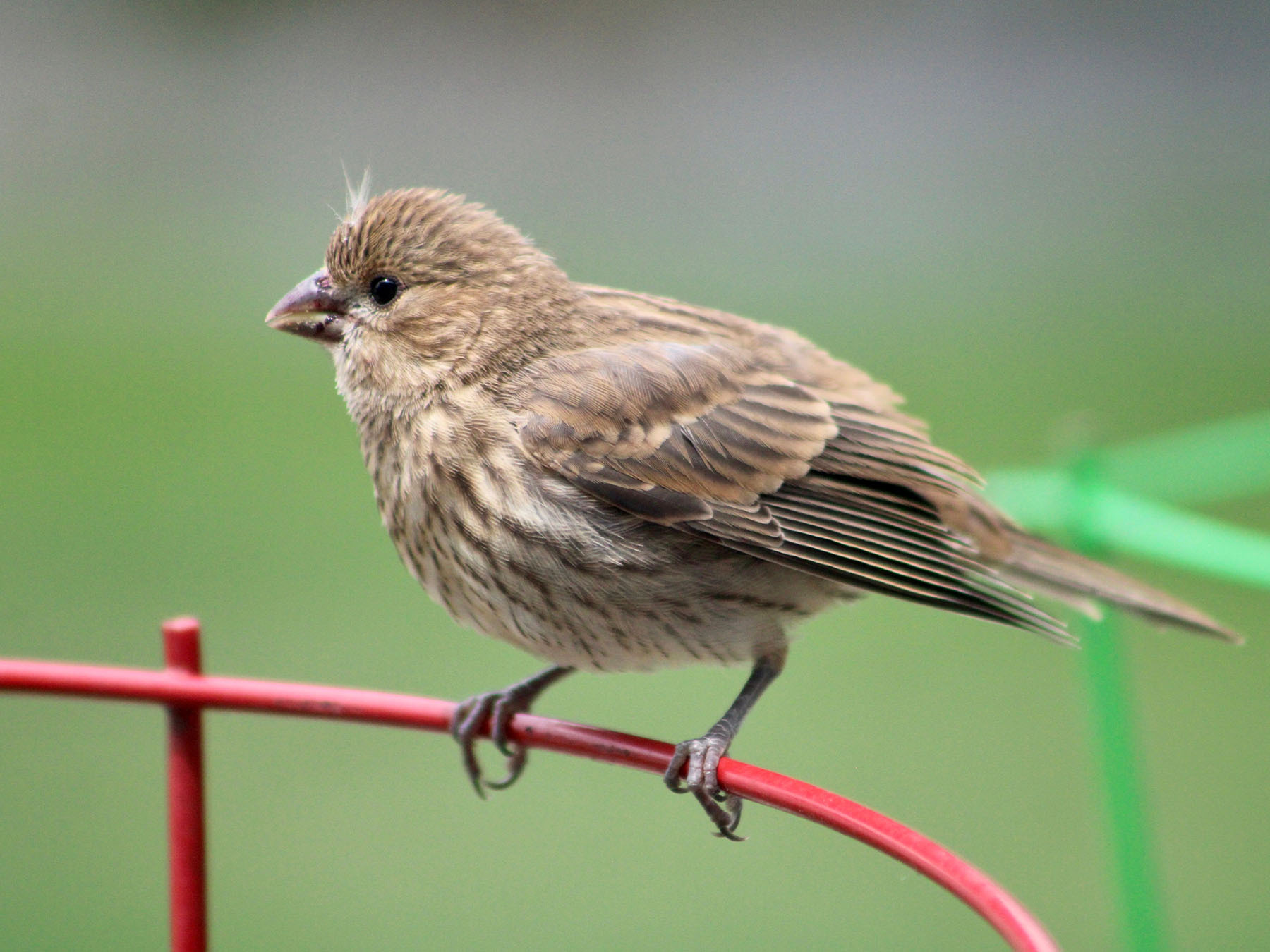
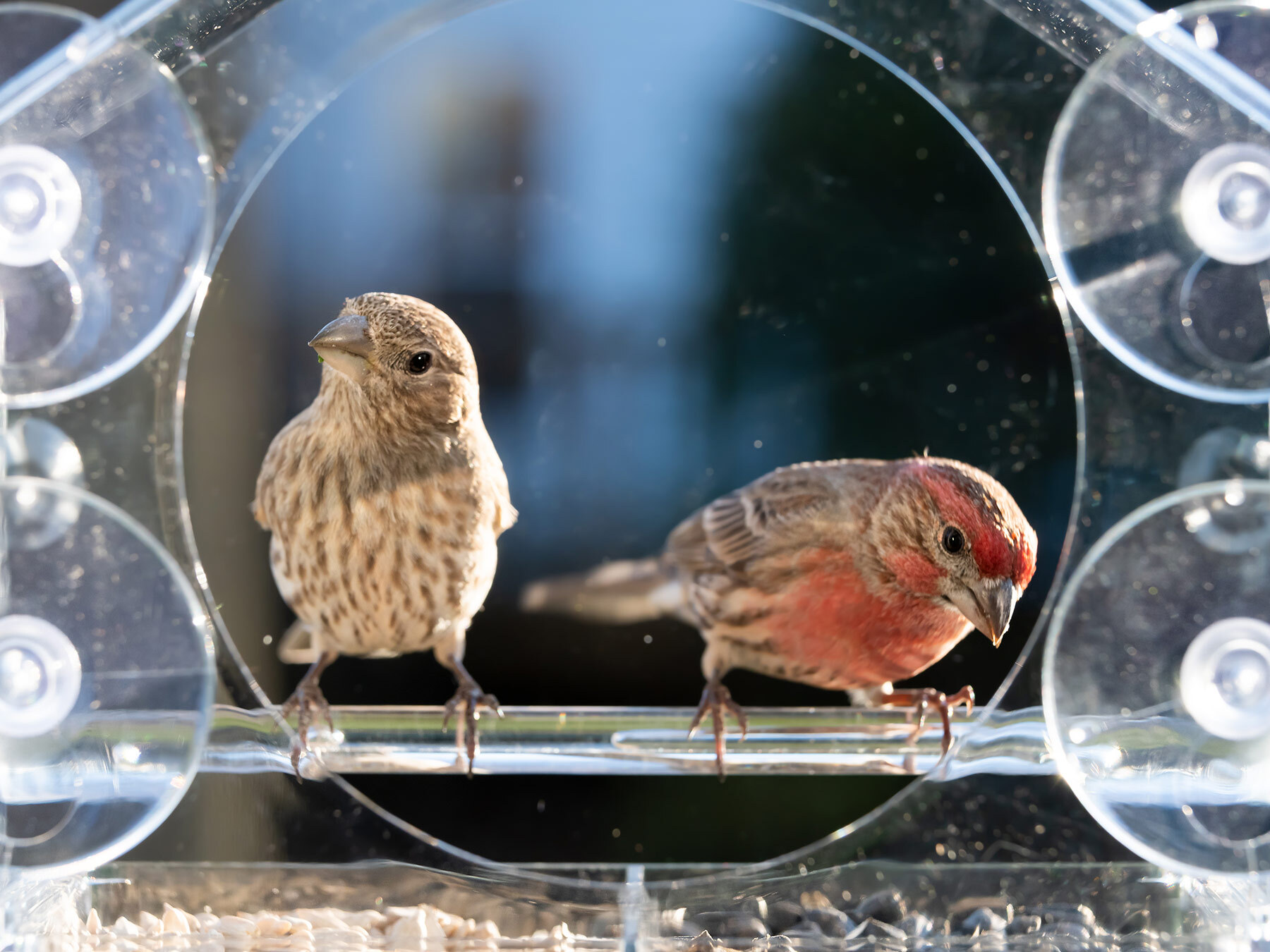
Males and females are easy to tell apart: only the male is red. Some females show a faint wash of yellow or red, never as bright as a male's; how many varies by region, from none to as many as 60%.3 Juveniles, this year's young, look like females but are fluffier, with finer streaks and buff edges to the wing feathers; Birds of the World puts their molt into adult-like plumage at 30 to 60 days old.
Unlike Purple and Cassin's Finches, most young male House Finches molt into red in their first fall, so a brown House Finch in adult plumage is usually a female. More: male, female and young House Finches.
Orange and yellow males
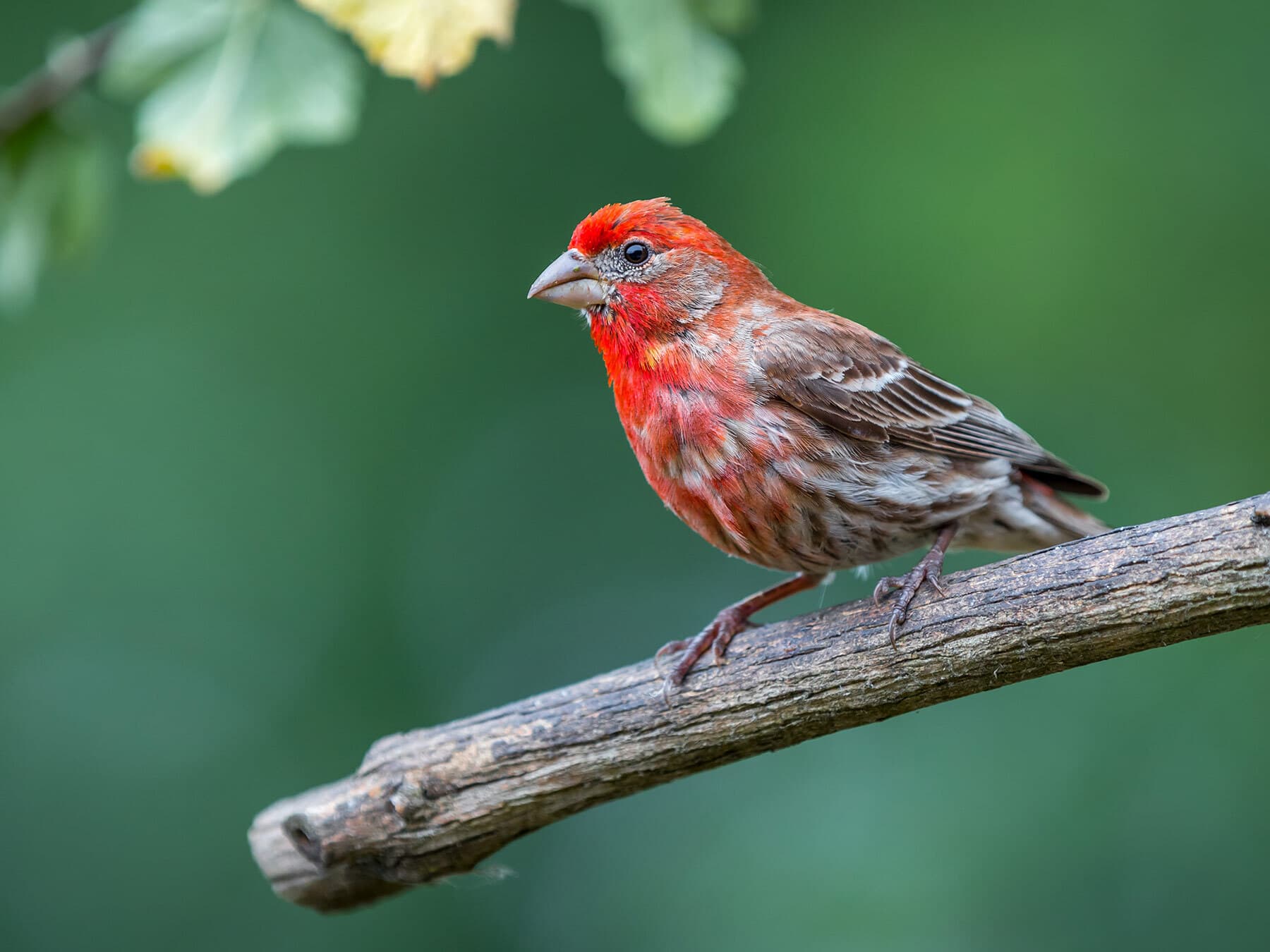
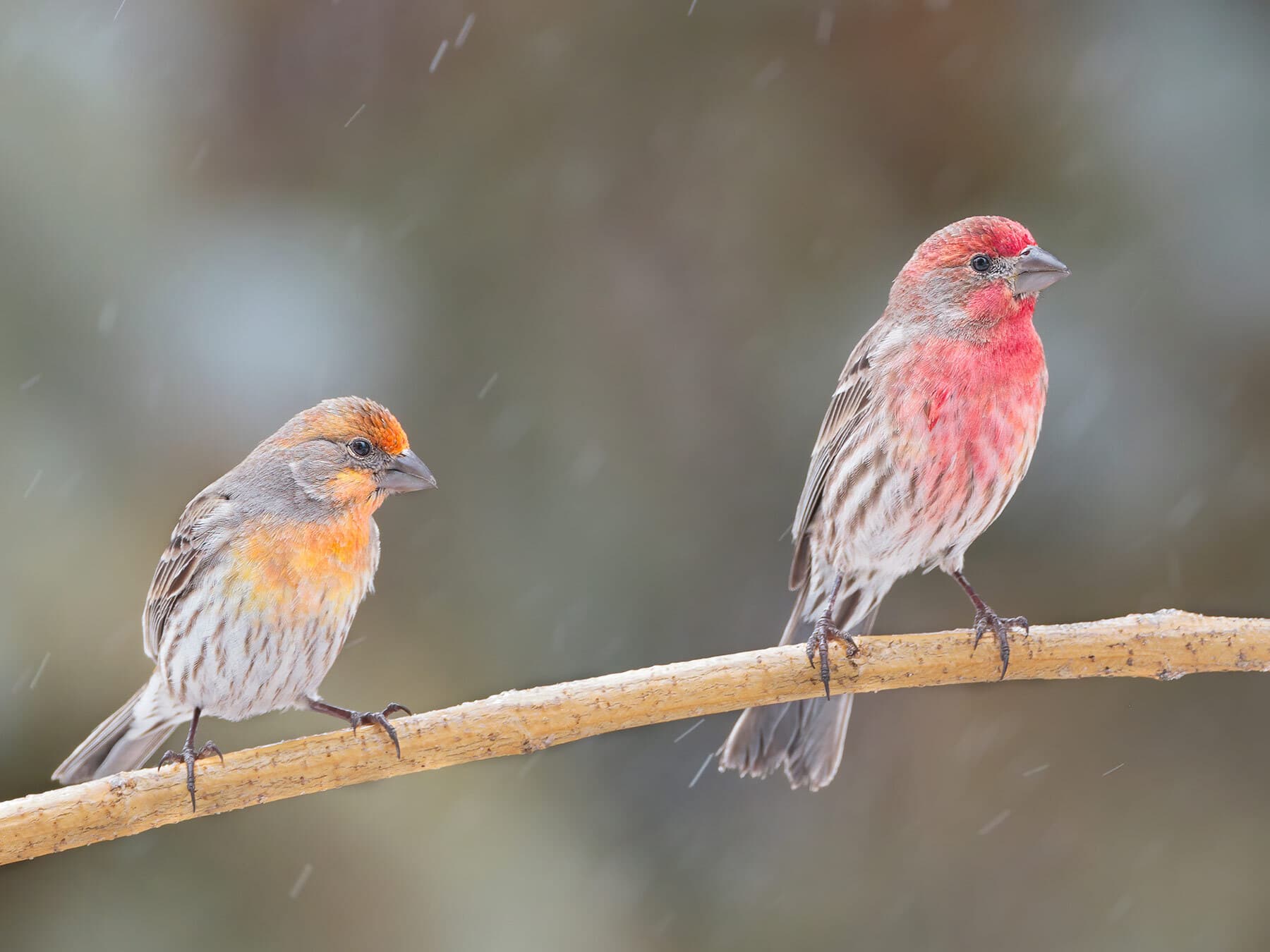
Not every male is red. Some are orange or yellow, and some are a patchy mix of red, orange and yellow feathers. The color comes from carotenoid pigments in the food a male eats while his new feathers grow during the molt; birds cannot make bright red or yellow pigments directly.2 In captivity, males on a diet poor in carotenoids grew pale yellow feathers, males given beta-carotene grew pale orange ones, and males given canthaxanthin grew bright red ones.4 So a yellow male is not a young bird or a different species: the same male may be red in one year and orange or yellow in another.
Identification: similar birds
Purple Finch. The male is washed red over the head, back and wings, with no bold brown streaks on the flanks; the female has a whitish eyebrow and a dark whisker stripe, with sharp streaks on a white breast. Purple Finches are chunkier, with a shorter tail, and mostly breed in conifer and mixed woods. Side by side: House Finch or Purple Finch?
Cassin's Finch. A western mountain bird of conifer forests, usually higher up than House Finches. The male has a sharply defined red cap and a paler pink chest, and the female has sharper streaks than a female House Finch's blurry ones.
House Sparrow. Stockier, with no red: the male has a gray crown and a black bib, and the female is plain below with a pale stripe behind the eye. Side by side: House Sparrow or House Finch?
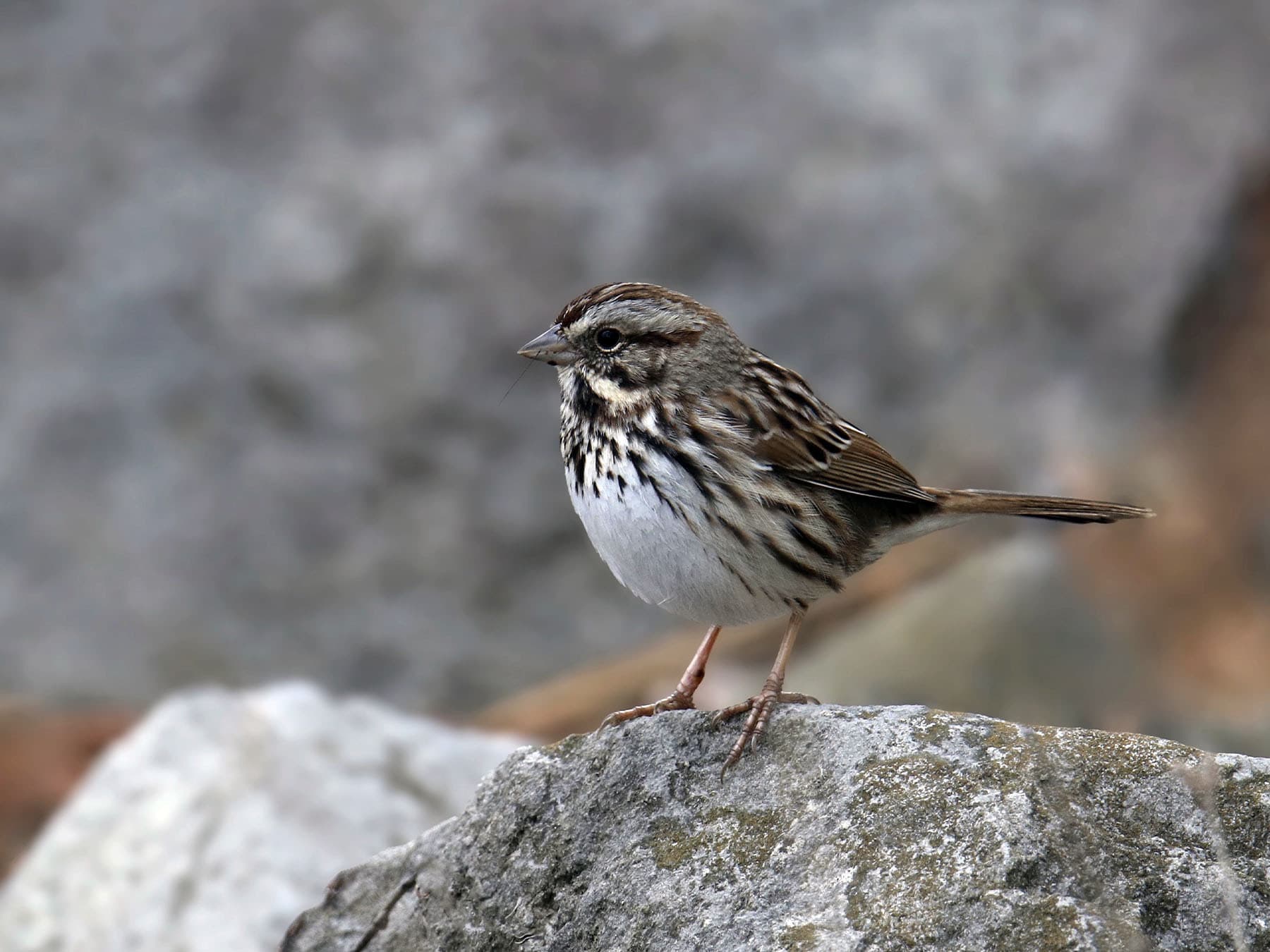
Female House Finch or Song Sparrow? A Song Sparrow has a boldly striped head with a dark whisker stripe, streaks that often run into a spot in the middle of the breast, and a long, rounded tail.
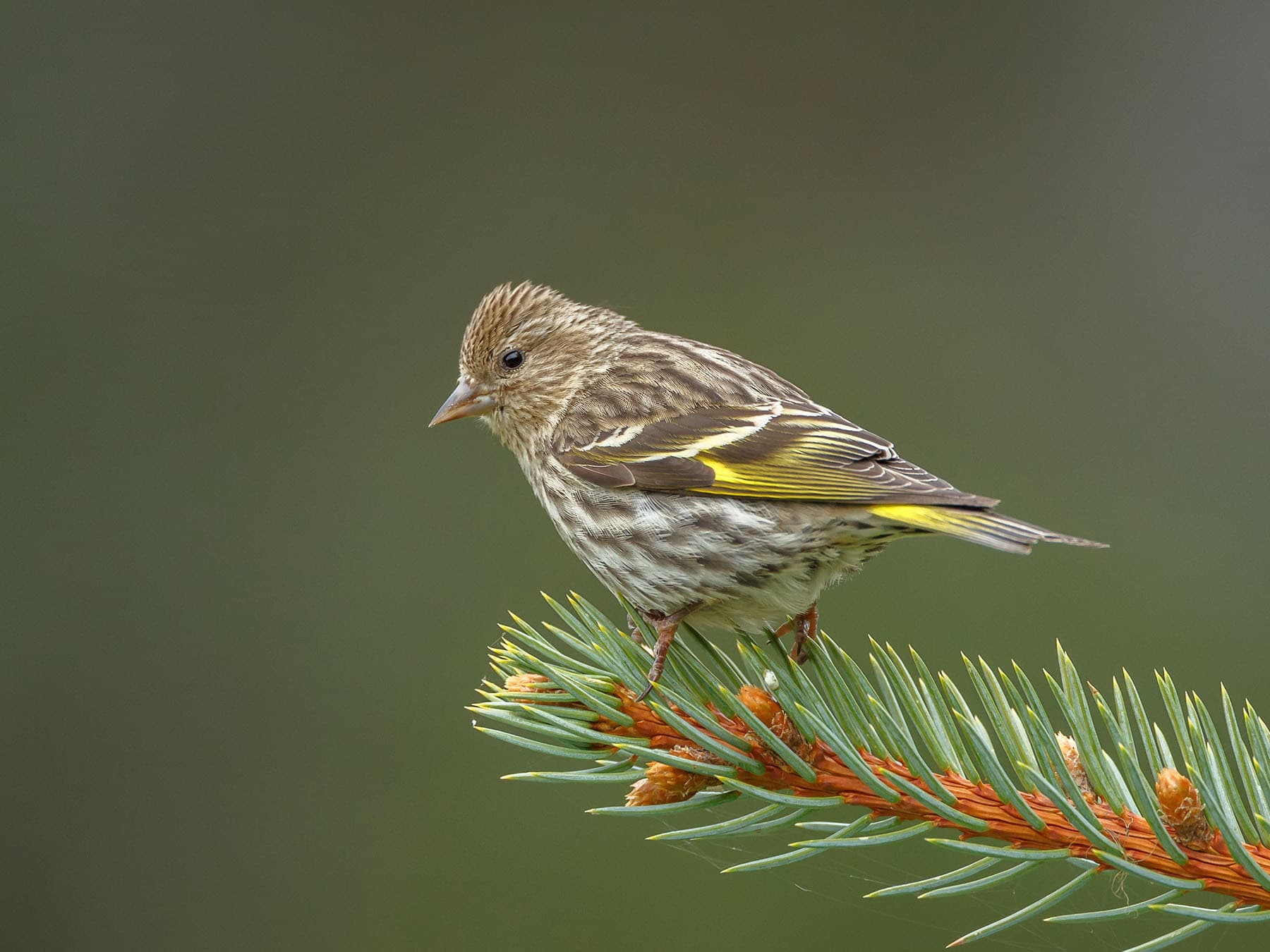
Pine Siskin. Smaller and streaky, with a thin, sharp-pointed bill and yellow edges in the wings and tail.
Its size
Adults- Length
- 13–15 cm
- Wingspan
- 20–25 cm
- Weight
- 16–28 g
Its song and calls
The male sings a long, hoarse, twittering warble that jumps quickly between high and low notes and often ends in a down-slurred note, usually about 2 to 3 seconds long.3 Compared with a Purple Finch, the song is slower, harsher and higher, and that dropping last note gives it away.
Males sing all year except during the molt, from late July to October, and most in the first hours after sunrise and before sunset. Each male has a small repertoire, 2 to 6 song types in New York and 2 to 10 in southern California. Females sometimes sing too, mostly when begging their mate for food. The call is a sharp "cheep", like a young House Sparrow's, given by both sexes as they feed and fly. Hear them: House Finch song and calls.
- Song0:00 / 0:58
Recorded in Iowa, United States · April 2012
- Calls0:00 / 0:14
Recorded in British Columbia, Canada · June 2022
When and where to see it
OctoberIn season
Most recorded in October
- 1. New Mexico4.0%
- 2. Colorado3.6%
- 3. Utah3.3%
- 4. Arizona3.2%
- 5. Idaho2.9%
Each dot is a county, state or province: the bigger and darker, the larger the bird’s share of that place’s bird records that month. Grey dots: no regular records. The ringed point is the centre of the bird’s records this month; the arrow shows how it moved since last month, and the dashed loop its path through the year. “Arrivals” colours places where it becomes regular this month (orange) or is in its last regular month (grey). GBIF eBird Observation Dataset, 2019–2024. Map data: Natural Earth, US Census Bureau; place centres © OpenStreetMap contributors.
In your area
See when the House Finch is recorded in your county, state or province.
How often the House Finch turns up in the United States and Canada through the year, from birdwatchers' records.
United States
Resident · all year · most records in February
Canada
Resident · all year · most records in February
Show as a table
| Month | United States | Canada |
|---|---|---|
| January | 1.9% (regular) | 1.6% (regular) |
| February | 2.2% (regular) | 1.8% (regular) |
| March | 1.9% (regular) | 1.5% (regular) |
| April | 1.6% (regular) | 0.99% (regular) |
| May | 1.3% (regular) | 0.61% (regular) |
| June | 1.6% (regular) | 0.58% (regular) |
| July | 1.8% (regular) | 0.72% (regular) |
| August | 1.7% (regular) | 0.77% (regular) |
| September | 1.6% (regular) | 0.65% (regular) |
| October | 1.9% (regular) | 0.96% (regular) |
| November | 1.9% (regular) | 1.4% (regular) |
| December | 2.0% (regular) | 1.7% (regular) |
Worldwide: recorded regularly in 3 countries
Countries where it was recorded in at least 3 of the 6 years 2019–2024. Linked countries have their own bird list.
North America (3)
Data: EOD – eBird Observation Dataset (Cornell Lab of Ornithology), accessed via GBIF.org, CC BY 4.0. Records from 2019–2024, aggregated and filtered by Birdfact. How these lists are made
House Finches live across most of the United States, southern Canada and Mexico, all year round in most places. In the West they live in deserts, chaparral, oak savanna, streamside trees and open conifer forest, and in subalpine scrub up to about 11,500 ft (3,500 m), as well as in towns and on farms. In the East they are almost entirely birds of towns, suburbs and farmyards: buildings, lawns and small conifers, even city centers.
Spotting tips
Listen for the cheerful warble from a rooftop, wire or treetop, then look for the male's red head and breast. At feeders, House Finches often come in noisy groups and stay, shelling seeds; check the females for blurry streaks and a plain face.
Range: native in the West, introduced in the East
The House Finch is native to western North America and Mexico, first at home in hot deserts and other dry, open country. In the 1930s pet dealers shipped western birds east and sold them as "Hollywood Finches". House Finches had been protected since 1936 under the migratory bird treaty with Mexico, and in 1940 federal officials stopped the trade; the unsold birds were probably released.5 The first recorded wild one in the East was a male at Jones Beach, Long Island, on April 11, 1941, and the first nest was found on Long Island in 1943.
From there they spread across the East, and by 1993 they bred commonly through most of the eastern US and southeastern Canada, while the western range spread too. The two populations have now met. House Finches were also taken to Hawaii before 1870. More: House Finch range, introduction and movements.
Do they migrate?
Mostly not. In most of the West, House Finches stay put, apart from short moves to valleys and lower ground in winter, or into towns where they have newly settled in the north. But the eastern birds became partly migratory: by the early 1960s about a third of them were moving more than 50 miles (80 km) between summer and winter, mostly southwest, and young birds move more than adults.6 Since about 80% of the southern California birds they are thought to descend from never move at all, migration seems to have evolved in the East within a few decades.
What it eats
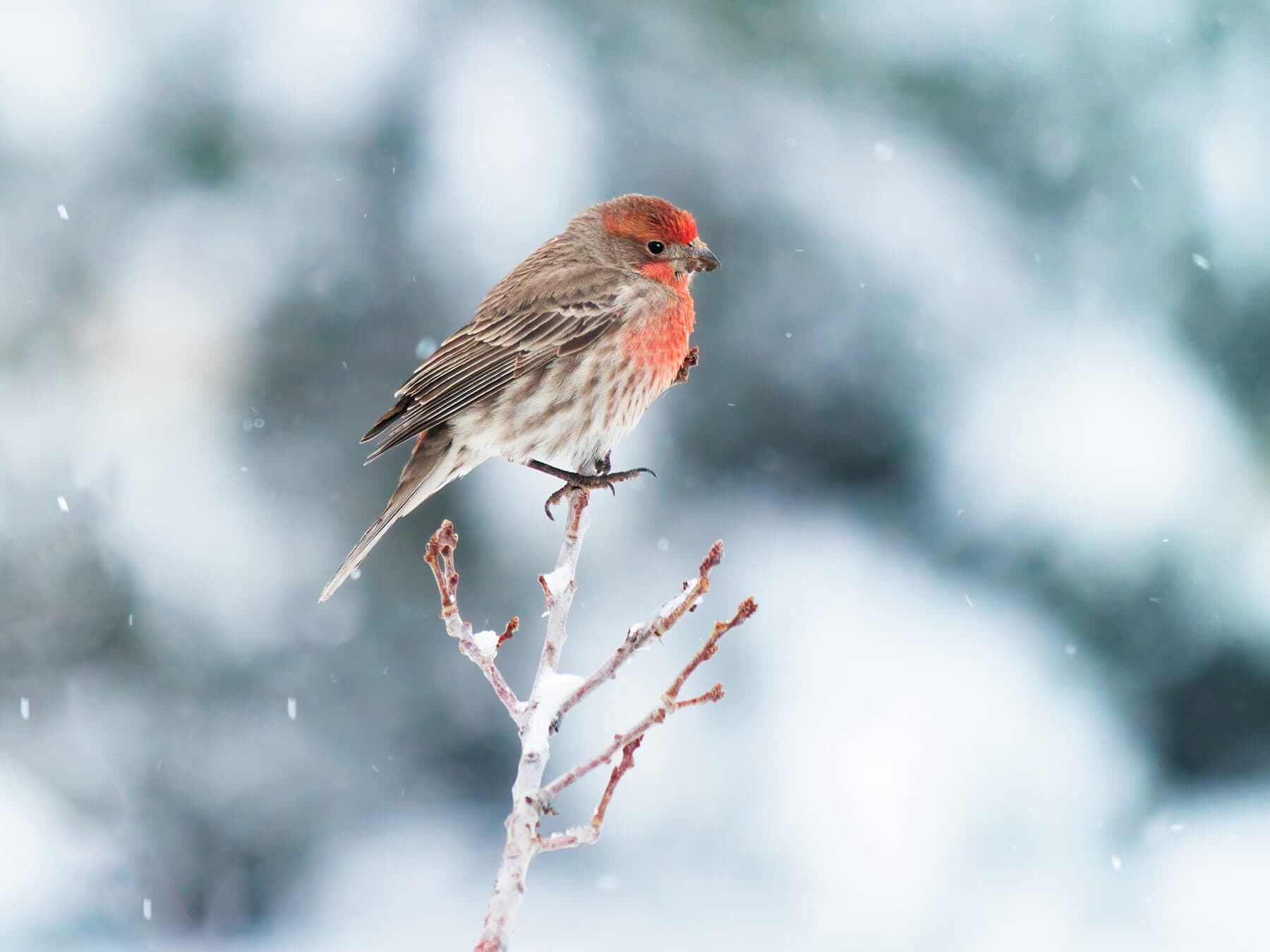
Almost entirely plant food. In a classic California study, seeds, buds, flowers, leaves and fruit made up 97% of the diet in all seasons, with weed seeds the staple. In early spring House Finches eat tree buds, in summer and fall fruit such as mulberries and cherries, and in the desert cactus fruit and flowers.3 Even the nestlings are fed almost entirely on plant food, which All About Birds calls fairly rare among birds.2
Feeding them in your yard
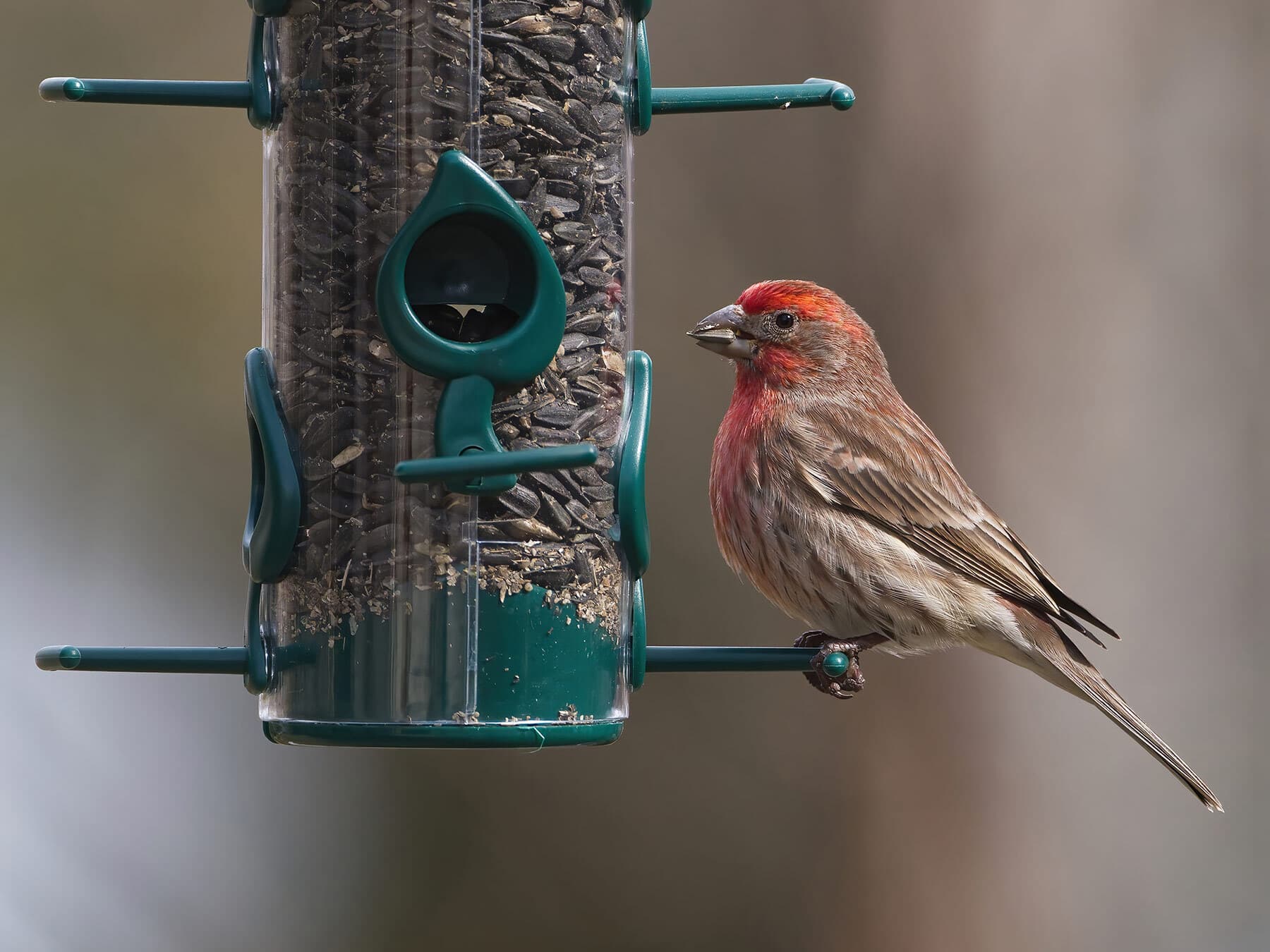
Project FeederWatch lists black-oil sunflower seed, hulled sunflower seed, nyjer and safflower for House Finches, in tube, hopper or platform feeders.7 Given a choice they prefer small black-oil sunflower seeds to large striped ones, millet or milo, and flocks of 50 or more may come to one yard. More: what House Finches eat.
Keep feeders clean. House Finches are prone to an eye disease that spreads at feeders (see below).
Nesting and breeding
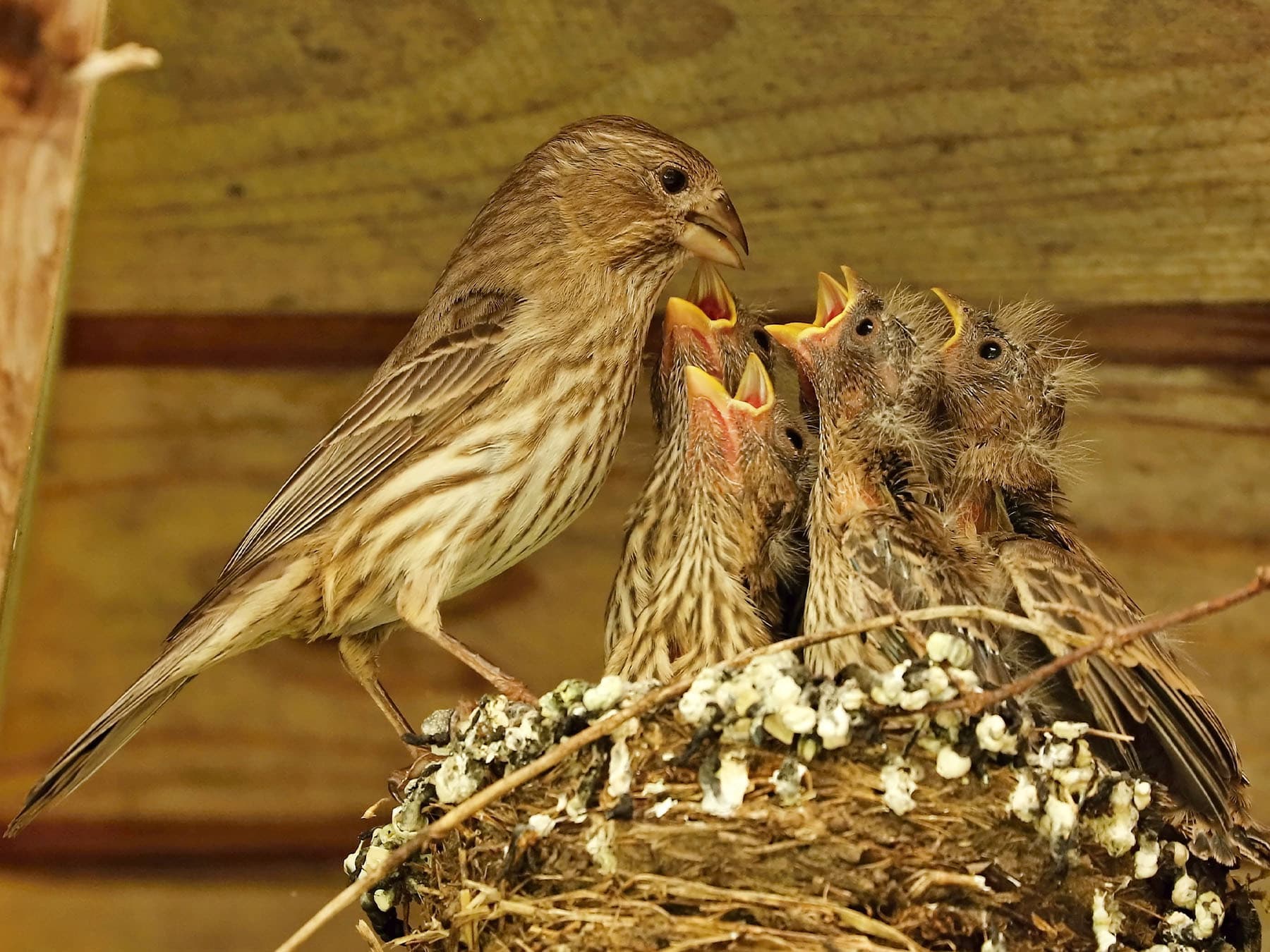
House Finches nest almost anywhere with a solid base and some cover overhead: conifers, palms, cactus, ivy on walls, ledges, vents, street lamps and hanging planters.3 They rarely use enclosed nest boxes, though they will use nest shelves.8 The female builds an open cup of fine stems, rootlets, string and feathers and lays usually 4 or 5 pale blue eggs, finely speckled black. She incubates them for 13 to 14 days, and both parents feed the chicks, which leave the nest about 12 to 15 days after hatching.1 The male often brings the incubating female food, though in Arizona and Montana studies many males did not.
Most pairs nest more than once a season, from February in the Southwest to August. In Michigan a female built up to six nests in a season, but no pair raised more than three broods; in Montana and Alabama some pairs raised up to five in a row. More: House Finch nests, eggs and young.
Behaviour
House Finches are sociable, rarely alone outside the breeding season, and gather in flocks of up to several hundred. They often nest in loose colonies and defend nothing but their mate and the nest itself: in towns, two pairs may nest 3 ft (1 m) apart. In winter flocks, females are generally dominant to males.
Pairs form in winter flocks. The male courts with a "butterfly flight", climbing slowly 65-100 ft (20-30 m) into the air and gliding down singing, and he feeds the female before nesting, and often while she incubates. In Geoffrey Hill's Michigan studies, females preferred colorful males: males that had been artificially brightened paired sooner and more often than others.9 Brighter males were also more attentive at the nest and survived the winter better. More: do House Finches mate for life?
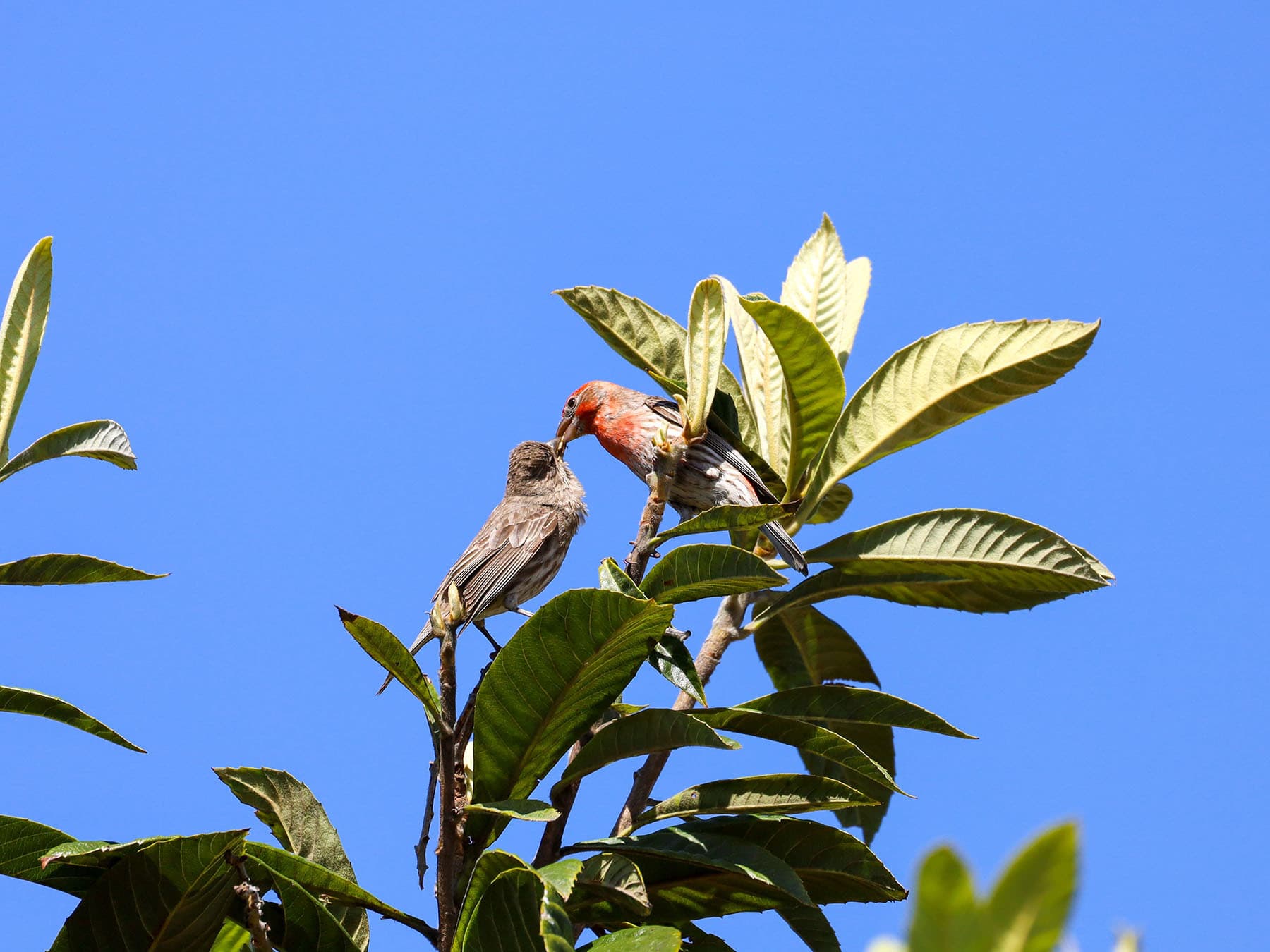
Lifespan and predators
Many House Finches die young, but survivors can live for years: in studies in Michigan, Alabama and Montana, 39-63% of adults survived each winter. The oldest House Finches on the Bird Banding Laboratory's list are 11 years, 7 months, two banded birds: a female banded in New York in 1973 and caught there again in 1985, and a male banded in Maryland in 1969 and found injured there in 1980.10 In a Montana field study, one male banded as an adult in 1993 was seen every year until 2006, so he was older still (Birds of the World gives at least 12 years).
Predators and other dangers
At feeders, House Finches are taken by house cats and by Cooper's and Sharp-shinned Hawks; Blue Jays, grackles, crows, chipmunks, squirrels and snakes raid nests. Brown-headed Cowbirds lay eggs in House Finch nests, especially in newly settled northern colonies, but in one Montana study, all 27 cowbird chicks that hatched died within a week.
Conservation
The House Finch is one of the most common birds in North America, with about 40 million breeding birds, and is of low conservation concern.2 Numbers have fallen slightly since the 1960s, and Christmas Bird Counts showed a slow decline in the US and Canada from 1993 to 2010. It is a native bird, protected under the Migratory Bird Treaty Act.11
Population and eye disease
The biggest threat is House Finch eye disease, mycoplasmal conjunctivitis. It is caused by a strain of the poultry bacterium Mycoplasma gallisepticum and gives birds red, swollen, runny or crusty eyes, sometimes swollen shut. It was first seen in January 1994 at feeders around Washington, DC.12 Within three years eastern House Finch populations fell by up to 60%, and the disease has since spread to the West.
It poses no known threat to people. If you see a finch with swollen eyes, take your feeders down, wash them in one part bleach to nine parts water (a 10% solution), let them dry before putting them back, and rake up old seed and droppings underneath. More: House Finch eye disease.
Similar birds
Often mistaken for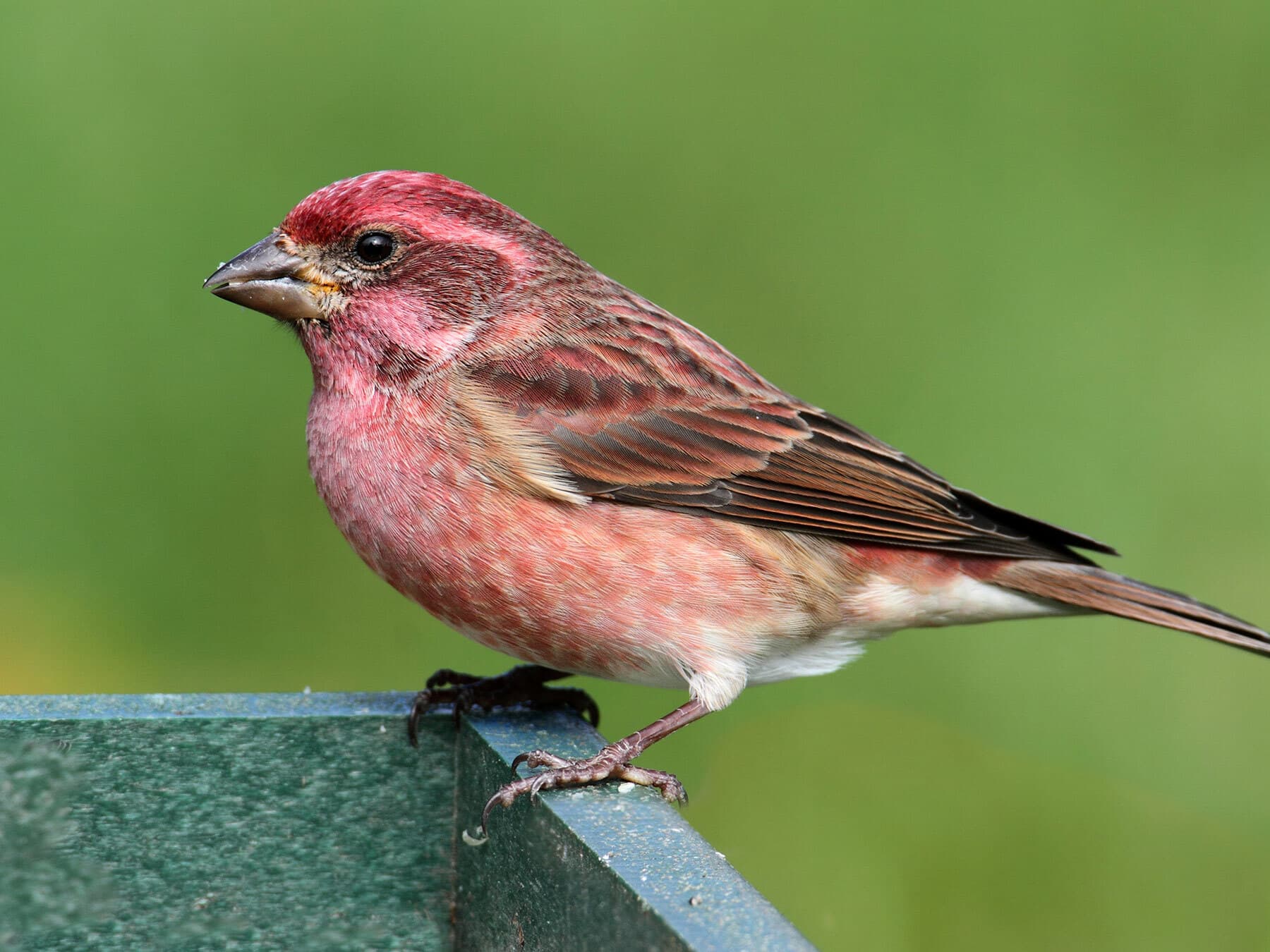
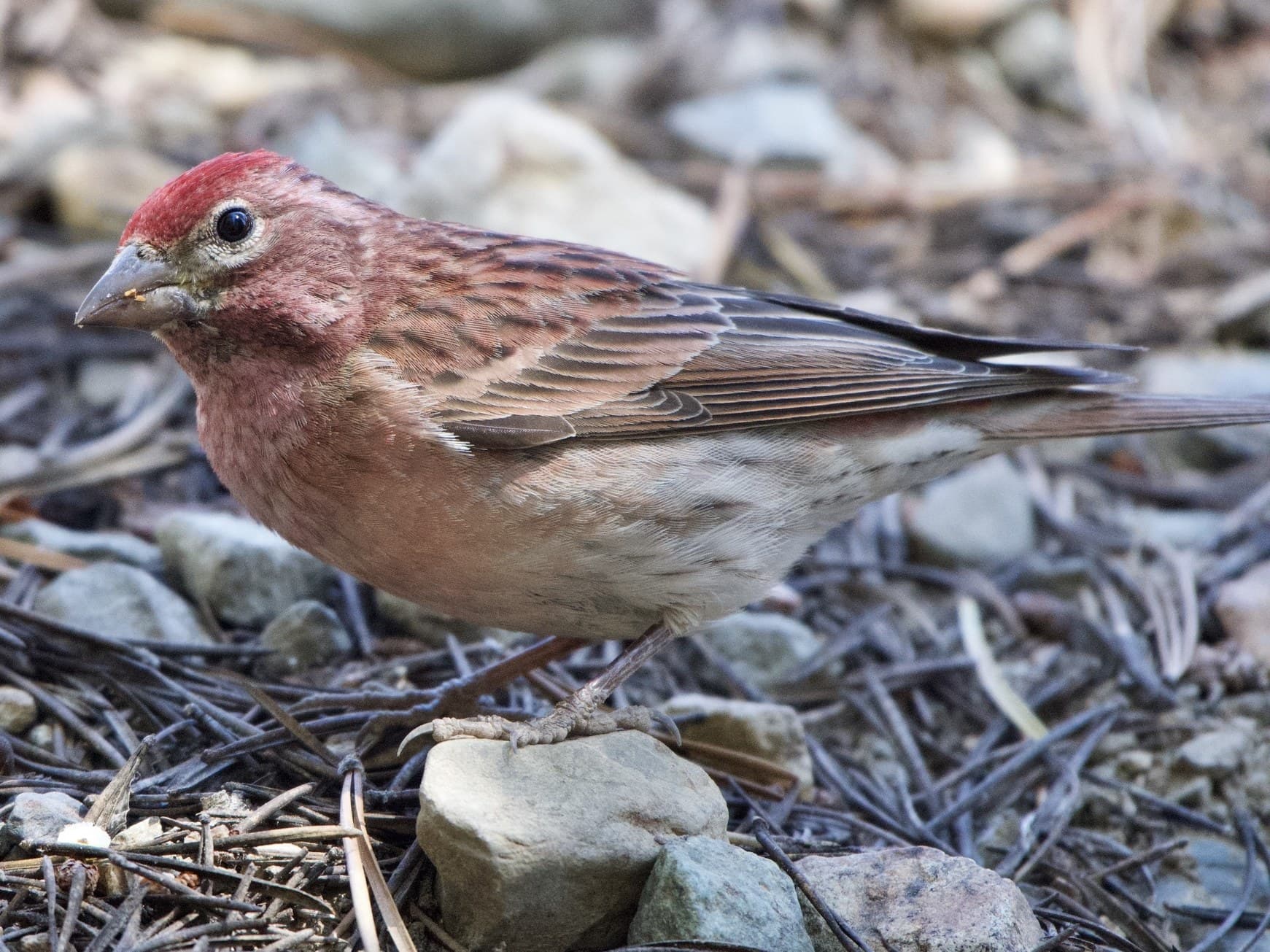
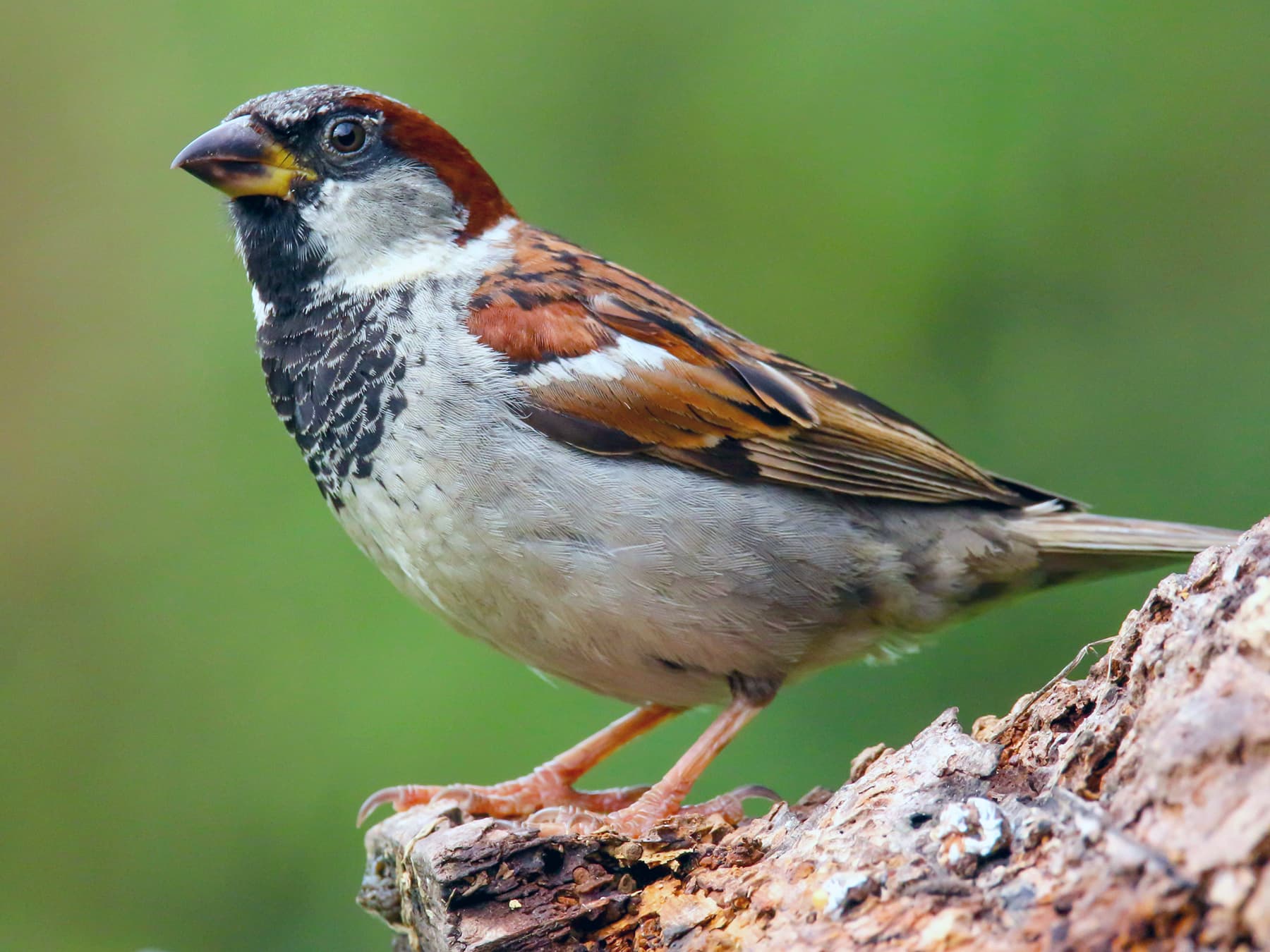
More photos
7 photos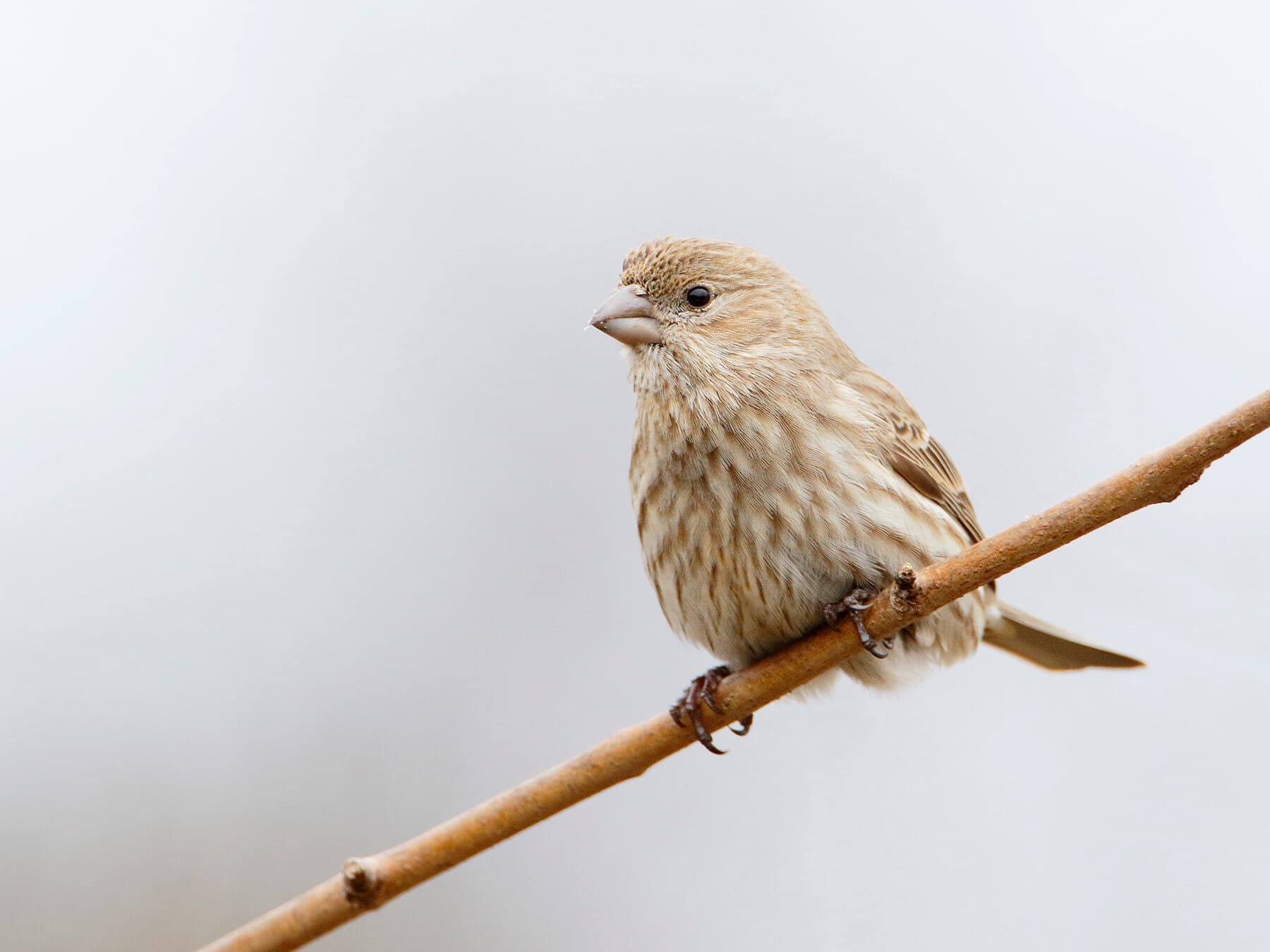 A female House Finch on a twig: blurry brown streaks and a plain face
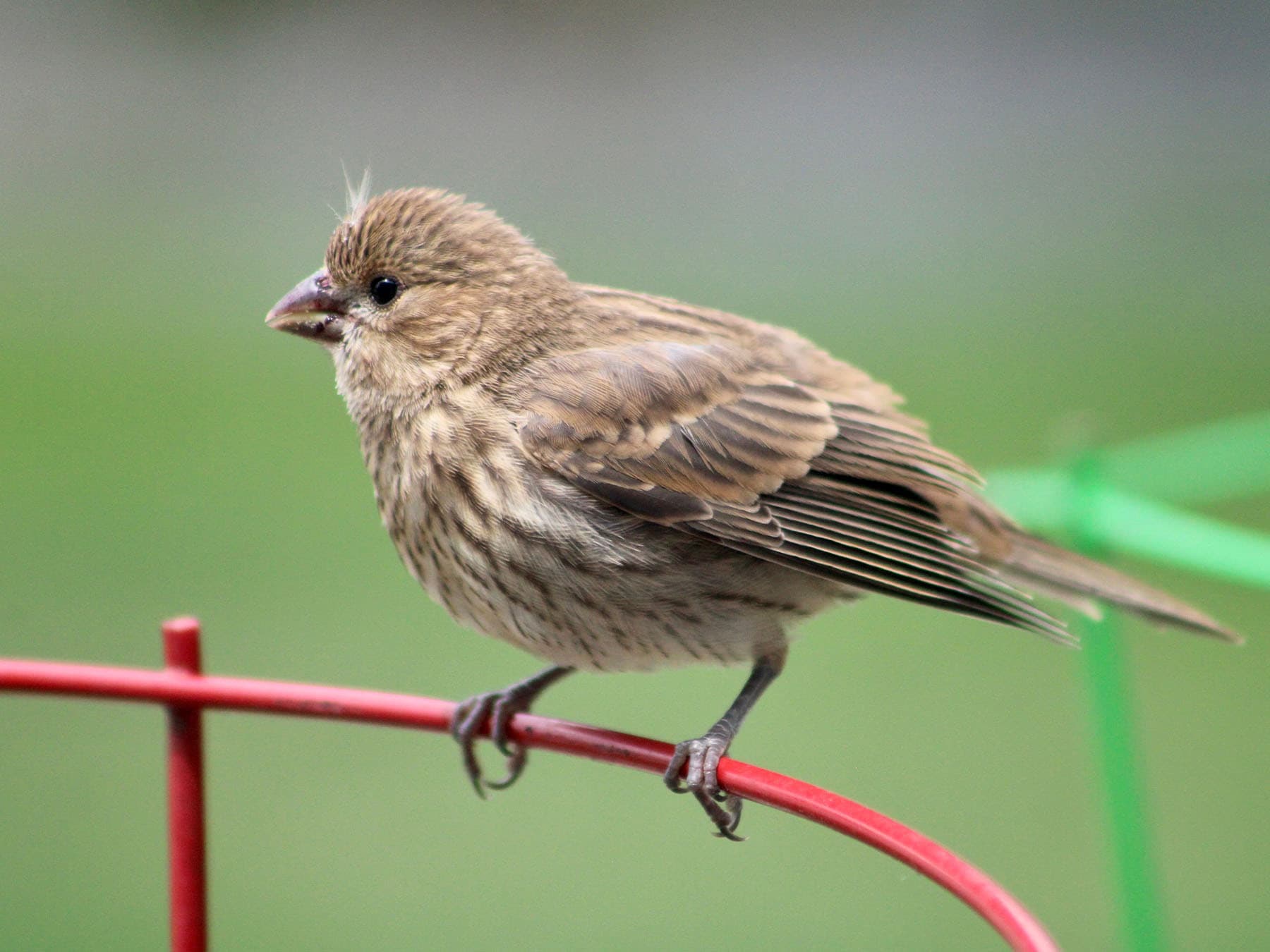 A juvenile House Finch: fluffy, with finer streaks and buff edges to the wing feathers
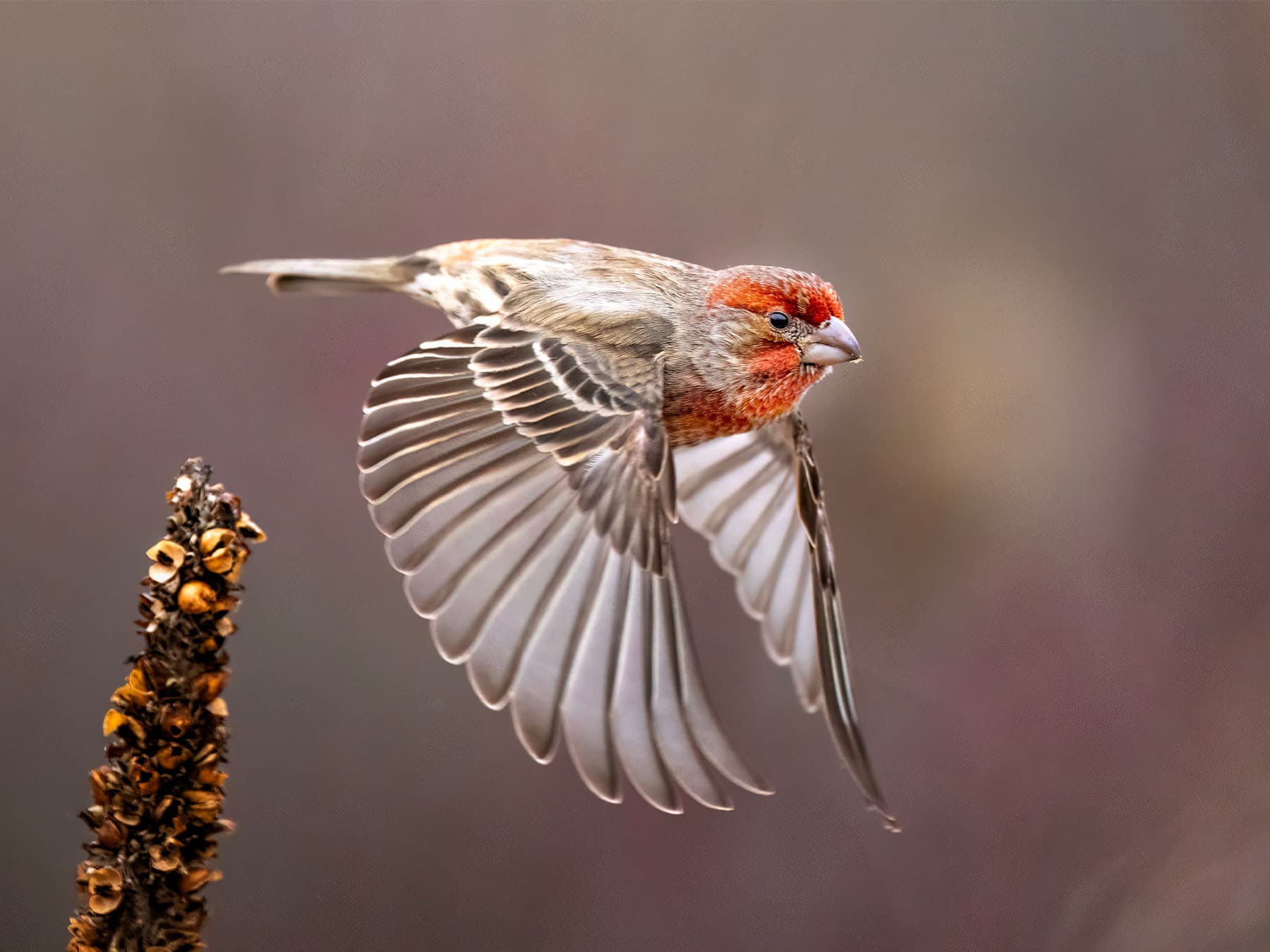 A male House Finch in flight
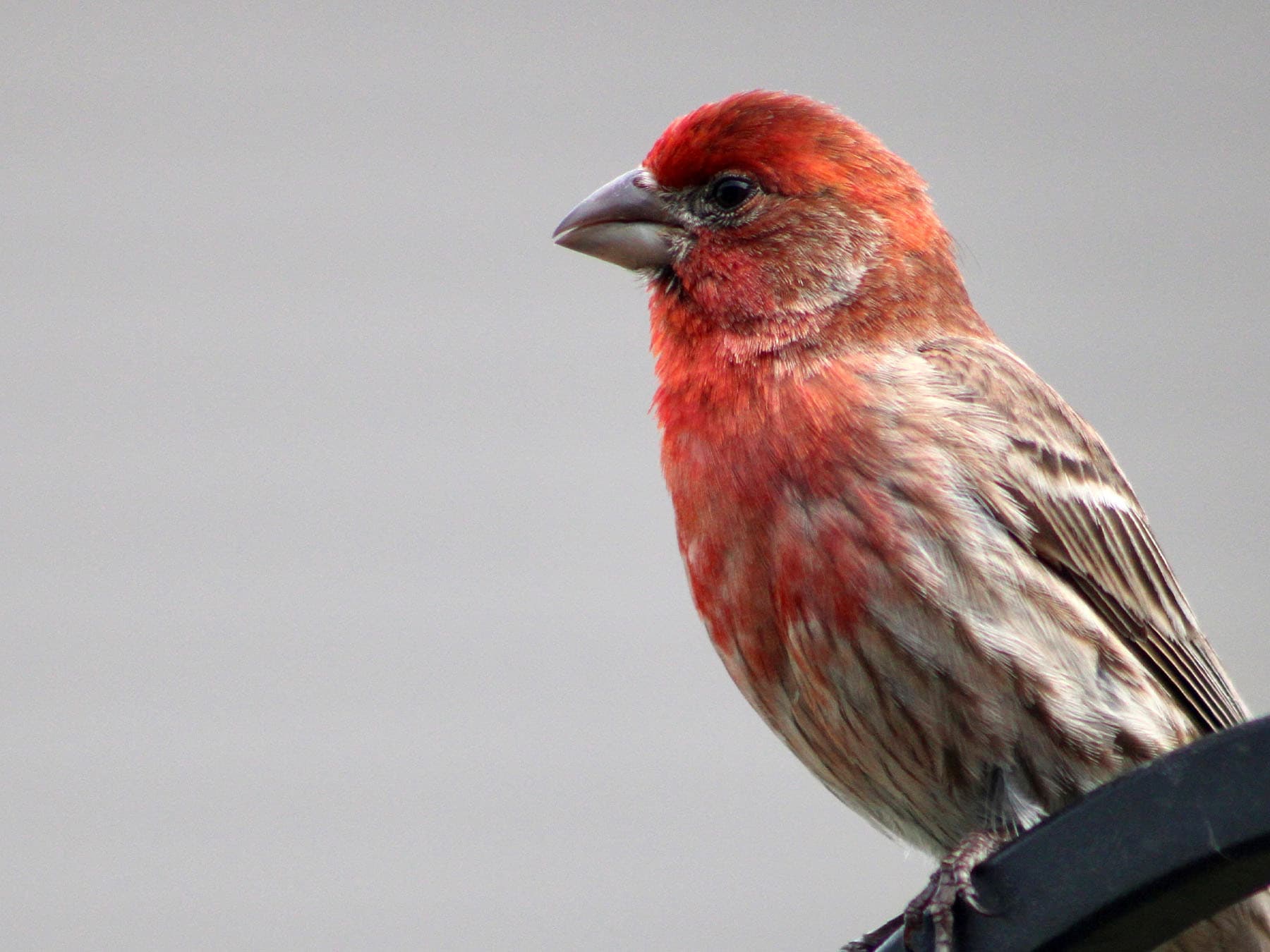 A male House Finch close up: red head and breast and a stout, curved bill
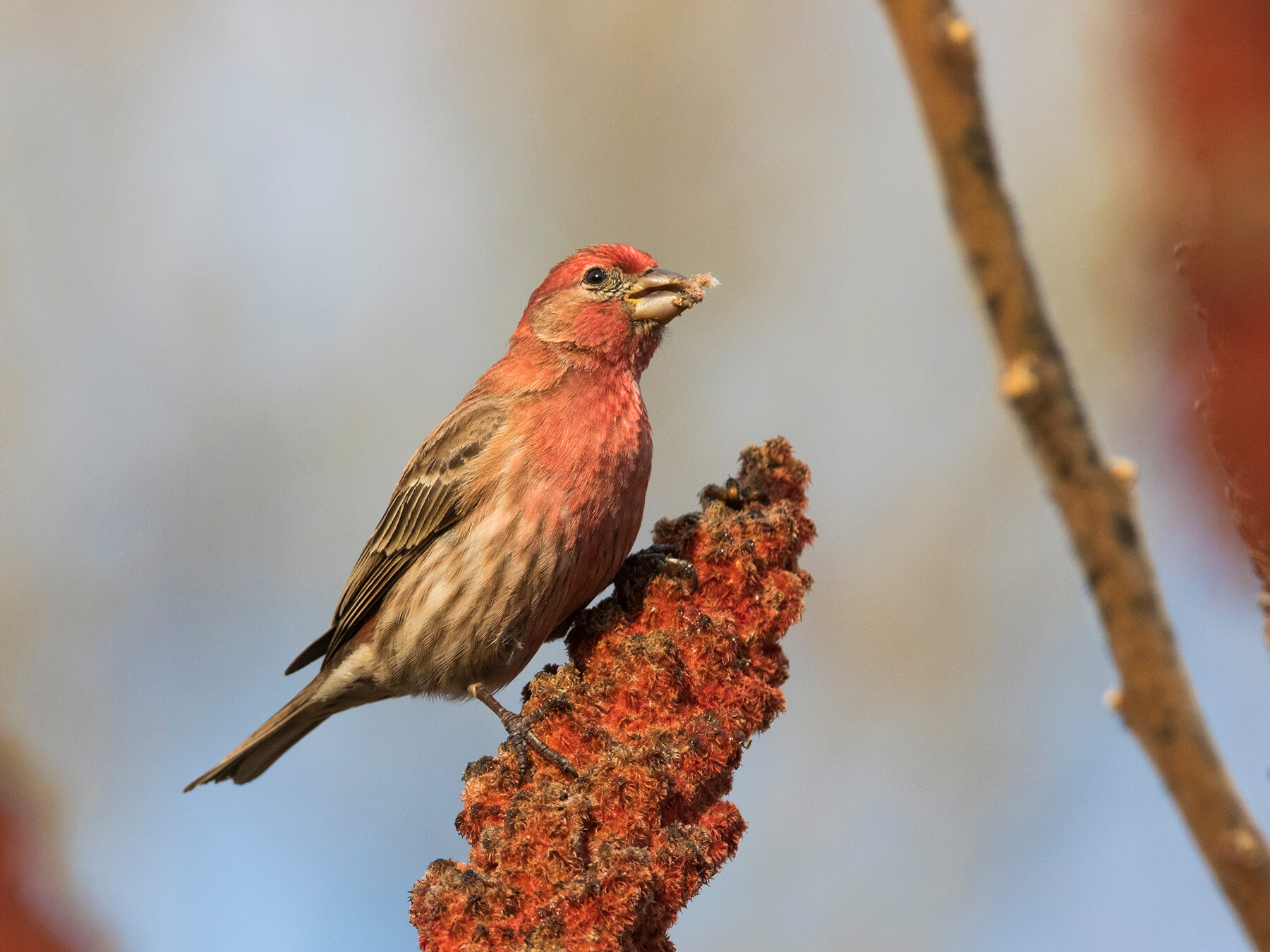
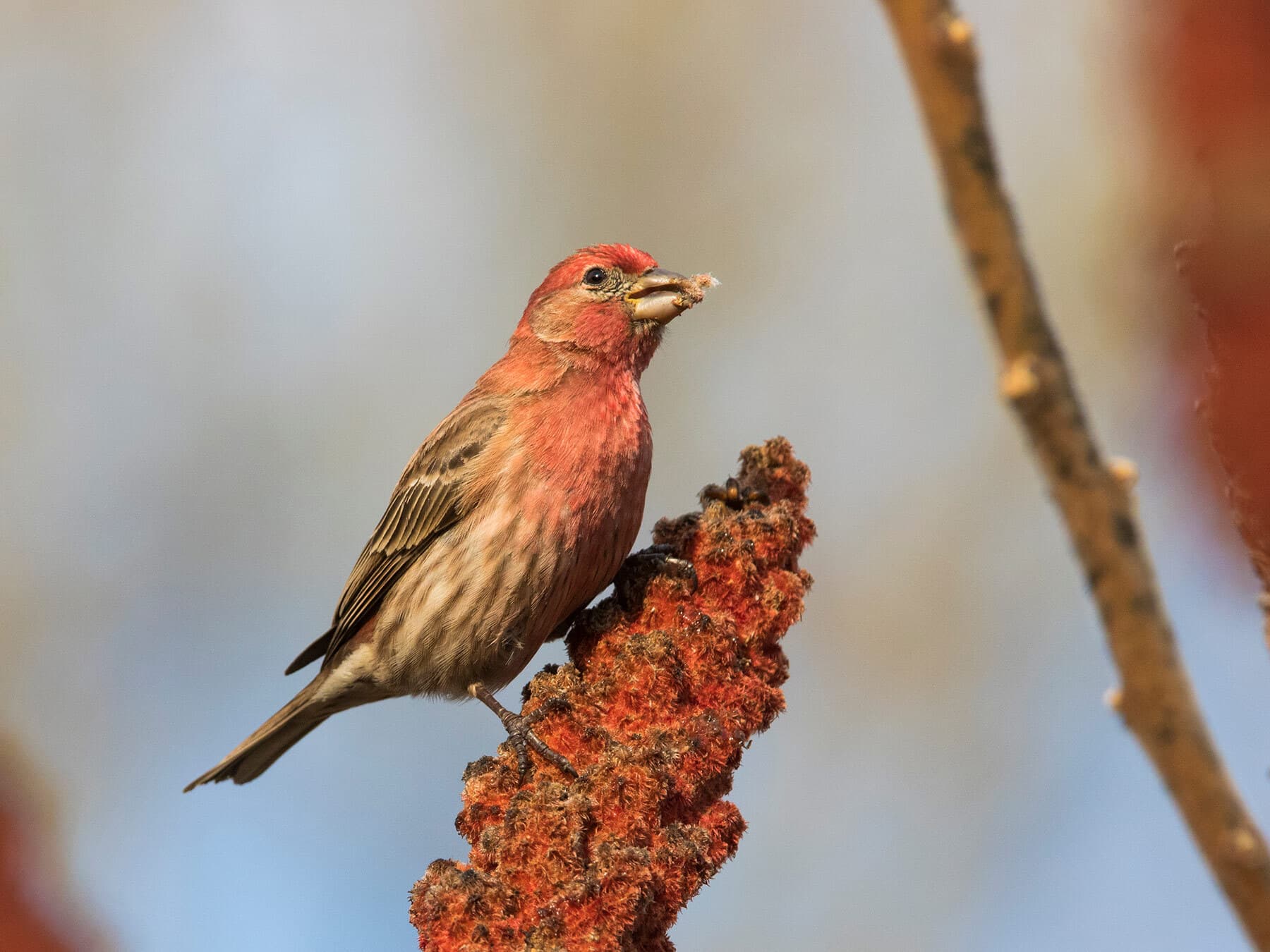 A male House Finch eating sumac fruit
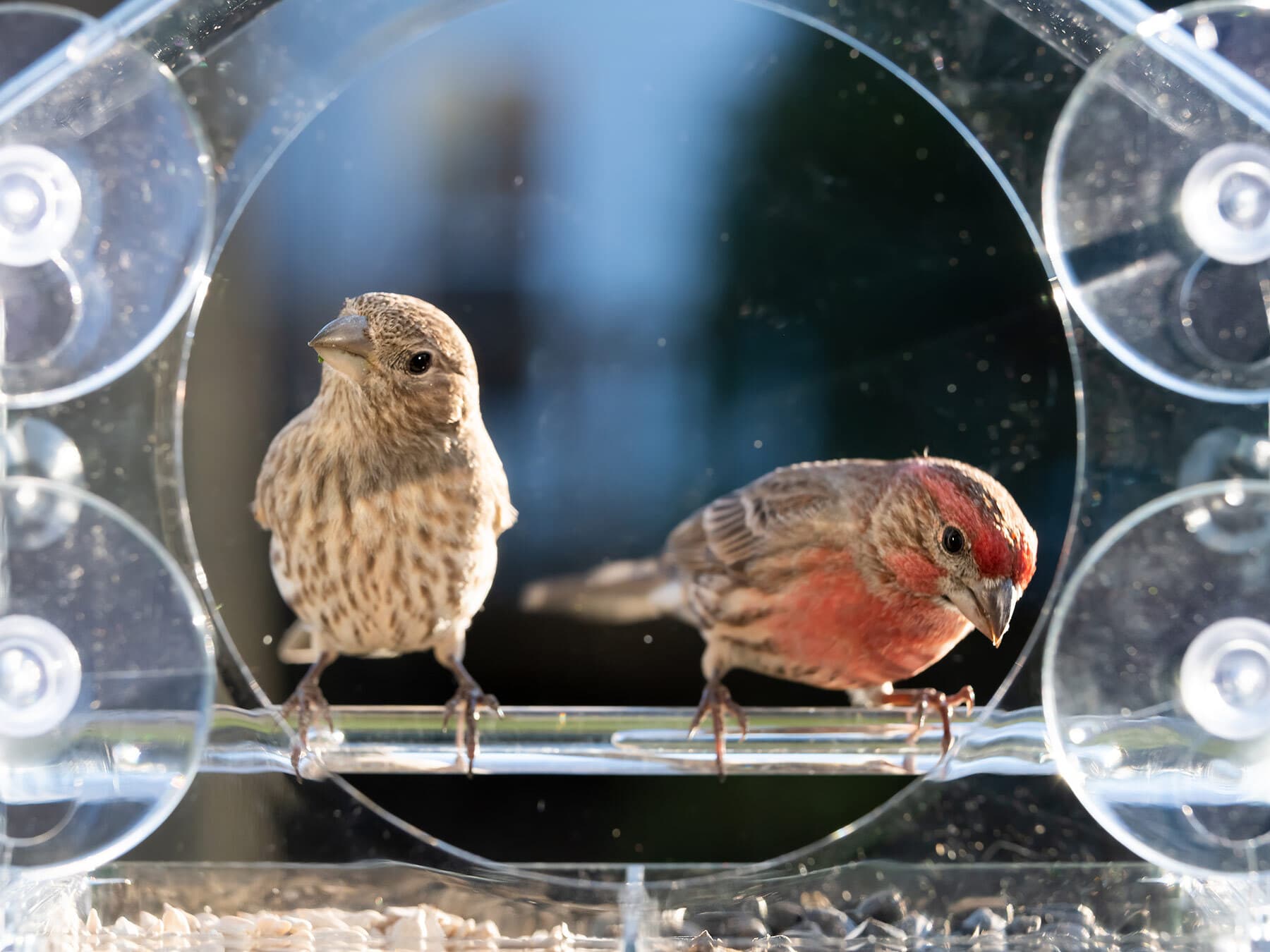 A House Finch pair at a window feeder
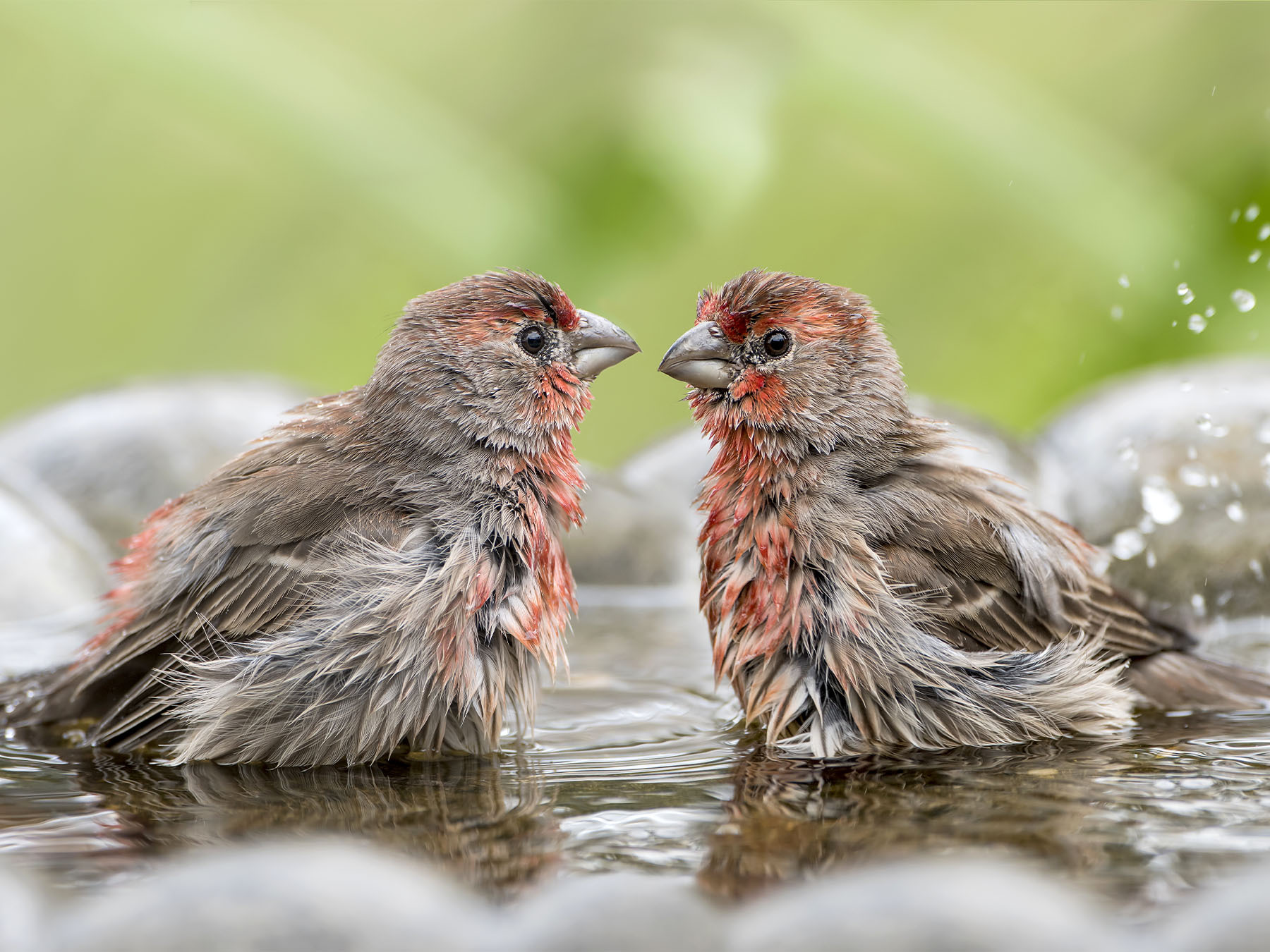
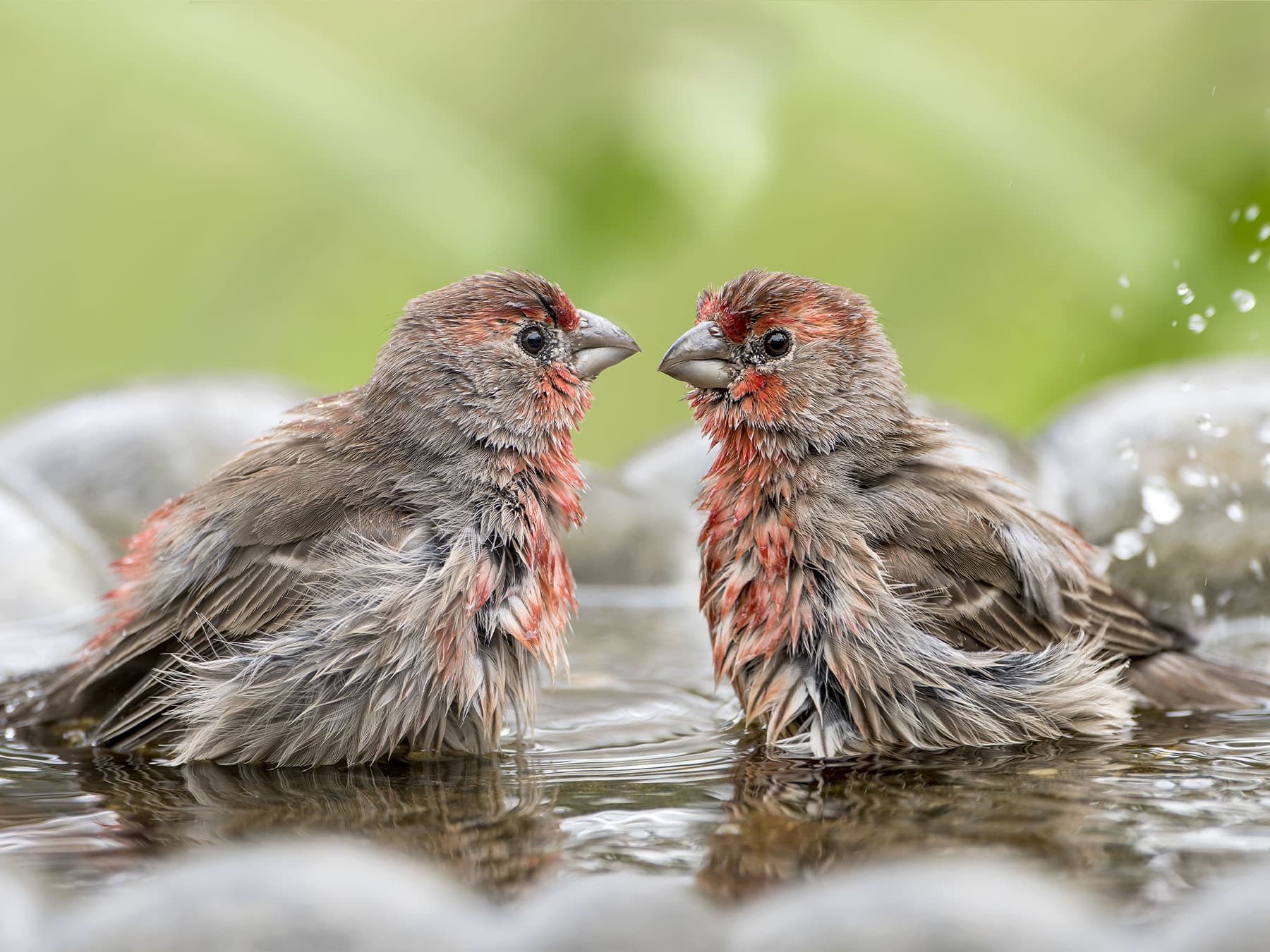 Two male House Finches bathing
House Finch guides
6 guidesQuick facts
- Length
- 13–15 cm
- Wingspan
- 20–25 cm
- Weight
- 16–28 g
- Lifespan
- oldest recorded 11 years 7 months
- Family
- Finches
- Migration
- Resident
- Global status (IUCN)
- Least Concern
- World population
- About 40 million (Partners in Flight)
- Population trend
- Decreasing slightly: down a little from 1966 to 2019 (North American Breeding Bird Survey); still one of the most common birds in North America
- Also called
- Hollywood Finch
- Scientific name
- Haemorhous mexicanus
Questions
5Why is it called a Hollywood Finch?
That was the pet trade's name for the House Finches shipped from the West and sold in eastern stores in the 1930s, before the trade was stopped in 1940.
Are House Finches invasive?
House Finches are native to the western US and Mexico. In the East they descend from released cage birds, so they are introduced there, but Birds of the World finds that they do not seem to compete with native birds for nest sites or food away from feeders (the Audubon guide notes they may compete with Purple Finches in parts of the East), and they are protected under the Migratory Bird Treaty Act like other native songbirds. See range and introduction.
Are yellow House Finches a different species?
No. Yellow and orange males are House Finches, mostly ones whose food was low in red pigments while they molted. See orange and yellow males.
Do House Finches mate for life?
Not necessarily. They are socially monogamous, and pairs often stay together from year to year, but some switch partners, even within a season. See pairs and mate choice.
Do House Finches use birdhouses?
Rarely. They prefer an open ledge, a hanging planter or a dense shrub, and NestWatch counts a House Finch in an enclosed box as unusual. See House Finch nesting.
Sources
17- 1National Audubon Society (text: Kaufman, Lives of North American Birds). House Finch. Audubon Guide to North American Birds. Accessed 11 October 2026. Source (opens in a new tab)
- 2Cornell Lab of Ornithology. House Finch: Overview, Identification and Life History. All About Birds. Accessed 11 October 2026. Source (opens in a new tab)
- 3Badyaev, A. V., Belloni, V. and Hill, G. E. (2020). House Finch (Haemorhous mexicanus), version 1.0. Birds of the World (A. F. Poole, editor). Cornell Lab of Ornithology. doi:10.2173/bow.houfin.01 (opens in a new tab)
- 4Hill, G. E. (1992). Proximate basis of variation in carotenoid pigmentation in male House Finches. The Auk 109: 1-12. doi:10.2307/4088262 (opens in a new tab)
- 5Elliott, J. J. and Arbib, R. S., Jr. (1953). Origin and status of the House Finch in the eastern United States. The Auk 70: 31-37. doi:10.2307/4081056 (opens in a new tab)
- 6Able, K. P. and Belthoff, J. R. (1998). Rapid 'evolution' of migratory behaviour in the introduced house finch of eastern North America. Proceedings of the Royal Society B 265: 2063-2071. doi:10.1098/rspb.1998.0541 (opens in a new tab)
- 7Project FeederWatch (Cornell Lab of Ornithology and Birds Canada). Common Feeder Birds: House Finch. Project FeederWatch. Accessed 11 October 2026. Source (opens in a new tab)
- 8Bailey, R. (2022). NestWatchers document rare use of nest boxes by House Finches. NestWatch, Cornell Lab of Ornithology. Accessed 11 October 2026. Source (opens in a new tab)
- 9Hill, G. E. (1991). Plumage coloration is a sexually selected indicator of male quality. Nature 350: 337-339. doi:10.1038/350337a0 (opens in a new tab)
- 10USGS Bird Banding Laboratory. Longevity records of North American birds. Accessed 11 October 2026. Source (opens in a new tab)
- 11U.S. Fish and Wildlife Service. List of birds protected by the Migratory Bird Treaty Act. Code of Federal Regulations, 50 CFR 10.13. Accessed 11 October 2026. Source (opens in a new tab)
- 12Project FeederWatch (Cornell Lab of Ornithology and Birds Canada). House Finch eye disease. Project FeederWatch. Accessed 11 October 2026. Source (opens in a new tab)
- 13National Audubon Society (text: Kaufman, Lives of North American Birds). Purple Finch. Audubon Guide to North American Birds. Accessed 11 October 2026. Source (opens in a new tab)
- 14National Audubon Society (text: Kaufman, Lives of North American Birds). Cassin's Finch. Audubon Guide to North American Birds. Accessed 11 October 2026. Source (opens in a new tab)
- 15National Audubon Society (text: Kaufman, Lives of North American Birds). Pine Siskin. Audubon Guide to North American Birds. Accessed 11 October 2026. Source (opens in a new tab)
- 16National Audubon Society (text: Kaufman, Lives of North American Birds). House Sparrow. Audubon Guide to North American Birds. Accessed 11 October 2026. Source (opens in a new tab)
- 17National Audubon Society (text: Kaufman, Lives of North American Birds). Song Sparrow. Audubon Guide to North American Birds. Accessed 11 October 2026. Source (opens in a new tab)

Checked by
Nathan Cope, founder and editor
Nathan founded Birdfact and leads its writers and contributors in the UK, the US and Canada. He has watched and studied birds for more than ten years, and checks every article and species guide before it’s published.