


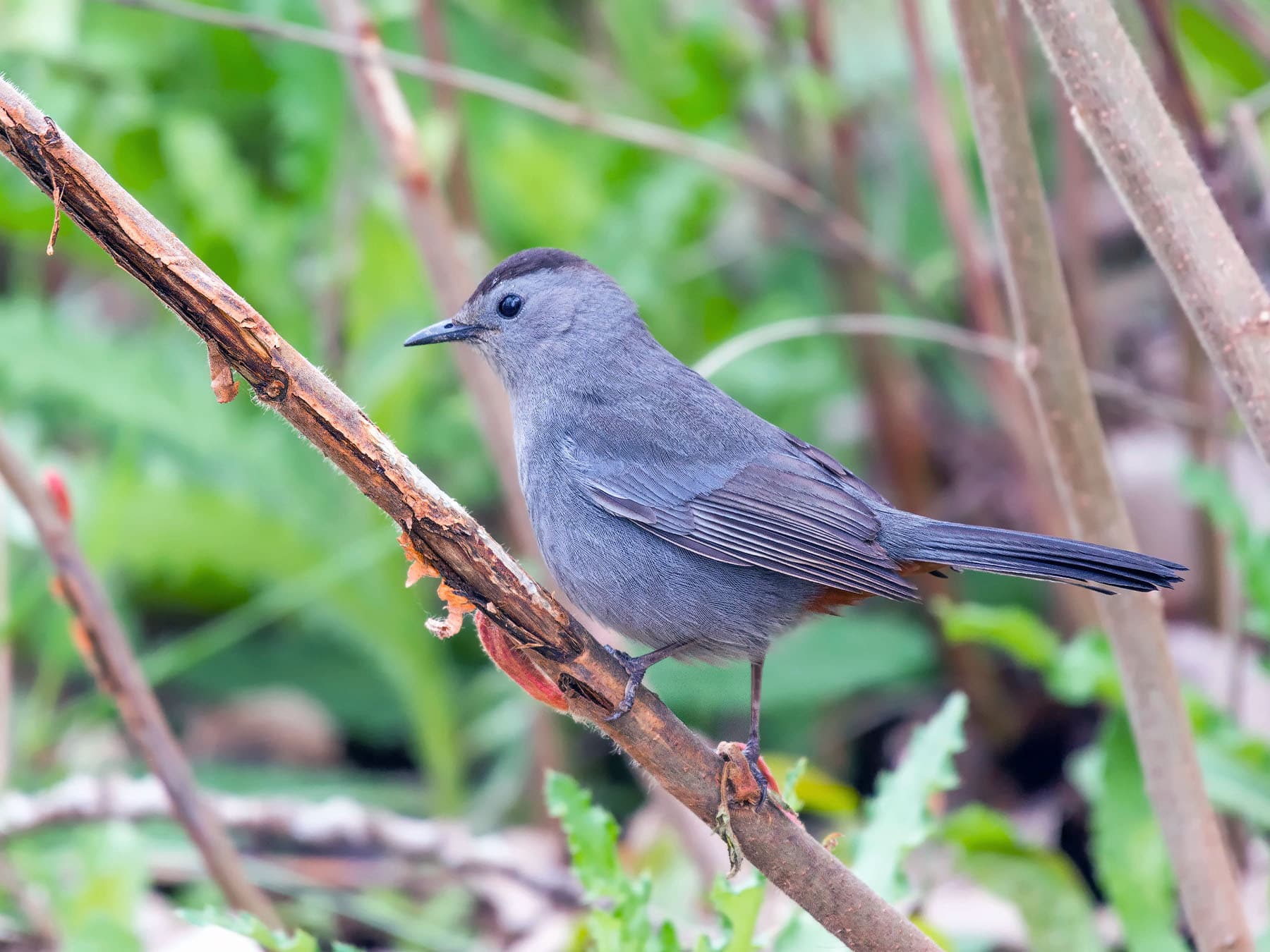
Gray Catbird
Northern Catbird, Grey Catbird, Slate-colored Mockingbird · Dumetella carolinensis
By the Birdfact teamChecked by Nathan Cope
On this page12 sections
How to recognise it
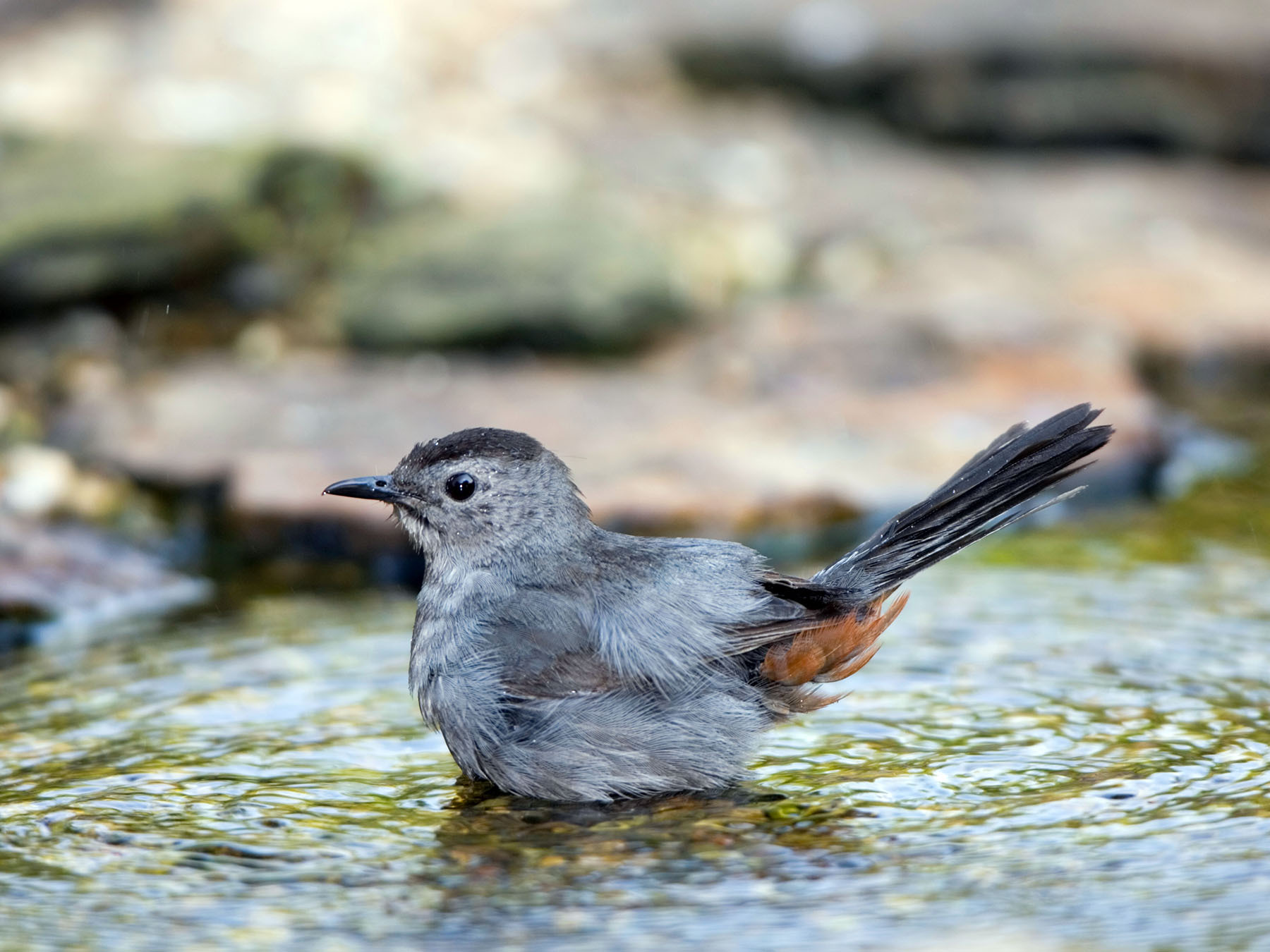
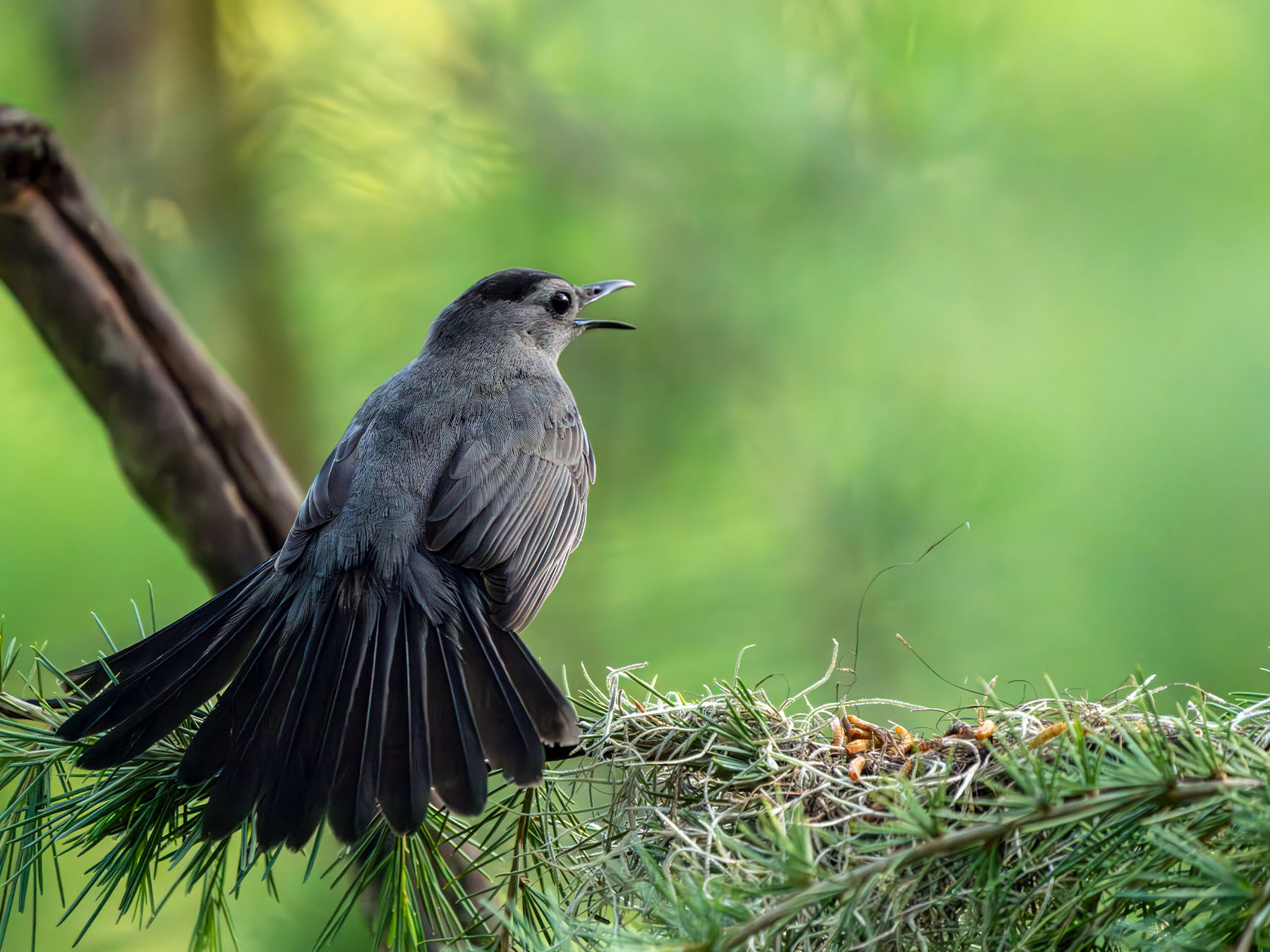
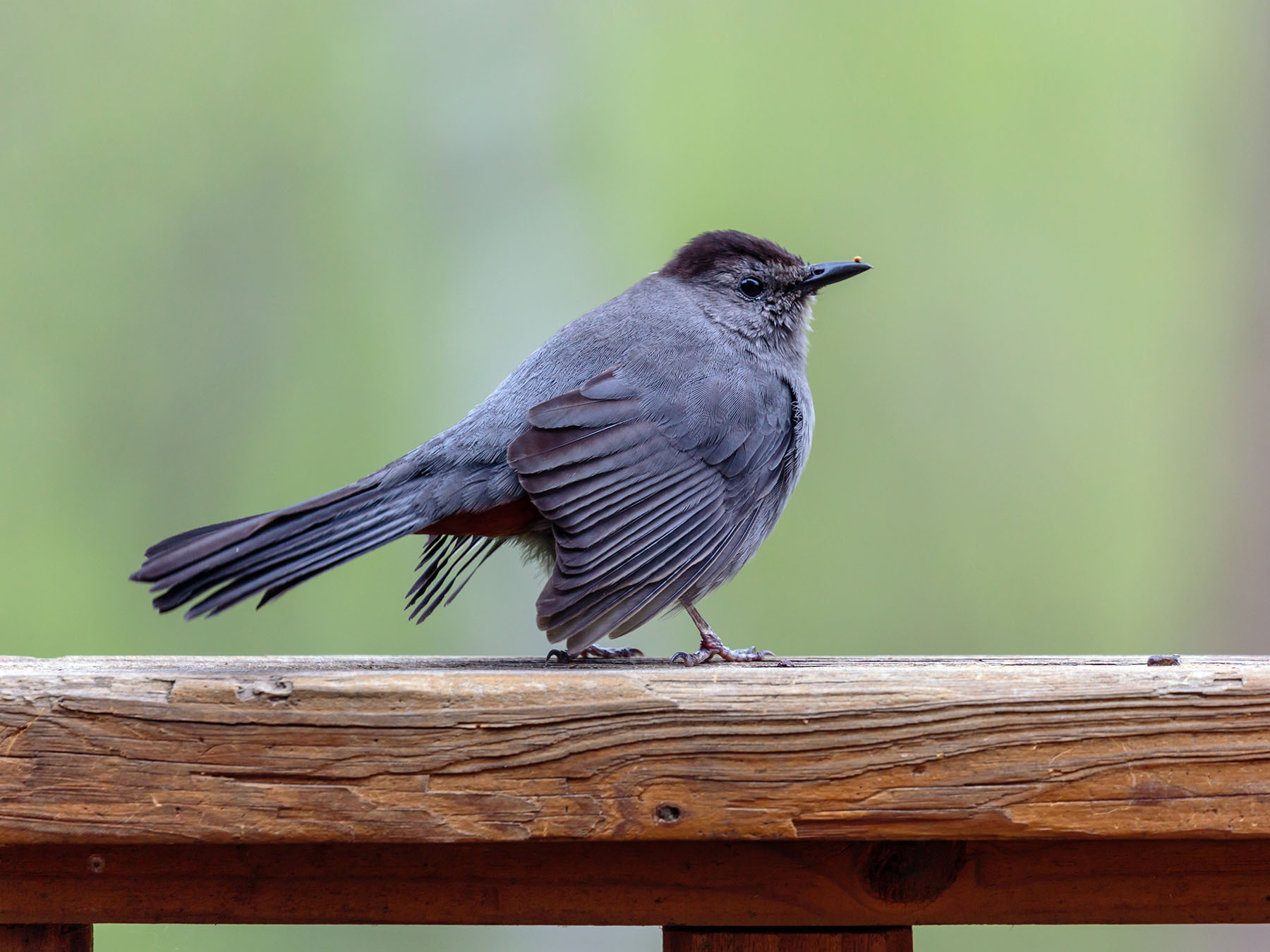
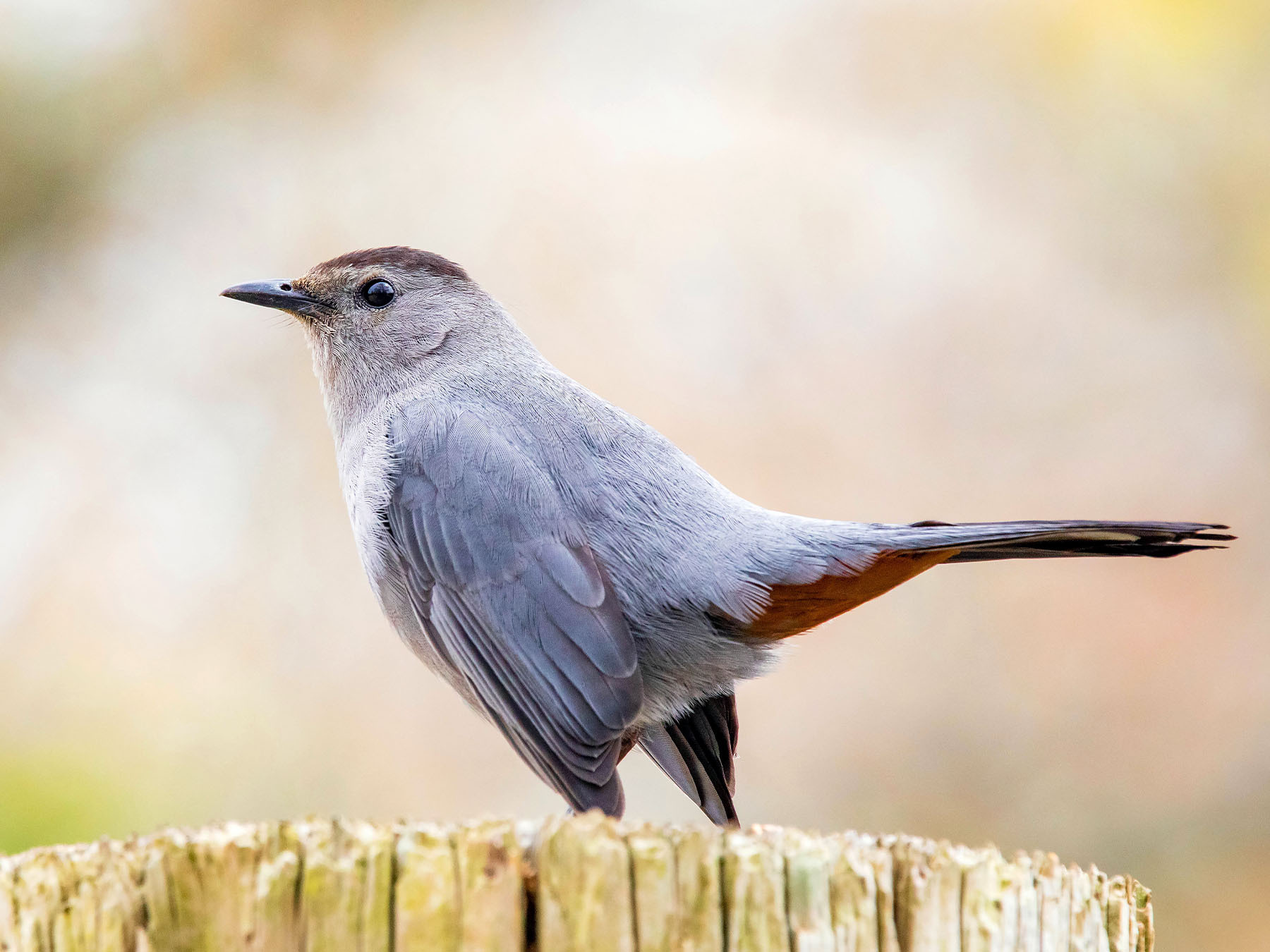
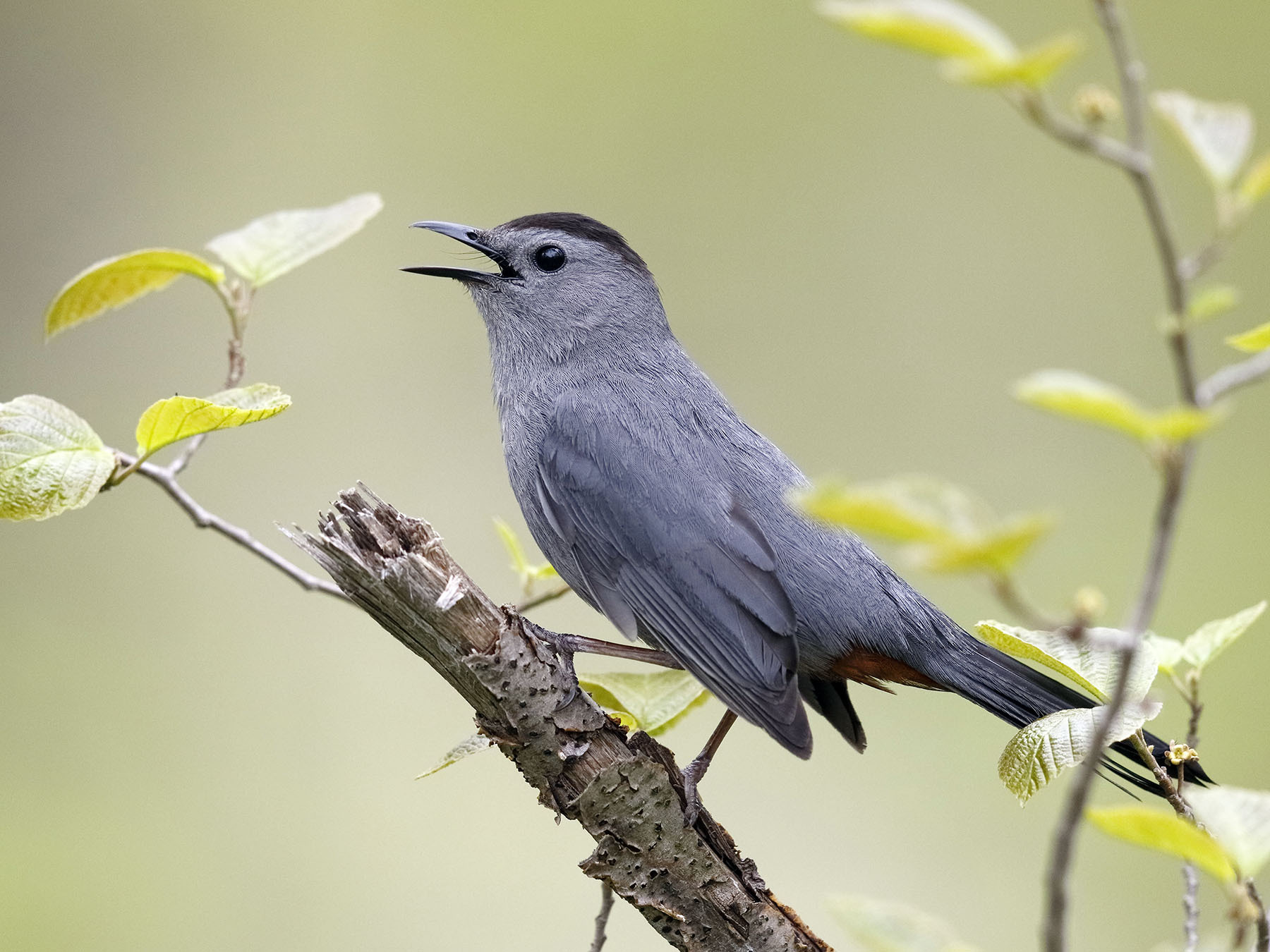
The Gray Catbird is a slender, medium-sized songbird with distinctive slate-gray plumage covering most of its body. It has a black cap on its head, a long dark tail, and a rusty-brown or chestnut patch under its tail.
Both males and females share identical coloration. Young birds (juveniles) are grayer overall with less distinct markings than adults, and notably lack the black cap and rich rusty undertail coloring. They quickly develop adult coloring in their first few months.
Its size
Adults- Length
- 20–24 cm
- Wingspan
- 22–28 cm
- Weight
- 23–56 g
Its song and calls
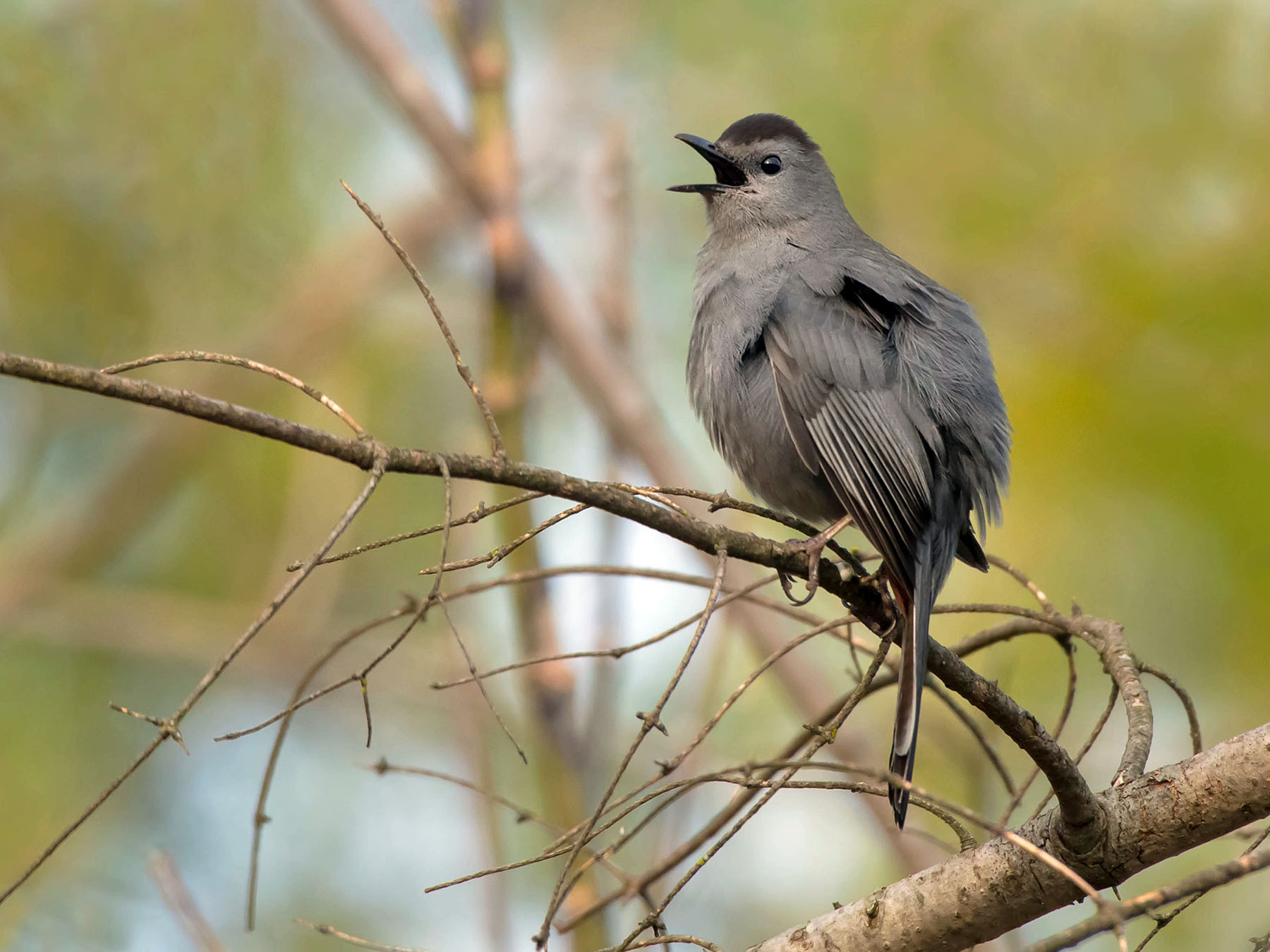
The Gray Catbird's most distinctive vocalization is its cat-like 'mew' call, which gives the species its name. Their song is a long, varied series of whistles, squeaks, and gurgles, often incorporating mimicry of other birds and even mechanical sounds.
Males can sing for several minutes without repeating phrases.
- Song0:00 / 0:42
Recorded in Minnesota, United States · May 2013
- Alarm call0:00 / 0:52
Recorded in New York, United States · June 2023
When and where to see it
OctoberLeaving
Most recorded in October
- 1. Florida2.3%
- 2. Rhode Island1.8%
- 3. District of Columbia1.8%
- 4. New Jersey1.6%
- 5. Alabama1.5%
Each dot is a county, state or province: the bigger and darker, the larger the bird’s share of that place’s bird records that month. Grey dots: no regular records. The ringed point is the centre of the bird’s records this month; the arrow shows how it moved since last month, and the dashed loop its path through the year. “Arrivals” colours places where it becomes regular this month (orange) or is in its last regular month (grey). GBIF eBird Observation Dataset, 2019–2024. Map data: Natural Earth, US Census Bureau; place centres © OpenStreetMap contributors.
In your area
See when the Gray Catbird is recorded in your county, state or province.
How often the Gray Catbird turns up in the United States and Canada through the year, from birdwatchers' records.
United States
Summer visitor · all year · most records in May
Canada
Summer visitor · regularly May–Oct · most records in August
Show as a table
| Month | United States | Canada |
|---|---|---|
| January | 0.23% (regular) | 0.016% |
| February | 0.22% (regular) | 0.008% |
| March | 0.18% (regular) | 0.004% |
| April | 0.39% (regular) | 0.026% |
| May | 1.4% (regular) | 0.89% (regular) |
| June | 1.4% (regular) | 0.94% (regular) |
| July | 1.3% (regular) | 0.95% (regular) |
| August | 1.3% (regular) | 0.97% (regular) |
| September | 1.4% (regular) | 0.92% (regular) |
| October | 0.79% (regular) | 0.22% (regular) |
| November | 0.25% (regular) | 0.018% |
| December | 0.23% (regular) | 0.013% |
Worldwide: recorded regularly in 20 countries
Countries where it was recorded in at least 3 of the 6 years 2019–2024. Linked countries have their own bird list.
North America (19)
- Bahamas
- Belize
- Bermuda
- Canada
- Cayman Islands
- Costa Rica
- Cuba
- Dominican Republic
- El Salvador
- Guatemala
- Honduras
- Jamaica
- Mexico
- Nicaragua
- Panama
- Puerto Rico
- St Pierre & Miquelon
- Turks & Caicos Islands
- United States
South America (1)
Data: EOD – eBird Observation Dataset (Cornell Lab of Ornithology), accessed via GBIF.org, CC BY 4.0. Records from 2019–2024, aggregated and filtered by Birdfact. How these lists are made
Tips for seeing it
- Listen for their distinctive cat-like 'mew' call
- Look for movement in dense shrubs and thickets
- Check berry-producing plants, especially during late summer
- In the US, visit woodland edges and gardens during breeding season
- Observe early morning or late afternoon when they're most active
What it eats
Gray Catbirds are omnivorous, with a diet consisting primarily of insects and berries. They forage on the ground and in shrubs, eating a variety of beetles, caterpillars, and spiders.
In late summer and fall, they switch to a more fruit-based diet, consuming blackberries, elderberries, and other small fruits.
Nesting and breeding
Gray Catbirds typically form monogamous pairs during the breeding season, which runs from late April to early August. Males attract females with a complex song that includes mimicry of other bird species.
The female builds a bulky cup-shaped nest in dense shrubs or small trees, using twigs, grass, and leaves. She lays 3-5 blue-green eggs and incubates them for about 12-13 days.
Both parents feed the nestlings, which fledge after 10-11 days. Gray Catbirds often raise two broods per season in the southern parts of their range.
Behaviour
Gray Catbirds are known for their cat-like mewing call, which they use frequently. They are often seen hopping and flitting through dense shrubs and low vegetation, foraging for insects and berries.
These birds are generally solitary but may form loose flocks during migration.
Conservation
While Gray Catbirds are currently listed as Least Concern, they face threats from habitat loss due to urban development and agricultural expansion. Climate change may also affect their breeding and wintering grounds.
Conservation efforts focus on preserving shrubby habitats and promoting bird-friendly gardening practices.
Similar birds
Often mistaken for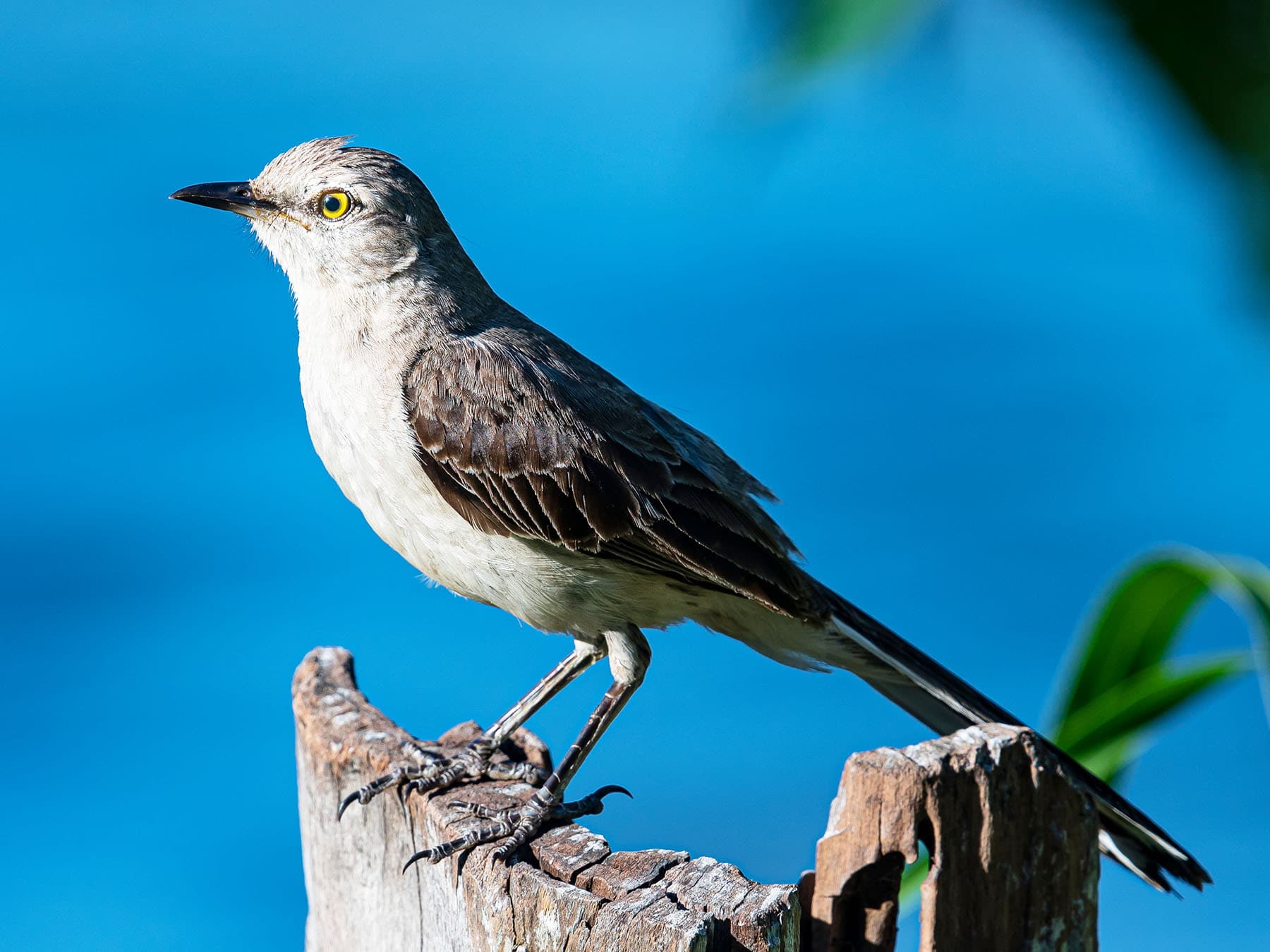
More photos
7 photos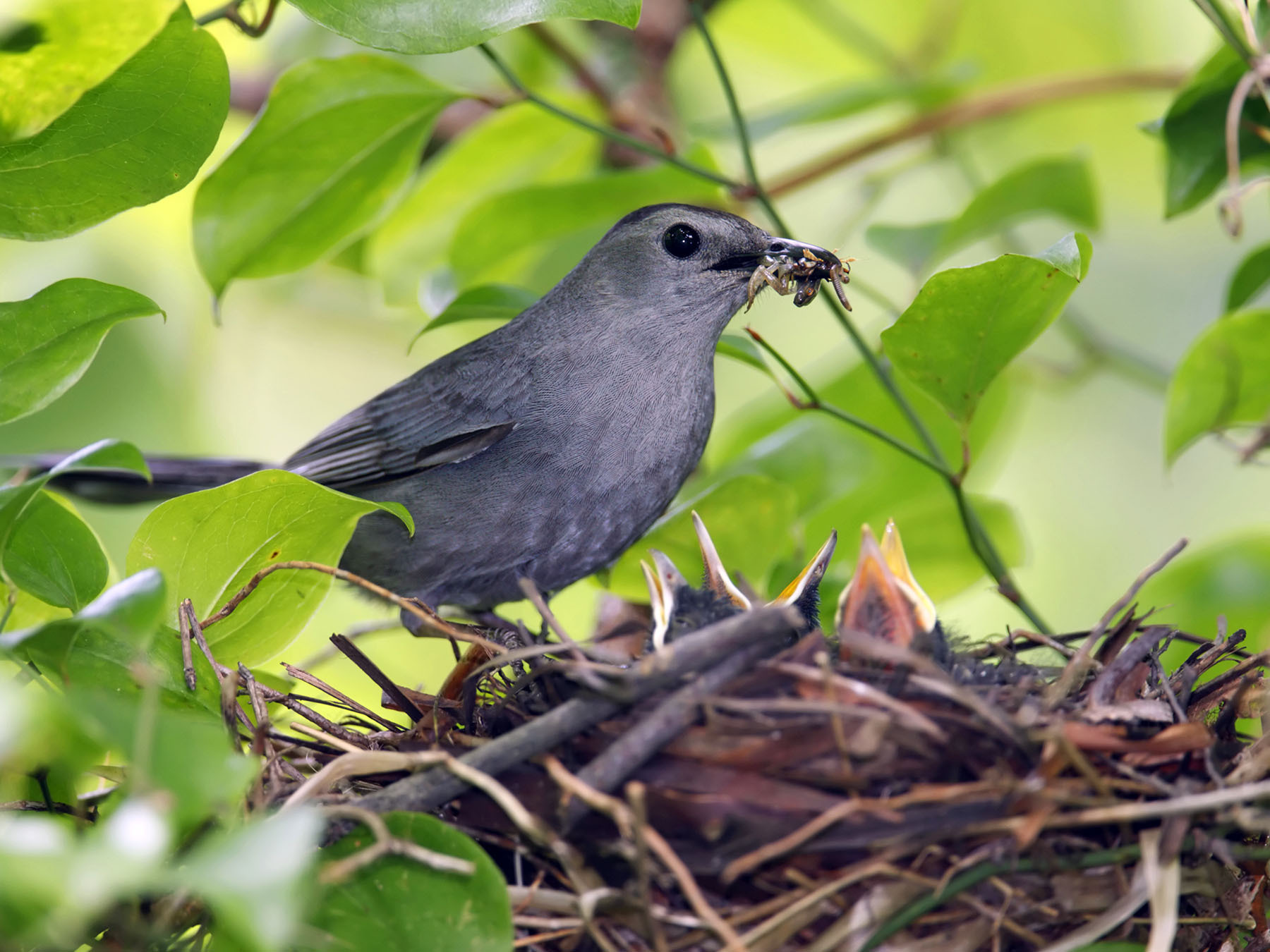
Gray Catbird guides
1 guidesQuick facts
- Length
- 20–24 cm
- Wingspan
- 22–28 cm
- Weight
- 23–56 g
- Lifespan
- 2–3 years · oldest recorded 17.9 years
- Family
- Mockingbirds & Thrashers
- Migration
- Long-distance Migrant
- Global status (IUCN)
- Least Concern
- World population
- 29,000,000 mature individuals
- Population trend
- Stable
- Also called
- Northern Catbird, Grey Catbird, Slate-colored Mockingbird
- Scientific name
- Dumetella carolinensis

Checked by
Nathan Cope, founder and editor
Nathan founded Birdfact and leads its writers and contributors in the UK, the US and Canada. He has watched and studied birds for more than ten years, and checks every article and species guide before it’s published.