


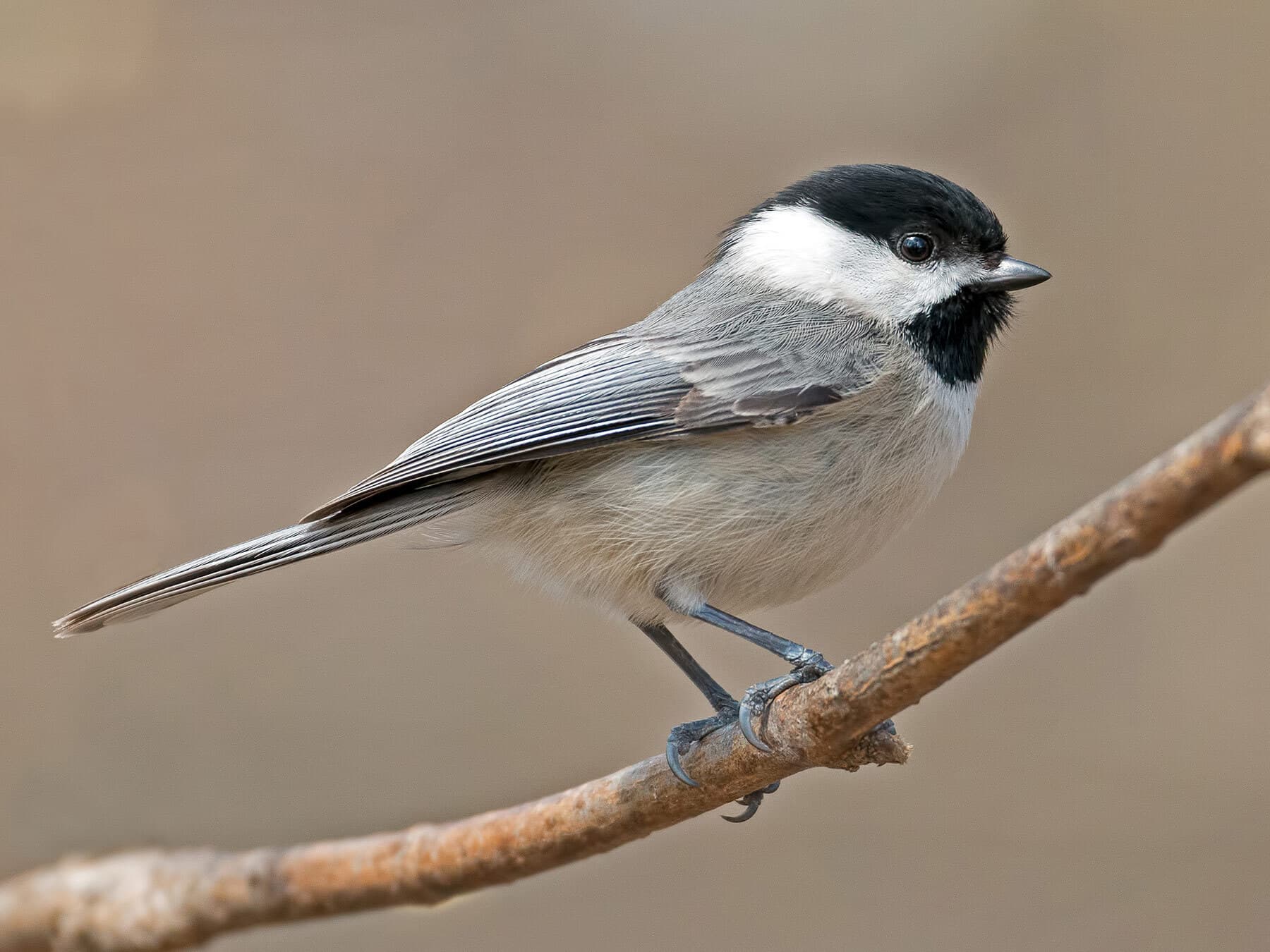
Carolina Chickadee
Poecile carolinensis
By the Birdfact teamChecked by Nathan Cope
On this page13 sections
How to recognise it
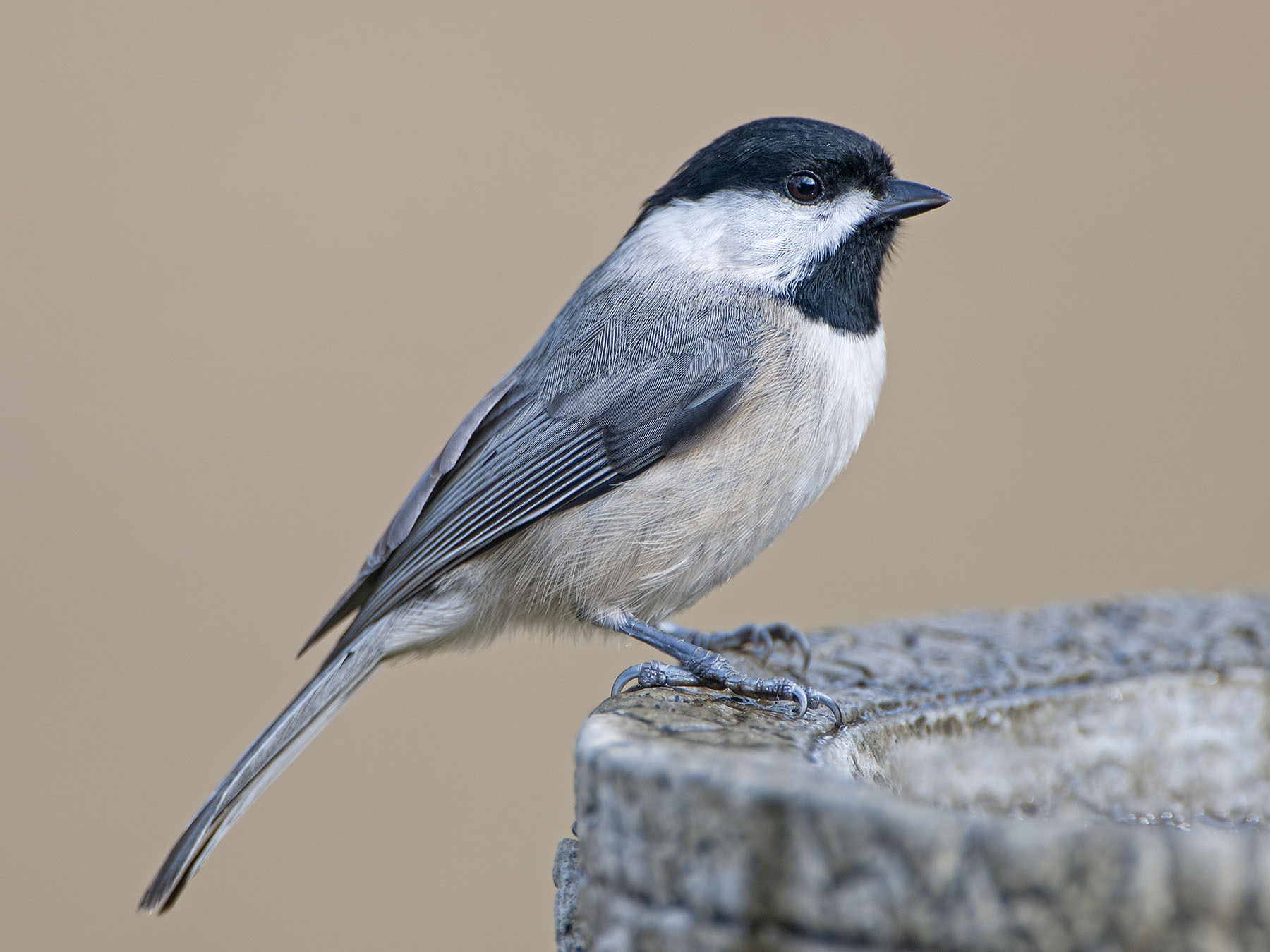
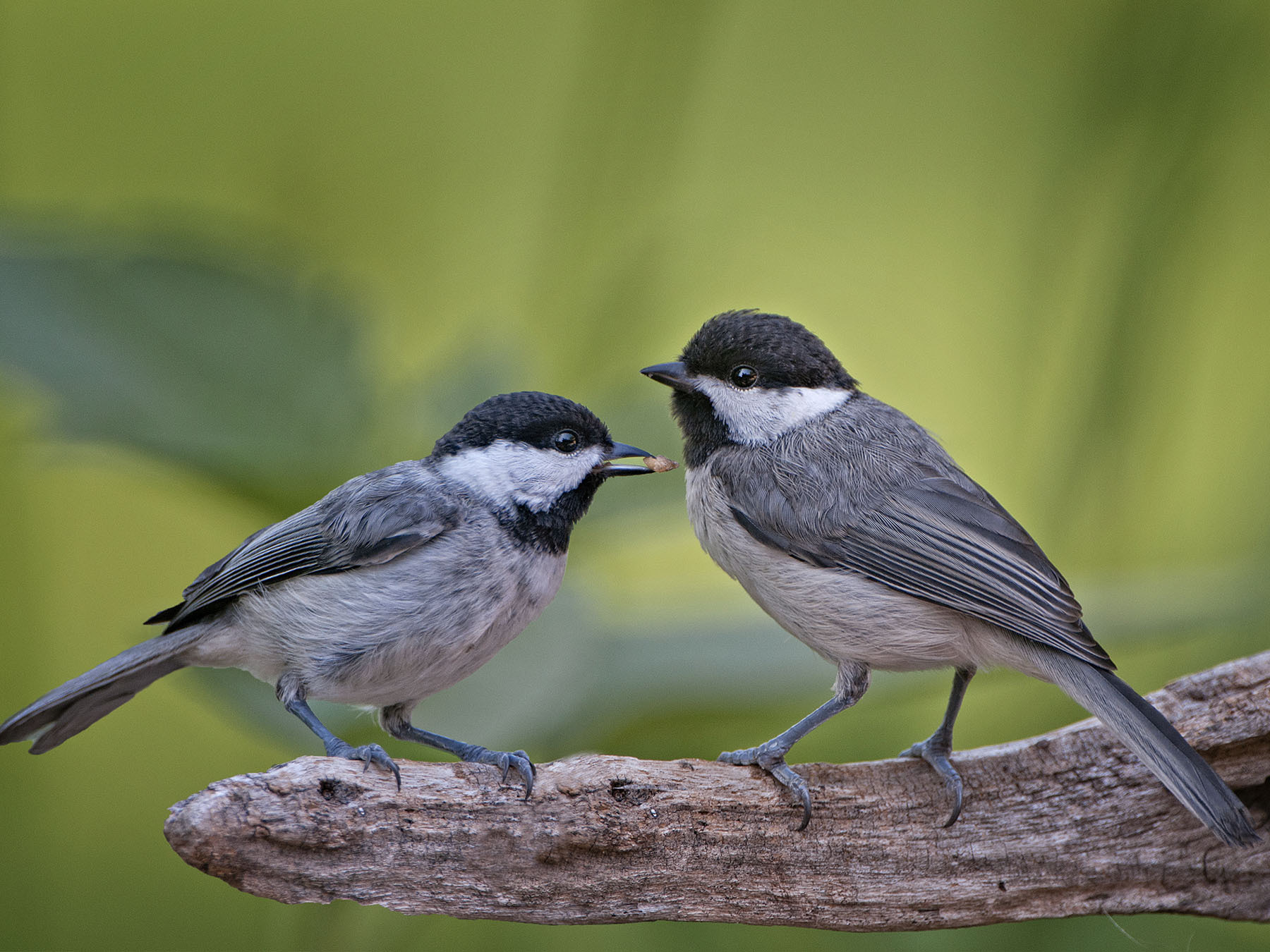
A black cap and bib frame white cheeks. The back is grey, the underparts are white and the flanks are washed rusty brown. The bill is short and dark, the wings are short and the tail is fairly long.
Compared with the Black-capped Chickadee, the wing is a little browner, with less white edging on the wing feathers, and the tail is slightly shorter and squarer. Even with a good view, the two can be very hard to tell apart without hearing them.
Its size
Adults- Length
- 10–12 cm
- Wingspan
- 15–20 cm
- Weight
- 8–12 g
Its song and calls
The chick-a-dee call is faster and higher than the Black-capped Chickadee's. The song is a clear four-note see-dee see-dee, where the Black-capped Chickadee sings two or three notes. Where the two species meet, each can copy the other's song.
- Song0:00 / 0:09
Recorded in Texas, United States · January 2025
- Chick-a-dee calls0:00 / 0:08
Recorded in Georgia, United States · May 2026
When and where to see it
Tips for seeing it
- Listen for the four-note song, the best way to separate Carolina from Black-capped Chickadee, though where the two meet each can copy the other.
- Look at the wing: less white edging suggests Carolina.
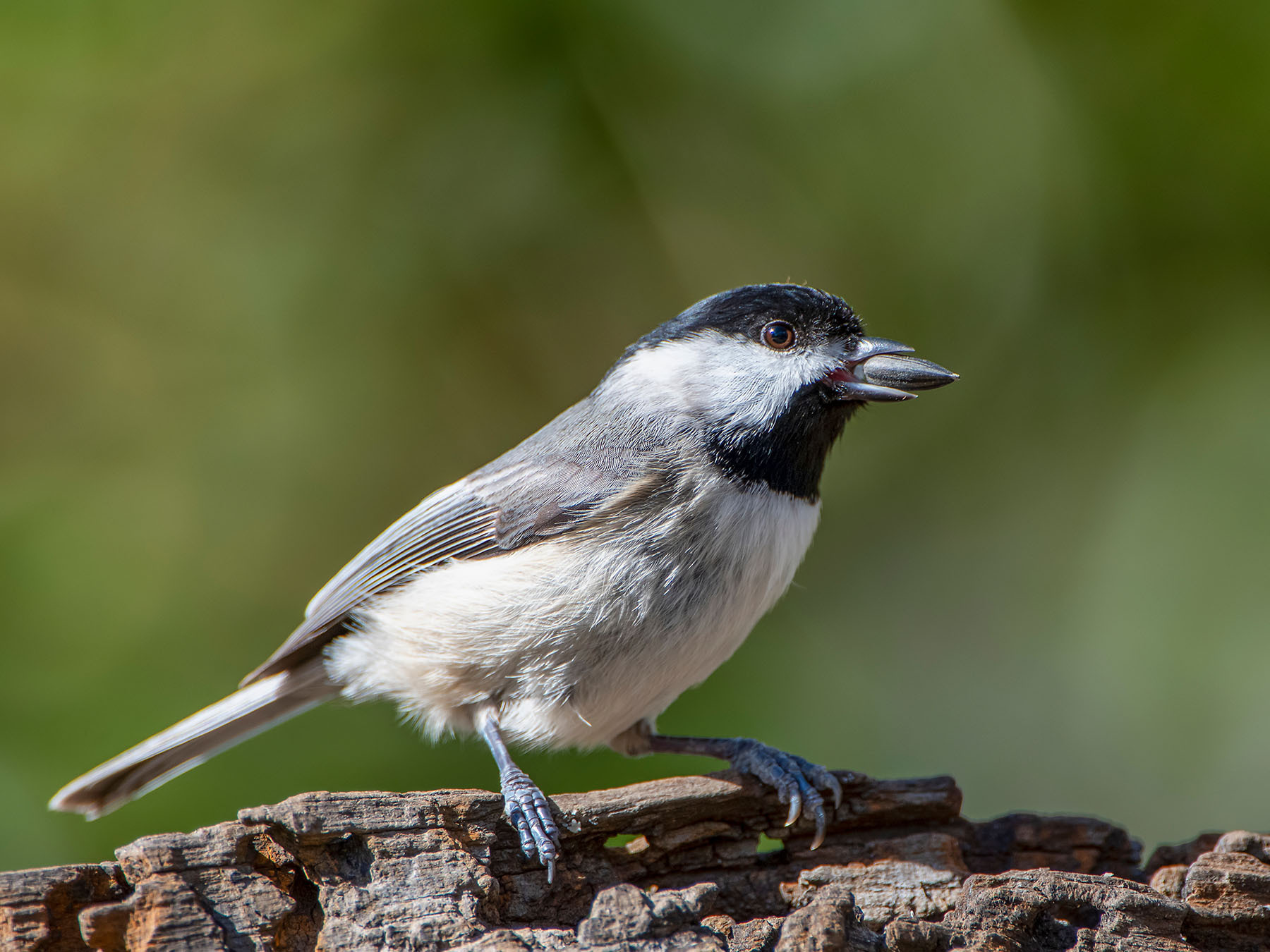
- Watch for one-seed-at-a-time visits to feeders.
What it eats
Insects make up much of the diet, especially in summer. In winter seeds and berries matter more. Chickadees hop along branches, hang upside down or hover to find food, and hammer seeds against a branch to open them. They also hide seeds to eat later.
Nesting and breeding
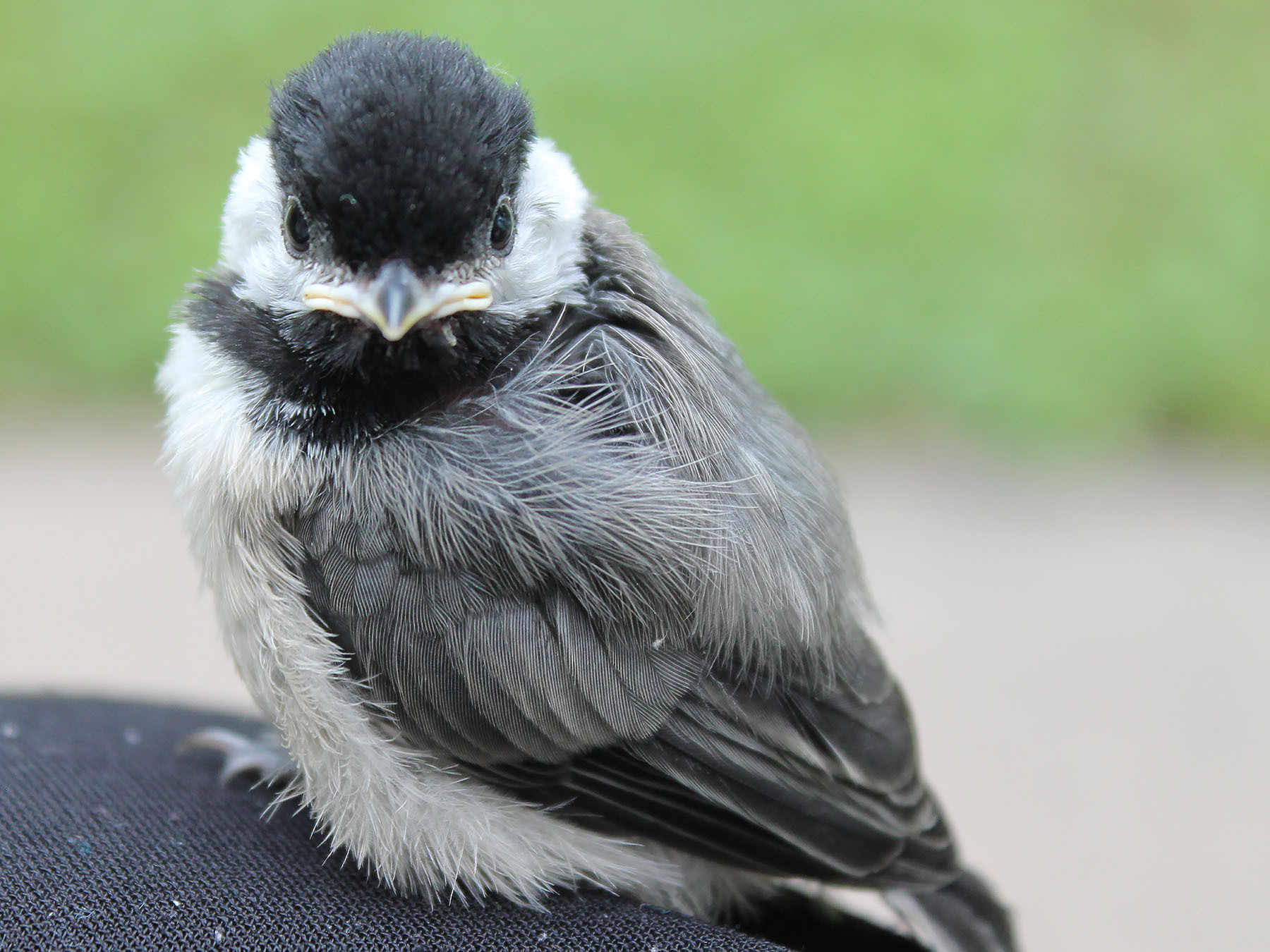
Pairs dig out a nest hole in a tree, use a natural cavity or take over an old woodpecker hole. The female builds the nest from moss and strips of bark and lines it with hair or plant fibres. Clutches usually hold three to ten white eggs speckled with reddish brown. Incubation takes 12 to 16 days and the young leave the nest after 16 to 19 days.
Behaviour
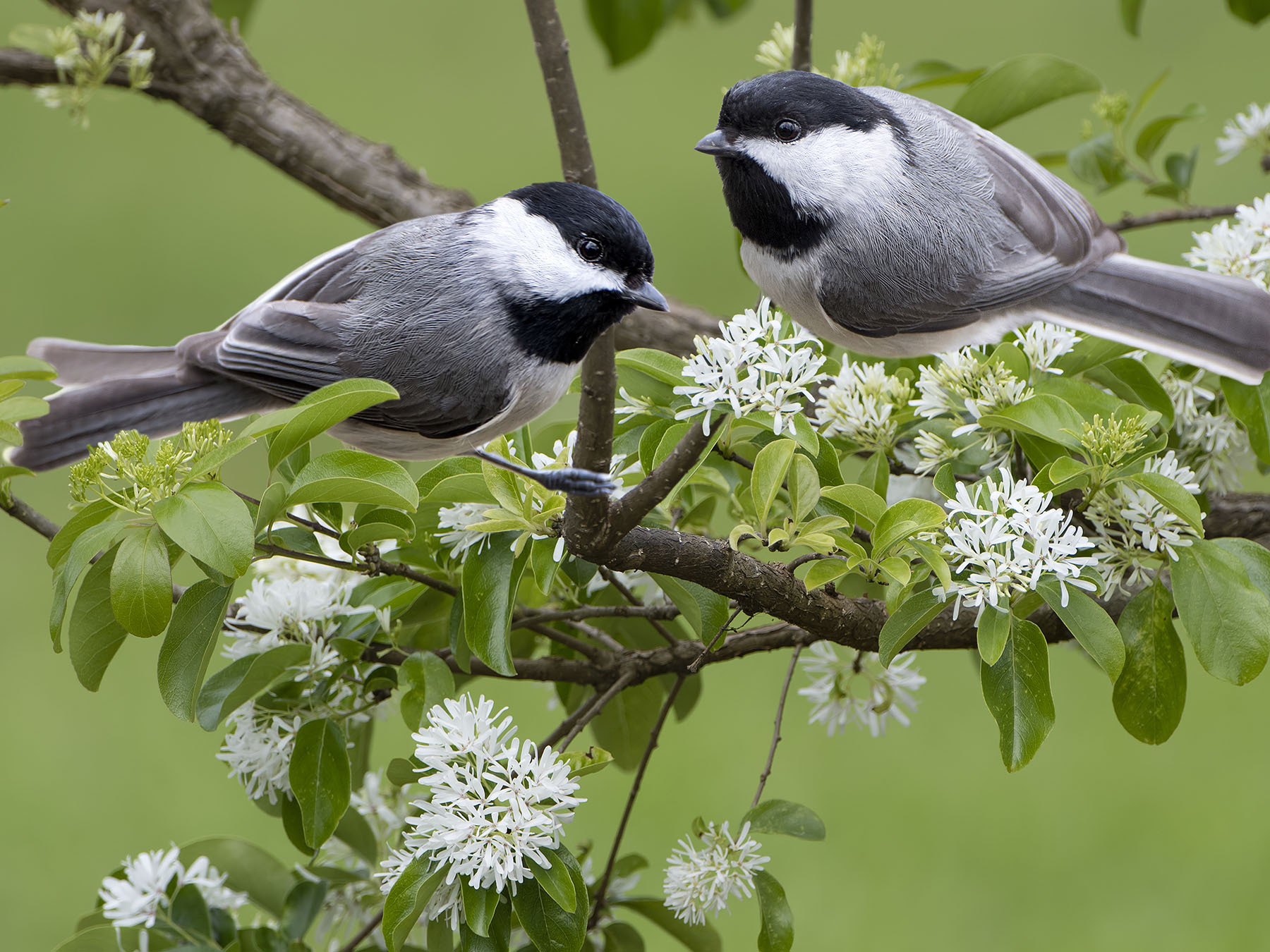
In winter they gather in flocks that other birds, such as titmice, nuthatches and warblers, often join. At a feeder a chickadee usually takes one seed and flies off to a branch to eat it on its own.
On very cold nights they can let their body temperature drop into a state called torpor to save energy, sheltering in tree holes.
Conservation
Carolina Chickadee is listed as Least Concern on the IUCN Red List.
Similar birds
Often mistaken for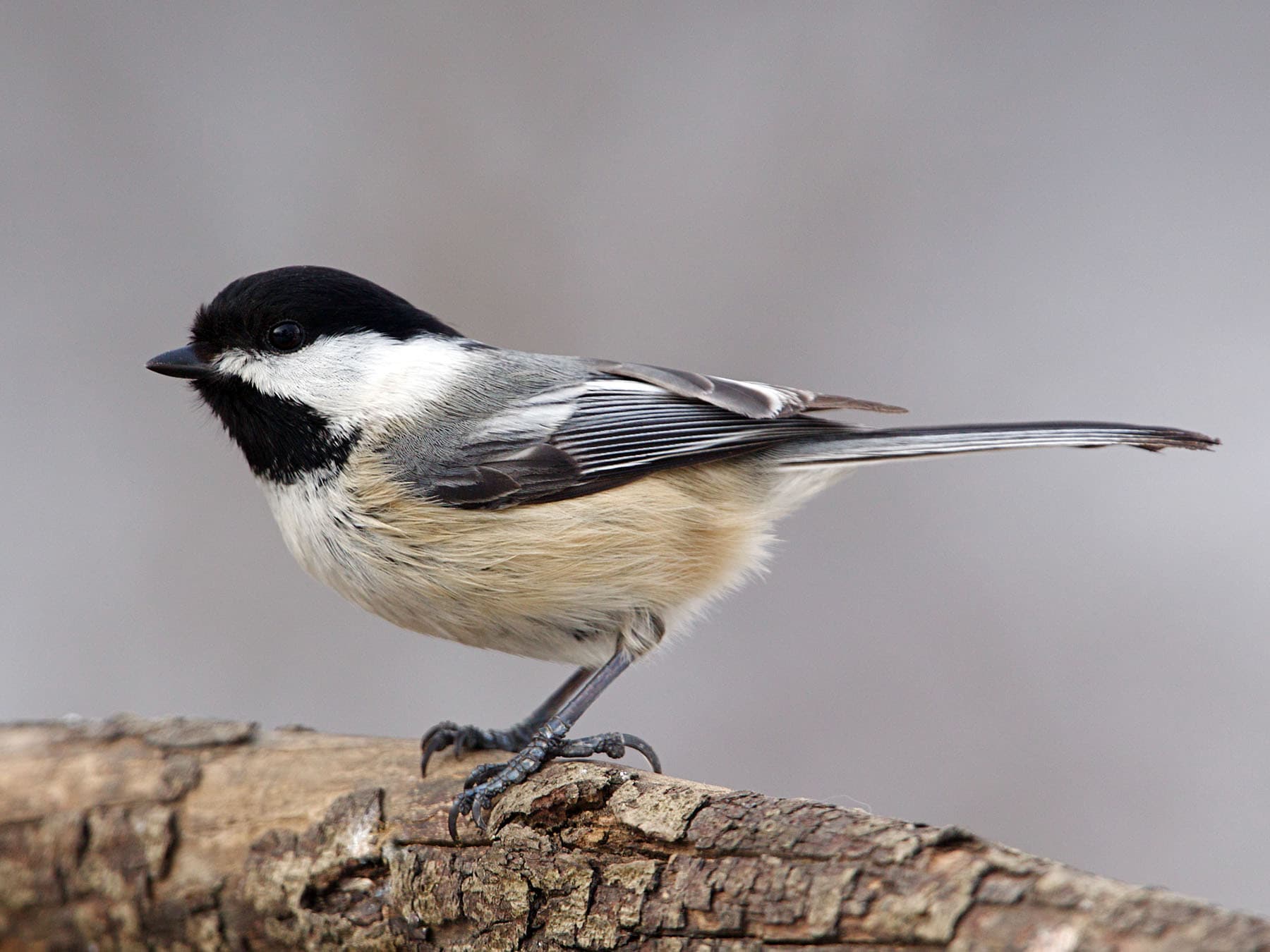
More photos
7 photos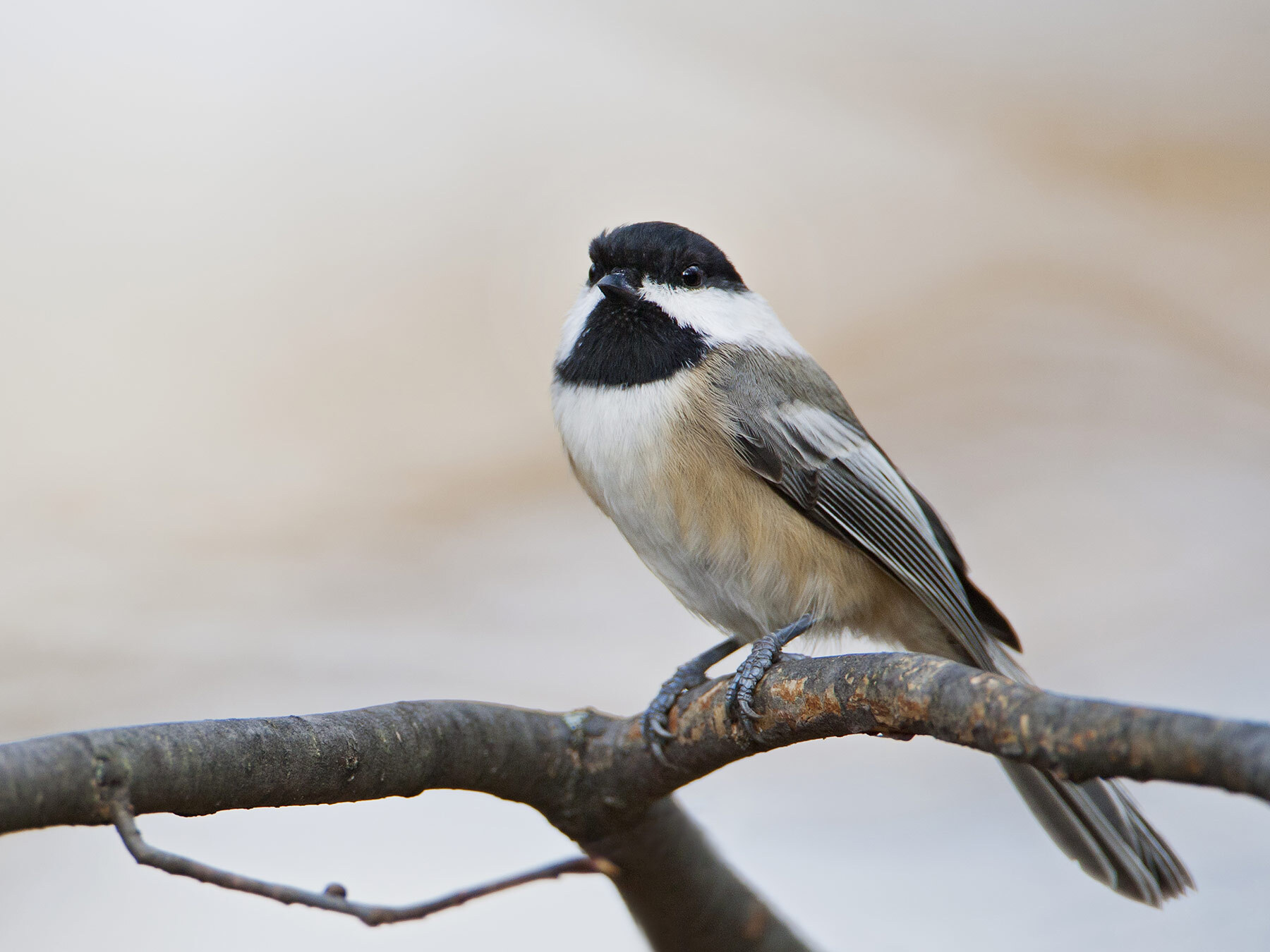
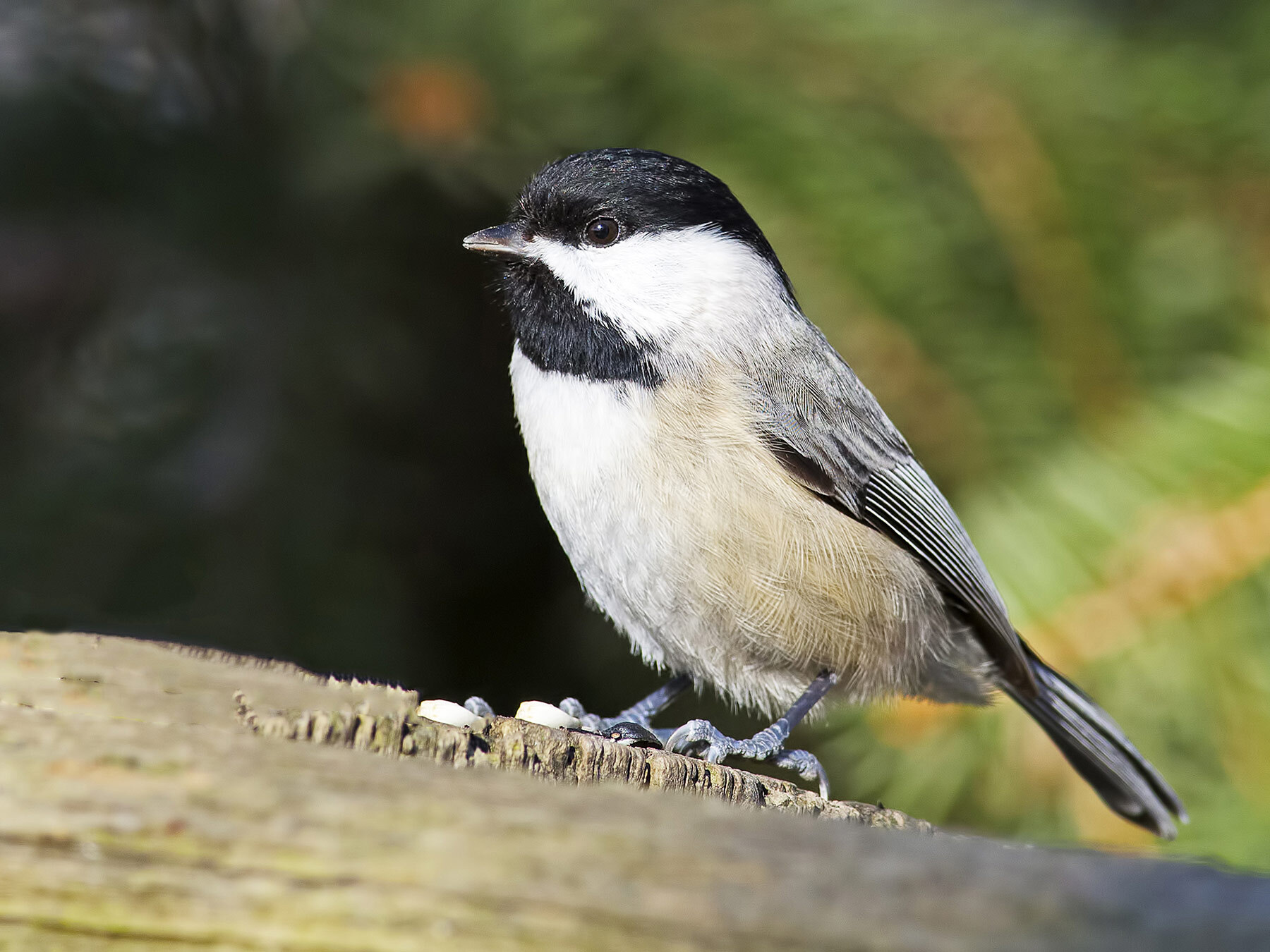
Carolina Chickadee guides
1 guidesQuick facts
- Length
- 10–12 cm
- Wingspan
- 15–20 cm
- Weight
- 8–12 g
- Family
- Tits & Chickadees
- Global status (IUCN)
- Least Concern
- Scientific name
- Poecile carolinensis
Sources
1- 1USGS Bird Banding Laboratory. Longevity records of North American birds. Accessed 9 October 2026. Source (opens in a new tab)

Checked by
Nathan Cope, founder and editor
Nathan founded Birdfact and leads its writers and contributors in the UK, the US and Canada. He has watched and studied birds for more than ten years, and checks every article and species guide before it’s published.