


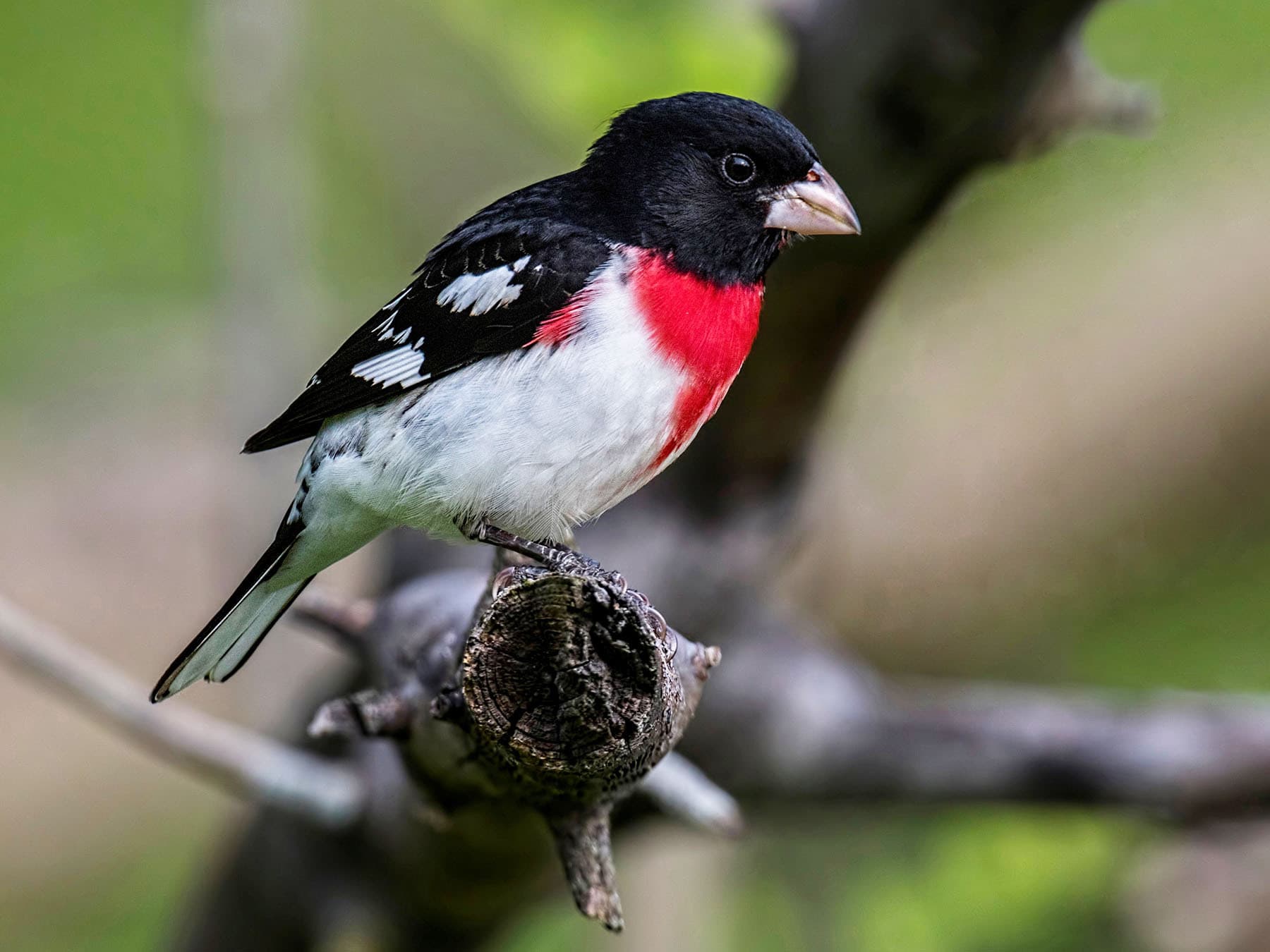
Rose-breasted Grosbeak
Pheucticus ludovicianus
By the Birdfact teamChecked by Nathan Cope
On this page11 sections
How to recognise it
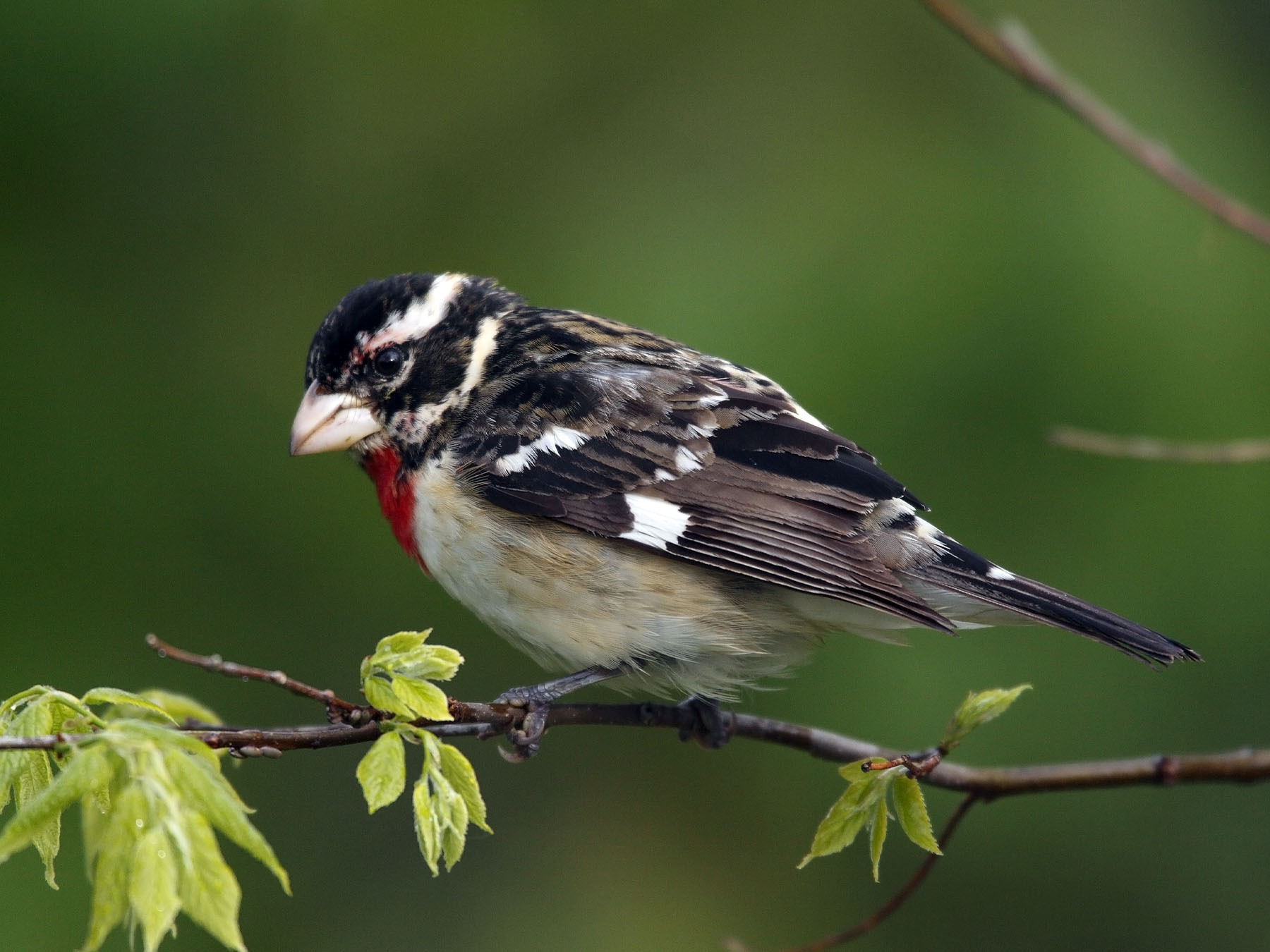
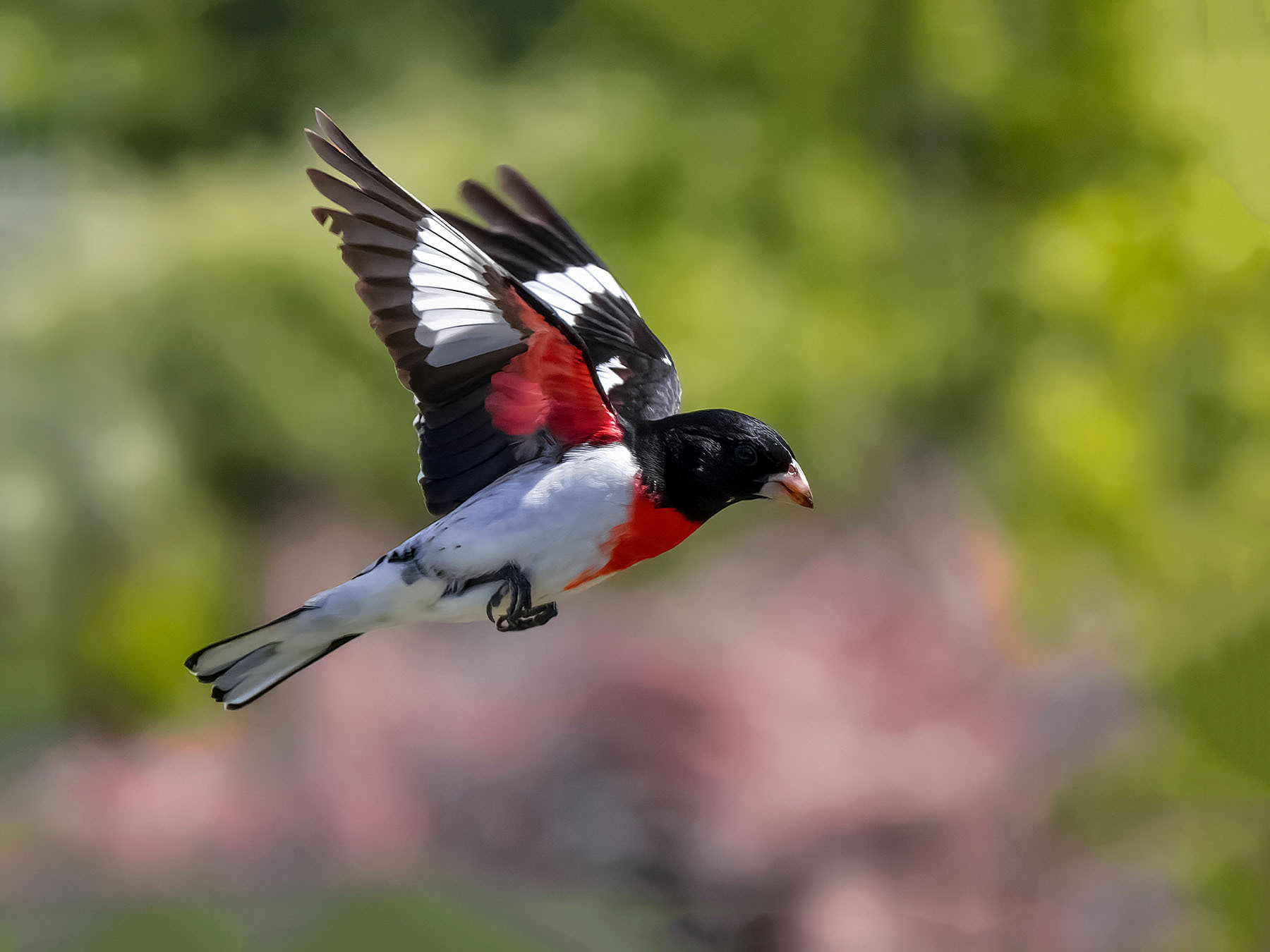
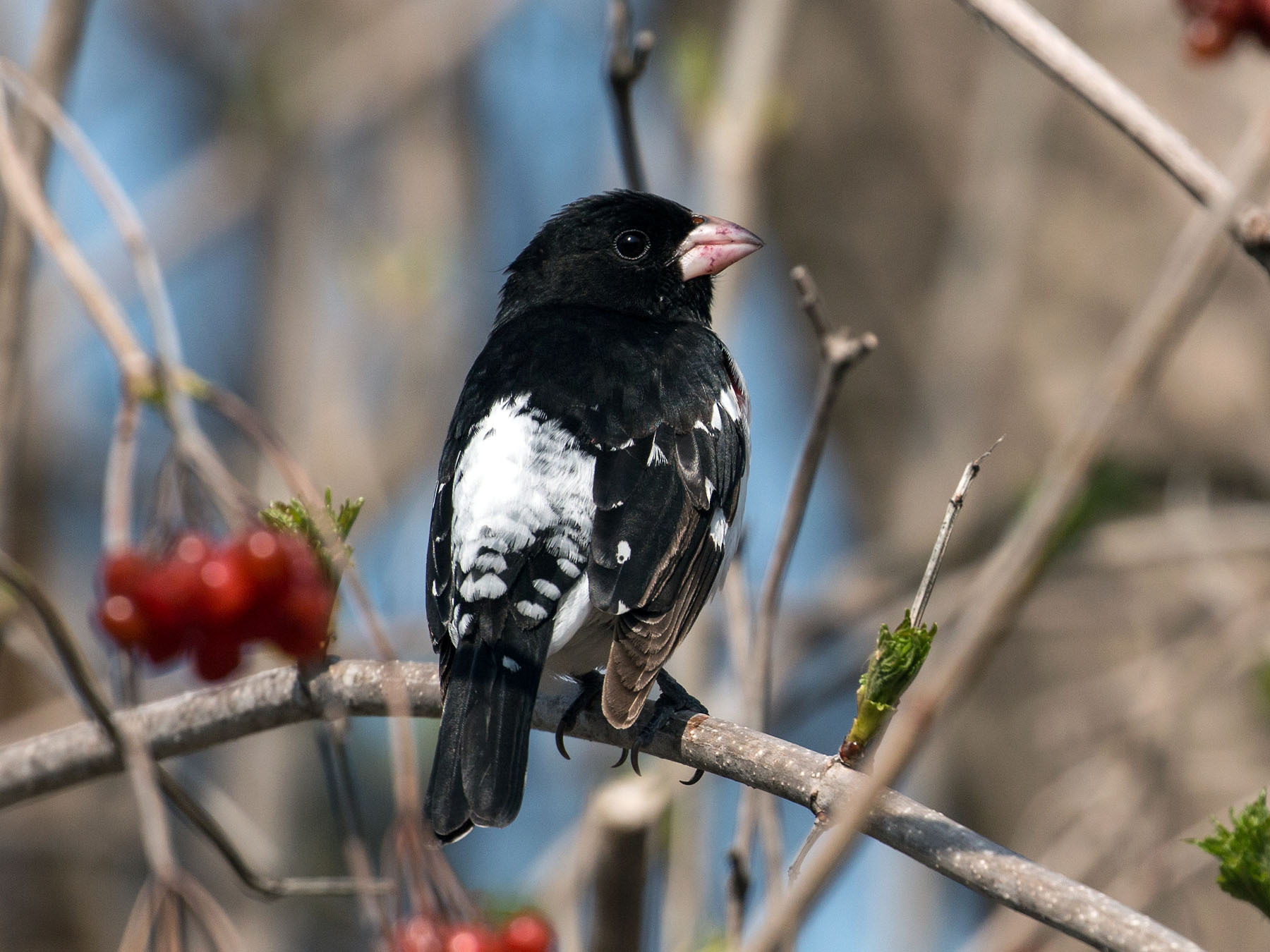
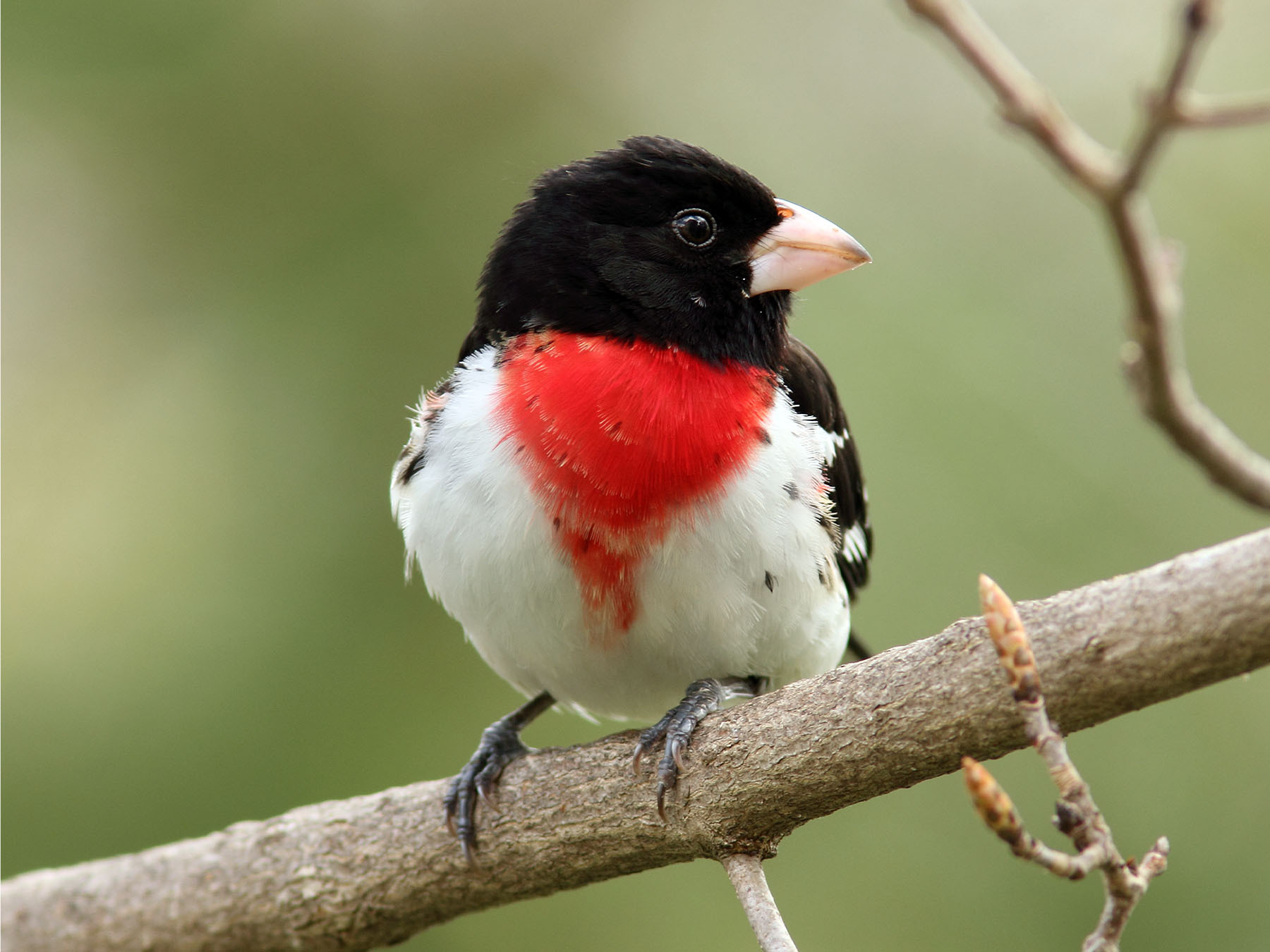
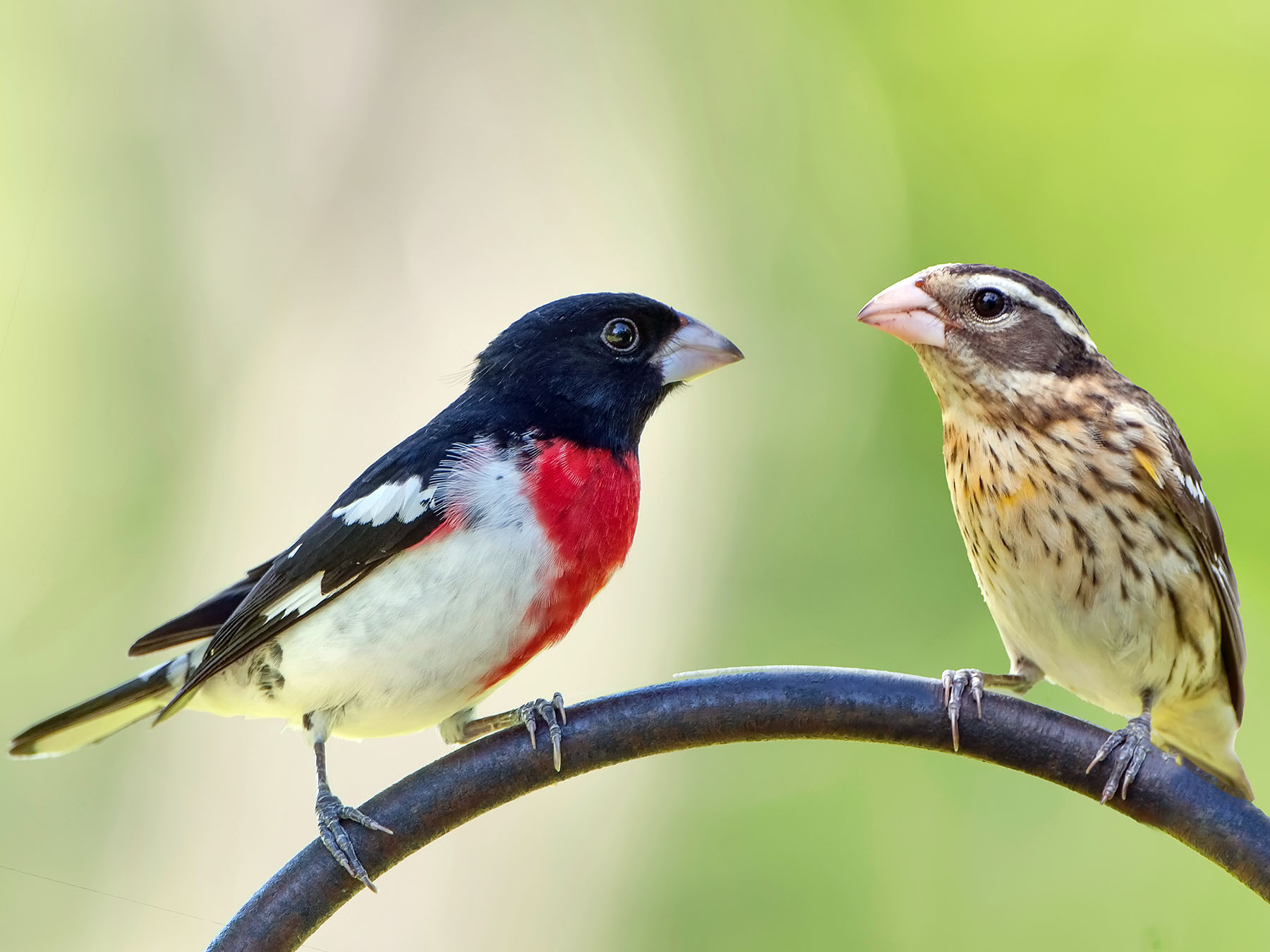
The Rose-breasted Grosbeak is a striking medium-sized finch with a thick, powerful bill. Breeding males display black head, wings, and back, contrasting sharply with white underparts and a distinctive rose-red triangular breast patch. Their wings feature prominent white patches. During winter, males take on a more female-like appearance.
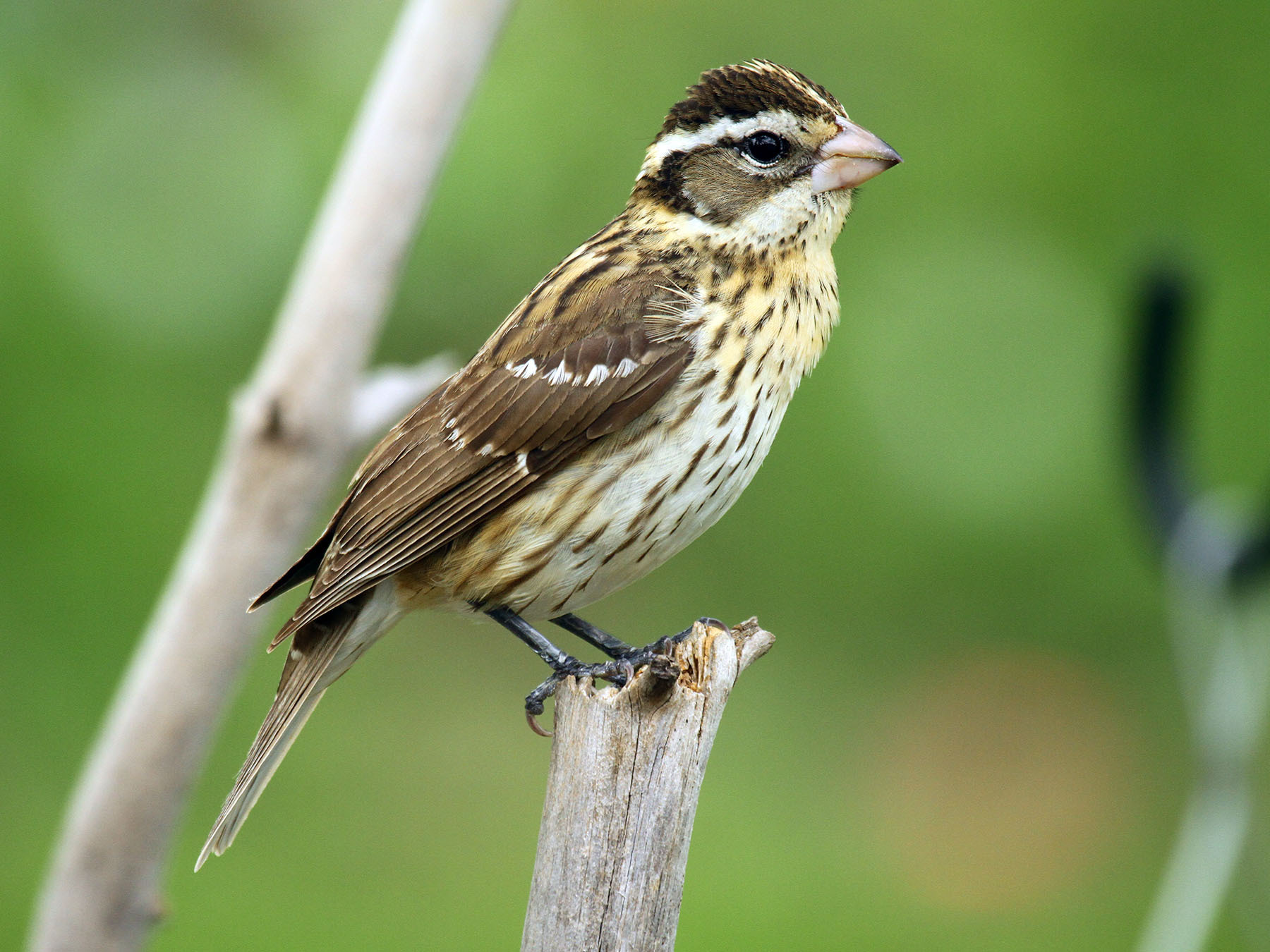
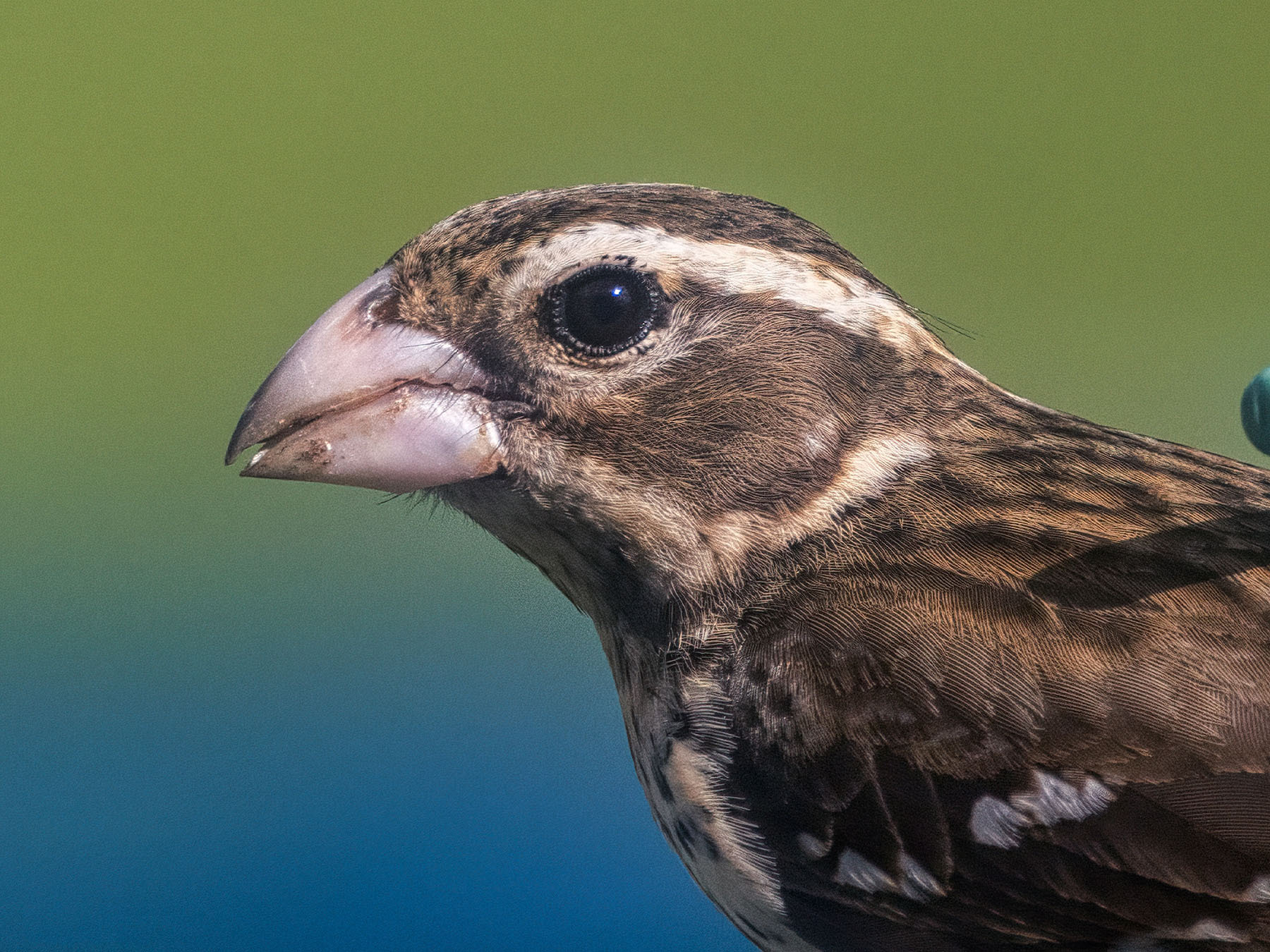
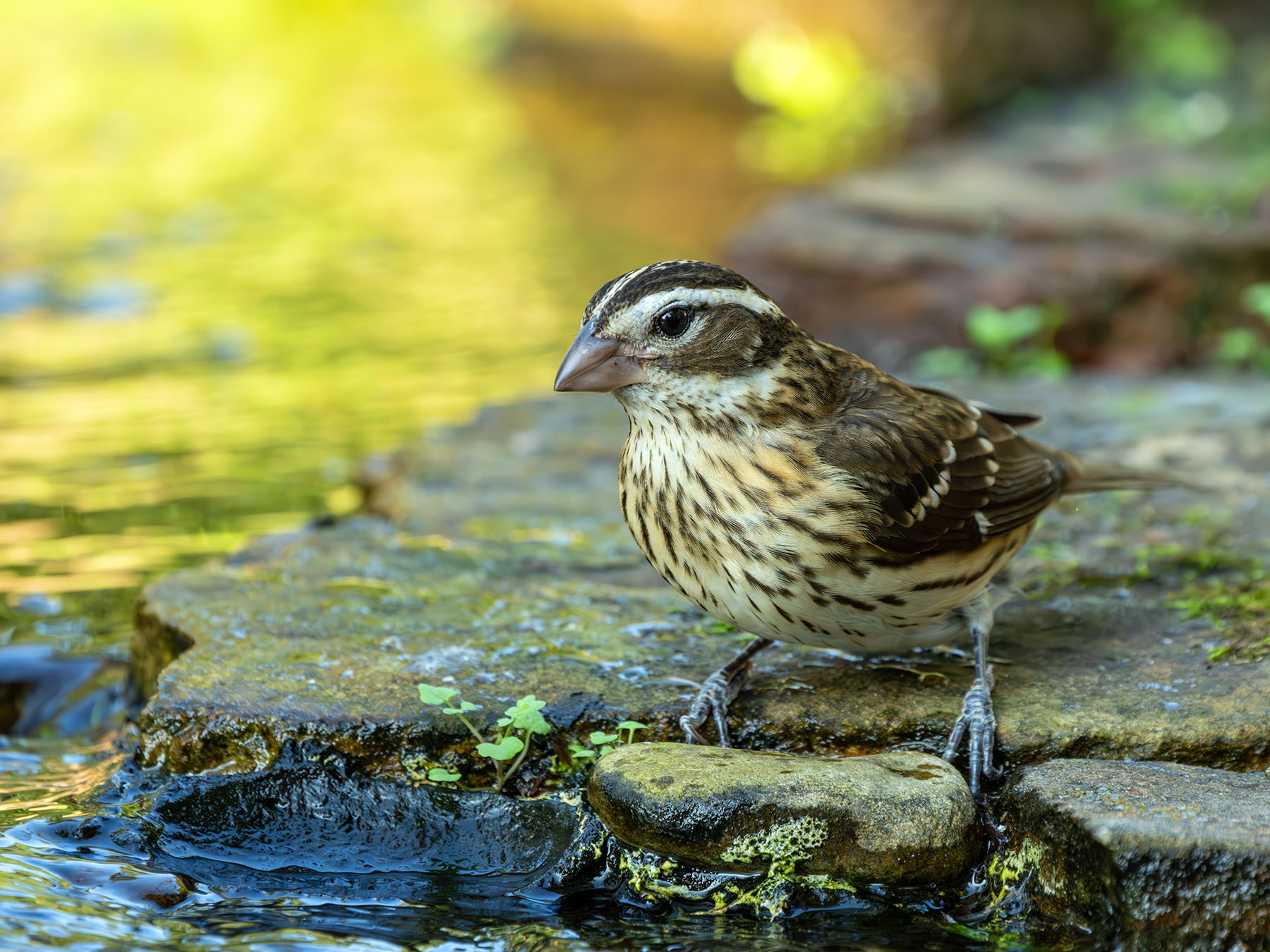
Females have brown streaked plumage above, with distinctive pale stripes on the head and wing bars. Their underparts are pale, with dark streaking on the breast and flanks. Both males and females have pale bills, though breeding males develop white bills.
Its size
Adults- Length
- 18–22 cm
- Wingspan
- 29–33 cm
- Weight
- 39–49 g
Its song and calls
The Rose-breasted Grosbeak's song is often described as a melodious warble, similar to a robin's song but with added sweetness. It's typically rendered as "cheery, cheery, cheery, cheer-up!"
Their call is a sharp, metallic "chink" or "peek," often given in flight or when alarmed.
- Song0:00 / 0:36
Recorded in Minnesota, United States · May 2013
- Call0:00 / 0:42
Recorded in Minnesota, United States · May 2014
When and where to see it
OctoberLeaving
Most recorded in October
- 1. Alabama0.72%
- 2. Tennessee0.70%
- 3. Georgia0.50%
- 4. North Carolina0.39%
- 5. Kentucky0.39%
Each dot is a county, state or province: the bigger and darker, the larger the bird’s share of that place’s bird records that month. Grey dots: no regular records. The ringed point is the centre of the bird’s records this month; the arrow shows how it moved since last month, and the dashed loop its path through the year. “Arrivals” colours places where it becomes regular this month (orange) or is in its last regular month (grey). GBIF eBird Observation Dataset, 2019–2024. Map data: Natural Earth, US Census Bureau; place centres © OpenStreetMap contributors.
In your area
See when the Rose-breasted Grosbeak is recorded in your county, state or province.
How often the Rose-breasted Grosbeak turns up in the United States and Canada through the year, from birdwatchers' records.
United States
Summer visitor · regularly Apr–Oct · most records in May
Canada
Summer visitor · regularly May–Sep · most records in May
Show as a table
| Month | United States | Canada |
|---|---|---|
| January | 0.001% | 0.001% |
| February | <0.001% | <0.001% |
| March | 0.001% | – |
| April | 0.14% (regular) | 0.017% |
| May | 0.61% (regular) | 0.73% (regular) |
| June | 0.32% (regular) | 0.49% (regular) |
| July | 0.20% (regular) | 0.32% (regular) |
| August | 0.14% (regular) | 0.33% (regular) |
| September | 0.29% (regular) | 0.25% (regular) |
| October | 0.11% (regular) | 0.014% |
| November | 0.006% | 0.004% |
| December | 0.002% | 0.001% |
Worldwide: recorded regularly in 27 countries
Countries where it was recorded in at least 3 of the 6 years 2019–2024. Linked countries have their own bird list.
Europe (1)
North America (23)
- Aruba
- Bahamas
- Belize
- Bermuda
- Canada
- Caribbean Netherlands
- Cayman Islands
- Costa Rica
- Cuba
- Curaçao
- Dominican Republic
- El Salvador
- Guadeloupe
- Guatemala
- Honduras
- Jamaica
- Mexico
- Nicaragua
- Panama
- Puerto Rico
- St Pierre & Miquelon
- Turks & Caicos Islands
- United States
South America (3)
- Colombia
- Ecuador
- Venezuela
Data: EOD – eBird Observation Dataset (Cornell Lab of Ornithology), accessed via GBIF.org, CC BY 4.0. Records from 2019–2024, aggregated and filtered by Birdfact. How these lists are made
Tips for seeing it
- Listen for their robin-like song with added warbles
- Look for them in deciduous and mixed forests, especially near edges
- Check bird feeders, as they readily visit for sunflower seeds
- Observe treetops during spring migration for males' distinctive coloration
What it eats
Rose-breasted Grosbeaks have a varied diet that includes insects, seeds, and fruits. They use their powerful beaks to crack open seeds and catch insects.
During the breeding season, they consume more insects, particularly beetles, to provide protein for their growing young. In winter, they rely more heavily on seeds and berries.
Nesting and breeding
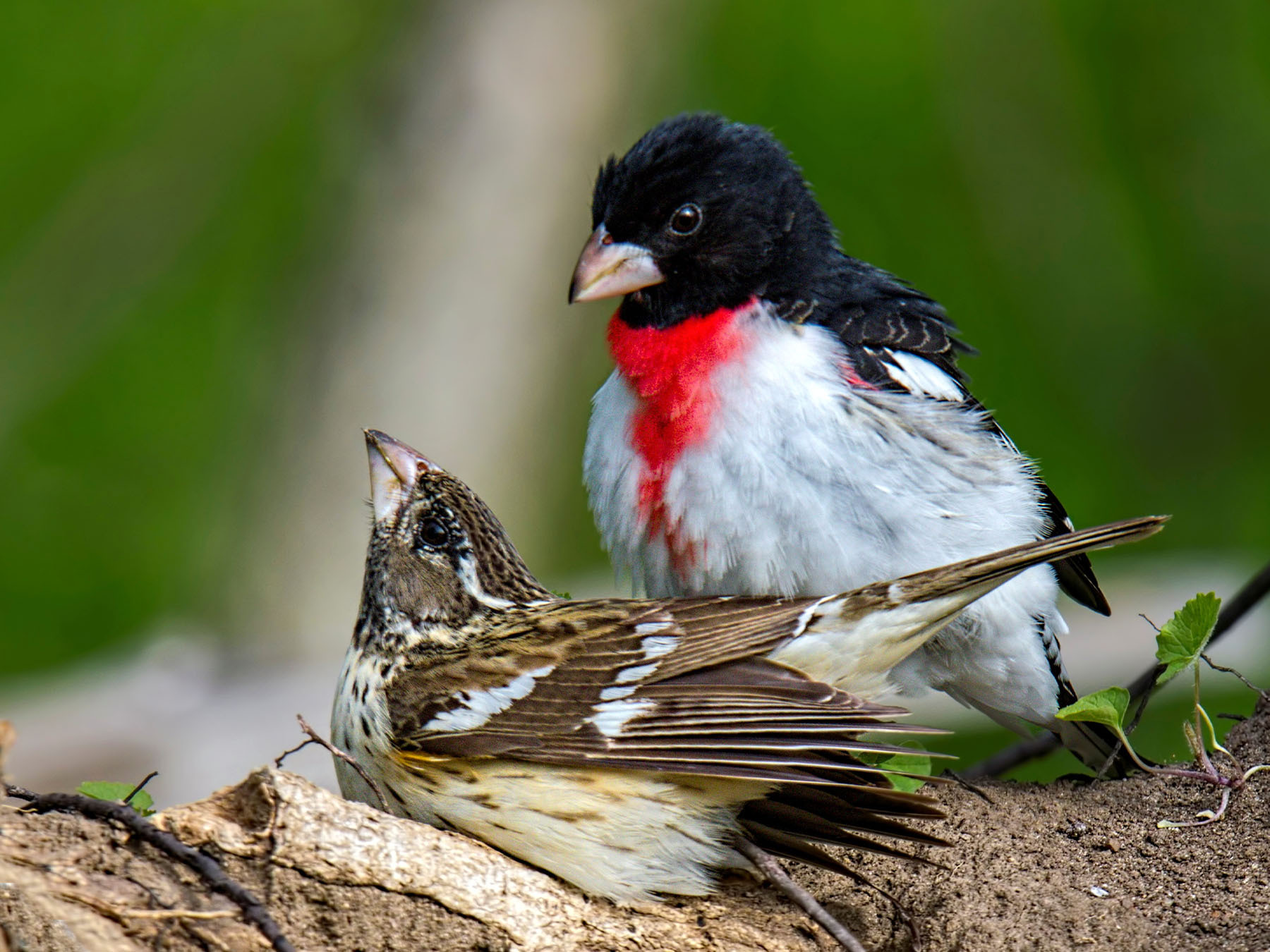
Breeding season for Rose-breasted Grosbeaks typically begins in May. Males court females with songs and displays, often bringing them nesting material as part of the pair-bonding process.
Nests are loosely constructed of twigs, rootlets, and plant fibers, and are usually placed on horizontal branches of trees or large shrubs. Females lay 3-5 pale blue or green eggs with brown speckles.
Both parents share incubation duties for about 13 days. After hatching, nestlings are fed by both parents and fledge after approximately 9-12 days, though they remain dependent on their parents for several more weeks.
Behaviour
Rose-breasted Grosbeaks are known for their melodious singing, often delivered from high perches in trees. They forage deliberately, moving methodically through branches to find food.
During the breeding season, males engage in aerial displays, flying with slow wingbeats to showcase their striking plumage to potential mates.
Conservation
While currently listed as Least Concern, Rose-breasted Grosbeaks face threats from habitat loss due to deforestation in both breeding and wintering grounds. Climate change may also impact their migration patterns and breeding success.
Conservation efforts focus on preserving forest habitats and monitoring population trends.
More photos
9 photos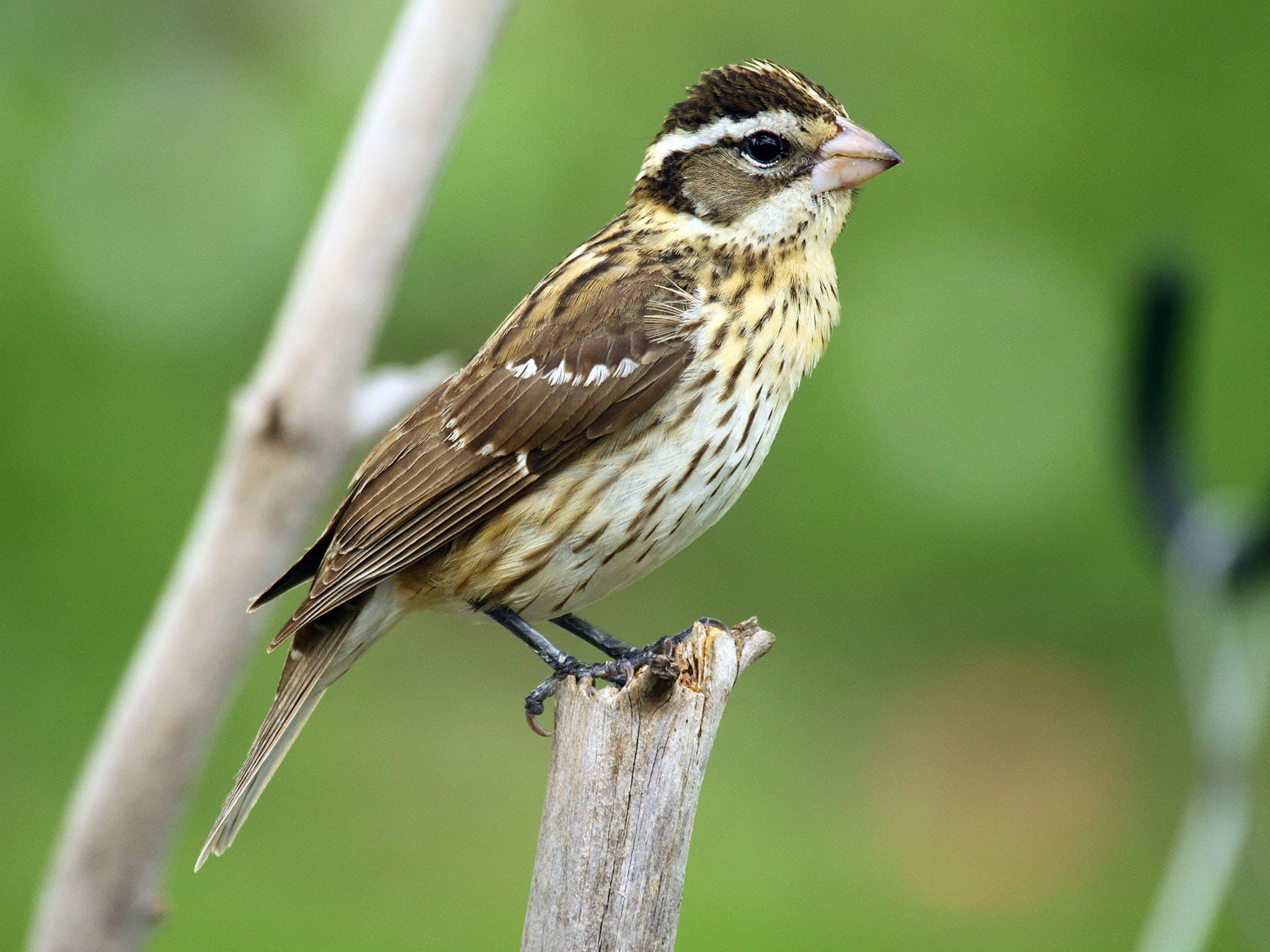 Female Rose-breasted Grosbeak
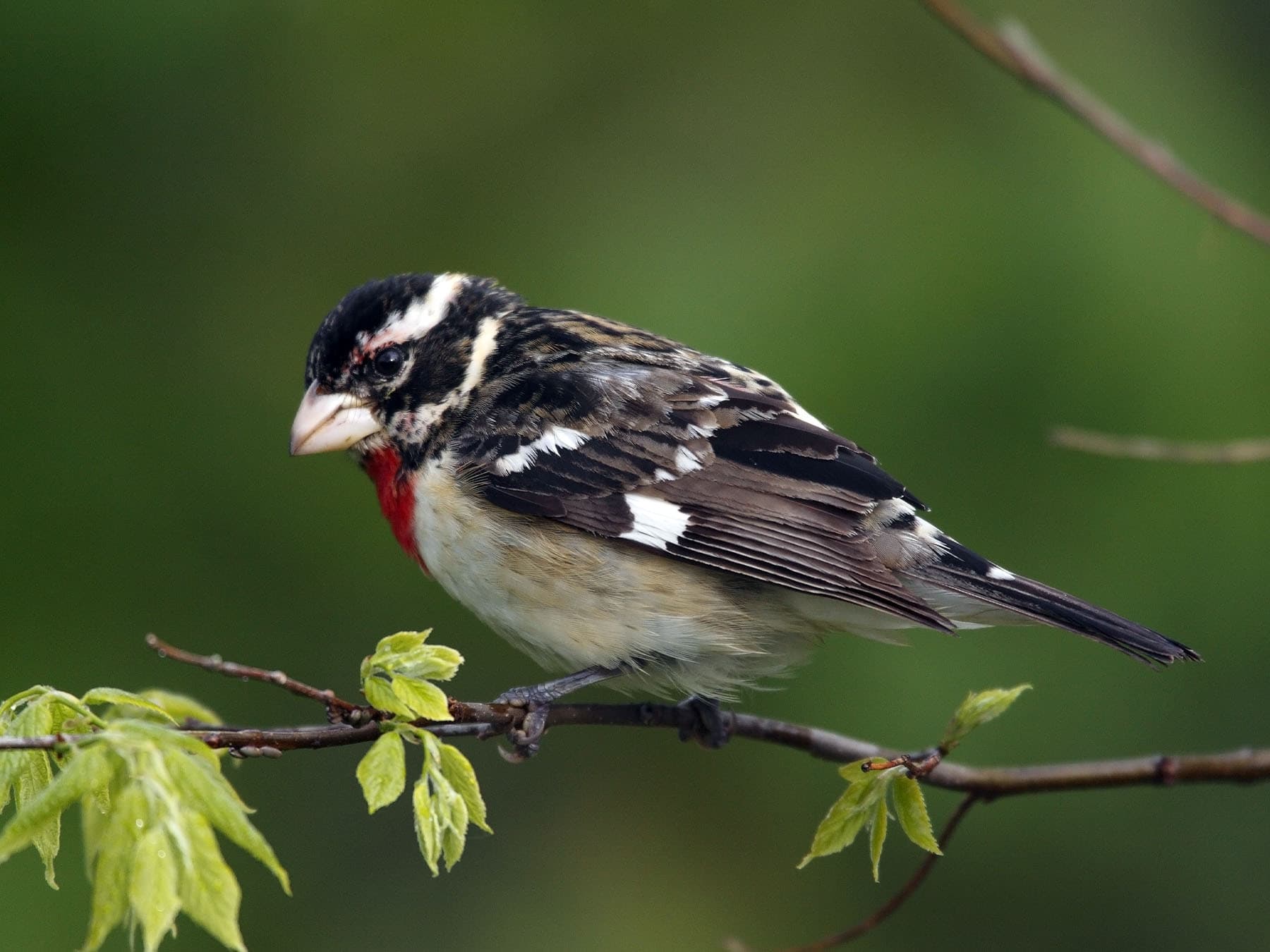 Rose-breasted Grosbeak first spring male
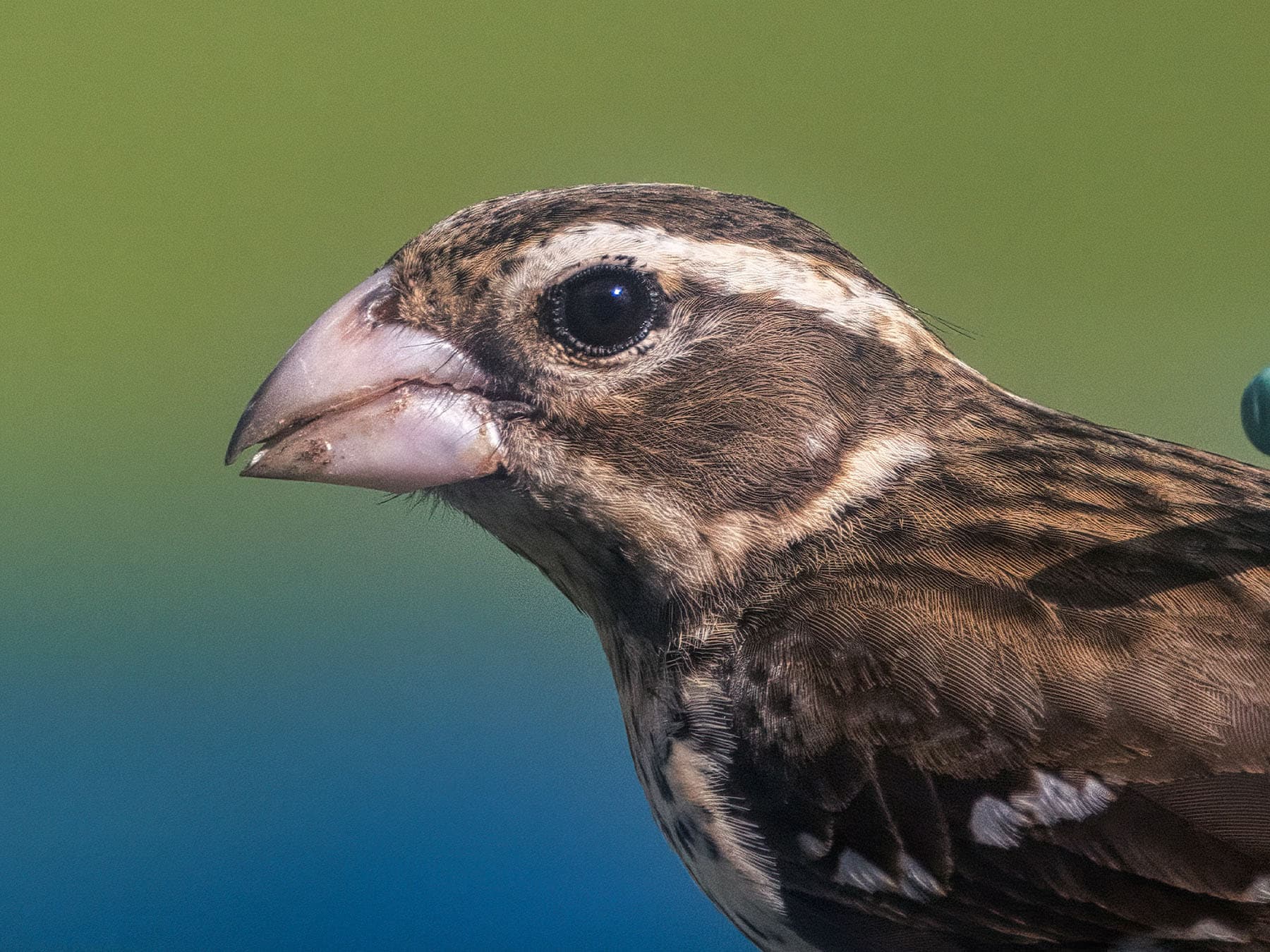 Portrait of a Rose-breasted Grosbeak
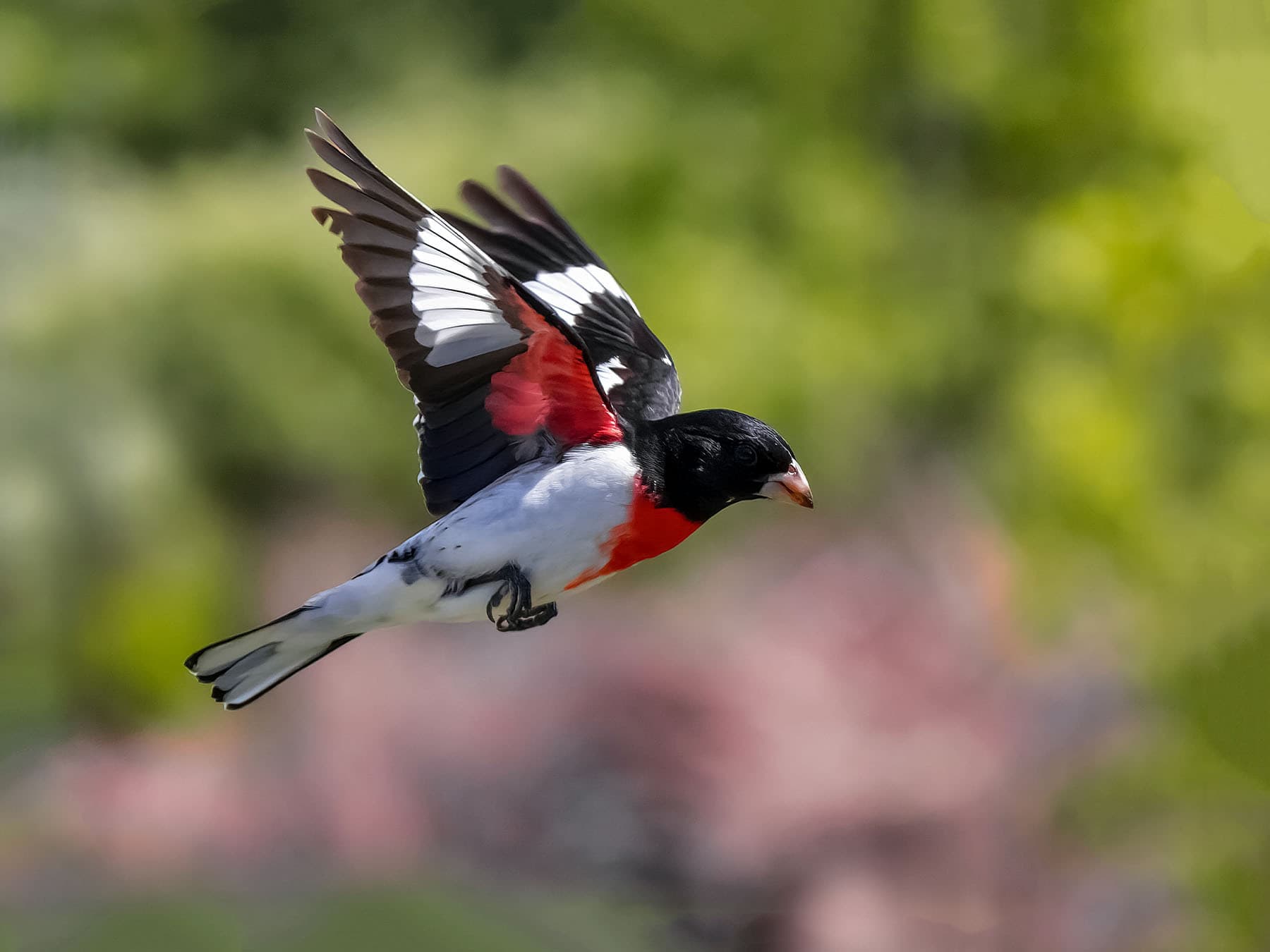 Rose-breasted Grosbeak in-flight
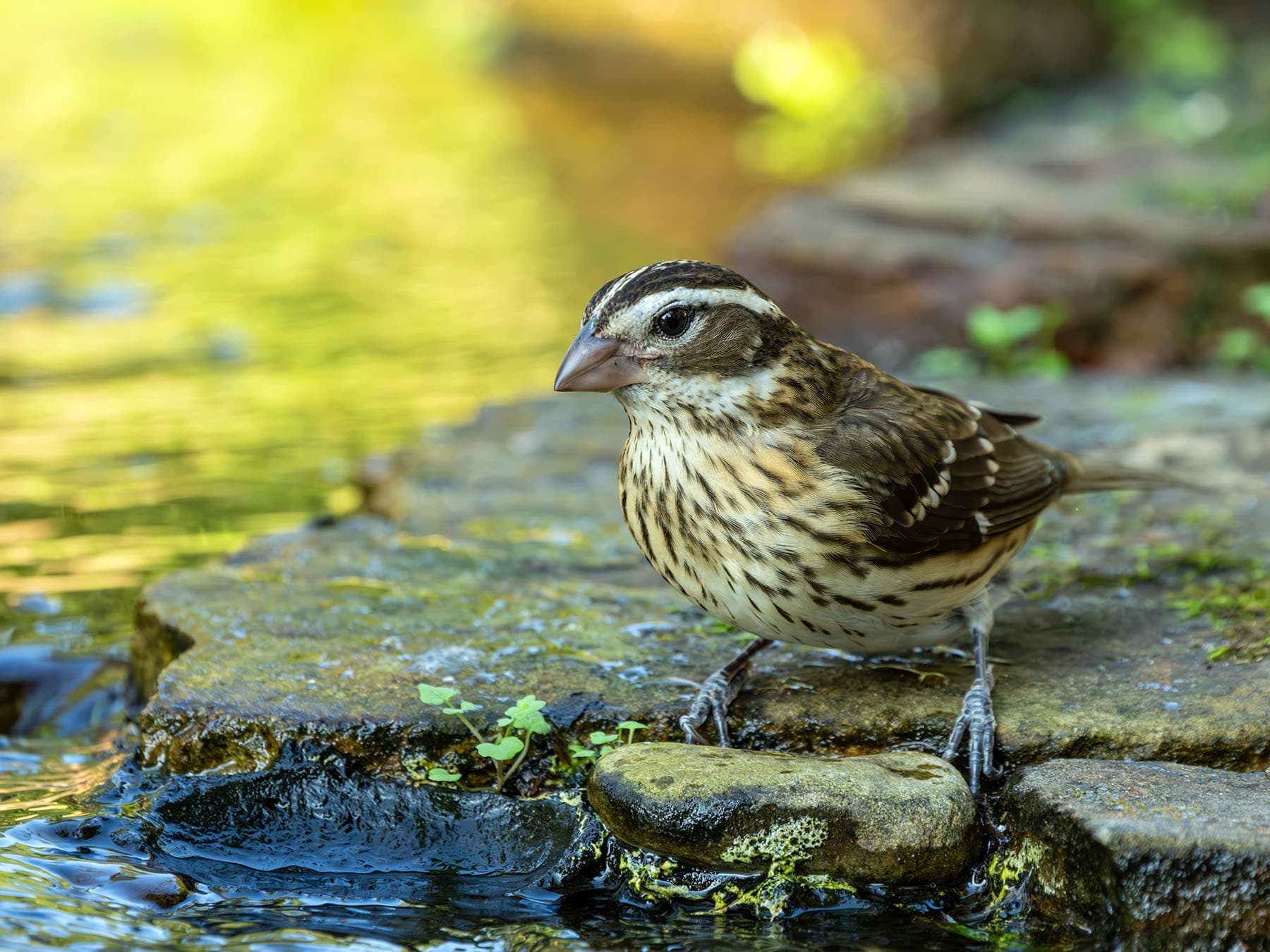 Female Rose-breasted Grosbeak standing on a rock by the river
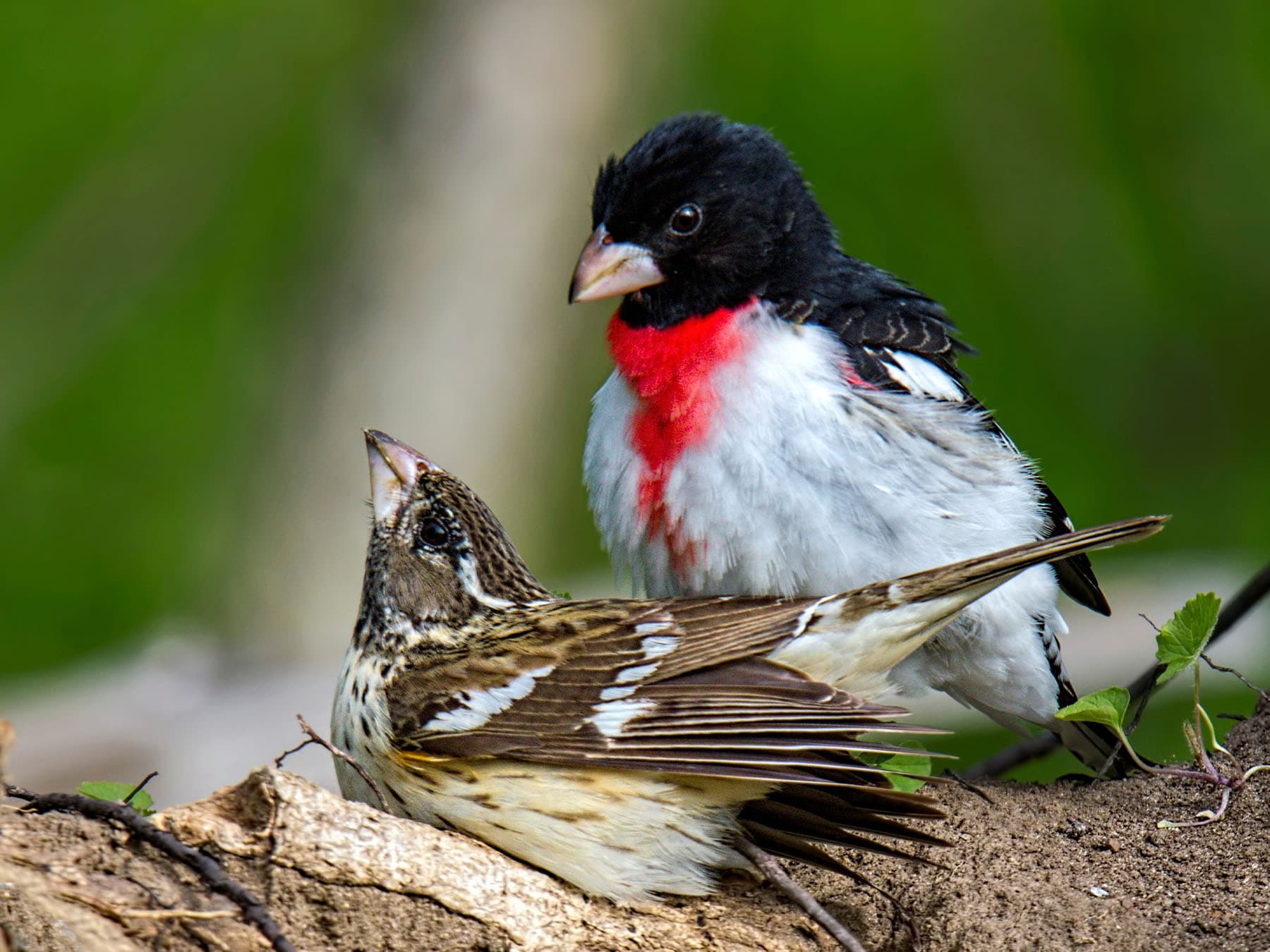 Pair of Rose-breasted Grosbeaks in courtship
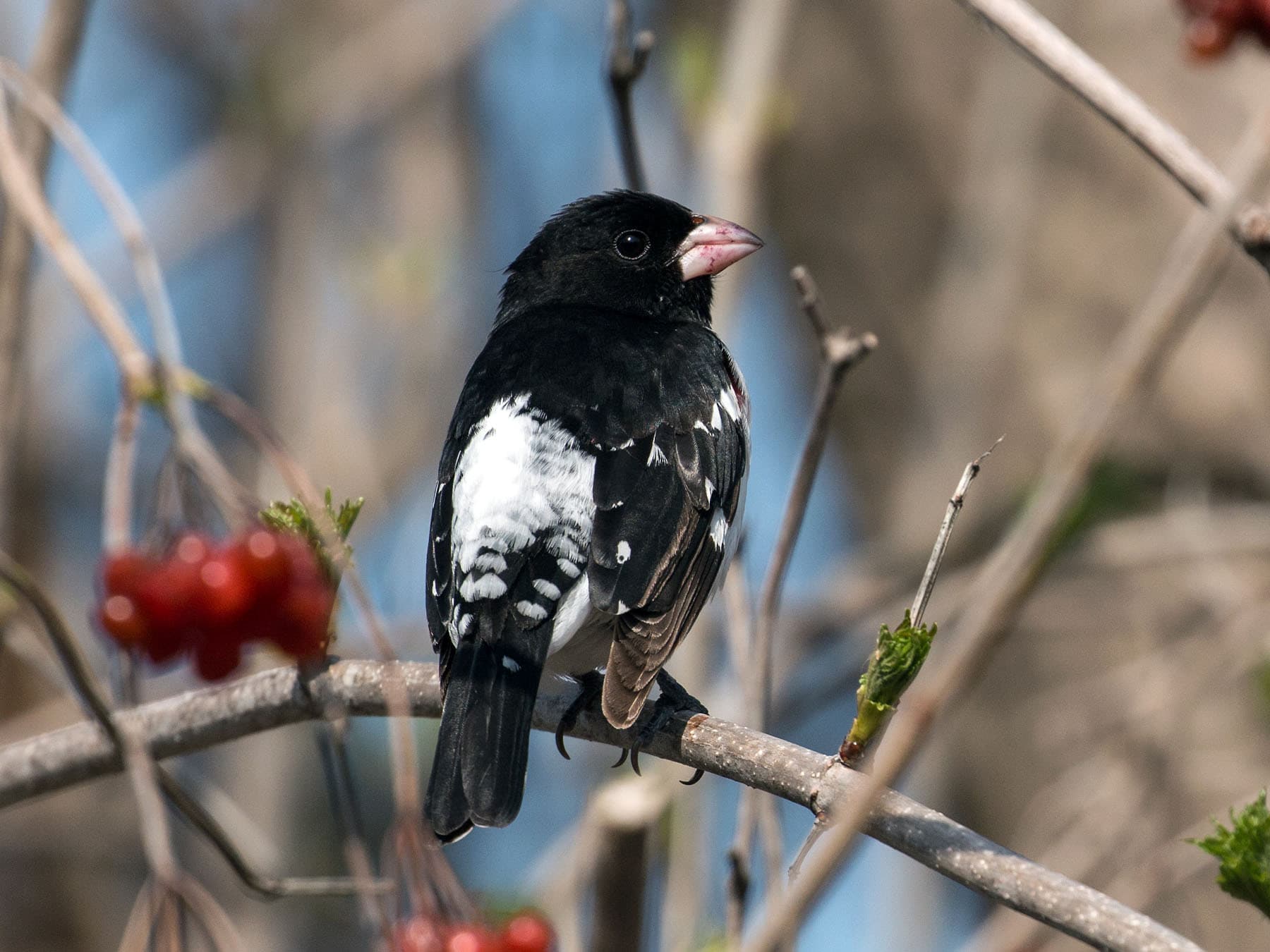 Rose-breasted Grosbeak perched on a branch
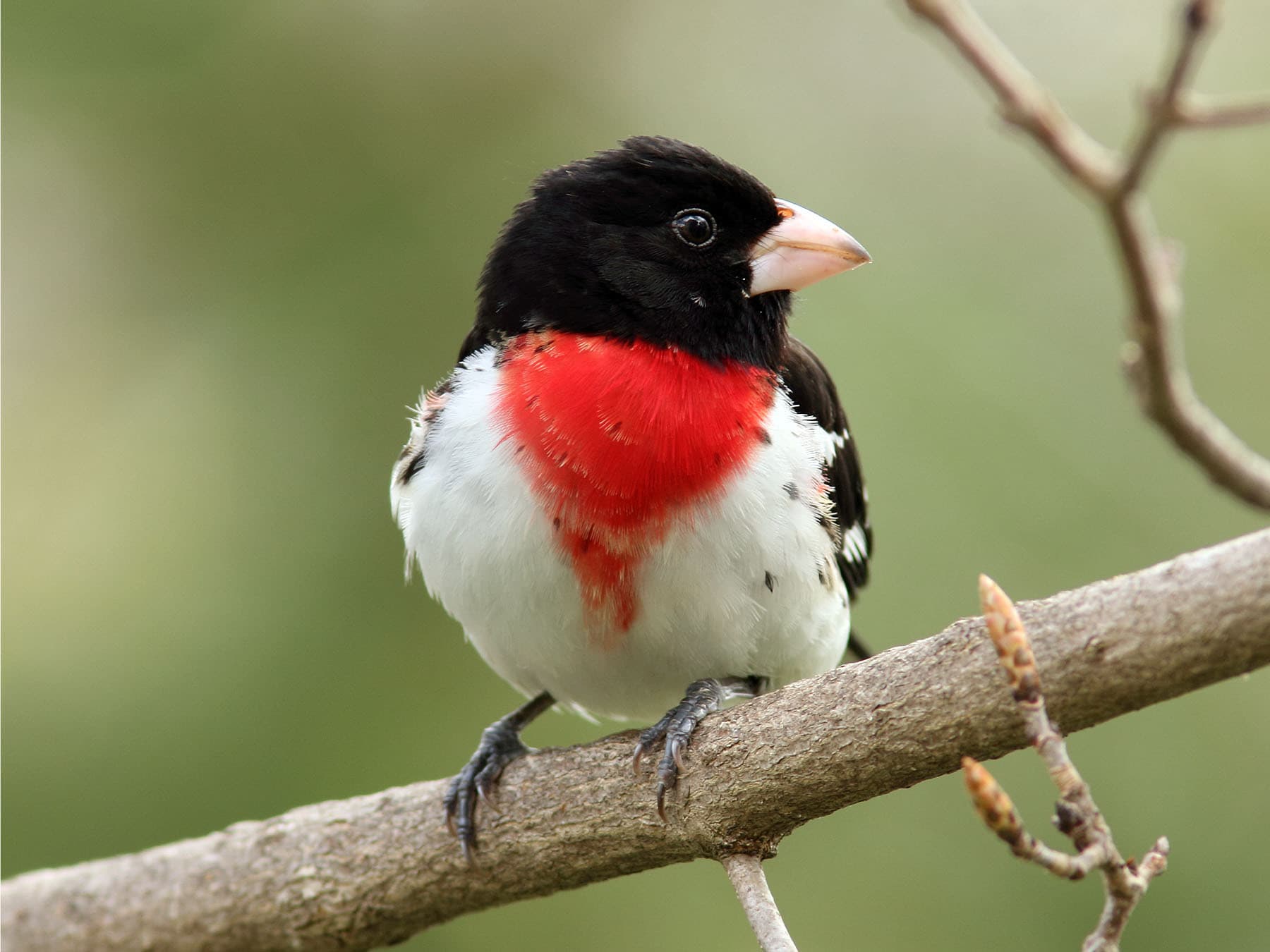 Rose-breasted Grosbeak perching on a branch
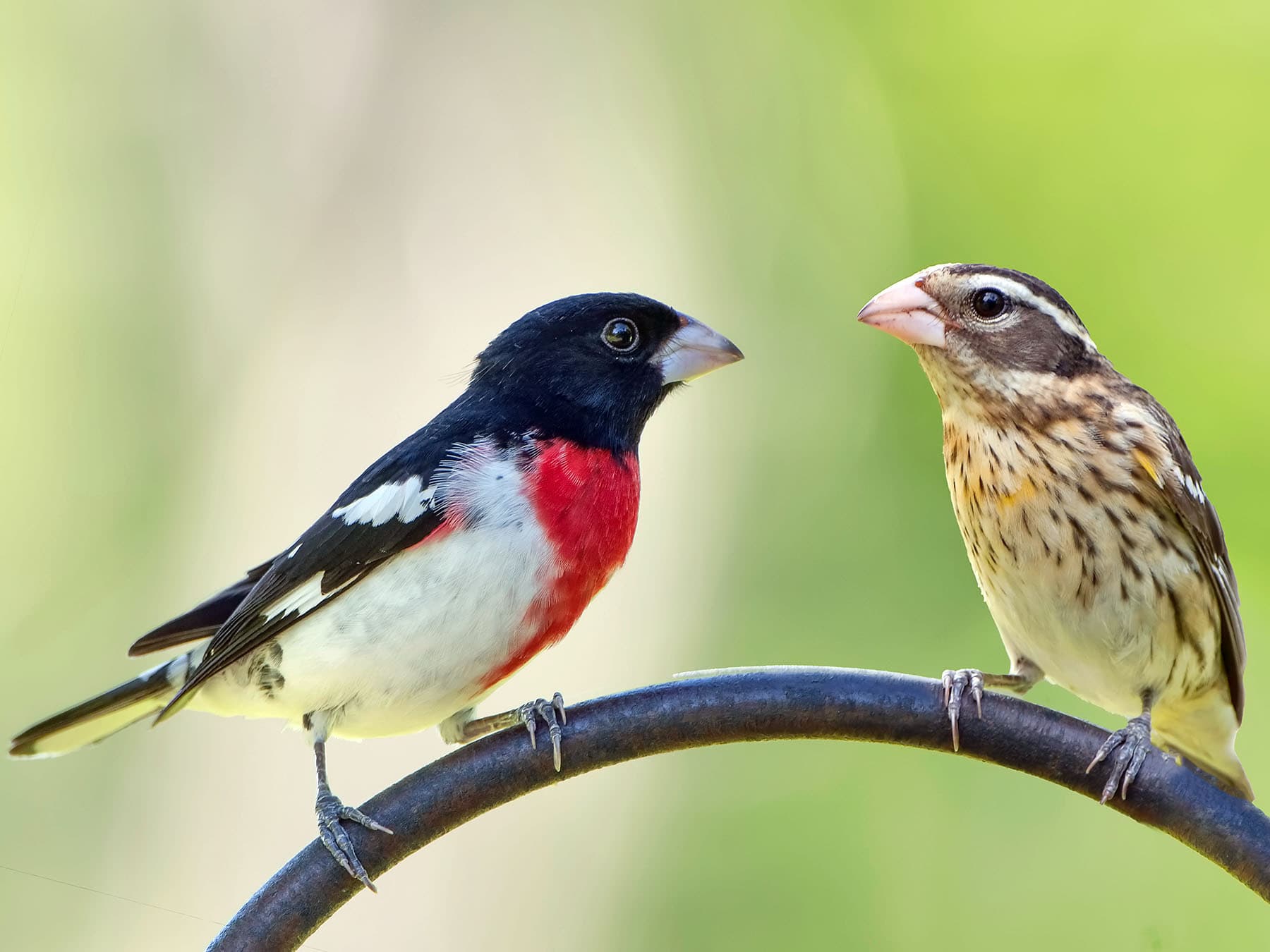 Pair of Rose-breasted Grosbeaks - Male (left) and Female (right)
Quick facts
- Length
- 18–22 cm
- Wingspan
- 29–33 cm
- Weight
- 39–49 g
- Lifespan
- 7–12 years · oldest recorded 24 years
- Family
- Cardinals & Grosbeaks
- Migration
- Long-distance Migrant
- Global status (IUCN)
- Least Concern
- World population
- 4,700,000 mature individuals
- Population trend
- Decreasing
- Scientific name
- Pheucticus ludovicianus
Sources
5- 1BirdLife International. 2018. Pheucticus ludovicianus. The IUCN Red List of Threatened Species 2018: e.T22723813A132168899. Source (opens in a new tab)
- 2Data from Breeding Bird Survey and/or Christmas Bird Count: Butcher and Niven (2007)
- 3Partners in Flight (2020) Source (opens in a new tab)
- 4(Wild Bird) Historical Longevity Records of North American Birds Source (opens in a new tab)
- 5(Captive Bird) John Terres, The Audubon Society Encyclopedia of North American Birds (1980)

Checked by
Nathan Cope, founder and editor
Nathan founded Birdfact and leads its writers and contributors in the UK, the US and Canada. He has watched and studied birds for more than ten years, and checks every article and species guide before it’s published.