


Barred Owl
Hoot Owl, Eight Hooter · Strix varia
By the Birdfact teamChecked by Nathan Cope
On this page14 sections
How to recognise it
What do Barred Owls look like?
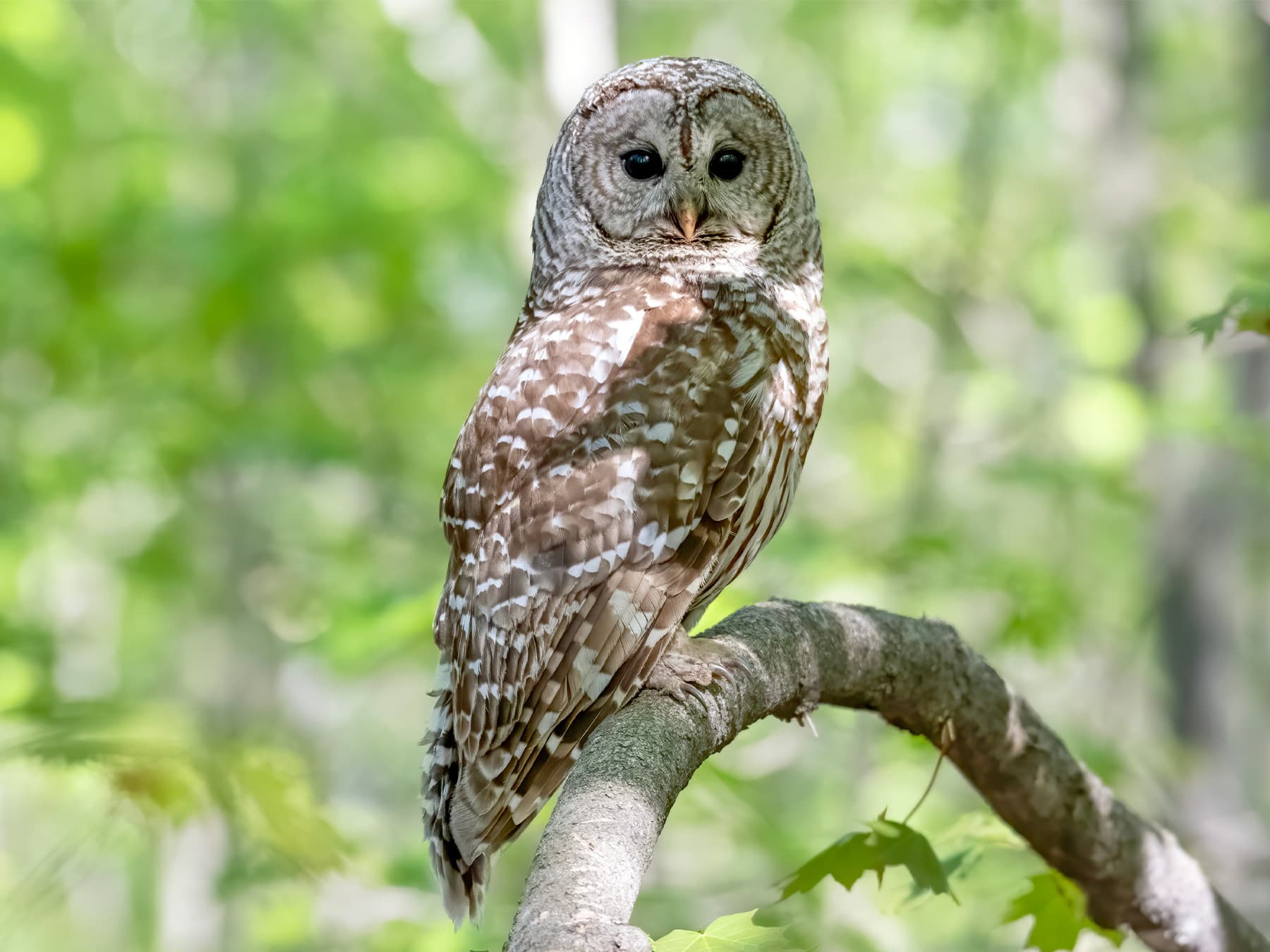
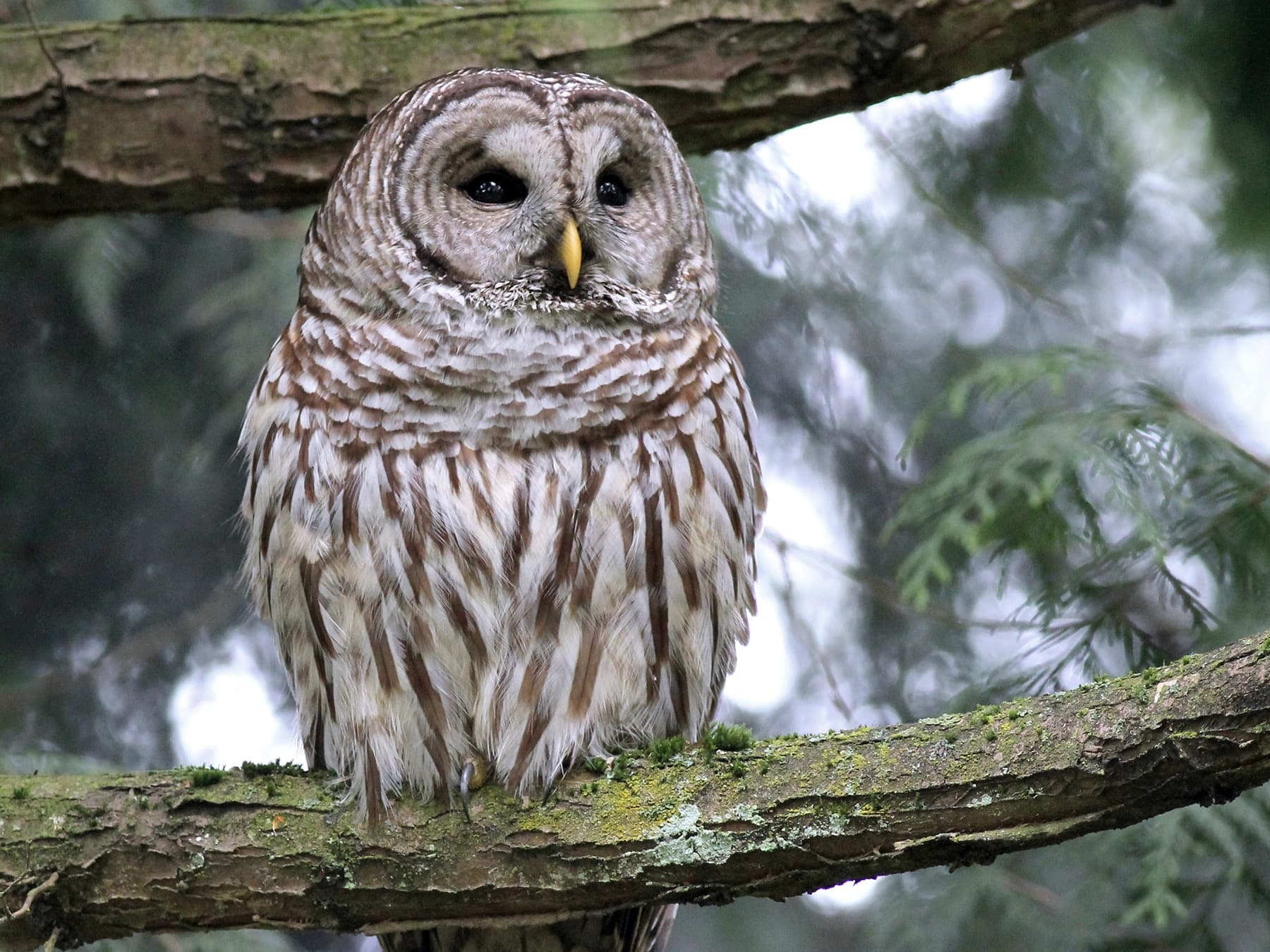
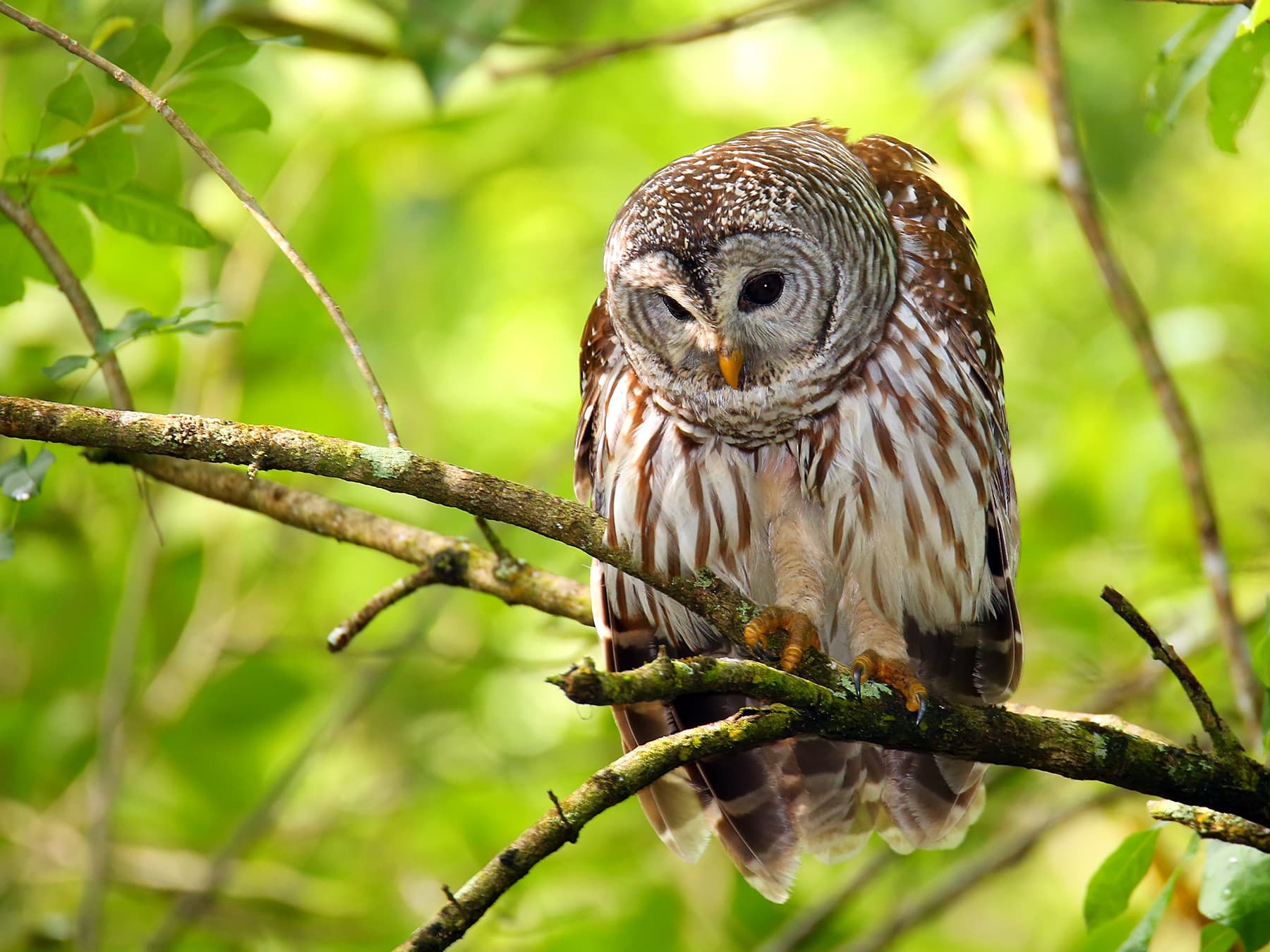
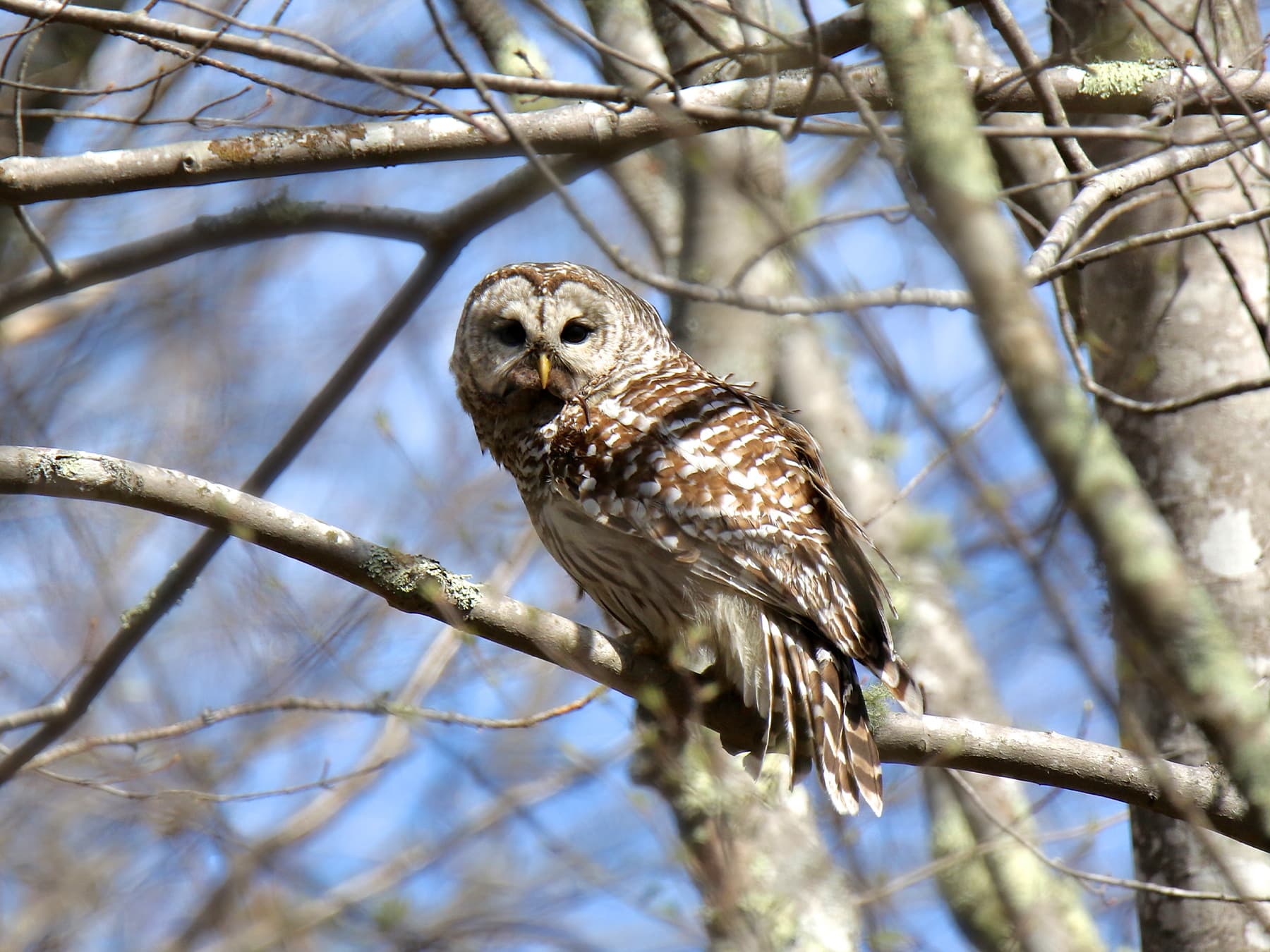
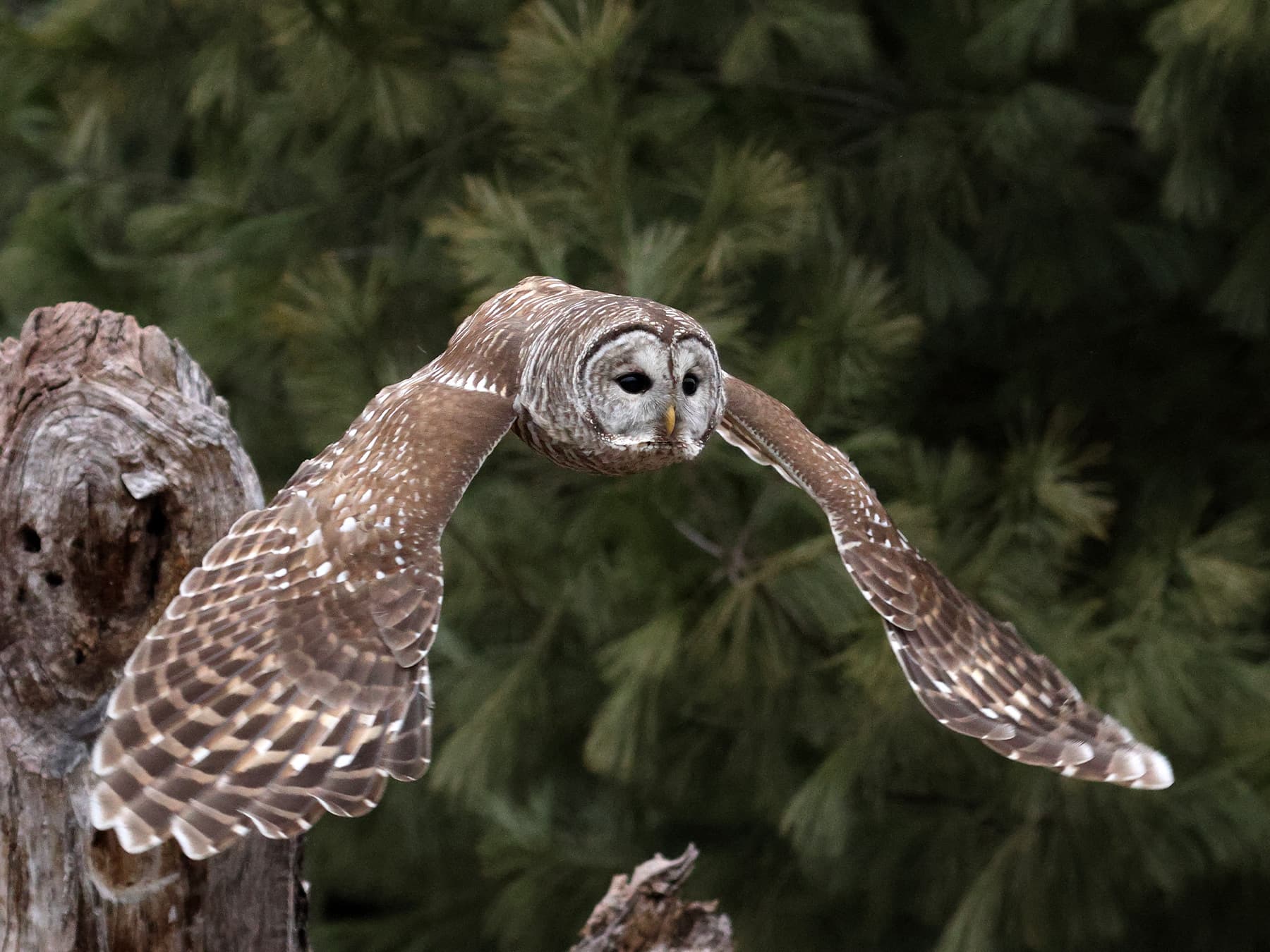
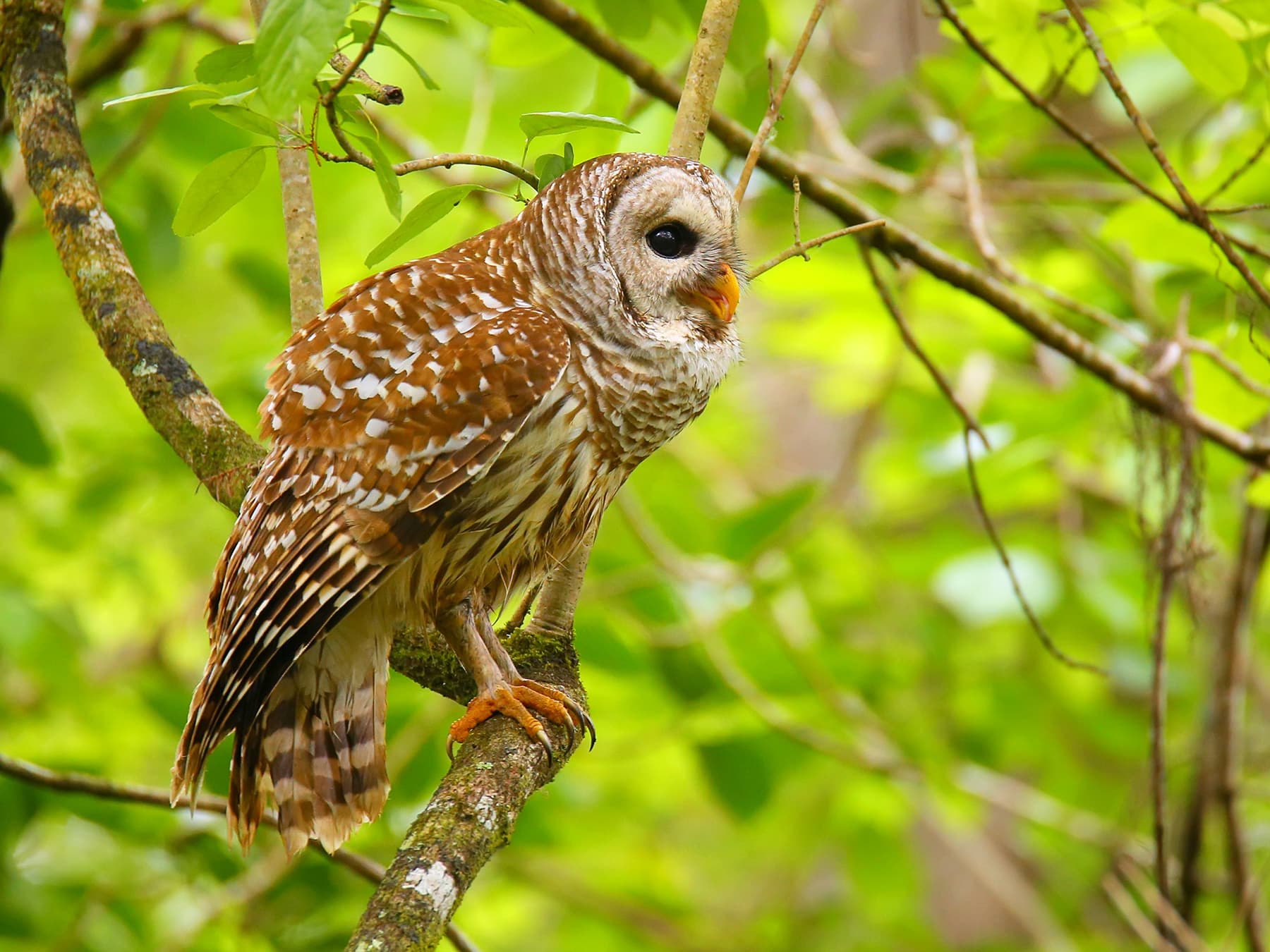
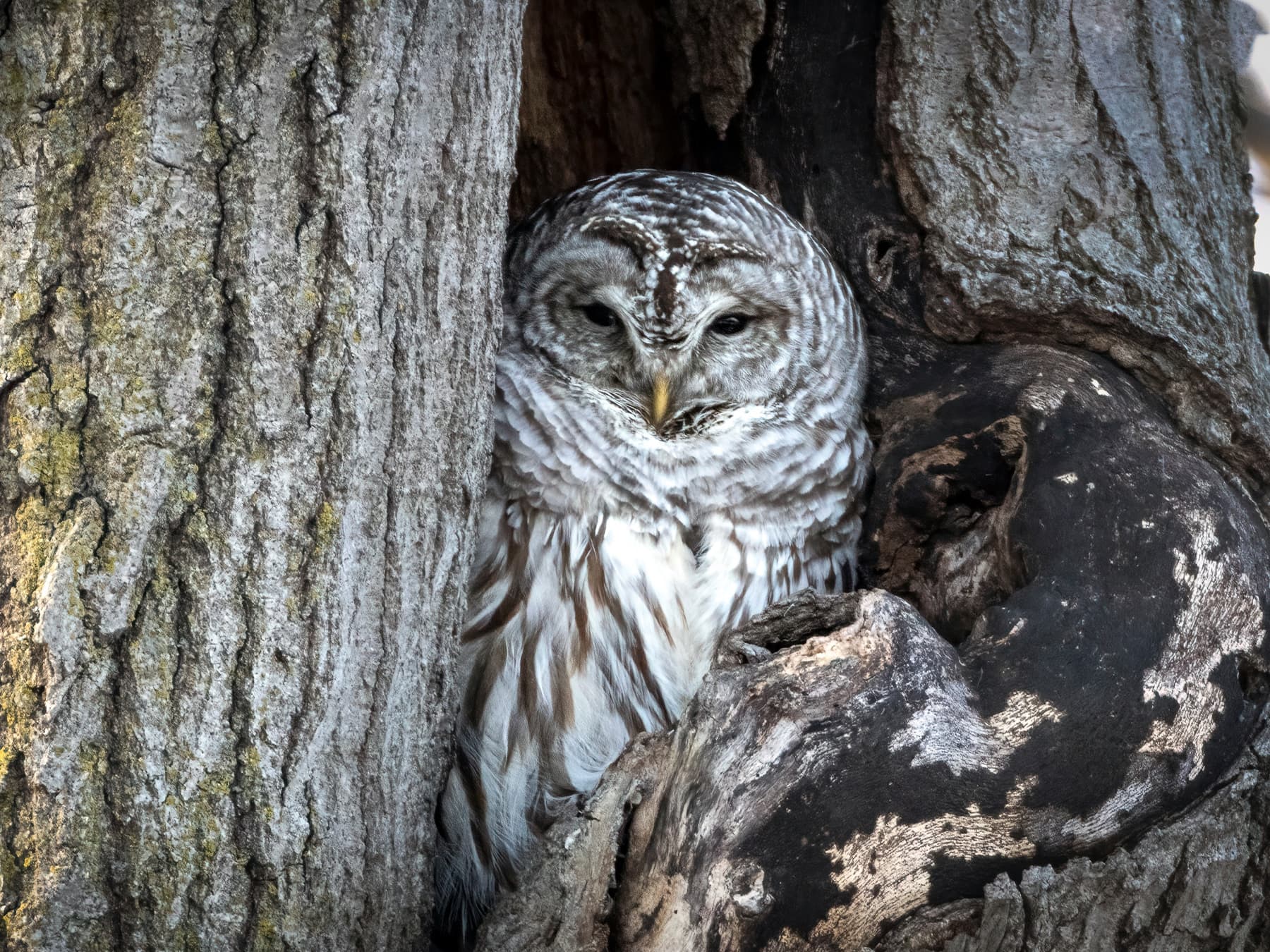
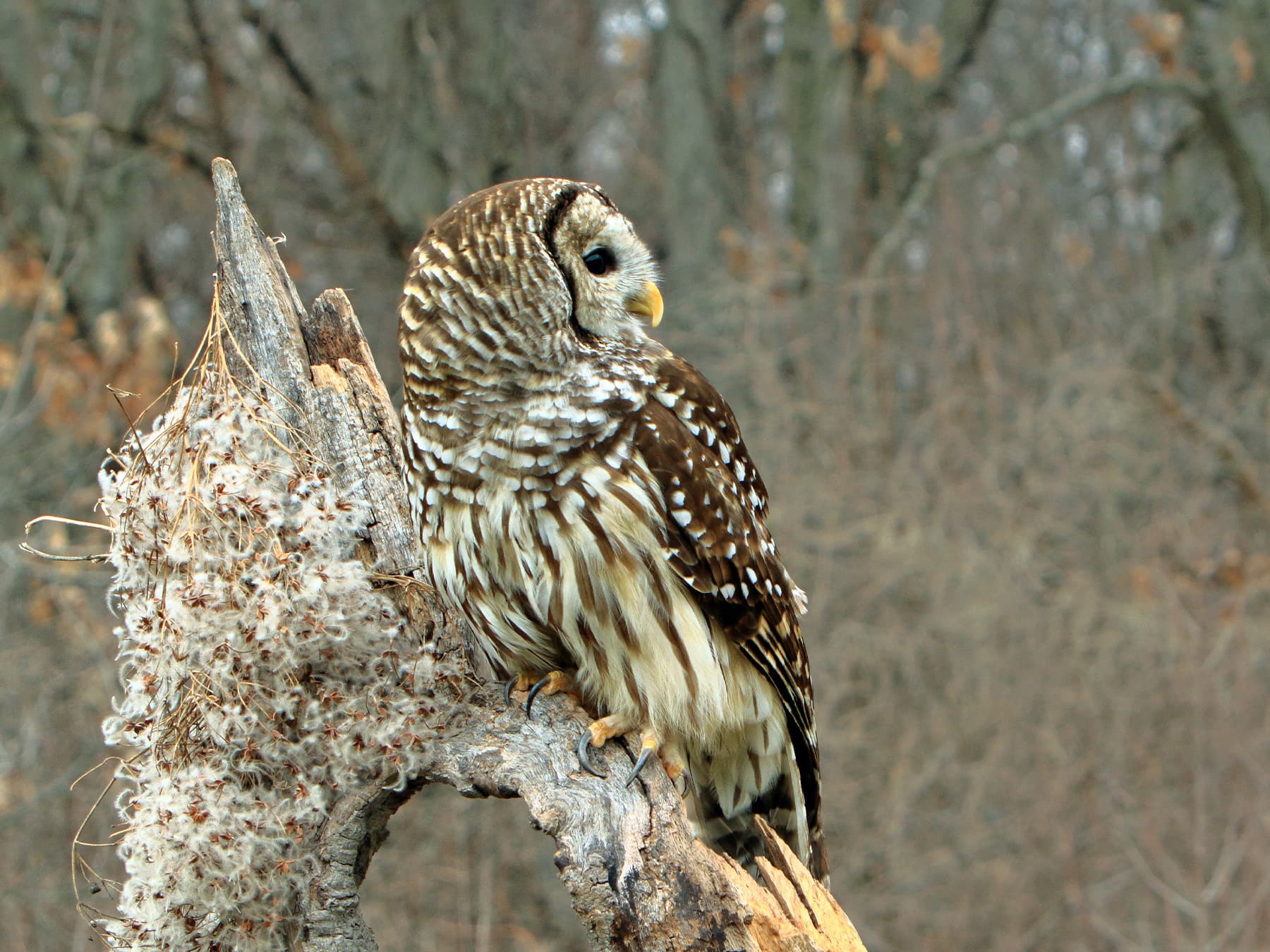
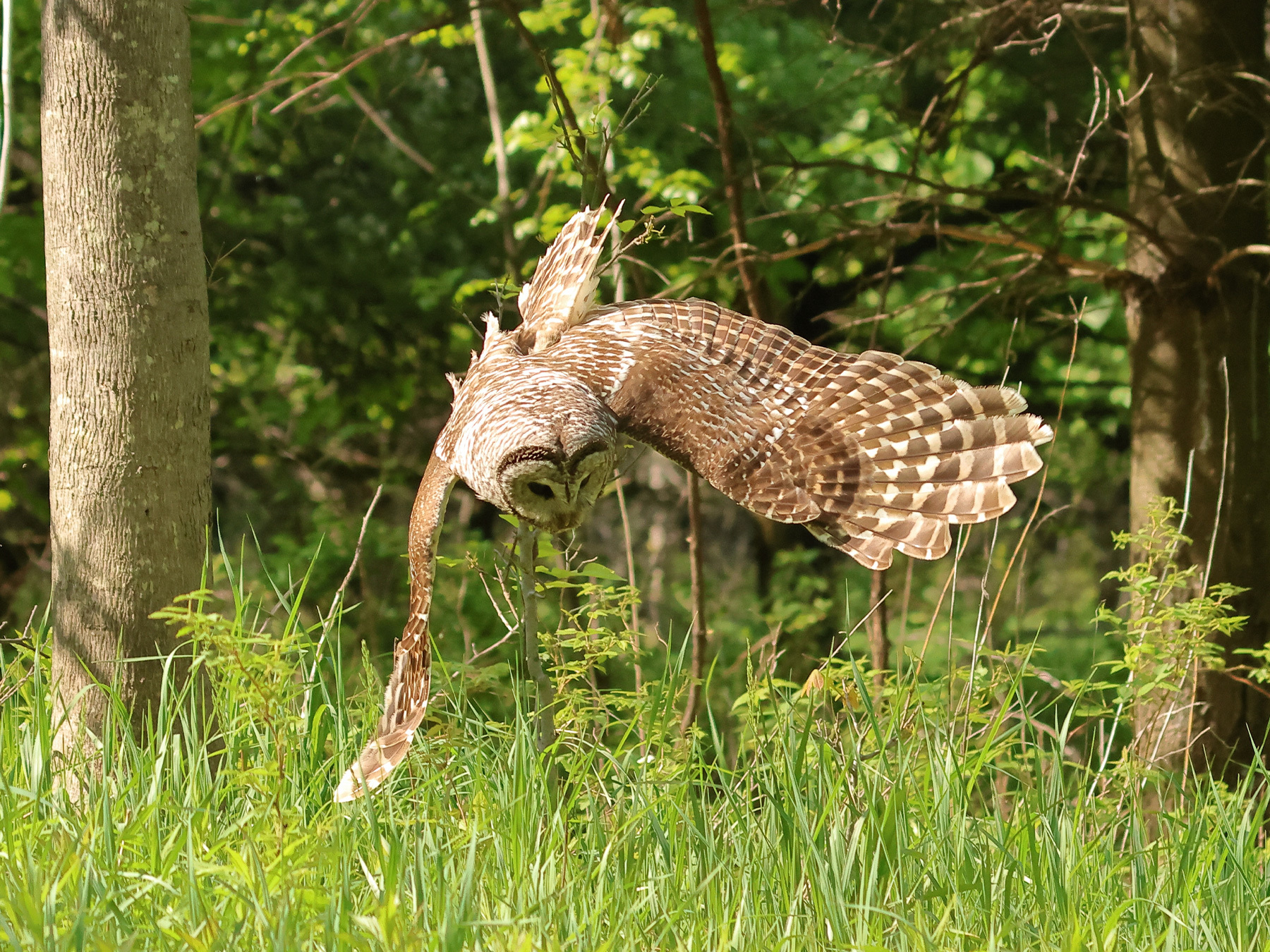
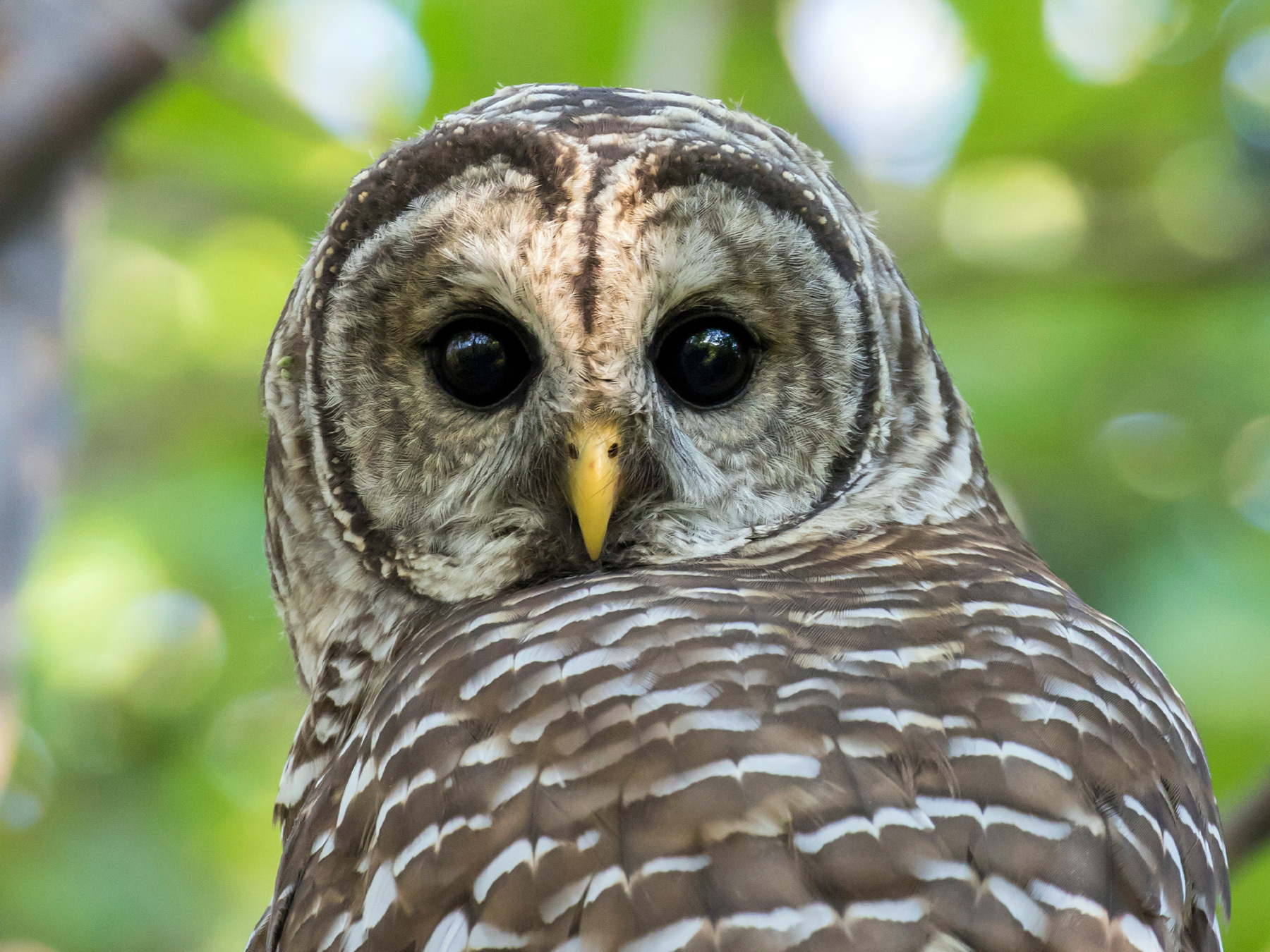
With mainly brown, gray, and white plumage, the barred owl’s key distinguishing features are the characteristic dark ruffled barring on the upper breast and the large, rounded head with faint white and brown concentric rings forming the facial disc. Its eyes are dark rather than yellow, and it has a short hooked yellow bill.
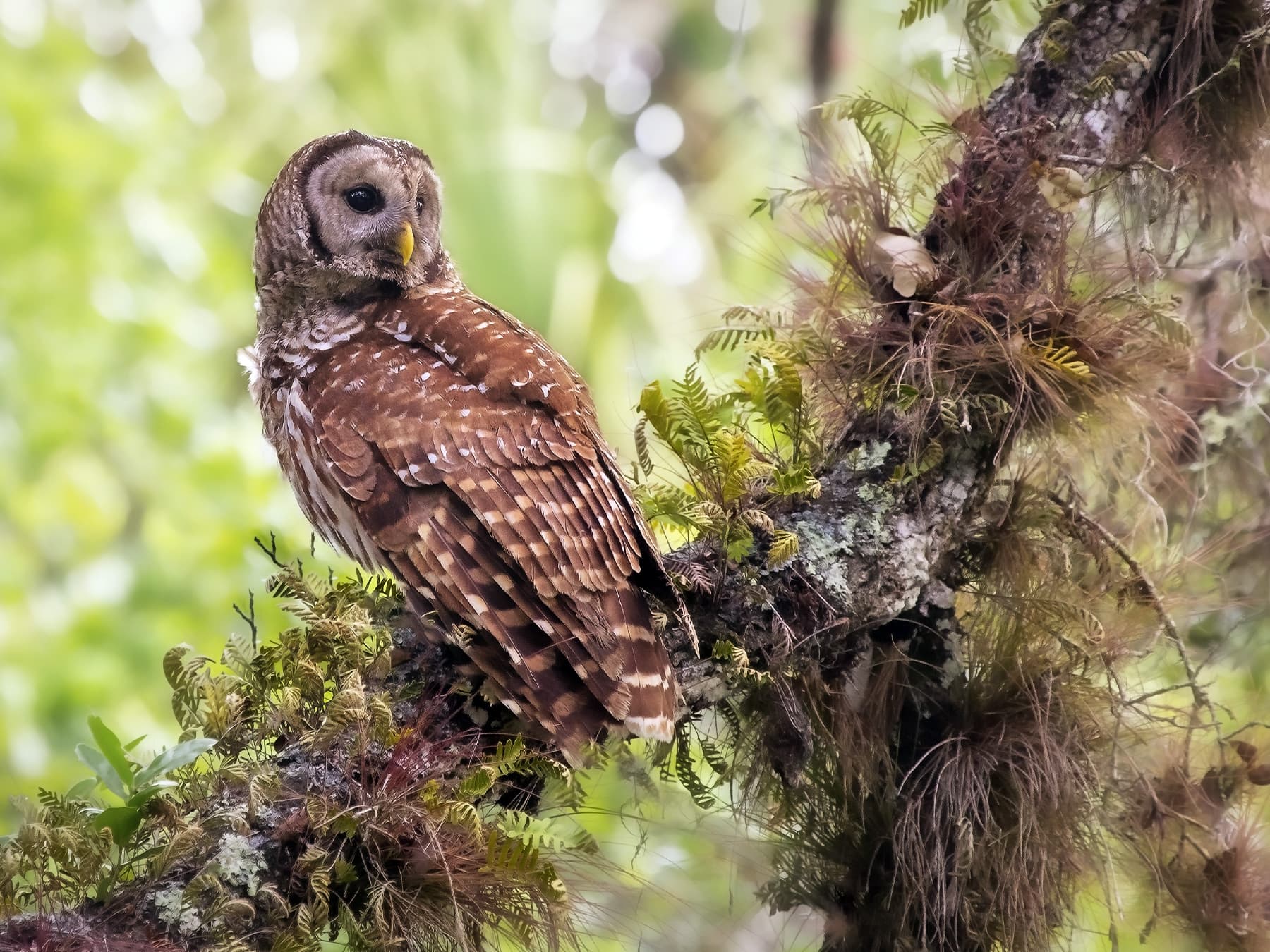
The facial disc has a darker brown border, and the crown, head, nape, and upperparts are a lighter brown-gray, mottled heavily with whitish-buff patterning. The lower breast is pale, streaked with vertical dark brown marks.
Barred owls have the same plumage all year round and there is no difference in appearance between the sexes.
Juvenile barred owls are similar to adults, but retain some fluffy down during their first year and their markings are generally less well-defined, particularly on the face and head.
How big are Barred Owls?
Barred owls are larger and heavier than the otherwise similar spotted owl. They are chunky, stocky owls, with females noticeably larger and heavier than males.
- Length: 43 cm to 50 cm (16.9 in to 19.7 in)
- Wingspan: 99 cm to 110 cm ( 39 in to 43.3 in).
- Weight: 470 g to 1050 g (16.6 oz to 37 oz)
Its size
Adults- Length
- 43–50 cm
- Wingspan
- 99–110 cm
- Weight
- 470–1050 g
Its song and calls
What sound does a Barred Owl make?
The rhythmic ‘Who cooks for you? Who cooks for you all?’ hooting phrase is perhaps the best-known call of a barred owl, and is regularly heard being exchanged during courtship and throughout the breeding season as a form of communication between pairs.
Other vocalizations include piercing shrieks used to claim and defend a territory and agitated screeching cackles that are heard when nests are disturbed by potential predators.
- Song0:00 / 1:12
Recorded in Nova Scotia, Canada · July 2021
- Call0:00 / 0:18
Recorded in North Carolina, United States · January 2024
When and where to see it
OctoberHere all year
Most recorded in October
- 1. Missouri0.32%
- 2. Vermont0.31%
- 3. Oklahoma0.27%
- 4. Kansas0.27%
- 5. Iowa0.26%
Each dot is a county, state or province: the bigger and darker, the larger the bird’s share of that place’s bird records that month. Grey dots: no regular records. The ringed point is the centre of the bird’s records this month; the arrow shows how it moved since last month, and the dashed loop its path through the year. “Arrivals” colours places where it becomes regular this month (orange) or is in its last regular month (grey). GBIF eBird Observation Dataset, 2019–2024. Map data: Natural Earth, US Census Bureau; place centres © OpenStreetMap contributors.
In your area
See when the Barred Owl is recorded in your county, state or province.
How often the Barred Owl turns up in the United States and Canada through the year, from birdwatchers' records.
United States
Resident · all year · most records in April
Canada
Resident · all year · most records in February
Show as a table
| Month | United States | Canada |
|---|---|---|
| January | 0.095% (regular) | 0.14% (regular) |
| February | 0.12% (regular) | 0.15% (regular) |
| March | 0.13% (regular) | 0.10% (regular) |
| April | 0.13% (regular) | 0.071% (regular) |
| May | 0.11% (regular) | 0.051% (regular) |
| June | 0.098% (regular) | 0.056% (regular) |
| July | 0.088% (regular) | 0.059% (regular) |
| August | 0.095% (regular) | 0.056% (regular) |
| September | 0.12% (regular) | 0.061% (regular) |
| October | 0.099% (regular) | 0.068% (regular) |
| November | 0.076% (regular) | 0.087% (regular) |
| December | 0.093% (regular) | 0.12% (regular) |
Worldwide: recorded regularly in 2 countries
Countries where it was recorded in at least 3 of the 6 years 2019–2024. Linked countries have their own bird list.
North America (2)
Data: EOD – eBird Observation Dataset (Cornell Lab of Ornithology), accessed via GBIF.org, CC BY 4.0. Records from 2019–2024, aggregated and filtered by Birdfact. How these lists are made
What is the habitat of a Barred Owl?
An adaptable species that is becoming increasingly common in urban environments, barred owls are widespread across the eastern US in landscapes with mixed and coniferous forests, particularly those crossed by streams and rivers.
Wetland regions, with woodland cover and swamps, provide important foraging opportunities and old-growth forests are preferred for nesting sites.
What is the range of a Barred Owl?
Barred owls were originally concentrated in the eastern region of North America, from southern Canada (Ontario, Quebec, New Brunswick, and Nova Scotia) and across the eastern US, from the Great Plains eastwards to the Atlantic coast, south as far as the Gulf Coast and westwards to Texas and Oklahoma.
Throughout the 20th century, the range has expanded westwards through Canada, reaching British Columbia, and now breeding is well established across the country’s southern provinces. Barred owls are now present in the Rocky Mountains of the western US, and have spread down the Pacific coast.
Where do Barred Owls live?
In the United States, barred owls are present in all states east of North and South Dakota, Nebraska, Kansas, Oklahoma, and Texas. In the west, breeding has now been established in Washington, Oregon, California, Idaho, and Montana. Higher than average concentrations are found in Iowa, Maryland, and Tennessee.
In Canada, large numbers of barred owls are native to Nova Scotia and New Brunswick and are found across the entire southern regions of the country, in southern Quebec, Ontario, Manitoba, central and southern Saskatchewan, Alberta, and southern British Columbia.
How rare are Barred Owls?
Barred owls are widespread, and relatively common, and have enjoyed a population boom in recent decades, with a significant expansion to their original distribution range.
Despite their nocturnal lifestyle, their distinctive hoots offer a clear indication of their presence and can lead to an improved chance of a sighting compared to other owl species. Their population across North America is estimated at 3.5 million mature birds.
Where can you see Barred Owls in the US?
In Tennessee and North Carolina, the Great Smoky Mountains National Park’s forests are popular spots for barred owls, with regular reports of early morning and early evening sightings.
Virginia’s Shenandoah National Park’s woodlands are another good location for hearing and seeing barred owls, while lowland forests in Maine’s Acacia National Park are known to have resident barred owls, particularly along the park’s riverside woodlands.
Where can you see Barred Owls in Canada?
The Maritime provinces of Canada offer some prime spots for potential sightings of barred owls, including Cape Breton Highlands National Park in Nova Scotia and Fundy National Park in New Brunswick. Further west, Prince Albert National Park in Saskatchewan is known to have resident barred owls.
Migration
Do Barred Owls migrate?
Most barred owls remain within a short distance of their home territories all year round and do not migrate after the breeding season ends. Some short-distance dispersal may occur in winter when prey levels are lower than usual.
Are Barred Owls native to the US?
Barred owls are a native species in the US, found originally only in the states east of the Great Plains but their range has expanded since the early 20th century, and by the 1970s breeding had been established further west, in Washington, Oregon, California, Idaho and Montana.
Tips for seeing it
- Listen for their distinctive 'who-cooks-for-you' call, especially at dusk and dawn
- Look for them perched on large branches in mature forests
- Check near water sources in wooded areas, as they often hunt near streams or swamps
- In the US, they're increasingly common in suburban areas with large trees
- Use owl calls cautiously to avoid disturbing nesting pairs
What it eats
What do Barred Owls eat?
Small mammals are the main prey hunted by barred owls, including voles, rats, mice, squirrels, and rabbits. They are regularly spotted dipping into rivers to catch crabs, crayfish, and fish, and also hunt birds, invertebrates, reptiles, and amphibians.
Mammals comprise around 76 percent of their diet, followed by invertebrates and birds.
What do Barred Owl chicks eat?
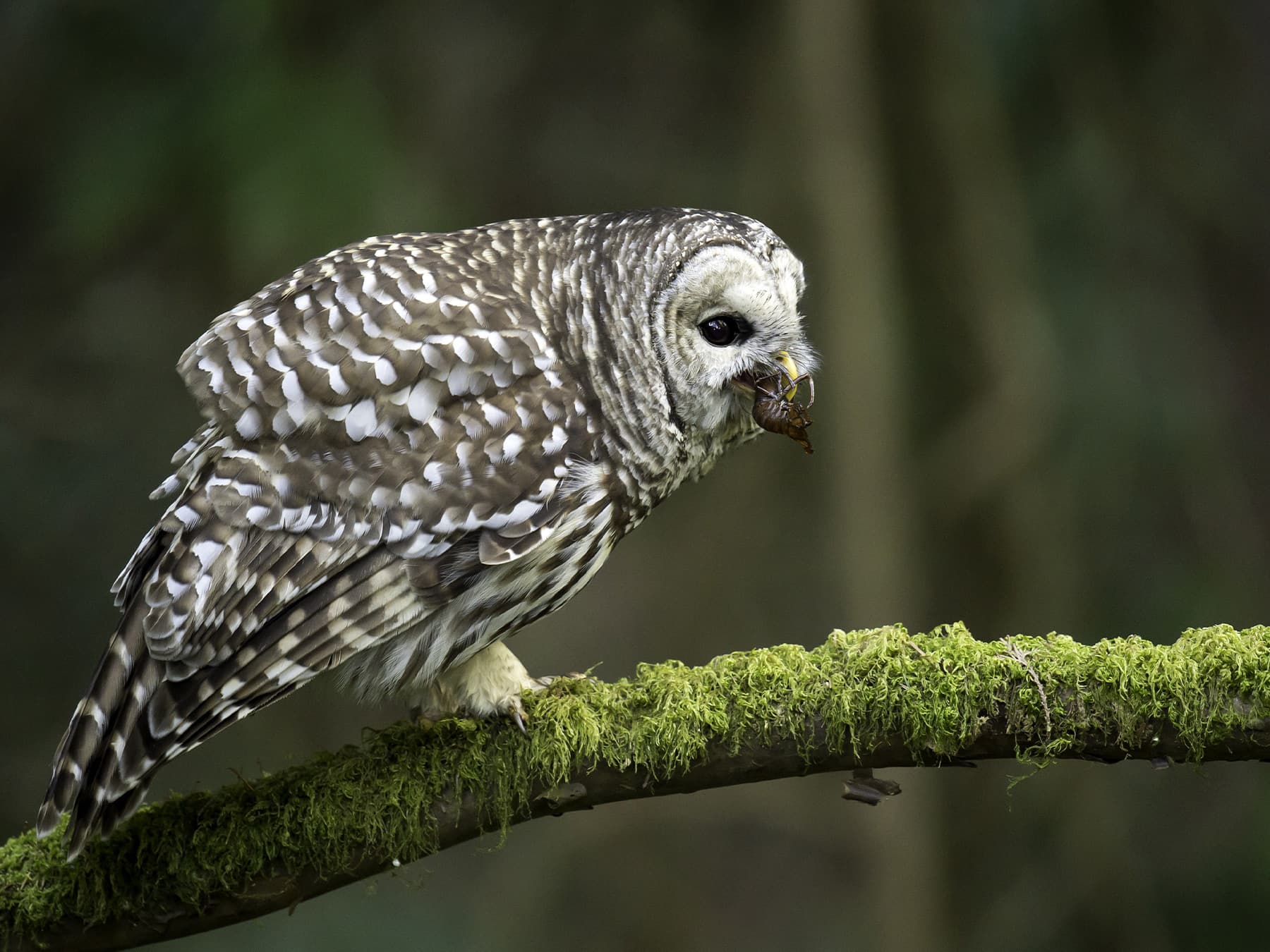
The initial diet of barred owl chicks is mainly based on large insects and invertebrates, including worms, snails, spiders, and centipedes.
The male brings prey to the nest which is then fed to hatchlings by the female. Small mammals, including voles and shrews, are soon introduced - initially torn into pieces by the female, but young owlets soon master the art of swallowing prey whole.
Nesting and breeding
Where do Barred Owls nest?
Barred owls are usually cavity nesters, using either abandoned woodpecker nests or natural hollows in trees created by decay or disease. If no cavity is available, then stick nests built by other species may also be considered, particularly bulky platform structures previously used by ravens, crows, hawks, and squirrels. Some additional materials, such as lichen, feathers, or twigs, may be added.
Occasionally, if natural sites are not available, barred owls will readily lay their eggs in artificial nest boxes mounted on tall trees.
When do Barred Owls nest?
Courtship calls can be heard from winter onwards as new pair bonds are formed or previous bonds strengthened. Eggs are usually laid between March and April, although the earliest clutches have been recorded in December.
Only female barred owls incubate, brooding the eggs for 28 to 33 days, during which time she’s fed by her mate, who brings prey to the nest. Young barred owls are ready to fledge after four to five weeks, but parental support with feeding and protection continues outside of the nest until juveniles are four to five months old.
What do Barred Owl eggs look like?
Barred owls’ eggs are pure white, with slightly rough shells and no external markings. They are oval in shape and measure up to 5.6 cm (2.2 in) by 4.8 cm (1.8 in). Clutches usually contain between one and five eggs.
Do Barred Owls mate for life?
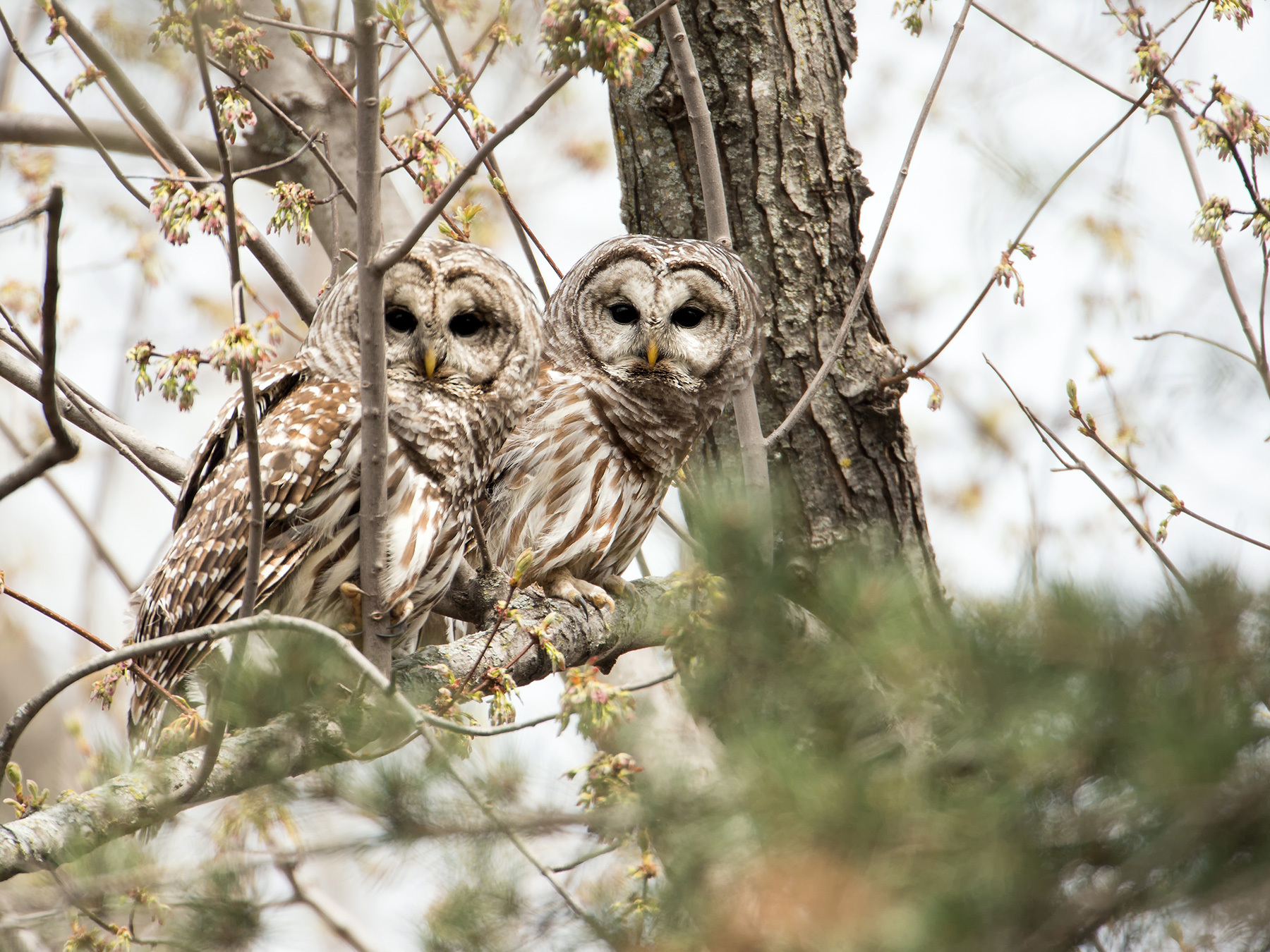
It’s believed that barred owls form long-term pairs and remain together for life or until one mate dies. Pairs raise a single clutch together each year, and their bond is strengthened through males bringing food to females during courtship and nesting.
Behaviour
Are Barred Owls aggressive?
With ultra-sharp talons and a strong instinct to protect their eggs and young at all costs, barred owls are able to inflict severe injury to any intruders that attempt to approach nest sites during the breeding season.
Females are observed to be more aggressive than males at nests, and any potential predators will be chased, flown at, and struck with talons, bills, and wings.
Where do Barred Owls sleep at night?
Barred owls are nocturnal and hunt during the night. They spend much of the day roosting, using cavities in trees for shade and shelter from the heat. Young birds may choose roosting spots on the ground in thickets or long grass.
Lifespan and predators
How long do Barred Owls live?
The oldest known barred owl reached 18 years and 2 months, living in the wild, and captive birds are believed to have an even longer life expectancy.
Most barred owls survive for around 8 to 10 years. Young barred owls are observed to breed for the first time from 2 years onwards, although yearlings may also successfully breed if there are sufficient nest sites and prey available.
What are the predators of Barred Owls?
Great horned owls are the most common predator of barred owls, killing nestlings, fledglings, and adults. Northern goshawks are also known to prey on adult barred owls and their young. Raccoons and weasels are opportunistic nest predators, raiding cavities for eggs and hatchlings.
Are Barred Owls protected?
The Migratory Bird Treaty Act offers protection to barred owls in the US, prohibiting killing, injuring, trading, or taking one into captivity. Their eggs, nest site, and feathers are also protected. The Migratory Birds Convention Act gives the species similar protection in Canada.
Are Barred Owls endangered?
Globally, barred owls are listed by the IUCN as a species of least concern. Populations are stable and rising, with an increase of 86.7 percent in the last 40 years.
Conservation
While the Barred Owl is listed as Least Concern due to its large range and increasing population, it faces threats from habitat loss and fragmentation.
In the Pacific Northwest, its expansion has raised concerns about competition with the endangered Northern Spotted Owl, leading to complex conservation challenges.
More photos
4 photos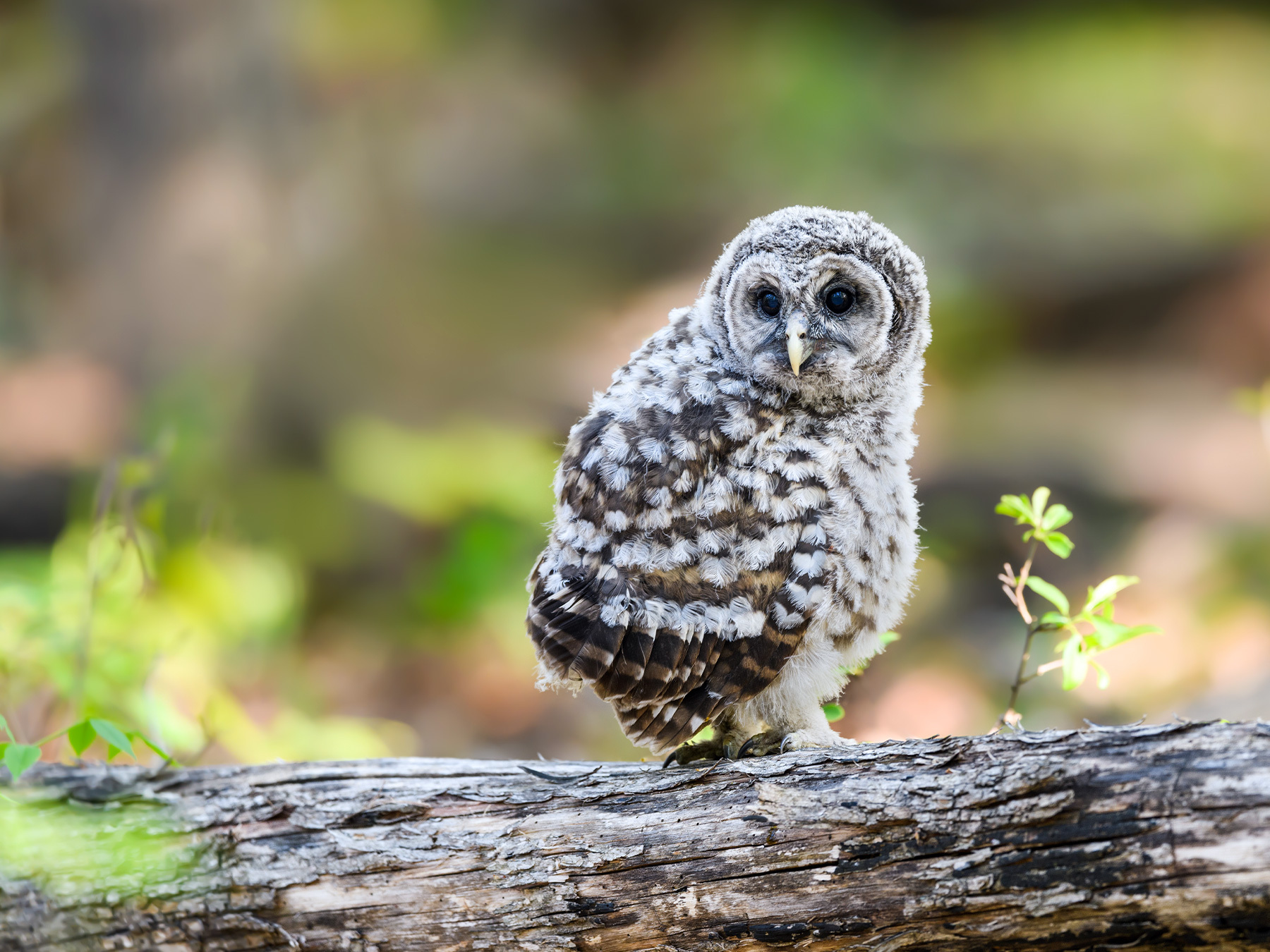
Barred Owl guides
3 guidesQuick facts
- Length
- 43–50 cm
- Wingspan
- 99–110 cm
- Weight
- 470–1050 g
- Lifespan
- 8–10 years · oldest recorded 34 years
- Family
- Owls
- Migration
- Resident
- Global status (IUCN)
- Least Concern
- World population
- 3,500,000 mature individuals
- Population trend
- Increasing
- Also called
- Hoot Owl, Eight Hooter
- Scientific name
- Strix varia
Questions
5Why do Barred Owls scream at night?
The blood-curdling screams of barred owls can be quite disconcerting to hear, although are generally nothing to worry about. Screeching is used by this species to defend a territory and to deter intruders from hunting on ‘their’ particular patch.
What attracts Barred Owls?
Barred owls will readily nest in nest boxes, so if your yard has tall trees and is near to a forest landscape crossed by a river, it might be worth putting one up to see if it tempts a pair to move in. Quiet, spacious yards without excessive human activity are ideal, as they allow the owls to nest undisturbed.
Can a Barred Owl pick up a small dog?
Barred owls are certainly strong enough to carry off a small dog, using their sharp talons to grip and lift it off the ground. Rabbits and similar-sized wild mammals are a regular part of their diet. However, owl attacks on dogs are rare, and most reports are anecdotal.
What time are Barred Owls most active?
A typically nocturnal species, barred owls feed at sunset and sunrise, and will continue to hunt in between, during hours of darkness. Occasionally, during the nesting season in particular, they may hunt in daylight when additional prey may be needed to feed nestlings.
Do barred owls like humans?
Barred owls are usually fairly quick to flush from their nesting or roosting spots if humans approach too quickly and they appear to be intolerant of close contact with people.
Reports of barred owls dive-bombing humans during the nesting season occasionally appear in the media, and it’s wise to be extra cautious if you cross paths with a breeding barred owl at this time of year in particular.
Sources
4- 1BirdLife International. 2016. Strix varia. The IUCN Red List of Threatened Species 2016: e.T22689094A93217844. Source (opens in a new tab)
- 2BirdLife International. 2016. Strix varia. The IUCN Red List of Threatened Species 2016: e.T22689094A93217844. Source (opens in a new tab)
- 3Partners in Flight Source (opens in a new tab)
- 4Orfinger et al., Longevity of the Barred Owl (Strix varia Barton, 1799) from captivity, The Wilson Journal of Ornithology, 130:1009-1010 (2018)

Checked by
Nathan Cope, founder and editor
Nathan founded Birdfact and leads its writers and contributors in the UK, the US and Canada. He has watched and studied birds for more than ten years, and checks every article and species guide before it’s published.