


Red-winged Blackbird
Agelaius phoeniceus
By the Birdfact teamChecked by Nathan Cope
On this page12 sections
How to recognise it
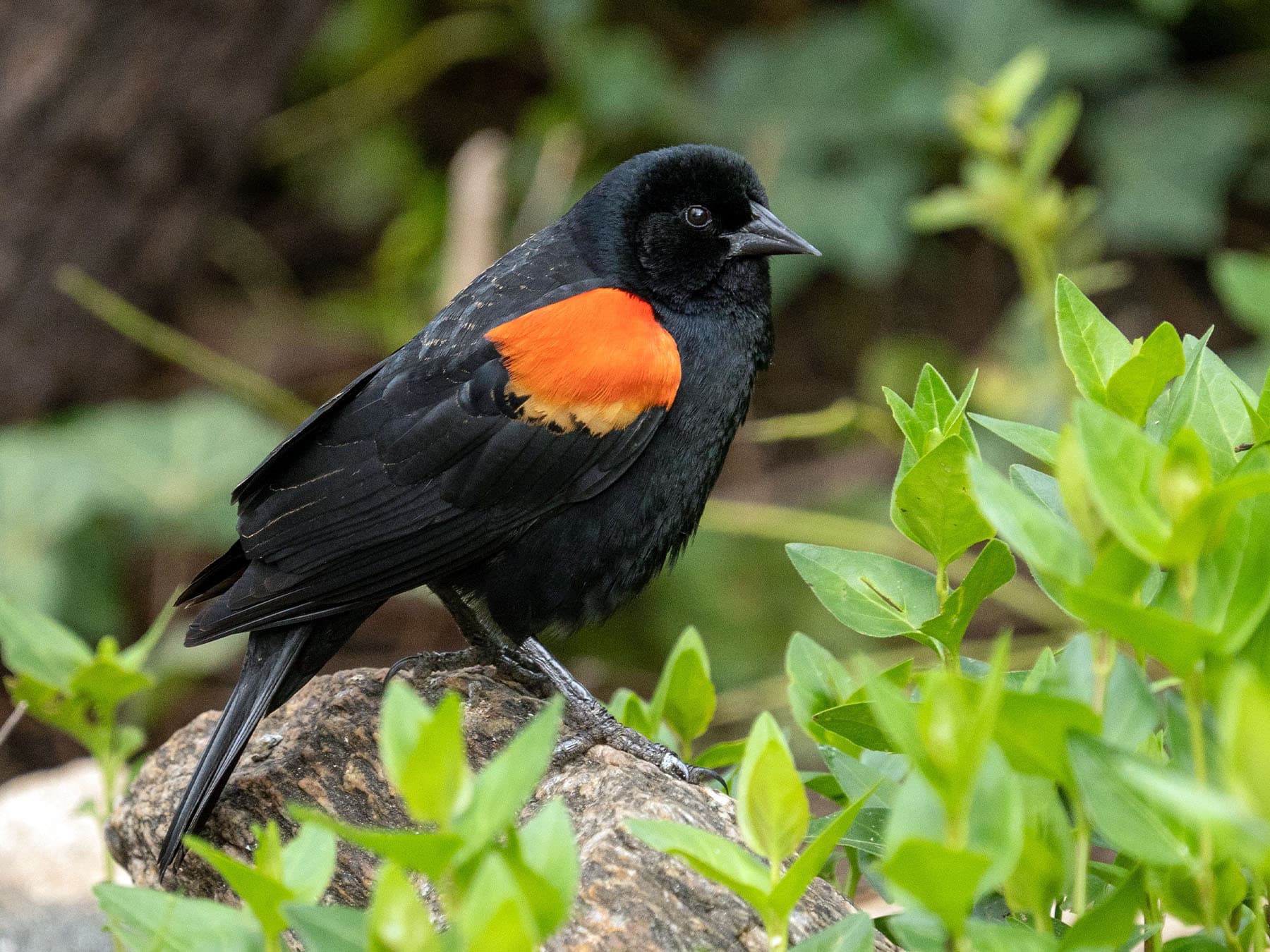
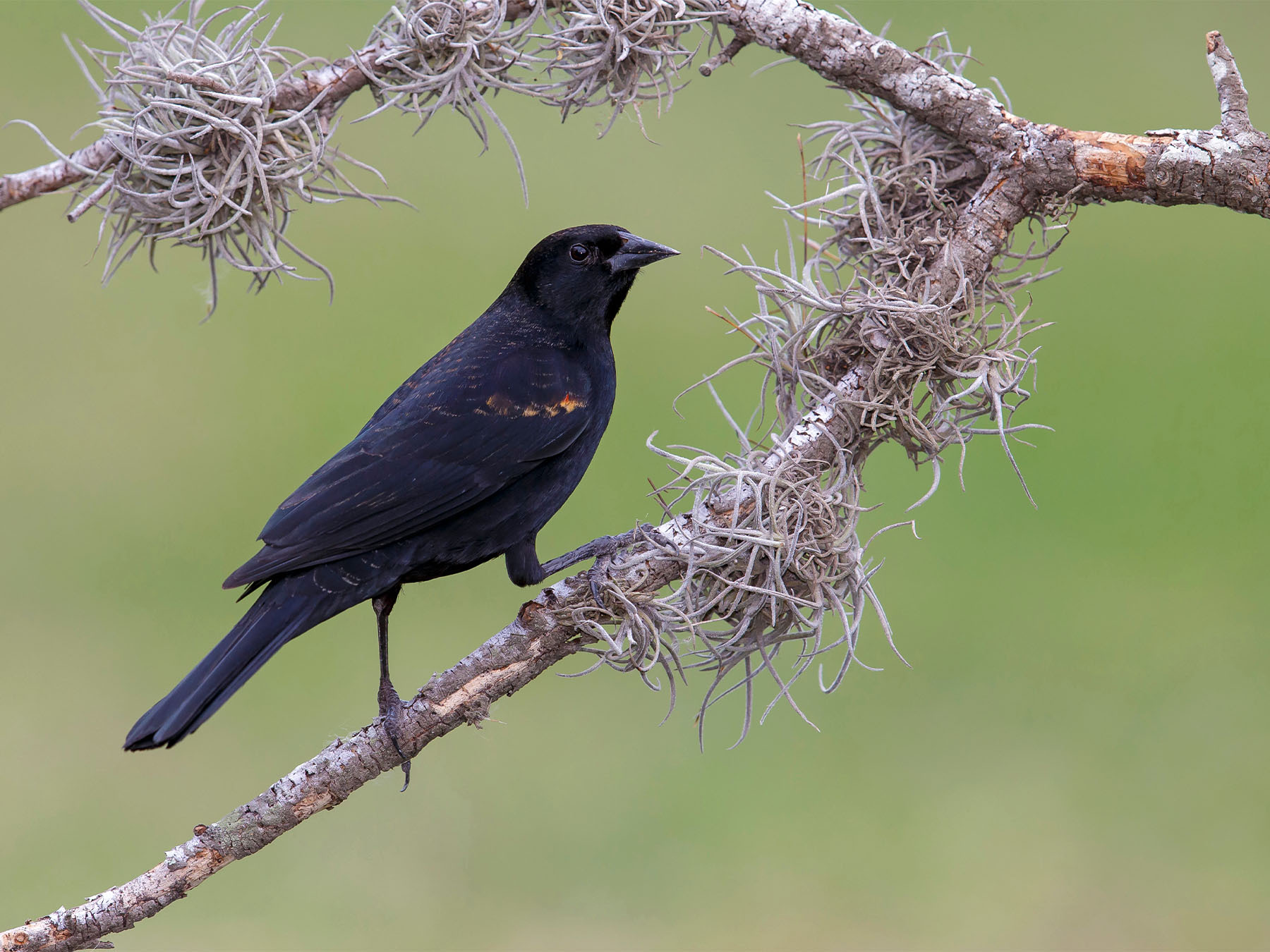
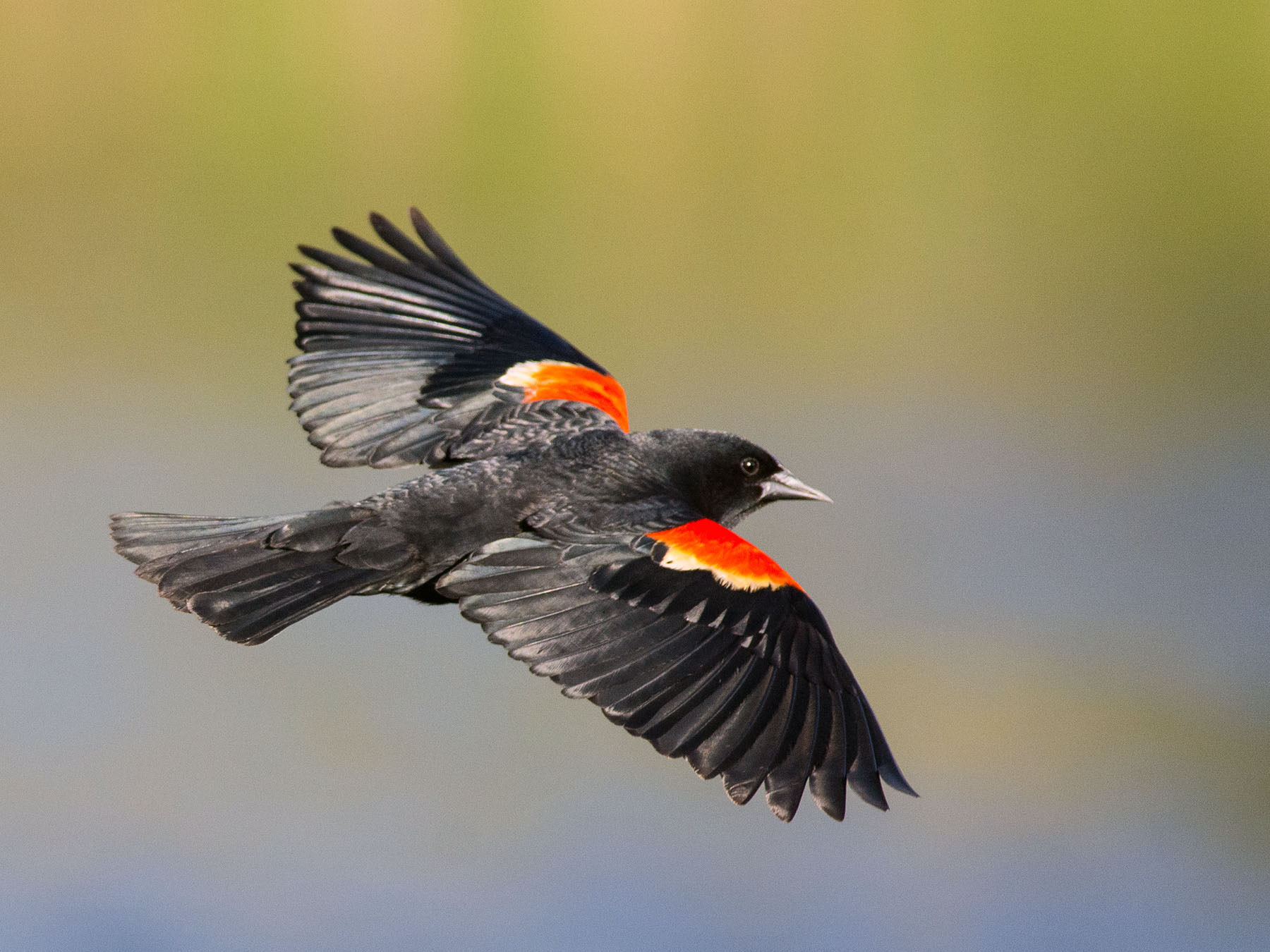
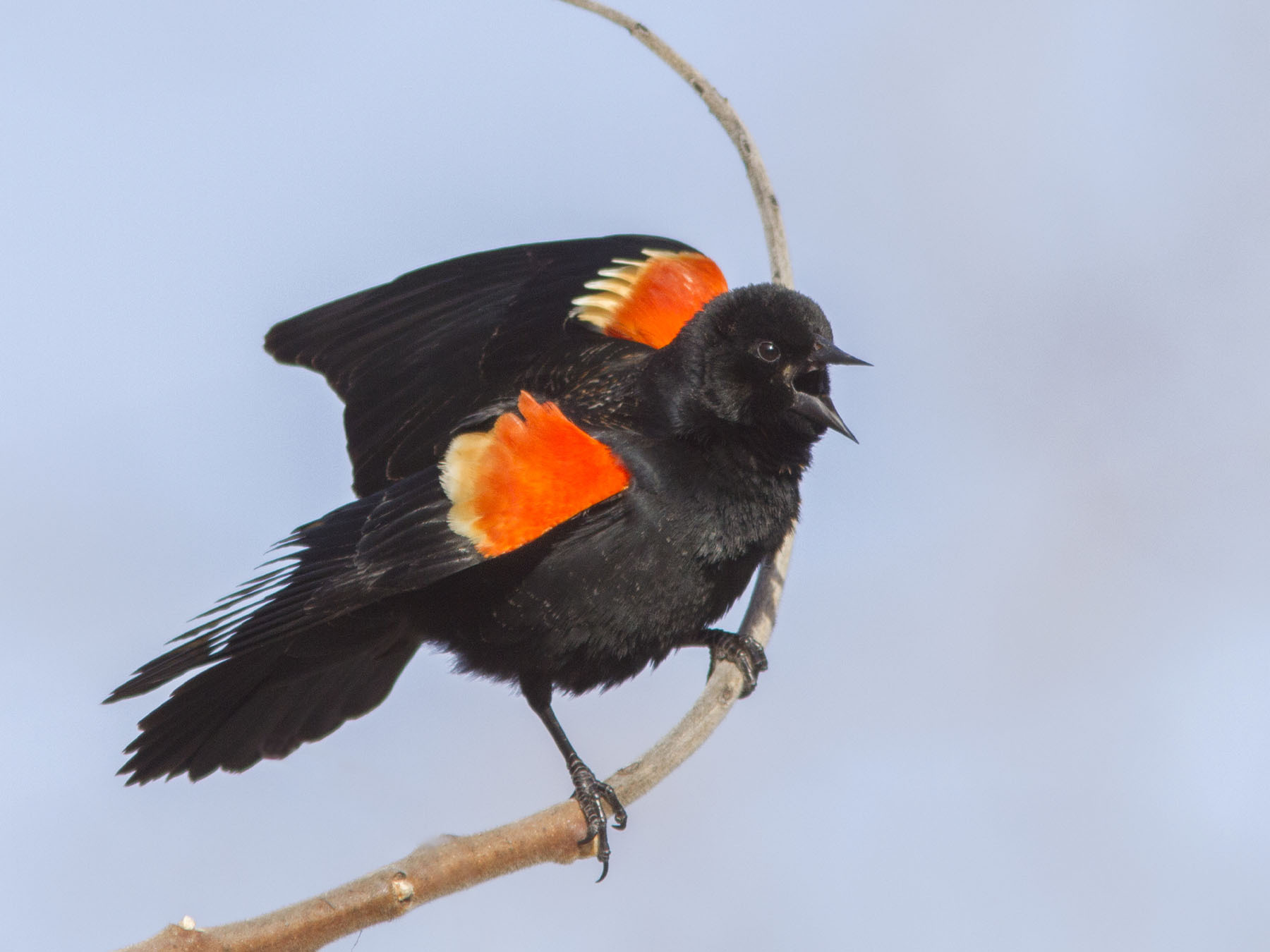
The Red-winged Blackbird is a striking bird with a compact body and rounded wings. Males are glossy black with bright red shoulder patches bordered by yellow, often visible during flight and displays.
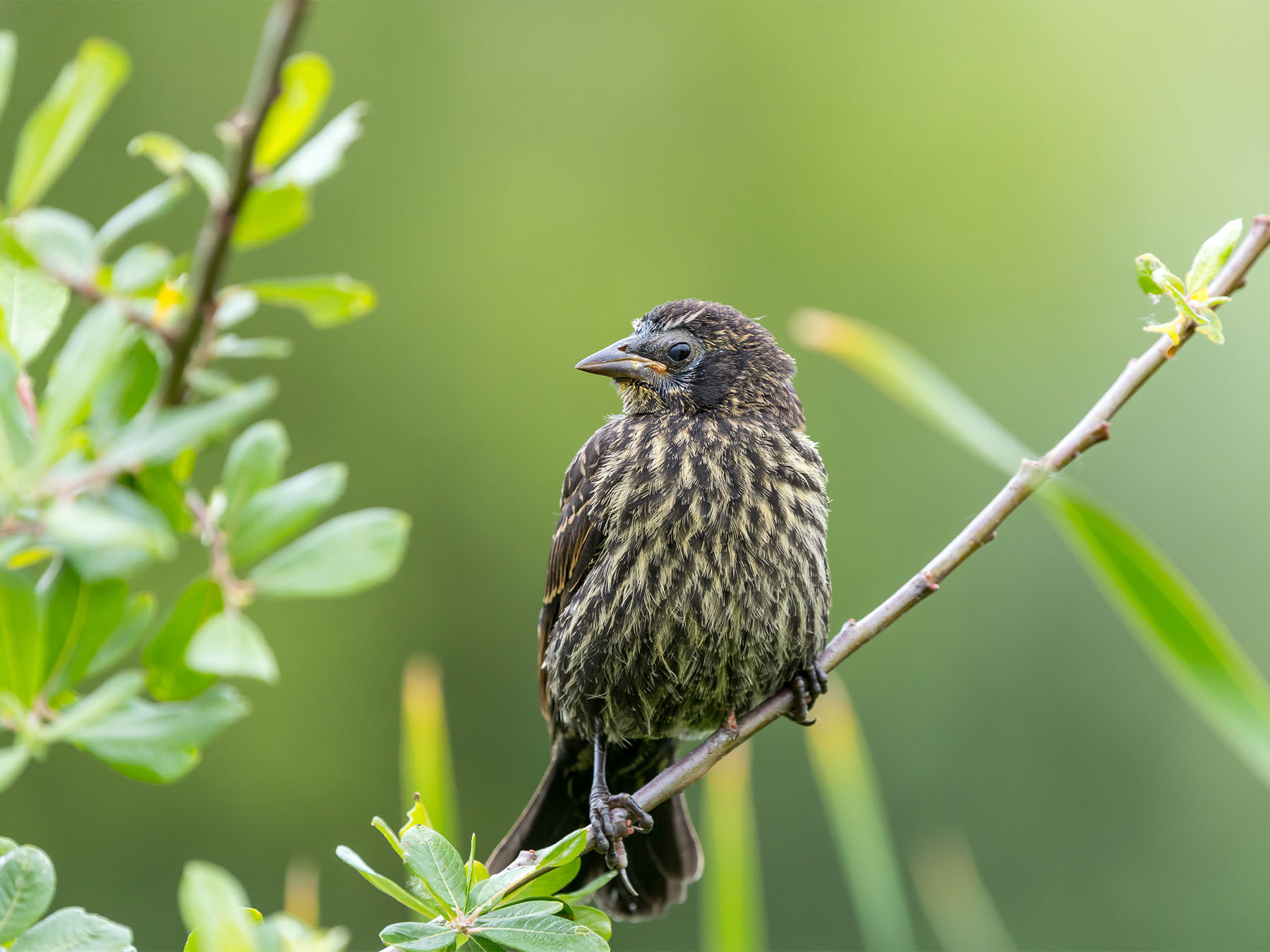
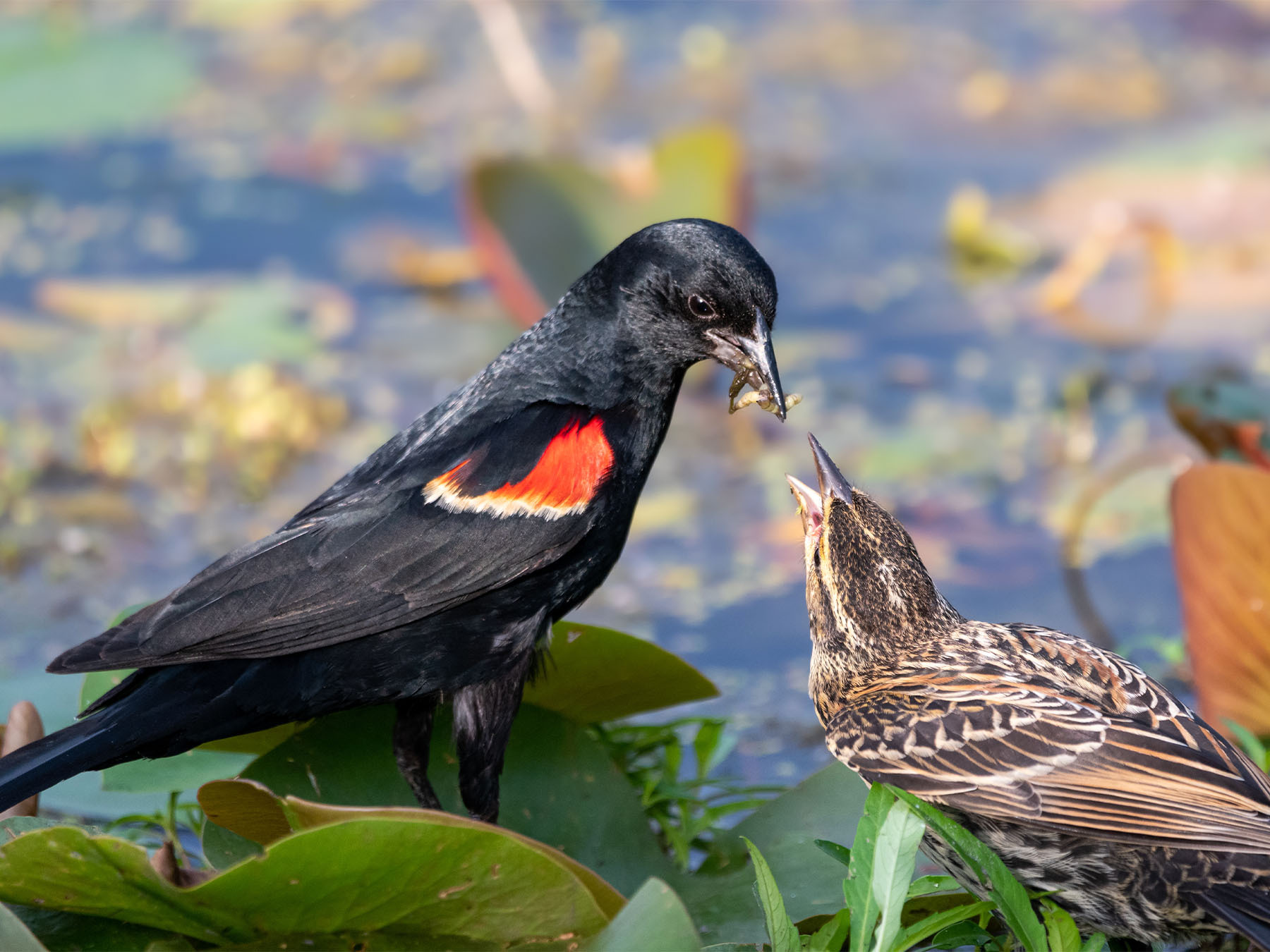
Females are dramatically different, with brown-streaked plumage and a pale eyebrow. Juveniles resemble females but have more reddish-brown tones and less defined streaking.
Its size
Adults- Length
- 17–23 cm
- Wingspan
- 31–40 cm
- Weight
- 32–77 g
Its song and calls
The male's song is a distinctive 'conk-la-ree' or 'o-ka-lee', often accompanied by a display of his red shoulder patches. Females produce a series of chit or check calls.
Both sexes use various chips and chatters for communication within flocks and during territorial disputes.
- Song0:00 / 0:31
Recorded in Minnesota, United States · April 2011
- Alarm call0:00 / 0:41
Recorded in Iowa, United States · July 2013
When and where to see it
OctoberArriving
Most recorded in October
- 1. Colorado2.2%
- 2. Nebraska2.2%
- 3. Ohio2.2%
- 4. Iowa2.1%
- 5. Wisconsin2.0%
Each dot is a county, state or province: the bigger and darker, the larger the bird’s share of that place’s bird records that month. Grey dots: no regular records. The ringed point is the centre of the bird’s records this month; the arrow shows how it moved since last month, and the dashed loop its path through the year. “Arrivals” colours places where it becomes regular this month (orange) or is in its last regular month (grey). GBIF eBird Observation Dataset, 2019–2024. Map data: Natural Earth, US Census Bureau; place centres © OpenStreetMap contributors.
In your area
See when the Red-winged Blackbird is recorded in your county, state or province.
How often the Red-winged Blackbird turns up in the United States and Canada through the year, from birdwatchers' records.
United States
Resident · all year · most records in March
Canada
Summer visitor · all year · most records in April
Show as a table
| Month | United States | Canada |
|---|---|---|
| January | 0.90% (regular) | 0.42% (regular) |
| February | 1.4% (regular) | 0.69% (regular) |
| March | 2.4% (regular) | 2.9% (regular) |
| April | 2.4% (regular) | 3.2% (regular) |
| May | 2.2% (regular) | 2.8% (regular) |
| June | 2.3% (regular) | 2.6% (regular) |
| July | 1.9% (regular) | 2.3% (regular) |
| August | 0.99% (regular) | 1.1% (regular) |
| September | 0.73% (regular) | 0.73% (regular) |
| October | 1.2% (regular) | 1.2% (regular) |
| November | 1.0% (regular) | 0.64% (regular) |
| December | 0.80% (regular) | 0.33% (regular) |
Worldwide: recorded regularly in 13 countries
Countries where it was recorded in at least 3 of the 6 years 2019–2024. Linked countries have their own bird list.
North America (13)
- Bahamas
- Belize
- Bermuda
- Canada
- Costa Rica
- El Salvador
- Guatemala
- Honduras
- Mexico
- Nicaragua
- Panama
- St Pierre & Miquelon
- United States
Data: EOD – eBird Observation Dataset (Cornell Lab of Ornithology), accessed via GBIF.org, CC BY 4.0. Records from 2019–2024, aggregated and filtered by Birdfact. How these lists are made
Tips for seeing it
- Look for males perched on cattails or reeds in wetlands
- Listen for the distinctive 'conk-la-ree' call of males
- Observe large flocks in agricultural fields during winter
- Watch for the flash of red when males take flight
What it eats
Red-winged Blackbirds are omnivorous, with a diet that varies seasonally. During the breeding season, they consume insects, spiders, and other small invertebrates.
In fall and winter, they switch primarily to seeds, including those from grasses, weeds, and waste grain in agricultural fields.
Nesting and breeding
Breeding season for Red-winged Blackbirds typically begins in late spring. Males establish territories and attract females with conspicuous displays and vocalizations.
Females construct cup-shaped nests using grasses and sedges, often woven around several upright stems in marshy vegetation. They lay 3-4 pale blue-green eggs with dark markings.
Incubation lasts about 11-13 days, performed solely by the female. Nestlings fledge after 11-14 days, with both parents contributing to feeding the young.
Behaviour
Red-winged Blackbirds are highly social, often forming large flocks outside the breeding season. Males are territorial during breeding, perching prominently and displaying their red epaulets while giving their distinctive 'conk-la-ree' call.
They forage on the ground or in low vegetation, probing for insects and seeds.
Conservation
While Red-winged Blackbirds are currently listed as Least Concern, they face threats from habitat loss and agricultural practices.
Conservation efforts focus on preserving wetlands and promoting bird-friendly farming methods to maintain their widespread distribution.
More photos
6 photos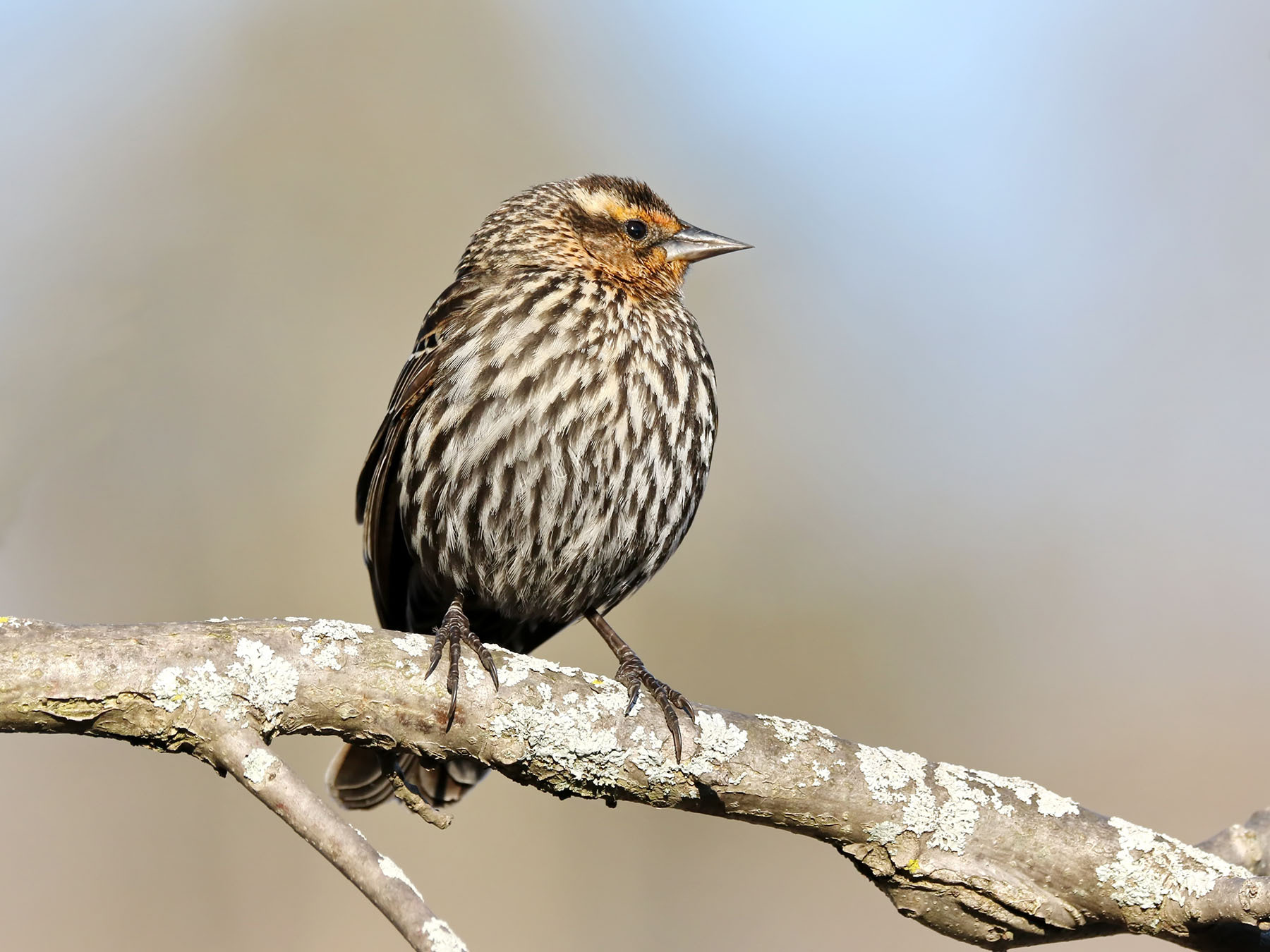
Red-winged Blackbird guides
4 guidesQuick facts
- Length
- 17–23 cm
- Wingspan
- 31–40 cm
- Weight
- 32–77 g
- Lifespan
- 2–3 years · oldest recorded 15.9 years
- Family
- New World Blackbirds
- Migration
- Partial migrant
- Global status (IUCN)
- Least Concern
- World population
- 180,000,000 mature individuals
- Population trend
- Population stable, but declines in some areas due to habitat loss
- Scientific name
- Agelaius phoeniceus
Sources
4- 1BirdLife International. 2018. Agelaius phoeniceus. The IUCN Red List of Threatened Species 2018: e.T22724191A132027891. Source (opens in a new tab)
- 2Breeding Bird Survey and/or Christmas Bird Count: Butcher and Niven (2007)
- 3Partners in Flight (2022) Source (opens in a new tab)
- 4Longevity Records Of North American Birds. Version 2023.1 Source (opens in a new tab)

Checked by
Nathan Cope, founder and editor
Nathan founded Birdfact and leads its writers and contributors in the UK, the US and Canada. He has watched and studied birds for more than ten years, and checks every article and species guide before it’s published.