


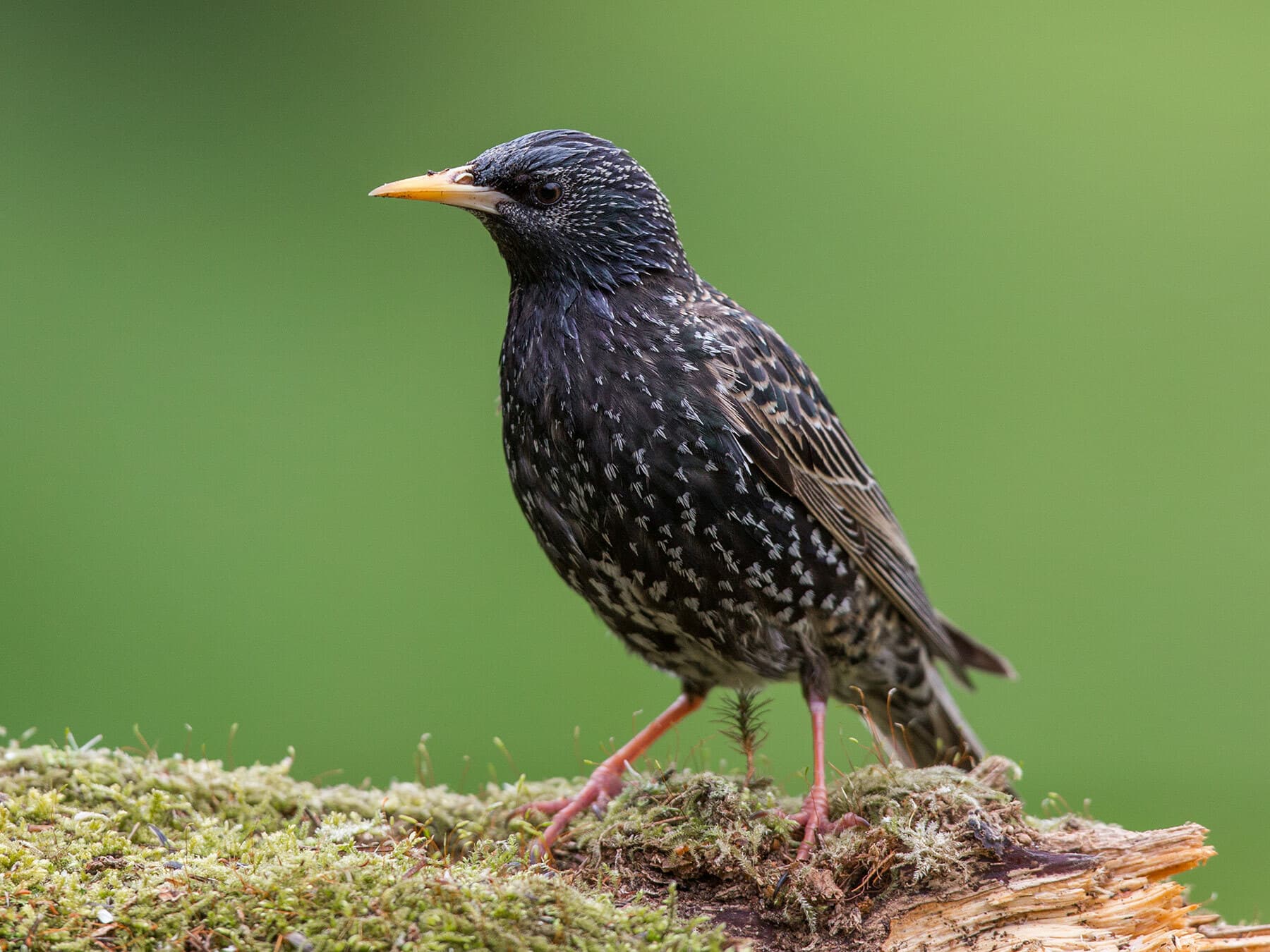
Common Starling
European Starling, Starling · Sturnus vulgaris
By the Birdfact teamChecked by Nathan Cope
See it in 3D
2 plumages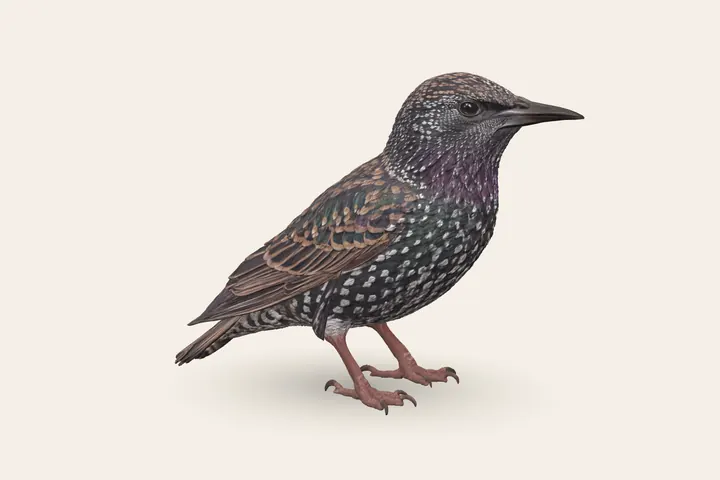 3D model
A Common Starling is 20.6–23.1 cm (8–9 in) long, bill to tail.
3D model · Winter · Length 20.6–23.1 cm (8–9 in) · How we make our birds · Report a problem
© 2026 NC Digital Limited (Birdfact). All rights reserved. This 3D model may be viewed on this page and shared by link only. Downloading, extracting, copying or reusing it, or using it to train machine-learning models, is not permitted without our written permission. Using our models
On this page16 sections
How to recognise it
This page is about the Common Starling, Sturnus vulgaris: simply the Starling in Britain and the European Starling in North America.
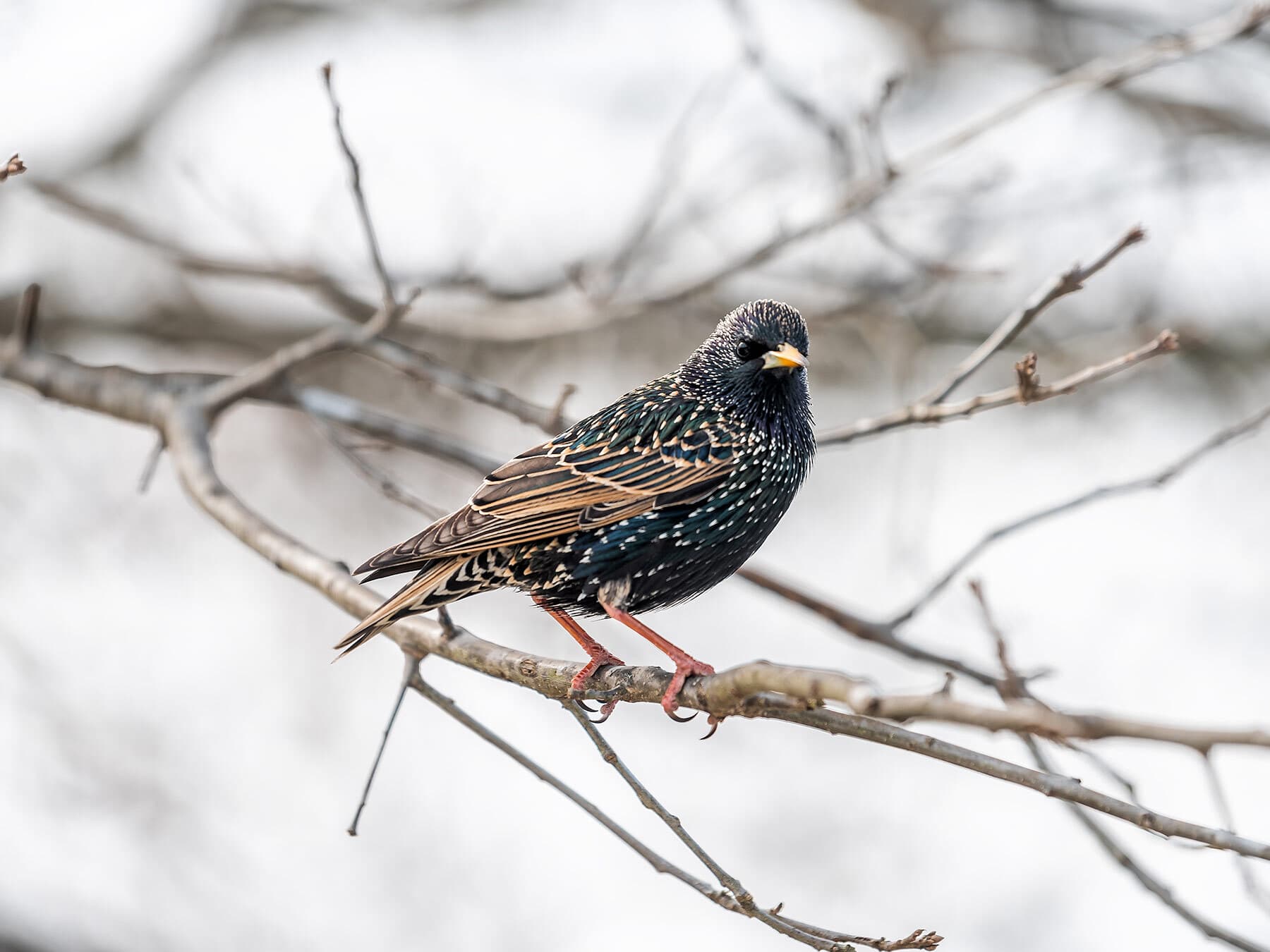
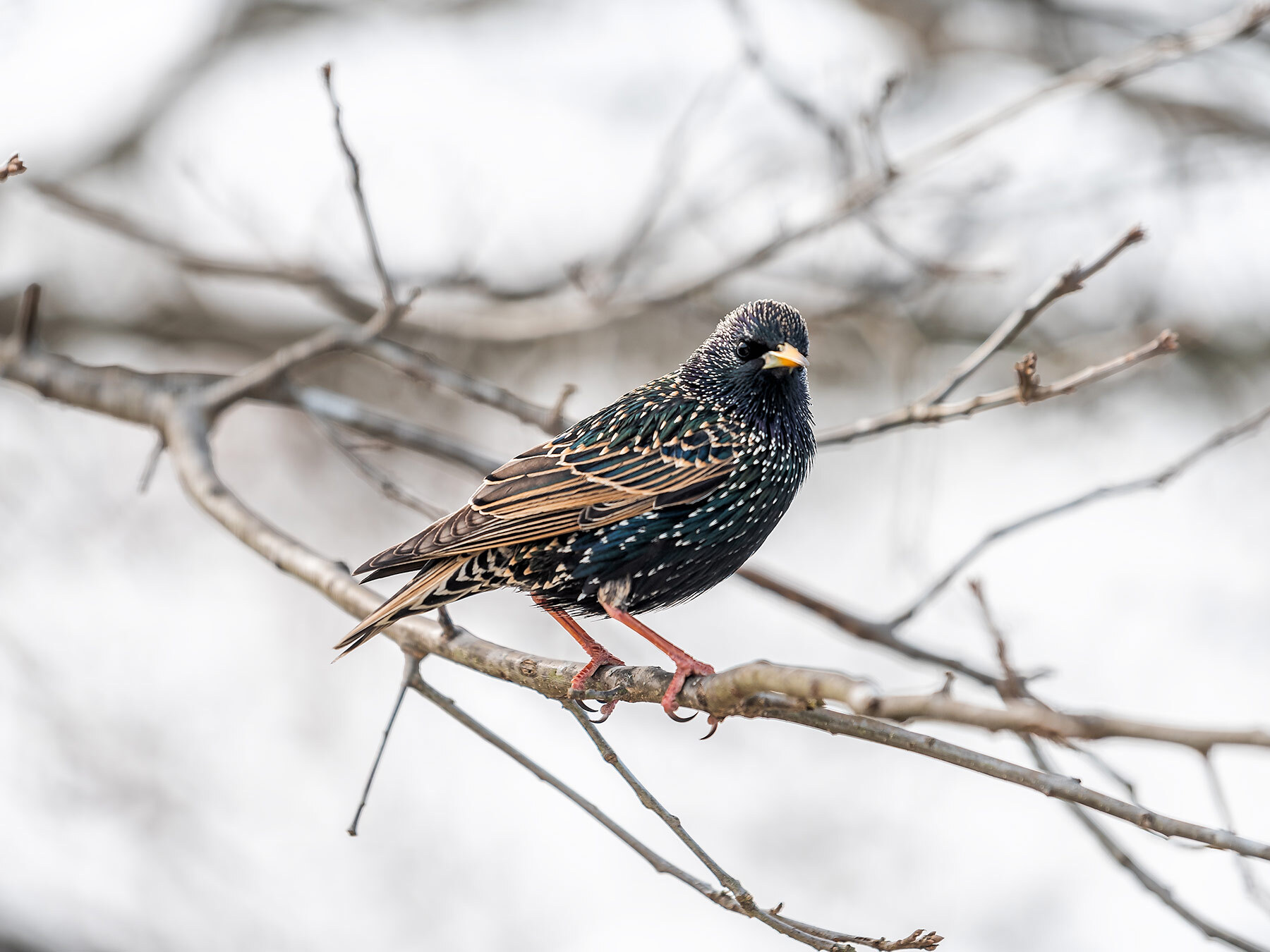
From a distance a Starling looks black. Close up it is glossy, with a sheen of purple and green, and in winter it is covered in white spots. It is smaller than a Blackbird, with a short tail, a pointed head and triangular wings, and on the ground it walks and runs rather than hops.
A Starling is about 21 cm (8 in) long, with a wingspan of 37 to 42 cm (about 15 to 16.5 in). Live adults weighed by BTO ringers average 85 g (3 oz), males a little heavier than females.1
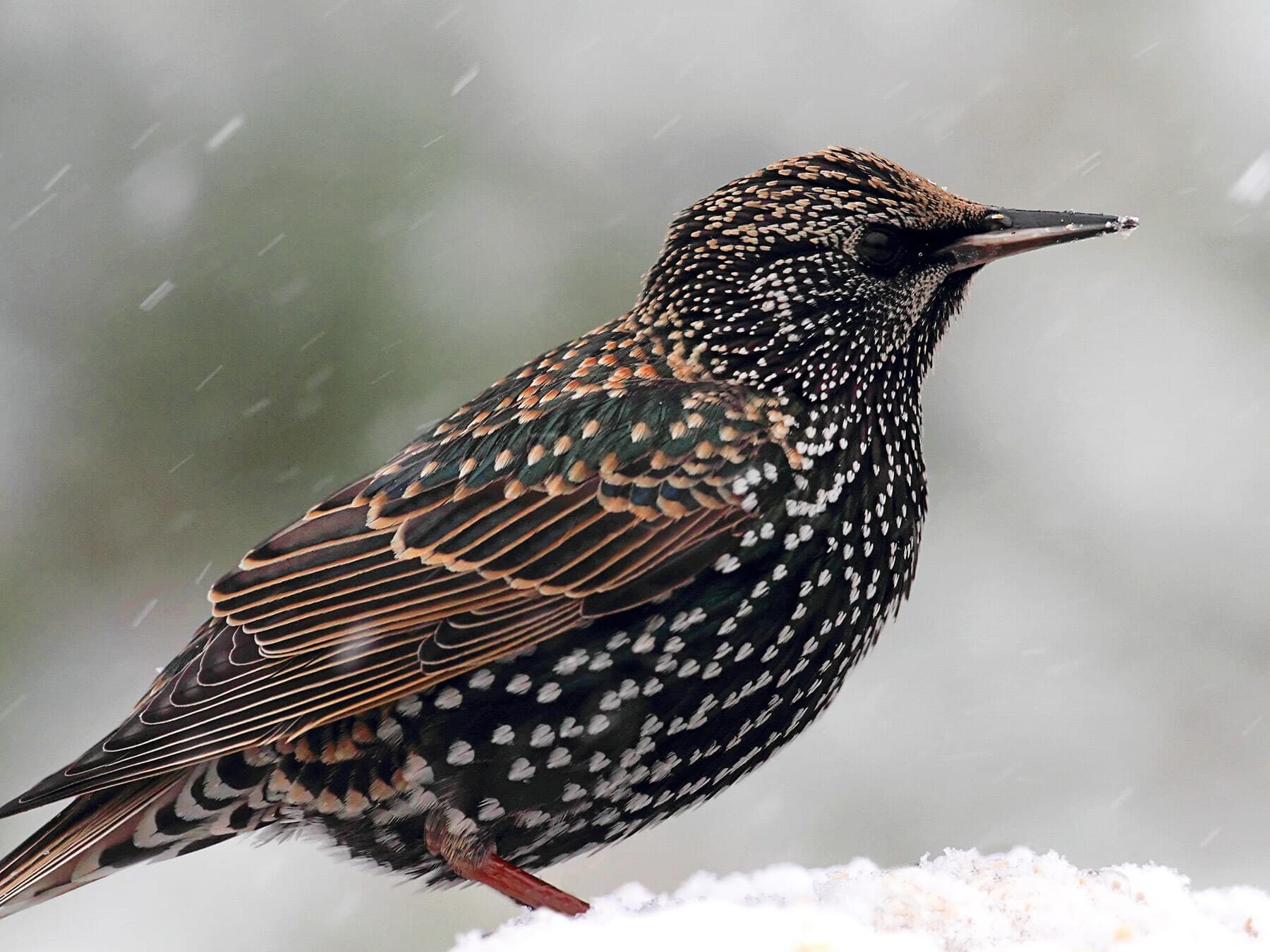
Plumage through the year: spots and gloss
A Starling turns from spotted to glossy without growing new feathers. It moults once a year, in late summer. The new feathers have pale tips, white on the underparts and buff on the back, so in autumn the bird is spangled all over. Through the winter the tips wear away, and by spring it is glossy black with a purple and green sheen.2
The bill changes too: dark in winter, yellow in spring and summer. In one American study males' bills began to turn yellow in late December, followed by females' and then young birds'.
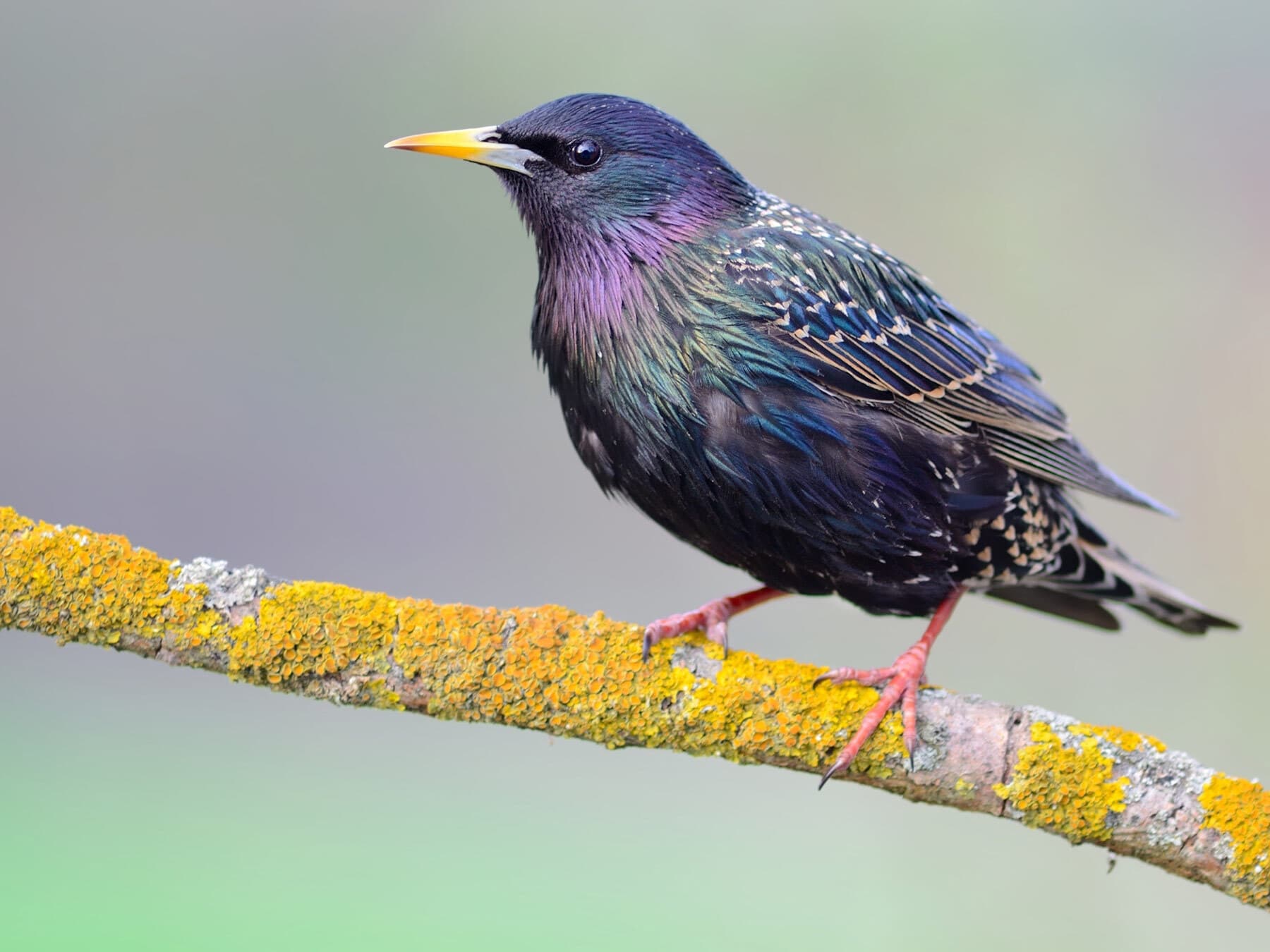
Male, female and young
Males and females look much alike. In spring and summer, look at the base of the bill: blue-grey in males, pinkish in females. Close up, a female also has a narrow, paler ring round the edge of the iris; a male's eye is all dark.2 Photos and more ways to tell them apart: female Starlings.
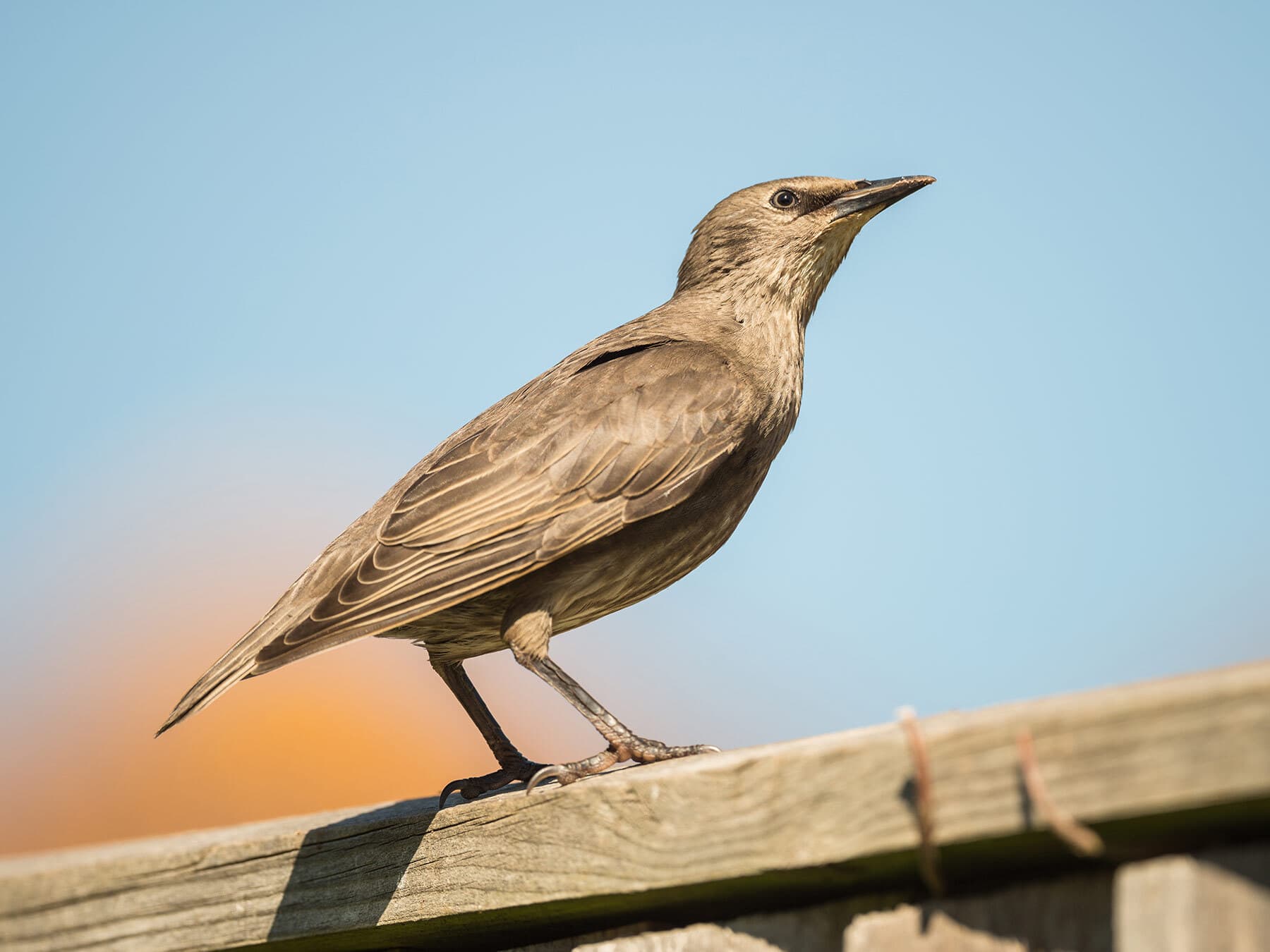
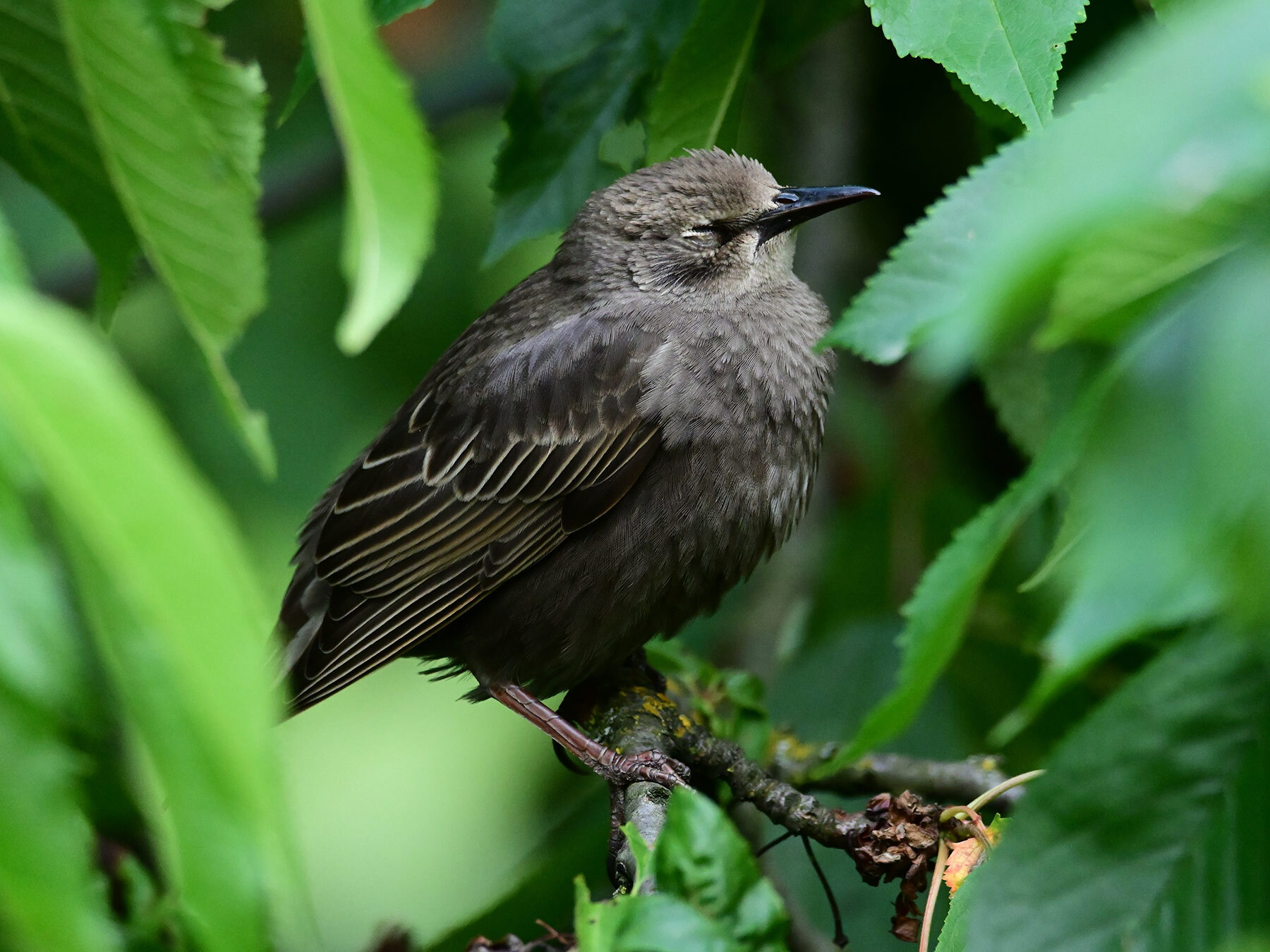
Young Starlings look quite different: plain grey-brown, paler on the throat, with a dark bill. From late summer they moult into spotted adult plumage, and for a few weeks they look patchy, with spotted bodies and brown heads. More: baby Starlings.
Identification: similar birds
A male Blackbird is black with a yellow bill too, but he is bigger, with a long tail, no spots or gloss, and a yellow ring round the eye. Blackbirds hop; Starlings walk.
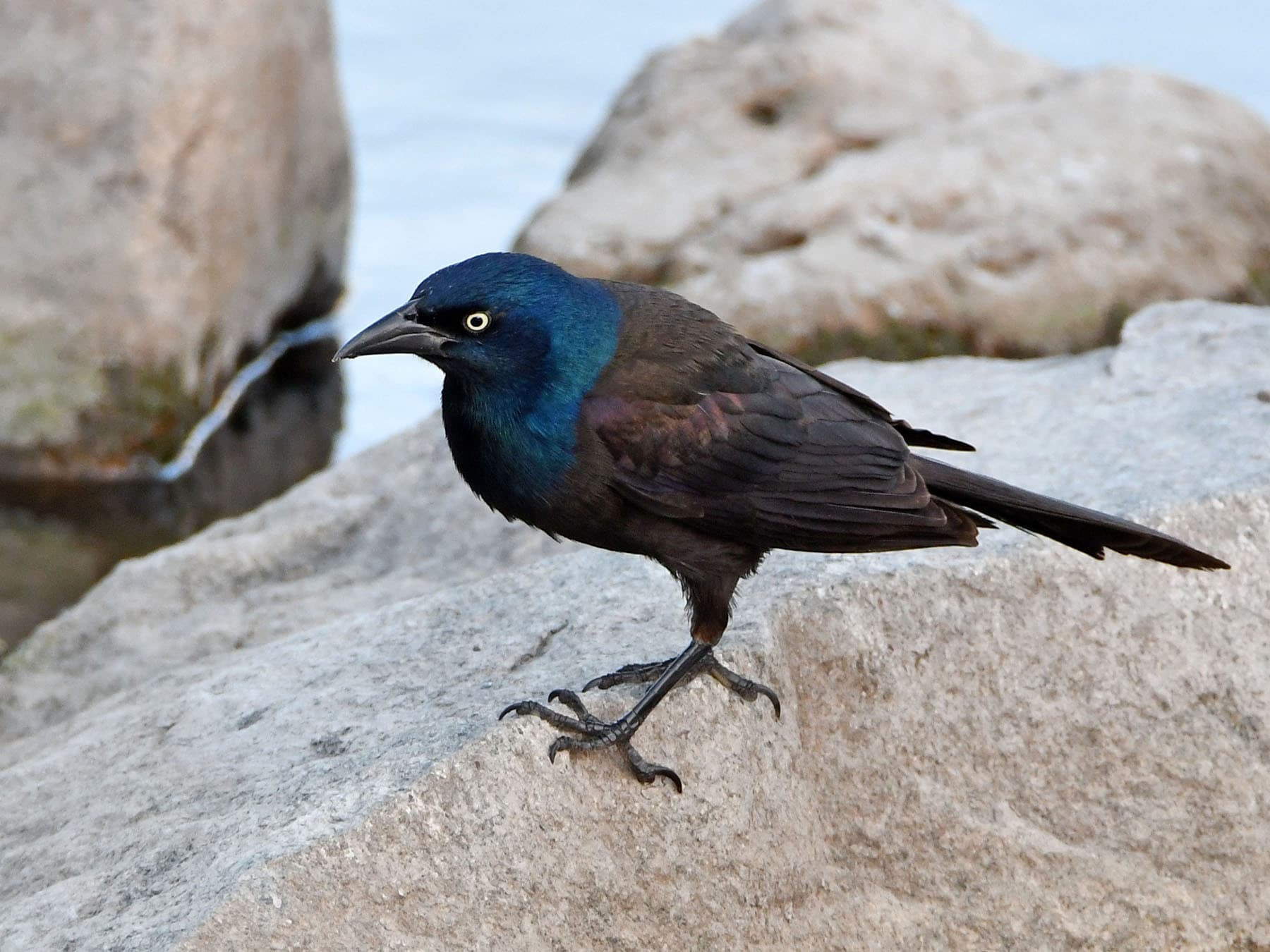
In North America the usual mix-up is the Common Grackle. It is bigger, 28 to 34 cm (11 to 13.4 in), with a long tail creased down the middle and whitish-yellow eyes. See European Starling vs Common Grackle.
Its size
Adults- Length
- 20.6–23.1 cm
- Wingspan
- 37–42 cm
- Weight
- 73.3–98 g
Its song and calls
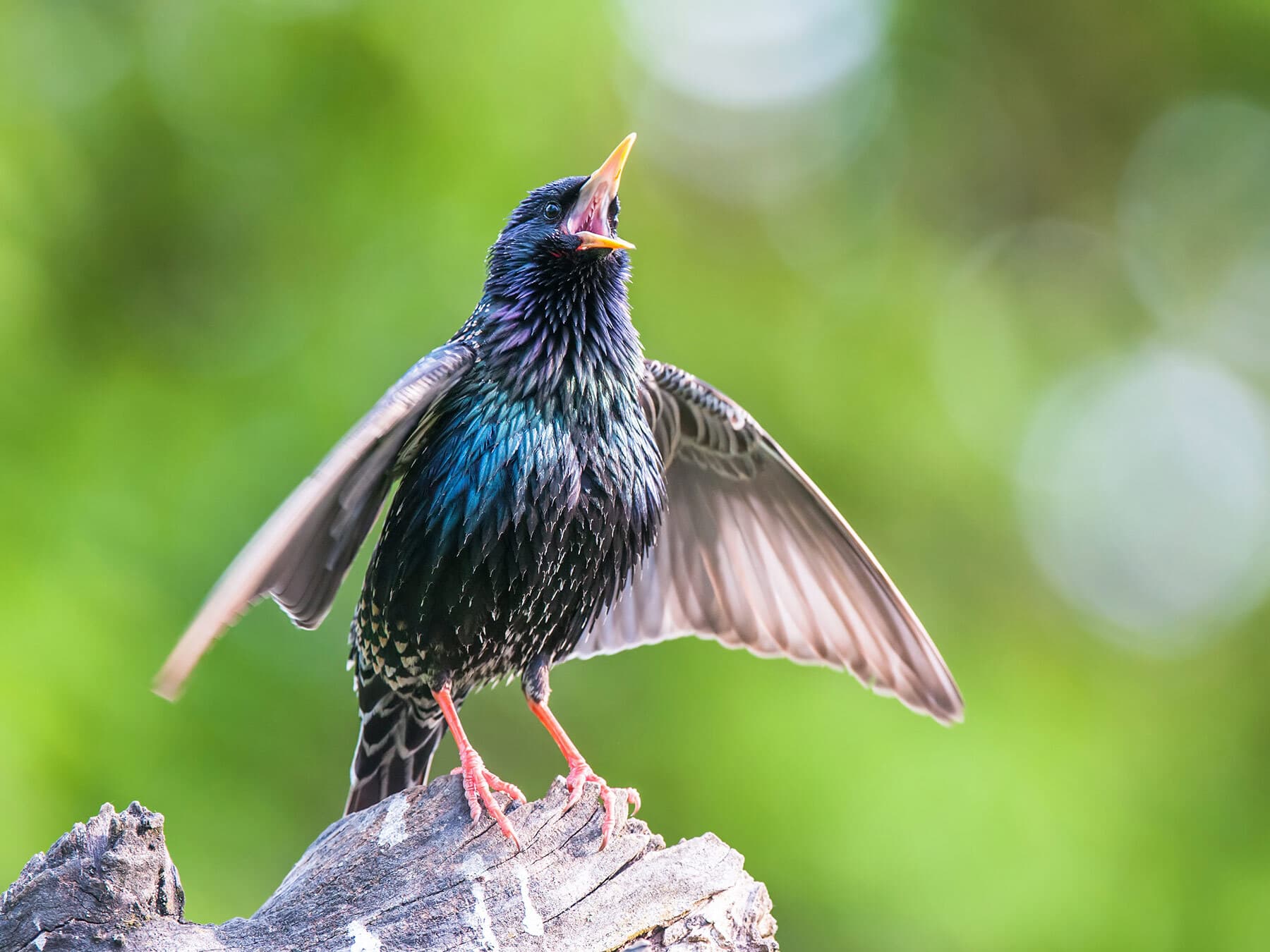
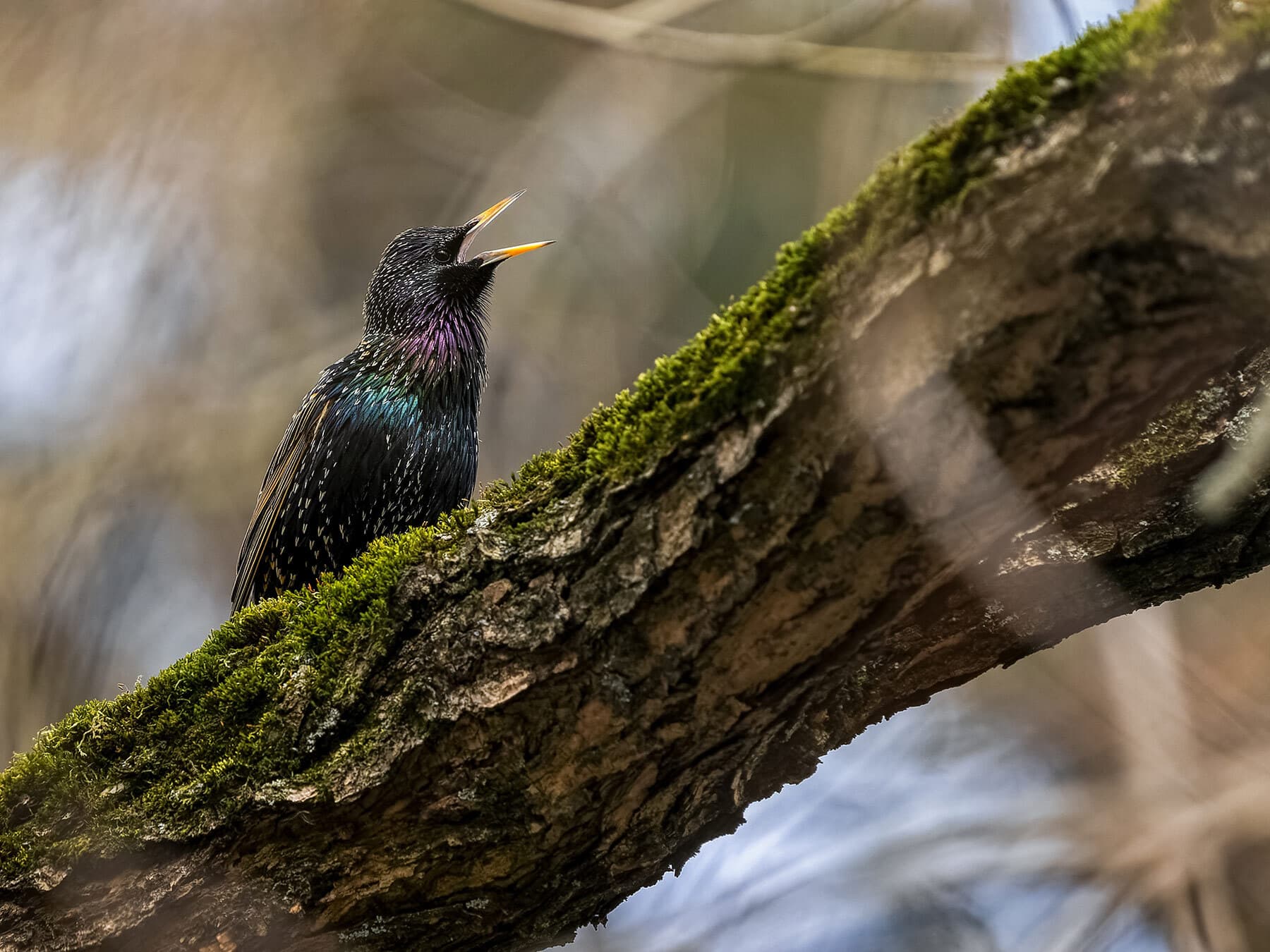
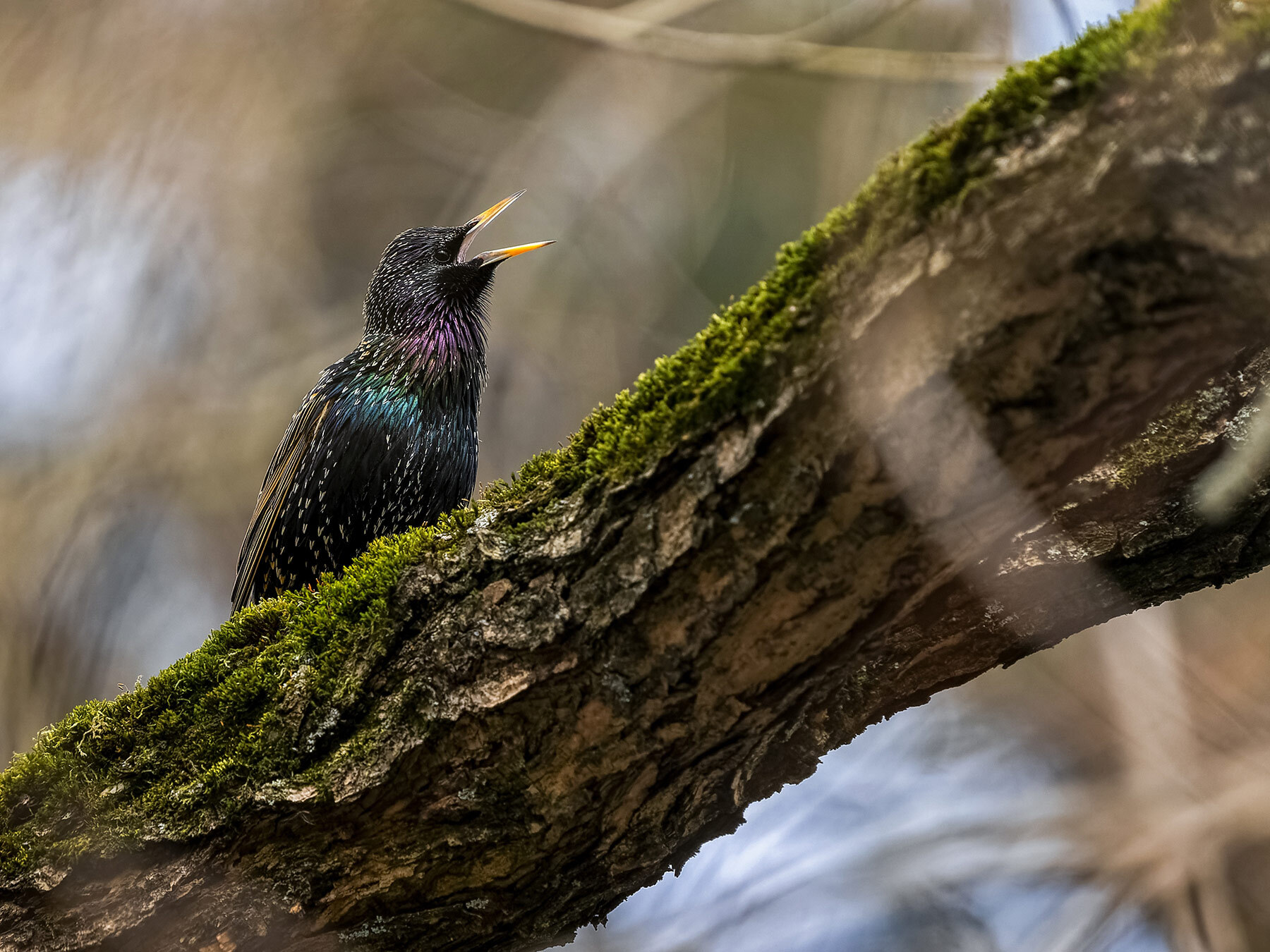
Starlings are noisy. The song is a long, rambling mix of whistles, warbles, clicks, chatters and rattles, often with copies of other birds slipped in. A singing male often waves his wings as he sings, especially when a female is near.
You can hear Starlings singing in any month: least in late summer, when they moult, and most early in the breeding season. Females sing too, more quietly, mostly in autumn.
The commonest calls are a purring prrrp as a bird takes off, harsh rattles and screeches in squabbles, and a metallic chip in alarm. The RSPB likens the simple call to an old rocking chair. Listen to recordings: Starling sounds.
Copying sounds: can Starlings talk?
In a way. Starlings are famous mimics. They copy other birds, other animals and everyday sounds: the RSPB lists phones, sirens and car alarms, and a Lapwing or Curlew calling from a rooftop may well be a Starling.
A single bird may copy up to 20 different calls, and both males and females can learn to copy human speech. In North America they often copy Killdeer, meadowlarks, Northern Bobwhite and American Robins.2
- Song0:00 / 0:28
Recorded in Auvergne-Rhône-Alpes, France · May 2019
- Call0:00 / 0:18
Recorded in Normandie, France · August 2024
When and where to see it
OctoberHere all year
Most recorded in October
- 1. South Ayrshire4.4%
- 2. Shetland Islands4.0%
- 3. Derry3.9%
- 4. Down3.7%
- 5. Longford3.4%
Each dot is a county, state or province: the bigger and darker, the larger the bird’s share of that place’s bird records that month. Grey dots: no regular records. The ringed point is the centre of the bird’s records this month; the arrow shows how it moved since last month, and the dashed loop its path through the year. “Arrivals” colours places where it becomes regular this month (orange) or is in its last regular month (grey). GBIF eBird Observation Dataset, 2019–2024. Map data: Natural Earth, US Census Bureau; place centres © OpenStreetMap contributors.
In your area
See when the Common Starling is recorded in your county, state or province.
How often the Common Starling turns up in the UK, Ireland, the United States and Canada through the year, from birdwatchers' records.
United Kingdom
Resident · all year · most records in November
Ireland
Resident · all year · most records in May
United States
Resident · all year · most records in February
Canada
Resident · all year · most records in March
Show as a table
| Month | United Kingdom | Ireland | United States | Canada |
|---|---|---|---|---|
| January | 2.0% (regular) | 2.2% (regular) | 1.7% (regular) | 2.4% (regular) |
| February | 1.9% (regular) | 2.2% (regular) | 1.8% (regular) | 2.6% (regular) |
| March | 1.7% (regular) | 2.2% (regular) | 1.8% (regular) | 3.0% (regular) |
| April | 1.5% (regular) | 2.5% (regular) | 1.6% (regular) | 2.4% (regular) |
| May | 1.7% (regular) | 2.7% (regular) | 1.5% (regular) | 1.6% (regular) |
| June | 1.8% (regular) | 2.3% (regular) | 1.5% (regular) | 1.6% (regular) |
| July | 1.6% (regular) | 2.3% (regular) | 1.3% (regular) | 1.4% (regular) |
| August | 1.6% (regular) | 2.3% (regular) | 1.2% (regular) | 1.2% (regular) |
| September | 1.7% (regular) | 2.3% (regular) | 1.3% (regular) | 1.4% (regular) |
| October | 2.0% (regular) | 2.4% (regular) | 1.5% (regular) | 1.9% (regular) |
| November | 2.1% (regular) | 2.3% (regular) | 1.5% (regular) | 2.0% (regular) |
| December | 2.1% (regular) | 2.4% (regular) | 1.6% (regular) | 2.4% (regular) |
Recorded regularly in
Worldwide: recorded regularly in 106 countries
Countries where it was recorded in at least 3 of the 6 years 2019–2024. Linked countries have their own bird list.
Europe (50)
- Åland Islands
- Albania
- Austria
- Belarus
- Belgium
- Bosnia & Herzegovina
- Bulgaria
- Croatia
- Czechia
- Denmark
- Estonia
- Faroe Islands
- Finland
- France
- Germany
- Gibraltar
- Greece
- Guernsey
- Hungary
- Iceland
- Ireland
- Isle of Man
- Italy
- Jersey
- Kosovo
- Latvia
- Liechtenstein
- Lithuania
- Luxembourg
- Malta
- Moldova
- Monaco
- Montenegro
- Netherlands
- North Macedonia
- Norway
- Poland
- Portugal
- Romania
- Russia
- San Marino
- Serbia
- Slovakia
- Slovenia
- Spain
- Sweden
- Switzerland
- Ukraine
- United Kingdom
- Vatican City
Asia (34)
North America (7)
Oceania (4)
- Australia
- New Zealand
- Norfolk Island
- Tonga
Data: EOD – eBird Observation Dataset (Cornell Lab of Ornithology), accessed via GBIF.org, CC BY 4.0. Records from 2019–2024, aggregated and filtered by Birdfact. How these lists are made
In towns, villages and farmland, and anywhere with short grass to feed on: lawns, parks, playing fields and pasture. In the breeding season the BTO records them most often in towns. In the last national atlas they were found in 91% of the UK's 10-km squares, in summer and in winter.1
Spotting tips
Look on lawns, where a feeding flock works across the grass, stabbing at the turf; on chimneys, TV aerials and treetops, where Starlings sing and click; and in the late afternoon in winter, when flocks gather before going to roost.
Do Starlings migrate?
British Starlings mostly stay put all year. But in autumn birds arrive from northern Europe and Scandinavia to spend the winter here, and numbers rise dramatically.1
Across Europe, Starlings in the north and east migrate, while those in the south and west, Britain included, tend to stay. Western migrants mostly head west, wintering from the British Isles south to Iberia and north Africa, mainly from October to March. They are among the earliest birds to head back in spring.2
A Starling ringed in Suffolk in November 1983 was found in Russia, 2,122 km away, in July 2001.3
Where they live in North America
Starlings are not native to North America. The population is usually traced to birds released in Central Park, New York, in 1890 and 1891, and they had spread to nearly every US state and Canadian province by the late 1940s.2 People also took them to South Africa, Australia and New Zealand. In the north of their American range many move south for the winter; south of about 40°N they rarely migrate.
The often-told story that the man behind the release, Eugene Schieffelin, wanted to bring every bird in Shakespeare to America is almost entirely fiction, built up in later retellings, and the neat story of a single founding flock is less certain than it sounds.4
They are called invasive mainly because they compete with native birds for nest holes, taking them over from bluebirds, woodpeckers, Tree Swallows and others, and because big flocks damage crops. Yet when a 2003 study compared 27 native hole-nesting species before and after Starlings arrived, only sapsuckers showed declines that might be put down to them.5 The US Migratory Bird Treaty Act does not protect the European Starling.6 More: are European Starlings invasive?
What it eats
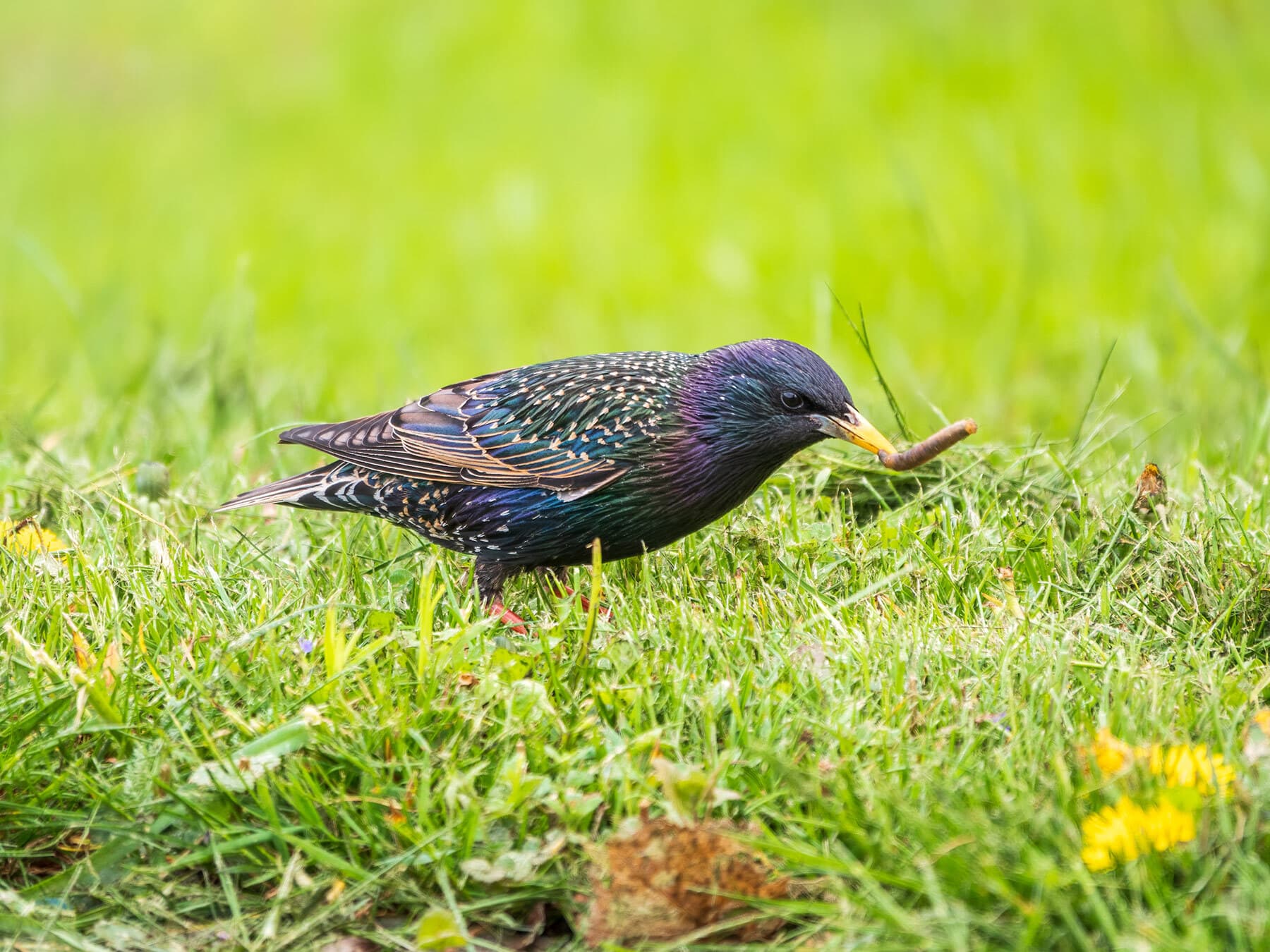
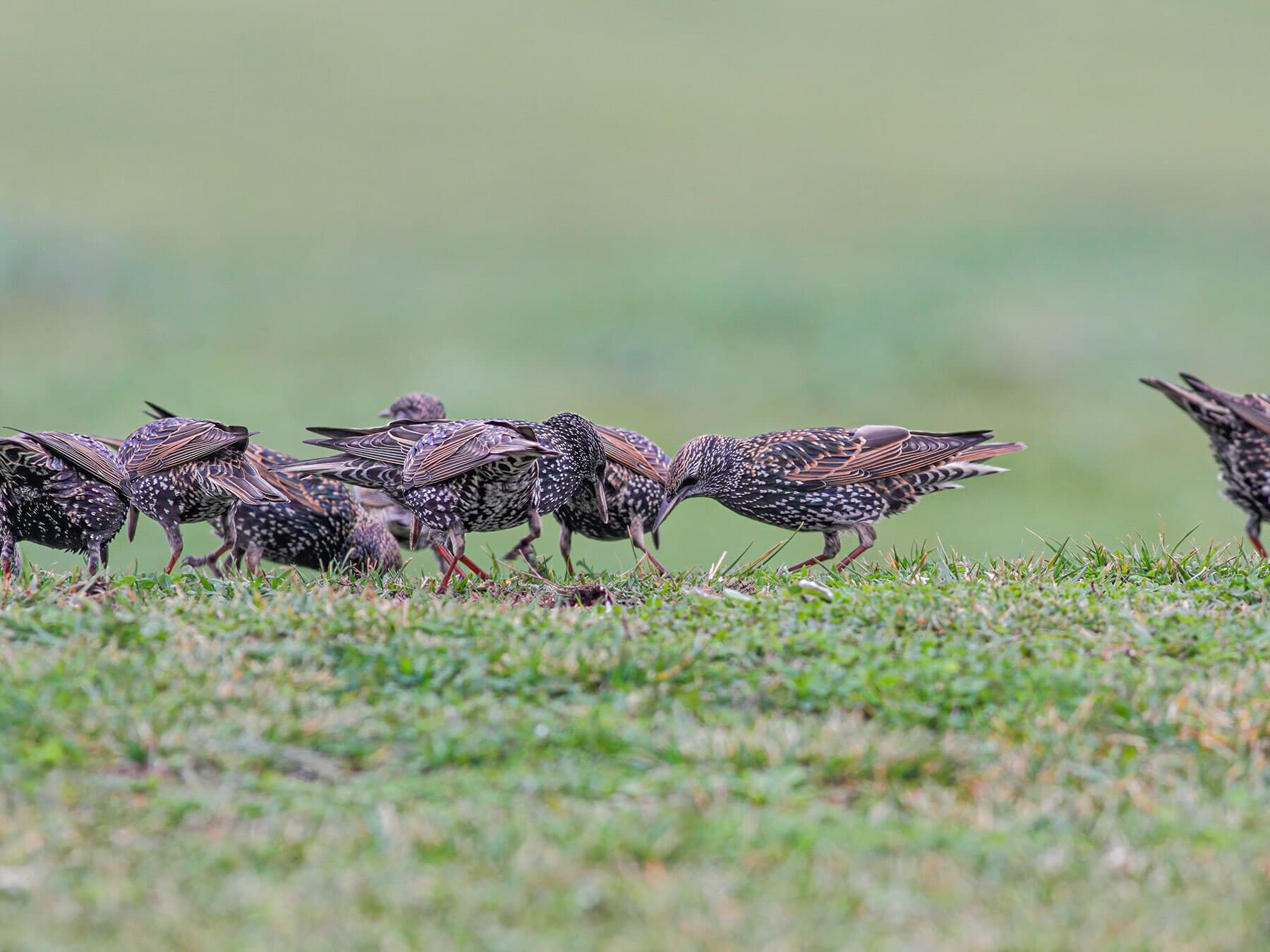
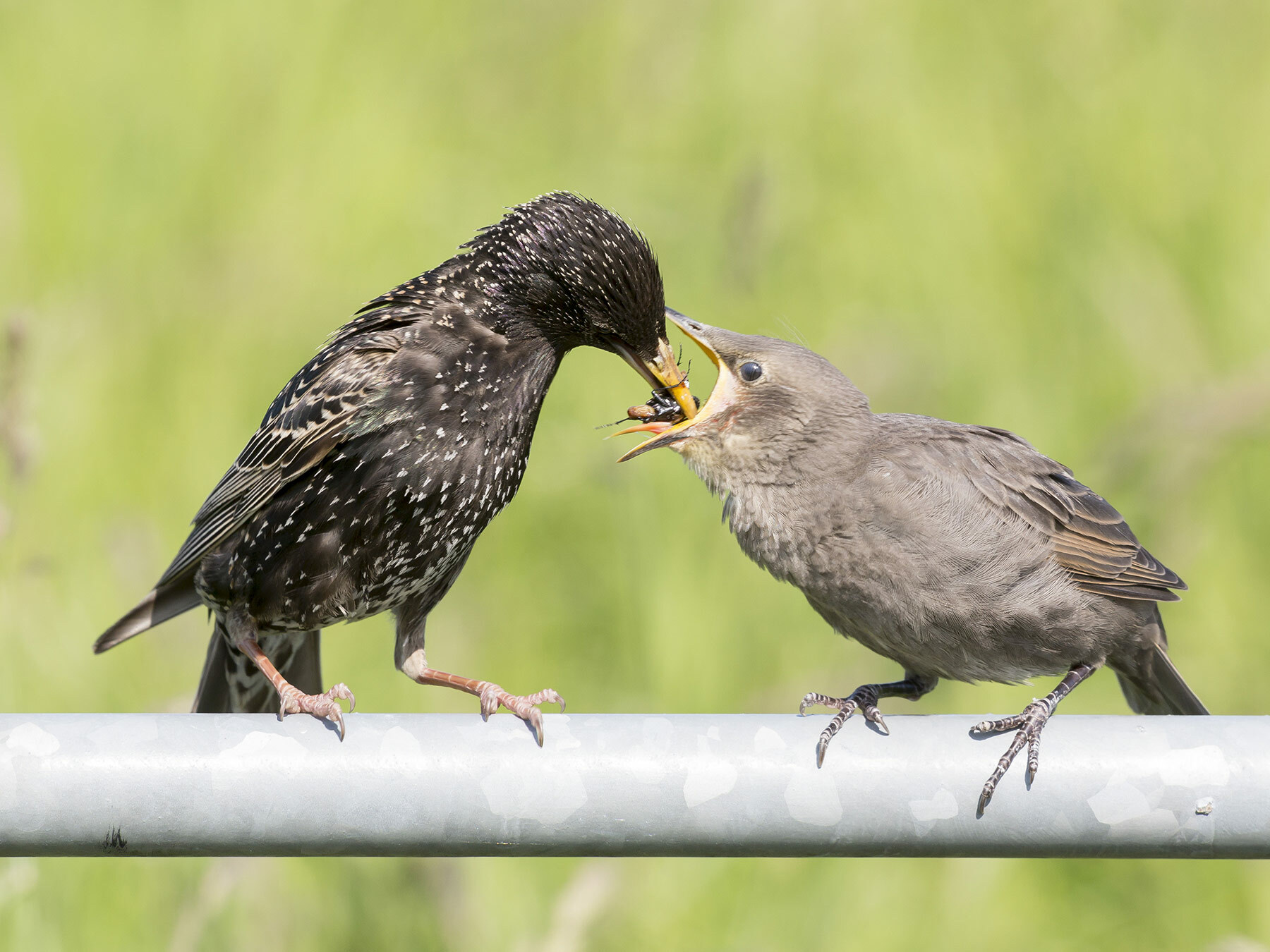
Insects and other small animals when they can get them, fruit and seeds when they can't. Starlings feed mostly on short grass, hunting leatherjackets (cranefly larvae), beetle grubs, caterpillars, earthworms and spiders.
Watch one on a lawn: it pushes its closed bill into the turf and then forces it open, prising a gap to reach the grubs. In autumn and winter Starlings eat more fruit and seeds, from cherries, elderberries and blackberries to apples, pears and grapes, and they take grain, scraps and animal feed.
More, including what the chicks are fed: what Starlings eat.
Feeding them in your garden
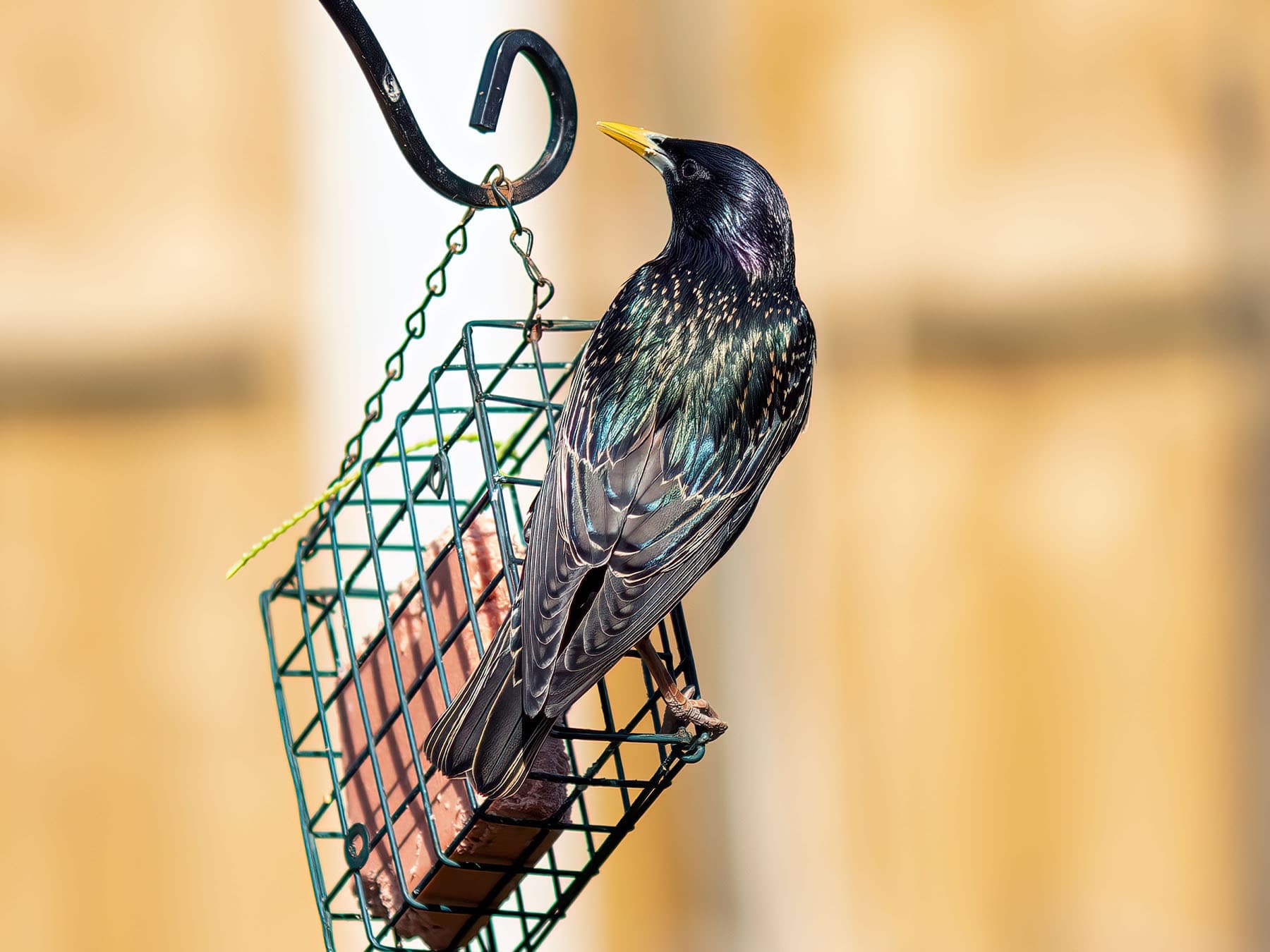
Starlings come readily to fat balls in a hanging mesh feeder. The RSPB's July 2026 advice is to offer only small amounts of fat, suet or mealworms from 1 May to 31 October and to pause seed and peanuts then; to use hanging feeders rather than tables or trays; and to clean feeders every week.7
If Starlings crowd out smaller birds, tube feeders help: Starlings find them hard to use.
Nesting and breeding
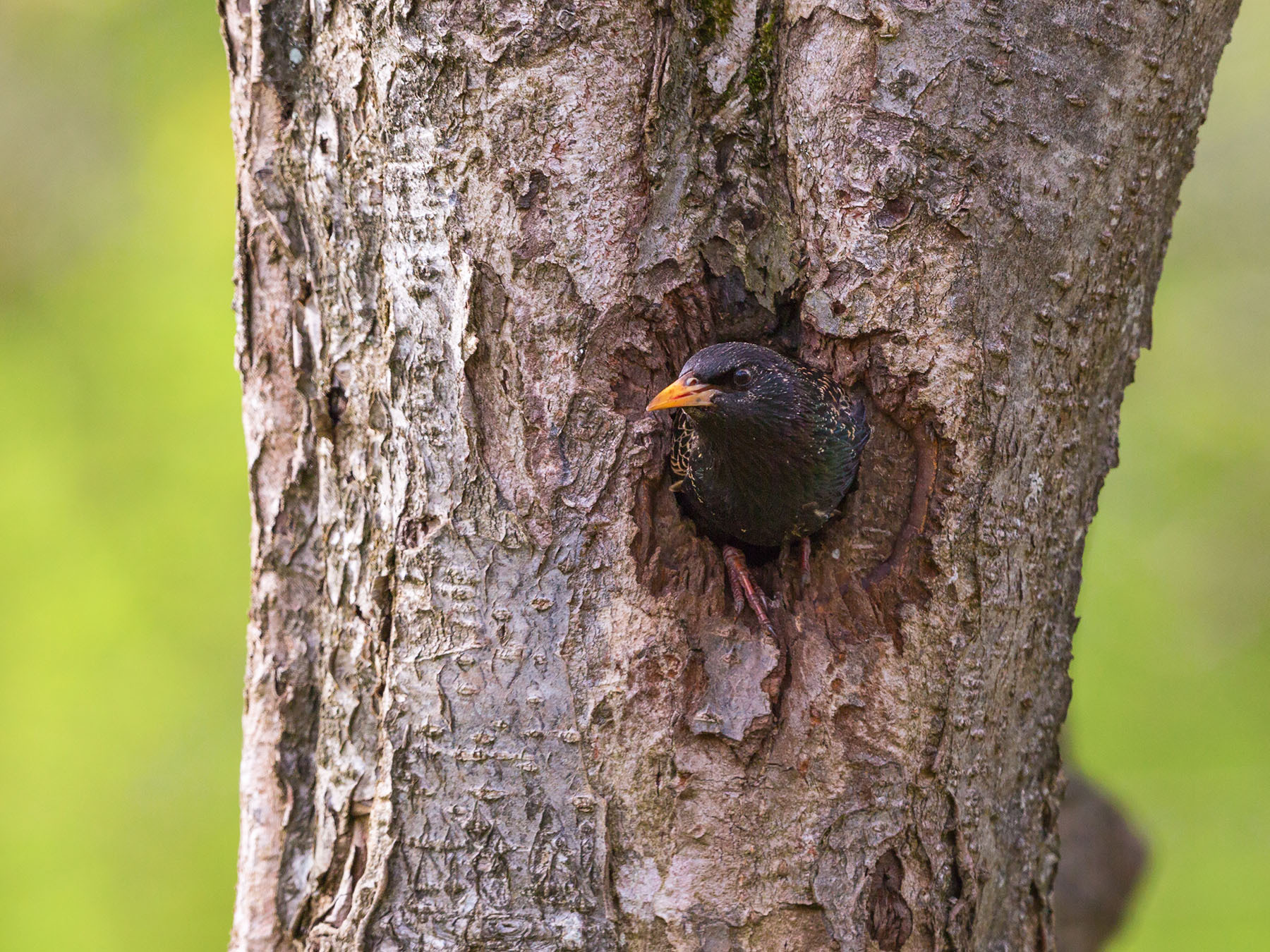
Starlings nest in holes: gaps under roof tiles and eaves, holes in walls and trees, old woodpecker holes and nest boxes. The male picks the hole and starts stuffing it with grass and twigs; the female finishes the nest.
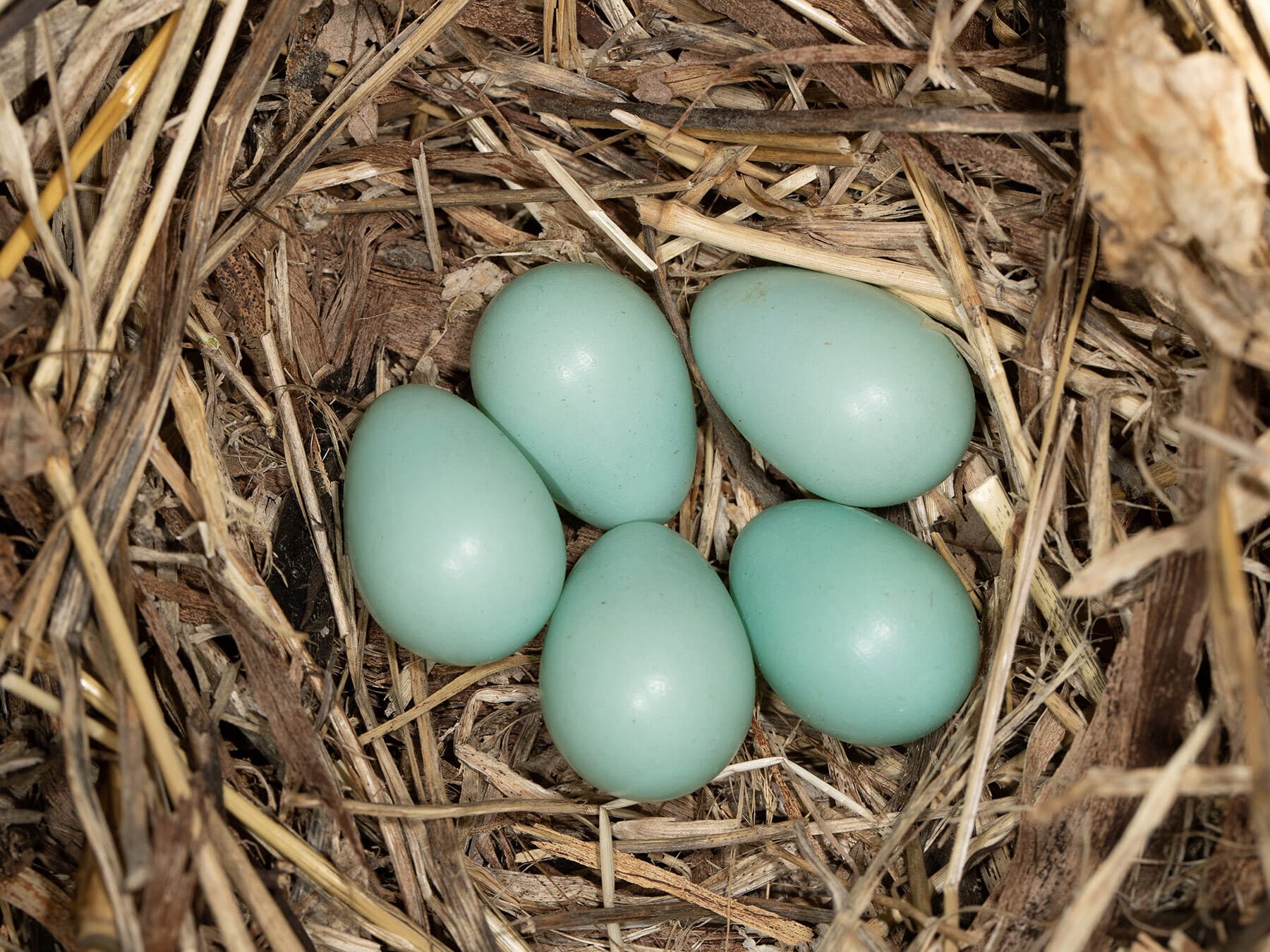
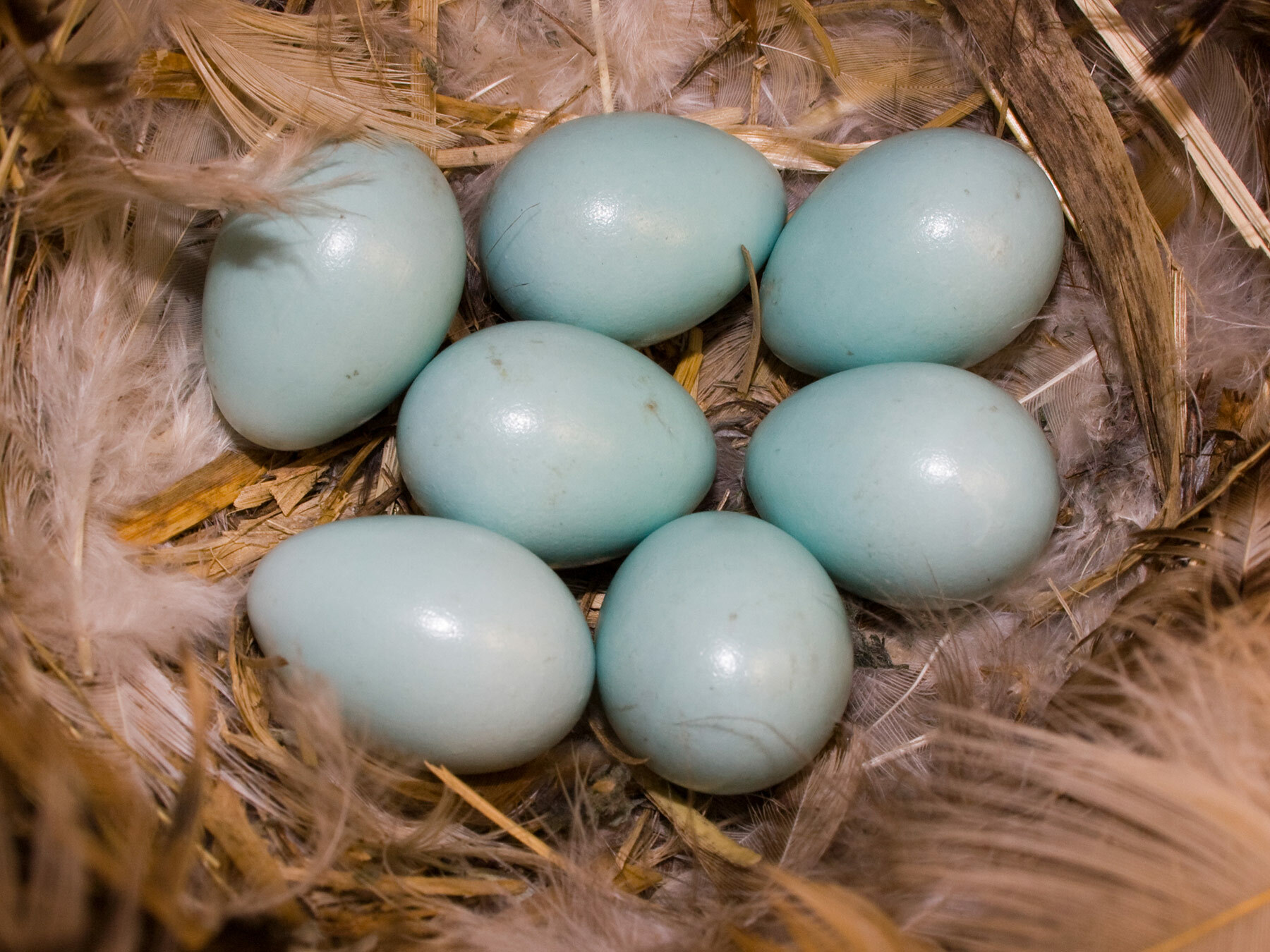
In Britain first eggs are laid around 19 April on average, anywhere from 6 April to 30 May. There are usually 4 or 5 pale blue eggs, incubated by both parents for 12 to 15 days. The chicks leave the nest at 19 to 21.5 days old, and pairs raise one or two broods a year.1
In the UK it is against the law to remove a nest that is being built or used: if Starlings nest in your roof, wait until the young have flown before blocking the gap.8 More: where Starlings nest and baby Starlings.
Behaviour
Starlings do almost everything in company: they feed, roost and migrate in flocks all year. Flocks are small in spring, while pairs are nesting, and grow to thousands of birds in late summer, autumn and winter.
They are also squabblers, best known for their quarrels at bird feeders. A rival is stared down with feathers fluffed and crown raised; in fights over food two birds fly up, kicking and stabbing, and males fight hard, sometimes to the death, over nest holes. A Starling's territory is just its nest hole and the area round the entrance; feeding grounds are shared.
Roosting behaviour and murmurations
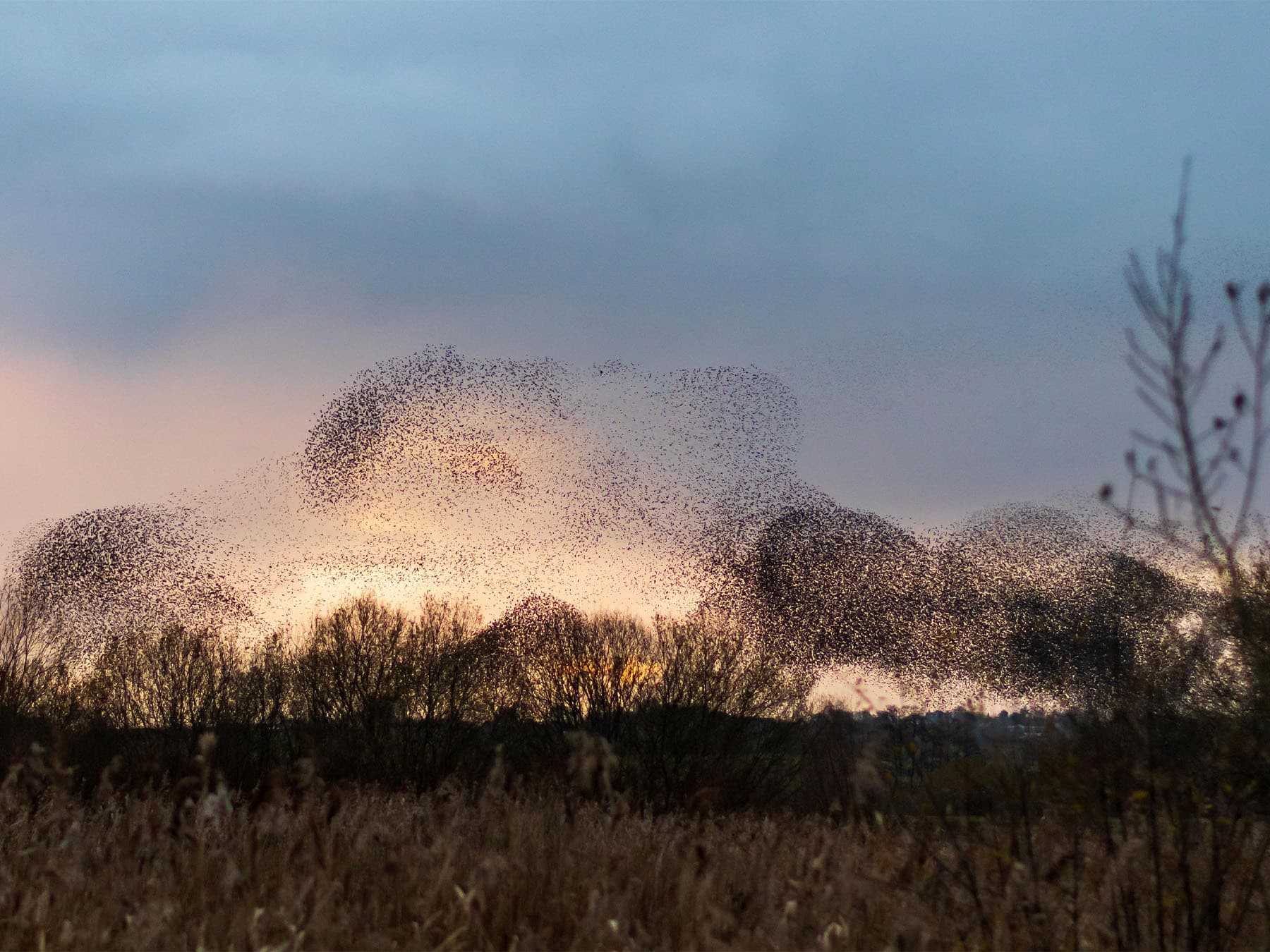
Starlings sleep together in communal roosts all year: in reedbeds, scrub and trees, on piers and bridges, and on buildings in town centres. Roosts are smallest in spring and largest in winter, when the biggest hold more than a million birds.1 In winter some fly in from more than 50 km away, and each morning they go back to the same feeding grounds.
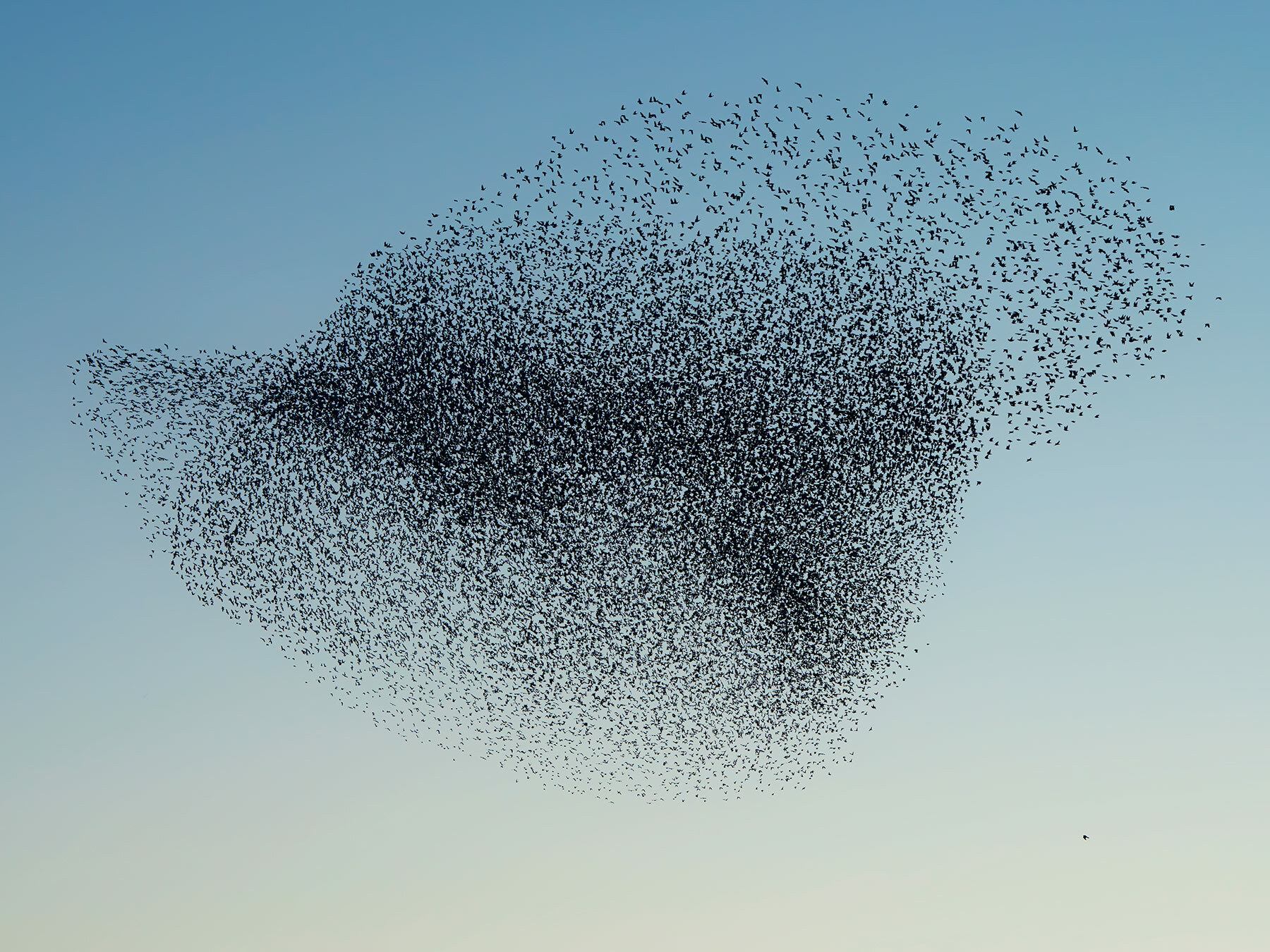
Before settling, winter flocks often swirl over the roost in the displays called murmurations. Starling flocks turn as one, above all when a bird of prey is about. More: Starling murmurations.
Lifespan and predators
A Starling that survives to breed typically lives about 5 years. About 69% of adults survive from one year to the next, and 52% of young birds survive their first year.1 Hawks, falcons and owls take Starlings, and so do cats, rats and weasels; squirrels raid nests. More: how long Starlings live.
Conservation
In the UK the Starling is Red-listed, the highest level of conservation concern. There were about 1.8 million pairs in 2016, and the breeding population fell by 61% between 1995 and 2024.1
Worldwide it is of Least Concern: it is one of the most numerous birds on Earth. Even in North America, where it was introduced, the Breeding Bird Survey shows numbers down by about half since 1966.
Conservation: why they have declined
The BTO's analyses point to young birds. Fewer Starlings now survive their first winter, while nests do at least as well as they used to. Why is not fully understood. In the countryside, changes in livestock farming are thought to be largely responsible: less permanent pasture, where Starlings find much of their food, fewer cattle, drainage, and insecticides used partly against leatherjackets. About 60% of UK Starlings live in towns and gardens, where the causes are less clear.1
A Starling nest box is one of the simplest ways to help: see where Starlings nest.
Similar birds
Often mistaken for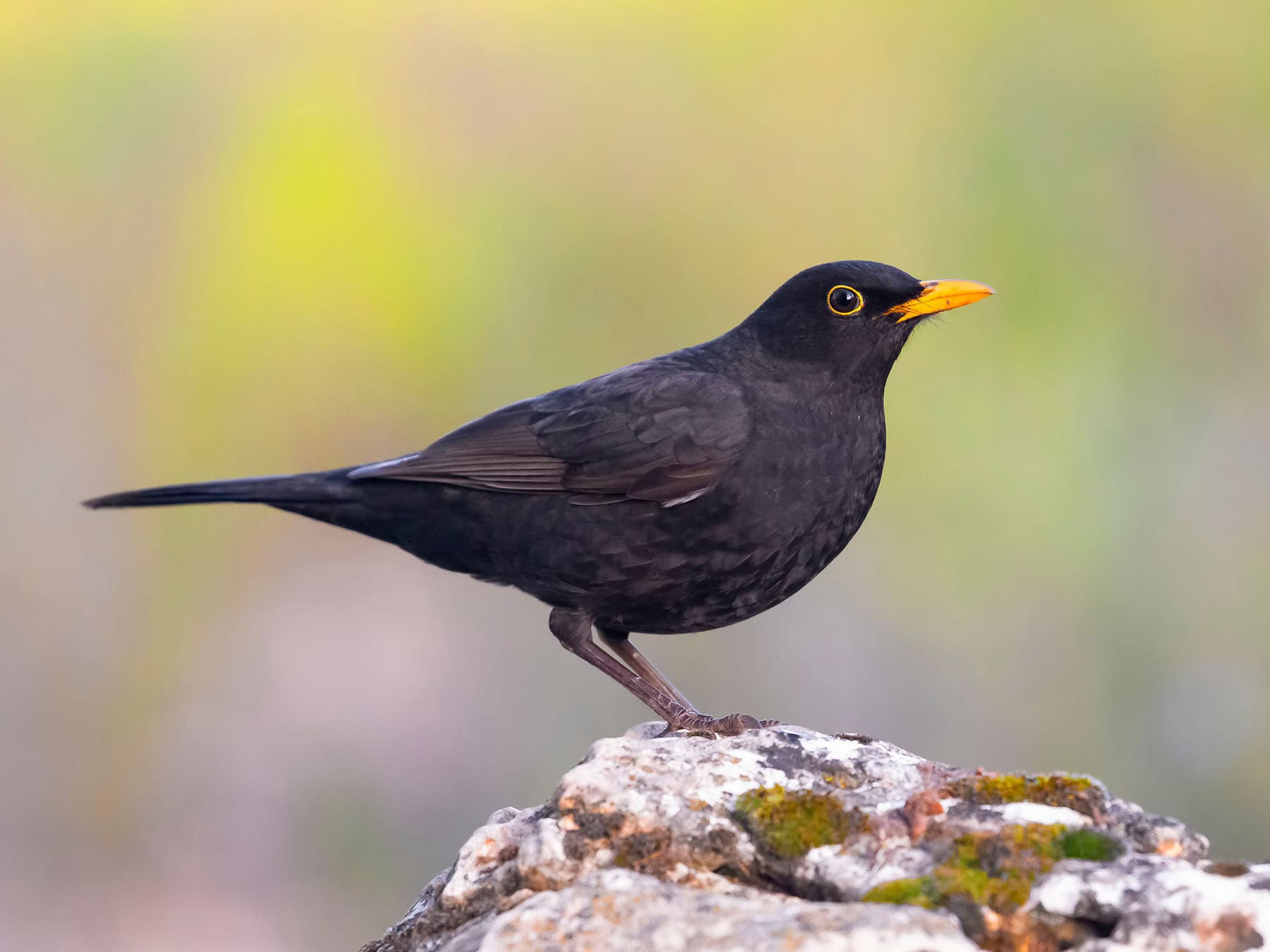
More photos
10 photos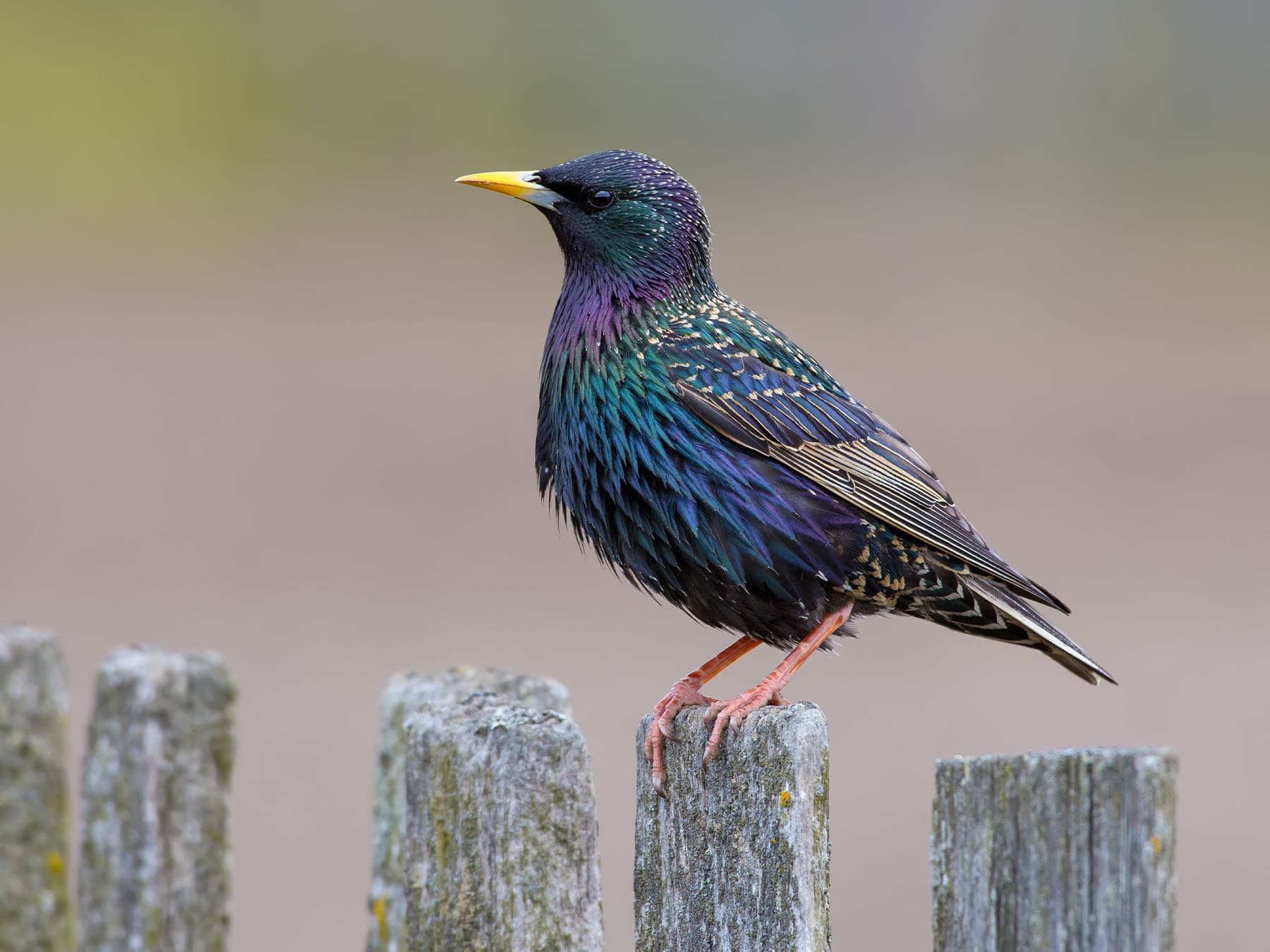 A Starling in spring, glossy, with a yellow bill
 A Starling in winter, covered in white spots
 A Starling calling from a branch
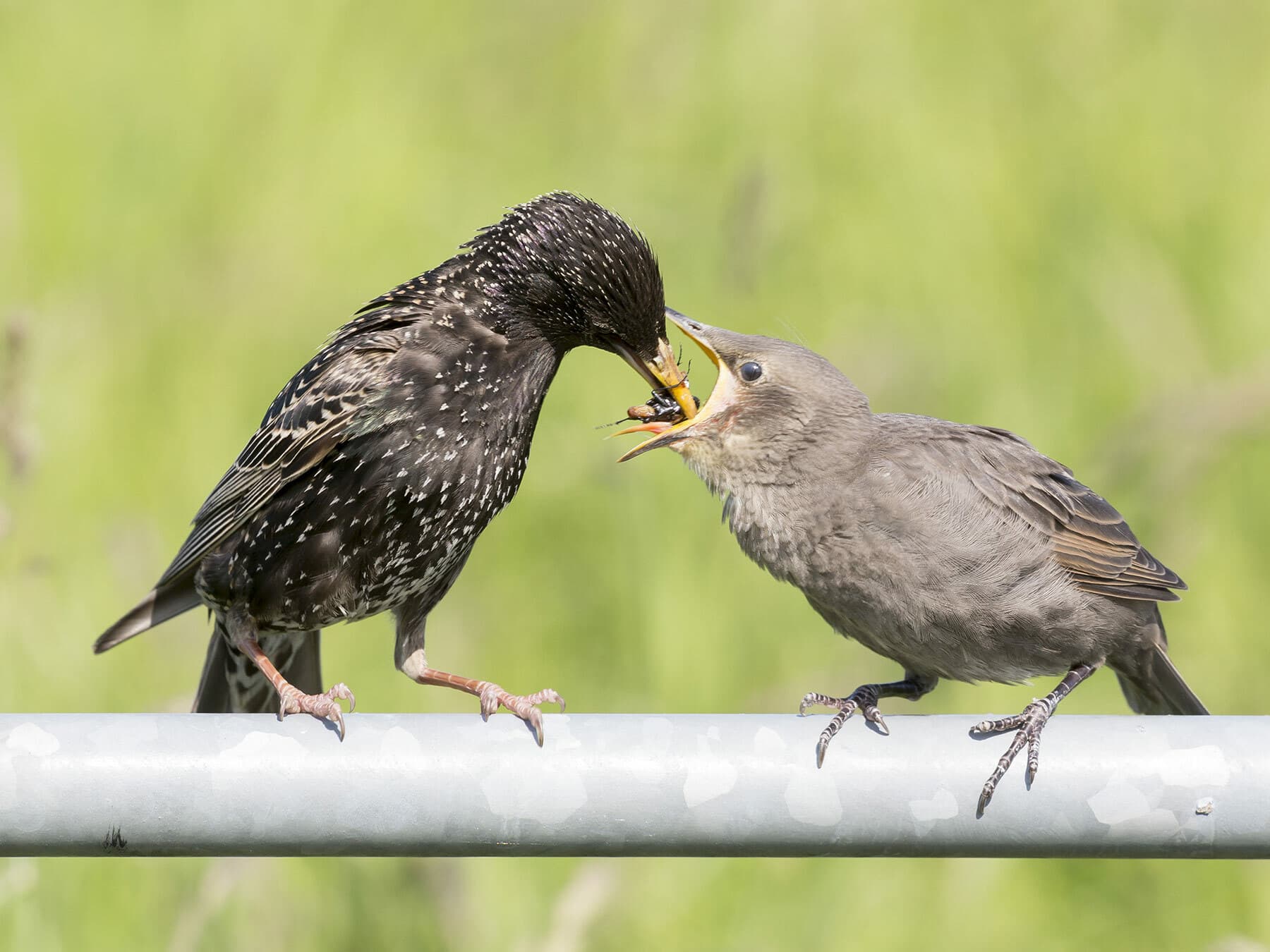 A Starling feeding a young bird
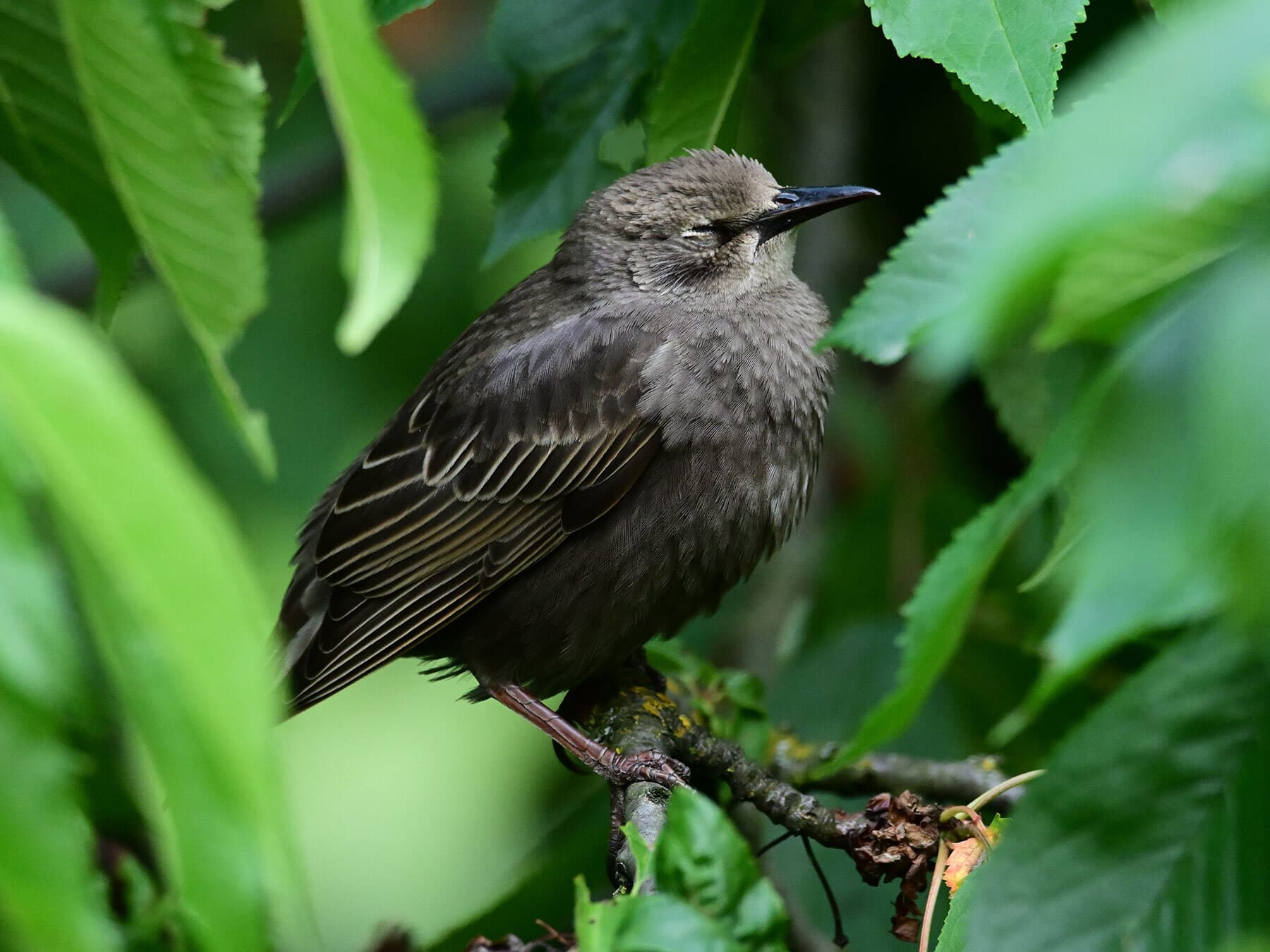 A young Starling, grey-brown with a dark bill
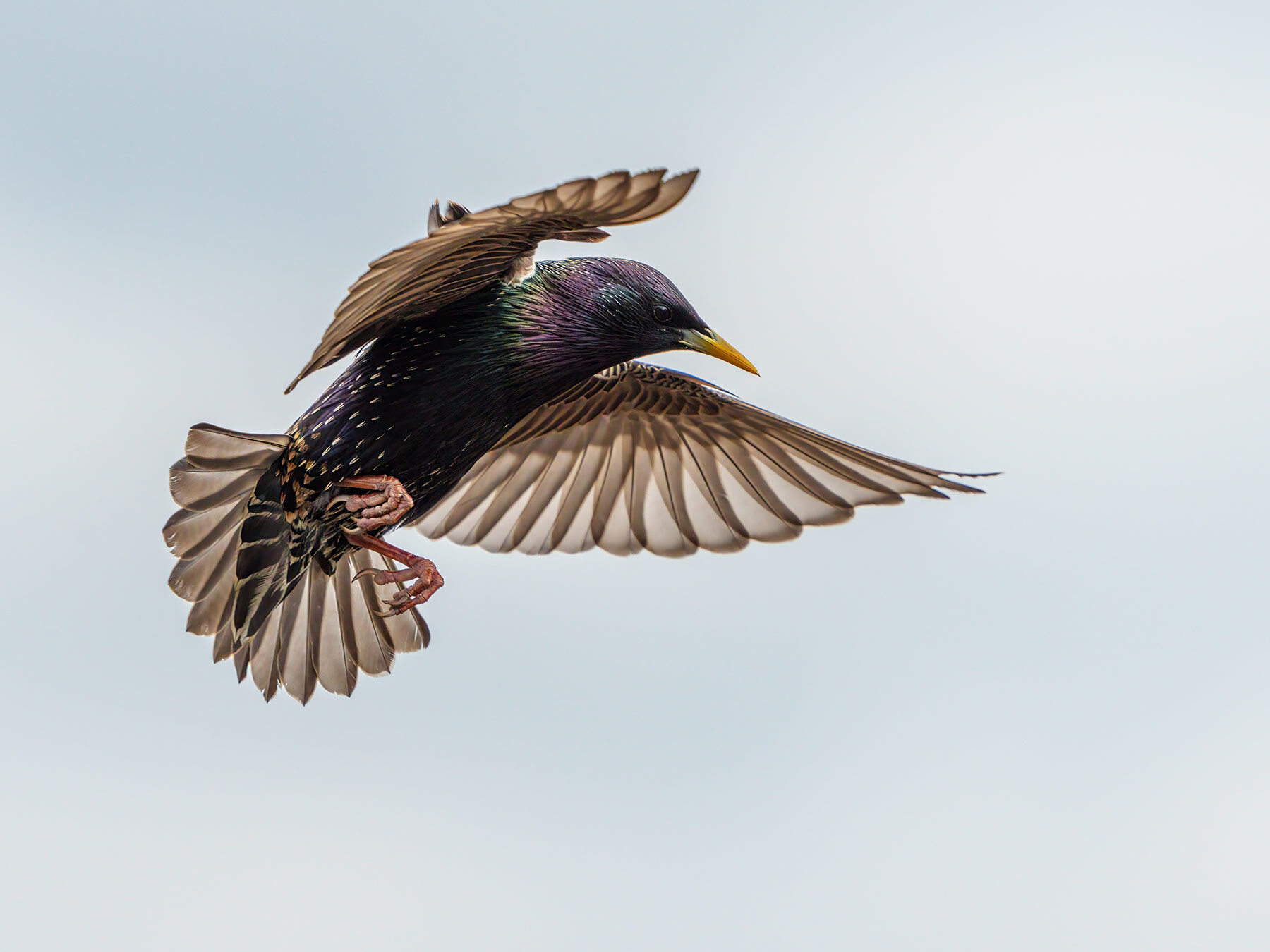
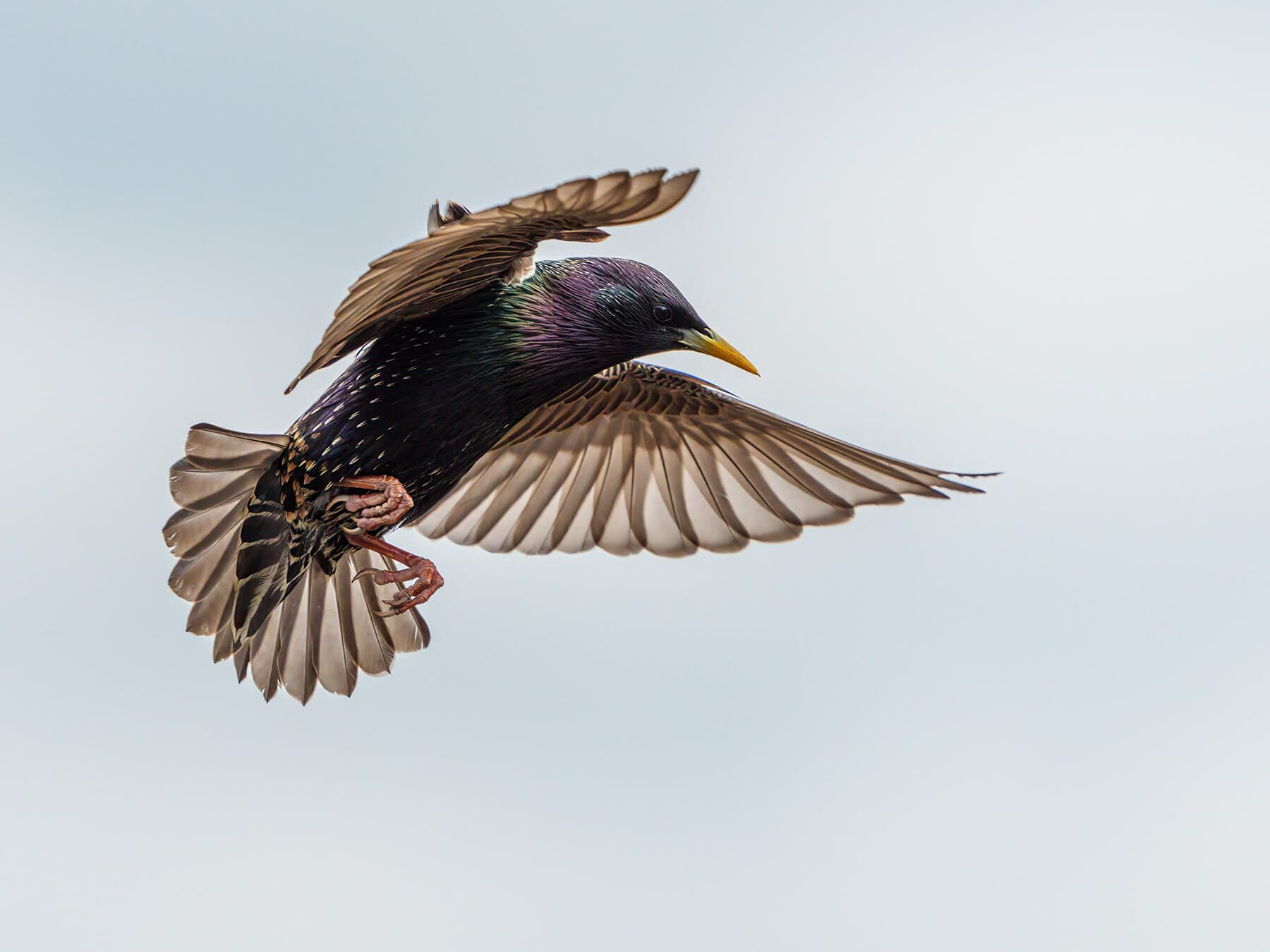 A Starling in flight
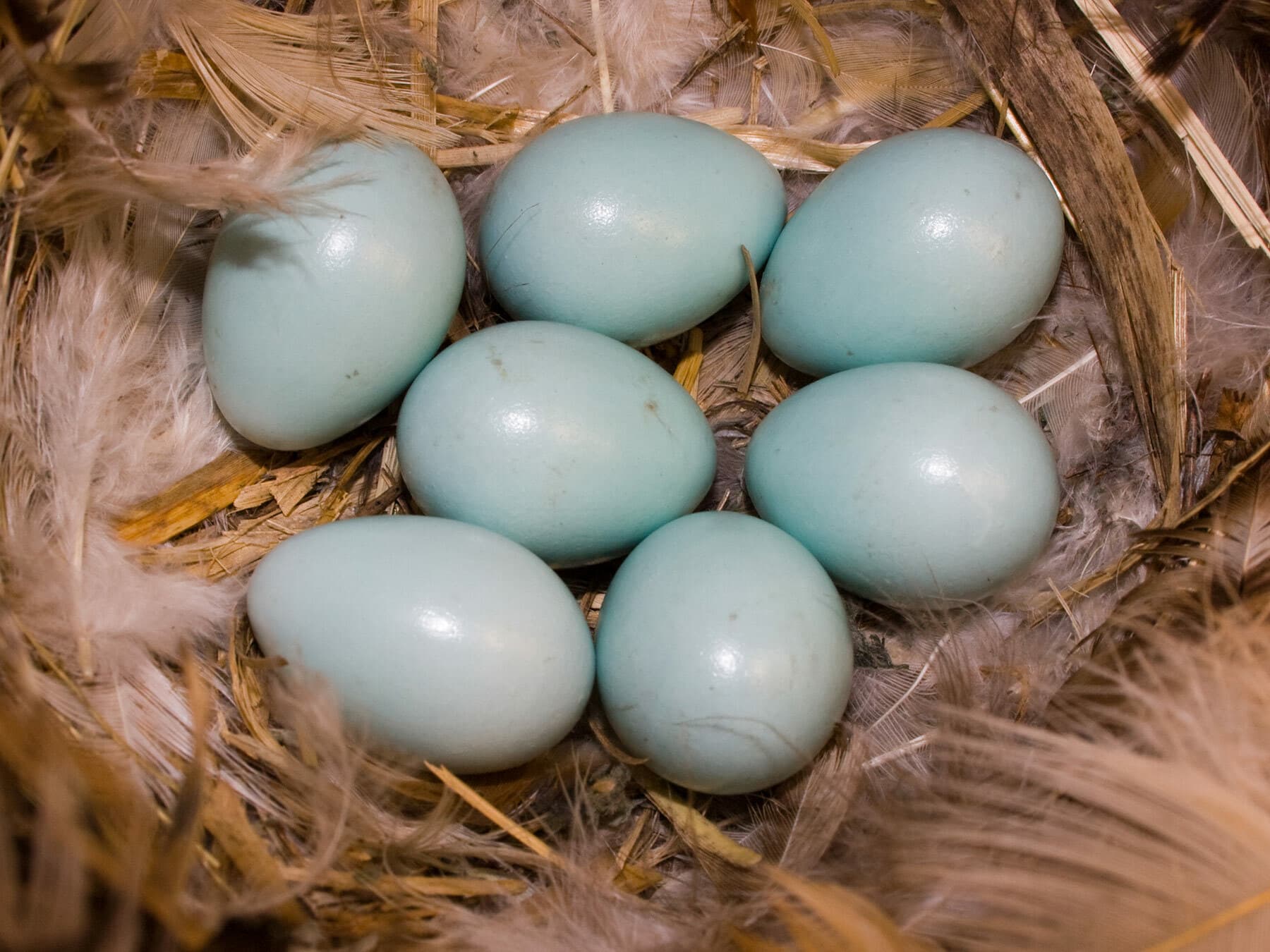 Seven pale blue Starling eggs in a feather-lined nest
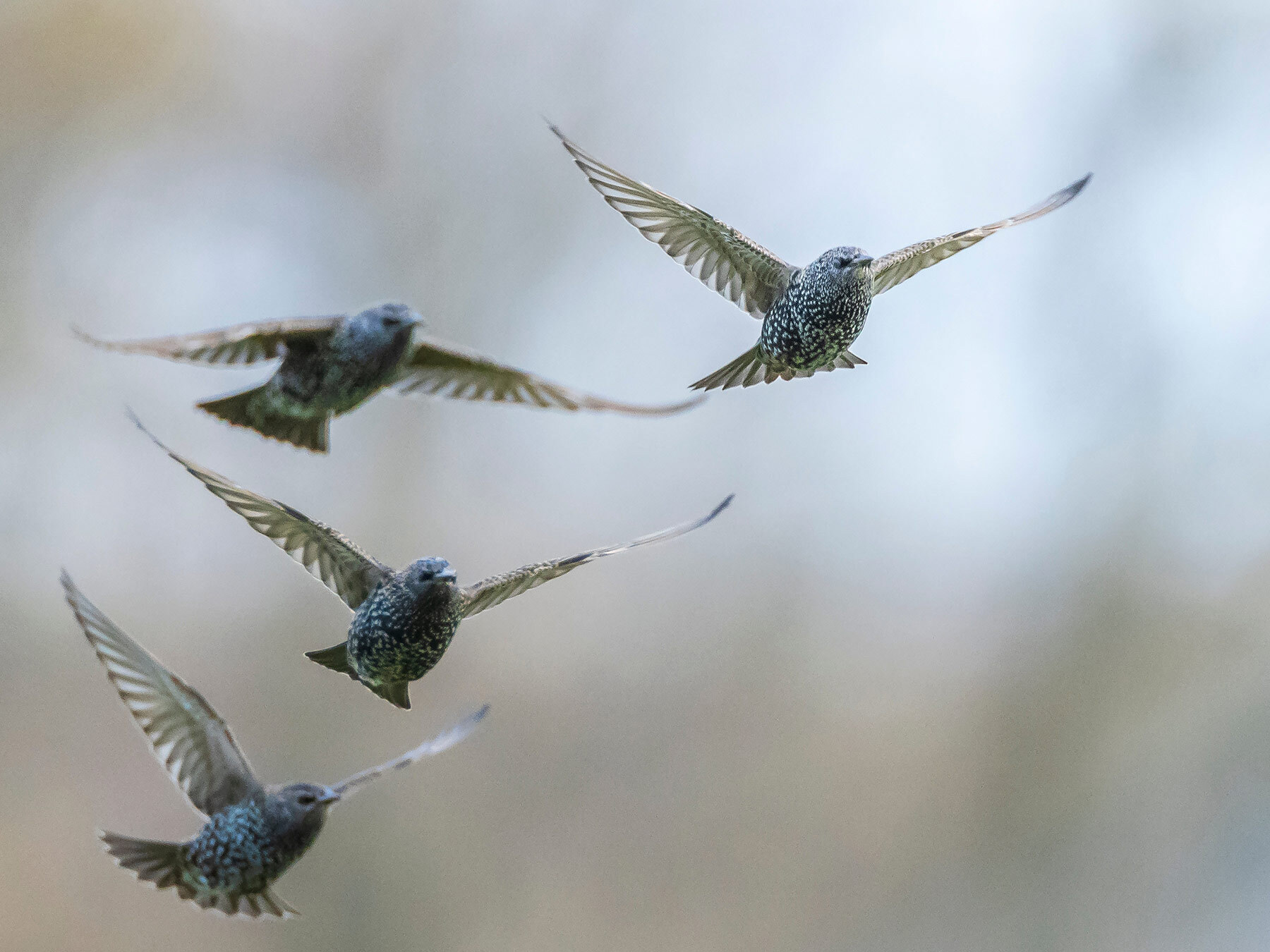
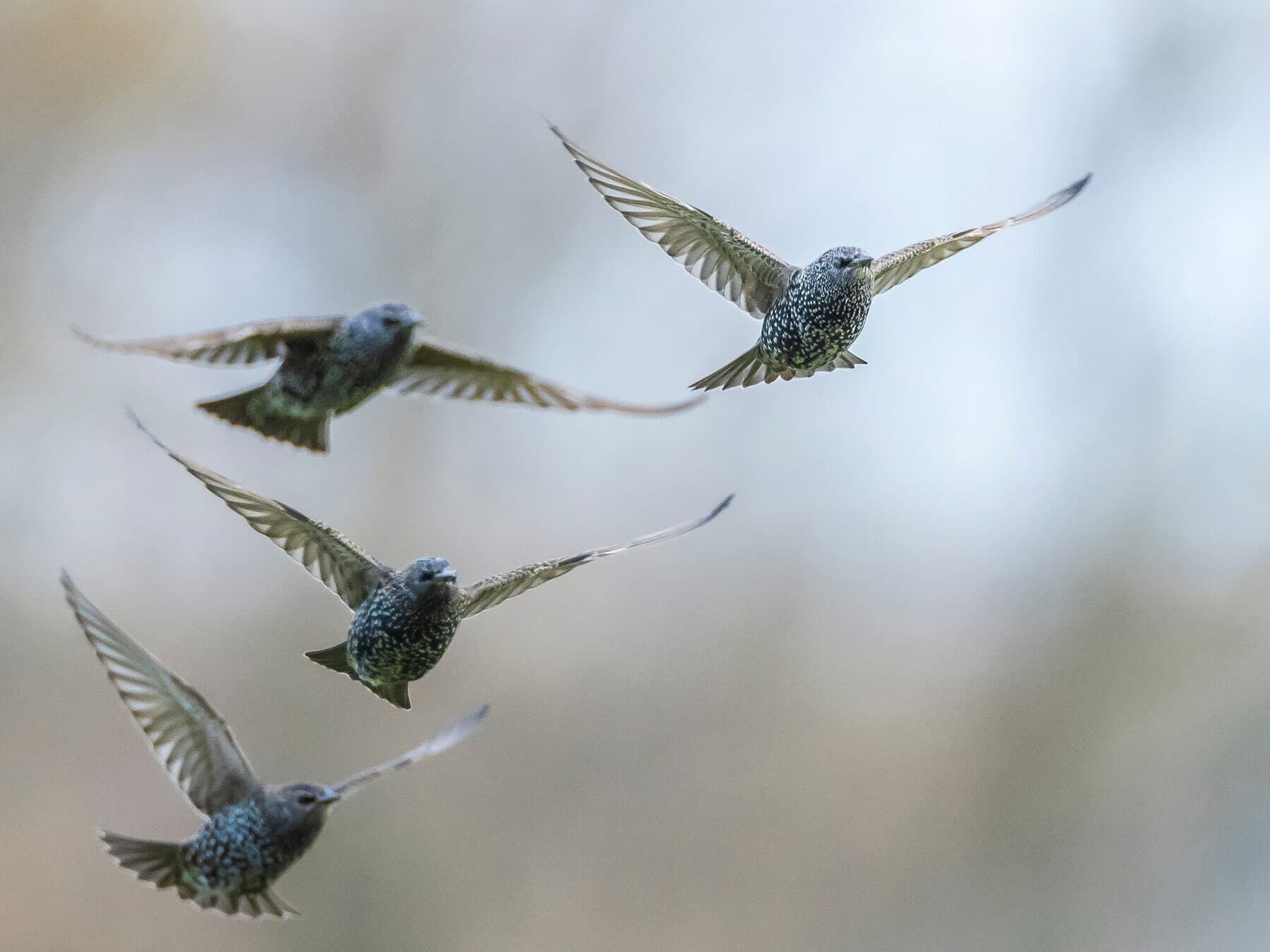 Starlings in flight
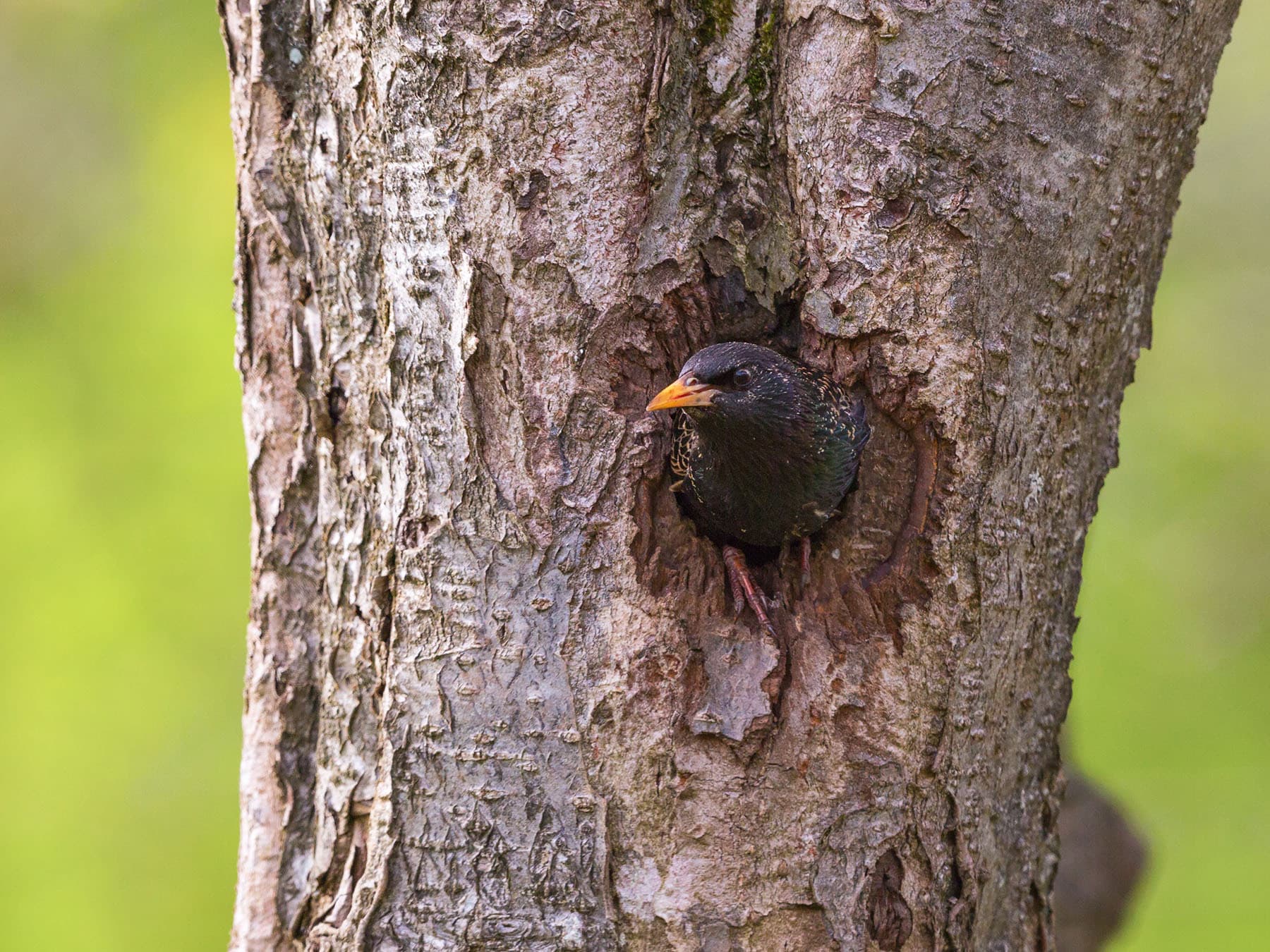 A Starling at a nest hole in a tree
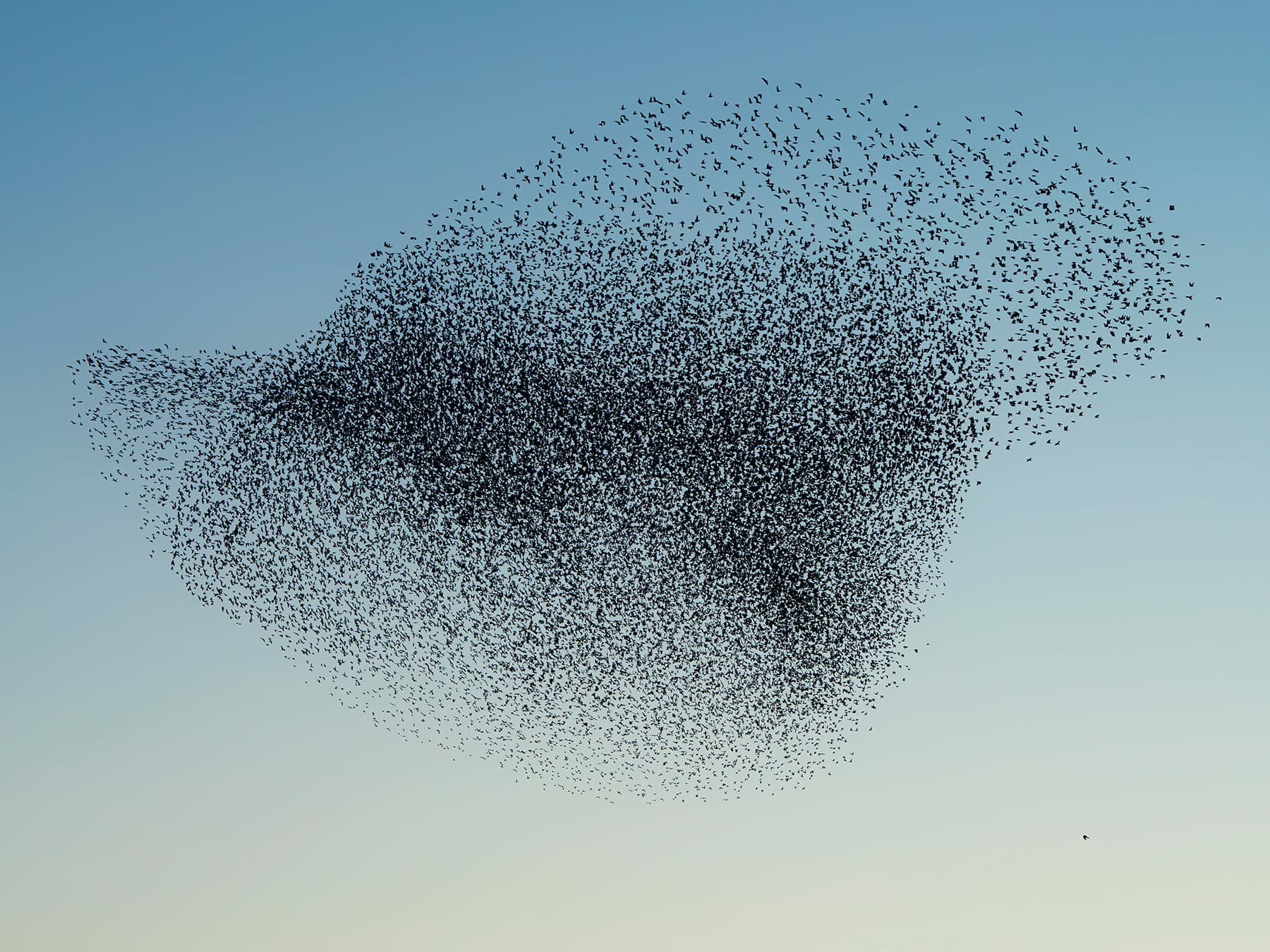 A Starling murmuration
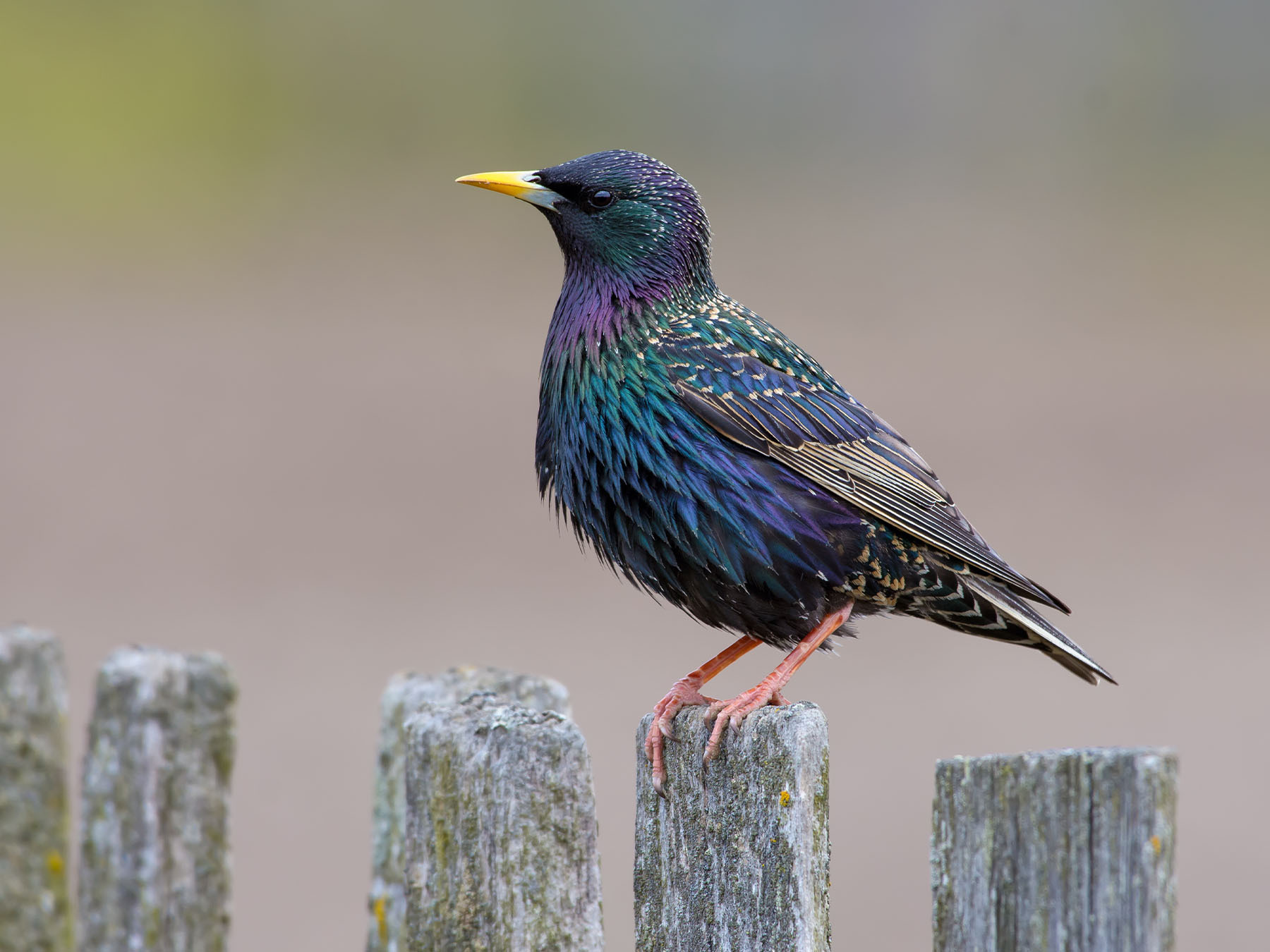
Common Starling guides
4 guidesQuick facts
- Length
- 20.6–23.1 cm
- Wingspan
- 37–42 cm
- Weight
- 73.3–98 g
- Lifespan
- 5 years · oldest recorded 22.9 years · UK record 17 years 7 months · North American record 15 years 3 months
- Family
- Starlings & Mynas
- Migration
- Partial migrant
- Global status (IUCN)
- Least Concern
- Population trend
- Declining in the UK (61% since 1995); also declining in North America
- Also called
- European Starling, Starling
- Scientific name
- Sturnus vulgaris
Questions
9Are Starlings good to have in your garden?
They are noisy and can empty a feeder fast, but they also eat leatherjackets and other grubs from the lawn, and in the UK they are a Red-listed bird in need of help. See conservation.
Are Starlings invasive?
Only where people introduced them: North America, South Africa, Australia and New Zealand. In Britain and the rest of Europe they are native. See are European Starlings invasive?
Are Starlings protected?
In the UK, yes: like all wild birds, Starlings, their eggs and their nests in use are protected by law (in Great Britain the Wildlife and Countryside Act 1981, in Northern Ireland the Wildlife (Northern Ireland) Order 1985). In the US, the Migratory Bird Treaty Act does not cover them.
Are Starlings rare in the UK?
No, they are still common, with about 1.8 million pairs, but numbers have fallen fast and they are Red-listed. See conservation.
Do Starlings mate for life?
No. Most pairs are monogamous, but the pair bond generally lasts for one nesting attempt, and some males have two mates at once.
Where do Starlings sleep at night?
In communal roosts in reedbeds, trees, on piers and buildings. Outside the breeding season some sleep in nest holes or boxes, often in pairs. See roosting.
Are Starlings related to crows?
No. Starlings have a family of their own, the Sturnidae.
When do Starlings get their spots?
After their late-summer moult: the fresh feathers have white and buff tips, which wear away by spring. See how to recognise it.
How big is a Starling?
About 21 cm (8 in) long and 85 g (3 oz): smaller than a Blackbird.
Sources
22- 1BTO. Starling (Sturnus vulgaris). BTO BirdFacts. Accessed 6 October 2026. Source (opens in a new tab)
- 2Cabe, P. R. (2020). European Starling (Sturnus vulgaris), version 1.0. Birds of the World (S. M. Billerman, Editor). Cornell Lab of Ornithology. doi:10.2173/bow.eursta.01 (opens in a new tab)
- 3BTO. Longevity records. BTO Online Ringing Report 2024. Accessed 6 October 2026. Source (opens in a new tab)
- 4Fugate, L. and Miller, J. M. (2021). Shakespeare's Starlings: Literary History and the Fictions of Invasiveness. Environmental Humanities 13(2): 301-322. doi:10.1215/22011919-9320167 (opens in a new tab)
- 5Koenig, W. D. (2003). European Starlings and their effect on native cavity-nesting birds. Conservation Biology 17(4): 1134-1140. doi:10.1046/j.1523-1739.2003.02262.x (opens in a new tab)
- 6U.S. Fish and Wildlife Service (2020). List of Bird Species to Which the Migratory Bird Treaty Act Does Not Apply. Federal Register 85(74): 21262-21264. Accessed 6 October 2026. Source (opens in a new tab)
- 7RSPB. How to help garden birds. Accessed 6 October 2026. Source (opens in a new tab)
- 8RSPB. What to do if birds are nesting in your roof or eaves. Accessed 6 October 2026. Source (opens in a new tab)
- 9Fransson, T., Kolehmainen, T., Moss, D. and Robinson, R. (2023). EURING list of longevity records for European birds (1 September 2023). Accessed 6 October 2026. Source (opens in a new tab)
- 10USGS Bird Banding Laboratory. Longevity records of North American birds. Accessed 6 October 2026. Source (opens in a new tab)
- 11RSPB. Starling. Accessed 6 October 2026. Source (opens in a new tab)
- 12RSPB. Blackbird. Accessed 6 October 2026. Source (opens in a new tab)
- 13National Audubon Society. Common Grackle. Audubon Guide to North American Birds. Accessed 6 October 2026. Source (opens in a new tab)
- 14National Audubon Society (text: Kaufman, Lives of North American Birds). European Starling. Audubon Guide to North American Birds. Accessed 6 October 2026. Source (opens in a new tab)
- 15Cornell Lab of Ornithology. European Starling (overview and life history). All About Birds. Accessed 6 October 2026. Source (opens in a new tab)
- 16RSPB. How and what to feed your garden birds. Accessed 6 October 2026. Source (opens in a new tab)
- 17Cornell Lab of Ornithology. My feeders are being overrun with starlings and blackbirds. What can I do?. All About Birds. Accessed 6 October 2026. Source (opens in a new tab)
- 18UK Parliament (1981). Wildlife and Countryside Act 1981, section 1. Accessed 6 October 2026. Source (opens in a new tab)
- 19Stanbury, A. et al. (2021). The status of our bird populations: the fifth Birds of Conservation Concern in the United Kingdom, Channel Islands and Isle of Man and second IUCN Red List assessment of extinction risk for Great Britain. British Birds 114: 723-747. Accessed 6 October 2026. Source (opens in a new tab)
- 20RSPB. Build a Starling nestbox. Accessed 6 October 2026. Source (opens in a new tab)
- 21UK Government (1985). The Wildlife (Northern Ireland) Order 1985, article 4. Accessed 7 October 2026. Source (opens in a new tab)
- 22BTO. Nest boxes for birds. Accessed 6 October 2026. Source (opens in a new tab)

Checked by
Nathan Cope, founder and editor
Nathan founded Birdfact and leads its writers and contributors in the UK, the US and Canada. He has watched and studied birds for more than ten years, and checks every article and species guide before it’s published.