


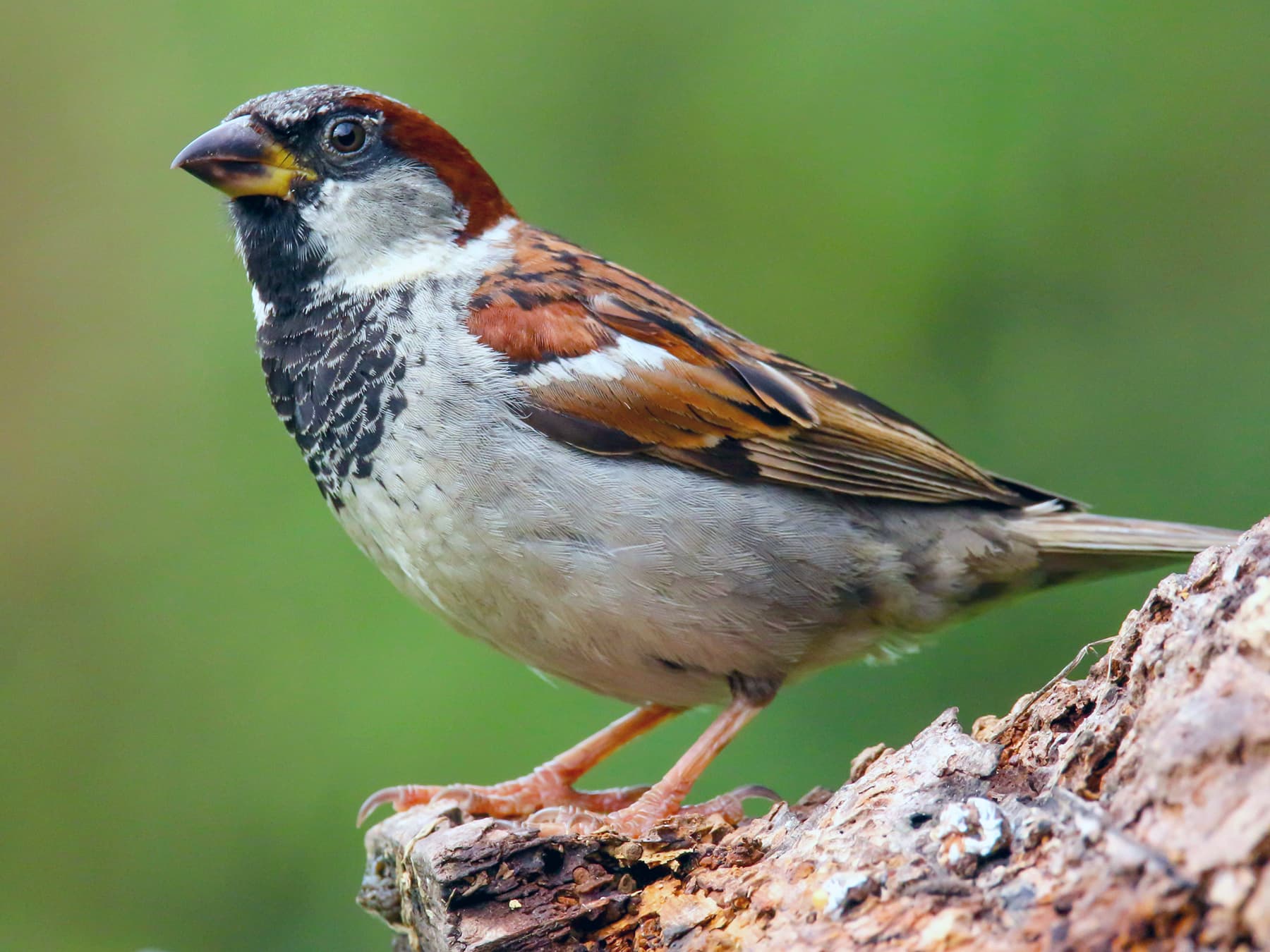
House Sparrow
English Sparrow, Domestic Sparrow · Passer domesticus
By the Birdfact teamChecked by Nathan Cope
See it in 3D
3 plumages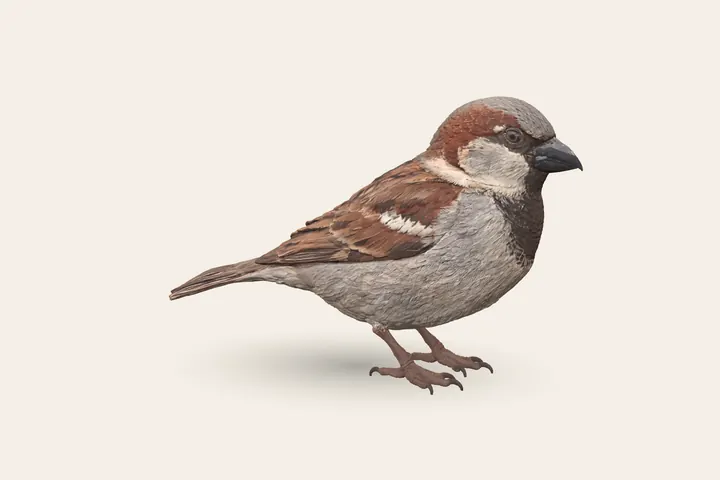 3D model
A House Sparrow is 14–17 cm (5.5–6.5 in) long, bill to tail.
3D model · Male · Length 14–17 cm (5.5–6.5 in) · How we make our birds · Report a problem
© 2026 NC Digital Limited (Birdfact). All rights reserved. This 3D model may be viewed on this page and shared by link only. Downloading, extracting, copying or reusing it, or using it to train machine-learning models, is not permitted without our written permission. Using our models
On this page16 sections
How to recognise it
A stocky little bird, 14 to 17 cm (5.5 to 6.7 in) long and about 27 g (1 oz), about the size of a Chaffinch.1 It has a full chest, a big rounded head, a short tail and a thick, stout bill made for seeds.2
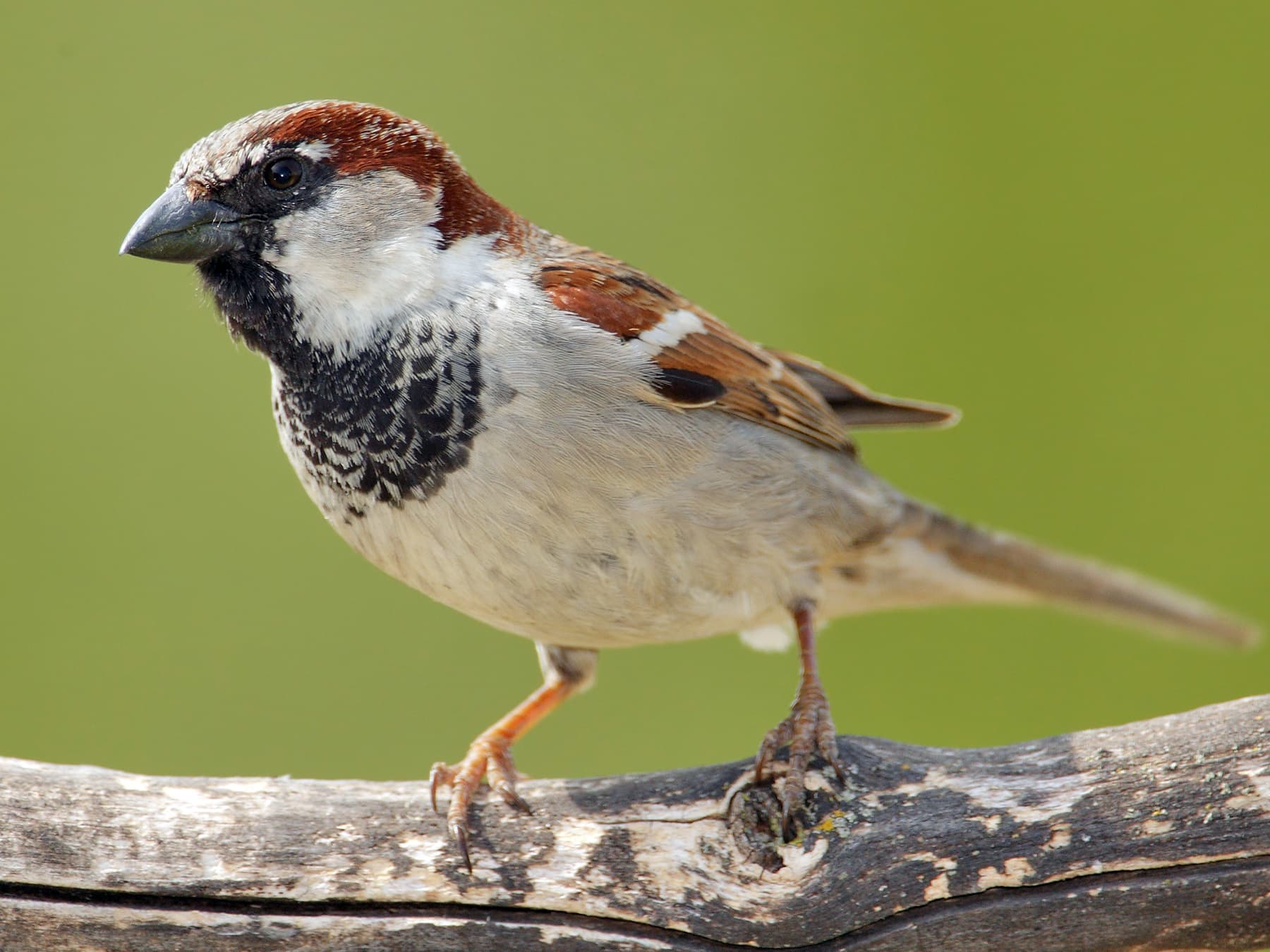
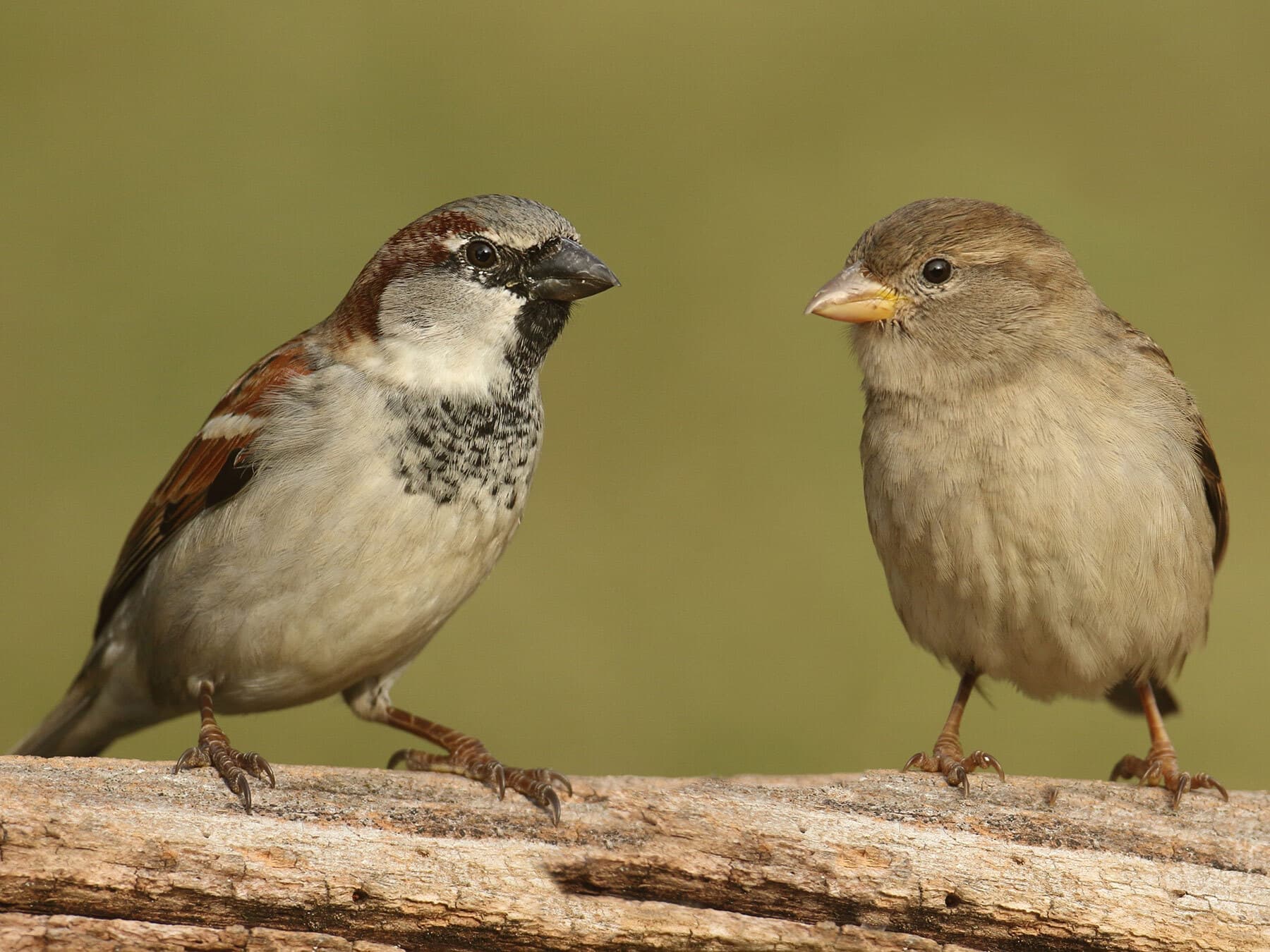
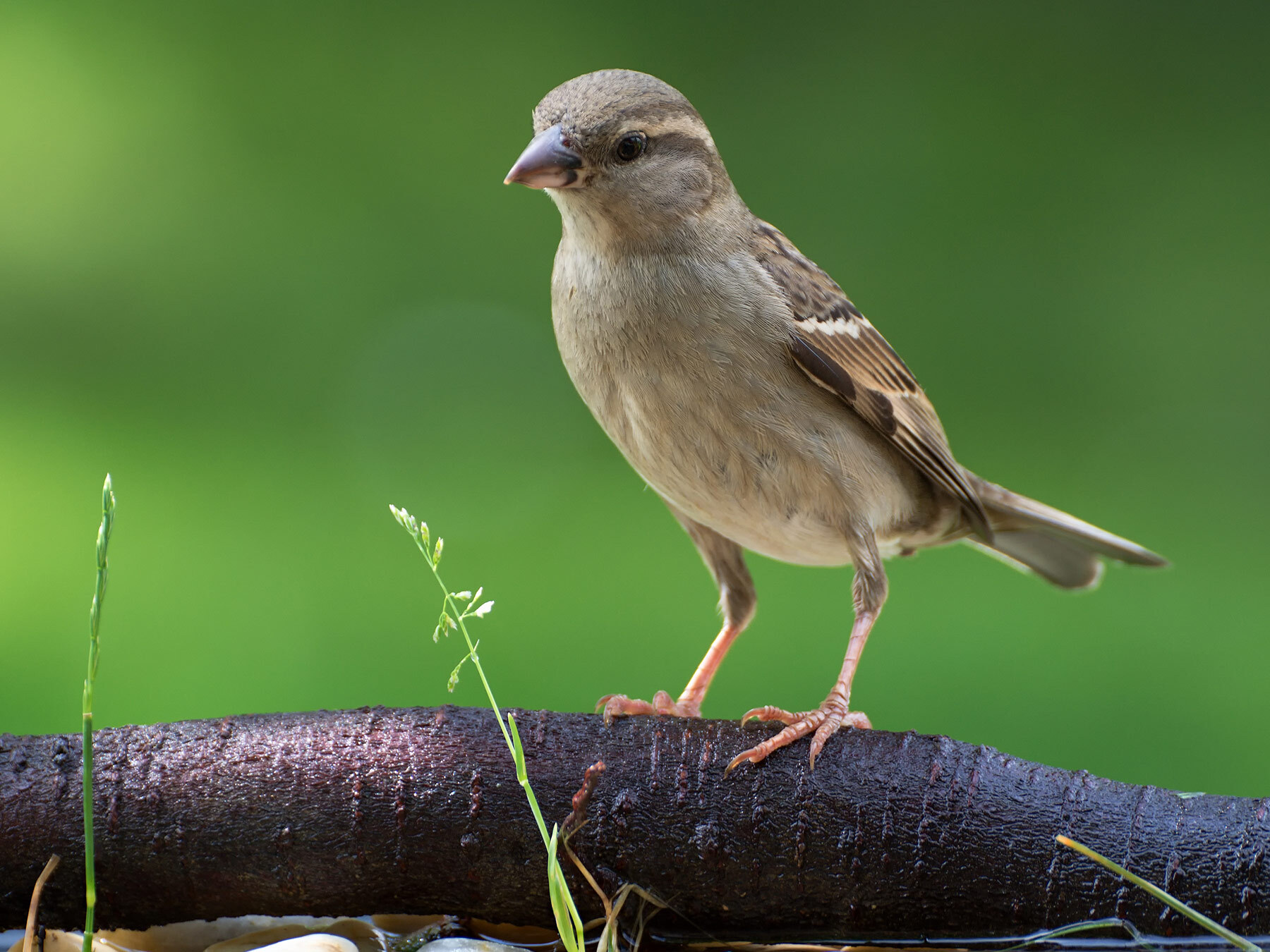
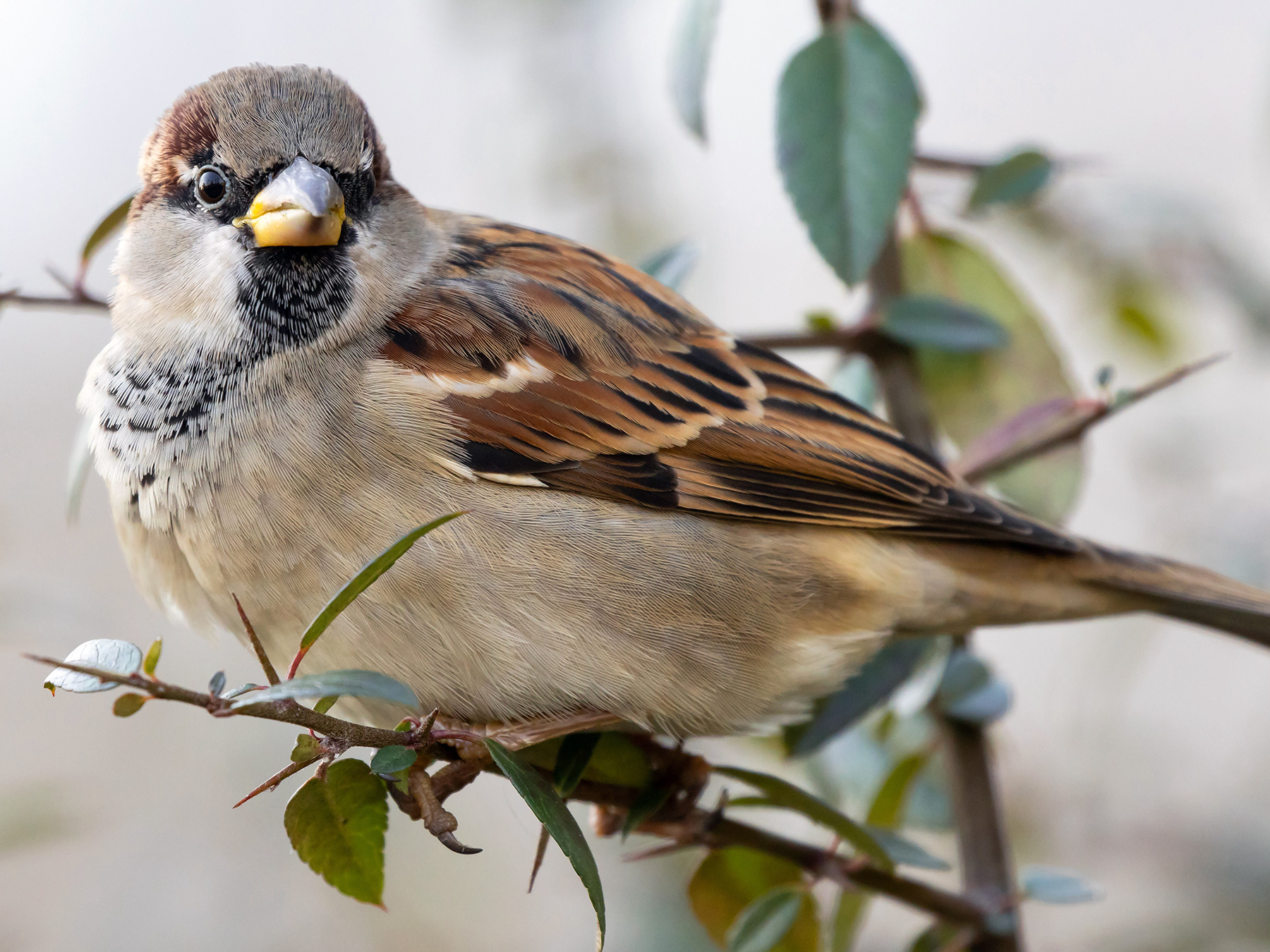
The male is the one to learn. He has a grey crown, framed by chestnut that runs from behind the eye round the sides and back of the neck; pale grey cheeks; and a black bib on the throat and upper breast. His back is warm brown streaked with black, and one white bar crosses the chestnut shoulder. In the breeding season his bill is black.3 The female is plainer: brown above with a striped back, plain grey-brown below, and a pale buff stripe behind the eye.
Town birds often look dull and grubby, while country birds are crisper and more contrasting.
Male, female and young
Adults are easy to sex. Only the male has the grey cap, the chestnut and the black bib. In autumn and winter his bib is partly hidden by pale feather tips and his bill turns yellowish; through the spring the tips wear away and the bib shows solid black again by the breeding season.
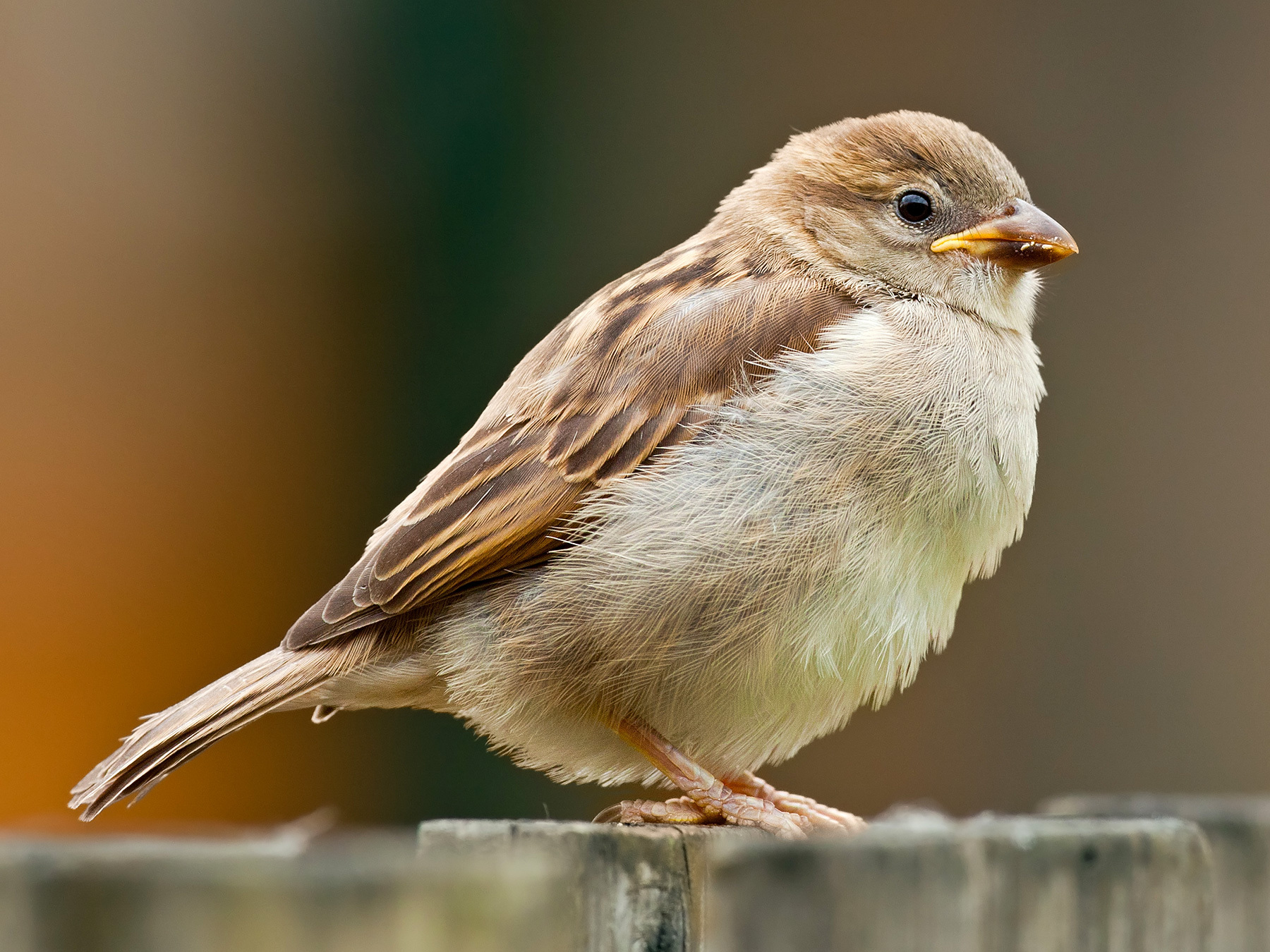
Young birds look like females, a little buffier, and recently fledged ones show a yellow gape at the base of the bill. Young males often show a hint of a greyish bib. More: male and female House Sparrows.
Identification: Tree Sparrow, Dunnock and House Finch
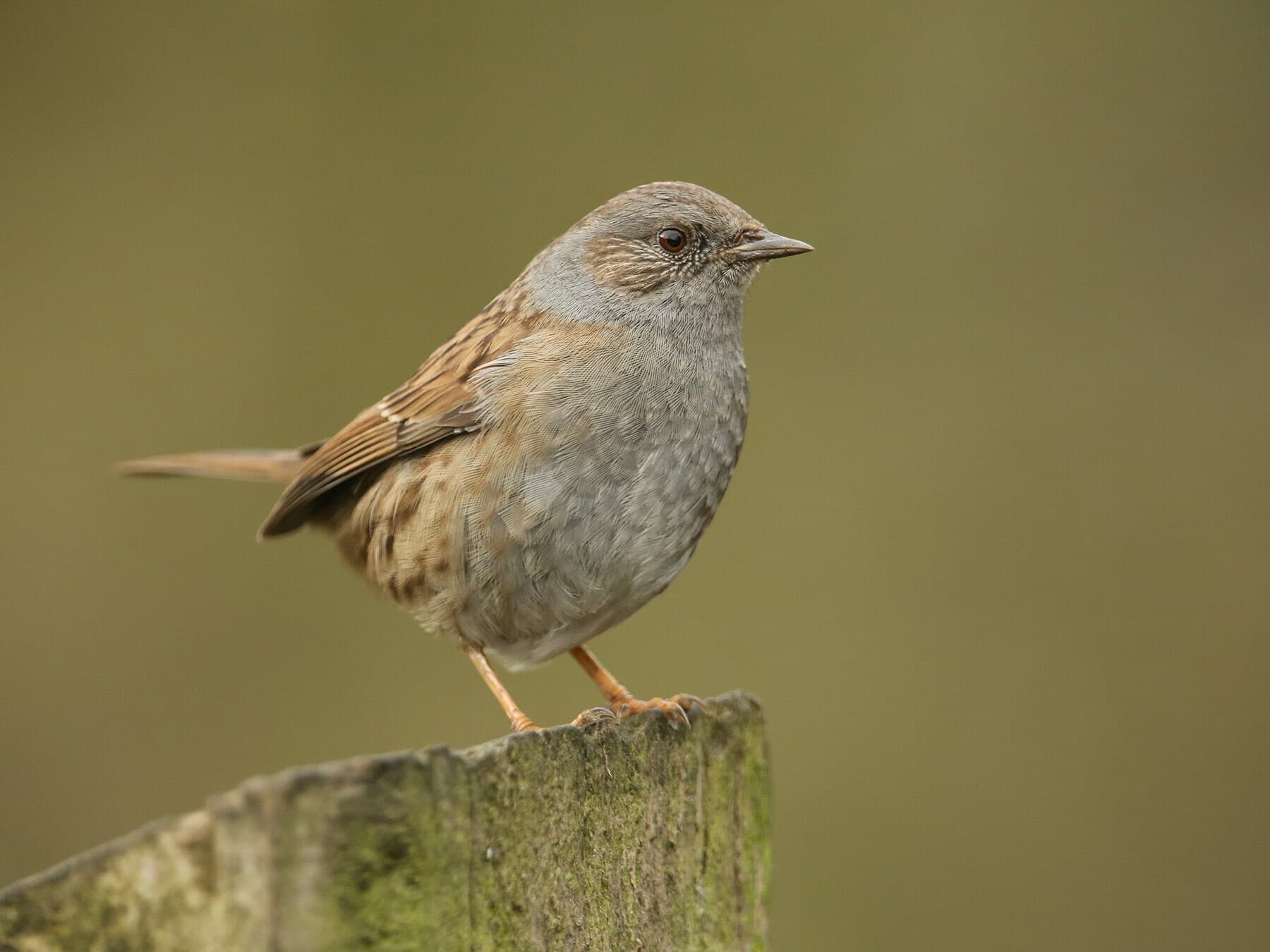
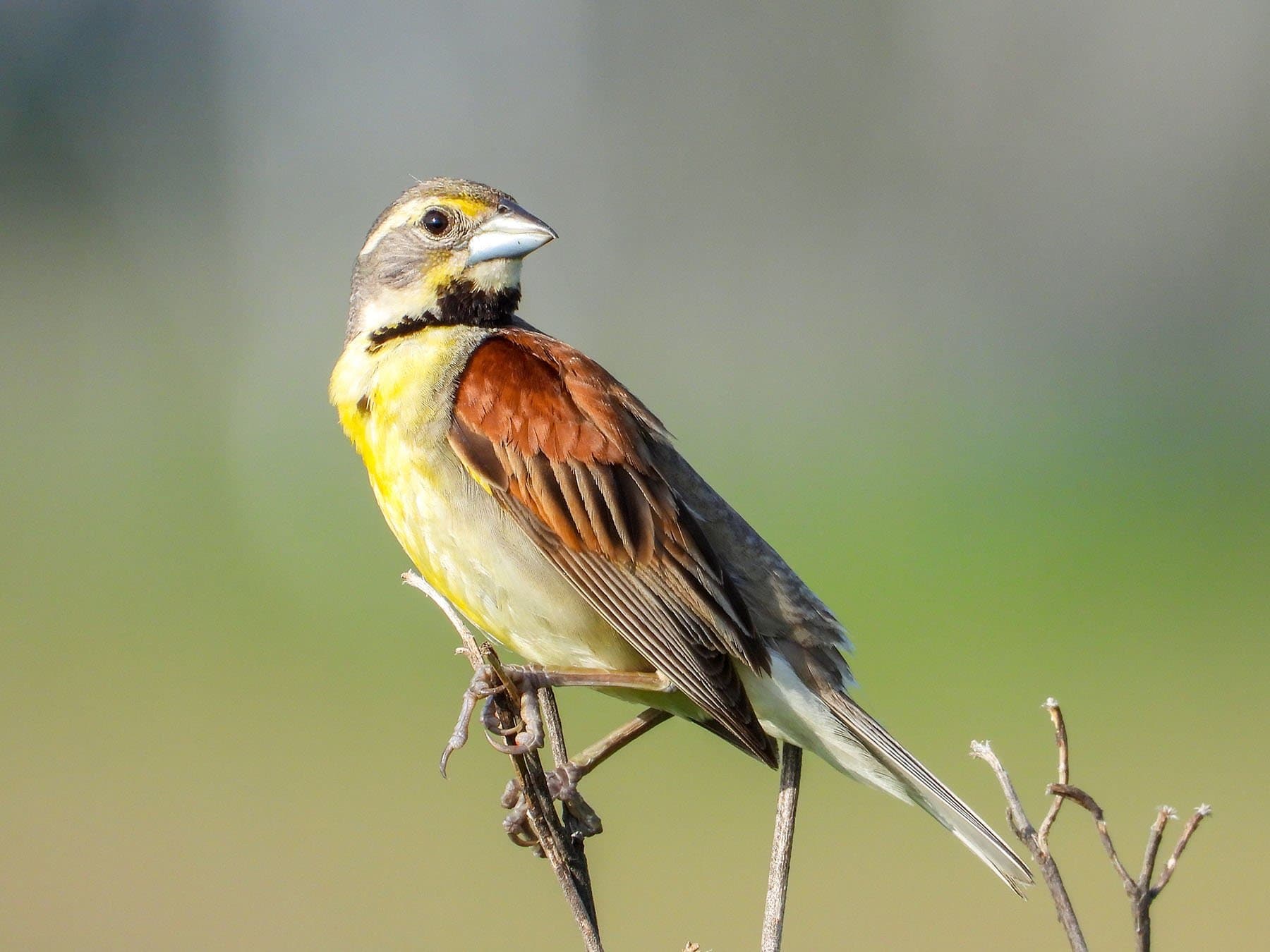
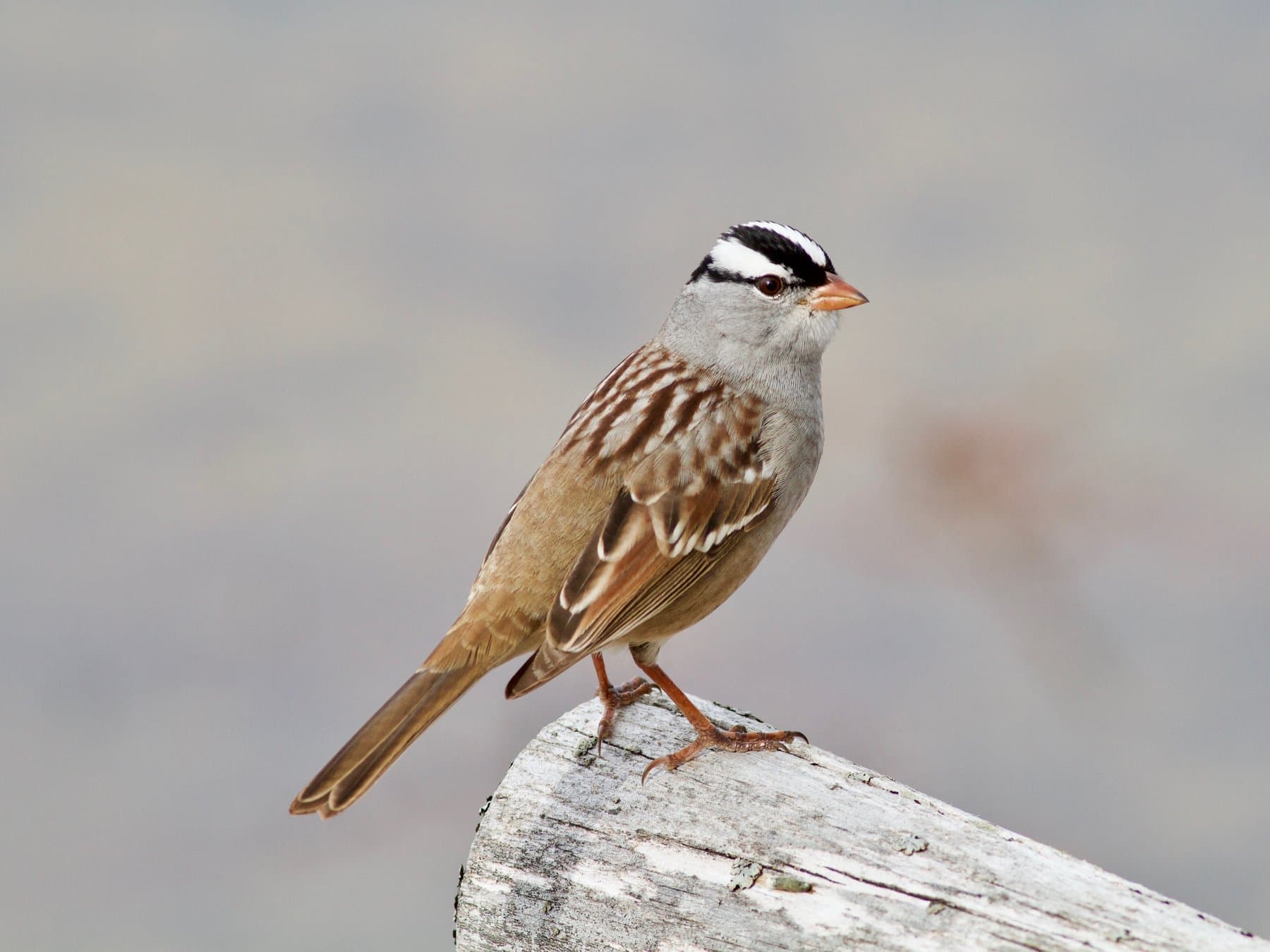
In Britain the other sparrow is the Tree Sparrow. Both sexes have an all-chestnut cap and a black spot on a white cheek, which no House Sparrow shows; it is smaller, with a small bib, and rarely comes into town gardens. The Dunnock, the old "hedge sparrow", is not a sparrow at all: look for its thin, pointed bill and grey head and breast, and its habit of creeping about alone or in pairs.
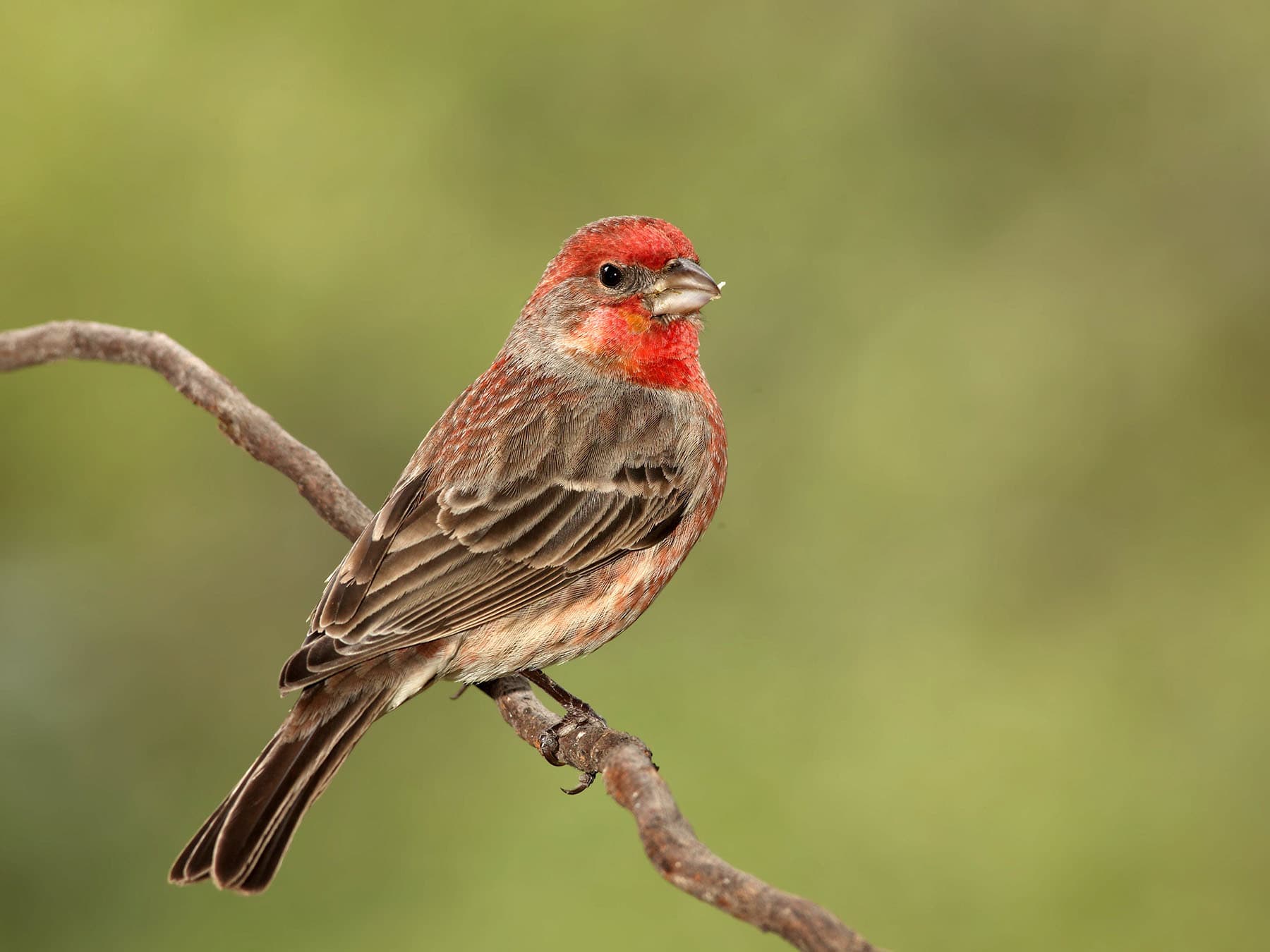
In North America the usual mix-up is the House Finch. The male finch is rosy red on the face and breast; the female is grey-brown with thick, blurry streaks below and a plain face, where a female House Sparrow is unstreaked below and has the pale stripe behind the eye.4 More: House Sparrow vs House Finch. North America's native sparrows, such as the Song Sparrow, are not related: they belong to a different family.
Its size
Adults- Length
- 14–17 cm
- Wingspan
- 19–25.5 cm
- Weight
- 24.2–30.7 g
Its song and calls
The sound of a House Sparrow is the cheep: a loud, simple cheep or chirrup, repeated over and over. That is the song too, given mainly by males near their nest to attract a mate. They also give a scolding chur, sometimes run into a chur-tit-tit-tit, when squabbling or alarmed.
In spring, groups call together from deep inside hedges and bushes, a cheerful chirping chorus. They cheep all year, most in spring, less on cold, wet winter days, and they can fall quiet in August. A male has up to four types of cheep and usually favours one, and close neighbours rarely favour the same one.3 More, with five recordings: House Sparrow song and calls.
- Song0:00 / 0:41
Recorded in Pays de la Loire, France · June 2026
- Call0:00 / 0:35
Recorded in Gelderland, Netherlands · March 2018
When and where to see it
OctoberHere all year
Most recorded in October
- 1. Down5.6%
- 2. South Ayrshire4.8%
- 3. Blaenau Gwent3.9%
- 4. Cardiff3.0%
- 5. Shetland Islands2.9%
Each dot is a county, state or province: the bigger and darker, the larger the bird’s share of that place’s bird records that month. Grey dots: no regular records. The ringed point is the centre of the bird’s records this month; the arrow shows how it moved since last month, and the dashed loop its path through the year. “Arrivals” colours places where it becomes regular this month (orange) or is in its last regular month (grey). GBIF eBird Observation Dataset, 2019–2024. Map data: Natural Earth, US Census Bureau; place centres © OpenStreetMap contributors.
In your area
See when the House Sparrow is recorded in your county, state or province.
How often the House Sparrow turns up in the UK, Ireland, the United States and Canada through the year, from birdwatchers' records.
United Kingdom
Resident · all year · most records in June
Ireland
Resident · all year · most records in June
United States
Resident · all year · most records in February
Canada
Resident · all year · most records in February
Show as a table
| Month | United Kingdom | Ireland | United States | Canada |
|---|---|---|---|---|
| January | 1.4% (regular) | 1.2% (regular) | 1.3% (regular) | 2.1% (regular) |
| February | 1.5% (regular) | 1.4% (regular) | 1.5% (regular) | 2.5% (regular) |
| March | 1.5% (regular) | 1.5% (regular) | 1.4% (regular) | 1.9% (regular) |
| April | 1.4% (regular) | 1.7% (regular) | 1.2% (regular) | 1.3% (regular) |
| May | 1.6% (regular) | 1.8% (regular) | 1.1% (regular) | 0.91% (regular) |
| June | 1.9% (regular) | 1.9% (regular) | 1.3% (regular) | 0.91% (regular) |
| July | 1.9% (regular) | 1.7% (regular) | 1.5% (regular) | 1.1% (regular) |
| August | 1.4% (regular) | 1.1% (regular) | 1.2% (regular) | 0.94% (regular) |
| September | 1.2% (regular) | 0.93% (regular) | 0.92% (regular) | 0.74% (regular) |
| October | 1.2% (regular) | 1.1% (regular) | 1.1% (regular) | 1.1% (regular) |
| November | 1.2% (regular) | 1.2% (regular) | 1.2% (regular) | 1.6% (regular) |
| December | 1.3% (regular) | 1.3% (regular) | 1.3% (regular) | 2.0% (regular) |
Recorded regularly in
Worldwide: recorded regularly in 189 countries
Countries where it was recorded in at least 3 of the 6 years 2019–2024. Linked countries have their own bird list.
Europe (48)
- Åland Islands
- Albania
- Andorra
- Austria
- Belarus
- Belgium
- Bosnia & Herzegovina
- Bulgaria
- Croatia
- Czechia
- Denmark
- Estonia
- Faroe Islands
- Finland
- France
- Germany
- Gibraltar
- Greece
- Guernsey
- Hungary
- Iceland
- Ireland
- Isle of Man
- Italy
- Jersey
- Kosovo
- Latvia
- Liechtenstein
- Lithuania
- Luxembourg
- Moldova
- Monaco
- Montenegro
- Netherlands
- North Macedonia
- Norway
- Poland
- Portugal
- Romania
- Russia
- Serbia
- Slovakia
- Slovenia
- Spain
- Sweden
- Switzerland
- Ukraine
- United Kingdom
Africa (45)
- Algeria
- Angola
- Botswana
- Burundi
- Cape Verde
- Chad
- Comoros
- Congo - Brazzaville
- Congo - Kinshasa
- Côte d’Ivoire
- Djibouti
- Egypt
- Eritrea
- Eswatini
- Gabon
- Gambia
- Ghana
- Guinea-Bissau
- Kenya
- Lesotho
- Liberia
- Madagascar
- Malawi
- Mauritania
- Mauritius
- Mayotte
- Morocco
- Mozambique
- Namibia
- Nigeria
- Réunion
- Rwanda
- São Tomé & Príncipe
- Senegal
- Seychelles
- Somalia
- South Africa
- South Sudan
- Sudan
- Tanzania
- Tunisia
- Uganda
- Western Sahara
- Zambia
- Zimbabwe
Asia (43)
- Afghanistan
- Armenia
- Azerbaijan
- Bahrain
- Bangladesh
- Bhutan
- Cambodia
- China
- Cyprus
- Georgia
- Hong Kong SAR China
- India
- Indonesia
- Iran
- Iraq
- Israel
- Jordan
- Kazakhstan
- Kuwait
- Kyrgyzstan
- Laos
- Lebanon
- Malaysia
- Maldives
- Mongolia
- Myanmar (Burma)
- Nepal
- Oman
- Pakistan
- Palestinian Territories
- Qatar
- Saudi Arabia
- Singapore
- Sri Lanka
- Syria
- Taiwan
- Tajikistan
- Thailand
- Turkey
- United Arab Emirates
- Uzbekistan
- Vietnam
- Yemen
North America (33)
- Anguilla
- Antigua & Barbuda
- Aruba
- Bahamas
- Belize
- Bermuda
- British Virgin Islands
- Canada
- Caribbean Netherlands
- Cayman Islands
- Costa Rica
- Cuba
- Curaçao
- Dominican Republic
- El Salvador
- Guadeloupe
- Guatemala
- Haiti
- Honduras
- Jamaica
- Mexico
- Nicaragua
- Panama
- Puerto Rico
- Sint Maarten
- St Kitts & Nevis
- St Lucia
- St Martin
- St Pierre & Miquelon
- St Vincent & the Grenadines
- Turks & Caicos Islands
- United States
- US Virgin Islands
South America (14)
Oceania (6)
- Australia
- New Caledonia
- New Zealand
- Norfolk Island
- Papua New Guinea
- Vanuatu
Data: EOD – eBird Observation Dataset (Cornell Lab of Ornithology), accessed via GBIF.org, CC BY 4.0. Records from 2019–2024, aggregated and filtered by Birdfact. How these lists are made
All year, wherever people live. In Britain they are commonest in towns and villages, and also live on farms, especially around farmyards. They occur in about 90% of the 10-km squares of Britain and Ireland, missing only from the exposed uplands of northern Scotland, though they are thin on the ground in south-east England and East Anglia.5
Their native range runs across Europe and Asia from the British Isles and Scandinavia to North Africa, Arabia, India and Burma. People have taken them to North and South America, southern Africa, Australia and New Zealand. They avoid big woods, forests, open grassland and desert: where there are few people, there are few House Sparrows.
Spotting tips
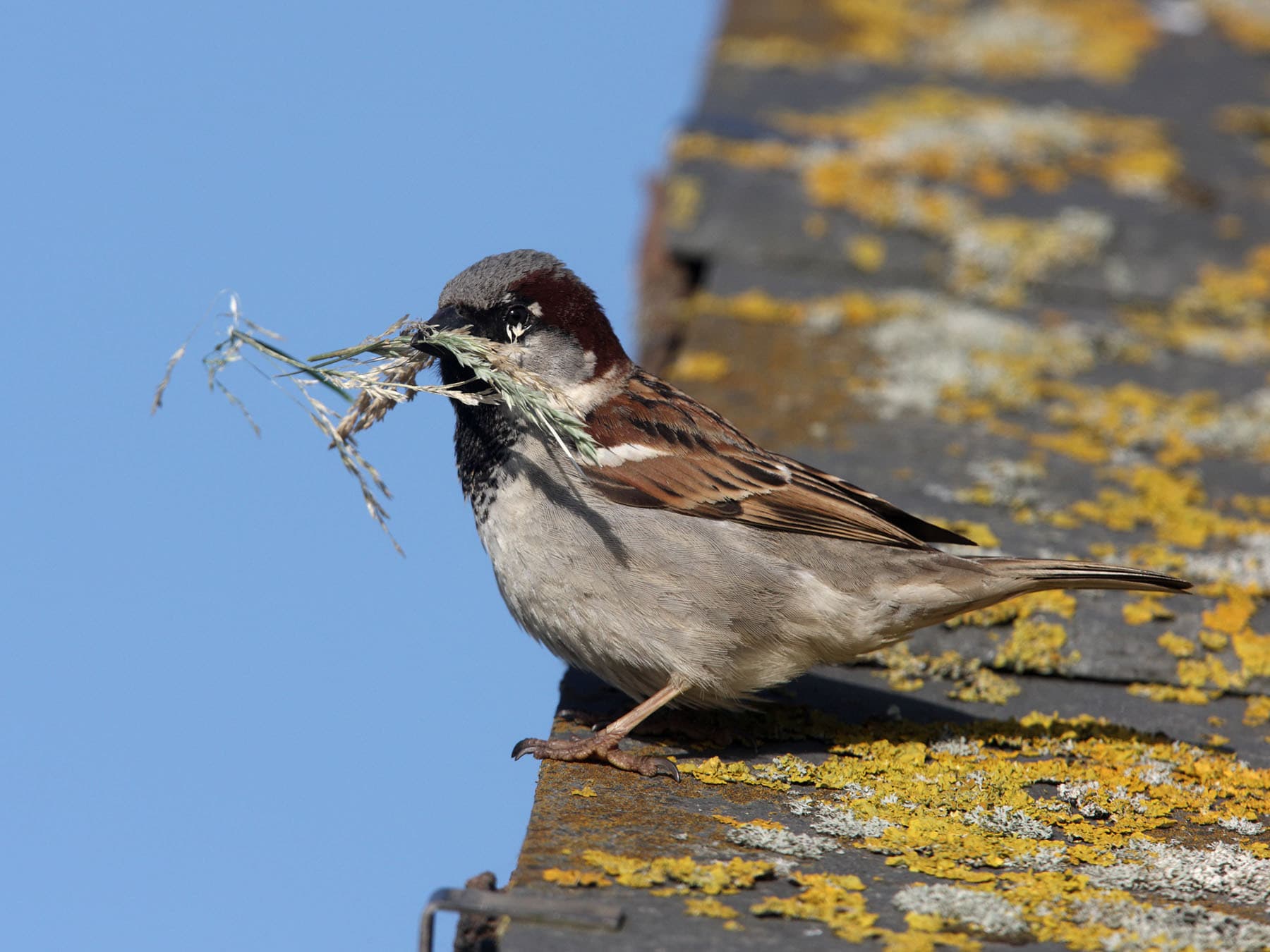
Listen for cheeping from roofs, gutters and thick hedges, then look for a group. In spring, watch holes in walls and roofs for birds carrying grass. On dry days look for them dust-bathing in bare soil.
Do House Sparrows migrate?
No. House Sparrows stay put. Of more than 90,000 records of ringed House Sparrows found again, the BTO lists just four that had crossed the sea: two to France, one to Belgium and one to an oil platform in the Norwegian Sea. The longest move within Britain was 658 km (409 miles), from Oxford to Moray.6 Once settled, adults stay mainly within 1 to 2 km (about a mile) of their colony; it is mainly young birds that move, dispersing from where they hatched in late summer and autumn.
The exceptions are in Central Asia, where two races do migrate: one breeds in Turkestan and winters in Pakistan and north-west India, and one breeds high in the Himalaya and moves lower for the winter. In North America House Sparrows do not migrate.
If your sparrows seem to vanish in late summer, they have probably moved to better feeding. After nesting, flocks of young birds and then adults move to ripening fields and other rich feeding places, and the adults moult in late summer and autumn.
Where they live in North America
House Sparrows are not native to North America. The introduction that took hold is usually traced to 100 birds bought in England and released in Brooklyn, New York, in 1851 and 1852; more releases followed, from San Francisco to Salt Lake City. From about 50 pairs in 1853 they spread to an estimated 150 million birds by 1943. Today they live year-round from southern Canada through the United States and most of Mexico, always close to buildings.
The House Sparrow is not protected by the US Migratory Bird Treaty Act, which does not cover its family, the Old World sparrows.7 It competes with native hole-nesters such as the Eastern Bluebird and Purple Martin for nest sites. In the east, numbers peaked around 1900 and have declined since. More: are House Sparrows invasive?
What it eats
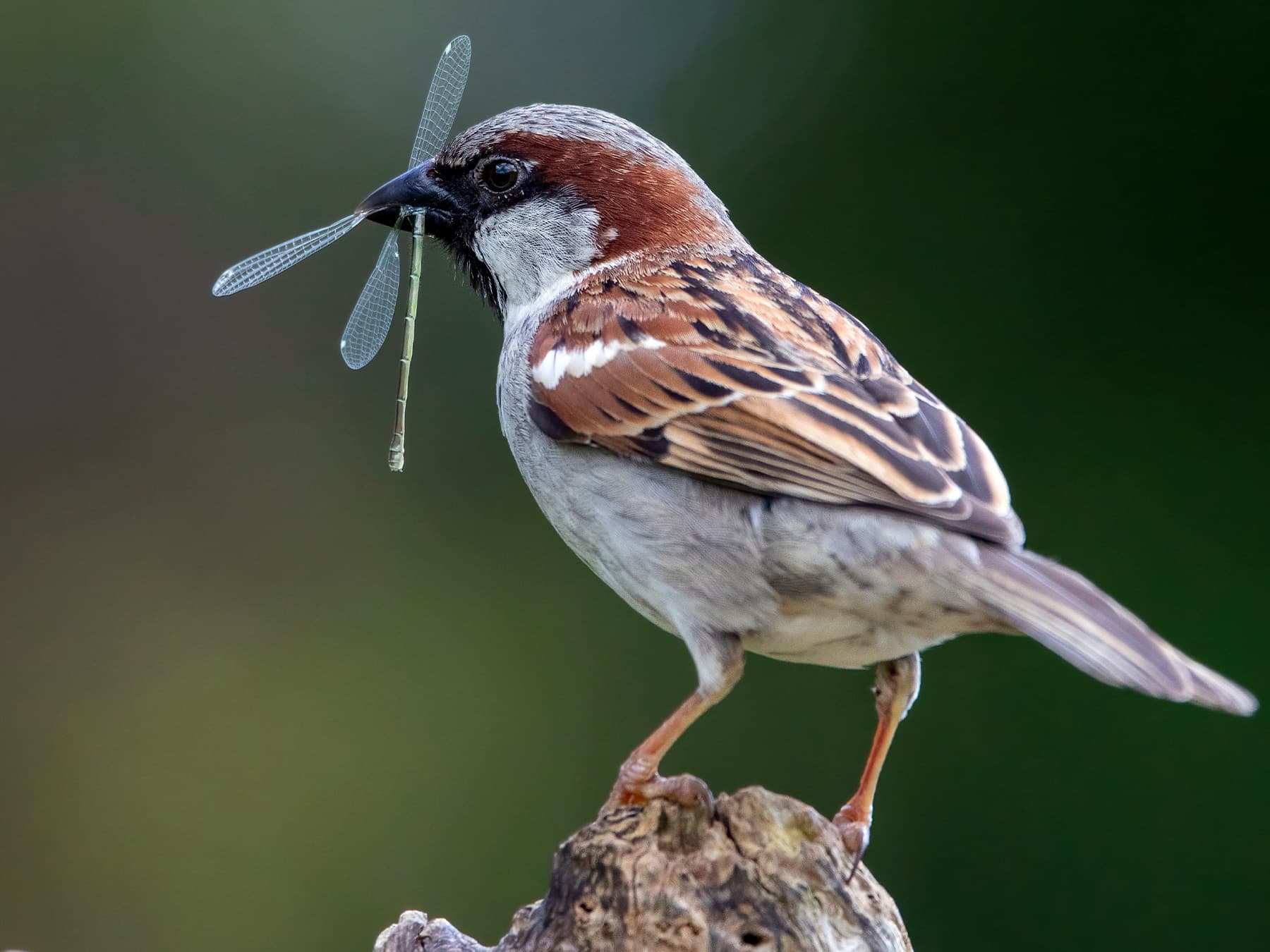
Mostly seeds and grain: weed and grass seeds, spilt cereal, birdseed and scraps. In the breeding season they add insects, and their chicks are raised mostly on insects and other small invertebrates. They are complete opportunists, taking fruit, buds, crumbs, insects drawn to lights at night and moths flushed by lawn mowers.
More: what sparrows eat.
Feeding them in your garden
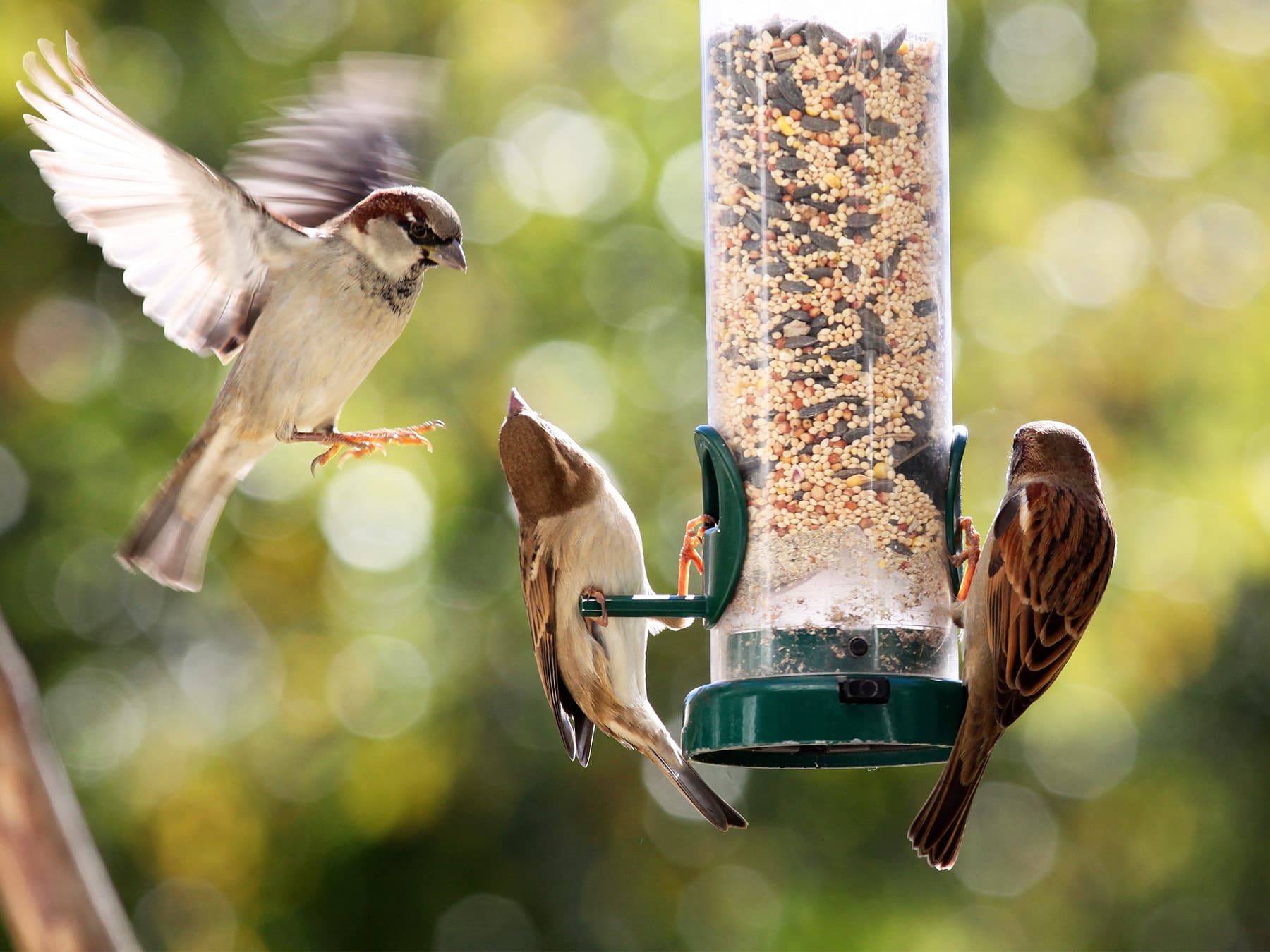
The RSPB says House Sparrows particularly love fat balls and sunflower hearts. Offer sunflower hearts in a hanging seed feeder and fat balls in a hanging mesh feeder (never a mesh bag). Since July 2026 the RSPB advises hanging feeders only, not bird tables, trays or window feeders, where disease spreads most easily, and a pause on seed and peanuts from 1 May to 31 October, when small amounts of fat balls, suet or mealworms are fine. Clean feeders weekly.8
Nesting and breeding
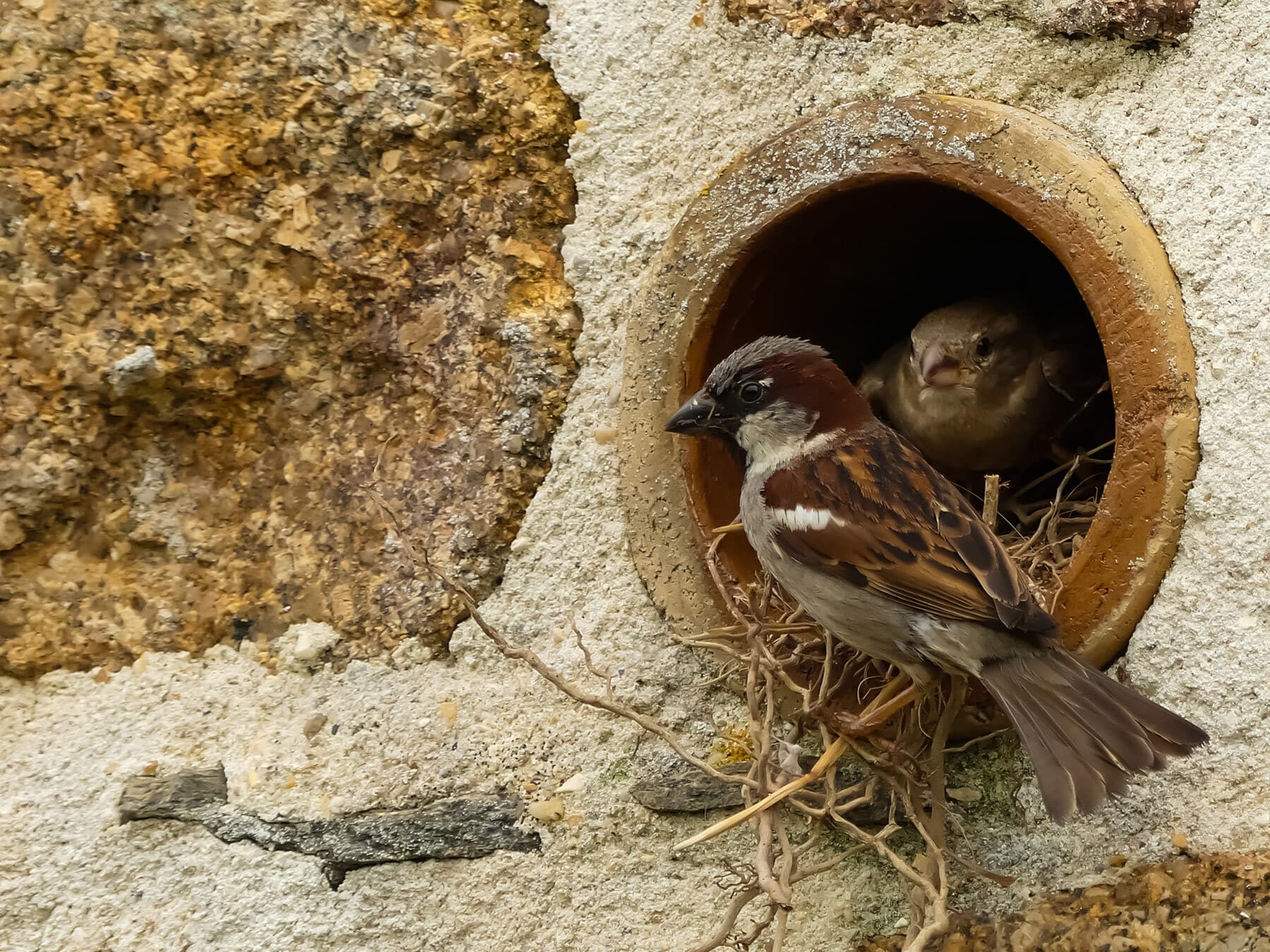
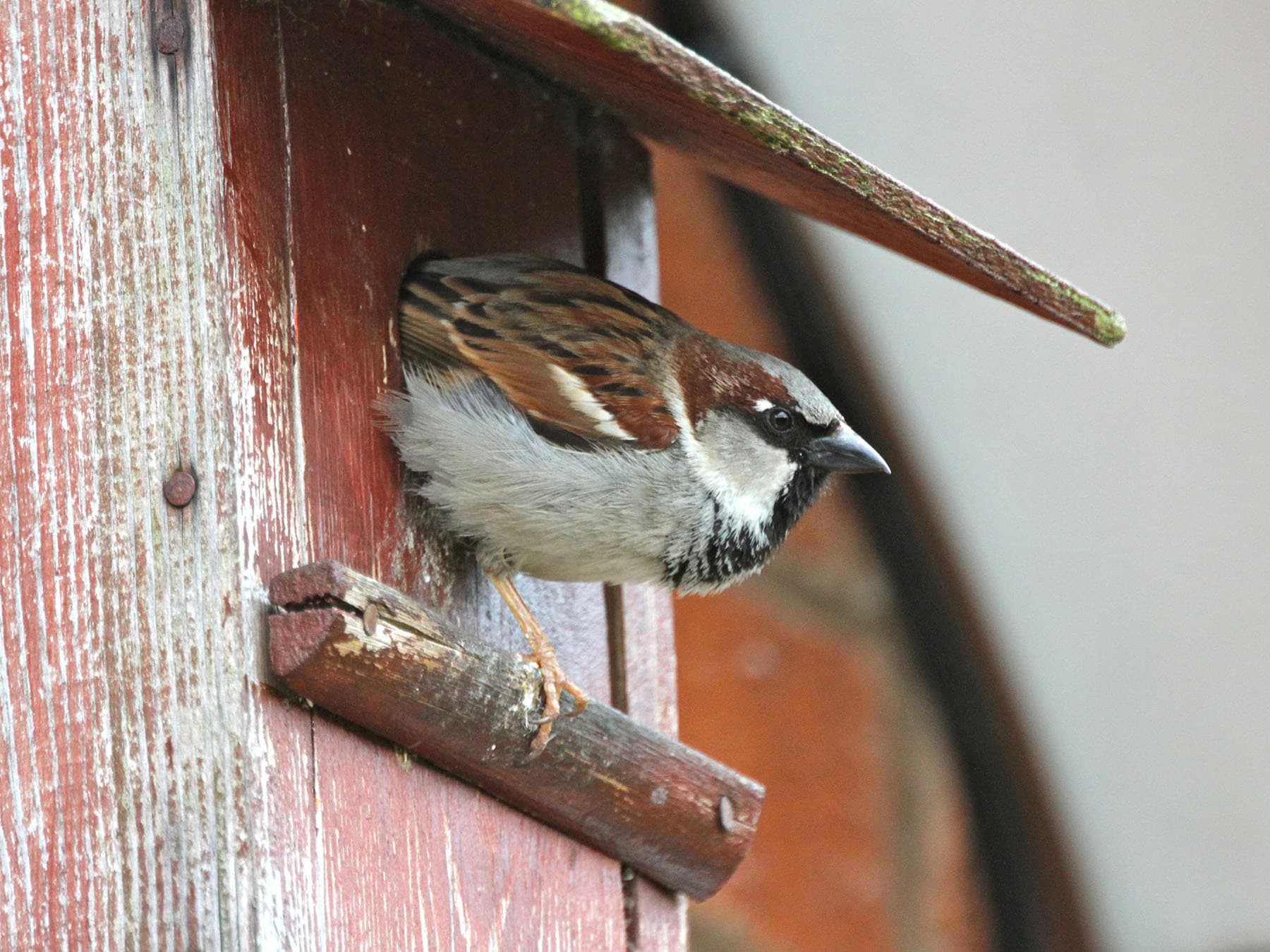
House Sparrows nest in holes: holes and crevices in buildings and walls, gutters and nest boxes, and sometimes in hedges or creepers. They often nest close together in small colonies. The nest is an untidy mass of dry grass lined with feathers; out in a hedge or tree it becomes a domed ball with a side entrance.
In Britain the first clutch is laid on average on 14 May, anywhere from late March to July, and pairs raise two or three broods. A clutch is usually 4 or 5 eggs, incubated for 12 to 15 days, and the chicks leave the nest at about 15 days old.5 More: House Sparrow nesting and baby sparrows.
Nest boxes
A small hole-fronted box with a 32 mm (1.25 in) hole suits them, the size the BTO recommends for all small hole-nesting birds.9 Because they nest in colonies, the RSPB suggests putting up several boxes, ideally with your neighbours along a street. Keep sparrow boxes away from boxes for other birds, and especially from House Martin colonies.
Behaviour
Sociable and busy. House Sparrows hop rather than walk, feed in groups on the ground, and bathe together, in water or in dust: a bird shuffles into dry soil, throws it over its fluffed-up body and leaves a little hollow, which it defends against others. Their wings are short and they are not strong fliers, so they stay close to cover, ready to dash in if a predator appears.
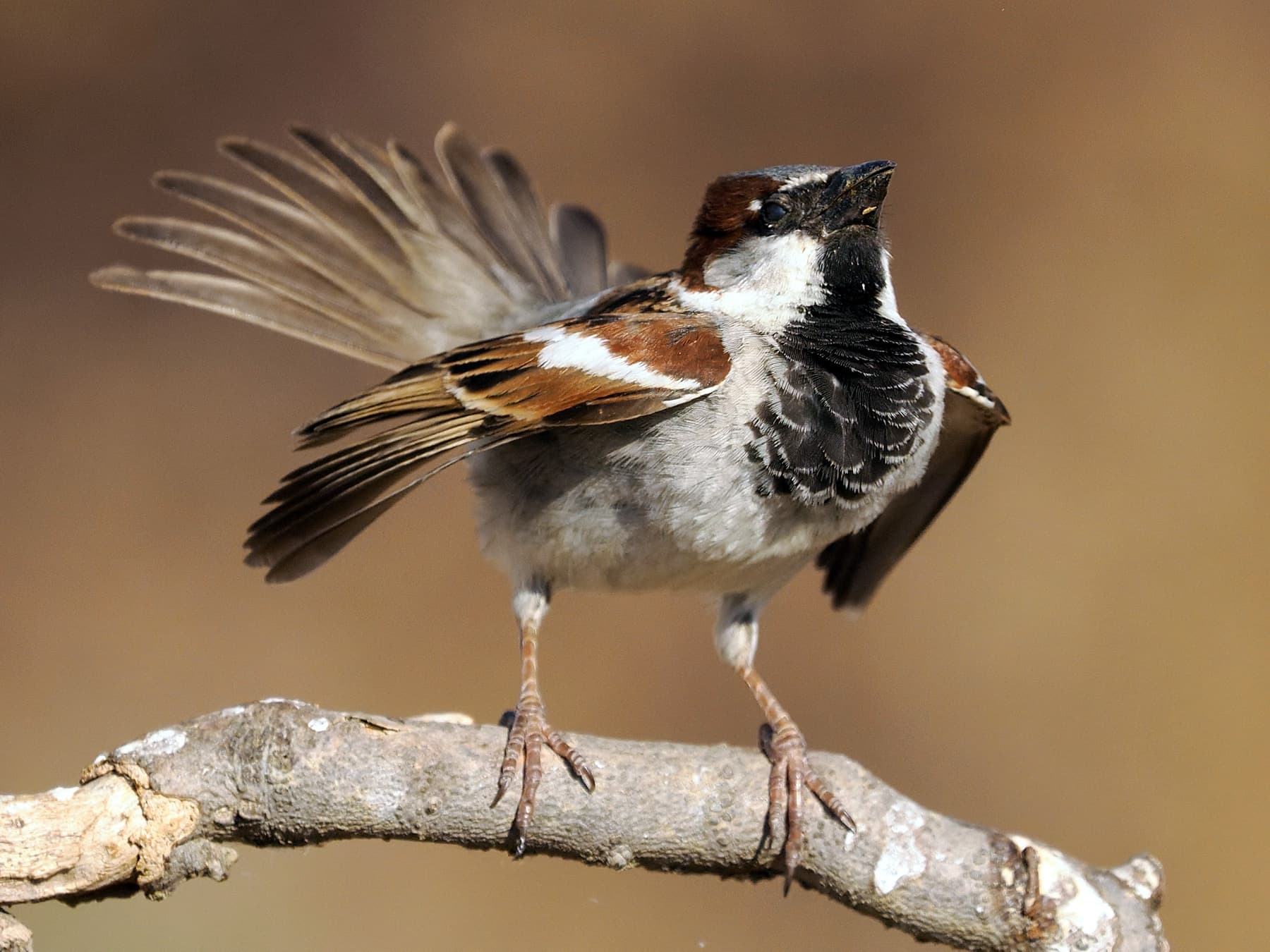
In spring a male courts by puffing out his chest, drooping his wings, raising his tail and hopping and bowing in front of a female, and other males often join in. Males with bigger bibs tend to rank higher in the flock. At dusk flocks often gather to chirp together before going to roost in dense bushes or trees.
Lifespan and predators
About 3 years on average for a bird that reaches breeding age; most breed when one year old. About 57% of adults survive from one year to the next, and about 49% of young birds survive their first year.5
Lifespan records
The oldest House Sparrow on the BTO's list for Britain and Ireland was ringed as a young male at Bedwas, Caerphilly, in 2008 and was still alive there in 2022, 13 years, 8 months and 22 days later.10 The oldest ringed House Sparrow in Europe, in Denmark, lived 18 years and 10 months11, and the oldest in North America, in Texas, 15 years and 9 months.12
Predators
Cats and Sparrowhawks catch House Sparrows and are often blamed for their decline, but the BTO finds no evidence in national data that rising Sparrowhawk numbers caused it. In North America hawks, falcons, owls and shrikes all take House Sparrows.
Conservation
Red-listed in the UK since 2002. There are about 5.3 million pairs (2016), and House Sparrows are still the commonest bird in the RSPB's Big Garden Birdwatch, top for 21 years. But they are far fewer than they were: the RSPB estimates a fall of 71% between 1977 and 2008. The UK population dropped by a further 18% between 1995 and 2024, though numbers have risen in Scotland and Wales.5
The loss has been worst in towns, in the south and east, and in London, where suburban House Sparrows fell by 71% from 1995.13 Worldwide the species is of Least Concern.
Conservation: why they have declined
There is no single cause, and farmland and town birds seem to have declined for different reasons. On farms, the main driver was lower survival, especially of young birds, as winter food ran short: less spilt grain, tidier farmyards and fewer winter stubbles.5
In towns the evidence is less clear. Chicks may go short of insects: in a London experiment, daily mealworms increased the number of young birds out of the nest by 62%, though the number of breeding males barely changed.14 A review suggests they may have been lost mainly from better-off areas, perhaps as gardens filled with ornamental shrubs and were paved for parking. And avian malaria may play a part: in the London colonies studied it infected 74% of House Sparrows on average, and birds with heavier infections survived less well.
What helps, says the BTO: native shrubs, natural gardens and green space rather than paving, nest boxes, winter food, and clean feeders.
Similar birds
Often mistaken for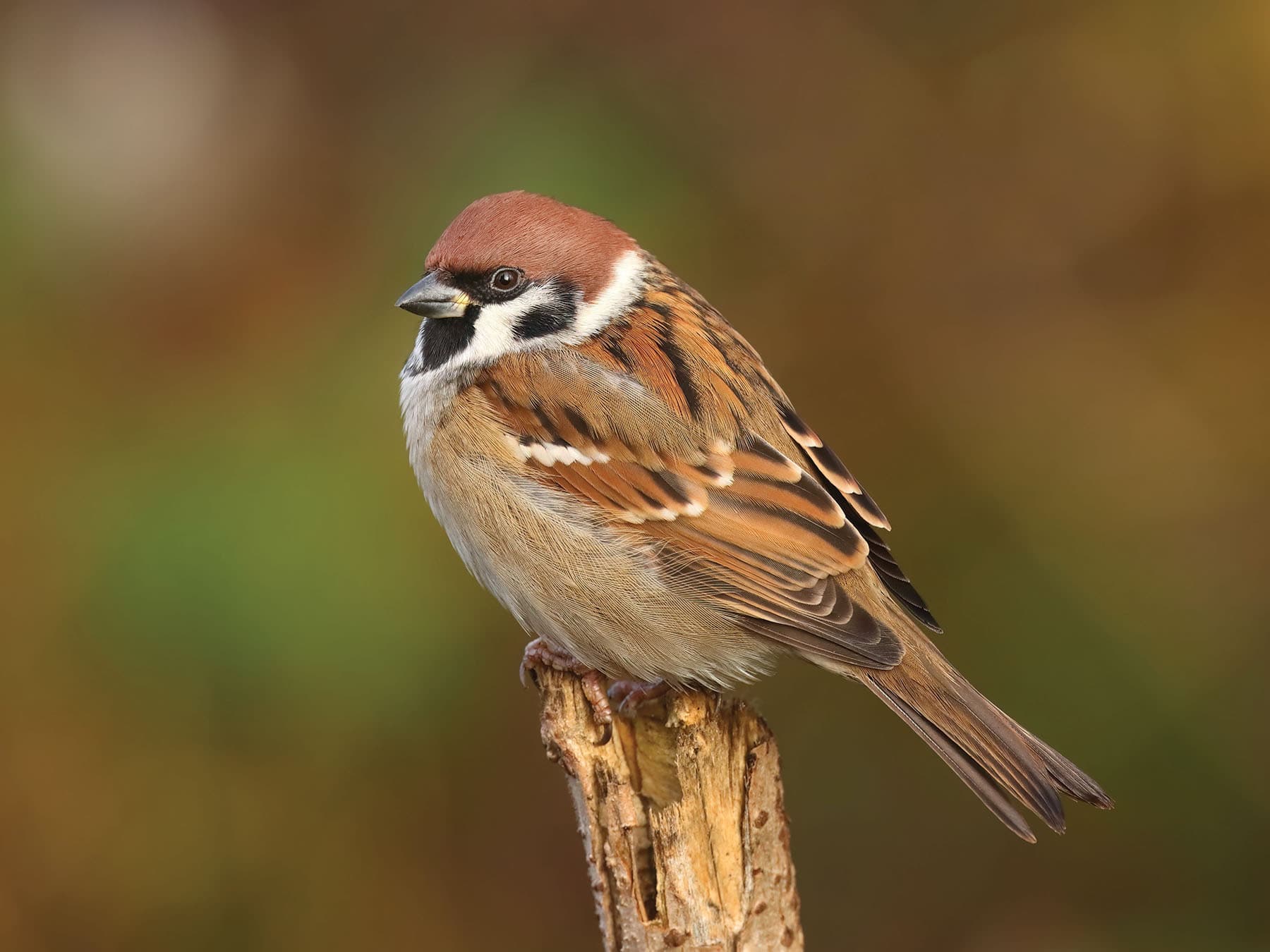
More photos
10 photos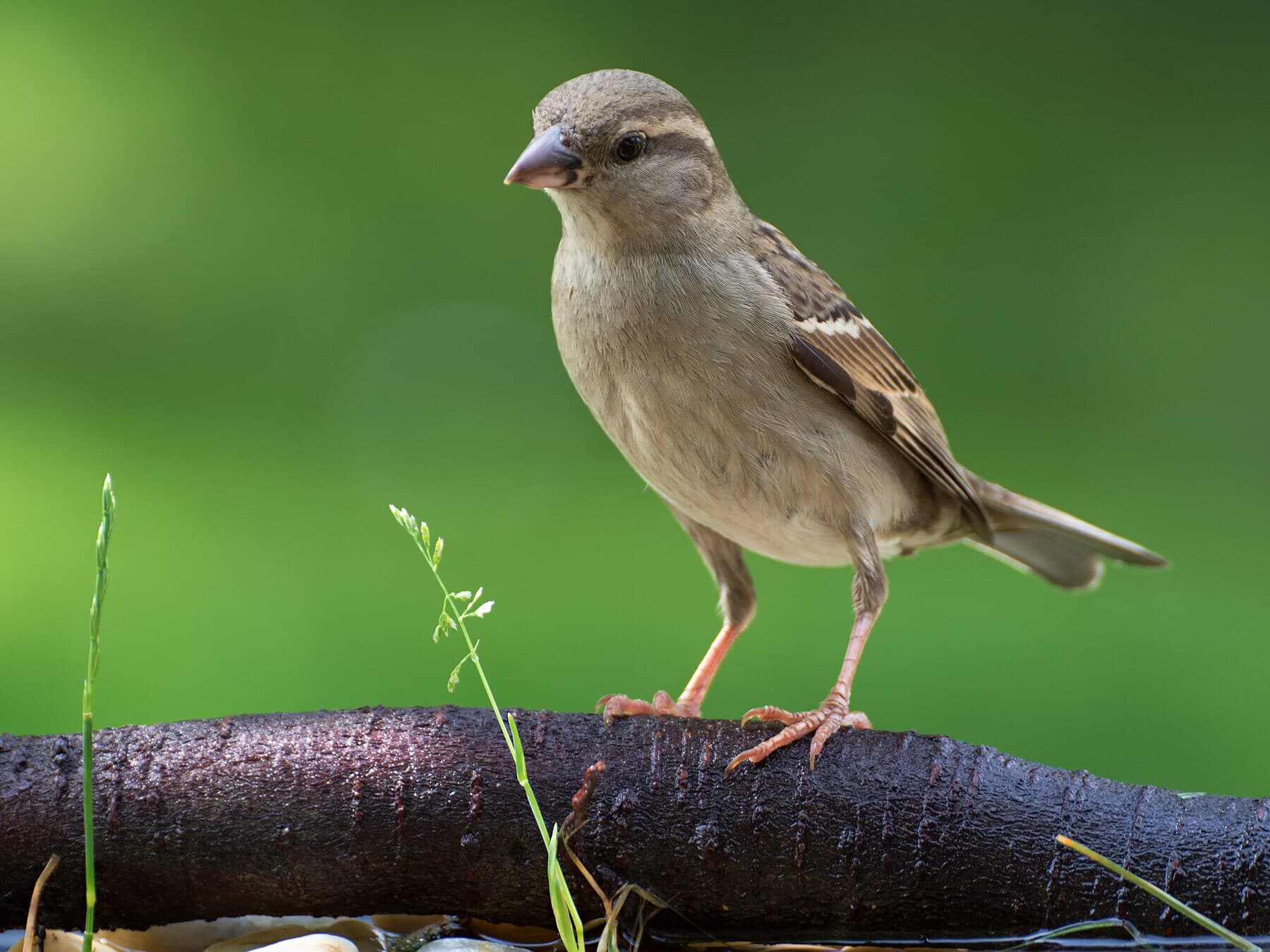 A female House Sparrow
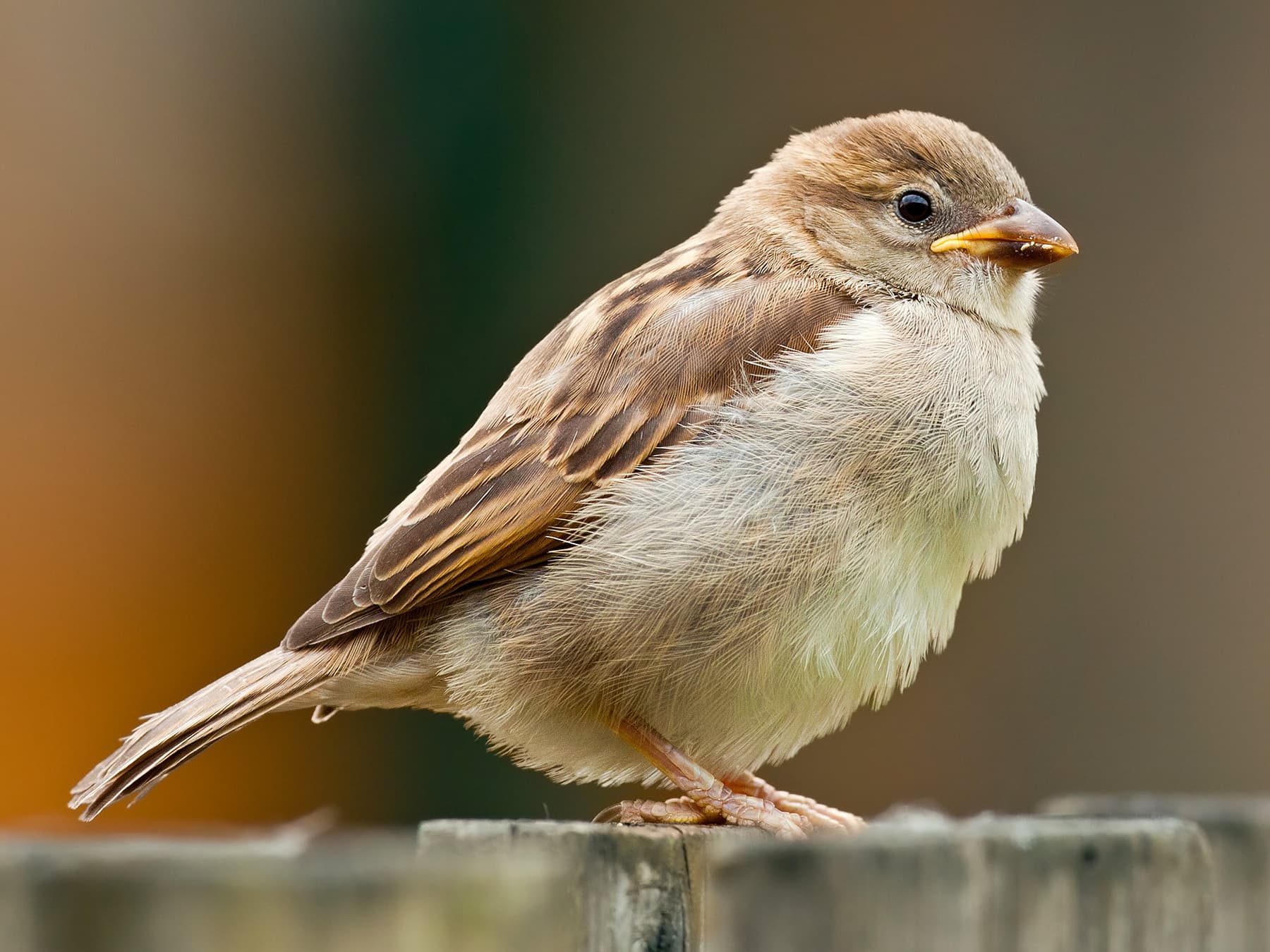 A young House Sparrow with a yellow gape
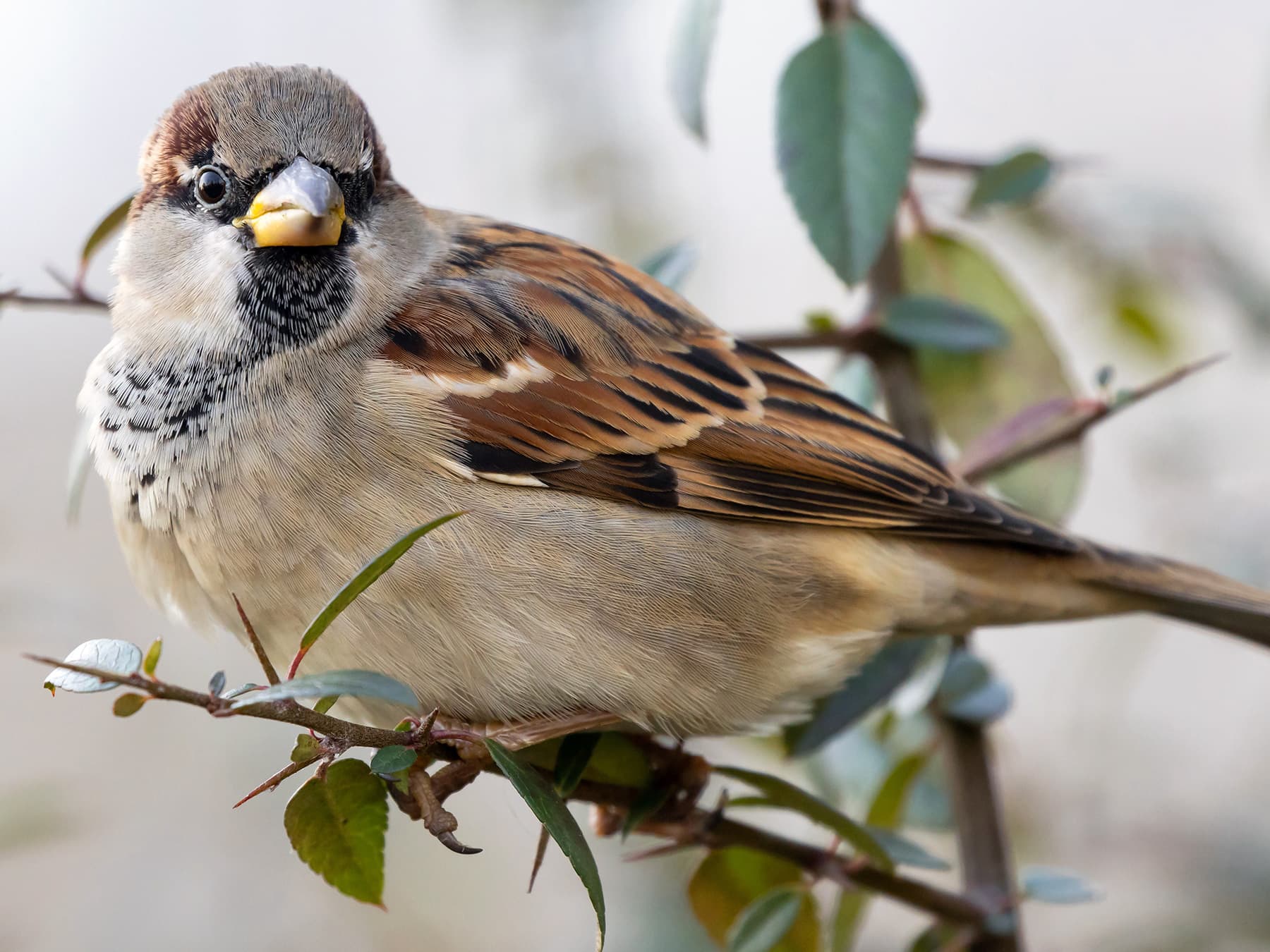 A male House Sparrow in autumn: pale tips hide part of the bib and the bill is yellowish
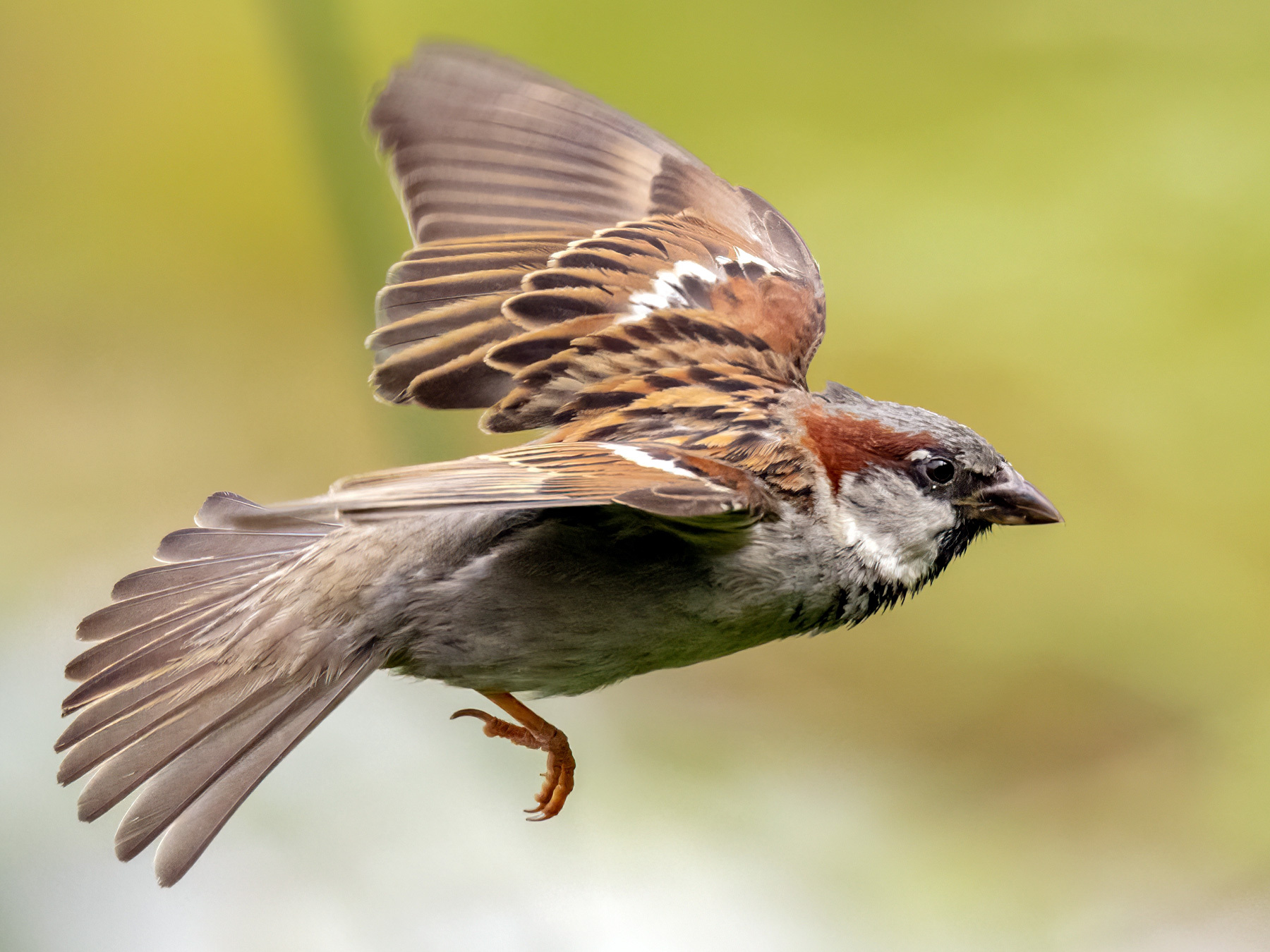
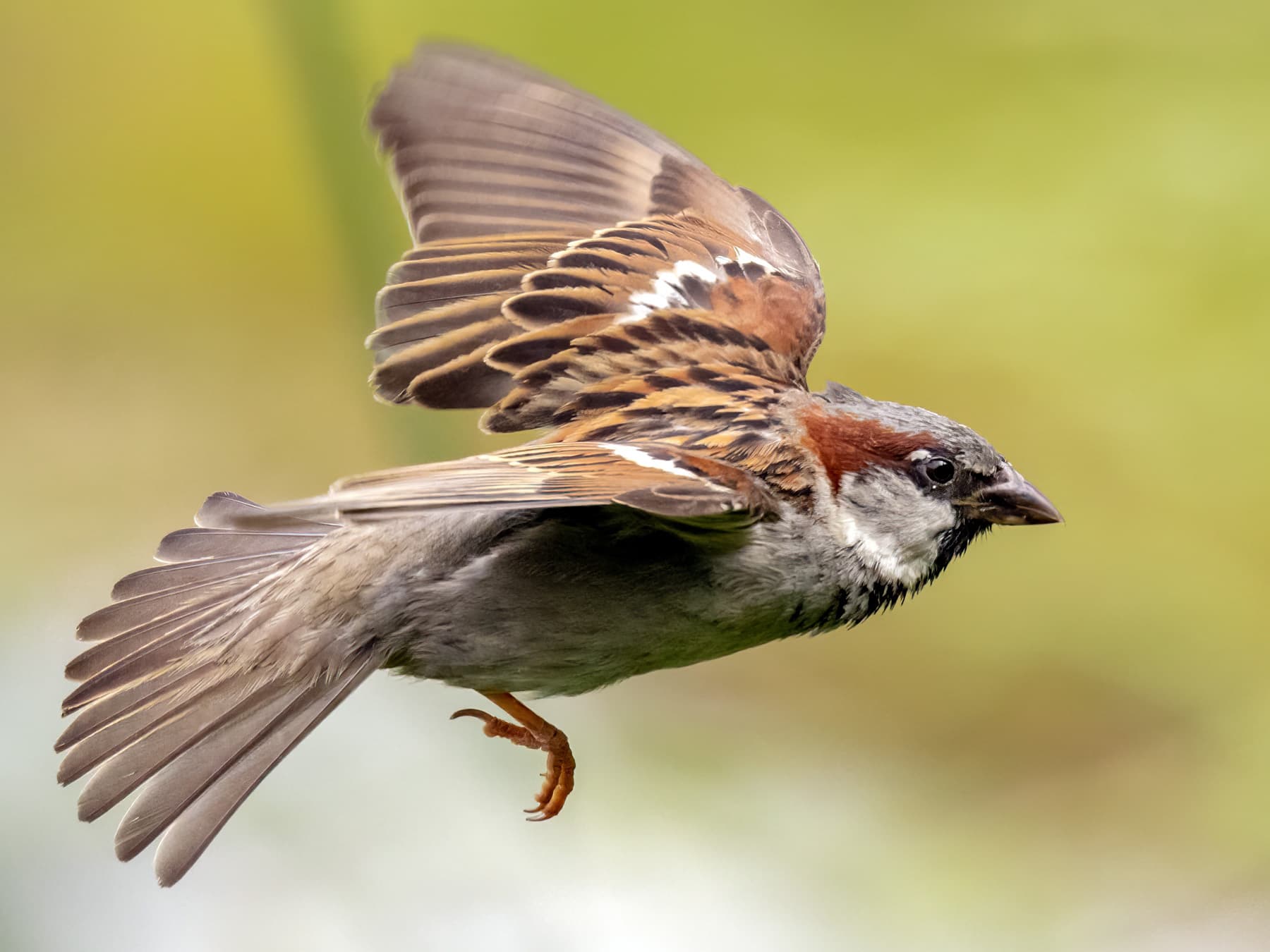 A male House Sparrow in flight
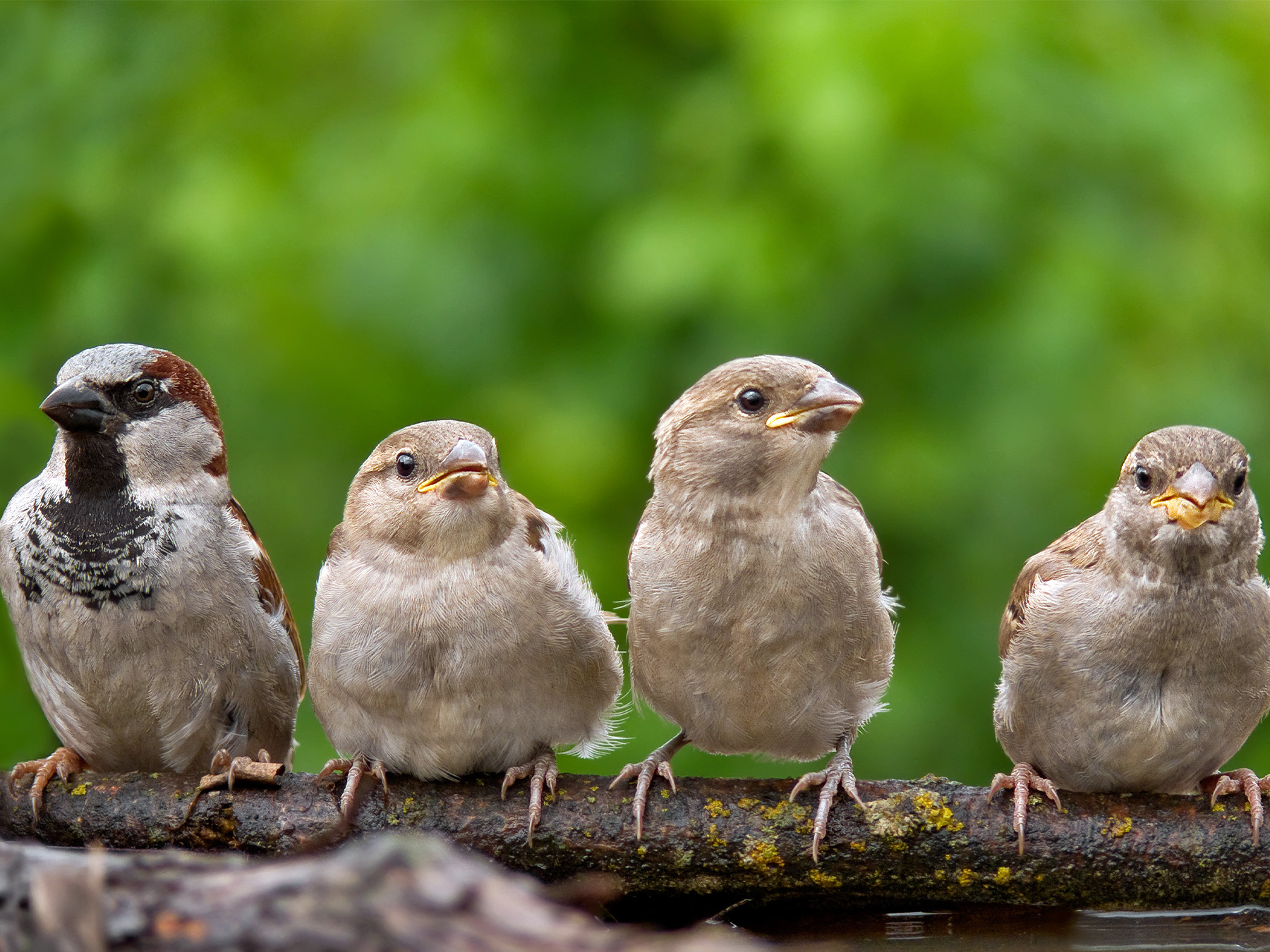
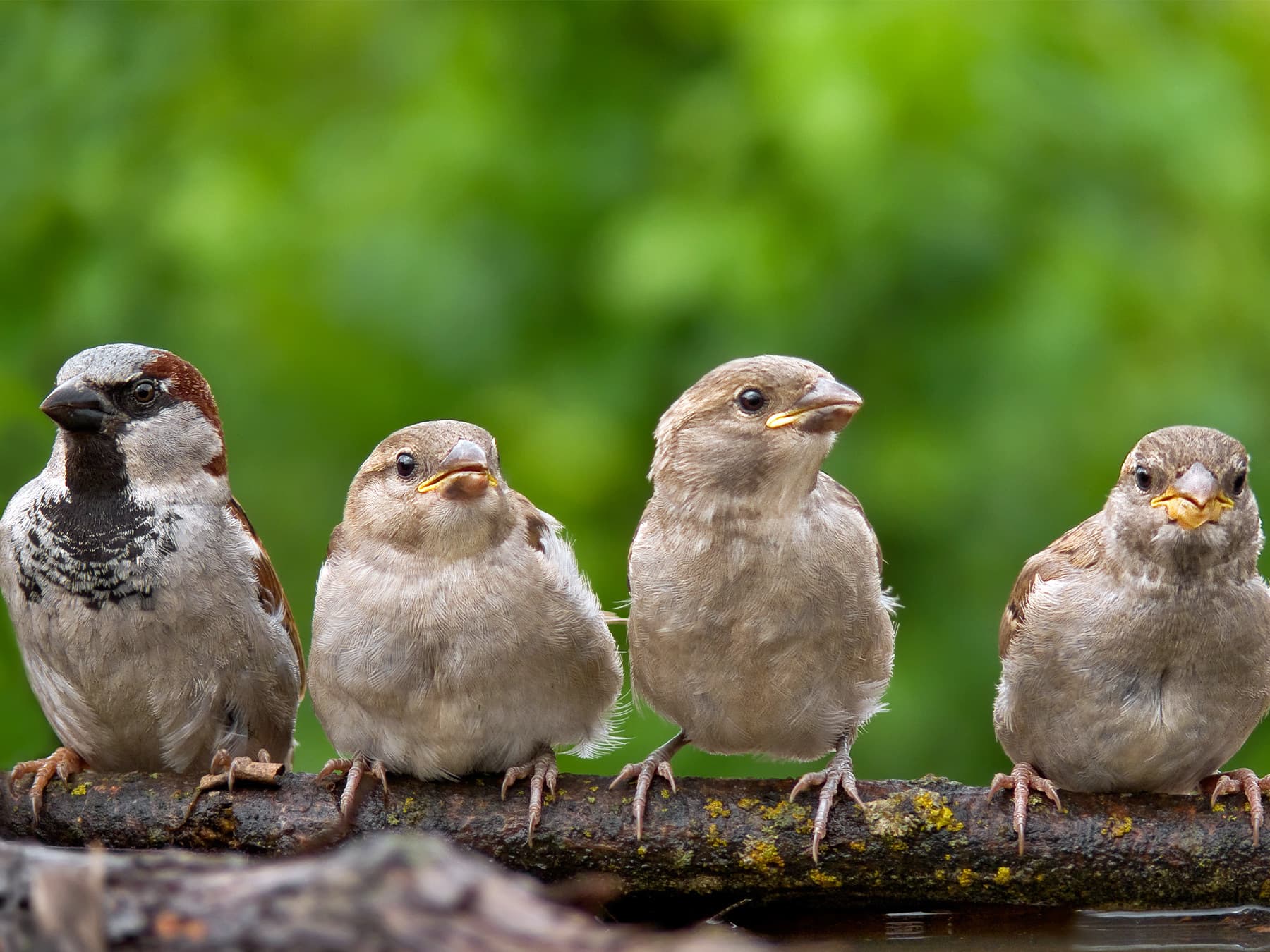 A male House Sparrow with three young birds
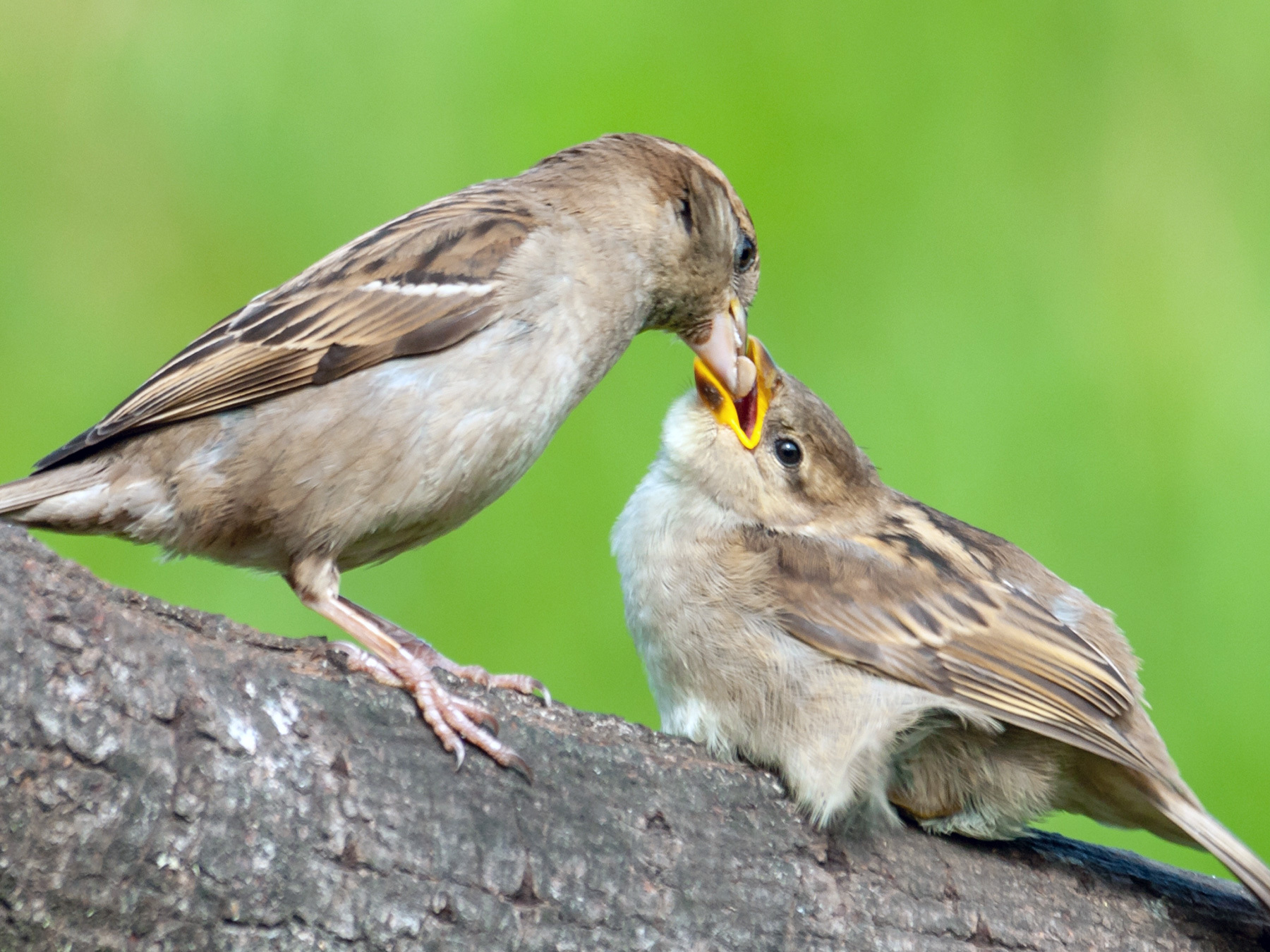
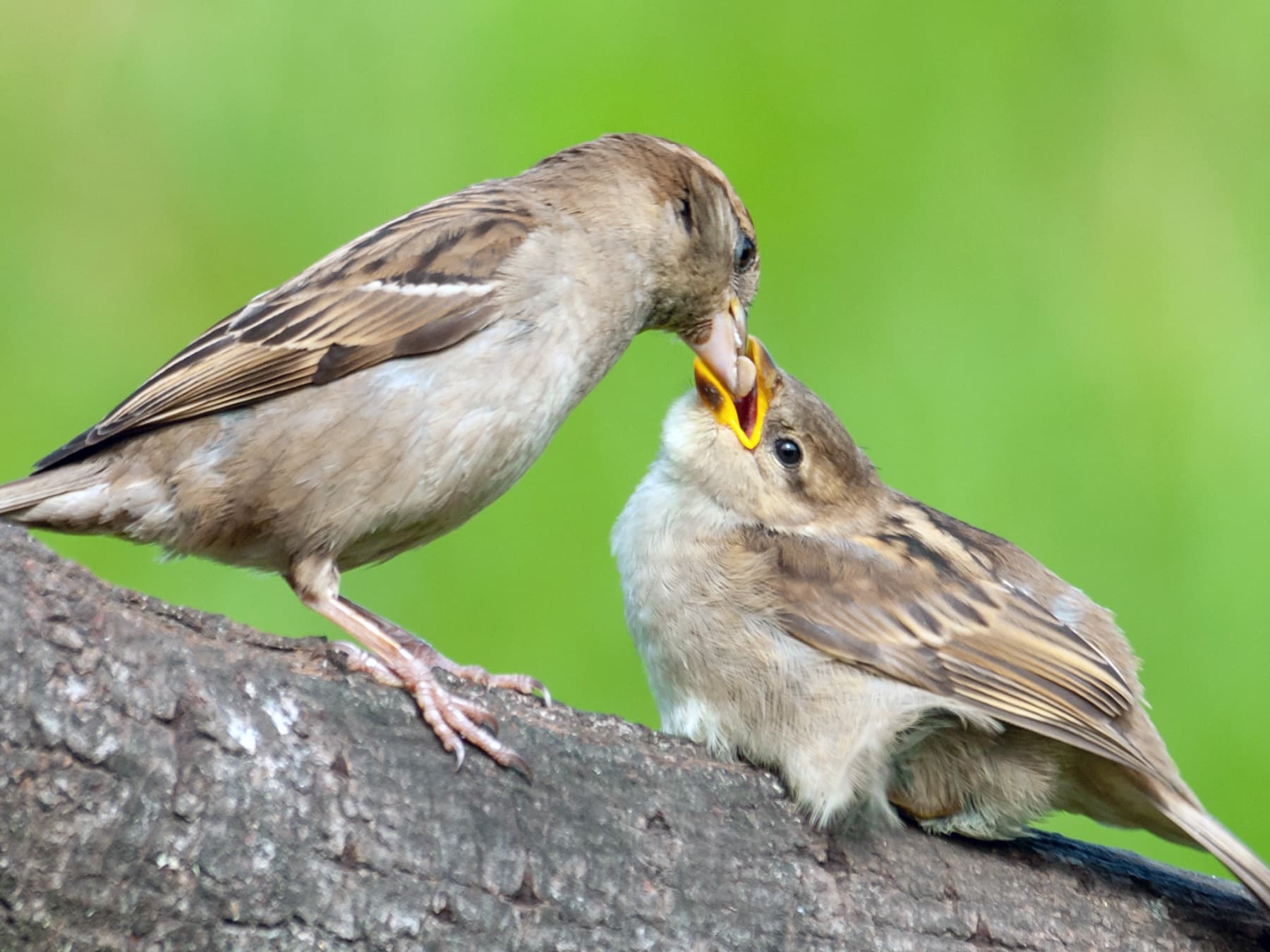 A female House Sparrow feeding a young bird
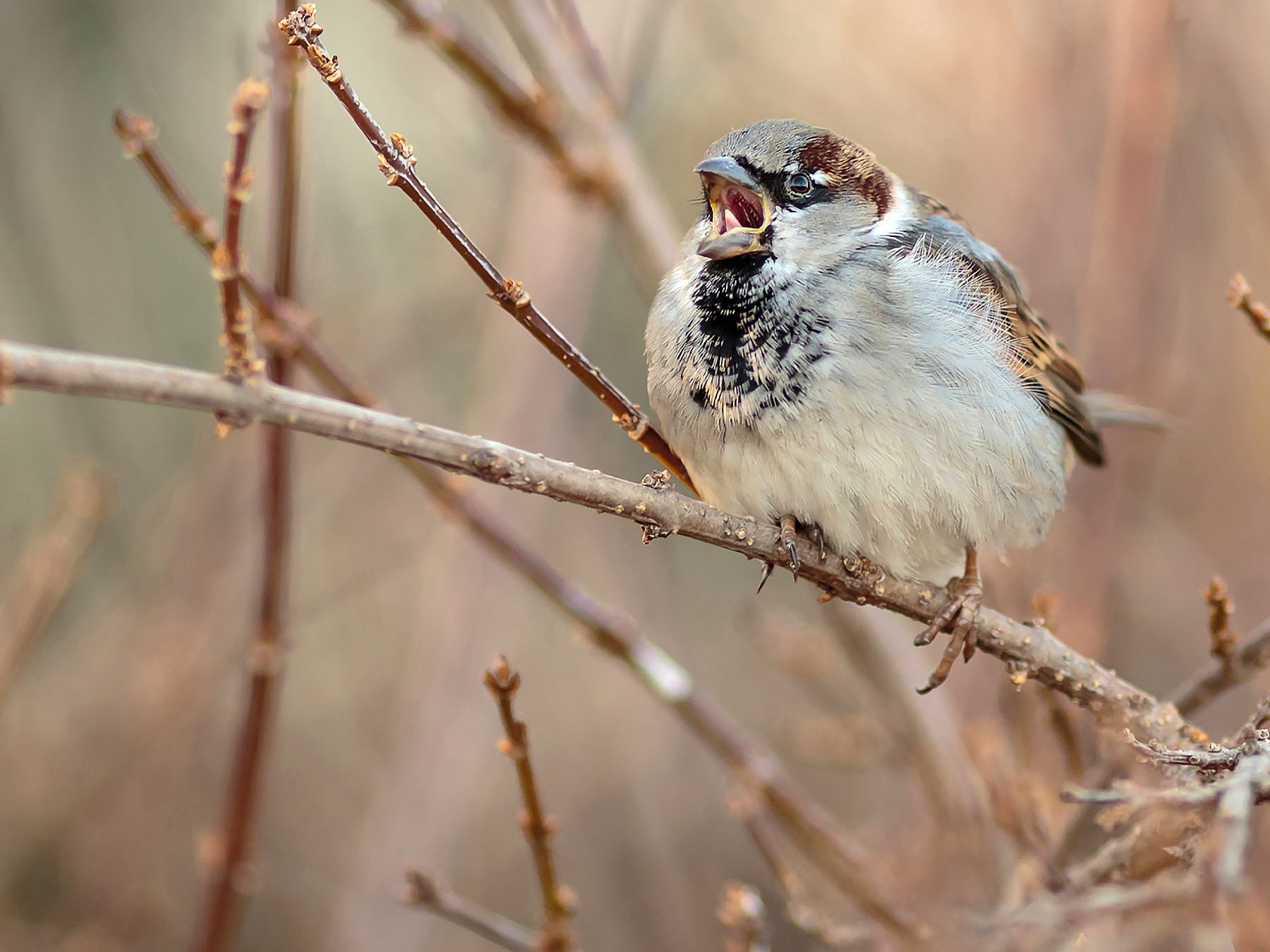
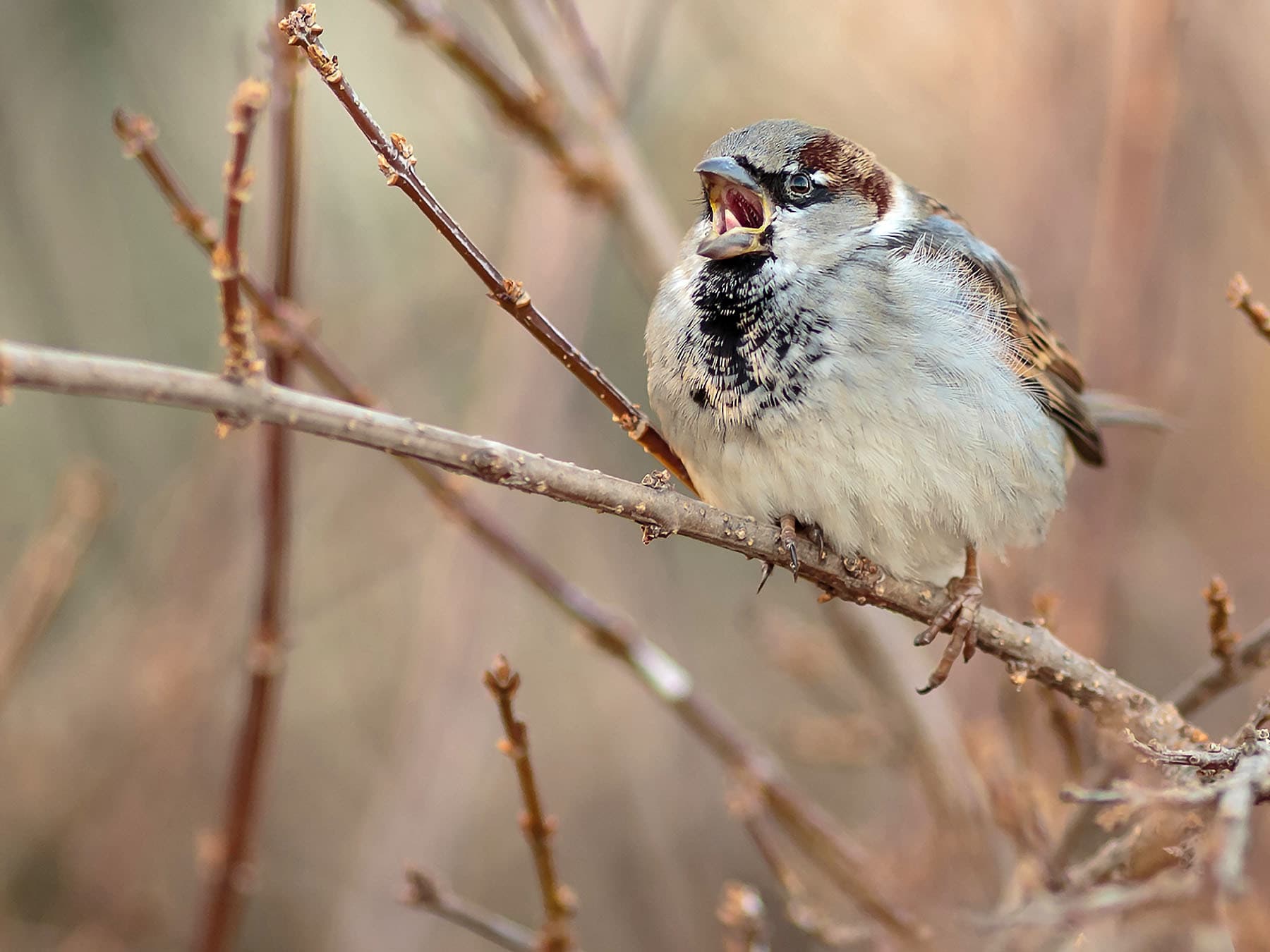 A male House Sparrow cheeping from a branch
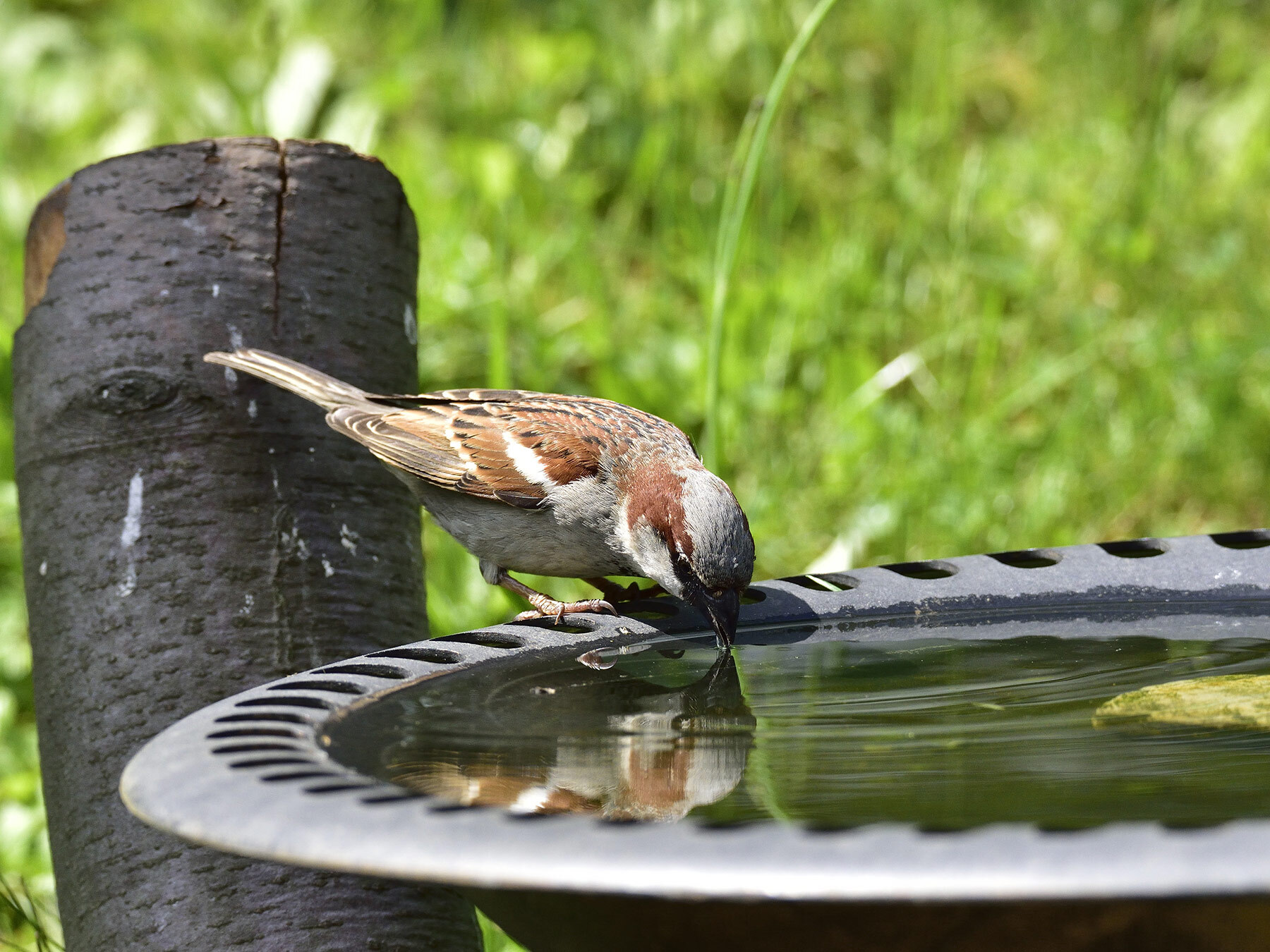
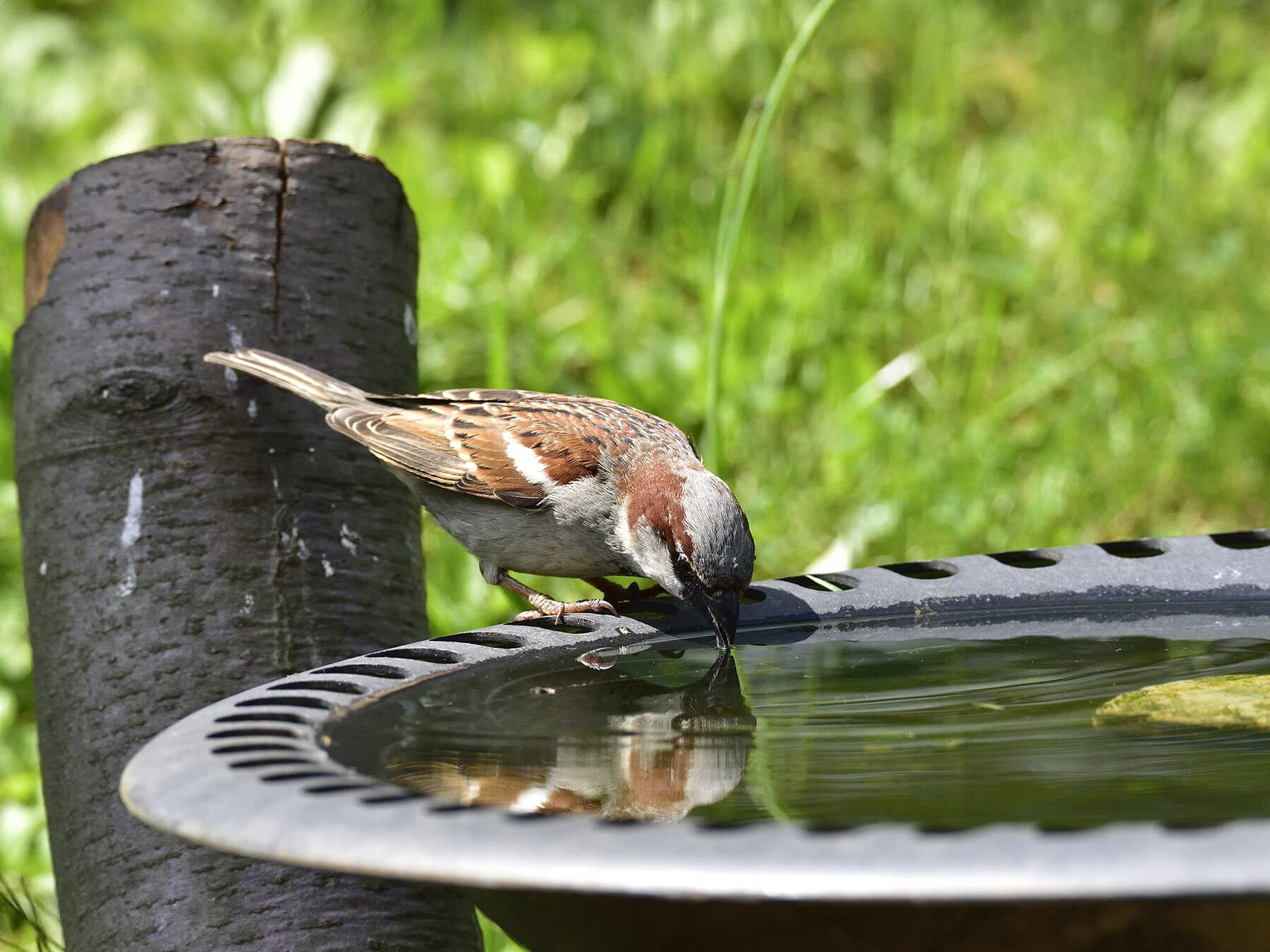 A House Sparrow drinking at a bird bath
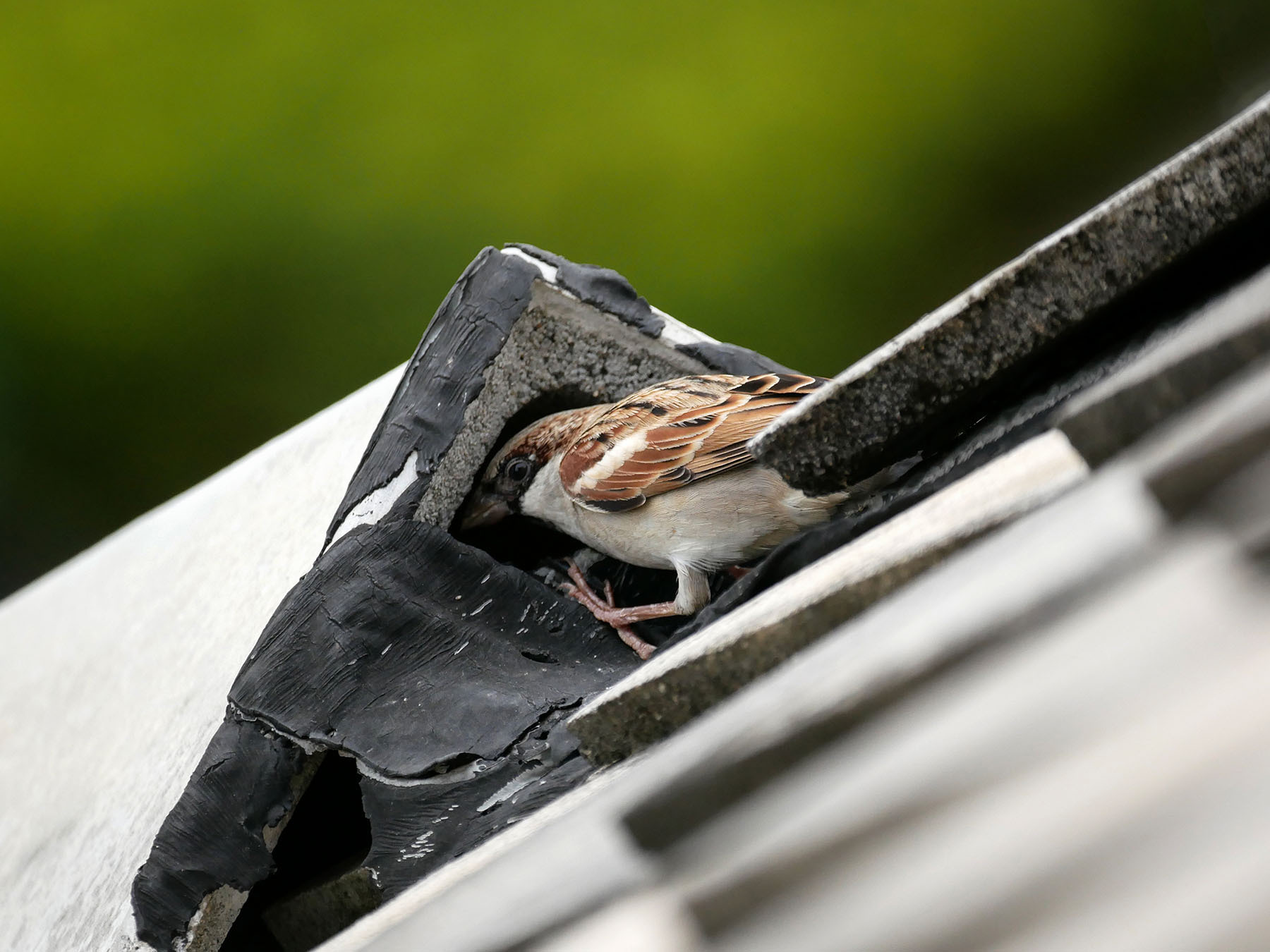
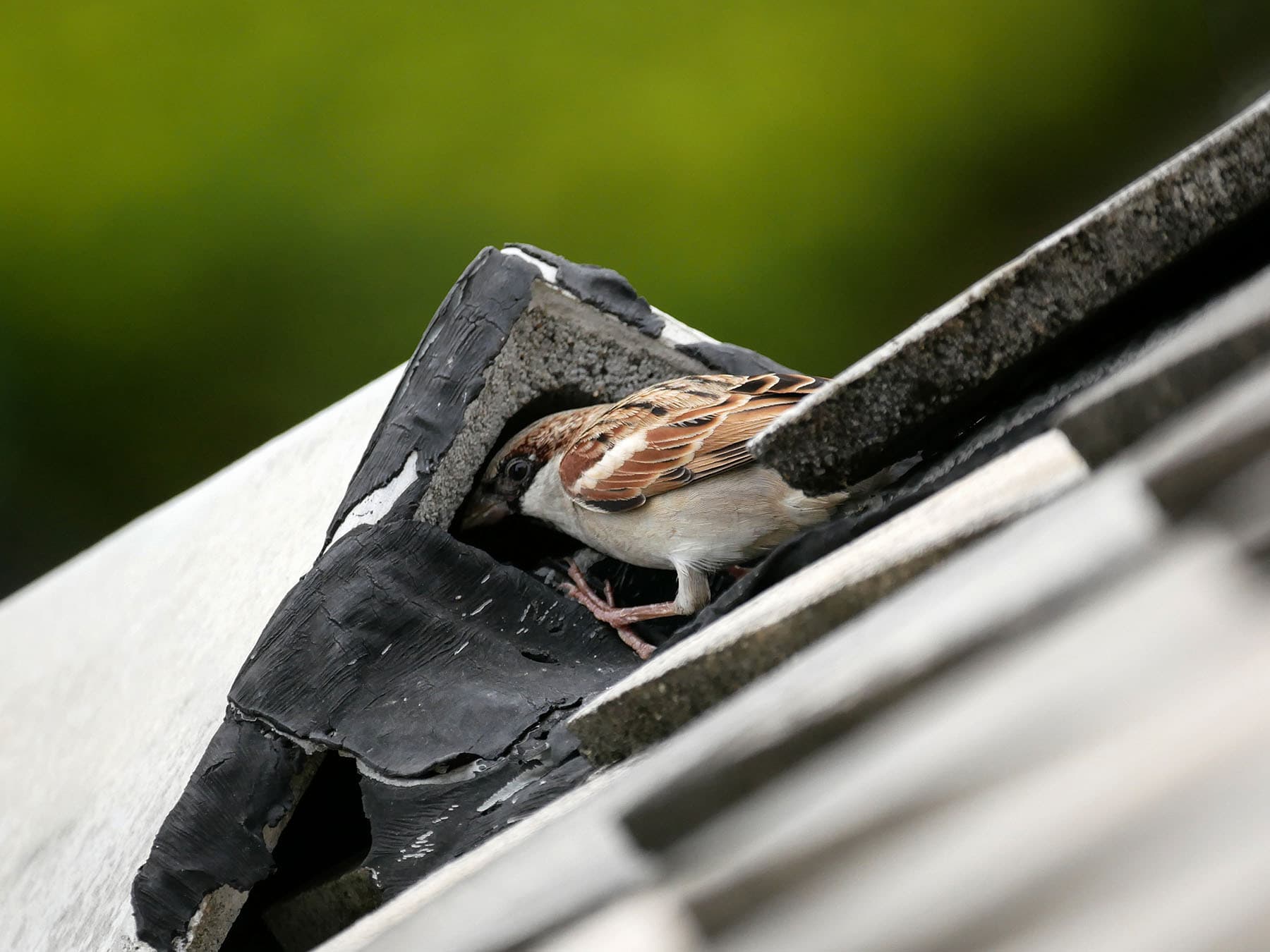 A male House Sparrow nesting under roof tiles
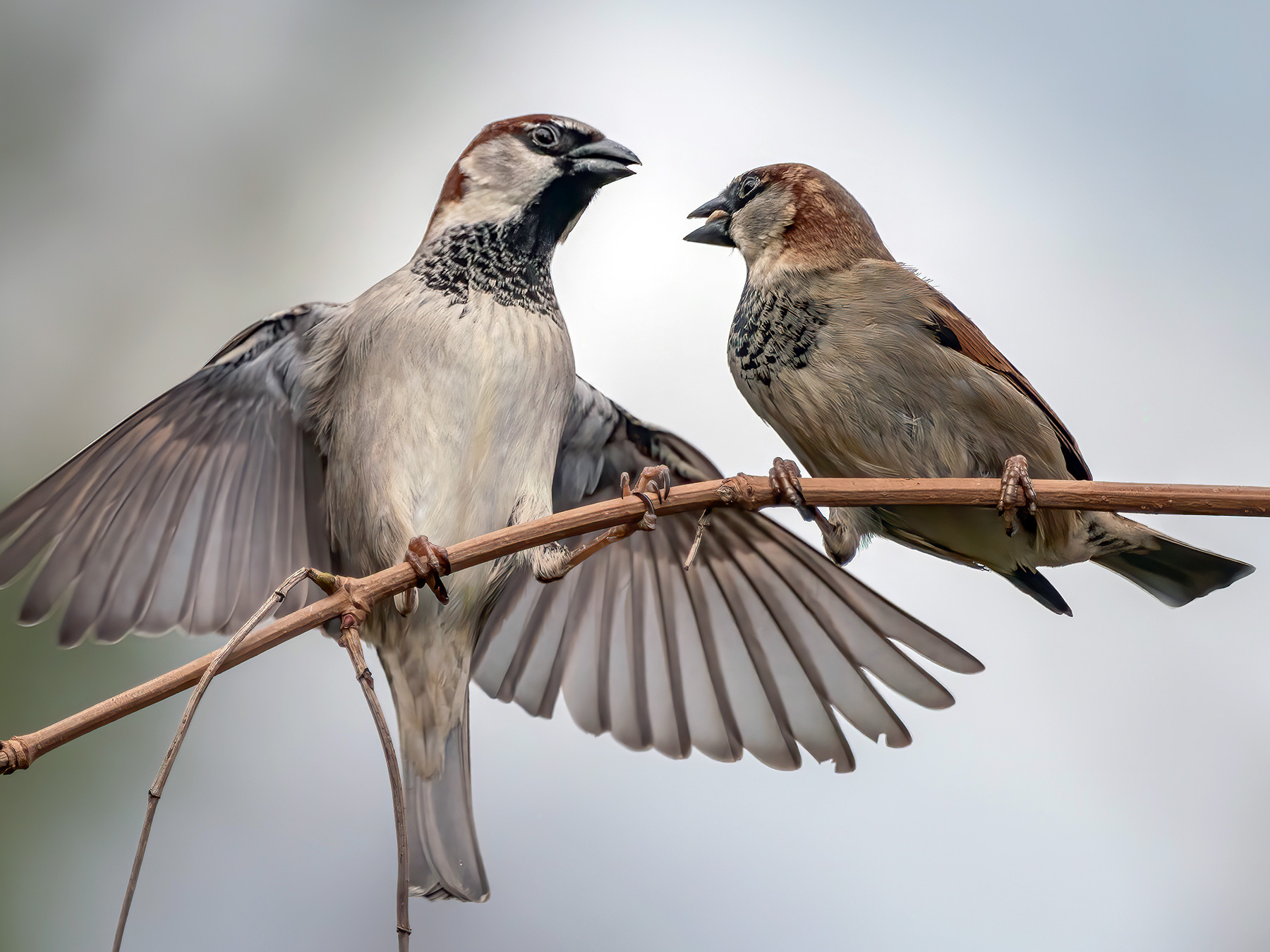
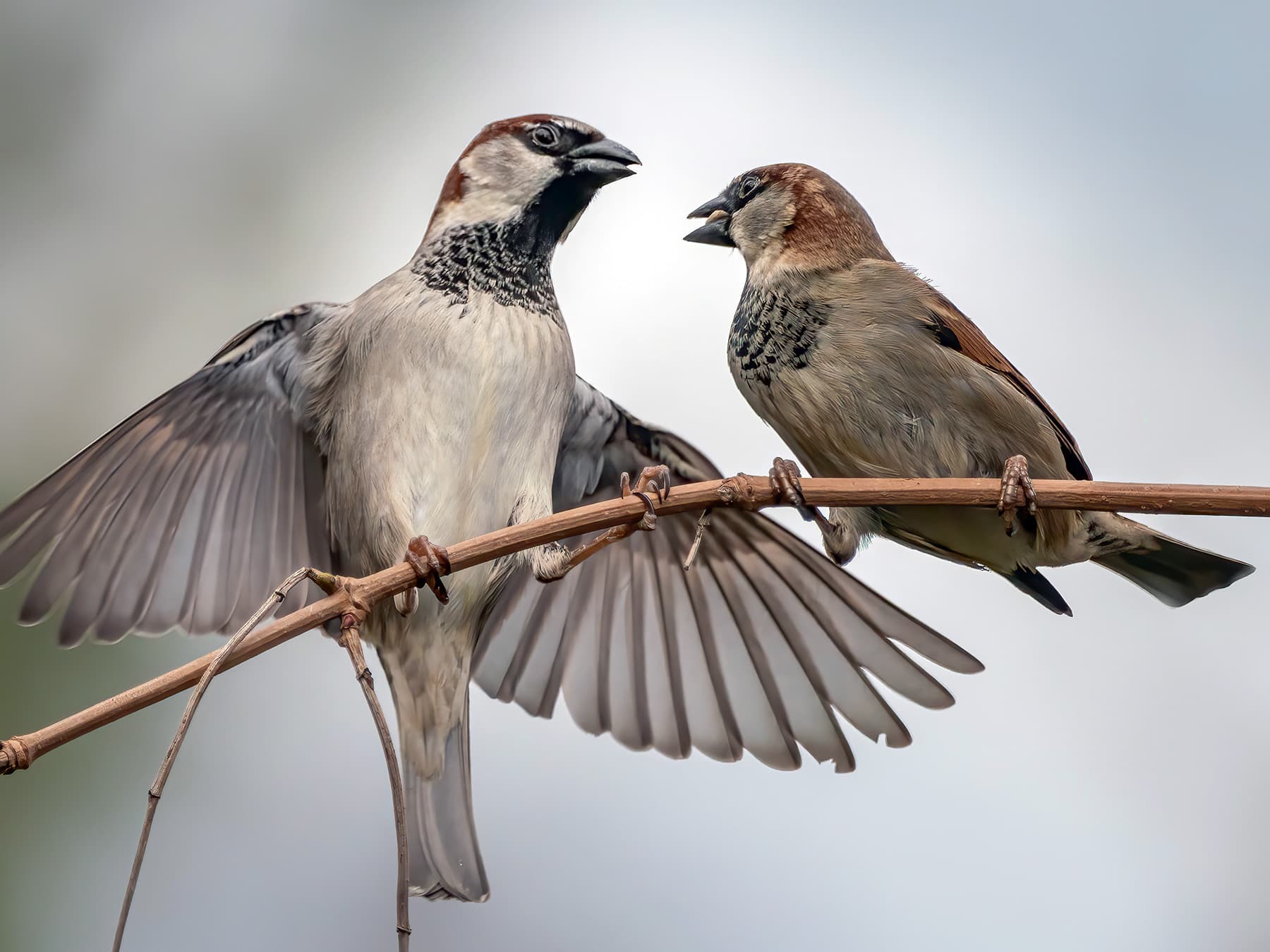 Two male House Sparrows squabbling on a twig
House Sparrow guides
5 guidesQuick facts
- Length
- 14–17 cm
- Wingspan
- 19–25.5 cm
- Weight
- 24.2–30.7 g
- Lifespan
- 3 years · oldest recorded 18.8 years · UK record 13 years 8 months · North American record 15 years 9 months
- Family
- Old World Sparrows
- Migration
- Resident
- Global status (IUCN)
- Least Concern
- Population trend
- Down 18% in the UK from 1995 to 2024, after a long decline; Red-listed since 2002
- Also called
- English Sparrow, Domestic Sparrow
- Scientific name
- Passer domesticus
Questions
6Is there a difference between a sparrow and a House Sparrow?
In Britain "sparrow" usually means the House Sparrow; the only other British sparrow is the Tree Sparrow, with its chestnut cap and cheek spot. In North America many native birds are called sparrows, but they belong to a different family. See how to recognise it.
Are House Sparrows rare in the UK?
No: there are about 5.3 million pairs and they top the Big Garden Birdwatch. But they have declined steeply and are Red-listed. See conservation.
Do House Sparrows mate for life?
Often for more than one season: pairs can stay together through the breeding season and into the next. Not always, though: in one study 60% of pairs stayed together through a season, and a small share of chicks are fathered by another male. See behaviour.
Why are they called House Sparrows?
The name fits: they live around houses and farm buildings. Genetic modelling suggests they took up life alongside people as farming spread, around 11,000 years ago.15
Where have the sparrows in my garden gone?
In late summer flocks leave for fields, the adults moult and cheeping can stop, so gardens go quiet for a while. A loss that lasts for years is part of the wider decline. See where and when to see them.
Are House Sparrows protected?
In the UK, yes, like all wild birds: it is an offence to take, damage or destroy a nest while it is in use or being built (intentionally, in England and Wales; intentionally or recklessly, in Scotland and Northern Ireland). In the US they are not covered by the Migratory Bird Treaty Act.
Sources
25- 1RSPB. House Sparrow. RSPB Birds and wildlife. Accessed 7 October 2026. Source (opens in a new tab)
- 2Cornell Lab of Ornithology. House Sparrow identification. All About Birds. Accessed 7 October 2026. Source (opens in a new tab)
- 3Lowther, P. E. and Cink, C. L. (2020). House Sparrow (Passer domesticus), version 1.0. Birds of the World (S. M. Billerman, ed.). Cornell Lab of Ornithology. doi:10.2173/bow.houspa.01 (opens in a new tab)
- 4Cornell Lab of Ornithology. House Finch identification. All About Birds. Accessed 7 October 2026. Source (opens in a new tab)
- 5BTO. House Sparrow (Passer domesticus). BTO BirdFacts. Accessed 7 October 2026. Source (opens in a new tab)
- 6Robinson, R. A., Leech, D. I. and Clark, J. A. (2025). Summary of all recoveries for House Sparrow. The Online Demography Report: bird ringing and nest recording in Britain & Ireland in 2024. BTO. Accessed 7 October 2026. Source (opens in a new tab)
- 7U.S. Fish and Wildlife Service (2020). List of Bird Species to Which the Migratory Bird Treaty Act Does Not Apply. Federal Register 85(74): 21262-21264. Accessed 7 October 2026. Source (opens in a new tab)
- 8RSPB (2026). How to help garden birds. RSPB news. Accessed 7 October 2026. Source (opens in a new tab)
- 9BTO. Buying a nest box. Accessed 7 October 2026. Source (opens in a new tab)
- 10BTO (2025). Longevity records for Britain & Ireland in 2024. Online Ringing and Nest Recording Report. Accessed 7 October 2026. Source (opens in a new tab)
- 11Fransson, T., Kolehmainen, T., Moss, D. and Robinson, R. (2023). EURING list of longevity records for European birds (1 September 2023). EURING. Accessed 7 October 2026. Source (opens in a new tab)
- 12USGS Bird Banding Laboratory. Longevity records of North American birds. Accessed 7 October 2026. Source (opens in a new tab)
- 13Dadam, D., Robinson, R. A., Clements, A., Peach, W. J. et al. (2019). Avian malaria-mediated population decline of a widespread iconic bird species. Royal Society Open Science 6: 182197. doi:10.1098/rsos.182197 (opens in a new tab)
- 14Peach, W. J. et al. (2015). Invertebrate prey availability limits reproductive success but not breeding population size in suburban House Sparrows Passer domesticus. Ibis 157: 601-613. doi:10.1111/ibi.12264 (opens in a new tab)
- 15Ravinet, M., Elgvin, T. O., Trier, C., Aliabadian, M. et al. (2018). Signatures of human-commensalism in the house sparrow genome. Proceedings of the Royal Society B 285: 20181246. doi:10.1098/rspb.2018.1246 (opens in a new tab)
- 16RSPB. Tree Sparrow. RSPB Birds and wildlife. Accessed 7 October 2026. Source (opens in a new tab)
- 17RSPB. Dunnock. RSPB Birds and wildlife. Accessed 7 October 2026. Source (opens in a new tab)
- 18National Audubon Society (text: Kaufman, Lives of North American Birds). House Sparrow. Audubon Guide to North American Birds. Accessed 7 October 2026. Source (opens in a new tab)
- 19RSPB. How and what to feed your garden birds. Accessed 7 October 2026. Source (opens in a new tab)
- 20RSPB. Our ultimate guide to nestboxes. Accessed 7 October 2026. Source (opens in a new tab)
- 21Robinson, R. A., Siriwardena, G. M. and Crick, H. Q. P. (2005). Size and trends of the House Sparrow Passer domesticus population in Great Britain. Ibis 147: 552-562. doi:10.1111/j.1474-919x.2005.00427.x (opens in a new tab)
- 22Shaw, L. M., Chamberlain, D. and Evans, M. (2008). The House Sparrow Passer domesticus in urban areas: reviewing a possible link between post-decline distribution and human socioeconomic status. Journal of Ornithology 149: 293-299. doi:10.1007/s10336-008-0285-y (opens in a new tab)
- 23Stanbury, A. et al. (2021). The status of our bird populations: the fifth Birds of Conservation Concern in the United Kingdom, Channel Islands and Isle of Man and second IUCN Red List assessment of extinction risk for Great Britain. British Birds 114: 723-747. Accessed 7 October 2026. Source (opens in a new tab)
- 24UK Parliament (1981). Wildlife and Countryside Act 1981, section 1. Accessed 7 October 2026. Source (opens in a new tab)
- 25BTO. Nest boxes for birds. Accessed 7 October 2026. Source (opens in a new tab)

Checked by
Nathan Cope, founder and editor
Nathan founded Birdfact and leads its writers and contributors in the UK, the US and Canada. He has watched and studied birds for more than ten years, and checks every article and species guide before it’s published.