


Carrion Crow
Eurasian Crow · Corvus corone
By the Birdfact teamChecked by Nathan Cope
On this page14 sections
How to recognise it
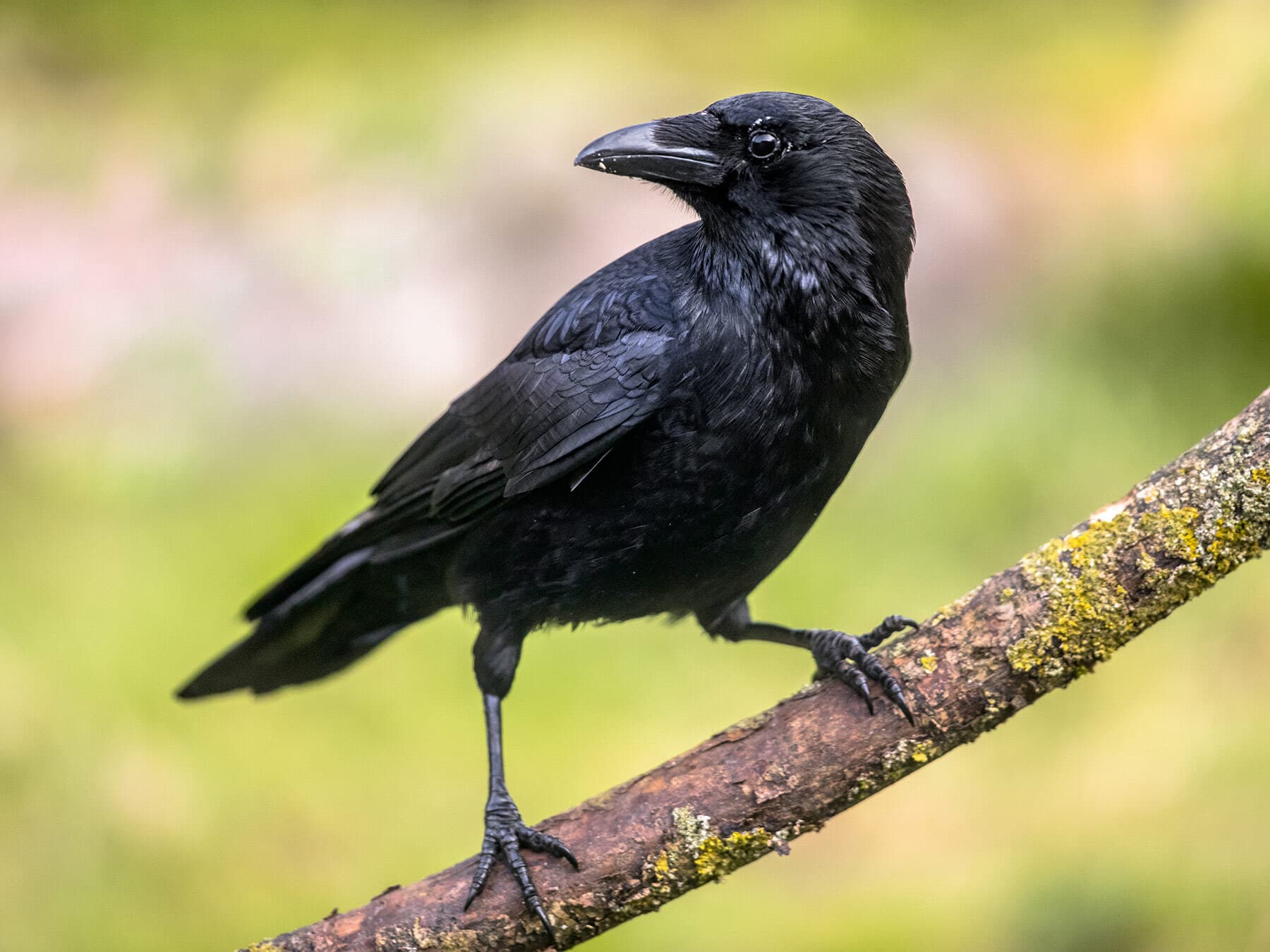
The Carrion Crow is a medium-sized bird with entirely black plumage that often displays a glossy, iridescent sheen in sunlight. Its stout, slightly curved beak and strong legs are also black, complementing its dark appearance.
Both males and females look identical, making visual sex determination challenging. Juveniles have a slightly duller plumage and may show a brownish tinge until their first moult.
Its size
Adults- Length
- 44–51 cm
- Wingspan
- 84–100 cm
- Weight
- 400–600 g
Its song and calls
The call is typically crow like being loud and harsh similar to, ‘caw – caw – caw’ or ‘craah – craah – craah’, often repeated.

- Song0:00 / 3:56
Recorded in Greater London, England · August 2013
- Call0:00 / 0:32
Recorded in Île-de-France, France · June 2019
When and where to see it
OctoberHere all year
Most recorded in October
- 1. Dundee8.0%
- 2. South Ayrshire7.0%
- 3. Renfrewshire6.3%
- 4. Glasgow5.8%
- 5. North Ayrshire5.5%
Each dot is a county, state or province: the bigger and darker, the larger the bird’s share of that place’s bird records that month. Grey dots: no regular records. The ringed point is the centre of the bird’s records this month; the arrow shows how it moved since last month, and the dashed loop its path through the year. “Arrivals” colours places where it becomes regular this month (orange) or is in its last regular month (grey). GBIF eBird Observation Dataset, 2019–2024. Map data: Natural Earth, US Census Bureau; place centres © OpenStreetMap contributors.
In your area
See when the Carrion Crow is recorded in your county, state or province.
How often the Carrion Crow turns up in the UK and Ireland through the year, from birdwatchers' records.
United Kingdom
Resident · all year · most records in December
Ireland
Winter visitor · all year · most records in March
Show as a table
| Month | United Kingdom | Ireland |
|---|---|---|
| January | 3.2% (regular) | 0.030% (regular) |
| February | 3.2% (regular) | 0.018% (regular) |
| March | 3.1% (regular) | 0.034% (regular) |
| April | 2.8% (regular) | 0.009% (regular) |
| May | 2.7% (regular) | 0.007% (regular) |
| June | 2.8% (regular) | 0.010% (regular) |
| July | 2.9% (regular) | 0.007% (regular) |
| August | 2.8% (regular) | 0.009% (regular) |
| September | 2.9% (regular) | 0.004% (regular) |
| October | 2.9% (regular) | 0.014% (regular) |
| November | 3.2% (regular) | 0.019% (regular) |
| December | 3.3% (regular) | 0.010% (regular) |
Recorded regularly in
Worldwide: recorded regularly in 43 countries
Countries where it was recorded in at least 3 of the 6 years 2019–2024. Linked countries have their own bird list.
Europe (31)
Asia (12)
- Afghanistan
- China
- Hong Kong SAR China
- India
- Japan
- Kazakhstan
- Kyrgyzstan
- Mongolia
- South Korea
- Taiwan
- Tajikistan
- Uzbekistan
Data: EOD – eBird Observation Dataset (Cornell Lab of Ornithology), accessed via GBIF.org, CC BY 4.0. Records from 2019–2024, aggregated and filtered by Birdfact. How these lists are made
The carrion crow is native to central and western Europe, including the United Kingdom. Its range also extends across central and eastern Asia from Kazakhstan to China and Japan, south into Thailand and north as far as the Kamchatka Peninsula in Russia’s northeast corner. There are two subspecies, with Corvus corone corone native to Europe and Corvus corone orientalis confined to Asia.

Signs and Spotting tips
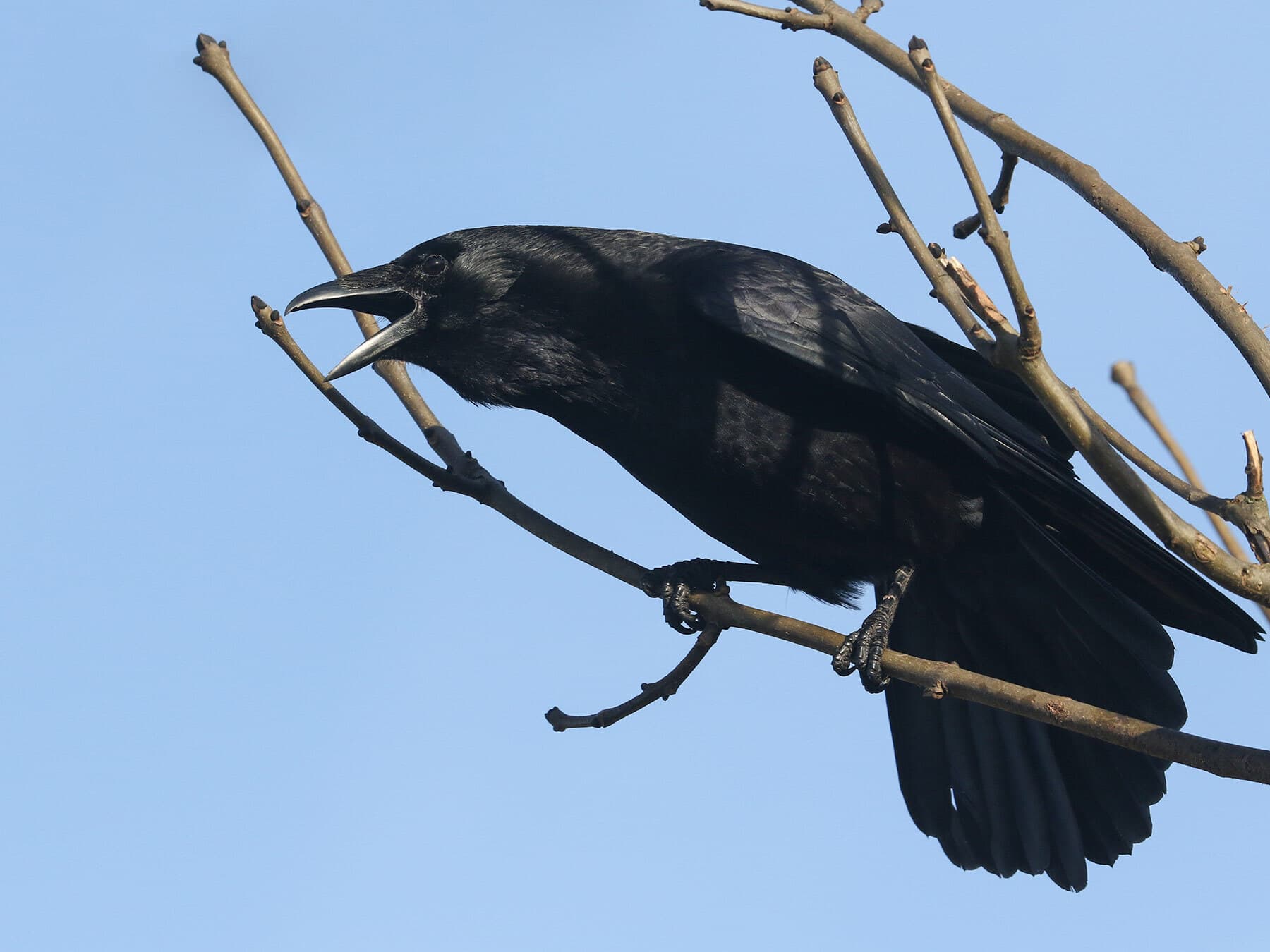
Whilst on the ground the carrion crow is a proud, confident looking bird with an upright posture and determined, strutting, gait. In flight it can often be observed chasing off predators from its feeding grounds or nest areas during the breeding season and will even attack birds of prey. A relative loner it is usually spotted on its own or as a pair, although it will occasionally form small flocks with others of the same species. It has a wide variety of natural habitats including farmland, wetlands, moorland, woodland and open countryside of all description provided there are sufficient trees for roosting and nesting. Of all their habitats they are most commonly found in urban and suburban areas with parks and gardens, particularly within Europe.
What it eats
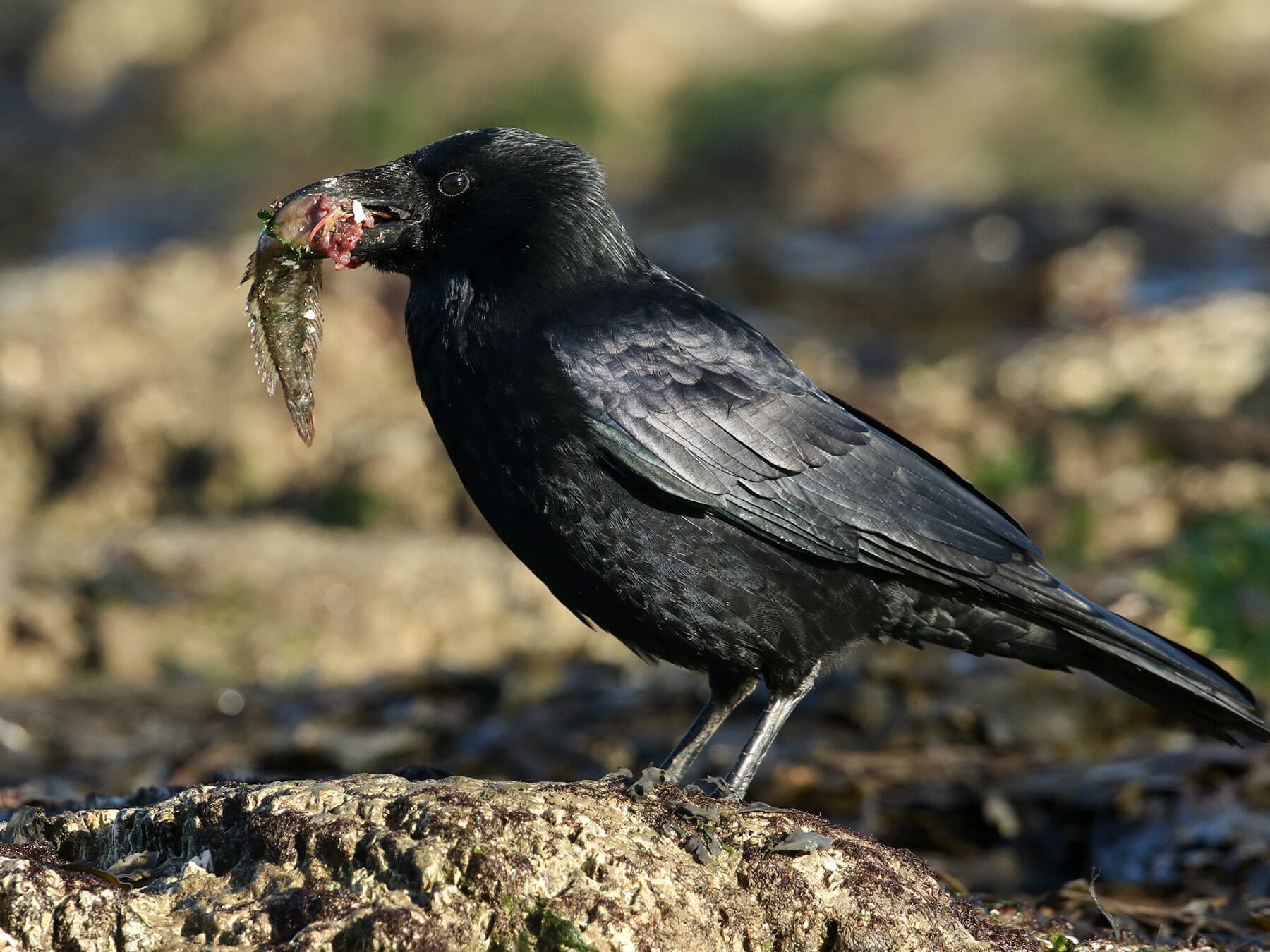
The carrion crow forages for food mainly on the ground, taking worms, insects, seeds and berries and even small mammals and amphibians. It will also feed on others birds’ eggs and young as well as scavenging for scraps and carrion.
Nesting and breeding
Carrion crows are monogamous, often pairing for life. During the breeding season a large nest is constructed by the male and female from sticks and twigs high up in a tree or occasionally on a cliff top. Dependent upon geographical location one brood of 4 – 6 brown speckled blue eggs is produced annually between March and June and incubated by the female for up to twenty days. Fledging occurs after one month.
Behaviour
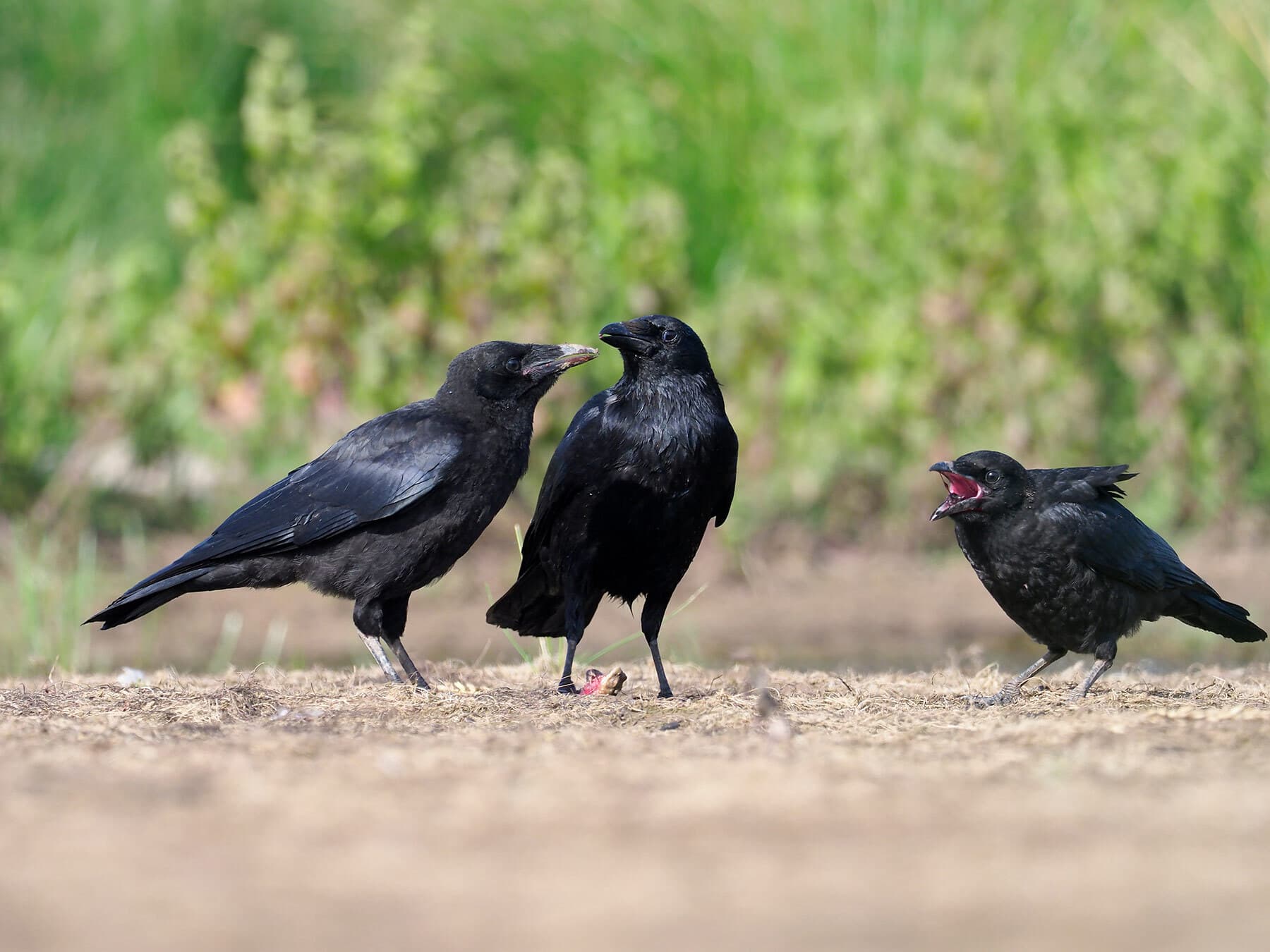
Carrion Crows are highly intelligent and social birds. They often gather in small groups to forage, displaying cooperative behaviours.
These birds are known for their problem-solving skills, using tools and exhibiting complex social interactions. They're also territorial during the breeding season, fiercely defending their nesting areas.
Lifespan and predators
The average life expectancy of a carrion crow is between five to ten years. They have few predators and some ringed crows have been recorded as reaching twenty years of age.
Conservation
The Carrion Crow is listed as Least Concern by the IUCN due to its large range and stable population. However, like many birds, it faces challenges from habitat loss and climate change.
In some areas, conflicts with human activities have led to control measures, highlighting the need for balanced management approaches.
What does a Carrion Crow look like?
The adult carrion crow has gloss black upperparts with a green hue to the head and upperwings, morphing into a purplish hue across the neck, back and rump. These hues maybe difficult to observe and can appear as very subtle. The underparts of the bird are a dull black with tight feathering across the chest, belly and vent. The head is wide and flat across the crown and the black bill is medium length, thick and arched. The inside of the mouth is grey and the nostrils are covered in short bristle like feathers. The eyes are dark brown and legs dark grey or black. The tail and wing tips are square in shape. Males and females are similar. Juvenile birds lack gloss to the feathers which appear sootier in colour to the adult, with grey eyes and a pink colouration on the edges and inside of the bill.

Similar birds
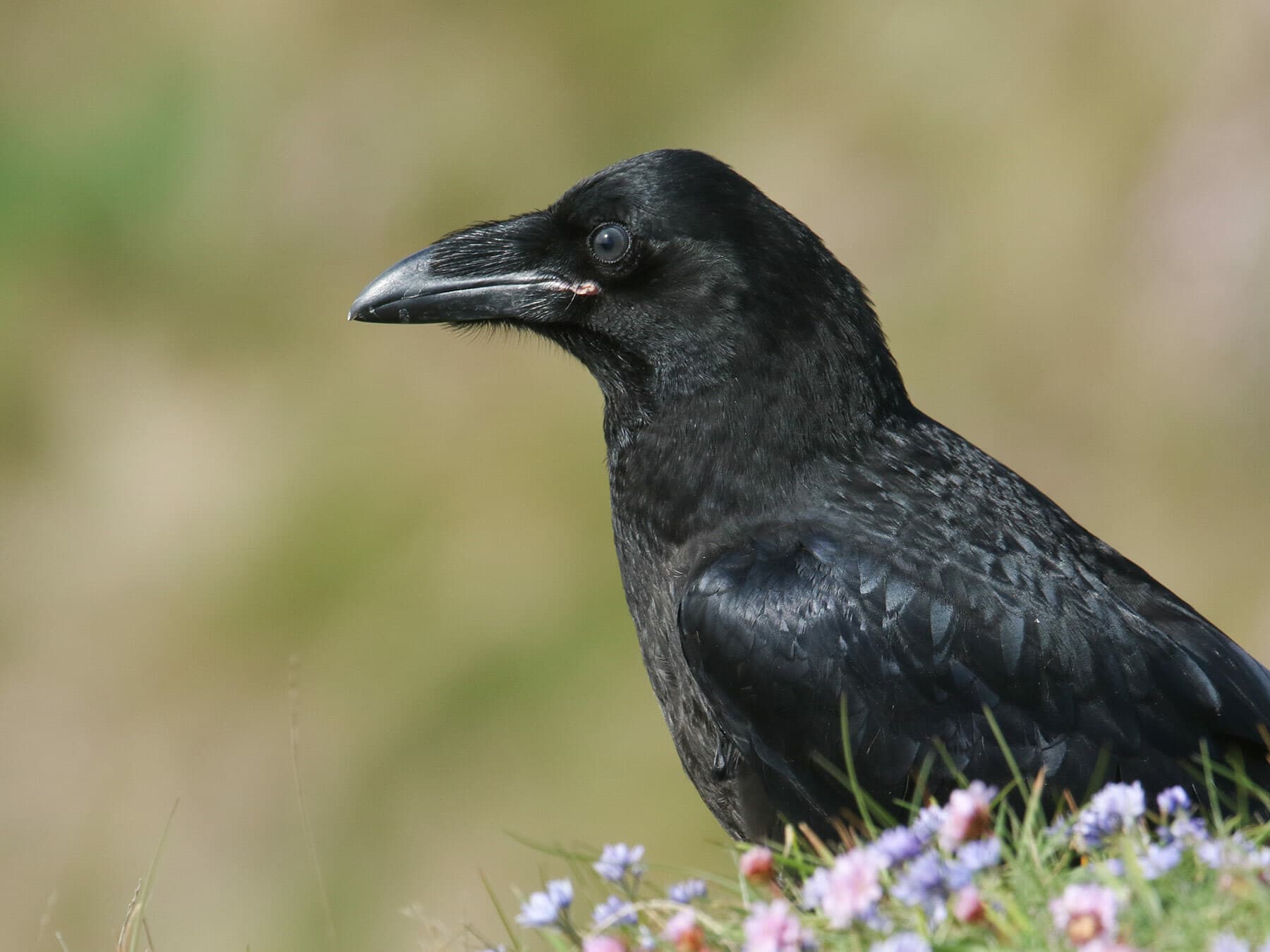
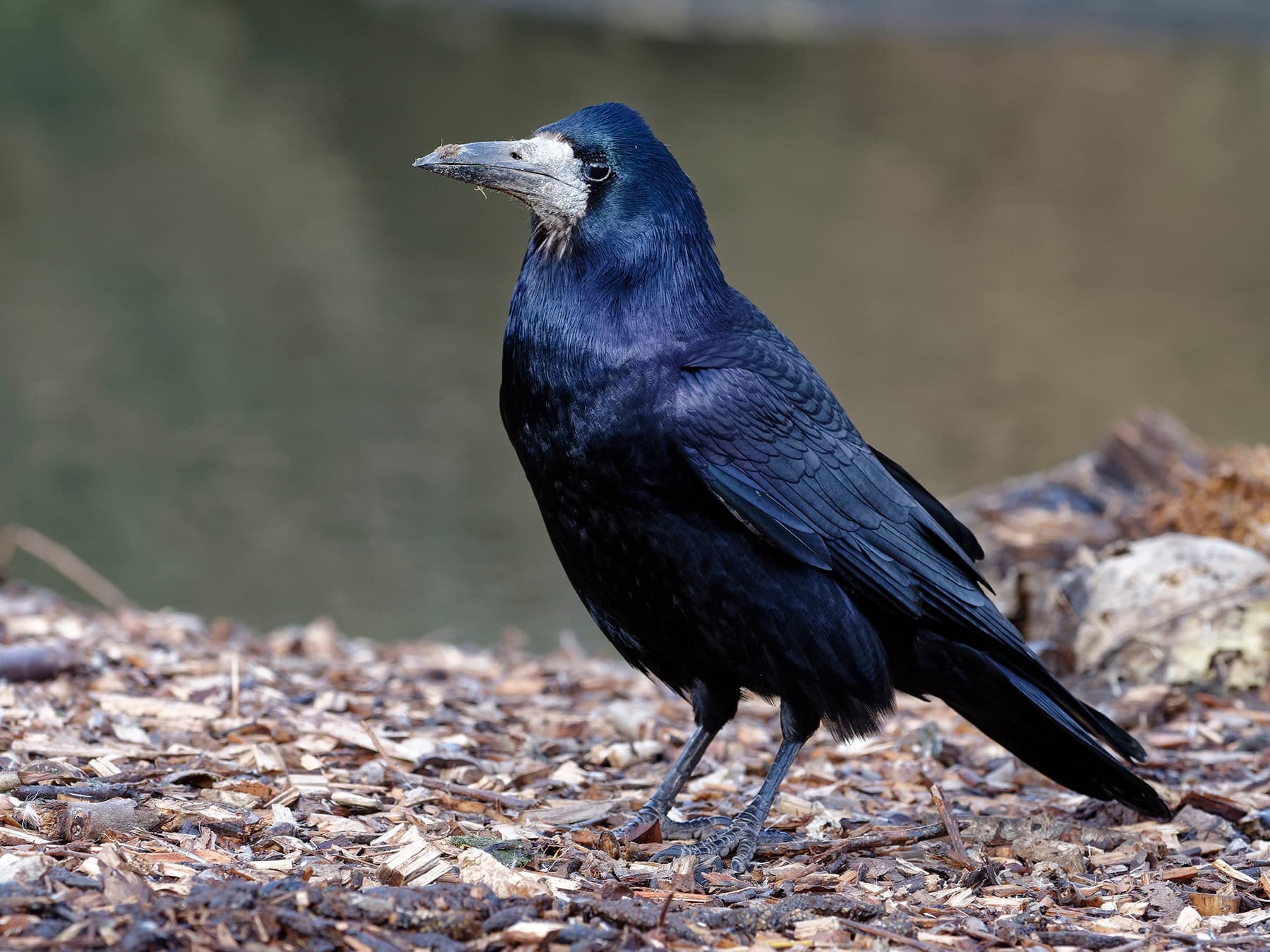
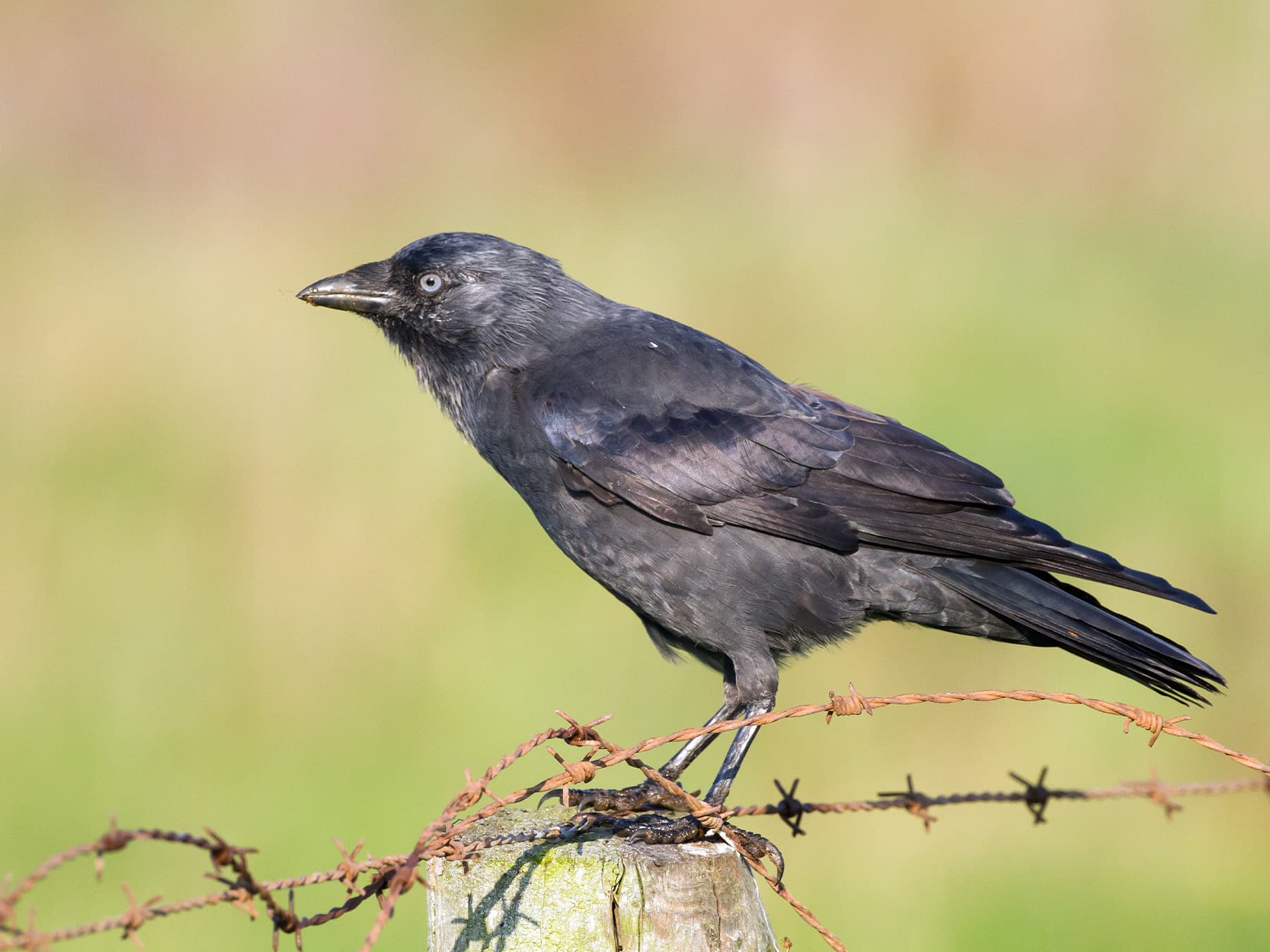
Often mistaken for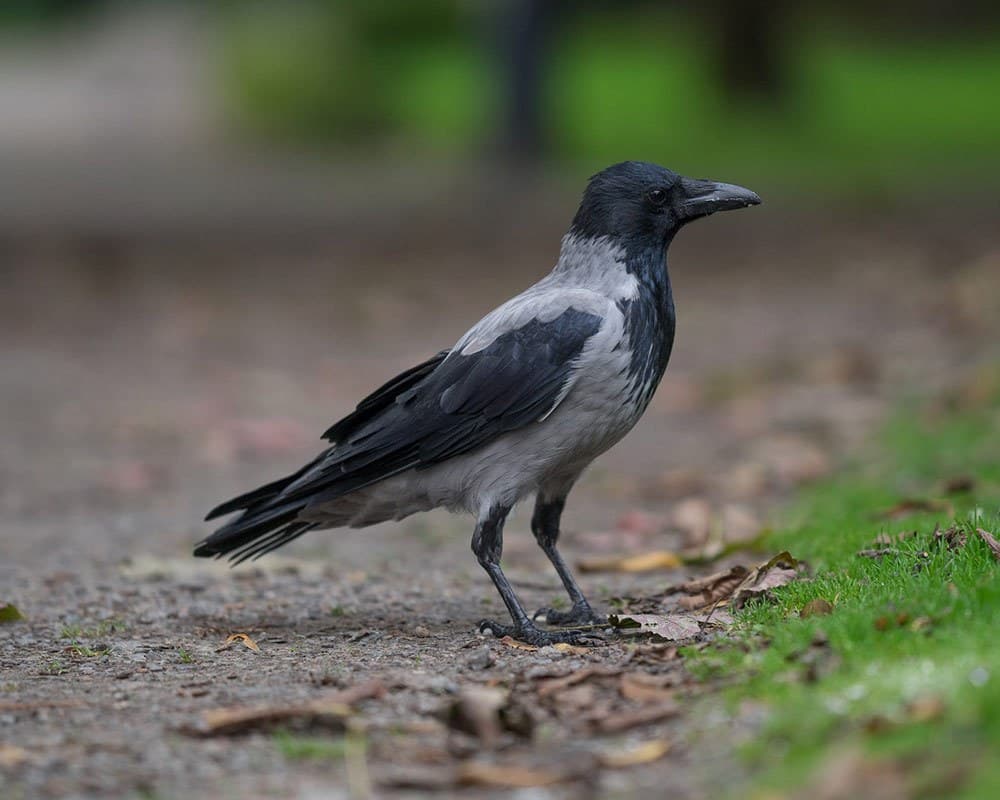
Carrion Crow guides
6 guidesQuick facts
- Length
- 44–51 cm
- Wingspan
- 84–100 cm
- Weight
- 400–600 g
- Lifespan
- 4 years · oldest recorded 20.8 years
- Family
- Crows & Jays
- Migration
- Resident
- Global status (IUCN)
- Least Concern
- World population
- 58,700,000 - 111,000,000 mature individuals
- Population trend
- Stable
- Also called
- Eurasian Crow
- Scientific name
- Corvus corone
Sources
4- 1BirdLife International. 2017. Corvus corone (amended version of 2016 assessment). The IUCN Red List of Threatened Species 2017: e.T22706016A118784397. Source (opens in a new tab)
- 2EBCC (2015)
- 3BirdLife International. 2017. Corvus corone (amended version of 2016 assessment). The IUCN Red List of Threatened Species 2017: e.T22706016A118784397. Source (opens in a new tab)
- 4BTO longevity records: maximum age from a ringed bird, 20 years, 10 months, 7 days (set in 2017), BirdFacts: Carrion Crow (2017) Source (opens in a new tab)

Checked by
Nathan Cope, founder and editor
Nathan founded Birdfact and leads its writers and contributors in the UK, the US and Canada. He has watched and studied birds for more than ten years, and checks every article and species guide before it’s published.