Facts · Updated 8 Oct 2026
Do Crows Migrate? Where Crows Go in Winter
By the Birdfact teamChecked by Nathan Cope
Some crows migrate and some don't. American Crows from the north and the prairies fly south for the winter, some as far as 2,800 km, while many others stay put all year. British Carrion Crows hardly move at all. In winter, crows everywhere gather in big communal roosts, often in towns.
On this page9 sections
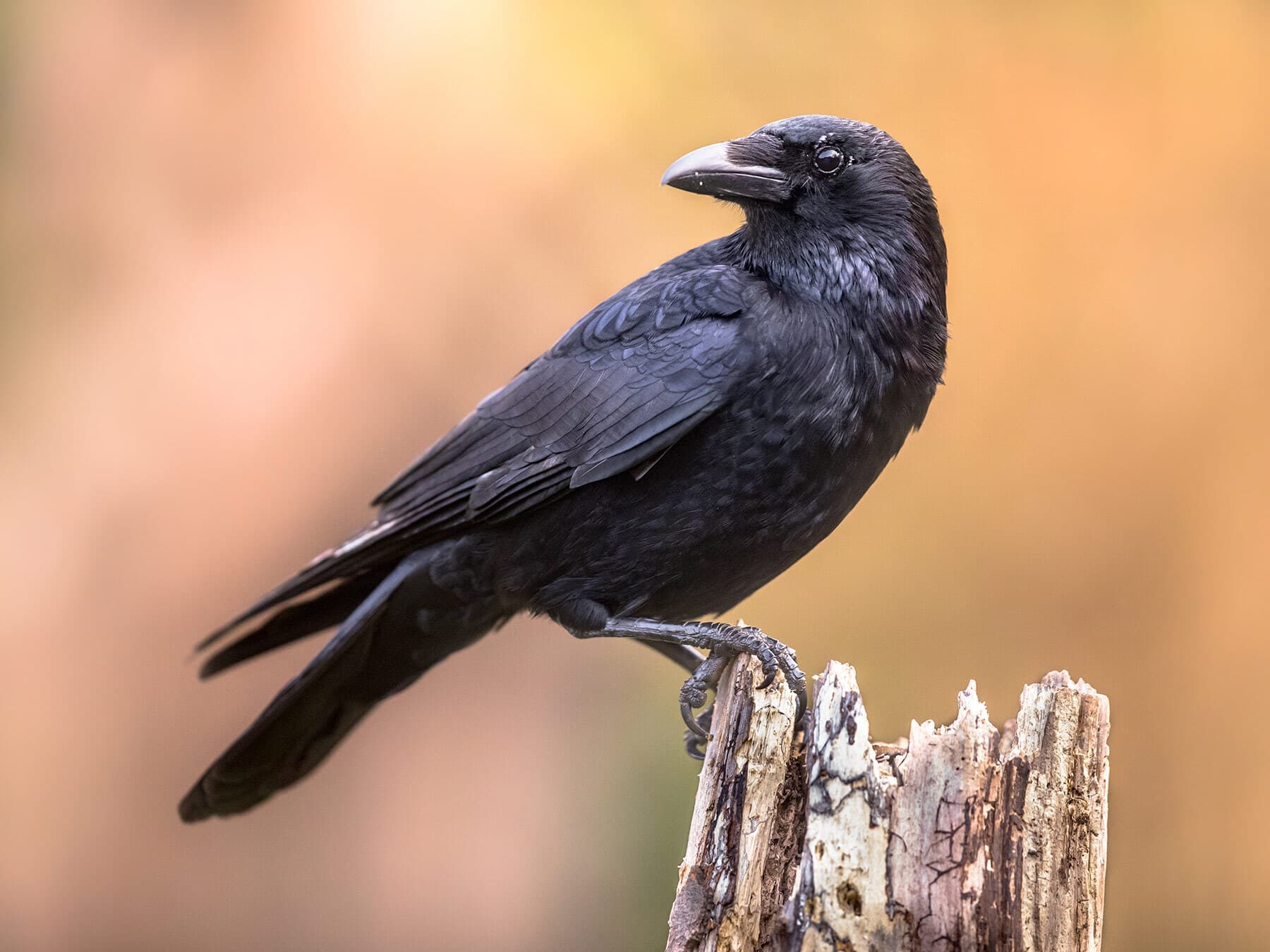
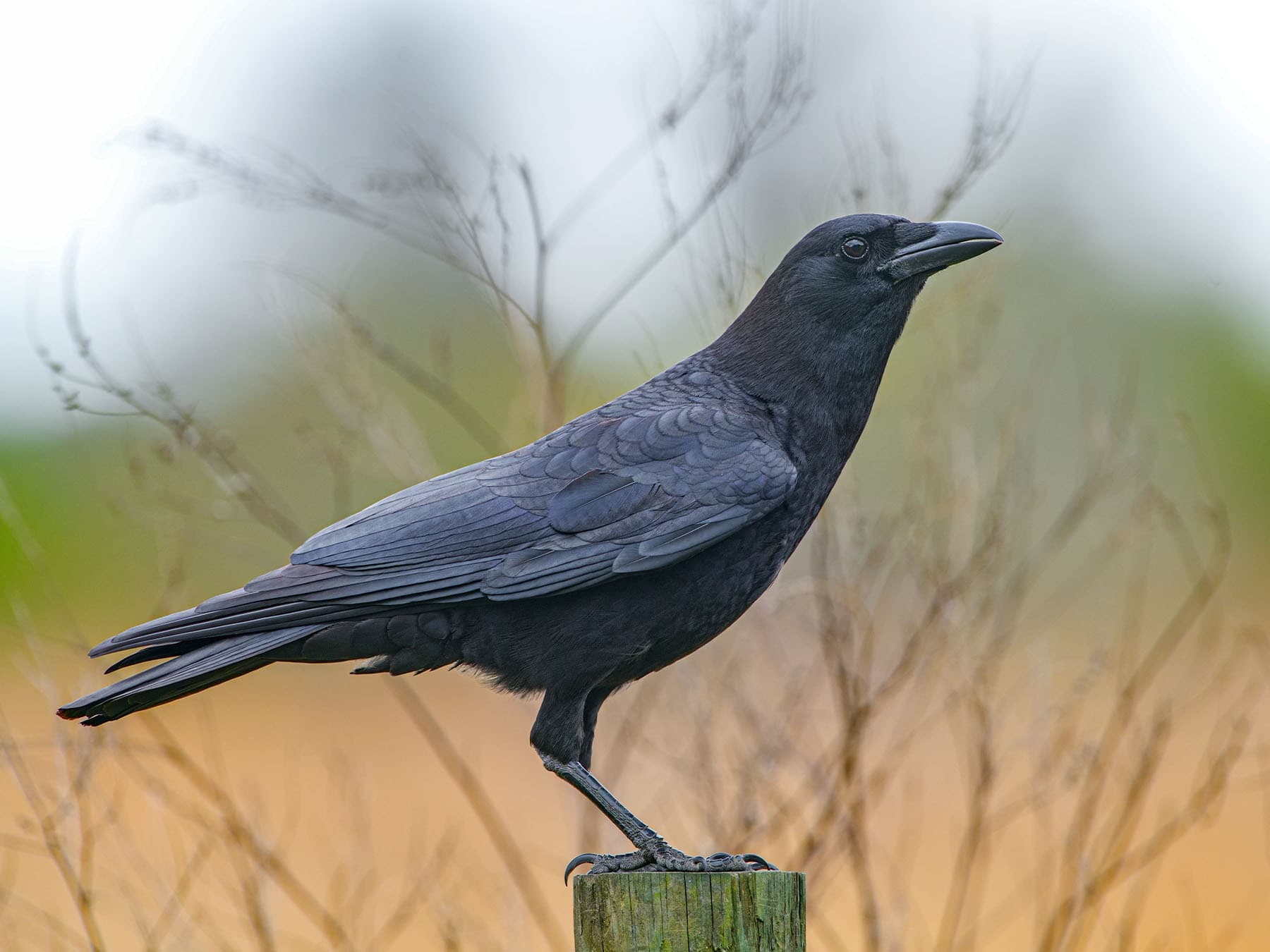
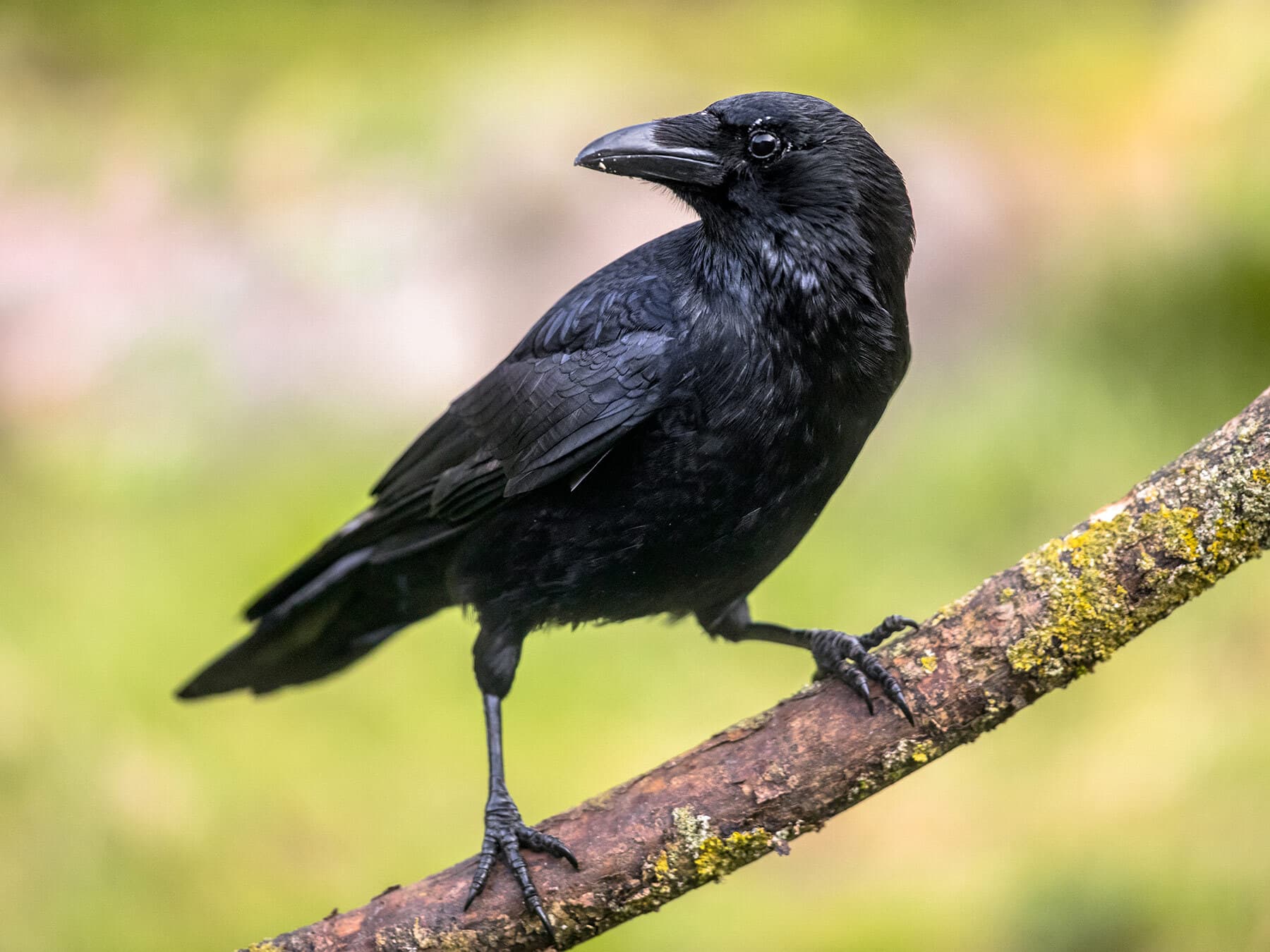
Whether crows migrate depends on the crow and where it lives. This page covers the American Crow, which is partly migratory, and the Carrion Crow and Hooded Crow of Britain and Europe, which mostly stay put.
Do crows migrate?
Some do. American Crows are partial migrants: many spend their whole lives in one small area, but most of those that breed in the north, on the Great Plains and in the Canadian prairies move south for the winter.1 British Carrion Crows hardly move at all.
Which crows leave
Crows leave the coldest parts of their range. They clear almost completely out of the prairie provinces, Nevada and the far north, and many leave northern Ontario and Quebec, Newfoundland and Labrador, interior New Brunswick and Maine, most of Montana and Idaho, Wyoming, central and western North Dakota, and eastern Oregon. Southern crows stay all year. Even within one population, some birds migrate and others do not.
When researchers fitted satellite tags to 18 crows at winter roosts in New York and California, 14 turned out to be migrants that bred further north, travelling 177 to 1,095 km (110 to 680 miles) to their breeding places.2
How far they go
Usually a few hundred kilometres, but some go much further: crows from the Canadian prairies winter in Nebraska, Kansas, Oklahoma and Texas, and the longest banding recoveries are up to about 2,800 km (1,700 miles). Eastern crows travel less far, mostly south-west in autumn and north-east in spring.
Timing and travel
Northern birds start to leave in September, with October the main month of travel. They are among the first migrants back: departures from wintering areas peak from mid-February to late March, and crows reach their breeding areas from February to April.
Crows migrate by day. Eight radio-tagged crows on spring migration flew about 300 km (190 miles) on their first day, stopping twice for about 35 minutes to feed, nearly always with other crows.3 They usually follow lake shores rather than cross open water, though some are seen crossing the Great Lakes.4
Do Carrion Crows migrate?
Not in Britain. Of 945 recoveries of crows ringed in Britain and Ireland, none came from outside the two islands, and the longest recorded journeys are a few hundred kilometres.5 On the Continent, some inland crows drift south and west in winter, and in Asia the eastern population is partly migratory, northern birds wintering in southern China and Pakistan.6
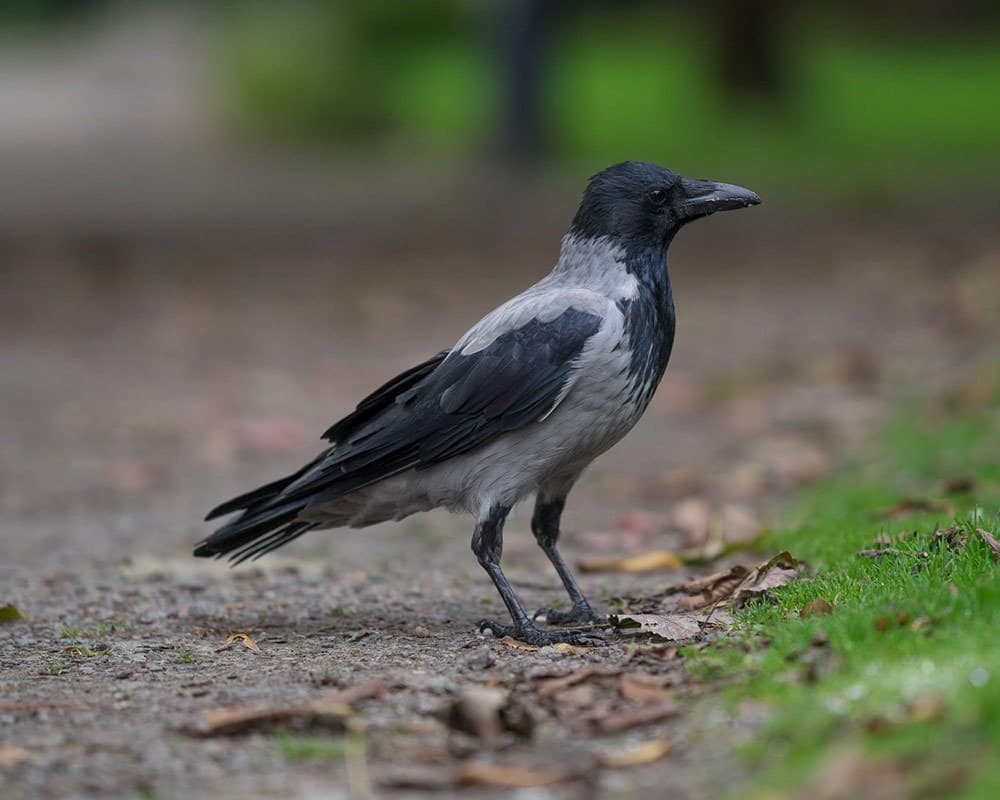
Hooded Crows
Ringing shows that Hooded Crows from Scandinavia and northern Germany used to reach Britain: ten ringed in Norway, Sweden, Denmark and Germany between 1919 and 1951 were found here, from Suffolk to the Highlands. None has been found since.7
Where do crows go in the winter?
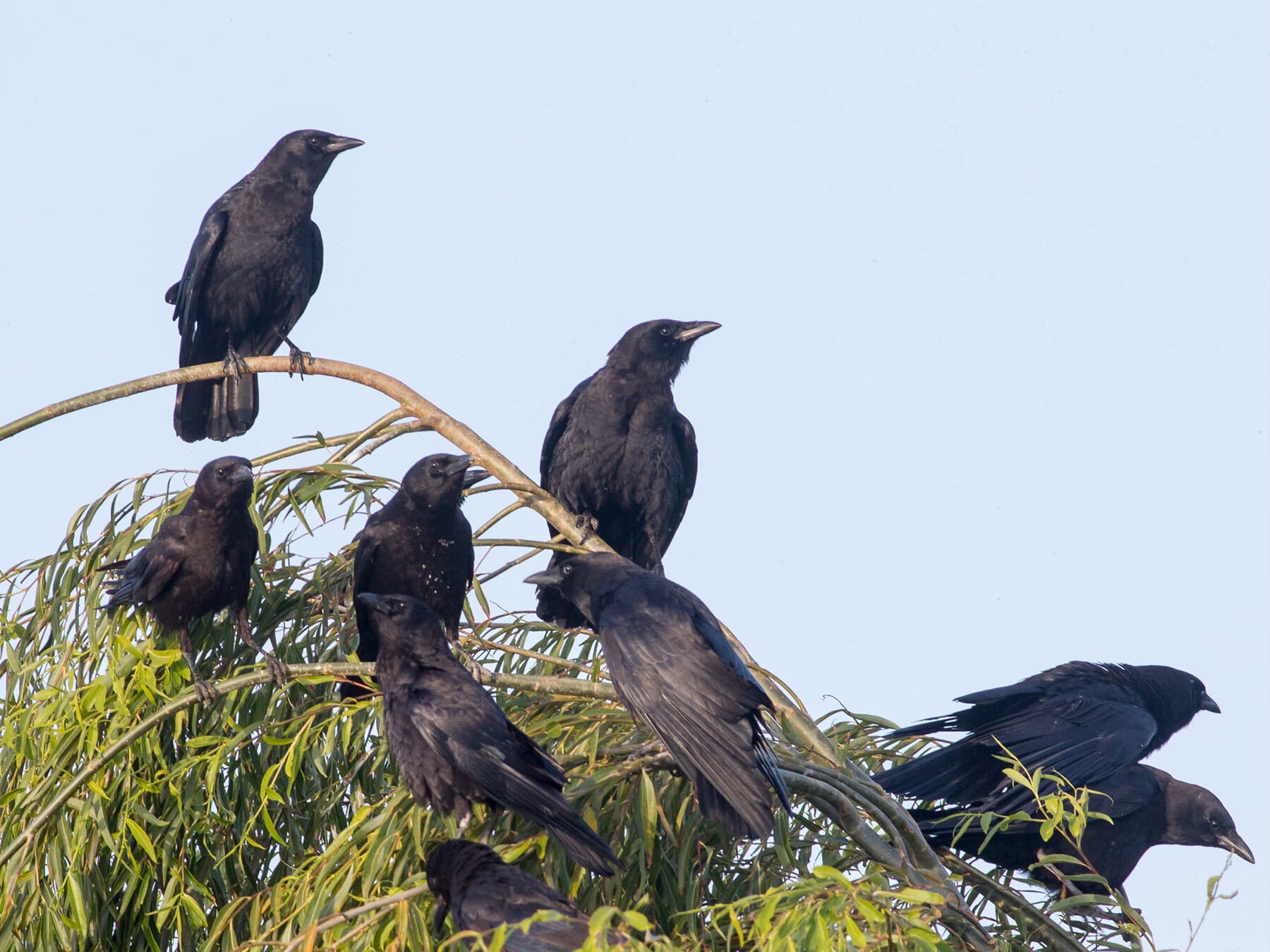
To towns, farms and big communal roosts. In autumn and winter, crows that spent the summer in pairs and families gather at night in roosts of hundreds, thousands or even more than a million birds, and spend the day feeding on farmland, at dumps and in towns. Many winter roosts are now in cities, perhaps because towns are warmer, safer from guns and owls, and well lit.4
Even resident families join in: in one study, crows roosted on their own territory far more often in spring than in winter. See what a group of crows is called.
Back to the same place
Yes. Breeding crows are very faithful to their nesting areas. The satellite-tagged crows returned to the same breeding place each year, and each kept the same habit, migrating or staying, year after year. Migrants even used the same roosts along their routes in different years.
Sources
- Caffrey, C., Verbeek, N. A., Clark, A. B., McGowan, K. J., Pyle, P. (2026). American Crow (Corvus brachyrhynchos), version 1.6. Birds of the World (A. F. Poole, F. B. Gill and M. G. Smith, editors). Cornell Lab of Ornithology. doi:10.2173/bow.amecro.01.6
- Townsend, A. K., Frett, B., McGarvey, A., Taff, C. C. (2018). Where do winter crows go? Characterizing partial migration of American Crows with satellite telemetry, stable isotopes, and molecular markers. The Auk 135(4): 964-974. doi:10.1642/AUK-18-23.1
- Ward, M. P., Raim, A. (2011). The fly-and-social foraging hypothesis for diurnal migration: why American crows migrate during the day. Behavioral Ecology and Sociobiology 65(7): 1411-1418. doi:10.1007/s00265-011-1151-0
- McGowan, K. J. Frequently asked questions about crows. Cornell Lab of Ornithology. Accessed 8 October 2026. Source
- Robinson, R. A., Leech, D. I., Clark, J. A. (2025). Summary of all recoveries for Carrion Crow (Corvus corone). The Online Demography Report: bird ringing and nest recording in Britain & Ireland in 2024 (BTO). Accessed 8 October 2026. Source
- Madge, S., Goodman, D. D., Kirwan, G. M. (2026). Carrion Crow (Corvus corone), version 1.1. Birds of the World (R. Ahmed and B. K. Keeney, editors). Cornell Lab of Ornithology. doi:10.2173/bow.carcro1.01.1
- Robinson, R. A., Leech, D. I., Clark, J. A. (2025). Summary of all recoveries for Hooded Crow (Corvus cornix). The Online Demography Report: bird ringing and nest recording in Britain & Ireland in 2024 (BTO). Accessed 8 October 2026. Source
- Caccamise, D. F., Reed, L. M., Stouffer, P. C. (1997). Roosting behavior and group territoriality in American Crows. The Auk 114(4): 628-637. doi:10.2307/4089282