Facts · Updated 8 Oct 2026
What Is a Group of Crows Called?
By the Birdfact teamChecked by Nathan Cope
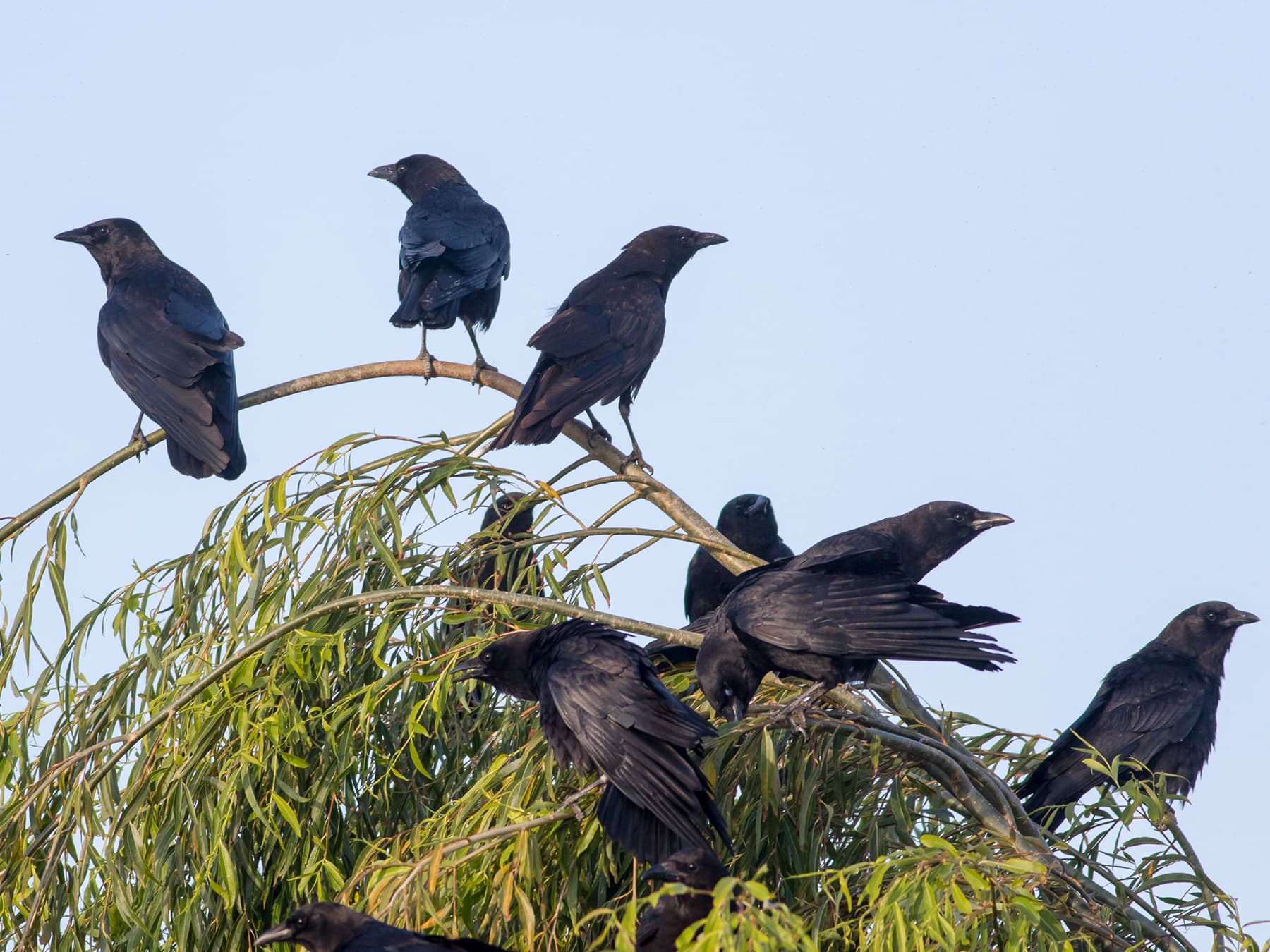
A group of crows is poetically called a murder, though scientists simply say a flock. The name is old but its origin is uncertain: the famous 1486 list of such terms has no crows, though it has ravens, rooks, choughs and magpies; the earliest known example is from 1475. Real crows live in families and gather by the thousands in winter roosts.
On this page7 sections
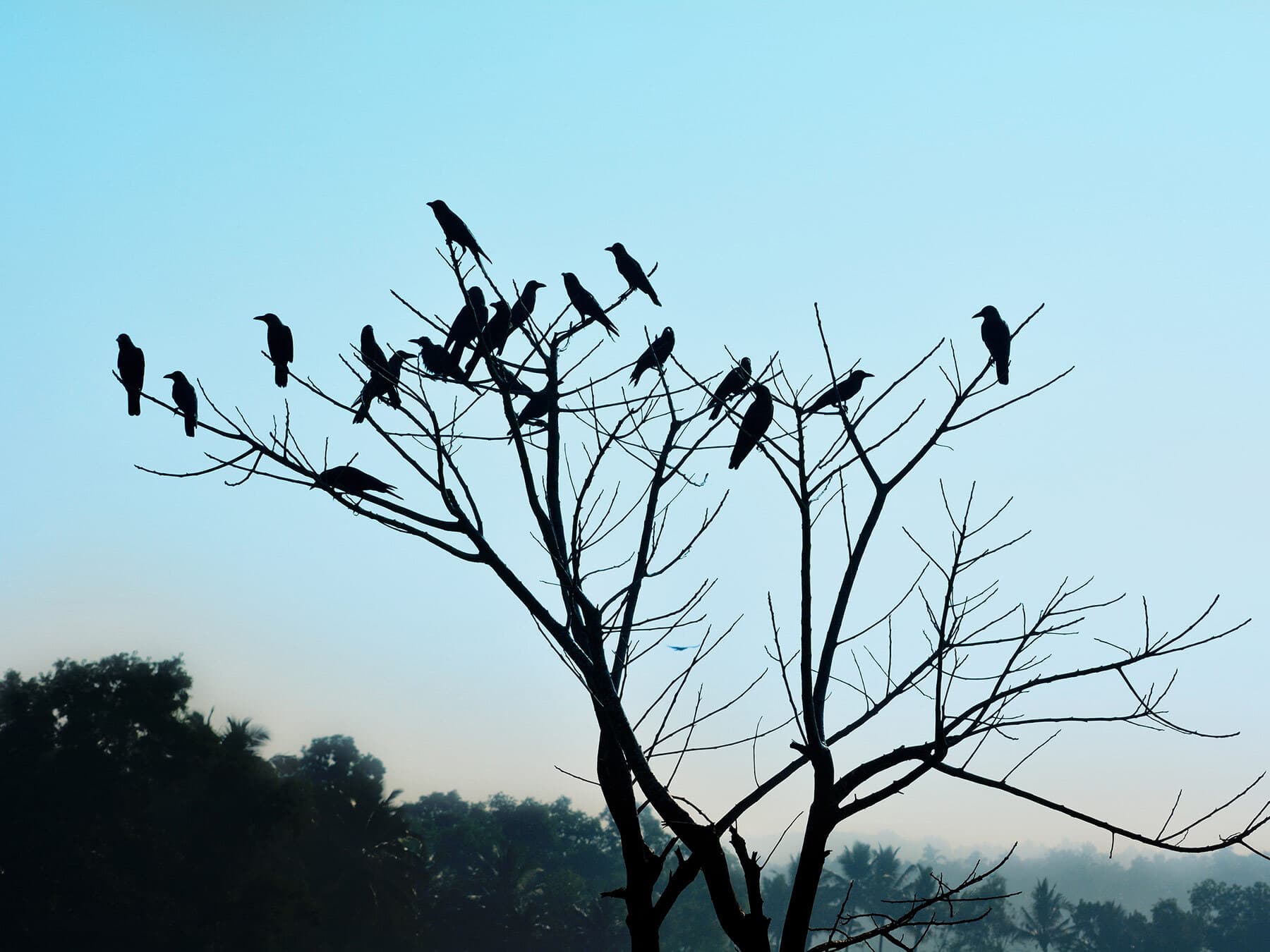
What a group of crows is called, where the famous name comes from, and what crows really do in groups: families, flocks and winter roosts of the American Crow and the Carrion Crow.
What is a group of crows called?
A murder of crows, in the poetic version. In everyday and scientific use it is simply a flock: as Cornell's crow researcher Kevin McGowan puts it, "No scientist calls them that, only poets."1
Where the name comes from
No one knows for certain where it began. Such words, called company terms, were collected in late medieval England. The best-known list, in the Book of St Albans printed in 1486, does not include crows at all. It does give "an unkindness of ravens", "a building of rooks", "a clattering of choughs", "tidings of magpies" and "a murmuration of starlings".2
Other lists of the time do have it. The Oxford English Dictionary's earliest example, from 1475, is "a morther of crowys", though the dictionary warns that many of these group names may never have been used outside the lists. It suggests the name alludes to the crow's old link with violent death, or to its harsh cry. The phrase then dropped out of use and was revived in the 20th century, made popular by James Lipton's 1968 book of group names, An Exaltation of Larks.3 See also why a group of ravens is called an unkindness.
Is it a parliament of crows?
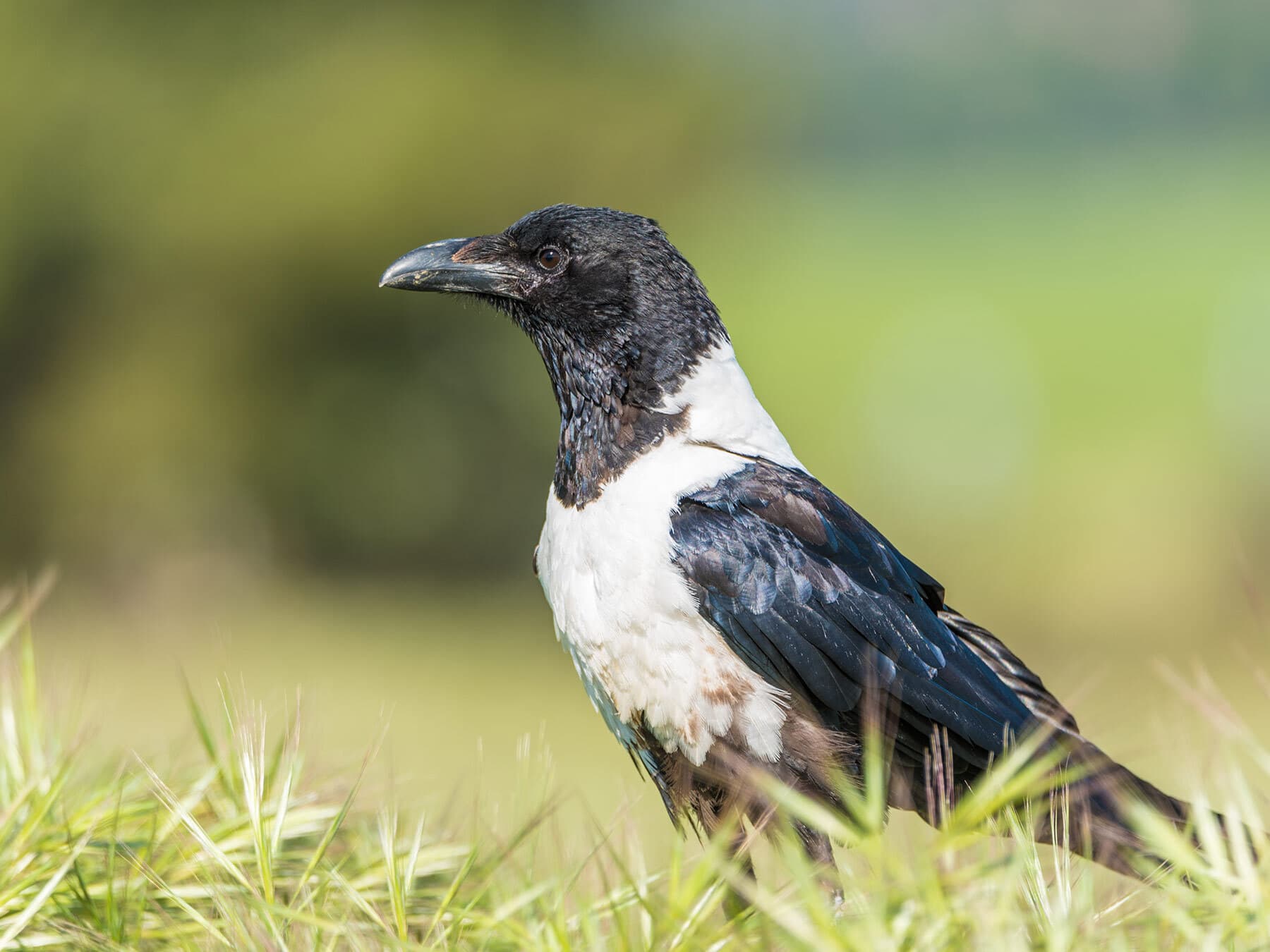
No. "Parliament" is not a recognised name for a group of crows, and the 1486 Book of St Albans has no "parliament" of any bird. The dictionary does record "parliament" for a gathering of rooks, which belong to the crow family; "a parliament of owls" is probably a modern coinage.3
What crows really do in groups
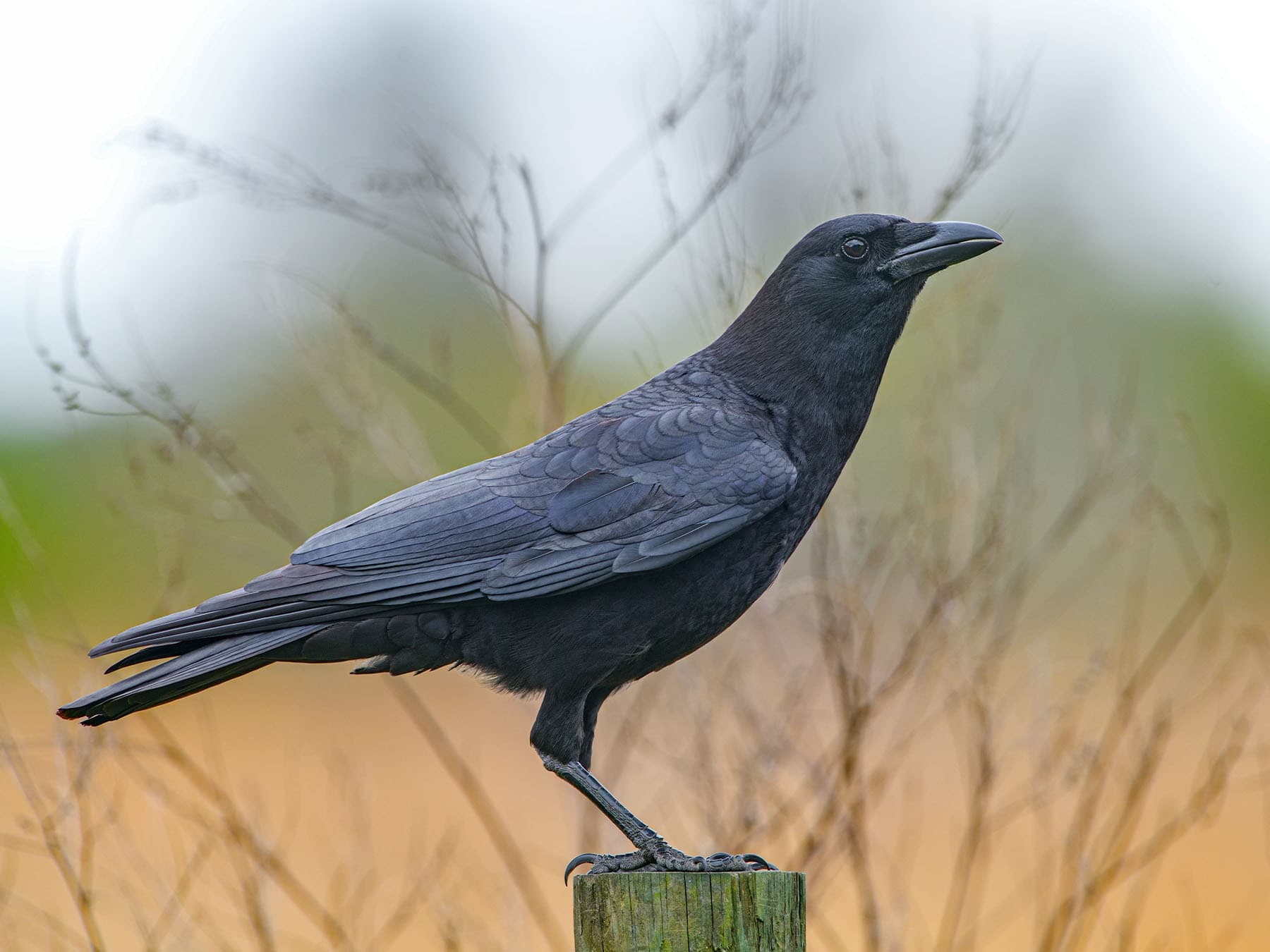
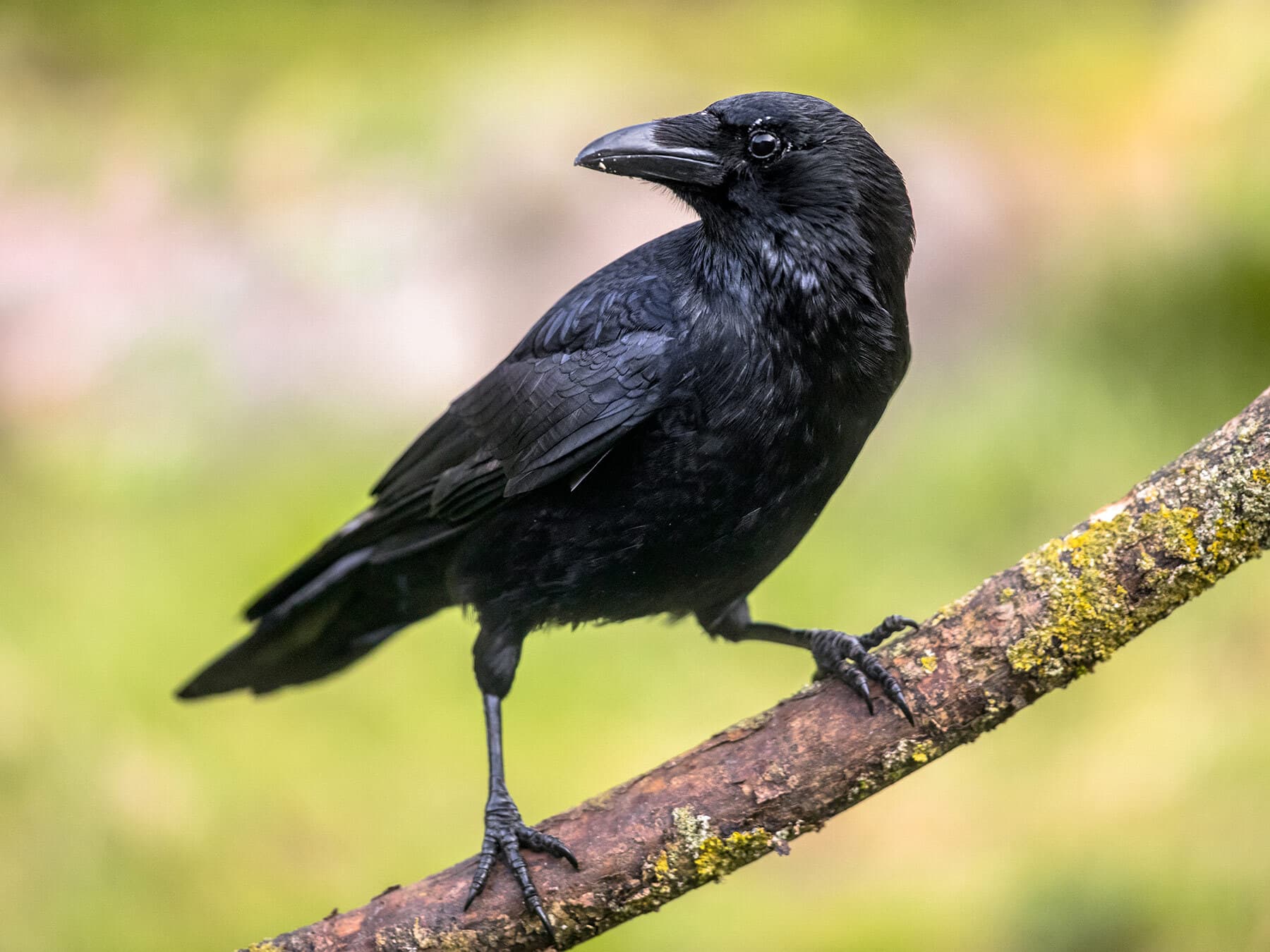
Crows live in families. A breeding pair holds a territory, and in many American Crow populations their grown young stay with them for years, so a family is often 3 to 5 birds and sometimes up to 15.4 Carrion Crows are usually seen in pairs or family parties.5
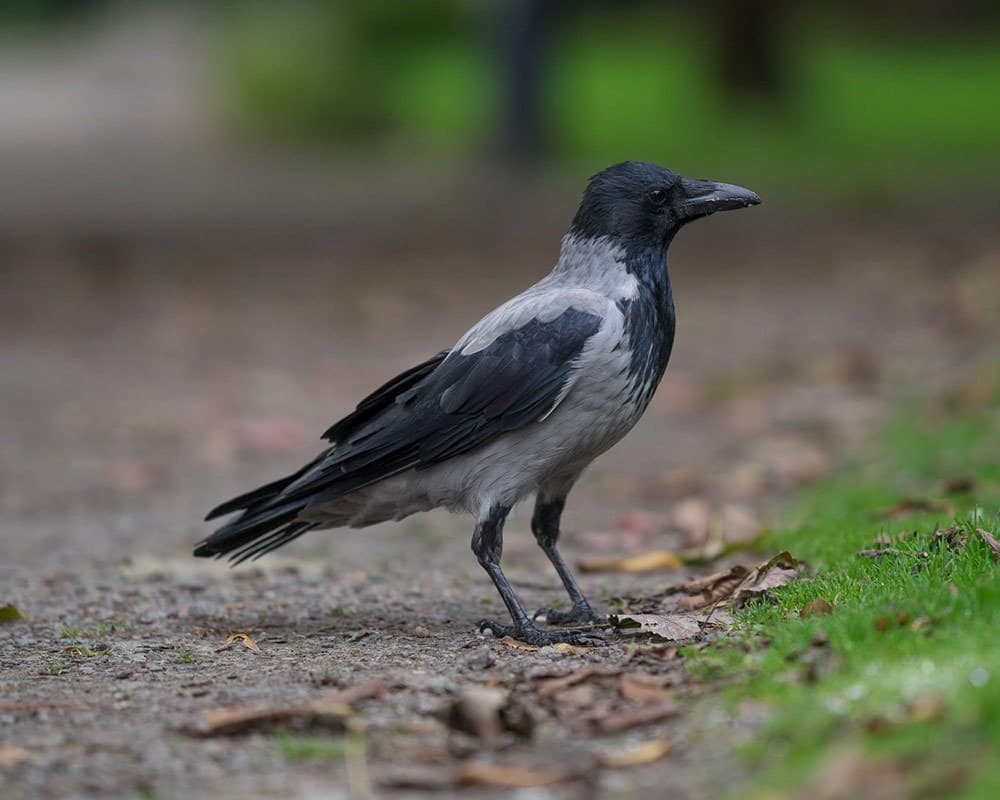
Crows without a territory form loose flocks. At a favourite feeding place, such as a rubbish tip or a tidal mudflat, 50 to 100 Carrion Crows may gather, and up to 5,000 may roost together, sometimes in mixed flocks.5
Winter roosts
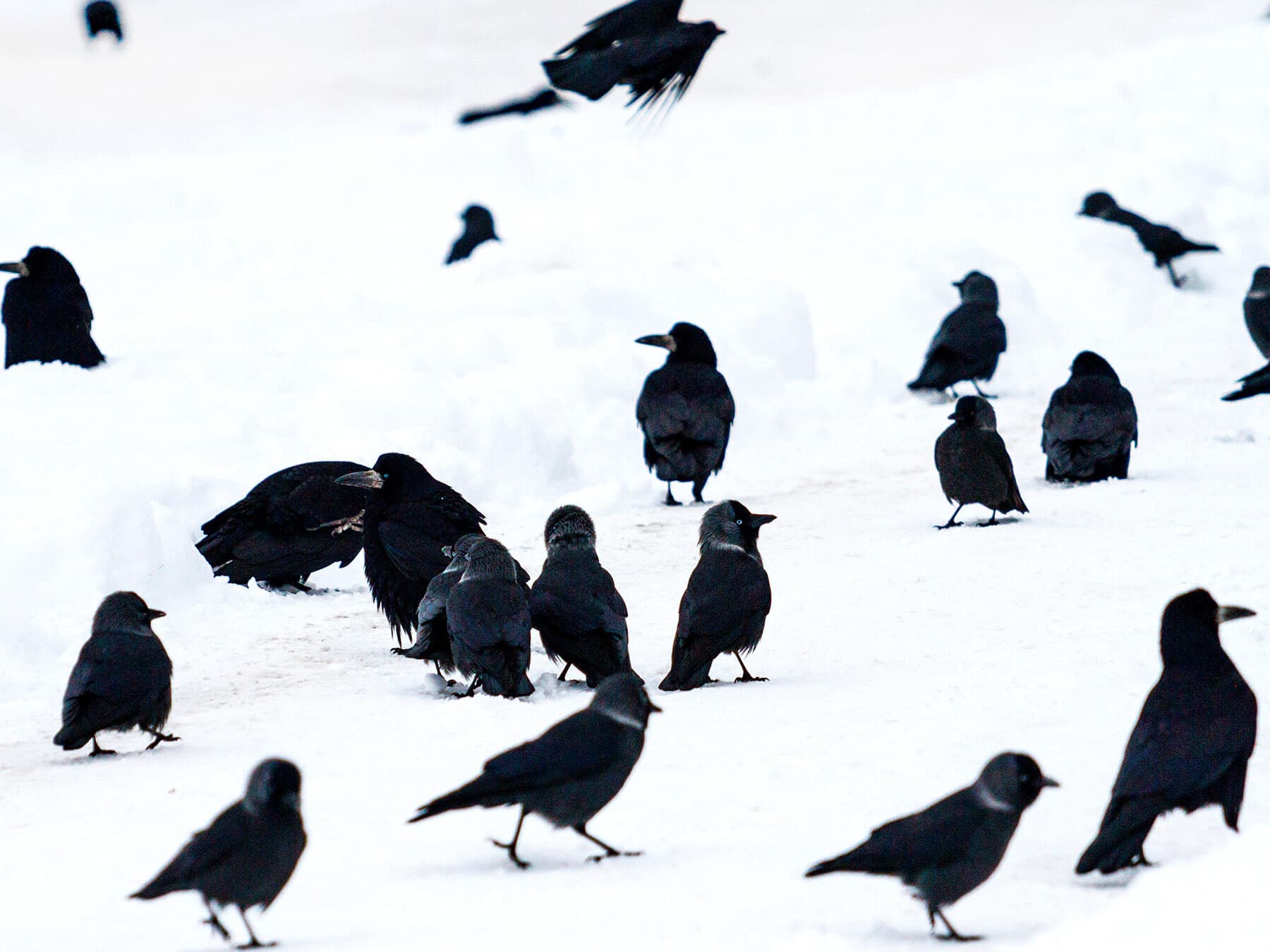
The biggest gatherings are winter roosts. From late summer into winter, American Crows gather at night in roosts of a few hundred to hundreds of thousands, and the largest have been estimated at two million or more. Some roosts have been used for decades, and since the 1960s many have moved into towns. In the afternoon crows gather in stages, then stream in towards dusk.
Families split up for the night: in one study, birds from the same family did not stay together away from their territory, and roosted on it far more often in spring than in winter.6
Why crows gather
Scientists have suggested several reasons for winter roosts: safety in numbers from owls and other predators, warmth, and the chance to learn from other crows where food is. Large roosts also serve as stopovers for migrating crows. Some researchers think the gatherings are simply social: as one put it, a single roost of 500,000 is less efficient than 100 roosts of 5,000 each, yet crows still choose the big one.4 See do crows migrate?
Sources
- McGowan, K. J. Frequently asked questions about crows. Cornell Lab of Ornithology. Accessed 8 October 2026. Source
- Berners, J. (attributed), Blades, W. (facsimile ed.) (1486). The Boke of Saint Albans: The Compaynys of beestys and fowlys. St Albans; facsimile Elliot Stock, London, 1881. Accessed 8 October 2026. Source
- O'Conner, P., Kellerman, S. A murder of crows. Grammarphobia Blog (posted 18 January 2008, updated 2022-2024). Accessed 8 October 2026. Source
- Caffrey, C., Verbeek, N. A., Clark, A. B., McGowan, K. J., Pyle, P. (2026). American Crow (Corvus brachyrhynchos), version 1.6. Birds of the World (A. F. Poole, F. B. Gill and M. G. Smith, editors). Cornell Lab of Ornithology. doi:10.2173/bow.amecro.01.6
- Madge, S., Goodman, D. D., Kirwan, G. M. (2026). Carrion Crow (Corvus corone), version 1.1. Birds of the World (R. Ahmed and B. K. Keeney, editors). Cornell Lab of Ornithology. doi:10.2173/bow.carcro1.01.1
- Caccamise, D. F., Reed, L. M., Stouffer, P. C. (1997). Roosting behavior and group territoriality in American Crows. The Auk 114(4): 628-637. doi:10.2307/4089282