Facts · Updated 8 Oct 2026
Baby Crows: Looks, Growth and What to Do
By the Birdfact teamChecked by Nathan Cope
Baby crows hatch pink and almost naked, grow fast, and leave the nest at about four to five weeks old, nearly adult size, which is why you rarely notice them. Fluffy young crows with short tails, blue-grey eyes and pink gapes, begging from their parents, are fledglings and best left alone.
On this page10 sections
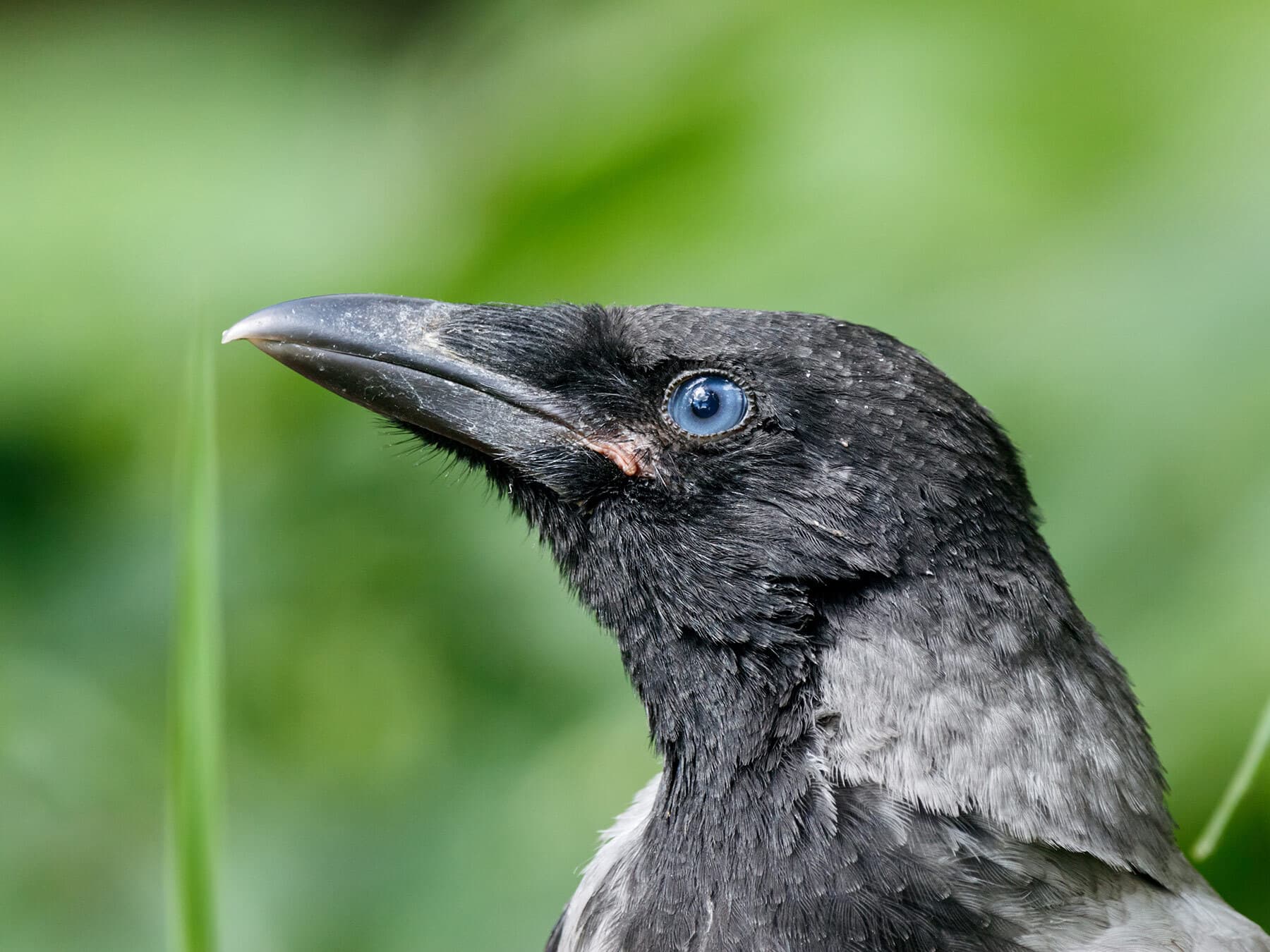
Baby crows of the American Crow and the Carrion Crow: what they are called and look like, how fast they grow, what they eat, why you so rarely notice them, and what to do if you find one on the ground.
Nestling, fledgling, juvenile
A chick, or a nestling while it is in the nest. Once it leaves the nest, before it can fly well, it is a fledgling; for its first year a young crow is a juvenile or first-year bird. There is no special word for a baby crow.
What does a baby crow look like?
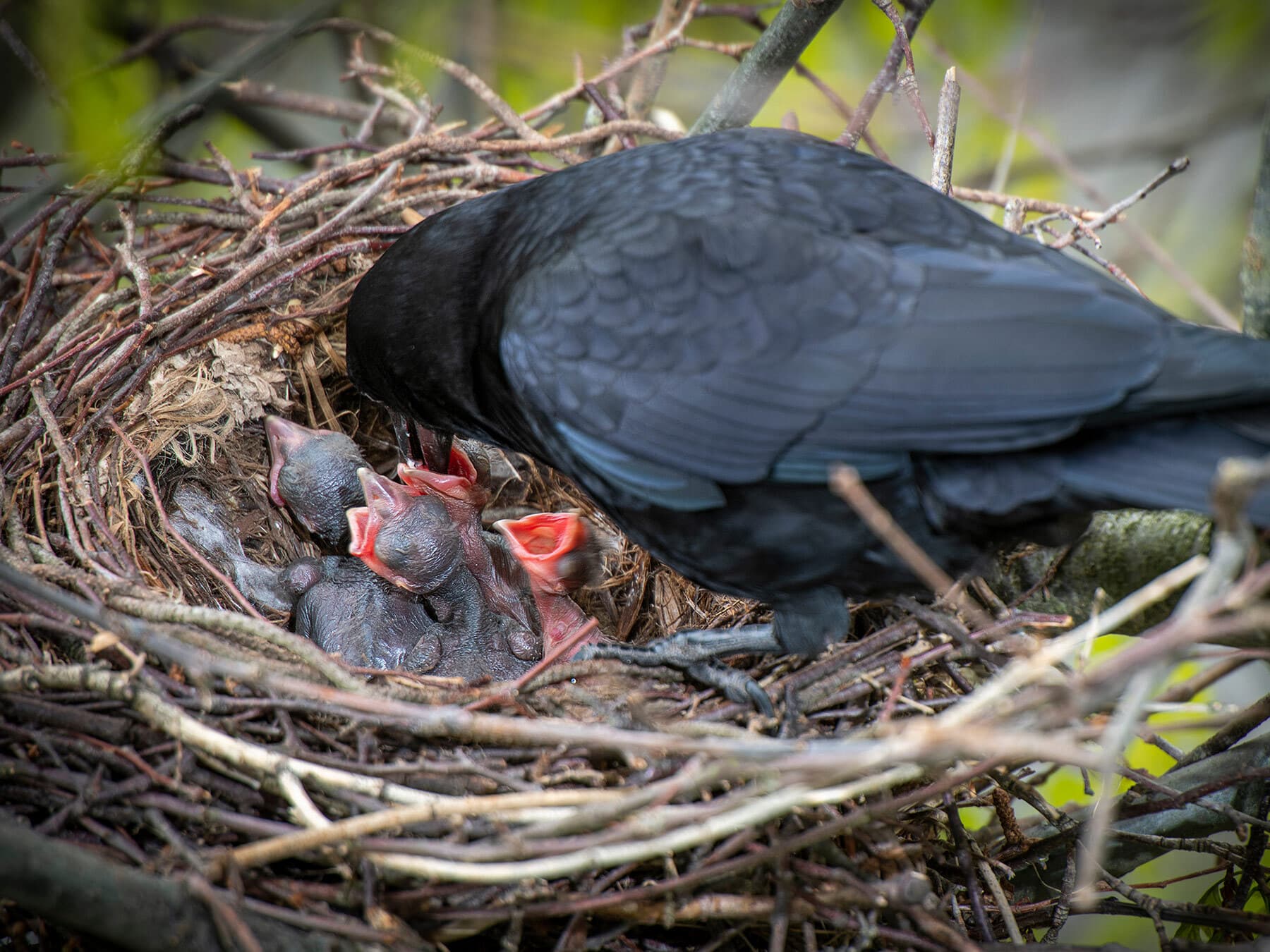
At hatching, a crow chick is pink, blind and almost naked, with a few tufts of grey down. Inside, its mouth is bright red, which shows when it begs. Its eyes open at about 5 to 13 days, and by the time it leaves the nest it is well feathered, though its wing and tail feathers are still growing.1
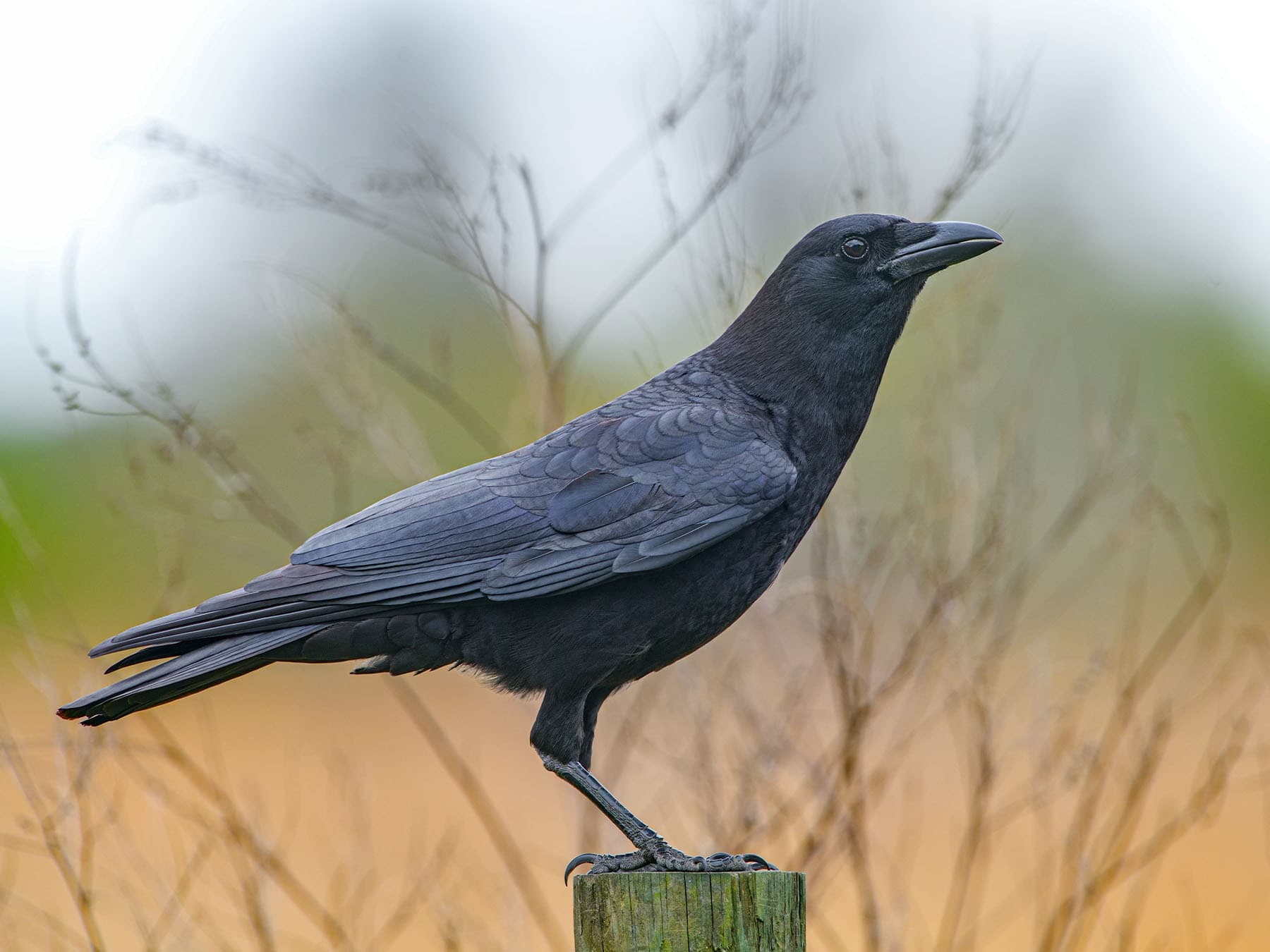
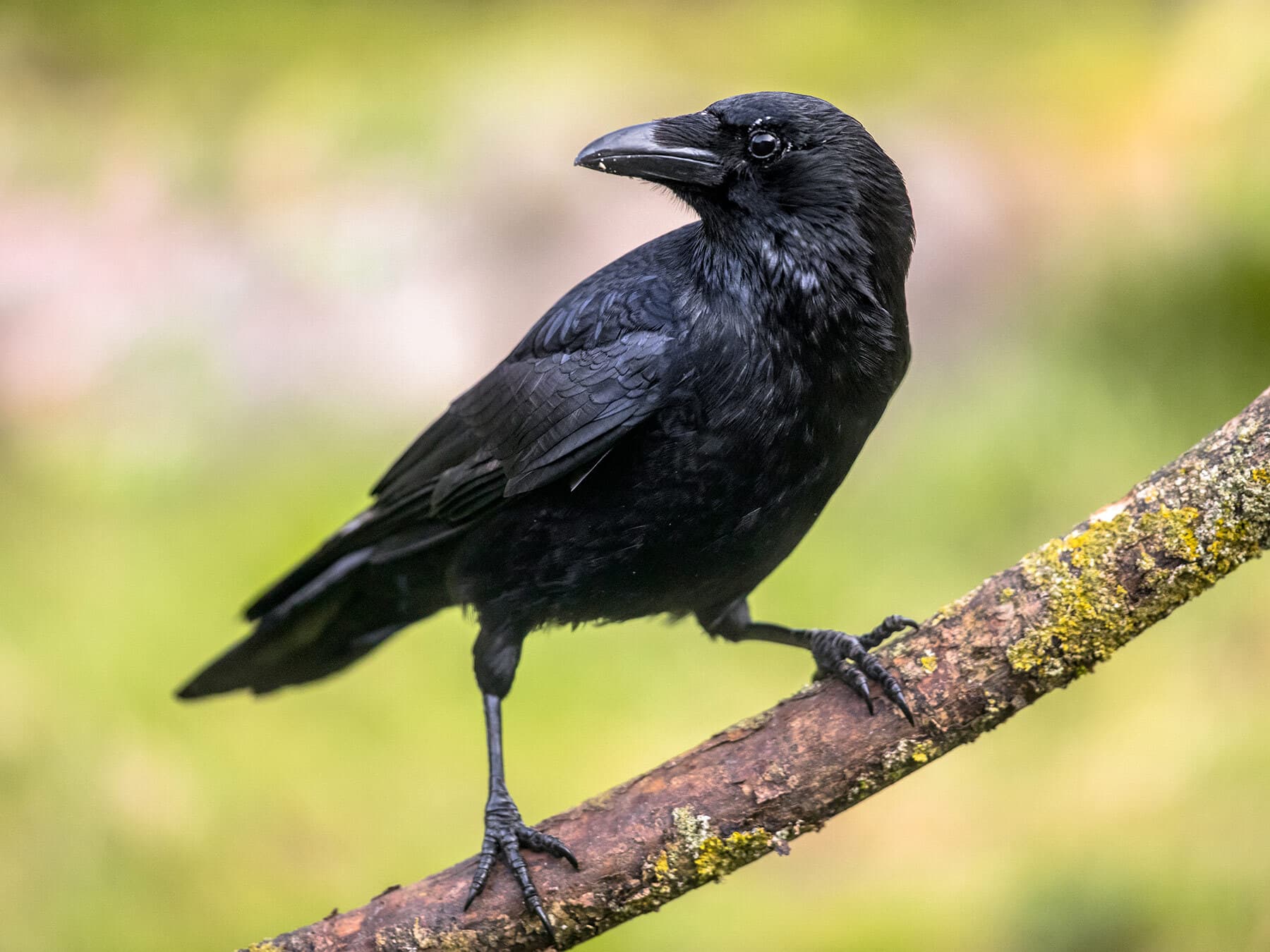
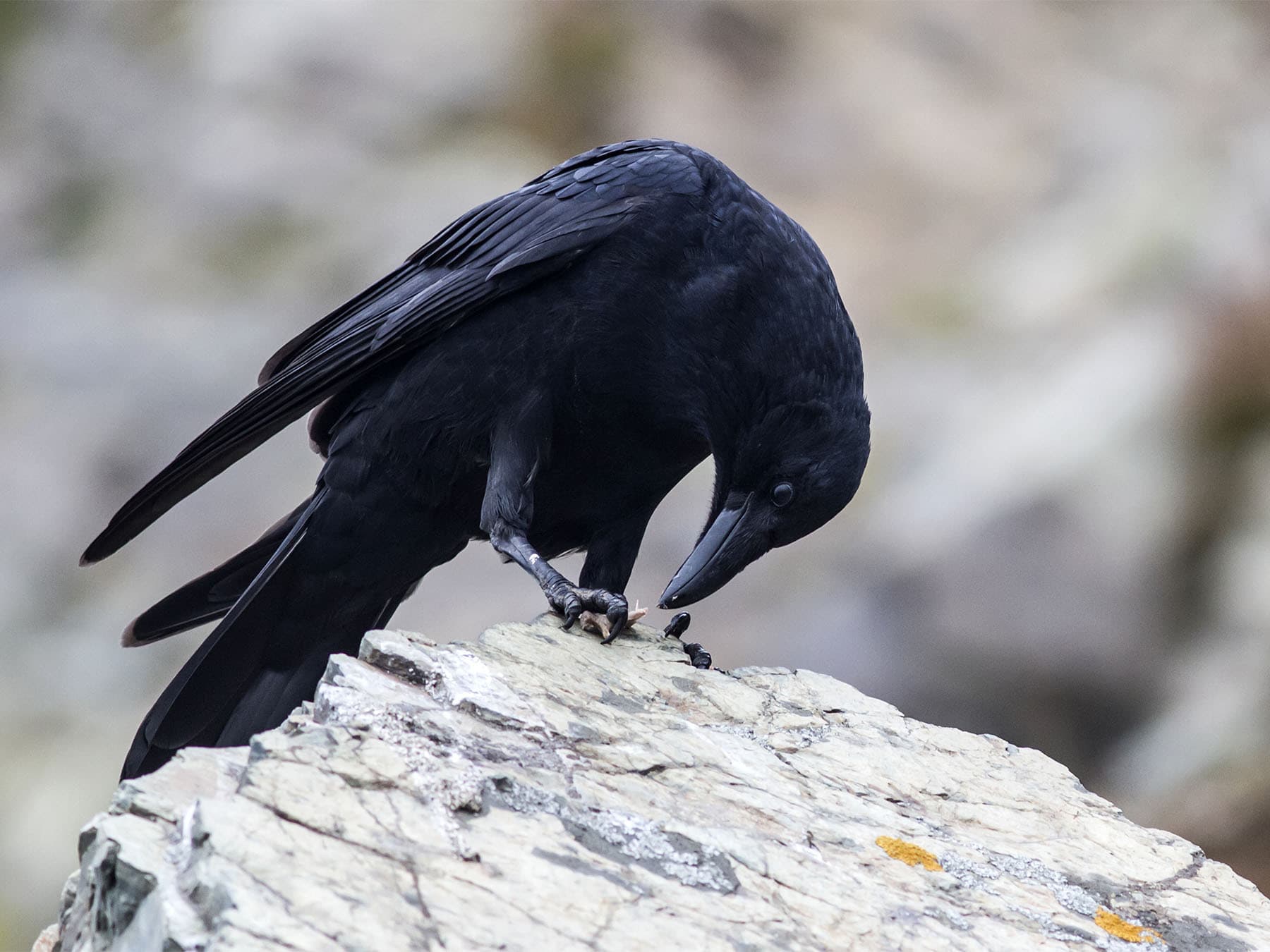
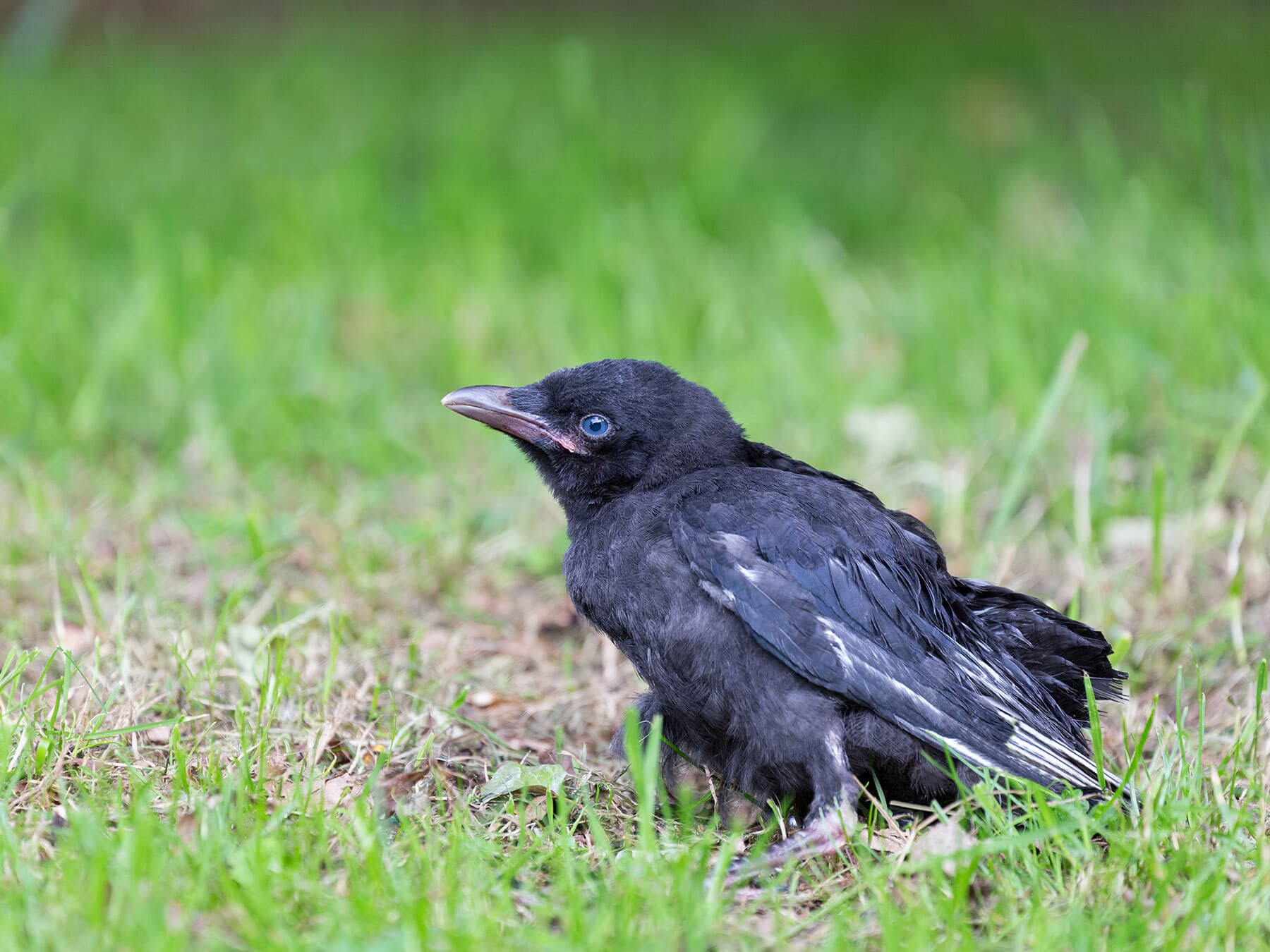
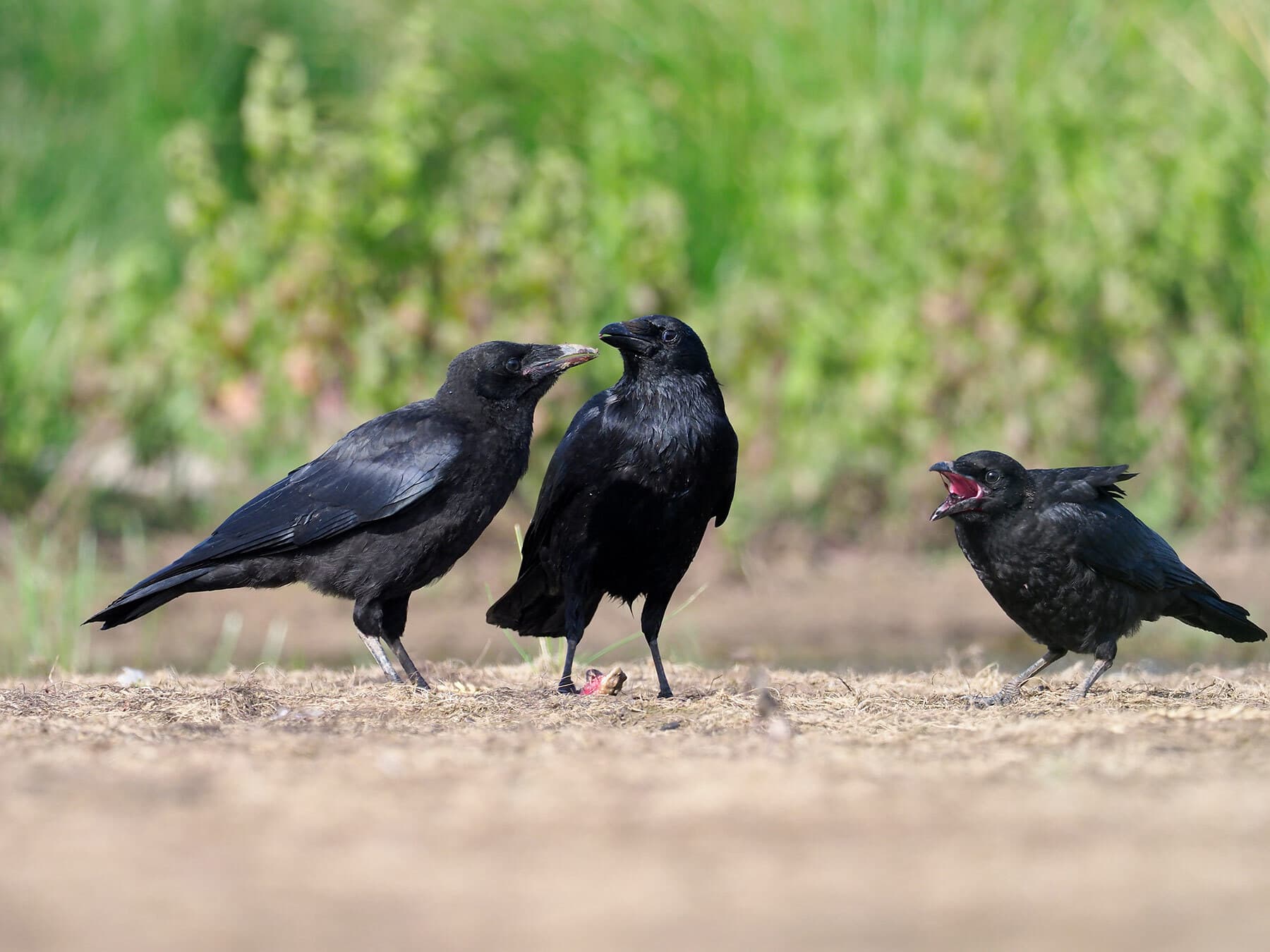
A young crow just out of the nest looks almost grown up but duller and fluffier, with a short tail, blue-grey eyes and pink skin at the corners of the bill. A young Carrion Crow is sooty black, with a greyer eye than an adult and a pinkish-red mouth.2 The pink inside the mouth fades slowly and can last several years in American Crows.
Growing up fast
Very fast. An American Crow chick weighs about 15.6 g (half an ounce) at hatching and grows fastest between about 8 and 18 days old, when it reaches 20 times its hatching weight. It leaves the nest at about 4 to 5 weeks, at 80 to 100% of adult weight, with full-size legs and nearly full-size wings.3 Carrion Crow chicks leave the nest at about 29 days old.4
Why do you never see baby crows?
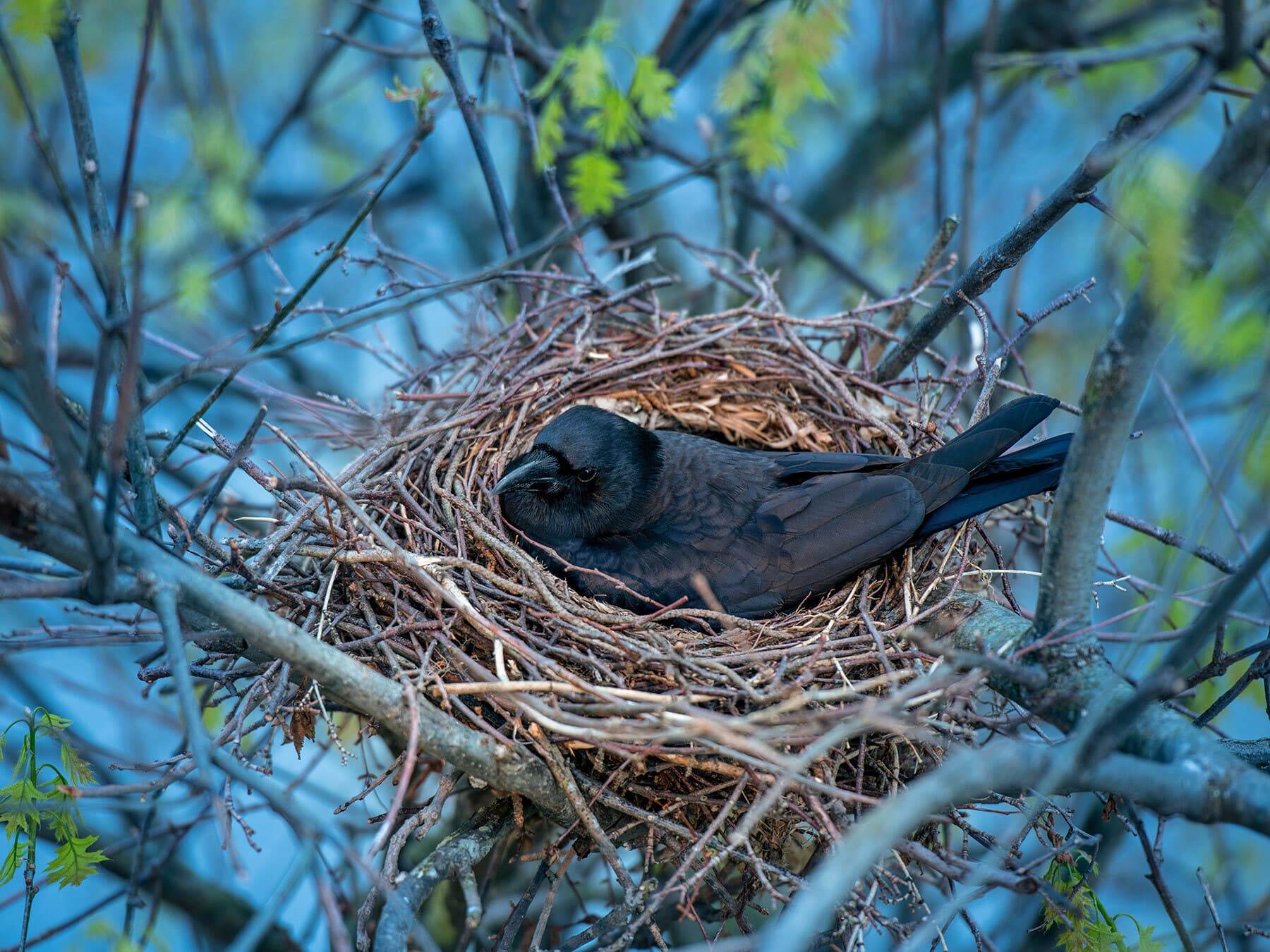
You probably do, but they look grown up. By the time a crow chick leaves the nest it is nearly adult size, so it passes for an adult at a glance. Before that it is hidden in a nest high in a tree. And in one California study, young American Crows stayed up in the canopy around the nest tree for about ten days before first coming to the ground.1 Look for a fluffy crow with a short tail and a pink gape, begging noisily from its parents.
Food
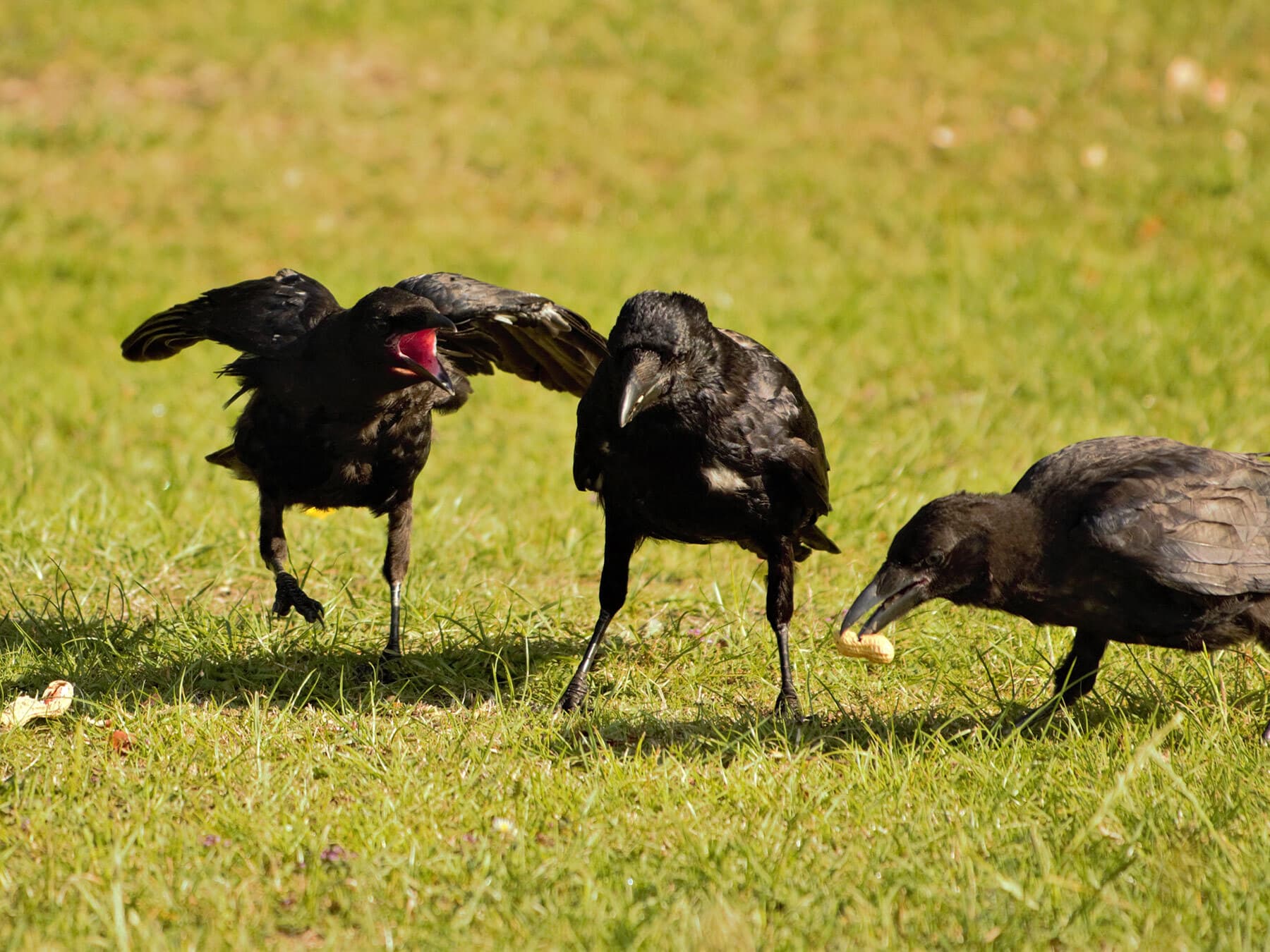
Nestling American Crows are fed mostly insects and other small animals: beetles, grasshoppers, spiders, frogs and small rodents, with some grain. Both parents feed them, carrying food in a pouch at the base of the throat, and in many American families older offspring help. See what crows eat.
Staying with the family
A long time. Young American Crows are fed by their parents for six weeks to two months after leaving the nest, and many stay with the family for a year or more, some for several years, helping to raise their younger brothers and sisters.5 Corvids in general have a long period of parental care, up to six months.6 Young Carrion Crows depend on their parents for several weeks, and some stay with them through their first winter.
Found a baby crow on the ground?
Leave it alone if it has feathers. A young crow with most of its feathers, hopping on the ground or among low branches, is almost certainly a fledgling in its "branching" stage: it left the nest on purpose and its parents are nearby, still feeding it.6 Keep pets and people away and watch from a distance. Don't worry about touching it: crows do not abandon a chick because a person has handled it.3
Get help if the bird is a nestling with few or no feathers, is injured (a drooping wing, blood, or a foot it cannot grip with), or has been caught by a cat. In Britain, the RSPCA's advice is that a healthy young corvid that has not been fed for an hour and is in danger can be placed high in the nearest tree; a nestling on the ground needs a professional, because crows usually cannot be put back in the nest. Don't take a healthy young crow home: of six hand-raised crows that McGowan marked, none survived its first winter.3
Who to call
In Britain, contact a vet or wildlife rescue, the RSPCA (England and Wales, 0300 1234 999), the Scottish SPCA (03000 999 999) or the USPCA in Northern Ireland (028 3025 1000). The RSPB is a conservation charity and cannot help with individual birds.7
In the US, call a licensed wildlife rehabilitator or a vet; Animal Help Now lists local help.8 Keeping a wild crow is illegal under the Migratory Bird Treaty Act9, but anyone who finds a sick, injured or orphaned bird may carry it straight to a rehabilitator or vet without a permit.10 Don't try to feed it in the meantime.11
First breeding
Late. Carrion Crows usually first breed at 2 years old. Most American Crows wait until their fourth or fifth year: in a New York study, females first bred at 3.3 years on average and males at 4.9.5
Sources
- Caffrey, C., Verbeek, N. A., Clark, A. B., McGowan, K. J., Pyle, P. (2026). American Crow (Corvus brachyrhynchos), version 1.6. Birds of the World (A. F. Poole, F. B. Gill and M. G. Smith, editors). Cornell Lab of Ornithology. doi:10.2173/bow.amecro.01.6
- Madge, S., Goodman, D. D., Kirwan, G. M. (2026). Carrion Crow (Corvus corone), version 1.1. Birds of the World (R. Ahmed and B. K. Keeney, editors). Cornell Lab of Ornithology. doi:10.2173/bow.carcro1.01.1
- McGowan, K. J. I found a baby crow ... Cornell Lab of Ornithology. Accessed 8 October 2026. Source
- BTO. Carrion Crow (Corvus corone). BTO BirdFacts. Accessed 8 October 2026. Source
- McGowan, K. J. Frequently asked questions about crows. Cornell Lab of Ornithology. Accessed 8 October 2026. Source
- RSPCA. Found a baby corvid. RSPCA, Advice and welfare. Accessed 8 October 2026. Source
- RSPB. If you find an injured bird. RSPB, Birds and wildlife. Accessed 8 October 2026. Source
- Animal Help Now. Animal Help Now: wildlife emergency help. ahnow.org. Accessed 8 October 2026. Source
- U.S. Congress (1918). Migratory Bird Treaty Act, 16 U.S.C. 703. Accessed 8 October 2026. Source
- U.S. Fish and Wildlife Service (2026). 50 CFR 21.76: Rehabilitation permits. Accessed 8 October 2026. Source
- Jones, B. When You Should, and Should Not, Rescue Baby Birds. Audubon. Accessed 8 October 2026. Source