


Pied Crow
African Pied Crow · Corvus albus
By the Birdfact teamChecked by Nathan Cope
On this page22 sections
- How to recognise it
- Its size
- Its song and calls
- When and where to see it
- What it eats
- Nesting and breeding
- Behaviour
- Lifespan and predators
- Conservation
- What does a pied crow look like?
- How big is a pied crow?
- How much does a pied crow weigh?
- What is the scientific name of a pied crow?
- Are pied crows agressive?
- Are pied crows endangered?
- Do pied crows mate for life?
- Can pied crows talk?
- How intelligent are pied crows?
- Similar birds
- Pied Crow guides
- Quick facts
- Sources
How to recognise it
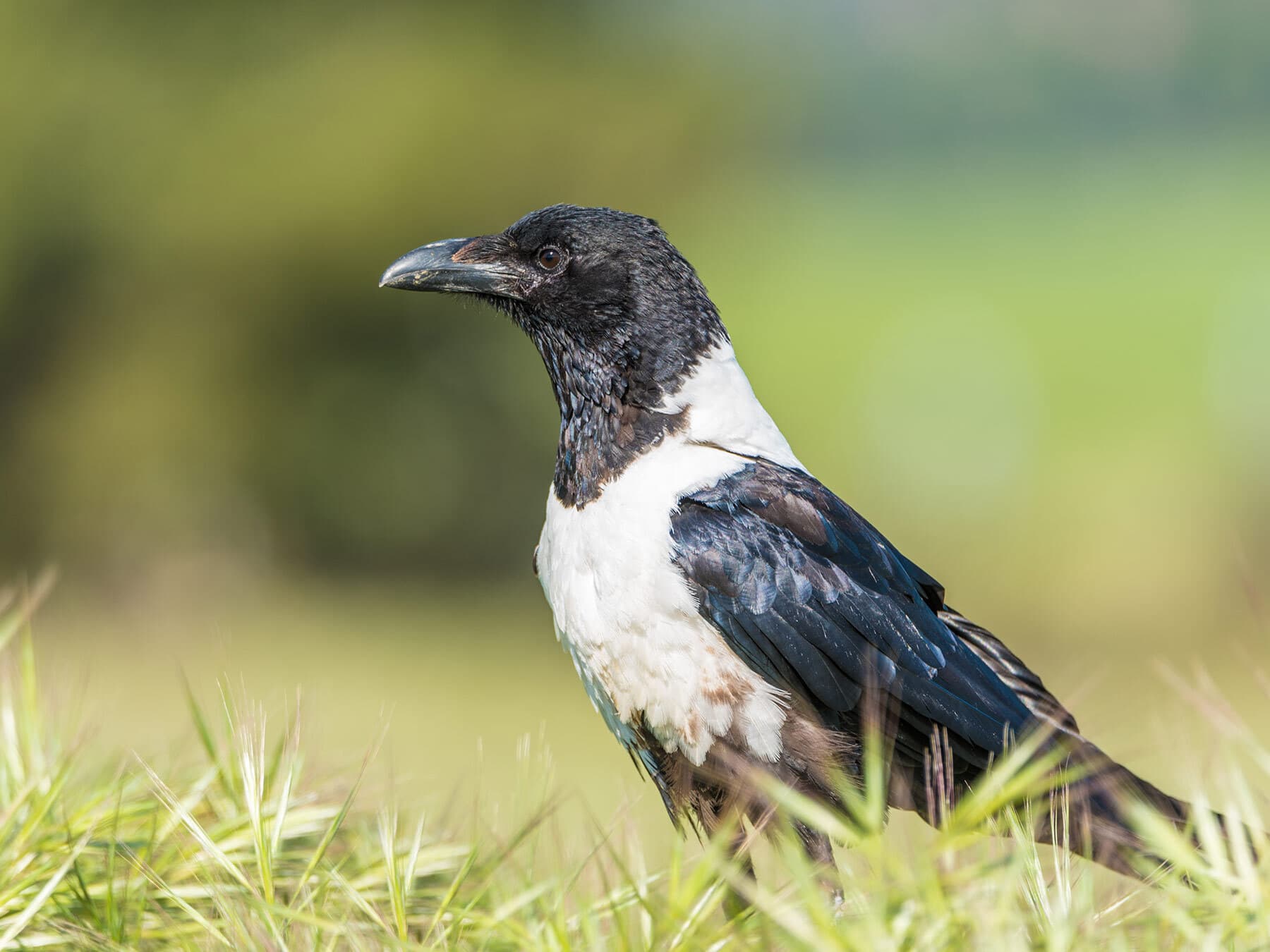
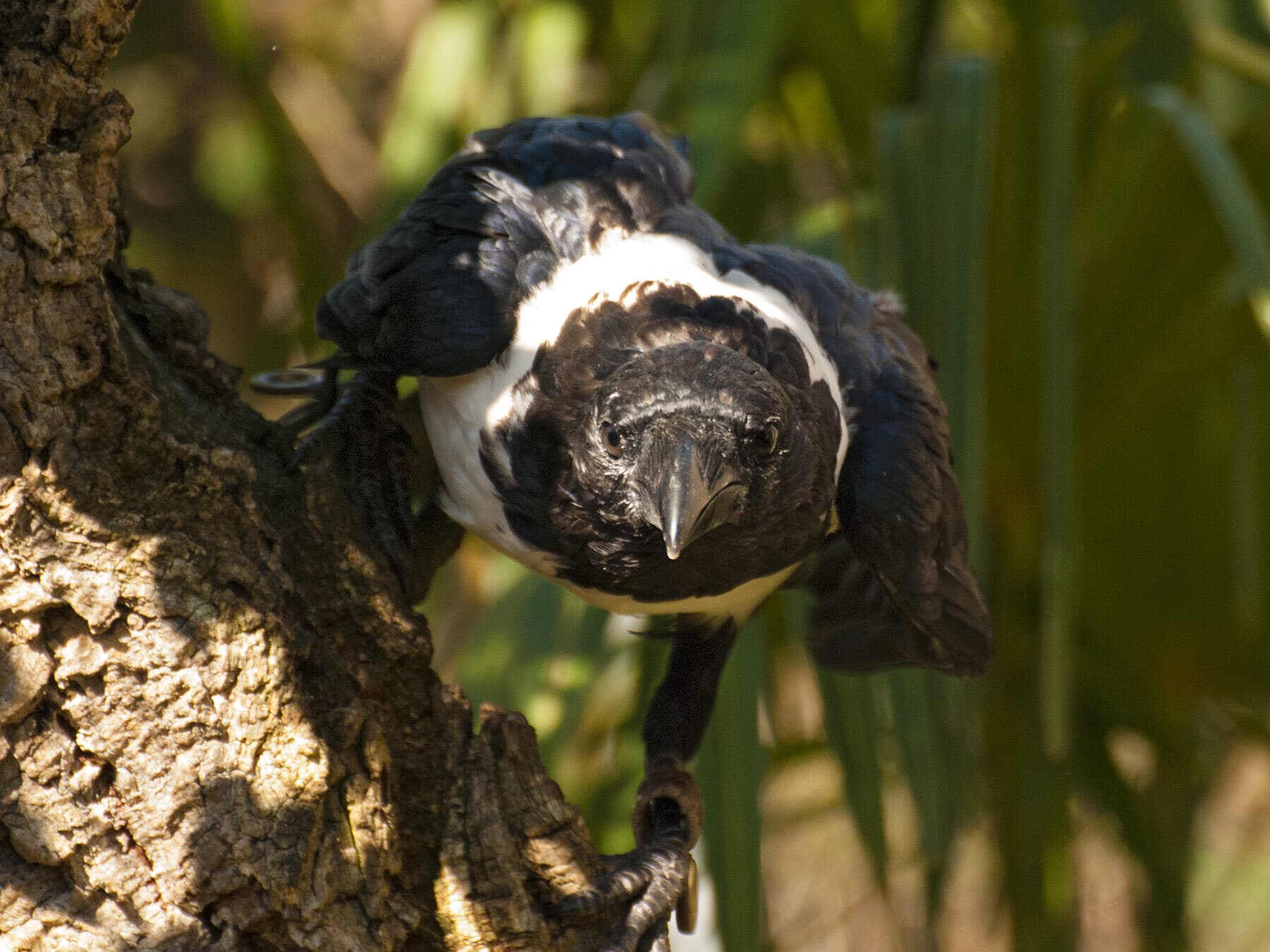
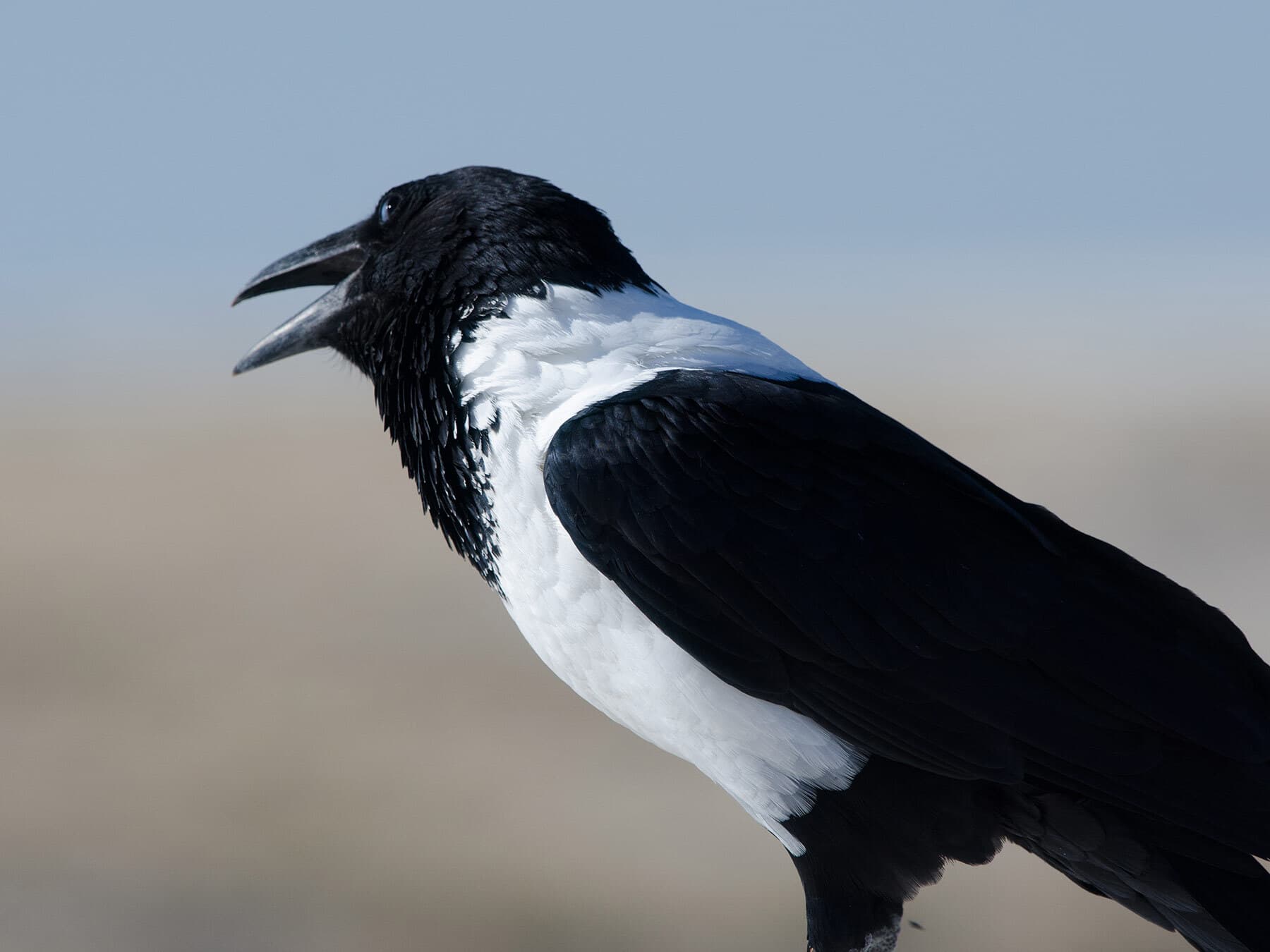
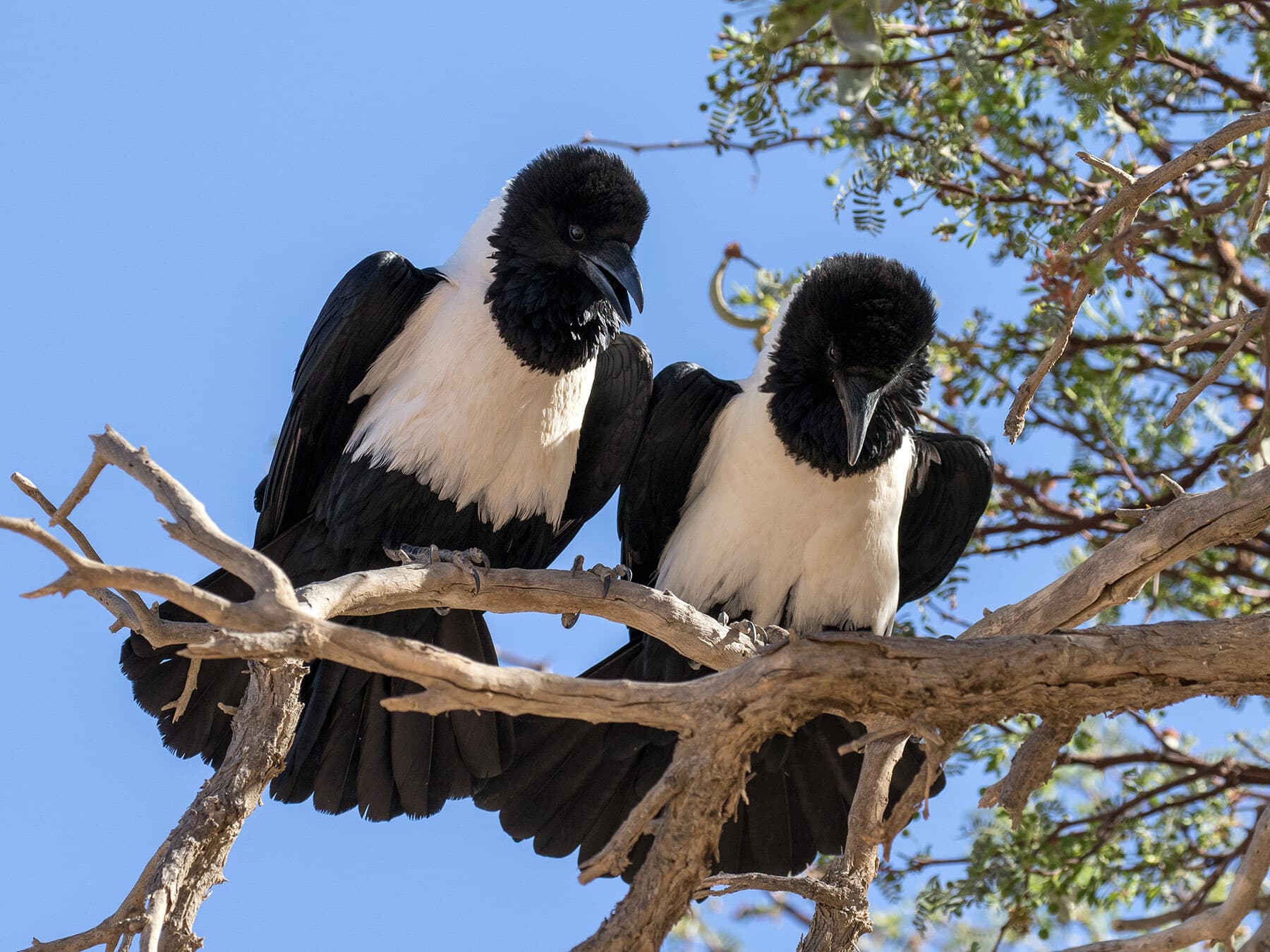
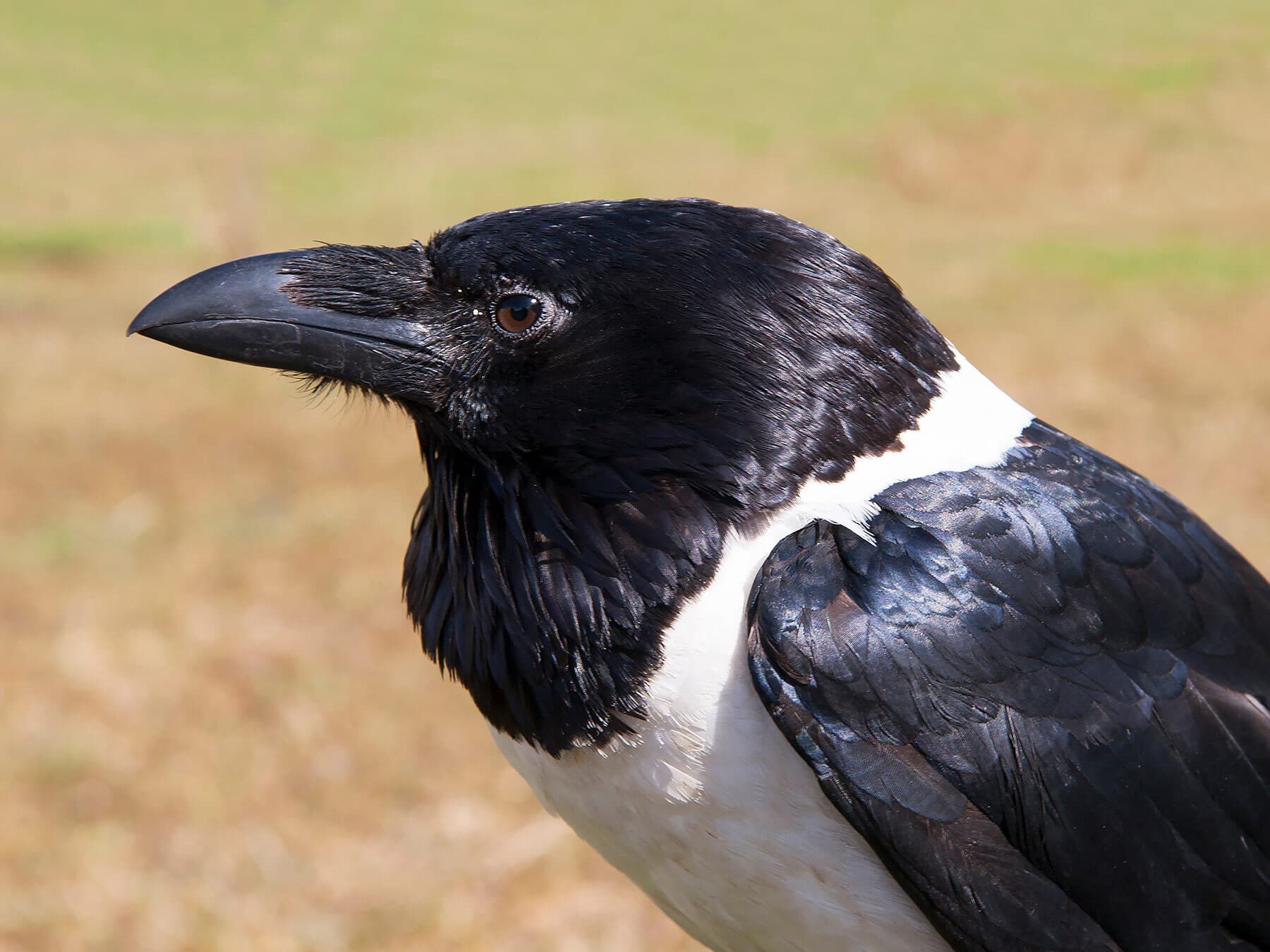
The Pied Crow is a striking bird with distinctive black and white plumage. Its head, throat, wings, and tail are glossy black, contrasting sharply with a white collar, breast, and belly. The bird has a large, slightly curved black bill and dark eyes.
Both males and females share the same appearance, making them indistinguishable in the field. Juveniles resemble adults but may have a duller plumage and a brownish tinge to their black feathers.
Its size
Adults- Length
- 46–52 cm
- Wingspan
- 85–100 cm
- Weight
- 520–650 g
Its song and calls
Pied Crows get their name due to their pied plumage. Pied means having two or more colours, and in this case, is black and white.
What does a pied crow sound like?
As with most other corvids, pied crows are vocal all year round. They share the distinctive, deep 'kraaak' call. Occasionally a deeper 'rrawrr' or 'raa' is given.
Other sounds include a double rattle that is similar to a 'torrrrrrh-tarrrrrrh' sound.
Most calls are often given alongside the bobbing of the head and/or movement of the tail.
- Call0:00 / 0:15
When and where to see it
The Pied Crow is not recorded regularly in the UK, Ireland, the United States or Canada.
United States: recorded in 1 of the 6 years; United Kingdom: recorded in 2 of the 6 years. Too few years to count as a regular visitor.
Worldwide: recorded regularly in 49 countries
Countries where it was recorded in at least 3 of the 6 years 2019–2024. Linked countries have their own bird list.
Europe (3)
Africa (46)
- Angola
- Benin
- Botswana
- Burkina Faso
- Burundi
- Cameroon
- Central African Republic
- Chad
- Comoros
- Congo - Brazzaville
- Congo - Kinshasa
- Côte d’Ivoire
- Djibouti
- Equatorial Guinea
- Eswatini
- Ethiopia
- Gabon
- Gambia
- Ghana
- Guinea
- Guinea-Bissau
- Kenya
- Lesotho
- Liberia
- Madagascar
- Malawi
- Mali
- Mauritania
- Mayotte
- Mozambique
- Namibia
- Niger
- Nigeria
- Rwanda
- Senegal
- Seychelles
- Sierra Leone
- Somalia
- South Africa
- South Sudan
- Sudan
- Tanzania
- Togo
- Uganda
- Zambia
- Zimbabwe
Data: EOD – eBird Observation Dataset (Cornell Lab of Ornithology), accessed via GBIF.org, CC BY 4.0. Records from 2019–2024, aggregated and filtered by Birdfact. How these lists are made
Nests are constructed high up in trees, but also on telephone poles, pylons and tall buildings. Both the male and female share the construction of the nest which takes around 12 days. The materials used to make the nests are a mixture of sticks, roots and occasionally, even wire - this makes for a strong structure. The deep nests are then lined with mud, wool, dung and grasses. Pied Crows are mostly solitary nesters.
Most of the time, pied crows will nest in the same place each year and will not use their nest from previous years. Instead they will construct a fresh nest each breeding season.
What is the habitat of a pied crow?
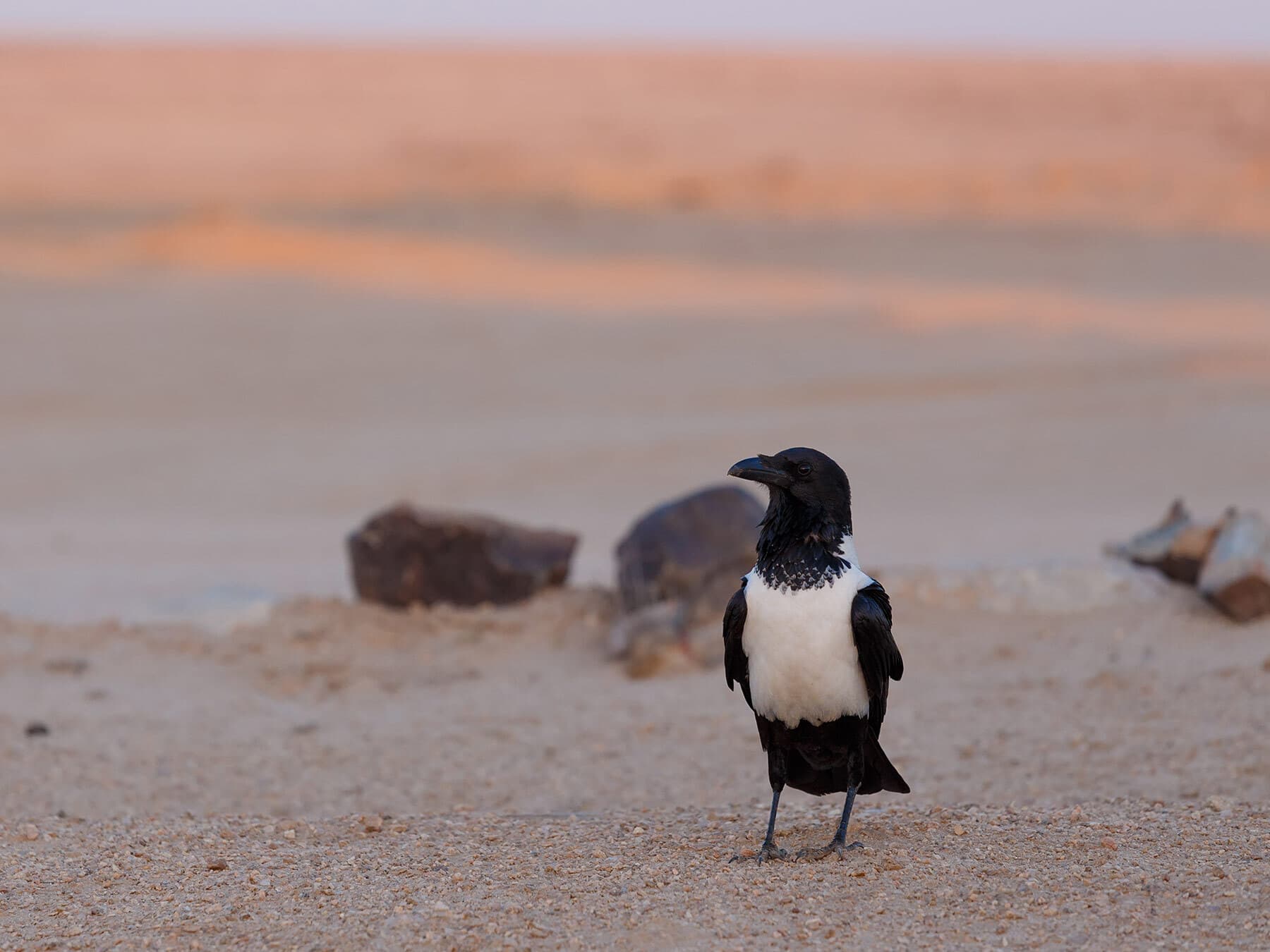
Pied Crows can mainly be found on grasslands and open areas, riverbanks, savannahs and open country with trees. These birds can be found from sea level all the way up to elevations of 3700m in parts of Ethiopia, although they do tend to prefer lower altitudes.
They are highly adaptive and don't mind foraging in villages, towns and cities and will often visit rubbish dumps and bins.
Where do pied crows live?
Pied Crows are found almost across the entirety of sub-Saharan Africa, and the majority of the birds are sedentary. Some of the more common countries include Nigeria, Ghana, Senegal, Sudan, Zambia, Zimbabwe all the way down to the Cape of Good Hope. They can also be found on the islands of Madagascar and Tanzania.
Where can I see pied crows?
The best place to find these birds are in most parts of sub-Saharan Africa. They are rarely found in some regions of Eritrea, Ethiopia, Somalia, arid regions of Namibia, Botswana and Kalahari basin, and higher elevations of Lesotho.
Lower elevations in their favoured habitat are usually best. A few places they tend to avoid are dense forests, deserts or highly mountainous areas.
Do pied crows migrate?
The pied crow is mainly considered to be a sedentary species. Younger birds are much more likely to move into new areas than adults. Wetter years tend to affect their movements, with northern populations spreading into Saharan oases.
Tips for seeing it
- Look for Pied Crows in open areas, particularly near human settlements
- Listen for their distinctive 'caw-caw' calls, which are often given in flight
- Observe their behavior around garbage dumps or markets, where they often scavenge
- Watch for their acrobatic flight displays during the breeding season
What it eats
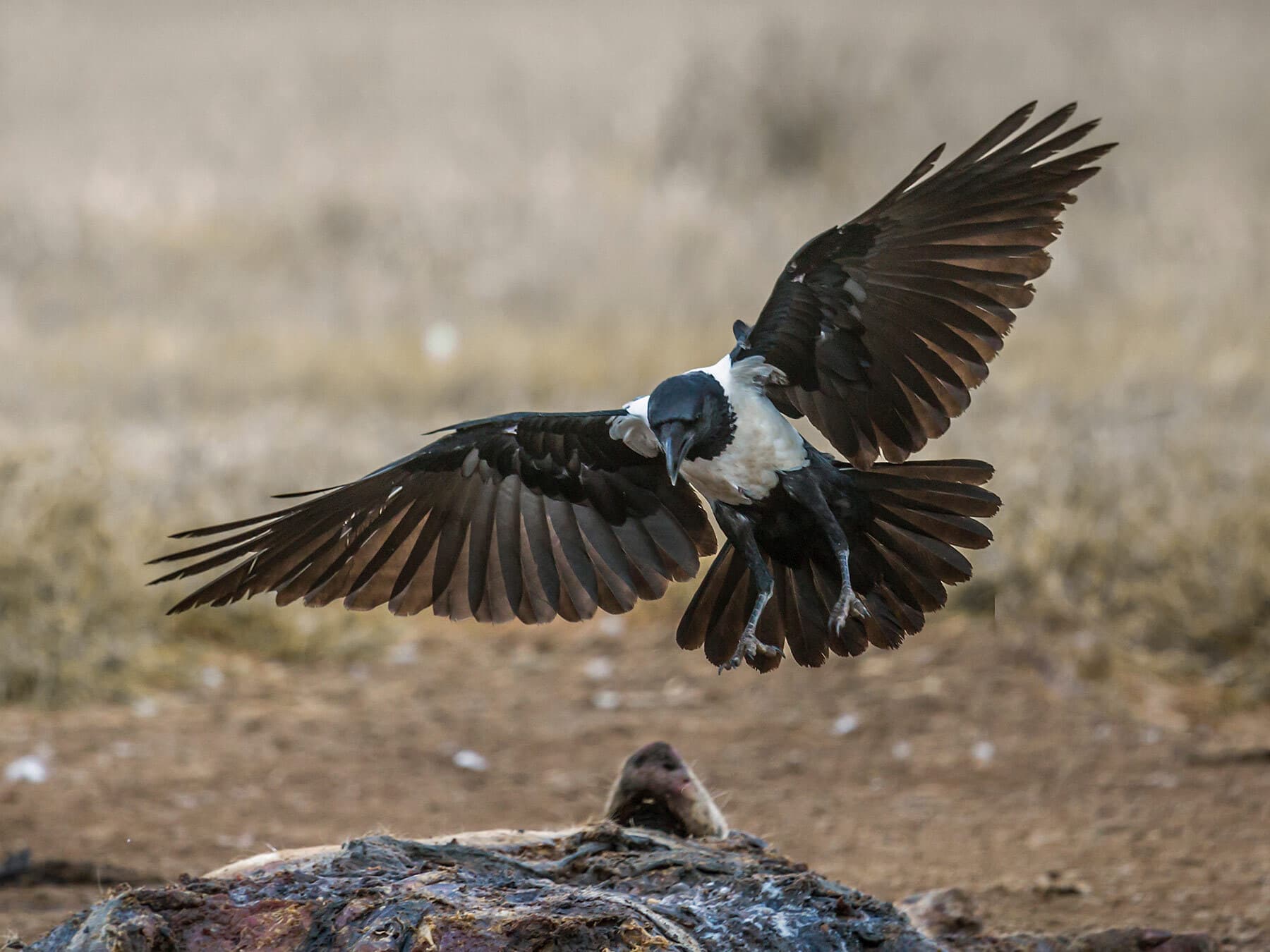
Pied Crows are omnivores, which means they have an extremely varied diet - it's probably easier to list the things that they don't eat! They eat all types of invertebrates, including spiders, beetles, termites, locusts and grasshoppers. They're also known to consume frogs, small birds, fish, rodents and lizards and have the impressive ability to capture small birds, locusts and bats whilst in the air. Roosting Fruit Bats are also predated on from time to time.
The range does play a role in the diet of the pied crow, as birds in the south are reported to prefer vegetable items such as seeds, fruits and roots.
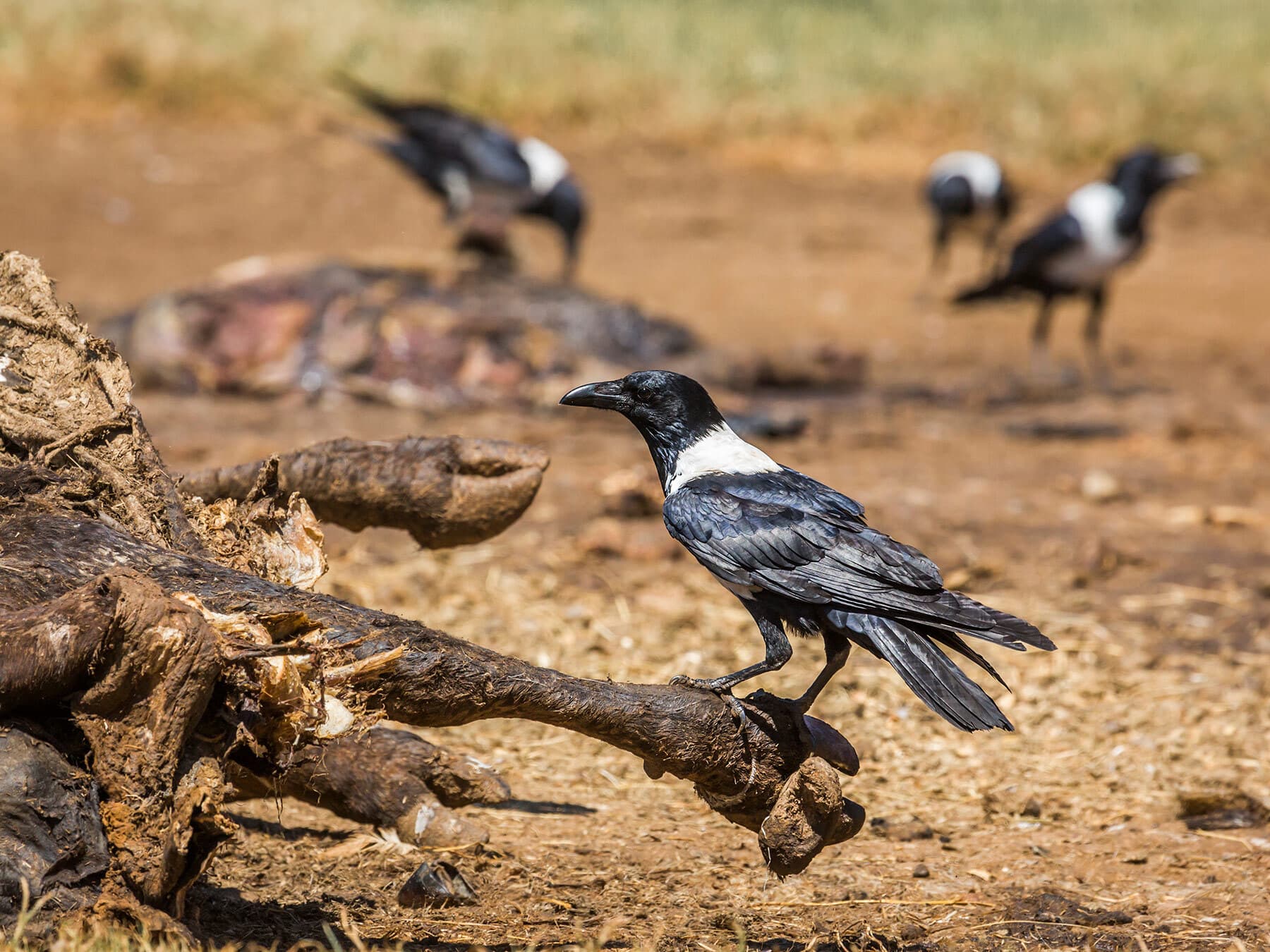
These crows can be found scavenging around rubbish dumps and bins and along the roadside on the lookout for any carrion. They will also follow bush fires to capture fleeing insects. It has been recorded that pied crows drop stones from height to break the shells of common ostrich eggs.
Most of the food is taken from the ground and they usually forage in pairs or small groups. Large flocks can be found occasionally, where there is a lot of food available.
Nesting and breeding
One clutch of anywhere between 1 and 7 eggs are laid, although the average is around 4 - 5.
Both of the sexes share the duties of incubating the eggs, apart from during the night, where females will sit on the eggs for around 75% of the time. Incubation lasts for 18 - 19 days. Once hatched, the chicks are fed by both the parents. The male will often solely feed the chicks that are first to hatch whilst the female continues to incubate.
Chicks stay in the nests until they fledge at between 35 and 45 days of age.
The breeding season varies depending on the range and is mostly determined by the onset of local rains. Most commonly, eggs are laid between September and November, but as previously mentioned, this varies on the latitude.
What do pied crow eggs look like?
The eggs of a pied crow are mainly a greenish colour and may have occasional spotting.
Behaviour
Pied Crows are highly adaptable and intelligent birds. They are often seen foraging on the ground in pairs or small groups, using their strong bills to probe for food.
These birds are known for their bold behavior around humans and their ability to exploit various food sources in urban environments.
Lifespan and predators
The average lifespan for a pied crow is around 20 years. Birds which are kept in captivity can live for many more years in some cases.
Conservation
The Pied Crow is listed as Least Concern by the IUCN due to its large range and increasing population. Its adaptability to human-modified environments has contributed to its success. However, in some areas, it may face localized threats from persecution or habitat changes.
What does a pied crow look like?
One of the most obvious things about the pied crow is the black and white plumage, which is where the 'pied' part of its name comes from. The neck, head and top of the breast appear black from a distance, but upon closer inspection are a glossy blueish-purple. The black throat feathers are quite long and stand out. The remaining black parts of the plumage (lower belly and back, upper tail coverts and vent on underparts) are less glossy than those on the head. The wings and tail are also black with a blueish-purple gloss. The sides of the body, breast and collar on the upper mantle are a strong white, which contrasts against the rest of the black plumage. The eyes are dark brown and the legs, feet and bill are black. The bill is long and slightly hooked. Both sexes are similar and have no differences in their plumage.
Juvenile birds have less glossing on the head, wings and tails. The feathers on the head appear shorter than those of the adult birds. There is less distinction between the black and white areas of their plumage due to the grey-tipped feathers.
How big is a pied crow?
The pied crow is quite a large bird with a body length of around 45cm which is around 18 inches. The wingspan of adult birds can reach impressive sizes of almost a metre, but the average wingspan is usually ranged between 85 and 98cm (33 - 38 inches).
How much does a pied crow weigh?
The average weight for a pied crow is between 400 and 700 grams (14 and 25 ounces).
What is the scientific name of a pied crow?
The full scientific name for a pied crow is Corvus albus.
The specific name, which is the second part, albus means 'white' in the Latin language. This describes one of the features of the pied crow.
This bird is also known as the 'Ol-korrok' by the Massai people. The reason for this is because of the sound of its call. Although pied crows can be considered annoying, they are not considered to be bad omens, unlike some other corvids are.
Are pied crows agressive?
Pied Crows behave in a similar manner to both the hooded and carrion crow. They do have a fairly bad reputation for pirating food from other birds, raiding nests to take nestlings and eggs and mobbing much larger birds such as ospreys and snake eagles.
Most of the time these birds are found in small groups or pairs, although when there is an abundant food source, large numbers of birds can be found together.
Based on the above, you could say some of their actions towards other birds are considered aggressive. Like most other birds in the wild, they rarely interact with humans.
Are pied crows endangered?
Pied Crows are common and widespread across their range in sub-Saharan Africa. They are listed by the International Union for Conservation of Nature (IUCN) as being on their Least Concern list, which means they are not globally threatened.
In South Africa, pied crows are considered to be pests and around 17% of farms actively poison and destroy the nests of these birds to control the numbers.
Do pied crows mate for life?
Pied crows are monogamous and will develop long-lasting bonds with partners that probably last for the entirety of their life.
Can pied crows talk?
As with other crows, pied crows can mimic sounds and the noises of other birds. It has been reported that hand-raised pied crows have the ability to learn to 'speak' and mimic certain sounds with precise accuracy.
How intelligent are pied crows?
Pied Crows are highly intelligent birds, as are many species of crow. Recent studies have shown that certain types of crow have excellent problem-solving and tool-making capabilities that are of a similar level to that of great apes.
They have an extraordinary ability to copy sounds and even words! They are naturally social birds and the highly intelligent trait also unlocks the ability for them to be quite mischievous. They are more than capable of manipulating and destroying most things they can get their beaks on.
Similar birds
Often mistaken for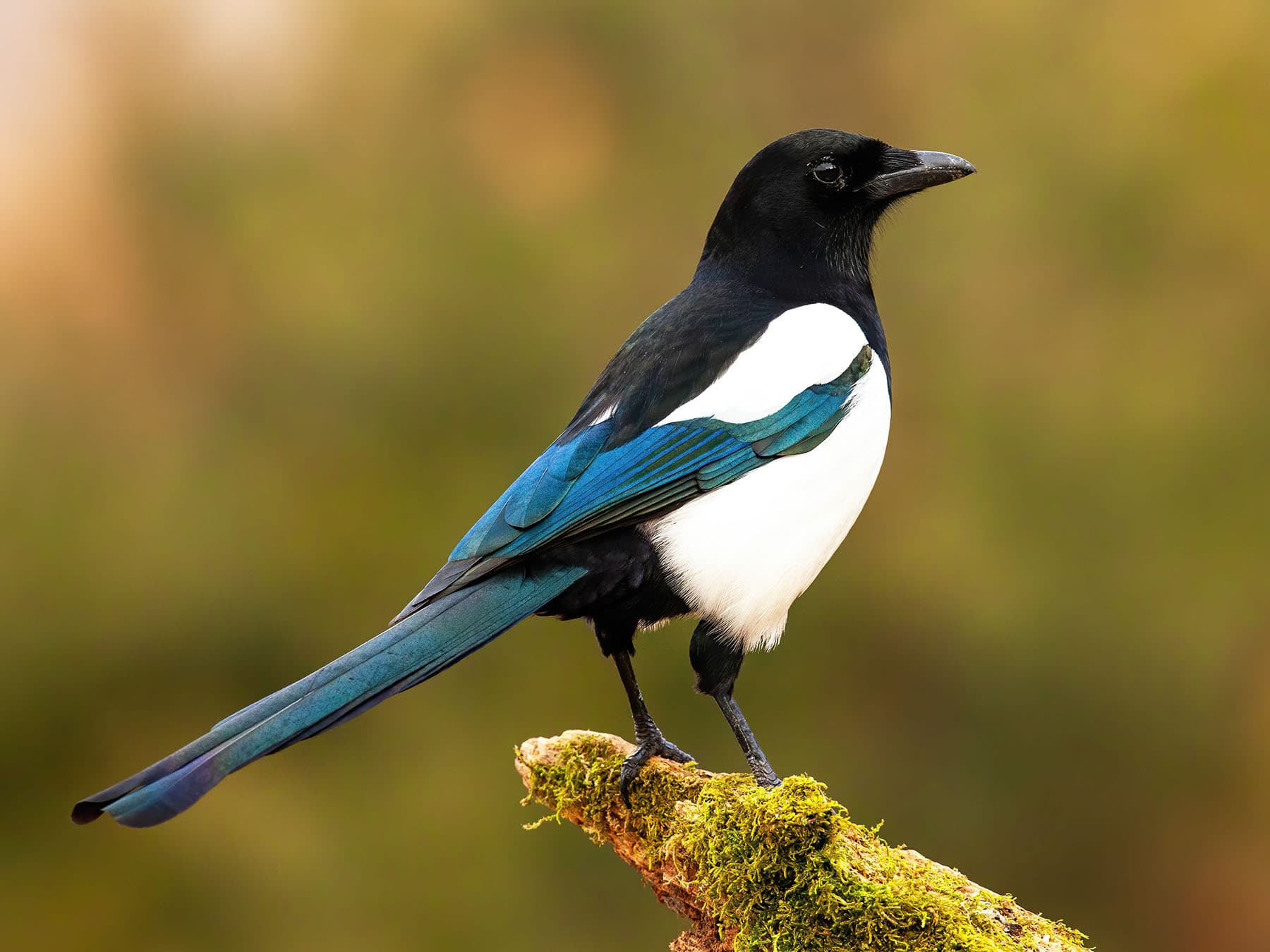
Pied Crow guides
5 guidesQuick facts
- Length
- 46–52 cm
- Wingspan
- 85–100 cm
- Weight
- 520–650 g
- Lifespan
- 10–20 years
- Family
- Crows & Jays
- Migration
- Resident
- Global status (IUCN)
- Least Concern
- World population
- Not quantified, but common and locally abundant
- Population trend
- Stable
- Also called
- African Pied Crow
- Scientific name
- Corvus albus
Sources
3- 1BirdLife International. 2017. Corvus albus (amended version of 2016 assessment). The IUCN Red List of Threatened Species 2017: e.T22735894A118783820. Source (opens in a new tab)
- 2BirdLife International. 2017. Corvus albus (amended version of 2016 assessment). The IUCN Red List of Threatened Species 2017: e.T22735894A118783820. Source (opens in a new tab)
- 3Madge and Burn (1993)

Checked by
Nathan Cope, founder and editor
Nathan founded Birdfact and leads its writers and contributors in the UK, the US and Canada. He has watched and studied birds for more than ten years, and checks every article and species guide before it’s published.