Facts · Updated 8 Oct 2026
What Do Crows Eat? The Diet of Crows
By the Birdfact teamChecked by Nathan Cope
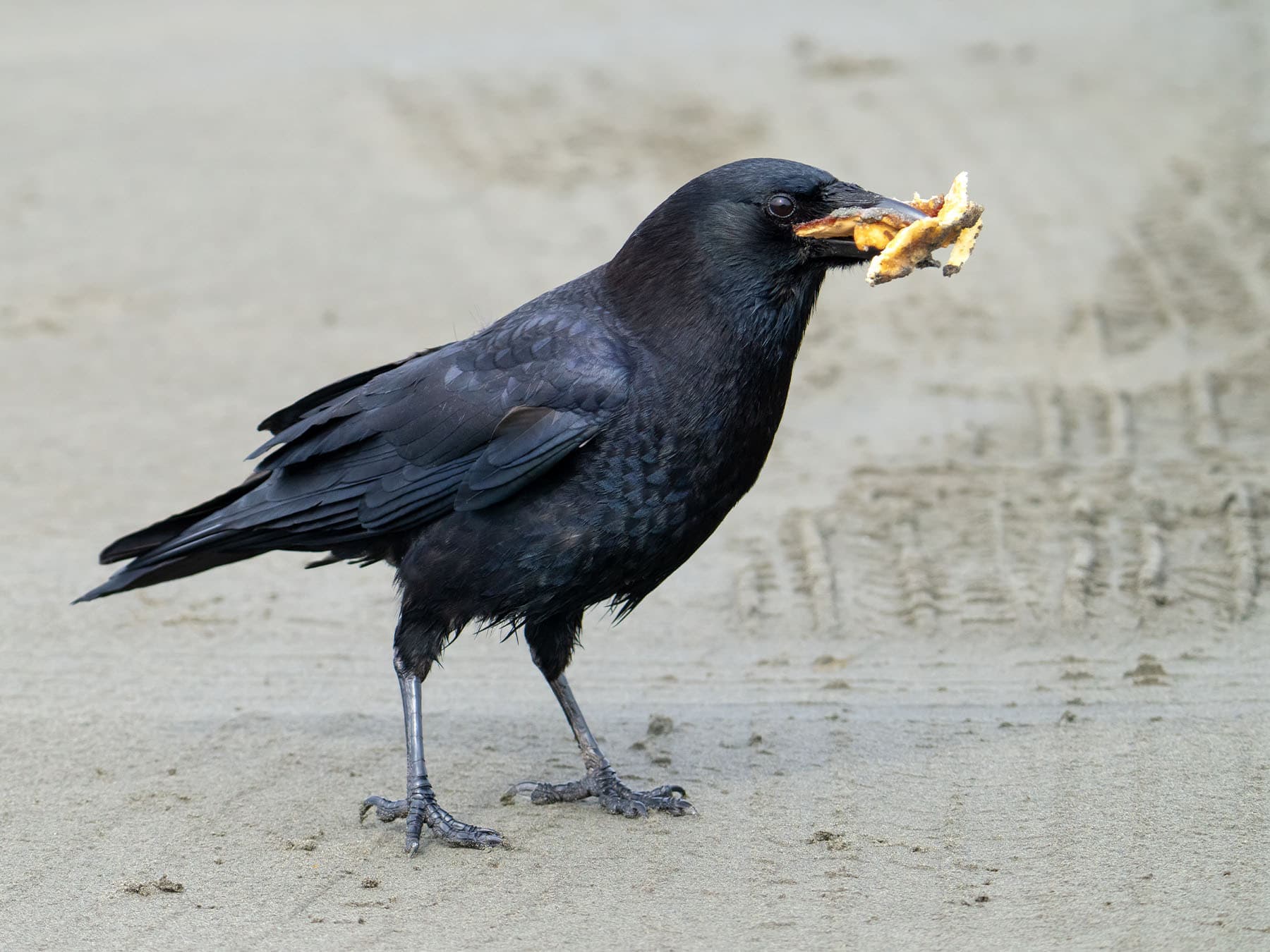
Crows eat almost anything: earthworms and insects, grain, seeds, nuts and fruit, small animals, eggs and nestlings, carrion and scraps. In the classic stomach studies American Crows ate mostly plant food; Carrion Crows eat mostly animals. If you feed them, offer unsalted peanuts in the shell (in Britain, not from May to October), not bread.
On this page11 sections
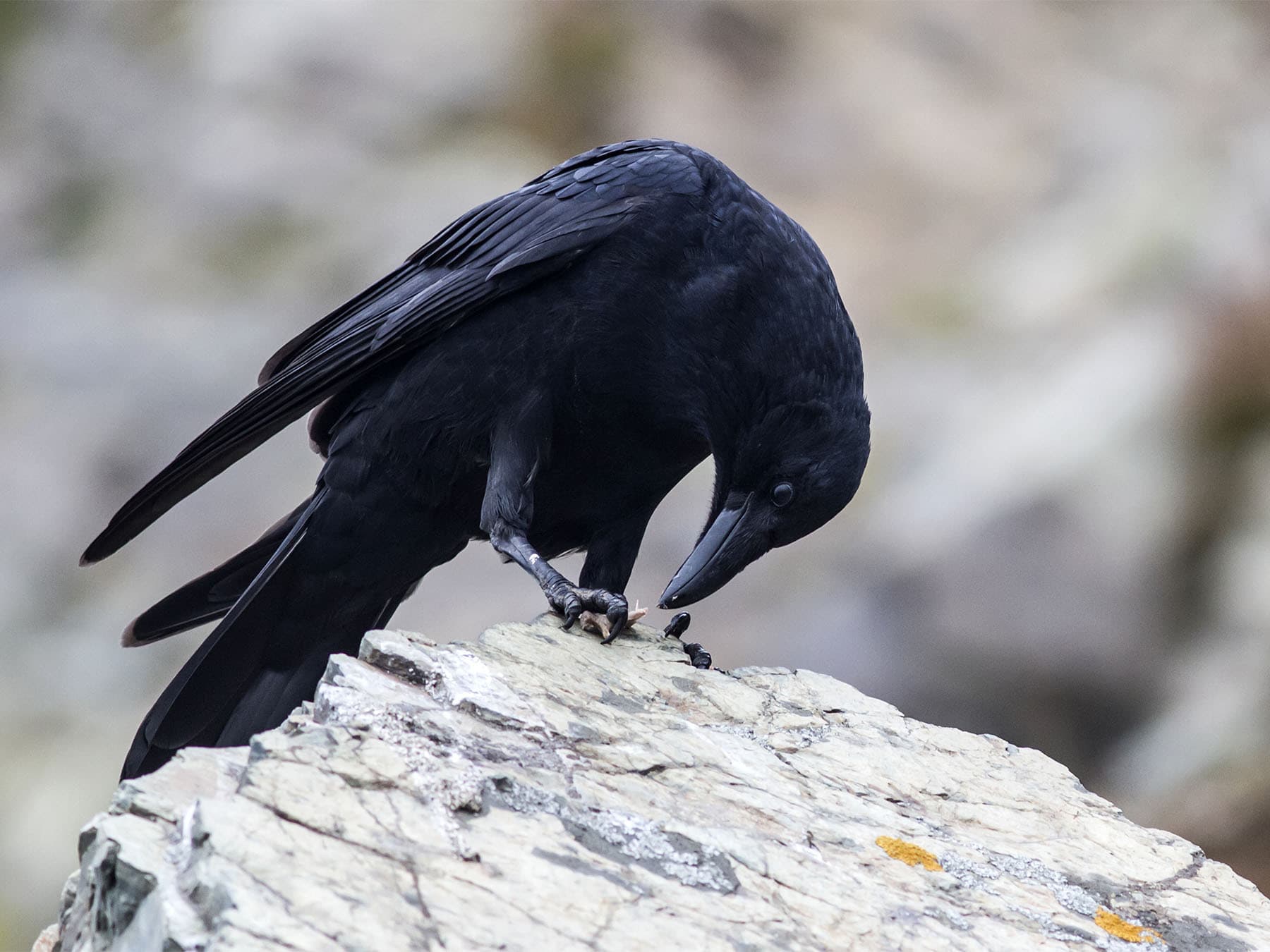
What crows eat, for the American Crow and the Carrion Crow: their natural food, how they find and handle it, what they feed their chicks, and what (and what not) to give crows that visit your garden or yard.
What do crows eat?
Almost anything. American Crows eat earthworms, insects, spiders, snails, frogs, small snakes and mammals, shellfish, carrion, garbage, the eggs and nestlings of other birds, grain, seeds, nuts, fruit and berries.1, 2 Asked what crows eat, Cornell's crow researcher Kevin McGowan answers in one word: "everything".3
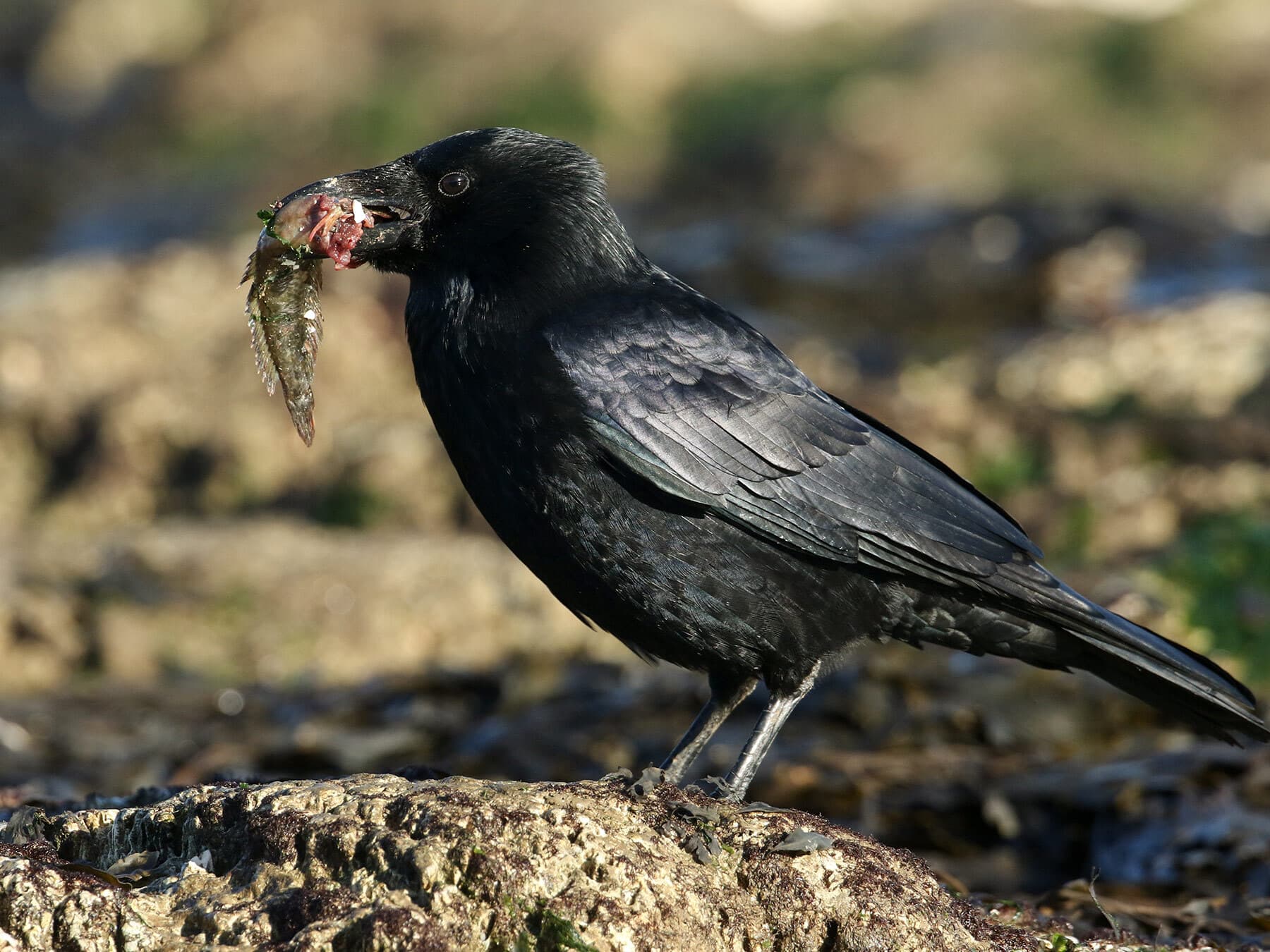
The Carrion Crow is much the same: an omnivore but mainly a meat-eating scavenger, taking earthworms and other invertebrates, small mammals, frogs, shellfish, birds' eggs and nestlings and carrion, with some grain, seeds and fruit.4
Plants or animals
For the American Crow, mostly plants, by volume, in the classic stomach studies. One from 1939, of 1,340 adult crow stomachs from across the US and Canada, found 72% plant food, with corn (maize) alone 38%, and 28% animal food.2 In central New York the bulk of the diet is waste grain in winter and earthworms and other invertebrates in spring and summer.
Carrion Crows lean the other way: chiefly animal food, with small amounts of grain and weed seeds.
How crows find and handle food
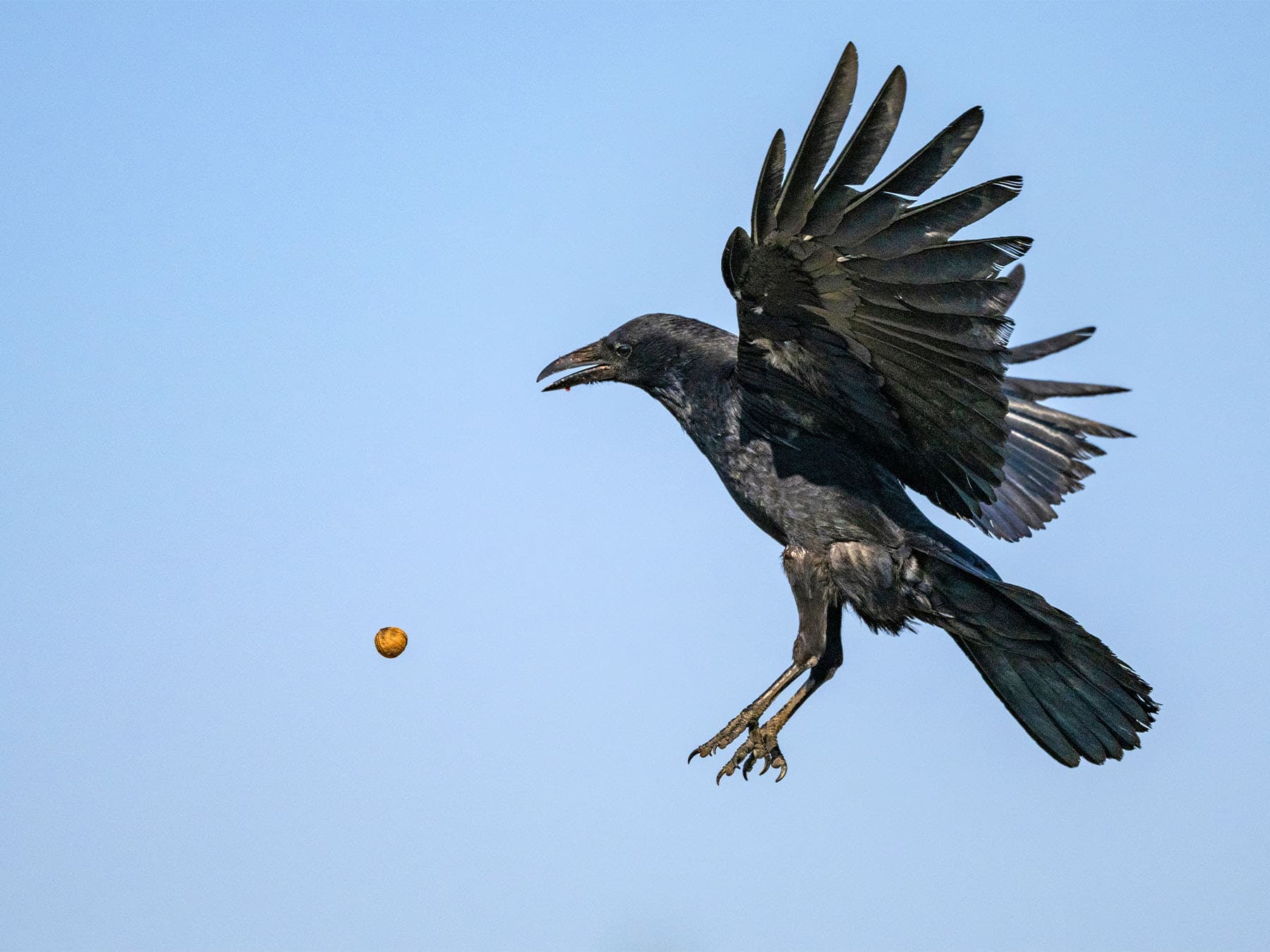
Crows feed mostly on the ground, walking and probing. Pairs of Carrion Crows patrol roads early in the morning for roadkill, turn over dung, stones and seaweed for insects, and gather on freshly cut hay and stubble. They open shellfish by flying up and dropping them onto rocks, and American Crows do the same with clams, walnuts and pecans. In Japan, town crows have been seen dropping walnuts on roads for cars to crack.
American Crows carry food in a pouch at the base of the throat, sometimes dunk dry food in water, and have been seen to take food from other animals, from gulls to otters.
Do crows bury food?
Yes. Both crows store surplus food. An American Crow makes a small hole with its bill, pushes the food in and covers it with grass or other debris; it also hides food in trees and in snow, and will move a cache if a squirrel has been watching. Carrion Crows store food too, though less than some of their relatives.4
Eggs and nestlings
Crows do take the eggs and young of other birds, which makes them unpopular with some people. The evidence on how much this matters is mixed. In North America, studies that removed crows found no rise in songbird nest success, and crows' importance as predators of duck nests may be less than once thought.32 In Britain, the BTO concludes that crows may reduce songbird breeding locally, but an effect on whole populations is uncertain.5
Food for the chicks
Mostly animals. In the 1939 study, nestling American Crows had been fed 83.5% animal food, with beetles and grasshoppers the largest items, plus spiders, frogs, snakes, small rodents and some corn. One brood of four had been fed 418 grasshoppers in a few hours. The parents, and in many families their grown young, bring the food in the throat pouch. See baby crows.
Through the year
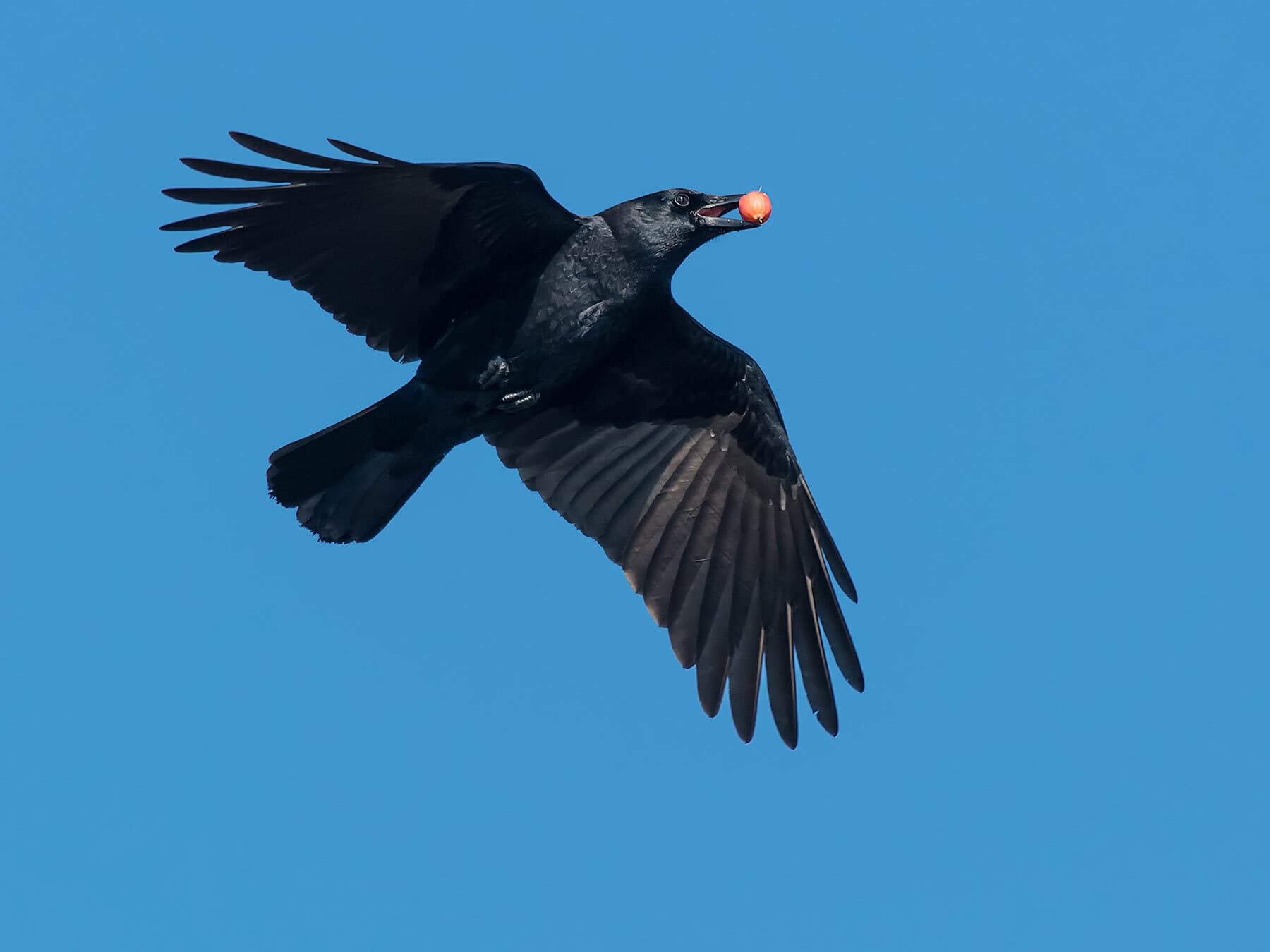
Diets follow the seasons: American Crows eat more plants in winter and more animal food in summer. In the snowy north, wintering crows gather at dumps, feedlots and towns, and in autumn they feed on waste grain in harvested fields.
Feeding crows
In North America, unsalted peanuts in the shell are the usual advice for anyone who wants to feed crows; Audubon also suggests dry cat food.6 Put the food where the crows can see it and walk away, be consistent, and feed in moderation, thinking of your neighbours. Crows don't often visit bird feeders.7
In Britain the RSPB gives no advice on feeding crows as such, but its advice for garden birds applies: avoid all salted food and cooked food, and avoid bread and dry, hard food in spring and summer, when parents may carry it to chicks that can choke on it. It also asks people to pause seeds and peanuts from the beginning of May to the end of October, to slow the spread of disease.8
Can crows eat bread?
They can, but it does them little good. Bread is not harmful in small amounts, but it lacks the protein and fat birds need: an "empty filler", in the RSPB's former advice.9 Never give birds milk: Cornell's crow researcher Kevin McGowan advises against any dairy food for birds, which cannot digest milk sugar.10
Crows and farms
Crows eat crops: American Crows take grain, corn and watermelons, and growers have long complained of losses. They also eat many grasshoppers, beetles and other insects that damage crops. In winter in New York, waste grain left after harvest makes up much of their food. See the Carrion Crow and American Crow guides for more.
Sources
- Kaufman, K. American Crow. Audubon Guide to North American Birds (text from Lives of North American Birds). Accessed 8 October 2026. Source
- Caffrey, C., Verbeek, N. A., Clark, A. B., McGowan, K. J., Pyle, P. (2026). American Crow (Corvus brachyrhynchos), version 1.6. Birds of the World (A. F. Poole, F. B. Gill and M. G. Smith, editors). Cornell Lab of Ornithology. doi:10.2173/bow.amecro.01.6
- McGowan, K. J. Frequently asked questions about crows. Cornell Lab of Ornithology. Accessed 8 October 2026. Source
- Madge, S., Goodman, D. D., Kirwan, G. M. (2026). Carrion Crow (Corvus corone), version 1.1. Birds of the World (R. Ahmed and B. K. Keeney, editors). Cornell Lab of Ornithology. doi:10.2173/bow.carcro1.01.1
- BTO. Carrion Crow (Corvus corone). BTO BirdFacts. Accessed 8 October 2026. Source
- Preston, E. Are Crows Really Our Friends? Audubon magazine. Accessed 8 October 2026. Source
- Cornell Lab of Ornithology. American Crow. All About Birds. Accessed 8 October 2026. Source
- RSPB. How and what to feed your garden birds. RSPB, What you can do. Accessed 8 October 2026. Source
- RSPB. Household scraps for birds (archived December 2022). RSPB, via the Internet Archive. Accessed 8 October 2026. Source
- McGowan, K. J. I found a baby crow ... Cornell Lab of Ornithology. Accessed 8 October 2026. Source
Birds in this article
10 birds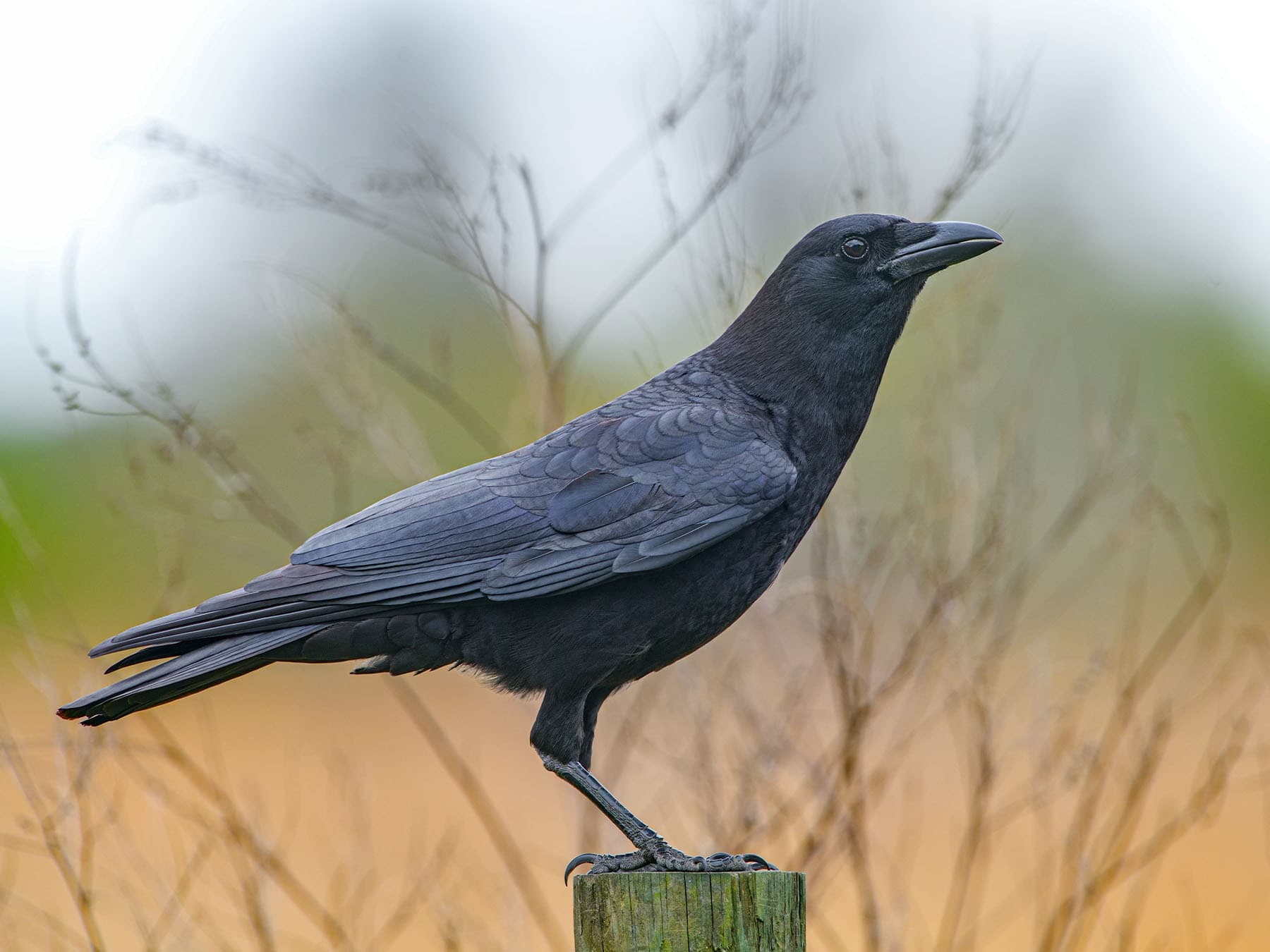 American CrowCorvus brachyrhynchos41–53 cm · crows & jays
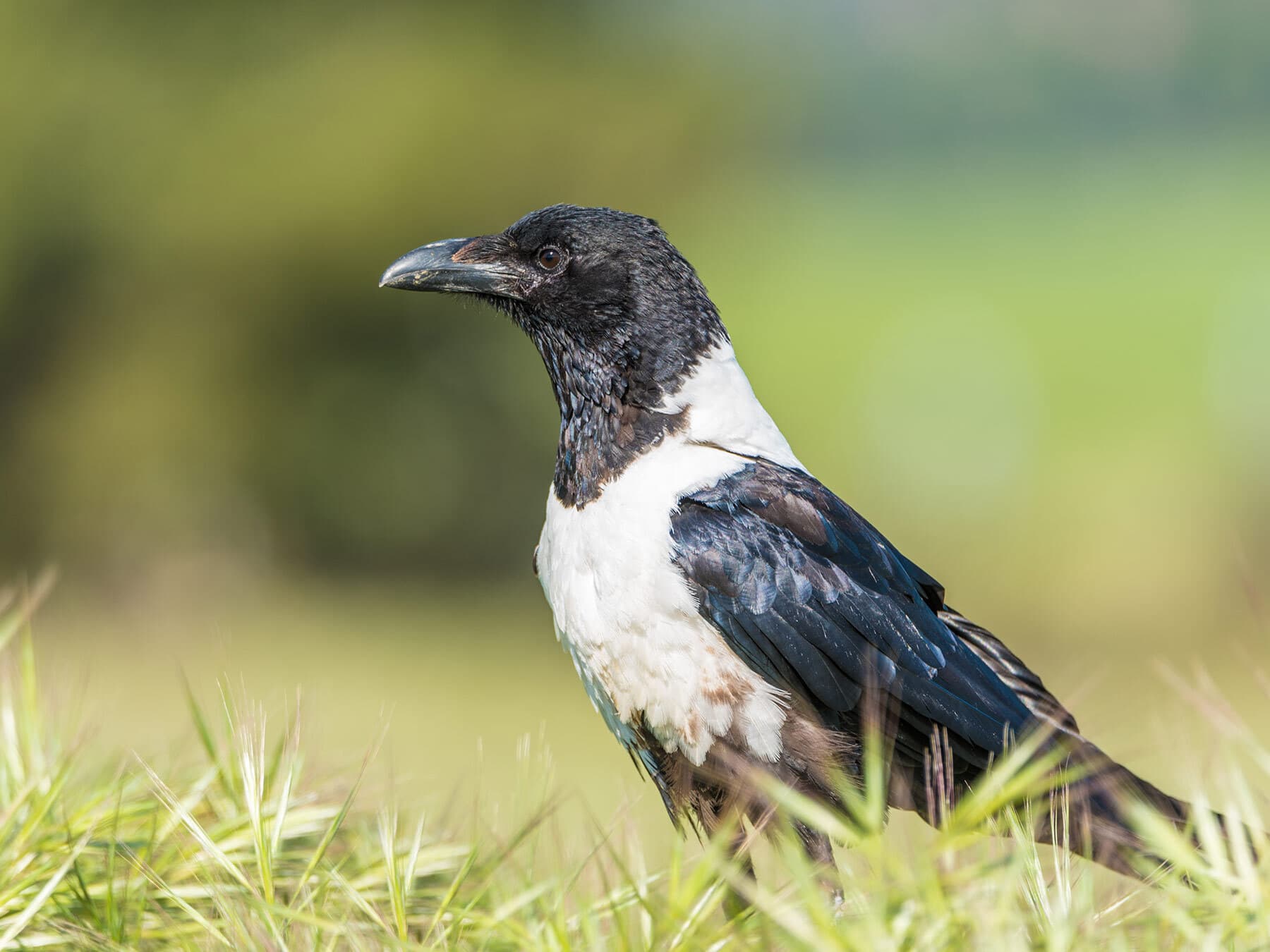 Pied CrowCorvus albus46–52 cm · crows & jays
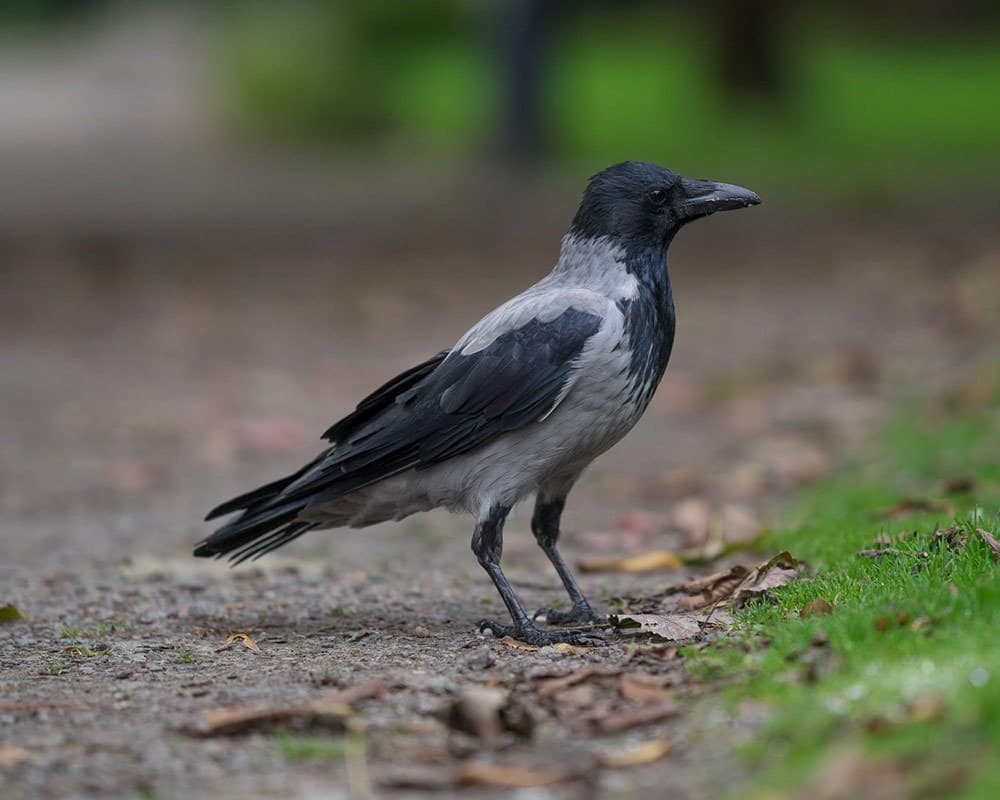 Hooded CrowCorvus cornix44–51 cm · crows & jays
See all 10 birds
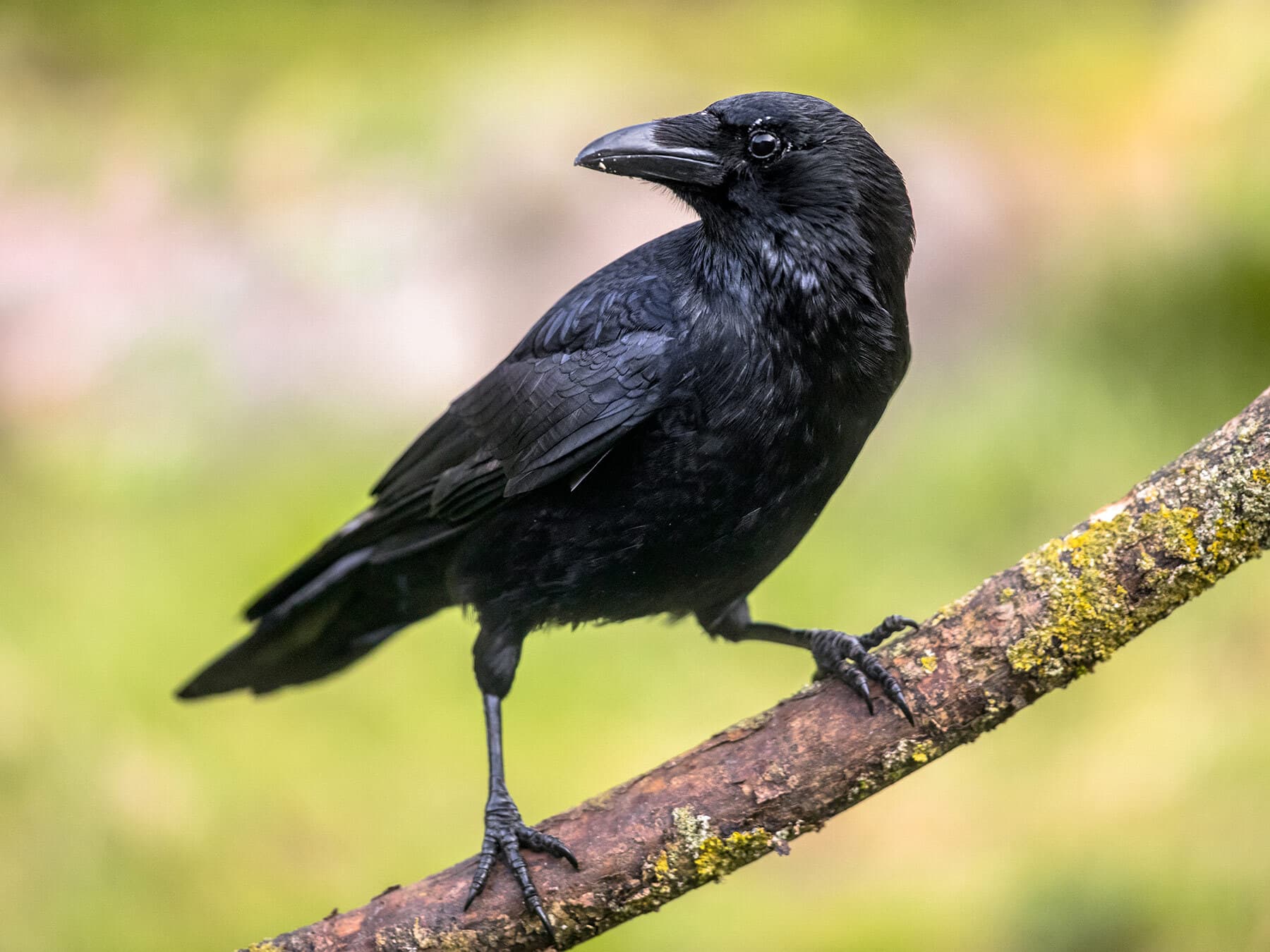 Carrion CrowCorvus corone45–47 cm · crows & jays
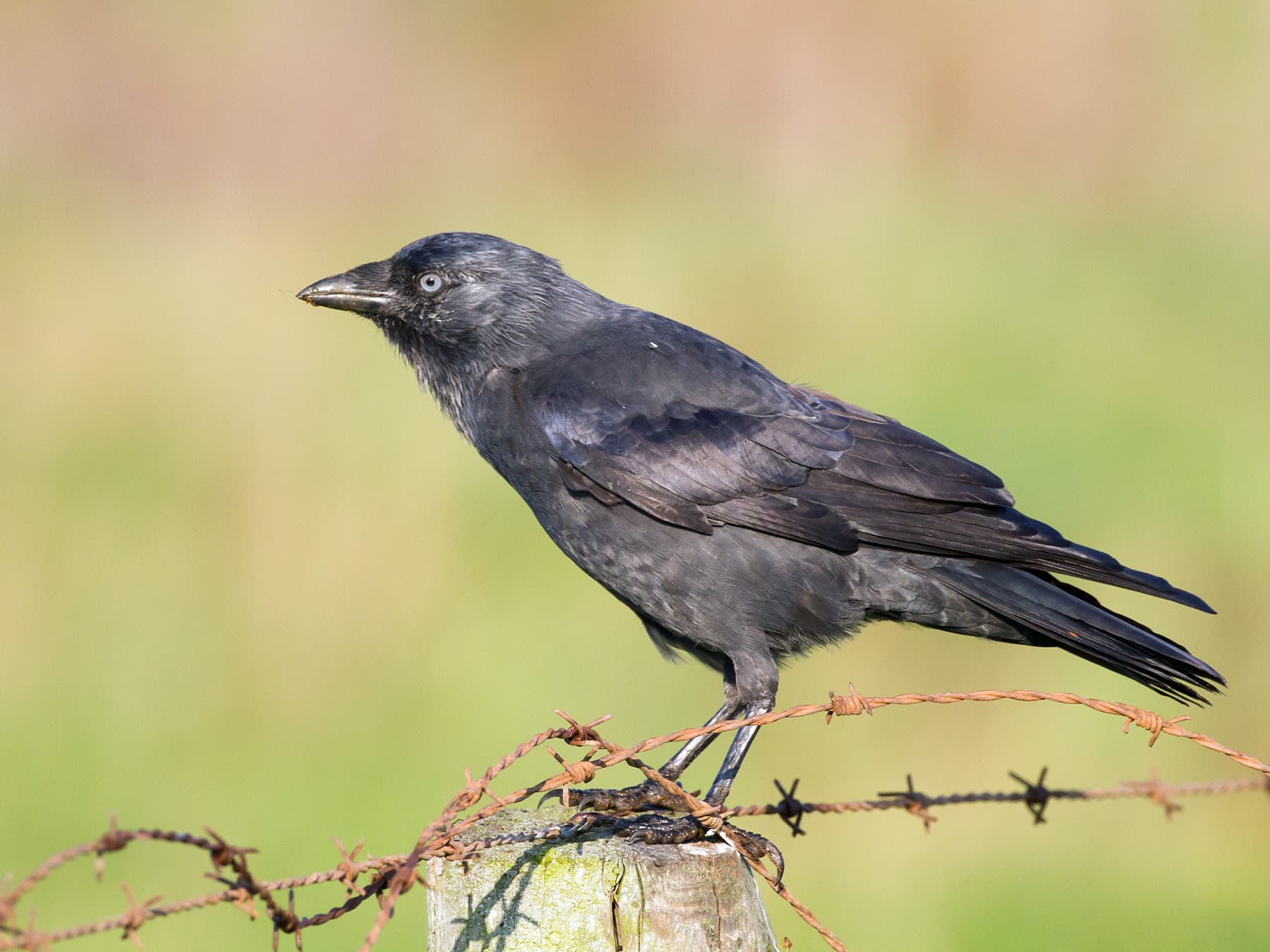 JackdawColoeus monedula34–39 cm · crows & jays
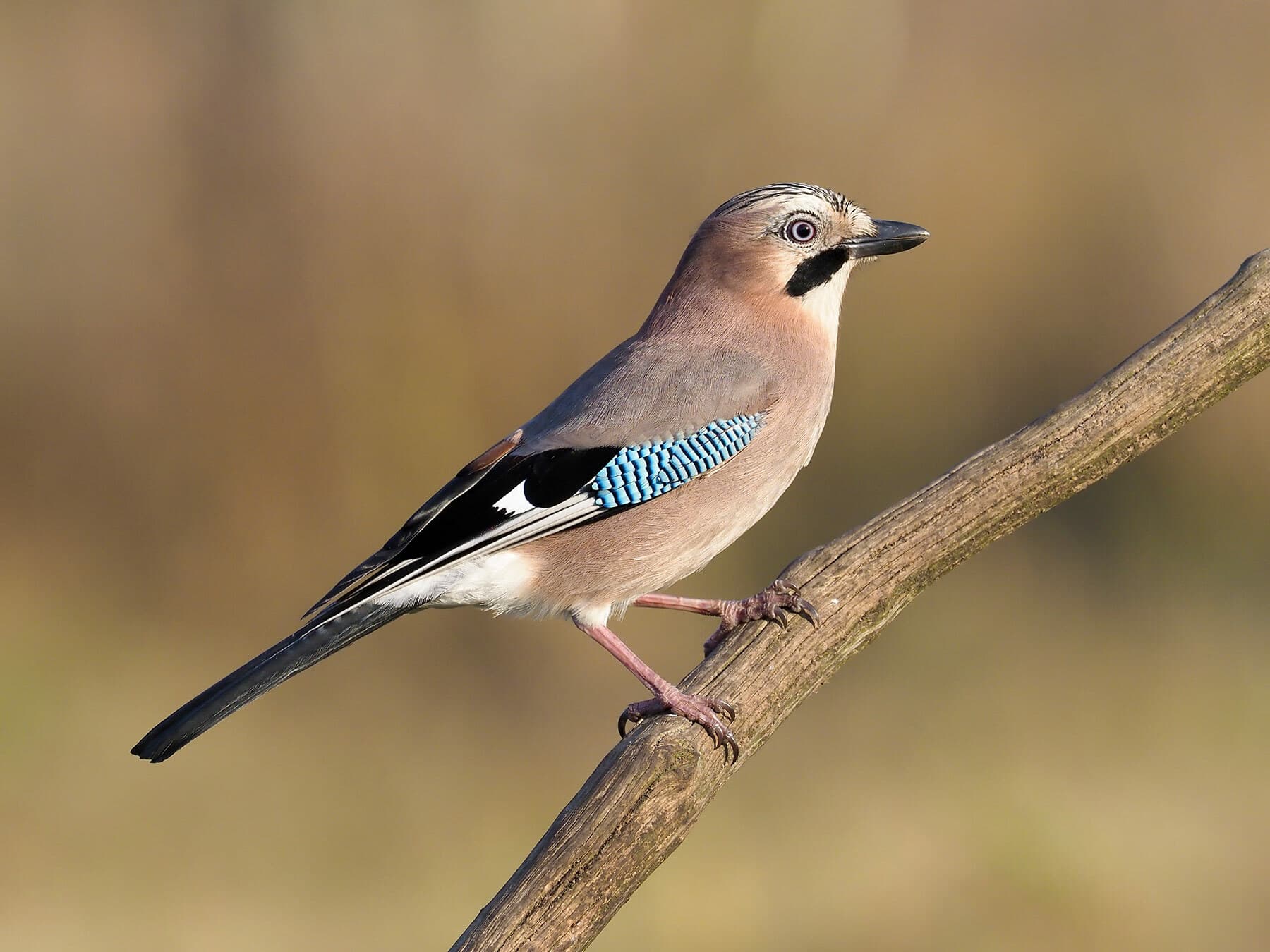 Eurasian JayGarrulus glandarius32–35 cm · crows & jays
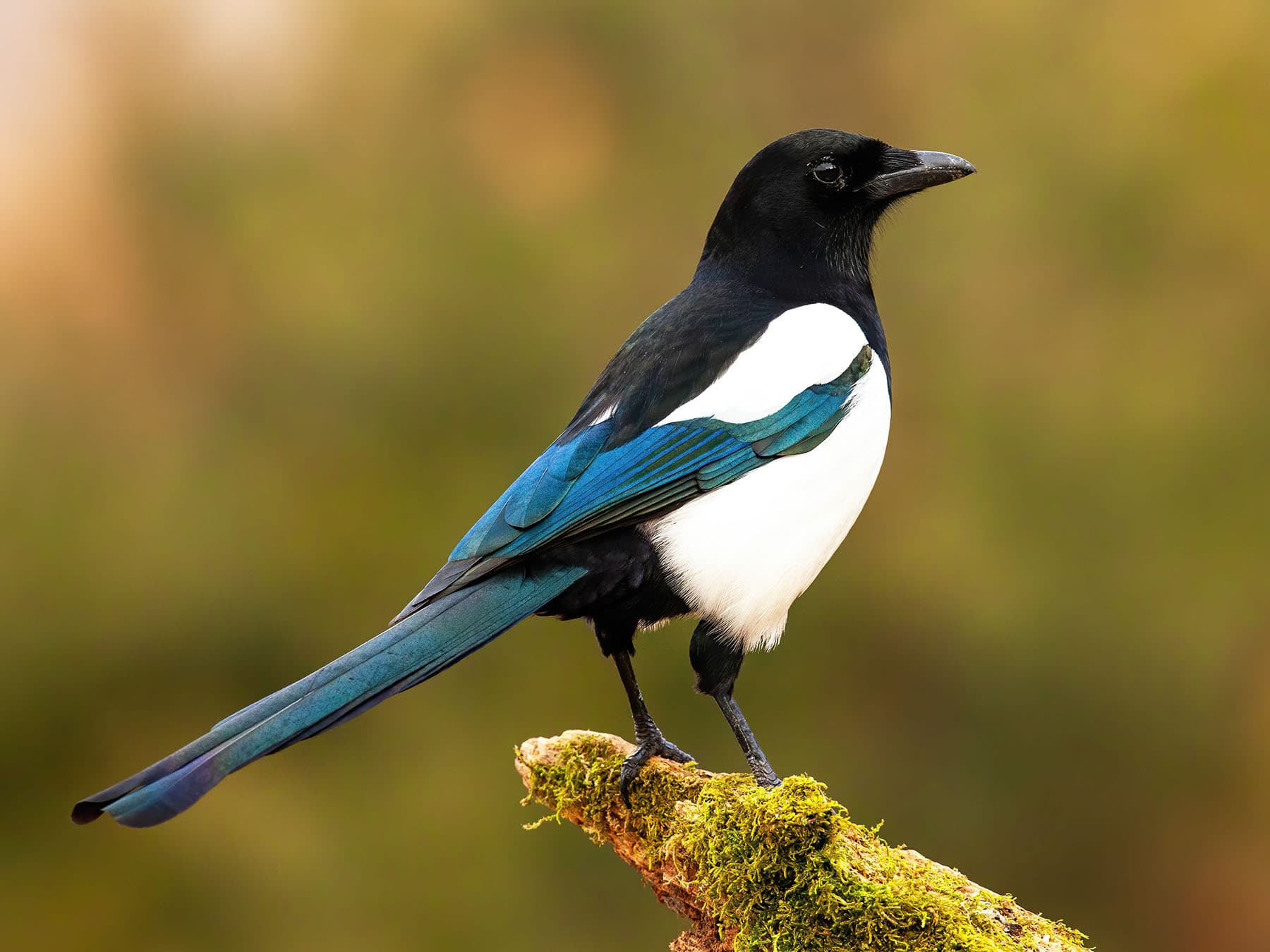 MagpiePica pica44–46 cm · crows & jays
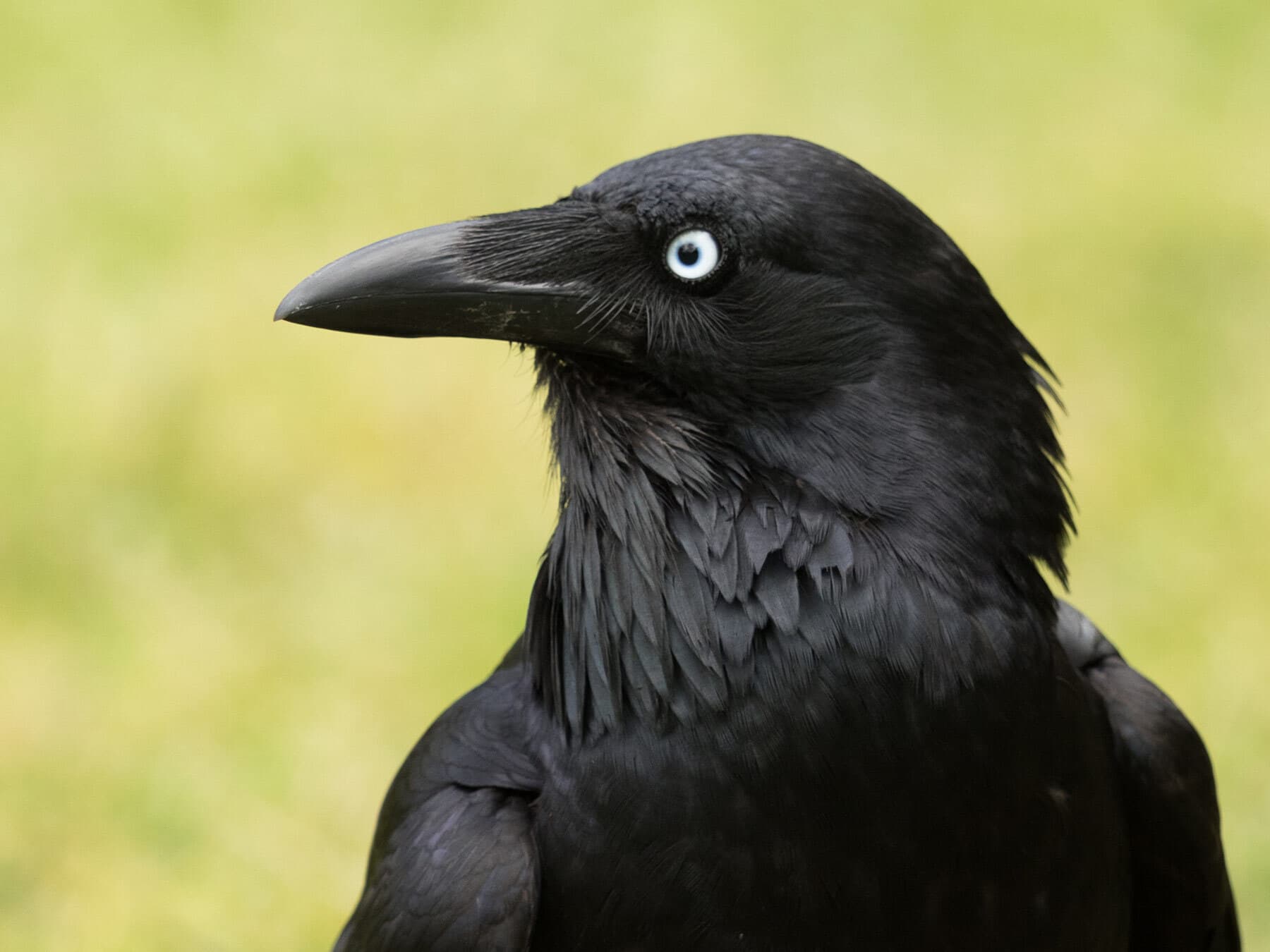 Australian RavenCorvus coronoides46–53 cm · crows & jays
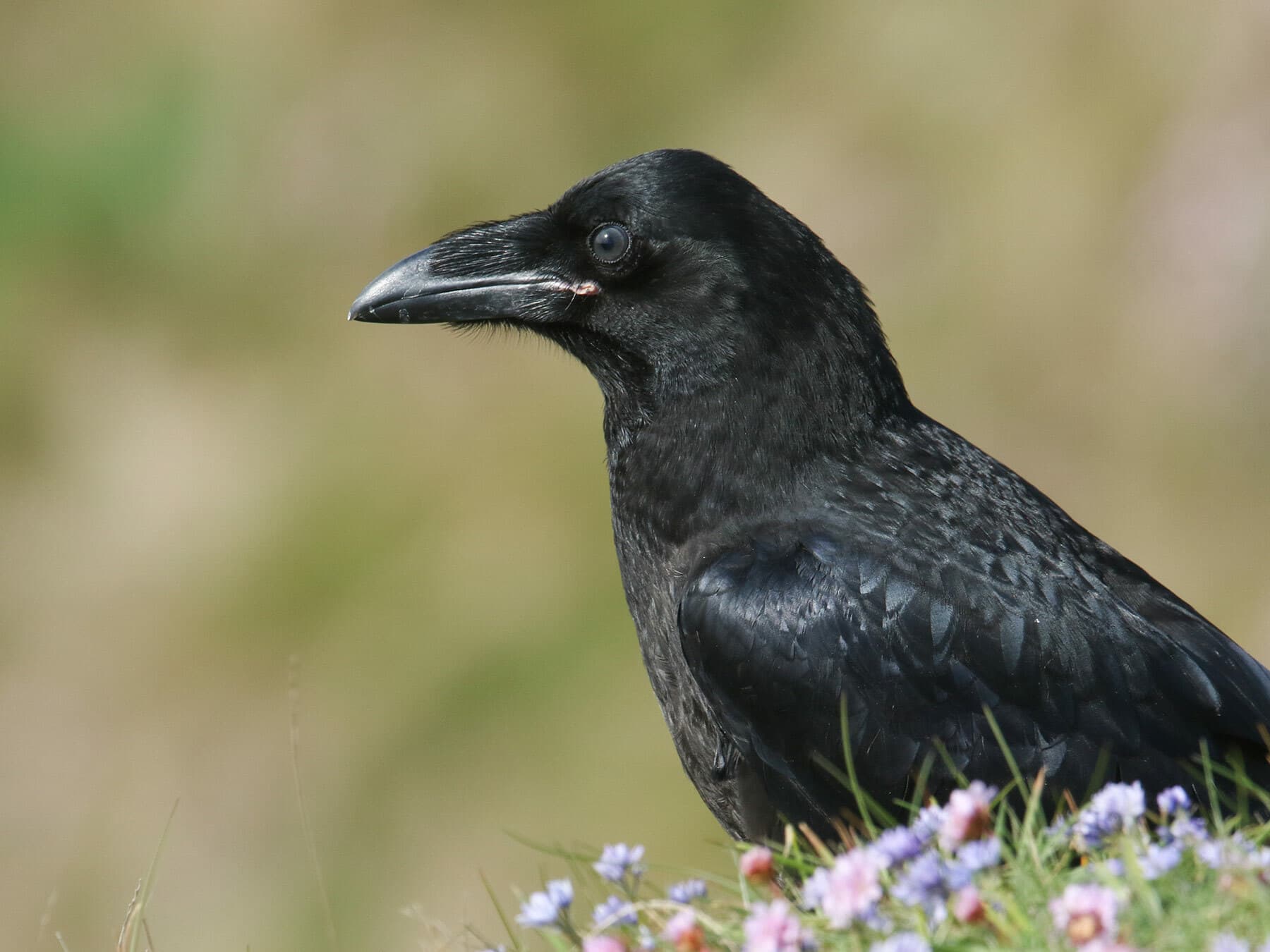 Common RavenCorvus corax54–67 cm · crows & jays
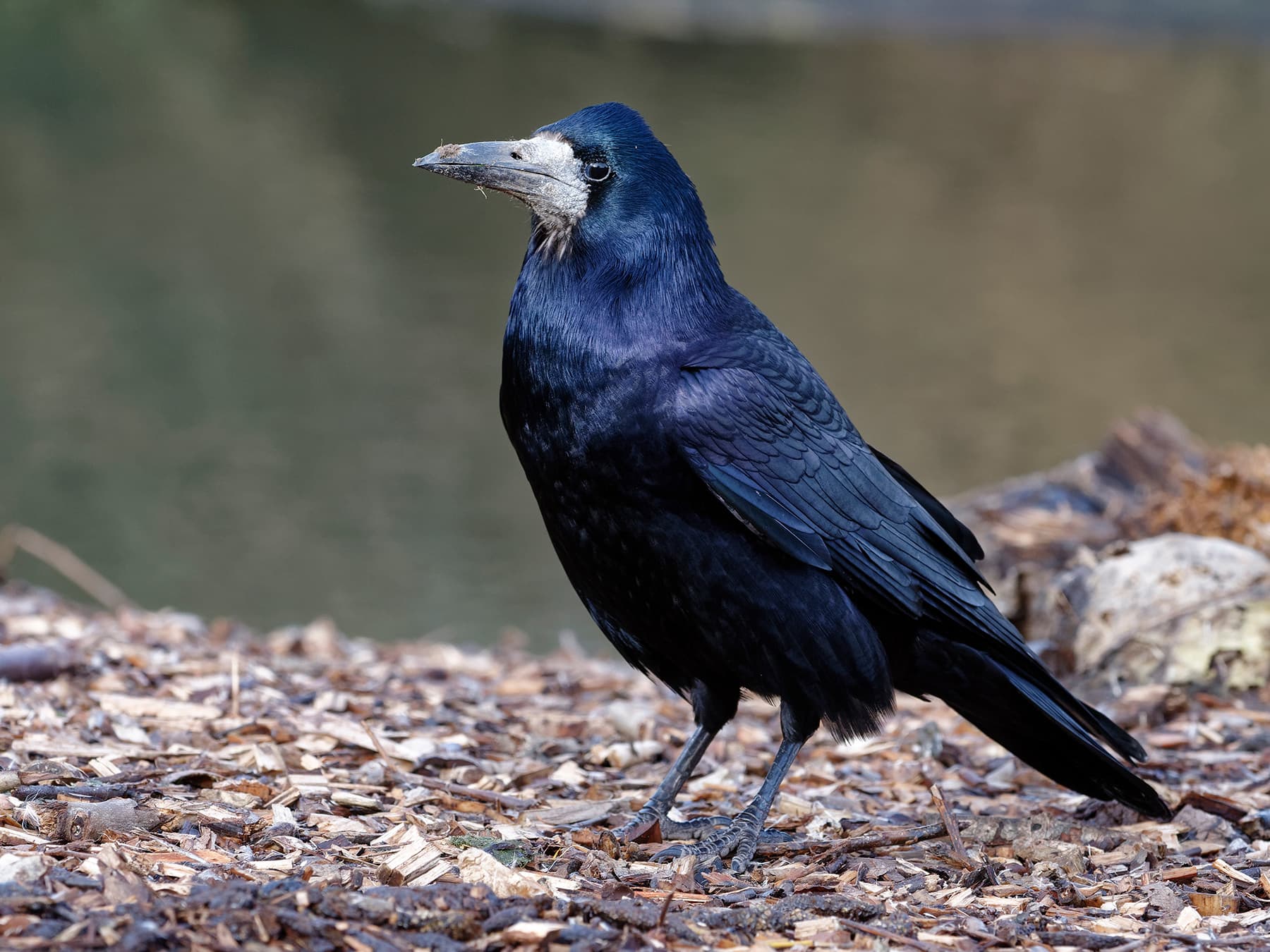 RookCorvus frugilegus45–47 cm · crows & jays