


Rook
European Rook · Corvus frugilegus
By the Birdfact teamChecked by Nathan Cope
On this page15 sections
How to recognise it
What do Rooks look like?
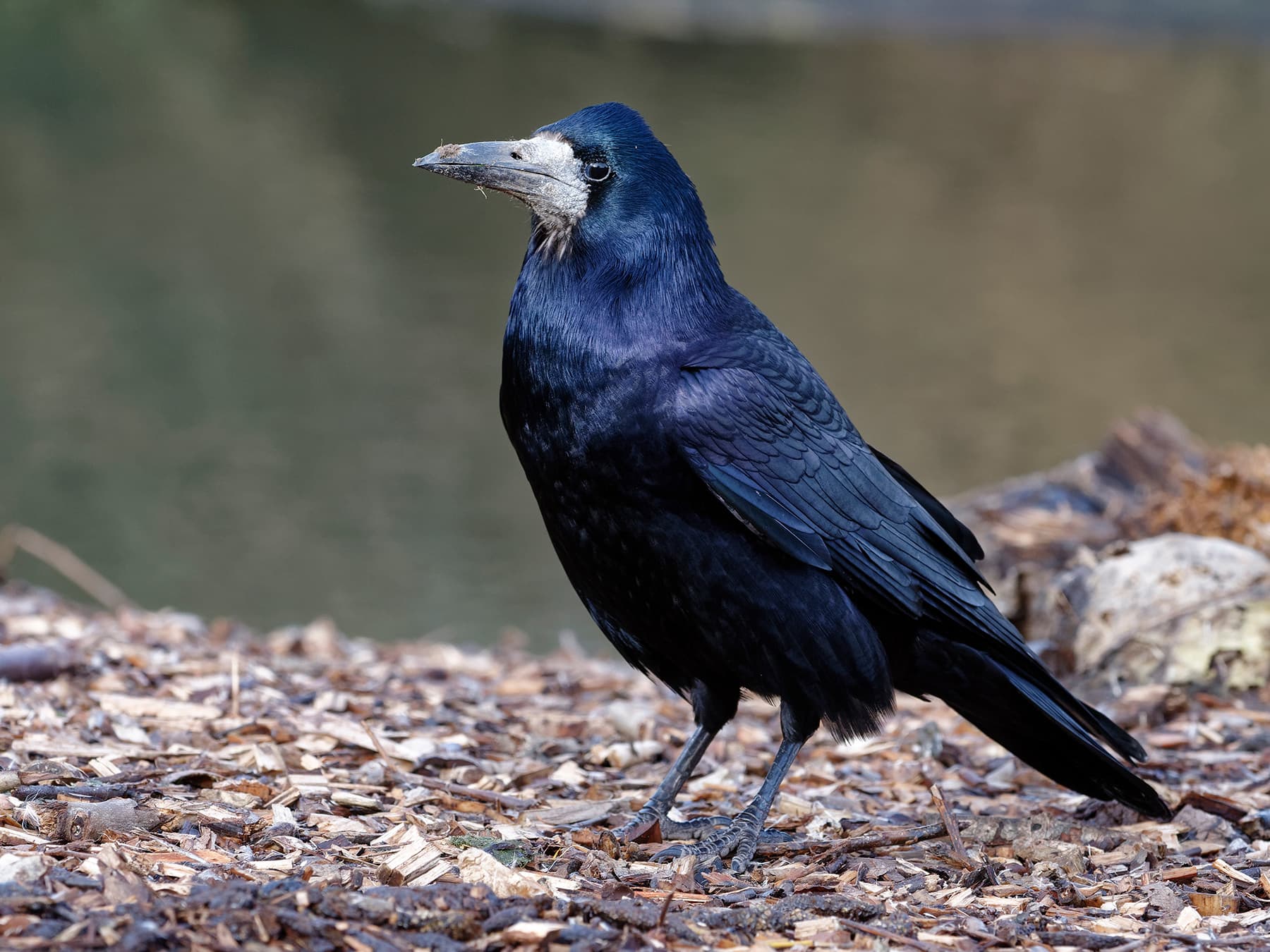
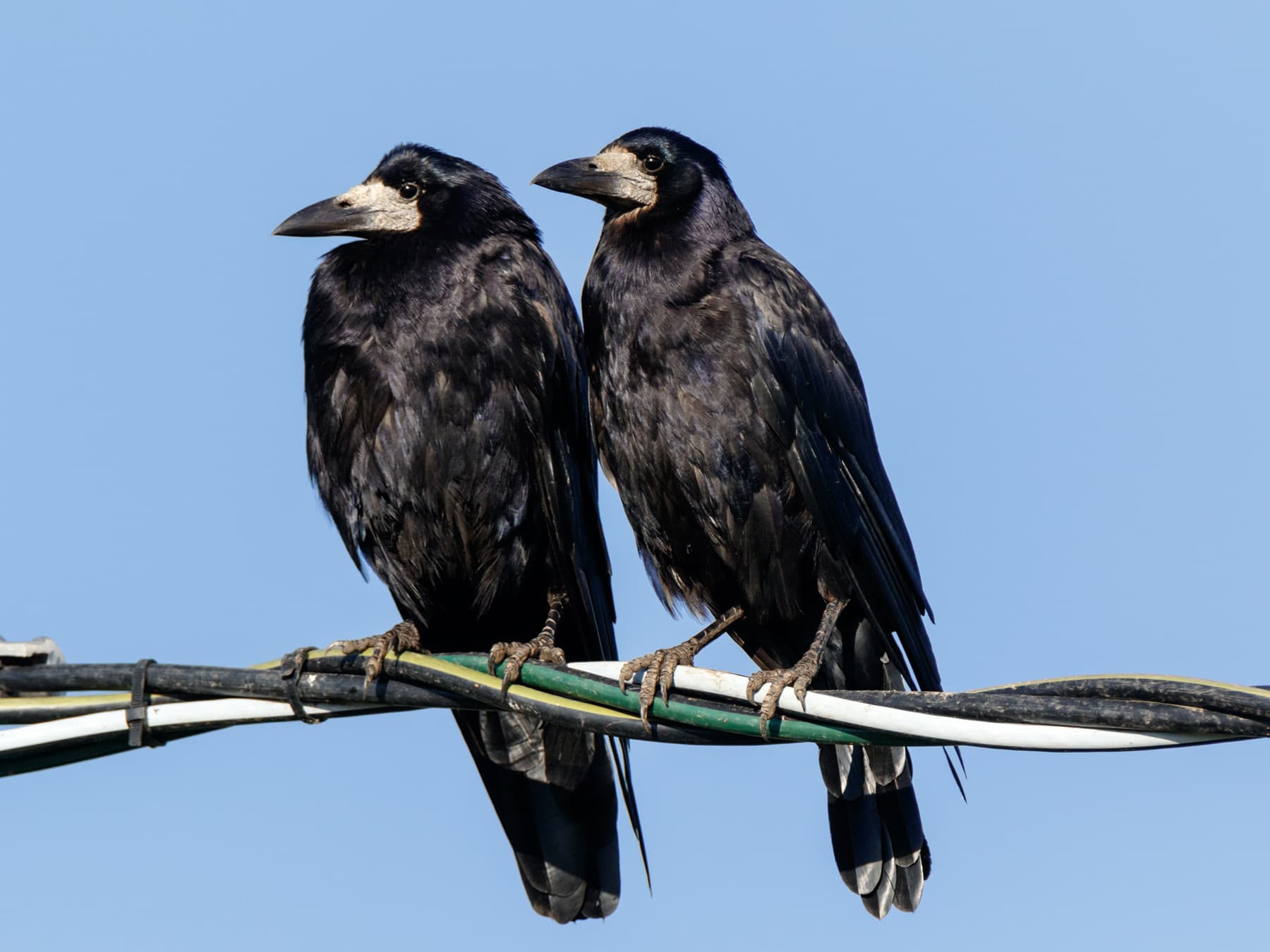
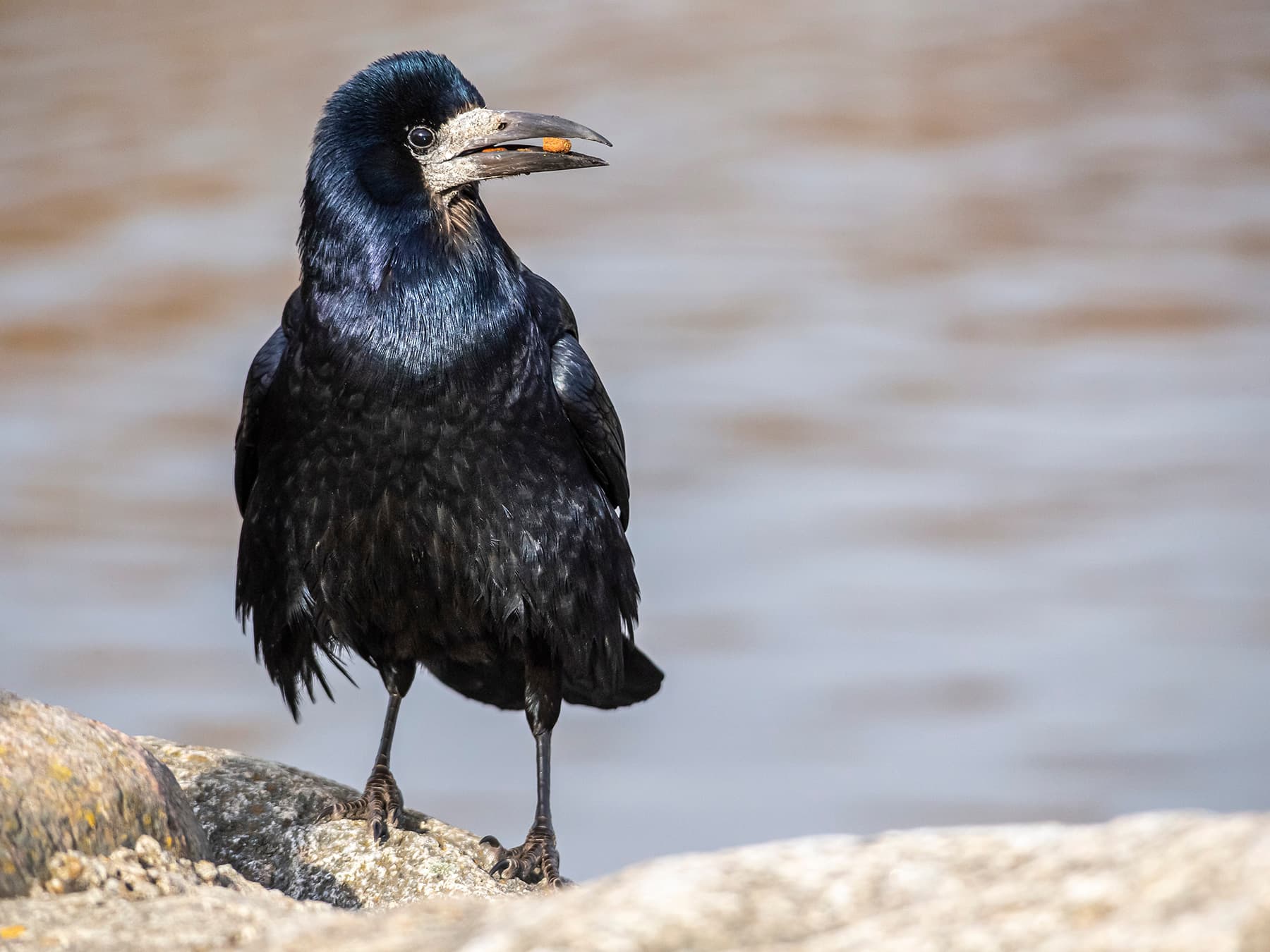
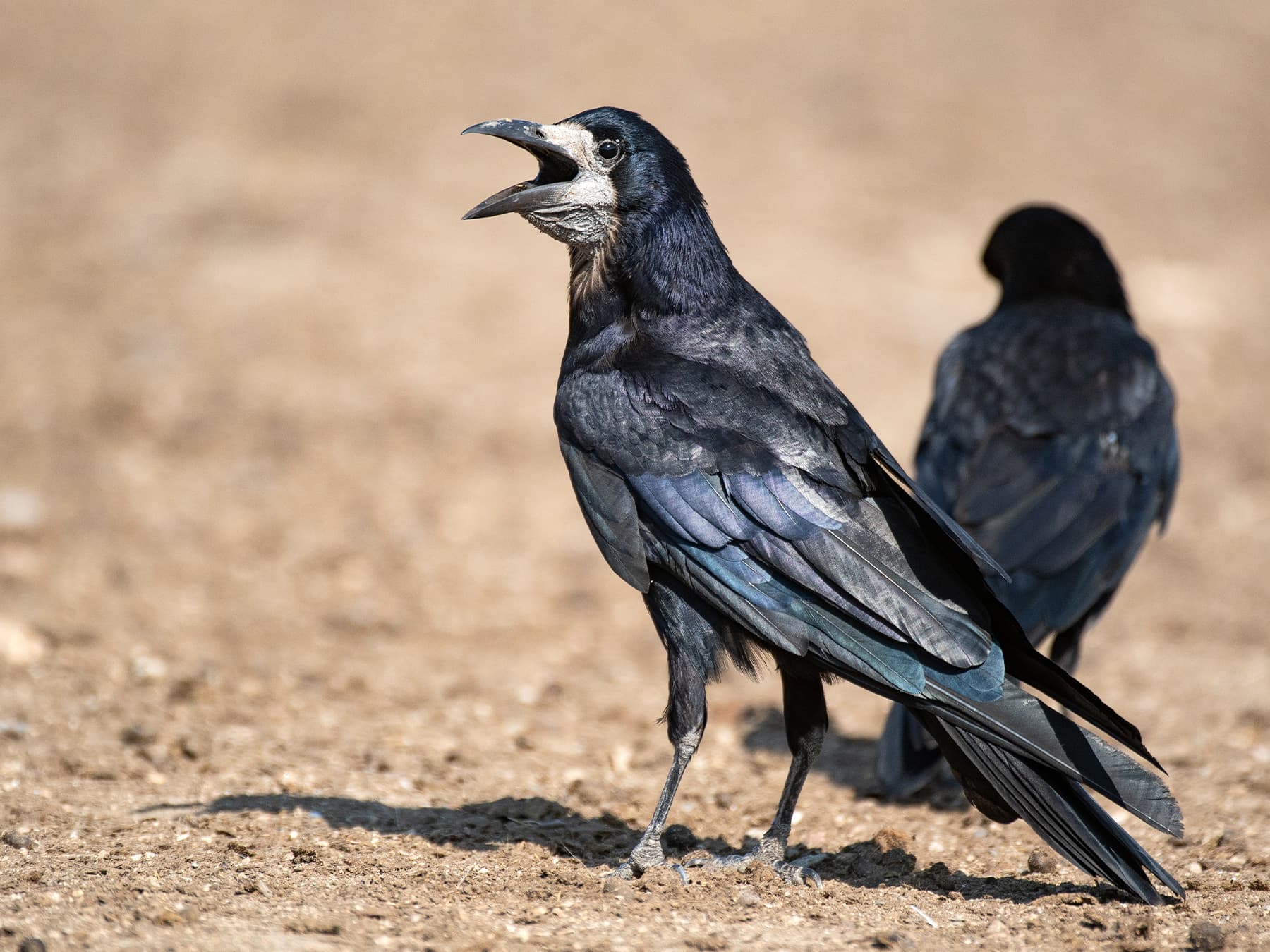
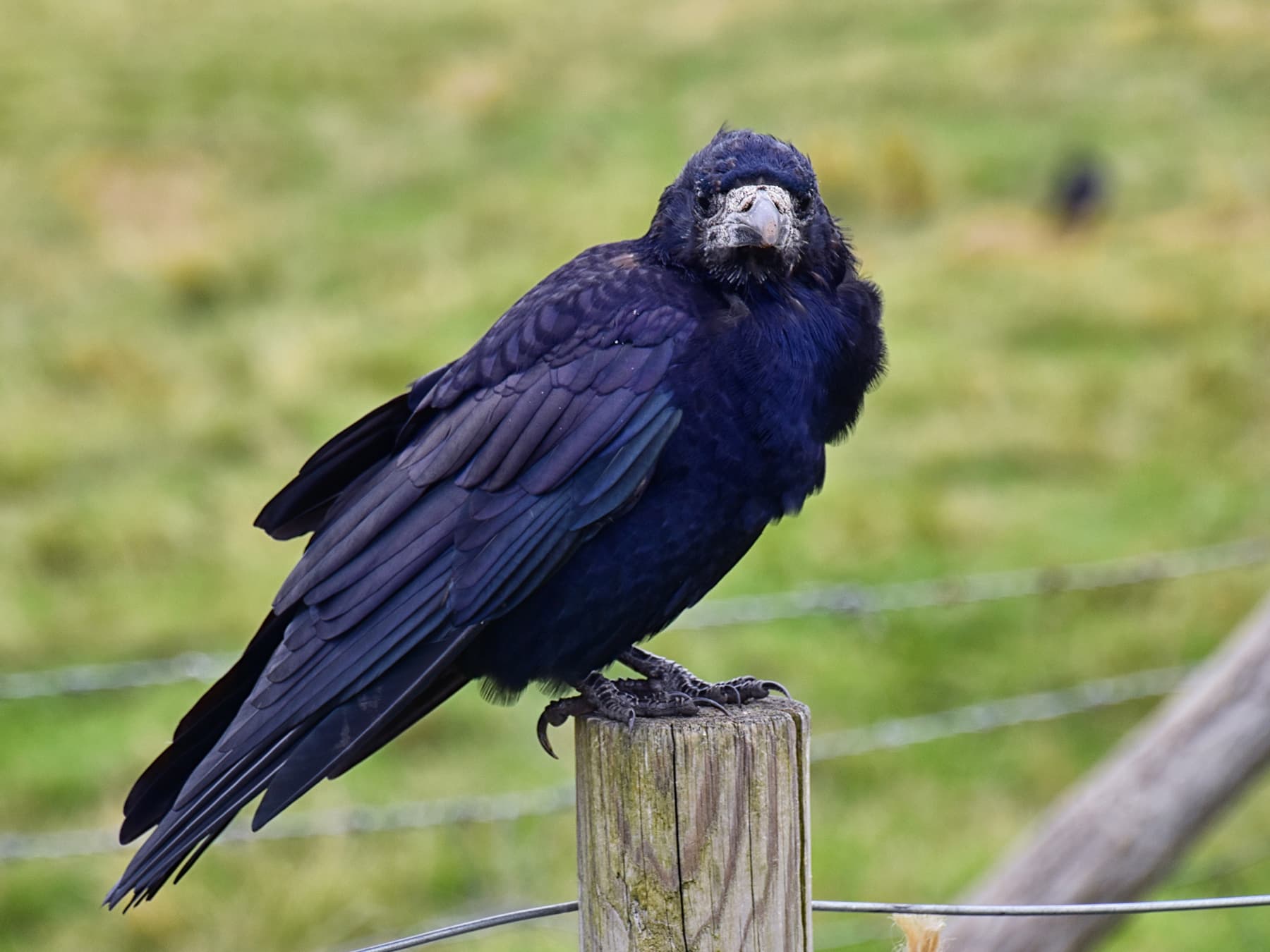
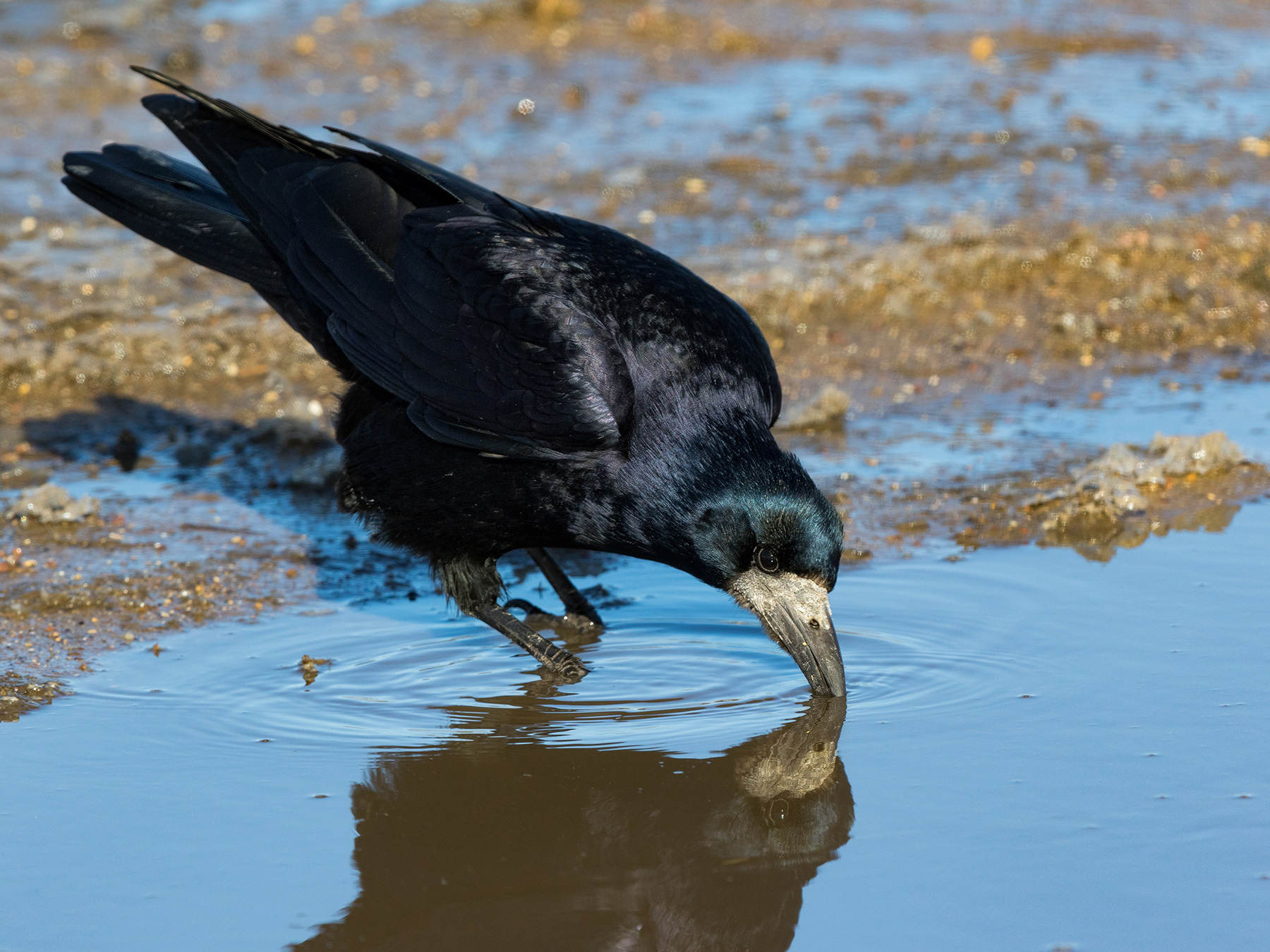
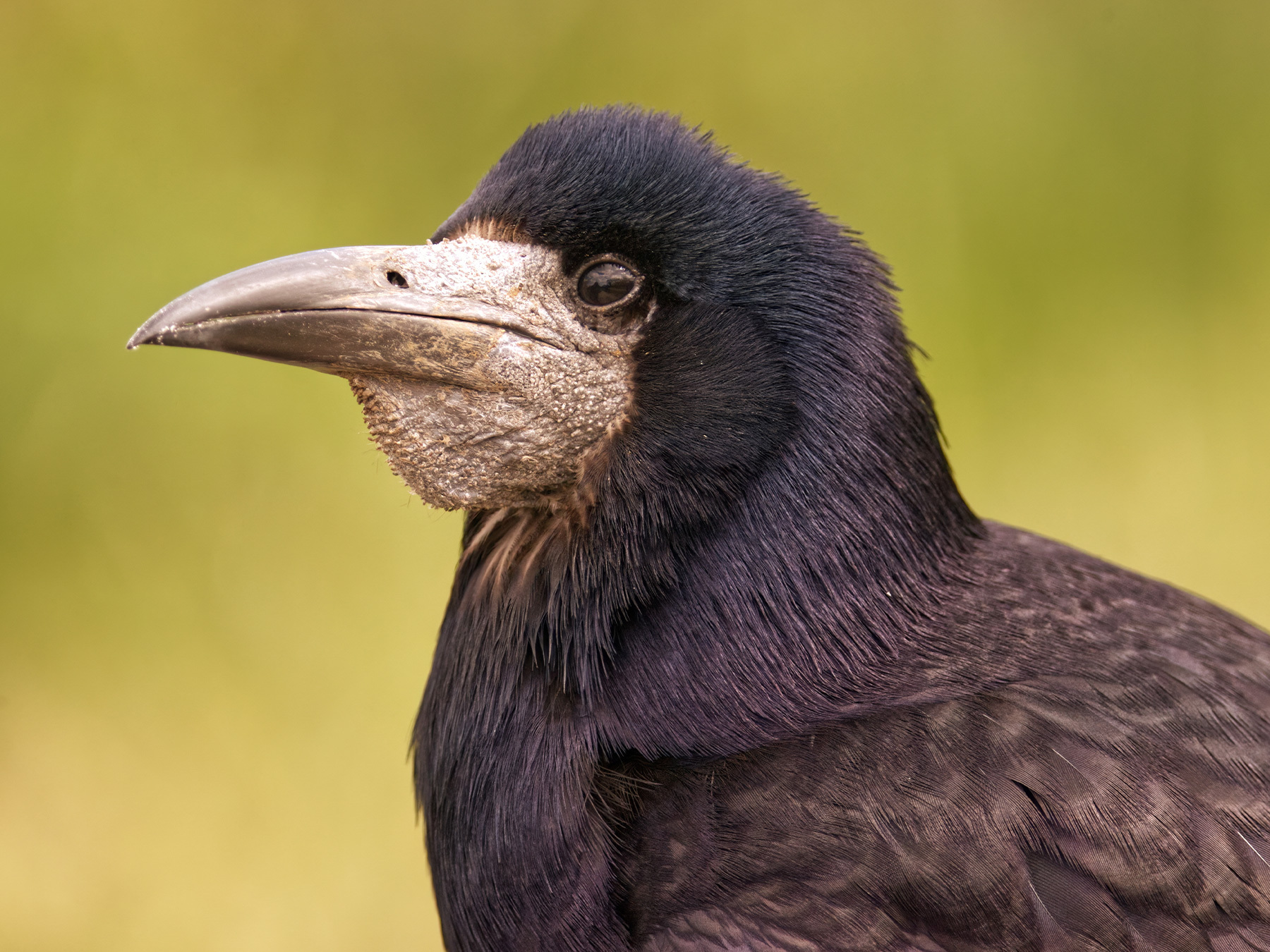
Rooks are all-black corvids, similar in appearance to the Carrion Crow. However, the Rook is easily distinguished by the bare whitish skin around its bill. This bird has a somewhat scruffy appearance, with bulky and untidy plumage and a steeply angled crown.
Female Rooks look very similar to males, although they are generally smaller. Juveniles have fully-feathered faces, which makes them difficult to distinguish from crows in the late spring and summer.
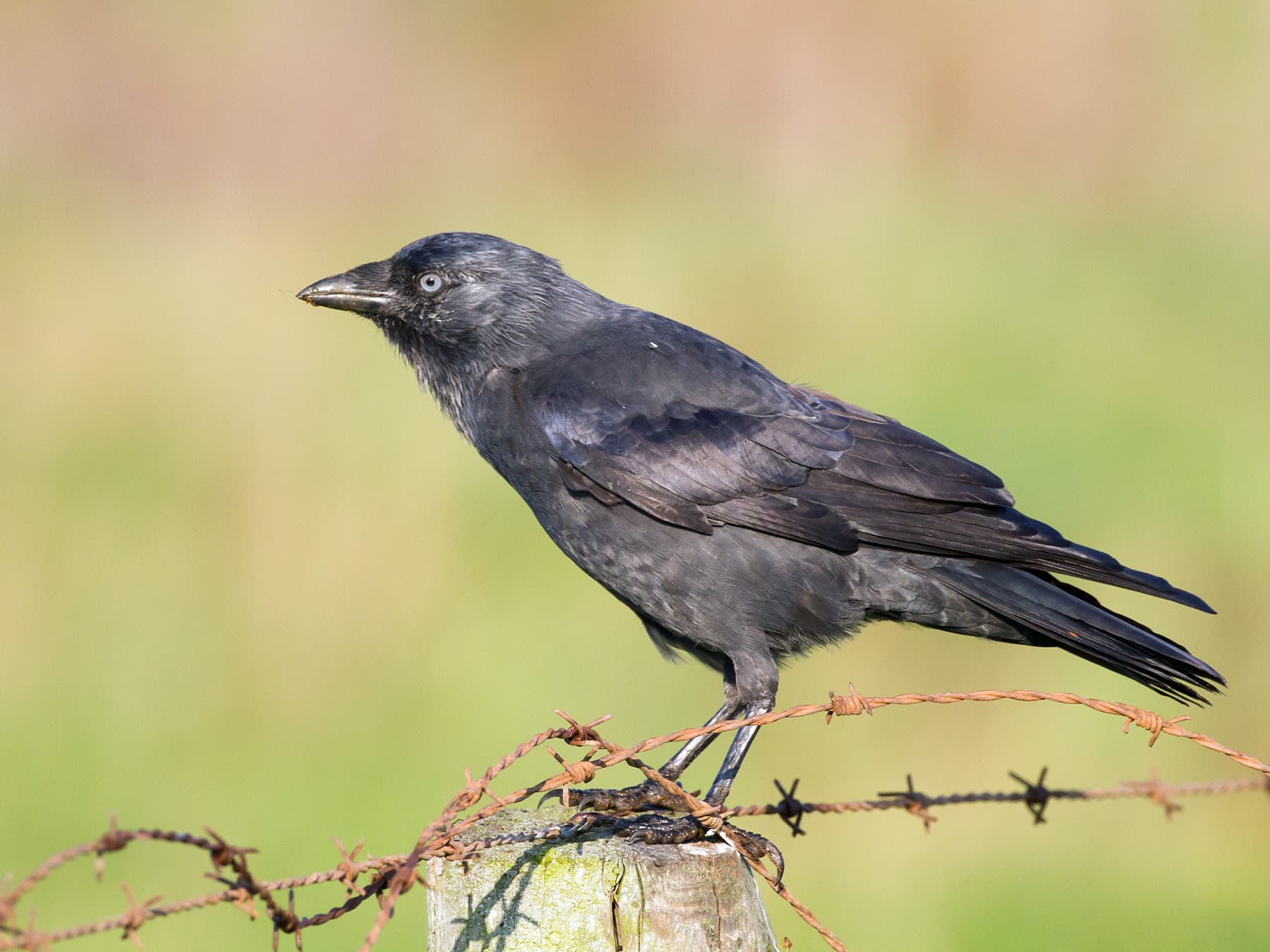
Identifying Rooks in the UK can be challenging due to their likeness to other UK corvids like the Carrion Crow, Raven, Jackdaw, and Chough. Read our in-depth guide to corvids of the UK for more information on these birds.
How big are Rooks?
Rooks are medium-sized corvids, about the same size as the Carrion Crow and much smaller than the Raven.
Length
The Rook has a body length of 44 to 46 centimetres.
Weight
These birds weigh 325 to 571 grams. Males have an average body weight of approximately 485 grams, while the smaller females average 425 grams.
Wingspan
Their wingspan measures 81 to 99 centimetres. Males have longer wings on average.
Its size
Adults- Length
- 45–47 cm
- Wingspan
- 81–99 cm
- Weight
- 337–531 g
Its song and calls
What sound does a Rook make?
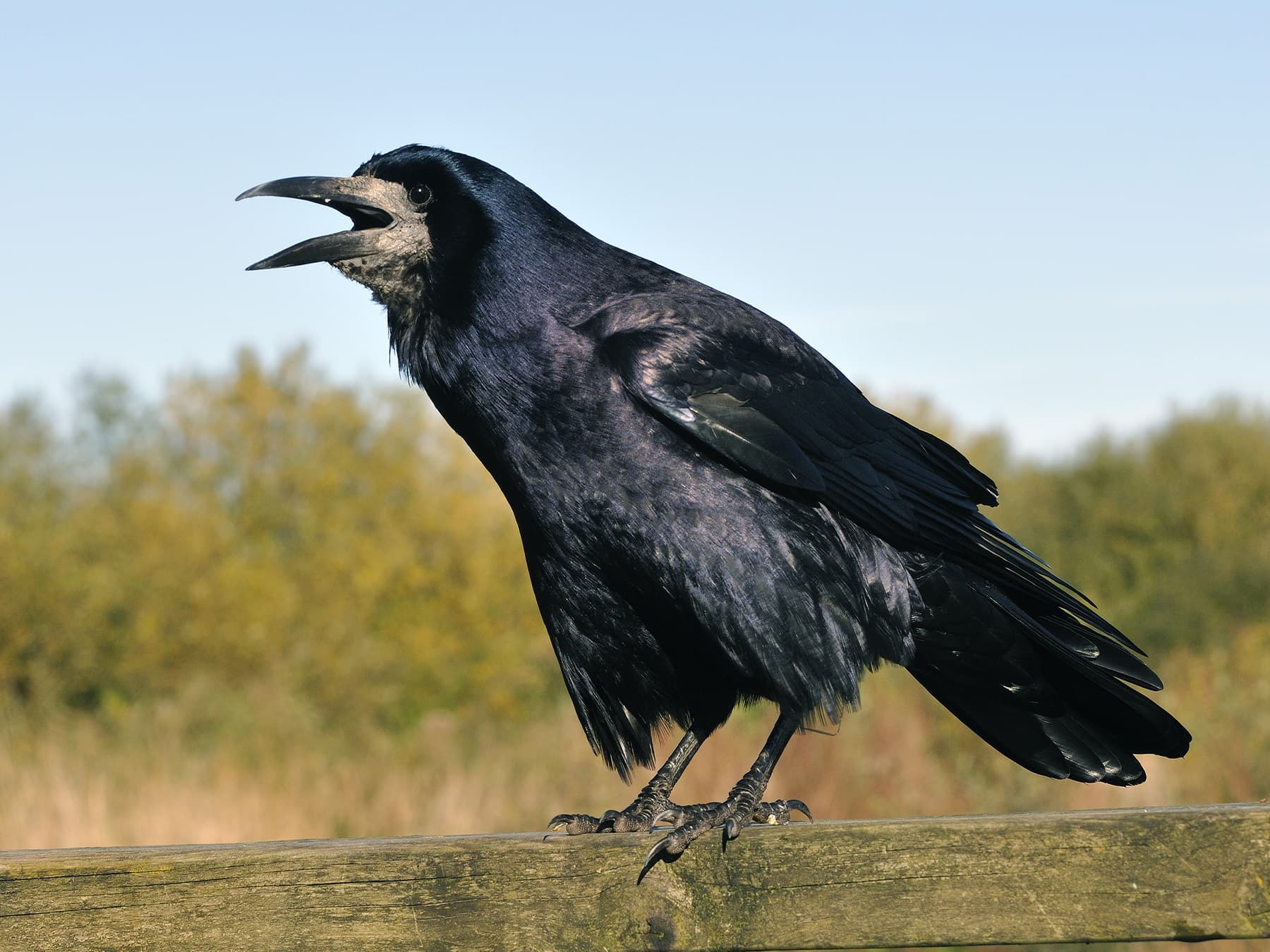
Adult Rooks produce typical crow-like vocalisations. Their call is a raucous, drawn-out cawing, and their song includes various other notes and phrases like clicking and gurgling sounds.
- Song0:00 / 2:09
Recorded in Pays de la Loire, France · April 2026
- Call0:00 / 0:37
Recorded in Pembrokeshire, Wales · April 2023
When and where to see it
OctoberHere all year
Most recorded in October
- 1. South Ayrshire9.3%
- 2. Meath6.1%
- 3. Tipperary5.4%
- 4. Offaly5.3%
- 5. Longford5.1%
Each dot is a county, state or province: the bigger and darker, the larger the bird’s share of that place’s bird records that month. Grey dots: no regular records. The ringed point is the centre of the bird’s records this month; the arrow shows how it moved since last month, and the dashed loop its path through the year. “Arrivals” colours places where it becomes regular this month (orange) or is in its last regular month (grey). GBIF eBird Observation Dataset, 2019–2024. Map data: Natural Earth, US Census Bureau; place centres © OpenStreetMap contributors.
In your area
See when the Rook is recorded in your county, state or province.
How often the Rook turns up in the UK and Ireland through the year, from birdwatchers' records.
United Kingdom
Resident · all year · most records in November
Ireland
Resident · all year · most records in September
Show as a table
| Month | United Kingdom | Ireland |
|---|---|---|
| January | 1.0% (regular) | 2.2% (regular) |
| February | 1.1% (regular) | 2.3% (regular) |
| March | 1.0% (regular) | 2.2% (regular) |
| April | 1.0% (regular) | 2.2% (regular) |
| May | 0.97% (regular) | 2.1% (regular) |
| June | 0.98% (regular) | 2.4% (regular) |
| July | 0.88% (regular) | 2.5% (regular) |
| August | 0.93% (regular) | 2.5% (regular) |
| September | 1.1% (regular) | 2.5% (regular) |
| October | 1.1% (regular) | 2.4% (regular) |
| November | 1.1% (regular) | 2.5% (regular) |
| December | 1.1% (regular) | 2.4% (regular) |
Recorded regularly in
Worldwide: recorded regularly in 59 countries
Countries where it was recorded in at least 3 of the 6 years 2019–2024. Linked countries have their own bird list.
Europe (39)
- Åland Islands
- Albania
- Austria
- Belarus
- Belgium
- Bosnia & Herzegovina
- Bulgaria
- Croatia
- Czechia
- Denmark
- Estonia
- Finland
- France
- Germany
- Greece
- Hungary
- Ireland
- Isle of Man
- Italy
- Kosovo
- Latvia
- Lithuania
- Luxembourg
- Moldova
- Montenegro
- Netherlands
- North Macedonia
- Norway
- Poland
- Romania
- Russia
- Serbia
- Slovakia
- Slovenia
- Spain
- Sweden
- Switzerland
- Ukraine
- United Kingdom
Asia (19)
- Armenia
- Azerbaijan
- China
- Georgia
- Hong Kong SAR China
- India
- Iran
- Iraq
- Israel
- Japan
- Kazakhstan
- Kyrgyzstan
- Mongolia
- Pakistan
- South Korea
- Taiwan
- Tajikistan
- Turkey
- Uzbekistan
Oceania (1)
Data: EOD – eBird Observation Dataset (Cornell Lab of Ornithology), accessed via GBIF.org, CC BY 4.0. Records from 2019–2024, aggregated and filtered by Birdfact. How these lists are made
What is the habitat of a Rook?
Rooks are most at home in arable and pasture farmland. They require large trees nearby for nesting and roosting. They may forage in larger parks and gardens and will also use large trees on the edge of urban and suburban areas.
What is the range of a Rook?
Rooks are widespread in the UK, occurring almost everywhere but the far northwest of Scotland, mountainous areas in Wales and the greater London area. Elsewhere, the species occurs through Southern and Central Europe to China and Japan.
Where do Rooks live?
Rooks are associated with people, at least in the sense that they forage in farmland and along country roadsides. These birds generally feed on the ground but rest, sleep, and nest in trees.
How rare are Rooks?
Rooks are very common in the United Kingdom despite a significant decrease in the breeding population over the last few decades. The current population is estimated at approximately one million breeding pairs.
Where can you see Rooks in the UK?
Rooks are widespread in the United Kingdom. Look and listen out for these birds in farmland and along roadsides. They are generally absent from city centres but may visit parks and larger village gardens.
Migration
Do Rooks migrate?
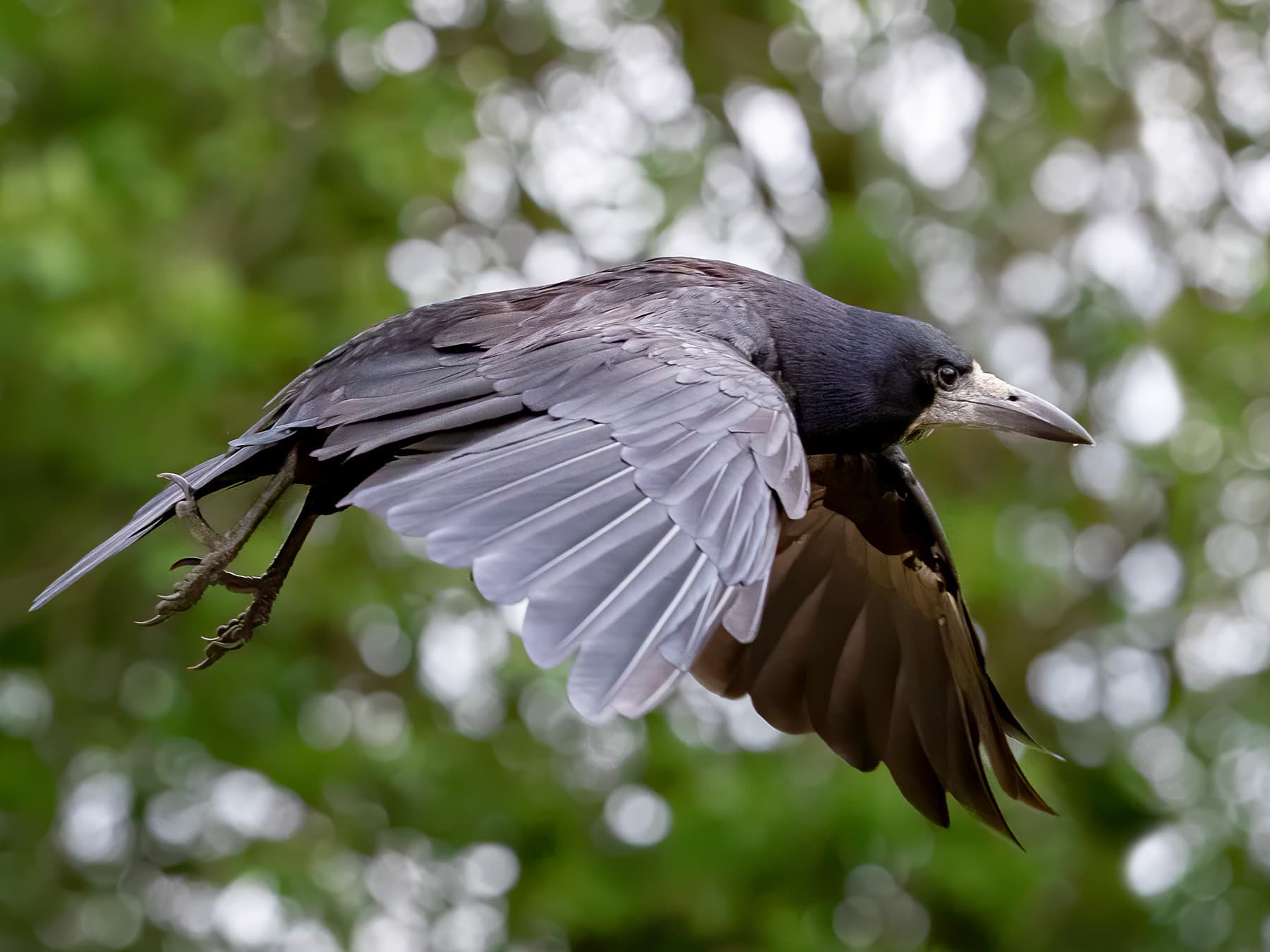
Rooks do not migrate in the United Kingdom and Western Europe, where they can be seen throughout the year. The eastern populations in Asia migrate between breeding ranges in the north and overwintering sites in the south.
Are Rooks native to the UK?
Rooks are a native species in the United Kingdom and the rest of their European and Asian range. They were introduced to New Zealand in the 19th century to control agricultural pests but are now considered a pest species there.
Tips for seeing it
- Look for Rooks in open farmland, especially near nesting colonies
- Observe their distinctive bare face patch to differentiate from other corvids
- Listen for their characteristic 'caw' call, often heard in groups
- Watch for their unique walking gait and probing behaviour while foraging
What it eats
What do Rooks eat?
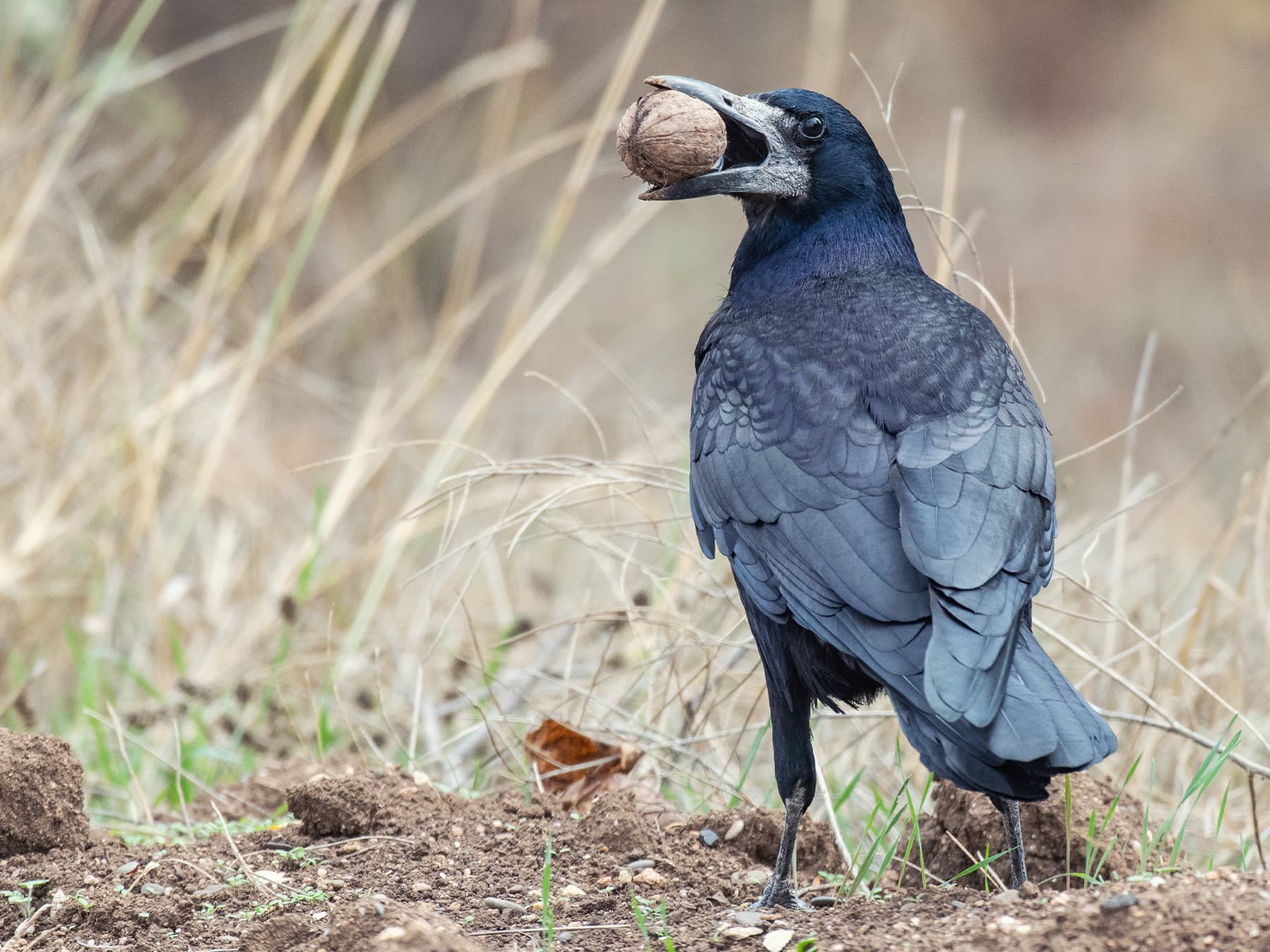
Rooks are adaptable omnivores that feed primarily on invertebrates like worms and beetles in the warmer months and grain in the autumn and winter. However, they have a varied diet and will take small vertebrates like rodents, eggs and chicks, fruits, berries, and acorns.
Rooks find most of their food on the ground or in the soil, but they will also visit bird tables. These intelligent birds are known to cache their food by burying it in the ground and covering it with leaves or soil.
What do Rook chicks eat?
Rook chicks eat worms and other invertebrates. Both parents feed the young for the month or so they are in the nest and then a further six weeks while they learn to forage for themselves.
Nesting and breeding
Where do Rooks nest?
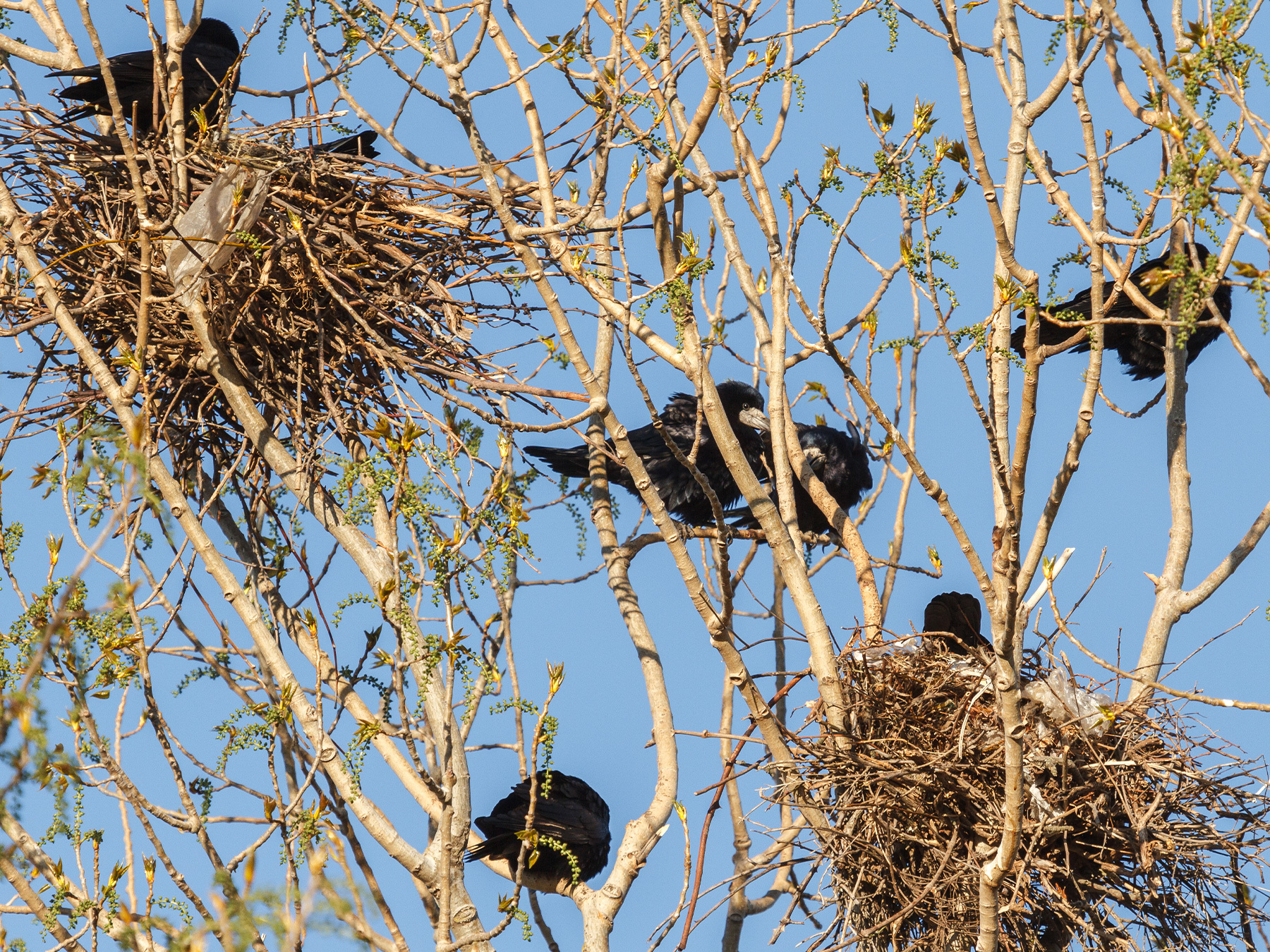
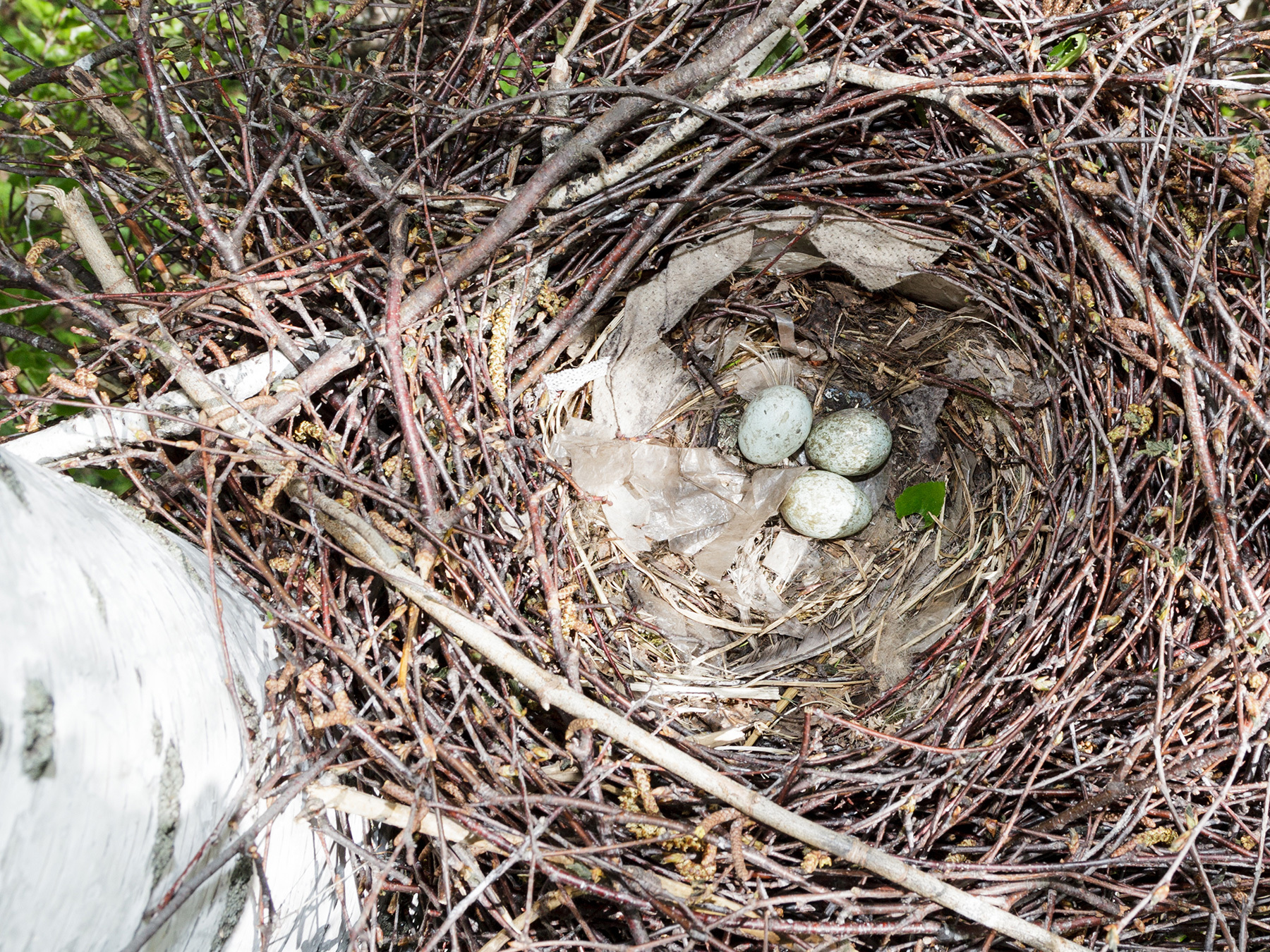
Rooks nest communally in rookeries, usually in stands of large trees. The largest rookeries may contain thousands of nests, and there may be dozens of nests in a single tree. The Rook’s nest is a large cup of twigs, lined with softer materials like dry grass, and built by both sexes.
When do Rooks nest?
Rooks nest just once each year and build their nests in late winter in time to lay their eggs in March. The female incubates the eggs for 16 to 18 days, and the chicks fledge after 30 to 36 days.
What do Rook eggs look like?
Rooks lay a single brood of three or four heavily marked and spotted greenish eggs. Each one measures approximately 40 millimetres long and 28 millimetres wide.
Do Rooks mate for life?
Rooks are thought to form lifelong pairs, but this does not mean they are always faithful to their partner. The pairs remain together within their flocks, even through the winter.
Behaviour
Are Rooks aggressive?
Rooks are highly gregarious birds that live in colonies and show little serious aggression toward each other. However, they can exhibit aggressive behaviour in the context of defending their partner and when fighting over food, particularly in the winter. They are relatively peaceful towards other bird species.
Where do Rooks sleep at night?
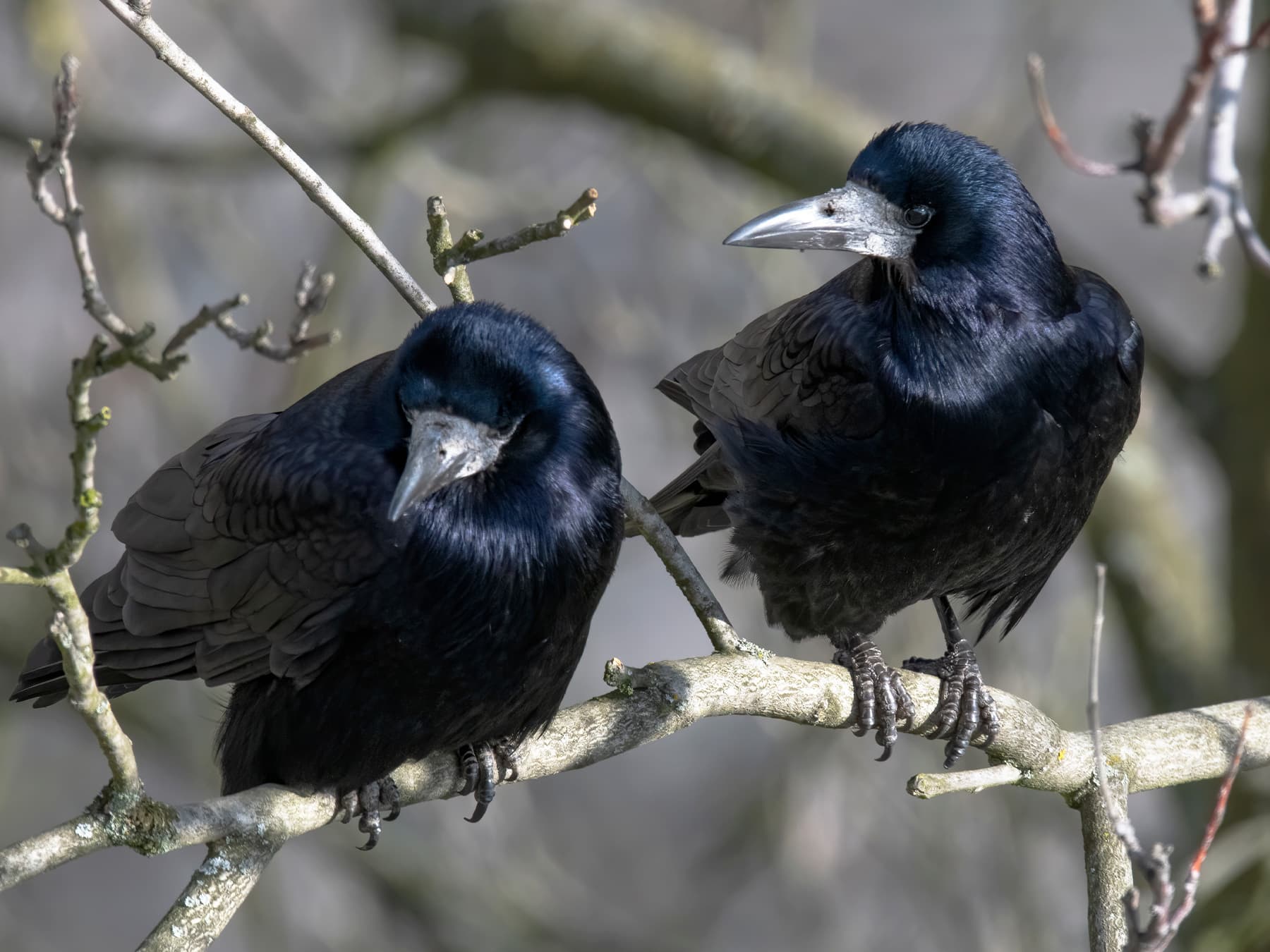
Rooks roost communally in trees in woodlands and forested areas. Some birds may continue to roost at the rookery (nest site) throughout the year, although most gather into large flocks after the breeding season and roost elsewhere, often in the company of Jackdaws.
Lifespan and predators
How long do Rooks live?
Rooks are relatively long-lived birds, with an average life expectancy of about six years for individuals who survive adulthood. However, these birds can live in the wild for at least 22 years.
What are the predators of Rooks?
Humans have traditionally been a significant predator of Rooks, both for pest control and food. These large birds have relatively few predators, although old, sick, or injured individuals could fall prey to large birds of prey and carnivores like foxes.
Are Rooks protected?
Rooks are protected by the Wildlife and Countryside Act 1981.
Are Rooks endangered?
Rooks are not endangered, although their population is decreasing. These birds are listed as a ‘Least Concern’ species by the IUCN and are Amber Listed in the UK.
Conservation
While currently listed as Least Concern, Rook populations have experienced declines in some parts of Europe. Changes in agricultural practices and land use have impacted their foraging habitats.
Conservation efforts focus on maintaining suitable nesting sites and promoting sustainable farming practices.
Similar birds
Often mistaken for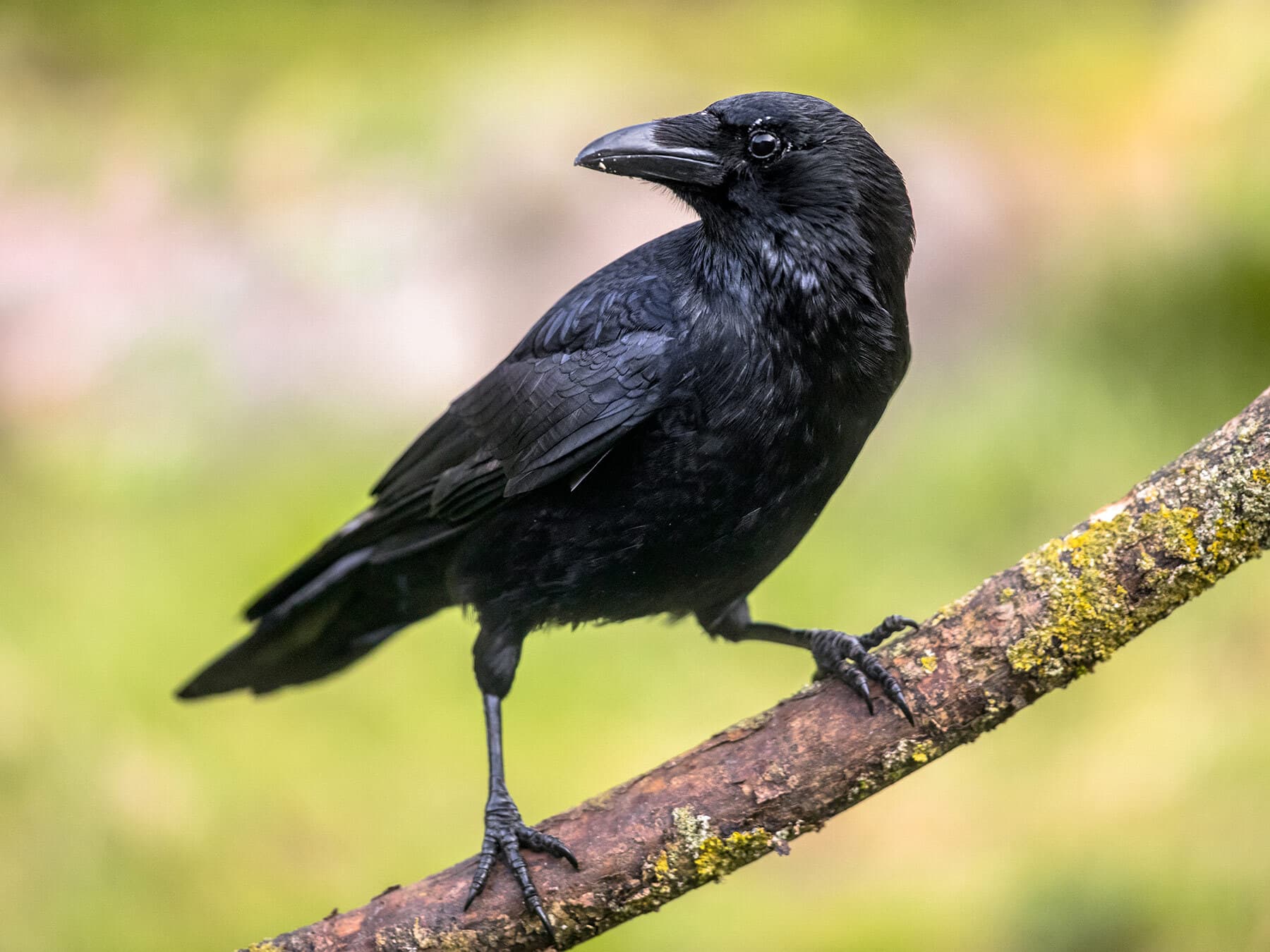
More photos
5 photos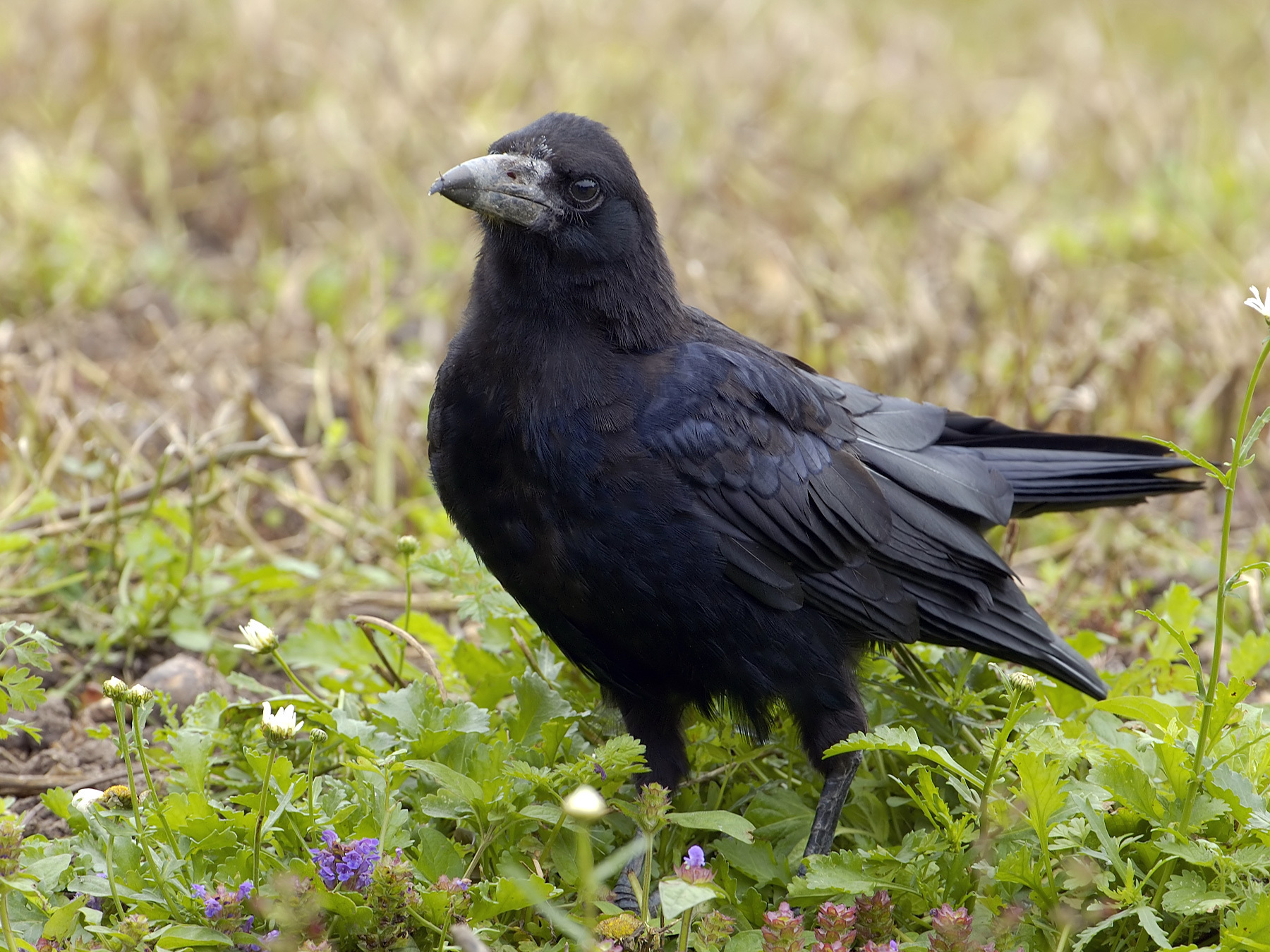
Rook guides
3 guidesQuick facts
- Length
- 45–47 cm
- Wingspan
- 81–99 cm
- Weight
- 337–531 g
- Lifespan
- 6 years · oldest recorded 23.8 years
- Family
- Crows & Jays
- Migration
- Partial migrant
- Global status (IUCN)
- Least Concern
- World population
- 54,300,000 - 94,700,000 mature individuals
- Population trend
- Decreasing
- Also called
- European Rook
- Scientific name
- Corvus frugilegus
Questions
6Are Rooks, Crows and Ravens the same?
Rooks, Crows, and Ravens are not the same birds, although they are related. Each is a member of the Corvidae family and the Corvus genus. Despite similar appearance and ancestry, each is a unique species with its own distinct behaviours and physical characteristics.
Are Rooks a pest?
Rooks can cause damage to cereal crops in arable farmlands, although this is somewhat mitigated by the benefits they provide by eating insect pests.
What is a group of Rooks called?
A group of Rooks is most popularly known as a parliament, although other collective nouns include a clamour and a building of Rooks.
Are Rooks intelligent birds?
Like most species in the Crow family, Rooks are highly intelligent birds. They have demonstrated their problem-solving abilities, teamwork, and tool-use skills in laboratory settings, although tool use has yet to be recorded in nature.
Why are Rooks so noisy?
Rooks are notoriously noisy birds, which is why they are sometimes known collectively as a clamour. These social birds use their voices to communicate above the din of all their neighbours. They may begin calling well before sunrise, which can disturb people who live near a rookery or roost site.
Why do Rooks leave a rookery?
Superstition suggests that Rooks leaving their rookery is a bad omen, but this behaviour is expected at the end of the nesting season. The birds leave their nesting area to form larger roosting flocks with other Rooks and Jackdaws. A more permanent departure from a Rookery could potentially be explained by major changes in their environment, significant disturbances or other causes that vary by case.
Sources
4- 1BirdLife International. 2017. Corvus frugilegus (amended version of 2016 assessment). The IUCN Red List of Threatened Species 2017: e.T22705983A118782308. Source (opens in a new tab)
- 2BirdLife International. 2017. Corvus frugilegus (amended version of 2016 assessment). The IUCN Red List of Threatened Species 2017: e.T22705983A118782308. Source (opens in a new tab)
- 3BirdLife International. 2017. Corvus frugilegus (amended version of 2016 assessment). The IUCN Red List of Threatened Species 2017: e.T22705983A118782308. Source (opens in a new tab)
- 4Fransson et al., EURING list of longevity records for European birds (2010) Source (opens in a new tab)

Checked by
Nathan Cope, founder and editor
Nathan founded Birdfact and leads its writers and contributors in the UK, the US and Canada. He has watched and studied birds for more than ten years, and checks every article and species guide before it’s published.