


Jackdaw
Eurasian Jackdaw, Western Jackdaw · Coloeus monedula
By the Birdfact teamChecked by Nathan Cope
See it in 3D
3D model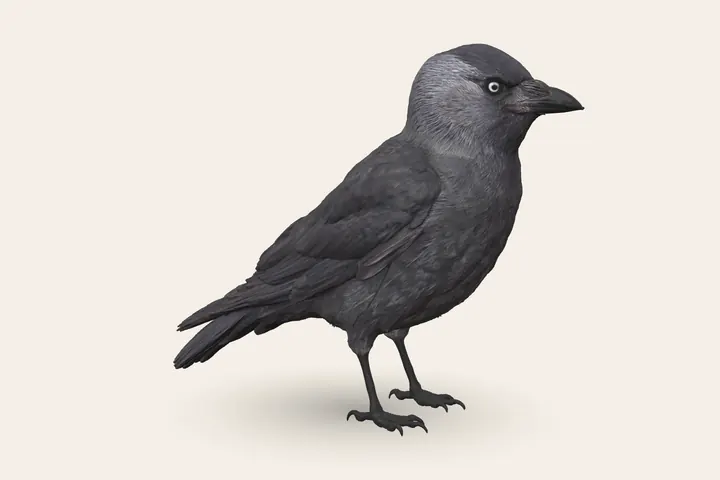 3D model
A Jackdaw is 34–39 cm (13.5–15.5 in) long, bill to tail.
3D model · Adult · Length 34–39 cm (13.5–15.5 in) · How we make our birds · Report a problem
© 2026 NC Digital Limited (Birdfact). All rights reserved. This 3D model may be viewed on this page and shared by link only. Downloading, extracting, copying or reusing it, or using it to train machine-learning models, is not permitted without our written permission. Using our models
On this page16 sections
How to recognise it
What do Jackdaws look like?
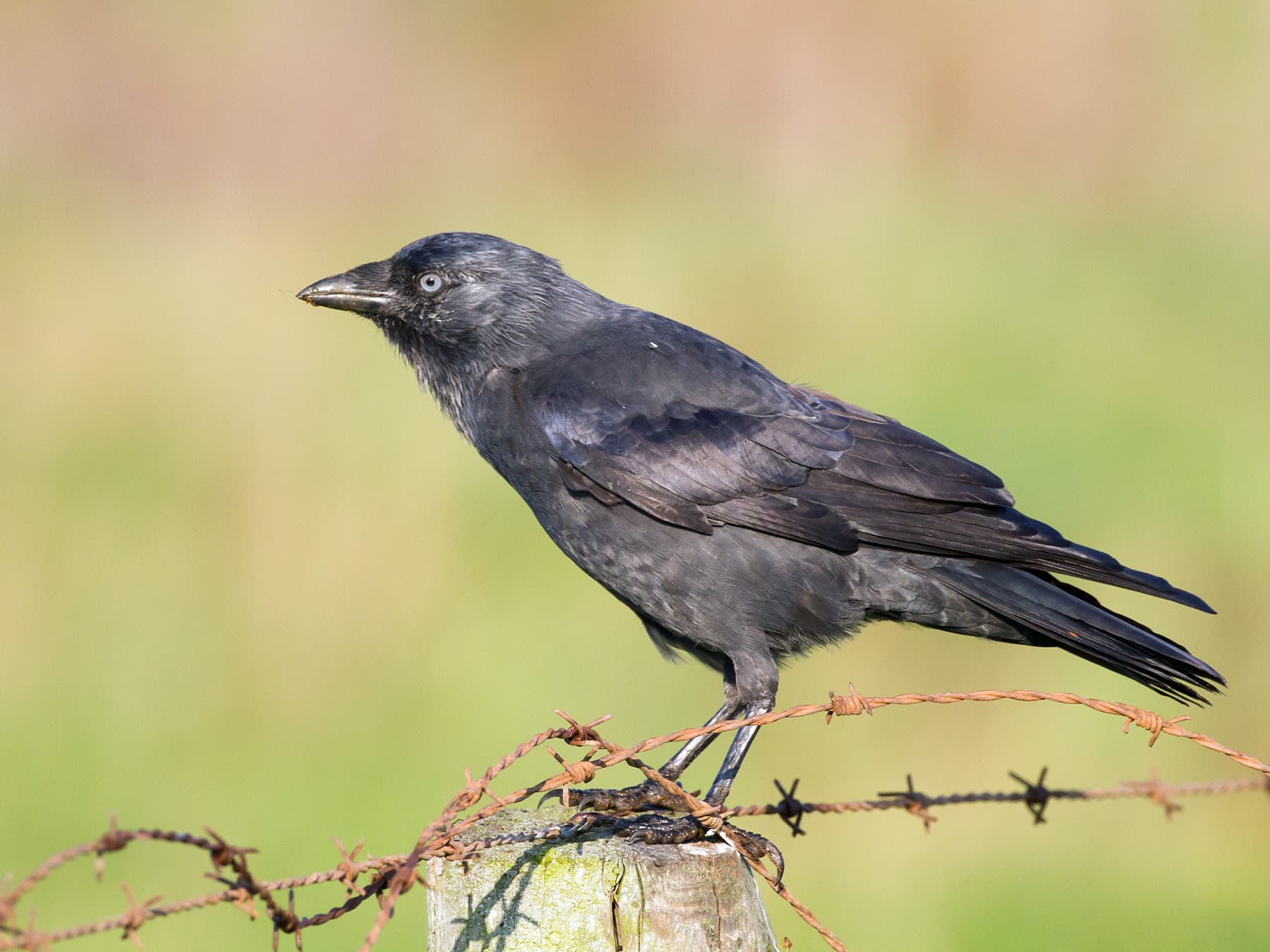
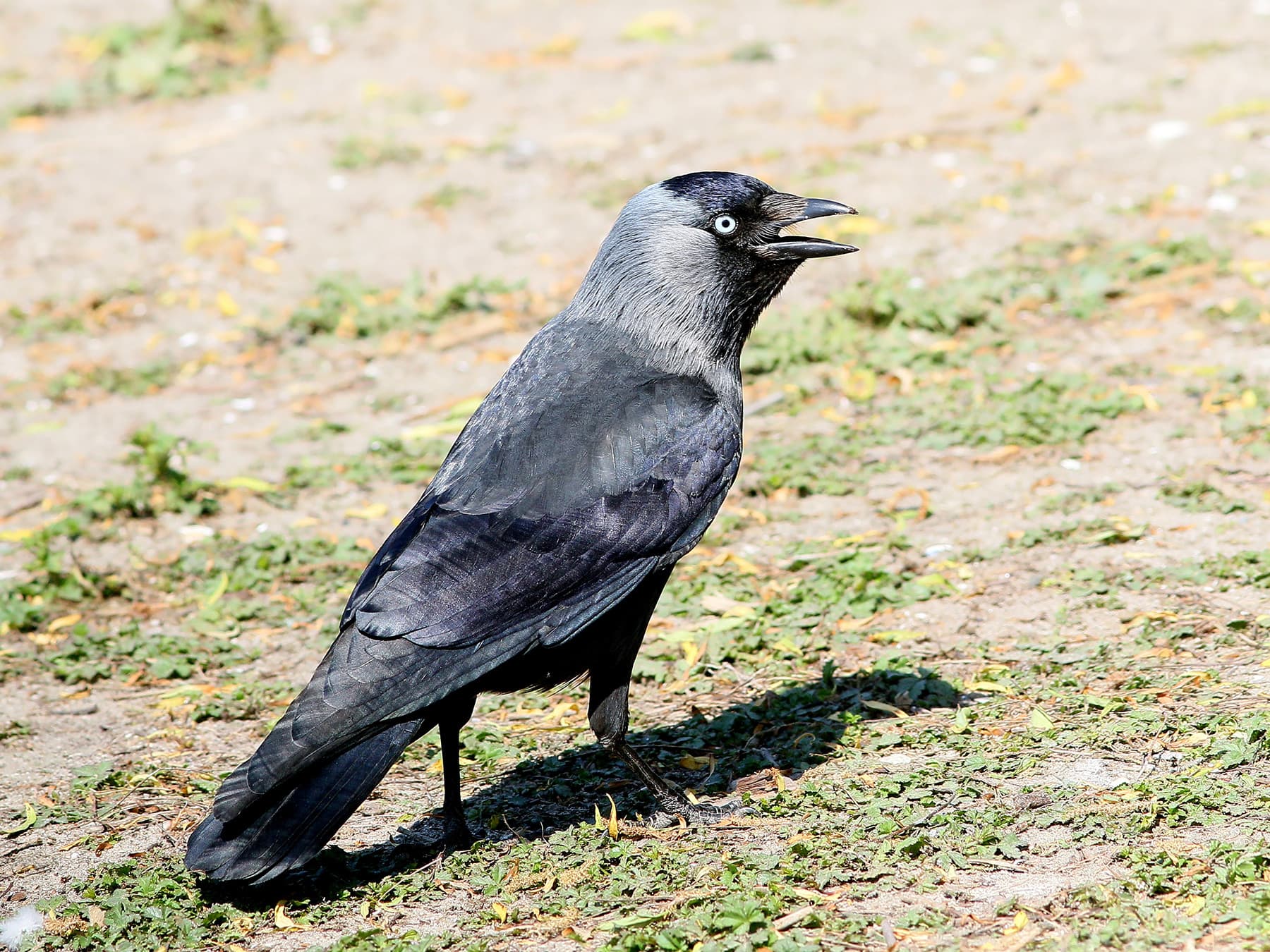
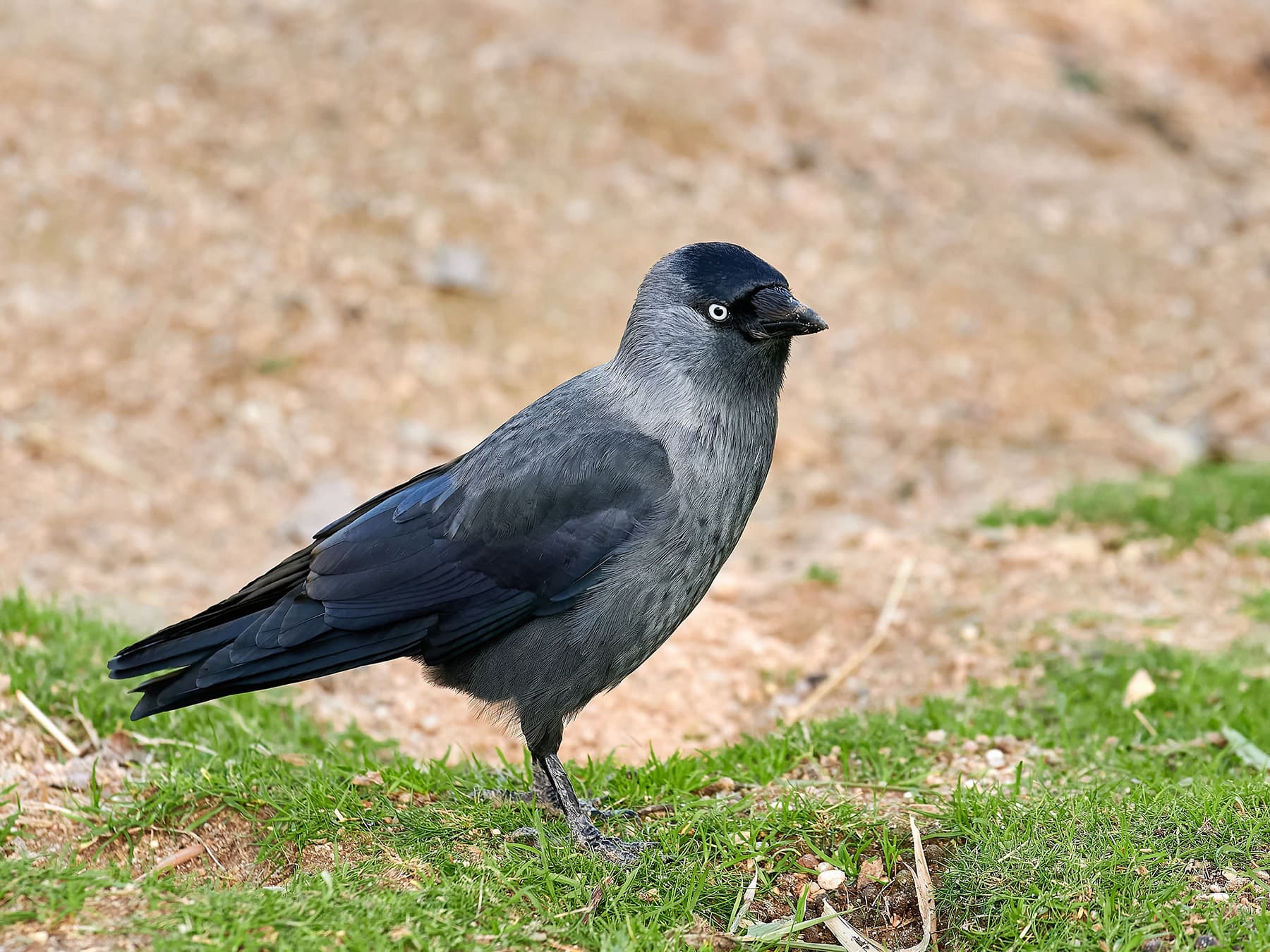
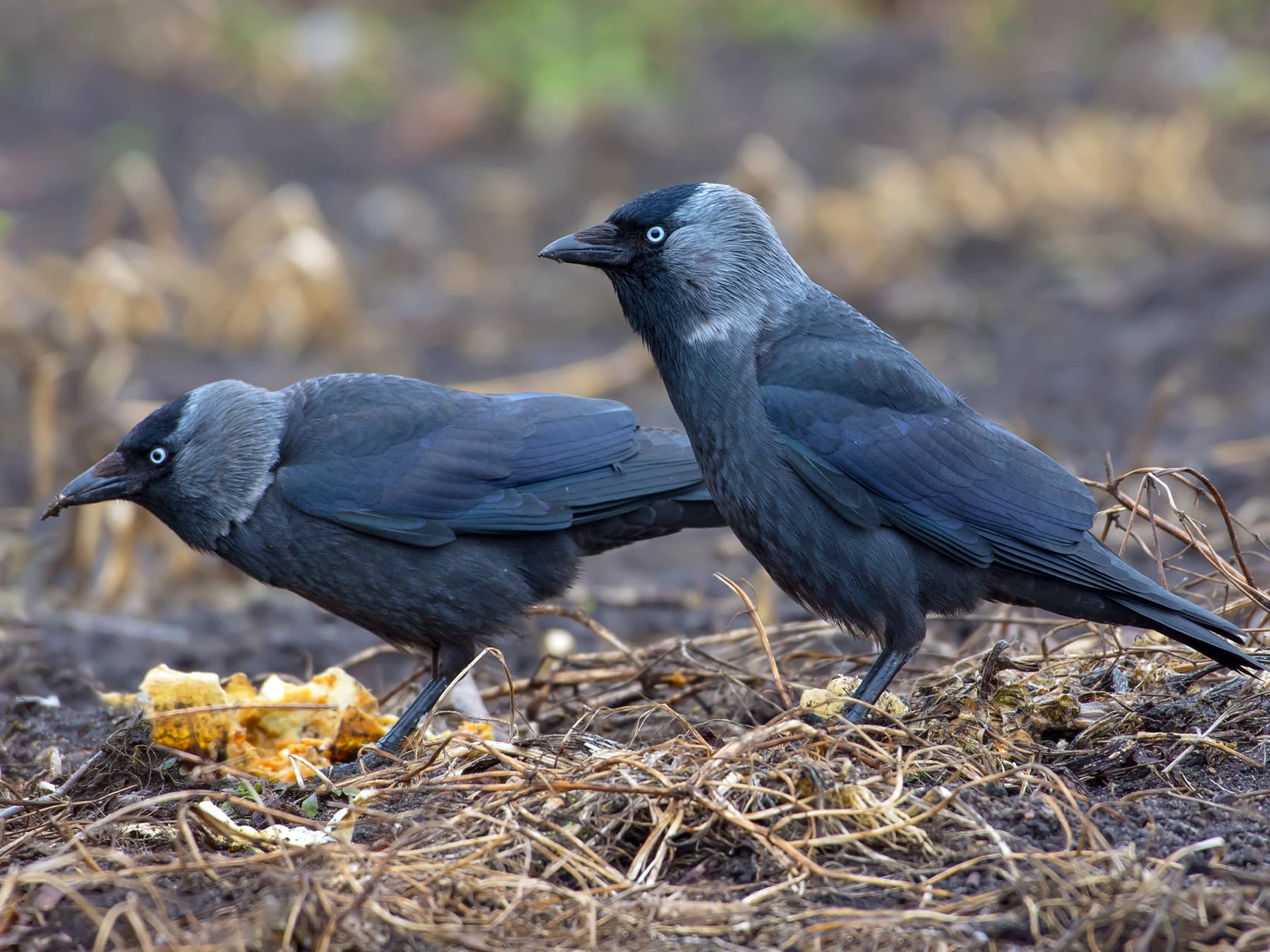
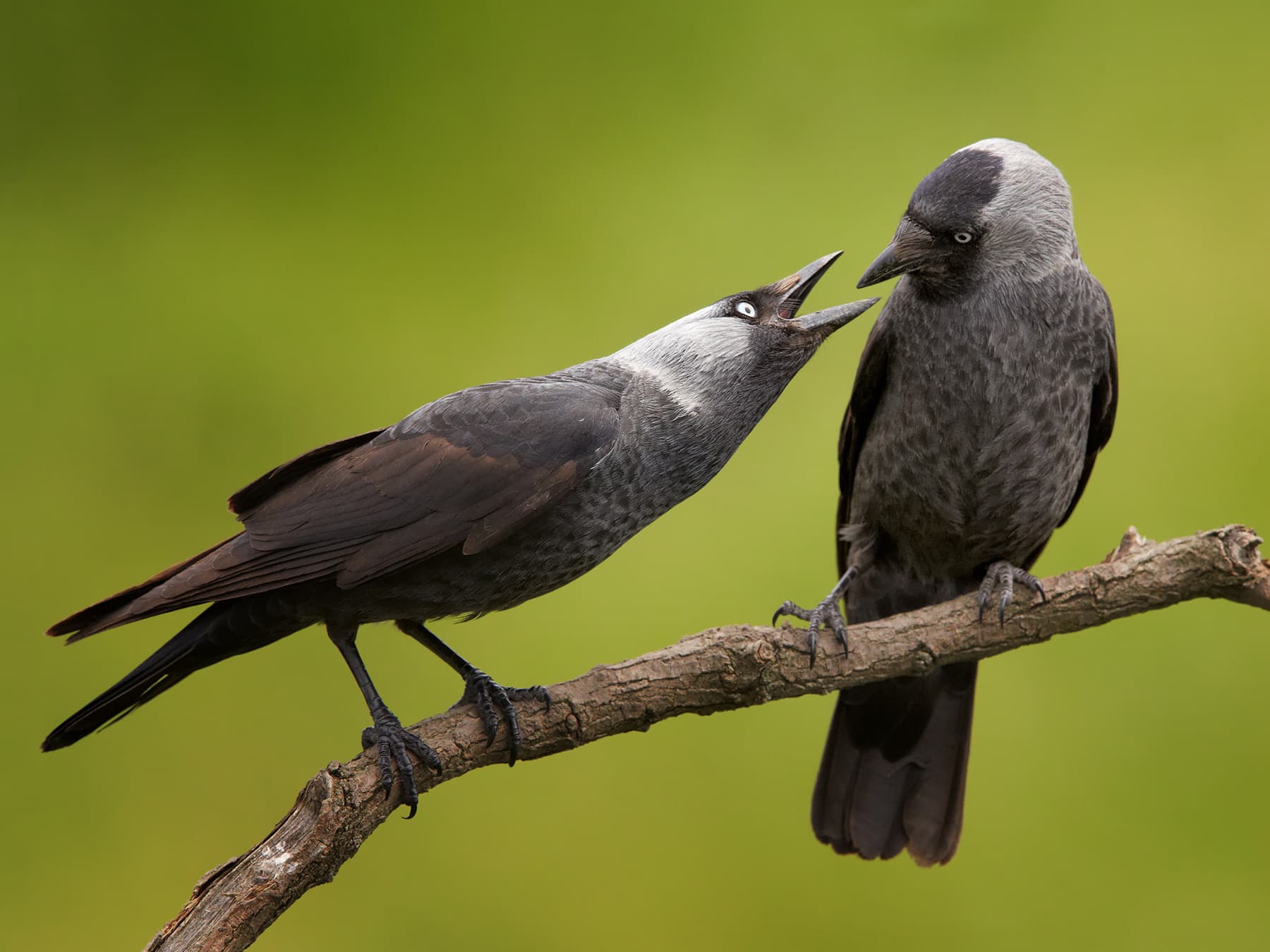
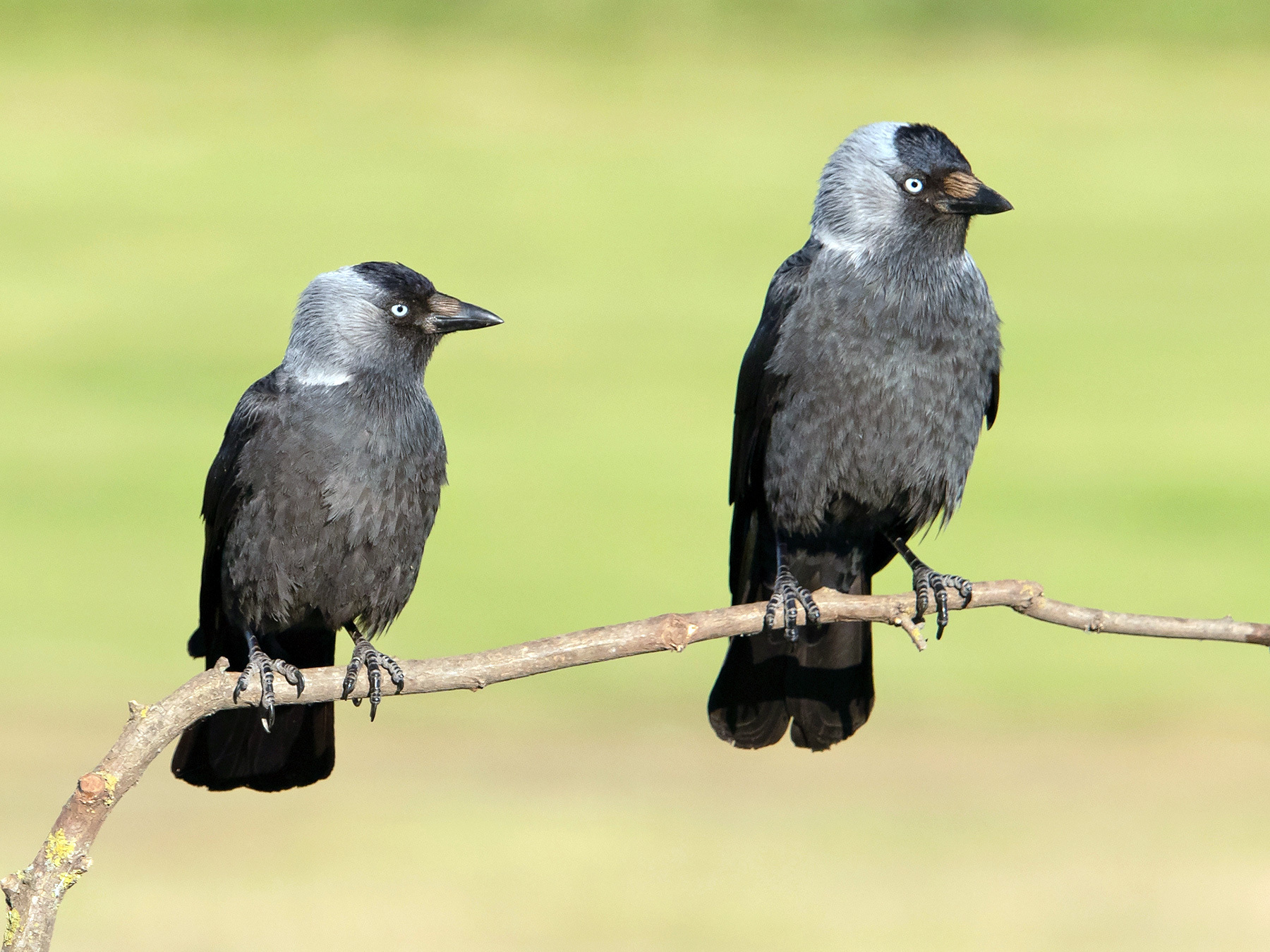
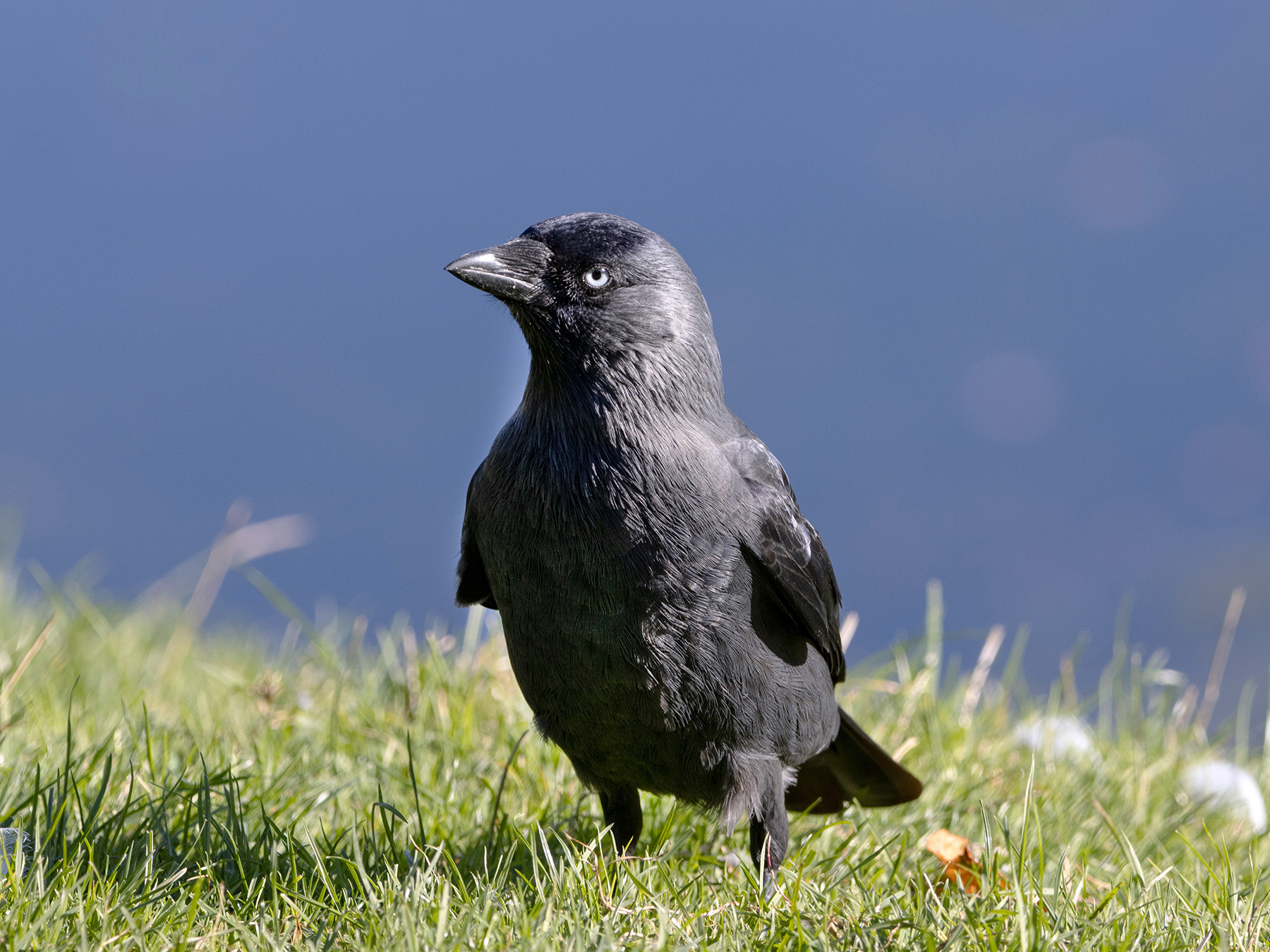
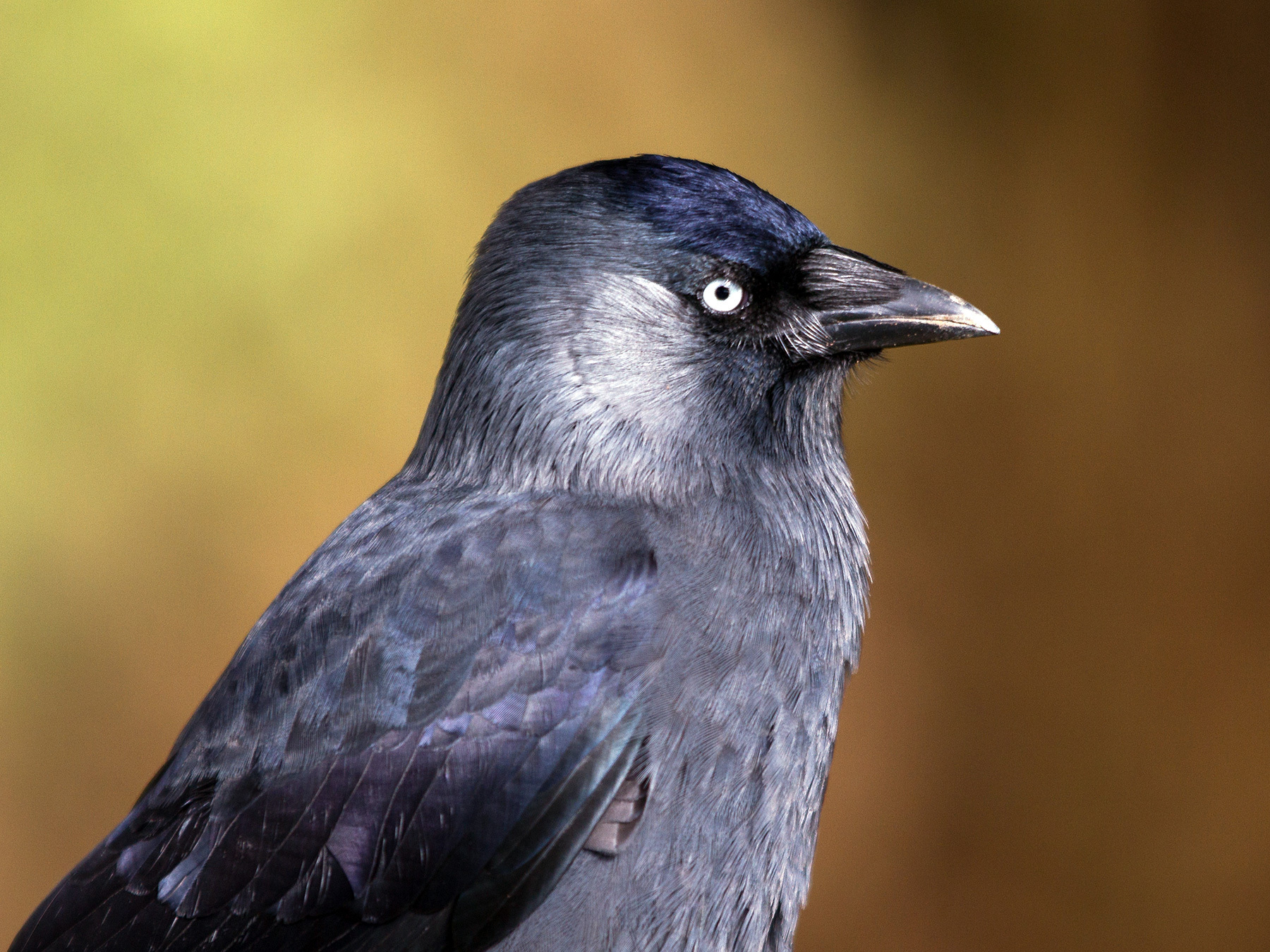
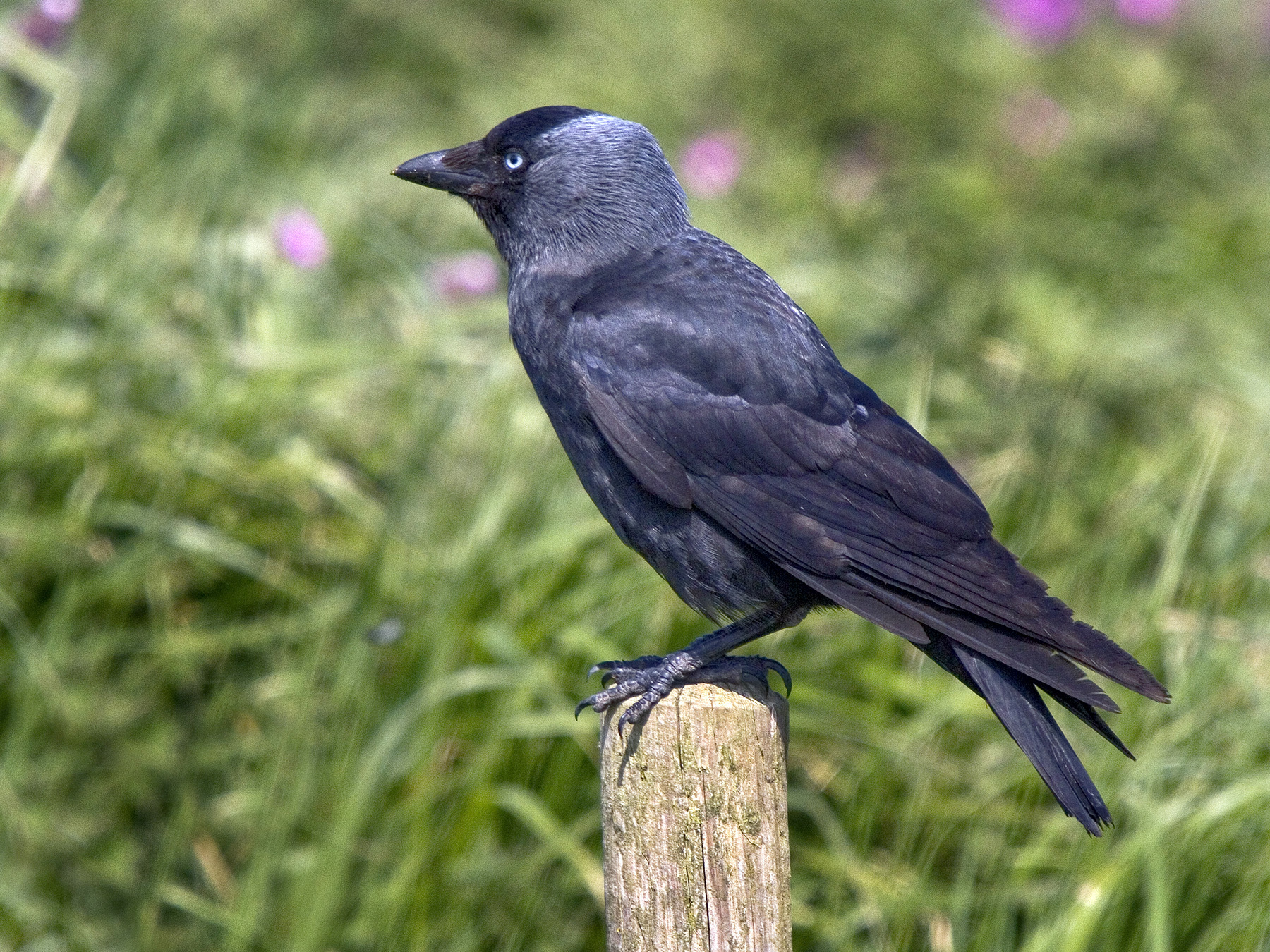
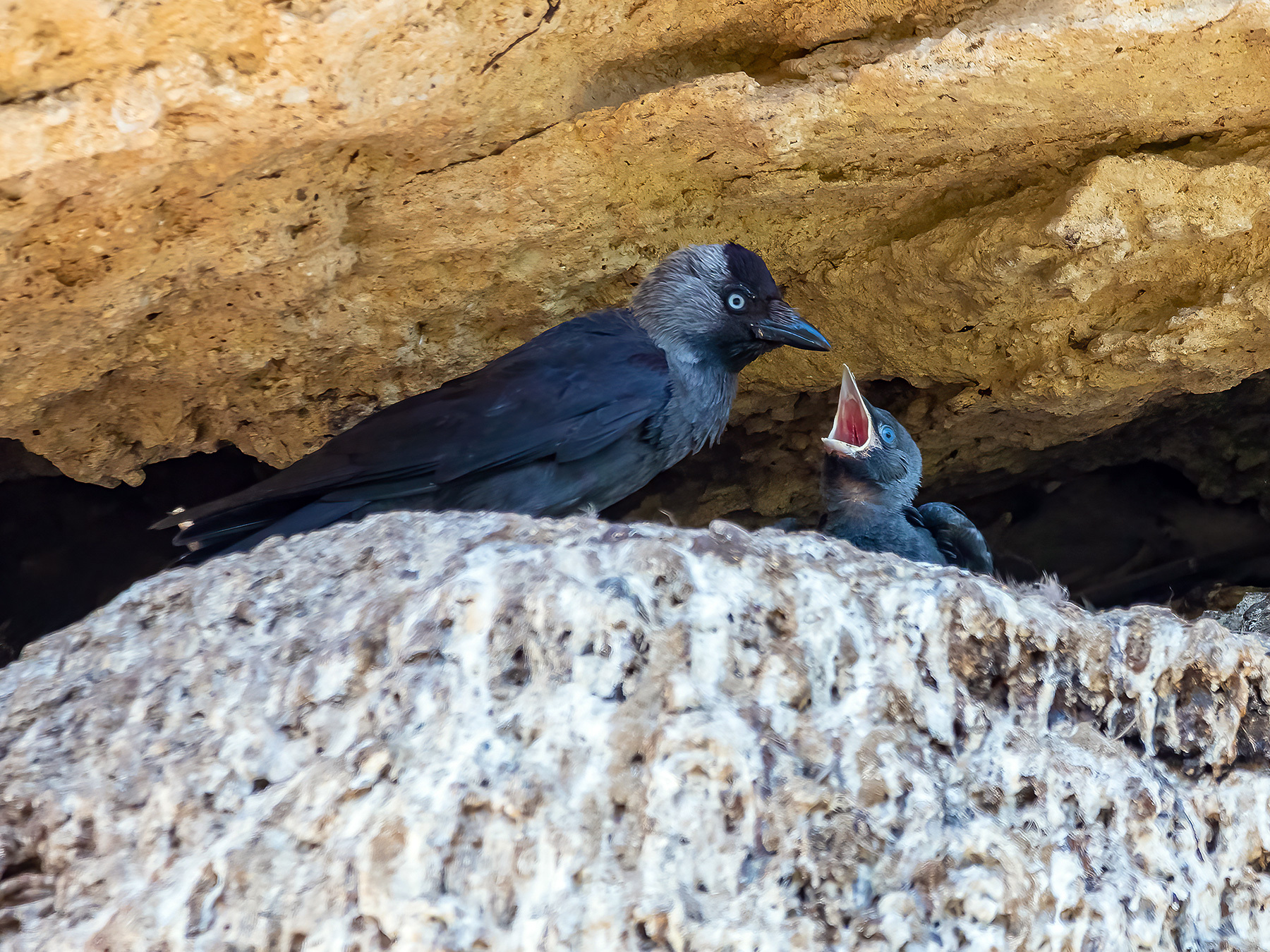
The Jackdaw is a small, sociable crow with very dark grey plumage. They have a jet-black crown but a paler grey nape and sides of the face. Perhaps their most distinctive features are their striking pale-blue eyes, but their short, stout bill also separates them from similar species.
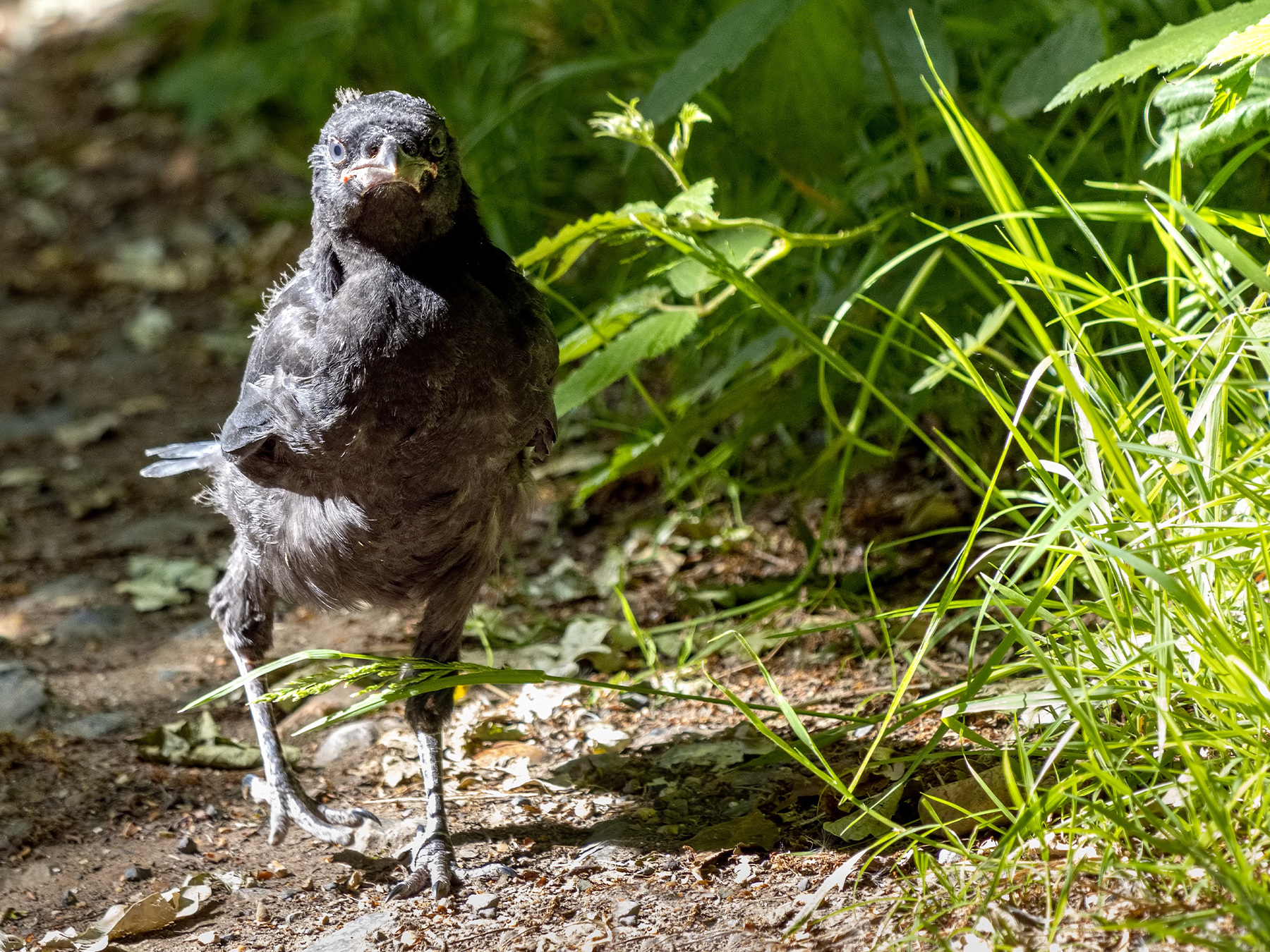
Male and female Jackdaws look very similar, but juveniles can be identified by their dark eyes and duller brownish plumage.
Jackdaws are most easily confused with the Rook since these two crows often flock together. However, Rooks are much larger birds with dark eyes and long bills with a pale base. They also have similar plumage to the large Hooded Crow of Scotland and Ireland.
Jackdaws are small crows, slightly larger than the Magpie but with a much shorter tail.
Length
Adult Jackdaws are compact birds with a total body length of about 34 centimetres or 13 inches.
Weight
Most full-grown Jackdaws weigh between 200 and 270 grams or 7 to 9.5 ounces, with males being the heavier sex.
Wingspan
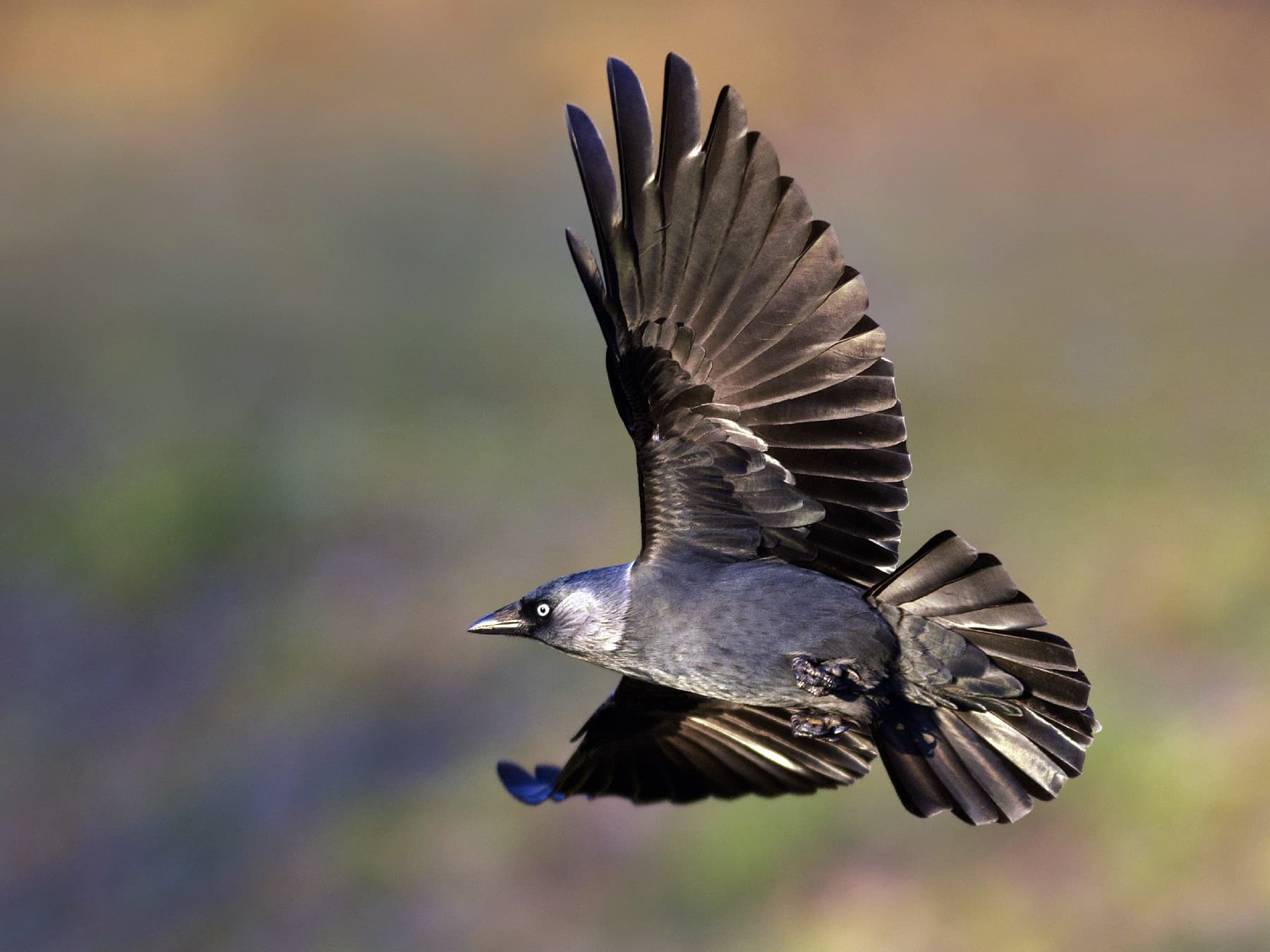
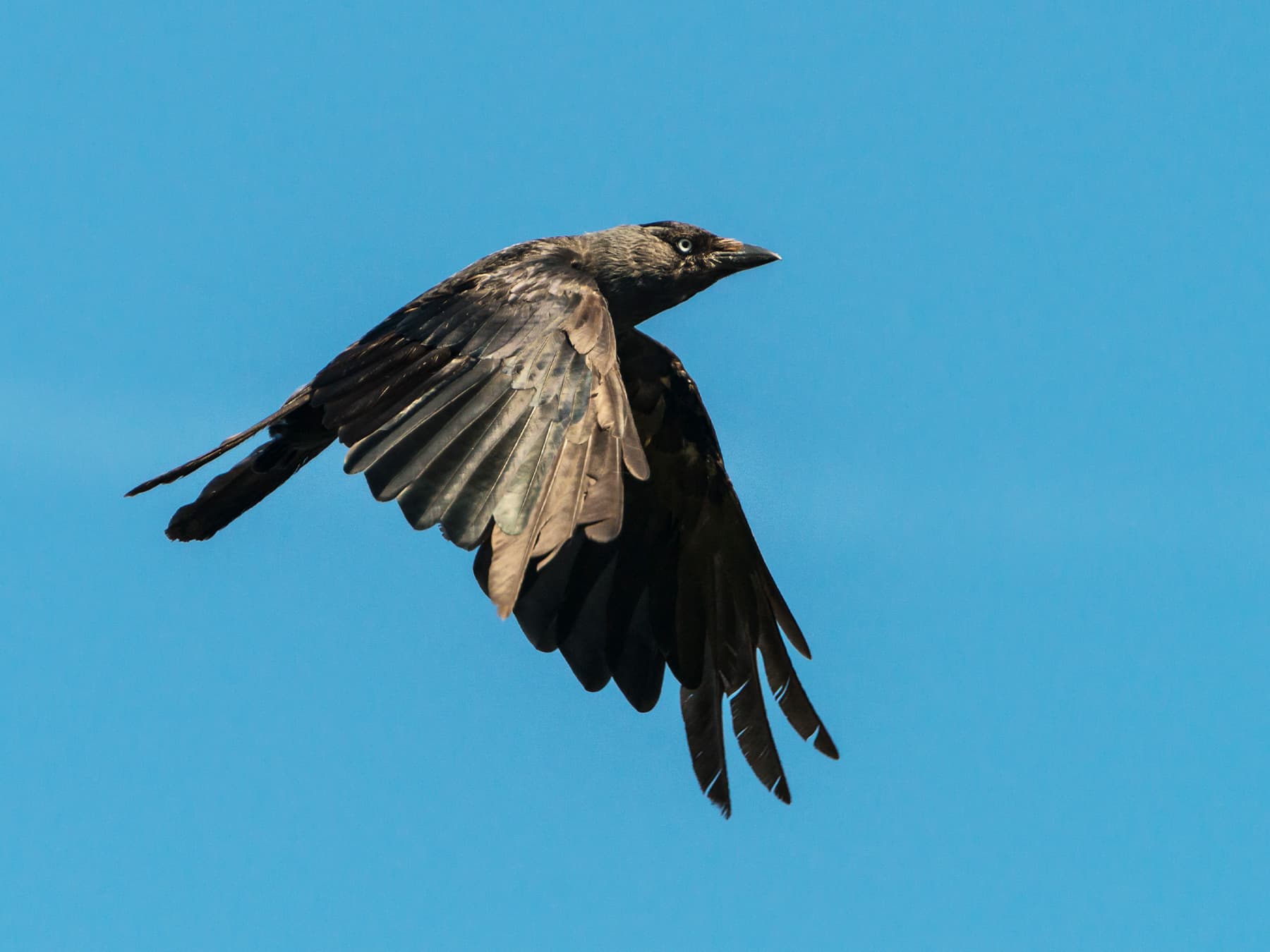
Jackdaws are agile in flight, with a broad wingspan of 67 to 74 centimetres or 26 to 29 inches.
Its size
Adults- Length
- 34–39 cm
- Wingspan
- 64–73 cm
- Weight
- 220–270 g
Its song and calls
What sound does a Jackdaw make?
Jackdaws are highly vocal birds, and like other corvids, these large songbirds are not renowned for their singing ability. Their typical ‘chak’ call is a high-pitched, somewhat bubbly yapping sound.
- Call0:00 / 2:48
Recorded in Gelderland, Netherlands · December 2017
When and where to see it
OctoberHere all year
Most recorded in October
- 1. South Ayrshire9.8%
- 2. Rhondda, Cynon, Taff8.3%
- 3. Meath7.0%
- 4. Blaenau Gwent6.3%
- 5. Renfrewshire5.3%
Each dot is a county, state or province: the bigger and darker, the larger the bird’s share of that place’s bird records that month. Grey dots: no regular records. The ringed point is the centre of the bird’s records this month; the arrow shows how it moved since last month, and the dashed loop its path through the year. “Arrivals” colours places where it becomes regular this month (orange) or is in its last regular month (grey). GBIF eBird Observation Dataset, 2019–2024. Map data: Natural Earth, US Census Bureau; place centres © OpenStreetMap contributors.
In your area
See when the Jackdaw is recorded in your county, state or province.
How often the Jackdaw turns up in the UK and Ireland through the year, from birdwatchers' records.
United Kingdom
Resident · all year · most records in June
Ireland
Resident · all year · most records in May
Show as a table
| Month | United Kingdom | Ireland |
|---|---|---|
| January | 2.2% (regular) | 2.3% (regular) |
| February | 2.3% (regular) | 2.4% (regular) |
| March | 2.3% (regular) | 2.5% (regular) |
| April | 2.1% (regular) | 2.6% (regular) |
| May | 2.3% (regular) | 2.8% (regular) |
| June | 2.4% (regular) | 2.7% (regular) |
| July | 2.0% (regular) | 2.3% (regular) |
| August | 2.0% (regular) | 2.2% (regular) |
| September | 2.3% (regular) | 2.5% (regular) |
| October | 2.2% (regular) | 2.4% (regular) |
| November | 2.3% (regular) | 2.4% (regular) |
| December | 2.4% (regular) | 2.3% (regular) |
Recorded regularly in
Worldwide: recorded regularly in 68 countries
Countries where it was recorded in at least 3 of the 6 years 2019–2024. Linked countries have their own bird list.
Europe (47)
- Åland Islands
- Albania
- Austria
- Belarus
- Belgium
- Bosnia & Herzegovina
- Bulgaria
- Croatia
- Czechia
- Denmark
- Estonia
- Finland
- France
- Germany
- Gibraltar
- Greece
- Guernsey
- Hungary
- Ireland
- Isle of Man
- Italy
- Jersey
- Kosovo
- Latvia
- Liechtenstein
- Lithuania
- Luxembourg
- Moldova
- Monaco
- Montenegro
- Netherlands
- North Macedonia
- Norway
- Poland
- Portugal
- Romania
- Russia
- San Marino
- Serbia
- Slovakia
- Slovenia
- Spain
- Sweden
- Switzerland
- Ukraine
- United Kingdom
- Vatican City
Asia (19)
- Armenia
- Azerbaijan
- China
- Cyprus
- Georgia
- India
- Iran
- Iraq
- Israel
- Jordan
- Kazakhstan
- Kyrgyzstan
- Lebanon
- Mongolia
- Pakistan
- Palestinian Territories
- Tajikistan
- Turkey
- Uzbekistan
Data: EOD – eBird Observation Dataset (Cornell Lab of Ornithology), accessed via GBIF.org, CC BY 4.0. Records from 2019–2024, aggregated and filtered by Birdfact. How these lists are made
What is the habitat of a Jackdaw?
Jackdaws are at home in a wide variety of habitats, although they tend to prefer open landscapes with scattered trees. They avoid large open areas without trees and densely wooded habitats like forests.
What is the range of a Jackdaw?
Jackdaws are widespread in Europe, Western Asia, and marginally in the north of Africa. They occur virtually throughout the United Kingdom, although they are absent from parts of northwestern Scotland.
Where do Jackdaws live?
Jackdaws generally forage on the ground and use trees and buildings for roosting and nesting. They are social birds that forage and roost in flocks that vary from just a small group to hundreds of individuals.
How rare are Jackdaws?
Jackdaws are common in the United Kingdom, with an estimated population of over three million adult birds.
Where can you see Jackdaws in the UK?
Jackdaws are easy to spot in the United Kingdom. They are common in urban and suburban areas but equally at home in farmland and open countryside, both inland and at the coast.
Migration
Do Jackdaws migrate?
Jackdaws are resident in the United Kindom throughout the year, although migratory birds may visit from mainland Northern Europe in the winter.
Are Jackdaws native to the UK?
Jackdaws are a naturally occurring species in the United Kingdom. They have been known for many centuries and are mentioned in the works of Geoffrey Chaucer and William Shakespeare in the 14th and 16th centuries, respectively.
Tips for seeing it
- Look for Jackdaws in urban areas, particularly around old buildings and church towers
- Listen for their distinctive 'chyak-chyak' call, which is often heard before the birds are seen
- Observe their social behaviour in flocks, especially during morning and evening roosting times
- In the UK, watch for them in parks and gardens, where they often visit bird feeders
What it eats
What do Jackdaws eat?
Jackdaws are opportunistic omnivores that vary their diet throughout the year. Animal foods like insects are most important during the breeding season, although plant matter like grain, seeds, and fruits are a major source of energy in the winter.
Jackdaws also scavenge for scraps and carrion, and they are notorious for raiding birds’ nests and even stealing the eggs of large water birds and seabirds. They often feed from garden bird tables, where some birdwatchers consider them rather unwelcome visitors.
Nesting and breeding
Where do Jackdaws nest?
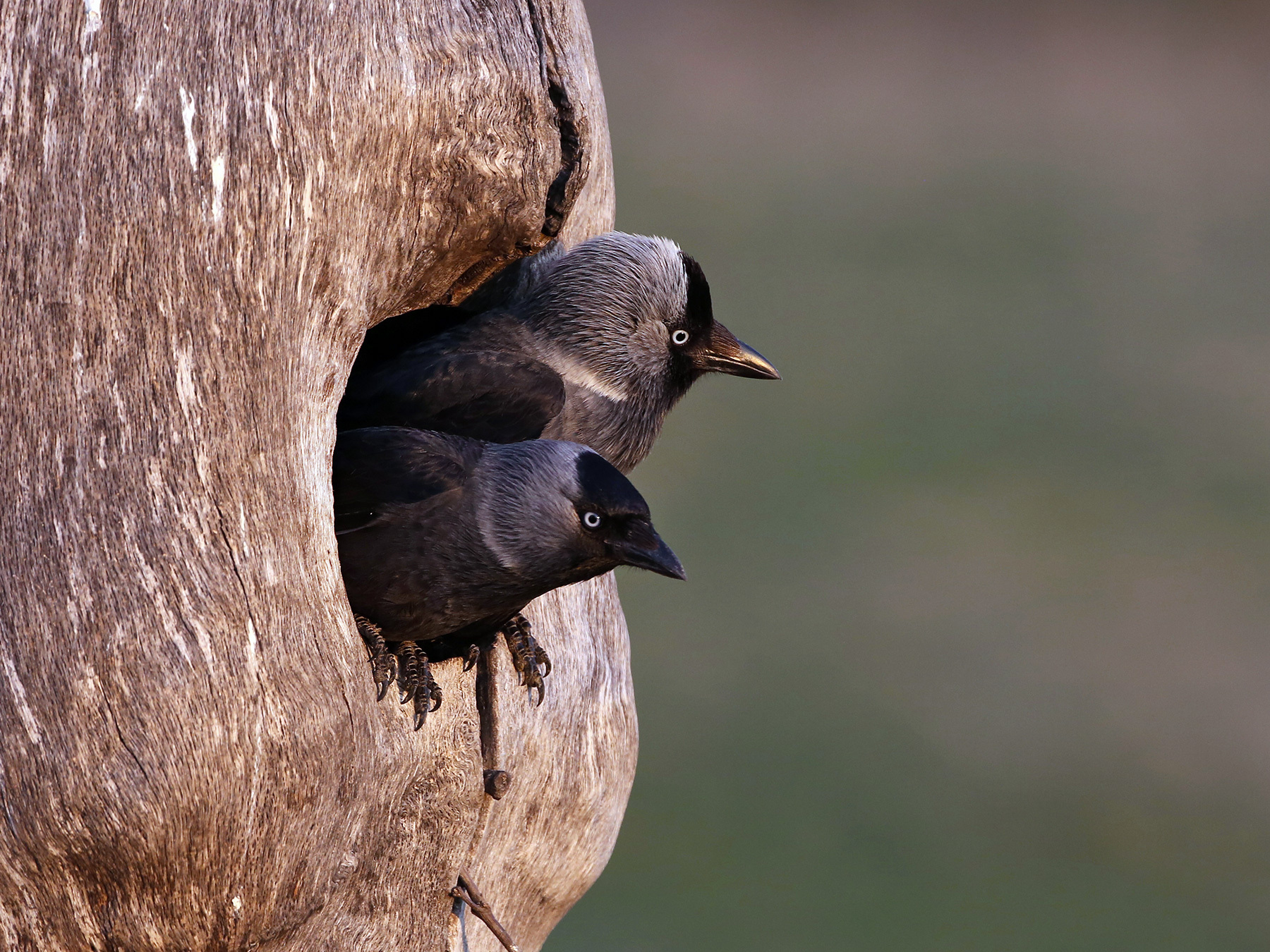
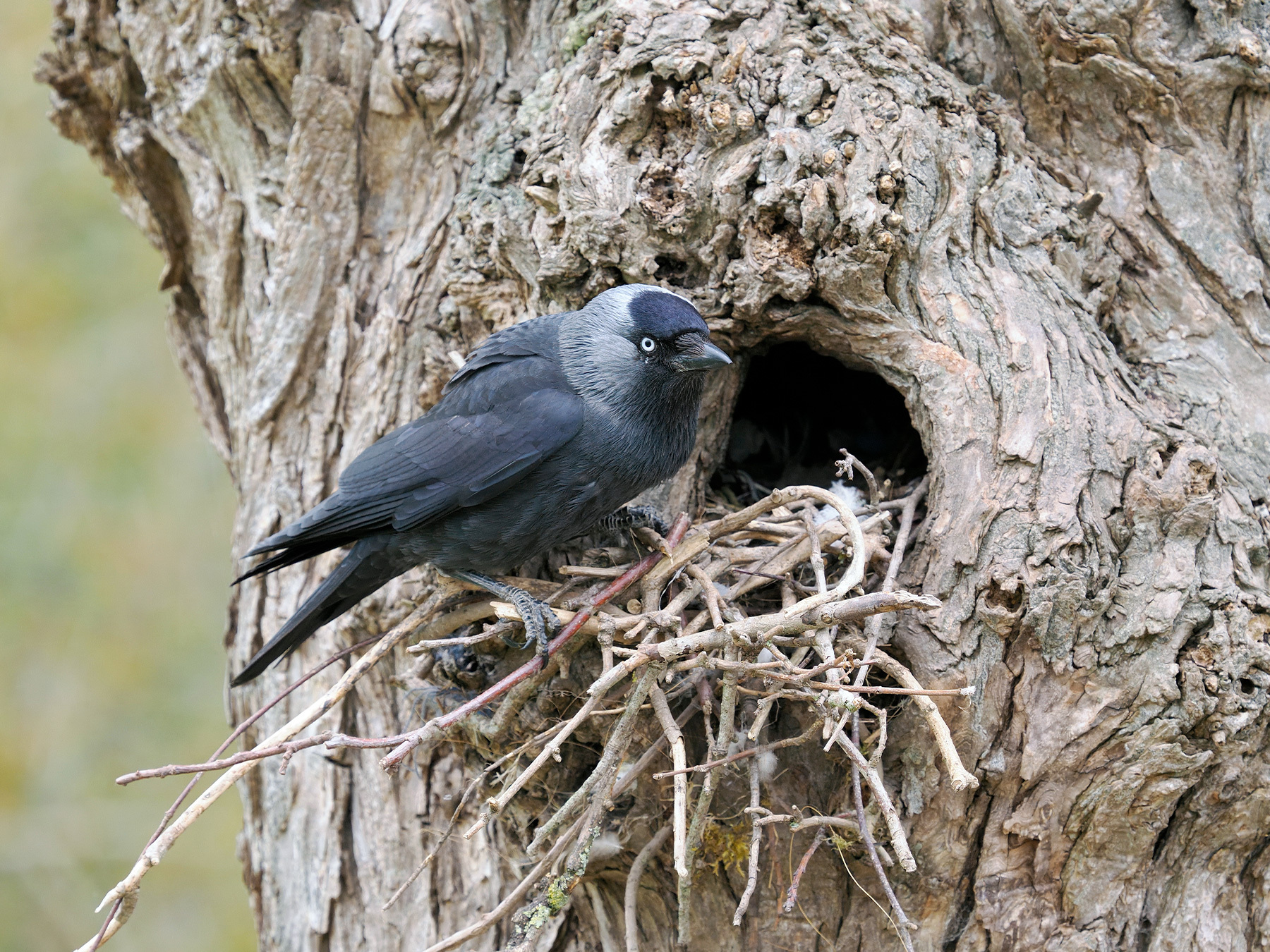
Jackdaws are cavity nesters that build their nests in various sheltered sites, including crevices in sea cliffs, caves, tree cavities, chimneys, nest boxes, and even animal burrows. Both males and females work together to build a nest of twigs, mud, fur, and all manner of other materials to fit within the cavity. These social birds typically nest in loose colonies with other Jackdaw pairs.
When do Jackdaws nest?
Jackdaws usually start breeding when they are two years old. They nest between March and June, producing a single brood each year. Their eggs hatch after about three weeks, and the young birds fledge roughly one month later.
There’s a lot more to learn about Jackdaw breeding! Read our comprehensive guide to Jackdaw nesting for everything you need to know.
What do Jackdaw eggs look like?
Jackdaws usually lay four or five eggs, although their clutch size varies from three to eight. Each egg has a pale blueish colour with numerous dark speckles and measures approximately 3.5 centimetres long and 2.5 centimetres wide.
Do Jackdaws mate for life?
Jackdaws are monogamous birds that pair for life. They show an unusually high degree of sexual fidelity to their partner, although extra-pair mating has been confirmed in some individuals.
Behaviour
Are Jackdaws aggressive?
Jackdaws are not particularly aggressive birds, although they can dominate smaller songbirds around food sources. They are social birds that roost and co-exist peacefully with other corvids like Rooks.
Where do Jackdaws sleep at night?
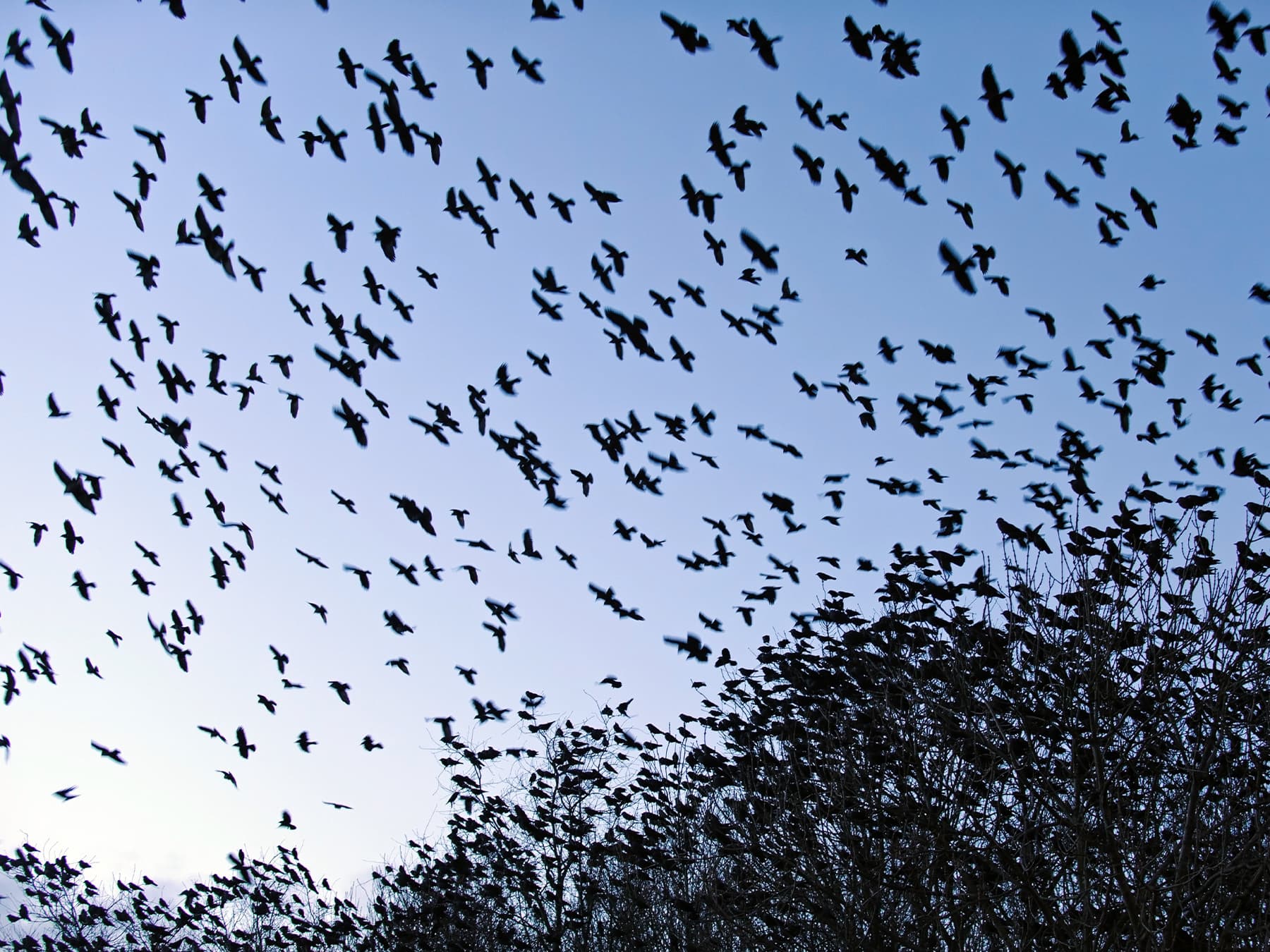
Jackdaws roost communally in the winter in large trees in woodlands. Seeing flocks of agile, wheeling Jackdaws arrive and depart can be an amazing, if noisy, experience. These large groups dissolve temporarily in the breeding season when pairs roost together near their nests.
Lifespan and predators
How long do Jackdaws live?
Jackdaws can live for up to 18 years, although their average life expectancy is just five years or so.
What are the predators of Jackdaws?
Jackdaws are vulnerable to various small and medium-sized predators, including birds of prey and mammals like pine martens and house cats. The Goshawk is a major predator of young Jackdaws in some parts of their range.
Are Jackdaws protected?
Jackdaws are protected in the United Kingdom by the Wildlife and Countryside Act.
Are Jackdaws endangered?
Jackdaws are a green-listed species in the United Kingdom with a healthy population. In fact, these birds have increased markedly since the mid-1900s. Globally, Jackdaws are classified as ‘Least Concern’ on the IUCN Red List.
Conservation
While Jackdaws are currently listed as Least Concern due to their large range and stable population, they face localised threats from habitat loss and persecution.
In some areas, efforts are being made to protect nesting sites in old buildings and provide artificial nest boxes to support urban populations.
Similar birds
Often mistaken for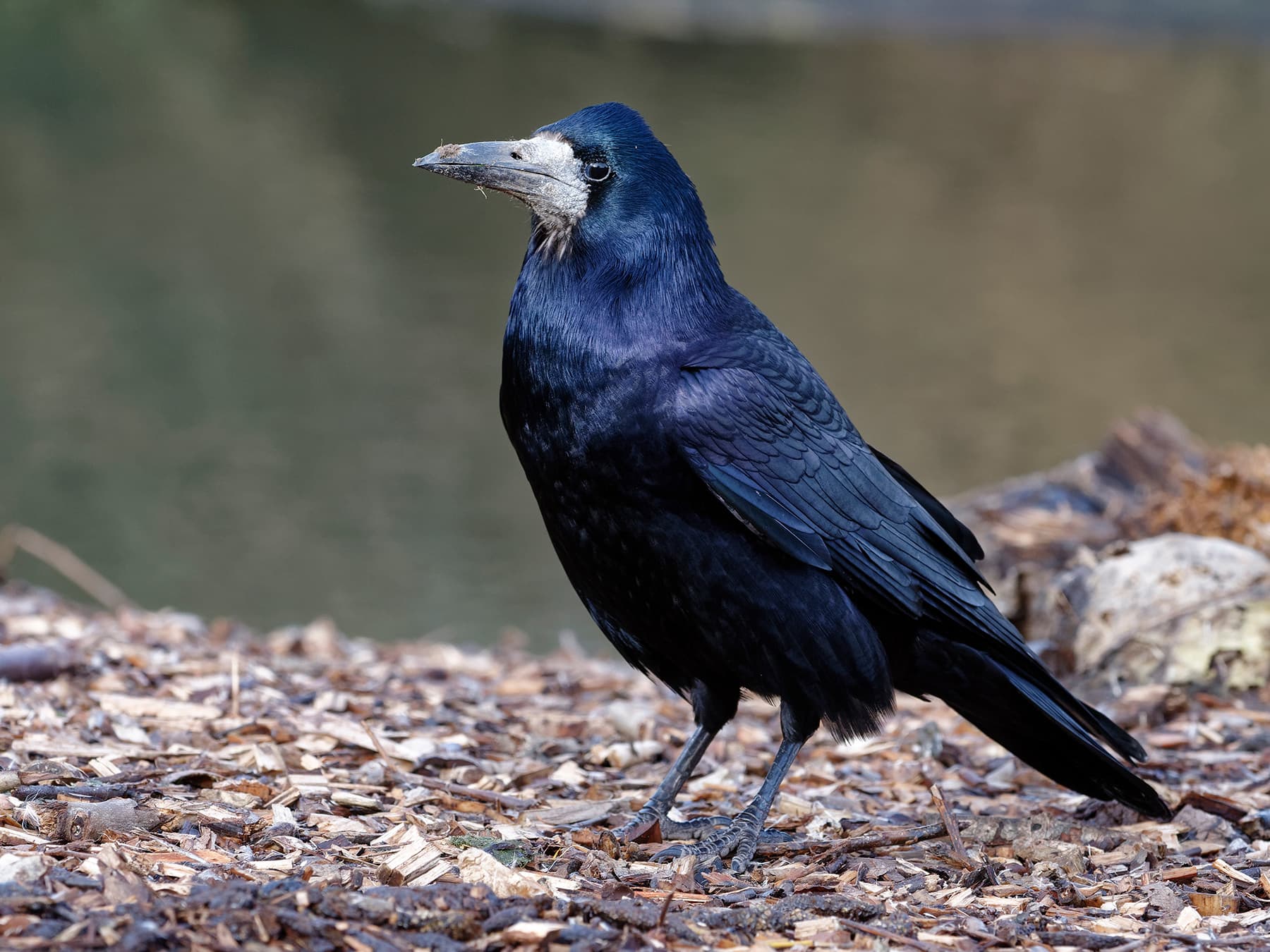
More photos
9 photos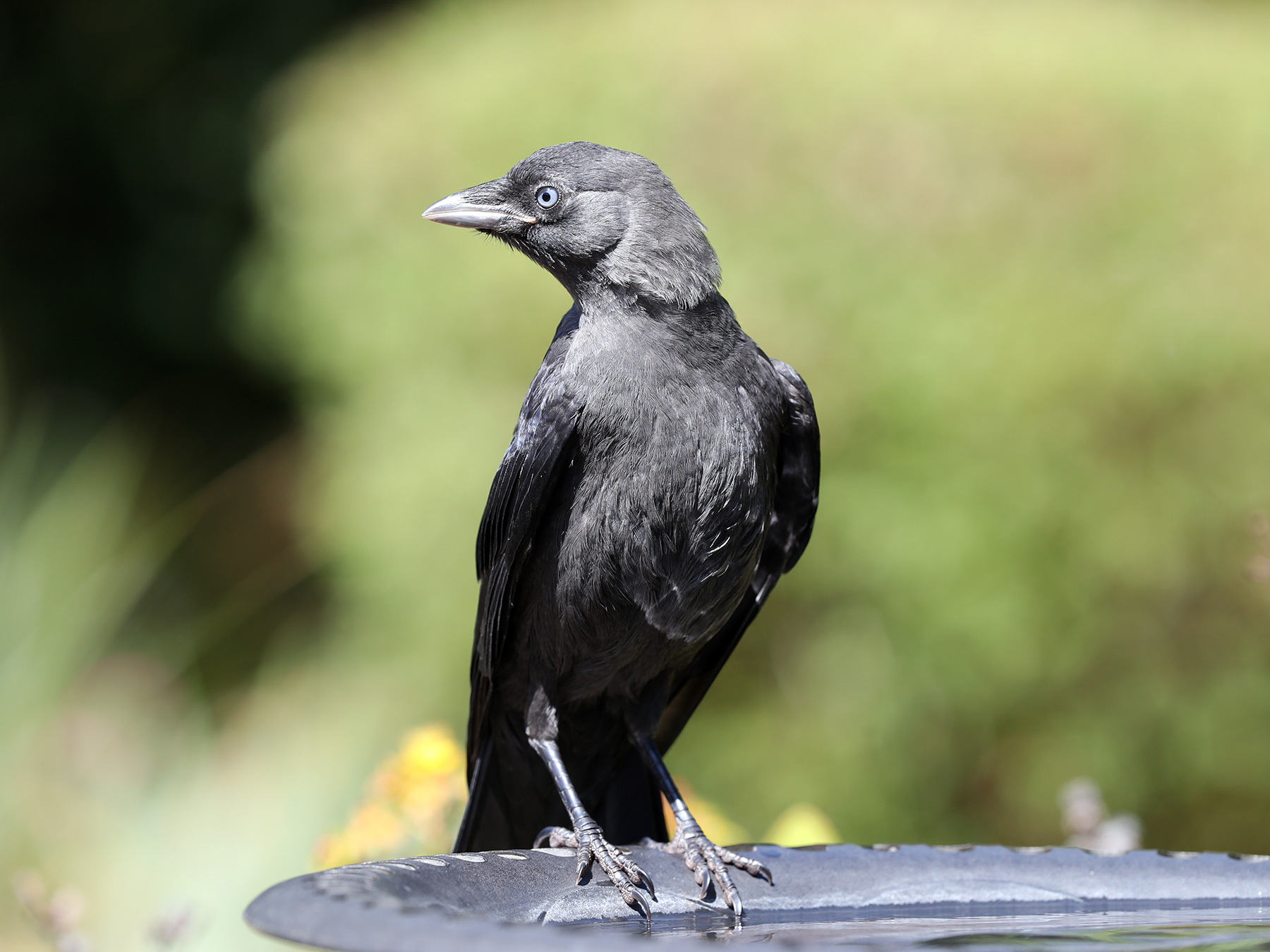
Jackdaw guides
6 guidesQuick facts
- Length
- 34–39 cm
- Wingspan
- 64–73 cm
- Weight
- 220–270 g
- Lifespan
- 5–10 years · oldest recorded 18 years
- Family
- Crows & Jays
- Migration
- Partial migrant
- Global status (IUCN)
- Least Concern
- World population
- 39,800,000 - 83,400,000 mature individuals
- Population trend
- Stable
- Also called
- Eurasian Jackdaw, Western Jackdaw
- Scientific name
- Coloeus monedula
Questions
4What's the difference between a Jackdaw and a crow?
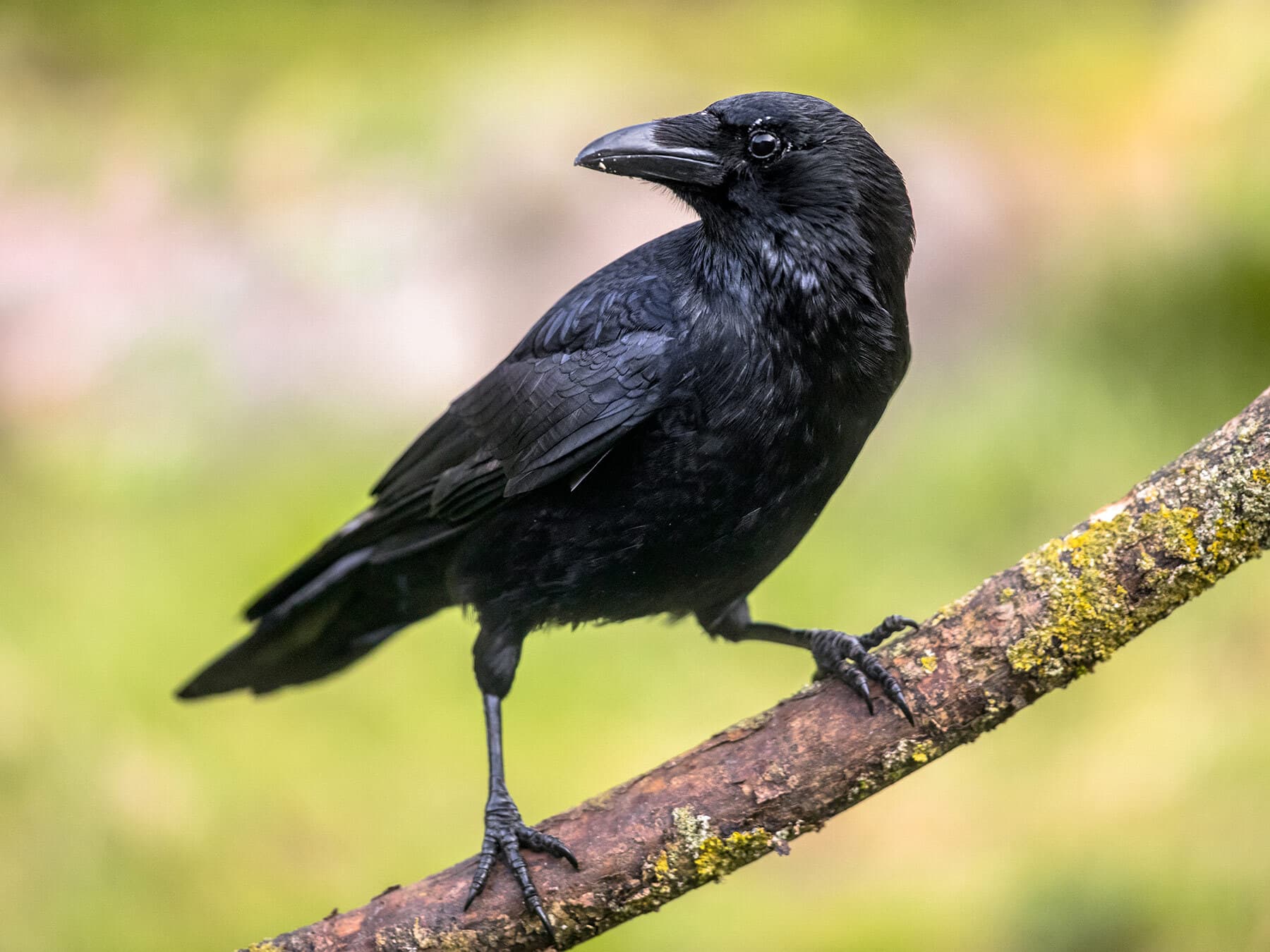
Jackdaws are a small species of crow from the Corvus genus. They differ most obviously from the UK’s Carrion Crow and Hooded Crow in size, being just half the weight of these related birds.
Do Jackdaws deter other birds?
Jackdaws occasionally deter or outcompete smaller birds at the bird table. However, it’s important to remember that they are also a natural part of the United Kingdom’s ecosystem and bird fauna. Feeding the Jackdaws on the ground while providing food in a squirrel-proof feeder may help reduce competition between garden birds.
What does it mean to see a Jackdaw?
Jackdaws symbolise different things to different people. For some, spotting a Jackdaw could signify bad luck or even death, while others see them as a good omen. Their faithfulness to their partner has also inspired the belief that they indicate a successful relationship or marriage.
Why are Jackdaws so noisy?
Jackdaws are social birds that use calls to communicate among themselves. They can be especially noisy around their roost, especially just before returning or before heading out for the day. Research indicates that these birds decide when to leave by the volume and urgency of the flock’s calls, so it tends to rise to a crescendo just before they depart.
Sources
4- 1BirdLife International. 2018. Corvus monedula. The IUCN Red List of Threatened Species 2018: e.T22705929A131943991. Source (opens in a new tab)
- 2EBCC (2015)
- 3BirdLife International. 2018. Corvus monedula. The IUCN Red List of Threatened Species 2018: e.T22705929A131943991. Source (opens in a new tab)
- 4BTO longevity records: maximum age from a ringed bird, 18 years, 26 days (set in 2017), BirdFacts: Jackdaw (2017) Source (opens in a new tab)

Checked by
Nathan Cope, founder and editor
Nathan founded Birdfact and leads its writers and contributors in the UK, the US and Canada. He has watched and studied birds for more than ten years, and checks every article and species guide before it’s published.